CHARACTERISTICS OF HIGH SCHOOL ONLINE EDUCATIONAL PROGRAMS: A MULTIPLE CASE STUDY
by
JEAN M. KIEKEL
B.S., Kansas State University, 1991 M.B.A., Kansas State University, 1993
AN ABSTRACT OF A DISSERTATION
submitted in partial fulfillment of the requirements for the degree DOCTOR OF PHILOSOPHY
Department of Secondary Education College of Education
KANSAS STATE UNIVERSITY Manhattan, Kansas
Abstract
Technological advances affect the very fabric of our world, from the way we do business to the way we educate children. The National Education Association (2005), predicted that by 2006, most school children would take at least one course online before graduating from high school. The Peak Group estimated that by 2006, one million K-12 students would enroll in online courses (Davis & Niederhauser, 2007). In March, 2006, Michigan passed legislation requiring high school students to have at least one online educational experience to graduate (eSchoolNews, 2006). Online classes open doors to educational opportunities students might not otherwise have due to lack of sufficient student interest in a subject, school budgets, or teacher expertise. The quality of programs, in terms of academic rigor and compliance to state educational standards, varies widely.
Research examining and documenting online education explicitly in K-12 settings has only recently been conducted and published (Blomeyer, 2002) and there is very little of it. This dissertation is a case study of three virtual high school programs, two well established programs and one that is only two years old. I interviewed administrator and teachers and I examined program documents to define what attributes and characteristics indicate a high quality program, what commonalities are found among online high school programs, and what online teachers and programs do to assure a high quality learning experience for students.
Findings include: Extensive descriptions of each program regarding course design, teacher training, program organization and funding, and administration. Common themes across participating programs included concerns related to collaboration, high quality courses – whether vendor provided or faculty written, professional development of online teachers, finding ways to control quality of courses from design to student learning and student satisfaction, and the importance of competent and enthusiastic teachers. Recommendations, based on the findings of this study, are that administrators considering joining an online high school program should look at course catalog, professional development, quality control, teachers, service and support, any additional
benefits from joining the program, and ability to speak with administrators and teachers currently using the program or references.
CHARACTERISTICS OF HIGH SCHOOL ONLINE EDUCATIONAL PROGRAMS: A MULTIPLE CASE STUDY
by
JEAN M. KIEKEL
B.S., Kansas State University, 1991 M.B.A., Kansas State University, 1993
A DISSERTATION
submitted in partial fulfillment of the requirements for the degree DOCTOR OF PHILOSOPHY
Department of Secondary Education College of Education
KANSAS STATE UNIVERSITY Manhattan, Kansas
2007
Approved by:
Major Professor Dr. Diane McGrath
Copyright
JEAN M. KIEKEL 2007
Abstract
Technological advances affect the very fabric of our world, from the way we do business to the way we educate children. The National Education Association (2005), predicted that by 2006, most school children would take at least one course online before graduating from high school. The Peak Group estimated that by 2006, one million K-12 students would enroll in online courses (Davis & Niederhauser, 2007). In March, 2006, Michigan passed legislation requiring high school students to have at least one online educational experience to graduate (eSchoolNews, 2006). Online classes open doors to educational opportunities students might not otherwise have due to lack of sufficient student interest in a subject, school budgets, or teacher expertise. The quality of programs, in terms of academic rigor and compliance to state educational standards, varies widely.
Research examining and documenting online education explicitly in K-12 settings has only recently been conducted and published (Blomeyer, 2002) and there is very little of it. This dissertation is a case study of three virtual high school programs, two well established programs and one that is only two years old. I interviewed administrator and teachers and I examined program documents to define what attributes and characteristics indicate a high quality program, what commonalities are found among online high school programs, and what online teachers and programs do to assure a high quality learning experience for students.
Findings include: Extensive descriptions of each program regarding course design, teacher training, program organization and funding, and administration. Common themes across participating programs included concerns related to collaboration, high quality courses – whether vendor provided or faculty written, professional development of online teachers, finding ways to control quality of courses from design to student learning and student satisfaction, and the importance of competent and enthusiastic teachers. Recommendations, based on the findings of this study, are that administrators considering joining an online high school program should look at course catalog, professional development, quality control, teachers, service and support, any additional
benefits from joining the program, and ability to speak with administrators and teachers currently using the program or references.
Table of Contents
List of Figures ... xiii
List of Tables ... xiv
Acknowledgements... xv
Dedication ... xvi
CHAPTER 1 - INTRODUCTION... 1
Overview... 1
Statement of the Problem... 2
Purpose of the Study ... 4
Research Questions... 4
Significance of the Study... 4
Rationale for Case Study Design ... 5
Definitions ... 5
Scope and Limitations ... 8
CHAPTER 2 - REVIEW OF THE LITERATURE... 9
Distance Education and Evolution to Internet-based Education ... 9
Historical Perspective ... 9
Computer-based Educational Systems... 13
Distance Education Types... 14
Internet-based Learning Models ... 15
Issues Affecting Internet-based Learning ... 16
Advantages of Internet-based learning ... 16
Disadvantages of Internet-based learning ... 19
Instructional design... 21
Creating a community of learners and the changing roles in the classroom ... 22
Social and cognitive learning theory and instructional design ... 23
Constructivism and instructional design... 25
Use of supplementary materials... 27
Governance and Funding ... 29
Curriculum Offered... 29
Internet Course Enrollment... 30
Teacher Certification/Licensure... 30
Course Management Systems ... 30
Quality of Instruction... 31
No Child Left Behind ... 33
Discussion of NCLB titles ... 34
Impact of No Child Left Behind on Online Learning... 36
Professional Development ... 37
Today’s Students... 39
Summary ... 41
CHAPTER 3 - METHODOLOGY... 43
Research Questions... 43
Rationale for Case Study Design ... 43
Role of the Researcher ... 44
Research Design ... 45
Population and Sample ... 47
Objectivity... 47
Protection of Human Subjects ... 48
Research Site... 48
Data Collection ... 48
Data Analysis... 50
Reliability and Validity of the Research ... 51
Transferability... 53
Addressing the Limitations of the Study ... 53
CHAPTER 4 - Case Descriptions and Analysis ... 54
Case Descriptions ... 54
Virtual High School, Inc. (VHS) ... 54
Illinois Virtual High School (IVHS)... 60
Analysis of Findings ... 70
Data Collection ... 70
Data Analysis ... 70
Coding Techniques ... 71
Research Question One Analysis... 72
VHS ... 72 Centralized/teams... 73 Collaboration/sharing resources... 73 Courses... 74 Professional development ... 75 Quality control ... 75 Service... 76 Teachers/teacher proficiency ... 76 Uncertainty... 77 Summary of VHS Themes ... 78 IVHS ... 78 Collaborative effort... 79 Courses... 80
Increased educational experiences... 80
Politics... 80
Professional development ... 81
Qualified teachers ... 81
Quality control ... 81
Summary of IVHS Themes... 82
LVSP... 82
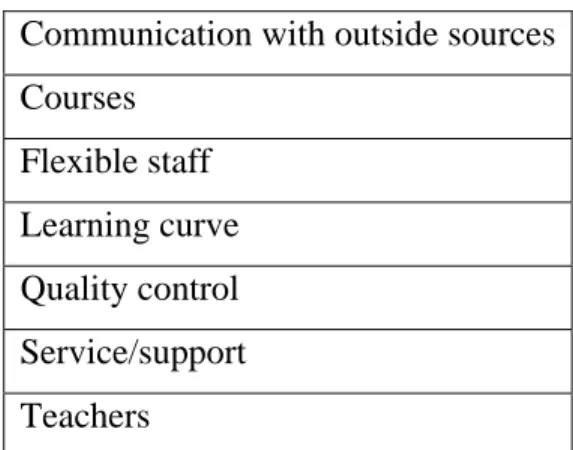
Communication with outside sources ... 83
Courses... 83
Flexible staff ... 83
Learning curve ... 84
Quality control ... 84
Teachers ... 85
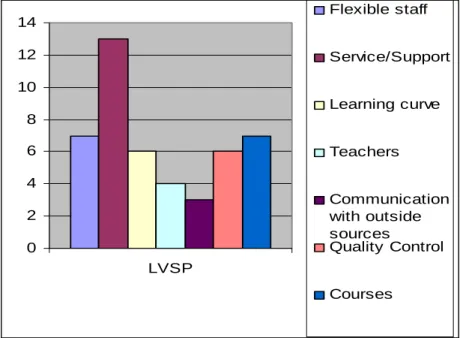
Summary of LVSP Themes ... 85
Research Question Two Analysis ... 86
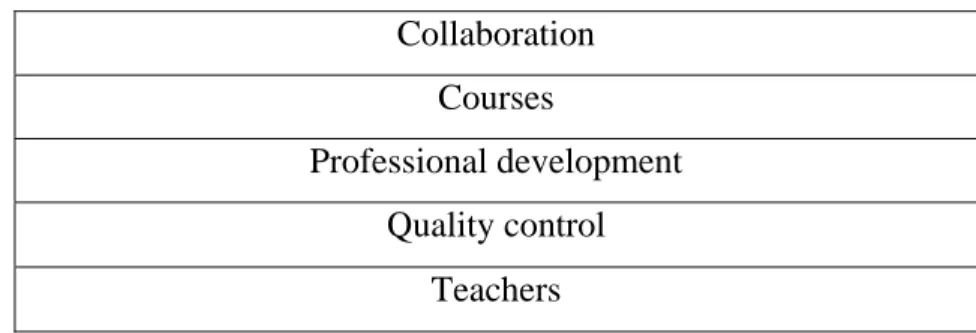
Collaboration... 86
Courses... 88
Professional Development ... 89
Quality Control ... 90
Teachers ... 91
Research Question Three Analysis ... 91
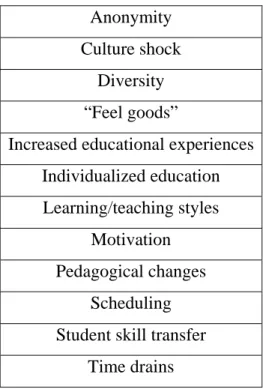
VHS... 92 IVHS ... 94 LVSP... 95 General Experiences ... 96 Anonymity ... 96 Diversity... 97 “Feel goods”... 97
Increased educational experiences... 97
Individualized education... 98
Learning/teaching styles ... 98
Pedagogical changes ... 99
Scheduling... 99
Time drains ... 99
Other Noteworthy Comments ... 100
Culture shock ... 100
Motivation... 100
Student skill transfer ... 100
Summary ... 101
CHAPTER 5 - Discussion, Interpretation, Conclusions and Recommendations ... 102
Attributes Indicating Overall Quality of Program ... 102
Attributes of Online Teachers... 105
Recommendations... 108
Recommendations for Future Study ... 111
Bibliography ... 115
Appendix A - Informed Consent Form... 128
Appendix B - Administrator Interview Questions ... 130
Appendix C - Teacher Interview Questions... 131
Appendix D - Permissions ... 132
Appendix E - VHS NetCourse Standards and Indicators ... 133
Appendix F - IVHS Primary Focus Areas ... 136
Appendix G - Excerpts from Administrative Transcripts... 137
List of Figures
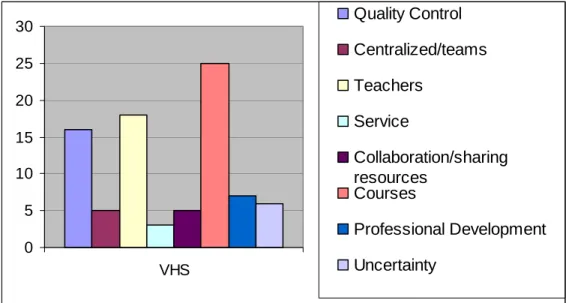
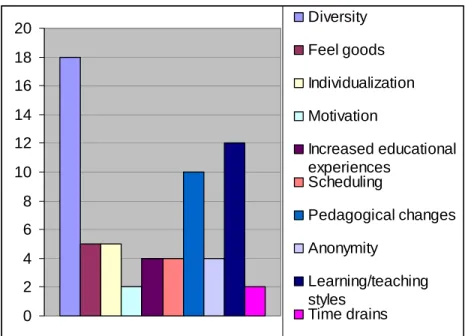
Figure 4-1 Virtual High School: Frequency of responses by administrators... 78 Figure 4-2 Illinois Virtual High School: Frequency of responses by administrators ... 82 Figure 4-3 Lawrence Virtual Secondary Program: Frequency of responses by administrators .. 85 Figure 4-4 Frequency responses of teachers related to general experiences in online teaching. 101
List of Tables
Table 2-1 Types of K-12 Internet-based learning programs... 14
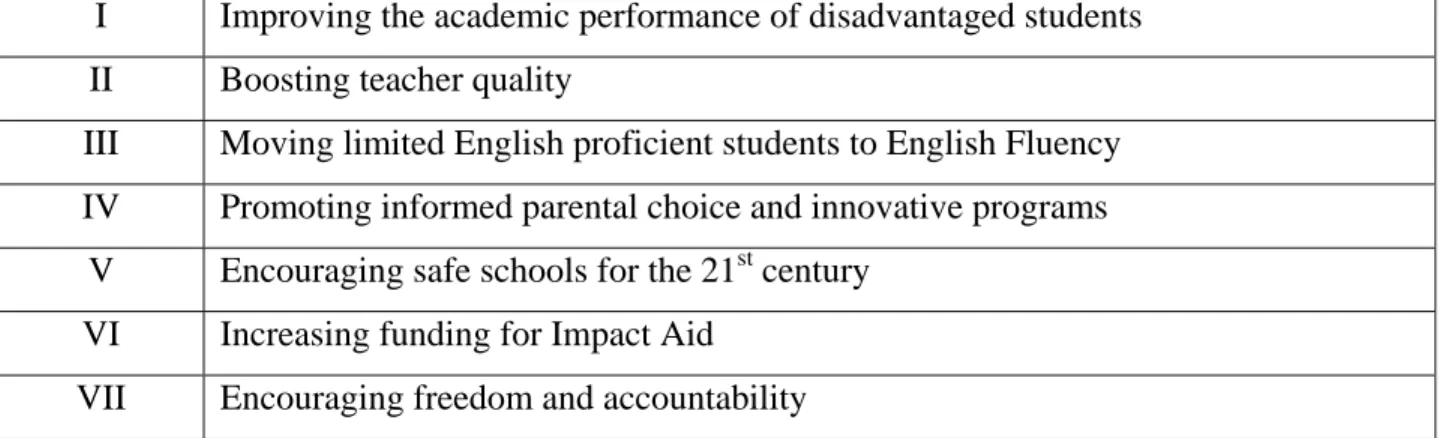
Table 2-2 Performance based titles of NCLB... 34
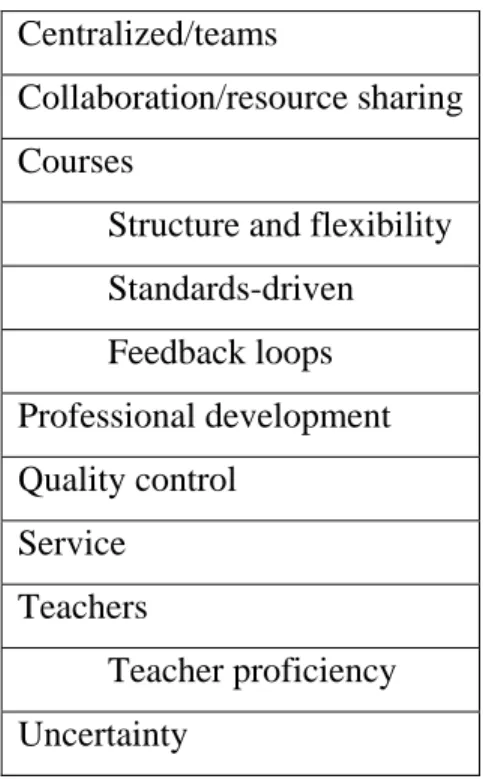
Table 4-1 Major themes and subthemes from administrators of Virtual High School ... 72
Table 4-2 Major themes and subthemes from administrators of Illinois Virtual High School... 78
Table 4-3 Major themes and subthemes from administrators of Lawrence Virtual Secondary Program... 83
Table 4-4 Common themes across participating programs... 86
Table 4-5 Major themes and subthemes of teachers from all participating programs... 96
Acknowledgements
I would like to acknowledge the help and encouragement of several groups of people. First of all, I would like to thank my major professor, Dr. Diane McGrath, who allowed me to enter her program. I would also like to thank the rest of my committee, Dr. Jan Wissman, Dr. Tweed Ross, and Dr. Jerry Bailey, for all their time and assistance in my graduate process. Dr. Canter, thank you for sitting as the outside chair of the committee.
I would like to thank Liz Pape, CEO of VHS who helped me make contacts with the groups I studied in this dissertation. I would also like to thank Donna Scribner, Curriculum Director of VHS for her help in getting me to look at my data harder to find those elements of quality in an online program. Good luck to her in her own dissertation work. Matt Wicks and Jim Kinsella of IVHS for all their assistance in helping me obtain the data. Jana Lloyd and Gary Lewis of LVSP, for their agreement to participate and allow me time at their facility to collect the data. I would also like to thank all the teachers who gave me such useful and interesting data to analyze.
I should probably thank all the construction workers working to improve the roads between McPherson and Manhattan for keeping the roads maintained so I could make that drive several times each week for three years.
Dedication
I would like to dedicate this dissertation to my family without whom I never would have had the support and encouragement I needed to complete it: My husband, Darren; my children, Brandi, Amber, Kaitlyn, Austin, and Madison; my sister Penny; my parents, Joe and Carol Ehalt; my in-laws, Bob and Janice Kiekel, and the rest of my family for supporting and believing in me.
I would also like to dedicate this to my friends in LaPorte – Christine, Karen, Laura, Susan, Judy (good luck in your own PhD work), Elizabeth, Ruth, Becky, and everyone else who wished me luck and encouragement.
I would like to dedicate this to Sharon Thomas for helping me with some of the editing, as well as her encouragement for completing my education.
CHAPTER 1 - INTRODUCTION
Online education, once deemed appropriate only for colleges and universities, is quickly becoming a viable prospect for students in K-12, especially in high schools. This study will explore three online high school programs, comparing common aspects, and looking for characteristics that indicate a level of quality of overall instruction and program. This chapter will include an overview of the issues, problem statement, the purpose of the study, research questions, the significance of the study, a brief rationale for using a case study design, definition of terms, and the scope and limitations of the study.
Overview
Recent advances in computer technology are changing the way the world interacts, communicates, and accesses information (Vrasidas, 2002). These technological advances are affecting the way we do business and changing the face of education.
Distance learning has existed for centuries (Greenway & Vanourek, 2006). With distance learning, there is a separation of teacher and learner, and use of some form of media allowing for two-way communication between members of the class (Keegan, 1986). Traditionally, the primary mode for distance learning has been print-based media. With the advancements in technology, Internet-based learning has evolved to rely primarily on instructional technology, including the Internet, as an educational distribution method (Johnson & Aragon, 2003).
Today, the term online learning is generally synonymous with the term Internet-based learning. A standard definition of online learning, cited by The Sloan Consortium in their 2004 report, is “a course having 80% or more of its content delivered in an online format” (Sloan Consortium, 2004, p. 2).
Distance learning has been used in colleges and universities for approximately 150 years (Greenway & Vanourek, 2006). In 1995, 33% of post-secondary institutions were offering distance courses via the Internet. By the 2000-2001 school term, nearly 90% of all degree-granting institutions offered courses delivered via the internet (National Center for Educational Statistics, 2001).
Internet-based learning in the K-12 educational segment has, until recently, seen a much slower growth but is quickly becoming the fastest growing segment of education offering online courses (Maeroff, 2003). During the 2002-2003 school term, “36 percent of U.S. school districts (5,500 out of 15,040) had students enrolled in distance-education programs, and 38 percent of public high schools offered distance-education courses. A US Department of Education (DOE) study had 328,000 students in 8,200 public schools enrolled in distance-education courses” (Greenway & Vanourek, 2006, p. 35). As of July 2005, according to Learning Point Associates, 21 states had K-12 online learning programs with expected continued double digit growth rates every year (Moser, 2006).
The National Education Association (NEA) estimated that by 2006, a majority of high school students will have participated in an online course prior to graduating from high school (NEA Report, 2005). The North American Council for Online Learning (NACOL) listed 157 unique online learning programs in 42 states in its database, including 32 virtual charter schools, 3 online home-school programs, and 53 public, non-charter virtual schools that offer programs (Greenway & Vanourek, 2006). Utah and Florida have the largest state-run programs, but to-date, the state of Michigan is the most innovative. On March 30, 2006, Michigan lawmakers passed legislation that requires all students entering eighth grade in 2006 to complete an online experience prior to high school graduation (eSchoolNews, 2006;
http://www.michigan.gov/mde/0,1607,7-140-38924-152784--,00.html).
Statement of the Problem
From virtual charter schools to district-level programs, even national programs, online educational programs are increasing in numbers and scope of students served. While this may open the opportunities for students to gain access to courses they might not otherwise have available to them, most state authorities are paying little attention to this growth in educational alternatives. This is because, for the most part, state policy makers have a misconception that the number of students enrolled in online learning programs is relatively small and therefore it is not necessary to monitor (Watson, et al., 2004). However, as stated earlier, more than 300,000 students are taking courses online (Greenway & Vanourek, 2006). Very few nationally
students delineating the characteristics that indicate it is of sufficient rigor and challenge to earn the label “high quality”.
As of March 2004, few states had legislation or regulations regarding online learning (Watson et al., 2004). In some states, state policies allow decision making to occur at the district level. Depending on the degree of centralization and the role of the state department of
education in overall educational decision making, this lack of regulation has led to fragmented policy formation with regard to online programs. In other states, the state has created an online program that is the only option to students in that state. However, even in states with state-wide programs, ongoing operation often occurs without direct state oversight (Watson et al., 2004).
The quality of online programs varies widely. Entrepreneurial enterprises have observed the growth potential in numbers of online students and see tremendous profit potential in the future. This “frontier of educational experimentation” has a potential multi-billion dollar a year market in the K-12 and post-secondary education markets (Maeroff, 2003). These large sums of money cause concern among critics, especially in this day of educational budget cuts. If more states follow Michigan’s lead, there could be explosive growth in online offerings as states scramble to find providers in order for students to meet similar mandates. Programs that arise only as a result of financial opportunism may not focus on content and, as a consequence, may lack sufficient educational quality or rigor for students and school districts.
Early published reviews regarding the quality of online learning opportunities highlighted perceptions that online learning was not as sufficient as face-to-face instruction. A 2001 Phi Delta Kappan/Gallup Association poll, demonstrated nearly 70% of the public said they
disapproved of high school students earning credit through Internet-based courses. Of the 30% of respondents who approved, less than half would agree to allow their own child take most of their courses over the Internet (Clearinghouse of Educational Policy and Management, 2001). Considering the rapid growth of online programs for high school students as well as the potential for legal mandates that could force students to take an online course, quality of program and instruction is an important issue that must be addressed.
The available research on educational quality of online courses primarily addresses post-secondary programs. Research documenting and examining online education explicitly in K-12 settings has just started to see publication dates in the last 3-5 years (Blomeyer, 2002). The lack of educational research directed at online learning in the public school settings makes this type of
study especially important. Some of the available research can be applied to high school
programs; however the differences between post-secondary online students and high school-aged online students make some transfer of the research difficult because high school courses must address emotional and social issues as well as educational issues (NEA, 2005). Even as critics cite concerns about the rapid growth of online learning programs for high school aged students, they do acknowledge that this mode of education is here to stay (Zucker & Kozma, 2005).
School administrators, educators, parents, and students have a large pool of online programs to choose from, some of which market directly to students. With little experience in evaluating the characteristics of an online program, the general public is at the mercy of marketing brochures and salespeople for the program. This research is intended to offer all educational stakeholders the resources to allow them to make an informed decision about online educational programming that will best serve the needs of the students by sharing insights gained through the study of some online educational programs and as an online instructor.
Purpose of the Study
This study explored the attributes of online high school programs using a multiple case study design. The study offers a snapshot of three distinct online programs followed by a comparison across the programs to determine what characteristics these programs have in common and contribute to quality of instruction. The study also includes data from teachers of the three programs relating to how they maintain a level of quality to their online teaching.
Research Questions
Three primary research questions and one subquestion will be addressed in this study: 1. What attributes indicate quality of instruction in an online high school program?
a. How do online programs assure quality of instruction in the courses they offer? 2. What characteristics do successful online high school programs have in common? 3. What do online teachers do to ensure quality of instruction?
Significance of the Study
A key assumption in this research was that high school students are seeking access to a wider variety of courses available to them that they previously would not have access to in their
home schools. Schools in rural areas have smaller student populations meaning that the demand for certain courses would not justify the hiring of a teacher or the available teachers do not have the expertise to teach the courses desired by the students, such as upper level courses or foreign language courses (Maeroff, 2003). Access to online courses can offer schools the capability to increase course offerings without significantly increasing staffing. For example, Bloomfield High School in northeastern New Mexico has a student population of less than 600 students. Despite losing veteran teachers to retirement, this school was able to offer four different AP classes through the use of online courses (Maeroff, 2003).
Administrators, educators, parents, and students often do not have the time or the
expertise to properly evaluate online programs. As expected, sales literature for online programs resonate with glowing reports on the advantages, quality, and rigor of their courses. Because of the potential income for these programs, there is a risk that such claims may exceed a company’s actual ability to deliver high quality student outcomes (Maeroff, 2003). But, sorting through the sales hype can be difficult. If students will be expected to pass exams based on their course work, whether in the traditional classroom or a virtual one, educators cannot simply rely on the sales literature to ensure students are receiving the best education possible. This study is intended to break through the hype of sales literature and give educational stakeholders a better indication of what comprises quality distance education programs in order to enable informed decisions about program selection better tailored to the needs of their students.
Rationale for Case Study Design
A case study is a method of qualitative research that examines a single instance or event. Robert Yin describes a case study as an empirical research method that allows investigation of contemporary phenomena in their real-life context (Yin, 1984). In this particular research, a multiple case study design was employed because three online programs participated. Each program studied is presented first as an individual case study. The programs were then compared, looking for common elements that show quality of instruction. This allowed for comparison across different entities engaged in the same activity – education of high school students through courses taught over the Internet.
Quality – The totality of features and characteristics of a product or
service that bear on its ability to satisfy stated or implied needs. This should not to be mistaken for "degree of excellence" or "fitness for use" which meets only part of the definition
(www.dictionary.com).
Internet-based learning – formal education in which a majority of instruction occurs while teacher and learner are separated by time and space. It includes delivery methods such as independent or correspondence study, as well as videoconferencing, Internet, and other
instructional technologies (Clark, 2001).
Internet – the worldwide, publicly accessible network of interconnected computer
networks. This “network of networks” links smaller networks carrying information and services such as email, chat features, and documents of the World Wide Web (http://www.wikipedia.com and http://www.dictionary.com).
World Wide Web (WWW) – a system of interlinked, hypertext documents that runs over the Internet offering text, graphics, animation, and sound resources through the use of hypertext transfer protocol (http://www.wikipedia.com and http://www.dictionary.com).
Synchronous – occurring at the same time. In a synchronous classroom, students use chat rooms to be online and participating in discussion at the same time
Asynchronous – not at the same time. In an asynchronous classroom, students are not online at the same time and participate in discussion through threaded discussion boards
Online course – an academic course offered in a virtual environment over the Internet in which students and instructor may never meet face-to-face.
Course management system and virtual learning environment – a software system designed to facilitate in the management of educational courses, especially through course administration. Components include: content pages, discussion forums, chat, quizzes and exercises (http://www.wikipedia.com).
Virtual high school and virtual school – two descriptions used to represent an educational organization that offers either high school or K-12 courses through Internet or web-based
methods (Clark, 2001).
Traditional education – educational opportunities offered in a traditional bricks-and-mortar school with teacher and students meeting in a face-to-face environment.
Charter school – a public school operating independently from a school district, often with a different educational philosophy and curriculum than other schools within the district, created and organized by parents, teachers and other educational stakeholders
(http://www.dictionary.com).
Nationwide program – an online educational program that enrolls students across state (or international) boundaries. It is not affiliated with a state or school district educational agency.
State-sanctioned, state-level program – in at least 14 states, entities can be identified that have been sanctioned by state government to act as the state’s virtual school (Clark, 2001).
Local education agency-based – a distance education program sponsored by local public schools or school districts mainly to serve as their own supplemental or alternative educational resource (Clark, 2001).
Consortium-based program – a provider of distance education using membership to obtain access to distance education resources.
Teacher quality – teachers should be certified/licensed in the subject matter, learning theory, technologies, and teaching pedagogies appropriate for the content area and online environment (NEA, 2006).
Wiki – a collaborative website whose content can be edited by anyone who has access (http://www.dictionary.com).
Blog – short for weblog – a shared online journal where people can post entries related to personal issues, hobbies, etc.; usually in chronological order (http://www.dictionary.com).
Greenbush Learning Resources – a division of the Southeast Kansas Educational Service Center providing member school districts with digital instructional media for all grade levels (http://lr.greenbush.org).
Apex Learning – a private, online course provider (http://www.apexlearning.com). Aventa Learning – a private, online course provider (http://www.aventalearning.com). Digital native – a person who was born into a society with an abundance of technology – cell phones, computers, video games, digital music players, video cameras, Internet, instant messaging etc. Digital natives feel comfortable using technology throughout their every day life activities (Prensky, 2001).
Digital immigrant – a person who was born after the digital revolution, who then becomes fascinated by and adopts many or most aspects of technology (Prensky, 2001).
Scope and Limitations
The scope of this study does not include a comparison to traditional educational experiences or outcomes; rather the study aims to discover characteristics inherent in a high quality online program. These characteristics were compared across three different programs to discover how each program goes about performing similar functions.
This study evaluated three high school online education programs. Virtual High School, Inc. (VHS) of Maynard, Massachusetts, Illinois Virtual High School (IVHS), of Aurora, Illinois, and Lawrence Virtual Secondary Program (LVSP), of Lawrence, Kansas, agreed to participate in the study. VHS is an international consortium-based Internet learning program. IVHS is a state-wide program. LVSP is the secondary program of Lawrence Virtual School in the Lawrence, Kansas school district. VHS and IVHS were chosen because of familiarity, and citations in the literature for the high quality of their programs. The school-district level program was chosen for its relatively local proximity to me and the ability to meet with administrators and teachers directly. It would have been preferable to have another state or national program participate in order to enhance the findings and providing more comparisons, but six other petitioned programs declined the invitation to participate. There was also a time constraint that prohibited studying more than two or three organizations. Another limitation of the study was the inability to obtain advanced placement (AP) scores from the programs in the study, either because they did not offer AP courses or the program didn’t have access to the scores. Although AP scores would have offered a student outcome component to the study, the lack of scores, or ability to compare them had no impact on the core study findings.
A final limitation is related to the interview instruments used. There were no previously validated interview instruments available for use known to me. Experience and familiarity with online education, as well as information obtained during the literature review, guided the
CHAPTER 2 - REVIEW OF THE LITERATURE
This chapter reviews the literature related to issues surrounding distance education for high school students. The focus is on literature related to distance education in general; the No Child Left Behind Act and its implications for distance education; professional development for online teaching; an analysis of today’s students with respect to online education; and issues relating to quality of instruction.
Distance Education and Evolution to Internet-based Education
This first section in the review of literature is presented in several subsections beginning with a look at the history of distance education and its evolution to Internet-based education. Next the literature is reviewed relative to course types and models. Finally, the impact of Internet-based education, including the advantages and disadvantages, instructional design issues, cognitive theory, and the use of supplemental materials is discussed.
Historical Perspective
Internet-based education appears to be a rather new phenomenon – but in truth, it is based on a centuries old concept, distance education. The rapid evolution of the concept of Internet-based learning in recent years is due to dynamic technological advances. The rapid change of technology is not exactly new, but the nature of changing technology –from the development of a reliable mail system to the development of the Internet – has led to the development and
evolution of distance education through the past two centuries.
Starting with the advent of reliable and cheap mail delivery, the first distance education courses became an important part of the education system. Beginning in the 1880’s, these courses were known more generally as correspondence courses, home study, or independent study. The courses were available to students, delivered back and forth between the school and the student via mail (Moore & Kearsley, 1996). The first college to offer full degrees via correspondence was The Chautauqua Correspondence College, which was founded in 1881 (Moore & Kearsley, 1996). With the success of correspondence schools in the United States, the
development of correspondence schools in other countries followed closely on the heels of development of reliable mail delivery systems.
The first instance of a high school using distance education occurred in 1922 in Benton Harbor, Michigan. The principal, S.C. Mitchell, stated that the curriculum in this school was too heavily weighted toward college-preparatory courses for its primarily working class community. With the help of The American School in Chicago, a well-respected distance learning program, this principal enrolled a group of vocationally oriented, non-college preparatory students in what became known as “supervised correspondence study,” an idea which quickly spread throughout the United States (Moore & Kearsley, 1996, p.28). In 1928, the University of Nebraska adopted supervised correspondence study as the basis for forming an experimental high school (Moore & Kearsley, 1996).
From correspondence courses distributed via the mail system, the next step in distance education came as a result of broadcasting. The first educational radio license issued by the federal government went to the Latter Day Saints’ University of Salt Lake City in 1921. In February of 1925, the State University of Iowa began offering courses over the radio (Moore & Kearsley, 1996). Radio, however, did not live up to expectations as an educational distribution medium. Some reasons radio did not live up to its promise include the amateurism of the
broadcasts, a lack of commitment from broadcasters due to the inability to include advertising in the broadcasts, its one-way communication, and the overall unenthusiastic interest of faculty and administrators (Moore & Kearsley, 1996).
On the other hand, television was much more successful. As early as 1934, the State University of Iowa began offering college courses via television broadcasts (Moore & Kearsley, 1996). Television distribution expanded after World War II. Televised educational distribution received donations from the Ford Foundation, helping spur widespread use (Moore & Kearsley, 1996). The literature is not specific as to the reasoning for the success of television over radio, but we may speculate that perhaps television was a more successful method due to the eventual development of teleconferencing capability which offered the ability to use two-way interaction, or the fact that students could see and hear the instruction presented on the television.
The Articulated Instructional Media Project (AIM) and the Open University (OU) approach emerged in the late 1960’s and early 1970’s. The AIM project was funded by the Carnegie Corporation in an attempt to “join various communication technologies, with the aim of
delivering high-quality and low-cost teaching to off-campus students” (Moore & Kearsley, 1996, p 33). This project proffered a new “systems” approach because in addition to providing the content, the program provided “student support and counseling, discussions in local study
groups, and the use of university laboratories during vacation periods” (Moore & Kearsley, 1996, p 33). Through the use of all known forms of distance educational delivery methods, presenting content in a variety of ways allowed students to use the methods that best fit their learning styles (Moore & Kearsley, 1996). The AIM approach was the first time the idea of distance education was used as a total educational system. (Moore & Kearsley, 1996)
In 1967, the British government started the process of planning and implementing a new educational system. This system became known as the Open University (OU) approach and started with the idea of using radio and television to allow open access to higher education to the adult population (Moore & Kearsley, 1996). It was built resembling the AIM project. The first Open University opened in London in 1969 (Moore & Kearsley, 1996). The OU approach became the premier national distance education university. This approach was so successful that nearly every industrialized nation, except the United States, has one (Moore & Kearsley, 1996). Several reasons exist for why the OU approach did not work in the United States. One reason is that the political motive to remove barriers to higher education did not exist in the United States. Where Open University systems in other countries enjoy economies of scale (greater than
100,000 enrollments), the United States was unable to achieve this scale and support due to the lobbying efforts of the current higher education system (Moore & Kearsley, 1996). Currently, each state controls its own educational system – both K-12 and post-secondary. Because each state has its own educational system, developing a national education policy was nearly impossible to achieve (Moore & Kearsley, 1996).
The focus of most of this historical information has been on educational institutions. It should be noted that other groups have used distance learning as well. Home study groups and the military have accounted for a large number of distance education learners in the past 20-25 years. In addition to these groups, business and industry have also used distance learning techniques for training (Moore & Kearsley, 1996).
The next evolution of distance learning derived from advances in teleconferencing technology. Through the use of teleconferencing, distance education moved from being a solo venture to one that was designed for group use (Moore & Kearsley, 1996). Teleconferencing
differed from television or radio transmission of education because it allowed for two-way exchange between groups. Teleconferencing has evolved from being audio only to the use of satellites and two-way video. In 1987, the Star School Program Assistance Act was passed by Congress. This law was designed to promote the use of telecommunications for instruction in math, science, and foreign language at the K-12 level (Moore & Kearsley, 1996).
The current leap in evolution of distance education is a direct result of the exploding use of the World Wide Web, or the Internet. In 1969, the Department of Defense (DOD) set up a network to foster communication between the military, universities, and defense contractors. In the 1983, the National Science Foundation (NSF) set up a computer network, known as NSFnet that would later connect universities and research organizations, and eventually commercial interests (http://www.wikipedia.org). In 1993, the National Center for Supercomputing
Applications at the University of Illinois at Urbana-Champaign released Mosaic 1.0, one of the first generally popular browsers. By late 1994, there was growing public interest in the ability to access these databases and by 1996, the Internet was a common household word
(http://www.wikipedia.org). By 1999, 88% of higher education institutions had plans to use the Internet to offer distance-based courses versus recorded video or two-way video teleconferencing (Johnson & Aragon, 2003).
The first online public school began in 1995 with the CyberSchool Project in Eugene, Oregon. This program was started by nine teachers to offer supplemental high school classes. By 1996, there were three online schools: the WebSchool in Orange County, Florida; The Cyber-School Academy, started by the Federal Way School District in the state of Washington; and the Concord Virtual High School (later renamed as Virtual High School) based in Maynard, Massachusetts. During this time period, the University of Nebraska-Lincoln was given grants to research and develop Internet-based high school courses (Greenway & Vanourek, 2006).
From 1996 to 2002, a dozen state departments of education created statewide virtual high school services (Zucker & Kozma, 2003). During 2002-2003, 36 percent of US school districts had students enrolled in distance education programs. As of November 2005, the North
American Council for Online Learning (NACOL) listed 157 online learning programs in 42 states (Greenway & Vanourek, 2006). Distance education in the K-12 setting is expected to continue growing at double digit rates (Maeroff, 2003).
Computer-based Educational Systems
Computer-based education systems emerged during the late 1960s and early 1970s. These systems were created prior to the advent of the Internet and were generally networked on a single campus. One of the first was PLATO, started at the Urbana campus of the University of Illinois (Woolley, 1994). Using computers in teaching was the impetus for the development of this system. PLATO started as a small computer network with only a single classroom of terminals (Woolley, 1994). Technological advances made through the development of the microcomputer eventually allowed PLATO to grow to a system handling more than a thousand users at once (Woolley, 1994).
PLATO was considered to be ahead of its time (Woolley, 1994). Its features included a chat function and the ability for users to write programs for the system. Users communicated with each other and reported bugs and possible fixes to the program developers through the system. Because of its structure, PLATO became popular in the development of gaming programs, often written by unpaid programmers whose only gain was the recognition that they had written a popular game program (Woolley, 1994). Coupled with the fact that
microcomputers were becoming much more cost-effective than single use terminals, and financial difficulties faced by Control Data, the owner of the PLATO system, the system shut down in the early 1980s (Woolley, 1994).
After the demise of PLATO, and based upon the successes of PLATO, research-based computer-aided instruction (CAI) lessons and computer-managed instructional systems developed. CAI used a game-like entertainment system to present drill-and-practice tutorials (Moursund, 2001). Schools began investing in PC computer labs, using the labs as a
supplemental instructional method to enhance academic achievement in certain subject areas like math and reading (Christmann, Badgett & Lucking, 1997).
Integrated learning systems (ILS) were another outcome from the success of the PLATO system. ILS programs were stand-alone educational programs that allowed a student to work at their own pace through a series of lessons, obtain individual attention from a teacher, and were in a small classroom environment (Ray-Overstreet & DeVane, 1995). When ILS systems were used with at-risk students, the students were more likely to complete course work and improve their skills and abilities (Ray-Overstreet & DeVane, 1995). Unlike traditional CAI programs which were used to enhance classroom instruction, ILS systems presented stand-alone instruction
and lessons and allowed for tailoring of the content to fit the student’s current learning level (Jones, 1994).
Distance Education Types
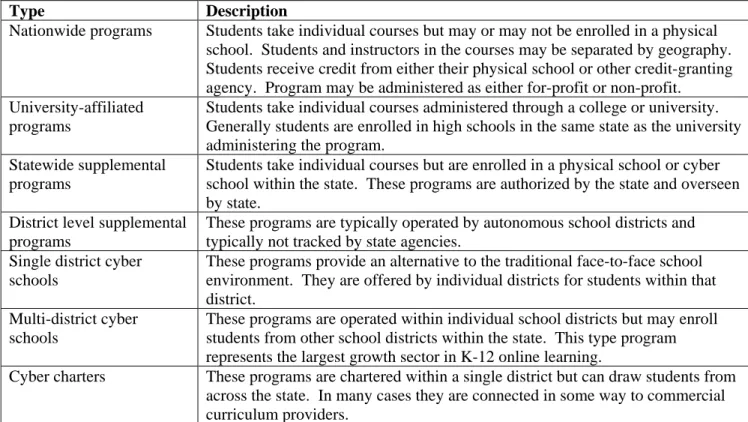
Internet-based learning is generally defined in the literature as a formal education program characterized by separation of teacher and student(s), either by geography or by time, using technology as a means of presenting context and communication (Schrum, 2002; Allen & Seaman, 2004; Maeroff, 2003; Rice, 2006). For the purposes of this study, the programs studied are institutionally based meaning they have a central agency that administers the program. Rice (2006) identifies five types of K-12 Internet-based learning programs which are described briefly in the table below. In addition to Rice’s list, I have added nationwide programs and university-affiliated programs.
Table 2-1 Types of K-12 Internet-based learning programs Type Description
Nationwide programs Students take individual courses but may or may not be enrolled in a physical school. Students and instructors in the courses may be separated by geography. Students receive credit from either their physical school or other credit-granting agency. Program may be administered as either for-profit or non-profit.
University-affiliated programs
Students take individual courses administered through a college or university. Generally students are enrolled in high schools in the same state as the university administering the program.
Statewide supplemental programs
Students take individual courses but are enrolled in a physical school or cyber school within the state. These programs are authorized by the state and overseen by state.
District level supplemental programs
These programs are typically operated by autonomous school districts and typically not tracked by state agencies.
Single district cyber schools
These programs provide an alternative to the traditional face-to-face school environment. They are offered by individual districts for students within that district.
Multi-district cyber schools
These programs are operated within individual school districts but may enroll students from other school districts within the state. This type program represents the largest growth sector in K-12 online learning.
Cyber charters These programs are chartered within a single district but can draw students from across the state. In many cases they are connected in some way to commercial curriculum providers.
Note. This table adapted and reproduced with permission from “A comprehensive look at distance education in the K-12” context by Kerry Lynn Rice, 2006 Journal of Research on Technology in Education, 38, p. 425. Copyright 2006 by Kerry Lynn Rice.
There are two distinguishing characteristics that define the above types of programs: whether the online program enrolls students and grants credit and diplomas directly, and the jurisdictional level of the program (such as state or district) (Watson, et al., 2004). Operational
issues of online programs, including issues of funding and teacher supervision, are affected by how they are defined.
The ways in which online high school programs were developed varies greatly. Some programs were started by legislation, others by for-profit or non-profit organizations, and others by regional educational service agencies or cooperatives. Due to the range of processes for starting and operating online high school programs, the degree of oversight of these programs varies as widely as their development. In 2003, the distance education market was considered to be a $700 million a year industry (Maeroff, 2003). With minimal oversight by state or federal educational agencies, and double digit projected growth in the near term, the door is open for many new programs to emerge. To date, the educational community lacks an accepted industry standard for online courses and programs, but several agencies are working on it. One
organization, “Quality Matters” is currently working to ensure online programs maintain
minimum standards of quality. They have published standards for post-secondary online courses and have just begun (in 2006) to look at high school online courses
(http//www.qualitymatters.org).
Internet-based Learning Models
There are several different models for Internet-based learning. These models include courses that are completely online, courses that use video teleconferencing, or courses that are hybrid models integrating both face-to-face and distance components.
Completely online courses are courses that present the course content entirely in an online form. The synchronous class format uses an online chat room where all students (or groups of students) are required to be present for discussions, which occur in real-time.
Asynchronous discussions allow students to make postings to the discussion thread when they are online, not necessarily when other students might be online as well. Students read each other’s postings and return comments back and forth in order to further understanding of the larger group (Maeroff, 2003).
Another model for distance delivery includes the use of telecommunications systems. Using systems such as Polycom, Tandberg, CUseeME, and NetMeeting, classes are able to collaborate over distance and see other students in a real-time setting. These systems allow the incorporation of audio, video, chat, and whiteboards for multiple classes over great distances to
work together on projects and presentations. The one problem with this type of model is that it requires a large bandwidth, which can get expensive. Once established, however, the
possibilities of such a system are unlimited (Schrum, 2002).
A third model for distance delivery is a hybrid model. This model incorporates the use of either synchronous or asynchronous discussion in addition to face-to-face class meetings.
Because some students may feel isolated in a cyberclassroom, this model allows students who are new to Internet-based learning to continue to see that the course works similarly to any other course and, in some cases, allows them to make an easier transition to wholly online classes.
For the purpose of this research, programs considered completely online courses were studied. These programs generally used textbooks or some form of printed course materials for presentation of content with asynchronous classroom discussions and activities.
Issues Affecting Internet-based Learning
Most of the available research regarding issues related to the impact of Internet-based courses on learning has been obtained at the post-secondary level. However, not all of this research can be applied to the K-12 learning environment in the same manner as at the post-secondary level. This section will examine some of those issues, which include: advantages and disadvantages of online learning, instructional design issues of courses, creating a community of learners and changing roles in the classroom, cognitive theory and instructional design, and the use of supplementary materials.
Advantages of Internet-based learning
One of the primary advantages of Internet-based learning is that it increases a school’s access to curricular offerings that might not otherwise be available to students (Gagne & Shepherd, 2001; Donlevy, 2003). This could be of significant benefit to high schools that are otherwise unable to offer a wide range of courses due to lack of teacher expertise or insufficient student interest to make it feasible for schools to offer specific courses. This is especially true for the more challenging upper-level classes, in, for example, a college-preparatory curriculum (Maeroff, 2003; Spodick, 1996). By using Internet-based learning options, schools can increase the number and depth of courses offered to their students without increasing the size of teaching staff or size of the building. Some of the literature even claims that teachers who teach online are better educated and have more experience than teachers in the traditional classroom, many
having master’s degrees or higher (Roblyer & Elbaum, 2000). Empirical evidence regarding this issue was obtained during the course of this research and will be mentioned in the individual case descriptions, but this claim was not specifically studied in this research.
Another advantage of Internet-based learning is that it appears to facilitate a greater amount of individual student and teacher interaction (Meyer, 2003). According to Meyer (2003), evidence shows the asynchronous mode of instruction increases interaction, self discipline, sense of community, improved communications skills, reflection, and a shared sense of space among students and teachers. Course participants who are able to create a community through
interaction in the course achieve greater confidence, are able to learn from others, and feel connected and accepted (Meyer, 2003).
In the asynchronous environment, students cannot see each other physically, and this leads to a sense of anonymity. Students who might be shy in a traditional classroom are able to express themselves and contribute more in the online environment (Kindred, 2003). In traditional classrooms, those students who can think quickly and are very vocal are often the students whose thoughts and ideas are heard. In the asynchronous classroom, there is no such fight for “floor time” and students who are more reflective thinkers can read and reflect upon their contribution to the discussion before making their voice heard in the discussion board (Berman & Tinker, 1997). Asynchronous discussions allow students to read, research, and reflect upon their responses, contributing to the richness of discussion and open debate of concepts.
The ability to improve communication in general is an advantage of Internet-based learning. Students are able to communicate with each other, with the teacher, and even with experts in the subject matter, bringing that information to the discussion boards to share. Due to the textual nature of Internet-based learning, the role of the teacher changes from presenter of knowledge, to reviewing what the students already know and building upon that knowledge to increase understanding of the concepts (Twigg, 2003). The teacher can see the thought processes of the students through their written words and can very quickly offer feedback and redirection. Through the use of Socratic questioning techniques, students are encouraged to think more deeply about the subject rather than just scratch the surface of understanding. Within well-written curricula, this feedback loop becomes an integral part of the learning process and increases and reinforces the scaffolding and construction of knowledge (Twigg, 2003). In the
online environment, the teacher is not seen as the final authority in a discussion and becomes more like a participant in the class (Palloff & Pratt, 1999).
Increased collaboration can be accomplished in the online classroom which affords students an increased ability to communicate with all members of the class, including the instructor. Online classrooms offer the ability to explore the materials beyond the text by searching out more information to meet students’ interests (Kindred, 2003). Students are easily able to work on projects and get feedback from other members of the class, as well as from the instructor. Distance educational models often purposefully create situations that actively involve the students in the course through the use of interactive projects that require collaboration and engagement (Berman & Tinker, 1997). These projects and simulations are used to engage and stimulate students encouraging them to assume more responsibility for their own learning.
The ability to explore the subject matter in their own way to suit their learning styles is affords a key advantage for students regardless of abilities. For example, students with
disabilities can benefit from Internet-based learning because these students are free to explore the subject matter in a way that best suits them, rather than how the instructor presents the material (Maeroff, 2003). On the Internet, “nobody knows you’re a kid” (Brown, 2000). This anonymity allows students to make contact with experts in the field without fear of not being taken seriously because of what they look like or their age. It helps to broaden the understanding of general concepts because the students can search out their own information to help them understand and apply the concepts.
Perhaps one of the most unique advantages of Internet-based learning is that it can be done anywhere and at any time. Traditional classes are generally held between 8 a.m. and 3 p.m., on average. In the virtual classroom, class, literally, never ends. Students can access the course at any time of day or night because the Internet never turns out the lights and shuts the doors – always available unless, of course, the server is down. Some Internet-based learning programs operate in countries around the world. Even when students or teachers are on vacation, they can always check in on the class and see how things are going (Berman & Tinker, 1997; Roblyer & Elbaum, 2000; Maeroff, 2003). It is this aspect that drew this researcher to the prospect of teaching online.
The Web-based learning environment provides opportunities for students to develop what one researcher referred to as “generic skills” (Oliver & McLoughlin, 2001). Generic skills are
those skills that extend beyond the skills and knowledge in specific subject areas (Oliver & McLoughlin, 2001). Oliver and McLoughlin (2001) list the following as key competencies resulting from technology use: collecting, analyzing, and organizing information; expressing ideas and information; planning and organizing activities; collaboration with individuals and as part of teams; the ability to use mathematical ideas and techniques; and problem-solving. Learning to use technology is part of the core competencies included in literature by Oliver and McLoughlin as well as Roblyer and Elbaum (2000), Berman and Tinker (1997), and Donlevy (2003).
Disadvantages of Internet-based learning
There are some disadvantages to Internet-based learning that should not be ignored. One disadvantage is the lack of physical contact. For some, this lack of contact can diminish the effectiveness of the educational experience (Donlevy, 2003). This could be partially due to the fact that much of the educational process takes place in a social setting (Bransford, Brown & Cocking, 2000). Due to the nature of Internet-based learning, the lack of physical contact with students means that the teacher may be unable to realize when students are having difficulty and this could lead to students dropping out of the experience (Berge & Clark, 2005). The separation of teacher and student also causes difficulty with the process of making meaning of words and sentences as this is aided through the use of visual cues which are absent in the Internet-based learning classroom (White & Weight, 2000). To minimize this feeling of isolation, it is up to the writer of the curriculum to ensure that a sense of community is built into the curriculum to maintain a social structure to the “classroom”. This aspect will be discussed further in the instructional design subsection.
Another disadvantage is related to the textual nature of Internet-based learning. Although this is also one of the advantages in that it teaches communication skills and allows the
visualization of thought processes, students with low reading abilities, or disabilities such as dyslexia, may find it difficult to keep up with the massive reading requirement of Internet-based learning (Zucker & Kozma, 2003). This can be diminished somewhat with the use of
multimedia in the presentation of the material, however increasing multimedia can cause problems for students who do not have the bandwidth to effectively view multimedia
presentations, such as students from outside the United States or those who use dial-up Internet services.
Access issues in general present a disadvantage to Internet-based learning. Access issues include factors such as whether or not students have computers and Internet access in the home and the Internet speed available. Problems inherent in general Internet access such as server outages and weather conditions that interfere with Internet access also complicate Internet-based learning.
In 2000, computers were in the homes of 77% of white non-Hispanics, 72% of Asian Americans, 43% of African Americans, and 37% of Hispanics (Maeroff, 2003). Further, there is a direct correlation between household incomes and computers in the home. Consider that 87% of households with incomes of greater than $75,000 had computers in the home, 79% with Internet access versus only 28% of Americans with an average income below $25,000 had computers in the home and only 19% of those who had computers in the home had Internet access (Maeroff, 2003). It is difficult to access online learning and take advantage of its potential if the student lacks a computer or Internet access in the home.
By 2003, 87% of white non-Hispanics, 84% of Asian Americans, 54% of African
Americans, and 55% of Hispanic Americans had access to computers at home. By 2003, 96% of homes with incomes of greater than $75,000 had computers in the home while 47% of those making less than $25,000 had computers in the home (childtrendsdatabank.org). No information was available regarding household income and Internet access in this report.
A critical disadvantage of Internet-based learning is that high school students may not have the self-management skills necessary to direct their own learning. Recent statistics show that only 68 of 100 ninth-graders graduate from high school with their class. Of these, 40 enroll immediately in colleges and universities, with only 27 making it through their second year of secondary education (McCarthy & Kuh, 2006). Of those students who pursue
post-secondary educational opportunities, three-fifths of two-year college students and one-fourth of four-year college students require one or more years of remedial classwork (McCarthy & Kuh, 2006).
Internet-based learning requires students to be self-motivated and responsible for their own learning if they are to succeed (Roblyer & Marshall, 2002; Clark & Berge, 2005; McCarthy & Kuh, 2006). The role of the teacher changes in an online course to one that is much more collaborative. Some students have difficulty making that basic adjustment in their own learning process because they have not developed the study skills necessary to take on a more active role
in their own learning (Clark & Berge, 2005; McCarthy & Kuh, 2006). Screening instruments, such as the Educational Success Prediction Instrument (ESPRI), are used by some virtual programs to screen potential online students (Roblyer & Marshall, 2002), however this does not occur universally. Screening tests aid in identifying students who have the skills necessary to direct their learning as well as provide a basis for counseling and support services for students interested in taking online classes (Roblyer & Marshall, 2002). However, these screening instruments could also exclude students who might be very successful in the Internet-based classroom.
Accreditation issues are also of concern. With the profit potential offered by double-digit growth rates, the potential for proliferation of substandard programs will be of ongoing concern (Maeroff, 2003; Clark & Berge, 2005). In most cases, the school recognizes the distance
program and gives academic credit because a teacher in the school is involved in the teaching of the students. If programs are able to market directly to students without any type of screening process, however, the potential for substandard programs increases (Clark & Berge, 2005).
Finally, teachers are often not given the professional development necessary to offer high quality learning experiences via Internet-based learning. Significant training time is necessary for proper faculty development (Donlevy, 2003). Distance education, specifically Internet-based learning, has the stigma of being substandard to traditional educational experiences. Effective teaching techniques for the online classroom are different from the traditional classroom, so simply hosting the information on the Internet and labeling it as distance education without proper teacher preparation will not improve its stature in the eyes of administrators and parents. More discussion of professional development will occur later in this chapter.
Instructional design
Instructional design is the “systematic process of translating general principles of learning and instruction into plans for instructional materials and learning”
(http://www.coe.uh.edu/courses/cuin6373/whatisid.html). In other words, instructional design is how educational materials and activities are presented in an attempt to best meet the needs of the learners. The quality and effectiveness of Internet-based learning are directly related to the instructional design employed in the presentation of the content. Several issues related to
and the changing roles of teacher and student, cognitive issues related to the display of information in the course, and the supplementary materials used in courses.
Creating a community of learners and the changing roles in the classroom
In the traditional classroom, the creation of an educational community is relatively easy to do. Students see and hear each other, as well as the teacher, because they are all located in the same place. They easily communicate back and forth. Students and teachers know the
boundaries of the classroom and what roles each group takes on in the academic setting. In the online environment, however, students would scarcely know their classmates if they were to pass them on the street. Teachers could be standing next to their students in the grocery store and both would be totally unaware. Therefore, creating a community in cyberspace presents a new and unique challenge to even the most experienced teacher.
Building a community of learners in the online environment is not something that can be produced as an accidental byproduct of belonging. The design of the course, from the interface to the instruction and communication, must be carefully orchestrated and deliberately planned in order to allow students to feel they are part of a group and not just an isolated person stuck out in cyberspace, reading lectures and making notes on an electronic bulletin board (Palloff & Pratt, 1999). The Internet is as much about person-to-person connections as it is about information (Revenaugh, 2000). Students must feel they are part of a larger group to increase the
effectiveness of the course and reduce the dropout rate (Twigg, 2003). Connections made in an online class are unique (Wood, 2005) limited only by time and access rather than by distance and social class (Palloff & Pratt, 1999).
To be effective, the online instructor must have both content knowledge and good communications skills to more effectively build the community of learners (Palloff & Pratt, 1999). Care must be taken during the development of the course to give deliberate attention to the development of interpersonal skills and interactions between teacher and students as well as among the students themselves (Palloff & Pratt, 1999). The better the teacher is at
communicating the content through the written word, as well as maintaining the social and emotional aspects of the traditional classroom, the more successful the learning process (White, 2000).
The roles of the teacher and student are very different in an online classroom. The online teacher has the potential to build unique personal relationships with students without ever
physically meeting (Perreault, , 2002). It is the responsibility of the teacher to create
opportunities for interaction with the students. These opportunities must be planned during the curriculum writing phase of course development. Therefore communication between teacher and students occurs on a much more personal level.
Since it is necessary for students in an online course to be more responsible for their own learning, the teacher must give up authoritarian control of the class and become more of a
facilitator. Instead of always giving answers to questions, the online teacher must use a more Socratic teaching style. By asking pertinent questions, students can be stimulated to do more research to be able to respond to the questions. Through this process, the teacher becomes a member of the community of learners, rather than the final source on the subject area. This change in roles also allows for students to see the teacher as more approachable and less intimidating because they are seen more as a participating member of the learning community. Not only will this help overcome the impersonal nature of the online environment, it promotes student-student communication as well as enhances the student-teacher relationship (Kemp, 2000).
For learning to take place in the online environment, all members of the learning
community must participate. The greater the participation, the more cohesive the group becomes and the more successful the learning (Palloff & Pratt, 1999). The asynchronous learning
environment allows the students to participate when they are ready rather than trying to participate in a discussion in the heat of the moment as in a traditional classroom.
Social and cognitive learning theory and instructional design
Internet-based learning presents many challenges for K-12 learners and teachers. Instruction for the K-12 learner needs to address both the emotional and social aspects of learning as well as the academic content. Students use their own modes of cognitive processing to acquire, retain, and retrieve information which implies that acquisition and performance depend on how the learner manipulates the subject matter/content (Blanton, 1998). In the traditional classroom, instructional designers tend to rely on the fact that there is a teacher and student peers present to make adaptations and support the learning environment. Students who have difficulty understanding have the immediate feedback from others in the classroom to test and compare their knowledge (Morrison & Anglin, 2005). In the Internet-based learning environment, the lack of an immediately available instructor or student peers may so frustrate