TECHNOLOGICAL, PEDAGOGICAL, CONTENT KNOWLEDGE (TPACK): AN EXPLORATORY STUDY OF ADJUNCT FACULTY TECHNOLOGY
PROFICIENCY by
DAVIN V. KNOLTON
B.S., Austin Peay State University, 1986 M.S., Central Michigan University, 2001
AN ABSTRACT OF A DISSERTATION
Submitted in partial fulfillment of the requirements for the degree
DOCTOR OF PHILOSOPHY
Department of Educational Leadership College of Education
KANSAS STATE UNIVERSITY Manhattan, Kansas
ABSTRACT
In an era of increasing demand for a limited budget, more universities are turning to adjunct faculty to fill the need and to address the student load. Adjunct faculty
members are hired for their content knowledge and close association to the business world and industry. This study was conducted to investigate whether a relationship exists between (a) technological pedagogical content knowledge (TPACK); (b) pedagogical training; and (c) personal technology; and to determine which variables have the greatest influence in the willingness of adjunct faculty at a Midwestern higher education
institution to choose and integrate digital technology into curriculum and expand to the discussion of TPACK into graduate level education.
TPACK is both a framework and an instrument to measure the level of integration of the primary components of the TPACK framework. TPACK is a term that describes what a teacher must know to integrate technology effectively into curriculum or teacher practices and represents the combination of teacher content knowledge, pedagogical knowledge and technology knowledge as interrelated. TPACK allows educators to consider what knowledge is required to integrate technology into teaching and how they might develop that knowledge within themselves.
The study was conducted with a sample (n=30) of adjunct faculty members from two extension campuses from a Midwestern, Tier 1 university. The data revealed
significant relationships between pedagogical training and selection of appropriate technology, and between personal technology use and selection of appropriate
technology. The data also revealed that TPACK was a significant predictor; however, the subdomains of TPACK masked the true impact because of the high presence of
TECHNOLOGICAL, PEDAGOGICAL, CONTENT KNOWLEDGE (TPACK): AN EXPLORATORY STUDY OF ADJUNCT FACULTY TECHNOLOGY
PROFICIENCY by
DAVIN V. KNOLTON
B.S., Austin Peay State University, 1986 M.S., Central Michigan University, 2001
A DISSERTATION
Submitted in partial fulfillment of the requirements for the degree
DOCTOR OF PHILOSOPHY
Department of Educational Leadership College of Education
KANSAS STATE UNIVERSITY Manhattan, Kansas
2014
Approved by: Major Professor Royce Ann Collins
COPYRIGHT DAVIN V. KNOLTON
ABSTRACT
In an era of increasing demand for a limited budget, more universities are turning to adjunct faculty to fill the need and to address the student load. Adjunct faculty
members are hired for their content knowledge and close association to the business world and industry. This study was conducted to investigate whether a relationship exists between (a) technological pedagogical content knowledge (TPACK); (b) pedagogical training; and (c) personal technology; and to determine which variables have the greatest influence in the willingness of adjunct faculty at a Midwestern higher education
institution to choose and integrate digital technology into curriculum and expand to the discussion of TPACK into graduate level education.
TPACK is both a framework and an instrument to measure the level of integration of the primary components of the TPACK framework. TPACK is a term that describes what a teacher must know to integrate technology effectively into curriculum or teacher practices and represents the combination of teacher content knowledge, pedagogical knowledge, and technology knowledge as interrelated. TPACK allows educators to consider what knowledge is required to integrate technology into teaching and how they might develop that knowledge within themselves.
The study was conducted with a sample (n=30) of adjunct faculty members from two extension campuses from a Midwestern, Tier 1 university. The data revealed
significant relationships between pedagogical training and selection of appropriate technology, and between personal technology use and selection of appropriate
technology. The data also revealed that TPACK was a significant predictor; however, the subdomains of TPACK masked the true impact because of the high presence of
covariance.
TABLE OF CONTENTS
List of Figures ...x
List of Tables ... xi
List of Abbreviations ... xii
Chapter 1 – Introduction ...1
Introduction ...1
Background ...1
Statement of the Problem ...7
Purpose of the Study ...8
Research Questions ...8
Significance of the Study ...9
Research Design Overview ...11
Limitations of the Study...13
Definition of Terms...13
Summary ...16
Chapter 2 – Review of the Literature ...17
Introduction ...17
Theoretical Framework: Technological Pedagogical Content Knowledge ...18
Trends of Integrating Digital Technology ...45
Teachers and Technology ...45
Personal Use of Technology ...52
Faculty Perceptions of Integrating Technology ...55
Effective Educational Technology ...60
Technology in Higher Education ...64 vi
Integration of Technology...64
Faculty Development and Technology ...67
Summary ...70
Chapter 3 – Methodology ...71
Introduction ...71
Research Questions ...71
Research Design...72
Rationale for Methodology ...75
Population Context...77
Sampling Frame and Setting ...78
Sampling Technique ...79
Instrumentation ...80
Pilot of the Instrument ...81
Reliability ...81
Protection of Human Rights...82
Data Collection ...82 Survey Procedures ...83 Data Analysis ...84 Summary ...87 Chapter 4 – Findings ...88 Introduction ...88 Demographic Description ...88 Age ...88 Gender ...89 vii
Ethnicity ...89
Education ...89
Years Teaching ...90
Primary Program Site and Program Taught ...90
Faculty Primary Degree ...91
Research Question 1 ...92
Research Question 2 ...96
Research Question 3 ...99
Summary ...102
Chapter 5 – Summary and Conclusions ...104
Summary of the Study ...104
Discussion of the Findings ...106
Research Question 1 ...108
Research Question 2 ...111
Research Question 3 ...112
Implications for Practice ...115
TPACK Framework ...116
TPACK Instrument ...119
Recommendations for Further Research ...120
TPACK Framework ...120
TPACK Instrument ...121
Conclusions ...122
References ...124
Appendix A – Survey Instrument Changes ...137 viii
Appendix B – Survey Instrument ...144
Appendix C – Kansas State University IRB Approval ...154
Appendix D – Midwestern University IRB Approval ...155
Appendix E – Informed Consent ...156
Appendix F – Director’s Preparatory E-Mail ...158
Appendix G – Map of Survey Questions to Research Questions ...159
Appendix H – Researcher’s E-Mail Invitation to Participate ...161
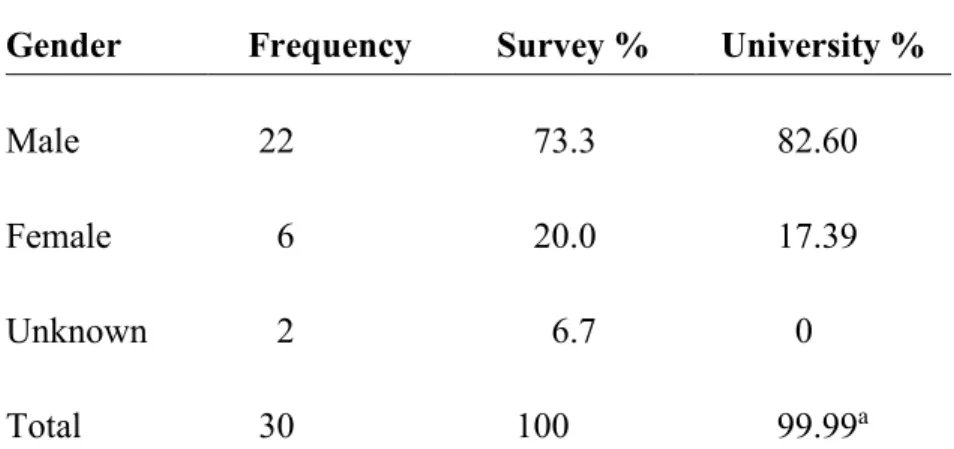
Appendix I – Demographic Distribution Tables ...162
LIST OF FIGURES
Figure 1 – Pedagogical Content Knowledge (PCK) ...20 Figure 2 – The Three Basic Components of TPACK as Three Intersecting Circles
Representing Content Knowledge, Pedagogical Knowledge, and
Technology Knowledge. ...21 Figure 3 – The Formation of Technological Pedagogical Content Knowledge. ...21 Figure 4 – The Technological Pedagogical Content Knowledge (TPACK)
Framework, Including Context ...24 Figure 5 – Conceptual Framework Linking Technology And Learning.. ...62
LIST OF TABLES
Table 1 – Summarization of TPACK Literature 2005–2013 ...39
Table 2 – Diagram of the Static Group Comparison Design ...73
Table 3 – Diagram of the Types of Research Obtained by Crossing Research Objective and Time Dimension ...74
Table 4 – Sources of Invalidity of Pre-Experimental Static Group Comparison ...76
Table 5 – Map of Survey Questions for Research Questions 1 and 2 ...85
Table 6 – Map of Survey Questions for Research Question 3 ...86
Table 7 – Breakdown of Survey Questions for Research Question 1...93
Table 8 – t-Test Group Statistics ...93
Table 9 – Independent Samples t Test ...94
Table 10 – Breakdown of Survey Questions for Research Question 2...97
Table 11 – t-Test Group Statistics ...97
Table 12 – Independent Samples t Test ...98
Table 13 – Breakdown of Survey Questions for Research Question 3...99
Table 14 – Model Summary ...100
Table 15 – Change Statistics ...100
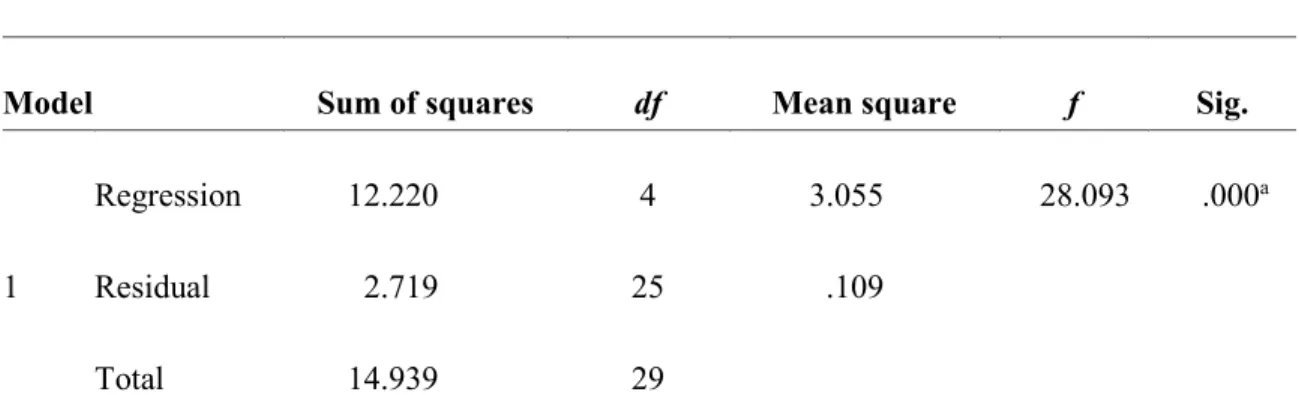
Table 16 – ANOVA ...101
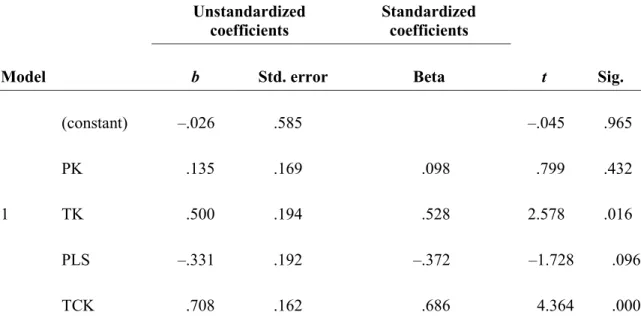
Table 17 – Coefficients ...102
Table 18 – Zero-Order Correlation Coefficients ...113
LIST OF ABBREVIATIONS ABE – integration in adult basic education
ASUW – Arizona State University West DVD – digital video disks
ICT – information and communications (computer) technology PT3 –Preparing Tomorrow’s Teachers to Use Technology NCES – National Center for Education Statistics
NETP – National Educational Technology Plan
NETS-T – National Educational Technology Standards for Teachers OET – Office of Educational Technology
PK – pedagogical knowledge
PLS – personal technology usage/Personal Life STEMS
Preservice Teacher-TPACK – Preservice Teacher-Technological Pedagogical Content Knowledge
SCS – Second Chance School
SPSS – Statistical Package for Social Sciences SRL – self-regulated learning
TK – technological knowledge
TPCK/TPACK – technological pedagogical content knowledge TPASK – technological pedagogical science knowledge
TPCK-SRL – technological pedagogical content knowledge–self-regulated learning TPB – theory of planned behavior
ACKNOWLEDGEMENTS
My journey from simple, country boy to simple soldier to completing this process is not because of my talent but because of the talents of all those who provided me with support and encouragement. I could not have completed this work if it had not been for the many family, friends, colleagues, and professors who gave of themselves and their time for me.
I would like to thank God for the many blessings he bestows upon one so unworthy as I. To my wife Caryl who is truly a blessing, thank you for your sacrifice in allowing my attempt at this achievement. To my children, thank you for your
understanding for my absence at some of your events. To my mom and dad, thank you for instilling in me a sense of commitment to education and service. To my father-in-law, who imparted upon me the importance of always striving for something better and to my mother-in-law who treated me as one of her own, you will never know what it means to me.
To my friends and colleagues Ashley and Kevin who are my CPB’s, thank you for your encouragement and for helping maintain the pressure on me to finish. Ashley who really is the center and stability of our group, you brought us together. Thank you for your academic minds that challenged me to continue the search for answers that made sense to the “special ed” of the group. I am truly blessed for your friendship. Kevin, it’s your turn, and we are here to help. A special thanks to Bradley (Brad) Hilton for your daily discourse over lunch and continued encouragement; we finish together.
I would be remiss if I did not thank my committee. As I have said before, thank you for your guidance, your patience, and your mentorship. A special thank you for Dr. Royce Ann Collins, who is the model of what an adult educator should be. I know I
challenged your patience from the first class through the defenses, thank you forever. Can I breathe now?
CHAPTER 1 – INTRODUCTION Introduction
Consider the story of a seasoned and tenured classroom professor that was given the task of teaching an online course in 2003. The teacher was given a textbook, log on instructions for the course management system, and was told to “have at it” (King & Cox, 2011). Furthermore, according to King and Cox (2011) this feeling of not being prepared to teach technology continues to be a source of concern for instructors. This study sought to investigate whether a relationship exists between technological knowledge (TK) and pedagogical training and which variables have the greatest influence on the willingness for adjunct faculty in a higher education institution in integrating educational technology into their curriculum.
This chapter begins with an overview of the background of the problem that frames the study. Following this overview is the statement of the problem, the purpose of the study, the accompanying research questions, the significance of the study, and a brief overview of the research design. The chapter concludes with operational definitions of key terminology used throughout the study.
Background
According to Townsend, DeMarie, and Hendrickson (1998), “Managers in the workplace are challenged to develop strategically flexible organizations in response to increasingly competitive marketplace” (p. 17). With the advent of a new generation of information and communications technology (ICT), new organizational forms that would not have been feasible only a decade ago can be formed virtually and will not be
constrained by geography, time, and organizational boundaries (Townsend et al., 1998). Consequently, in the National Educational Technology Plan (NETP), the U.S.
Department of Education, Office of Educational Technology (OET, 2010) recognized that technology is at the core of virtually every aspect of our daily lives and work, and we must leverage it to provide engaging and powerful learning experiences and content.
The “use of technology in education is not new . . . [and] successive waves of technological innovations have forced changes in conventional methods and tools of education” (Demirbilek, 2010, p. 238). Technology in education is often perceived as how many computers or videocassette recorders are in a classroom and how they might be used to support traditional classroom activities, but this is a misleading and potentially dangerous interpretation. It not only places an inappropriate focus on hardware, but it also fails to consider other potentially useful idea technologies that result from the application of one or more knowledge bases (e.g., learning theory; Hooper & Rieber, 1995). According to Bell (2001),
The U.S. Department of Education has concluded that preparing technology-proficient educators to meet the needs of 21st-century learning is a critical
educational challenge facing the nation. For example, more than two thirds of the nation's teachers will be replaced by new teachers over the next decade; therefore, it is crucial to ensure that the next generation of future teachers emerging from the nation's teacher education programs is prepared to meet this challenge. (p. 517) It is widely suggested, and in some respects accepted, that a so-called Net Generation of students is passing through our universities (Kennedy et al., 2009).
Digital technology is native to their [Net generation] culture and being . . . . They have spent their entire lives surrounded by and using computers, videogames, digital music players, video cams, cell phones, and all the other toys and tools of the digital age. (as cited in Prensky, 2001, p. 1)
Warschauer and Liaw (2010) asserted that, over the last decade, digital technologies have gone from being an optional tool for the few to a required tool for the majority.
According to the Center for Research and Education on Aging and Technology
Enhancement, the successful adoption of technology is becoming increasingly important 2
to functional independence, and not being able to use technology (e.g., computers or the Internet) puts older adults at a disadvantage regarding their ability to live and function independently and to perform everyday tasks successfully (Czaja et al., 2006). As technology becomes more available, the combination of wireless technology and mobile computing results in changes to the learning environment (Alexander, 2004).
According to Charlier and Williams (2011), higher education institutions are increasingly dependent upon using adjunct faculty. Between 1975 and 1995, the number of adjunct faculty doubled and, between 1997 and 2007, the number of adjuncts rose to almost 64% in associate degree granting institutions (Charlier & Williams, 2011).
According to the U.S. Department of Education, National Center for Education Statistics (NCES; 2012), 50% of higher education faculty was composed of part-time or adjunct faculty. Lei (2009) asserted that the U.S. Department of Education had awarded more than $275M for the Preparing Tomorrow’s Teachers to Use Technology (PT3) program and 441 grants since 1999 to prepare teachers to teach 21st century students. Lei (2009) also pointed out that “besides hardware, teacher technology professional development remains the most common top priority educational technology expenditure in most states” (p. 87).
In his handbook for training program directors, Mitchell (1997) suggested using external staff or adjunct faculty in educational programs, and further proposed five reasons for hiring outside consultants: expertise, short-term expansion of staff, political leverage, cost-effectiveness, and opportunities for internal staff to learn new skills and competencies. Regarding community colleges, Wyles (1998) reported that “higher education has become structurally dependent on part-time faculty and that while trying to
meet the community college’s challenge—meeting escalating demands with declining resources—has resulted in spiraling increases in part-time faculty hiring” (p. 89).
According to Mitchell (1997), adjunct faculty members were originally meant to bridge the gap of student demand with a short-term expansion of staff or provide a cost effective solution in a program. Adjunct faculty in higher education is often hired to maintain close ties with business and industry; therefore, many adjuncts are practitioners in the field in which they are teaching (Wyles, 1998). Wyles’ (1998) findings are
consistent with the U.S. Department of Education, NCES (2012) survey that reports a rising trend both nationally and across all disciplines that colleges and universities are hiring an increasing number of part-time and adjunct faculty members (Charlier & Williams, 2011; Fagan-Wilen, Springer, Ambrosino, & White, 2006; Fjortoft, Mai, & Winkler, 2011; Wyles, 1998). Fagan-Wilen et al. (2006) identified that universities employ an increasing number of adjunct faculty as social work faculty and that
universities fill more than 40% of all faculty positions across the university and across disciplines with part-time or adjunct faculty.
Charlier and Williams (2011) reported that enrollment in community colleges has increased and budgets have decreased; therefore, employing adjunct faculty is a critical part of many college institutional plans. Charlier and Williams (2011) also reported that “with 54.85% of faculty members in average sized community colleges were employed part-time and carried 30.17% of the teaching load and larger institutions employed an average of 68.25% adjunct or part-time faculty teaching 42.54% of the institutional load” (p. 163).
Brand (1998) stated,
According to the U.S. Congress, Office of Technology Assessment (1995), the lack of teacher training is one of the greatest roadblocks to integrating technology into a school’s curriculum. That same report revealed that most school districts spend less than 15% of their technology budgets on teacher training and professional development. (p. 1)
With the increasing number of faculty–practitioners [adjunct faculty] in higher education, faculty coordinators or faculty development staff in higher education programs must adjust professional or faculty development time to account for their increasing the overall effectiveness and ability to transfer their expertise to an increasing number of next
generation adults who are entering higher education programs (Chen, 2012; Lester, 2011; Richter, Kunter, Klusmann, Ludtke, & Baumert, 2011). As more adjunct faculty
members are employed, the need increases to ensure that all faculty members are technologically trained to a sufficient standard to meet the needs of a technologically savvy generation of learners; therefore, Chen (2012) stated that professional development becomes essential for teachers to learn new skills and to reach out for efficient teaching resources.
The complexity of the higher education environment had escalated; therefore, the Association of College and Research Libraries (2000) published Information Literacy Competency Standards for Higher Education (American Library Association, 2000). Although aimed at the individual level, the standards preceded Brandt’s (2001) research that described the importance of information technology literacy as a precursor to information literacy, and theInternational Society for Technology in Education (2000) published the firstNational Educational Technology Standards for Teachers (NETS-T).
According to Georgina and Hosford (2009), “In the beginning of the IT [information technology] movement, little consideration had been given to authentic
faculty training” (p. 690). Likely, the assumption was that the faculty would learn to use the system to accommodate their instructional needs. According to Georgina and Hosford (2009), faith in the faculty’s ability appeared to outweigh the reality of learning a new paradigm. When observing faculty technology training opportunities, Georgina and Hosford (2009) discovered that 94.9% of the faculty surveyed from the Colleges of Education of 15 universities reported that their universities offered some form of faculty technology training. However, only 50.4% attended university-sponsored technology trainings to some extent and only 7.2% of faculty claimed that they attended to a very great extent. This low percentage might help to explain why more than 33.4% of faculty surveyed preferred to teach in a traditional classroom without the integration of
technology (Georgina & Hosford, 2009).
According to Keengwe and Georgina (2012), in higher education a critical
concern yet remains that IT training focuses more on the technical point and click aspects of a learning management system platform without concern for the content of the course. Brandt (2001) asserted that a “technologically fluent person must be able to understand technology broadly enough to apply it to everyday usage and recognize when IT can assist or impede in the achievement of a goal” (p. 74). Therefore, teacher education should be more than just demonstrating the latest technology, but rather should enable teachers to understand how technology can assist students to meet required curriculum standards (Okojie & Olinzock, 2006).
Congruent with Okojie and Olinzock (2006), Means (2010) argued, “Despite decades of national, state, and local promotion of educational uses of technology, classroom practice in most schools has changed little from that of the mid-20th century” (p. 285). Although some schools have developed technology training for faculty, a
comparative analysis of technology use in the classroom from 2003 to 2007 showed that technology use increased only from 17% to 22% with faculty as the primary impediment (Tamim, Lowerison, Schmid, Bernard, & Abrami, 2011). With so much money allotted to education and technology, King and Cox (2011) asked how this could happen. According to Wetzel and Williams (2005), Arizona State University West (ASUW) sought to understand why students who graduated from their program did not feel prepared to teach with technology. The two major reasons that they felt unprepared were that the “graduates had not seen exemplary modeling of using technology effectively by their faculty and did not find it used when they entered the field” (Wetzel & Williams, 2005, p. 45). Teacher professional development has been one of the enduring themes over the past 20 years and is often highlighted in these reports as the single most important step toward the infusion of technology into education (Culp, Honey, & Mandinach, 2005).
Statement of the Problem
Many institutions rely heavily on adjunct faculty (Caffarella, 2002; Charlier & Williams, 2011; Fjortoft et al., 2011; Latta, 2004; Schneider, 2004; Todd, 2004). Additionally, using technology has been shown to be important in the workplace
(Alexander, 2004; Czaja et al., 2006; Laru & Järvelä, 2008; Madigan, 2006; Warschauer & Liaw, 2010). According to Georgina and Hosford (2009), only a small percentage of faculty members attend technology training provided. The TPACK framework research with Kindergarten–Grade 12 (K–12) teachers documents a disconnection between technology, pedagogy, and content (Angeli & Valanides, 2005; Greenhow, Dexter, & Hughes, 2008; Hofer & Swan, 2006; Kanuka, 2006; Mishra & Koehler, 2006). Although applicable to other settings such as preservice teacher education and elementary
education (Borthwick et al., 2008; Chai, Koh, & Tsai, 2010; Foulger & Williams, 2007; Koehler, Mishra, & Yahya, 2007), the TPACK framework and instrument has not been used with adjunct faculty of graduate programs at American higher education institutions to assess their understanding of technology, pedagogy, and content integration.
Thus, adjunct faculty have not incorporated technology into curriculum; therefore, in this study, the researcher investigated using the TPACK framework and instrument to determine (a) whether a difference existed between technology selections of adjunct faculty who are pedagogically trained and those that are not; (b) whether and to what extent personal technology use (PLS) influences adjunct faculty willingness to integrate technology; and (c) which of these variables have the greatest influence of predicting adjunct faculty’s integration of technology into curriculum.
Purpose of the Study
The purpose of this quantitative study was to investigate whether a relationship exists between (a) TPACK subdomains, (b) pedagogical training, and (c) personal technology. Furthermore, this researcher sought to determine which variables have the greatest influence in the willingness of adjunct faculty at a higher education institution to choose and integrate digital technology into curriculum.
Research Questions
In this study, the researcher has asked three research questions. They are listed with their accompanying null hypotheses:
1. Research Question 1: Does a difference exist in faculty who rate themselves higher on the pedagogical knowledge (PK) scale compared to faculty who rate themselves lower on the PK scale in selecting appropriate digital technology for classroom learning outcomes?
Stated as a null hypothesis:
H0: No statistically significant difference exists between faculty who rate themselves higher on the PK scale compared to faculty who rate themselves lower on the PK scale in selecting appropriate digital technology for
classroom learning outcomes.
2. Research Question 2: Does a difference exist in classroom technology integration between faculty who use technology in their private lives and faculty who do not use technology in their private lives in classroom technology integration?
Stated as a null hypothesis:
H0: No statistically significant difference exists between faculty who use technology in their private lives and faculty who do not use technology in their private lives in classroom technology integration.
3. Research Question 3: Does PK, TK, PLS, or classroom technology integration predict using technology in curriculum?
Stated as a null hypothesis:
H0: Pedagogical knowledge, TK, PLS, and classroom technology integration score do not predict using technology in curriculum.
Significance of the Study
In this study, the researcher presents evidence that adds to the body of literature in the area of integrating technology into educational curriculum and expands the discussion of TPACK as a framework and as an instrument measuring technology integration. Additionally, the researcher presents evidence that that TPACK framework can be
expanded into graduate level education. Recent TPACK framework research has centered 9
on preservice training and education for teachers entering the elementary and secondary fields and with competing research to determine the validity of the TPACK as a
beneficial framework (Archambault & Barnett, 2010). Although the TPACK framework has proven beneficial in the areas of elementary and secondary preservice education, little or no identifiable research demonstrates using the TPACK framework for adjunct faculty in a part-time teaching role in choosing appropriate technology for educational outcomes. Therefore, one of the primary goals of this research is to investigate which factors
influence or help predict adjunct faculty’s willingness to incorporate appropriate technology into their curriculum, which in turn provides better curriculum and progressive educational measures in the classroom for their adult student populations (Mishra & Koehler, 2006).
According to Donnelly (2010), in higher education institutions, using online technologies has become an increasingly important challenge in academic staff
development. Furthermore, Donnelly (2010) stated, “It is important to seek best practices for how to combine instructional strategies in face-to-face and computer-mediated environments that take advantage of the strengths of each and avoid their weaknesses” (p. 350). Higher education faculty development program directors responsible for
implementing online, e-learning, m-learning, and blended learning may benefit from this study.
Assessment of the factors that influence adult educators for integration of
technology into curriculum might assist educational technologist and program developers to plan for education. This study might also inform the training of adjunct faculty and assist adjunct faculty in merging effective pedagogical strategies for adult learners to
engage with curriculum in a more active manner and increasing their student’s ability for knowledge construction and making of meaning.
Research Design Overview
This research is a quantitative, pre-experimental, static group comparison,
research design (Campbell & Stanley, 1963), which is also known as a nonexperimental, quantitative, cross-sectional, predictive study, research design (Johnson & Christensen, 2014). An independent sample t test and a multiple logistic regression were the primary quantitative analyses performed. A static group comparison design does not include the random assignment of participants; therefore, it is considered a pre-experimental design. According to Johnson and Christensen (2014), a nonexperimental, quantitative, cross-sectional, predictive study, research design is a type of design that is focused on the primary research objective in which the independent variable is not manipulated and the participants are not randomly assigned. Additionally, in cross-sectional research, data are collected from research participants at a single point in time or during a single brief period, the data directly apply to each case at that period, and comparisons are made across the variables of interest (Johnson, 2001).
The study was conducted at two, small, Midwestern, graduate degree granting, extension campuses from a Midwestern university that followed the Carnegie
classification guide is a Tier 1 institution. Although the main campus is not a Tier 1 institution, both extension campuses in the State of Kansas are Tier 1 institutions. The population and sample consists of adjunct faculty employed by the university on a course-by-course basis. The university offers no formal, faculty mentorship program. However, the university does offer an optional, online course for how to use the learning
management system. The university provides an annual, mandatory, faculty development meeting; however, this meeting is generally relegated to administrative matters.
Campus A generally employees 58 adjunct faculty members and offers the following degrees:
Master of Business Administration.
Master of Arts in Business and Organizational Security Management.
Master of Arts in Human Resources Management.
Master of Arts in Information Technology Management.
Master of Arts in International Relations.
Master of Arts in Management.
Master of Arts in Procurement and Acquisitions Management,
Campus B generally employees 11 adjunct faculty and offers the following degrees:
Master of Business Administration.
Master of Health Administration.
Master of Arts in Human Resources Development.
Master of Arts in Human Resources Management.
Master of Arts in Management and Leadership.
At each campus, classes meet one night per week for 4 hours. Each course is 8–10 weeks in length. Each class meets face to face with students, who generally take one or two courses per term.
A self-report digital survey instrument delivered via Survey MonkeyTM was be used to collect the data. Multiple regression analysis was accomplished to determine a correlation between the predictor variables (pedagogical training, technological training,
PLS, and technological content knowledge [TCK]) and the criterion (the integration of appropriate technology into curriculum).
Limitations of the Study This study has six limitations:
1. Participants might have more subjective responses because of social desirability.
2. All faculty members in this study are adjuncts.
3. The population sample is limited to the adjuncts who respond to the survey. 4. The population in this study is contracted on a course-by-course basis in an
accelerated program at one institution and may only be directly generalizable to that one institution.
5. The results might not be generalizable to institutions with full-time adjuncts. 6. Population size is small and was underrepresented by females and ethnic
minorities; therefore, the results might not be generalizable to other institutions.
Definition of Terms
Adjunct faculty. Non-tenure track faculty serving in a temporary or auxiliary capacity to teach specific courses on a course-by-course basis. Excludes regular part-time faculty graduate assistants, full-time professional staff of the institution who might teach individual courses (such as a dean or academic advisor), and appointees who teach noncredit courses exclusively (U.S. Department of Education, NCES, 2012).
Blended learning. Combines face-to-face instruction with computer-mediated instruction (Bonk & Graham, 2006).
Constructivism. Inquiry based learning methods based on cognitive,
development and problem solving. Constructivists believe that learning occurs when one constructs both mechanisms for learning and using his or her own background knowledge influenced also by attitudes values and beliefs (Roblyer & Doering, 2013).
Integration of technology into curriculum. The combination of technology (digital tools) and pedagogical techniques into the learning process to facilitate educational needs (Roblyer & Doering, 2013).
Effective integration of technology into curriculum. This integration is achieved when knowledge of both the activity structures and types that are appropriate for teaching specific content and the manners in which particular technologies can be used as part of the lesson, project, or unit design (Harris, Mishra, & Koehler, 2009).
Content knowledge. Thisknowledge is the actual subject matter that is to be taught and learned (Mishra & Koehler, 2006). Content knowledge (CK) includes the understanding of subjects taught; knowledge of central facts, concepts, theories, and procedures within a given field; knowledge of explanatory frameworks that organize and connect ideas; and knowledge of the rules of evidence and proof (Shulman, 1986; Mishra & Koehler, 2006).
Pedagogical knowledge. This knowledge is deep knowledge about the processes and practices or methods of teaching and learning and how they encompass,, among other things, overall educational purposes, values, and aims (Mishra & Koehler, 2006). PK is also a generic form of knowledge that is involved in all issues of student learning, classroom management, lesson plan development and implementation, and student evaluation (Mishra & Koehler, 2006). PK includes knowledge about techniques or methods to be used in the classroom; the nature of the target audience; and strategies for
evaluating student understanding, and requires an understanding of cognitive, social, and developmental theories of learning and how it is applied to learners (Mishra & Koehler, 2006).
Technology knowledge. TK is of operating systems and computer hardware, and the ability to use standard sets of software tools such as word processors, spreadsheets, browsers, and e-mail (Mishra & Koehler, 2006). TK also includes knowledge of how to install and remove peripheral devices, install and remove software programs, and create and archive documents (Mishra & Koehler, 2006).
Pedagogical content knowledge. Pedagogical CK (PCK) is different for various content areas. PCK blends both content and pedagogy with the goal being developed to promote better teaching practices, and overall it addresses the teaching process (Shulman, 1986).
Technological content knowledge. TCK is of how technology can create new representations for specific content (Schmidt et al., 2009).
Technological pedagogical knowledge. Technological PK (TPK) refers to how various technologies can be used in teaching, and to understanding that using technology might change the way instructors teach (Schmidt et al., 2009).
Technological pedagogical content knowledge. According to Schmidt et al. (2009), technological PCK (TPCK) can be defined in three ways:
1) Formerly known and referred to as TPCK. As a domain within the TPACK framework, technological pedagogical content knowledge refers to the knowledge required by instructors for integrating technology into their teaching in any
content area. Instructors have an intuitive understanding of the complex interplay between the three basic components of knowledge (CK, PK, TK) by teaching content using appropriate pedagogical methods and technologies.
2) As the encompassing framework from which an instructors’ integration of the domains of CK, PK, and TK).
3) As the instrument measuring instructors’ integration of the domains of CK, PK, and TK.
Summary
In this chapter, the researcher provides an overview of using adjunct faculty, and how adjunct faculty has grown to become 50% of the teaching staff of an average higher educational facility (U.S. Department of Education, NCES, 2012). Professional
development programs vary from institution to institution; however, using online technologies has become an increasingly important challenge in academic staff development (Donnelly, 2010). At a Midwestern institution, the researcher explored whether a relationship exists between (a) TPACK subdomain, (b) pedagogical training, and (c) personal technology; and which variables have the greatest influence in the willingness of adjunct faculty to choose and integrate digital technology into curriculum. An overview of the TPACK framework is provided in Chapter 2 along with how it relates to adult and higher education.
CHAPTER 2 – REVIEW OF THE LITERATURE Introduction
The purpose of this quantitative study is to investigate with adjunct faculty whether a relationship exists between (a) TPACK subdomain, (b) pedagogical training, (c) personal technology, and which variables have the greatest influence in the
willingness of adjunct faculty at a higher education institution to choose and integrate digital technology into curriculum. The researcher outlines the literature review related to this study. In the first section, the researcher reviews the TPACK as the theoretical framework for this study, and the evolution of the TPACK instrument. The second section contains a review of literature surrounding adult learning theory and the TPACK framework’s ties to constructivism. The third section contains a review of literature surrounding the trends of integrating digital technology into education and curriculum.
A significant and growing body of research exists on the integration of digital technology into education curriculum. Integrating technology research ranges from technology in the classroom and educational technology to specific teacher educational preparation courses to match digital technology to course material (Graham et al., 2009; Leh, 2005; Markauskaite, 2010). Technology integration has become the phrase that characterizes the efforts to use technology in an educational context (Graham et al., 2009).
Digital technology is employed across a wide area of educational environments; therefore, many researchers have explored the premise that technology effectiveness is greater than cutting-edge hardware or software. Okojie, Olinzock, and Okojie-Boulder (2006), stated that integrating technology into the teaching and learning process is a
perennial issue, and that technology used for teaching and for learning should be considered as an integral part of instruction, rather than as an exclusive object.
Therefore, the researcher investigated the potential application of the TPACK framework that Mishra and Koehler (2006) developed, and that is used predominately as a teacher preservice preparation tool for elementary education. The researcher also sought to determine whether a difference exists between the technology that pedagogically trained faculty selected to be integrated into curriculum and the technology that
nonpedagogically trained faculty select to be integrated into curriculum. The comparison included the trends, perceptions, and decision-making abilities of the faculty in using digital technology in the classroom.
Theoretical Framework: Technological Pedagogical Content Knowledge TPACK is a framework, an instrument to measure the level of integration of the primary components of the TPACK framework, and a subdomain contained in the TPACK instrument. In this study, TPACK is described as what a teacher must know to effectively integrate technology into curriculum (i.e., teacher practices), and it represents the combination of teacher CK, PK, and TK as interrelated. TPACK allows educators to consider what knowledge is required to integrate technology into teaching and how they might develop that knowledge within themselves. Mishra and Koehler (2006) applied this framework to both preservice and in-service training and education. Building on
Shulman’s (1986) CK, Mishra and Koehler (2006) identified TPACK as a framework: The basis of good teaching with technology and requires an understanding of the representation of concepts using technologies; pedagogical techniques that use technologies in constructive ways to teach content; knowledge of what makes concepts difficult or easy to learn and how technology can help redress some of the problems that students face; knowledge of students’ prior knowledge and theories of epistemology; and knowledge of how technologies can be used to
build on existing knowledge and to develop new epistemologies or strengthen old ones. (p. 1029)
According to Mitchell (1997), the higher education environment presents a unique challenge to educators because 50% of higher education faculty are adjuncts who were hired primarily for their CK or subject matter expertise. Shulman (1986) referred to this knowledge base (i.e., subject matter expertise) in the early concept of CK. Shulman (1986) described the paradigm then in which administrators and policy makers were debating concerns about the professional certification of teachers, about which a sharp distinction existed in CK and PK. Shulman (1986) further stated a need for a more coherent theoretical framework that would show how CK and PK are related. In defining CK, Shulman (1986) said that CK refers to “the amount and organization knowledge in the mind of the teacher and that there are ways of representing that knowledge for students” (p. 9). Shulman (1986) then tied this concept to Bloom’s (1956) cognitive taxonomy and understanding of structuring subject matter.
Responding to the Holmes Group (1986) and the Carnegie Task Force (1986) who studied public teacher improvement, Shulman (1987) said that teaching begins with teachers understanding what must be learned and how it must be taught, introducing the idea that a general pedagogical understanding is needed, regardless of the type of faculty who might be teaching. Shulman (1987) advocated a connection or correlation between CK and PK. This correlation is often represented by two circles intersecting each other (Figure 1) and is the basis for the evolution of the PCK.
Shulman (1987) introduced this idea of a correlation between CK and PK while conducting research in conjunction with a Carnegie initiative for the reform of the teaching profession while studying a way to develop a national board assessment for
teachers that would be similar to the certification boards for doctors. Through these investigations, Shulman (1987) determined how “particular kinds of content knowledge and pedagogical strategies interacted within the minds of teachers” (p. 5). Shulman (1987) also indicated, “The essential goal of the research conducted was to identify those teacher behaviors and strategies most likely to lead to achievement gains among
students” (p. 10), which connects content and PK to effective teaching. Shulman (1987) argued that CK and PK could not be treated independently.
Figure 1. Pedagogical content knowledge (PCK). The two intersecting circles representing pedagogical content knowledge as the correlation of content knowledge and pedagogical knowledge.
Building on Shulman’s (1987) assertion regarding pedagogical CK, Koehler and Mishra (2005) introduced the conceptual framework of integrating educational
technology into pedagogy: TPACK. This framework adds technology knowledge as a key component of what teachers should know for integrating technology into their pedagogy. By adding technology knowledge to the two original component areas of CK and PK, Mishra and Koehler (2006) created a diagram of the three base components (Figure 2).
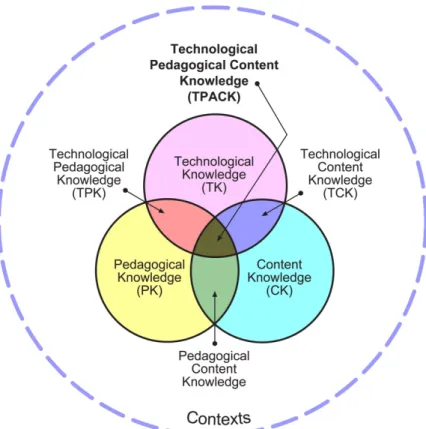
The addition of technology knowledge brings a new intersection, creating a special form of knowledge: TPACK (Figure 3). This framework was the result of Mishra and Koehler’s (2006) 5-year study that was focused on teacher professional development and faculty development in higher education. Mishra and Koehler (2006) asserted that
technological research then was focused more on the introduction of technology into the educational process and not sufficiently on “what teachers need to know in order to appropriately incorporate technology into their teaching” (p. 1018).
Figure 2. The three basic components of TPACK as three intersecting circles representing content knowledge, pedagogical knowledge, and technology knowledge.
Figure 3. The formation of technological pedagogical content knowledge. The three intersecting circles representing content knowledge, pedagogical knowledge, and technology knowledge result in technological pedagogical content knowledge.
Mishra and Koehler (2006) extended Shulman’s (1987) conceptual vision of PCK to include technology as interrelated and to begin to define distinctly educational technology’s role in the pedagogical practice. Mishra and Koehler (2006) stated:
Our framework emphasizes the connections, interactions, affordances, and
constraints between and among content, pedagogy, and technology. In this model, knowledge about content (C), pedagogy (P), and technology (T) is central for developing good teaching. However, rather than treating these as separate bodies of knowledge, this model additionally emphasizes the complex interplay of these three bodies of knowledge. (p. 1025)
Furthermore Mishra and Koehler (2006) extended the conceptual comparison by not only comparing the base three components, but also examining the pairwise
interrelationships resulting in three base components, three intersecting pairs, and the final consolidation of the three pairs into the resulting triad of TPCK demonstrating the complex interrelationship of the three base components. According to Mishra and Koehler (2006), the result is the following:
TPCK is the basis of good teaching with technology and requires an
understanding of the representation of concepts using technologies; pedagogical techniques that use technologies in constructive ways to teach content; knowledge of what makes concepts difficult or easy to learn and how technology can help redress some of the problems that students face; knowledge of students’ prior knowledge and theories of epistemology; and knowledge of how technologies can be used to build on existing knowledge and to develop new epistemologies or strengthen old ones. (p. 1029)
Furthermore, Mishra and Koehler (2006) outlined, “No single technological solution applies to every teacher, every course, or every view of teaching” (p. 1029). Polly and Brantley-Dias (2009) asserted that the TPACK framework presents a robust way of thinking about effective technology integration, specifically integrating effective technology into learning environments. However, they also agree that the TPACK framework presents a complex environment and further research should address the various complex relationships of the TPACK components.
The Milken Exchange on Education Technology (1999), after conducting several surveys, including a meta-analysis of over 700 previous research publications, concluded that evidence exists that learning technology is less effective or ineffective when the
learning objectives are unclear and the focus of technology is diffuse. As Roblyer and Doering (2013) asserted, “Teachers always will be more important than technology” (p. 10), and “We need more teachers who understand the role technology plays in society and education, who are prepared to take advantage of its power and who recognize its limitations” (p. 10).
Thompson and Mishra (2007) changed TPCK to TPACK to articulate more accurately the interrelationship of the components or domains. Using the TPACK framework, Schmidt et al. (2009) developed a TPACK instrument for measuring preservice teachers’ self-assessment of their TPACK and related domains included context in the TPACK framework. Furthermore they asserted that the framework could potentially have an impact on the type of training and professional development of both preservice and inservice teachers. As the TPACK framework became more cohesive, Mishra and Koehler (2006) adjusted the TPACK diagram to demonstrate the framework within subject context as in Figure 4.
Figure 4. The technological pedagogical content knowledge (TPACK) framework, including context. The TPACK framework represents all seven domains in contexts. From http://www.tpack.org. Copyright 2012 by tpack.org. Used with permission.
Consequently, Shin et al. (2009) conducted a study to investigate whether in-service teacher beliefs about teaching, technology, and the TPACK concept changed after receiving a focused, three-course series of face-to-face and online educational technology courses over a 6-week period. As seen in the prior paragraphs, teacher experience and knowledge have an impact upon a teacher’s teaching and classroom instructional actions. The study extended the previous work of several studies conducted in the prior 4 years that used TPACK as the framework. Using TPACK as the framework Shin et al. (2009), conducted a one-group pretest–posttest design using Campbell and Stanley’s (1963) research design to see how the teachers viewed the relationship between technology, content, and pedagogy. The experiment participants were comprised of 23 mostly
service teachers with several years of teaching experience enrolled as students in masters-level courses. Pretest and posttest survey scores in each subcomponent of the TPACK framework were compared using a dependent samples t test. The results demonstrated an increase in students overall technology knowledge while their knowledge of content and pedagogy did not increase. However, students understanding of the relationship between technology, pedagogy, and content (TPACK) did improve. The study also concluded that using the TPACK survey instrument as a measuring tool for the integration of technology into curriculum could be used. Although Shin et al. (2009) admitted that some limitations to this study exist, the experiment adds to the overall body of knowledge of the TPACK framework and, as importantly, it demonstrates that the more teachers understand the complex relationship between technology, pedagogy, and content there are better
opportunities to develop effective integration of technology into curriculum for in-service teachers.
Cox and Graham (2009) conducted a conceptual analysis of the TPACK
framework to help clarify a growing concern over the definitions of the subcomponents of TPACK. According to the authors, a conceptual analysis is usually conducted in an effort to add to the common understanding of words and concepts. During their research, Cox and Graham developed both general and precise definitions for each subcomponent of TPACK and compared the definitions to several case studies to explore whether the meanings matched the concepts and whether the concepts could be matched to the case study scenarios. The result was an elaborated model of the TPACK framework informed by the extensive work of Koehler and Mishra (2005); Harris et al. (2009); Koehler, Mishra, and Yahya, (2007); Angeli and Valanides (2009), and Shin et al. (2009). Cox and Graham (2009) concluded that PCK, as envisioned by Shulman (1987) was “content
specific pedagogy and not a general knowledge of pedagogical methods” (Cox & Graham, 2009, p. 63) and that “technological knowledge is focused on emerging technology and thus is measured on a sliding scale depending on the technology of the time” (Cox & Graham, 2009, p. 63). In their conclusions, they raised three issues. First, they felt that it was essential to use the new precise definitions and the elaborated model to conduct in-depth case studies with practicing teachers. Second, the grade level of the teacher and levels of TPACK needed to be explored. Third, for teacher preparation programs, particularly at the secondary level, it is necessary to understand where teachers gain or acquire their TPACK (Cox & Graham, 2009).
In an analysis of 20 years of key policy reports addressing the challenges and opportunities in integrating technology into K–12 education in the United States, Culp et al. (2005) quoted the A Nation at Risk (The National Commission on Excellence in Education, 1983) report, which said that all graduating high school students should understand and be able to use the computers of the time (p. 280). Then 20 years later, the No Child Left Behind Act (2001) and the Elementary and Secondary Education Act (2001) “include[d] a recommendation that by the eighth grade all students should be technologically literate and repeatedly references technology as an important source of support for teaching and learning across the curriculum” (p. 280). Culp et al. (2005) concluded that technology literacy means that students should be able to use computers and the technology of the time effectively to support other educational and learning content. Harris et al. (2009) argued that this
mismatch between educational technology leaders’ visions for technology integration and how most practitioners use digital tools is the gap between efficiency applications and a more transformative use of technology since many teachers focus on presentation technology vice technology based curriculum. Simply put many teachers various approaches to technology are more to initiate
and organize teacher’s efforts according to the technology being used rather than the students’ needs relative to the curriculum. (p. 395)
Teachers have a need to understand the complex relationship and especially understand the strength and limitations of certain technologies to understand how they support or detract from the students learning. According to Harris et al. (2009), this is especially important in adult education where most adult students must understand how the learning experience applies in their life environment. Harris et al. (2009) concluded that learning about technology is not sufficient; teachers must learn what to do with the technology in the teaching and learning environment. Preservice or in-service training and education has to be balanced to cover the complex relationship of TPACK (Harris et al., 2009).
As the TPACK framework continues to grow in popularity, researchers apply the framework to specific content areas. Jimoyiannis (2010) acknowledged previous research on the need for effective teacher preparation as “an important factor in the successful integration and sustainability of information and computer technology (ICT) in education” (p. 1259). Jimoyiannis (2010) extended the TPACK framework into Technological Pedagogical Science Knowledge (TPASK). This demonstrated how particular content areas apply the TPACK as an overarching framework to view the relationship of content, pedagogy, and technology. Jimoyiannis (2010) supported previous research (Angeli & Valanides, 2009; Cox & Graham, 2009; Culp et al., 2005; Mishra & Koehler, 2006; Shin et al., 2009) that much of educational technology
integration is more on using technology as an addition to regular classroom coursework versus selection and integration of effective technology related to the accomplishment of the curriculum. His research confirms that a struggle exists to increase a student’s ability
to use technology in increasing levels while most teachers continue to focus on the lower levels of just how to use the technology tools rather than integrating the tools into the pedagogical application of the tools.
Jimoyiannis (2010) presented a modification of the TPACK framework as TPASK during his study combining TPACK with authentic learning as an enhanced framework for a science teacher preparation program in Greece in the context of helping teachers in acquiring basic knowledge and skills towards integration of ICT in their classroom. Although the population sample was small (six science teachers with 10–25 years of experience), the results indicated that all participants demonstrated an increase in TPACK knowledge and skills inside their subject matter area and an increase in
willingness and confidence to integrate technology into general curriculum. The research shows a flexible application of the TPACK framework into a specific content area that is congruent with the findings presented already on the flexibility of the TPACK
framework. According to Jimoyiannis, the ability to measure the integration of effective educational technology is also congruent with assertions that teachers require more specific instruction of the selection and use of technology within curriculum.
Koh, Chai, and Tsai (2010) conducted an experiment to address some of the gaps that they percieved in the development of the TPACK instrument, many of the prior research experiments involved realtively small sample sizes and predominately used a population within the United States. Their research examined the construct validity of a TPACK survey through exploratory factor analysis of responses from 1185 Taiwanese preservice teachers in Singapore. During their research, Koh et al. determined that internal reliability of various TPACK instruments were fairly consistent across the studies they reviewed. They did feel that more studies needed to be accomplished with
teachers outside the United States and that larger samples needed to be surveyed. In addition, they identified what they considered as two visible gaps. First, aside from Archambault and Crippen (2009) and Lee and Tsai (2010), studies for construct validity for TPACK surveys [the instrument] were lacking. According to Fabrigar, Wegener, MacCallum, and Strahan (1999) some methodologists believed that an exploratory factor analysis population should be determined by the ratio of variables measured to the number of participants. However, these ratios vary widely from 5:1 to 10:1 and they sometimes come with a minimum population regardless of variable ratio. Koh et al. (2010) proposed, “When three or four measured variables represent each common factor (or grouping) and the communalities are high then accurate estimates of population parameters can be obtained with samples as small as 100” (p. 274). The second gap suggested that the relationship between teachers’ demographic profile and TPACK perceptions has not been examined enough.
Therefore, given the gaps Lee and Tsai (2010) determined, Koh et al. (2010) conducted their research using a population of 1664 preservice teachers in their first semester of their teacher education training. Koh et al. developed a 29-question survey and recceived 1185 respondents. Koh et al. conducted an exploratory factor analysis for construct validity, and determined that TK and CK (CK) loaded as separate items, while all other items loaded into three factors of knowledge of teaching with technology, knowledge from critical reflection, and PK instead of the seven components
[subdomains] of the TPACK framework. The second conclusion the authors made is that male teachers had greater technology confidence, positive atitude about technology usage, competencey perception and tended to score higher in TK than their female
counterparts. It is noteworthy that Koh et al recommend that more comparative studies of 29
generic and subject-specific TPACK surveys be carried out to ascertain the robustness of context-specific TPACK framework items.
According to Archambault and Barnett (2010), any good framework or theory must be tested, proven, and tested again. Therefore, Archambault and Barnett conducted a factor analysis on the TPACK framework using a modified 24-item survey using a population of 596 online teachers from across the United States to test the validity of the TPACK model. Their research suggested that the TPACK framework is helpful from an organizational standpoint, but that it is difficult to separate out each of the domains. Archambault and Barnett (2010) indicated that the “highly accepted seven mutually exclusive domains of the TPACK theory may not exist in practice” (p. 1658) but that “the existence of three factors: pedagogical content knowledge, technological–curricular content knowledge, and technological knowledge” (p. 1658) were reported. The participants did show a connection between technological content, technological
pedagogy, and technological pedagogical content questions. However, Archambault and Barnett (2010) stated, “Respondents did not distinguish among these constructs” (p. 1659).
Archambault and Barnett (2010) asserted that the TPACK framework domains are still not clearly understood and could contribute to the difficulty of a teacher’s ability to separate the concepts and provide a more definitive response:
It is possible that when experienced educators consider teaching a particular topic, the methods of doing so are considered as part of the content, and when considering an online context, the domain of technology is added to the equation as a natural part of the medium, making it difficult to separate aspects of content, pedagogy, and technology. (Archambault & Barnett, 2010, p. 1659)
Archambault and Barnett (2010) concluded that the TPACK model might be more effective in academia than in actual practice and further assert that the measures might yet be ill defined; therefore, it might be difficult to measure and predict outcomes. Overall, more research must be accomplished to continue to search for ways to prepare teachers for the 21st century and the students they will engage. The TPACK instrument continues to be refined, changed, adapted, and might provide more clarity as each researcher has demonstrated.
Allan, Erickson, Brookhouse, and Johnson (2010) conducted the
EcoScienceWorks Project for within Maine’s middle school laptop program designed to re-design three existing computer simulations in ecology (SimBiotic Software’s
EcoBeakerTM) and add the capability for students to program their own simulations. According to Allan et al. (2010), the project was a “collaboration including simulation software developers; middle school science teachers; the Maine laptop program; environmental educators; an external evaluator; and a lead organization experienced in teacher guided curriculum development” (p. 36). Allan et al. (2010) used the TPACK model [framework] to integrate the three main domains of the TPACK framework. Their population consisted of 23 Maine middle school science teachers who taught ecology, providing continuous feedback throughout the 3-year project. Prior to the project, the participating teachers reported no prior programming experience; therefore, teachers were given hand-on experience using the modules and programming new simulation exercises in a series of progressively more complex programming challenges. Allan et al.
concluded that these workshops reinforced the need to scaffold exercises to allow teachers to develop skills and confidence in the application and manipulation of the simulation technology. Teacher confidence was determined to be a key outcome for the
program because teachers would must not only use the tools with their students, but also provide instruction during in-service for other middle-school teachers (Allan et al., 2010).
Allan et al. (2010) demonstrated that teachers increased their understanding of computer simulations and models, thereby, increasing their general technology skills. Teachers recognized the value of effective integration of technology into the various ecology curriculums and the powerful way it stimulated student learning and engagement with material. Although this program was aimed at a middle-school curriculum specific population, it reinforced the flexibility of the TPACK framework regarding what
Jimoyiannis (2010) called a sliding scale. Ultimately, Allan et al.’s (2010) findings from the EcoScienceWorks project “provide[d] insights into a model for technology focused curriculum development that promotes TPACK skills in teachers” (p. 42). Overall, significant growth occurred in teacher technology skill, increased CK, and positive changes in pedagogy (Allan et al., 2010).
Investigating technology integration, Niess (2011) furthered using the TPACK framework. In the review of the TPACK framework, Niess (2011) asserted that emerging digital technologies are more accessible day-to-day, confronting teachers with the
question of how and when to incorporate those technologies into their various subject areas:
Teacher educators are, therefore, confronted with redesigning their programs toward the development of the knowledge teachers need for rethinking how technologies might be integrated and acting upon their decisions. Teacher educators raise valid questions and concerns in the search for pre-service, in-service, and professional development experiences to more effectively reshape teachers’ thinking and actions. (p. 300)
Using Niess’ (2011) study as a research base, TPACK provides a framework for thinking about the knowledge that teachers need to integrate digital technologies into the curriculum as learning tools. As Neiss (2011) stated,
Careful attention must be paid to what is learned and what is questioned from the studies about TPACK to clarify and develop a more robust and mature
understanding of the TPACK construct and what it means for preparing teachers to guide student learning with technologies. (p. 308)
Harris and Hofer (2011) conducted a study of experienced secondary social studies teachers to discover the teachers’ TPACK scores as expressed in the teachers planning processes to determine whether TPACK played a role and whether it could be enhanced. Harris and Hofer (2011) developed a series of social studies learning activities using the TPACK development strategy. Harris and Hofer (2011) linked the students’ learning needs with combinations of “consciously chosen, content-based learning activities supported by suggested educational technologies” (p. 214).
According to Harris and Hofer (2011), common themes emerged consistently across the participants. During planning, participating teachers noted the specific nature of the curriculum content (standards based) and matched planned learning activities primarily to the nature of that content, rather than to the developmental learning needs of the students. Participants selected activities that were perceived to engage students as long as the activity also met the content first imperative. After the professional development experience, participants also selected technology more often that intellectually stimulated the students. Some teachers viewed the new technology
capabilities regarding how it fits within their content or defaulted to technology that they were used to before accepting the new technology. Harris and Hofer (2011) noted that many of the teachers reported that they had “gotten in a rut” (p. 225) prior to the