2019
Academic Librarians’ Experiences as Faculty
Academic Librarians’ Experiences as Faculty
Developers: A Phenomenographic Study
Developers: A Phenomenographic Study
Michael Flierl
The Ohio State University, [email protected] Clarence Maybee
Purdue University, [email protected] Rachel Fundator
Purdue University, [email protected]
Follow this and additional works at: https://pdxscholar.library.pdx.edu/comminfolit
Part of the Information Literacy Commons
Let us know how access to this document benefits you.
Recommended CitationRecommended Citation
Flierl, M., Maybee, C., & Fundator, R. (2019). Academic Librarians’ Experiences as Faculty Developers: A Phenomenographic Study. Communications in Information Literacy, 13 (2), 184-204. https://doi.org/ 10.15760/comminfolit.2019.13.2.4
Academic Librarians’ Experiences as Faculty Developers:
A Phenomenographic Study
Michael Flierl, The Ohio State University
Clarence Maybee, Purdue University
Rachel Fundator, Purdue University
Abstract
Academic libraries are integral to the teaching and learning missions of colleges and universities. Yet, libraries continue to face substantial challenges in their work to advance student learning, especially regarding the sustainability and scalability of their instructional efforts. This paper describes a phenomenographic research project that investigated the varied experiences of Purdue University Libraries faculty members participating in the IMPACT faculty development program. The findings suggest that academic librarians are capable of acting as faculty developers who can engage faculty in conversations, which may or may not relate to information literacy, to advance student-centered teaching and learning environments.
Keywords: faculty development, phenomenography, teaching and learning
Flierl, M., Maybee, C., & Fundator, R. (2019). Academic Librarians’ Experiences as Faculty Developers: A Phenomenographic Study. Communications in Information Literacy, 13(2), 184–204.
Academic Librarians’ Experiences as Faculty Developers:
A Phenomenographic Study
Introduction
Academic libraries are integral to the teaching and learning missions of colleges and universities. While many libraries make significant contributions to address general education needs on their campuses, they often encounter obstacles when trying to provide instruction that supports student learning within disciplinary curricula. Some librarians adopt the role of faculty developer, consulting with faculty about assignments or course design, information literacy (IL), and other aspects of teaching and learning. How librarians perceive their role and expertise while engaging with faculty on pedagogy may influence the ways in which they can contribute to campus learning goals.
This paper describes a phenomenographic research project that investigated the varied experiences of Purdue University Libraries faculty members participating in the IMPACT faculty development program. IMPACT aims to create more student-centered learning environments by facilitating a 13-week faculty learning community (FLC) in which instructors redesign a course. The FLC models active learning activities and engages participants in discussion on various topics, including student motivation, learning outcomes, and learning activities. Librarians work in teams with instructional developers, educational technologists, and instructors to help instructors redesign a course. The current study was conducted to understand librarians’ experiences participating in a faculty
development program aiming to create more student-centered teaching and learning environments.
Literature Review
Librarians are increasingly responsible for supporting “all processes of instruction” (Jaguszewski & Williams, 2013, p. 4). One of the ways librarians are expanding their instructional activities is through consultative work with faculty around assignment and curriculum design. Sometimes referred to as the train-the-trainer model, researchers have made calls for a consultative approach as a way of integrating IL into curricula (Cowan & Eva, 2017; Fister, 2009; Iannuzzi, 1998). A form of faculty development, a train-the-trainer
approach prioritizes working with faculty over direct classroom instruction to better
integrate IL instruction with course content as well as to reach a greater number of students. A small number of academic libraries are already participating in or leading faculty
development opportunities, such as workshops, librarian-faculty assignment design, and the IMPACT program in which the authors are involved (Hartman, Newhouse, & Perry, 2014; Li, 2007; Maybee, 2018; Millet, Donald, & Wilson, 2009; Wishkoski, Lundstrom, & Davis, 2018; Witt & Dickinson, 2003). Many of these examples from the literature, however, focus on librarians’ strategies and considerations for creating these development programs and their efforts to establish or strengthen relationships with faculty to integrate IL into courses. Li (2007), who was involved in a faculty development project to integrate IL assignments into courses at five liberal arts colleges in Ohio, noted that librarian-led faculty development about learning shifts librarians into a leadership role on their campuses. While librarians have more opportunities to lead educational initiatives through involvement in such development programs, the LIS literature lacks studies exploring librarians’ perceptions of their involvement in faculty development. Rather, the literature about faculty development programs offered by academic libraries tends to prioritize examining the perceptions of participating instructors.
Following a series of assignment design workshops hosted by the libraries at Utah State University, librarians examined participating faculty’s experiences with the assignment design process (Wishkoski, Lundstrom, & Davis, 2019). Faculty described the need to overcome initial feelings of vulnerability before they were able to benefit from the
conversations about teaching and designing assignments with librarians (Wishkoski et al., 2018; Wishkoski, et al., 2019). Librarians involved in the IMPACT program have also learned through first-hand experience working with instructors that librarians must strive to empathize and build trust with the faculty with whom they are working to integrate IL into courses (Flierl, Maybee, Riehle, & Johnson, 2016). While understanding how faculty experience working with librarians in these development programs is helpful, academic libraries may also benefit from a better understanding of the various ways in which librarians experience this kind of consultative work.
Professional, disciplinary, and cultural differences between how librarians and faculty approach IL can influence the librarian-faculty dynamic within a development program. Writing about the faculty development effort at Trinity University in San Antonio, Texas,
to integrate IL across the undergraduate curriculum, Jumonville (2014) noted differences between how librarians expressed their goals and how faculty described the ways they wanted their students to use information. Observing similar divergences in goals, Maybee, Doan, and Flierl (2016) recommended librarians and faculty use course learning goals as a guide for determining how students need to use information within the specific learning environment.
Recognizing that scholars have yet to explore the role of academic librarians as faculty developers, Fundator and Maybee (2019) examined the literature related to faculty
development to inform academic librarians engaged in this work. A literature review of the core responsibilities, activities, skills, and models used by faculty developers revealed four key aspects of their work:
1. Collaborative – leveraging their own and the faculty’s expertise to make pedagogical changes;
2. Scholarly – utilizing and potentially co-creating scholarship with faculty to improve pedagogy;
3. Contextual – grounding conversations and decisions in the disciplinary and institutional contexts of the faculty; and
4. Reflective – striving to help faculty think broadly and purposefully about their practice.
By integrating these key aspects into their work with faculty, the authors suggested that librarians will be well-positioned to act as faculty developers capable of advancing IL instruction.
While the literature on faculty development provides useful background on how teaching and learning professionals understand and approach this work, the current study extends this theoretical work by specifically exploring academic librarians’ experiences. Addressing the research question How do academic librarians experience participating in a faculty
development program, the current study fills a gap that may help librarians better understand possible ways they can conceptualize consultative work with faculty.
Methodology
Phenomenography was selected as the methodology to guide this study. Developed in the 1970s in Sweden by a group of educational researchers, phenomenography adopts a second-order perspective that aims to reveal the various ways of experiencing a phenomenon (Marton, 1986). The methodology has been used to study experiences of IL of educators (Bruce, 1997; Webber, Boon, & Johnston, 2005) and of students (Limberg, 1999; Lupton, 2008; Maybee, 2007). The phenomenon of librarians’ first-hand experiences of engaging in faculty development is what the current study investigates. Phenomenography holds that people in the same context will experience the same phenomenon in a limited number of qualitatively different ways (Marton, 1994). Grounded in a phenomenographic approach, the research plan described in this section was approved by Purdue’s institutional review board.
Participants
Phenomenographic research uses purposive sampling, in which participants are invited to participate specifically because of their ability to provide data that would inform the research question (Patton, 1990, p. 46). In contrast to research methodologies that seek to determine trends by identifying similarities in participant responses, each experience revealed in a phenomenographic study is an important finding. Therefore, the number of participants may be relatively small provided that the participant group has experience with the phenomenon under investigation. Additionally, participants’ experiences of faculty development may be shaped by the context in which they are conducting this work. In the current research, all of the participants had previously participated in IMPACT, a 13-week faculty development program at Purdue University, where they served on teams that aimed to enable instructors to make their courses more student-centered. Two of the participants were men and five were women. Participants had varying levels of experience with the program, with one participant having only been on one team and the others having been on multiple teams over a span of years.
Data collection and analysis
Interviews, the most common method of collecting data in phenomenographic research, followed a semi-structured protocol. Specific types of open-ended questions were used (Marton, 1986) that guide the person being interviewed to “thematize” aspects of their
experience about the phenomenon being investigated (Bruce, 1994). To encourage participants to expand on their original answers, initial prompts are followed up with clarifying questions, such as, “Can you tell me more about X?” or “Why is X important?” (Bowden, 2000, pp. 9–10). The researcher takes steps not to impose any presuppositions on the participant during the interview (Åkerlind, 2005, p. 108).
In the current study, the seven audio-recorded interviews were approximately 45 minutes in length and were conducted in a library conference room, which provided a convenient, neutral space. When participants arrived for the interview, they were asked to read an information sheet about the study and were informed that they could end their participation in the study at any time. Five primary interview prompts were used to guide the interviews with the participants:
1. Describe your experience of participating in IMPACT.
2. Tell the story of a time when you participated in an effective course re-design. 3. Describe a time when you experienced challenges in a course re-design. 4. What are the most noteworthy aspects of facilitating course re-designs? 5. Describe your picture of an effective IMPACT support team member.
The recorded interviews were transcribed and then analyzed. In a phenomenographic study, the outcome is an identification of categories describing key aspects of the qualitatively different ways in which the phenomenon is experienced (Marton & Booth, 1997). The categories in a phenomenographic study do not represent a particular individual’s experience but rather are an aggregation of essential elements drawn from multiple individuals’ experiences. To begin analysis, the researchers iteratively read through the interview transcripts to familiarize themselves and identify key aspects that defined the formation of the categories. Each category is comprised of referential and structural elements (Marton & Booth, 1997).
Referential aspects refer to the meaning of an individual object (Marton & Pong, 2005). Structural aspects indicate (a) what someone experiencing the phenomenon is primarily focused on, (b) what is in the background of their awareness, and (c) what is in the periphery or marginsof their awareness. In other words, the “combination of features
discerned and focused upon” by the interviewee (Marton & Pong, 2005, p. 336). Described in detail in the following section, the analysis resulted in four categories depicting how librarians experienced facilitating course redesign in the IMPACT faculty development program. The last stage of analysis of a phenomenographic research project is developing an
outcome space, in which the categories of description are arranged to reflect how the
categories are structurally related. The outcome space represents the collective experience as analyzed and described by the researchers.
Results
The phenomenographic analysis of interview transcripts revealed four categories that describe different experiences of librarian participation in the IMPACT program:
1. Connector – connects instructors to pedagogic or technology experts. 2. Facilitator – guides instructors through course design.
3. Colleague– nurtures mutually beneficial relationship with instructors. 4. Developer – develops instructors to transform their approach to teaching.
Each category, comprised of referential and structural aspects, is described in this section. Referential elements describe the meaning of each category, while the structural elements illustrate the “internal structure” of each category (Marton & Booth, 1997). The structural elements describe what is central to each category—its focus, elements that are in the
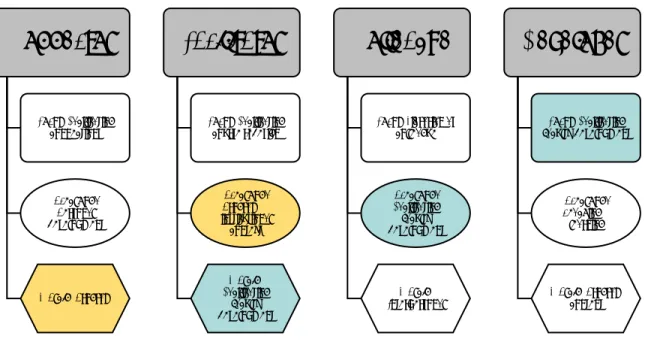
background, and elements that are in the margin. Elements in the margin are not fully present in the awareness of someone experiencing faculty development in this way. The structural elements that comprise the categories form an outcome space, which highlights the relationship between the structural elements across the different categories. The outcome space (shown in Figure 1) reveals the hierarchical nature of the categories.
Awareness of more elements is an indicator of the complexity with which a phenomenon is experienced (Marton & Tsui, 2004, p. 5).
As outlined in Figure 1, the IMPACT program (highlighted in yellow) is in the margins of the Connector category. In contrast, the program is in the background of the awareness of those experiencing faculty development in a way that aligns with the Facilitator category, indicating a greater awareness of that element than in the Connector category. Indicating a
progression of complexity, facilitating faculty development (highlighted in blue) is on the margins of the Facilitator category, in the background of the Colleague category, and becomes the focus of the Developer category.
Figure 1: Relationships of the structural elements of the four categories
Categories may also include dimensions of variation, which are aspects that traverse each experience. When a dimension of variation appears in each category, its character will differ from one category to another (Åkerlind, 2005). Described in more detail below, two
dimensions were identified for each category in this study: (a) information literacy and (b) interpersonal relationships (see Table 1).
Table 1: Dimensions of librarians’ experiences of faculty development
Connector Facilitator Colleague Developer Information literacy Librarians’ responsibility Librarians’ expertise Shared enterprise of librarians and instructors Depends on the context Interpersonal relationships Librarian connecting Librarians working with other experts
Librarians and instructors sharing pedagogic ideas Instructors supporting each other
Connector
Focus: Facilitating connections Background: Personal development Margin: ProgramFacilitator
Focus: Facilitating course redesign Background: Program & institutional context Margin: Facilitating faculty developmentColleague
Focus: Librarian as colleague Background: Facilitating faculty development Margin: InterpersonalDeveloper
Focus: Facilitating faculty development Background: Teaching & learning Margin: Program contentinstructors to experts
(e.g., pedagogic and technological)
Category 1 – Connector
Experiences of participating in faculty development as a Connector emphasize connecting experts in pedagogy or educational technology to instructors perceived to need such expertise. Outlined in Figure 2, facilitating connections is the focus of this experience. This category describes the experience of faculty development as less about personal expertise and more about facilitating dialogue between disciplinary instructors and those perceived to have expertise that can address instructors’ concerns or problems. The following quote from one of the participants exemplifies this focus:
I was able to refer to [Alvin] who came and demoed the stuff and they said this is exactly what we want. I felt like I made the connection. I was able to do some of that connecting.
Figure 2. Structural elements of the Connector category (outlined in bold)
The background of this category is personal development. In helping others to address
Connector
Focus: Facilitating connections Background: Personal development Margin: ProgramFacilitator
Focus: Facilitating course redesign Background: Program & institutional context Margin: Facilitating faculty developmentColleague
Focus: Librarian as colleague Background: Facilitating faculty development Margin: InterpersonalDeveloper
Focus: Facilitating faculty development Background: Teaching & learning Margin: Program contentpedagogical problems or questions, one learns about teaching and learning. One participant described:
It's just wonderful. Wonderful at last to learn how to design a course, how to teach myself. If I were teaching a course now I would go about it entirely differently. In the margin of this experience are the programmatic elements of the course redesign program. The librarian is acting as a connector, but what is implicit is the fact that this connective experience takes place within a program. The dimension of IL associated with this experience emphasizes the disciplinary expertise of the librarian. Addressing IL is the responsibility of librarians and the focus of their role in the development program. In terms of interpersonal relationships, the experience described in this category stresses making connections between disciplinary instructors and support team members with expertise in pedagogy or educational technology, but it does not describe efforts to build relationships between the two parties.
Category 2 – Facilitator
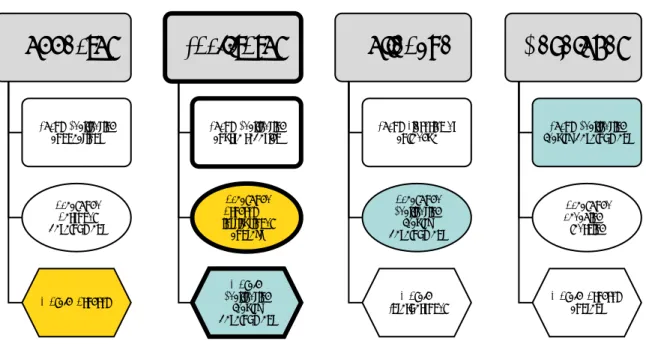
In contrast to the experience described in the Connector category, participants experiencing faculty development as Facilitators emphasized helping instructors through the various activities required to redesign a course. Outlined in Figure 3, facilitating course redesign is the focus for this category. Librarians experiencing faculty development in this way describe working to ensure a successful course redesign by concentrating on supporting the faculty through the process, including participating in group discussions, learning activities, and completing deliverables. For instance, one participant in the study shared:
An effective IMPACT support team member needs to understand the role of a support team member, that being one of support, not one who guides. Well you can guide, but gently, but ultimately supporting the faculty for the decisions that they will make in their course.
Participants experiencing faculty development as Facilitators have two different elements in the background of awareness. The first is the disciplinary and institutional context of a faculty development program. The participants in the study explained both the institutional limitations, like departmental barriers, and the broader university impact of facilitating
course redesigns. This element is exemplified by one participant who, when asked about noteworthy aspects of facilitating course redesign, stated:
Even though you’re not the one doing the redesign it feels like you’ve accomplished something. Something that’s good for the faculty member, good for the students, good for the university. It’s a nice thing.
The other element in the background for participants experiencing faculty development as a Facilitator relates to the programmatic aspects of IMPACT. Participants experienced their work in the program as contributing to a campus-wide effort involving institutional resources and various units on campus.
Figure 3. Structural elements of the Facilitator category (outlined in bold)
At the margin of participants’ experience described in this category is facilitating faculty development, as opposed to facilitating course redesign. While participants described stewarding faculty along the various processes of the program, furthering faculty knowledge, skills, and abilities regarding teaching and learning was not part of their experience in IMPACT.
The IL dimension in this category emphasized the librarian participants’ perception of IL as their expertise, which was the equivalent of the pedagogic and education technology
Connector
Focus: Facilitating connections Background: Personal development Margin: ProgramFacilitator
Focus: Facilitating course redesign Background: Program & institutional context Margin: Facilitating faculty developmentColleague
Focus: Librarian as colleague Background: Facilitating faculty development Margin: InterpersonalDeveloper
Focus: Facilitating faculty development Background: Teaching & learning Margin: Program contentexpertise they associated with the other units involved. Accordingly, the interpersonal relationships between librarians and other support units working in the IMPACT program was emphasized over other possible kinds of relationships, such as those between librarians and IMPACT fellows.
Category 3 – Colleague
The experience described in the Colleague category emphasizes a mutually beneficial relationship developed between librarians and instructors participating in the faculty
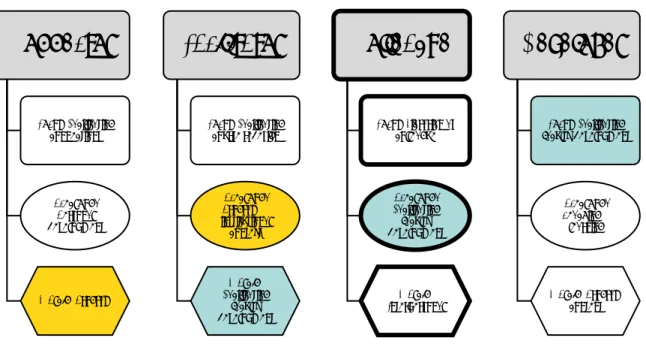
development program. The librarian took on the viewpoint of a fellow educator rather than having specific IL or library-related expertise to share, as were emphasized in the Connector and Facilitator categories. The focus of the Colleague category, as shown in Figure 4, is
librarian as colleague, involving collegial knowledge sharing. One participant stated:
So it's less about the fact that I'm a librarian and more about that I teach information literacy and she also implicitly in her work will be teaching information literacy so I'm more approaching it through a colleague stand point of view.
Figure 4. Structural elements of the Colleague category (outlined in bold)
Librarians in this category perceive their involvement in IMPACT as engaging in a
Connector
Focus: Facilitating connections Background: Personal development Margin: ProgramFacilitator
Focus: Facilitating course redesign Background: Program & institutional context Margin: Facilitating faculty developmentColleague
Focus: Librarian as colleague Background: Facilitating faculty development Margin: InterpersonalDeveloper
Focus: Facilitating faculty development Background: Teaching & learning Margin: Program contentknowledge exchange on the topic of teaching and learning. This experience does not include ownership of IL by librarians. Librarians acknowledged that disciplinary instructors are also concerned with IL. In the background of this category is facilitating faculty development by helping instructors address pedagogical issues as a colleague with a different point of view. One participant experiencing faculty development as a Colleague shared:
So you're approaching [work in IMPACT] from a teaching to teaching standpoint, so . . . the process of teaching makes you a better teacher by helping other people teach better . . . you are also becoming a better teacher through that experience. On the margins of this category are interpersonal dynamics. In comparison to the Facilitator category, participants describing experiences that aligned with the Colleague category placed less emphasis on helping instructors complete the program. While a major aspect of the Connector and Facilitator categories, interpersonal relationships between librarians, instructional designers, and educational technologists from other support units were not explicitly mentioned in the Colleague category.
The dimensions of IL discussed in this category contrasted with the first two categories in which librarians felt their unique expertise lay in IL. Instead, participants experiencing faculty development as Collaborators described learning about IL from the instructors in the program. The dimension of interpersonal relationships in this category emphasized the exchange of librarian-instructor as two colleagues both interested in teaching and learning.
Category 4 – Developer
Experiences that align with the Developer category describe involvement in the program as developing the instructors. The librarian may step back and let instructors attempt to solve a pedagogical problem on their own or facilitate a conversation between instructors,
leveraging their collective experience and knowledge so that they may help one another. They may also “let go” as one participant described, recognizing that instructors might need space to think or reflect on a particular issue without a support team member involved. Exemplifying the facilitating faculty development focus of this category (see Figure 5), one participant stated:
The faculty fellows start challenging each other in a way that we three support team members can just kind of step back and let them run with that. It’s rewarding to let them, the faculty who are doing the redesign, start challenging each other because
for them that’s on a different level. I think it’s very important for them to interact with who they see as their teaching peers even from other departments . . . So I think that’s magic when they start challenging each other in a constructive way.
Figure 5: Structural elements of the Developer category (outlined in bold)
With the overall intention of enabling the instructors to succeed, one participant described a peer-learning strategy to foment group cohesion and richer conversations between the instructors. This scenario is particularly noteworthy as it focuses on enabling instructors to change the way they think about teaching. Often referring to a broader impact and context for the librarian’s role in the IMPACT program, the background for this category is
teaching and learning in higher education. The experience conveyed in this category describes moving beyond identifying solely as a librarian:
I'm happy to keep doing this. I feel like being involved with IMPACT has made me feel more a part of the process of higher education. It's helped me feel like I am an
Connector
Focus: Facilitating connections Background: Personal development Margin: ProgramFacilitator
Focus: Facilitating course redesign Background: Program & institutional context Margin: Facilitating faculty developmentColleague
Focus: Librarian as colleague Background: Facilitating faculty development Margin: InterpersonalDeveloper
Focus: Facilitating faculty development Background: Teaching & learning Margin: Program contenteducator. I'm a part of the educational process. I'm not just a librarian . . . I feel like I have a more integrated role in higher education than I did before I was involved. Work in the faculty development program is experienced as furthering higher education by getting outside of library-specific contexts. At the margin of this category are the program’s content and theories, which are more prominently discussed in the other categories of description.
The dimension of IL was perceived in this category as shifting and complex, depending on myriad factors like disciplines, level of students, etc. One study participant even highlighted the connection between IL and disciplinary learning by describing how challenging, yet rewarding, it is to articulate to instructors how IL can further student learning in a
meaningful way that is recognized by the disciplinary instructor. Interpersonal relationships between instructors are emphasized in this category, specifically, those relationships that pertain to a functioning group that could question and further their collective teaching practices. Leveraging the experiences and insights of individual instructors is of high priority for facilitating successful course redesigns and creating more student-centered teaching and learning environments.
Discussion
As outlined in the figures, the categories identified through this research are hierarchical in nature, with the more complex categories subsuming elements found in the less complex categories. The Connector category describes actions librarians may take in their practice as liaisons to departments in which they connect disciplinary faculty with specific teaching and learning resources on campus. The Facilitator category focuses on systematically working with faculty to develop their IL skills and abilities. The Colleague and Developer categories are more complex, as librarians embraced broader interpretations of their educative role. Not focusing on IL or a single course, academic librarians describing experiences aligned with these two categories sought to contribute to teaching and learning in a broader sense. As discussed below, these categories may be related to one or more of the four key aspects of faculty development identified by Fundator and Maybee (2019): collaborative, scholarly, contextual, and reflective.
The findings suggest that the different ways librarians experience participating in a faculty development program can influence how they interact with faculty to make pedagogical
decisions. Librarians as Connectors may await opportunities to share their expertise in IL or contribute to the program by connecting faculty fellows to partners from other educational units who have expertise to address their needs. The faculty development experiences of librarians as Facilitators are similarly grounded in their IL expertise but with a stronger focus on guiding and supporting fellows through what they perceive to be a general process of redesigning a course within the program. Aligning with Fundator and Maybee’s (2019) scholarly aspect of faculty development, which focuses on using scholarly ideas, such as theories and models, the Facilitator experience describes how librarians use pedagogical ideas to help faculty make informed changes to their courses.
In comparison, librarians experiencing faculty development as Colleagues and Developers perceive their role as helping transform faculty practices to be more student-centered, which is a stated goal of the IMPACT program. Experiences described in both the Colleagues and Developers categories align with the collaborative aspect of faculty development, which focuses on leveraging the developer’s and the faculty member’s expertise to make pedagogical changes (Fundator & Maybee, 2019). A notable element of the experiences described in the Developers category is the focus on helping faculty transform their teaching practice by identifying times when faculty need more leeway to reflect individually or with their faculty peers on their overall goals for teaching and learning. This aligns well with the reflective aspect of faculty development, which focuses on helping faculty think broadly and purposefully about changes to their pedagogy (Fundator & Maybee, 2019).
Librarians experiencing their work as Connectors and Facilitators frame their participation in IMPACT according to the opportunities—or lack thereof—for them to inject IL into courses. In these situations, librarians’ experiences are limited to IL and general procedural aspects, such as guiding faculty through a backwards design process. A focus on IL rather than on creating a student-centered learning environment may reinforce the undesirable effect mentioned by Jumonville (2014) that instructors and librarians perceive they have different goals for participating in a train-the-trainer situation. One of the benefits of describing librarians’ experiences of faculty development programs is to show that certain approaches to faculty development may be more or less conducive to working with faculty to embed IL into curricula.
Experiences aligned with the Colleagues and Developers categories emphasized pedagogical consulting, in which the librarians were less concerned with embedding IL into courses than with helping instructors address pedagogical challenges. Focused on all aspects of an
instructor’s course, librarians whose experiences align with the Colleagues and Developers categories described introducing IL approaches as viable solutions to the challenges
instructors face in their classrooms. These experiences align with the contextual aspect of faculty development that focuses on fostering learning within disciplines (Fundator & Maybee, 2019).
Rather than downplaying the importance of IL, Colleagues and Developers reprioritize IL in the context of helping faculty solve a pedagogical problem. While librarians as Connectors and Facilitators focused on helping faculty learn about IL, librarians as Colleagues and Developers helped faculty recognize how information can enable student learning within their courses. However, experiences associated with the Developer category were more focused on the reflective aspect of faculty development (Fundator & Maybee, 2019). Librarians experiencing faculty development in this way described making space for
instructors to reflect on the overall goals, promoting changes in the way instructors thought about their teaching.
Implications and Future Directions
This project is an initial investigation into the experiences of academic librarians facilitating course redesigns in a campus-wide faculty development program. When librarians adopt the role of faculty developer, IL can be described as a librarian-faculty enterprise (as the dimensions of the Developer category describes), and librarian involvement in faculty development can be framed as enabling instructors to make IL more explicit as a means to support student learning (Bruce, 2008).
By working with instructors outside of the classroom, academic libraries may be able to enable student learning at a larger scale. To accomplish this goal, librarians will need to identify and experience their role as educators broadly—concerned with educating students and faculty. The aspects of experience identified through phenomenographic research can inform professional development efforts. In this case, librarians could be made aware of aspects of faculty development associated with the Colleague and Developer categories, allowing them to approach faculty development more holistically. The results indicate that in a professional development context, IL may be viewed not as an end unto itself but as a
means of helping an instructor achieve a pedagogical goal. For instance, one such goal would be increasing student engagement by having students find, analyze, and synthesize information in a disciplinary, authentic way (Maybee, Doan, & Flierl, 2016). The findings suggest that academic librarians are capable of becoming skillful faculty developers through experiences that align with the four key aspects of faculty development work (Fundator & Maybee, 2019). Along with future findings from studies examining librarian experiences of faculty development in other contexts, the findings from the current study may be used to enable librarians to experience faculty development in more sophisticated ways, helping faculty create more student-centered teaching and learning environments through conversations that may or may not center directly on IL.
Conclusion
This study describes the experiences of librarians participating in a faculty development program. These experiences ranged from focusing on opportunities to embed IL to more complex experiences where librarians identified more broadly as educators concerned with helping faculty provide better learning environments for students. While the
generalizability of this study is limited, given that it explored one program at one institution, further research is warranted to explore librarians’ experiences of faculty development. For instance, what would enable librarians to more fully experience the complexity of faculty development, such as those described in the Collaborator and Developer categories?
Extant literature has focused on the experiences of faculty in faculty development programs or on how IL can play a central role in course or assignment design. These results suggest, though further inquiry is required to substantiate, that librarians self-identifying more broadly as educators and pedagogical consultants may be a desirable approach to faculty development. Further inquiry in this area could explore the nature of professional
development for academic librarians that enables them to see IL in broader institutional and pedagogical contexts and if librarians who approach faculty development in certain ways have a demonstrable impact on student learning outcomes.
Faculty development programs provide a great opportunity for academic libraries to further strategic goals and student learning. Given the sophistication that academic librarians are capable of describing with regard to teaching and learning outlined in this study, more
inquiry is justified to better determine how academic librarians can contribute to and participate in faculty development efforts.
References
Åkerlind, G. S. (2005). Variation and commonality in phenomenographic research methods.
Higher Education Research & Development, 24(4), 321–334. https://doi.org/10.1080/07294360500284672
Bowden, J. A. (2000). The nature of phenomenographic research. In J. A. Bowden & E. Walsh (Eds.), Phenomenography (pp. 1–18). Melbourne, Australia: RMIT University Press.
Bruce, C. S. (1994). Reflections on the experience of the phenomenographic interview. In R. Ballantyne & C. S. Bruce (Eds.), Phenomenography: Philosophy and practice (Proceedings) (pp. 57–70). Brisbane, Australia: Queensland University of Technology.
Bruce, C. S. (1997). The seven faces of information literacy. Adelaide, Australia: Auslib Press. Bruce, C. S. (2008). Informed Learning. Chicago, IL: American Library Association.
Cowan, S., & Eva, N. (2017). Changing our aim: Infiltrating faculty with information literacy. Communications in Information Literacy, 10(2), 163–177.
https://doi.org/10.15760/comminfolit.2016.10.2.31
Fister, B. (2009). Fostering information literacy through faculty development. Library Issues: Briefings for Faculty and Administrators, 29(4).
Flierl, M., Maybee, C., Riehle, C. F., & Johnson, N. (2016). IMPACT lessons: Strategically embedding MIL through teacher development in higher education. In D. Oberg & S. Ingvaldsen (Eds.), Media and information literacy in higher education: Educating the educators
(pp. 119–133). Oxford, United Kingdom: Chandos.
Fundator, R. and Maybee, C. (2019). Academic librarians as informed learning developers. In K. Ranger (Ed.), Advances in Librarianship: Vol. 46.Informed learning applications: Insights from research and practice (pp. 81–94).
Hartman, P., Newhouse, R., & Perry, V. (2014). Building a sustainable life science information literacy program using the train-the-trainer model. Issues in Science and Technology Librarianship, 77. http://doi.org/10.5062/F4G15XTM
Iannuzzi, P. (1998). Faculty development and information literacy: Establishing campus partnerships. Reference Services Review, 26(3/4), 97–102.
https://doi.org/10.1108/00907329810307786
Jaguszewski, J. M. & Williams, K. (2013). New roles for new times: Transforming liaison roles in research libraries. Retrieved from the Association of Research Libraries website:
http://www.arl.org/component/content/article/6/2893
Jumonville, A. (2014). The role of faculty autonomy in a course-integrated information literacy program. Reference Services Review,42(4), 536–551.
https://doi.org/10.1108/RSR-07-2014-0020
Li, H. (2007). Information literacy and librarian-faculty collaboration: A model for success.
Chinese Librarianship: An International Electronic Journal, 24.
https://doi.org/doi:10.7282/T3TQ61PF
Limberg, L. (1999). Experiencing information seeking and learning: A study of the interaction between two phenomena. Information Research, 5(1). Retrieved from http://informationr.net/ir/5-1/paper68.html
Lupton, M. (2008). Information literacy and learning. Blackwood, Australia: Auslib Press. Marton, F. (1986). Phenomenography—A research approach to investigating different
understandings of reality. Journal of Thought, 21(2), 28–49.
Marton, F. (1994). Phenomenography. In T. Husén & T. N. Postlethwaite (Eds.),
International encyclopedia of education (pp. 4424–4429). Oxford, United Kingdom: Pergamon.
Marton, F., & Booth, S. (1997). Learning and awareness. Mahwah, NJ: Lawrence Erlbaum. Marton, F., & Pong, W. Y. (2005). On the unit of description in phenomenography. Higher
Education Research and Development, 24(4), 335–348. https://doi.org/10.1080/07294360500284706
Marton, F., & Tsui, A. (2004). Classroom discourse and the space of learning. Mahwah, NJ: Lawrence Erlbaum.
Maybee, C. (2007). Understanding our student learners: A phenomenographic study revealing the ways that undergraduate women at Mills College understand using information. Reference Services Review, 35(3), 452–462.
https://doi.org/10.1108/00907320710774319
Maybee, C. (2018). IMPACT learning: Librarians at the forefront of change in higher education. Oxford, United Kingdom: Chandos.
Maybee, C., Doan, T., & Flierl, M. (2016). Information literacy in the active learning classroom. The Journal of Academic Librarianship, 42(6), 705–711.
https://doi.org/10.1016/j.acalib.2016.07.005
Millet, M. S., Donald, J., & Wilson, D. W. (2009). Information literacy across the curriculum: Expanding horizons. College & Undergraduate Libraries, 16(2–3), 180–193. https://doi.org/10.1080/10691310902976451
Patton, M. Q. (1990). Qualitative research & evaluation methods (2nd ed.). Newbury Park, CA: Sage Publications.
Webber, S., Boon, S., & Johnston, B. (2005). A comparison of UK academics’ conceptions of information literacy in two disciplines: English and marketing. Library and Information Research, 29(93), 4–15. https://doi.org/10.29173/lirg197
Wishkoski, R., Lundstrom, K., & Davis, E. (2018). Librarians in the lead: A case for interdisciplinary faculty collaboration on assignment design. Communications in
Information Literacy, 12(2), 166–192. https://doi.org/10.15760/comminfolit.2018.12.2.7 Wishkoski, R., Lundstrom, K., & Davis, E. (2019). Faculty teaching and librarian-facilitated
assignment design. portal: Libraries and the Academy, 19(1), 95–126.
https://doi.org/10.1353/pla.2019.0006
Witt, S. W., & Dickinson, J. B. (2003). Teaching teachers to teach: Collaborating with a university education department to teach skills in information literacy pedagogy.
Behavioral & Social Sciences Librarian, 22(1), 75–95. https://doi.org/10.1300/J103v22n01_06