COPYRIGHT AND CITATION CONSIDERATIONS FOR THIS THESIS/ DISSERTATION
o Attribution — You must give appropriate credit, provide a link to the license, and indicate if changes were made. You may do so in any reasonable manner, but not in any way that suggests the licensor endorses you or your use.
o NonCommercial — You may not use the material for commercial purposes.
o ShareAlike — If you remix, transform, or build upon the material, you must distribute your contributions under the same license as the original.
How to cite this thesis
Surname, Initial(s). (2012). Title of the thesis or dissertation (Doctoral Thesis / Master’s Dissertation). Johannesburg: University of Johannesburg. Available from:
A Framework for the Development of Sport
Tourism in Cameroon
Siyabulela Nyikana
216020005
School of Tourism and Hospitality, College of Business and
Economics, University of Johannesburg
Supervisor: Professor. T.M. Tichaawa
A Thesis Submitted to the College of Business and Economics,
University of Johannesburg, in fulfilment for the requirement of the
degree of Doctor of Philosophy: Tourism & Hospitality
i
PLAGIARISM DECLARATION
I declare that this thesis is my own original work, conducted under the supervision of Prof. T.M. Tichaawa. It is submitted for the degree of Doctor of Philosophy: Tourism and Hospitality in the College of Business and Economics at the University of Johannesburg. This work has not been submitted as part of a degree at another institution, but it has informed the production of the following journal articles:
Nyikana, S. & Tichaawa, T.M. (2018). Contextualising sport and tourism in Central Africa: prospects and challenges. GeoJournal of Tourism and Geosites, 23(3):895-909.
Nyikana, S. & Tichaawa, T.M. (2018). The geography of sport tourists in Cameroon.
Proceedings of the Society of South African Geographers (SSAG) Conference, 05 October 2018, University of Free State, QwaQwa Campus. pp. 71-83.
Nyikana, S. & Tichaawa, T.M. (2018). Sport tourism as a Local Economic Development enhancer for emerging destinations. EuroEconomica, 2(37):70-83.
I know that plagiarism is wrong. Plagiarism is to use another’s work, and to pretend that it is one’s own.
I have used the Harvard Method convention for citation and referencing. Each contribution to, and quotation in, this essay/assignment from the work(s) of other people has been attributed, and has been cited and referenced.
This essay/assignment is my own work, and it has not been partially or wholly copied from another.
I have not allowed, and will not allow, anyone to copy my work with the intention of passing it off as his or her own work.
I acknowledge that copying someone else’s assignment or essay, or part of it, is wrong, and declare that this is my own work.
ii
ACKNOWLEDGEMENTS
I wish to thank the following people, whose contributions to this research are acknowledged and much appreciated:
My supervisor, Professor Tembi Maloney Tichaawa, for his dedication and passion towards my development as a researcher and academic. Your effort towards this journey as a whole is much appreciated, Prof. T.
The School of Tourism and Hospitality (STH) at the University of Johannesburg as a whole, for enabling me to reach this point through their continued support in my studies.
I wish to thank all my colleagues for the constant words of encouragement throughout the study period. Without you all, I would not have been able to complete this thesis.
I wish to thank my family for supporting me and for always encouraging me to reach greater heights. Your support and prayers have made me the person that I am today. I specifically wish to thank my grandmother, Nolitha Nyikana, who has always striven to see me become a better version of myself at all times.
Much appreciation is extended to the fieldwork team in Cameroon, which has consistently surpassed their own comfort zone to help me collect the required data. I would especially like to thank Mr Alphonse Asongwed, Doris, Frank, and Njom, for their efforts in the data collection process.
I also wish to send my heartfelt gratitude to the STATKON at the University of Johannesburg, and especially Lebo, for their statistical guidance and analysis.
iii
DEDICATION
This thesis is dedicated to my late father, Thembinkosi Nyikana, I miss you, Sithathu, and you have been a beacon of hope for me throughout my academic career.
iv
ABSTRACT
Sport has been an integral part of the African culture for a long time, and as such, in transitioning economies like those in the Central African subregion, where many do not form part of the mainstream economic activity, sport serves as a useful socio-economic getaway. In fact, the concept of sport-related tourism has grown significantly in prominence in the African context, especially in recent times. The above is so because, despite the existing issues linked to economic hardships, sport events are well-attended, providing a useful platform to kick-start certain socio-economic activities that are linked to both local and regional tourism development. Such benefits form part of the reasoning regarding the targeting of sport tourism as a vibrant sector that can contribute effectively to local economic development by the governments in the Central African subregion. However, the analysis and development of sport tourism has, so far, been subjected to only a limited amount of empirical research that could prove to be useful, in terms of providing cogent plans and policy directions to guide such development. The study argues that using current frameworks that have mostly been developed in the resourceful Global North context might be misleading in parts of the subcontinent of Africa, given their unique geopolitical and economic characteristics. Consequently, using Cameroon as a case study area, the current thesis develops a framework for sport tourism development.
Using a mixed-methods research design, the researcher collected data from self-administered questionnaire surveys (n=1186) that were conducted with event attendees at four distinct sports events held in Cameroon over a period of time, as well as from comprehensive one-on-one interviews (n=16) that were held with sport and tourism stakeholders. The data were then contextualised within the political framework set out in terms of a documentary analysis of tourism- and sport-related policy documents. The key findings reveal that, for the most part, sport tourism remains a missed opportunity for a country that is a strong sporting nation, and which, additionally, possesses much tourism potential. The above relates particularly to the weak associations and relationships between the sport and tourism stakeholders involved in the execution of sport tourism development initiatives in the country, which is obstructed by the current top-down approach towards sport tourism development and management. The lack of funding, the poor infrastructure and the existing structural challenges were found to be the major impediments to sport tourism development. In addition, although sport tourism was known to be capable of producing a range of benefits, such benefits had not yet been maximised, given the prevailing lack of collaboration between the sport and tourism stakeholders. The contributions to local economic development were found to have manifested themselves in the form of informal trading, which was largely evident during the hosting of sport events. The study findings were useful in developing a framework for the development of the sport tourism sector in Cameroon. While sharing similarities with the existing conventional sport tourism frameworks, the present study’s framework reveals unique dimensions in relation to the set study context, in that, in addition to the pre-identified primary stakeholders involved in the sport tourism development process, who are mostly applicable in the resourceful Global North context, where the current stage of sport tourism development is advanced, the study notes the involvement of stakeholders, in the Central African subregion, that are unique to the African communities. In addition, central to the development of such a framework is the creation of a favourable environment, which should be defined through appropriate management and policy approaches. Considering the diverse array of stakeholders involved in the development of the framework, a decentralised, bottom-up approach, enabled by the development of strategies and policies, is necessary. Essentially, the local context should inform the regional and provincial contexts, which, in turn, should inform an effective national strategies and policies. Hence, the proposed framework is one that moves towards having a sustainable sport tourism industry in Cameroon, which is aimed
v
at considering, and at accounting for, all sport tourism impacts on the host destination and the stakeholders, as well as at overcoming any impediments to the development of the sector, and to capitalising on the potential for LED.
vi
LIST OF ACRONYMS
Acronyms/Abbreviations Definition/Explanation
4IR fourth industrial revolution
AFCON Africa Cup of Nations
CAF Confederation of African Football
CAMAST Cameroon Association for Responsible Tourism
DMO destination marketing organisation
FA Football Association
FIFA Fédération Internationale de Football
Association
GDP gross domestic product
IAAF International Association of Athletics Federation
IOC International Olympic Committee
LED local economic development
MDGs Millennium Development Goals
MICE meetings, incentives, conferences and
exhibitions
NEPAD New Partnership for African Development
NGO non-governmental organisation
SPSS Statistical Package for Social Sciences
UK United Kingdom
UN United Nations
UNICEF United Nations Children’s Fund
UNWTO United Nations World Tourism Organization
VFR visiting of friends and relatives
vii TABLE OF CONTENTS Plagiarism declaration i Acknowledgements ii Dedication iii Abstract iv List of acronyms vi
CHAPTER ONE: STUDY CONTEXT
1.1 Preamble 1
1.2 Motivation of the study / Problem statement 4
1.3 Research aim and objectives 6
1.4 Significance of the study 6
1.5 1.6
Structure of the thesis Summary
7 9 CHAPTER TWO: THEORETICAL AND CONCEPTUAL FRAMEWORK
2.1 Introduction 11
2.2 The confluence of sport and tourism 12
2.3 Political economy 15 2.3.1 2.3.2 2.4 2.4.1 2.5 2.6
The political economy of sport tourism
The political economy of sport tourism in Africa Stakeholder theory
Stakeholder analysis in sport tourism
The link between political economy, stakeholder theory and the confluence of sport and tourism
Summary 17 22 25 27 30 32 CHAPTER THREE: CONTEXTUALISING SPORT AND TOURISM
3.1 Introduction 33
3.2 The development of sport tourism as an industry 33
3.2.1 Defining tourism 40 3.2.1.1 3.2.1.2 3.2.2 3.2.2.1 3.2.2.2 3.2.2.3 3.3 3.3.1 3.3.2 3.3.3 3.3.4 3.4
The growth and significance of tourism for the global economy Tourism in the Global South
The development of sport Defining sport in context
The growth and importance of sport in the global arena Sport in the developing world context
Sport events as a sport tourism activity Mega sports events
Hallmark sports events Home-grown sports events Small-scale sports events Chapter summary 42 43 45 46 47 49 51 54 55 58 59 62
viii
CHAPTER FOUR: UNDERSTANDING SPORT TOURISTS AND THEIR TRAVEL BEHAVIOUR
4.1 Introduction 63
4.2 Understanding sport tourism attendees 63 4.3 Classification of sport tourists 68 4.4 4.4.1 4.4.2 4.5 4.5.1 4.5.1.1 4.5.1.2 4.5.1.3 4.5.1.4 4.5.2 4.5.2.1 4.5.2.2 4.5.3 4.6 4.7
Demographic profiling of sport tourism attendees Gender
Employment status, highest educational qualification and age Motives that drive the attendance at sport tourism events Psychological motivations Eustress Escape Aesthetic pleasure Entertainment Sociocultural motivations
Family time and social interaction Cultural connections
Social belonging motivations
Experiences and behaviour of sport tourism event attendees Chapter summary 70 71 72 73 76 76 76 77 77 78 78 79 80 81 85 CHAPTER FIVE: SPORT TOURISM AND LOCAL ECONOMIC DEVELOPMENT
5.1 Introduction 87
5.2 Sport tourism impacts on host destinations: a triple bottom line assessment 87 5.2.1 5.2.1.1 5.2.1.2 5.2.1.3 5.2.1.4 5.2.1.5 5.2.1.6 5.2.1.7
Economic impacts of sport tourism Employment opportunities
Urban regeneration Infrastructure
Increased price of goods and service Use of public funds
Trade and investment opportunities
Development of small, medium and micro enterprises and informal businesses 88 89 90 91 93 94 95 96 5.2.2 5.2.2.1 5.2.2.2 5.2.2.3 5.2.2.4 5.2.2.5 5.2.2.6 5.2.3 5.2.3.1 5.2.3.2 5.2.3.3 5.2.4 5.2.4.1 5.2.4.2 5.2.4.3 5.3
Sociocultural impacts of sport tourism in context The sense of community pride
Sport development and participation Skills enhancement, health and wellness Crime and safety issues
Displacement and overcrowding Cultural exchange opportunities Environmental impacts
Pollution and waste concerns
Environmental awareness and education Pressure on limited local resources
Other implications of sport tourism development in the Global South Tourism implications
Marketing and branding opportunities Political implications
The nexus of sport tourism and local economic development
98 98 99 100 101 102 103 104 104 106 107 108 108 109 111 112
ix
5.3.1 5.3.2 5.3.3 5.4
Defining local economic development
The role of sport tourism and local economic development in context The importance of local economic development in the developing countries Chapter summary 112 113 115 117 CHAPTER SIX: RESEARCH METHODOLOGY
6.1 Introduction 119
6.2 Research questions 120
6.3 Background to the study area – Cameroon 120 6.3.1 6.3.2 6.4 6.4.1 6.5 6.5.1 6.5.2 6.5.3 6.5.4 6.5.5 6.6 6.6.1 6.6.1.1 6.6.1.2 6.6.1.3 6.6.1.4 6.6.2 6.6.3 6.7
Overview of tourism in Cameroon Sport in Cameroon
Research design and approach
Qualitative and quantitative approaches Phase one: qualitative research
Selection of method
Design of the interview schedule Selection of the key informants Interview procedure
Qualitative data analysis
Phase two: quantitative research
Sample population, sampling size and procedure 2016 Women Africa Cup of Nations
Mount Cameroon Race of Hope Central Africa University Games Elite One Premier League games
Questionnaire design and survey procedure Data capturing and analysis
Summary 120 123 126 126 128 129 129 132 133 135 135 136 137 138 138 139 139 141 142 CHAPTER SEVEN: SPORT TOURISM IN THE CAMEROONIAN CONTEXT
7.1 Introduction 143 7.2 7.2.1 7.2.2 7.2.3 7.2.4 7.2.5 7.2.6 7.2.7
Sociodemographic profiles of the respondents Age
Gender
Marital status
Historical racial category Educational levels
Employment status
Monthly household income
144 144 145 146 146 147 148 149 7.3 7.3.1 7.3.1.1 7.3.1.2 7.3.2 7.3.3 7.3.3.1 7.4 7.4.1 7.4.2
Background information on the attendees Origin of sport event attendees in Cameroon
Breakdown of Cameroonian respondents in terms of origin by province Origin of the international attendees
Types of sports event attendee
Group and travel dynamics of sport tourists Group composition
Respondents’ general understanding of the nature of sport tourism Sport helps boost the levels of tourism in the local area
Sport cannot prosper in the absence of tourists
150 150 150 151 153 153 154 155 156 158
x 7.4.3 7.4.4 7.4.5 7.4.6 7.4.7 7.4.8 7.4.9 7.4.10 7.5 7.5.1 7.5.1.1 7.5.1.2 7.5.1.3 7.5.1.4 7.5.2 7.5.2.1 7.5.2.2 7.5.2.3 7.5.2.4 7.5.3 7.5.3.1 7.5.3.2 7.5.3.3 7.5.3.4 7.5.4 7.5.4.1 7.5.4.2 7.5.4.3 7.5.4.4 7.5.5 7.5.5.1 7.5.5.2 7.5.5.3 7.5.5.4 7.5.6 7.5.6.1 7.5.6.2 7.5.6.3 7.5.6.4 7.6 7.6.1 7.7
Sport and tourism are two separate activities that cannot be combined Sport events like this one can be used to bring additional tourists into the area
Sport events can help publicise the local areas
Sport and tourism are equally dependent on each other
Tourism needs sport, so as to attract increased visitor numbers to an area Tourism brings additional people to sport events
Tourism can help raise the profile of relatively small sports events Holding sport events like this one is a form of tourism, because people travel to attend them
The association of sport and tourism set in context Sport helps to boost levels of tourism in the local area
Tourism needs sport, so as to attract increased visitor numbers to an area Tourism brings additional people to sports events
Tourism can help raise the profile of smaller sports events
Holding sports events like this one is a form of tourism, because people travel to attend them
Sport cannot prosper in the absence of tourists
Tourism needs sport, so as to attract increased visitor numbers to an area Tourism brings additional people to sports events
Tourism can help raise the profile of smaller sports events
Holding sport events like this one is a form of tourism, because people travel to attend them
Sport and tourism are two separate activities that cannot be combined Tourism needs sport, so as to attract increased visitor numbers to an area Tourism brings additional people to sports events
Tourism can help raise the profile of smaller sports events
Holding sport events like this one is a form of tourism, because people travel to attend them
Sport events like this one can be used to bring additional tourists into the area
Tourism needs sport, so as to attract increased visitor numbers to an area Tourism brings additional people to sports events
Tourism can help raise the profile of smaller sports events
Holding sport events like this one is a form of tourism, because people travel to attend them
Sport events can help publicise the local areas
Tourism needs sport, so as to attract increased visitor numbers to an area Tourism brings additional people to sports events
Tourism can help raise the profile of smaller sports events
Holding sport events like this one is a form of tourism, because people travel to attend them
Sport and tourism are equally dependent on each other
Tourism needs sport, so as to attract increased visitor numbers to an area Tourism brings additional people to sports events
Tourism can help raise the profile of smaller sports events
Holding sport events like this one is a form of tourism, because people travel to attend them
Awareness of, and involvement in, sport tourism in Cameroon Involvement in sport and tourism
Constraints and challenges regarding the development of sport tourism in Cameroon 159 160 161 162 162 163 163 164 164 165 165 166 166 167 167 168 167 168 169 169 169 170 170 171 171 172 172 172 173 173 173 174 174 174 174 175 175 175 175 176 177 179
xi 7.7.1 7.7.2 7.7.3 7.7.4 7.7.5 7.7.6 7.8 7.8.1 7.8.2 7.8.3 7.8.4 7.8.5 7.8.6 7.9
Evaluating the existing relationship between sport and tourism The centralisation of the government
Complex procedures Lack of tourism culture Lack of infrastructure Poor customer service
Actions for the improvement of sport tourism in Cameroon
Harmonisation of a work plan and the intensifying of the collaboration of the stakeholders
Provision of infrastructure Tourism planning
Defining the role of the government
Encouraging the development of an environment conducive to the development of sport tourism businesses
Increasing the extent of available education on sport tourism Summary 179 182 183 183 184 185 185 186 187 187 188 189 190
CHAPTER EIGHT: PERCEPTIONS OF THE IMPACTS OF SPORT TOURISM AND TRAVEL BEHAVIOUR
8.1 Introduction 192
8.2 Sport tourists and their behaviour in context 193 8.2.1 Previous attendance at sport tourism events 193 8.2.2 8.2.3 8.2.3.1 8.2.3.2 8.2.3.3 8.3 8.3.1 8.3.2 8.3.3 8.3.4 8.3.5 8.3.6 8.3.7 8.3.8 8.3.9 8.3.10 8.3.11 8.3.12 8.4 8.4.1 8.4.1.1 8.4.1.2 8.4.1.3 8.4.1.4 8.4.1.5 8.4.2 8.4.2.1
Frequency of attending sport tourism events
Sport tourism attendance beyond the local place of stay
Frequency of attendance at sport tourism events beyond normal place of stay
Event location relative to place of stay Mode of transportation used to the event
Motivating factors for choosing sport tourism event destinations Entertainment opportunities
Self-actualisation
The event location and area Opportunity for relaxation Tourism-related reasons
Meeting interesting people and socialising The quality of the sport event
Visiting friends and relatives
Maximising the benefits to be gained from quality family-orientated recreational time
Previous event experience Business and trading
Religious and cultural reasons
Perceptions of sport tourism impacts Economic impacts of sport tourism events Foreign exchange and regional development The development of SMMEs
Increased cost of living
Increased seasonality of income
Sport events as the only drawcard that attracts tourists to the area Socio-environmental influences of sport tourism events in Cameroon Cameroon’s unique sports events
194 195 196 197 198 200 203 204 205 205 206 207 208 208 210 210 211 212 213 213 214 215 217 218 218 219 220
xii 8.4.2.2 8.4.2.3 8.4.2.4 8.4.2.5 8.4.2.6 8.4.2.7 8.4.2.8 8.4.2.9 8.4.2.10 8.4.2.11 8.4.2.12 8.4.2.13 8.4.3 8.4.3.1 8.4.3.2 8.4.3.3 8.4.3.4 8.4.3.5 8.4.3.6 8.4.3.7 8.4.3.8 8.4.4 8.4.4.1 8.4.4.2 8.4.4.3 8.4.4.4 8.4.5 8.4.5.1 8.4.5.2 8.4.5.3 8.4.5.4 8.4.5.5 8.4.5.6 8.5 8.5.1 8.5.2 8.6 8.6.1 8.6.2 8.7
An increased sense of community pride Skills development opportunities
Ethnic identity of the local communities Improved social cohesion
Displacement of tourists
Local congestion and overcrowding Interference with the local value systems Increased criminal activity
Incentivised cleanliness of public spaces Damaging of important heritage sites Increased pollution
Added pressure on limited resources
Local economic development impacts of sport tourism events General benefits of sport tourism for the local economies Sport events as attractions in the local areas
Employment creation for the local communities Local investment and business
Increased spending in the local areas Investment in the local infrastructure Increased markets for local products
Creation of long-term facilities for the local communities Government and citizen trust in the context of sport tourism in Cameroon
Government and citizen cooperation
Skills development and training for the local communities Increased levels of trust in the government
Government tool for the local socio-economic issues Marketing and branding impacts
Increased media exposure for the local areas Use as a communication tool for the visitors Enhancement of the regional profile
Regional awareness Imaging and branding
Promoting Cameroon as a preferred tourism destination Factor analysis of the sport tourism impacts
Reliability analysis
Correlation analysis of impact constructs
Stakeholder reflections on the overall impacts of sport tourism Role-players in sport tourism in Cameroon
Impacts of sport tourism Chapter summary 222 222 223 224 225 226 227 228 228 229 230 231 232 232 233 234 235 236 236 237 237 238 239 240 240 241 241 242 243 243 244 244 245 245 247 248 251 251 254 255 CHAPTER NINE: CONCLUSION AND IMPLICATIONS : FRAMEWORK FOR THE DEVELOPMENT OF SPORT TOURISM IN CAMEROON
9.1 Introduction 258
9.2 Review of main research questions and methodology 258
9.3 Summary of the key findings 260
9.3.1 9.3.2
Objective one: to determine the sociodemographic profiles of the sport tourism event attendees and the key informants
Objective two: to analyse, in a critical way, the role played by the various stakeholders who were currently involved in sport and tourism in
260 262
xiii 9.3.3 9.3.3.1 9.3.3.2 9.3.3.3 9.3.3.4 9.3.4 9.3.5 9.3.6 9.4 9.5 9.5.1 9.5.2 9.5.3 9.6 9.7 9.8 Cameroon
Objective three: to establish the existing relationship between sport and tourism
Sport as a tourism promoter in the local areas Tourism as an engine for driving sport promotion Sport and tourism disconnect
Sport events as attractors of tourists
Objective four: to critically analyse the stakeholders’ perceptions of the impacts associated with sport tourism
Objective five: to explore how the interlinkages between sport and tourism contribute to LED
Objective six: to propose a framework of solutions that can be used to develop and enhance sport tourism as a viable sector for the relevant stakeholders
Reflections on the adopted conceptual framework Contributions made by the current study
Contributions made to the existing literature and theory by the current study
Policy implications
Practical implications of the study Limitations of the present study
Suggestions for future research on sport tourism in Cameroon Concluding remarks 263 264 265 265 266 266 269 271 274 276 276 277 277 278 278 279 REFERENCES 284 LIST OF FIGURES
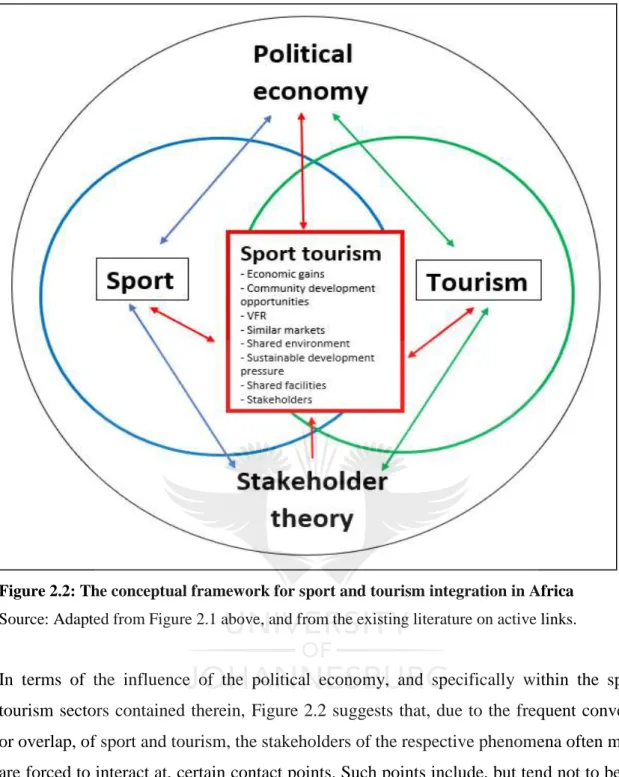
Figure 2.1: The convergence of sport and tourism interests 13 Figure 2.2: The conceptual framework for sport and tourism integration in
Africa 31
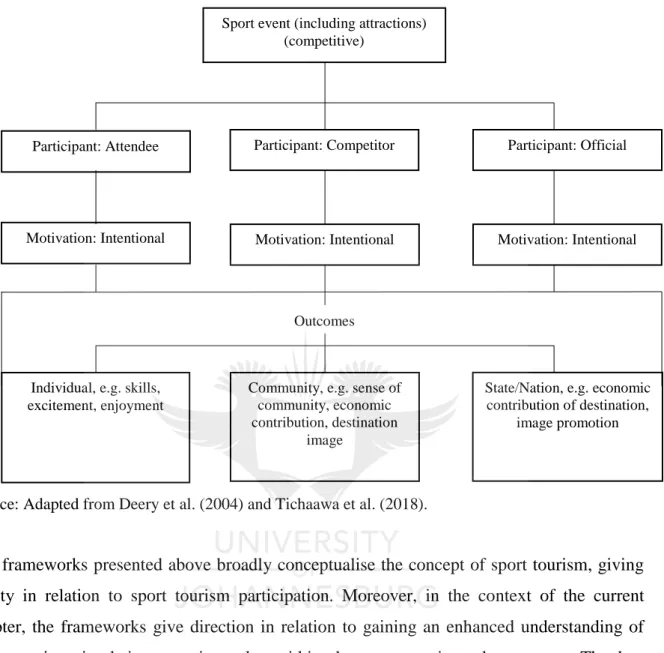
Figure 4.1: Framework of the sport tourist
Figure 4.2: The motivation and outcomes of sport tourists: a framework Figure 6.1: Map of Cameroon, indicating study areas
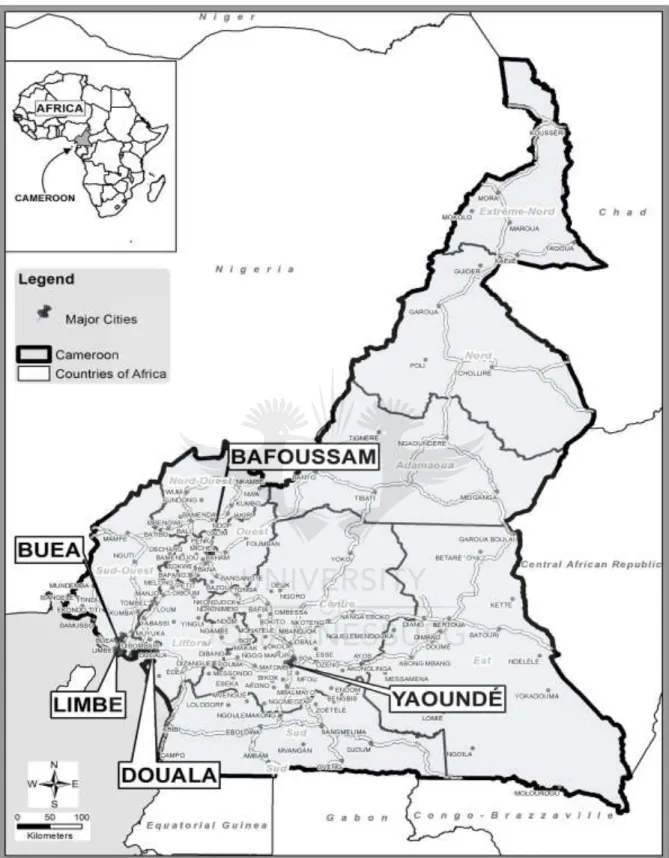
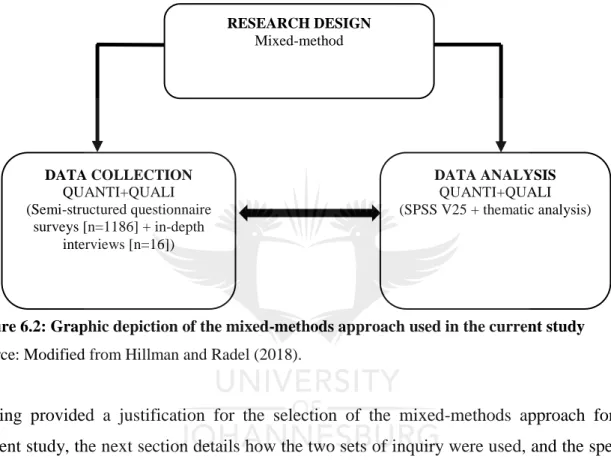
Figure 6.2: Graphic depiction of the mixed-methods approach used in the current study
Figure 9.1: A framework for the development of sport tourism in Cameroon
65 67 125 128 280 LIST OF TABLES
Table 3.1: An overview of some of the major sport tourism studies undertaken during the second decade of the twenty-first century
Table 3.2: An examination of the UNWTO’s tourism definition Table 3.3: Types of sport tourism events
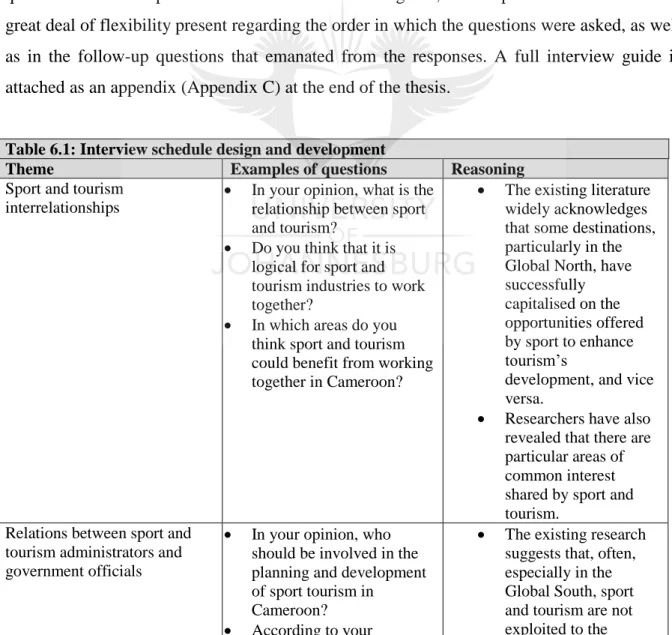
Table 4.1: Dimensions of, and motives for, sport consumption Table 6.1: Interview schedule design and development
38 41 53 75 130 Table 6.2: List of stakeholders interviewed 133 Table 6.3: Distribution of the questionnaires
Table 7.1: Respondents’ age Table 7.2: Respondents’ gender
Table 7.3: Respondents’ marital status
139 145 146 146
xiv
Table 7.4: Respondents’ historical racial category
Table 7.5: Respondents’ highest level of education attained Table 7.6: Respondents’ occupation / employment status
Table 7.7: Respondents’ monthly household income after deductions Table 7.8: Respondents’ country of origin
Table 7.9: Respondents’ origin by province
Table 7.10: Country of origin of international attendees Table 7.11: Respondents’ nature of stay at destination
Table 7.12: Respondents’ visiting with others not participating in the event Table 7.13: Respondents’ group composition
Table 7.14: Respondents’ level of understanding of sport tourism
Table 7.15: Respondents’ perceptions of the relationship between sport and tourism
Table 7.16: Sport tourism helps to boost levels of tourism in the local area Table 7.17: Sport cannot prosper in the absence of tourists
Table 7.18: Sport and tourism are two separate activities that cannot be combined
Table 7.19: Sport events like this one can be used to bring additional tourists into the area
Table 7.20: Sport events can help publicise the local areas
Table 7.21: Sport and tourism are equally dependent on each other Table 7.22: Knowledge of other sport tourism events held in Cameroon Table 7.23: Other known sport tourism events hosted in Cameroon Table 7.24: Extent of involvement in sport tourism in Cameroon Table 8.1: Previous attendance at specific sport tourism events
147 148 149 150 150 151 152 153 154 155 156 156 167 169 171 173 174 176 176 177 179 194 Table 8.2: Frequency of attendance at sport tourism events in the respondents’ 195 local area
Table 8.3: Sport tourism event attendance beyond the normal place of stay 196 Table 8.4: Frequency of attendance at sport tourism events in the respondents’ local 197 area
Table 8.5: Event location relative to place of residence 197 Table 8.6: Duration of stay at the event location 198 Table 8.7: Mode of transport to the sport event 200 Table 8.8: The sport tourism event as the main reason for being in the location 201 Table 8.9: Motivating factors, besides the event, for visiting the area 203 Table 8.10: Economic impacts of sport tourism events 214 Table 8.11: Socio-environmental impacts of sport tourism events 220 Table 8.12: Perceived benefits of sport tourism events for the local economies 233 Table 8.13: Local economic development impacts of sport tourism events 233 Table 8.14: Government–citizen trust impacts of sport tourism events 239 Table 8.15: Marketing and branding impacts of sport tourism events 242 Table 8.16: Factor analysis results 247 Table 8.17: Cronbach’s alpha values of perceptions of the sport tourism impact 247 constructs
xv
APPENDICES 324
Appendix A: The questionnaire (in English) 324 Appendix B: The questionnaire (in French)
Appendix C: The interview schedules
328
1
CHAPTER ONE
STUDY CONTEXT
1.1Preamble
The field of sport tourism has grown rapidly and received much academic attention as a form of tourism resulting from the integration of sports and tourism activities (Fourie & Santana-Gallego, 2011; Hemmonsbey & Tichaawa, 2018, 2019; Hinch & Higham, 2011; Marumo, Lubbe & Pelser, 2015; Njoroge, Atieno & Do Nascimento, 2017; Reis, Vieira & De Sousa-Mast, 2015; Taleghani & Ghafary, 2014; Tichaawa, Bob & Swart, 2018). Such growth, according to Swart and Bob (2007), has been aided, at least in part, by the significant growth of both sport and tourism in economic importance in both the developed and the developing world contexts. As Fourie and Santana-Gallego (2011) underscore, sport tourism is recognised as being one of the main factors that has led to the rapid growth of tourism. Likewise, Tichaawa et al. (2018) posit that the phenomenon of sport tourism has played a prominent role in the fuelling of world tourism, resulting in it being a topical focus of many stakeholders. The payment of such academic attention according to several scholars, is due to the recognition given to the industry for its influence of the socio-economic restructuring of both the urban and the rural areas, especially in the developing economies (see Hemmonsbey & Tichaawa, 2019; Higham & Hinch, 2002; Honari, Goudarzi, Heidari & Emami, 2010; Lesjak, Axelsson & Mekinc, 2017; Swart & Bob, 2007; Tichaawa et al., 2018). Besides the above, sport has continued to be used as part of tourism’s role in urban regeneration, thereby bringing further attention to the sport tourism niche market (Bob & Swart, 2010).
In the available literature, the earlier work of Standeven and De Knop (1999) suggests that a symbiotic relationship exists between the disciplines of sport and tourism. Despite the nature of the relationship, Weed and Bull (2004, 2012) argue that the sport tourism discipline has historically been looked at as simply being an overlap between two different study areas. However, in recent times, there has been an increased focus on the relationship, given how countries have become more reliant on combining sport and tourism as a means of rejuvenating ailing economies (Gammon & Robinson, 2003; Getz, 2003, 2013; Gibson, 1998, 2013; Gibson, Kaplanidou & Kang, 2012; Gibson, Willming & Holdnak, 2003; Tichaawa et al.,2018). The authors suggest that, due to the two study areas concerned expanding rapidly in terms of their growth and development, it has been noted that they ought to receive recognition for their contribution to local economic development (LED). According to
2
Gammon and Robinson (2004), the relationship between the two disciplines has continued on an upward trajectory in terms of general industry growth, as well as in terms of serving as a point of further academic focus and research initiative. However, the existing research suggests a lack of comprehensive analysis of the links between sport and tourism, with those that are in existence being particularly biased towards the developed countries in the Global North (Higham & Hinch, 2002; Kennelly & Toohey, 2014; Saayman, 2012; Tichaawa et al., 2018; Turco, Riley & Swart, 2002).
In the developing world context, Kennelly and Toohey (2014) assert that the agencies or ministries that are responsible for the two spheres (i.e. sport and tourism) often see their development endeavours fail, due to their mutual lack of effective collaboration, in terms of planning, policy and implementation. Along similar lines, Weed and Bull (2004) contend that, although, often, similar interests are strongly shared between sport and tourism, the amount of liaison between sport and tourism agencies has tended to be either minimal or non-existent, thereby limiting the mutual advantages that might otherwise have been gained by both sport participants and tourists therefrom.
The most common type of sport tourism activity consists of events ranging from small-scale, through major, to hallmark and mega-events (Csoban & Serra, 2014; Gibson et al., 2012; Hemmonsbey & Tichaawa, 2018; Swart & Bob, 2007; Tichaawa & Bob, 2015). However, according to Gibson et al. (2012), the developing countries have specifically targeted the hosting of small-scale and major events, based on the belief that such hosting might expedite development in such key economic areas as infrastructure, as well as accrue tourism benefits for the local people, and thereby assist in ensuring sustainability in relation to tourism development on behalf of the local communities. Besides the above, Ziakas and Costa (2011) argue that not all destinations can host major and mega-events due to the lack of capacity, and the mixed results associated with such events. Instead, destinations, particularly in the developing world context, compile a portfolio of events, mainly targeting a series of small-scale events (Gibson et al., 2012; Ziakas & Costa, 2011), including home-grown ones (see Hemmonsbey & Tichaawa, 2018, 2019; Hemmonsbey, Tichaawa & Knott, 2018). Many scholars have, in the past, emphasised that such targeting is due to small-scale events having either been proven to comprise a viable sector of an existing tourism industry or capable of providing a reason to visit a certain community, if there was, previously, no viable tourism sector in existence in the area concerned (see Egresi & Kara, 2014; Getz, 2003; Gibson et al., 2003, 2012; Kaplanidou & Gibson, 2010; Kerwin, Warner, Walker & Stevens, 2015; Ritchie,
3
2007; Ritchie & Adair, 2004; Swart & Bob, 2007). Moreover, sport tourism, and small-scale events, in particular, are recognised for their ability to create economic value for the community, with most of the expenditure involved being attributed to the accommodation and catering sectors. Unlike in the case of mega-events, Gibson et al. (2012) strongly hold the view that small-scale sport tourism events tend to make use of already existing facilities, as well as attracting visitors to the host community, who are otherwise unlikely to have visited the area. In addition, they provide income for the local businesses, both in terms of the tourism industry and beyond.
In many developing countries, the promotion of sport tourism, especially in terms of small-scale sport tourism events, is thus seen as a strategic development objective for the government concerned (Csoban & Serra, 2014). Against such a background, the current study seeks to examine the interlinkages between sport and tourism in Cameroon, with a view to developing a framework for the effective development of the sport tourism niche in the country. Cameroon, much like other countries in the African continent, is a place where sport is an integral part of the lifestyle, with it being seen as an important socio-economic gateway for the citizens involved (Pannenborg, 2008). In spite of all the existing structural, socio-economic (especially those linked to socio-economic hardships), and geopolitical issues, sport tourism events in particular have continued to draw impressive attendance numbers. Cameroonian citizens generally have a great passion for, and dedication and commitment to sport thus presenting sport tourism development opportunities (Pannenborg, 2008; Tichaawa & Swart, 2010; Zijlma, 2016). The above also presents an ideal platform for the authorities to come to an understanding of the phenomenon of sport tourism, from both a planning and a management perspective. The situation should enable them to link initiatives to sport tourism that could kick-start socio-economic opportunities and LED in the long term.
Additionally, given the continued criticism of the country’s disappointing performance in terms of international tourism arrivals, and the issues around the poor infrastructure, the corruption, and the general lack of guiding policies for tourism development (Kimbu, 2012; Tichaawa & Kimbu, 2019), vibrant areas of economic activity, like sport tourism, have become an important avenue to explore and understand. Therefore, sport tourism development is seen as one of the potential areas that could be used to boost Cameroon’s economy and development trajectory, especially given their recent appetite for organising and hosting major sports events (Achu, 2018). Besides the above, Cameroon is the largest economy in the Central Africa subregion, possessing a strong history in sport both locally and internationally,
4
whilst also displaying promising potential in terms of tourist attraction diversity. However, the country, as well as the region, still lags behind in terms of tourism performance when compared to other regions in Western, Eastern and Southern Africa (Kimbu, 2011; Kimbu & Tichaawa, 2018). Resultantly, the above warrants a need for empirical research to be linked to how sport tourism could be developed to serve the country as a vibrant sector, by means of which the LED goals could be achieved and maintained in the long run. In any case, the existing research on sport tourism, particularly in terms of sport tourism frameworks, has largely been developed and tested in the Global North. Such a situation necessitates adopting an Afrocentric research focus that could reveal the context of sport tourism development in a country with such testing local dynamics and environment as Cameroon has, and the testing of the compatibility of the frameworks in such a context.
1.2 Motivation of the study / Problem statement
The existing literature relating to sport and tourism reveals a clear gap in terms of sport tourism policy. According to Gammon, Ramshaw and Wright (2017), while marked improvement has occurred in sport tourism research, much still needs to be done to gain a clear understanding of the phenomenon as present at different destinations. So far, there has been a lack of recognition of the synergy and symbiotic relationship that the two disciplines, in effect, share (Fourie & Santana-Gallego, 2011; Gammon & Robinson, 2004; Kennelly & Toohey, 2014; Standeven & De Knop, 1999; Taleghani & Ghafary, 2014; Weed & Bull, 2004), especially in the developing African context. Academic literature on sport and tourism interrelations has tended to be biased towards the developed countries, with a strong emphasis on the impacts, especially in terms of the economics, of sport tourism (Commonwealth of Australia, 2000; Delpy, 1998; Gammon & Robinson, 2004; Gibson et al., 2012; Higham & Hinch, 2002; Hinch & Higham, 2004; Taleghani & Ghafary, 2014; Weed, 2003; Weed & Bull, 2004). For example, Higham and Hinch (2002) focus on tourism and sport linkage in relation to the challenge of seasonality in New Zealand. They conclude that the links between sport and tourism have become more apparent and clearly defined, even though the issue of seasonality requires careful consideration in relation to the changing sport seasons. Weed (2003), in contrast, examines the lack of integrated policies for both sport and tourism in the United Kingdom (UK) context, concluding that the relationship network between the two disciplines would not be suitable for the national level, but that it would be more fitting at the regional level, at which level it should prove to be sustainable.
5
In the developing world context, the problematic nature of the above-mentioned situation is perpetuated by the existing structural problems, as well as by the attendant lack of skills and the restricted amount of knowledge as to how the two sectors affect each other. For example, Tichaawa et al.(2018), in their research into sport tourism in Africa, argue that the sector has not taken off as effectively as it has in Western countries, for example. The researchers attribute the above to the fact that mass participation and spectatorship, in the flagship professional sports that fuel sport tourism, has not yet been achieved, with the key interlinkages between sport and tourism not being effectively exploited. The above situation has occurred, despite the literature strongly advocating the improvement of such synergy between sport and tourism (Swart & Bob, 2007; Weed & Bull, 2004). Moreover, tourism and sport tourism, in particular, has proven to be an industry in which any country can engage with minimal costs, as opposed to the costs that tend to be incurred with the activities occurring in other sectors (Csoban & Serra, 2014). As a result of the above, many African countries have sought to develop their tourism potential aggressively, by focusing on the development of their sport tourism sector. In contrast, sport, especially football, is very popular in Africa, as engaging in the activity tends to generate much support among many Africans (Zijlma, 2016). However, very few studies have, so far, sought to examine the linkages between the two disciplines in the African context, specifically. Using Cameroon as a case study, this study analyses the phenomenon of sport tourism in the African context, and develops a useful framework for its development accordingly. The findings from a study of the above-mentioned nature should raise critical questions regarding the future development direction, especially in terms of the use of sport tourism for urban and rural restructuring on the continent. Moreover, the results and the sport tourism framework could serve to assist not only the Cameroon government in its development endeavours, but the rest of Africa and other similar countries in the broader Global South context.
A glaring need exists for a policy and theory rethink that is linked to how the governments in Africa approach tourism development, especially in terms of the lack of cooperation between the policymakers and the sport and tourism project organisers and owners, agencies and non-governmental organisations (NGOs), as well as the general population. When envisaging tourism development and its future on the continent, questions of sustainability are raised, with a study of this nature enabling some of the questions concerned to be answered and better addressed than in the past. Besides the above, the study’s design, which uses different events and stakeholders from different groups, should enable comparisons and a more comprehensive analysis to be conducted, which should result in a better picture of the sport
6
tourism landscape for the country specifically, but also for the continent and the Global South generally.
1.3 Research aim and objectives
The main aim of the current study, was to develop a framework for the development of sport tourism in Cameroon. To achieve the general aim, the following specific research objectives were identified:
The first objective sought to determine the typical profile of a Cameroonian sport tourist. This was done by way of examining their socio-demographic profiles in terms of gender, age, marital status, race, level of education, employment and income, in addition to their place of origin and interest in sport tourism activities.
The second objective aimed to analyse, in a critical way, the role played by the various stakeholders who were currently involved in sport and tourism in Cameroon. This included unearthing their understanding and awareness of, as well as their involvement in, sport tourism-related activities and initiatives.
The third objective was to establish the existing relationship between sport and tourism. This was done by examining the current strength of the interrelationships existing between the two domains.
The fourth objective was aimed at critically analysing the stakeholders’ perceptions of the impacts associated with sport tourism in Cameroon.
The fifth objective was to explore how the interlinkages between sport and tourism contribute to LED.
1.4Significance of the study
Given the issues identified in the previous sections, a study of the current nature should, therefore, serve to help unify the fragmented nature of the sport–tourism interlinkage research, by adding a socio-economic and environmental dynamic to the fields of sport and tourism in the developing country context. The study might reveal the interlinkages of sport and tourism in the developing world context in the contemporary era, thereby allowing for a comparison to be made in relation to the relevance of some of the linkages, given the contrasting macro factors that tend to influence the developing and the developed countries, respectively.
Moreover, the key findings of the study could assist in developing a framework of recommendations that advocate policy changes and planning in the context of sport and tourism in Africa, which should assist in reconceptualising the sport tourism interrelationships in an African context. Such development is likely to occur on the basis that most studies conducted heretofore have been largely Eurocentric in focus (Devine, Boyle & Boyd, 2011; Higham & Hinch, 2002; Hinch & Higham, 2001; Kennelly & Toohey, 2014; Weed, 2003).
7
The findings could also assist the stakeholders with their knowledge management, as well as with future planning initiatives, while similar countries could also use the information for their sport tourism planning activities, so as to advance the continent’s travel and tourism ambitions that are enshrined in the New Partnership for African Development (NEPAD) manifesto (South Africa. Department of International Relations and Cooperation, 2001:44).
Some scholars (Cornelissen, 2007; Ngoka & Umeakuka, 2013; Tichaawa & Bob, 2015; Tichaawa et al., 2018) note that, in recent times, there has been a strong willingness among African countries to engage in the hosting of sport tourism events as a way of advancing their economies. In the above regard, there is a pressing need to gain empirical knowledge of the implications of such a desire for the countries concerned. A study of this nature could serve to address the issue, in terms of presenting empirical evidence of the linkages currently existing between sport and tourism in the African context.
The study should also help to address the dearth of literature on the interlinkages between sport and tourism in the developing world context perspective. The research should also contribute to the burgeoning amount of literature that is presently coming to fill the sport tourism niche in relation to the developing nations, specifically those that are situated on the African continent. In addition, the current study is intended to inform the planning of future major sports events in Cameroon, especially considering the imminent hosting of the 2021 Africa Cup of Nations (AFCON) by the country, which was initially earmarked for hosting in 2019, but, due to unpreparedness, had to be pushed forward (All Africa, 2014). The key findings could also assist in determining how the sport and tourism stakeholders could bring together the relevant ministries for the mutual exploitation of the existing benefits to be gained from sport tourism events. The existing literature explaining the reasons for the less-than-optimum exploitation of the benefits gained from sport tourism clearly indicates that such non-optimisation has been due to the lack of collaboration between the ministries of sport and tourism concerned (Higham & Hinch, 2002; Kennelly & Toohey, 2014; Nyikana & Tichaawa, 2018b; Standeven & De Knop, 1999; Weed & Bull, 2004).
1.5 Structure of the thesis
This thesis consists of nine chapters. Chapter One consisted of the introduction and background to the study, wherein a brief overview of sport and tourism was provided, as well as an explanation of how the two fields have converged to form one of sport tourism. Moreover, the chapter provided the main aim and the objectives of the study, as well as
8
highlighting the importance of a study of this nature for a developing world context like Africa generally, and Cameroon specifically. This chapter, therefore has set the study context for the present research.
Chapter Two of the study presents the theoretical underpinning of the study, including an overview of such concepts as the confluence of sport and tourism, the stakeholder theory, and the political economy of tourism. The chapter also elaborates on the interlinkages between sport and tourism in detail, with a view to revealing the existing gaps in sport tourism interrelationships in the African context.
The third chapter of the thesis provides an overview of the merger of sport and tourism for the emergence of the sport tourism concept. The overview includes a comprehensive discussion of the historical growth and development of sport tourism within the global, as well as the African contexts. The chapter presents the thematic discussion with a view to providing a contextual and conceptual presentation of the significance that sport tourism has come to have in the contemporary global marketplace.
Chapter Four of the study provides an extensive understanding of sport tourists and their travel behaviour. Such a discussion centres around how best sport tourists should be managed for the benefit of the host destination, and how to package sport tours and experiences for them, particularly on the African continent. A central discussion of the chapter is the different motivations that are involved with the making of the decision to attend sport tourism events, and the different factors that affect such motivations.
The fifth chapter of the thesis provides a comprehensive discussion and literature review of the sport tourism contributions and impacts, with an emphasis being laid on the contributions that sport tourism can make to LED and regional development. The literature review reveals the inspiration behind why the destinations in developed and developing countries have identified sport tourism as a driver of socio-economic development and growth. In particular, the discussion evaluates the different costs and benefits that are associated with sport tourism and events hosting, all of which are contextualised within the context of Africa, and Cameroon in particular.
Chapter Six of the thesis details the specific research methodology and the design employed for the study, including an explanation of the research instrument, the design of the
9
instrument, the sample selection process and sample size, as well as the survey population. The chapter also describes the analysis procedures that were employed in the study. A brief overview of the study area is also provided in this chapter to promote the contextual understanding of the research.
Chapter Seven of the study provides the presentation and analysis of the findings in relation to the quantitative and qualitative data obtained from the questionnaires that were administered at the different events identified for the study. Specifically, in this chapter, the results linked to the gaining of an enhanced understanding of sport tourism and sport tourists in Cameroon are unpacked.
The eighth chapter presents the analysis of the data obtained, regarding the specific contributions made by sport tourism to the local economies in Cameroon. Such data are analysed and contextualised to augment the general findings made regarding the population of the study as per Chapter Seven. The chapter also provides a thorough content analysis of the relevant policy documents that speak to the overall aim and theoretical overview of the study.
The ninth, and final chapter of the thesis presents a summary of the conclusions, and the ensuing recommendations of the study. The specific contribution of the study to the body of knowledge is also described in this chapter, especially as it is linked to the proposal of a framework of recommendations for the development of a vibrant sport tourism sector in Cameroon. The chapter also serves to provide directions for future research endeavours in terms of the subject under investigation.
1.6 Summary
The symbiotic relationship between sport and tourism disciplines has been well documented in the existing academic literature (Fourie & Santana-Gallego, 2011; Gammon & Robinson, 2004; Kennelly & Toohey, 2014; Standeven & De Knop, 1999; Swart & Bob, 2007; Tichaawa & Bob, 2015; Weed & Bull, 2004). In practice, however, the sport tourism sector, especially in the developing countries, has been viewed as consisting simply of an overlap between the two areas and, as such, a lack of comprehensive analysis of the linkages between sport and tourism exists (Higham & Hinch, 2002; Kennelly & Toohey, 2014; Tichaawa et al., 2018). Higham and Hinch (2002) note that the limited analysis of such linkages between sport and tourism has also been largely biased towards the Global North. The above is despite the amount of interest that has recently been expressed in the bidding for, and the hosting of,
10
sport tourism events among the countries in the Global South (Cornelissen, 2007; Ngoka & Umeakuka, 2013; Tichaawa & Bob, 2015).
Many of the developing countries have identified sport tourism events as providing a much- needed developmental stimulus, especially in relation to LED (Nyikana, 2016; Nyikana & Tichaawa, 2018c; Tichaawa et al., 2018). Successfully hosting an event usually brings about increased city visibility, an enhanced city image, increased visitation and tourism revenue, enhanced pride in the city for the host, and additional sport participation, as well as the general growth of the local sporting codes and interest (Gibson et al., 2012; Honari et al., 2010; Saayman, 2012; Yuen, 2008). In the above regard, a study of this nature is necessary for assessing how sport and tourism interact in the African context, as seen by the different stakeholders. Such analysis is poised to make an important contribution to the sport tourism development initiatives in Cameroon and the Central African subregion, generally. In addition to the above, a relevant framework for sport tourism development in Africa can be developed that might better serve unique local conditions, comparative to the established frameworks that have previously exclusively been developed and tested in the developed Global North contexts. The next chapter of the study provides the theoretical framework underpinning the development of the thesis.
11
CHAPTER TWO
THEORETICAL AND CONCEPTUAL FRAMEWORK
2.1 Introduction
The previous chapter presented an introduction and background to the current study, while also outlining its significance. The aim of the current chapter is to outline the theoretical and conceptual framework that guide the development of the study. The outline includes key discussions on such concepts as the political economy of tourism, sport tourism, particularly with a focus on the Global South, the stakeholder theory in relation to sport tourism development, and the confluence of the sport and tourism phenomena, all of which is done in line with the objectives of the study and the context of sport tourism in Cameroon (which is the case study area).
According to Maxwell (2013), a conceptual framework can be regarded as a system of concepts or assumptions, expectations, and beliefs embodied in, as well as the main theories that either support or inform, the current research. Jabareen (2009) notes that a conceptual framework can be considered to be a network of interlinked concepts, which, when combined, can serve to provide an informed understanding of a phenomenon. Additionally, Green (2014) affirms that the framework can provide direction to a study, and, in some other cases, it can be the outcome of the study. According to Green (2014), the framework should help the researcher(s) with regards to ensuring that the research project is coherent, and that all focus is on the outcome of the project. However, there is consensus that the conceptual framework should not just be a collection of concepts, but that it should, rather, be a construct wherein each of the amalgamated concepts plays an important role in the framework and direction of the study (Green, 2014; Jabareen, 2009). Ultimately, Jabareen (2009) argues that the concepts should support one another, while Green (2014) mentions that the organisation of the concepts is critical, especially when considering the desirable interrelated nature for the framework. The above, according to Jabareen (2009), is because the conceptual framework is meant to provide an understanding, rather than to give a theoretical explanation.
Green (2014) suggests that most researchers fail to state explicitly how the conceptual frameworks guide their studies. According to the author, in most cases, they simply embed the concepts into the literature review, thereby failing to reveal the level of guidance received from the identified concepts in the study. The above is despite the fact that a well-articulated framework, along with how it will fit in with other research steps of a research project, will
12
give greater confidence to handling the evidence emanating from the findings of the research project (LoBiondo-Wood, 2010). Besides the above, Green (2014) identifies the main role of a conceptual framework as making the research findings of a study more expressive and generalizable than they would otherwise be. Against such a backdrop, the following section describes the nature of the framework adopted, and justifies why such a framework was considered to be relevant to the current study. The concept depicting the confluence of sport and tourism is presented first, given the main objective of the study. The above is followed by a description of the framework, detailing the political economy within which sport tourism operates. The stakeholder theory, involving the stakeholder analysis in the context of the case study area, is presented last. The chapter closes by explaining how the adopted multidimensional and conceptual frameworks were used to develop an adopted framework for the study.
2.2 The confluence of sport and tourism
According to Getz (1998), the sport tourism industry has grown rapidly to become globally significant in terms of its popular appeal and related benefits for the destinations involved, and in terms of the large scale of the related commercial sponsorship. Such growth has occurred because the two disciplines concerned have exhibited a parallel amount of rapid expansion in their recent history, and, as such, have become the focus of much research undertaken by academics (Bob & Swart, 2010; Gammon & Robinson, 2003; Getz, 1998; Gibson, 1998; Gibson et al.,2012; Hemmonsbey & Tichaawa, 2019; Hinch & Higham, 2003; Hritz & Ross, 2010; Kennelly & Toohey, 2014; McKay, McEwan & Baker, 2019). The general consensus among the researchers concerned is that sport has become a global affair that attracts large amounts of media attention, money and political interest, as well as large numbers of participants, while tourism has remained the world’s largest industry, continuing to grow rapidly, and generating large amounts of revenue annually. Consequently, a symbiotic relationship between the two is noted, because tourism aids sport, and sport helps further tourism, by offering a wide range of visitor experiences (Kurtzman & Zauhar, 2003; Standeven & De Knop, 1999; Tichaawa et al., 2018). Therefore, there was a need for a thorough investigation of the relationship between the two disciplines, and for identification of the areas of integration. Such an investigation had to be undertaken on the basis of the fact that, in recent times, Ramallal, Eduardo, Rodriguez and Turegano (2010) have suggested that, while traditionally, the relationship between the two has been seen as being relatively positive, if it is not carefully considered and managed, it can result in conflict.
13
According to Kurtzman and Zauhar (2003), a rapid increase has occurred in terms of the points of contact between sport and tourism in recent times, with the mutual benefits to be derived from both disciplines having become increasingly evident. Swart and Bob (2007) also note how, in recent history, there have been an increasing number of perceptible overlaps between sport and tourism, along with enhanced awareness regarding the potential to reap benefits from the areas of common interest concerned. Figure 2.1 below demonstrates the point of convergence of interests between the sport and tourism disciplines.
Figure 2.1: The convergence of sport and tourism interests
Source: Hinch and Higham (2003).
According to Higham and Hinch (2002), there has, so far, been an absence of comprehensive analysis of the potential links that could be forged between sport and tourism in terms of their mutual pursuit of benefits, especially at the administrative level. The above is despite the fact that such links have expanded significantly, with them having become more apparent and defined than ever before. Weed (2003) argues that, in many countries the world over, agencies and structures that are supportive of the development of sport or tourism have been established and developed totally separately from each other. The few agencies that have developed such links have done so in a highly spasmodic and haphazard manner. Kennelly and Toohey (2014) note that, where such partnerships have, indeed, been forged, they have been short-term in nature and/or highly uncoordinated. The researchers suggest that such inadequacies of the existing structure could be based on the attitude that the sport organisations concerned might fear their inability to derive any direct gain from the tourism benefits that are likely to accrue from the hosting of sport events. Besides the above, Tichaawa et al. (2018) have suggested that, especially in the African context, the lack of trust between stakeholders could be a reason why, up to the present point, there has been minimal exploitation of the common interests between sport and tourism.