Chalmers Publication Library
Applying the dynamic capabilities framework in the case of a large public construction client
This document has been downloaded from Chalmers Publication Library (CPL). It is the author´s version of a work that was accepted for publication in:
Construction Management and Economics (ISSN: 0144-6193)
Citation for the published paper:
Adam, A. ; Lindahl, G. (2017) "Applying the dynamic capabilities framework in the case of a large public construction client". Construction Management and Economics pp. 1-12.
http://dx.doi.org/10.1080/01446193.2017.1309441
Downloaded from: http://publications.lib.chalmers.se/publication/249445
Notice: Changes introduced as a result of publishing processes such as copy-editing and
formatting may not be reflected in this document. For a definitive version of this work, please refer to the published source. Please note that access to the published version might require a
subscription.
Chalmers Publication Library (CPL) offers the possibility of retrieving research publications produced at Chalmers University of Technology. It covers all types of publications: articles, dissertations, licentiate theses, masters theses, conference papers, reports etc. Since 2006 it is the official tool for Chalmers official publication statistics. To ensure that Chalmers research results are disseminated as widely as possible, an Open Access Policy has been adopted. The CPL service is administrated and maintained by Chalmers Library.
Applying the dynamic capabilities framework in the case of
a large public construction client
Abstract Public clients in the construction sector face a number of challenges in designing, procuring and managing major construction projects. The client's role in bringing about project delivery has more recently been emphasized, particularly with respect to developing capabilities that facilitate the coordinating of projects through its different phases. In line with these developments, this paper sets out to examine the management of capabilities in a client organization through the lens of the dynamic capabilities framework. In particular, what is investigated is how the client organization senses, seizes and transforms opportunities. In pursuit of this objective, an exploratory case study approach is adopted which examines one of Sweden’s largest public client organizations. The study explores the concept of dynamic capabilities and its applicability to the public construction context. Although the usefulness of dynamic capabilities as an interpretive framework is recognized, it is suggested that the concept of dynamic capabilities is inadequate for addressing the specific context in which public client organizations operate. Particularly with respect to the project-based characteristic of these organizations and the difficulty in framing what constitutes ‘competitive advantage’ for public organizations.
Keywords
Introduction
It is an oft-repeated truism that the more capable the organization, the more enhanced its ability to thrive, with construction being no exception. The industry is inundated with myriads of stakeholders, from the more obvious actors: the owners, contractors and consultants to the extensive range of, architects, banks, regulatory institutions and users who all - in one way or the other - come in contact with the project (Chinyio & Olomolaiye, 2010).
These different stakeholders have their own standards with respect to what qualifies as a successful project. In the case of the client organization, Frödell et al. (2008) recount how clients often perceived the actual process of executing project goals to be less challenging than that of defining the goals to begin with. A difficulty which can be alleviated by improving the capability to communicate with the end users as well as the capability to define project goals and execute in accordance to those goals (Kometa, et al., 1994; Lim & Ling, 2002; Lindahl & Ryd, 2007; Xia & Chan, 2010).
One approach to address these construction-related challenges is to view it from a dynamic capabilities perspective, in terms of how construction organizations can modify their resource base in pursuit of increased performance (Eisenhardt & Martin, 2000; Teece, et al., 1997; Zollo & Winter, 2002).
This approach has been used by authors in a construction context with mixed results. This includes Green et al. (2008) who used the dynamic capabilities concept to examine the competitiveness of a contracting firm in the UK and Gajendran et al. (2014) who used dynamic capabilities to examine innovation in construction SMEs.
These papers have primarily dealt with the supplier side, investigating how dynamic capabilities relate to private contractors in their pursuit of competitive advantage. Relatively less interest has been given to the public side detailing how dynamic capabilities may be understood in a public construction context. It is this gap that this paper addresses, it seeks to evaluate whether the dynamic capabilities approach is a viable approach for investigating a large public construction client in Sweden. In particular, what is investigated is the way in which this organization senses, seizes and identifies opportunities.This refers to how an organization can identify and asses new opportunities, implement the necessary course of action to seize those opportunities and finally to continuously transform/renew its resource base in pursuit of improved effectiveness (Teece, 2012). These correspond to the capabilities needed to deliver better outcomes.
Although there have been recent studies looking at the client organization from a dynamic capabilities perspective, e.g. Winch and Leiringer (2016) and Davies et al. (2016), these studies have not focused on understanding how the mechanisms of dynamic capabilities (in terms of sensing, seizing and transforming) can be viewed from the public client’s perspective.
The Oxford Dictionaries (2016) defines the term capability as “the power or ability to do something” which seems to suggest a sort of executional potential, a meaning that
is stated more explicitly in Merriam-Webster’s Dictionary (2016) in which capability is viewed as “a feature or faculty capable of development.” This attribute of
can not only be acquired, harvested and improved but also deployed. In a similar fashion, capability, and dynamic capability in particular, has been described in terms of the ability to enact organizational change by adopting various operational measures (Teece, 1997).
Developing the capabilities of public clients is important as it serves to protect and strengthen the role of the client organization in fostering innovation in the construction industry (Manley, 2006). This becomes particularly important considering the complexity and the enormity, in both size and frequency, of the projects that are procured by governmental agencies (APCC, 2002). For that reason, governments need to take the client organizations’ capabilities into account when formulating procuring strategies and safeguarding mechanisms (Furneaux, et al., 2008). Part of doing so is to ensure that the client does not engage in behavior that sets out to make the project more complex than it needs to be and thereby steer away from unnecessary demands that increase project complexity (Lim & Ling, 2002).
The client is in the position of the procurer and therefore has the overall responsibility to manage the direction of the project. This, both in terms of designing the initial proposal in a way that is conducive to the project’s overall goals but also in terms of achieving better cooperation between the different actors in the supply chain to overcome project challenges and subsequently improve the success of the project (Briscoe, et al., 2004). In discussing these challenges, The National Audit Office (NAO, 2009) of the United Kingdom issued a report calling for the development of public clients’ skills. The focus on examining the skillset of the client is a topic of growing concern with countries such as Australia, Denmark and Sweden having issued
reports similar to that of the NAO (Lindahl & Ryd, 2007). In the aforementioned report, a particular emphasis is placed on improving commercial skills due to their importance in determining the trajectory of a specific project and how it eventually unfolds. This line of thought can also be found in the work of Kometa et al. (1994) in which it was shown that client performance was not solely dependent on a single attribute but instead on a number of different attributes of which the financial factor played a substantial role.
Recommendations to public organizations include the call for a more rigorous hiring process in order to attract candidates with more experience of the private sector. The report issued by the NAO also suggests the use of mentoring programs to support skill development of current employees, that career paths be made more clear, standardization of work procedures be implemented and more adequate ways of measuring commercial skills be introduced despite the difficulties involved in doing so (NAO, 2009).
The client organization
Unlike contractors of whom much has been written, the client organization has been studied comparatively less. In cases where the client organization is discussed in depth, the focus is often placed on achieving client satisfaction from the point of view of contractors or consultants (Ahmed & Kangari, 1995; Mbachu & Nkado, 2006; Soetanto & Proverbs, 2004; Tang, et al., 2003). Though the client’s role may not have ignited as much scholarly curiosity as that of other actors in the construction industry, the client nonetheless stands as the actor with the key impetus to initiate, alter and
deliver the project mission (Winch, 2010). As the initiators of projects, clients, either as individuals or organizations, instigate the construction of facilities for their own use or for that of another. In doing so, the client is expected to represent the many different interests contained in the project (Lindahl & Ryd, 2007). As the procurer of the project, the client stands in a critical position to influence the degree of supply chain integration and the overall deliverability of the project (Briscoe, et al., 2004). The degree of influence that the client organization has over a project and its execution and details is correlated with the level at which it operates. Vennström and Eriksson (2010) show that local clients tend to be more closely involved in the construction process and can therefore exert greater influence on the end result, thereby affecting change on the local construction market. Conversely, clients who act on a higher level on either a national or international stage face greater challenges in affecting the behavior of other actors despite having a potentially higher reach. This being a result of the more distant relationship with other actors in the industry.
Dynamic Capabilities
Teece et al. (1997) note that dynamic capabilities are essentially routines, be they organizational or strategic, which serve to create new resource configurations for firms. The term can thus be viewed as a type of process that integrates, reconfigures as well as gains and relinquishes resources. The initial definition put forward by Teece et al. (1997, p. 516) explained dynamic capabilities as “the firm's ability to integrate, build, and reconfigure internal and external competencies to address rapidly changing environments.” This particular definition has gained a considerable amount of traction
and is often cited as the standard definition for the term, see Eisenhardt and Martin (2000); Helfat, et al. (2007); and Wilkens, et al. (2004) for notable examples. In spite of the definition’s popular use, it is not without its detractors. Zollo and Winter (2002) point out that the definition of dynamic capabilities offered by Teece et al. is firmly predicated on the assumption that the environment of the firm is rapidly changing even though this might be less pertinent for organizations that operate in environments where change occurs slowly. Firms such as these also do acquire, integrate and reconfigure the capabilities inherent in the organization despite not working under rapidly changing conditions.
As such, Zollo and Winter (2002, p. 340) instead put forward the following definition for dynamic capabilities: “a dynamic capability is a learned and stable pattern of collective activity through which the organization systematically generates and modifies its operating routines in pursuit of improved effectiveness.” The latter
definition seems to be more inclusive, in part due to the usefulness of using the term ‘organization’ as opposed to ‘firm’ which has the benefit of having larger applicability, which is more appropriate when discussing public client organizations. Secondly, this particular definition also does not necessitate the existence of a drastically changing business environment which is a more relevant outlook considering that the construction industry is typically known for its reluctance to embrace innovation in the form of new technologies and change (Lindahl, et al., 2010).
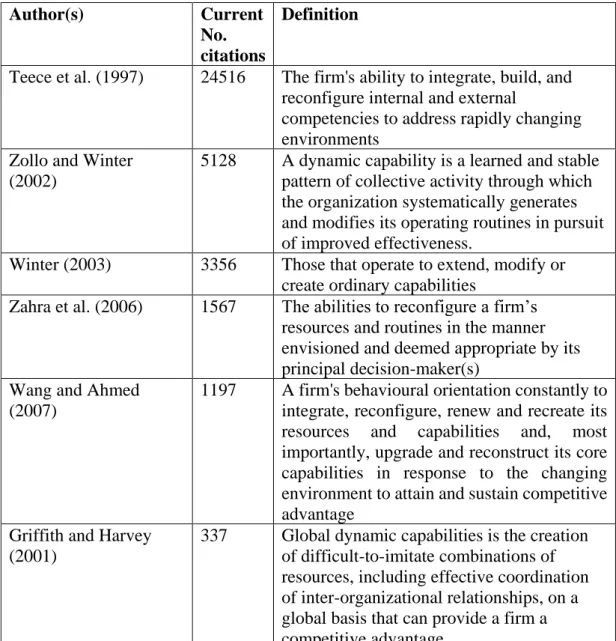
There exists a controversy as to how dynamic capabilities may be defined. At a glance, the issue seems challenging as there is no shortage of definitions regarding the term, as illustrated in Table 1.
Table 1: Differing definitions of dynamic capability.
Author(s) Current
No. citations
Definition
Teece et al. (1997) 24516 The firm's ability to integrate, build, and reconfigure internal and external
competencies to address rapidly changing environments
Zollo and Winter (2002)
5128 A dynamic capability is a learned and stable pattern of collective activity through which the organization systematically generates and modifies its operating routines in pursuit of improved effectiveness.
Winter (2003) 3356 Those that operate to extend, modify or create ordinary capabilities
Zahra et al. (2006) 1567 The abilities to reconfigure a firm’s resources and routines in the manner envisioned and deemed appropriate by its principal decision-maker(s)
Wang and Ahmed (2007)
1197 A firm's behavioural orientation constantly to integrate, reconfigure, renew and recreate its resources and capabilities and, most importantly, upgrade and reconstruct its core capabilities in response to the changing environment to attain and sustain competitive advantage
Griffith and Harvey (2001)
337 Global dynamic capabilities is the creation of difficult-to-imitate combinations of resources, including effective coordination of inter-organizational relationships, on a global basis that can provide a firm a competitive advantage
As is evident from the table, there is wide disagreement on how to precisely define dynamic capabilities. Although some of the definitions overlap, it is possible to identify two prevalent schools of thought. In a simplified sense, one leans towards viewing dynamic capabilities as a noun, as something the organization possesses. Notable proponents of this viewpoint includes Eisenhardt and Martin (2000) who view dynamic capabilities as “tools” that can be used to gain competitive advantage. Additionally, there is a different line of thought, which colors the works of Zollo and Winter (2002) who by emphasizing the learning process view dynamic capabilities in accordance with something that an organization does, seeing it more as a verb than a noun. The former camp tends to attract positivistic research, leaning on the side of the prescriptive such as that of Zott (2003) who developed a formal model to investigate links between dynamic capability and a firm’s performance. On the opposite side of the spectrum, Zollo and Winter’s (2002) research leans more on the side of the descriptive, their work contributing primarily to theory building.
Despite the plethora of definitions, some of which contradict each other, there does exist some common ground as to what the concept of dynamic capability entails. It is perhaps most succinctly captured by Helfat et al. (2007), who in a concise statement define dynamic capabilities as: “the capacity of an organization to purposefully create, extend and modify its resource base.” The authors further clarify that ‘resources’ in
this context is in line with the broader sense of the term, as defined in most authoritative dictionaries such as Oxford’s and Merriam-Webster’s respective
dictionaries. Thus, the common denominator in these definitions revolve around dynamic capability having to do with adapting to organizational change.
Capabilities are essentially a fusion of skills and processes. The value of a process is non-existent without the accompanying skills needed to perform it; likewise a skill has a very limited domain if it is not applied within an effective process (Dawson, 2012). Regardless of the degree of rapid change that occurs in the business environment, dynamic capabilities will follow a path that is dependent on the organization’s history in a manner characterized by idiosyncrasy (Teece, et al., 1997). The uniqueness of this path does not, according to Eisenhardt and Martin (2000), preclude the notion that there exist best practices in utilizing dynamic capabilities to prompt organizational change.
In this respect, dynamic capabilities can be said to contain practices that are more or less effective in bringing about the intended change, especially with regards to certain elements of dynamic capabilities such as strategic decision making, alliancing, and knowledge brokering. Teece (2007) makes the claim that organizations no longer compete in who has the best process but rather in who has the best process improving capability. At the heart of this philosophy is the contention that improving processes is necessary in order to be able to compete in the current fast paced business environment.
However, as Anand et al. (2009) illustrate, a large share of companies that have adopted continuous learning initiatives - of which developing dynamic capabilities could be viewed as a subset - have not yielded satisfactory results; a development that
Anand et al. ascribe to the lack of a suitable framework. Initiatives of this nature differ depending on the type of capability that is sought after.
Others have expressed concern that the term dynamic capability, though appealing as a concept, is riddled with confusion as to what it means empirically. This viewpoint is conveyed by Green et al. (2008) who argue that the empirical elusiveness of the term dynamic capability may best be construed as situated practices that are embedded in the context of the social and the physical. More specifically, the authors highlight the “tortuous nature” of much of the contested terminology, including key concepts such as assets, capability, competence, processes and resources. All of these terms lack clear definitions with nowhere near a consensus as to what they mean precisely. The muddying that surrounds the term dynamic capability thus serves to negate to some extent the prospects of conducting any meaningful empirical research on the topic. These reservations are in no way new as previous authors have highlighted the many inconsistencies that surround the dynamic capabilities framework (Green, et al., 2008; Zahra, et al., 2006). At the forefront of this controversy lies the tautological aspect of claiming that an organization is better than another due to its capabilities. This point is brought up by Zahra et al. (2006) who argue that requiring that dynamic capabilities be only those that result in competitive advantage is a type of tautology. Research that adopts the dynamic capabilities concept attempts to identify links between certain capabilities and competitive advantage retrospectively without being able to establish that these observed links can guide future outcomes. It is from this perspective that dynamic capabilities is viewed in this study. In similitude to Zahra et al. (2006) and Green et al. (2008), no a priori assumptions are made about its explanatory grasp nor
is any credence given to whether the concept of dynamic capabilities "exist" in any meaningful sense. Instead, the dynamic capabilities framework is used in this study to interpret past events and what role capabilities might have had in shaping the eventual outcome of a public construction client organization.
Dynamic capabilities framework
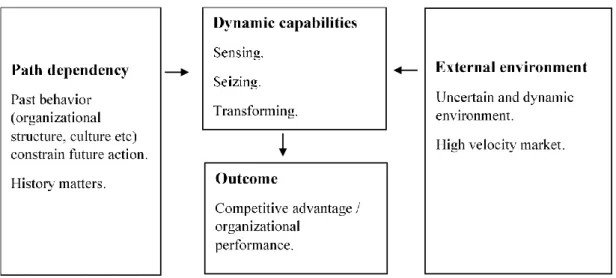
The dynamic capabilities framework consists of a number of key characteristics, the most important of which are summarized in Figure 1.
Figure 1: The dynamic capabilities framework (based on Teece et al., 1997).
According to Teece (2012), the proposed framework does not provide prescriptive guidance and is therefore instead used as an interpretive tool to examine the relationship between capabilities and organizational performance in a dynamic setting.
An important concept in the literature on dynamic capabilities is that of path dependency which Teece et al. (1997, p. 522) describe as “bygones are rarely bygones”. It is argued that previous events in an organization’s history will to some degree constrain and affect its future behavior. Therefore, in order to understand how an organization’s resource base can be expanded or altered to address change, it becomes necessary to examine how its past actions may have influenced its current trajectory. The past informs the future.
Sensing, seizing and transforming
Teece (2012) argues that dynamic capabilities can be categorized into three types of activities and adjustments:
i. sensing referring to how an opportunity can be identified and assessed; ii. seizing which refers to the implementation of a sensed opportunity, the mobilizing of resources in order to address an opportunity and capture its value; and
iii. transforming which refers to the process of resource configuration in which the organization is continuously renewed.
These are the ways by which an organization can deliver better outcomes.
Sensing is an activity that is comprised of scanning, learning and interpretation. To sense an opportunity, an organization would require investments in research, development work and related activities (Teece, 2007). The objective with sensing is to identify and shape emerging opportunities, and in doing so, provide market intelligence (Kindström, et al., 2013). The identification and shaping of opportunities require organizations to continuously search and explore different technologies, in
both distant markets and local ones (Nelson & Winter, 1982; Teece, 2007). The activity of sensing goes beyond merely investing in research and development, it also includes understanding customer needs, latent demand, the structural development of markets, and likely responses from suppliers and competitors. To be able to sense new opportunities, Teece (2007) argues that organizations need to expand their search horizon seeing as a wide search horizon is more likely to result in the identification of new opportunities.
Seizing refers to the activities that relate to the implementing of new opportunities which have been identified as conducive to competitive advantage (O’Reilly & Tushman, 2008; Teece, 2007). The seizing of capabilities requires organizations to be capable of retaining and exploiting new opportunities as they emerge (Hodgkinson & Healey, 2011; Teece, 2012).
Transforming refers to the activity by which organizations continuously reconfigure its resource base by altering its resources and operating capabilities as needed (Teece, 2007). The activities that relate to transforming are iterative and although minor adjustments may be adequate to sustain the exploitation of present opportunities, when the environment changes, the organization may need to undertake more extensive reconfiguration (Helfat et al., 2007).
Research Method
The purpose of this paper is to examine the management of capabilities in a client organization through the lens of the dynamic capabilities framework. In particular, what is investigated is the process by which a public construction client senses, seizes
and transforms opportunities in a manner conducive to the client organization’s overall goals.
In pursuit of this objective, an exploratory case study approach is adopted which examines one of Sweden’s largest public client organizations, henceforth referred to as PubClient. The organization deals primarily with the development and maintenance of public facilities. Of particular focus was the transformative “power” of dynamic capabilities as exemplified by the transition that occurs as the capabilities of a public client organization is forced to adapt to both internal and external pressure.
The use of single case study was in accordance with Siggelkow’s (2007) precepts for persuasive case studies. The reasons for this being that PubClient’s case is somewhat novel in that it represents a large public construction client that has undergone both extensive and repeated organizational restructuring as a result of having adapted to external factors. It is this aspect that is highlighted in the case study, an aspect that does not seem to be present in other similar organizations. In this sense, PubClient is an atypical case for which a single case approach may be suitable (Siggelkow, 2007).
The case study makes use of PubClient’s documentation both in terms of internal documentation as well as external documentation. The external documentation consisted of reports that were published either directly by the Municipality or in collaboration with the municipality. Of particular importance stood the evolution of the organization’s internal structure and the ramifications that organizational change had on the development of the capabilities of its employees. The view which emerged through this study was further supplemented with interviews with key personnel who
were present throughout the organization’s evolution. These interviews served to corroborate the narrative that emerged through studying the organization’s documentation. In total, four such interviews were conducted with senior personnel, two of whom were managers of two autonomous support units within the organization, one with the head of energy and environment and the fourth consisted of the head of the parent organization whose key responsibility centered on strategic planning. Each interview took place in the respective office of the interviewees lasting on average around an hour. The interviews were conducted on a semi-structured basis in order to allow the interviewees to freely expound their views of events whilst retaining a set of core questions to ensure that a single coherent narrative could emerge.
The interviews that were conducted with PubClient employees focused on two units within the organization, a technical unit whose main tasks consisted of aiding the parent organization in matters relating to technical expertise and a procurement unit that offered support in handling and procuring contracts for the parent organization. The choice to examine these two units were in part informed by the dichotomization of capabilities by Hartmann et al. (2010) into relational and contractual capabilities. The two support units of PubClient could be construed as manifestations of these two aspects of capabilities. Secondly and perhaps more importantly, the choice to interview exclusively individuals who were in a managerial position was informed by the emphasis that managerial skills play in the development of organization’s capabilities, Cannon and Hillebrandt (1991) arguing that such skills constitute a key determinant of the organization’s overall capacity. All of the interviewees had been active in the organization during the period in which it had been reconfigured. By choosing to only
interview staff who met these criteria, the number of interviewees became limited. However, the small but targeted selection ensured that the interviewed personnel were in a capacity to speak about the dynamic capabilities of the organization. They had first hand witnessed the changes in the organization from a position that allowed them understand the decisions that lay behind its evolution. The group is small but because of their expertise and extensive involvement with PubClient, their responses give an adequate description of the changes that took place in the organization. This is in line with Romney et al. (1986) who maintain that having a small number of participants is justified in cases where the participants possess a higher degree of expertise on the research topic. The findings of this study are not to be regarded as generalizable to all client organizations, instead, the applicability of the findings is limited in scope to organizations that exhibit similar characteristics (i.e. large public client organizations) and who operate in a similar context.
Overview of the case
A large public construction client based in western region of Sweden was studied. This organization, PubClient, is one of the nation’s largest managers of public facilities and is involved in both the construction of public facilities and the refurbishing of those facilities as well as managing/maintaining them for the municipality in which it operates. In total, PubClient oversees facilities with a combined floor space exceeding two million sqm and a total land area exceeding 5 million sqm. In financial terms, this translates to slightly above 1 billion SEK in yearly expenditure of which roughly 70% consists of investments in newly built facilities and the remaining 30% consists of
renovations of the existing stock. Although the stated objectives of PubClient includes a variety of tasks, its chief objectives are five:
i. Ensure good property management, which includes the management of land, buildings, installations and maintenance.
ii. Provide appropriate business premises and good service. iii. Develop energy-saving measures.
iv. On behalf of the municipal government and customers, plan and build/rent new facilities or rebuild existing ones.
v. Administratively coordinate the Municipality’s common building processes.
The type of projects that PubClient is involved with includes: homes for people with special needs, nurseries, schools and residencies for the elderly. The organization also receives a number of requests from internal customers who pay for modifications/adaptations/maintenance work to existing facilities. In the year 2014, approximately 8,300 such requests were handled. These assignments vary in scope and range from smaller requests such as changing the lighting equipment to larger ones such as relocating entire walls.
PubClient’s development
In the past decade, PubClient has undergone an extensive rearrangement of its organizational structure, a process that began in 2008 and culminated in PubClient
combining its project division and its facilities management division. At the same time, the strategic planning unit was transferred to the municipality’s strategic planning and management division.
This change resulted in project managers having to change their perception of what their work entailed, in particular, the restructuring allowed them to consider a more focused approach to their assignments. It also led to the formation of a separate unit that dealt with procurement and another unit that focused on technical expertise. The objectives of these support units are similar, based on what the interviewees referred to as “three legs”, the first leg/objective was to offer support to the project organization that delivers and manages the individual projects. Secondly, the support units handle matters regarding governmental regulations, EU directives, national and municipal laws. The third and final leg consisted of internal development, market research and experience/feedback.
Although the restructuring was lauded by the interviewees, the positive reception was not unanimously upheld by all of the organization’s personnel, instead generating frustration amongst some of its project managers. The frustration was rooted primarily in the project managers feeling that they had to relinquish part of their responsibilities as project managers. Thus creating a somewhat frictious relationship with the support units. Sentiments that seemed to have been rooted in some of the project managers need to control:
It is impossible for a project manager to master all of the technical areas. It does not work like that. Particularly not with respect to the speed by which things occur today, that’s my actual opinion. Herein, I feel, you can see the difference, how project managers experience these matters. It’s in
regards to how some can (i.e. project managers) let go of it but some have a major need to control. I believe that this has an impact. (Manager of the technical support unit)
There were also exogenous factors that prompted the restructuring of PubClient. The period following 2008 was characterized by a decline in construction related work as a result of the recession caused by the subprime crises of 2008. It was not the first time an economics recession had an impact on the structure of construction organizations. In 1992, the Swedish real estate market witnessed a housing bubble leading to a sustained decline in property value as a consequence of a broader financial crisis. Prior to this period, construction clients possessed greater capabilities in the shape of having their own technical departments with in-house project planners, technicians and essentially every other role needed to deliver projects, nearly all of it in-house.
Following the housing bubble, client organizations were stripped down and deprived of these capabilities leaving these organization to function primarily in an administrative capacity. The crisis of ‘08 mirrored that of ‘92 but instead of reconfiguring the organizational structure by stripping it down, there was now instead an expansion of the client organization. Moreover, another exogenous factor that partly influenced the idea of restructuring PubClient came from a series of corruption scandals that had affected public construction organizations other than PubClient in 2007.
One of the reasons for establishing the procurement unit […] was because of the rather strong focus on the purchasing group, considering the bribing scandals at the time and all that. There has been a lot of focus on doing right. […] but there is a certain anxiety in the organization around these questions. […] So we have a focus from doing right to doing the right things in order to extract
business value and get the maximum benefit for the taxpayers' money. (Manager of the procurement unit).
The two studied support units similarly saw a growth from that period to the current, from two employees to seven in the procurement unit and to 15 employees in the technical support unit. Additionally, new governmental requirements were introduced which prompted PubClient to change some of its practices. This included working in a more systematic fashion and a more stringent adherence to governmental stipulation regulating public procurement, most notable the Law of Public Procurement (LoU) which had previously been adhered to on an intermittent basis. At times following the legislation and avoiding it when it proved too cumbersome to follow. The revamping of the organizational structure served to relocate the capabilities previously contained in a few individuals to instead allowing project managers to assume the role of generalist who then had the opportunity to seek assistance from the support units.
Although this was met with some resistance from the project managers, an entirely different outlook came from those who had begun working in the project organization following the restructuring. The latter having been fostered in a culture where support is expected were then able to more comfortable inhabit the role of a generalist project manager compared to those who had been working prior to the restructuring. In 2011, PubClient assumed the shape that it embodies in the present by the joining together of three separate municipal client organizations, a shift that coincided with a larger regrouping of the municipality’s districts, from previously 21 districts to 10. In light of these events, the different cultures of these organizations had to essentially morph
into one culture. This however proved to be a rather uncomplicated task as there were no radical differences in the organizational culture preceding the merger.
As time went on, the organizational structure of PubClient continued to change. A change made palpable by the adjustment to move away from individuals being expected to handle all things related to the project themselves to a more fragmented structuring. Solitary support units were formed that served as hubs of expertise for the project managers. Thus, what was initially treated as a tangent by the project managers, as an interest they may have possessed but not formally responsible for, were now being assigned formal roles. In addition to this, technical teams were formed whose members consisted of employees from the different departments in an effort to consolidate capabilities and share expertise. The change led to a rather peculiar shift in sentiments among the organization’s employees, as characterized by the manager of the technical support unit below:
Q: During 2008-2009, both the project managers and you were in the same organization, today you are your own unit. How would you say the impact of this has been from being colleagues to being different units?
A: I think so too, it could also impact. It could do so, yes. I believe that it could have an impact that one becomes more distant from another, that one might perceive each other as, well, almost as competitors. One competes, I could certainly feel that way sometimes.
It seems that a side effect from cutting up and dividing the organization into these fractions was the emergence of an adversarial culture in which employees who had previously had a closer relationship were now beginning to view the other as a competitor of sorts. Furthermore, the individual project managers had previously
managed a large amount of projects simultaneously which necessitated the services of hired consultants to a degree much higher than that seen later on in the organization’s development. In particular, consultants would have a bigger responsibility in executing, monitoring and procuring projects. As the capabilities of PubClient’s core personnel were consolidated and now represented in specializing units, the use of consultants would diminish, especially with respect to the core areas of the organization. The most important of which is the organization’s capability to properly procure projects. As far as the technical expertise was concerned, the project managers were not required to attain a complete mastery of all the relevant technical details. However, they were required to be able to formulate the technical specifications themselves without any reliance on external parties.
Throughout much of the documents studied and in each of the interviews conducted, there was a strong insistence on the organization’s desire to improve. In response to a question regarding the rank of PubClient vis-à-vis other client organizations, the manager of the procurement unit emphatically stated that it was “the best” and in support of this statement gave as evidence that other client organizations in different parts of the country were now beginning a similar process of restructuring their organizations based on PubClient as a template.
PubClient seen through the Dynamic Capabilities framework
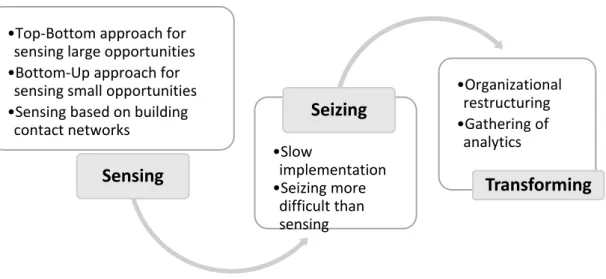
Figure 2 illustrates how PubClient can be viewed through the dynamic capabilities framework. The case study gives support to the assertion of Teece et al. (1997) that path dependency has an influential role in shaping an organization’s future.
PubClient’s current position is largely influenced by decisions taken in the past. This is evident in Paper II where it was noted that some of PubClient project managers had faced difficulties in adapting to the organizational changes that had occurred. In particular, prior to the restructuring, they had more autonomy over the projects they oversaw whereas after the change, project managers were expected to consult with the support units.
The project managers who had worked under the previous structure were more likely to not utilize support from the support units and instead continue on micromanaging their projects. This behavior which was rooted in how they used to act in the past had persisted despite formal attempts by management to alter that behavior. Their present actions had been affected by their past actions. This might also explain why project managers who begun working for PubClient after the restructuring found no difficulty working under the new conditions. They had not been conditioned to work under the previous system and were therefore not bound by that particular way of working.
Figure 2: How PubClient senses, seizes and transforms opportunities.
Sensing opportunities
Sensing refers to the identification and assessment of an opportunity (Teece, 2012). In the case of PubClient, this occurred through different venues. This included a top-bottom approach as well as a top-bottom-up approach. The former was undertaken in relation to major organizational changes in which managers of PubClient’s various units alongside the central strategic department, worked together to identify opportunities. An example of this is PubClient’s decision to collaborate with similar client organizations that operate in other large municipalities in Sweden. This outreach initiative stretched across municipalities facilitating the identification and assessment of new opportunities. It allowed PubClient to improve their capabilities to sense changes in the industry by widening their contact network. Unfortunately, their contact network did not include, to a significant extent, individuals working in the private arena which made it difficult for PubClient to identify changes that occurred in private
•Top-Bottom approach for sensing large opportunities •Bottom-Up approach for
sensing small opportunities •Sensing based on building
contact networks Sensing •Slow implementation •Seizing more difficult than sensing Seizing •Organizational restructuring •Gathering of analytics Transforming
companies. This was not consistent with Teece’s (2007) recommendation for widening the search horizon when sensing for new opportunities.
As for the sensing that occurred from a bottom-up approach, this consisted predominately of identifying and assessing minor opportunities. For instance, PubClient’s project team members were expected to identify and suggest new evaluation criteria to upper management.
Overall, PubClient had allocated significant resources to identify new opportunities, in terms of changes in the industry as well as new mandates and regulations. There was a requirement for conducting market analysis that was present in all of the support units as part of their formal responsibilities. This made it possible for PubClient to identify new opportunities as they emerged.
Seizing opportunities
Having established the first step of identifying new opportunities, the organization is then expected to seize those opportunities. This is accomplished by determining and implementing opportunities that have already been identified as conducive to competitive advantage (Teece, 2007; O’Reilly and Tushman, 2008). Unlike the capability to sense opportunities for which PubClient had allocated significant resources, when it came to seizing those opportunities, the implementation was often slow or entirely lacking. This was made evident by PubClient having identified but not followed through with a number of initiatives that had been assessed to contribute to the effectiveness of the organization.
These initiatives include a new work procedure that had been under development for an entire year without completion. The procedure makes it possible for PubClient to map their processes and provide progress reports that are shared with the project control unit. Another noteworthy example is PubClient’s internal development project to bridge the gap between its project side and its facilities management. This includes the lack of experience feedback reporting of the projects and the difficulties in cooperating between the different functions of the organization. Although these issues have been identified as important, the models that are being developed by PubClient to address these issues have only recently been tested (on a small scale) but no full scale implementation has been undertaken.
This would indicate that for public construction clients, the sensing of opportunities is less difficult than the seizing of opportunities.
Transforming
Finally, transforming refers to the continuous renewal process that an organization undergoes to constantly modify its resources as needed (Teece, 2012). This is something that PubClient has been engaged in consistently throughout its history. PubClient has modified its organizational structure on numerous occasions. The organization has at times introduced or merged different departments in response to the external environment. This includes joining together different departments, introducing new support units and consolidating resources within individual departments.
Another way in which PubClient worked to continually renew its organization consisted of gathering analytics of how actors engaged with their services. An example of this was how the procurement unit gathered data of how suppliers responded to e-mail messages containing invitations to present a bid for a tendering proposal. PubClient analyzed the number of bids received, those that choose to open the message and those that never open messages that have been sent. This allowed them to further pinpoint the reasons for why certain suppliers never open the messages that are sent to them. PubClient found that this may be due to an internal mistake such as having the wrong e-mail addresses in the databases or not having realized that the suppliers may be under certain framework agreements that preclude them for accepting such work or that they may have changed their business plan to only seek offers within a particular niche. This was one way in which PubClient continuously renewed its ways of operating.
Another way that PubClient gathered data was by mapping out the times when suppliers had high demands and times when their demand was low. By examining this data, PubClient noticed that for instance painting contractors would have the bulk of their work during the summer months which allowed them to charge higher prices. During the winter, the number of orders they received would greatly diminish and the contractors would have lower liquidity. This meant that PubClient could place orders during the winter months, offering a prepayment, for work that would be needed during the summer and thereby receive a lower price than if they had waited. This type of decision was possible precisely because PubClient had been continuously working with finding ways to improve its organization.
Concluding remarks
This paper has attempted to examine the management of capabilities in a client organization through the lens of the dynamic capabilities framework. The number of capabilities that are relevant to consider in discussing public construction clients are numerous in quantity and cover a wide range of disciplines, from the technical to the psychological (Adam, et al., 2015; Adam & Lindahl, 2016). Although there appears to be a unanimous agreement in regards to the importance of both acquiring and further developing client capabilities, no all-encompassing method seems to exist for that purpose.
This might be explained on the ground that projects in construction have a unique component to them, a structure often characterized as loosely coupled (Dubois & Gadde, 2002). In addition to this, dynamic capabilities are also typified by their uniqueness with respect to how they manifest from one organization to another (Teece, et al., 1997).
The case of PubClient demonstrates what occurs when a client organization undergoes change in response to both endogenous factors, as in the call for improvement by upper management, as well as exogenous factors in the case of market related forces and the like. Insofar as the organizational change that occurs is concerned and the change in capabilities that follows, the dynamic capabilities framework provides ample explanatory power to warrant its use, or at the very least entertain the theory for its ability to make sense of the events that transpired. This interpretation is summarized in Figure 2 which shows that dynamic capabilities that
relate to sensing new opportunities occur through establishing a wide contact network and through identifying changes either via a Top-Bottom or Bottom-Up approach depending on the size of the opportunity. As for the dynamic capabilities that relate to the seizing of new opportunities, these were found to be more difficult to form than those that related to sensing. Finally, the dynamic capabilities that had to do with transforming the organization seem to have relied on the gathering of analytics which provided a foundation for taking the decisions necessary to continuously renew the organization.
However, where the dynamic capabilities framework provided significantly less insights was in regards to its ability to explain the changes that occurred on an
individual basis as opposed to a collective one. In more emphatic terms, from attempting to use dynamic capabilities to study PubClient, a case in which capabilities were shifted from singular individuals to organizational units comprised of many individuals, the framework was useful in addressing capabilities on an organizational level but strikingly less so on an individual one. At the individual level, the dynamic capabilities framework provides little to no interpretive guidance.
Furthermore, the concept of dynamic capabilities, as conceived by Teece et al. (1997), was developed with the assumption that organizations pursue competitive advantage. This may be the case for private companies that function in a business driven market but hardly the case for organizations in the public sphere where there are no direct competitors to compete with. In the case of PubClient, when other public construction clients started imitating their ways of working, it was viewed as a positive development as opposed to a negative one. This indicates that the dynamic capabilities
framework is not optimal when discussing public organizations. To some extent competition does exist among public organizations that compete for the same funding and in such cases the concept of competitive advantage is at odds with working for “the public good” (Matthews et al., 2005). However, public client organizations such as PubClient are not in direct competition with other client organizations that operate in different regions since their funding is allocated in proportion to the demand in the region in which they operate. One way to address this lack of competition is to reframe the issue into one where the organization pursues growth in lieu of competitive advantage (Winch & Leiringer, 2016); or where the goal is the pursuit of improved effectiveness (Zollo & Winter, 2002); or as in PubClient’s case, viewing the “competitors” to be internal by having individual units compete against each other.
Similarly, Green et al. (2008) question the conventional way of understanding ‘competitive advantage’ as something that can be possessed and measured, instead they propose to view it as a discursive resource that is mobilized in the enactment of strategy.
Another difference that made Teece’s (1997) conceptualization of dynamic capabilities as not entirely compatible with the case of PubClient was due to PubClient having utilized a project-based structure. The dynamic capabilities concept as described by Teece et al. (1997) and Eisenhardt and Martin (2000) deals with the permanent organization; construction clients on the other hand operate in both the temporal project organization where the projects are executed as well as the permanent organization that supersedes it. They are permanent organizations that in certain instances operate within temporal project-based structures. In order to bridge this gap,
Davies and Brady (2016) propose an alternative conceptualization of dynamic capabilities, stressing the dynamics of project capabilities. The authors argue that there is an ambidextrous dimension to project capabilities; the deployment of dynamic capabilities in project-based sectors like that of construction necessities a level of balance between strategies of replication and renewal. The more stable and predictable the conditions in the projects are, the more stable and operational the capabilities needed to maintain current project capabilities. Likewise, a more unstable project environment requires a more explorative approach where dynamic capabilities facilitate the creation of new project capabilities.
Based on the above discussion, it would seem that the concept of dynamic capabilities in its present form is inadequate for capturing challenges in the specific context in which public construction clients operate. Hence, future research could instead focus on developing a framework that is more relevant for this particular context. This supposed framework might build on Davies and Brady’s (2016) concept on the dynamics of project capabilities by making it more relevant for public client organizations. This framework might be too specific to be used outside of the context of public client organizations. However, when applied in a case that fits that description, the results could be more relevant than using a dynamic capabilities approach that does not take into consideration the particularities of public construction. In developing this proposed framework, it would seem prudent to avoid trying to capture ‘client capabilities’ empirically and instead examine a subset of the clients’ capabilities that can be more clearly described through empirical observations, for instance by looking at routines or processes.
Although the usefulness of the dynamic capabilities concept as an interpretive framework is recognized, it nonetheless remains unclear if it can inform client organizations in their pursuit of increased performance. What is not unclear however, is the strong need for public construction clients to adopt a more relevant approach for utilizing present capabilities and developing needed capabilities when managing publicly funded construction projects. In short, do more for less in a more efficient way. This is of course the eternal project challenge which is currently being addressed by the capabilities approach. Eventually other approaches will emerge, but the focus on dynamic capabilities allows for an assessment on how able an organization and its members are rather than measuring inputs and outputs, perhaps a more viable and constructive approach to the development of organizations.
References
Adam, A. & Lindahl, G., 2015. Take a Chance on Me? Construction Clients' Perspectives on Risk Management. Procedia Economics and Finance, 21(2015), pp. 548–554.
Adam, A., Lindahl, G. & Josephson, P. E., 2015. Developing Capabilities for Public Construction Clients. Chongqing, China, In Proceedings of the 19th International Symposium on Advancement of Construction Management and Real Estate (pp. 737-745). Springer Berlin Heidelbe.
Ahmed, S. & Kangari, R., 1995. Analysis of Client-Satisfaction Factors in Construction Industry. Journal of Management in Engineering, 11(2), pp. 36-44.
Anand, G., Ward, P. T., Tatikonda, M. V. & Schilling, D. A., 2009. Dynamic capabilities through continuous improvement infrastructure. Journal of Operations Management, 27(6), pp. 444-461.
APCC, 2002. Client skills: Skills required by Government as the Construction Industry Client, Deakin, Australia: Australian Procurement and Construction Council (APCC).
Briscoe, G. H., Dainty, A. R., Millett, S. J. & Neale, R. H., 2004. Client‐led strategies for construction supply chain improvement. Construction Management and Economics, 22(2), pp. 193-201.
Cannon, J. & Hillebrandt, P., 1991. Competitive Advantage in Construction. in Male, S. and Stocks, R. (eds) ed. Oxford: Butterworth-Heinemann.
Chinyio, E. & Olomolaiye, P., 2010. Construction stakeholder management.
Oxford, United Kingdom: John Wiley & Sons.
Davies, A. & Brady, T., 2016. Explicating the dynamics of project capabilities. International Journal of Project Management, 34(2), pp. 314-327.
Davies, A., Dodgson, M. and Gann, D., 2016. Dynamic Capabilities in Complex Projects: The Case of London Heathrow Terminal 5. Project Management Journal, 47(2), pp.26-46.
Dawson, R., 2012. Developing knowledge-based client relationships. Oxford, UK: Routledge.
Delbridge, R., Gratton, L. & Johnson, G., 2006. The exceptional manager: Making the difference. s.l.:Oxford University Press..
Dubois, A. & Gadde, L. E., 2002. The construction industry as a loosely coupled system: implications for productivity and innovation. Construction Management & Economics, 20(7), pp. 621-631.
Eisenhardt, K. M. & Martin, J. A., 2000. Dynamic capabilities: what are they?.
Strategic Management Journal, 21(10-11), pp. 1105-1121.
Frödell, M., Josephson, P.-E. & Lindahl, G., 2008. Swedish construction clients' views on project success and measuring performance. Journal of Engineering, Design and Technology, 6(1), pp. 21-32.
Furneaux, C. W., Brown, K. & Allan, D., 2008. Public values embedded in Australian public works procurement. Public Money and Management, 28(3), pp. 167-172.
Gajendran, T., Brewer, G., Gudergan, S. & Sankaran, S., 2014. Deconstructing dynamic capabilities: the role of cognitive and organizational routines in the innovation process. Construction Management and Economics, 32(3), pp. 246-261.
Green, S.D., Harty, C., Elmualim, A.A., Larsen, G.D. and Kao, C.C., 2008. On the discourse of construction competitiveness. Building Research & Information, 36(5), pp.426-435.
Green, S. D., Larsen, G. D. & Kao, C. C., 2008. Competitive strategy revisited: contested concepts and dynamic capabilities. Construction Management and Economics, 26(1), pp. 63-78.
Griffith, D. A. & Harvey, M. G., 2001. A resource perspective of global dynamic capabilities. Journal of International Business Studies, 32(3), pp. 597-606.
Hartmann, A., Davies, A. & Frederiksen, L., 2010. Learning to deliver service‐
enhanced public infrastructure: balancing contractual and relational capabilities.
Construction Management and Economics, 28(11), pp. 1165-1175.
Helfat, C. E. et al., 2007. Dynamic capabilities: Understanding strategic change in organizations. 1 ed. Victoria, Australia: John Wiley & Sons.
Kometa, S. T., Olomolaiye, P. O. & Harris, F. C., 1994. Attributes of UK construction clients influencing project consultants' performance. Construction Management and Economics, 12(5), pp. 433-443.
Lim, E. H. & Ling, F. Y. Y., 2002. Model for predicting clients' contribution to project success. Engineering Construction and Architectural Management, 9(5-6), pp. 388-395.
Lindahl, G. et al., 2010. Quality Innovation & Evidence in Healthcare Physical Environments in England & Sweden-Establishing a Collaborative Roadmap.
Edingburgh, Scotland, 3rd Annual Conference of the Health and Care Infrastructure Research and Innovation Centre, 22-24 September 2010.
Lindahl, G. & Ryd, N., 2007. Clients' goals and the construction project management process. Facilities, 25(3), pp. 147-156.
Manley, K., 2006. The innovation competence of repeat public sector clients in the Australian construction industry. Construction Management and Economics, 24(12), pp. 1295-1304.
Matthews, J. and Shulman, A.D., 2005. Competitive advantage in public-sector organizations: explaining the public good/sustainable competitive advantage paradox. Journal of Business Research, 58(2), pp.232-240.
Mbachu, J. & Nkado, R., 2006. Conceptual framework for assessment of client needs and satisfaction in the building development process. Construction Management and Economics, 24(1), pp. 31-44.
Merriam-Webster, 2016. Capability - Definition and More from the free Merriam-Webster's Dictionary. [Online]
Available at: http://www.merriam-webster.com/dictionary/capability [Accessed 23 05 2016].
NAO, 2009. Commercial skills for complex government projects. [Online] Available at: http://www.nao.org.uk/report/commercial-skills-for-complex-government-projects/
[Accessed 23 05 2016].
O’Reilly, C. & Tushman, M., 2008. Ambidexterity as a dynamic capability: Resolving the innovator's dilemma. Research in organizational behavior, Volume 28, pp. 185-206.
Oxford Dictionaries, 2016. capability: definition of capability in oxford dictionary (British & World English). [Online]
Available at: http://www.oxforddictionaries.com/definition/english/capability [Accessed 23 05 2016].
Romney, A., Weller, S. & Batchelder, W., 1986. Culture as consensus: A theory of culture and informant accuracy. American anthropologist, 88(2), pp. 313-338.
Siggelkow, N., 2007. Persuasion with case studies. Academy of management journal, 50(1), pp. 20-24.
Soetanto, R. & Proverbs, D. G., 2004. Intelligent models for predicting levels of client satisfaction. Journal of Construction Research, 5(2), pp. 233-253.
Tang, S., Lu, M. & Chan, Y., 2003. Achieving Client Satisfaction for Engineering Consulting Firms. Journal of Management in Engineering, 19(4), pp. 166-172.
Teece, D., 2012. Dynamic capabilities: Routines versus entrepreneurial action. Journal of Management Studies, 49(8), pp. 1395-1401.
Teece, D., 2007. Explicating dynamic capabilities: the nature and microfoundations of (sustainable) enterprise performance. Strategic Management Journal, 28(11), pp. 1319-1350.
Teece, D. J., Pisano, G. & Shuen, A., 1997. Dynamic Capabilities and Strategic Management. Strategic Management Journal, 18(7), pp. 509-533.
Vennström, A. & Eriksson, P. E., 2010. Client perceived barriers to change of the construction process. Construction Innovation: Information, Process, Management,
Wang, C. L. & Ahmed, P. K., 2007. Dynamic capabilities: A review and research agenda. International journal of management reviews, 9(1), pp. 31-51.
Wilkens, U., Menzel, D. & Pawlowsky, P., 2004. Inside the black-box: Analysing the generation of core competencies and dynamic capabilities by exploring collective minds. An organisational learning perspective. Management Revue, 15(1), pp. 8-26.
Winch, G., 2010. Managing Construction Projects. 2 ed. West Sussex, UK: John Wiley & Sons.
Winch, G. & Leiringer, R., 2016. Owner project capabilities for infrastructure development: a review and development of the “strong owner” concept. International Journal of Project Management, 34(2), pp. 271-281.
Xia, B. & Chan, A. P., 2010. Key competences of design-build clients in China.
Journal of Facilities Management, 8(2), pp. 114-129.
Zahra, S. A., Sapienza, H. J. & Davidsson, P., 2006. Entrepreneurship and dynamic capabilities: a review, model and research agenda. Journal of Management studies,
43(4), pp. 917-955.
Zollo, M. & Winter, S. G., 2002. Deliberate learning and the evolution of dynamic capabilities. Organization science, 13(3), pp. 339-351.
Zott, C., 2003. Dynamic capabilities and the emergence of intraindustry differential firm performance: insights from a simulation study. Strategic management journal,