Leaving Librarianship: A Study of the Determinants and
Consequences of Occupational Turnover
Susan R. Rathbun-Grubb
A dissertation submitted to the faculty of the University of North Carolina at Chapel Hill in partial fulfillment of the requirements for the degree of Doctor of Philosophy in the School of Information and Library Science.
Chapel Hill 2009
Approved by:
©2009
Susan R. Rathbun-Grubb ALL RIGHTS RESERVED
Abstract
SUSAN R. RATHBUN-GRUBB: Leaving Librarianship: A Study of the Determinants and Consequences of Occupational Turnover
(Under the direction of Joanne Gard Marshall)
The purpose of this study was to better understand occupational turnover among librarians and archivists by examining the careers of individuals who have left or intend to leave the profession, in order to identify the factors associated with turnover, and to discover the career outcomes of those who leave. The dissertation analyzes a subset of the data collected in 2007 by the Workforce Issues in Library and Information Science 1 (WILIS 1) project, a study of the career patterns of the graduates of five LIS master’s programs in North Carolina from 1964-2007 (J. G. Marshall, Marshall, Morgan, et al., 2005).
The framework of the life course perspective was used in the analysis of quantitative and textual survey responses to facilitate a more nuanced interpretation of careers and the process of turnover in the context of personal relationships and timing over the life course. Themes related to career patterns, work values, work mismatches, turnover, and outcomes of career transitions were identified.
Occupational turnover rates for this sample are low. Only 13% have left the
profession, and only 2% indicate that they will leave the field within three years for reasons other than retirement. Good work relationships and opportunities for career development and advancement are important to job satisfaction, and most respondents are satisfied with their LIS work and career. Those who intend to leave or have already left cite low salaries,
overwork, bureaucratic or poor management, a lack of opportunities for advancement, and the unavailability of flexible scheduling or part time work as influences on their turnover decisions. Geographical mismatches or conflicting work and family responsibilities also play a role in turnover decisions. Of those who have left library and archival work, their career outcomes are typically positive, and 91% are satisfied with their current employment.
Binary logistic regression analyses with nested models confirm that the hypothesized predictors that emerged from the survey data and career narratives – job satisfaction,
availability of career development opportunities, relationships with co-workers, and salary influence organizational turnover intention. Job and career satisfaction as well as the intent to leave the organization predict occupational turnover.
To Jeff, and to the memory of my parents
Acknowledgements
I owe a debt of gratitude to many mentors, friends, and loved ones who have made this research and doctoral dissertation possible. First, I am especially grateful to Joanne Marshall for her extraordinary support, encouragement, and mentorship, and for offering me the unique opportunity to work with an outstanding group of researchers on a project that continues to mean a great deal to me. Thank you to the members of my committee who inspired and challenged me intellectually throughout this process: to Victor Marshall, for introducing me to theory in the best course of my doctoral studies, and for bringing out the sociologist in me (that I had no idea was there!); to Jennifer Craft Morgan, for her endless encouragement and guidance (and working Bada lunches that always inspired great ideas); to Paul Solomon and Barbara Moran for their wisdom and compassion and for helping me get my start in librarianship “back in the day;” and to Deborah Barreau for mentoring me, boosting my morale over the past three years, and for always asking thought-provoking questions. I am truly blessed to have had a committee of scholars for whom I have the utmost respect and admiration. I also would like to say a special thank you to Dr. Bill Ware, an outstanding professor who not only inspired me to appreciate and enjoy statistics, but also kept me laughing and learning for four semesters – if only there had been a fifth and sixth course to get me through the last year!
I want to thank the respondents to the WILIS 1 survey whose willingness to share their experiences in and out of librarianship made this work possible. Thank you for all you
have given to your libraries, to the profession, and to this research. I am also grateful to have had the diverse experiences that led me to wander in, out, and back to the profession I love so much, and to be able to share it with a new generation of wanderers in the next part of my journey.
I am grateful to many in the UNC and SILS community who have sustained me as I worked toward my goal. The phenomenal students in my cataloging classes kept me focused on the reason I pursued this degree and gave me joy and energy when I thought I had nothing left to give. I am also grateful to Matt and Kate in the SILS library for their support and kindness, and to Barbara Wildemuth for being a role model to me for many years. I would like to especially thank Jerry Saye for his mentorship and friendship over the last seventeen years, and David Carr for our talks about teaching and life.
Finally I would like to acknowledge and thank the unsung heroes who kept me sane… my dear friends who never left my side and always kept me smiling: Iris, Dana, Judy, Carrie, Marlys, Pam, Chad, and Cheryl; Carol T. for encouragement and our talks; my other Carol for sisterhood and laughter; my other Jeff, you’ve been there since day fourteen, and I couldn’t have done it without you; Chloe, for being such an effective personal assistant and Jax, for curing my writer’s block; and Jeff, for being my foundation through all of it.
Table of Contents
List of Tables ... xiii
List of Figures ... xv
Chapter 1 – Introduction ... 16
Research problem ... 16
Purpose of the study ... 17
Data source ... 18
Research questions ... 19
A note on information professions ... 19
Definitions... 22
Theoretical framework ... 23
Organization of the dissertation ... 25
Chapter 2 – Review of the Literature ... 27
Research context: studies of the LIS workforce ... 27
Voluntary turnover ... 32
Satisfaction and commitment ... 33
The process of occupational change ... 35
Turnover in professions ... 37
Occupational change and the life course ... 43
Career decisions over the life course ... 43
Barriers and facilitators to occupational change ... 48
LIS and archival careers ... 51
A second career ... 51
A question of status ... 52
Professionalization ... 52
Feminization ... 56
LIS and archival education ... 58
Jurisdictional disputes ... 61
Career mobility in libraries ... 64
Career satisfaction, commitment, and turnover ... 65
Conclusion ... 73
Chapter 3 – Research Design and Methodology ... 74
Research design ... 74
Data collection ... 77
Data subset ... 78
Quantitative data analysis ... 79
Qualitative data analysis ... 80
Chapter 4 – Descriptive Results ... 83
Work experience prior to LIS program ... 84
LIS program ... 85
First job after LIS program ... 89
Leaving the first job: a lack of fit ... 90
Types of mismatches ... 92
Current job ... 96
Crossing library boundaries ... 99
Job quality, satisfaction, and values ... 101
LIS career ... 103
Professional identity... 107
Summary ... 111
Chapter 5 – Determinants: Why Do Librarians Want to Leave? ... 113
INT-Leave career stories: job dissatisfaction and career satisfaction ... 113
Profile of ITL9 ... 113
Profile of ITL14 ... 115
Profile of ITL23 ... 117
Leaving the field: a lack of fit ... 118
A common thread: diversity in job history and aspirations ... 122
Discussion ... 123
Summary ... 125
Chapter 6 – Consequences: Career Patterns and Perspectives of Leavers ... 127
Occupational shifts... 129
Leaver career stories: finding a fit ... 134
Profile of L97 ... 134
Profile of L119 ... 135
Profile of L186 ... 136
A tale of wandering – “Life situations change…” ... 137
Entrepreneurship ... 140
A return to the fold ... 141
Words of discontent ... 143
Discussion – process and consequences ... 144
Summary ... 146
Chapter 7 – Predicting Turnover with Regression Analysis ... 148
Overview of the analyses ... 149
Predicting organizational turnover ... 150
Method ... 150
Model development – independent variables ... 151
Results ... 153
Predicting occupational turnover ... 159
Method ... 159
Results ... 159
Discussion ... 161
Chapter 8 – Conclusion ... 166
Summary of findings... 167
Discussion ... 169
Limitations ... 172
Contribution ... 173
Future research ... 174
Conclusion: implications for workforce planning in information agencies ... 175
Appendix A – Selected WILIS Survey Questions ... 179
Appendix B – Scale Measures ... 198
Co-workers ... 198
Autonomy ... 198
Career opportunities ... 198
Job satisfaction ... 198
Career satisfaction ... 199
Appendix C – Detailed Significance Test Results ... 200
References ... 203
List of Tables
Table 1. LIS degrees and specializations. ... 21
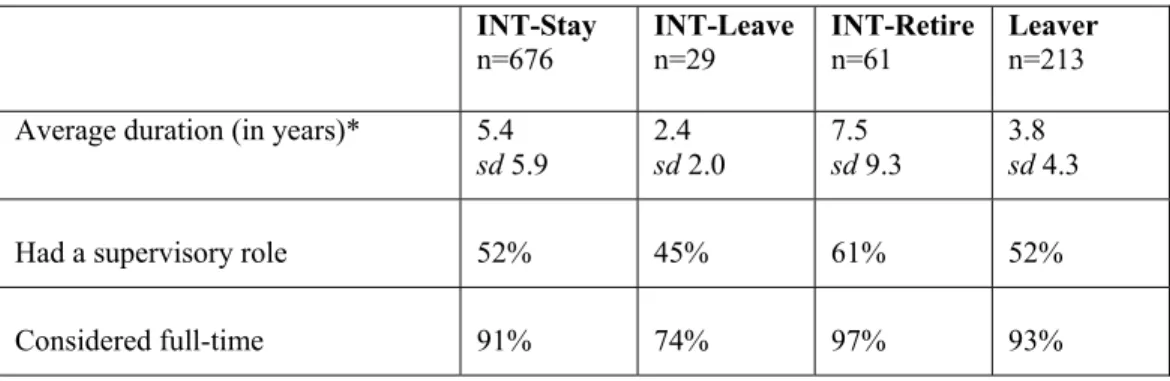
Table 2. Demographic comparison, by intention status. ... 86
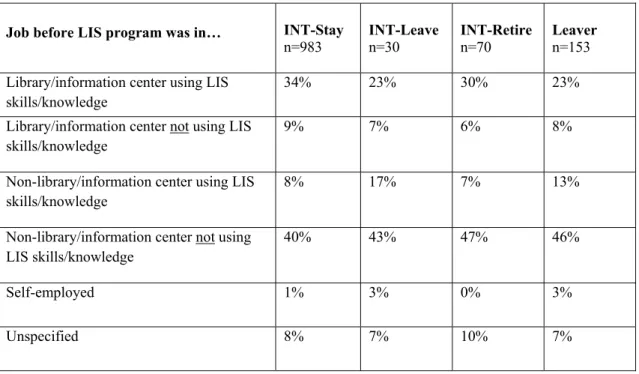
Table 3. Work experience prior to LIS program, by intention status. ... 87
Table 4 . Factors motivating entry to LIS program, by intention status. ... 87
Table 5. LIS program, by intention status... 88
Table 6. Graduation year cohort, by intention status. ... 88
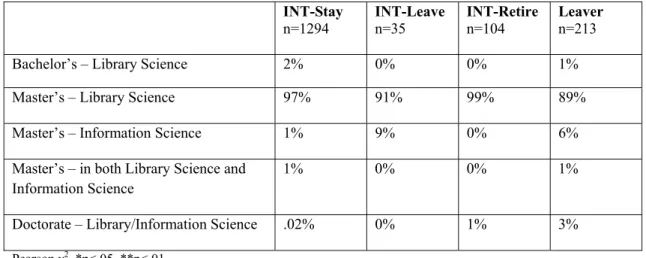
Table 7. Name of degree received from LIS program, by intention status. ... 88
Table 8. Characteristics of first job after LIS program, by intention status. ... 90
Table 9. Major reasons for leaving the first job after LIS program, by intention status. ... 91
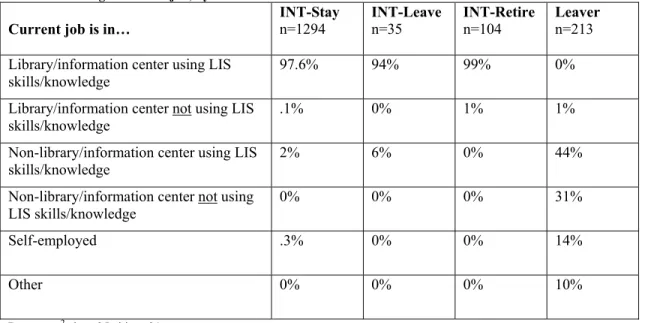
Table 10. Setting of current job, by intention status. ... 97
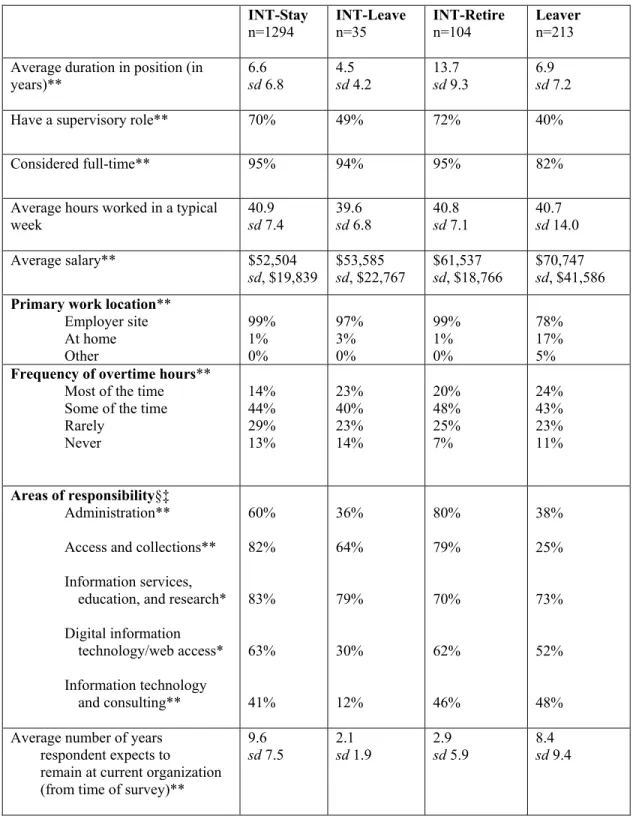
Table 11. Characteristics of current job, by intention status. ... 98
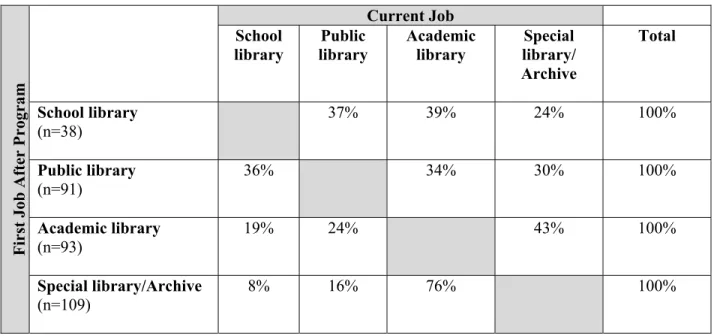
Table 12. Extent of mobility between types of libraries for those currently working in libraries. ... 101
Table 13. Job quality, by intention status. ... 102
Table 14. Control over scheduling work hours, by intention status. ... 103
Table 15. Job values, by intention status. ... 103
Table 16. View of current position, by intention status. ... 105
Table 17. Career satisfaction, by intention status. ... 105
Table 18. Percent who have taken breaks from paid employment, by intention status. ... 106
Table 19. Movement in job history, by intention status. ... 106
Table 20. Occupational changes of former school librarians. ... 130
Table 21. Occupational changes of former public librarians. ... 130
Table 22. Occupational changes of former academic librarians. ... 131
Table 23. Occupational changes of former special librarians/archivists ... 132
Table 24. Descriptive statistics for sample used in regression analyses (n=809). .... 155
Table 25. Assessing the relative impact of individual and organizational factors on organizational turnover (n=809). ... 157
Table 26. Assessing the relative impact of individual and organizational factors on occupational turnover (n=809). ... 164 Table 27. Key to significant differences among groups presented in Chapter Four. 200
xv
List of Figures
Figure 1. Rhodes/Doering Integrated Career Change Model (1983). ... 37
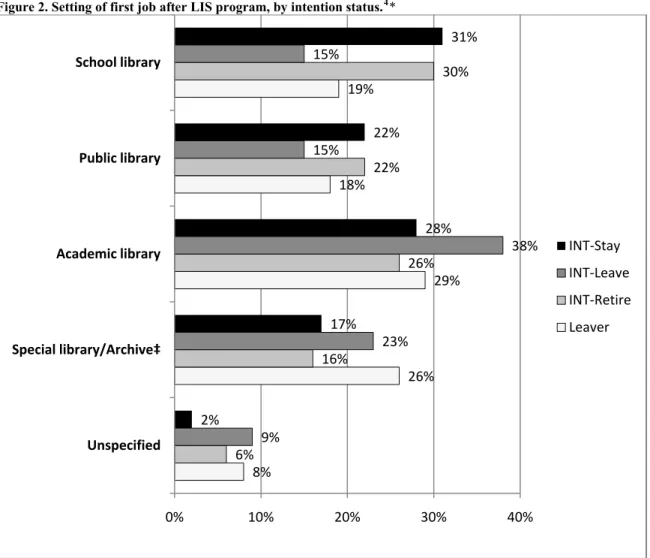
Figure 2. Setting of first job after LIS program, by intention status. ... 89
Figure 3. Setting of current job, if library/information center, by intention status. .... 97
Figure 4. Professional identity of INT-Stay group during the first job vs. current job. ... 109
Figure 5. Professional identity of the INT-Leave group during the first job vs. current job. ... 109
Figure 6. Professional identity of the INT-Retire group during the first job vs. current job. ... 110
Figure 7. Professional identity of the Leaver group during the first job vs. current job. ... 110
Figure 8. Representative answers for Neither – first job. ... 110
Figure 9. Representative answers for Neither – current job. ... 111
Figure 10. Current positions held by Leavers, by type. ... 133
Chapter 1 – Introduction
Research problem
Given the current demographics of the national workforce, the potential for turnover is great. Baby boomers (people born between 1946 and 1964) now make up 45 percent of the workforce and “matures” (people born before 1946), 10 percent. The proportion of older workers (defined as those fifty-five years old and up) is projected to increase an average of 4 percent per year through 2015… As the population ages, employers will have to determine how best to replace the growing number of retiring workers from a much smaller pool of rising workers (Jacobson, 2007, p. 10). While estimates differ, researchers agree that the library and archival professions are “graying” along with the general population, possibly in even greater numbers (Lynch, 2002; Walch, Beaumont, Yakel, et al., 2006; Wilder, 2003). The Institute for Museum and Library Services (2005) estimates that 58% of librarians will be eligible for retirement by 2019, and the A*CENSUS (2006) survey indicates that 28% of archivists in the United States will retire by 2013. The number of eligible retirees is exacerbated by the number of late entrants to these information professions and by increased hiring rates in libraries during the 1960s and archival repositories in the 1970s (Lynch, Tordella, & Godfrey, 2002; Walch, Beaumont, Yakel, et al., 2006; Wilder, 1999).
resulted in massive losses in retirement funds and other investments will undoubtedly influence retirement and career decisions; however the eventual departure of a large generational cohort of information professionals from the workforce is unavoidable.
Library and information science (LIS) and archival education programs as well as administrators of the libraries and archives that employ their graduates will require data to ensure that the supply of professionals is adequate to meet this increasing demand. New graduates will fill many of these vacancies, but the availability of diverse information career options may divert them to nontraditional employment. To enhance the supply of new graduates, it will become increasingly important to retain librarians and archivists and to facilitate the return of those who have left for other occupations; but to do this it is essential to understand the factors that influence turnover and retention in the field. Very little is known about librarians and archivists who leave their profession for reasons other than retirement in terms of their number, their reasons for leaving, and their subsequent careers. The Ad Hoc Task Force on Recruitment & Retention Issues (2002), a subcommittee of the Association of College and Research Libraries, recognized this dearth of data and suggested this as a strategic area of research for library professional associations.
Purpose of the study
The purpose of this study is to better understand occupational turnover among
librarians and archivists and to identify the factors associated with turnover by examining the careers of individuals who have left or intend to leave the profession. I explore the career decision making process by analyzing data from a retrospective career survey of LIS
graduates. I use a mixed methods approach including statistical analysis of quantitative data and textual analysis of open-ended survey responses. This strategy allows for a broad
overview of career patterns, while also affording a closer observation of individual career stories. Open-ended responses are used to identify themes related to work values,
organizational turnover, the desire to change occupations, and the outcomes of career
transitions. Regression analysis is employed to identify the variables most strongly associated with organizational and occupational turnover intention.
Data source
This dissertation analyzes data collected in 2007 by the Workforce Issues in Library and Information Science 1 (WILIS 1) project (J. G. Marshall, Marshall, Morgan, et al., 2005).1 The WILIS 1 study conducted a large-scale retrospective survey of graduates of North Carolina LIS programs (1964-2007) to gain a better understanding of issues related to recruitment, education, career patterns, retention, and retirement in LIS careers. Respondents completed a web survey consisting of closed-ended and open-ended questions about their education, employment history, job details, and job attitudes and satisfaction.
The WILIS 1 project is unique in that it was not limited to graduates currently working as librarians or archivists. Since LIS program graduates from a 40-year period are the unit of analysis, a variety of perspectives can be obtained from people at different stages of life and career, regardless of current employment status or occupation. Additionally, the graduates represent five different professional LIS programs that offer a range of degrees and specializations; together these programs approximate the diversity that characterizes the education and training of information professionals. My approach to data analysis and the
1The WILIS 1 study was supported by a grant from the Institute of Museum and Library Services. The primary research
team from the School of Information and Library Science at UNC Chapel Hill and the UNC Institute on Aging consisted of: Joanne Gard Marshall, Lead Principal Investigator; Victor W. Marshall, Co-Principal Investigator; Jennifer Craft Morgan, Principal Investigator; Deborah Barreau, Investigator; Barbara Moran, Investigator; Paul Solomon, Co-Investigator; Susan Rathbun Grubb, Graduate Research Assistant; Cheryl A. Thompson, Project Manager.
WILIS 1 research design, methods, and survey are described in detail in the Methodology chapter.
Research questions
The following research questions guide this study:
1. In what ways are librarians and archivists who leave or intend to leave their professionsimilar to and different from those who persist in it?
2. What convergent and divergent themes emerge from the career paths and stories of those who intend to leave or have left the profession? What do their career stories reveal about the internal and external factors that influence librarians and archivists to want to leave the profession?
3. What did the process of occupational turnover look like, and what are the results of turnover for these former librarians and archivists? How well do they fare in their subsequent occupations, and what do they think about their former professional roles? 4. Which factors are the strongest indicators of turnover intention in the library and
archival professions?
A note on information professions
Information work in the 20th and 21st centuries has been characterized by rapid change that is often driven by new technology. While the terms librarian and archivist may still conjure images of people tending collections of books or sorting documents in dusty basements, these images represent one small part of a history of information work that has grown to include the acquisition, organization, and preservation of information in all formats and contexts. Information workers facilitate access to these resources and create tools to assist users of library and archival materials, data, and records in physical and digital
collections or repositories. Information professionals must also manage and digitize items on paper or film as well as administer content that is “born digital” and will remain digital only.
Currently the terminal professional degree for librarians and archivists in the United States and Canada is a master’s degree. Traditionally information agencies, such as libraries, archives, and research or information centers, have hired people with library and/or
information science degrees and archival specializations. In some states, such as North Carolina, all school library media coordinators in public schools are required to have a master’s degree in library science and a teaching license (NC Department of Public
Instruction - Instructional Technology Division, 2003). The American Library Association (ALA) accredits LIS programs in the United States, Canada, and Puerto Rico. Regional agencies that accredit teacher education programs also accredit degree and certificate programs for school library media specialists. The ALA and the Society of American Archivists craft educational and professional standards, and the Academy of Certified
Archivists offers certification for archivists who have a master’s degree; however, there is no national licensure or general certification process for librarians, and while encouraged, most employers are not required to hire candidates with a master’s degree or archival certification (ACA, 2008; Burnett & Bonnici, 2006).
The type of master’s degree and specializations that are offered to prospective LIS professionals are as varied as the institutions that offer them. Table 1 presents some of the typical degree names and concentrations that are available in LIS programs. In response to market demand for particular competencies, programs also offer specialized tracks,
certifications, degrees or dual-degree options. Dual degrees allow a student to pursue a master’s degree program in LIS concurrently with another master’s degree program, such as history, law, business administration, policy studies, and nursing.
Table 1. LIS degrees and specializations.
Representative degrees
Master of Arts Master of Science Master of Library Science Master of Information Science
Master of Library and Information Studies Master of Library and Information Science Master of Librarianship
Master of Education
Master of Archival Studies (Canada)
Representative areas of specialization
Archives and records management Bioinformatics
Children/Youth collections and services Community informatics
Data curation
Digital libraries and repositories Health sciences information Human-computer interaction Information economics and policy Information retrieval
Information systems and management Preservation management
School libraries
Web management and design
Hiring patterns in the information professions show that vocational boundaries are frequently crossed. Some information agency administrators who need specialized
technological, managerial, or subject expertise are hiring outside the “standard library professional pools” (Neal, 2006, p. 44). At the same time, library and information
professionals are working for corporations and organizations outside the traditional library and archival environments or are starting their own businesses: building or supporting technology infrastructure, conducting research, creating and maintaining a web presence or intranet, designing databases, assessing customer information needs, or training users on software or other products (Gordon, 2008). Dual-degree candidates can also cast a wider net outside of traditional work settings when looking for employment.
As electronic access to information becomes more technologically complex and ubiquitous, the boundaries of fields such as library and information science, archives and records management, computer science, and information and communication technology are
becoming less distinct; research and practice are, by necessity, becoming more collaborative and interdisciplinary (Garbay, 2003; G. A. Holland, 2008). Professional roles and identities are also beginning to converge and evolve with job responsibilities and changing
technologies (Myburgh, 2003). Given the complexity and interconnected nature of the education for and practice of information professions, there is a need for specificity in the language used to discuss them. For clarity, I define several terms below as I use them in this dissertation.
Definitions
Librarian: A librarian holds a degree in library and/or information science and works in public, academic, and special libraries, school library media centers, information centers, archives, the office of a library services vendor,2 or the office of a self-employed/contract librarian.
Archivist: An archivist holds a degree in library and/or information science and works in archival repositories of public and private institutions. Archival repositories are sometimes housed in libraries. According to The Society of American Archivists, “archives are the non-current records of individuals, groups, institutions, and governments that contain information of enduring value” (Society of American Archivists, 2009). Records managers are included in this category even though they work with current, rather than historical,
institutional documents.
Occupational A voluntary transition in which an employee leaves one occupation
turnover: or profession for another.
LIS: Library and information science, including archival science
2 Vendors employ librarians to provide collection development, cataloging, and other professional services to
libraries that use outsourcing services.
Theoretical framework
The design of the WILIS 1 survey and the approach to data analysis in this dissertation are informed by the life course perspective. Originating in the 1960s in
sociological research, the life course perspective is a “theoretical orientation” that functions as a lens with which one studies the entirety of a human life as a function of context (Elder, Johnson, & Crosnoe, 2003, p. 3). This framework “has attained a remarkable degree of institutionalization in contemporary social theory and research” (V. W. Marshall & Mueller, 2003, p. 3).
It arose out of longitudinal studies of people in the early part of the 20th century, and serves as a method for understanding the interaction of historical, generational, geographical, and social forces that impact a person’s life choices and “pathways” throughout his entire life, from birth to death. Life course studies are frequently interdisciplinary, with fields such as demography, psychology, anthropology, and biology sharing this research paradigm (Settersten, 2003).
Global and national events, such as wars and economic depressions, and the interplay of age cohort, personal psychology, social role, timing over the life course, and personal relationships are a few of the phenomena that are analyzed along with life history. The variety of stages and roles throughout the life course provide the context for decisions made. Additionally, the tension between “structure” (institutional/social forces) and “agency” (individual choice) is explored (Anisef & Axelrod, 2001). In the study of career transitions, the use of the life course perspective makes a more complete understanding of the transitions possible by bringing into focus the background of the change event in a person’s life – its timing, the individual’s location in history and society, the influence of linked lives, and the
significance and meaning the individual assigns to the change as she makes sense of her working life.
Individual decisions are often based on social norms that shift over time. Henretta (2003), in an overview of work and retirement from the life course perspective, indicates that the parameters of a working life have been dictated, at least in the last 75 years, by
institutionalized norms of compulsory education for children, and mandatory retirement for elders. Changes in society and industry have led to greater flexibility in this age-based model, resulting in increased late-career job changes and re-entry of retirees to the workforce.
Workers who have broken the bounds of age-based social norms will have multiple reasons for having done so, including changing family responsibilities and the desire to fulfill new personal goals (Carr & Sheridan, 2001).
Timing is also an important construct in the life course perspective. On a macro level it refers to the historical time an individual is born into and lives through, the political, economic, and social climate of a generation, as well as major events such as wars or epidemics that influence and constrain life experiences and choices. In the macro sense, timing is outside of the control of the individual and serves as structural constraint or facilitator of choices. Elder (1994) states that “the personal impact of any [social] change depends on where people are in their lives at the time of the change” (p. 6). On a micro level, an individual chooses the timing of important life events, such as leaving the parental home, getting married, having children, and changing occupations; however, while this type of timing is under the control of the individual, it is also driven by social norms. One would need to have a sense that it is the “right time,” whether because of age, life stage, or other circumstances, to change direction.
Marshall and Mueller (2003) note that North American researchers have emphasized “individual transitions” and agency in life course scholarship, while European researchers of the Bremen tradition have focused more on the forces of social institutions and structure on the individual life course, as well as the individual’s sense-making of his life course. The North American approach has a
focus on transitions or life stages considered by the investigators to be crucial or critical for the subsequent life-course experience, and also by a focus on disentangling the processes that select one into a transition from the net
impact of that transition on the life course…. The Bremen approach focuses more on institutionalized transitions that may become turning points, for instance when a passage from vocational training leads into unemployment instead of a career…. Work in the Bremen tradition centers on the
construction of meaning and making sense of one’s life course, rather than how the choices one makes early in life influence and construct the
subsequent life course he or she lives. Bremen scholars pay more attention to processes such as ‘subjective appraisal’ of the life course, making meaning, and negotiating the social structure (p. 20).
The structure and content of the WILIS 1 survey allow for detailed analyses of data that recognize the North American and European traditions by capturing timing, context, and the “subjective appraisal” of career decisions. Career trajectories can be determined from the detailed accounts of respondents’ educational backgrounds and work histories. Through their career narratives, respondents contexualize their career choices and explain how timing, family responsibilities, chance, and their own personal agency interact to facilitate or constrain those choices.
Organization of the dissertation
This dissertation is comprised of eight chapters. This first chapter has briefly
provided the context, purpose, and theoretical framework of the study. Chapter Two reviews prior research relating to library and archival work and careers; it also presents a broader
26
context for understanding occupational change by describing the research literature on turnover from a multidisciplinary perspective. Chapter Three details the methodology
employed in the WILIS 1 study and my approach to data analysis and interpretation. Chapter Four presents a descriptive and comparative analysis of the survey respondents; they are divided into groups of librarians and archivists who have stayed in the profession, left the profession, or intend to leave for retirement or other reasons. This analysis compares the groups in areas such as education, career trajectories including breaks in employment, job quality, job attitudes, and organizational turnover. Chapters Five and Six closely examine the career paths of librarians and former-librarians in context, from a life course perspective. Chapter Five focuses primarily on the career stories of those who intend to leave, and highlights the main themes related to their motivations for career change; the reasons why librarians and archivists have left the profession are also explored. Chapter Six focuses on the career stories of respondents who have left the profession – their career change decisions and the consequences of leaving. Chapter Seven presents the results of multivariate regression analyses that identify the variables that are most likely to predict organizational and
Chapter 2 – Review of the Literature
This chapter provides a research context for investigating occupational turnover in the library and archival professions. First, I establish the need for this study by giving an
overview of workforce research in the LIS field. Second, I discuss the literature on the reasons for and process of voluntary turnover. Third, I present career research and life course scholarship that emphasize the ways in which career change decisions are contingent on personal assessment and reflection, historical time, socio-economic circumstance, life stage, and relationships. Finally, I describe the research on library and archival careers in more detail and provide a background for understanding the distinctive factors that may impact LIS work and career decisions.
Research context: studies of the LIS workforce
There has been a trend recently in the LIS research to study library workforce issues to enable better planning for recruitment and retention in light of changing age
The Future of Heritage Work in Canada (8Rs Research Team, 2004)investigated human resource challenges of and opportunities for collaboration among the heritage institutions – libraries, archives, and museums – in Canada. The study team asserted that
the ability of institutions to recruit, retain and develop a committed and talented workforce will determine the ability of Canadian libraries, archives, and museums to participate fully in the development of the new economy, as important managers of information, knowledge, and the cultural record.… This project arose in response to industry calls for a greater understanding of current human resource challenges. Some anecdotal literature has been written, but little hard data exists that could substantiate widespread claims about a human resource crisis looming in the heritage community. A significant lack of qualitative or quantitative data precludes fully informed decision making on the part of individual library, archive and museum administrations; thus, there is a major need for a more systematic exploration of the situation for heritage institutions. Without such data, strategic decision making will be fractured, uninformed, and ineffectual (p. 20)
The project surveyed heritage institutions to assess their characteristics, needs, and challenges in the following areas:
• Recruitment activity – needs, ability, barriers • Supply of professional workers
• Competency supply/demand match or mismatch • Projected retirements and demand for replacements • Succession planning
• Retention
• Professional education of workers and potential workers • Continuing education and organizational training
• Human resource practices
• Professional and organizational roles
The findings of the heritage work study are useful for workforce planning; however, data were collected at the organizational level. Turnover rates and reasons for leaving the organization are available, but not from the perspective of the individual worker.
The Future of Human Resources in Canadian Libraries (also known as the 8Rs – recruitment, retention, remuneration, repatriation, rejuvenation, reaccreditation, retirement, and restructuring – research study) (2005), was a 3-year national study of library workforce
issues using extensive surveys, interviews, and analyses of existing data. The impetus for the library research was the need to address the potential lack of “a sufficient number of
adequately trained and experienced staff that could succeed a senior librarian workforce poised to retire in large numbers over the next 5 to 10 years… [and] the perceived need to rejuvenate mid-level staff who, because of downsizing and hierarchical flattening, have not been provided with the opportunity to prepare themselves to fill the roles that will arise from retirements” (p. 1). The project surveyed Canadian library administrators, librarians, and paraprofessionals on their educational background, reasons for pursuing the profession, job attitudes and satisfaction, career development, retirement plans, continuing education needs, organizational mobility, and retention. The surveys included questions regarding career plans and organizational turnover rates; however the respondents’ intentions to leave the profession were not measured.
A 2003 project that is similar to the 8Rs study is The Future of Librarianship in Colorado (Steffen & Lietzau, 2005), also known as the 3Rs study – retirement, retention and recruitment. In order to plan for the future Colorado library workforce, this project conducted an online survey of librarians, paraprofessionals, and LIS students across the state to look at workforce issues such as attitudes about librarianship as a career, career plans, retirement plans, turnover intentions, and the interest of paraprofessionals in pursuing a master’s degree in LIS. This research did not investigate the reasons behind turnover intentions.
Two LIS workforce studies are nearly complete as of this writing – The National Workforce Study(US) (J. M. Griffiths, 2004) and the Workforce Issues in Library and
Information Science 1 (WILIS 1) project (J. G. Marshall, Marshall, Morgan, et al., 2005). The National Workforce Study proposes to “identify the nature of anticipated labor shortages in
the library and information science (LIS) field over the next decade; assess the number and types of library and information science jobs that will become available in the U.S. either through retirement or new job creation; determine the skills that will be required to fill such vacancies; and recommend effective approaches to recruiting and retaining workers to fill them” (J.-M. Griffiths, 2007). Data are still being collected and analyzed from a variety of sources, including surveys of library administrators, information industry employers,
librarians and paraprofessionals, LIS programs, library funders, and high school, college, and career counselors.
Library directors who responded to the National Workforce Study provided turnover rates for their libraries and reported the reasons for turnover. As part of a general career survey, librarians currently employed at those libraries were asked to report levels of satisfaction with aspects of their current job, and to indicate breaks in their library careers during which they worked in other occupations. This type of data enabled the researchers to create projections of library workforce supply and demand; however, there are several limitations in using it to investigate turnover. It is impossible to verify if the reasons for turnover provided by the library directors accurately reflect the motives of the employees who left, and former librarians were not surveyed as part of the study. While job satisfaction was measured, the librarians were not asked about their intentions to leave the job or the profession.
The research literature contains numerous studies on work attitudes and satisfaction in librarianship, but few studies have explored the reasons why librarians and archivists leave or intend to leave the profession. The studies focusing on leavers are limited to academic libraries (Burd, 2003; Colding, 2004; Luzius & Ard, 2006; Phillips, Carson, & Carson, 1994)
and LIS graduates in the United Kingdom (Elkin & Nankivell, 1992). Yakel’s (2000) study of archival studies graduates looks at retention rates but does not thoroughly isolate reasons for turnover. Few studies survey people who have actually left LIS professions to find out where they have gone and the factors which led them to leave (Elkin & Nankivell, 1992; Luzius & Ard, 2006). It is much more common to survey librarians and archivists about their job and career satisfaction (Albanese, 2008; J. N. Berry, 2007; Horenstein & Bengston, 1993; Houdyshell, Robles, & Yi, 1999; Kuzyk, 2008; Landry, 2000; J. M. Williamson, Pemberton, & Lounsbury, 2005), or their persistence in the profession (Millard, 2003). Other studies focus on previous careers (K. S. Kim, Chiu, Sin, et al., 2007; Whitten & Nozero, 1997), alternative career options (Dolan & Schumacher, 1997; Weech & Konieczny, 2007), or issues surrounding job mobility between types of libraries (Blankson-Hemans, 2002; Bromann, 2004; Burnam & Green, 1991; Gordon & Nesbeitt, 1999).
Much is known about the work lives and satisfaction of librarians and archivists currently in the United States workforce, but several gaps in the research base exist. The completed large-scale studies that can inform workforce planning are geographically limited to Canada and Colorado. The extent of voluntary turnover in the field for reasons other than retirement, the career paths of LIS professionals who leave for other occupations, and the turnover intentions of archivists or those of librarians outside of academic library settings in the US are unknown. The final results of the National Workforce Study will shed some light on the extent of turnover, but the other questions remain to be answered. Analyses of data from the WILIS 1 project will help to fill these voids in the research base.
The advantage of analyzing WILIS 1 data to investigate turnover lies in the breadth and depth of career data that was collected on individuals who work in the LIS field and
other occupations. Job and career satisfaction were measured, as were organizational and occupational turnover intentions. Respondents were given the opportunity to write lengthy text responses to give career overviews, explain career decisions, and reflect on specific positions and library and information professions in general. A fairly complete career profile with personal narrative can be constructed for many respondents. Themes that emerge from the qualitative data provide contextual clues for interpretation of the quantitative data and enable the researcher to get a more complete picture of the turnover process, from its determinants to its consequences. Since the perspectives and career stories of former
librarians and archivists are rarely captured in LIS research, comparative analyses of WILIS 1 data on those who leave or stay could reveal much about retention in the field. In terms of geography, the WILIS 1 graduates were educated in North Carolina LIS programs and most have remained in the Southeastern US, however, a quarter of the respondents are now
geographically dispersed across the country and the globe. Finally, the retrospective nature of the survey allows for the study of career change in the context of an entire career, including educational pursuits, multiple jobs, and breaks in employment.
Voluntary turnover
The reasons that people leave professions are complex, and have personal, social, psychological, environmental, and institutional dimensions. Before looking fully at the research literature on LIS careers, it is useful to examine the variables that are associated with occupational turnover. A variety of types of literature from multiple disciplines, including sociology, business and management, and applied psychology, is necessary to describe the turnover process. This rest of this chapter will examine the predictors and
process of voluntary occupational turnover, the barriers and facilitators to occupational change, and the literature related to satisfaction, turnover and retention in LIS careers.
Satisfaction and commitment
Job dissatisfaction and career dissatisfaction have been shown to be the primary factors that influence turnover (Firth, Mellor, Moore, et al., 2004; Karsh, Booske, & Sainfort, 2005; Lambert, Hogan, & Barton, 2001; Poon, 2004; van Breukelen, van der Vlist, &
Steensma, 2004), so it is necessary to define their components and how they are measured. In essence, job satisfaction is “the extent to which people like their jobs” (Spector, 2000). Doering and Rhodes (1989) define career satisfaction as “a pleasurable affective condition resulting from one’s appraisal of one’s career” that is not bound to the particular job one is currently holding, but to a sense of the overall career from past to present, and the envisioned future outlook (p. 318).
Satisfaction is based on “the congruency between the person’s work orientations and the rewards available in the occupation” (Neapolitan, 1980, p. 218). Congruence is at the center of the person-environment fit theories which posit that the extent to which a job or occupational environment matches the employee’s personal needs and requirements will determine levels of satisfaction and influence job behaviors, work performance, and turnover decisions (see Dawis, 2005; Dawis & Duane Brown and, 2002; J. L. Holland, 1997).
Employees will seek out work environments that maximize congruency.
Numerous instruments have been designed for the measurement of job satisfaction. An examination of 21 validated job satisfaction instruments (Fields, 2002) found that most of them are measuring satisfaction with one or more of the following aspects of a job: job security, assessment of and relationships with supervisors and coworkers, compensation,
autonomy, working conditions or environment, recognition, opportunities for advancement, the nature of the work itself, and use of one’s abilities or skills.
Fewer instruments have been constructed to measure satisfaction with one’s career, occupation, or profession. Frequently, these scales are adapted through changes in wording to measure the job satisfaction constructs in terms of a profession, rather than a particular job or position. One career satisfaction instrument does measure satisfaction with the progress and success achieved in a career, in terms of meeting career, income, advancement, and skill development goals (Greenhaus, Parasuraman, & Wormley, 1990). While a person may be satisfied with some aspects of his career or profession, other aspects may be problematic or less satisfactory. Each of these components may act individually or in concert to drive career dissatisfaction, turnover intentions, and actual occupational turnover.
Occupational commitment is usually defined as the degree to which a professional is attached to, identifies with, and feels compelled to stay in her profession. It has been argued that the construct has three dimensions – affective, continuance, and normative. Affective commitment is an emotional attachment to the overall mission or goals of a profession; continuance commitment is the sense that one has made significant investments in career development that will be lost upon leaving; normative commitment is the sense that one is obligated to stay in a profession whether because of status achieved, familial or collegial pressure, or a moral obligation (Meyer, Allen, & Smith, 1993). Blau (2003) suggests that a four-dimensional model of occupational commitment is more appropriate because the nature of continuance commitment is a bi-dimensional construct analogous to occupational
entrenchment, being composed of the costs of leaving as well as the perceived availability of
alternative career options. A measure of commitment is frequently used as an independent variable in the prediction of organizational and occupational turnover.
Higher levels of commitment are associated with greater levels of job and career satisfaction (Lee, Carswell, & Allen, 2000). It is less likely that a person will change careers if she identifies strongly with and is committed to her career (Coder, 2007). Occupational commitment is also a significant determinant of thoughts about and intentions to leave one’s profession and correlates negatively with job stress (Blau, 1989; Blau & Lunz, 1998).
The process of occupational change
Unavoidable circumstances such as a layoff, organizational restructuring, or a geographical move may necessitate a change of careers; or, an individual may initiate a change out of a desire for difference and life enhancement. The notion of occupational change suggests a role change (Louis, 1980) – a transformation from one professional identity to another, and a proactive extrication from embeddedness to movement, and to potential embeddedness in a new identity and role. Feldman and Ng (2007) define occupational embeddedness as
the totality of forces that keep people in their present occupations… [which are] fit, links, and sacrifice. Fit refers to the extent to which people’s occupations are similar to (or complement) other aspects of their lives. Links refer to the extent to which individuals have ties to other people and activities in the occupation. Sacrifice is the ease with which links can be broken – what people would have to give up if they changed occupations (p. 353).
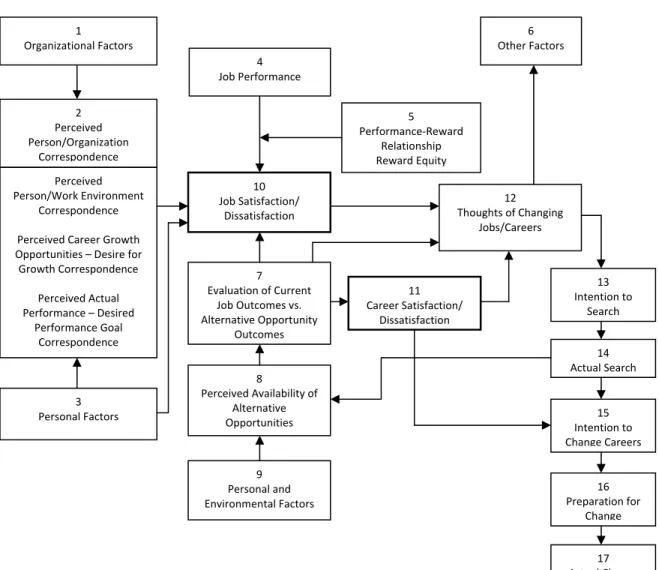
The Rhodes/Doering process model of occupational change is outlined in Figure 1. The process of occupational change happens in stages, but the concept of career satisfaction is central in the model. The worker becomes aware of a disconnection between his values, needs, or desires and the fulfillment provided by his current job and career environment.
Personal and organizational factors combine into a sense of perceived fit between the person and the work environment. If levels of dissatisfaction with this fit are high enough, and there are adequate financial resources, opportunities elsewhere, and family support, the person will begin to entertain thoughts of leaving. These thoughts lead to investigation of options,
networking with social contacts, and eventual search behaviors or commitment to educational pursuits that will enable the change to occur.
Blau (2007) tested the Rhodes and Doering model on a longitudinal dataset from a career study of medical technologists (MTs), and was able to look at MTs who had left the profession. Controlling for whether the MT’s salary was the primary source of her family’s income and for the number of dependent children, two variables which are negatively associated with voluntary turnover (Abelson, 1987; Griffeth, Hom, & Gaertner, 2000), the study found that career satisfaction and “work exhaustion,” or burnout, are positively associated with occupational turnover.
The complexity of the Rhodes/Doering model suggests that occupational withdrawal may not happen abruptly, but in stages. Research supports the notion that workers look for intra-organizational change opportunities before seeking employment elsewhere (Nicholson & West, 1988; Steers & Mowday, 1981). Krausz et al. (1995) found that occupational mobility is progressive among nurses, in that unsatisfying work experiences in a particular ward lead them to transfer to a different area of the hospital; if conditions do not improve, nurses move to a different hospital, and eventually will leave the profession when unable to find a suitable work environment within it.
Figure 1. Rhodes/Doering Integrated Career Change Model (1983). 1 Organizational Factors 5 Performance-Reward Relationship Reward Equity 13 Intention to Search 14 Actual Search 15 Intention to Change Careers 16 Preparation for Change 2 Perceived Person/Organization Correspondence Perceived Person/Work Environment Correspondence
Perceived Career Growth Opportunities – Desire for
Growth Correspondence
Perceived Actual Performance – Desired
Performance Goal Correspondence 10 Job Satisfaction/ Dissatisfaction 7
Evaluation of Current Job Outcomes vs. Alternative Opportunity
Outcomes
8
Perceived Availability of Alternative Opportunities 11 Career Satisfaction/ Dissatisfaction 12 Thoughts of Changing
Jobs/Careers 9 Personal and Environmental Factors 3 Personal Factors 17 Actual Change 4 Job Performance 6 Other Factors
Turnover in professions
Studies of a variety of professions consistently show that some combination of personal, job, and professional attributes contribute to a situation in which professionals decide that they are dissatisfied and intend to change occupations. Coder (2007) found that for professionals the main determinant of change is job satisfaction, which is negatively influenced by job stress. Predictors of college and university faculty intent to leave the profession include dissatisfaction with workload, support, time constraints, and sense of community (Barnes, Agago, & Coombs, 1998; Rosser, 2004).
Among psychologists, nurses, social workers, and teachers, dissatisfaction and feelings of emotional exhaustion are also associated with intentions to change occupations (Carless & Bernath, 2007; Center for Health Workforce Studies, 2006; Gardulf, Soderstrom, Orton, et al., 2005). It is common in professions like these that require high levels of social interaction for interpersonal stress to lead to feelings of burnout, poor organizational outcomes, and turnover. Like librarianship, the nursing, social work, and teaching
occupations are predominantly held by women. The research on turnover in these professions may be instructive for determining some of the more influential factors in the process.
During times of high nurse turnover, the quality of patient care goes down and the nursing unit experiences low morale and lower levels of productivity (Hayes, O'Brien-Pallas, Duffield, et al., 2006). Leiter et al. (1998) studied the relationship between 605 patients’ satisfaction and 711 nurses’ work satisfaction and turnover intentions in 2 separate hospital inpatient units. Patients were less satisfied with their overall hospital stay, the care they received from nurses and doctors, and the health outcomes of their stay when their nurses had higher levels of work exhaustion or greater intentions to quit. Patients were more satisfied overall when they were cared for by nurses who found their work meaningful.
Certain clinical environments have increased turnover, such as oncology units, where patient relationships can be emotionally draining (Gardulf, Soderstrom, Orton, et al., 2005; Hayes, O'Brien-Pallas, Duffield, et al., 2006; Rambur, Palumbo, McIntosh, et al., 2003). Song et al. (1997) compared two types of intensive care strategies, a traditional intensive care unit (ICU) and a special care unit (SCU). ICUs are traditionally known for being
task-oriented work environments with “a bureaucratic management model and high technology,” whereas the SCU work environment is a patient-centered “case management practice model
with… shared governance and minimal technology” (p. 444). Nurses in the SCU were more satisfied with their supervision and pay, and preferred the SCU over the ICU model.
Unmanageable workloads and schedules, coupled with routinized work environments and poor management or micromanagement, often result in organizational and occupational turnover in nursing. Turnover is greatest in hospitals and clinics in which management fails to communicate clearly, enlist the participation of nurses in decision making, give praise and recognition, and offer opportunities for growth and promotion (Davidson, Folcarelli,
Crawford, et al., 1997). Nursing satisfaction is particularly influenced by perceptions of empowerment in the work environment. The following critical success factors for nursing retention are cited in the research on structural empowerment: organizational commitment, participatory management and decision making, trust in the organization, and nurse
autonomy (Kutzcher, Sabiston, Laschinger, et al., 1997; Laschinger, Almost, & Tuer-Hodes, 2003; Laschinger, Finegan, Shamian, et al., 2000; Laschinger & Havens, 1996).
Social workers are prone to burnout from emotional exhaustion. Long hours and heavy workloads in a stressful environment with difficult clients take their toll. Those individuals who become too close to the personal problems of clients or who have issues with self esteem or boundaries are particularly susceptible to burnout. Social workers who are burdened with tedious administrative tasks and who lack defined roles and support from supervisors or coworkers are likely to abandon their careers (Center for Health Workforce Studies, 2006; Lyons, La Valle, & Grimwood, 1995).
Balfour and Neff (1993) argue that “turnover rates above 20 percent should be considered a direct threat to the organization’s stock of human capital and its overall effectiveness” (p. 475). Mor Barak et al.’s (2001) meta-analysis of the research on the
determinants of turnover and turnover intentions among social workers and other human services professionals discovered that some agencies’ turnover rates actually range from 30 to 60% per year. The strongest predictors of turnover are burnout, job dissatisfaction, low levels of organizational or professional commitment, stress, lack of social supports at work or home, and the availability of alternative employment options.
Nissly et al.’s (2005) study of 418 child welfare workers measured work and
organizational stress, work-family conflict, perceptions of social support from work and non-work sources, and intention to leave. Stress and non-work-family conflict are significant
predictors of turnover intention. Lack of support from co-workers or supervisors are also related to intention to leave. Turnover is particularly problematic for social work because it undermines consistency in client care, leads to delays in decisions in abuse cases, and promotes a greater chance for errors and bad judgments because of work overload.
Westbrook et al. (2006) investigated the factors that influence social workers to persist in their profession. Focus groups of 21 child welfare caseworkers and supervisors found the following critical actions that social work organizations can take to increase retention: mentoring and training from caring supervisors and co-workers, recognition from the organization, open communication and feedback, and hiring truly committed individuals. Social workers who had spent an entire career in the profession were more likely to have taken short breaks in employment or moved to different divisions in an organization to get a mental-emotional break. Westbrook refers to these veterans as “committed survivors” who emphasize the need for administrators in human services organizations to create policies that give social workers the opportunity for movement within and outside the organization to avoid burnout, as well as realistic training in how to get things accomplished in highly
bureaucratic systems. Similarly, in a manual for frontline social work supervisors, Hewitt et al. (2001) recommend the following steps to increase retention rates:
1. hire team-oriented people that fit well in the organization 2. create a climate of participatory management
3. set realistic expectations for new hires
4. maintain strong orientation and mentoring programs 5. motivate, evaluate, and recognize employees
6. intervene with constructive feedback when problems arise
The K-12 teaching profession is notorious for high rates of attrition. Nearly 25% of new teachers exit the profession within the first four years (Benner, 2000; Rowan, 2002). In studies of teacher turnover it has been shown that teachers who left the profession were dissatisfied with their workload and salaries, and were unhappy with an environment that provided little in terms of career growth, promotion, and challenge (Chapman & Hutcheson, 1982; Doering & Rhodes, 1989; Smithers & Robinson, 2003). Large class sizes, a negative or violent school culture, student misbehavior, low salaries, and administrative bureaucracies, and unclear expectations are difficult obstacles to negotiate, even for seasoned teachers. A new teacher does not always leave the student teaching practicum with a realistic picture of what to anticipate that first year on her own (Smithers & Robinson, 2003), and unfortunately, she may not have the benefit of being coached by a mentor-teacher, leaving her to feel
isolated, overwhelmed and unsupported.
Interviews with teachers are a common method for ascertaining turnover intentions and career satisfaction. Hargens (2005) interviewed 10 high school teachers after their third year of teaching. The teachers who remained at the same school were satisfied with
administrative support and did not experience problems with student discipline; however, they did not plan to teach for the rest of their careers because of the lack of opportunities for advancement. Those teachers who transferred to a different school indicated that their
reasons for transfer were based mainly on a lack of support from the administration. The teachers who left the profession altogether cited the following as their main reasons for leaving: a lack of support from the school administration, feelings of isolation and a lack of influence, and student discipline problems. Scheib’s (2004) study of music instructors in public schools found that most of the teachers experienced difficult working conditions and were dissatisfied with their salaries, the low status of teachers in society, and the low priorities placed on music education.
Other research has focused on factors related to teacher retention. Blanson (2005) interviewed 13 teachers who had remained in the profession from 5 to 33 years in urban schools. The teachers indicated that what kept them in these schools was their perception that they were “making a difference” in students’ lives, as well as having the support of the school administration. Wade (2001) studied National Board Certified secondary mathematics teachers, and concluded that the commitment shown to the profession by earning this
certification earned these educators new responsibilities, career development, and greater confidence and recognition, and resulted in greater retention rates.
Women predominate in nursing, social work, and teaching – fields that are considered to be “helping professions.” Although these occupations have radically different work
settings and require fundamentally different training and skill sets, research has shown they share a common challenge in retaining workers. Turnover in each field also appears to have similar origins: highly interactive, people-oriented work tasks that can be emotionally draining or stressful, and organizational climates that are often plagued with administrative problems such as bureaucratic management, insufficient mentoring, infrequent recognition, isolation from other professionals, and lack of support structures. These factors are associated
with decreased job satisfaction, burnout, and turnover, regardless of the differential ways they manifest in hospitals, social service organizations, and schools. The right kind of interventions by administrators and changes that address these problems could improve retention in all three fields.
Occupational change and the life course
Career decisions over the life course
Nearly 50 years ago, Wilensky (1961) found that men with "orderly" stable careers in hierarchically structured organizations had more stable, integrated relationships and
community attachments, but that this stability was not the norm, noting that “a vast majority of the labor force is going nowhere in an unordered way or can expect a worklife of
thoroughly-unpredictable ups and downs” (p. 526). He emphasized that economic conditions and imperatives, as well as technological and social change influence the orderliness of career patterns, and presciently asserted that “structural changes – in the content of jobs, the schedule of work, hours of leisure and the agencies that serve it – will offset those labor force trends that make for more predictable careers” (p. 539).
Nicholson and West (1989) estimate that only 10% of the workforce experience an orderly career, and that statistic is likely to have declined further as long-term employment in organizations continues to be replaced by short-term contract and temporary positions, outsourcing, and offshoring strategies that can be coordinated with changing production needs (Cappelli, 1999). While the exact number of adults who will change occupations during their working life course is unknown, the Bureau of Labor Statistics estimates that approximately 9 million people, or 7.25% of employed persons in the US, changed
occupations between January 2003 and January 2004; 40% of those who changed were over the age of 35 (Shniper, 2005).
For mid-career professionals who have never worked in a time of “organizational careers,” frequent movement between different jobs, organizations, and careers may now be commonplace. In this new climate has arisen the idea of “boundaryless careers,” which are not limited to one organizational setting, but span multiple organizations and types of work (Arthur & Rousseau, 1996). This shift is recognized by Feldman and Ng (2007), who note that over the last decade “careers research has concentrated much more heavily on career transitions than on career stability” (p. 351). Heinz (2003) suggests that social structural changes, such as this new psychological contract between employers and employees, herald a time ripe for individual agency in career development, perhaps resulting in occupational change:
… in periods of social transformation, however, self-socialization in the sense of developing self-reflexive strategies for coming to terms with changing job conditions and career breaks becomes a dominant pattern… the individual must assume greater importance as the agent of the timing of transitions, as investor of time in education and paid work, and as the producer of self-constructed pathways through the employment system (pp. 192, 195).
Career theory posits that career exploration and change is not a sign of adult instability, but is a healthy process that can occur successfully, multiple times, during midlife, “enhancing maturity, coping power, and creative productivity” (Super, 1990, p. 359). Research supports the idea that there is a method behind the madness of major shifts in careers during midlife. Riverin-Simard (2000) studied the “career transfigurations” of adults 40 years and older, and found that those in their mid-forties “experienced a rupture with the past and a new departure: they gained a new understanding of their goals, their vocational
identities, and the links that existed between their turbulent private and occupational lives” (p. 117). She asserts that seemingly chaotic career patterns have an underlying sense and are necessary in the context of midlife reassessment of the working life: these “ruptures and new departures into groups of vocational events … have a specific developmental meaning” (p. 119).
Super and Hall (1978) argue that, during a midlife reassessment, a person may realize that an earlier career choice was a mistake, discover that she has had a change in values or attitudes that do not match her current occupation, find that her expertise is not being utilized, or conclude that further advancement is not possible. Motivation for change sometimes comes in the acceptance that the current occupation is simply a poor fit, and that there are possibilities of a better fit with a new one (Dawis, 2005). Alternatively, a better salary, greater opportunities for advancement, and improved working conditions can be the stimulus for change (Markey & Parks II, 1989).
The timing of career change is particularly salient at midlife, since this life stage often coincides with family transitions, such as spousal job change, divorce, widowhood, the departure of grown children, or the birth or adoption of new children. These turning points have been found to influence midlife occupational changes because they are accompanied by psychological and economic changes necessary for major life transitions that “are purposeful – not haphazard” (Carr & Sheridan, 2001, p. 223). Women who shoulder the burden of family caregiving responsibilities often require more flexible work schedules, and they may see a new occupation that affords the opportunity for self-employment as an incentive to change, in spite of the associated investments and risks (Carr, 1996). Significant changes in family structure or needs may offer adults an opportunity to revive ambitions and career
goals that were shelved earlier in life, or require them to make difficult career choices. For example, relocation associated with a spouse’s promotion or other career move may result in the abandonment of one career path for another; a new city, state, or country may offer a very different set of circumstances related to work, occupations, and education or training.
Occupational change is not limited to early- or mid-career professionals, and the transition to a new life stage or the experience of a significant life event can prompt someone to recognize and try to remedy any incongruities between her personal and professional lives (Clopton, 1973). Moen (2003b) argues that, “what used to be seen as the passage to old age is now simply a midcourse transition that may be as much a beginning (a second or third career – whether paid or unpaid) as an ending” (p. 92). People are living longer, healthier lives, and are not ready to completely retire; they want to continue to be productive and fulfilled by meaningful employment. Alternatively, some workers who reach retirement age may still need to work because their pensions have been lost by their companies due to poor
investment choices or bankruptcy, their personal savings and investments have diminished during economic downturns, or they have not saved enough or have outlived their savings. Others may simply need access to health insurance.
Many older workers would like have a gradual phased retirement, in which they continue to work for their employer, but with hours and work demands gradually being reduced until full retirement is reached at a specified date. Unfortunately, employers rarely offer this option (Hutchens & Grace-Martin, 2006). Some older adults choose to work in “bridge jobs” between the end of their long-term career and their actual retirement (Cahill, Giandrea, & Quinn, 2006; V. W. Marshall, Clarke, & Ballantyne, 2001; Ruhm, 1990). According to Ruhm (1990), workers rarely retire from work completely at a specific