NEGOTIATING MULTIPLE STIGMATIZED IDENTITIES: EXAMINING THE STRATEGIES BLACK GAY MEN USE TO REDUCE IDENTITY CONFLICT
Allison Mathews
A dissertation submitted to the faculty at the University of North Carolina at Chapel Hill in partial fulfillment of the requirements for the degree of Doctor of Philosophy in the
Department of Sociology.
Chapel Hill 2015
Approved by:
Karolyn Tyson Lisa Pearce
ABSTRACT
Allison Mathews: Negotiating Multiple Stigmatized Identities: Examining the Strategies Black Gay Men Use to Reduce Identity Conflict
(Under the direction of Karolyn Tyson)
Background: Goffman’s theory on stigma management has provided a useful framework for understanding the relationship between stigma, identity salience, and strategies used to reduce identity conflict. However, Goffman focused his analysis on people who only dealt with one stigma at a time. More recently, scholars have expanded on Goffman’s work to examine how people manage more than one stigma simultaneously to reduce identity conflict. These contributions focus on hidden stigmas like mental illness and disease status without consideration of the effect that having a visibly stigmatized identity may have on stigma management strategies. I argue that it is important to consider how multiple types of stigmatized identities, including those attached to stigmas attached to both visible and hidden characteristics, interact to influence identity salience. It is possible that because visibly stigmatized characteristics are harder to hide, and subsequently control, they lead to more experiences with discrimination and increase the salience of the identity related to the stigma. Additionally, few scholars have examined how identity salience may shape people’s use of particular stigma management strategies. By examining the relationship between stigma management and identity salience, this study provides insight into how salient identities influence which stigma management strategies are used in particular contexts.
BGM’s church-going decisions because Black churches have long been a space of refuge as well as community for Blacks in the US. However, many Black churches also have a
reputation for being firmly anti-gay. Thus, BGM’s church-going decisions, identity
construction processes, and decisions about gay identity disclosure provide an opportunity to study how people manage stigma in the face of multiple stigmatized identities, one that is visible (Black) and one that is hideable (gay). While churches may provide some respite from racial discrimination for Black men, they may, on the other hand, stigmatize BGM for being gay. How, then, do BGM manage this dilemma? How do they manage the identity conflict and the stigma? Do they privilege one identity over the other? How does the visibility of the stigma influence the process?
Method: To answer these questions, I conducted a multi-method study. I constructed interview and survey questions based on previously validated scales. I conducted and
analyzed semi-structured interviews and online surveys with 31 self-identified BGM between 23 and 57 years old. The survey data served as supplemental data that provided a link
between participants’ interview responses and standardized measures of Black identity, religious orientation, and attitudes toward homosexuality and gay identity. Lastly, I conducted 25 hours of ethnographic observation at various types of churches the men attended to provide context.
I dedicate this work to my parents, grandparents, family members, friends, and church family, who all provided love, words of encouragement, social and financial support, and an
TABLE OF CONTENTS
LIST OF TABLES ... ix
LIST OF ABBREVIATIONS ... x
CHAPTER 1: INTRODUCTION ... 1
CHAPTER 2: LITERATURE REVIEW ... 25
CHAPTER 3: METHODS ... 56
CHAPTER 4: DESCRIPTIVE RESULTS ... 70
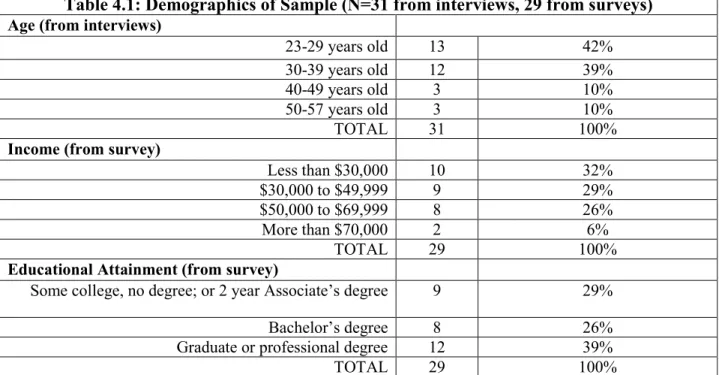
Table 4.1: Demographics of Sample (N=31 from interviews, 29 from surveys) ... 71
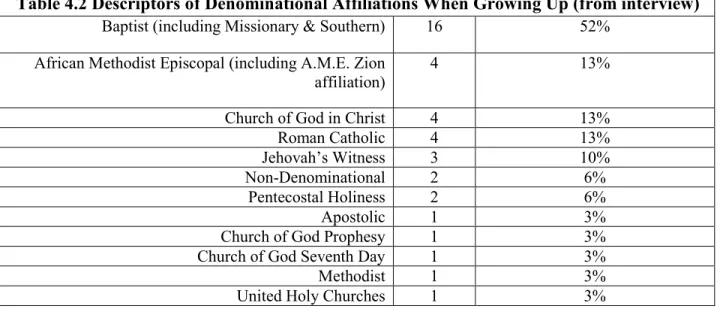
Table 4.2 Descriptors of Denominational Affiliations When Growing Up (from interview) ... 72
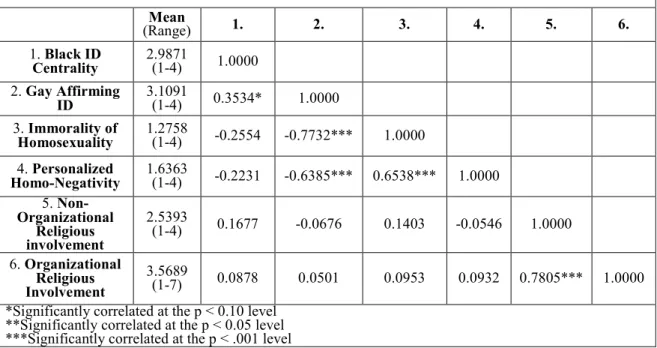
Table 4.3: Mean and Correlation Scores for Black and Gay Identity and Religious Involvement Sub Scales ... 78
CHAPTER 5: “SEARCHING FOR WHOSOEVER MINISTRIES”: EXAMINING BLACK GAY MEN’S CHURCH-GOING DECISIONS AND PARTICIPATION ... 88
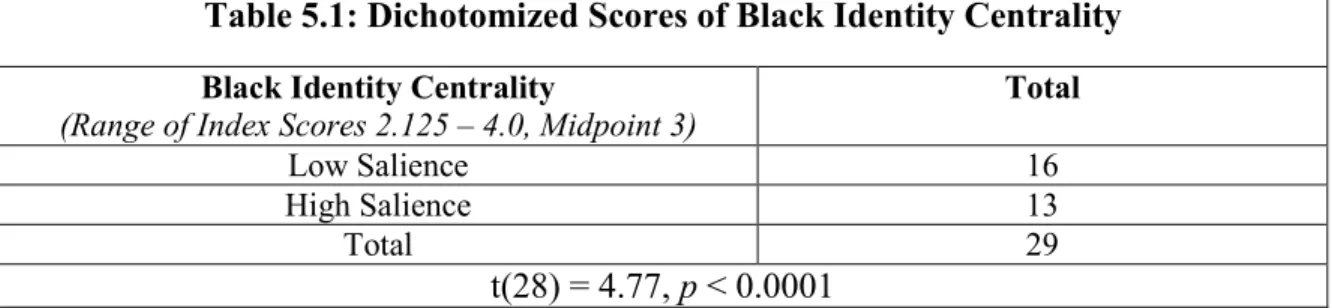
Table 5.1: Dichotomized Scores of Black Identity Centrality ... 93
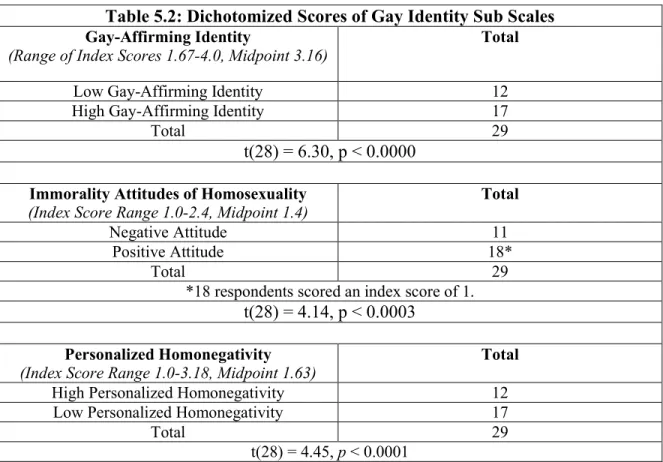
Table 5.2: Dichotomized Scores of Gay Identity Sub Scales ... 95
CHAPTER 6: “YOU GOTTA PRESS YOUR WAY TO GOD”: BLACK GAY MEN’S USE OF SPIRITUALITY AS STIGMA MANAGEMENT AND IDENTITY CONFLICT RESOLUTION ... 124
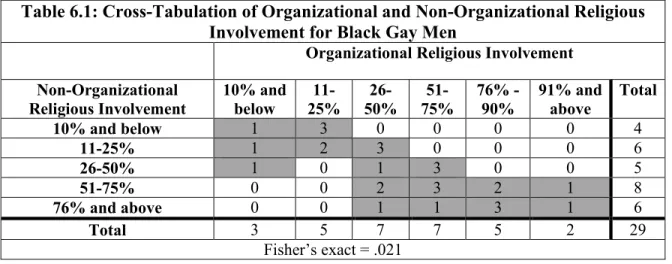
Table 6.1: Cross-Tabulation of Organizational and Non-Organizational Religious Involvement for Black Gay Men ... 128
CHAPTER 7: NEGOTIATING RISK ASSOCIATED WITH GAY IDENTITY DISCLOSURE IN BLACK CHURCHES ... 147
CHAPTER 8: CONCLUSION ... 169
APPENDIX A: INTERVIEW SCRIPT ... 177
APPENDIX C: LIST OF QUALITATIVE DATA ANALYSIS CODES AND
LIST OF TABLES
Table 4.1: Demographics of Sample………71 Table 4.2 Descriptors of Denominational Affiliations When Growing Up………. 72 Table 4.3: Mean and Correlation Scores for Black and Gay Identity and Religious
Involvement Sub Scales……….. 78 Table 5.1: Dichotomized Scores of Black Identity Centrality………. 93 Table 5.2: Dichotomized Scores of Gay Identity Sub Scales……….. 95 Table 6.1: Cross-Tabulation of Organizational and Non-Organizational Religious
LIST OF ABBREVIATIONS
AIDS Acquired Immune Deficiency Syndrome AME African Methodist Episcopal
BGAC Black Gay-affirming Church BGM Black gay men
BNGAC Black Non Gay-affirming Church COGIC Church of God in Christ
GAC Gay-affirming Church
HIV Human Immunodeficiency Virus IHI Internalized Homophobia Inventory LGBT Lesbian, Gay, Bisexual, Transgender
MIBI Multidimensional Inventory for Black Identity MMRI Multidimensional Measure of Religious Identity MSM Men Who Have Sex With Men
CHAPTER 1: INTRODUCTION
In 2005, Louis Farrakhan led the effort to organize the Millions More Movement, which was an anniversary march to the original Million Man March held in 1995 by the Nation of Islam. The purpose of the march was to refocus African Americans’ energy toward challenging institutional racism and building a self-sufficient Black community (Harris, 1999). According to the Nation of Islam, Black civil rights leaders, and some members of the Black community, the key to building a self-sufficient Black community was protecting Black men and their leadership positions (Harris, 1999; James, 2014). However, I quickly learned that this also meant pushing forth an agenda about Black men as masculine and heterosexual. Anyone who deviated from that characterization of Black masculinity was not welcome and was seen as a threat to the Millions More March’s agenda of racial solidarity (Harris, 1999). As a student activist who worked toward fighting injustice and intolerance of all people, I was surprised to discover that gay people, and in particular, Black gay men (henceforth, BGM), were still being marginalized and characterized as a threat to Black racial solidarity and Black manhood. I questioned how a community that fought to eradicate institutional racism and racial discrimination could perpetuate discrimination against Black LGBT individuals.
Methodist Church, the Southern Baptist Convention, the Church of Jesus Christ of Latter-day Saints, the National Association of Evangelicals, and the American Baptist Churches USA hold similar views, and all oppose same-sex marriage and denounce the morality of homosexuality (Masci, 2014).
Scholars have engaged in extensive study of the strategies White gay men (henceforth, WGM) use to manage Christian-based anti-gay stigma in churches. There are several strategies that WGM have used to integrate their religious and gay identities, including delegitimizing the pastor and other members of the church as flawed and misinformed humans (Yip 1997, 2002), rationalizing that God made them gay or that they were born gay (Walton, 2006; Thumma 1991), arguing that they needed to continue participation as a way to fight intolerance (Wagner 1994; Yip 1997), and arguing for an interpretive rather than literal (fundamentalist) approach to
Biblical passages (Walton 2006; Thumma 1991; Wagner 1994; Buchanan 2001; Mahaffy 1996). These studies show how some gay men rationalize their participation in religious environments that are not accepting of their gay identities. Yet, the findings from these studies are limited because they cannot be generalized to populations who have to contend with racial
discrimination and potential cultural differences. My study contributes to this gap by examining the strategies BGM use to navigate participation in churches, integrate their Black and gay identities and minimize stigmatizing experiences associated with being Black and gay.
support among their congregants to vote against the legalization of same-sex marriage (Abbey-Lambertz, 2014).
Some especially glaring examples of intolerance against homosexuality in predominantly Black churches recently made headlines across the country. In 2010, four Black men accused Bishop Eddie Long, the pastor of New Birth Missionary Baptist Church in Atlanta, GA, of sexual abuse, bribing, and coercion (Huffington Post/AP, 2010). He adamantly denied the charges but later settled out of court with the accusers. Ironically, despite his own apparent homosexuality (if his accusers are to be believed), Long supported legislation that opposed same-sex marriage, he had a ministry that encouraged gay congregants to live heterosame-sexual lives, he led marches against homosexuality, and he condemned homosexuality in his sermons
(Huffington Post/AP, 2010). As a result of the publicity from Eddie Long’s case, others called for a critical examination of the intolerance of homosexuality in Black churches, arguing that the stigma associated with homosexuality isolates and silences BGM who attend Black churches and limits the capacity of pastors to talk about homophobia in the Black community (Alston, 2010). Despite criticism, Bishop Eddie Long’s congregation and many African Americans across the United States continued to support him as a pastor and spiritual leader, reaffirming his
homophobic behavior.
Another Black pastor, the popular gospel singer Donnie McClurkin, has also dealt with persistent rumors that he is gay, which he has publicly denied. In an interview with Carrington Lei, a blogger for Pearl’s Window, McClurkin explained he was “delivered” from his
they are relevant to understanding the climate of intolerance toward homosexuality in some Black churches and within some segments of the Black community.
Despite the prevalent messages of intolerance of homosexuality among many Black religious leaders, there has been an increasing number of representations of BGM in the media. Some argue that this reflects an increasing acceptance of homosexuality in society; however, many of the portrayals of BGM are stereotypical which only serve to exacerbate the problem of intolerance and inequality by perpetuating their “otherness” (A. Johnson, 2013). Indeed, a documentary film by Yoruba Richen entitled The New Black demonstrates the seemingly contradictory and complex ways in which Black community members are sometimes split between their desire to support same-sex legislation and their discomfort with homosexuality, particularly openly gay-identified Black men (Richen, 2013).
examine the relationship between racial discrimination and Black identity, they often focus only on heterosexual participants’ experiences. By focusing on heterosexual participants, scholars assume that heterosexual people’s experiences with racial discrimination and negotiation of identity conflict are generalizable to all Black people without considering possible differences that are influenced by sexual orientation. Similarly, scholars who examine sexual orientation discrimination and negotiation of identity conflict largely focus on White males or fail to analyze how the experiences of people from different racial/ethnic backgrounds may differ from WGM (Bowleg, 2013). These studies miss the opportunity to better understand strategies people use to contend with multiple types of discrimination at once. This study provides insights into the processes of identity conflict negotiation people use to deal with discrimination through an analysis of the decision-making process of individuals with multiple stigmatized identities.
One way to understand how people negotiate experiences with multiple types of
discrimination is to examine their decisions about institutional participation. This dissertation examines the ways in which BGM navigate discrimination and marginalization because they are Black in White mainstream society and gay in both Black and White settings. Researchers often attempt to predict institutional participation by looking at how people identify. Scholars have found that the way people identify and their awareness of their identity depends on the relevance of that identity in a particular context (Stryker & Serpe, 1994). In many cases, the way people identify is often related to experiences with discrimination that may raise the salience or
awareness of a particular identity and create conflict with how they seem themselves (Stryker & Serpe, 1994). Yet, most scholars focus on the influence of one salient identity in people’s lives without considering how multiple identities may be salient or relevant in a particular context.
identities that are tied to experiences with oppression and co-exist within an individual (Bowleg, 2013; Hunter, 2010) – in an attempt to determine which identity is more salient. For example, in an ethnographic study of BGM, Hunter (2010) concludes that BGM’s Black and gay identities are equally salient; however, Bowleg (2013) argues Black identity is more salient because of BGM’s experiences with racial microaggressions and discomfort with participating in
predominantly White gay settings. While these studies are useful in examining how BGM talk about the intersection of their identities, they do not look at the context in which Black and gay identities are formed and how other processes like stigma that may affect their salience and decisions about institutional participation.
In an attempt to better understand how context shapes the salience of intersecting identities, some scholars have examined the relationship between identity salience and institutional
participation. For example, previous scholars show that BGM are more likely to maintain
membership in predominantly Black settings when their Black identity is salient and important in their lives (Icard, 1986; Martinez & Sullivan, 1998; Wilson, 2008). In contrast, when BGM hold their gay identity to be more important, they are more likely to participate in predominantly gay settings (Icard, 1986; Martinez & Sullivan, 1998; Wilson, 2008), regardless of the racial
composition. These studies examined the salience of BGM’s identities based on spaces where they were already participating without considering the decision-making process that influenced which spaces would be the most comfortable for them. It is possible that their experiences with stigma and discrimination in each space informed their decisions about whether to participate in predominantly Black versus predominantly gay spaces. Indeed, BGM are not always welcome in certain settings. Some predominantly Black settings tend to be less accepting of gays and
accepting of Blacks (Icard, 1986; Martinez & Sullivan, 1998; Wilson, 2008). Thus, BGM are presented with a dilemma because they often have to choose which setting to participate in, as there are few alternative spaces where both identities are accepted. Such is the case with churches. In order to gain a better understanding of why BGM choose to participate in each respective community, I argue that we need to look at the antecedent to this phenomenon by examining the role of stigma in raising the salience of people’s identities and influencing their decisions about institutional participation.
Stigma
Experiences with stigma have been found to increase identity salience (Kaiser & Wilkins, 2010); thus, this study is part of a long tradition of scholarship on stigma. Stigma is defined as “a physical or character-driven flaw seen as tainting a person” (Goffman, 1963, p. 3). Scholars examining stigma have not said much about stigma management for people who have multiple types of stigmatized identities such as being Black and gay, nor have they examined how the visibility of the stigma affects the process of stigma management. Most studies focus on people’s experiences with stigmas such as mental illness (Link & Phelan, 2001), homelessness (Snow & Anderson, 1987), or disease status (Daftary, 2012). Each of these stigmas arguably can be hidden if people successfully enact behaviors compliant with the norms of the dominant group. In contrast, some scholars acknowledged that stigma attached to visible characteristics, such as those caused by the sores that emerge from HIV disease progression (Daftary, 2012), can have more severe consequences than stigma attached to hideable characteristics. Race is one identity status that can have more severe consequences than the stigma attached to hideable
record and with higher educational attainment. Pager et al. (2009) argue that the stigma attached to Black men’s race outweighed the stigma attached to having an incarceration record. However, in some cases, Black men’s status as openly gay may benefit them (Pedulla, 2014). Pedulla (2014) found that survey respondents more positively scored Black gay men in hypothetical hiring and salary decisions over WGM and Black heterosexual men. However, the benefit Black men receive for being gay in some settings is still based on racialized and gendered stereotypes about Black heterosexual men as overly aggressive and threatening. The advantages some BGM receive in hiring and salary decisions reward BGM for being perceived as powerless and less threatening than Black heterosexual men. While these studies are useful in establishing the gravity of stigmas attached to visible characteristics, they do not go in-depth in examining how people manage multiple types of stigmas simultaneously. Does the visibility of a stigma attached to an identity make it more salient than an identity attached to a hideable stigmatized
characteristics? How do people manage multiple types of stigmas at once? Do they prioritize one stigma to minimize at the expense of the other? How does the context in which a person operates shape the strategies they use to manage multiple types of stigmas simultaneously?
To address these questions, I examine two stigmatized identities, Black and gay. Blacks have been stigmatized through a long history of racial discrimination, oppression and an
deviant. Despite attempts to challenge stereotypes and achieve upward mobility, Blacks do not have the ability to change their physical characteristics or escape the visible stigma associated with being Black. Indeed, Blacks are the only group in the United States who have not been able to escape their racial label or the stereotypes attached to their group, despite acculturating into larger American societal norms (Omi & Winant, 2014).
Homosexuality has been stigmatized through religious rhetoric that characterizes homosexuality as a sin and an abomination to God’s design for human nature. Members of the LGBT community have experienced social exclusion, violent attacks and murders (Marzullo & Libman, 2009), and legal discrimination limiting their ability to fully access their legal rights as US citizens (American Civil Liberties Union (ACLU), 2015). However, the stigma attached to homosexuality is designated as hidden because sexual orientation is not readily identifiable by looking at a person. In fact, many gay men and women go to great lengths to hide their sexuality in unsafe environments. Although there are some generalized visible characteristics associated with homosexuality, including stereotypes about gay men’s performing behaviors commonly associated with women, wearing women’s clothing, and speaking with a lisp, these behaviors arguably can be controlled and hidden (Clarkson, 2006; Seidman, 2009). Some may assume they can identify people who are gay by identifying stereotypical characteristics and behaviors
associated with gender non-conformity, but these characteristics are often socially constructed and culturally specific and do not necessarily equate with a particular sexual orientation
institutions and the coping strategies BGM employ in “safe” environments such as religious settings.
While previous scholars have examined the strategies BGM use to manage identity conflict, both in secular and religious settings, few have used stigma as a theoretical perspective to analyze their experiences. I find an examination of Black and gay identity as stigmatized identities to be useful for two reasons. First, people impose stigma upon a person rather than a person’s identity creating stigma. In that sense, I am using stigma as a way to better understand how negative attitudes and discriminatory experiences shape identity salience and identity formation in reaction to subjugation. This dissertation is as much about the internal identity BGM formulate as it about the process they must engage in to challenge external forces that subordinate them. Secondly, stigma provides a theoretical framework to better understand how and why certain aspects of an identity are rejected and other parts are embraced. Because some stigmas are visible and others are hidden, it is possible that people may be selective in the ways they formulate their identity as a response to minimizing the stigma attached to hidden
homosexuality because it is associated with characteristics that can be hidden and ones that every member may not embody. What is the process through which people engage in strategies to reduce identity conflict through the management of two types of stigmas—the visible stigma attached to being identifiably Black and the hideable stigma attached to being gay? Also, does context matter? To be sure, Blackness and homosexuality are not stigmatized in every space and may serve as a beneficial characteristic in some spaces. I examine stigma management strategies in relation to BGM’s experiences with Black churches because they are spaces where both identities may be relevant and/or stigmatized.
Black and Gay in Church
for wholeness in the midst of degradation, oppression, and suffering; and (3) the need to respond to God’s incarnational presence in their midst, who brought about hope, meaning, salvation, healing, wholeness, and a positive sense of self. These three impulses, he goes on to say, are still primary impulses:
Black people will worship where they have an opportunity to gain a positive sense of self, meaning, healing, wholeness, and a sense of purpose to their existence. They will give up a lot if they expect that they will meet the divine Source of their self-worth and
wholeness when they attend worship. Moreover, Black people will seek out a community and worship service where they are affirmed (p. 197).
The increased visibility of the gay community has prompted a well-publicized backlash by prominent opponents of gay rights. The Southern Baptist Convention, the largest Baptist denomination globally with approximately 16 million members (mainly in the United States), issued resolutions in 1996 and 2000 in which it rejected homosexuality as a lifestyle, referring to it as a “manifestation of a depraved nature,” “a perversion of divine standards and as a violation of nature and natural affections,” and “an abomination in the eyes of God” (Farmer, 2014; Human Rights Campaign (HRC), 2015). The National Baptist Convention, USA, Inc., the second largest Baptist church globally, and which is predominately African American, holds no official view on homosexuality but leaves the issue to individual congregations. They state, however, that a majority of their member churches would hold that homosexuality is not a legitimate expression of God’s will and would be opposed to ordaining active homosexuals or lesbians for any type of ministry in their church (HRC, 2015).
Importantly, then, some churches are no longer safe, sacred spaces for LGBT people because of the stigma attached to homosexuality. Indeed, LGBT people who experience stress or identity conflict in religious settings might not be able to fully enjoy the benefits of acceptance and personal nurturing because of the stigma they experience in Black churches. This
It is a peculiar sensation, this double-consciousness, the sense of always looking at one’s self through the eyes of others, of measuring one’s soul by the tape of a world that looks on in amused contempt and pity. One ever feels his twoness--an American, a Negro; two souls, two thoughts, two unreconciled strivings; two working ideals in one dark body, whose dogged strength alone keeps it from being torn asunder.
The history of the American Negro is the history of this strife--this longing to attain self-conscious manhood, to merge his double self into a better and truer self. In this merging he wishes neither of the other selves to be lost. He would not Africanize America, for America has too much to teach the world and Africa. He would not bleach his Negro soul in a flood of White Americanism, for he knows that Negro blood has a message for the world. He simply wishes to make it possible for a man to be both a Negro and an American without being cursed and spit upon by his fellows, without having the doors of opportunity closed roughly in his face. (p. 45f.)
The duality BGM experience in Black churches is similar to the experience DuBois described as double consciousness due to the conflict between their Black and gay identities. On one hand, BGM are accepted as members of the Black church and affirmed for being Black. On the other hand, they are rejected in some churches for being gay. Many BGM may feel constrained in their options to find alternative spaces to be fully accepted as both Black and gay.
can present a dilemma for BGM because they may desire to maintain connections to Black churches and access respite from racism but may also be faced with anti-gay stigma.
Additionally, they may feel constrained in their choices to seek membership in gay-affirming churches because of the dearth of churches that accept them for being both Black and gay. It is important to examine BGM’s decisions about membership and participation in churches because it provides insight into the ways people navigate discrimination and marginalization in US society. We should care about this topic because if people are not integrated in US society, they cannot access resources, experience lowered status in society and are cut off from social support. It becomes harder for marginalized people to find employment and they are more vulnerable to experiencing depression and participating in maladaptive coping behaviors like violence, high-risk sex, drug use, etc.
One obvious alternative for some BGM as a strategy to reduce identity conflict would be to seek out “gay-affirming” churches that do not stigmatize homosexuality. Studies show, however, that the majority of gay-affirming churches are predominantly White and mainline Protestant (Masci, 2014). Studies of WGM participants find that men who participate in gay-affirming religious activities and groups actively integrated their religious and sexual orientation identities (Lease et al., 2005; Rodriguez, 2010; Thumma 1991; Wagner, Serafini, Rabkin, Remien, & Williams, 1994). For example, Lease et al. (2005) conducted a survey study of 583 LGB individuals and found a positive relationship between participating in affirming faith experiences and experiencing positive psychological health, and the relationship was mediated by internalized homonegativity and spirituality. However, in a survey study of three gay-affirming, Catholic groups, including a national organization (n=75), a New York-based
Wagner et al. (1994) showed that those with similar religious backgrounds, but not involved in gay-affirming religious groups, had less positive attitudes toward their homosexuality and were less likely to integrate the two identities. These studies show that it is possible to integrate one’s religious and gay identities in spaces that affirm homosexuality. Yet, there have been few studies to examine how Black gay men manage stigma and integrate their racial, gay, and religious identities, particularly in gay-affirming spaces. BGM may face an additional dilemma often not experienced by WGM in their quest to find churches that accept homosexuality because most of these churches tend to be predominantly White. Although White gay communities and churches often aim to be welcoming to all people and encourage diversity, they may still exacerbate BGM’s discomfort due to cultural differences and potential experiences with racial
discrimination. Thus, BGM may be especially vulnerable to experiences of both racial discrimination and stigma related to their sexual orientation as a result of their church-going decisions and participation.
By examining BGM’s church-going decisions and participation, I address various gaps in the literature. First, church-going decisions are one way to measure the relationship between identity salience and multiple types of stigma because both Black and gay identities are relevant and potentially stigmatized depending on which church participants attend, if any at all.
I examine how BGM’s identities as Black, male, and gay in church interact to affect their strategies to manage identity conflict and multiple types of stigma. It is important to examine how a person experiences multiple oppressions due to their statuses in society (Battle & Barnes, 2010; Collins, 2004; Crenshaw, 1991; Lemelle, 2010). These multiple oppressions, such as racism and homophobia, are tied to stigmas associated with being Black and/or gay.
Consequently, stigmatized people experience a lowered status in society; yet, few scholars have examined how people manage experiences with multiple oppressions through the lens of stigma management. I argue that it is not enough to analyze either Black or gay identity in isolation because each informs and influences the other. Consequently, the experiences and coping strategies of BGM are different from non-gay Black men and gay men of other racial and ethnic backgrounds.
Similar to men of other racial and ethnic backgrounds, BGM experience privilege as men. However, they also experience stigma and oppression because they are Black and gay. According to Bowleg (2013), BGM experience just as much stigma and discrimination as Black women because of their statuses as Black and gay, despite having privilege as men.
However, BGM’s experiences are distinct from White gay men’s, whose race affords them the privilege of whiteness, and from heterosexually-identified Black men’s, whose sexuality places them in the normative category and affords them the privilege of
My aim is not necessarily to test how each stigma affects BGM’s lives independently in comparison to other non-stigmatized groups, but to provide a more in-depth analysis of the strategies BGM participants in this study use to manage multiple stigmas. By integrating insights from the literature on stigma management with an intersectional framework, I provide a better understanding of the agency, or personal action, one may employ to manage multiple
oppressions and reduce identity conflict. Outline of Research Questions and Objectives
The objective of this dissertation is to address empirical gaps in the stigma literature by gaining a better understanding of what influence two types of stigmatized identities, such as being both Black (visible) and gay (hideable), have on participants’ stigma management strategies to reduce identity conflict. Thus, I ask the following research questions:
1) How does having two types of stigmatized identities, being both Black (visible) and gay (hidden), influence the salience of these identities and decisions about institutional participation?
2) What strategies do BGM use to manage multiple stigmatized identities, like being Black and gay, in Christian churches, an environment that supports one identity but may exacerbate the stigma attached to another?
3) How does identity salience influence the stigma management strategies BGM use to reduce identity conflict?
To answer these questions, I conducted a parallel multi-method study, drawing on survey, interview and observational methods. I constructed interview and survey questions based on previously-validated scales assessing Black, gay, and religious identity. I conducted and
and 57 years old. The survey data served as supplemental data that provided a link between participants’ interview responses and standardized measures of Black identity, religious
orientation, and attitudes toward homosexuality and gay identity. Lastly, I conducted 25 hours of ethnographic observation at three different types of churches participants attended to provide supplemental context for the study.
Outline of Dissertation Chapters
In chapter two, I review the extant literature on stigma to provide a better understanding of how scholars extend Goffman’s (1963) conceptualization of different types of stigma and the ways people manage stigma. Given my interest in examining the interplay between different types of stigma, I focus on the ways Black identity has been conceptualized as a visible
stigmatized identity. I also review the literature on how homosexuality has been conceptualized as a hidden stigmatized identity. The comparison of the conceptualizations of the visible stigma attached to being Black and the hidden stigma attached to being gay allows for a better
understanding of theoretical nuances, if any, scholars have identified to understand how each type of stigma operates in people’s lives. In particular, I am interested in understanding if there are any differences in the way visible stigma as compared to hidden stigma have been found to influence identity salience. I am also interested in better understanding how identity salience shapes the strategies people use to manage both visible and hidden stigmas simultaneously.
because they have been identified as the main strategies used to manage identity conflict. While there has been research examining people’s experiences with intersecting identities that are in conflict with each other, few have examined how stigma may shape the salience of their identities and the strategies they use to manage identity conflict. I argue that it is important to examine identity salience in relation to experiences with stigma because stigmatizing
experiences have been found to raise the salience of an identity. By examining the literature on stigma, I am able to establish a stronger theoretical link between identity salience and the strategies people use to manage identity conflict because stigma scholars argue that people manage identity in reaction to negative appraisals from others.
People who have stigmatized identities find multiple avenues for minimizing experiences with stigma. Scholars have identified some of the strategies people use to manage stigma and identity conflict, such as challenging perpetrators of stigma, constructing new positive identities, choosing to participate in non-stigmatizing environments with “like” members who accept them, and using stigmatized identity disclosure as a way to increase visibility and challenge stigma. However, few scholars have examined how different types of stigmas may have distinct influences on identity salience and stigma management strategies. To better understand the relationship between multiple types of stigma and identity salience, I examine extant research on people’s experiences with multiple types of stigma, including hidden and visible stigmas.
Additionally, I review the literature that examines people’s experiences with double stigma, or having more than one stigma at a time.
churches because they are spaces in which both identities are relevant. This scholarship provides insight into the relationship between multiple types of stigma and identity salience in a particular context. I argue that by examining experiences with stigma and identity conflict within the context of Christian churches, we can gain better insight into the complex ways in which people negotiate maintaining connections to spaces that may not accept all aspects of their identity.
Lastly, I examine the extant literature on gay identity disclosure as a strategy to manage stigma because it has been identified as an important means through which LGBT populations can reduce discriminatory experiences. Gay identity disclosure may be one way people can control who has access to information about their hidden stigmatized identity and provide them with increased access to resources for social support.
Chapter three provides a description of the eligibility criteria for participants and sampling and recruitment methodology. Additionally, chapter three describes how the
interviews, surveys, and ethnographic observations measure the main concepts for this project. I provide sample interview questions and sample items from the sub scales included in the survey. Lastly, I outline my data analysis methodologies and provide a reflection on my role as a
researcher while completing this project.
Chapter four provides a description of the participants, the survey findings, and descriptions of each church where I conducted ethnographic observations. The descriptive statistics were provided from the online survey participants completed.
decisions about institutional participation. Additionally, chapter five analyzes how BGM’s church-going decisions serve as strategies to manage multiple stigmas.
Findings from Chapter five reveal that the salience of BGM’s Black identity is an important factor in their decision to maintain connections to predominantly Black churches. However, the salience of their gay identity also influences their decision to participate in Black churches that do not explicitly stigmatize homosexuality. BGM devalue the legitimacy of GACs because of their association with visible aspects of homosexuality that are stigmatized. BGM also make it clear that they do not prefer to attend predominantly White churches because of cultural differences, potential stigmatizing experiences and discomfort as a racial minority in the church. Even when BGM do not regularly attend church, they describe ways in which they maintain connections to predominantly Black churches, either through occasional visits or tithing.
My findings present a challenge to the idea that identity conflict is solely an internal process – the internalization of negative attitudes toward themselves as Black and gay is due to external stigmatizing treatment. My findings also challenge the idea that participating in Black churches is an indicator of BGM’s internalized negative attitudes about themselves as gay – not all Black churches are stigmatizing spaces, not all BGM see themselves in a negative light even when participating in stigmatizing spaces because these spaces also serve as buffers from racial discrimination, cultural centers and sources of social support. My findings challenge the
Lastly, we can use decisions about institutional participation and strategies to manage stigma as a way to better understand identity salience.
Chapter six, entitled “‘You Gotta Press Your Way to God’: Black Gay Men’s Use of Spirituality as Stigma Management and Identity Conflict Resolution,” examines how BGM maintain connections to Black churches. In particular, I examine how BGM manage anti-gay stigma and identity conflict. Findings reveal that some BGM attempted to separate themselves from anti-gay stigma by adopting the label, “spiritual,” and constructing a Black, gay, faith-based identity. They construct their faith-faith-based identity by making distinctions between
spirituality and religiosity, and by criticizing religious others as well as the institution of church as hypocritical and judgmental against homosexuality. Thus, faith-based identity construction is less about religious involvement and more about BGM’s attempts to minimize stigma.
Examining the strategies BGM employ to integrate their Black, gay, and faith-based identities contributes to our understanding of how both stigmatized identities shape how BGM negotiate processes of identity construction to reduce identity conflict.
Findings from chapter six further emphasize the point that identity construction and experiences with identity conflict are negotiated by BGM in an attempt to minimize experiences with stigma. Additionally, the findings from this chapter challenge the assumption that people have to or would want to completely sever ties from a stigmatizing environment in order to reduce identity conflict. Instead, people with multiple types of stigmatized identities attempt to find spaces where they can minimize experiences with the stigma attached to visible
characteristics first and then find ways to manage stigma attached to their hideable characteristics.
(Dis)engagement as Stigma Management,” further examines the strategies BGM use to manage stigma within the context of churches. The chapter addresses questions about the conditions under which and for what purposes BGM might decide to disclose their gay identity. Findings reveal that in environments that delivered anti-gay messages, many BGM felt compelled to hide their gay identity. Yet, they found ways to subvert heterosexist norms. Others chose to face the risk of disclosure because to hide their gay identity carried more personal consequences and increased their feelings of “inauthenticity.” Lastly, some BGM used gay identity disclosure as a way to gain control over the stigma attached to their gay identity and to control their level of engagement with perpetrators of stigma. In cases when BGM voluntarily disclosed their gay identity, it was used as a means to maintain connections to predominantly Black churches, gain a sense of empowerment and recognition, and maintain personal integrity.
The findings from chapter seven challenge the idea that people who hide their hidden stigmatized identity are doing so because they want to deceive others. The findings move our focus from portraying the stigmatized as deceptive people to understanding how they must make calculated decisions about exposing themselves to the risk of stigma and rejection. The findings from this chapter also highlight the gravity of disclosure for BGM that still exists in today’s society despite increased tolerance toward homosexuality in mainstream culture.
CHAPTER 2: LITERATURE REVIEW
There is a long tradition of scholars who have examined stigma and its effects on individuals’ social status and identity. Most scholars focus on the effect that a single stigma has on an individual’s social status and identity salience (Kaiser & Wilkins, 2010; Kaufman & Johnson, 2004; Link & Phelan 2001; Shelton et al., 2010). In particular, much of the stigma scholarship focuses on people’s experiences with stigmas attached to hideable characteristics such as mental health disorders, homelessness, and disease status. While some attention has been paid to the differential effects that stigmas attached to visible characteristics, such as being Black, may have on identity salience and stigma management strategies, few scholars have examined the experiences of people who must contend with multiple types of stigmas
simultaneously. I argue that we should pay attention to the interaction between multiple type of stigmas as well as the visibility of stigmatizing characteristics because they may create
qualitatively different experiences and unique challenges for people to manage. One way to gain insight into this gap in the literature is to examine the strategies people use to manage multiple types of stigma and to reconcile identity conflict. In this study, I focus on BGM’s experiences with stigma attached to their Black and gay identities and assess how they manage the visibility of stigmatizing characteristics.
Conceptualizing Stigma
status in society (p. 3). Link and Phelan (2001) added to Goffman’s definition by describing stigma as a simultaneous interaction between multiple elements such as “labeling, stereotyping, separation, status loss, and discrimination” (p. 367). As such, stigma originates from people with power who label others and strip them of their status (Goffman, 1963; Link & Phelan, 2001) rather than from an inherent quality that resides within the stigmatized person. This
conceptualization is grounded in the symbolic interaction tradition in which scholars argue that identity development operates through relationship with others rather than solely as an internal process (Blumer, 1969). Thus, stigma does not exist as an inherent quality within a person, but arises from negative appraisal from others of a person’s identity. In reaction, an individual often must negotiate stigma and find ways to minimize stigma because it often contradicts his/her self-concept (Gecas & Burke, 1995; Goffman, 1963). As such, an individual may actively engage in a process of interpreting, acting upon, and/or refuting negative appraisals of his/her identity from others (Gecas & Burke, 1995).
Conceptualizing Race as Stigma
Analyzing data from three qualitative studies on the social and psychological
consequences of “race,” Howarth (2006) argued that race should be conceptualized as a stigma to better understand people’s experiences with race. By conceptualizing race as stigma, scholars can analyze race as a visible demarcation on the body (e.g., physical characteristics) that justifies subordination; as a categorization that dehumanizes and subjugates others; as a mark that limits access to higher status, resources and power; and one whose assessment by outsiders often contradicts the “raced” person’s positive self-concept (Howarth, 2006).
For Black Americans, race operates as a visible stigma attached to their physical features (Goffman, 1963; Howarth, 2006), and one that has made them the target of discrimination and systematic oppression (Howarth, 2006; Omi & Winant, 1994; Sellers, Rowley, Chavous, Shelton, & Smith, 1997). Racial stereotypes often stigmatize Blacks, especially Black men, by characterizing them as excessively aggressive, sexually promiscuous, violent, unintelligent, and criminal. As a result, Black men often are placed at a disadvantage because racial stereotypes applied to them often get translated into unfair treatment by others and limited opportunities for social, political, and economic advancement (Bowleg, 2013). Additionally, racial stereotypes perpetuate stigma against Black men and challenge their ability to serve as positive
Blacks; thus, the conceptualization of race as stigma is useful for understanding BGM’s
experiences. I argue that it is also important to understand how experiences with additional types of stigmas, like the hidden stigma attached to being gay, may inform their experiences.
Conceptualizing homosexuality as stigma
Stigmas attached to hideable characteristics (e.g., being gay, gender non-conforming behaviors) are not readily perceived and are more likely to go unrecognized and unresolved (Goffman, 1963). Individuals who encounter these stigmas often do so in silence and at great risk and damage to their self-identity (Greeff, 2013). To cope with the negative effects of hiding a stigmatized identity, some people inflict personal harm or engage in maladaptive health
behaviors (Greeff, 2013). However, others may choose to disclose their hidden stigma as a way to challenge stigma and gain access to resources and social support (Kaufman et al., 2004; Legate et al., 2012; Orne 2013). Research on BGM tends to highlight the maladaptive behaviors they use to manage discriminatory experiences (Greeff, 2013; Jeffries et al. 2013; Wolitski et al. 2006), but fails to highlight the strategies BGM use that are adaptive and enhance their agency in coping with stigma.
Homosexuality has been conceptualized as a stigma that taints a person’s character and spoils their identity, but it is also seen as one that can be ostensibly hidden from others by
withholding information and/or altering behavior to conform to heterosexist norms (Orne, 2013). In fact, since the turn of the 20th century when homosexuality was designated as a sexually
associated with, and often conflated with, homosexuality (Clarkson, 2006). These visible characteristics are often devalued because they are perceived to challenge traditional masculine norms in a community (Clarkson, 2006). For example, when a man publicly identifies as gay, others may challenge his claims to masculinity regardless of whether he engages in gender non-conformity or not. Similarly, BGM’s status as gay may threaten the legitimacy of their claims to masculinity (Glick, Gangl, Gibb, Klumpner, & Weinberg, 2007; Hunter & Davis, 1994). This can be harmful to their status in the Black community because masculinity has been valued as a mechanism for Black men to serve as community leaders and combat racial stereotypes (Collins, 2006; Hunter & Davis, 1994; James, 2014). The conflation of homosexuality with reduced masculinity creates an added stigma for BGM and may increase discomfort, discrimination, and pressure to remain silent about their sexual orientation (Bohan, 1996; Johnson, 2008; Sauve, 1998).
decision-making processes and experiences with identity conflict. Yet, few scholars have
examined whether different types of stigmas have differential influences on identity salience and subsequently, their decisions about institutional participation.
The Relationship Between Stigma and Identity Salience
Stryker and Burke (2000) define identity salience as the “probability that an identity will be invoked across a variety of situations, or alternatively across persons in a given situation” (p. 286). An identity can also become salient as people experience stigma and discrimination because the negative treatment from discriminatory experiences raises a person’s awareness of his or her difference (Kaiser & Wilkins, 2010). Discriminatory treatment often raises a person’s awareness of his or her identity in a situation by forcing awareness of the ways in which others view them negatively. For example, in DuBois’ (1903) seminal work The Souls of Black Folk, he describes the experience of becoming aware of his Blackness and learning that Whites viewed him negatively because of his race as having “a veil lifted from his eyes.” The heightened awareness he experienced about his racial identity then led him to think about and better
of discrimination because it may have situational relevance or may be relevant to group membership (Stryker & Serpe, 1994; Stryker & Burke, 2000). For example, in a classroom setting, a person’s identity as a teacher may become salient because of the setting. However, when a person experiences discrimination against a particular identity, the salience of that identity may increase and even become one that supersedes other identities that are not discriminated against (Thompson, 1999; Stryker & Bruker, 2000).
The relationship between identity salience and identity conflict that DuBois outlined in his metaphor of the veil and concept of double consciousness also may be applicable to people with overlapping identities and discriminatory experiences. For example, the discrimination and stigma BGM experience due to being Black in predominantly White settings and being gay in mainstream White or predominantly Black settings may raise the salience of both identities. The raised awareness of BGM’s Black and gay identities may lead to identity conflict, because they often must find ways to negotiate membership in multiple, potentially adversarial settings while holding on to positive self-assessments. While experiences with stigma and discrimination do not always increase identity salience, I focus on the relationship between stigma and identity salience to better understand how certain types of stigma may be more influential in raising the salience of one identity over another.
The Relationship Between Identity Salience and Multiple Identities
Black identity because it challenges their ability to maintain connections to predominantly Black spaces (Alexander, 2004; Balsam, Molina, Beadnell, Simoni, & Walters, 2011). Scholars have found that BGM are often forced to choose between membership in either predominantly
heterosexual, Black spaces or predominantly White, gay spaces because of experiences with anti-gay treatment in predominantly Black spaces and anti-Black treatment in predominantly White, gay spaces (Icard, 1986; Martinez & Sullivan, 1998; Wilson, 2008).
The spaces in which BGM choose to participate may indicate the degree to which a particular identity is salient for them. For example, several scholars have found that BGM who choose to participate in predominantly Black communities tend to identify as “Black gay men” and hold their Black identities to be more important than their gay identities; in contrast, BGM who choose to participate in predominantly White gay communities identify as “gay Black men” and hold their gay identities to be more important (Icard, 1986; Martinez & Sullivan, 1998; Wilson, 2008). These studies suggest that analyzing group membership decisions may be important to understanding the salience of identity for people dealing with multiple, conflicting identities. Additionally, by including an analysis of stigma, we can better understand the extent to which men’s decisions about institutional participation are influenced by their efforts to negotiate and minimize experiences with discrimination and to find spaces that provide acceptance.
conceptualization, the up-down model, and the public-private model. The interlocking model unites Black and gay identities as mutually important, whereas the up-down model privileges one identity over another; the public-private model distinguishes between race as a public identity that cannot be escaped and sexuality as a private identity that is expressed between partners and trusted others. While Hunter (2010) found participants’ experiences to be shaped by their Black identity, he ultimately concluded that both identities were salient.
Bowleg’s (2012) study examines the influence that identity salience has on a person’s decision to participate in particular groups and negotiate multiple identities. Bowleg (2012) argued that her participants held their Black identity to be more salient because of the multiple ways in which their awareness of their Black identity occurred at early ages and throughout the life course. The micro-aggressions BGM experienced in regards to racism in White gay
communities and heterosexism in Black communities signaled to participants the interlocking nature of their identities as Black and gay; however, they persisted in their discussion of the influence that being Black had on their experiences as gay men (Bowleg, 2012). Bowleg’s study provides an important framework to assist in my examination of stigma management strategies. I extend Bowleg’s examination by analyzing BGM’s decisions about which types of Christian churches they attend, if any at all. Additionally, BGM’s church-going decisions and participation may provide insight into how multiple identities, like being Black and gay, may be salient.
discrimination and manage stigma. Understanding the relationship between different types of stigma and identity salience is also important because it has implications for understanding what factors drive people’s coping strategies and decisions about group membership. This insight will aid scholars who have attempted to predict which groups people participate in, under what conditions they make those choices, and how their choices impact their wellbeing. If some people are making choices about group membership and participation based on efforts to minimize stigmatizing experiences, and these choices inadvertently reinforce segregation, we need to pay attention – if for nothing else than to find a way to establish a more integrated society where all people are treated equally and feel fully accepted.
By examining the interaction between multiple types of stigma and identity salience, I aim to challenge the work of previous scholars who have long assumed that stigmas have independent effects on identity. Secondly, I aim to clarify the relationship between multiple types of stigma and identity salience by analyzing people’s stigma management strategies. Since scholars have established that identity salience often dictates the groups people maintain
membership in and the behaviors in which they engage, I argue that examining the context in which BGM use stigma management strategies can provide insight into which identity is more salient when dealing with multiple stigmatized identities at once. I turn to an examination of the existing literature on the influence of context in shaping BGM’s stigma management strategies. Context Matters When Managing Stigmas
minority groups. For example, Nnawulezi and Sullivan (2014) found that Black women seeking support for domestic violence experience racial micro-aggressions in shelters, and these
racialized experiences created barriers to finding safe spaces.
In an interview study of 37 self-identified Black gay and bisexual men aged 18 to 36 years old who lived in Chicago, Della et al. (2002) found that BGM employ different strategies to deal with discrimination in environments that affirmed their identities versus in environments that stigmatized them. For example, in contexts where BGM felt affirmed for being gay, they directly confronted perpetrators of stigma and drew strength and comfort from examples of others from their ethnic community who dealt with similar experiences of discrimination (Della et al., 2002). In non-gay-friendly environments, BGM conceal their gay identity by altering their behavior to mimic traditionally masculine mannerisms, and they dress and remain silent when hearing anti-gay messages in church and familial settings (Della et al., 2002). The authors draw parallels between the strategies BGM use to manage heterosexism and the strategies they use to manage racism. Della et al. (2002) argue that when participants challenge people who
discriminate against them for being gay, they are invoking a long tradition of anti-racist activism and resistance. Yet they also argue that when BGM remain silent about their gay identity, they are also invoking past strategies used by Blacks to accept their fate in a racist society and acquiesce to the status quo. As such, BGM’s experiences with racism served to provide them with the necessary skills to manage both stigmas simultaneously.
from some members of the Black community as a way to control who did and did not have information about their identity. However, the authors did not elaborate on why Black MSM felt the need to use this concealment strategy specifically in the Black community. Additionally, the authors did not elaborate on whether BGM had a choice in which community they wanted to participate, nor the reasons why BGM may have chosen to stay in the Black community. In general, MSM from all racial and ethnic minority groups (Latinos, Blacks, and Asians) disassociated from social settings where White gays were racist (Choi, Han, Paul, & Ayala, 2011). Asian MSM were the only group of men who participated in predominantly White gay spaces. Rather than removing themselves from those spaces altogether, Asian MSM avoided individuals whom they perceived to be racist. This study is useful for understanding how stigma attached to racial/ethnic minority status influences the strategies non-White MSM use.
The Black Church
An important dimension of understanding the identity conflicts and stigma BGM wrestle with is to understand their experiences in religious institutions. Historically, Black churches have served as so-called “safe spaces” by providing a sense of social support and refuge from racial discrimination and other adverse life circumstances for Blacks, in general (Hammond & Mattis, 2005; Lincoln & Mamiya, 1990; Odum & Vernon-Feagans, 2010) and for BGM specifically (Bowleg, 2013). Religion and religious institutions have been sources of socialization, political influence and an emotional haven for Blacks. However, racial stigma and discrimination have historically constrained Black people’s church-going options. For decades, racial segregation forced Black people to attend Black churches, which often were the only option for those seeking worship spaces and sites for cultural production and social support. Indeed, the majority of Black people currently attend predominantly and historically Black churches (Pew Research Center, 2009a). Research suggests that Blacks tend to choose churches primarily based on racial
demographics as well as other social characteristics (McRoberts, 2003). It is possible that BGM may be more likely to participate in predominantly Black churches because they provide racial socialization, cultural production, and social support.
To be sure, church attendance is waning among multiple groups of people across the world, and people are increasingly switching denominations or stopping church membership altogether (Loveland, 2003). Additionally, people are maintaining spiritual identities and increasingly engaging in informal and private religious practices, such as prayer, reading the Bible, and meditation (Cadge & Davidman, 2006; Hodge & McGrew, 2013). Yet, scholars have not successfully identified the mechanisms through which these church-going decisions,
people in regards to their church-going decisions, religious practices, and identification as spiritual; however, it is important to understand the factors that influence their patterns because of BGM’s experiences with identity conflict and potential stigma in church spaces.
The question of whether BGM go to church and which types of churches they attend is important because of the relative importance that religion plays in BGM’s lives compared to WGM. Research indicates that BGM have higher rates of involvement in Christian churches than any other lesbian, gay, bisexual or transgender (LGBT) racial or ethnic group (Foster et al., 2011; Jeffries, Marks, Lauby, Murrill, & Millett, 2013; Pew Research Center, 2009b; Valera & Taylor, 2011). Additionally, religious experiences have been found to be more important for BGM and more influential in their spiritual satisfaction than for WGM (Seegers, 2007). That BGM hold religion and spirituality to be important to them, and that Black churches are closely linked to racial socialization, speaks to the relevance of examining churches as a context for better understanding the stigma management processes for BGM.
Black Churches and Anti-gay Stigma
Some specific ways that people have attempted to engage in politics of respectability include wearing professional clothing, speaking formal English, enacting traditional gendered behaviors, and concealing sexuality (Patton, 2014). For example, Don Lemon, an openly gay Black male news anchor and political commentator on CNN, aired several segments on TV criticizing Black men for wearing “saggy” jeans and not speaking correct English. Lemon argued that if they change those behaviors, they would be more “respectable,” deflect stigma and
discrimination, and improve their life chances (Smith, 2013). This perspective ignores the fact that even when Black men wear suits, have high educational attainment, and speak proper English, they are still more likely than any racial or gender group in the United States to be racially profiled, harassed, arrested and killed by police (Smith, 2013); are overlooked for hiring and promotions (Jones & Schmitt, 2014); and cite higher rates of perceived discrimination
(Hudson et al., 2015). Additionally, Lemon may enjoy some privileges as an educated, gay Black man in that he may not face the same stereotypes and barriers to employment experienced by low-income and/or heterosexual Black men (Majors & Billson, 1992; Pedulla, 2014).
The expectation that participants conform to respectable behavior is especially prevalent in Black churches because of the conservative stance some Black churches have on
homosexuality. Consequently, BGM are likely to encounter messages that condemn
homosexuality and feel pressure to conform to traditional notions of masculinity as ways to combat racial stereotypes. This experience of receiving such messages could potentially lead to conflict between religious and sexuality identities for BGM who hold church and/or religion to be important (Johnson, 2008; R. Miller, 2007; Pitt, 2010b; Ward, 2005).
communities. In particular, some Black LGBT people adopt a Black “queer” identity, which transgresses conformity to categories of sexuality and gender (Johnson & Henderson, 2005). As such, Black queer people may express Black queerness as a strategy to combat stigma and discrimination. For example, RuPaul transgresses traditional masculine performance because he performs in drag as a woman, but he also refuses to be categorized as wanting to imitate women. He asserts that he identifies as a gay man and is just as comfortable dressing as a man as he is performing in drag. This fluidity in gendered performance also transgresses the ideas mainstream society has about sexual orientation by challenging the idea that a gay man is either/or in regards to feminine and masculine behaviors (Johnson & Henderson, 2005). It is possible that the same strategy of refusing to conform to traditional gender presentations may be used by some BGM in Black churches to manage anti-gay stigma while asserting their presence as members. For
example, some BGM may dress in women’s clothing or wear make-up while attending church as a way to challenge heterosexist norms, assert their identity as gay, and maintain membership.
and do not attend church and analyzing whether their churches are predominantly Black and/or gay-affirming.
Managing Conflicting Identities through Church-going Decisions
Some scholars have examined how Black LGBT manage the conflict between being Black and gay by stopping church attendance altogether. Miller and Stack (2013) found that Black lesbian and queer women navigate Christian-based homophobia by challenging their internalized homophobic beliefs, using spirituality to achieve self-acceptance, and
What remains unclear, however, is whether older BGM show the same relationship to religiosity and church attendance.
Another possible strategy for BGM to deal with gay identity conflict and religion is to find a different type of church, such as a gay-affirming church (GAC), to minimize stigmatizing experiences in churches. Some research studies examine WGM’s experiences in predominantly White, gay-affirming churches (WGACs), but few explore the experiences of Blacks in GACs in general. Researchers define “gay-affirming” churches as those that have a mission toward
accepting people who are LGBT (McQueeney, 2009). Many of these churches tend to have mostly gay members; however, other churches have begun to adopt a gay-affirming message to attract LGBT members. Although GACs often attempt to attract all LGBT people regardless of race/ethnicity, GACs are more likely to be predominantly White, mainline Protestant churches than White evangelical or Black Protestant churches (Pew Research Center, 2003). For some, GACs serve as safe-havens from anti-gay messages (Rodriguez, 2010). However, while they may provide protection from anti-gay messages, the predominantly White settings may make Black LGBT feel isolated or as outsiders.
GACs because their decisions may provide insight into the salience of their gay identity.
Additionally, it is important to examine BGM’s experiences within the context of GACs because it is possible that the strategies they use to manage stigma against being gay (or Black in the case of participating in predominantly White, gay-affirming churches) may differ from the strategies they employ in non gay-affirming church settings.
This dissertation provides insight into BGM’s church-going decisions and participation in GACs as a strategy to manage multiple types of stigma. To understand BGM’s church-going decisions and participation as an indicator of identity salience, I also examine the stigma management strategies they employ while participating in church settings. Because of the apparent enduring influence of religion in the lives of BGM, in particular, it is important to understand the strategies they use to maintain connections to their religious faith while
incorporating their gay identity. Next, I turn to an examination of the literature on the strategies BGM use to manage stigma and identity conflict while participating in predominantly Black churches. I begin with an examination of identity construction because it is one of the most extensively-studied strategies of how individuals manage identity conflict.
Identity Construction as a Stigma Management Strategy
construction as a way to maintain a positive self-esteem, ensure continuity in their identity over time, nurture a sense of distinctiveness and individuality, and create a sense of meaning.
Overwhelmingly, respondents identified motivations to maintain positive self-esteem as central to their efforts to construct positive identities. Self-esteem and other identity motivations were found to be significant among individual, relational, and group levels of identity (Vignoles et al., 2006). It is important to note that Vignoles et al. (2006) did not examine the identity motivations of people experiencing stigma and discrimination. The motivation to construct positive identities may be more pronounced for stigmatized individuals because of others’ negative appraisals of their identity.