AN ANALYSIS OF ATHLETE-CENTRIC EXPENSES IN NCAA POWER 5 ATHLETIC DEPARTMENTS
Clay Pfeifler
A thesis submitted to the faculty at the University of North Carolina at Chapel Hill in partial fulfillment of the requirements for the degree of Master of Arts in the Department of Exercise
and Sport Science (Sport Administration) in the College of Arts and Sciences
Chapel Hill 2018
ii
© 2018 Clay Pfeifler
iii ABSTRACT
Clay Pfeifler: An Analysis of Student-Athlete Welfare-Related Expenses in NCAA Power 5 Athletic Departments
(Under the direction of Barbara Osborne)
iv
ACKNOWLEDGEMENTS
I owe a debt of gratitude to the Sport Administration faculty within the Department of Exercise and Sport Science at UNC-Chapel Hill, namely Barbara Osborne, Dr. Erianne Weight, and Dr. Bob Malekoff, for their wise council and inspirational passion for shaping college athletics. To Todd Turner, who inspired much of this study, and Margaret Laws, who assisted in the development of the expense categories and survey, thank you. This study could not have happened without your support.
v
TABLE OF CONTENTS
LIST OF FIGURES ... vii
LIST OF TABLES ... viii
CHAPTER I - INTRODUCTION ... 1
Purpose of Study ... 1
Research Questions... 2
Significance of Study... 2
Definition of Terms ... 3
Limitations ... 4
Assumptions ... 6
CHAPTER II – LITERATURE REVIEW ... 7
Evolution of Athletic Scholarships ... 7
Athletic Scholarships Today ... 16
Academic Support ... 19
Nutrition ... 20
Student Assistance Funds ... 21
Other Benefits ... 22
Current Pay-for-Play Debate ... 23
Legal Cases ... 28
Title IX ... 32
Additional Consequences of Paid Employment ... 33
vi
Subjects ... 34
Survey Instrument and Collected Data ... 34
Procedural Notes... 38
Omissions from the Model ... 39
CHAPTER IV - RESULTS ... 41
Summary of Welfare Expenses (RQ #1) ... 41
Welfare-Related Expenses per Athlete (RQ #2) ... 46
Relationship between Athlete Count and Various Spending Metrics (RQ #3) ... 50
Estimating the Expense-side Value of a Full Scholarship (RQ #4) ... 55
Relationship between Welfare Expenses and Directors’ Cup Finish (RQ #5) ... 58
CHAPTER V - DISCUSSION... 62
Comparison to the NBA G League ... 66
vii
LIST OF FIGURES
Figure 1 – Categorical Welfare-Related Expenses by Institution ... 45
Figure 2 – Categorical Non-Aid Welfare Expenses by Institution ... 46
Figure 3 – Welfare-Related Expenses per Athlete by Institution ... 47
Figure 4 – Non-Aid Welfare-Related Expenses per Athlete by Institution ... 48
Figure 5 – Breakdown of Average Per-Athlete Welfare Expenses ... 49
Figure 6a (Same Axis) – Total Welfare-Related Expenses by Total Athletics Expenses ... 50
Figure 6b (Dual Axis) - Total Welfare-Related Expenses by Total Athletics Expenses ... 51
Figure 7 – Welfare-Related Expense % by Total Expenses ... 51
Figure 8 – Welfare-Related Expense Total by Athlete Count ... 52
Figure 9 – Non-Aid Welfare Expenses by Total Athletics Expenses (Scatter Plot) ... 53
Figure 10 - Non-Aid Welfare Expenses by Total Athletics Expenses (Bar Graph) ... 53
Figure 11 – Cost Value of Full Scholarship Participation by Institution – In-State ... 57
Figure 12 - Cost Value of Full Scholarship Participation by Institution – Out-of--State ... 57
viii
LIST OF TABLES
Table 1 – Summary Data by Welfare-Related Expense Category ... 44
Table 2 - Linear Regression Model of Total Welfare Expenses at Power 5 Institutions ... 55
Table 3 - Linear Regression Model of Non-Aid Welfare Expenses at Power 5 Institutions ... 55
Table 4 - Approximate Annual Value of a Full Grant-in-Aid in the Power 5 ... 56
Table 5 - Linear Regression Analysis effect on Average Directors' Cup finish 2015-17... 59
Table 6 - Linear Regression Analysis effect on Average Directors' Cup finish 2015-17 - Individual Categories ... 60
1
CHAPTER I - INTRODUCTION
Although the commercialization of college athletics has recently gained visibility and commentary in the public forum, commercialization is as old as college athletics itself, with the first competition of college athletics, a crew race in 1852 featuring Harvard and Yale, being sponsored by the Boston, Concord, and Montreal Railroad (Smith, 2011; Sobocinski, 1996). Since that day, questions surrounding athlete compensation and the role of commercialized sport within the mission of higher education have persisted.
Intercollegiate athletics stakeholders have long argued over proper compensation for the athletes that compete in sports that garner institutional revenue. Perceptions of these athletes range from modern indentured servants playing under the NCAA’s monopoly to highly compensated students receiving excessively lavish treatment (Osborne, 2014; Porto, 2016). For all the media attention and public commentary surrounding big-time athletic programs, it is critical to understand just how much of athletic department funds are directed towards categories that improve athlete health, safety, and well-being.
Purpose of Study
2
discussions that have surrounded athlete well-being and the debate of a Pay-for-Play model in college athletics.
Research Questions
RQ #1: How much do Power 5 athletic departments spend across categories primarily focused on athlete health, safety, and well-being? What percentage of total expenses does this sum represent?
RQ #2: What is the average of total welfare-related expenses per athlete?
RQ #3: What is the relationship between total athlete count, total expenses, and various welfare spending metrics? How might these relationships predict welfare spending?
RQ #4: Using expenses to estimate value, what is the approximate value of being a full scholarship athlete in the Power 5?
RQ #5: How are welfare-related expenses related to an institution’s finish in the Director’s Cup?
Significance of Study
3
To that end, this study aims to provide administrators and Power 5 policy-makers with clear and concise data that can be useful in evaluations or discussions related to athlete compensation. Definition of Terms
1. Power 5 – The five conferences within the NCAA capable of passing autonomy legislation for the purpose of enhancing athlete well-being. These conferences include the Atlantic Coast Conference (ACC), the Big 12 Conference, the Big Ten Conference, the Pacific 12 Conference (Pac-12), and the Southeastern Conference (SEC).
2. Full Scholarship – a Full Grant-in-Aid agreement between the university and the student-athlete to cover the full cost of attendance. This includes tuition and fees, books, room and board, and the added expenses of attending as determined by the university registrar’s office.
3. Cost of Attendance (COA) – Defined by the NCAA as an amount calculated by the financial aid office, using federal regulations, that includes tuition and fees, room and board, books and supplies, transportation, and other expenses related to attending the institution.
4. Institution – For the purpose of this study, a college or university that is a member of the NCAA.
5. Revenue Sport – Men’s Basketball and Football, which are traditionally the sports responsible for generating intense public interest and subsequent revenue.
4
Athletic Training and Sports Medicine expenses; Academic Support, Equipment, Uniforms, and Supplies; Student-Athlete Development; Team Travel; and Strength and Conditioning)
7. Non-Aid Welfare Expenses – All the welfare categories listed above except the amount for Athletic Aid.
8. Athletic Aid – All scholarship related expenses covered by university based on athletic ability. This excludes external academic scholarships and federal Pell Grant awards. Included in this figure is all aid paid to or on behalf of college athletes including amounts for tuition, fees, books, room, board, and additional aid up to the university-defined cost of attendance.
9. EADA Unduplicated Count –A count of student-athletes submitted by institutions to the U.S. Department of Education in compliance with the Equity in Athletics Disclosure Act. The data used in this study subtracts any male practice players listed within the institution’s unduplicated count. This includes all athletes, including walk-ons, subject to a few reporting standards. This figure is used as the number of athletes at the institution.
Limitations
5
2. This study is limited in that the defined expense categories requested may include expenses that are linked at least partially to university motivations not directly related to athlete health, safety, and well-being.
3. Not all expenses that directly impact athlete health, safety, and well-being can be efficiently requested through the survey instrument. For efficiency, the defined categories serve as reasonably accurate markers of expenses of related categories, but smaller welfare-related expenses included within separate expense accounts are not included in the analysis (e.g. event security expenses that would be considered an event management or overhead expense, software for tracking student-athlete time demands that would be considered an administrative expense, student-athlete reimbursements from the SAF fund, and various individual team expenses that would come out of their sport operating budget)
4. This study does not consider a large expanse of indirect or long-term benefits received through participation in college athletics, namely emotional, cognitive, and psychological benefits, the enhanced marketability to employers, potential special admission to the university, the value of leadership development programs, and access to elite training facilities and coaching for the purposes of playing professionally. These valuable potential benefits are subjective and difficult to measure.
5. This study looks at the athlete population as a whole, and does not attempt to estimate the expenses directed towards any individual sport’s athletes.
6
salaries. Not every dollar of expense is equal in its benefit to athletes; certain expenses are more efficient in benefitting the athlete than others.
7. Some welfare-related costs borne by the institution within these categories may be excluded from the athletics expenses if they are managed separately by the institution or funded separately by a corporate sponsor.
8. As expenses requested only include ongoing support personnel and some operating expenses, this study does not account for differences in facility quality across sports or across institutions. For example, the difference between the most elite training center and an average training center would be mostly uncaptured.
Assumptions
1. It is assumed that the figures received through the survey instrument from university athletic department officials themselves are materially accurate.
2. It is assumed that there is no overlap of expenses submitted across categories, i.e. that expenses potentially applying to multiple categories were only included in one, with that category being the NCAA-defined category where applicable.
3. This study assumes that the defined welfare expense categories are reasonably accurate markers of spending towards athlete health, safety, and welfare.
7
CHAPTER II
–
LITERATURE REVIEW
In examining the current scope of benefits for college athletes, it is important to understand the historical evolution of college athletics, athletic scholarships, and athlete benefits, as well as the current debate over paying college athletes and applicable legal cases. This review looks to provide context for the research and its place in the national discussion over paying college athletes.
Evolution of Athletic Scholarships
College athletics has grown as a commercial enterprise despite waves of reform efforts in virtually every decade since its creation (Smith, 2011). The institutional, conference-level, and NCAA regulations, practices and philosophies surrounding financial aid to athletes fluctuated significantly from the beginning and continue to evolve today.
8
pressure from President Theodore Roosevelt to address safety in college football led to the creation of what is now the NCAA, with the original purpose of reforming football, standardizing rules, and improving safety (Noll, 2013; Smith, 2011). Roosevelt broadly encouraged athletes to maintain an amateur status (Gibson, 2012).
For the early part of its existence, the NCAA merely recommended policy, and as an organization formed by smaller, less powerful institutions, it held very little authority over the athletic powerhouses at the time (Smith, 2011). The core of the NCAA, just as it is today, was that the institutions themselves have autonomy, a notion called the Home Rule principle (Smith, 2011) now known as Institutional Autonomy (NCAA Manual, 2016). Though the NCAA adopts regulations, the institution is responsible for acting in compliance with those regulations. Because of the NCAA’s lack of legislative authority, the association was largely a forum for discussion until the second half of the 20th century (Byers, 1995; Smith, 2011).
The 1920’s saw a massive buildup of football stadiums and coach salaries across the nation as football games commonly attracted crowds of 50-, 60-, and 70-thousand spectators (Smith, 2011). In 1929, the Carnegie Foundation released a report based on a three-year study of college athletics: a scathing review of the commercialized and professional state of the industry wherein 85% of the college respondents said they paid athletes in some form (Byers, 1995; Noll, 2013; Smith, 2011).
9
national level (Smith, 2011). In 1931, the President of the University of Pennsylvania, Thomas S. Gates, released what would be known as the Gates Plan to address the growing professionalism in college sports. Among other things, Gates called for the abolition of athletic dorms and the free training table provided to athletes, as well as a substantial reduction in the power of football within the university. Like other reform-minded presidents, Gates pushed to end the proactive recruitment of athletes, and to distribute financial aid strictly based on need. While his reforms were successful at the University of Pennsylvania, his efforts in pushing similar reforms nationally through the Association of American Colleges (AAC) and the AAC-created Commission on College Athletics failed to find substantial likeminded support (Smith, 2011).
A few months after the recently formed Southeastern Conference (SEC) voted to permit aid, limited to expenses, purely based on athletic ability, the Southern Conference accepted reforms in 1936 from the University of North Carolina’s President Graham to eliminate such aid based on athletic ability (Smith, 2011). Students and alumni bitterly opposed Graham’s plan from the start, and in 1938, the Southern Conference formally changed their ban of athletic scholarships, which had been disregarded in practice by conference members, allowing athletic scholarships if they came from and were managed by outside supporters. This created the formal opening for alumni booster organizations, such as the Educational Foundation, formed by UNC alumni shortly thereafter (Smith, 2011). Just as the Southern Conference changed course over the decade, the SEC banned athletic scholarships in 1933, then reversed course in 1936 to allow athletic aid covering tuition, fees, room, board, and books if the student-athlete met the same academic requirements as other students (Noll, 2013).
10
conference rules, the NCAA called for all financial aid to be based on need, rather than athletic ability, and for all aid to be administered through the university, banning aid from alumni and external groups (Smith, 2011). Nonetheless, enforcement of the code remained the responsibility of presidents and administrators, and despite being noble in intent, the NCAA lacked the resources to investigate violators (Smith, 2011).
The 1940s saw a surge in scholarship inducements for potential football recruits as veterans returned from World War II (Byers, 1995; Gibson, 2012). With a recruiting frenzy on their hands and the NCAA lacking any means for enforcement, schools looked to attract athletes through nearly any compensatory means necessary (Byers, 1995; Gibson, 2012; Noll, 2013). In 1941, the SEC increased scholarships to cover laundry and medical care, with separate meals for athletes prohibited. Again in 1946, the SEC increased scholarships to pay for incidental expenses of $10 per month (Noll, 2013). Additionally, it had become common practice, specifically in the Big Ten, to compensate athletes with essentially nonexistent jobs (Gibson, 2012; Noll, 2013). As part of the 40s recruiting frenzy, the Big Ten joined the trend and allowed athletic scholarships for athletes meeting institutional academic standards, similar to the 1936 SEC policy (Noll, 2013).
11
earned Michigan State a spot in the Big Ten conference in 1949, replacing the University of Chicago (Byers, 1995). While Chicago’s enrollment declined following its departure, twenty years later the “cow college” Michigan State became a massive, 40,000-student university with a budget over $100 million (Byers, 1995). The rise of Michigan State was a testament to the power of athletics to grow the university, and an illustration to university officials of the return on investment athletics could have.
In 1946, conference leaders, namely the dominant Big Ten conference, produced the Principles of Conduct of Intercollegiate Athletics, citing the ideal of amateurism, meaning that athletes should only be given scholarships based on non-athletic qualifications (Gibson, 2012; Oriard, 2012). From this, the Sanity Code was created in 1948 as part of the NCAA Constitution. The 1948 Sanity Code attempted to limit the growing practice of offering full athletic scholarships, but self-reporting failed as a means of enforcement (Byers, 1995). Despite trying to end the practice of full athletics aid, the Sanity Code did allow meals during team travel, training table, and medical care. The University of Virginia was the leader in fighting back against the Sanity Code, claiming full scholarships for football players was essential. When a vote to expel the lead violator, Virginia, and six others from the NCAA for violations of the code failed to meet the two-thirds threshold (it garnered 54%), the Sanity Code effectively died (Byers, 1995). Being competitive in big time football and earning a piece of the revenue pie was simply too compelling (Gibson, 2012). From this failed first attempt at national regulation, the NCAA reorganized and expanded its authority for enforcement. Supporters of the Sanity Code would go on to coin the phrase “pay for play” to describe the developing grant-in-aid system (Byers, 1995).
12
college football outside of the Ivy League was offering full grants-in aid (Gibson, 2012). With these full scholarships common nationally, the NCAA’s members decided to formally recognize the practice in 1956, standardizing the agreement and the guidelines for distribution with the goal of cutting down on booster payments (Byers, 1995; Gibson, 2012). These grants-in-aid were to cover all “commonly accepted educational expenses” and were defined a year later as tuition, fees, room and board, books, and $15 per month for incidental expenses (Smith, 2011; Noll, 2013; Byers, 1995). This scholarship structure has remained largely unchanged ever since.
From here, the race to fund scholarships through alumni donations began (Byers, 1995). Despite the attempt to preserve the ideal of amateurism and cut down on booster payments, the off-the-book outside payments continued. At the time, the bulk of college scholarships paid for tuition and fees and offered a job that would cover room and board (Byers, 1995). While the Big Ten attempted to resist the grant-in-aid phenomenon, it reluctantly gave in five years later for competitive reasons, offering full grants-in-aid starting in the 1961-62 season (Byers, 1995). Full grants-in-aid expanded to include reimbursements for “actual and necessary” travel expenses and explicitly permitted benefits including insurance and academic support (Noll, 2013).
In the 1960s, student-athlete income based on “fame or reputation” – essentially name, image, and likeness – was banned by the NCAA. The debate over athlete rights to such income has gone on ever since, leading to a 2009 class action lawsuit against the NCAA and Electronic Arts (EA) on behalf of football and men’s basketball players featured in EA Sports video games (Keller v. Elec. Arts., 2013). The case ultimately settled in 2014, but the debate over athlete rights to monetize their own name, image, and likeness continues on.
13
federated into three divisions: I, II, and III. In 1978, Division I football subdivided further into 1-A and 1-1-A1-A, which would become the Football Bowl Subdivision (FBS) and the Football Championship Subdivision (FCS) (Smith, 2011). This was the first move in separating the big-time athletic programs, the “haves,” from the “have nots.”
In 1976, an NCAA proposal to make financial need the deciding factor for additional aid beyond tuition lost narrowly, 120 to 102. A similar proposal resurfaced in 1981 for Division I and was defeated 148-101 (Byers, 1995). However, the NCAA made a multitude of changes to scholarships at the 1976 Convention, largely for the purpose of reducing costs, including implementing a cap on total scholarship numbers, the number of athletes receiving aid – “counters” – in football and basketball (Byers, 1995; Gibson, 2012; Noll, 2013; Teich, 2016). Other sports would have scholarship numbers limited to a divisible number of full scholarships, called “equivalencies” (Noll, 2013; NCAA Manual, 2016). Archival research from the NCAA conventions conducted by Kantor (2016) revealed that the “head count” designation came from an effort to separate football and basketball from the other sports, with four women’s sports – basketball, tennis, volleyball, and gymnastics – gaining the designation from a 1982 vote (Kantor, 2016). The different classifications were due, in part, to “the need of a sport for team limit by position or event, the particular popularity of the sport in terms of visibility and the consequences of stockpiling” (Kantor, 2016; NCAA Convention Proceedings, 1982, p.108).
14
In 1977, the NCAA allowed student-athletes to receive Basic Educational Opportunity Grants (now Pell Grants), primarily for the purpose of reducing aid coming from the institution dollar-for-dollar to the extent that the NCAA aid limit had been reached (Byers, 1995; Noll, 2013). A year later, the NCAA also voted to allow athlete compensation from the United States Olympic Committee (Noll, 2013).
15
additional SAF aid (Wolverton, 2015). In the pay-for-play debate, it is worth considering whether athletes would still be eligible for Pell Grants if they received a substantial income as an employee.
The NCAA clarified which additional expenses could be provided to athletes in 1989, including academic support services, medical services, entertainment, room and board, travel, and expenses relating to friends and relatives (Noll, 2013). Since then, most changes have been to increase the services provided and expenses reimbursed.
The 1990s saw an expansion of allowance for travel in relation to athletic participation or family emergency. In 1991, the NCAA Special Assistance Fund was created and permitted as financial aid (Noll, 2013). The fund lives on today in the form of the Student Assistance Fund (SAF), a merger of the former Special Assistance Fund and the Student Athlete Opportunity Fund (SAOF) (See Section II).
Early in 2014, the NCAA lifted restrictions on meals in Division I, effective August 2014, allowing member institutions significantly more freedom in providing meals, snacks, and other nutrition to their athletes (outside of applicable stipends for board within their grant-in-aid). Since then, nutrition departments across Division I have grown dramatically, with nutritional budgets regularly over $1 million and some even eclipsing $2 million (Collegiate & Professional Sports Dietitians Association, 2015).
Pac-16
12, and SEC – became known as the autonomy conferences or the “Power 5.” In a long-expected move following this change, these conferences passed autonomy legislation to allow scholarships up to the full cost of attendance, effective August 2015, filling the previous gap between the grant-in-aid limit and the full cost of attendance (NCAA, 2015). This move served to alleviate growing pressure to compensate (Huma; 2011; Noll, 2013; Oriard, 2012; Staurowsky, 2012) college athletes up to the cost of attendance and to deflect legal threats surrounding the antitrust lawsuit filed by Ed O’Bannon and the White v. NCAA lawsuit settled in 2008 (Berri, 2016; Gibson, 2012; Noll, 2013; Powell, 2013).
This research provides a grounded illustration of how Power 5 institutions are currently reacting to these changes and events via spending across athlete welfare categories. Clearly, the debate over athlete compensation is not a new phenomenon, but there is no question that athlete compensation and the expenses devoted to these well-being-related categories have increased overtime and significantly within the past decade. This study provides a current snapshot of spending and an estimate of the full cost benefits of a full athletic scholarship in the Power 5.
Athletic Scholarships Today
17
Financial aid is addressed at length in Bylaw 15 of the NCAA Manual, which includes policies on amounts, limits, distribution, per-sport limits, employment, permissible and impermissible aid, and more. Each sport has different NCAA-wide limits on scholarships and some sports have a limit on participants. Six sports are considered “head-count” sports, whereby each member receiving any athletics aid counts as a full scholarship against their sport’s limit; therefore most schools provide a full grant-in-aid for each athlete up to the team limit (NCAA Manual, 2016). These sports and their counter limits are football (85), men’s basketball (13), women’s basketball (15), volleyball (12), women’s gymnastics (12), and women’s tennis (8). The remaining sports are “equivalency” sports, meaning individual sports are limited to a set value for financial awards and are free to distribute the scholarships across athletes how the coach sees fit (NCAA Manual, 2016).
Presently, a full grant-in-aid agreement covers tuition and fees, room and board, books, and the additional costs of attending, as published by each institution (NCAA Manual, 2016). Certain types of aid, including Pell Grants, G.I. Bill grants, federal welfare benefits, and Special Assistance Fund (SAF) awards are exempted from the NCAA maximum limit on individual aid (NCAA Manual, 2016). Separate financial aid for the summer is also allowed under Section 15.2, subject to certain requirements. The board allowance consists of the greater of three meals per day or the institution’s maximum meal plan commonly available to all students. The room allowance can be one of the following: (1) the official on-campus room allowance, (2) the average of room costs of all students living on campus, or (3) the cost of a room as calculated for the cost of attendance figure for all students (NCAA Manual, 2016).
18
19 Academic Support
Academic counseling, tutoring services, and a life skills program are required by NCAA bylaw 16.3 to be provided to all student-athletes, while career counseling and personal development services are allowed. With universities accepting a substantial number of athlete “special admits,” students whose academic credentials alone would not merit admission to the university, academic support programs have increasingly devoted resources to athletes in an effort to keep them on par with the normal student body (Wolverton, 2008; 2016).
Schools around the country are continually adding reading specialists, learning specialists, and other learning assistants to support athletes that are more underprepared than ever before (Wolverton, 2016). Diagnoses of learning disabilities have increased tremendously, with some programs like Ohio State University and Louisiana State University reporting that 20-40% of their football team has a learning disability. At the University of Florida, a self-reported $300,000 per year is spent on tutors to work with these students. As the spending boom in academic support continues, athletes gain a considerable direct benefit (Wolverton, 2016).
20
advisors, and learning specialists and other academic support-related operating expenses that provide a direct benefit to athletes, whose eligibility and educational outcomes may otherwise be threatened without such support.
Nutrition
Immediately following the 2014 NCAA Men’s Basketball Tournament championship game, University of Connecticut player Shabazz Napier made comments that gained national attention surrounding nutrition and the NCAA’s provisions for athlete welfare. Asked about Northwestern football unionization attempt and paying athletes, he said, in part, “…there are hungry nights that I go to bed and I’m starving…and I’m not able to eat and I still got to play up to my capabilities” (FOX Sports, 2014; Ganim, 2014). The NCAA immediately became the subject of increased criticism and scrutiny regarding athlete welfare.
21
Additionally, the CPSDA found that food budgets increased by an average of 145% after the NCAA eased its restrictions. Before deregulation, the average food budget was about $530,000 among the 23 institutions that provided budget figures. By August 2015, the average budget of the same institutions jumped to about $1.3 million, with 20 of the 23 sampled having a budget over $1 million, 11 over $1.5 million, and four over $2 million (CPSDA, 2015). This shift has led institutions in Division I to ramp up nutritional expenditures, providing a considerable benefit to athletes, who can now have virtually all of their dietary needs met without leaving campus or spending their own money. Just one institutional example of this shift is the University of Pittsburgh, which now has 24-hour nutritional stations inside athletic facilities and smoothie stations in their weight rooms. There, they provide “heavy continental breakfast” buffets in addition to training table meals (Thomason, 2014), while others look to add or expand upon athlete-only dining halls and other nutritional stations (Dochterman, 2014). This study examines nutritional spending as a substantial direct benefit to athletes.
Student Assistance Funds
22
expenses related to graduate education, trips back home, travel for family to attend events honoring the athlete, various emergency expenses, dental expenses, costs to attend funerals, iPads, or a dress/suit to use for interviews. The rarely discussed fund has an annual budget for Division I approaching $80 million based on 2014 data, and serves as a catch-all fund to benefit student-athletes in case-by-case instances of need (McCoy, 2014; Dosh, 2015). SAF expenses are generally entirely a direct benefit to athletes, but institutions may partially use these funds to supplement other athlete-focused departments like Student-Athlete Development and Academic Support. Because these are restricted funds, like expenses provided by particular endowments, these funds may be partially or entirely excluded from the reported total expenses. In general, restricted funds must only be reported in the footnotes if there is a significant change or addition (2017 Agreed-Upon Procedures). As some of these funds are used for other categories in this study, they are not included within the total expense figure for well-being but are nonetheless a significant direct addition to athlete well-being.
Other Benefits
The NCAA permits a wide range of other benefits relating to vacation period expenses, participation in NCAA championships, postseason bowl games, and reimbursement for actual and necessary expenses associated with competing in Olympic Trials, Olympic Games, and various other national or world competitions. As these benefits vary widely from athlete to athlete, these benefits will not be examined within this study.
23
within the scope of this study, which looks at benefits through the lens of athletic department expenses. Other included categories of this study focus narrowly on personnel, direct expenses, and operating expenses related to medical care/athletic training, strength and conditioning, team travel, equipment/apparel, and student-athlete development.
Current Pay-for-Play Debate
College athletes have always been “paid,” whether in the form of a scholarship, alumni inducement, under-the-table payments, or additional money for laundry or “incidental expenses”. The question has generally not been whether athletes deserve compensation, but whether that compensation should be limited below the market forces of supply and demand by institutional or NCAA-legislated limits. Currently, any compensation up to the amount of the cost of attendance fits under the principle of amateurism, but any amount over transcends into the realm of professional sport (Noll, 2013; Oriard, 2012; Staurowsky, 2012).
24
Based on societal demand and the subsequent financial incentives, for better or worse, football and men’s basketball are viewed as the breadwinners that have the best chances to provide for the rest of the university’s family of sports. Competitive success in football and men’s basketball is a compelling force that is one of the few avenues for lifting the profile of an entire institution. The role of football and men’s basketball athletes in this quest continues to be hotly debated (Huma & Staurowsky, 2011). Because of the intense public interest and financial incentives in the top tier of football and men’s basketball, the role of the athlete’s position in the media lies mired in between too distinct profiles: part amateur student, part professional athlete. For instance, in the Elite 8 of the 2017 NCAA Men’s Basketball Tournament, UNC basketball player Luke Maye hit a last second basket to defeat Kentucky. His shot earned the ACC conference $264,859 that year and projects to earn the ACC about $1.7 million over the course of the next six annual payouts each NCAA tournament game played, or ‘unit,’ that entry into the tournament and each subsequent win provides (Smith, 2017). Looking just at the money and media coverage around the game, Luke Maye appears to be quite similar to professional players in the NBA. However, Luke Maye, like many college athletes often do, boarded a flight home after that competition and went to his 8 o’clock class, sitting in the front row, no less, about 12 hours after sending UNC to the Final Four (Haislop, 2017). Despite earning the ACC money, Luke Maye and his teammates did not receive checks for winning that game or any other game. Aside from being in the center of the intensely demanded social phenomenon of college basketball, Luke Maye is not wildly different from other varsity athletes in different sports.
25
such, should be entitled to their share of the income generated, as well as money they could earn from their name, image, and likeness. When viewed as professional athletes, they appear exploited by powerful, wealthy universities, with the relationship occasionally compared to indentured servitude or slavery (Blackistone, 2014; Byers, 1995; Huma & Staurowsky, 2011; Lanter & Hawkins, 2013; Miller, 2012; Porto, 2016; Powell, 2013; Sack, 2009). The second side, with the reference point of college students, argues that these players receive funding and resources that greatly outpace the student body, often receive special admission, and have the opportunity to develop and showcase their skills on a platform that allows them the opportunity to compete professionally. Receiving the best facilities and amenities, the highest paid coaches, and extensive staff support, these athletes can attend the university that they believe gives them the best chance of going pro or getting drafted as high as possible (Osborne, 2014; Rishe, 2011). Beyond these direct resources, in general, graduated athletes of all sports report higher life satisfaction, report a positive life impact from college athletics, are less likely to be unemployed, and have a higher annual income than their traditional student peers (Chalfin, Weight, Osborne & Johnson, 2015; Dressler, 2014). These are all realities that do not align with the narrative of exploitation.
In breaking down the current academic debate surrounding the payment of athletes, Allen Sack provides a framework for categorizing three main competing philosophies. A subset of reformers that Allen Sack (2009) labels as “Intellectual Elitism” reformers see the current state of athletics and commercialism as a tremendous drain on resources and a mockery of higher education. They view athletics as an extracurricular activity, whereby student-athletes should receive little to no athletically based scholarships.
26
such, deserve a share of the revenue, the right to unionize, and other employee benefits. The ideal of amateurism, to these reformers, is simply a cover-up to keep from paying athletes more. College athletics participation is seen a right of the talented. Allen Sack himself and Kermit Alexander fit into this category as creators of the Center for Athletes’ Rights and Education (CARE). They have long argued for a players’ union and a players’ share of the athletics revenue (Byers, 1995). Additionally, there is the CARE Faculty Coalition (CARE-FC) co-founded by Ellen Staurowsky and Richard Southall. Sack and Staurowsky are notable athletes’ rights reformers, and together authored College Athletes for Hire: The Evolution and Legacy of the NCAA’s Amateur Myth (1998), as well as numerous individual works.
Sack’s third category is “Academic Capitalism” reformers, who see athletics as an integral part of personal development and higher education, expanding access and providing opportunities to thousands. They view commercialism as a healthy byproduct of a strong educational experience necessary to continue providing those opportunities and growing the university. These reformers uphold the value of amateurism, view athletics participation as a privilege, not a right, and see scholarships as gifts more than employment contracts (Sack, 2009).
27
hand, amateurism is simply a legal camouflage for universities to avoid a price competition over talented athletes. Alternatively, one could argue that amateurism allows the NCAA and its members to provide the thousands of opportunities they do, using the revenue surplus to provide scholarships and benefits across each university’s collection of sports. A defeat of amateurism could kill the sponsorship of non-revenue sports and potentially diminish the popularity of college sports, although many critics disagree (Porto, 2016).
Opponents of amateurism often point to TV revenues and egregiously high coaching salaries, but as former NCAA president Myles Brand (2006) said, amateurism reflects the participants, not the enterprise. Coaching salaries cannot legally be artificially limited, exposing their salaries to the demands of the market (Sparvero & Warner, 2013). Because coaches drive significant changes in generated revenue, top coaches demand high salaries on the employment market.
Proponents of amateurism argue that the NCAA’s product receives such high consumer demand does not diminish the principles of the enterprise (Osborne, 2014). Moreover, to argue that the NCAA and its members limit costs purely to maximize revenue, theoretically creating profit for an unidentified group of greedy university puppeteers, is to ignore where the excess revenue goes: back to the institutions to support athlete opportunities, scholarships, and other benefits for their well-being (Osborne, 2014). If revenue-sport student-athletes are exploited, why are they overwhelmingly satisfied with their experiences, as found in a study (Dressler, 2014) of football, baseball, and men’s basketball athletes?
28
Men’s Basketball NCAA Final Four game against Loyola-Chicago, Michigan athletic director Warde Manuel took exception with the comparison to slavery, calling it an inappropriate analogy and noting that “many of the things they need and a lot of what they want are taken care of, not just at Michigan but across the board” (Rhoden, 2018), a view shared by Duke Men’s Basketball Head Coach Mike Krzyzewski (2018) and Syracuse Athletic Director John Wildhack (2018), among others. In simple, economic terms, this study looks to provide an illustration the extent that athletes “are taken care of” by looking at athletic department spending in categories related to student- well-being.
Legal Cases
The Sherman Antitrust Act of 1980 sits squarely in the middle of the pay-for-play debate, with a long list of critics believing that NCAA scholarship limitations previously violated or currently violate the Act (Berri, 2016; Gibson, 2012; Kreher, 2006; Huma & Staurowky; 2011; Noll, 2013; Porto, 2016; Powell, 2013; Sack, 2009). These scholars argue that NCAA scholarships limit athlete compensation and essentially eliminate price-competition between its member institutions, undoubtedly a collusive measure partially to keep costs low (Gibson, 2012), and many have likened the current system to a cartel exploiting athlete labor (Berri, 2016; Blackistone, 2014; Byers, 1995; Miller, 2012; Noll, 2013; Powell, 2013).
Part of the legal analysis in addressing NCAA scholarship limitations in light of the Sherman Act is whether the policies are anticompetitive, as they appear on the surface, or ultimately procompetitive as the NCAA contends (NCAA v. Board of Regents, 1984; O’Bannon v.
29
Lawrence, 2013). Without direct efforts to level the playing field, sustainable competitive advantages quickly win out. More than a century of time and university growth has created fundamental competitive advantages related to financial resources, tradition, academic quality, location, campus facilities, and more. A few dominant universities and little parity– to a much more extreme extent than today– would tremendously harm the NCAA’s product, athletes, and almost all member institutions. Nonetheless, some scholars and critics believe highly sought-after student athletes should have the right to receive offers on an open market (McCann, 2017). There is a balancing act to perform with anticompetitive policies and free-market allowances.
Dating as far back as NCAA v. Board of Regents in 1984, the courts have traditionally sided with the NCAA on the principle of amateurism being procompetitive, as college athletics is a product that achieves its value partially based on its collegiate, amateur affiliation as opposed to being a lower-level professional league (Gibson, 2012; Kreher, 2006; Porto, 2016; Powell, 2013). At least externally, the general momentum, however, has been towards increased expansion of athlete rights. Within a group of interrelated antitrust lawsuits, the victories and defeats with each case affect the chances of the other cases (McCann, 2017). More than just individual lawsuits, these lawsuits behave like one collective legal argument, with many argued by the same firms (McCann, 2017).
30
pressure on the NCAA membership to enact legislation to allow scholarships up to the cost of attendance, a demand long held by legal minds and academicians alike (Gibson, 2012; Noll, 2013; Oriard, 2012; Powell; 2013; Staurowsky, 2012).
In a related case that gained substantial media attention, the National Labor Relations Board (NLRB) had a hearing in 2014 in response to Northwestern University football players, led by Kain Colter, pushing for the right to unionize (Berri, 2016). After the regional director initially ruled that college athletes were employees with the right to unionize, the NLRB declined to assert jurisdiction over the case, deciding that college athletics was not an activity within the scope of the National Labor Relations Act, effectively reversing their previous ruling (National Labor Relations Board, 2015). As the Board citied, the impact of declaring college athletes to be employees could have created instability across the FBS, particularly as the NLRB would only be able to assert jurisdiction over the relatively few number of private institutions (NLRB, 2015). Such a ruling could raise numerous other challenges, particularly relating to worker’s compensation, tax implications, Title IX, compensation, and more, all of which could have been cause for a complete reconstruction of the college athletics model. With the substantial threat of destabilizing college athletics averted, commissioners from over 30 of the NCAA’s largest conferences praised the decision (Berri, 2016; Strauss, 2015).
31
and the Ninth Circuit Court of Appeals panel ruled that the NCAA is “not above the antitrust laws,” and that NCAA regulations are subject to a Rule of Reason analysis (O’Bannon v. NCAA, 2014;
O’Bannon v. NCAA, 2015, p.26; Tracy & Strauss, 2015;). In this Rule of Reason analysis, the courts have agreed with the NCAA in finding that “there is a concrete procompetitive effect in the NCAA's commitment to amateurism: namely, that the amateur nature of collegiate sports increases their appeal to consumers” (O’Bannon v NCAA, 2015, p.21; Porto, 2016). By the time of the ruling requiring compensation up to the cost of attendance, the autonomy conferences had already voted to lift the limit up to the full cost of attendance. Ultimately, the O’Bannon decision was another victory for the NCAA and the defense of amateurism but it was an exhaustive legal battle adding to mounting pressure on the NCAA in relation to the payment of athletes and athlete rights. (Tracy & Strauss, 2015).
Similar to White v. NCAA (2006), the In re NCAA Athlete Grant-In-Aid Cap Antitrust Litigation certified as a class action claims by former college athletes that the failure to provide
cost of attendance was a violation of antitrust. Initiated as Alston v. NCAA in 2015, the class action litigation has received approval of a February 2017 settlement for $208.7 million. That money will be distributed to a class of about 40,000 former Division I football, men’s basketball, and women’s basketball players who played after March 2010 but did not receive cost of attendance stipends that similar college athletes now receive (In re NCAA Athlete Grant-In-Aid. Cap Antitrust Litigation, 2015; McCann, 2017).
32
the case in December 2018, have noted that compensation untethered to educational expenses was not a viable option. (McCann, 2017; O’Bannon v. NCAA, 2015). NCAA chief legal officer Donald Remy said the following about “Kessler”:
Although the court denied the NCAA and conference motion to end the grant-in-aid litigation, the court acknowledged that the claims made by the plaintiffs are limited by the 9th Circuit’s decision in O’Bannon: pay for play is not an option for them as a valid claim (Berkowitz, 2016).
A victory for Jenkins would not create a free market, as McCann (2018) notes, but it would provide institutions greater latitude in what they offer athletes. At the core of the case, the NCAA will need to show that scholarship limitations are pro-competitive rather than anti-competitive.
To summarize the legal landscape, the NCAA has come under significant attack over the past decade but has largely prevailed as the courts have upheld the ideal of amateurism and the subsequent capping of aid at the cost of attendance. Under legal pressure and pressure from the public, the NCAA has increased athlete compensation and other benefits within Division I and the Power 5, maintaining the line of demarcation at the cost of attendance. This study acknowledges the current legal climate surrounding the payment of athletes and seeks to provide to policymakers a hardline basis for what benefits college athletes currently receive within the enterprise.
Title IX
33
travel, game and practice scheduling, staff support, and other athletic benefits that contribute to the quality participation experience of both genders (A Policy Interpretation, 1979, George, 1998; Title IX of the Education Amendments, 1972). Most institutions are not currently in true compliance with Title IX, but the allocation of more dollars to male athletes would likely require an equitable increase of dollars devoted to female athletes under Title IX regulations.
Ellen Staurowsky (2012), however, argues that Title IX would not apply if male athletes were paid, because Title IX is based on the assumption that athletic scholarships have an inherent educational purpose, and under a pay-for-play model, employment compensation would not necessarily be educational in purpose. The opposing argument to this is that Title IX applies when education is associated in any way. Therefore, short of football and men’s basketball operating as completely separate enterprises with the athletes being solely employees, Title IX would apply (Osborne, 2017). The consequences of a shift to pay-for-play are clouded in uncertainty, but the shift could have large Title IX ramifications to universities that make a change to pay football and men’s basketball athletes.
Additional Consequences of Paid Employment
34
CHAPTER III - METHODOLOGY
Rather than attempting to value collegiate athlete benefits, which can be highly subjective and philosophical, this study examined athlete benefits regarding the expenses from athletic departments that are directed towards categories of health, safety, and well-being. While many of these expenses may not be spent in pure altruism, these categories primarily benefit the student.
Subjects
The population for this study includes the 65 member institutions belonging to the Power 5 conferences. Surveys were sent to a representative, most commonly a member of their respective business office, of those 65 institutions requesting their participation in the study, while assuring them of institutional anonymity and an individualized report of their institution’s standing across categories compared to their anonymous peers. Of the 65 institutions invited to participate, 51 are public institutions, 12 are private institutions, and the University of Pittsburgh and Pennsylvania State University are essentially hybrid as ‘state-related’ universities, but both are more commonly characterized as public institutions.
Survey Instrument and Collected Data
35
office. The survey requests total athletics expenses and expense figures of 11 specific categories that collectively provide an estimate of the percentage of athletic department expenses that are devoted to athlete health, safety, and well-being. Five of these requested figures would have been already calculated and submitted to the NCAA as part of the NCAA Agreed-Upon Procedures (AUP) (noted below with NCAA expense ID’s). These figures provide standards, but even within these NCAA-defined expense categories, institutions vary in the expenses they include. The other categories were meant to include any relevant expense in that category not already included in one of the NCAA-defined categories. Additionally, publically available data like the institution’s most recent cost of attendance, EADA-reported unduplicated count of athletes, and Director’s Cup rankings was also collected for use in analyzing the data.
The survey asks department officials to exclude any expenses related to coach or senior administrator salaries, facilities and their maintenance or debt service, event management or bowl expenses, recruiting expenses, administrative expenses, or any expenses stemming from business operations, licensing, marketing, or fund raising. While it could be argued that portions of those expense provide some benefit towards athlete health, safety, and well-being, those expenses are excluded in this study in the interest of simplicity and conservativeness.
The survey generally follows a pattern of describing a requested expense and having a comment box for any explanation. Adjustments to the survey responses were made where an explanation warranted. The following expense categories were requested through the survey for 2016-17:
x Total Athletics Expenses
x Athletic Student Aid (NCAA Expense ID #20)
36
o This figure would also include aid given to athletes who are medically inactive or those who are have exhausted their eligibility.
o This figure does not include any federal Pell Grant awards or external scholarships x Student-Athlete Meals (NCAA Expense ID #39)
o Non-travel expenses for meals, snacks, supplements, and other nutrition. This does not include the amount paid for the board allowance as part of athletic aid.
x Other Nutrition Expenses
o Any other nutrition-related expenses not included in Student-Athlete Meals (ID #39), which may include costs related to fueling stations, dieticians, nutritionists, interns/graduate assistants, and other nutrition-related operating expenses.
x Medical Expenses and Insurance (NCAA Expense ID #37) o Medical expenses and insurance premiums
x Other Athletic Training and Sports Medicine
o Expenses paid for GA’s and personnel, operating expenses, and supplies (where possible and reasonable to identify).
o This category could include sport psychologists and/or athletics-employed counselors or psychologists if accounted for in this department.
o This category includes only expenses not already included in Medical Expenses and Insurance (ID #37)
x Academic Support
o Tutor and full-time academic personnel salaries/wages, and other operating expenses.
x Sports Equipment, Uniforms, and Supplies (NCAA Expense ID #29)
o Items that are provided to the teams only, and includes value-in-kind of equipment provided by apparel sponsors. Equipment amounts are only those expended from current or operating budgets.
x Student-Athlete Development
o Personnel wages and operating expenses for student-athlete personal, professional, and leadership development activities.
o This category could include sport psychologists and/or athletics-employed counselors or psychologists if accounted for in this department.
x Team Travel (NCAA Expense ID #28)
37
o All departmental operating expenses and personnel wages, including GA’s, where reasonably identifiable. This expense may also include an outlier salary for a head football strength coach.
x Student Assistance Funds (SAF) o SAF revenues and expenses x Expenses from an Endowment
o Applicable only if the above categories have expenses paid out of an endowment and therefore never enter into reported expenses. Any institution with expenses from an endowment included those expenses in their applicable expense category. x The final dataset combines Student-Athlete Meals and Other Nutrition Expenses and also
combines Medical Expenses/Insurance and Other Athletic Training/Sports Medicine.
x The study ultimately excludes SAF expenses from the calculated total due to potential overlap with other categories, but for many institutions there would be no overlap, as they are commonly used for separate benefits to athletes (e.g. laptops, reimbursements due to hardship, family travel).
Collected Externally:
x Total Student-Athletes
o Unduplicated participation numbers for the participating institutions were collected through the EADA website. These counts had any noted male practice players removed and were used in calculating the total costs per athlete.
x Total Cost of Attendance
o Most recent published cost of attendance figures were collected from institutional financial aid or registrar sites for both in-state and out-of-state cost of attendance estimates. Where applicable, the most expensive housing cost was taken (most commonly on-campus) and the least expensive tuition by educational area/degree was taken.
x Director’s Cup Standings from 2015-17
38 Procedural Notes
The difficulty in studying institutional expenses lies in the variance of how expenses are accounted for and actually manifest themselves across institutions. For example of variance between institutions, at least one institution included the costs of a fueling station within their Student-Athlete Meals category (ID #39) submitted to the NCAA, while many others included this expense within the Other Nutrition Expenses category. With institutions that vary wildly in how they operate, it is common for expenses to manifest themselves in different categories across institutions. For example of how expense categories are frequently connected, athletes who receive more than one training table meal per day forgo the value of the additional meals they would otherwise receive as an allowance for board within student aid. Universities with a large training table program would see a substantial shift of expenses from board allowances (Athletic Aid) to Student-Athlete Meals despite both expenses carrying the same function of feeding athletes. How the athletic program operates frequently determines which category an equitable expense is accounted in.
In this study, many institutions initially included all or a portion of the costs of the Medical Expenses and Insurance category (ID #37) within their Athletic Training and Sports Medicine expenses, so any overlap was subtracted from the Athletic Training and Sports Medicine category. That overlap was discovered and corrected for every institution through comments in the survey or from e-mail correspondence with the institutional representative.
39
that may not match the actual benefits received as those institutions likely have a greater efficiency of expenses by providing those benefits to a larger quantity of individuals.
Lastly, because the individual cost of a full grant-in-aid is not controlled by the athletic department and the general athlete experience arguably remains consistent regardless of the total amount of aid, summary figures for welfare-related expenses excluding aid have also been calculated as an additional benchmarking figure.
Omissions from the Model
40
Another omission from the figure is the operating expenses of individual teams, which frequently cover minor team-wide needs like hygiene products, snacks provided at the team facility, and other supplies that greatly enhance the day-to-day experience and efficiency of the athletes. Lastly, there are instances where a functional unit’s expenses are not considered under the realm of the athletic department and never enter into these expenses; examples of what this might look like at various institutions include an academic center that is managed by the institution, an athletic training unit housed within the exercise physiology/kinesiology department, or a performance center that is paid for, at least in part, by a sponsor like Nike or Muscle Milk. Some institutions provided cost estimates for these externally managed categories, but there may be a number of examples where institutions excluded some of these costs.
41
CHAPTER IV - RESULTS
Twenty-one institutions, or 32.3% of the Power 5, participated in the study, providing the value of 2016-17 expenses across the named welfare-related expense categories. The sample included three private institutions and representation of at least two institutions from each of the five conferences. Three institutions reported total athletics expenses of more than $130 million, ten over $100 million, and six below $90 million (M = $103,710,648, SD = $21,708,835).
Summary of Welfare Expenses (RQ #1)
Across the eight defined welfare expense categories (Table 1), institutional totals ranged from just under $21 million to just under $45 million, with an average of $29,920,551 (SD = $5,437,643). Only four institutional totals fell outside the range of $24 million and $36 million (three below, one above). When examined as a percentage of total athletics expenses, this percentage ranged from 22.0% to 42.5%, with an average of 29.5% (SD = 5.9%). Table 1 below shows the average and standard deviation within each of the requested categories. Athletic aid and team travel were easily the largest welfare expenses across institutions, representing 66.1% of total welfare expenses and 19.1% of total athletics expenses.
42
with the average being $13.4 million. Aid represented between 7.4% and 23.1% of total expenses for the 21 institutions, with an average institutional percentage of 13.5%.
Looking at combined nutrition expenses, while the Collegiate & Professional Sports Dieticians Association (CPSDA) found that the average nutrition budget of 23 DI institutions was $1.3 million of 2015 (CPSDA, 2015), this study found the average 2016-17 nutrition budget among the twenty-one Power 5 institutions to be $1.77 million, ranging from below $1 million to above $3.5 million. Within the combined Medical/Insurance Expenses (ID #37) and Athletic Training/Sports Medicine category, 18 of the 21 institutions reported between $1.9 million and $2.9 million in expenses, with an average of $2.4 million.
For Academic Support spending, institutions had greater variance, with seven reporting expenses below $1 million and three reporting expenses above $2 million, with an average of $1.37 million in expenses for tutors, learning specialists, academic support personal, supplies, and other ongoing expenses related to providing academic support services. Again, this figure does not include any costs associated with the construction or renovation of academic support centers. In this category, two institutions provided estimates, as their academic support is managed by the university outside of athletics.
43
Within Strength and Conditioning expenses, institutions reported between $600,000 and just over $2 million, with an average of over $1.2 million. Again, this category may include an outlier salary for the head of football strength and conditioning, but some institutions may carry football strength and conditioning expenses within their football team operating budget, and therefore may not report those expenses within this category.
Lastly, Student-Athlete Development was the lowest expense category, averaging close to $300,000. Two institutions reported zero within this category, as these expenses were either included within Academic Support or tracked separately, while another provided an estimate as these expenses were managed outside of athletics. There was a large variance in Student-Athlete Development spending, as six institutions reported under $100,000, while four reported over $500,000.
Lack of Institutional Consensus on NCAA AUP Figures
44
Table 1 – Summary Data by Welfare-Related Expense Category
Welfare Expense Category (2016-17 Expenses) n Mean SD Per SA
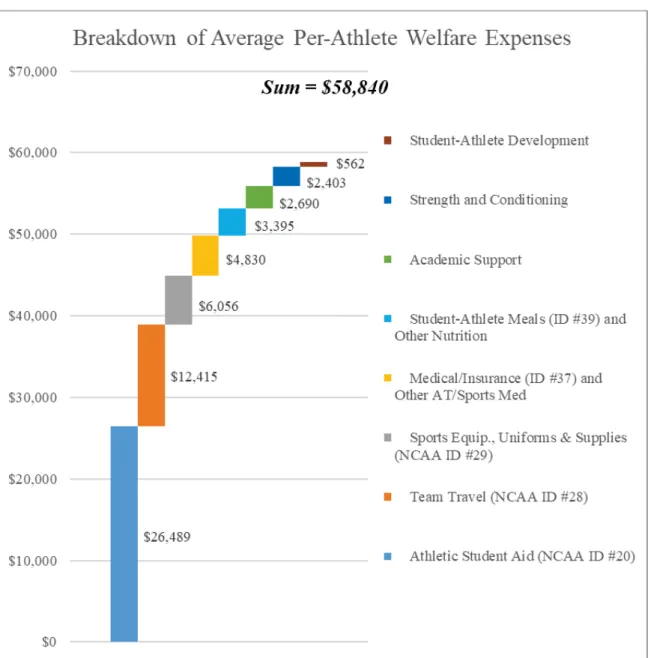
Athletic Student Aid (ID #20) 21 $13,401,893 $3,319,919 $26,489
Team Travel (ID #28) 21 $6,374,613 $1,838,040 $12,415
Sports Equip., Uniforms & Supplies (ID #29) 21 $3,065,765 $1,006,951 $6,056
Medical/Insur. (ID #37) and Other AT/Sports Med 21 $2,407,001 $456,793 $4,830
Student-Athlete Meals (ID #39) and Other Nutrition 21 $1,768,924 $907,050 $3,395
Academic Support 21 $1,368,057 $565,906 $2,690
Strength and Conditioning 21 $1,238,457 $395,749 $2,403
Student-Athlete Development 21 $295,841 $233,949 $562
Total of Welfare Expense Categories 21 $29,920,551 $5,437,643 $58,840
Total Athletics Expenses 21 $103,710,648 $21,708,835 $205,863
Welfare-Related Percentage of Total Expenses 21 29.5% 5.9%
Welfare-Related Expenses per Athlete 21 $58,840 $9,181
Non-Aid Welfare Expense Summary
Welfare Expenses Excluding Athletic Aid 21 $16,518,657 $3,724,745
Non-Aid Welfare Percentage of Total Expenses 21 16.1% 2.7%
Non-Aid Welfare Expenses per Athlete 21 $32,350 $6,447
Other
45
Figures 1 and 2 show these expenses by institution, for all welfare expense categories and for the same expense excluding aid. The institutions in both figures are ordered by their respective sum of expenses. To protect the institutions’ anonymity, the order of institutions may change by chart (i.e. institution #1 in Figure 1 is not necessarily the same as institution #1 in other figures).
46
Figure 2 – Categorical Non-Aid Welfare Expenses by Institution
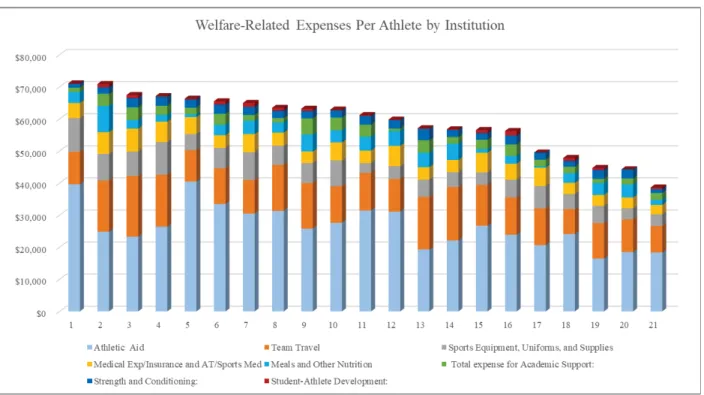
Welfare-Related Expenses per Athlete (RQ #2)
47
Figure 3 – Welfare-Related Expenses per Athlete by Institution
48
49
Figure 5 shows a breakdown of the average per-athlete expenses within each of the welfare expense categories.
50
Relationship between Athlete Count and Various Spending Metrics (RQ #3)
Total spending across the defined welfare categories was positively correlated with total athletics expenses (r =.451), meaning welfare spending was higher in institutions that spent more overall, but total athletics expense was inversely correlated to the welfare percentage of the total (r = -.573), meaning that institutions that have more expenses (i.e. generate more revenue) spend a lower percentage of their budget on these welfare categories. Presumably, as institutions generate more revenue, they increase welfare spending but less than proportionately to the previous welfare percentage, resulting in a lower welfare spending percentage. Figure 6a shows these expenses, ranked by total expenses, on the same axis, while Figure 6b shows these same expenses on a separate axis to better illustrate the relationship between both. Figure 7 uses a dual axis to show the inverse relationship between total expenses and the welfare percentage of total expenses.
51
Figure 6b (Dual Axis) - Total Welfare-Related Expenses by Total Athletics Expenses
52
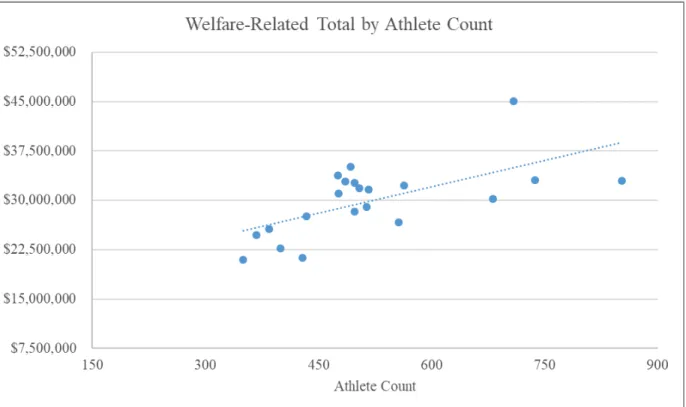
Figure 8 shows the welfare category total compared to the count of athletes at the institution (r = .632). The number of athletes on campus is clearly strongly associated with the welfare related expenses of the institution. Predictably, welfare expenses are higher at institutions with more athletes. However, the number of athletes was found to only have a small correlation with the welfare percentage of total athletics expenses (r = .241). Additionally, total athletics expenses had virtually no correlation to the welfare expenses per athlete (r = .033)
Figure 8 – Welfare-Related Expense Total by Athlete Count
53
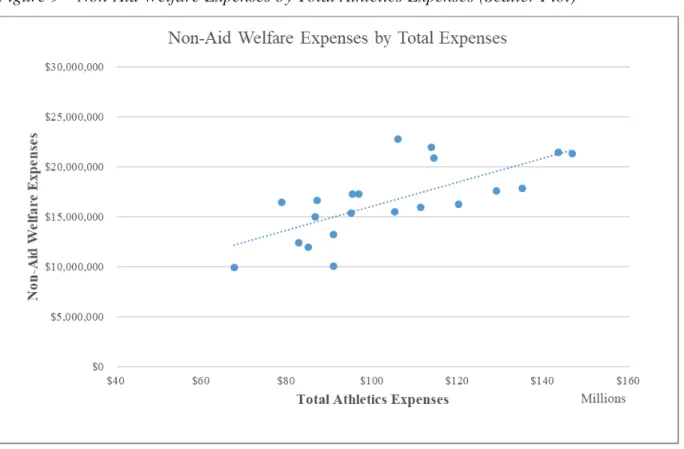
Figure 9 – Non-Aid Welfare Expenses by Total Athletics Expenses (Scatter Plot)
54 Predictive Spending Models
Two regression models were tested to see how institutions spend on total welfare-related expenses (Table 2) and on total non-aid welfare expenses (Table 3), based on two independent variables: the number of athletes and the institution’s total athletics expenses (revenues). Both models imply a base infrastructure spending level from the intercept, a marginal expense per athlete, and an additional amount of spending based on the total athletics expenses (resource capacity) of the institution. The welfare spending model excluding athletic aid (Table 3) was stronger, explaining nearly 63% of the variance in non-aid (more discretionary) welfare spending from those two independent variables (p = <.001). This model estimates that the average Power 5 institution spends about $341,386 on a base welfare infrastructure of support services (p = .910), another $11,172 per athlete (p = .02), and then another 10% of its total athletics budget (p =.001) on these welfare-related categories excluding scholarships.