Comparing the effectiveness of a
crowdsourced video and a social
marketing video in promoting condom
use among Chinese men who have sex
with men: a study protocol
Chuncheng Liu,1Jessica Mao,1Terrence Wong,1Weiming Tang,1Lai Sze Tso,1 Songyuan Tang,1Ye Zhang,1,2Wei Zhang,1Yilu Qin,1Zihuang Chen,3Wei Ma,4 Dianming Kang,5Haochu Li,1,4Meizhen Liao,5Katie Mollan,6Michael Hudgens,6 Barry Bayus,6Shujie Huang,2Bin Yang,2Chongyi Wei,7Joseph D Tucker1
To cite:Liu C, Mao J, Wong T,et al. Comparing the effectiveness of a
crowdsourced video and a social marketing video in promoting condom use among Chinese men who have sex with men: a study protocol.BMJ Open2016;6: e010755. doi:10.1136/ bmjopen-2015-010755
▸ Prepublication history and additional material is available. To view please visit the journal (http://dx.doi.org/ 10.1136/bmjopen-2015-010755).
CL, JM and TW contributed equally.
Received 15 December 2015 Revised 4 May 2016 Accepted 1 June 2016
For numbered affiliations see end of article.
Correspondence to Joseph D Tucker; jdtucker@ med.unc.edu
ABSTRACT
Introduction:Crowdsourcing has been used to spur innovation and increase community engagement in public health programmes. Crowdsourcing is the process of giving individual tasks to a large group, often involving open contests and enabled through multisectoral partnerships. Here we describe one crowdsourced video intervention in which a video promoting condom use is produced through an open contest. The aim of this study is to determine whether a crowdsourced intervention is as effective as a social marketing intervention in promoting condom use among high-risk men who have sex with men (MSM) and transgender male-to-female (TG) in China. Method:We evaluate videos developed by crowdsourcing and social marketing. The crowdsourcing contest involved an open call for videos. Entries were judged on capacity to promote condom use, to be shareable or‘go viral’and to give value to the individual. 1170 participants will be recruited for the randomised controlled trial. Participants need to be MSM age 16 and over who have had condomless anal sex in the last 3 months. Recruitment will be through an online banner ad on a popular MSM web page and other social media platforms. After completing an initial survey, participants will be randomly assigned to view either the social marketing video or the crowdsourcing video. Follow-up surveys will be completed at 3 weeks and 3 months after initial intervention to evaluate condomless sex and related secondary outcomes. Secondary outcomes include condom social norms, condom negotiation, condom self-efficacy, HIV/syphilis testing, frequency of sex acts and incremental cost. Ethics and dissemination:Approval was obtained from the ethical review boards of the Guangdong Provincial Center for Skin Diseases and STI Control, UNC and UCSF. The results of this trial will be made available through publication in peer-reviewed journals. Trial registration number:NCT02516930.
INTRODUCTION Male sexual health
Male condoms have long been recognised as an effective method for reducing the risk of HIV and other sexually transmitted diseases (STDs),1 2 but men who have sex with men (MSM) infrequently use condoms in China.3–6 The resulting high incidence of HIV and STDs among MSM suggests the need for novel health promotion campaigns. One sys-tematic review7 and one literature review among MSM8 demonstrate that social mar-keting campaigns are effective in promoting condom use, but the persistence of these behavioural changes over time is unclear. We propose that crowdsourcing may substantially improve on existing methods for developing condom promotion campaigns.
Crowdsourcing
Crowdsourcing is the process of giving indi-vidual tasks to a large group, often involving open contests and enabled through multisec-toral partnerships. While the process origi-nated in the private sector,9 intended to aid
Strengths and limitations of this study
▪ This will be one of the few randomised con-trolled trials evaluating crowdsourcing.
▪ The use of a large men who have sex with men (MSM) platform will allow us to reach a large number of MSM who do not disclose their sexual orientation to doctors or others.
research, development and dissemination, it has since been widely adopted. In 2010, the Executive Office of the President of the USA urged federal agencies to use crowdsourcing as a method to develop innovative approaches to governmental initiatives.10 A crowdsour-cing method differs from a social marketing method in several ways.11 Crowdsourcing is a bottom-up approach, using the community for idea generation through imple-mentation rather than relying on the expertise of public health experts. This ensures a higher degree of commu-nity engagement than approaches using social market-ing do, which tends to be a top-down approach. Crowdsourcing promotes innovation because it removes cognitivefixation, in which innovation is hampered due to new ideas being strongly influenced by prior exam-ples.12–16By engaging more people with less experience, this phenomenon is avoidable and allows for a more cre-ative process.17Our team has previously used crowdsour-cing successfully to develop an effective HIV testing promotion video and images promoting sexual health.18
OBJECTIVES
Aims and hypotheses
Specific aim 1: To compare the effect of a crowdsourced 1 min video to a social marketing 1 min video in pro-moting condom use among MSM and transgender male-to-female (TG) in China. This will be evaluated using data from follow-up surveys at 3 weeks and 3 months postvideo.
Hypothesis 1: Crowdsourced videos are not inferior to social marketing videos to promote condom use among MSM and TG in China.
Specific aim 2: To compare the cost of using crowdsour-cing compared to social marketing methods for develop-ing short videos focused on promotdevelop-ing condom use among MSM and TG individuals in China.
Hypothesis 2:A crowdsourced video is cost saving com-pared to a social marketing video for promoting condom use.
Specific aim 3: To compare the effect of a crowdsourced 1 min video to a social marketing 1 min video in chan-ging condom use self-efficacy and self-reported behav-iour among MSM and TG individuals in China.
Hypothesis 3: Crowdsourced videos are not inferior to social marketing videos in changing condom use self-efficacy and self-reported behaviour among MSM and TG in China.
METHODS Trial design
This study will be a pragmatic, non-inferiority,
rando-mised controlled trial comparing two groups—MSM
who watch a crowdsourced video and MSM who watch a social marketing video. Allocation to each arm will be carried out with a 1:1 ratio using a computer-based algo-rithm. The study is projected to run from November 2015 to February 2016.
Setting
This study survey will be made available to MSM across China through a popular online portal, Danlan and gay mobile dating app, Blued. Danlan.com is an online gay community that allows MSM to connect with each other for relationships, events and communication. The website is maintained by a private corporation, Danlan, which also developed the for-profit app Blued. Blued has become very popular among the MSM population, recently reaching 15 million users.19User personal infor-mation is protected and secure. Studies have shown that the internet has become a popular method for MSM to find partners, with a reported 28.3–88.4% of MSM using the internet to seek sexual partners.20 While internet-based interventions have yet to be widely dis-persed in mainland China, early studies show that such e-technology-based approaches would be well received.21
Recruitment
Participants will be recruited using a banner link on a popular MSM app ‘Blued’ (Danlan, Beijing, China), as well as through announcements sent via Danlan’s social media (Weibo, a microblogging platform; WeChat, a messaging platform and QQ, a messaging platform). Blued is China’s most popular social networking mobile application among MSM. Blued has 15 million followers with 24% (3.6 million people) daily activity rate.19 Danlan has over 17 000 followers on social media plat-form Weibo and forwards news via WeChat and QQ to over 429 000 followers.22
Eligibility
The survey is voluntary, and to be eligible, participants must state that they were born biologically man, had anal sex with men at least once during their lifetime, have had condomless anal/vaginal sex in the past 3 months, are at least 16 years of age and able to com-plete an online written survey in Chinese. All partici-pants must agree to an online informed consent and provide their cell mobile number. Participants who do not meet these criteria will not be allowed to proceed with the survey.
Formative work
included in thefinal analysis. The purpose of this exten-sive formative research is to ensure that the online survey is simple and easy to complete. The CONSORT-EHEALTH checklist for online surveys23 will be used to ensure completeness. The online survey will be created using Qualtrics Survey Software (Qualtrics, Provo, Utah, USA), and the videos will be hosted on Tencent Video (Tencent, Shenzhen, China).
Interventions
The development of the crowdsourcing video was publi-cised via open contest. We posted a public call on social media platforms (Weibo, WeChat) for videos promoting condom use awareness. For further promotion, we hosted in-person events at several different college cam-puses in Guangzhou, China, and worked with local community-based organisations to publicise the contest. In-person events included didactic sessions, interactive feedback sessions and community-driven events. Ten judges, including community health leaders, doctors, business leaders and researchers, evaluated the videos. Each judge scored the video entries on a scale of 1–10 (10 the highest score), and a single winner was identi-fied. The winning video will be included in the survey as the intervention arm of the randomised control trial (RCT). The 1 min video depicts a group of men dressed as cartoon villains attempting and failing to break down a wall, followed by an image of condoms. Our team will delay public announcement of the contest winner to allow time for adequate intervention implementation and comparison. The winning video will be publicly announced 2 weeks after the intervention is evaluated using the 3-month follow-up survey.
The social marketing video was commissioned from a working group in Jinan. This 1 min video contains audio of two men about to engage in intercourse, but stopping to discuss condom use and sexual health as a symbol of love. The script of the video was written by experts in San Francisco and modified by experts and the gay com-munity in Jinan and Qingdao. The video was shot by an advertising company based in Jinan.
Data collection
A survey will be developed using the Qualtrics survey tool. Participants will answer 150 questions on sociodemographic information, sexual behaviour, social norms, condom self-efficacy, HIV testing and community engagement. At the end of the survey, participants will be randomly assigned to one of two intervention arms, the crowdsourcing video or social marketing video, and will view the appropriate video. Participants will not be informed of the video options on randomisation and will not see the alternate intervention video. Participants will provide mobile telephone numbers and will receive text message reminders 3 weeks after initial survey completion to complete the 3-week follow-up survey. After completion of the 3-week survey, participants will be compensated for the first portion of the study (about US $15.87). Three months after completion of the initial
survey, participants will again receive a mobile telephone reminder to complete the 3-month survey. After comple-tion, participants will receive the second portion of their compensation (about US$7.93).
Participants will register for our survey using a mobile number. Following completion of data collection, data entries will be screened for duplicate mobile numbers, and the second entry will be excluded. Entries with invalid mobile numbers will also be excluded.
A data monitoring committee will not be required as this study employs low risk behavioural interventions. All partici-pants will provide consent prior to taking part in the study.
Measures
Data from survey items on sociodemographics and sexual behaviours will be collected using standardised survey instruments immediately before video watching, at 3 weeks after video watching and at 3 months after video watching. Sociodemographic characteristics include participants’ age, place of residence, highest level of education completed, annual income, marital status, sexual orientation and sexual orientation disclosure. Behavioural variables include number of sex acts in the past 3 weeks, condomless sex with men, condomless sex with women, condom self-efficacy and other secondary outcomes (see online supplementaryfile 1).
OUTCOMES Primary outcomes
The primary outcome will be any condomless vaginal or anal sex (with any sex partner) among MSM and TG indi-viduals following the video intervention. A participant is counted as having had condomless sex if they partici-pated in any act of sexual intercourse (vaginal or anal) that has taken place without use of a condom. Using a postintervention survey, participants will be asked with what frequency they have used condoms since watching the video: all, most, some or none of the time (see online supplementary file 2). The 3-week follow-up survey will ask about the 3 weeks following the intervention, and the 3-month follow-up will cover the 3 months following the intervention. Individuals who have not had sex in the interval will be classified as having no condomless sex.
Secondary outcomes
▸ Postintervention sex acts ▸ Condom use social norms ▸ Condom self-efficacy
▸ Condom use negotiation
▸ HIV testing and self-testing ▸ Syphilis testing and self-testing
More detailed explanations of secondary outcomes can be found in online supplementaryfile 1.
Sample size calculation
Sample size for this non-inferiority trial was determined assuming an equal probability of reporting condomless sex in the crowdsourced video and social marketing video arms. Assuming a 50% probability of condomless sex in each arm, a one-sided significance level (α) of 2.5%, a non-inferiority limit of 10% and loss to follow-up of 10%, a total sample size of 1170 individuals was required (585 in each arm) to have 90% power (1−β). The sample size was calculated using the formula:24
n ¼ f (a; b) [ps(1 ps) pe (1 pe)] (ps pe d)2
where ps and pe are the true probabilities of reporting condomless sex in the social marketing video (standard)
and crowdsourced video (experimental) intervention groups, respectively, d is the non-inferiority limit and f(α,β)=(Φ−1(1−α)+Φ−1(1−β))2, where Φ denotes the cumulative distribution function of the standard normal distribution. More information on sample size calcula-tion can be found intable 2.
Randomisation and allocation
Participants will be randomly assigned to one of the two intervention videos using an electronic randomiser tool available through Qualtrics. Randomisation will occur independently of any other data collected, with partici-pants allocated in a 1:1 ratio to one of the two arms. Participants will not be informed of which video (crowd-sourcing or social marketing) they are assigned to.
DATA ANALYSIS Primary analysis
The primary analysis will evaluate the non-inferiority hypothesis comparing the two interventions, as well as
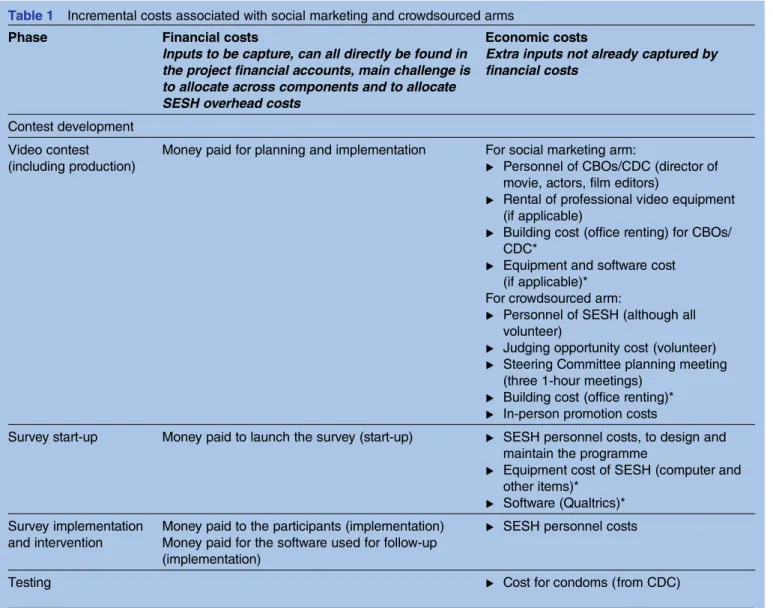
Table 1 Incremental costs associated with social marketing and crowdsourced arms
Phase Financial costs
Inputs to be capture, can all directly be found in the project financial accounts, main challenge is to allocate across components and to allocate SESH overhead costs
Economic costs
Extra inputs not already captured by financial costs
Contest development
Video contest (including production)
Money paid for planning and implementation For social marketing arm:
▸ Personnel of CBOs/CDC (director of movie, actors, film editors)
▸ Rental of professional video equipment (if applicable)
▸ Building cost (office renting) for CBOs/ CDC*
▸ Equipment and software cost (if applicable)*
For crowdsourced arm:
▸ Personnel of SESH (although all volunteer)
▸ Judging opportunity cost (volunteer) ▸ Steering Committee planning meeting
(three 1-hour meetings) ▸ Building cost (office renting)* ▸ In-person promotion costs
Survey start-up Money paid to launch the survey (start-up) ▸ SESH personnel costs, to design and maintain the programme
▸ Equipment cost of SESH (computer and other items)*
▸ Software (Qualtrics)* Survey implementation
and intervention
Money paid to the participants (implementation) Money paid for the software used for follow-up (implementation)
▸ SESH personnel costs
Testing ▸ Cost for condoms (from CDC)
*The cost will be annualised and we will calculate a proportion of the cost to account for items only being used the study time frame. The key idea is that some of these phases are like capital goods, where they only need to be performed once but have benefits for longer (thus requiring annualisation of costs), while the implementation phase has a life only as long as the survey is running.
the superiority hypothesis. The difference in propor-tions having condomless sex (crowdsourced–social marketing) will be computed, with a corresponding two-sided 95% Wald CI. The crowdsourced intervention will be declared non-inferior to social marketing if the upper confidence limit is below 10%. If the upper confi -dence limit is below 0%, then the crowdsourced inter-vention will be declared superior to social marketing. The recruitment methods, survey instrument and video length will be the same between in the two study arms.
Effect modification analysis
Effect modification analyses will be under taken based on prior exposure to the condom promotion video viewed by the participant to assess whether this exposure modified the effect of video intervention arm on the primary condom use outcome. A linear probability model will be used to evaluate effect modification by testing for an interaction between intervention and prior video watching.
Missing data plan
If the primary outcome is missing for <11% of participants, then the primary analysis will use a complete-case approach. If the primary outcome is missing for 11 to <20% of participants, then a sensitivity analysis using mul-tiple imputation based on the PROC MI procedure in SAS (Cary, North Carolina, USA) will also be used. If the primary outcome is missing for≥20% of participants, then multiple imputation will be used in the primary analysis.
Secondary analysis
Comparison will be made between the two trial arms with respect to each of the secondary outcomes enumerated above and in online supplementaryfile 1. Non-inferiority comparisons will also be made between study arms for the subset of individuals who reported sex during the follow-up period (3 weeks and 3 months, respectively),
and causal inference methods will be employed to account for postrandomisation selection bias.
ETHICS AND DISSEMINATION Ethical review
IRB approval was obtained from the Guangdong Provincial Center for Skin Diseases and STI Control, University of North Carolina at Chapel Hill and University of California San Francisco.
Informed consent
All participants will be provided an online consent form immediately prior to survey initiation. This online informed consent describes personal data to be col-lected, explaining that data will be used for research purposes. Contact information is provided to partici-pants to address further questions. Participartici-pants will be required to sign the consent and provide a mobile tele-phone number as agreement to proceed with the survey.
Confidentiality
Data will be collected through the Qualtrics survey tool (Provo, Utah, USA). Data will be transmitted securely using Secure Sockets Layer (SSL) (Transport Layer Security (TLS)) 128 bit encryption across the internet (HTTP) and located in a secured Qualtrics server in the USA. The server is configured with redundant hard drive array to ensure reliability. Access to the data will be password protected within the server’s firewall. Survey responses will be kept separately from participants’ email addresses; the two files will be linked with a non-descript, unique, randomly generated identifier.
Participants will provide mobile telephone numbers, which will be kept separately from data containing answers to survey items. These telephone numbers will be accessible only to two researchers solely for the means of sending reminders, follow-up surveys and mobile top-up incentives.
Dissemination
The results of this study will be prepared and submitted for publication in a peer-reviewed journal. Study fi nd-ings will also be shared through conference abstracts and presentations, workshops, and to our partnering organisations.
Author affiliations
1University of North Carolina Chapel Hill Project-China, Guangzhou, China 2Guangdong Provincial Center for Skin Diseases and Sexually Transmitted
Infections Control, Guangzhou, China
3Danlan Welfare, Guangzhou, China
4Shandong University School of Public Health, Jinan, China 5Shandong Center for Disease Prevention and Control, Jinan, China 6University of North Carolina at Chapel Hill, Chapel Hill, North Carolina, USA 7University of California, San Francisco, San Francisco, California, USA
Acknowledgements The authors thank the staff at the Guangdong Provincial Center for Skin Diseases and STI Control, University of North Carolina at
Table 2 Sample size for 90% power and one-sided 0.025
significance level
Probability of primary outcome in the control group*
Probability of primary outcome in the experimental group*
N
evaluable per arm
Total sample size for RCT
0.50 0.50 526 1170
0.45 0.45 521 1158
0.40 0.40 505 1124
0.35 0.35 479 1066
0.30 0.30 442 984
*On the basis of the pilot study, 9 of 25 participants (95% CI: 18% to 57%) had condomless sex at least once in the 3-week period immediately following the video intervention. According to a similar RCT we conducted in 2014, the loss to follow-up rate was about 10%; adjustment for loss to follow-up required (N evaluable per arm)/(1–0.1) to be enrolled. A non-inferiority limit of 0.1 was used for all calculations.
Chapel Hill, University of California San Francisco, London School of Hygiene and Tropical Medicine, Shandong University and Shandong Provincial Centers for Disease Control and Prevention. They thank John Best for his help in developing the study. They also thank Lisa Hightow-Weidman, Rosanna Peeling, Fern Terris-Prestholt, Peter Vickerman, Kate Mitchell and Baoli Ma. They especially thank all those who contributed to this contest and those who served as judges.
Contributors CW and JDT conceived the study, CL, JM, TW, WT, LST, ST, WZ, YQ, KM, MH, CW and JDT contributed to study design. WT, ST, KM and MH helped with statistical support and end points. CW, JM and TW designed data collection tools. JDT, WT, CL and JM drafted and revised the manuscript. All authors contributed critical intellectual input and approved the final manuscript.
Funding The protocol reported in this publication was supported by the National Institutes of Health (NIAID 1R01AI114310-01), UNC-South China STD Research Training Center (FIC 1D43TW009532-01), UNC Center for AIDS Research (NIAID 5P30AI050410-13), UCSF Center for AIDS Research (NIAID P30 AI027763), NIMH (R00MH093201), UJMT Fogarty Fellowship (FIC R25TW0093), Doris Duke International Clinical Research Fellowship and SESH Global (http://www.seshglobal.org). Administrative assistance was obtained from the Guangdong Provincial Center for Skin Diseases and STI Control, UNC Chapel Hill and UNC Project-China in Guangzhou, China. Disclaimer The funding source had no role in the design of the study and will not have any role during its execution, analyses, interpretation of data or decision to submit results.
Competing interests None declared. Patient consent Obtained.
Ethics approval Ethical approval has been obtained from the ethical review boards of the Guangdong Provincial Center for Skin Diseases and STI control, the University of North Carolina at Chapel Hill and the University of California at San Francisco.
Provenance and peer review Not commissioned; externally peer reviewed. Open Access This is an Open Access article distributed in accordance with the Creative Commons Attribution Non Commercial (CC BY-NC 4.0) license, which permits others to distribute, remix, adapt, build upon this work non-commercially, and license their derivative works on different terms, provided the original work is properly cited and the use is non-commercial. See: http:// creativecommons.org/licenses/by-nc/4.0/
REFERENCES
1. Weller S, Davis K. Condom effectiveness in reducing heterosexual HIV transmission.Cochrane Database Syst Rev2001;(3): CD003255.
2. Warner L, Stone KM, Macaluso M,et al. Condom use and risk of gonorrhea and Chlamydia: a systematic review of design and measurement factors assessed in epidemiologic studies.Sex Transm Dis2006;33:36–51.
3. Ministry of Health People’s Republic of China. 2012 China AIDS response progress report. Beijing, 2012.
4. Guo Y, Li X, Song Y,et al. Bisexual behavior among Chinese young migrant men who have sex with men: implications for HIV prevention and intervention.AIDS Care2012;24:451–8.
5. Wei C, Guadamuz TE, Stall R,et al. STD prevalence, risky sexual behaviors, and sex with women in a national sample of Chinese men who have sex with men.Am J Public Health 2009;99:1978–81.
6. Kong TS, Laidler KJ, Pang H. Relationship type, condom use and HIV/AIDS risks among men who have sex with men in six Chinese cities.AIDS Care2012;24:517–28.
7. Sweat MD, Denison J, Kennedy C,et al. Effects of condom social marketing on condom use in developing countries: a systematic review and meta-analysis, 1990–2010.Bull World Health Organ 2012;90:613–22A.
8. Neville S, Adams J, Holdershaw J. Social marketing campaigns that promote condom use among MSM: a literature review.Nurs Prax N Z2014;30:5–16.
9. Parvanta C, Roth Y, Keller H. Crowdsourcing 101: a few basics to make you the leader of the pack.Health Promot Pract2013;14:163. 10. Zients JD. Memorandum for the Heads of Executive Departments
and Agencies. Executive Office of the President. Washington, DC. 8 March 2010. https://www.whitehouse.gov/sites/default/files/omb/ assets/memoranda_2010/m10-11.pdf (accessed 22 Sept 2016). 11. Han L, Tang W, Best JM,et al. Crowdsourcing to spur first-time HIV
testing among men who have sex with men and transgender individuals in China: a non-inferiority pragmatic randomized controlled trial.J Int AIDS Soc2015;18.
12. Ward T. Structured imagination: the role of conceptual structure in exemplar generation.Cogn Psychol1994;27:1–40.
13. Smith SM, Ward TB, Schumacher JS. Constraining effects of examples in a creative generation task.Mem Cognit1993;21:837–45. 14. Paulus PB, Nijstad BA.Group creativity: innovation through
collaboration. New York: Oxford University Press; 2003:346. 15. Jansson D, Smith S. Design fixation.Design Stud1991;12:3–11. 16. Howe J. The rise of crowdsourcing.Wired2006.
17. Bayus BL. Crowdsourcing new product ideas over time: an analysis of the Dell IdeaStorm Community.Manag Sci 2013;59:226–44.
18. Zhang Y, Kim JA, Liu F,et al. Creative contributory contests to spur innovation in sexual health: 2 cases and a guide for implementation. Sex Transm Dis2015;42:625–8.
19. SinaAsia. [Chinese Gay App blued has over 15,000,000 users] 2014 [cited 11 November 2015]. http://tech.sina.com.cn/i/2014-12-01/ 23499842210.shtml
20. Guo Y, Li X, Stanton B. HIV-related behavioral studies of men who have sex with men in China: a systematic review and
recommendations for future research.AIDS Behav2011;15:521–34. 21. Nehl EJ, He N, Wang X,et al. Feasibility and willingness of using
e-technologies for HIV prevention and research targeting Chinese MSM.AIDS Care2013;25:926–30.
22. Weibo. Weibo 2015 [cited 11 November 2015]. http://weibo.com/ danlanorg
23. Eysenbach G, CONSORT-EHEALTH Group.
CONSORT-EHEALTH: improving and standardizing evaluation reports of Web-based and mobile health interventions.J Med Internet Res2011;13:e126.