Policies. A Master’s Paper for the M.S. in L.S degree. April, 2009. 38 pages. Advisor: Evelyn Daniel
This study examines news articles and anti-discrimination ordinances that affect Lesbian, Gay, Bisexual, Trans, & Questioning (LGBTQ) communities in the four largest counties from five Southeastern States: Florida, Georgia, North Carolina, South Carolina and Virginia. The possible impact of such policies on the collection of non-fiction young adult materials in the public libraries in those counties is explored. The holdings of each county are compared to a list of 23 titles compiled from literary award winners selected from the time period 1996-2003 using the Lambda Literary Foundation Awards, the American Library Association Stonewall Awards, and an American Library Association GLBT Roundtable Bibliography. Findings suggest that there is no relationship between anti-discrimination ordinances and the level of collecting LGBTQ material. Collections in the largest cities were apt to follow American Library Association guidelines for non-discriminatory collection development.
Headings:
Gay Literature –- Bibliography
Gay Literature -- Collections
by:
Kynita Stringer-Stanback
A Master’s paper submitted to the faculty of the School of Information and Library Science of the University of North Carolina at Chapel Hill
in partial fulfillment of the requirements for the degree of Master of Science in
Library Science.
Chapel Hill, North Carolina April 2009
Approved by
AKNOWLEDGEMENTS
First I must thank the Creator for giving me the ability and opportunity to create and write. Second I’d like to thank my amazing family and community of friends for their support, love, friendship and encouragement. Mom, thank you for support, fortitude, love and unwavering confidence. Daddy Cal, thank you for your willingness to impart
TABLE OF CONTENTS
INTRODUCTION 6
LITERATURE REVIEW 8
METHODOLOGY 11
ORDINANCE BREAKDOWN 13
DATA REVIEW 14
CONCLUSION 28
BIBLIOGRAPHY 31
APPENDIX A: LIST OF TITLES 33
APPENDIX B: NEWSBANK ARTICLE LIST 35
LIST OF FIGURES
FIG. 1. Florida—Titles Available by County 15
FIG. 2. Florida—Collection Rates per County 16
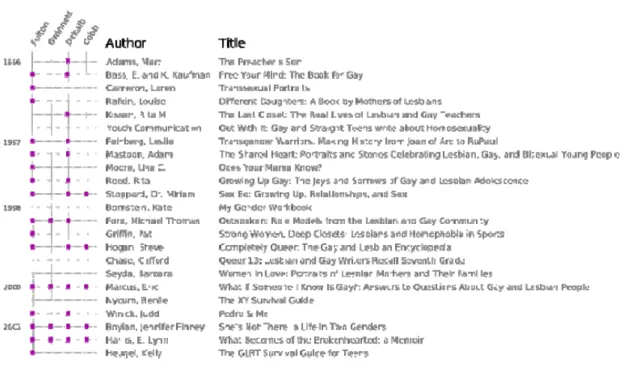
FIG. 3. Georgia—Titles Available by County 19
FIG. 4. Georgia—Collection Rates per County 20
FIG. 5. North Carolina—Titles Available by County 22
FIG. 6. North Carolina—Collection Rates per County 23
FIG. 7. South Carolina—Title Available by County 24
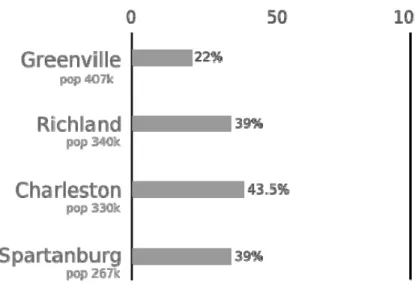
FIG. 8. South Carolina—Collection Rates per County 25
FIG. 9. Virginia—Collection Rates per County 26
Introduction
The core values of librarians are expressed in the American Library Association Library Bill of Rights, two of which are:
1) Library resources should be provided for the interest, information, and enlightenment of all people of the community the library serves. Materials should not be excluded because of the origin, background, or views of those contributing to their creation.
2) A person’s right to use a library should not be denied or abridged because of origin, age, background, or views.
According to the American Library Association (ALA) libraries provide
information and that information should not be censored because of age or viewpoint. Theoretically, libraries are places of enlightenment regardless of perspective; however there are marginalized groups that go underserved—one of whom is Lesbian, Gay, Bisexual, Transgender and Questioning (LGBTQ) youth. In the Southeast, a young adult may be hard pressed to find accurate, supportive, and positive non-fiction literature. The purpose of this study is to ascertain whether or not county level LGBTQ
anti-discrimination ordinances impact the collection of 23 Young Adult non-fiction titles over a five-year span (Appendix A). Two hypotheses are put forth:
Literature Review
According to Martin, the materials most requested by young adult LGBTQ communities were, “real stories by real people” (2007, 22). He goes on to report that 30% of teens could not find the LGBTQ related materials they wanted and only 20% felt safe from harassment in their local public libraries (23). Without creating welcoming environments and relevant collections, young adult LGBTQ communities will continue to be underserved. One way to alleviate this discrepancy is to provide more materials for young adult LGBTQ readers. Many studies have examined fiction collections of public libraries, but the #1 priority of LGBTQ teens were “real stories by real people.” By providing more non-fiction materials to young adult LGBTQ readers in the south, public libraries will continue to promote the tenets of the public library as an institution that is open for the use by all members of the community with resources relevant to their information needs.
The article, “Library and Information Science Education: Preparing Librarians for a Multicultural Society” championed the importance of multicultural education for all librarians so that newly trained professionals would be prepared to serve diverse multicultural communities (Gollop, 1999). Dr Gollop states, “Diversity across the
distribution is to even approach an acceptable ratio of diversity” (386). The issue of recruitment and retention of students representing the diverse multicultural communities in society is tantamount to providing relevant materials and service to everyone.
Technology and information continue to shrink the size of our world, it is important that professionals are able to communicate and work with diverse groups of people. The business world knows multiculturalism and diversity means good business. Pasi
Raatikainen argues that diversity offers businesses and organizations advantages over the competition. He says, “Very often competitive advantages are listed as human
resources, processes, products financial means, knowledge—multiculturalism has been seen to be more and more advantageous”(85). By training and educating diverse multicultural communities the library and information field will stand to benefit and grow. Challenges face southern libraries in urban and rural areas especially in young adult LGBTQ non-fiction collections. Those libraries that adopt fresh perspectives and new ideas will prosper. Institutions without diverse multicultural resources may be unable to sense the pulse of an ever-changing world. “If everybody in the room is the same, you’ll have a lot fewer arguments and a lot worse answers” (86). Diversity may not be an easy goal to achieve, but well worth the effort. Every tax-paying member of a public library system is entitled to service even if that person is a 16 year-old cashier at a local grocery store questioning his/her sexuality or gender identity. Not only do
professionals need training to deal with diverse communities, public libraries should provide materials for the multicultural communities they serve.
interests of LGBTQ teens, a small study has been designed to examine the hypotheses stated earlier. The following terms will be used throughout this study:
Collection: For the purposes of this study, only non-fiction appropriate for the young adult reader is included in the term “collection.”
Gender: In this study, distinct from biological sex; gender is a person’s social and cultural expression of masculinity, femininity, or some combination thereof. A person’s gender identity/expression may or may not match his/her biological sex.
LGBTQ: an acronym for lesbians (females who are attracted to other females emotionally and erotically) gay males (males who are attracted to other males
emotionally and erotically), bisexuals (who may be attracted to both males and females), trans young adults (whose biological sex is different from their physical, emotional and psychological expression of sex) or questioning young adults (who have questions and are seeking more information about gender, gender identity and sexuality.
Methodology
Twenty-three titles were drawn from past Lambda Literary Foundation Awards, ALA Stonewall Awards as well as titles suggested from an ALA GLBTQ Round Table bibliography. All of the titles from the ALA GLBTQ Round Table bibliography were chosen because they were deemed to be age appropriate. Five years were sampled 1996-1998, 2000, and 2003. These years were chosen because several counties in the Southeast began the process to implement countywide ordinances protecting LGBTQ communities. According to the Human Rights Campaign (HRC) website, in Florida, Georgia, North Carolina, South Carolina, and Virginia, it is no illegal to discriminate against someone based on their sexual orientation, and with the of exception certain counties in Florida, gender identity. There are no federal laws against employment discrimination based on sexual orientation or gender identity, and individual states decide whether or not to impart these rights to their citizens. In the Southeast decisions are not on the state level but on the individual county level. That is why counties were chosen for this study.
holdings. When copies of the titles could not be located and a “No Item Information” note was attached to the record, the library was given credit for possessing the title because the book had been cataloged.
To assess whether or not counties have anti-discrimination ordinances, articles from January 1, 1999-December 31, 2008 were reviewed from the NewsBank Database. Over 600 articles were searched using the NewsBank Database where newspapers in Florida, Georgia, North Carolina, South Carolina, and Virginia were examined for the keywords: anti-discrimination, sexual orientation, gender identity and ordinance. Initially, eighty-nine articles were discovered. Articles pertaining to same sex marriage, civil unions and adoption were excluded, whereas articles exploring anti-bullying and discrimination on school grounds were included. Articles that mentioned anti-discrimination policies for city and county employees and same-sex partner benefits were listed as well. Thirty-three articles were relevant (Appendix B). County websites and national organizations that lobby for LGBTQ Civil Rights were used to confirm news reports. H1 was
Ordinance Breakdown
Of the 20 counties, only five (25%) had ordinances that protected LGBTQ
communities. The counties that had passed anti-discrimination ordinances were: Broward County, FL., Guilford County, N.C., Mecklenburg County N.C., Miami-Dade County, FL., and Palm Beach County, FL. The legislation however is not cut and dried. Atlanta (the city) but not Fulton County (where it is located) has an anti-discrimination
ordinance. Fairfax County has also started a public debate about protection for students at public schools.
The ordinances are limited in their scope and are not subject to state or federal law. For this reason, although it is unlawful to discriminate against someone in Miami-Dade County, FL., based on sexual orientation or gender identity with respect to employment, housing and bullying, an individual is not protected under the state laws of Florida. Not all ordinances afford the same protections. Although it is unlawful to discriminate against someone due to sexual orientation in the Guilford County, NC Public School System, a person may be fired from that public school system and/or get rejected when looking for housing based on his/her sexual orientation or gender identity. In
Data Review
In this section the results of the four county investigation for each state are discussed.
Florida
Miami-Dade, Broward, Palm Beach, and Hillsborough counties combined have 129 public library buildings and they serve a population of 6.6 million people. Florida has the most counties with anti-discrimination ordinances on the books. In Miami-Dade County, over 60% of the population was identified as Hispanic or Latino regardless of race, and were 20% identified as African-American. With a foreign-born population of 50%, and Miami-Dade County could be viewed as a Southeastern international community. Conversely, in Broward County, over 24% of the population is identified as African-American, 23% are identified as Hispanic or Latino regardless of race and 30% are identified as foreign born. In 2002 when the Save-Dade non-profit organization had to lay off its staff due to lack of funding, they recruited volunteers who came from all over the country to mobilize a campaign to stop the ballot measure that would have stripped the LGBTQ community of anti-discrimination protection. It worked. The ballot measure was defeated and the LGBTQ anti-discrimination policy of Miami-Dade County was
Beach County had passed anti-discrimination policies for schools as well as county employees; however it had the lowest percentage of YA LGBTQ non-fiction titles at 26%. Here the H1 hypothesis was not supported.
Fig. 1—Titles available by county.
Although Hillsborough County had not passed any anti-discrimination ordinances, the public library collection reflects a broad-minded community. Despite the fact that there were no county ordinances Hillsborough Public Library held 57% of the titles. It is interesting to note that Hillsborough and Palm Beach Counties are not as
demographically diverse as Miami-Dade and Broward Counties. Foreign-born
populations dropped to 14.6% and 21.2%, African-Americans were 12.4% and 15.6%, and Hispanics and Latinos regardless of race represented 21.8% and 16.7%, respectively.
states in the sample. Although a person may be sheltered from discrimination in Broward, Miami-Dade and Palm Beach counties, it is still very legal to discriminate against a person because of his/her sexual orientation and gender identity in the state of Florida.
Fig. 2—Collection rates per county.
Georgia
Fulton, Gwinnett, DeKalb, and Cobb represent the four largest counties in Georgia. Georgia had the second strongest statewide collection of LGBTQ materials with 42% of the listed titles. Whereas Fulton and DeKalb County Public Library systems collected 73% and 57% of the 23 titles, Gwinnett and Cobb public library systems collected 17.4% and 22% respectively. In 2007, Gwinnett County Public Library’s policy on Spanish language materials came under fire when Todd Douglas Quesada wrote, “It is antithetical to public librarianship as a profession to form a collection development policy that involves consciously alienating a portion of the served community”(43). Gwinnett County is not known for its desire to serve its multicultural community. The statewide data of 42% can be misleading because higher collection rates in urban and metropolitan counties weigh more heavily than the small percentages of owned materials in more rural counties. DeKalb and Fulton Counties are more diverse than both Gwinnett and Cobb Counties put together. None of the counties in Georgia have passed LGBTQ
anti-discrimination ordinances; however the city of Atlanta has begun to challenge county and state law by passing an ordinance to outlaw discrimination based on sexual orientation in 2003. When the city started to fine an exclusive country club $500 per day for a violation of the city ordinance--the club took the city to Superior Court and said the citywide anti-discrimination ordinance was unconstitutional (Galloway, 2007). Two years later legislation was passed in the Georgia State Legislature that blocked couples from
It is not illegal to discriminate against someone due to sexual orientation or gender identity in every part of Georgia, except for the city of Atlanta—although one may not suffer the consequences. A city ordinance does not trump state law and although Atlanta is the largest city in Fulton County and it did pass a citywide ordinance, it was not
enforced at the county level. Since the county did not recognize the anti-discrimination ordinance passed by Atlanta. Did the anti-discrimination ordinance influence the holdings of the public library or did the holdings of the public library influence the creation of anti-discrimination policy? What is evident is that Fulton County was comparable to Miami-Dade and Broward Counties with 73% of the 23 YA LGBTQ non-fiction titles. Did the diverse, metropolitan nature of Atlanta influence the holdings of Fulton County Public Library? It had the third highest percentage of the 20 counties examined. Dekalb County in Georgia, much like Hillsborough County in Florida offered a significant amount of LGBTQ YA non-fiction titles in spite of the fact that it did not pass any countywide anti-discrimination ordinances. What DeKalb demonstrated was the same as Hillsborough down to the percentage of LGBTQ non-fiction titles collected at 57%. The absence of anti-discrimination policies did not hinder the collection of LGBTQ YA non-fiction titles. Where DeKalb and Hillsborough diverged was in diversity.
Overwhelmingly the population identified as African-American at 54.1%, 16.4% as foreign born and 9.7% identified as Hispanic or Latino (regardless of race).
Fig. 3 Titles available by county.
Fig. 4—Collection rates per county.
In Georgia as in Florida the results are mixed and there is no support for a strong relationship between anti-discrimination ordinances and public library holdings of LGBTQ books for teens.
North Carolina
Mecklenburg County, Wake County, Guilford County and Forsyth County are the four largest counties in North Carolina. Combined their County Public Library Systems serve 2.3 million people with one public library per 38,333 people. Mecklenburg and Guilford counties have anti-discrimination countywide ordinances whereas Wake County and Forsyth County do not. Combined the statewide collection average of the 23
dedicated to securing equal rights and justice for lesbian, gay, bisexual and transgender (LGBT) people, the Mecklenburg County Commissioners added “sexual orientation” to its countywide non-discrimination policy in 2005. Therefore employees of Charlotte-Mecklenburg County cannot be discriminated against due to sexual orientation, race, color, sex, religion, national origin or age. In March of 2008 the Charlotte-Mecklenburg County school board approved an anti-bullying policy protecting LGBT students. Guilford County also approved an anti-bullying policy in 2007 that covered sexual orientation and gender identity in 2007.
Charlotte-Mecklenburg County Public Library System held 39% of the 23 LGBTQ YA non-fiction titles. Conversely, Guilford County Public Library System collected 30% of the 23 LGBTQ YA non-fiction titles.
Fig. 5—Titles by county.
Fig. 6—Collection rates per county.
In North Carolina as in Florida and Georgia, there does not appear to be a
relationship between what the public library collects and whether a county has LGBTQ anti-discrimination policies. What was interesting to note, was that among the four counties---the percentage of YA LGBTQ non-fiction titles selected in 2000 & 2003 was 75%. This suggests that all four began collecting more YA LGBTQ non-fiction titles after 2000. Based on the data, North Carolina had the most consistent percentage of collected titles. Overall it is not illegal to discriminate against LGBTQ communities in North Carolina.
South Carolina
branch within the four counties. None of the four counties have passed
anti-Fig. 7—Titles by county.
Fig. 8 Collection rates per county.
Although the city of Columbia, situated in Richland County has passed anti-discrimination policies, no countywide policy has been passed. The low rates of collection suggest that prior to 2000, the public libraries in the four largest counties of South Carolina did not collect titles from the 23 YA LGBTQ non-fiction books. Virginia
Fairfax County, Prince-William County, Chesterfield County, and Henrico County represent the four largest counties in Virginia. Virginia also has independent cities that are treated as counties; however, this study examined counties and although there were cities that proved to be larger than the counties, the integrity of the study relied on data from counties. Virginia has a law called the Dillon Rule (National League of Cities http://www.nlc.org/about_cities/cities_101/154.aspx). The Dillon Rule prohibits the
Legislature. This means that even if a county passed an anti-discrimination ordinance that included sexual orientation and gender identity/expression, it would not be official because the state of Virginia has not passed legislation prohibiting discrimination based on sexual orientation and gender identity/expression.
Fairfax, Prince-William, Chesterfield and Henrico have not passed any countywide anti-discrimination ordinances and therefore could not validate H1. Fairfax County Public Library owned 39% of the 23 YA LGBTQ Non-Fiction titles, Prince-William Public Library owned 26%, Chesterfield County Public Library owned 22%, and Henrico County Public Library owned 30% of the titles.
Fig.10—Titles by county.
Conclusion
The vast majority of the counties examined in this study do not have countywide anti-discrimination policies or ordinances. Only 25% of the counties examined held 50% or more of the YA LGBTQ non-fiction titles. There was no evidence to suggest a
correlation between countywide anti-discrimination policies and the titles collected by the public libraries. H1 was not validated.
Audre Lorde said, “I remember how being young and black and gay and lonely felt. A lot of it was fine…but a lot of it was purely hell. There were no mothers, no sisters, no heroes” (1982, 72). How many LGBTQ teens in South go to their public libraries
looking for stories that are germane to their lives? Are they more likely to feel welcome, or to suffer harassment? Will they be able to find relevant non-fiction titles in the local library stacks, or nothing at all?
Elfreda Chatman’s article, “The Impoverished Life-World of Outsiders” (1996) explored the world of information outsiders from a sociological perspective. She described
information outsiders as, “…somehow deviating from the collective standards” (pg 193). She argued that there are “information barriers” constructed by the dichotomy of
relevance. Information insiders who have the desire to protect their information (or culture or society) may in fact withhold information from one another. Secrecy, Chatman argues, propagates control. Information becomes guarded, protected and doled out (even among information insiders) on a “need to know basis.”
From this perspective, collectively, the public library systems of the four largest counties in Florida, Georgia, North Carolina, South Carolina, and Virginia have proven themselves to be information outsiders with respect to the Young Adult LGBTQ communities they serve. Only 40.4% of the Non-Fiction titles were collected. Where could Young Adult LGBTQ go to get accurate, positive, supportive non-fiction
materials? What culture of information has been created in southeast? Will Southeastern public libraries look to ALA Bill of Rights with respect to collecting YA LGBTQ non-fiction titles?
Overall, every single Southeastern public library collected more materials in 2000. The only title that was held by every single public library system was What Becomes of the Brokenhearted: A Memoir by E. Lynn Harris. This book is his autobiography and offers an honest perspective of being African-American and gay in the south. E. Lynn Harris is a New York Times Bestselling African-American author who is known for his fiction that depicts the lives of gay and bi-sexual African-American men.
Books will not make the Southeast less discriminatory against the LGBTQ community; however, “…it may help subvert the culture of silence…and offer a
Bibliography
American Library Association Council. Library Bill of Rights. Retrieved April 15, 2009 from ALA Office of Intellectual Freedom Website:
http://www.ala.org/ala/aboutala/offices/oif/statementspols/statementsif/librarybillri ghts.cfm
American Library Association Stonewall Book Awards. Retrieved March 15, 2009 from: http://www.ala.org/ala/mgrps/rts/glbtrt/stonewall/stonewallbook.cfm
Broward County, Florida. Retrieved April 27, 2009 from Broward County, Florida Website:
http://www.broward.org/civilrights/welcome.htm
Cazares, David. “Gay Rights Vote Has High Stakes Nationally - Miami-Dade Election Seen as Barometer." Sun Sentinel. September 1, 2002.
Chatman, Elfreda A. The Impoverished Life-world of Outsiders. Journal of the Society for Information Science. 47.93 (1996): 193-206.
Equality North Carolina. Retrieved April 23, 2009 from Equality North Carolina
Website:
http://equalitync.org/news1/20070316/
Galloway, Jim. “Hate Crimes: Debate on gays, lesbians, mires bill Despite wide support for a new law, Senate appears unable to decide whether to include sexual
orientation.” Atlanta Journal-Constitution. December 27, 2007.
Gollop, Claudia J. "Library and Information Science Education: Preparing Librarians for a Multicultural Society." College & Research Libraries. 60.4 (1999): 385-95. Human Rights Campaign Laws & Elections. Retrieved April 2, 2009.
http://www.hrc.org/laws_and_elections/index.htm
Jacobs, Sonji. “Bill Thwarts Atlanta Ordinance-City would be unable to fine club over denial of benefits to gay partners.” Atlanta Journal-Constitution. March 18, 2005. Lambda Literary Foundation. Lambda Literary Foundation Awards. Retrieved March 22,
2009:
http://www.lambdaliterary.org/index.html
1982.
Mann, Anthony. “Agency Back Gay Discrimination Ban.” Sun-Sentinel. December 12,
2002.
Martin, Hillias J., and James R. Murdock. Serving Lesbian, Gay, Bisexual, Transgender, and Questioning Teens: A How-to-Do-it Manual for Librarians. New York: Neal-Schuman Publishers, 2007.
National Association of Counties. NACO. Retrieved March 10, 2009 from:
http://www.naco.org/Template.cfm?Section=Find_a_County&Template=/cffiles/co unties/usamap.cfm
National League of Cities. NLC Cities 101. Retrieved April 29, 2009 from: http://www.nlc.org/about_cities/cities_101/154.aspx
Norton, Terry L., and Jonatha W. Vare. "Literature for Today's Gay and Lesbian Teens: Subverting the Culture of Silence." The English Journal 94.2 (2004): 65-9. Patrick, Kelly. “Dispute Grows on Gay Rights—Conservatives say County Didn’t Make
Them Aware of Plans for New Discrimination Rules.” Sun-Sentinel. December 5,
2002.
Quesada, Todd Douglas. “Spanish Spoken Here.” American Libraries.38.10 (2007): 42- 44.
Raatikainen, Pasi. “Contributions of Multiculturalism to the Competitive Advantage of an Organisation” Singapore Management Review. 24.1 (2002): 81-88
United States Census Bureau. American FactFinder. Retrieved March 15-April 24, 2009
from:
http://www.factfinder.census.gov/home/saff/main.html?_lang=en
Vega, Eppie. “Miami Beach OKs Partnership Registry—Law Gives Gay, Heterosexual Couples Rights. South Florida Sun-Sentinel. July 29, 2004.
APPENDIX A: LIST OF NON-FICTION TITLES
1996
Adams, Marc. The Preacher's Son. Window Books, 1996.
Bass, Ellen and Kate Kaufman. Free Your Mind: The Book for Gay, Lesbian and Bisexual Youth -AND Their Allies. Harper Perennial, 1996.
Cameron, Loren. Body Alchemy: Transsexual Portraits. Cleis Press, 1996.
Raflin, Louise ed. Different Daughters: A Book by Mothers of Lesbians. Cleis Press, 1996.
Kissen, Rita M. The Last Closet: The Real Lives of Lesbian and Gay Teachers. Heinneman, 1996.
Out With It: Gay and Straight Teens write about Homosexuality. Youth Communications. Paul Fell Cartoons, 1996.
1997
Feinberg, Leslie. Transgender Warriors: Making History from Joan of Arc to RuPaul. Beacon Press, 1997.
Mastoon, Adam. The Shared Heart: Portraits and Stories Celebrating Lesbian, Gay, and Bisexual Young People. Lothrop, Lee & Shepard. William Morrow: 1997. Moore, Lisa C. ed. Does Your Mama Know? An Anthology of Black Lesbian Coming
Out Stories. Redbone Press, 1997.
Reed, Rita. Growing Up Gay: The Joys and Sorrows of Gay and Lesbian Adolescence. W. W. Norton, 1997.
Stoppard, Dr. Miriam. Sex Ed: Growing Up, Relationships, and Sex. Dorling Kindersley Publishers, 1997.
1998
Bornstein, Kate. My Gender Workbook. Routledge, 1998.
Ford, Michael Thomas. Outspoken: Role Models from the Lesbian and Gay Community. Beech Tree Press, 1998.
Kinetics, 1998.
Hogan, Steve. Completely Queer: The Gay and Lesbian Encyclopedia. Henry Holt & Company, 1998.
Queer 13: Lesbian and Gay Writers Recall Seventh Grade. Clifford Chase, editor. Morrow. 1998.
Seyda, Barbara. Women in Love: Portraits of Lesbian Mothers and Their Families. Little, Brown. 1998.
2000
Marcus, Eric. What If Someone I Know Is Gay?: Answers to Questions About Gay and Lesbian People. Price Stearn Sloan, 2000.
Nycum, Benjie. The XY Survival Guide. XY Publications, 2000. Winnick, Judd. Pedro & Me. St. Martin's Press, 2000.
2003
Boylan, Jennifer Finney. She’s Not There: a Life in Two Genders. Broadway Books, 2003.
APPENDIX B:
NEWSBANK ARTICLE LIST
Associated Press. “Teens: Bullies Part of Gay Life—Student who Touted Homosexuality Says Tormentor Suspended.” The Charlotte Observer. May 10, 2004.
Baier, Elizabeth. “Proposal Protects Transgender Rights.” South Florida Sun-Sentinel. September 16, 2007.
Baier, Elizabeth. “Manors to Discuss Transgender Rights.” South Florida Sun Sentinel. October 7, 2007.
Barakat, Matthew. “Gay Rights Order Dropped.” Daily Press. June 13, 2006.
Barszewski, Larry. “Enforcement of Anti-Bias Policy Worries School Board Members.” Sun Sentinel. February 18, 1999.
Cazares, David. “Gay Rights Vote Has High Stakes Nationally - Miami-Dade Election Seen as Barometer." Sun Sentinel. September 1, 2002.
Cazares, David. “Charges Fly in Fight Over Repeal of Gay Rights Law.” Sun Sentinel. September 7, 2007.
Durhams, Sharif. “Opponents Vocal Against Gay Rights—State Proposal Would Ban Firing Employees for Sexual Orientation.” The Charlotte Observer. April 24, 2003. Fernandez, Jennifer. “Anti-Bias Policy by Board Hailed as Courageous—Lesbian, Gay, Bisexual and Transgender Students will Enjoy Same Protections as their Peers.”
Greensboro News & Record. January 21, 2004.
Fernandez, Jennifer. “Guilford Schools Policy Fights Discrimination in Classrooms Some Gay Rights Leaders Say the Policy Hasn’t Mad a Difference Yet.” Greensboro News & Record. March 20, 2004.
Fleshler, David. “County Grants Rights to Partners—Opponents Vow to Challenge Law.” Sun Sentinel. January 27, 1999.
Forest, Angela. “Gays at CNU Seek Protection in Official Policy.” Daily Press. November 11, 2006.
Galloway, Jim. “Hate Crimes: Debate on gays, lesbians, mires bill Despite wide support for a new law, Senate appears unable to decide whether to include sexual
orientation.” Atlanta Journal-Constitution. December 27, 2007.
20, 2001.
Hirschman, Bill. “Schools OK Gay Tolerance Training.” Sun Sentinel. April 24, 2002. Hui, Keung T. “Silence will Speak Against Harassment.” The News & Observer. April 7,
2004.
Joyce, Amy. “Support for Gay Workers is Increasing, Survey Says.” The Washington Post. October 2, 2006.
Lewis, Gregory. “Most in U.S. Back Gay Rights—Advocates Say National Polling Shows Florida has Fallen Out of Step.” Sun Sentinel. December 3, 2008.
Mann, Anthony. “Agency Back Gay Discrimination Ban.” Sun-Sentinel. December 12,
2002.
Mann, Anthony. “Transgender Protection Bid Splits Broward Gay Leaders.” South Florida Sun-Sentinel. August 1, 2007.
Mann, Anthony, “Bill Stalled on Sexual Orientation—Advocates Want Measure to Include Gender Identity.” South Florida Sun Sentinel. April 14, 2008.
Munday, Dave. “Gay Workers Fear for their Jobs; Non-discrimination Policies Still Scarce.” The Post and Courier. April 4, 2004.
Patrick, Kelly. “Dispute Grows on Gay Rights—Conservatives say County Didn’t Make Them Aware of Plans for New Discrimination Rules.” Sun-Sentinel. December 5,
2002.
Shelton, Stacy. “New Rights Law won’t Pass Test, Opponents say—Gays, Lesbians can Sue Over Firing.” The Atlanta Journal. January 4, 2001.
Shores, Karla D. “Protestors Call Anti-Bullying Bill ‘Vague’—Critics Insist Minorities are not Protected.” South Florida Sun Sentinel. April 18, 2006.
Staff Reports. “Senate Panel Approves Deutch’s Gay Rights Bill.” Boca Raton News. April 14, 2008.
Tagami, Ty. “Test of Gay Rights Law is City’s First.” Atlanta Journal Constitution. January 14, 2004.
Teller, Katie. “Group Vows to Fight Gay-Marriage Ban—Equality: Group Fears Ban’s Unintended Effects.” The Free Lance Star. January 29, 2006.
Travis, Scott. “Vote on Sex Orientation Delayed.” Sun Sentinel. December 3, 2002. Vega, Eppie. “Miami Beach OKs Partnership Registry—Law Gives Gay, Heterosexual
Couples Rights. South Florida Sun-Sentinel. July 29, 2004.
Visser, Steve. “Mayor Urges Compromise for Golf Club.” Atlanta Journal-Constitution. February 14, 2004.
APPENDIX C: LIST OF COUNTY LIBRARIES & NUMBER OF
BRANCHES BY STATE
FLORIDA 129 BRANCHES
MIAMI-DADE PUBLIC LIBRARY SYSTEM 45 BRANCHES
BROWARD COUNTY LIBRARY 39 BRANCHES
PALM BEACH COUNTY PUBLIC LIBRARY SYSTEM 17 BRANCHES
TAMPA-HILLSBOROUGH COUNTY PUBLIC LIBRARY 28 BRANCHES
GEORGIA 88 BRANCHES
ATLANTA-FULTON COUNTY PUBLIC LIBRARY SYSTEM 34 BRANCHES
GWINNETT COUNTY PUBLIC LIBRARY 15 BRANCHES
DEKALB COUNTY PUBLIC LIBRARY 22 BRANCHES
COBB COUNTY PUBLIC LIBRARY 17 BRANCHES
SOUTH CAROLINA 49 BRANCHES
GREENVILLE COUNTY LIBRARY SYSTEM 11 BRANCHES
RICHLAND COUNTY PUBLIC LIBRARY 11 BRANCHES
CHARLESTON COUNTY PUBLIC LIBRARY 16 BRANCHES
SPARTANBURG COUNTY PUBLIC LIBRARIES 11 BRANCHES
NORTH CAROLINA 60 BRANCHES
CHARLOTTE-MECKLENBURG PUBLIC LIBRARY 24 BRANCHES
WAKE COUNTY PUBLIC LIBRARY 19 BRANCHES
GUILFORD COUNTY PUBLIC LIBRARY 8 BRANCHES
FORSYTH COUNTY PUBLIC LIBRARY 9 BRANCHES
VIRGINIA 43 BRANCHES
FAIRFAX COUNTY PUBLIC LIBRARY 23 BRANCHES
PRINCE WILLIAM COUNTY PUBLIC LIB SYSTEM 10 BRANCHES
CHESTERFIELD COUNTY PUBLIC LIBRARY 10 BRANCHES