Brenna M Edwards. Theatre Archives in the Triangle: The American Theatre Archive Project in North Carolina. A Master’s Paper for the M.S. in L.S degree. April, 2018. 50 pages. Advisor: Thomas Nixon
This study describes a questionnaire survey and interviews with representatives from local theatre companies in the Triangle area (Raleigh, Durham, Chapel Hill) of North Carolina regarding the American Theatre Archive Project. The survey and interviews were conducted to determine how widely known the American Theatre Archive Project is known in the Triangle, and the impact, if any, it has had on the local theatre scene.
A survey and three semi-structured interviews were used to gather information. Of the 30 theatres contacted, a total of six responded overall. The survey showed local theatres have archives, but they do not have the funding or staff to maintain them consistently. The interviews confirmed this, while also exploring the intersection between archives and theatre. A sense of community and responsibility to preserve theatres’ histories appeared throughout these interviews. Archives can help connect audiences with history, they just need a little help getting started.
Headings:
American Theatre Archive Project Theater archives – North Carolina Community archives
THEATRE ARCHIVES IN THE TRIANGLE: THE AMERICAN THEATRE ARCHIVE PROJECT IN NORTH CAROLINA
by
Brenna M Edwards
A Master’s paper submitted to the faculty of the School of Information and Library Science of the University of North Carolina at Chapel Hill
in partial fulfillment of the requirements for the degree of Master of Science in
Library Science.
Chapel Hill, North Carolina April 2018
Approved by
Table of Contents
Introduction ... 2
Research Questions ... 3
Literature Review... 4
Community Archives ... 4
Performing Arts Collections in Archives ... 6
Advocacy for Community Archives and Theatre Archives ... 11
The American Theatre Archive Project ... 13
North Carolina and the American Theatre Archive Project ... 16
Methods... 18
Rationale ... 19
Limitations ... 20
Analyzing Methods ... 21
Findings and Analysis ... 22
Survey Findings and Analysis ... 22
Interview Findings and Analysis ... 26
Burning Coal Theatre ... 27
Durham Savoyards ... 30
Raleigh Little Theatre ... 33
Discussion ... 35
Conclusions and Recommendations ... 38
Bibliography ... 39
Appendix 1 – Survey Questions ... 42
Appendix 2 – Follow-Up Interview Questions ... 46
Introduction
Ever see a theatre production and wish you could relive it, or see the thought processes behind the design or drafts of costume sketches? Have you thought there might be an archive for this sort of thing? Theatre archives are a thing many have not heard of, yet they exist in dark corners of theatres all over the world. From playbills to set and costume designs to posters, these materials pile up and show the compiled history of the theatres which hold them. Some are held in-house, some in a wider community archive, and some even exist inside larger institutions, such as a university library or special collections. Others exist in private collections of those who worked in these theatres and look fondly back on them. However, by being separate, the archive is decentralized and the whole history of the theatre is scattered, making it hard to have a full narrative of the company.
This is where the American Theatre Archive Project (ATAP) comes in.
the University of North Carolina at Chapel Hill. This central location in the state, and a partnership with Duke, seems to be ideal for the project to take shape. However, due to circumstances beyond its control, the team has not been able to do as much as they have wanted in the years they have existed, excluding an interest survey at the beginning of the project.
While there is an abundance of theatres within the Triangle (Raleigh, Durham, Chapel Hill) of North Carolina, not a lot of them have archives, or at least publicly known archives. What I intend to look into is the presence, if any, of theatre archives in the Triangle area of North Carolina, and also to see if these theatres are aware of
programs such as ATAP to help them start one for their company if they so wish.
Research Questions
• Do local Triangle theatres (professional and amateur) know about ATAP, and if
Literature Review
To understand theatre archives, an explanation of community archives and performing arts archives/special collections is needed. Another important aspect to be considered is why these types of collections are important to help preserve the cultural memory of a theatre or surrounding community. This section will end with a summary of the American Theatre Archive Project (ATAP) as a whole, and a brief overview of the history and work done by the North Carolina team specifically.
Community Archives
The impact and awareness of community archives has become more and more recognized in professional literature over the past 10 years. From implementation, to building, to evaluation, the archives field has seen this trend grow, with new initiatives being thought up every week. The term “community archive,” as defined by Joanna Newman in 2011, represents the “collections of archival records that originate in a
community...and whose collection, maintenance and use involves active participation of that community” (p. 38). The mention of maintenance and use in this definition shows the
importance of community archives, and how they should exist independently of the institution which helped create them. Funding is always a factor in how these archives continue but having someone “with skills and possibly specialist services” supported in order to not lose the “passion and connection...brought by enthusiasts” is just as
encouraging interest in the archive can help lay a foundation to help support the archive later on.
This impact is felt most when a “gap” in the narrative is filled; a group
underrepresented in the community places their mark in history, a forgotten, or
misremembered, piece of the past is uncovered, or someone discovers new information about their own family. These moments bring together communities and excite them about what else their collective history might uncover. Communities allowed to make “collective decisions about what is of enduring value to them, shape collective memories
of their own pasts, and control the means through which stories about their past are constructed,” create more complete archives, and end up being more useful to the
community in the long run, due to the input from the beginning (Caswell, Cifor, & Ramirez, 2016, p. 61). Community archives can help build a larger, more complete history of a place, institution, or group with these stories which come to light, providing a stronger sense of self value and worth. The impact of saying “we were here,” and having
materials and history to back up that claim, especially if previously undocumented, adds to the value of a community and can encourage them to keep saying “I am here,” adding
to their identity (Caswell et al., 2016, p. 75). Bringing forward these stories help
communities define themselves and see themselves in a different light, and in a different way in how they interact with the world around them.
running? Coming up with ways to keep the archive active is a challenge most community archives face once their founding partner pulls back for whatever reason. Being an agent for your cause is important, and a “participatory approach” can help those left in charge to navigate these programs head-on.
A “participatory approach” involves allowing different views of “custody and
management, and...archival practice, and of collection and value [that] are considered and embraced” (Flinn & Andrew, 2011, p. 15). This leads to a wider area of thought and
acceptance to really make their community archive their own, especially if those leading it are open to these ideas. This approach can also open up the possibilities of partnerships with other similar institutions, or even with local businesses, to help support and nurture these archives. By partnering with businesses, other groups, or even schools, this
collaboration can help foster a “wider sense of ownership and responsibility toward the archive and the archive service,” which can help sustain interest in the long run (Flinn & Andrew, 2011, p. 1). This approach also gives community members the chance “to speak
for themselves and decide whether they wish to be included [in the archive],” which feeds into letting them control their own community narrative and how they are
represented in history (Flinn & Andrew, 2011, p. 17). This also allows for the community to have a chance to speak and let their voices be heard in their own history, while shaping it to impact the history of other communities around them. The same could be said for theatre performances, and the buildings which they are in.
Performing Arts Collections in Archives
Arts and the Harry Ransom Center in Austin, Texas. Ranging from music to theatre to dance, these collections tend to feature a wide variety of formats, from AV materials to dance notation to dramaturgy notes to set models and costumes.
Though the materials found in collections themselves have not changed much over the past 50 years, approaches to these materials have varied, especially in how they are used and cared for. An article on theatre librarianship by George Freedley in 1962 shines light on how three students in a workshop would handle performing arts materials coming in to different settings, which provides insight into priorities and levels of importance (Freedley, 1962). The students discussed the different spaces which their theatre collections resided in, ranging from public libraries to a theatre library, specific to a company or club, and what they would do with items such as playbills, books,
photographs, and original designs (Freedley, 1962, p. 54-55). Comparing these
recommendations from the students to articles written on performing arts archives today show how far performing arts collections have come, in terms of people interested in them and what they contain.
Performing arts archives and collections have evolved over time, as well as the challenges in “creating and curating representations of an ephemeral art form,” since
of practice was possible without compromising the uniqueness of collections” (Fern, 2004, p. 198). This has allowed archivists nationwide to create a general standard, and to still be able to represent their collections in their own way, based upon what types of materials they have and the institutional knowledge of how they might be used.
A question which plagues theatre archives can also be applied to community and “pop-up” archives. How to capture all of these moving elements faithfully, and in full
detail? For performing arts archives, this can refer to different performances and audience reactions or to each rendition of the script as different parts are cut and added back in throughout the rehearsal process, capturing each change as it moves. These questions are also asked of community archivists, especially those which form around protests or other highly publicized emotional events, such as Occupy Wall Street. These dramatic events cause archivists to ask, “How do you capture the mood of the time or reflect what it meant to take part in or live through such experiences?” (Jones et al., 2009, p. 167).
Choosing what to keep in a performing arts archive can vary by what the particular focus is, what materials are available, and the resources needed to help maintain the collections in the best shape possible. These can include audio and video recordings, “manuscripts, photographs, and artwork” related to theatres in these
collections, which can help “document and support research” (Russell, 2016, p. 63). However, these can also include items such as set models, costumes, scripts, and even potentially props from specific shows, if deemed important enough. These materials, along with ephemeral items, help historians “reconstruct what Gordon Craig describes as the artistry of theatre: the ‘action, scene, and voice’,” which helps bring the production to
life in the researcher's mind (Harvey & Moosberger, 2007, p. 44). However, deciding what to keep from a donation to fully represent a performance can be a challenge.
A poster by Kathryn J. Hujda at the Society of American Archivists Annual Meeting 2017, titled “But is it Archival? Determining Research Value,” broke down the
decision process, along with how the term “research value” can differ between different collections. For example, she chose to list items with “permanent research value” for both
the Literary Archives and the Performing Arts Archives at the University of Minnesota to show how items can have different value, depending on the collection they are in. For example, scrapbooks and ephemera could have more research value to those with a performing arts focus, rather than to researchers with a literary focus (Hujda, SAA 2017). This breakdown really showcases what researchers find valuable, and the process she uses to determine if an item which comes in would be helpful to future research.
point where they can’t find any information. With the mix of materials found in these
archives (mentioned previously), items range from small and seemingly insignificant, to larger items, vital to understanding a decision made for a certain production of a show by the director or designers. However, even with all this information, there can still be aspects missing from the record, such as the “subtle interactions between artist, venue, and audience that add character and vitality to live art,” which cannot be replicated, and
varies from performance to performance (Jackson, Wheeler, & Quinn, 2015, p. 22). This is where records such as audience narratives or responses in journals can come in handy, and for stage and house manager reports to be collected as well. These are all different types of data, while not considered data by some, which can be important to researchers wishing to find the impact of a specific show or performance. Context is also important to consider, taking in outside factors such as the “social, political, economic, and artistic contexts” to fully understand a performance and why certain choices were made in
response to the surrounding climate (Marini, 2007, p. 20). Audience reaction also falls into the context field, with each audience reacting differently and each performance shaping and responding to the energy provided by the audience.
Since “performance is something that does not last…[and this] is exactly what fascinates theatre practitioners and scholars alike,” the research process for these groups
personal touch helps elevate the work of a researcher with these connections and experiences provided by the archivist. It can also help in explaining certain aspects of a lighting or stage plan to users, who might not have the background in theatre to fully understand the technical side of things, or fully dissect costume or set sketches (Marini, 2007, p. 26). This knowledge of both theatre and archival work also lends itself to better advocacy for both disciplines, by knowing how to engage an audience, and how to preserve history and make it accessible for future use.
Advocacy for Community Archives and Theatre Archives
Memory is important to the human race; stories we pass down shape who we are and those who come after us and their views of the world. Sometimes, these memories are lost through war, budget cuts, or even pure neglect. This is where advocacy for
collections, especially community archives, and for the root from which they stem, comes in as an important aspect of the arts and archives both. Hackman proclaims he thinks of “advocacy as an investment we make when we intentionally and strategically educate and engage individuals and organizations so they in turn will support our work,” which can
be seen in the continued existence and growth of community and theatre archives (Hackman, 2012, p. 11). Think of a successful theatre you know, either locally run, or a university or regional theatre; what do they do to stay successful? They engage with the community around them, offer community or summer classes, and bring together people from all walks of life, gaining supporters and loyal audience members by producing content people want to see.
help support them in rough times. If it’s a community archive, this support goes even deeper, maybe even to the governing level, as seen in Lisa Collins Shortall’s 2016 article
on the County Offaly archives in Ireland. Even with all this support, advocacy is important to include in normal operations, making sure your mission and message are clear on all fronts and maintain strong relationships, not just to the archive or theatre itself. Community archives in particular have an importance in “shaping the local
historical narrative, collective identity and social memory of a locality” (Collins Shortall,
2016, p. 144). In a way, where institutional archives have gaps, community archives can form and fill in those gaps, by collecting unheard narratives and objects institutions may not be able to take in at a certain time. Location could also play a part in this, with the “desire to physically secure...archival collections in a geographical provenance-based location” showing the importance of the collections to the community and how they
would like to have them on hand, to both care for and to use at will (Collins Shortall, 2016, p. 150). Some theatre archives have taken this approach, with the theatres
themselves maintaining their own archives, instead of donating it to a local repository to “keep it in the family” and for their own reference uses.
Advocacy for theatre archives and collections is just as important. Since the live performance itself is intangible, collecting the documents and materials made on the journey there are important to collect to help support scholarship in a number of fields (Smith, 2013, p. 61). Although video recordings exist, due to rules set forth by the Actors’ Equity Association they cannot be put online, except in short segments, which
events to the community, while also advocating for the archive’s value and importance to
the theatres.
In a way, the most important way a theatre archive can advocate its collections and use is through the continued research done by theatre artists who become inspired by the holdings and through the impact these shows have on the audience. Since different areas of the theatre research different items, having a wide collection is crucial for all members of the crew and actors to gain use out of the archive. This allows them to compare notes later for cross discipline collaboration and allow them to “combine old
and new information (research, observations, memories, experiences, relationships) in unique ways,” creating a new experience for the audience each and every time (Medaille,
2010, p. 345). Creating this environment for the audience to experience new and original theatre helps create relationships which can help spread the reputation of the theatre and its archive, which is a form of advocacy. By tying the two venues (the archive and the theatre) together, a new model is built, allowing them to work together and produce new, exciting content, while also not forgetting or diminishing their past.
The American Theatre Archive Project
A combination of the themes presented above, the American Theatre Archive Project (ATAP), officially inaugurated in November 2010, is a subgroup of the American Society for Theatre Research (ASTR) and the Theatre Library Association (TLA). First initiated at the 2009 ASTR-TLA joint conference, the main goals of the project were to “prepare archival guidelines for theatre companies so they could become aware of the
and ILS students can become involved” in this project, with each team (Brady & Koffler,
2015, p. 106). Inspired by the Dance Heritage Coalition and the New Zealand Theatre Archives Project, Susan Brady and Ken Cerniglia took charge, and worked to develop the guidelines and goals for the proposed project.
After a year of planning and development, ATAP was born, with a main focus of raising awareness in theatre communities and educating theatre company staff in how to retain, care for, and archive their records, rather than just helping acquire the records for various local repositories (Brady & Koffler, 2015, p. 106). By fall of 2010, there were a number of teams in the United States and one in Canada, pulled together by an interest survey which was sent out (Brady & Koffler, 2015, p. 107). With so many excited and willing “teams,” guidelines and procedures were developed. Different committees were
formed to help lead ATAP, as well as help things run smoothly between the teams and committee members. Together, they created a strategic plan, a brochure to hand out to interested theatre companies, and a brief handbook to hand out to initial sites (Brady & Koffler, 2015, p. 107-8). The first test of the project began in fall of 2011 in New York City (NYC), where a workshop “script” was given to archivist and NYC team members
(Brady & Koffler, 2015, p. 108). Versions of this workshop have been given across the country to help spread the word and mission of ATAP.
2014 (Brady & Koffler, 2015, p. 113). Meeting every year for an update at the ASTR-TLA annual meeting, ATAP is still growing and developing, helping more and more theatres nationwide.
Different teams function in different ways. Some are approached by theatres who have heard of ATAP and are curious to get involved; with others, the team leader
approaches theatres in their area and tells them about the project. Some may have little going on due to circumstances out of their control, and others may have projects which have been going on since ATAP was founded. One project which has evolved is the Pacific Northwest team, which was one of the first founded back in 2009. Instead of working with individual cities or states, they decided to create a regional team, due to lack of archivists in the area and the size of the region, which also lead to online meetings to keep in touch and up to date on projects (Brady & Koffler, 2015, p. 114). Over the years, the Northwest team “developed the confidence and experience to work directly
with theatre companies and approach external funders for support through a fairly lengthy process” (Brady & Koffler, 2015, p. 117-119). This included a survey of existing
North Carolina and the American Theatre Archive Project
North Carolina has had an ATAP regional team since around 2012-2013. While not yet at the scale it wants to be, the team’s goals remain the same: to create an archive for the University of North Carolina at Chapel Hill’s performing arts groups, ranging
from PlayMakers to the UNC Opera group to all the various performing arts groups on campus, with some dream of expanding to all of the Triangle area of North Carolina. Formed by Dr. Adam Versenyi of UNC at Chapel Hill and a theatre professor from Duke University, the NC ATAP team set forth to determine the best way to start the project. Initially, feelers were sent out to theatre companies around the state. Soon after, they realized trying to work across the entire state was too big of a goal for such a small team and decided to focus on UNC’s Department of Dramatic Art and PlayMakers Repertory Company archive, due to their historical significance as being the “second oldest theatre department in the country” (“About Us | UNC Department of Dramatic Art,” n.d.). While some of its records are held on UNC’s campus, there are other records they wish to have
accessible for themselves, to be able to reference quickly when needed.
Community Archives class inventoried materials which were already in the “archive”
within the Center for Dramatic Art (CDA) and compiled a report with suggestions of what to do next, with a full inventory and best practices suggested.
Due to various circumstances, after the final report in 2014 by the class, ATAP and the CDA archive were put on the back burner, to be picked up again in the future. During this process, other people involved with the project had to drop out for various reasons, leaving the project mainly to Dr. Versenyi, who also was a member of the ATAP steering committee for three years, acting as liaison between ATAP and ASTR. In the fall of 2016, interest in picking up and investing in the project sparked, and in mid-2017 really picked up, with a SILS graduate student expressing interest in the project and helping the CDA develop it further. Since Wilson Library on UNC campus holds a number of early Carolina Playmaker’s materials, it was decided to focus the in-house
CDA archive on the past 40 years of PlayMakers history and productions done by various groups of the Department of Dramatic Art over the years.
Methods
To start my research phase, I compiled of list of 24 theatre companies and groups around Raleigh-Durham-Chapel Hill (Triangle) area of North Carolina. I used their public facing websites to identify the general managers and artistic directors. This is who I would contact for my survey, if there was no general email to contact the group or theatre. I created my survey using Qualtrics software through UNC, after creating the questions in a Microsoft Word document. I used Qualtrics due to its UNC log-in credentials, which made it secure, as compared to a service such as Google Forms. The tools Qualtrics has to analyze data was also a factor in choosing this platform to host my survey.
I sent out the survey in mid-January (See Appendix 1) to see if the theatres have an archive, if they would be interested in having one, and if they would be willing to talk with me further about their archival materials. The main goal of the survey was to learn more about the theatre’s history, see their current archival status, gather statistics about
what they have on site and where it is stored, and to gauge their interest in donating materials or managing it themselves. I closed the survey after three weeks and sent out a reminder email halfway through the time span to generate more responses. I received a total of 12 responses, detailed more in the next section.
Appendix 2 for interview questions). Three of them responded to the follow-up email to schedule a time to talk. The interviews took place in February and March of 2018, with all information being synthesized and analyzed by mid-March 2018. Due to timing and travel constraints, all of the representatives were interviewed over the phone, with copious notes made.
These interviews were audio recorded only when the interviewee consented to it, and extensive notes were taken. The phone interviews were recorded using Call Recorder by Green Apple Studio, found in the Google Play Store. The free app also allowed for the file to be sent to my computer through email, which was then downloaded to my personal computer with the email deleted to safeguard the recording and information it contains.
Rationale
A survey was chosen as an initial method, since it allowed me to reach out to a wide range of people, without having to approach them individually in person. It also allowed a low-pressure environment for the respondents to take the survey, since they could do it when they had time to and without me observing them. This allowed for “a rapid response rate and increased respondent flexibility” when I initially sent out the
survey, and again with the reminder (Brett and Jones, 2013, p. 54). A survey also allowed for a wide range of questions, from short answer to multiple choice, which is not done as easily in interviews. The email (See Appendix 3) sent with the survey link explained the background of the study, the objectives and process of the study, and why they
Semi-structured interviews were chosen as a follow-up method, since it allowed me to talk with the respondents more about their materials, along with their interest in the American Theatre Archive Project (ATAP). The questions for these interviews start off with background information about the theatre, then flow into questions about the theatre’s archives (if they have them) and what materials they contain. The interview
questions then shift to focus more on the American Theatre Archive Project to see how familiar the interviewee might be with the Project, as well as their thoughts on how the project could be better at reaching out to theatres. The interview ends with a question asking how the interviewees view the intersection of theatre and archives and how these two groups could work together in the future.
Semi-structured interviews allowed the conversation to happen naturally and for new questions to arise based off the participants’ answers. This welcomed natural
curiosity and for the conversation to flourish in areas it might not have otherwise if the interviews were fully structured. As Rubin and Rubin said in their 2005 article, this method also allowed for the chance to “probe[s] and follow-up[s] to obtain the necessary detail, depth and [thick] description” (as cited in Walmsley, 2013, p. 80). This helped
expand my research and explore areas I might not have considered initially.
Limitations
knowing how old some of the people I was contacting were, so being very clear about the necessity of being 18 or older was needed. There were also limitations in how many people were interested in talking with me post-survey and making our schedules line-up to conduct the follow-up interview.
Analyzing Methods
Once my survey closed in mid-February, I began to analyze the data collected. Though there were few responses, valuable information was gathered from those who did respond. To analyze the responses, I used tools available in Qualtrics to view responses against one another, make comparisons, and draw conclusions, which discussed in detail below.
After my interviews, I went back and analyzed both the notes I took and the audio recordings to look for similar themes and to see what additional information I had
Findings and Analysis
Survey Findings and Analysis
I left my survey open for four weeks and received 12 responses overall. While this was an impressive number due to the amount of people I initially sent the survey to, there were only five viable responses. One participant emailed me after taking the survey in apology for participating even though they were under 18; this response was deleted. One response was a repeat from a participant who responded each time the email was sent out; this was my fault, as I was not clear enough in my reminder email, and the second response was deleted after checking to determine none of the answers had changed between surveys. Three responses were false starts and only made it past the consent question. These were deleted since there was no valuable data collected. Two responses were deleted, because even though the participants started the survey, they did not complete it; keeping them in would have skewed the data collected.
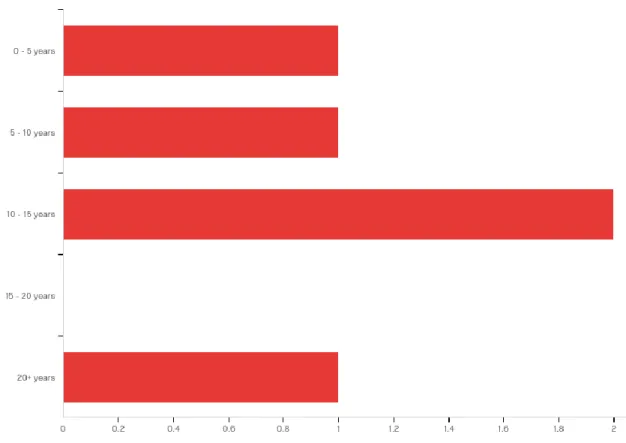
The majority of respondents have been with their current theatre company for 10-15 years; two for a shorter time frame, and one who has been there for over 20 years (See Figure 1). With the time span in mind, I was surprised to find the identified archival material was stored mainly in their office, or “stored in closets throughout the building.”
One surprising answer to the question of where archival materials are stored was the response “some is at the home of members,” as well as in their office or online. This
demonstrates a trust of the company in their members, as well as the loyalty the members have to the company to keep up with the theatre enough over time to help create
an archive.
Figure 1: How long have you been with your company?
archive; in the interview stage, they mentioned it is not public knowledge, but people are welcome to ask about it and view it. Interestingly, one participant stated their archival materials were physical only, no digital items. I found this to be very telling in what they consider archival materials to be, since there is so much done now digitally, such as poster and program designs. Other respondents mentioned there were both types of materials, with digital materials mainly being stored on their computers (there was no distinction between work or personal), with one company specifying they use Dropbox as archival storage.
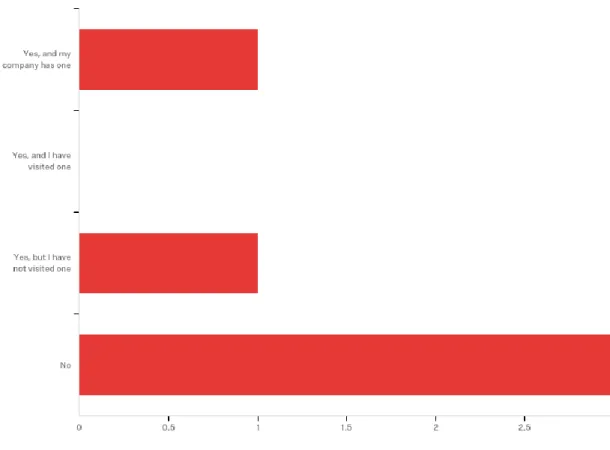
Figure 2: Do you have any experience or knowledge of theatre archives?
exciting to me, as it allowed me to follow-up in the interviews where they were interested in donating their materials, and to measure their interest in the American Theatre Archive Project to see if a repository could be connected with them.
Figure 3: Are you or anyone else at your company consciously collecting materials from your company/theatre’s productions with or without intention to donate them to a repository?
One participant responded no to the last survey question, which I assume was to the consciously collecting part of it. They expounded upon their responses briefly in the request for their information if they were interested in being contacted for an interview. They mentioned there is currently not a “theater production/department,” but they do “host theater productions” in their venue, just not producing them. This insight was very
Interview Findings and Analysis
After the survey closed, I sent out emails to those who indicated they were interested in talking with me more about their theatre’s archives and the American
Theatre Archive Project. Four people emailed me back, with one asking for more information before committing to an interview. I sent the questions to them, and they responded they would get back to me if they felt they could helpfully answer the questions. Another respondent emailed back quickly and we set a time to talk the following week. The third respondent actually emailed me back with a referral to the person acting as their company’s archivist for the time being. I followed up with the
referred person, explaining the project and scheduling a time to talk with them; they also asked for the interview questions in advance (See Appendix 2). I also reached out to a theatre which didn’t respond to my survey, but they were who I had in mind when I
started this project. They ended up responding to my interview request near the end of my time frame, which was key for my paper.
comfortable answering my questions, and also provided a foundation to build their knowledge in the future.
Burning Coal Theatre
My first interview was with the respondent from Burning Coal Theatre in Raleigh, NC. As we talked, their views on theatre were revealed, as well as a history of their theatre. Burning Coal Theatre has been around since 1995, with their first show in 1996. The theatre was founded under the idea of theatre as communication, and how it “allows an artist to communicate with their community but also allows the community to
speak back,” in a way other art forms can’t really facilitate (Interviewee 1, personal communication, February 12, 2018). The interviewee went on to state this idea is what they hope the legacy of the theatre will be—the communication factor and how people interact with theatre.
Surprisingly, there has been a conscious effort of collecting archival materials since the beginning. However, not all of it is available to the public. The interviewee said the archive was started mainly to “keep a record…for ourselves,” rather than for the
While these all can be accessed, they aren’t publicized widely as being so; however, they
are being added to and organized regularly.
While the interviewee was very open in the beginning about their views on theatre and its place in the world, this really came out in the second half of the interview. The topic switched to the American Theatre Archive Project and the role of archives in theatres overall instead of background and history of Burning Coal. When I explained what the American Theatre Archive Project was to the interviewee, their response was “that’s pretty exciting, I never knew anyone would be interested beyond our walls”
(Interviewee 1, personal communication, February 12, 2018). This shows the impact of the word spreading about the Project to local community theatres. As we continued to talk, the interviewee continued to express high interest in ATAP. They wanted to know if there was a set plan in place to start and how they could help in any measure, as well as mentioning if someone could be sent to help, it would be great.
They also continued to point out how busy and small these types of theatres are, stating in the Triangle region alone, “we’ve lost something like 7 or 8 theatres in the last 15 years, all of which had buildings, had actual facilities associated with them and they're all gone now, or in one case about to be gone at the end of this season” (Interviewee 1,
personal communication, February 12, 2018). This really stood out to me, since while there are around 30 community theatres identified for this research, the rate at which they are disappearing is alarming. There’s so much history with these theatres which is rapidly
disappearing or inaccessible for people to utilize and learn about these special
connections” on the average with someone for them to “commit to your arts
organization;” most who move to the Triangle leave within four years, which leads to most people “simply, literally [not knowing] we’re here” (Interviewee 1, personal
communication, February 12, 2018). This could be a reason so many theatres have disappeared within the Triangle region over the past 15 years; without community support and attendance, they simply couldn’t stay afloat and keep producing shows.
The last question I asked, about how theatres and archives can work together, elicited a very passionate response. They immediately responded with “people really like history…[they’re] interested in past and the theatre is not really connected to that,” which
is something they hope to change (Interviewee 1, personal communication, February 12, 2018). The interviewee was really into the idea of using history to connect with new and loyal audiences alike, and thought archives are a way for that to happen. They concluded with “most of theatre, at some level or another is about history, so why not accentuate
that and let that be the mechanism through which the community is introduced to all of our work,” which really seemed to sum up their feelings on the topic (Interviewee 1,
personal communication, February 12, 2018). Through archives, the community could learn about the legacy and history of the theatre, while also developing an interest in the company now and in the future might even go to a show. The interviewee even provided an example of this, with Burning Coal’s spring series where they perform a series of short
plays at Oakwood Ceremony in Raleigh, sharing the stories of the people who are buried there. The interviewee mentioned it’s a huge draw for people; supporting their stance of
Durham Savoyards
The second interviewee I talked with was a representative of the Durham Savoyards. While not the person who responded to my initial survey, the interviewee currently acts as the archivist for the theatre and was referred to me as a better person to talk with. The Durham Savoyards were interesting to learn about, especially since they have backing from the Durham Arts Council; as opposed to Burning Coal, which is completely independent. The Durham Savoyards have been around since 1963 and are part of a network of theatres which celebrate and produce works of Gilbert and Sullivan. These clubs, all called a version of Savoyards, originally started in London then migrated to the United States. The archive was started by a member who donated materials years ago, which are just now being inventoried due to time and other constraints. Some materials are on the website under the About Us section, including materials from the 50th
anniversary in 2013, awards won, and items from past performances, such as posters and playbills. There is no official written history of the Durham Savoyards, but there has been a cookbook produced by members.
to look for a certain item. The interviewee mentioned wanting to communicate more with these repositories to figure out a better solution for the collection as a whole.
Currently within the collection, there are a wide range of materials, from a napkin to set pieces and costumes stored in a warehouse the Savoyards use. There are also recordings of shows in a variety of formats, general acting and technical books, playbills dating back to the very first season, along with photographs and posters from
productions. These are just materials from the current inventory, not including other materials which may come in or those which are there and haven’t been investigated yet. A difference between the Savoyards and Burning Coal is the Savoyards have a board which they must run decisions by for approval before reaching out to potential partners, to help protect the reputation of the company. This reflects in how they crafted their response to my question of the legacy of the theatre, which was a group effort: “Obviously bringing an appreciation and understanding of the Gilbert and Sullivan
material in a community theatre, an amateur community theatre environment, but also having people experience theatre as community.” (Interviewee 2, personal
communication, February 19 2018). To me, this showed their level of preparedness, as well as how they wish to represent the Savoyards to the greater population.
Their answers to the American Theatre Archive Project questions were thought-provoking, since they had not known of the Project before my initial contact. There was great concern over if the Project would be “duplicating the efforts of Triangle libraries,” since “North Carolina libraries are really special and have lots of resources” (Interviewee
already doing to preserve local theatre’s histories. They also brought up the issue of funding and how long it could realistically last, along with who’s responsibility it would
be to maintain it. However, they were very interested and curious in exploring the Project more, and they didn’t want to close any doors, especially those relating to the arts; any
project or help is highly appreciated.
In terms of how ATAP can be better at contacting new theatre groups and communicating with them effectively, they said it was more difficult to say, since every theatre is different. They recommended email as the best way to communicate with people, as well as use social media or other promotion tools to reach out. They also mentioned the power of connections and reaching out to organizations such as the Durham Arts Council, who can represent a wide variety of groups in an area. The
interviewee also suggested using phone books to find theatres and to just talk with people to see what they know or what they remember; relying on people’s memories is a good way to find out who to contact.
Their view of how archives and theatres can work together in the future continued to show how communication was a large part of the Savoyards mission. The interviewee was thinking large, starting out saying they envisioned a model similar to the
thought “libraries need to do a better job explaining what they do,” in terms of helping
communities and the resources they can provide (Interviewee 2, personal communication, February 19, 2018). The interviewee seemed really interested in ATAP and how projects like it can challenge people’s viewpoints of both theatres and libraries as a whole.
Raleigh Little Theatre
The third person I spoke with represented Raleigh Little Theatre (RLT). Incorporated in 1936, Raleigh Little Theatre has been a community theatre in the
Triangle for a long time. There are a few full-time staff members, but most of their shows are run with the help of their large volunteer base. The person I interviewed started in 1992 as a volunteer, then became a full-time staff member for a few years and retired in 2013. However, they returned to volunteer as archivist due to their close ties formed with the community, and with knowing the history of RLT so intimately. The interviewee mentioned there was an archivist before them, but not for 20 years or so, which led to boxes being piled up and items not being organized. Right now, the interviewee is
training someone to do the day-to-day tasks, since they are now out of the area. However, they still work on projects and exhibits when time permits.
Surprisingly, RLT has a fairly robust and up-to-date digital archive available on their website. It contains materials from 2000 onwards, but they still save corresponding paper materials. In their archives they have materials dating back to 1932, including show folders containing playbills, photographs, publicity and reviews. The archive also
contains documents of special events such as their Diva Series and Garden Tours, along with scrapbooks for each season. Together with the show folders, they have files
also taken the time to compile notebooks containing the histories of RLT founders and staff. This shows dedication and love the interviewee has for theatre overall, and RLT specifically. Their dedication is also shown through the fact the interviewee has completely organized the collection into the above categories for easier access to the materials, with no formal training as an archivist.
When asked about their knowledge of the American Theatre Archive Project, the interviewee expressed they didn’t know about the Project, but it “sounds great”
(Interviewee 3, personal communication, March 8, 2018). They said Raleigh Little Theatre’s main concern is to “turn everything into an electronic format” for easier access,
especially photographs and slides (Interviewee 3, personal communication, March 8, 2018). They also mentioned the lack of time to work on the archive by full-time staff members; having people who are interested in theatre archives and willing to work would be a great resource. When asked what they would ask for ATAP’s help with, they
mentioned three main objectives:
1. How do we find the personnel to help? 2. How do we find the technology?
3. How can we store the materials more safely?
Achieving these objectives would help the collection stay organized while also making it more accessible to the general public, so those who wish to see materials don’t have to go through the acting archivist to see them. The interviewee also recommended calling and reaching out through a theatre’s website or email to be the best way for those involved
this since the day-to-day work of a theatre is so slammed, they aren’t as inclined to reach out to projects such as ATAP.
Their response as to how theatres and archives could work together was different, since Raleigh Little Theatre has an established archive, and has “never had any help from anybody” in doing so (Interviewee 3, personal communication, March 8, 2018). They did
mention they had reached out to various institutions, such as the State Archives and the City Museum in Raleigh, but there is no active relationship with them at the moment. The interviewee did suggest universities with library science programs could coordinate with theatres in their respective areas on internships and class projects to provide experience for the students and help for the theatre. These connections and making sure the “younger generation” continues on in this work seemed to be their main concerns for the future of
theatre and archives (Interviewee 3, personal communication, March 8, 2018). The interviewee mentioned they believe the younger generation has a different view and attitude toward saving things such as photographs due to technology. While this view was not brought up in the other interviews, it’s something to think about when approaching community archives.
Discussion
The idea of fostering communication and community through the theatre, either through performances or history, was prevalent in all the interviews. There seems to be a sense of responsibility for Triangle theatres to produce excellent work, but also to create a community where people are welcomed and encouraged to attend productions.
(Interviewee 3, personal communication, March 8, 2018). This sense of home seems important to these theatre companies and is something they want to keep alive through their archives.
All of the respondents mentioned the challenge of working in and owning a small theatre, in terms of both staffing and gaining a loyal audience. Funding was also brought up as a challenge by the smaller theatres and how it affects their archiving effort, since it takes money to set up, run, and maintain an archive. However, none of them seemed overly dejected; in fact, they seemed to accept it and almost see it as a challenge. They all stated having someone from the American Theatre Archive Project, or a university. there to work with the archive would be a great help and would be greatly appreciated.
It was intriguing how each interviewee briefly mentioned how they didn’t know if
other theatres in the area have an archive or not. This shows an interesting disconnect between the local theatre scene in the Triangle—they aren’t as closely connected as one might expect. This could be because only one interviewed had archival materials online, while others aren’t as open with access to their archives at the current time. This is
something which could be promoted more within the region.
In terms of my research questions, stated at the beginning and again below, there seemed to be no knowledge of the American Theatre Archive Project to those I
interviewed. My first research question was: Do local Triangle theatres (professional and amateur) know about ATAP, and if so, how have they interacted with ATAP/benefitted
from this knowledge? Since the North Carolina team is led by someone associated with
With none of the people interviewed from amateur theatres knowing of ATAP before me contacting them for this project, the second half of my first research question was
inconclusive. However, it can be assumed from the interviews these theatres might benefit from ATAP in the future.
My second research question, how has ATAP influenced the Triangle theatre scene, if at all, was also not directly answered by my interviews. Since the Project is not
Conclusions and Recommendations
Through both my survey and interviews, I learned a lot about the state of archives within the local Triangle theatre scene. While there are a number of theatres and theatre groups in this region of North Carolina, a lot of them seem to have at least some archival materials, but they are unsure of what to do with them. They wish more organizations would reach out to them, through any means, since they are often too busy to do so themselves. There is a passion for the archives to continue and to have proper homes, they just aren’t 100% sure how to go about doing it at this point in time.
I would say the North Carolina team of the American Theatre Archive Project reaching out to the theatres mentioned above would be a great first step, just to talk with them and figure out what they might want to do in the long run. I would recommend also trying to contact the theatres in the area who did not respond to my survey to gain a better understanding of community theatre archives as a whole in this region. This would widen the scope and allow the network to start growing. Universities such as UNC with theatre or library science programs could coordinate with local theatres to help them start their archive, or even just help scan materials to digitize them to be placed online.
There is a lot of heart in the Triangle theatre scene, and there is a desire to
Bibliography
About Us | UNC Department of Dramatic Art. (n.d.). Retrieved November 15, 2017, from
http://drama.unc.edu/about-us/
Brady, S. & Koffler, H. (2015). The American Theatre Archive Project: Carrying the Record of the Past to the Future. Performing Arts Resources, 31, 103-121. Brett, J. and Jones, J. 2013. Persuasion, Promotion, Perception: Untangling Archivists’
Understanding of Advocacy and Outreach. Provenance 31(1), pp. 51–74. Caswell, M., Cifor, M., & Ramirez, M. H. (2016). “to suddenly discover yourself
existing”: uncovering the impact of community archives. The American Archivist,
79(1), 56–81. doi:10.17723/0360-9081.79.1.56
Collins Shortall, L. (2016). ‘A permanent house for local archives’: a case study of a community’s archives in County Offaly*. Archives and Records, 37(2), 143–156.
doi:10.1080/23257962.2016.1191452
Fern, A. (2004). What Have They Done to the Evidence? Theatre Survey, 45(2), 195– 201. Retrieved from https://illiad.lib.unc.edu/NOC/illiad.dll?Action=10 Flinn, A., & Andrew. (2011). Archival Activism: Independent and Community-led
Archives, Radical Public History and the Heritage Professions. InterActions: UCLA Journal of Education and Information Studies, 7(2), 1–20.
Hackman, L. (2012). Love is Not Enough: Advocacy, Influence and the Development of Archives. Journal of the Society of Archivists, 33(1), 9–21.
doi:10.1080/00379816.2012.666116
Harvey, K., & Moosberger, M. (2007). Theatre Archives’ Outreach and Core Archival Functions. Archivaria, 63, 35–54.
Hujda, K. (2017, July). But is it archival? Determining research value. Poster presented at the annual meeting of the Society of American Archivists, Portland, OR.
Jackson, A. S., Wheeler, J., & Quinn, T. (2015). Data services and the performing arts. Music Reference Services Quarterly, 18(1), 13–25.
doi:10.1080/10588167.2015.997072
Jones, S., Abbott, D., & Ross, S. (2009). Redefining the performing arts archive. Archives Des Sciences / Editees Par La Societe de Physique et d’histoire
Naturelle de Geneve, 9(3–4), 165–171. doi:10.1007/s10502-009-9086-1
Marini, F. (2007). Archivists, Librarians, and Theatre Research. Archivaria, 63, 7–33. Medaille, A. (2010). Creativity and craft: the information‐seeking behavior of theatre
artists. Journal of Documentation, 66(3), 327–347. doi:10.1108/00220411011038430
Newman, J. (2011). Sustaining Community Archives. Aplis, 24(1), 37–45.
Russell, M. (2016). Performing arts collection, department of special research collections, University of California, Santa Barbara. Music Reference Services Quarterly, 19(1), 63–70. doi:10.1080/10588167.2015.1132945
Smith, J. (2013). Archiving the Intangible: The Playwright Willy Russell’s Personal
Walmsley, B. (2013). “A big part of my life”: a qualitative study of the impact of theatre.
Arts Marketing: An International Journal, 3(1), 73–87.
Appendix 1 – Survey Questions
Triangle Theatre Archives
Start of Block: SURVEY INSTRUCTION
Start of Block: Informed Consent
Q0
Welcome to the research study!
I am interested in understanding what state theatre archives in the Triangle region
(Raleigh, Durham, Chapel Hill) area of North Carolina are in. You will be presented with information relevant to theatre archives in the Triangle region, some specific to your theatre, and asked to answer some questions about it. Please be assured that your responses will be kept completely confidential.
The study should take you around 10-15 minutes to complete. Your participation in this research is voluntary. You have the right to withdraw at any point during the study, for any reason, and without any prejudice. If you would like to contact the Principal Investigator in the study to discuss this research, please e-mail Brenna Edwards at [email protected].
By clicking the button below, you acknowledge that your participation in the study is voluntary, you are 18 years of age, and that you are aware that you may choose to terminate your participation in the study at any time and for any reason.
Please note that this survey will be best displayed on a laptop or desktop computer. Some features may be less compatible for use on a mobile device.
o
I consent, begin the study (1)o
I do not consent, I do not wish to participate (2)Start of Block: Theatre Background
Q1 What theatre company are you representing?
________________________________________________________________
Q2 When was your theatre company founded?
________________________________________________________________
End of Block: Theatre Background
Start of Block: Personal History with the Theatre
Q3 How long have you been with your company?
o
0 - 5 years (1)o
5 - 10 years (2)o
10 - 15 years (3)o
15 - 20 years (4)o
20+ years (5)Q4 What is your role/position at your company?
________________________________________________________________
Q5 Do you have any experience or knowledge of theatre archives?
o
Yes, and my company has one (1)o
Yes, and I have visited one (2)o
Yes, but I have not visited one (3)o
No (4)Q6 Are you aware of any archival material, physical OR digital, in your space? This can include collected playbills, stage manager reports, costumes sketches, budget reports, marketing material, photographs, etc.
o
Yes (1)o
No (2)o
Not Sure (3)Q7 Are they physical items, digital items, or both?
o
Physical (1)o
Digital (2)o
Both (3)Q8 Where is this archival material stored?
Q9 Are you or anyone else at your company consciously collecting materials from your company/theatre’s productions with or without intention to donate them to a repository?
o
Yes, with intention to donate to a repository (1)o
Yes, without intention to donate to a repository (2)o
No (3)End of Block: Archival Materials Questions Start of Block: Interview Interest?
Q10 Would you be interested and willing to talk with me more in an interview?
o
Yes (1)o
No (2)Q11 If you selected yes, please leave your name and company email address in which to reach you:
________________________________________________________________ ________________________________________________________________ ________________________________________________________________ ________________________________________________________________ ________________________________________________________________
Appendix 2 – Follow-Up Interview Questions
1. How long have you been working for your theatre and what is your role there? 2. Can you tell me a bit about the history of your theatre? What is the “legacy” of
your theatre?
a. Is this history documented or shared anywhere, such as your company’s website?
3. Based off of responses to survey (above):
a. If you have an “official” in-house/other archive (at an institution, etc): i. What types of materials are in it?
ii. How far back do your archives go?
iii. Was it a conscious decision, or did it happen naturally? iv. How is it organized?
v. Does everyone have access to it, or just specific people? vi. Who is in charge of the archive and maintains it? How do they
maintain/curate it? b. If you do not have an archive:
i. Do you have collections of items stored somewhere? 1. If yes:
a. What types of materials are in it? b. How far back do your archives go?
c. Was it a conscious decision, or did it happen naturally?
d. How is it organized?
e. Does everyone have access to it, or just specific people?
ii. Have you considered creating an archive before? If so, why did it not happen?
4. Have you heard of the American Theatre Archive Project?
a. If so, have you reached out to them/explored their website to find out more?
i. What was your experience in working with them? 5. What would you ask ATAP about how to get involved, or find out more
information?
6. How can ATAP be better at contacting new theatre groups in NC?
7. What are the most effective ways for organizations such as ATAP to contact or establish partnerships with your theatre company?
Appendix 3 – Survey Email
Subject Line: Triangle Theatre Archive Survey Hello,
My name is Brenna Edwards and I am currently a masters student at the University of North Carolina at Chapel Hill in the School of Information and Library Science. For my masters’ paper, I am conducting research to see the current state of theatre archives in the Triangle (Raleigh, Durham, Chapel Hill) region of North Carolina and to assess the impact of the American Theatre Archive Project North Carolina regional team. You are being asked to take part in a research study because you are the manager, artistic director, or listed as a main contact of a theatre in the geographic region described above.
Being in a research study is completely voluntary. You can choose not to be in this research study. You can also say yes now and change your mind later.
If you agree to take part in this research, you will be asked to complete a short, ten (10) question survey (linked below), and if interested, a follow-up interview. Your
participation in this study will take about 5-10 minutes for the survey, and around 45 minutes to an hour for the voluntary follow-up interviews, to be conducted during February and early March. I expect that 7-10 people will take part in the interview portion.
You can choose not to answer any question you do not wish to answer. You can also choose to stop taking the survey at any time. You must be at least 18 years old to participate. If you are younger than 18 years old, please stop now.
The possible risks to you in taking part in this research are:
• Feeling uncomfortable with the idea of someone finding out you were in a research study • Potential loss of confidentiality of data.
To protect your identity as a research subject, the research data will not be stored with your name, and your name will not be linked with your theatre in any way. In any
publication about this research, your name or other private information will not be used. The link to the survey is here:
The survey will be open until 11:59 pm on Sunday, February 11th. If you experience any trouble accessing the survey, please let me know ASAP.
If you have any questions about this research, please contact the Investigator named at the top of this form by calling or emailing. If you have questions or concerns about your rights as a research subject, you may contact the UNC Institutional Review Board at 919-966-3113 or by email to [email protected].