Latin American Immigration as a Determinant of US Foreign Aid Allocation
By Anna B. Roberson
A thesis submitted to the faculty of the University of North Carolina in partial fulfillment of the require- ments of a degree with Honors in
Political Science.
2015
Approved by:
___________________________________
Advisor: Layna Mosley
___________________________________
Cameron Ballard-Rosa
___________________________________
TABLE OF CONTENTS
Introduction……….…...4
Foreign Aid Process………...………..6
Literature Review……….………..12
i. Determinants of Aid ……...…………...………..……..12
ii. Foreign Aid to Latin America………..…………..14
iii. Immigration as Aid Determinant………..……….17
Theory………..………..19
Analysis of Congressional Hearings………..…………27
Data and Methods………..………34
Results………..………..42
Conclusion………..………...52
Works Cited………...………57
Citations—Congressional Hearings………..……….62
Appendix A: Congressional Hearings Sample……….…..64
Appendix B: Data Appendix……….……….65
Appendix C: Interview Appendix……….….70
TABLES AND FIGURES
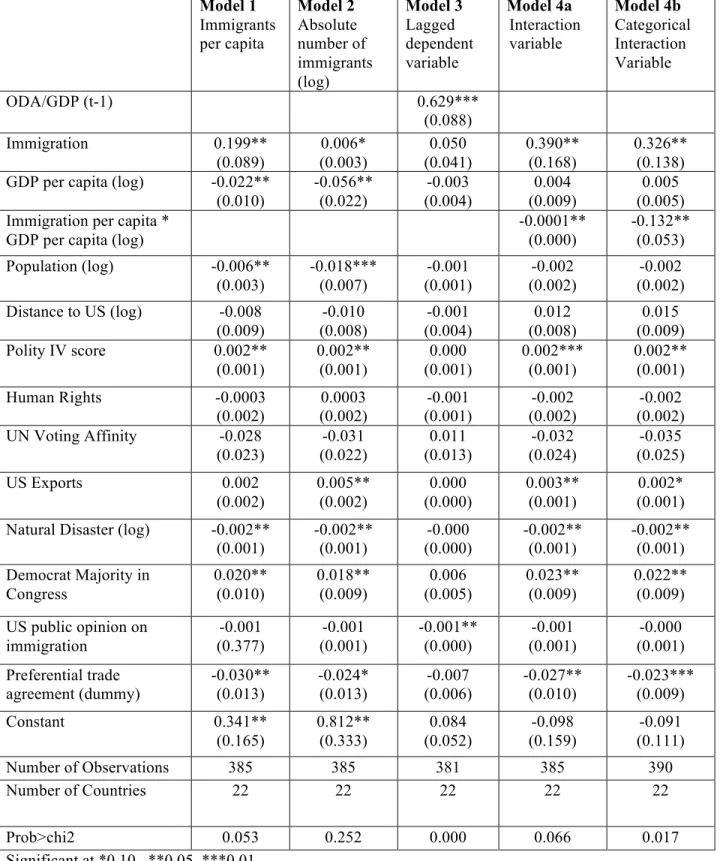
Table 1: Aid Determinants, Overall Sample ………..43
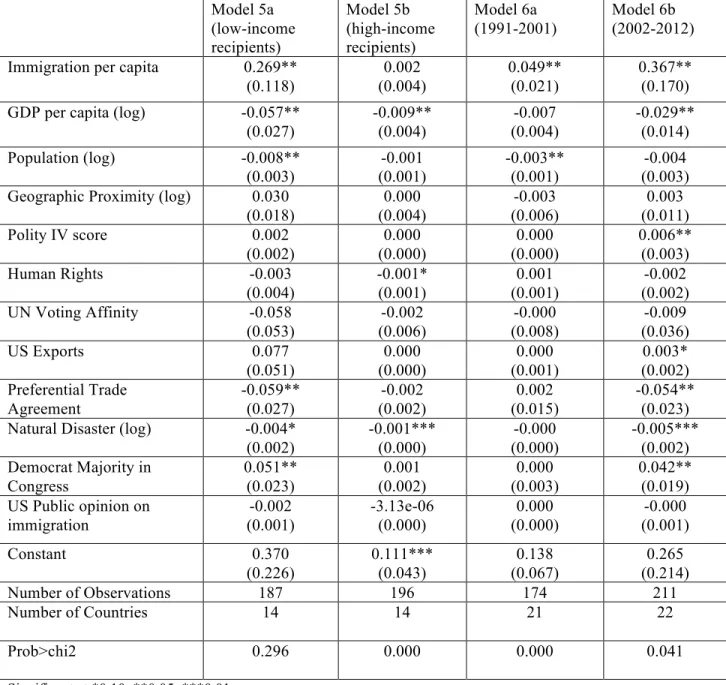
Table 2: Aid Determinants, Split Sample………...48
Table 3: Distribution of Country-years Across Income Quartiles………..71
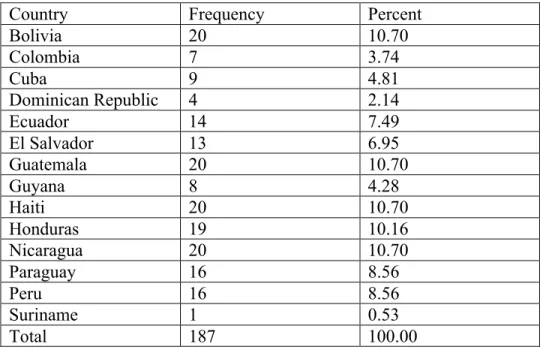
(If in Model 4b Sample) Table 4: Number of Observations per Country in “low-income” Category………71
(If in Model 5a Sample) Figure 1: Mean Level of Aid, All Years……….37
Figure 2: Immigration per Capita, All Years………..38
Figure 3: Absolute Number of Immigrants, All Years………...38
Figure 4: Migration and GDP per Capita (“Migrant Hump”)…….………41
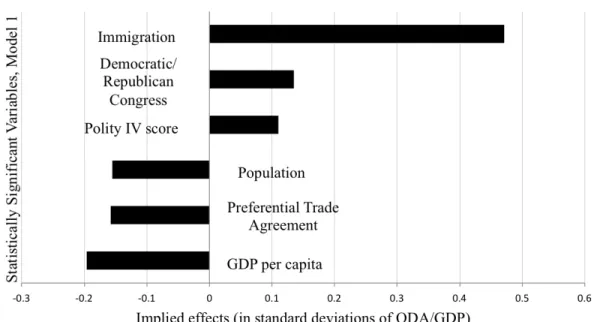
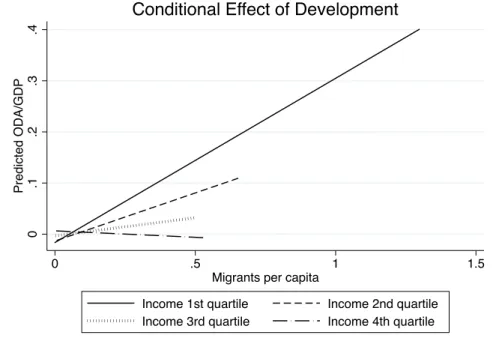
Figure 5: Implied Effects on Aid Allocation (As Implied by Model 1)……….45
INTRODUCTION
Despite the prominence of foreign aid in policy debates and media discussion, foreign aid
only accounts for one percent of the US Budget (Center for Global Development 2015), and only
0.2 percent of US Gross National Income (OECD 2013; Center for Global Development 2015).
One might expect aid to go to the neediest or the poorest or the most deserving of countries, but
scholars know it is not that simple. We know that some things matter very much in aid
allocation, such as strategic ties between donor and recipient governments, development, and
wars or disasters. However, these known determinants do not account for all of the variation in
aid from year to year, and I endeavor to further the knowledge on determinants of foreign aid.
This is a thesis that explains how the US allocates foreign aid to Latin America, with a
special emphasis on the factor of immigration as an explanatory variable in aid distribution. In
an effort to further the academic knowledge of the politics of foreign aid, I have isolated one
factor that I believe to be under-examined and unexplored—immigration. There are an estimated
41 million immigrants living in the US, or about 13 percent of the total US population
(Migration Policy 2014). In 2013 alone, almost 402,000 people immigrated to the US from Latin
America.1 With a few important exceptions, immigration remains largely unaddressed in the literature on foreign aid allocation,2 but I argue that it is a factor in the United States’
considerations of aid distribution. Politicians are concerned about how to respond to the large
numbers of immigrants coming to the US through legal and extralegal means. I contend that
since policymakers assume that economic conditions in the country of origin are a push factor
for migrants leaving their country of origin, and since a sufficient number of policymakers
believe foreign aid sometimes spurs growth, policymakers will utilize economic foreign
assistance as a means of decreasing the need for further migration. As such, I expect there to be
a statistically significant relationship between the flow of migrants from each Latin American
country and aid allocation to that country in the subsequent years. My research fills an important
niche in the literature on foreign aid. I use the work of other scholars as a starting point, but I
aim to take a multi-method, process-oriented approach that traces the mechanism by which
migration and aid are connected. I test my theory through a series of semi-structured elite
interviews, an analysis of congressional hearings, and a statistical analysis of US foreign aid to
Latin America in the years 1990-2012.
I choose to focus my research on Latin America. If there is a relationship between
immigration and US foreign aid allocation, the causal mechanism should be particularly evident
in aid to Latin America. Pew Research Center data shows that in 2012, 52.2 percent of
immigrants in the US were from Latin America, and that the Mexico-to-US migration link was
the most popular in the world (Brown and Patten 2014; Inkpen 2014). The United States’
colonialist and imperialist tendencies led to much intervention in Latin America during the
twentieth century, and the regions have become further entangled in the past few decades. In the
post-Cold War context, Latin America remains a recipient of US development aid because of the
geographic proximity and trade networks between the US and Latin America. Compared to US
programs in other regions, US aid programs in Latin America focus less on peace and security
concerns or unexpected humanitarian need, and more on good governance and economic
growth.3 For these reasons, as well as for the practical reason of limiting the scope of data to
investigate it more deeply, I have chosen to limit this project to the sphere of US-Latin American
relations.
All else being equal, I find that immigration to the US leads to increases in US aid to the
immigrant-sending country. An analysis of congressional hearings as well as a series of
interviews finds that immigration is a relevant part of the aid discussion in Congress. The
Committee on Appropriations and the aid-implementing agencies use the economic and political
conditions of underdevelopment (that may cause migration) as justifications for increased
development aid. My statistical results support the hypothesis that increased immigration leads
to increased aid, especially in low-income recipients and in the second half of the years sampled.
I begin with a description of how foreign aid decisions are made by the federal
government, so as to outline the important actors and give a sense of the decision-making
timeline. Then, I review the existing literature on foreign aid determinants and the politics of
aid. In the theory section, I introduce the idea that immigration is an additional determinant of
aid allocation, and I trace the causal pathway by which the two are connected. After the
theoretical outline, I give an overview of my analysis of congressional hearings and report upon
a series of statistical tests that explore numerically the importance of various factors in aid
allocation. I end with a discussion of the conclusions and implications of my study.
THE FOREIGN AID PROCESS
To analyze the factors that influence allocation, we must first have a firm understanding
of the process itself. It is particularly pertinent to consider when and how policymakers’
concerns about immigration might affect aid allocation. Before beginning a theoretical
process, emphasizing the points at which I expect immigration and similar country-specific
concerns to be evident.
Official Development Assistance, or ODA, is defined by the Organization for Economic
Cooperation and Development (OECD) as grants or loans to countries, territories, and
multilateral institutions provided by official agencies, including state and local governments.
These monetary flows must be administered with the objective of promoting economic
development and welfare in developing countries, and loans must be concessional in nature
(having a below-market interest rate or an extended interval of repayment) (OECD 2013). This
definition generally excludes resources sent as military aid, peacekeeping enforcement, and
programs that directly combat terrorism.
The current US concept of international development assistance emerged after World
War II in concordance with the Marshall Plan’s goal to help Europe recover by sending
economic assistance. The primary vehicle through which the United States now distributes
economic foreign assistance is the federal budget category of Foreign Affairs, or the Function
150 account, one of 20 budget categories to which the Committee on Appropriations Committee
allocates funds. Major agencies, such as the Department of State, the United States Agency for
International Development (USAID), and the Millennium Challenge Corporation (MCC) are a
part of this function. Oversight of this account belongs to the Subcommittee on State, Foreign
Operations, and Related Programs of the House and Senate Committees on Appropriations. 4 USAID was formed in 1961 during the Kennedy administration, and MCC was created in
2004 during the George W. Bush administration. Both USAID and MCC are independent
agencies of the executive branch (and separate in administration from the Department of State),
but the legislative branch has significant influence in determining which specific programs
receive funding. USAID is responsible for about half of US foreign assistance, considerably
more than MCC ($17.2 and $0.8 billion respectively in 2013, out of a total aid budget of $33.1
billion)(ForeignAssistance.gov 2014). In contrast, the Department of Defense was responsible
for $12.7 billion of foreign assistance that year.
To become better informed about the aid allocation process and specific concerns in
Latin America, I conducted six interviews with policy insiders. I sent meeting requests to 26
members of the Subcommittee on State, Foreign Operations, and Related Programs of the
Committee on Appropriations from the 112th and 113th Congresses. I chose to use these two Congresses as my sample because most members of earlier Congresses are no longer serving
(and therefore very hard to contact), or also served in one of these two Congresses. The 29
remaining members of the Subcommittee that I could not contact were either retired, deceased,
or would not accept correspondence from my zip code.5 I was able to schedule three interviews via these requests, and three more interviews through professional connections. Of the six people
I interviewed, two are members of Congress, two are current Congressional staffers, and two
have past experience as staff members with the Subcommittee. I conducted all of these
interviews between January 20 and January 23, 2015, each one lasting 30 to 60 minutes. The
interviews were semi-structured and open response. I asked about the appropriations process
itself, specific regional concerns in Latin America, and the perceived effectiveness of aid.
At the beginning of each year, the President submits a budget request to Congress, and by
April the Committee on the Budget sets a cap for Appropriations spending. The chair of the
Committee on Appropriations decides upon the 302(b) allocations, which establish a limit for
each of the subcommittee bills. Following the 302(b) allocations, the twelve subcommittees in
both the House and the Senate allocate funds to various projects and departments. As mentioned
above, foreign aid falls under the directive of the Subcommittee on State, Foreign Relations and
Related Programs. The Committee’s final requests often mirror the President’s overall request
very closely, but per-country considerations begin at the Committee level (Interviews 1, 6). The
budget is then subjected to a set of hearings and input from related organizations. It is during this
step, in the Congressional Budget Justifications and Committee Hearings, that various groups
petition the needs and interests of specific countries. After the hearings, the chair and ranking
members of the Subcommittee send a letter inviting other members to submit their views, a step
referred to as the “member requests” (Interview 6). The House and Senate must reconcile their
requests and approve the Appropriations Bill before the funds can be appropriated or spent.
Several of my interviewees (3, 6) noted that the appropriations process is not very
transparent, and that a lot of give-and-take happens behind closed doors. Though the published
reports may not entirely reflect the final distribution of all assistance funds, the reports are the
best indicator of where aid was intended to go (Interview 1). Additionally, several people
mentioned that since most members of Congress are on multiple committees (Interview 5, 6), the
appropriations process is long and tedious, and is often behind schedule. Some respondents (3, 6)
mentioned that the process is very political, and said it is affected by the partisan divide within
cooperation in foreign aid appropriations (Interviews 2,3,5), but others described it as a divisive
topic (1, 6).
The final Appropriations Bill specifies that certain amounts be spent on specific
programs, sectors, and countries, but it also gives some leeway to the implementing agencies to
decide exactly how to deliver the funds (Center for Global Development 2014). Several
interview respondents expanded upon this. Two people specifically described the variation in
oversight towards different countries (Interview 1, 3). They remarked that for some countries
and programs, the money is directly earmarked and itemized by the Subcommittee, for others
there are strong (but not law-bound) suggestions, and for others still, there is little more than an
expressed preference on behalf of Congress as to how the funds should be spent. Another said
that “although the agencies have some power on the ground, there is a strong tradition of
Congressional oversight” (Interview 1). Congress also has oversight power once the bill has been
passed, in the form of asking for reports by the agencies on how the money is being spent in
various regions. In the past, there was a big emphasis on regular reporting by the implementing
agencies, but now Congress is less concerned with specific program reporting (Interview 3).
Nonetheless, Congress is a primary actor in the appropriations process, and the ultimate agent of
oversight for foreign assistance.
USAID allocates money to recipient governments, agencies, and organizations in the
form of grants and contracts. First, USAID puts together a Country Development Cooperation
Strategy for each country. After establishing a Development Plan for a certain nation, USAID
decides whether a contract or direct assistance would best suit the needs of the country. Under a
contract, the US purchases goods and services as a means of furthering development, but with
country. Direct assistance can either be in the form of a grant or cooperation agreement, the
latter of which involves more terms of conditionality. Once USAID has decided which countries
will receive assistance, they ask for proposals, negotiate with NGOs and other assistance
providers within the recipient nations, and award the grants (USAID 2014b).6
According to USAID, the main development concern in Latin America is “improving
security and economic and political inclusion” (USAID 2014b). The agency notes that violence
resulting from turmoil affects the US when it “penetrates our borders” (USAID 2014a). As a
way to address the overarching development concerns, USAID has specified several ways in
which foreign assistance funds can be used in Latin America. These include mitigating the drug
trade, supporting civil society groups, and protecting natural resources (USAID 2014b).
Additionally, my interviewees spent significant time discussing the regional priorities in Latin
America. Some of the most commonly mentioned issues were the drug trade, regional health
concerns such as AIDS and malaria, educational programs, good governance, economic capacity
building, free trade, and illegal immigration.
What, then, are the implications of the way this process works? As the Appropriations
Bill moves through the above-enumerated process, it is pushed and pulled from all sides by
Congress and the implementing agencies alike. Frequently mentioned issues for the area of
Latin America combine humanitarian, strategic and economic concerns. It is important to
consider how this process reveals the specific determinants of aid to Latin America, and whether
immigration is among them, as I move into a more theoretical discussion.
6
The Millennium Challenge Corporation distributes foreign assistance intended for the achievement of the Millennium Development Goals. Eligibility of receiving countries for MCC contracts is based upon good
LITERATURE REVIEW
In this section, I outline some of the recent research on US-Latin American relations and
the determinants of foreign aid in order to preface the discussion of immigration as an additional
factor in aid allocation. With a couple of important exceptions, this body of literature largely
fails to mention international flows of people as a factor in allocation decisions. I begin this
overview with a general discussion of the determinants of bilateral foreign assistance, especially
geostrategic and economic motivations of donor nations. Then, I examine in more detail the
specific bilateral aid relationship between the US and Latin America, both in terms of motivating
factors and trends over time. Lastly, I consider those scholars who discuss a connection between
migration and aid, and how their writing acts as a starting point for my research.
Determinants of Aid
The next section will discuss in more detail the specific determinants of US aid to Latin
America, but first I will outline the broader literature on aid allocation. Governments have
geopolitical and economic self-interests, which I define as follows. Geopolitical self-interest is a
country’s need for allies, strategic world partners, and good diplomatic relations with its
neighboring countries. Economic self-interest is the desire of governing officials for their
country to prosper economically, in both domestic and global markets. The US is motivated by
the desires to assist other countries, to foster geopolitical stability, to expand economic
opportunities, and, as I propose, to influence the migration decisions of people in the
aid-receiving country.
Humanitarian concern often dominates public discussions on foreign aid (and was
associated with aid allocation. Berthélemy (2006) remarks that the US is more egoistic than
many countries, and puts their interest before humanitarian altruism. A few scholars mention
humanitarian concern as a factor in global studies of aid allocation (Adams 2000) or as an
outcome rather than a motivation (Bermeo 2010), but for the most part the literature on global
aid allocation focuses on more self-interested factors, and for the purposes of my theoretical
discussion, so will I. In development initiatives, there is a tension between redistribution of
wealth and efficient development—the choice between giving to the poorest nations because
they face the greatest disadvantage, and giving to nations that have a high capacity for
development (Little and Clifford 2006). Several interviewees mentioned this tension. They
remarked that there is a trade-off between the objective needs of a recipient and the extent to
which it is “worth it” for the US to invest in that nation if it is corrupt, unstable, or does not have
good diplomatic ties with the US (Interviews 1, 2, 4, 6). In an effort to make aid most effective,
donor nations have recently paid attention to institutional consolidation, good governance,
closing the information gap, and avoiding corruption as goals of international aid and
development (Hout 2007). Specifically, government effectiveness is positively correlated with
aid allocation (Chong and Gradstein 2007; Bandyopadhyay and Wall 2007).
Whereas the US previously considered aid a key way to contain the spread of
Communism, contemporary geopolitical concerns differ from the broad Cold War era goal of
gaining allies to fight communism (Coleman 2007; Hout 2007). Since the Cold War, strategic
motivations include using aid to cultivate beneficial political relations, alleviate global security
concerns or crises, and achieve favorable policy in aid-receiving nations. Alesina and Dollar
(2000) describe the importance of “friend variables” in US aid allocation, meaning that the US is
people I interviewed also mentioned investing in diplomatic capital as one reason to give aid to
some countries and not others—giving aid so as to foster good relations and avoid conflict in the
future (Interviews 2, 3, 5). Alesina and Dollar (2000) also note that specific concerns/events in a
region (such as in the “war on terror” or “war on drugs”) draw the attention of aid donors to that
area while the issue persists. A final geopolitical motivation of aid is the use of foreign
assistance to influence policy in the recipient nation, under the assumption that a needy country
that receives aid will be more likely to support policies favorable to the leaders of the donor
country (Bueno de Mesquita and Smith 2009).
Aid is also employed for economic self-interest, or development of the recipient nation
for the economic benefit of the donor nation. Donor governments often favor open economies
and significant trading partners when distributing aid, giving to those countries whose economic
growth will benefit the donor country most, or whose markets they want to access (Alesina and
Dollar 2000; Berthélemy 2006; Hout 2007). Bearce and Tirone (2010) note that even “altruistic”
aid often gives donors the benefit of opening export markets in the recipient countries for donor
products.
US Foreign Aid to Latin America
I have limited my study to Latin America because I expect that the United States’
bilateral aid allocation to Latin America is different from allocation to other regions of the world.
In this section I enumerate some of the specific aid trends in the region. Because Latin America
is so close to the US geographically, there is distinctive concern for the stability of the region
(Interview 2). During the Cold War period, Latin American was considered a priority for
for the region, the US no longer considers Latin America to be the region in most need of
security assistance. Other regions receive most of the United States’ security-oriented aid, but
Latin America is a lead recipient in the categories of “governing justly” and “economic growth
and prosperity” (Tarnoff and Lawson 2011). Therefore, I expect that Latin America, as an aid
recipient, is subject to a different set of determinants than the regions that currently receive the
most security aid or have highly-publicized civil conflict. For many years, the US was the
hegemon in the Latin American region, and as such, the US presumed final influence in many
areas of Latin American governance and economics. US aid to Latin America as a proportion of
total US aid has decreased in recent years as global security priorities have shifted to eastern
regions of the world (Meyer and Sullivan 2012), but the assumption that the US is among the
most important outside influences in Latin America remains.
The 1990s and early 2000s in Latin America were a time of structural adjustment,
political transition, and recovery from the debt crises of the 1980s. This era was characterized by
the adoption of free trade and neoliberal policies (after much external pressure), the war on
drugs, and the suppression of revolutionary and counterinsurgency groups in some nations
(Council on Foreign Relations 2008). The period is also marked by the creation of free trade
agreements such as NAFTA (1994) and CAFTA-DR (2004), though many of these efforts were
met with heavy criticism (Eguizábal 2010). President George W. Bush’s foreign policy towards
Latin America involved a strong emphasis on self-defense and preemptively combating security
concerns, such as the counternarcotic and counterinsurgency strategy of Plan Colombia (Campos
and Prevost 2007).
Though the specific literature regarding US aid to Latin America since 1991 is relatively
foreign aid attention during the 1960s with Kennedy’s Alliance for Progress, but it has remained
an important area of concern for foreign assistance. Adams (2000) presents three paradigms in
US foreign assistance to Latin America: developmental or humanitarian motivations, political
motivations, and economic motivations. Developmental or humanitarian concerns in the region
stem from a moral concern for improving the human condition, and often lead to good
governance initiatives that encourage the support of good human rights practices (Blanton 1994;
Adams 2000). Contrary to the previously discussed literature on global determinants of aid,
Blanton (1994) finds that human rights are an important indicator of US aid to Latin America.
Political motivations in Latin America have included supporting strategic allies, distributing aid
according to US national security priorities, and working towards political stability as many of
the governments in the region transitioned out of authoritarian regimes. Adams defines
economic motives as the promotion of the specific interests of multinational corporations in the
donor country, but others (Valenzuela 2005; Viellete et al. 2007) more broadly discuss economic
motives in terms of opening trade markets and fostering global economic growth. In Latin
America, this involves protecting foreign investment and enhancing the capacity for trade
(Adams 2000).
Viellette (2007) discusses how Latin American trends mirror global interests in other
regions. This includes the shift of objectives towards good governance and development rather
than direct military involvement (Viellette 2007; Myer & Sullivan 2012), incorporating a more
participatory approach to assistance in Latin America, and working towards sustainable
development and capacity building (Haugaard 1997). In describing the 1990s, Adams (2000)
notes how humanitarian concerns were still present, but USAID’s programs in the Latin
“democratic peace,” as well as neoliberal economic motives (on behalf of MNCs) of enhancing
the region as a trading partner and good environment for Foreign Direct Investment. Valenzuela
(2005) notes that security motives have not disappeared; they have simply shifted from
containing communism to promoting regional stability and combating drug violence. In my
interviews, several people touted the success of Plan Colombia as a flagship example of how to
address security issues in the region (Interviews 1, 2, 3, 5, 6). Interestingly, Adams (2000, p.107)
notes that one of the goals for aid during this time period was to decrease immigration, but
primarily migration generated by political repression rather than immigration generated by
economic need. This sentiment was echoed in three of the interviews I conducted (Interviews 1,
2, 4). Meyer (2012, 2014) states that since 2000, assistance in the Latin American and Caribbean
region is shifting away from military-based security aid and towards democracy promotion,
environmental conservation, and development aid. Additionally, Adams (2000) notes a shift
towards using economic measures such as sanctions and the interests of private institutions to
garner change in Latin America.
The characteristics of US bilateral aid to Latin America set an important backdrop in the
context of regional priorities. Moving forward, I will focus my attention on the specific factor of
immigration and how it operates as a determinant of aid even after we account for other
significant determinants.
Immigration as Aid Determinant
Very little has been said about the role of immigration in foreign aid allocation, but what
has been written provides a starting point for my study. I posit that Latin American immigration
this case, politicians care about the economic development of the aid recipient because they want
to keep potential migrants in that country. Through this mechanism, donors use foreign aid to
strengthen the economic capacity of recipient countries in the long-term, so that migrants are not
forced to migrate for lack of economic opportunity. According to economic theories of
migration, prosperity at home decreases the need for migrants to move (Massey, et al. 1998).
Ideally, in a model where aid decreases migration, the receiving country will experience growth
as a result of aid, and the perceived disparity of wages and economic opportunities between the
two nations will decrease, lessening the incentive for migration.
There is evidence of a relationship between migration and foreign aid on a global scale.
Bermeo (2008), as an unexpected finding in her larger work on foreign aid determinants,
discovered that countries with more migration to the donor nation receive more aid.7 She notes that “industrialized countries are increasingly worried about migration, particularly the arrival of
low-skilled, undocumented individuals” (Bermeo 2010, 18). She then asserts that national
governments aim to improve economic conditions in immigrant-sending countries as a way to
decrease immigration, quoting USAID’s goal of “addressing the underlying causes of large-scale
illegal migration by promoting regional stability” (18). Bermeo finds that donors may choose to
give more aid to countries whose immigrants are a large foreign presence in the country in an
attempt to decrease migration push factors (2010). The argument leaves an excellent opportunity
for me to explore in more detail the effect of immigrants within the specific context of US
foreign aid to Latin America.
Bermeo has loosely established that a connection exists between aid and migration, but
she does not focus on Latin America, and she does not look qualitatively at the allocation process
to determine whether it involves the concerns about migration that she assumes exist. By
narrowing the scope to Latin America during the years 1991-2012, I can focus on one region
specifically, thereby eliminating some of the factors that may vary between regions but not over
time. This is a practical consideration, but there are also theoretical reasons for limiting my
study to Latin America. In the US, when politicians or popular media discuss “immigration,”
most people think about immigration from Latin America, as 52.2 percent of migrants in the US
are from Latin America (Brown and Patten 2014). Since Latin America is the focus of public
opinion on immigration, I expect that this is where the causal mechanism between immigration
and aid would exist most clearly and most strongly. In the next section, I discuss why this
should be the case, and I trace the causal mechanism that connects Latin American immigration
to US foreign aid allocation. Then I look qualitatively for evidence that this is a plausible claim.
Finally, I test my hypotheses quantitatively to see if a statistically significant relationship exists.
THEORY
I argue that there is a causal relationship between migration flows and aid allocation; one
that should be evident in a statistical analysis. Below, I suggest that stemming the flow of
immigration to the US is an additional US goal of development aid to Latin America, and that
foreign aid is used as an attempt to reduce the need for immigration by addressing the root cause
of underdevelopment in the immigrant-sending nation.
The following causal process is my argument for why Latin American immigration to the
US affects foreign aid allocation. Immigrants move from their home country to more developed
countries to improve their individual or community economic situation, or to flee conflict or
immigration, and policymakers are apprehensive about how to respond to the immigrant flows.
To address concerns of immigration, policymakers sometimes use a “root causes” approach
(Castles and Van Hear 2011) to address the structural situation that propels migration. In a root
causes approach where underdevelopment is a target root cause, aid is one channel through
which policymakers hope to address migration from Latin America.8 At this time, I will discuss each of these steps in fuller detail.
My first working assumption is that policymakers are concerned about immigration to the
US. Whether policymakers consider immigration in terms of the cumulative number of
immigrants or the changing flows of incoming people, they are compelled to address
immigration. Two people I interviewed mentioned immigration as a policy concern in the Latin
American region even before I asked, and a third mentioned that even if policymakers are not
“worried” about immigration, they respond to the concern expressed by their constituents
(Interviews 1, 2, 6).
Next, I assume that politicians at several points along the ideological spectrum tend to
agree that reducing immigration is desirable, though their underlying motives might be quite
different.9 There is strong disagreement as to whether immigrants in the US are helping or hurting the US economy. Generally, more conservative politicians and constituents contend that
immigrants are generating costs for the US by using collective resources (such as jobs and
healthcare), while more liberal people view immigrants as contributing to the United States’
8 Other regional concerns for Latin America, such as repression or drug-related violence, might also be root causes of migration. These root causes, however, merit a different strategy, one that does not use development as a solution and probably not one that directly involves foreign aid. For my theory, I focus on the assumption that many
migrants (though not all) migrate for economic improvement, making underdevelopment one (but not the only) root cause that policymakers can target.
culture and economy, especially in the agriculture and construction industries. Considerations of
future immigration, however, lead both conservative and liberal politicians towards the
conclusion that reduced immigration is desirable. The more conservative group favors a
decrease in Latin American immigration to the US (specifically, unauthorized immigration)
because they view it as negative for the US—both for border security concerns and reasons of
economic protectionism for native citizens. For them, immigration is a threat to the nation-state,
and it is something to be controlled (Castles 2000). The more liberal group, however, may also
support reduced Latin American immigration to the US, insomuch as it signals a decrease in
“push factors.” Emigration often results from poor conditions at home, and is sometimes
referred to as an “externality of underdevelopment” (Massey et al. 1998; Sassen 1989; Bermeo
2010). For example, one person whom I interviewed noted that people are often pushed out of
their country because of negative factors such as drug violence (Interview 5). Whatever the
motivation, both sides of the political spectrum have a reason for wanting to decrease the factors
that cause immigration.
The neoclassical or “push-pull” migration theory emphasizes the individual’s decision to
migrate based on economic motivations (Castle and Miller, 2009). According to this theory,
wage disparities are the most important influence upon migration, and as the perceived wage gap
between the sending and receiving nations narrows, immigration will decrease (Massey et al.,
1998; Davis et al. 2000; Vargos-Silva 2011). A second economic theory of migration, the
segmented labor market model, takes into consideration the demand-side of the flows of
migration, arguing that opportunities, or the perception of opportunities, in the receiving country
are of paramount importance. This model, while still highlighting the importance of wage
in the market, as well as employers and governments.10 In these models, the economic
motivations of individual migrants, migrant families, and larger communities are founded in the
notion that prosperity and a higher income level can be achieved in the destination country
(Böhning 1994). It is important to remember that there are also migrants fleeing repressive
regimes, and migrants seeking refuge after political or environmental crisis, but I focus on
economically motivated migration, under the assumption that policymakers believe that the bulk
of migrants from Latin America to the US are driven by economic factors.
Given that members of Congress are assumed to want to decrease further immigration,
using a “root causes” approach is one way to respond to immigration. This approach consists of
addressing the supposed driving factors of migration such as violence, wealth disparity, or
human rights violations, as an indirect means to curb migration through development (Castles &
Van Hear 2011). Foreign aid provides one way to address the “underdevelopment” root cause.
This approach differs from securing the border by decreasing the need of migrants to come at all.
De Haas (2010) notes that there has been resurgence in optimism regarding the ability of
development to reduce migration. While de Haas is skeptical about the ability of programs to be
effective, he recognizes that it is a popular policy approach.
Evidence that policymakers favor a “root causes” approach emerged in my interviews.
One person I interviewed expressed the need to help immigrant sending countries build
economic capacity so that these countries can better employ their own citizens, using the
paradigm of “teaching them to fish” (Interview 1). Because immigration has long-term
consequences, interviewees noted that there are incentives to address the root cause of the
problem rather than just minimizing the short-term effects. Especially in Latin America,
immigration has continued for many years, and border security approaches have not eliminated
the inflow of people. Several respondents remarked that in the short term, immigration may call
for a security-based approach of training law enforcement or discouraging migration at the
border, but in the long term, the way to address this challenge is through building economic
capacity in Latin America (Interviews 1, 2, 4).
Davis et al. (2000) finds that sustained growth decreases migration. Related literature
notes, however, that there is not a linear relationship between level of development in a
sending-country and level of emigration. Castles and Van Hear (2011) discuss a “migrant hump”—as a
country grows economically, initially this growth will lead to an increase of emigration because
people will have more resources to use for transportation.11 The effect of development on migration depends on the wealth of the country in consideration. For poorer countries,
development may initially increase migration, but as the countries continue to develop, migration
again decreases. The idea of a “migrant hump” describes why people migrate at different levels
of development, and is important for understanding how politicians might consider immigration.
Immigration is highest in middle-income countries, but it may level off with higher development,
which could lead policymakers to decide that in the long-term it is worth giving development aid
to help decrease migration.
I next assume that a sufficient number of policymakers believe that aid can sometimes be
used as a means of promoting development in the recipient country. Though none of the writings
on aid effectiveness claim aid to be effective all of the time, neither do they claim that aid has
never been or can never be effective. The contrasting ideas of aid optimists such as Sachs (2004)
11
and aid pessimists like Easterly (2003) continue to be debated. Theoretically, Easterly (2003) is
concerned that receiving governments have little incentive to use aid money well, and that
donors do not hold them accountable to the original conditions. Empirically, Rajan and
Subramanian (2004) finds no robust empirical evidence that aid is effective, and claim that even
under a very optimistic model, the returns are of small magnitude. Others counter that argument
with scenarios in which aid can in fact have a positive effect on economic growth (Wright and
Winters 2010; Bearce and Tirone 2010; Burnside and Dollar 2000). Bearce and Tirone (2010)
describe a process of growth in which aid leads to economic reform or policy change, and these
policies then lead to economic growth and development. They find that this mechanism works in
the Post-Cold War era, because once the strategic security motive of gaining allies against
communism is removed, donor countries can credibly threaten to withdraw aid if conditionality
is not met. If governments are prudent in deciding which countries and which sectors receive aid,
development aid can spur growth through increased resources and institutions (Wright and
Winters 2010; Burnside and Dollar 2000).
Even if there are mixed reviews on whether aid actually improves development, what is
essential for my theory is that a sufficient number of policymakers believe it can be effective.
Several interviewees (1, 3, 5) mentioned that aid can be effective, but it must be continually
reevaluated to better refocus the process and invest in programs that have been successful.
Interviewee 2 talked about the great success of aid to improve conflict and security concerns in
recipient countries. Even in an atmosphere of aid skepticism, it is still important to understand
how existing aid is allocated. I contend that Congress and the relevant agencies proportionally
allocate the available amount to those countries where aid can make the most difference, or
If policymakers in the US want to target development and growth goals in Latin America,
they may use foreign aid as one way to do so. In Interview 2, the person with whom I spoke said,
“some people say that immigration is bad, so let’s punish them by cutting their aid. But I say
that doesn’t make any sense—why are you going to make the poor countries poorer?” In terms of
migration-motivated development, the US will give more aid to countries that send more
immigrants in hopes that immigrant-sending countries will develop and the perceived benefit of
migrating will decrease. Berthélemy (2009) finds that increasing aid reduces migration pressure
in all sending countries above a certain income per capita threshold. Similarly, Gaytán-Fregoso
and Lahiri (2000) create a theoretical economic model, demonstrating that addressing
unauthorized immigration via aid should work when the economic benefit of aid received is
sufficient to eliminate the economic need to migrate.
As a mechanism to reduce the number of immigrants coming to the US from Latin
American countries, I predict that US politicians will allocate aid among Latin American
countries to reflect the flow of migrants by sending-country. I expect to see a positive and
statistically significant correlation between immigration to the US from a certain country, and the
amount of aid sent to that country, all else being equal. I expect that immigration is a factor in
foreign aid allocation to Latin America because policymakers hope foreign aid and the resulting
economic development will decrease the factors that push migration.
Hypothesis 1: The number of immigrants coming from a Latin American country in a given year
will positively affect the amount of economic aid given to that country by the US in subsequent
I also expect that the effect of immigration on aid allocation is contingent on the level of
development in the aid-recipient country. I propose that policymakers in the US view migration
from low-income and high-income countries as originating from different root causes. Flows of
immigration from low-income countries may be attributed to the effects of underdevelopment,
while flows of immigration from high-income countries may be attributed to other causes such as
political repression or a desire for further educational or social opportunities. If this is the case,
the US as a donor country will give more aid to low-income immigrant-sending nations because
theirs is the type of immigration that is likely caused by underdevelopment, and as such it could
be addressed by stimulating development through aid. The paradox of this, due to the “migrant
hump,” is that aiding these nations could first increase immigration before decreasing it, so
policymakers would must be willing to first send the country through a period of higher
immigration before it decreases, if this is to transfer to policy decisions. Though it is often
assumed that politicians have only short-term interests in mind, several of my interview
respondents (Interviews 1, 2) said that they favor a long-term sustainable solution to immigration
rather than a short-term approach. Despite the paradox of the migrant hump, I expect that
policymakers will use aid to address migration (especially in low-income countries), because that
is where the migration is most likely a symptom of underdevelopment. This leads me to my
second hypothesis.
Hypothesis 2: The effect of immigration on aid is conditional upon the level of
Before testing my theory qualitatively, I will look at congressional hearings for
qualitative evidence that my assumptions about the allocation process are plausible. Independent
of the statistical results, I wish to determine if there is qualitative evidence that the process of
foreign aid responds to immigration. I am interested in determining when in the decision
making-process immigration is considered, and what iteration of the immigration debate is most
important to members of Congress. The following sections flesh out my methods of analysis and
presents the key findings.
ANALYSIS OF CONGRESSIONAL HEARINGS
I now examine the qualitative context of foreign aid allocation through congressional
hearings on the Foreign Operations Appropriations Bill. To bring some credibility to the causal
nature of my theory, I collected and analyzed subcommittee hearings for the Foreign Operations,
Export Financing, and Related Programs Appropriations Bills from the years 1991 to 2012.
When compiled, this is a total of 130 documents.12 I chose to analyze the subcommittee hearings rather than the final Appropriations Bill to get a better sense of what is discussed and prioritized
on the floor, and to understand the concerns of the important agencies and interested groups
beyond that which is published in the final bill. For each year, there are six or seven compiled
documents of hearings from the House and Senate Appropriations Subcommittee on Foreign
Operations, Export Financing, and Related Programs. The first two documents of the House
hearings are generally budget justifications of big donor agencies, such as the Department of
State and USAID, as well as organizations such as the Inter-American Fund, the Export-Import
Bank, the US Trade and Development Agency, the Peace Corps, and the Secretary of State. The
remaining documents from the House of Representatives and Senate may be testimonies from
related individuals and organizations, subject-specific appendices, or transcripts of the
on-the-floor hearings. I looked through each of the documents to get a sense of the main concerns for
Latin America, and to see if immigration is among the reasons given to request aid for Latin
American countries.
Because this is a foreign aid bill and not an immigration bill, the purpose of the hearings
is to determine which countries need the most aid or represent the biggest US interests, not to
decide how respond to immigration. As such, most of the immigration discussion in these
hearings revolves around the causes of immigration. In this sense, immigration is a part of the
aid discussion both to signify that the situation in the home country is compelling people to come
to the US, and to imply that the US should pay attention to that country because it sends many
immigrants. From within this framework, three main schemas for immigration emerge:
instability in the sending country, public health or environmental concerns, and economic issues.
The first two of these are almost exclusively discussed as push factors of migration, while the
third (economic) straddles the divide between “push factor” and “response mechanism.” I have
outlined the three themes as distinct in order to display the dominant ideas that I found while
reading the hearings, though they are often intertwined. The language with which immigration is
discussed also changes over time, as the conversation in Latin America mirrors foreign policy
concerns in other parts of the world.
Relevant organizations prepare tables and descriptions of how they are going to spend the
money on specific programs, and they present this plan to the Subcommittee as part of a request
for the funds necessary to carry out these programs. Immigration is most frequently mentioned
Inter-American Foundation and the Peace Corps as well. Latin Inter-American immigration is mentioned in
at least one of the documents from every year in my sample.13 Immigration and the concerns of immigrants are most evident as the Subcommittee is presenting and considering individual
country specifications. Often (especially for Guatemala, El Salvador, Honduras, Haiti, Mexico,
Ecuador, and Colombia) immigration is stated very early in the country descriptions as a concern
or motivation for the programs supported. The desire to change the patterns of Latin American
migration is expressed through phrases such as “controlling flows of immigration” (FOEFRPA,
FY1992 Part 3),14 “reducing immigration pressures” (FOEFRPA FY1994, Part 1), “the immigration problem” (FOEFRPA, FY1999 Part 3) and “stemming the flow” of migrants
(FOEFRPA, FY2008 Part 2).
The mention of immigration in the hearings and justifications for the Foreign Operations
Appropriations Bill brings credibility to the idea that the connection between immigration and
allocation is causal. I do not purport that other determinants are being replaced or overshadowed
by considerations of immigration, but rather that immigration is another one of many factors
considered in deciding the United States’ interests in Latin America. Most times that Latin
American migration is discussed, it is framed as “illegal immigration,” but there are also many
instances in which “migrants” or “immigration” are discussed without any specification of
legality or lack thereof, and it can be concluded that some of the same “push factors” influence
legal and illegal immigration alike. The main topics that arise in regard to Latin American aid
allocation are combatting narcotics, strengthening the competitiveness of the region in global
13Though it relates less to my theory on aid allocation to Latin America, post-Soviet Jewish migration to Israel is discussed copiously in these hearings as a reason to give more aid to Israel (so that they might better be equipped to absorb the immigrant population). This is an argument for aid to the immigrant-receiving country rather than the immigrant-sending country, but it shows that global immigration is considered in the allocation process.
14 The hearings from each year are titled, “Foreign Operations, Export Financing, and Related Programs
markets, strengthening institutions, preventing environmental degradation, responding to
international migration, and instilling democratic norms. Of these, counter-narcotics,
environmental protection, and the creation of economic opportunities are consistently the biggest
concerns. Immigration is mentioned less than drugs or economic stability, but often is a part of
both of those discussions, as well as being an independent concern for the region.
Latin American immigration sometimes emerges in the on-the-floor hearings, but it is
more evident in the pre-prepared budget justifications. On-the-floor discussion mostly surrounds
current world events in other regions, especially in Middle Eastern and Eastern European
nations, during the time period of my analysis. However, there are some years when on-the-floor
hearings are dominated by Latin American concerns, such as after the Haitian earthquake (2010)
and at the beginning of the Andean Counterdrug Initiative (2001). In those years, immigration is
mentioned either as a symptom of one of these problems or as an independent policy concern in
the region.
First, immigration is often posed as a result of insecurity and instability in the country of
origin. The framework is security-oriented, as repression and internal conflict in the sending
country drive immigration to the US, but also because there is sometimes the implication that
such immigration threatens the security of the US border. In these cases, the testifying agency
will request more funds so as to decrease the pressures that lead people to migrate. Sometimes,
this framework corresponds with a specific event in the immigrant-sending nation. In the case of
Cuba, the Department of State notes that a “breakdown of order in a post-Castro Cuba could
threaten the United States with massive, uncontrolled illegal immigration, leaving us with
A slightly different expression of security concerns in the sending country is the rhetoric
of drugs and immigration—either linking one causally to the other, or mentioning them
simultaneously as co-symptoms of poverty and instability. Sometimes, members of Congress or
federal agencies note that the agricultural and trade aspects of narcotics in Latin America operate
in tandem with illegal migration. USAID states that “[an] important objective with respect to
[Latin America and the Caribbean] is halting the migration of illegal immigrants and narcotics
into the United States” (FOEFRPA FY2001, Part 3, 101), thereby connecting the two as parallel
concerns. In the following excerpt from Ecuador’s program description, USAID again exhibits
this narco-security orientation towards immigration:
“Ecuador's chronic instability is a major source of illegal immigration and drugs transiting to the United States. Border areas in particular lack the political
stability, security, and alternative development necessary for their vulnerable populations to resist the corrupting power of drug smugglers.” (FOEFRPA FY2009, Part 2, 704).
A second schema by which immigration is mentioned as part of the budget justifications
is through the topic of public health and environmental concerns. Latin American immigration is
mentioned within the conversation of HIV/AIDS prevention, the spread of tuberculosis and
polio, and the broader health concerns that face migrants. In 1999, USAID wrote that
“Communicable diseases such as cholera, HIV/AIDS, malaria, dengue fever, chagas and measles may cause problems in this country if they are not addressed in the region…. In view of current migration and travel patterns, the epidemic in LAC threatens not only to thwart the region's development but also to aggravate U.S. control efforts” (FOEFRPA FY1999, Part 1B, 2589).
In this model, more aid is requested towards public health organizations so as to avoid
the spread of diseases through migration. Environmental concerns are linked to immigration
because natural disasters or episodes of environmental degradation cause people to leave their
Nicaragua, affected Costa Rica in the form of increased illegal immigration and collateral
environmental damage” (FOEFRPA FY2001, Part 1A, 895). In both the public health and
environmental examples, immigration is expressed as a symptom of something larger, as part of
the argument that the region needs increased US aid for environmental protection and disease
control.
Thirdly, immigration is framed alongside economic reasoning for foreign aid allocation.
Until now, I have been considering the ways that the hearings conceptualize the causes of
immigration. Economic strife is believed by politicians to be a push factor of immigration, but
economic development is also framed as a potential solution. There are several mentions of the
idea that development will decrease the incentives for people to migrate. For example, in
describing the assistance program in Haiti in 2007, the Department of State reports that “US
programs to reduce poverty, foster broad-based economic growth, and mitigate environmental
degradation will address conditions that contribute to instability and illegal immigration”
(FOEFRPA FY2007, Part 1A, 920). The Department of State report from the 2006 hearings
combines the interests of market expansion and immigration reduction in its claim that
“Broad-based economic development in El Salvador will improve prospects for US exports and help
reduce the pressures driving illegal immigration” (FOEFRPA FY2006, Part 1, 1002). The
following passages further display the link between economic problems that cause migration and
economic solutions that can slow immigration to the US.
“Broad-based economic growth, open markets, and more jobs in Nicaragua not only offer an expanding market for U.S. exports and investment but also help stem the flow of illegal immigration to the United States” (FOEFRPA FY2001, Part 1B, 2369).
Salvadoran economy, thereby reducing the flow of economic migrants to the United States, as well as the country’s vulnerability to narcotics trans-shipment and trafficking in persons” (FOEFRPA FY2004, Part 1B, 535).
“This would develop a dynamic entrepreneurial class that will in turn employ many more people and ultimately, increase Mexico's workforce and
competitiveness and reduce incentives for migration” (FOEFRPA FY2007, Part 1B, 1789).
The conversation surrounding immigration in foreign aid hearings shifts over
time. During the early 1990s, the primary foreign aid concerns were to encourage
post-Soviet democratic transitions, to assist new countries in establishing capitalist economies,
and to enhance regional stability and rule of law. Immigration of Soviet Jews to Israel is
a very prevalent topic, but Latin American migration is mentioned as well. In the 1990s
and early 2000s, the implication that decreased immigration is good for US interests, and
therefore a justification for more aid, is made often and very clearly. In the later 2000s,
unauthorized migration is still mentioned as a foreign aid concern, but the direct
connection between immigration and aid is not as clear. This could be due to an
increased veil of jargon or the changing political debate on immigration in the US, or it
could be that immigration was more pertinent to the aid conversation in earlier years
(despite the total level of Latin American immigration to the US remaining about the
same throughout the examined time period).
In the previous chapter, I theorized that immigration would be an additional motive for
aid, specifically that politicians would focus on decreasing economic push factors of migration
by allocating development aid to immigrant-sending nations. Here, I conclude that this schema
is present in the examined congressional hearings, but immigration is not discussed only in the
discussed as a response to the other challenges in the region, namely narcotics and environmental
concern. In addition to the “give aid so fewer economic migrants come” narrative, the
congressional hearings imply that there is also a “give aid so that society will stabilize (and
secondarily, this will make fewer migrants come)” narrative. There is disagreement over which
societal ill causes emigration (economic hardship or sociopolitical strife), but immigrant-sending
countries still attract the attention of relevant policymakers during the allocation process. It is
clear that immigration is a regional concern, and in the context of foreign aid hearings,
presumably it is mentioned because it justifies the allocation of more funds to the region.
Moving forward into a quantitative statistical analysis, I operationalize these concepts to
test my hypotheses, but the implications of the qualitative investigation are important. It is
plausible that the connection between aid and migration is causal, since immigration is
mentioned fairly often alongside other known aid determinants in the congressional hearings.
Additionally, since it is clear that immigration is a regional concern for Latin America, I expect it
to be a significant statistical determinant.
DATA AND METHODS
To test my hypotheses, I use a multivariate regression model in which the expected
determinants of US foreign aid allocation are incorporated as independent variables, and foreign
aid is measured as the dependent variable. My data is a country-year panel dataset, so I use a
Prais-Winsten regression model fit for panel data. I start my analysis with data from 1991, and
most of the variables I use are available through the year 2012. I begin with 1991 to eliminate
the Cold War period, as aid was allocated much differently during this time period, with a strong
affect aid allocation or account for a perceived relationship between immigration and foreign aid,
I have picked those that represent the determinants of aid discussed in the literature, as well as
those that are specifically of interest for my theory. Some of the variables that I collected to act
as controls were highly collinear with other control variables, so I have selected a subset of
variables that represents the important factors, without any two having a bivariate collinearity
above 0.50.15
My dependent variable is annual foreign aid from the US to each of the countries in Latin
America, measured as total ODA commitments in constant 2012 US dollars. Although USAID
Greenbook data is often used as a measure of foreign aid from the US, I decided to use ODA
figures because they report USAID spending as well as other Department of State and Executive
Branch agencies that receive federally allocated funds. I have scaled ODA to GDP to account for
the size each country.
The independent variable of primary interest is the annual flow of immigrants from each
Latin American country to the US. Though unauthorized immigration is a large policy concern
in the US, it is very difficult to estimate due to its clandestine nature. In the US, an estimated
28% of the total immigrant population, and 58% of Mexican immigrants to the US, are
undocumented (Migration Policy Institute 2015; Baker and Rytina 2013). I have operationalized
immigration by using data on legal migration to the US as reported by the Department of
Homeland Security, because it is the best per-country estimate of migration, though it does not
account for unauthorized immigration. I also collected data on immigrant stock (total immigrant
population) as provided by the OECD, which accounts for some (but not all) of the
undocumented immigrant population. There is a bivariate correlation of 0.95 between this
measure and the legal migration measure. The coverage for the stock variable, however, is very
poor, so I use it only as a robustness check. These should work as valid proxies for the political
response to flows in migration, in part because public opinion and media rhetoric tend to group
all immigrants together rather than distinguishing between those with and without
documentation.
Using the absolute number of immigrants per country-year (taken as a natural log)
reflects the notion that policymakers are concerned with which countries send the most number
of immigrants in a given year. Change in migrant stock also reflects the absolute number of
immigrants, but in terms of the net change of migrants residing in the US, hopefully capturing
some of the undocumented immigrants. A different way to scale the immigration variable is by
measuring immigration per capita, or immigration as a percentage of the sending country’s
population. This, different from the absolute number of immigrants, corresponds to the idea that
politicians are most concerned with immigration as a reflection of the political and economic
situation in the sending country. I estimate several regression models, one with each
measurement of immigration flow. I decided to use flows of immigrants rather than cumulative
stock of migrants residing in the US,16 because I expect that yearly foreign aid allocation responds to the number of incoming migrants rather than the existing migrant population in the
US.
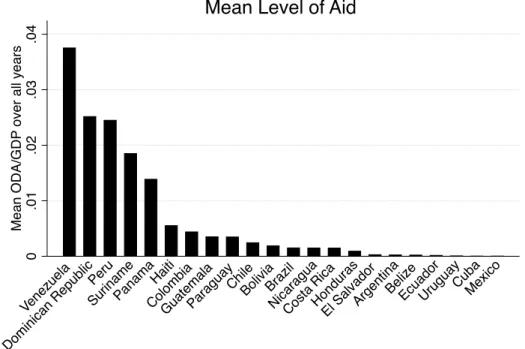
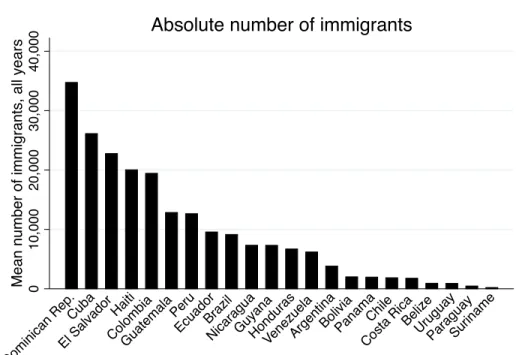
The following figures illustrate ODA allocated to and immigration from the countries in
my dataset, averaged over all years in the dataset.17 Figure 1 displays the variation in levels of
16Here, my use of “cumulative stock” should not be confused with my use of “change in immigrant stock.” Change in immigrant stock, though the data is from the same source, measures the yearly flow of immigrants through net change in cumulative stock.
aid received by countries in my dataset. Venezuela and Dominican Republic receive the highest
amount of ODA scaled to GDP, but Mexico (a large source of immigrants), receives very little in
comparison. Figures 2 and 3 illustrate the different ways to scale immigration. Mexico, though
it has the largest amount of absolute migration, falls towards the middle of the dataset in terms of
immigration per capita. Belize and Guyana, though sending a small number of migrants, have
very high immigration per capita measurements. For this reason, I use each measure in a
separate model as a means of checking robustness.
Figure 1: Mean Level of Aid, All Years
*Guyana= 0.41, omitted from graphic for better display
0 .01 .02 .03 .04 Me a n O D A/ G D P o ve r a ll ye a rs Vene zuel a Domi nica
n R epub lic Peru Surin ame Pana maHaiti Colomb
ia
Gua tema
la
Para
guay Chile Bolivi a Bra zil Nica ragu a Cost a R
ica
Hon dura
s
El Sa lvado
r
Arg entin
a
BelizeEcuad or
Uru