Katharine L. McGinigle
A Master's Paper submitted to the faculty of the University of North Carolina at Chapel Hill
in partial fulfillment of the requirements for the degree of Master of Public Health in
the Public Health Leadership Program.
Chapel Hill, NC
ACKNOWLEDGEMENTS
TABLE OF CONTENTS
Abstract ... 4
Introduction . . . 5
Purpose of the Master's Paper . . . 5
History of Methicillin-Resistant Staphylococcus aureus (MRSA) ... 5
Nosocomial Infections: A Public Health Problem . . . .. 7
MRSA Control Measures . . . 8
Institute for Healthcare Improvement: The 5 Million Lives Campaign . . . .. 1 0 Active Surveillance Cultures (ASCs) ... 11
Focused Question ... 13
Methods ... 14
Defining the Question . . . .. 14
Search Strategy ... 14
Eligibility Criteria ... 15
Selection of Eligible Articles ... 16
Quality Assessment and Validity ... 19
Data abstraction ... 20
Results ... 21
Discussion ... 27
Concerns About Study Design and Confounders . . . 27
The Role of a Randomized, Controlled Trial (RCT) ... 29
The Scandinavian Experience ... 30
Remaining Concerns: Target Population for Screening ... 31
Remaining Concerns: Laboratory Methods ... 33
Remaining Concerns: Contact Precautions and the Psychological Effects of Isolation ... 34
Remaining Concerns: Efficacy ofDecolonization ... 36
Remaining Concerns: Compliance ... 36
Limitations of this Review ... 38
Conclusion ... 39
Appendix A ... 40
Appendix B ... 42
ABSTRACT
Introduction Hospital-acquired infections are a frequent and serious public health problem. More than 60% of intensive care unit patients with Staphylococcus aureus have a methicillin-resistant form. Active surveillance cultures (ASCs), which are universal or targeted screening cultures of patients admitted to a hospital unit, have been proposed to control the increasing numbers of infections caused by multi-drug resistant organisms. Infection control groups and policy makers have an interest in ASCs, but this method is controversial because it is unclear if it reduces morbidity and mortality and if it is cost-effective.
Methods A systematic review of the literature pertaining to the use of ASCs and control of methicillin-resistant Staphylococcus aureus (MRSA) was conducted. The literature search included PubMed MEDLINE (1966- present), Web of Science (1955- present), CINAHL (1982 -present), the Cochrane Library, and a hand search of six infection control journals from 2000-2007 and the reference lists of the included articles. Two independent reviewers selected the primary research studies to be included. Included articles were summarized and assigned quality ratings.
INTRODUCTION
Purpose of the Master's Paper
Hospital-acquired infections are a frequent and serious public health problem, and their management and control are essential to minimize hospital-related morbidity and mortality.1 Some of the most challenging causes of hospital-acquired infections involve multi-drug resistant organisms, including methicillin-resistant Staphylococcus aureus (MRSA).1' 2 There are
numerous infection control methods that hospitals and other health care facilities employ; however, increasing numbers of infections are caused by multi-drug resistant organisms. One possible infection control measure is active surveillance culturing of patients admitted to hospitals or other health care facilities. However, there is not a clear definition of what
constitutes an "active surveillance culture" and how it should be used. There is also controversy in the field about the importance of active surveillance cultures in infection control.
This Master's paper is a systematic review of the effectiveness of active surveillance cultures to decrease hospital-acquired MRSA. National guidelines, existing reviews, and original research will be reviewed, and clinical recommendations from a national health care improvement campaign will be evaluated. Current evidence on the ability of active surveillance cultures to decrease MRSA-related morbidity and mortality, and on the cost-effectiveness of active surveillance culture programs, will be summarized.
History of Methicillin-Resistant Staphylococcus aureus (MRSA)
Drug resistant organisms have been recognized as a problem for decades. In 1943, only four years after penicillin became widely used, the first strains of penicillin resistant
enzyme that renders that antibiotic inactive. Since that time, bacteria have continued to evolve ways to evade the action of penicillin and over 200 types of penicillinases have been discovered.4 As the bacteria have evolved, there have also been advances in the pharmacology of antibiotics that have allowed physicians and infection control officers to maintain effective infection treatment and control. An example of one such advance in 1960 is methicillin; however, like its older counterpart, penicillin, Staphylococcus aureus soon developed resistance to the drug. The first isolates of methicillin-resistant Staphylococcus aureus (MRSA) were discovered in the United Kingdom just six months after the introduction of the drug.5 The first cases ofMRSA in the United States occurred in 1968_2 Thirty years later, in 1999, slightly over 50% of the
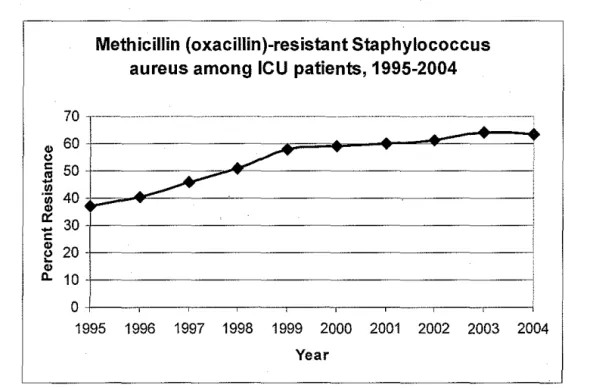
Staphylococcus aureus isolates taken from patients in intensive care units (ICUs) in the United States were resistant to methicillin? The resistance problem has continued to grow and now over 60% ofiCU patients with Staphylococcus aureus have MRSA.2 (Figure I)
Methicillin (oxacillin)-resistant Staphylococcus aureus among ICU patients, 1995-2004
70 ··· ··· ··· .... ··· . ··· ... . ... · -., 60
g
50+---~~~~~--~---~
~
__...-~ 40 ...
- 30+---~ !:
.,
~ 20+---~
.,
~ 10+---~
0+----.---,----,---.----r---.----,---.---~
1995 1996 1997 1998 1999 2000 2001 2002 2003 2004
Year
Researchers have been able to determine that methicillin-sensitive Staphylococcal aureus (MSSA) becomes resistant when it acquires a large genetic element called staphylococcal
cassette chromosome mec (SCCmec).4 Genetic analysis ofMRSA isolates from a variety of locations throughout the world indicate that SCCmec has only been transferred from a MRSA strain to a MSSA strain a few times; therefore, worldwide, there are only a few clonal types of MRS A. 4• 5 This implies that MRSA does not evolve from random de novo mutations within an
individual colonized with MSSA. 4 Instead, patients with MRSA colonization or infection most likely have acquired it from coming into contact with drug resistant bacteria. Therefore,
preventing MRSA exposure and transmission are key in the control of the drug resistant organism.
Nosocomial Infections: A Public Health Problem
As a combined group, infectious diseases are the third leading cause of death in adults in the United States behind heart disease and cancer.4 Unfortunately, a percentage of these
infections are acquired in hospitals. Infections are considered to be hospital-acquired, or
nosocomial, if they appear after two days of hospitalization or within thirty days after discharge.7 Excluding other types of healthcare facilities, in hospitals alone there are approximately 2
MRSA Control Measures
As a nosocomial or hospital-acquired infection, MRSA presents a significant burden to the United States healthcare system. Although it is now possible to be infected with community-acquired strains ofMRSA, the majority ofMRSA infections are still community-acquired in healthcare facilities. Accordingly, there have been many attempted interventions to reduce MRSA infection rates. To spread an infection, there must be 1) a source, 2) a mode of transmission, and 3) a susceptible new host. In hospitals, it is difficult to control source populations and susceptible new hosts, so most infection control measures are aimed at interrupting the transmission of pathogens.9
Thorough hand washing is commonly cited as the most important intervention for controlling spread of infection from one patient to another. 9 In addition to hand washing, the Centers for Disease Control and Prevention (CDC) also recommends that patients infected with certain microorganisms are assigned to a single room, transported as infrequently as possible, and have specific or individualized patient care equipment available in the room.9 In certain cases, gloves, protective gowns, and masks may be required.9
infection. 9 MRSA is primarily spread through direct or indirect contact, so patients infected with MRSA must be placed on contact precautions.9 When a patient is on contact precautions,
anyone interacting with the patient must use patient-specific equipment if possible and wear protective gowns and gloves. Masks or respiratory barriers are not needed.9
In 2003, the Society for Healthcare Epidemiology of America (SHEA) published a special report titled "SHEA Guideline for Preventing Nosocomial Transmission ofMultidrug-Resistant Strains of Staphylococcus aureus and Enterococcus. "4 The guideline was
commissioned because the organization felt it was not making progress with reducing the number of hospital-acquired infections despite it being a priority.4 The recommendations put forth in the SHEA guideline were not based on a systematic review.
Instead, recommendations stemmed from evidence found in literature published on PubMed MEDLINE (1966-2002, unreported search strategy) and unpublished literature in the authors' libraries. The major recommendations of the guideline involve using active surveillance cultures to identify the reservoir from which MRSA can spread, limiting unnecessary antibiotic use to reduce the risk of more bacteria developing drug resistance, and increasing hand hygiene, barrier precautions, and decolonization of colonized patients to limit opportunities for
• • 4 transmiSSIOn.
Institute for Health care Improvement: The 5 Million Lives Campaign
The IHI is a non-profit organization that was founded in 1991 to "improve the lives of patients, the health of communities, and the joy of the healthcare workforce."11 The IHI launched the 5 Million Lives Campaign in December 2006 with a mission to "protect patients from five million incidents of medical harm over the next two years [Dec 2006- Dec 2008]."12 The organization defmes medical harm as:
"Unintended physical injury resulting from or contributed to by medical care (including the absence of indicated medical treatment), that requires additional monitoring, treatment or hospitalization, or that results in death. Such injury is considered harm whether or not it is considered preventable, resulted from a medical error, or occurred within a hospital. "12
In order to substantially reduce medical harm, the campaign managers hope to enlist 4,000 hospitals in the United States to work on quality improvement in eleven different focus areas. These focus areas are: improve rapid response teams, provide evidence-based care for acute myocardial infarction, provide evidence-based care for congestive heart failure, prevent adverse drug events, prevent harm from high-alert medications, reduce surgical complications, prevent pressure ulcers, prevent central line infections, prevent surgical site infections, prevent ventilator associated pneumonia, and reduce MRSA infection rates. 12
infection-specific goals. The IHI recommends using a five-pronged approach to reduce MRSA
infections that includes:
1. Hand hygiene
2. Active surveillance cultures 3. Isolation precautions
4. Improved environmental services cleaning 5. Ventilator and central line bundling
Active surveillance cultures are the focus of this Master's Paper since this intervention is
relatively new, controversial, and not conclusively shown to be successful or cost-effective over
time.
Active Surveillance Cultures (ASCs)
Colonized and infected patients, not environmental contamination, represent the largest
reservoir ofMRSA in health-care facilities.5•13 At many institutions, only patients with
infection-like symptoms have microbiological samples taken to be cultured to assist with the
diagnosis of active MRSA infection. While this effectively identifies infected patients who need
immediate treatment, it does not address asymptomatic, colonized patients who represent the
other portion of the pathogen reservoir. It has been estimated that 35-84% of colonized patients
go undetected by clinical culturing of only symptomatic patients.5 Using active surveillance
cultures (ASCs), or universally screening all patients admitted to a unit by culturing
microbiological samples taken from the anterior nares, will identify 80% of patients colonized
withMRSA.5
Identifying all of the colonized patients is only the first step in eliminating the reservoir
ofMRSA. The knowledge gained from active surveillance cultures is only helpful in reducing
MRSA carriers are identified, they can be treated in a manner similar to other patients with active MRSA infections. By isolating colonized patients and putting them on contact precautions, health care workers theoretically will be more likely to adhere to strict hygiene measures and less likely to spread the infection to other patients. Further, colonized patients can be decolonized to eradicate the MRSA with a fairly simple treatment regimen involving
chlorhexidine gluconate for washing, topical intranasal mupirocin, and/or oral rifampin and doxycycline for seven days.14
Although identifying patients who act as a reservoir ofMRSA and then managing them accordingly intuitively seems like a good idea, there is a great amount of controversy
surrounding the concept of active surveillance cultures. A survey of 463 infectious disease specialists indicates that there is little agreement on the subject.15 The study showed that only 50% of the specialists were in favor of using active surveillance cultures (ASCs), and only 30% worked in healthcare facilities that routinely used ASCs. The half of the respondents who oppose universal MRSA screening cite the following reasons:
"First, need additional laboratory resources and are costly; second, create increased demand for isolation rooms; third, could cause logistic difficulties when newly identified patients are moved from one room to another; and fourth, could delay placement of some patients into extended-care facilities. Additionally, the effectiveness of screening cultures to reduce transmission of MRSA has not been established in randomised trials."15
medical conditions. It is also unclear how isolation precautions should be used in conjunction
with ASCs. One option is that all of the patients in the chosen screening population should be
put on isolation precautions until it is proven that they are negative for MRSA, but another
option is that patients should they be put on precautions only after it is shown that they are
positive for MRS A. The frequency of screening is not defined either, and there does not appear
to be much understanding of how soon after admission a previously negative patient can become
colonized and how often follow up cultures should be performed to expeditiously identify these
newly converted patients.
SHEA and the IHI, among other professional organizations, actively support ASCs as a
part of their campaign to eliminate MRSA infections; however, hospitals have been left to decide
for themselves exactly what should be done and how ASCs should be incorporated into their
infection control protocols.
Focused question
Professional organizations and infection control officers agree .that hospital-acquired
infections must be prevented, but do not agree on the most effective method of prevention. In
adult medical and surgical intensive care units, are active surveillance cultures (compared to no
screening cultures or usual care) associated with MRSA-related mortality, incidence ofMRSA
METHODS
Defining the question
Population= patients in adult surgical or medical intensive care units Intervention = active surveillance culture
Comparison= no surveillance cultures or usual care (ie, screening only high-risk patients) Outcome= MRSA-related mortality, incidence ofMRSA infections, cost ofMRSA-related care
This systematic review addresses only patients in intensive care units because these units have been shown to be the most likely location for the cross transmission and acquisition of nosocomial infections that are resistant antimicrobial drugs.16 The intervention to be evaluated is nasal swabs for culture ofMRSA that occur at admission to the ICU and at least weekly
thereafter because nasal swabs alone have been shown to identify 80% of MRSA carriers, which is more than any other body site.12 However, studies that collect culture specimens from other body sites in addition to the anterior nares at least weekly will also be included. The comparison group is defined as a group that does not receive weekly cultures from the nares for MRSA detection or a group that receives usual care (ie, comparison of screening only high-risk patients vs. universal screening). The outcomes are limited to MRSA-related mortality, incidence of MRSA infections, and cost ofMRSA-related care.
Search strategy
("Methicillin Resistance"[Majr] OR "methicillin resistant"[tw] OR "methicillin resistance"[tw]) AND ("Staphylococcal Infections"[Majr] OR "Staphylococcus aureus"[Majr] OR (mrsa[tw] NOT medline[sb])) AND ("sentinel
surveillance"[ mesh] OR surveillance[tw] OR "Mass Screening"[mesh] OR screening[tw] OR active screening[tw] OR active surveillance[tw])
("Methicillin Resistance"[Majr] OR "methicillin resistant"[tw] OR "methicillin resistance"[tw]) AND ("Staphylococcal Infections"[Majr] OR "Staphylococcus aureus"[Majr] OR (mrsa[tw] NOT medline[sb])) AND ("economics"[Subheading] OR "costs and cost analysis"[MeSH Terms] OR cost[Text Word])
List of search terms:
1. methicillin resistance 8. mass screemng 2. methicillin resistant 9. screening
3. Staphylococcal infections 10. active screening 4. Staphylococcus aureus 11. active surveillance
5. MRSA 12. economics
6. sentinel surveillance 13. costs and cost analysis
7. surveillance 14. cost
Also, a hand search of the Centers for Disease Control and Prevention and Institute for
Healthcare Improvement websites was completed to look for guidelines and cited original
articles. Six of the major journals in the field of infection control were also hand searched from
2000-2007. These journals are Journal oflnfectious Disease, Clinical Infectious Diseases,
Journal of Hospital Infection, Infection Control and Hospital Epidemiology, and the American
Journal oflnfection Control. Finally, the reference lists of included articles were hand searched.
Personal communication with David Weber, MD, MPH, an expert in the field of hospital
infection control, confirmed the inclusiveness of the overall search strategy.17
Eligibility criteria
The study population was limited to patients in intensive care units who were screened
literature, these parameters seemed to be the most commonly used and have a certain degree of
. 'fi . b hi d h 12 16 18 F rth h . h .
sc1ent1 1c reasonmg e n t em. · · u er, t e pnmary outcomes c osen were patient centered (ie, MRSA infection rates, MRSA-related mortality, or all cause mortality) or related to cost-benefit.
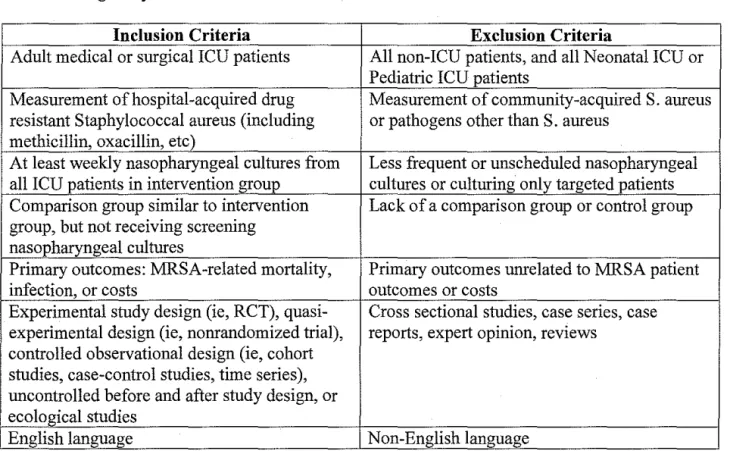
The body of literature regarding active surveillance cultures includes few studies with rigorous study designs; therefore, broad criteria for study designs that could be included were set. More emphasis was placed on studies that were well designed with appropriate control groups, but uncontrolled before-and-after studies and ecological studies were also included to cover the literature upon which current recommendations have been made (Table I).
Table 1. Eligibility criteria.
Inclusion Criteria Exclusion Criteria
Adult medical or surgical ICU patients All non-ICU patients, and all Neonatal ICU or Pediatric ICU patients
Measurement of hospital-acquired drug Measurement of community-acquired S. aureus resistant Staphylococcal aureus (including or pathogens other than S. aureus
methicillin, oxacillin, etc)
At least weekly nasopharyngeal cultures from Less frequent or unscheduled nasopharyngeal all ICU patients in intervention group cultures or culturing only targeted patients Comparison group similar to intervention Lack of a comparison group or control group group, but not receiving screening
nasopharyngeal cultures
Primary outcomes: MRSA-related mortality, Primary outcomes unrelated to MRSA patient
infection, or costs outcomes or costs
Experimental study design (ie, RCT), quasi- Cross sectional studies, case series, case experimental design (ie, nonrandomized trial), reports, expert opinion, reviews
controlled observational design (ie, cohort studies, case-control studies, time series), uncontrolled before and after study design, or ecological studies
Selection of eligible articles
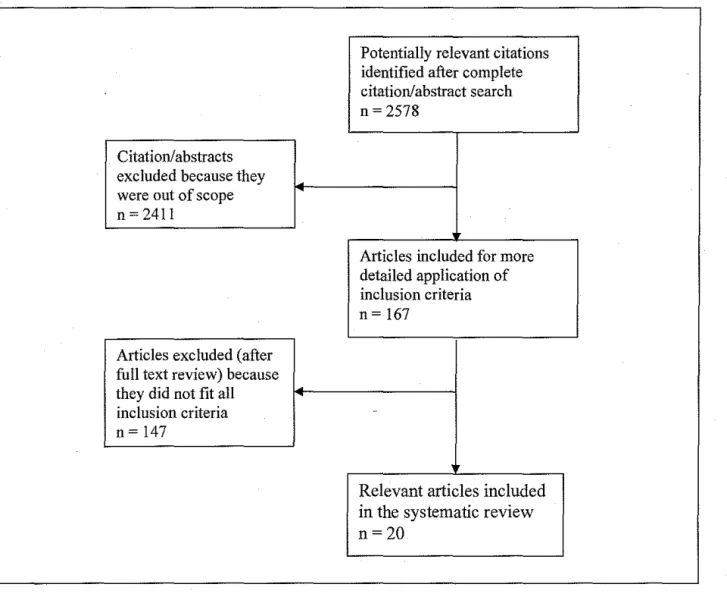
First, the titles and abstracts generated by searching were subjected to the
inclusion/exclusion criteria. Any article with an abstract that failed to meet any inclusion criteria or that was clearly out of the scope of the review question was excluded. The articles with abstracts that fully or partially fulfilled the inclusion criteria were saved and their full text copies were obtained. The inclusion/exclusion criteria were applied again, this time to the full text articles. In order to be selected, studies had to fulfill all of the inclusion criteria and none of the exclusion criteria.
The judgments about which studies to include were made first by the author. Next, a second reviewer repeated the process starting with the abstracts and then using the full text articles, to reapply the inclusion/exclusion criteria to all of the articles excluded by the author. Any disagreements were resolved by discussion or by using a third reviewer.
Potentially relevant citations identified after complete citation/abstract search n = 2578
Citation/abstracts excluded because they were out of scope n = 2411
Articles included for more detailed application of inclusion criteria n= 167
Articles excluded (after full text review) because they did not fit all
inclusion criteria
-n= 147
Relevant articles included in the systematic review n=20
Quality Assessment and Validity
The quality criteria used to assess the internal validity of each of the included
observational studies were based on the guidelines set forth by the United Kingdom's National Health Service Centre of Reviews and Dissemination (Appendix A).19 Each study was evaluated in terms of the research question( s ), description of source and study population characteristics, intervention integrity, data collection and measurement, and analysis methods including adequacy of sample size and statistical methods. It is important to note that specific outcomes and the magnitude of effect of the intervention are separate issues from the quality of the data, and are not included in the quality assessment of each study.
The quality of the economic analyses was rated based on guidelines from the United States Preventive Services Task Force (Appendix A).20 Each study was evaluated in terms of the research question, appropriateness of the study population and the reference comparison, quality of the effectiveness evidence on which the cost analysis is based, method used to estimate costs, consideration of societal costs, long term costs, and the cost of harms, and statistical methods.
A checklist of items for each type of study design was created and used to rate the internal validity (ie, case selection, measurement, confounding, and statistical analyses) and external validity (ie, study population, interventions, and outcomes). The overall rating of methodological quality was based on consideration of study design, and the internal and external validity assessments. The quality assessment was performed by one reviewer who was not masked to the names of the authors, institutions, or journals.
Controlled observational studies or economic analysis that satisfied 80% of the criteria on the checklist were rated "high", studies that satisfied 40-79% of the criteria were rated "moderate", and studies satisfying fewer than 40% of the criteria were rated "low".
The same quality criteria checklists were applied to each of the uncontrolled studies in the same manner as the controlled studies, but the scoring system was slightly different. Observational studies that did not have control groups, even if well done, could not be rated as "high" because uncontrolled studies are subject too many possible threats to validity. Therefore, uncontrolled observational studies satisfying 80% of the criteria were rated "moderate" and studies satisfying fewer than 80% of the criteria were rated "low".
Data Abstraction
RESULTS
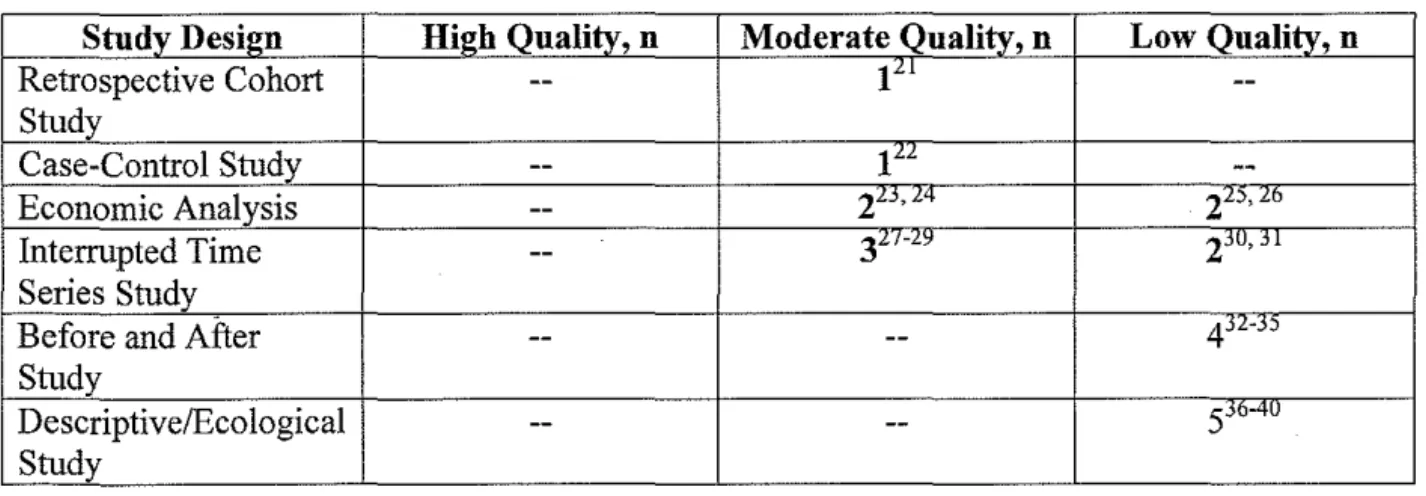
Twenty studies that examined active surveillance cultures and incidence of hospital-acquired MRSA or MRSA associated costs fulfilled the criteria to be included in this systematic review. There were no randomized controlled trials that include patient-related outcomes of ASCs. Only two out of sixteen observational studies (12.5%) had a control group. There was one retrospective cohort study, one case-control study with a cost-effectiveness analysis, five interrupted time series studies, four uncontrolled before and after studies (one of which included a cost effectiveness analysis), five ecological studies, and four economic analyses.
None of the studies included in this systematic review were of high quality. The two controlled studies had the best internal validity; however, they were still limited by weak study designs and other threats to validity. The maximum rating that uncontrolled studies could obtain was moderate due to the inherent weaknesses in the study designs. Three of the five interrupted time series were well done considering the limitations of the study design and got a moderate quality rating. All of the before and after studies and ecological studies were of low quality (Table 2).
Table 2. Methodological quality by study design.
Study Design High Quality, n Moderate Quality, n Low Quality, n
Retrospective Cohort
--
1"'--Study
Case-Control Study
--
t'"
--Economic Analysis
--
2"'·""
2"'·""
Interrupted Time
--
3"'""'
2'"·
j jSeries Study
Before and After
--
-- 4 J N JStudy
Descriptive/Ecological
--
--
s'""'"
A summary of all included studies can be found in an evidence table (Appendix B). Specific information highlighting significant results and the critical appraisal of the included studies follows.
Chaix and colleagues did a case-control study in 1999, which is an observational study that warrants considerable attention in this systematic review because it is one of the only studies with a control group and it met most methodological standards.22 The cases and controls were selected properly and were comparable with respect to identified possible confounders, the intervention and measurement of outcomes was the same in both groups, and there was an appropriate statistical analysis. However, case-control studies are subject to considerable confounding, which threatens the overall internal validity and is the primary reason for the "moderate" quality rating. The cases in this study were adult medical ICU patients with MRSA infections who were randomly selected from an infection control database, and the matched controls were medical ICU patients who did not acquire MRSA. Over a four year period in their hospital, MRSA infection incidence decreased from 5.6 to 1.4 cases per 100 admissions. They also calculated that an ASC program is cost-effective if MRSA importation rates are between 1% and 7%?2
The three interrupted time series of moderate quality were all in agreement that an ASC program will decrease the incidence of hospital-acquired MRSA infections. Huang et al reported the most striking results; a 75% decrease in MRSA infections in the ICU where the ASC
study design, all three of these studies were well done and their results should be seriously considered. They each included good measurements of baseline characteristics, evidence that the ASC intervention was independent of other interventions, discussion of possible confounders, comparisons to secular trends, and other appropriate statistical analysis.
Three of the four economic evaluations agree that some form of ASCs and the subsequent management of colonized patients are cost effective. But, only two analyses, Wernitz et al and Lucet et al, are true cost-benefit analyses with reasonable internal validity and study designs.23• 24 These two studies identified all relevant costs and valued them appropriately, included
comparisons to alternative interventions, and performed a sensitivity analysis. The primary weakness in both studies is that they base their effectiveness evaluations on trials they have performed rather than on a collection of the best available evidence. Lucet et al performed a cost effectiveness analysis based upon a multicenter ecological study. The analysis by Wernitz et al is based upon an interrupted time series study, and is the best cost-effectiveness evidence included in this study.
Wernitz et al reported in 2005 that their hospital was only compensated for 26% of costs required to care for MRSA patients who exceeded their diagnosis related group (DRG) length of stay and payment threshold value as a result of a MRSA infection. Using a high-risk screening program in their hospital, they were able to prevent about 35 cases ofMRSA infection, including surgical site infections, pneumonia, and blood stream infections, and estimated that their
Lucet and colleagues were the only group who studied the costs of universal screening of
all patients admitted to an ICU.24 In their cost-benefit analysis of moderate quality, they strongly
support universal ASCs as they found using high-risk profiles for selective screening not
sensitive enough to detect enough MRSA cases, and that universal screening was the most
beneficial and cost-effective in their hospital. Using a sensitivity analysis, the determined that
universal screening and preventive isolation saved money when the prevalence of MRSA
colonization was between 2% and 20%.24
The other two economic evaluations were cost comparison studies and received low
quality ratings. Cost comparison studies are weak because they only assess the cost and not the
effectiveness of an intervention.19 Neither of the following studies are fatally flawed because
they did include most relevant costs and valued them appropriately; however, there is no
consideration of alternative interventions, no measure of effectiveness, and no sensitivity
analysis.
Gavalda and colleagues used a cost comparison between the costs of a high-risk
screening program and the attributable costs ofMRSA infections. Similar to the findings by
Wernitz eta/, they reported that a high-risk screening program is cost effective iffour MRSA cases are prevented. In their hospital, that meant reducing incidence of infections by 11
%.Z
6The fourth economic study, a cost comparison by Kim eta/ in 2001, was in disagreement with the others. They were wary of recommending ASCs because they found that screening and
the subsequent management of colonized patients accounted for 45% of the total MRSA-related
costs in their hospital.25
The remainder of the included observational studies also have low internal validity, and
the ten low quality studies are in agreement with the relatively higher quality studies mentioned above, and state that ASCs are effective in reducing the number of hospital-acquired MRSA infections. Eveillard and colleagues only found a decrease from 10% to 9% acquisition of MRSA per 100 days with ASC ofiCU patients only.32 But, when they included ICU patients, other high-risk patients, and an alert system in the intervention there was an overall 58% decrease in MRSA infections from 10.4% to 3.1% MRSA acquisition per 100 hospitalization days ofMRSA carriers.32 The articles by Shitrit et al, Pan eta!, and Souweine eta! all report about a 50% decrease in MRSA infection incidence. 30• 33• 35 Souweine and collegues also report that although infection rate decreased with the ASCs, there was no change in the rate ofMRSA-related mortality.35 Tomic eta! report a dramatic decrease in incidence ofMRSA infections from 4.0 to 0.4 cases per 1000 patient-days (50% to 6.1% acquisition)34 Lucet and colleagues report a more moderate decrease from a 7.0% to a 2.8% MRSA infection incidence.37 Troche and colleagues found an initial decline in MRSA infection incidence from 9.2 to 6.6 cases per 1000 patient-days, but then ASC compliance dropped to only 68% and the infection rate increased to 11.6 cases per 1000 patient-days. By the end of the study period, compliance had improved and there was a decrease in MRSA acquisition rate to 5.6 cases per 1000 patient-days?9
patient management like contact isolations, and performed daily ASCs on patients an adult medical ICU without reporting the results to hospital staff or using isolation. 38 Over a three month period, the mean daily prevalence of MRSA was about l 0%, which did not show a changing trend for MRSA colonization or infection compared to a three year period surrounding the study. Further, there was no cross-contamination ofMSSA or MRSA between ICU patients, and the authors conclude that had the ASC program been followed up with isolation precautions they would have appeared falsely successful and are not a useful infection control strategy. 38
The results of the poor quality studies may be used to support results from better studies; however, without a control group, or at least trend data that have been statistically adjusted for serial autocorrelation and secular trends, all of the low quality studies are at risk for
contamination of the intervention, measurement bias, and confounding. The threats to validity and poor evidence give very little scientific basis for drawing conclusions and making
DISCUSSION
Based on the five moderate quality observational studies and the two cost-benefit analyses, the results show that ASCs are associated with a decreased incidence of hospital-acquired MRSA infections and that ASCs are cost-effective under a wide variety of conditions. However, the lack of high quality evidence and predominance of generally mediocre studies must be taken into account and may introduce doubt to the overall positive results.
Concerns about study design and confounders
There were only two studies with control groups found in the literature. These studies were done well and have few threats to their validity. Their results should be emphasized over the results of the remaining fourteen uncontrolled observational studies included in this
systematic review. However, although these two were the best methodologically in this review, prospective cohorts and randomized controlled trials are significantly stronger and more valid study designs.42 Unfortunately, most of the studies in this review and those that have also been used as evidence for guidelines are subject to confounding and have other problems inherent to their study designs.
Only two of the articles reported using a control group,21•22 and none of the studies used
Ecological study designs are fraught with weaknesses. The ecological studies included in this review analyzed a population at different points in time once the ASC intervention was started. 36•40 The unit of analysis is the population of patients, not the individual; therefore, ecological studies lack the necessary linkage between individual patients and outcomes. This potential threat to the validity is termed "ecological fallacy," which is defined as incorrectly assuming that relationships found in aggregate data will also be found among individuals.43 Additionally, without a control group for comparison, it is impossible to determine whether the measured outcomes are associated with or caused by the intervention. Ecological studies are of low quality and any conclusions drawn from them must be critically appraised and considered with great reservation.
Uncontrolled before and after studies can be effective for demonstrating a change in the incidence rate of the outcomes, but without a control group or at least trend data (as used in interrupted time series) it is impossible to tell if the intervention caused the observed change. Although statistical significance tests can be applied to help rule out random chance causing the change in outcomes, there are still many confounders that could be present in the before or after period that cause differential bias and effect the results. Large differences in outcomes between the pre- and post-intervention periods may be indicative of some effect, but there cannot be certainty in the conclusions drawn from this kind of evidence.
pathogen reservoir and endemic level of MRSA are changing. However, it is still possible to measnre and compare the incidence of overt MRSA infections as long as the diagnoses are made from clinical cultnres and constellations of symptoms rather than the active surveillance cultnres in the study intervention.
The Role of a Randomized, Controlled Trial (RCT)
Many infection control specialists, epidemiologists, and methodologists have called for a randomized controlled trial (RCT) in order to obtain reliable results and stronger guidance.44 It is possible that a large, multicenter RCT that uses hospitals as the unit of analysis could be very useful in answering many questions regarding the effectiveness of ASCs in infection control. If the RCT demonstrates a positive relationship and confirms the results from the weaker studies discussed above, then the next steps are clear. As suggested by the SHEA guideline, the hospital infection control departments will begin to implement some version of ASCs in their ICUs and other high-risk units. The result will potentially be a reduction in the MRSA infection rates and decreased levels of preventable morbidity and mortality.
The Scandinavian Experience
Many Scandinavian countries have been using ASCs and isolation for a number of years and they may be able to serve as a model in the absence of high quality studies or an RCT. The prevalence ofMRSA in Scandinavian countries is very low at only about 2%.45 Even more notably, the prevalence ofMRSA in the Netherlands has been as low as 0.5% in 1999.46 The Dutch attribute this infection control success to their "search and destroy" method.
The Dutch Working Party Infection Prevention sets the guidelines for the control of MRSA in Dutch hospitals and it is largely centered on "search and destroy." All patients transferred from an outside facility are kept in quarantine in a single room with a negative pressure anteroom for at least two days until three serial cultures are negative for MRSA. Cultures are taken at one hour intervals after admission from the nose, throat, perineum, urine, sputum, and open wounds. All other patients directly admitted to the hospital are also screened serially three times at all of the sites mentioned above, but are not initially isolated. If one of these patients is colonized with MRSA, then they are moved to an isolation room. All other patients in the same original room must also be screened and put into isolation until it is proven that they are MRSA negative. Any involved health care workers are screened daily for MRSA. When two patients or one health care worker harboring MRSA is detected, the unit is closed to new admissions until the colonization/infection is treated.46
Additionally, it is unclear if the costs of a strict "search and destroy" program to the health care system and society in America would be acceptable or affordable. The University Medical Center Utrecht in the Netherlands retrospectively analyzed the costs of their "search and destroy" program over a ten year period from 1991 to 2000.47 Included in the study were costs associated with additional disposable materials, cultures, medication, decontamination of exposed items, and unit closures. Over the last decade, their "search and destroy" program cost about 2.8 million euros.47 Included in that value is the cost of2,265 lost hospitalization days and 48 unit closures. Health care delivery and payment schemes are different in the United States and the Netherlands. The United States is also much larger and has many more hospitals and ICUs than the Netherlands. Setting the material costs aside, it is possible that losing thousands of hospital days across all of the hospitals in the United States could be overwhelming to health care financing.
Remaining Concerns: Target Population for Screening
Most of the included studies used high-risk groups to target their screening programs, but others used universal screening of all patients admitted to certain units. It is unclear what
population should be screened. For example, Huang eta! showed that using ASCs to reduce the number ofMRSA infections among ICU patients actually reduced the MRSA infection rate in the remaining units of the hospital, which seems to indicate that targeted screening is sufficient.29 However, Lucet eta! state in their hospital "only universal screening detected MRSA carriage with acceptable sensitivity. "24
characterizing independent risk factors associated with MRSA colonization in patients admitted to a surgical ICU.18 Of the 1,469 patients screened over a fifteen month period, 8% had nasal MRSA colonization. Risk factors for MRSA colonization at admission to the ICU included:
1. Hospitalization in the past year
• 1-2 admissions= aOR 2.60, 95%CI 1.47-4.60 • >2 admissions= aOR 3.56, 95%CI 1.72-7.40 2. Hospital stay >5 days prior to ICU admission
• aOR 2.54, 95%CI 1.49-4.32 3. Chronic obstructive pulmonary disease
• aOR 2.16, 95%CI 1.17-3.96 4. Diabetes mellitus
• aOR 1.87, 95%CI 1.10-3.19 5. Isolation ofMRSA in past six months
• aOR 8.18, 95%CI 3.38-19.7918
Used as a predictive test to identify patients with MRSA colonization, the presence of at least one of the above independent risk factors had a sensitivity of 89% and a specificity of 45%. The negative predictive value of this risk factor screening tool is 97%.18 Therefore, a patient without any of the above risk factors can likely be ruled out as a possible MRSA carrier and does not need to have nasal swabs done for a microbiological culture.
had the broadest spectrum of high-risk patients and included patients transferred from hospitals where MRSA is endemic and patients requiring dialysis who also have a skin infection, patients receiving treatment that involves any kind of invasive device, and patients with pressure sores.28
Remaining Concerns: Laboratory Methods
Currently, there is no standard method for culturing and detecting MRSA across different clinical microbiology labs. Many labs use one of the numerous forms of selective incubation media, others use S. aureus identification tests and a methicillin susceptibility test, and some use direct identification tests via polymerase chain reaction (PCR).48 Even labs that use the same methods may have different experimental conditions such as the incubation temperature or salt concentration of the culture media. 48 The high level of variability in culturing method, time, and cost makes it difficult to assess each hospital's ability to accommodate increased demand for culturing if ASCs are implemented.
Kunori et al developed a cost effectiveness model based in year 1999 English pounds to examine various laboratory screening approaches to detect MRSA.48 Based on details from a literature search, the British National Health Service costs database, and modeling with sensitivity analysis, they report that the most cost-effective screening method is to inoculate a single nasal sample directly onto ciprofloxacin Baird-Parker agar without the use of broth and then confirm the result with a staphylococcal latex test (ie, Pastorex Staph-Plus), but not with any methicillin-resistance test.48 This is valuable information for hospitals with labs that are unsure if they can afford an increased volume of MRSA samples for culture.
preemptively isolate patients until it is proven that they are negative for MRSA. With rapid testing, it is possible to rule out patients without MRSA more quickly, so the number of costly isolation days will decrease. More commonly, hospitals using ASCs wait to isolate patients until after they are identified as MRSA carriers. Rapid screening with PCR will reduce lag time by identifYing the positive patients who need to be isolated sooner, thereby increasing the
effectiveness of the program. Notably, PCR was not used in any of the studies included in this review. The use of PCR for detecting MRSA is relatively rare and still being studied.
Harbarth et al used quick, multiplex immunocapture-coupled PCR in the surgical and medical ICUs of their hospital in Switzerland and found that the median time from ICU admission to notification of test results decreased from 87 to 21 hours in the surgical ICU (p < 0.001) and from 106 to 23 hours in the medical ICU (p < 0.001).49 The combined use of the quick screening method and preemptive isolation of all patients until a negative result was obtained was able to reduce the number of hospital-acquired MRSA infections in the medical ICU (RR 0.3, 95%CI 0.1-0.7), but not in the surgical ICU (RR 1.0, 95%CI 0.6-1.7).49 The results of this study are mixed, and it is hard to determine whether implementing PCR screening for MRSA will actually have an effect on patient outcomes in hospitals with different case m1xes.
out, the MRSA detection rate will increase and a greater number of patients will subsequently be put in isolation on contact precautions at some point during their hospitalization.
Based on the studies included in .the review and the descriptions of the "search and destroy" method in Scandinavia, it is also unclear how contact precautions should be used in conjunction with ASCs. Stricter protocols may favor isolating all patients until they are proven negative for MRSA colonization. However, most of the included studies waited to receive the results from the cultures and then isolated the MRSA positive patients. There needs to be further investigation of the necessity of preemptive isolation, the additional costs of extra days on contact precautions, and a hospital's ability to shift to using mainly single rooms if preemptive isolation techniques are used.
In addition to the increased financial burden to the hospital that comes with higher number of patients on isolation precautions, there are also patient-centered "costs" to isolation. Kirkland and Weinstein at Duke University report from a prospective observational study that health care workers treating ICU patients on contact precautions were about two times less likely to enter the room compared to health care workers taking care of ICU patients not on contact precautions.
5°
Evans et al from University of Virginia report similar results. They found that isolated patients were visited 5.3 times/hour compared to 10.9 visits/hour for nonisolated patients (p<0.001).51 Additionally, despite more severe disease as designated by higher mean Acute Physiology and Chronic Health Evaluation II (APACHE II) scores among isolated patients (1 0.1 ± 1.0 vs 7.6 ± 0.8, P = .05), the overall contact time with health care workers was significantly less (29 ± 5 vs 37 ± 3 minlh, P = .008).51 It is unclear if the reduced level of contact with healthdoes indicate that even after one week of isolation precautions, adult patients have worsening
d epresswn an anxiety symptoms. . d . 52
Remaining Concerns: Efficacy ofDecolonization
There is a systematic review maintained by the Cochrane Collaboration of all of the
RCTs published from 1966 to 2003 that compare the effects of topical or systematic
antimicrobials versus placebo on nasal and extra-nasal MRSA carriage, adverse events, and
incidence of subsequent MRSA infections. 53 The conclusions drawn from the review of the six
included randomized controlled trials are:
"There is insufficient evidence to support use of topical or systemic antimicrobial therapy for eradicating MRSA. There is no demonstrated superiority of either topical or systemic therapy, or of combinations of topical and systemic agents. Potentially serious adverse events can arise from use of systemic agents. Topical or systemic agents can lead to the development of resistance to the antimicrobial agent used for eradication."53
Although the literature, including many RCTs, does not support the use of topical or systemic
medications for MRSA decolonization, almost half of the included studies used decolonization
as part of their intervention program. Although in this case, the literature is sufficient and the
results are clear, there is still variation in the use of decolonization as a part of an ASC program
that illustrates the amount of uncertainty and confusion surrounding the subject.
Remaining Concerns: Compliance
Few of the studies included in this review reported levels of compliance with performing
nasal swabs for the active surveillance of MRSA. It is unclear how thorough the screening must
Additionally, the success of ASCs seems to hinge on the resultant actions that are taken such as isolation, contact precautions, and increased hygiene and cleaning that try to reduce the possibility of cross contamination. Unfortunately, healthcare workers' hands are the primary vehicle for cross contamination of patients in healthcare facilities.2 The 2002 Guideline for Hand Hygiene in Healthcare Settings included a review of thirty-four observational studies from
1981-2000 that report an average of 40% (range 5-81 %) compliance with hand hygiene
recommendations in health care facilities.54 One of the theories supporting contact precautions is that healthcare workers will be alerted to the presence of an infectious agent and will take the necessary precautions needed to avoid its spread. However, in an observational study at a large teaching hospital in Canada, the average compliance with all MRSA precautions was only 28%.55 In particular, compliance with hand hygiene (either using alcohol rub or washing with soap and water) was 35% and the compliance with gowning and gloving was 65%.55
Limitations of this review
All of the components of the search were limited to English, which may present some
bias as there may be many researchers who do not speak English as a first language and who
have published relevant studies in a non-English journal. However, this bias is likely minimal
because there are a great number of studies published in English by researchers from
non-English speaking countries that have been included in this review.
As with all systematic reviews of published literature, publication bias may be affecting
this review. Publication bias is of particular concern in this review because of the large number
of poor quality studies. Studies with negative findings, especially those with moderate or poor
quality, are not as likely to be published, and it is possible that the preponderance of studies
supporting ASCs present a falsely inflated positive evidence base.
Additionally, the quality assessment and data abstraction components of this systematic
CONCLUSION
Observational evidence favors the use of ASCs, but the overall quality is so low that definitive, evidence-based recommendations cannot be made. This review identified many gaps within the literature, including a need for a clear definition of ASCs, a clear implementation protocol that includes a defined screening group and laboratory methods, and rigorous economic evaluations. Considering the paucity of high quality information and the uncertainty concerning ASCs, it is not surprising that there is no general consensus about active MRSA screening among infection control experts.
It is surprising that highly respected professional organizations such as SHEA and IHI have strongly recommended using ASCs in their most recent guidelines without having a strong scientific foundation to support them. However, making recommendations for clinical practice often involves issues outside of basic scientific proof. For example, patient or societal
expectations, legal concerns, ethical considerations, and the desire to use novel concepts for quality improvement may also be driving the decision to support ASCs. Considering these factors along with the need to reduce a large public health problem, the generally positive results supporting ASCs, and the great success of the "search and destroy" method in Scandinavia, it is understandable that these organizations favor the implementation ofMRSA screening in
hospitals across the United States.
APPENDIX A
Evidence Rating Criteria for Observational Studies19
One point was given for each "yes" answer. Controlled observational studies that meet
80% or more of the criteria are rated as high, 40-79% are rated as moderate, and less than 40%
are rated as poor. Studies that do not include a control group cannot be rated "high."
Uncontrolled observational studies that meet 80% of the criteria are rated as moderate, and those
that meet less than 80% are rated as low.
COHORT STUDY
Quality Criterion Yes No
~~·there sufficient description of the groups and the stribution of prognostic factors?
Is the intervention sufficientlydescribed?
Were the groups comparable on all important onfounding factors or were appropriate adjustments made?
Was the outcome assessment masked to exposure latus?
Was the follow-up long enough for outcomes to pccur?
Did a reasonable proportion of the cohort follow-up?
~ere the drop out rates and reason similar across groups?
[cASE-CONTROL STUDY
Quality Criterion Yes No
s the case definition explicit?
~ere the controls randomly selected from the
~ource population?
How comparable are the groups with respect to
~onfounders?
~as the intervention assessed the same way for both groups?
f/vas the response rate well defined?
~ere reasons for non-response similar in both groups?
BEFORE AFTER STUDY
Quality Criterion rres No
~e baseline characteristics measured? Was there a power calculation?
Were possible confounders reported? Was there Qood intervention inteQrity?
Was there protection against contamination or
ascertainment that intervention was independent of other interventions?
Were outcomes measured appropriately and consistently hroughout the study period?
Evidence Rating Criteria for Economic Analyses19• 20
One point was given for each "yes" answer. Studies with 80% or higher are rated as high, 40-79% are rated as moderate, and less than 40% are rated as poor.
COST BENEFIT ANALYSIS
Quality Criterion rres No
Is there a well defined question?
Are all important and relevant costs and outcomes for each alternative identified?
Is the study conducted from the societal perspective? Is the time horizon clinically appropriate and relevant to
he study question?
Are key harms included?
Is the best available evidence used to estimate
~ffectiveness?
f'\re costs and outcomes appropriately valued? Kpublished data, microcostinQ, author estimate?)
Do effect measures capture preferences or utilities?
~re costs and outcomes adjusted for differential timing?
~re appropriate sensitivity analyses performed?
Appendix B. Evidence Table
Author, Sample Evidence
Year Study Design Location Characteristics Intervention Summary of Results Ratin!:l
Detection of MRSA infections Unreported culturing method. increased by 30-135% with
ASCs. Incidence density
Huang SS, et ASCs at admission, then increased from a mean of
a/." Retrospective United 8013 ICU patients in weekly. Contact precautions if 6.7 to 8.9 cases per 1000
2007 cohort States 12 different ICUs MRSA+. patient-days. Moderate
12% importation Unreported culturing method.
Huang SS, et Retrospective rate into ICU. Decreased incidence of
HA-a/.29 interrupted time United ASCs at ICU admission, then MRSA bacteremia by 75% in
2006 series States 6000 ICU patients weekly. ICU and 40% in non-ICU. Moderate
Standard culturing method.
ASCs, isolation, and ASCs at admission, contact decolonization program precautions if MRSA+. Topical reduced MRSA incidence by
Gould IM, et nasal antimicrobial and 11.4% (from about 15% to
al." Interrupted time chlorhexidine baths for MRSA+ 5%). Screening 11 patients
2006 series Scotland ICU patients and MRSA-. will prevent 1 case of MRSA. Moderate
Unreported culturing method.
ASCs of high-risk patients at admission. Contact precautions, therapeutic baths from
Wernitz MH, et admission until proven MRSA-. Based on expected trend
al." Interrupted time 73, 080 patients Contact precautions and estimates, HA-MRSA
2005 series Germany admitted to all units decolonization if MRSA+. infections decreased 48%. Moderate Decreased incidence of
MRSA infection by 14% (5.6
4% importation rate cases to 1.4 cases/1 00
into ICU. Unreported culturing method. admissions).
54 MICU patients ASCs at admission, then Screening is cost effective if Chaix C, et a/22 with and without weekly. Contact precautions if prevalence at admission
Author, Sample Evidence Year Study Design Location Characteristics Intervention Summary of Results Rating
Decreased incidence of MRSA infections from 8.2% Unreported culturing method. to 2.8% over 5 years,
p=0.001. Decreased ASCs of all patients at incidence of infection from
Sandri AM, et admission to ICU and weekly any Staphylococcus strain
a/.36 Prospective thereafter. Decolonization for from 9.9% to 3.4% over 5
2006 ecological Brazil 2200 ICU patients MRSA+ patients. years, p=0.001. Low
Standard culturing method.
ASCs at admission to ICU, then Decreased incidence of
Shitrit P, et a/.30 Interrupted time
weekly. Contact precautions MRSA bacteremia by 50% and decolonization for MRSA+ (0.74 to 0.37 cases/1000
2006 series Israel High-risk patients patients. admissions) Low
No change in incidence of MRSA infections in one hospital (from 0. 73 to 0.57 cases/1 000 pt-days, p=0.35).
Decrease in incidence of MRSA infection in a second hospital (from 0. 76 to 0.45 cases/1 000 pt-days, p=0.05).
Combined costs of ASCs and isolation at both hospitals = $52594.62/yr. Prevented
Interrupted time Standard culturing method. estimated 6 cases of MRSA
series with per year that would have cost
cost- ASCs at admission, then every $275520/yr. Total cost
West TE, et a/. 31 effectiveness United 7714 high-risk Monday. Contact precautions if savings of ASC program =
Author, Sample Evidence Year Study Design Location Characteristics Intervention Summary of Results Rating
Decreased incidence of MRSA infection by 58% over all interventions.
Standard culturing method. Acquired MRSA/1 00 days decreased from 10% initially ASCs at admission of ICU to 9% after ASC in ICU, to patients, then ICU+ other high- 3.8% with ASCs in ICU + Eveillard M, et 1% importation rate risk pts, then ICU + other high- high-risk patients, to 3.1%
a/.56 Before and risk pts + automatic alert with ASCs in ICU + high-risk
2005 after series France 8506 inpatients system !patients + automatic alert Low
Standard culturing method.
Lucet JC, et ASCs at admission, then Decreased incidence of
a!.'? Prospective weekly. Contact precautions for MRSA infection from 7.0% to
2005 ecological France 8548 ICU patients MRSA+. 2.8%. Low
No change in importation rate of colonized MRSA to the I CU.
No cross contamination of MSSA or MRSA over 3 months (as detected by daily cultures).
Standard culturing method.
5. 7% importation ASC + isolation would have
Nijssen S, et Prospective rate ASCs at admission and daily appeared successful, but
a/.38 ecological United thereafter (no reporting of would have been falsely
Author, Sample Evidence Year Study Design Location Characteristics Intervention Summary of Results Rating
Decreased incidence of Standard culturing method. MRSA bacteremia by 42%
(0.64 to 0.37 cases/1 000 ASCs at admission, then every admissions).
Pan A, et a/. 33
3 days. Contact precautions
Before and and decolonization for all RR 0.57 (95%CI 0.35-0.92), p
2005 After Italy All admitted patients MRSA+. = 0.03 Low
Screening decreased incidence of M RSA infections.
Rate decreased from 9.2 to 6.6 cases/1000 pt-days, then Standard culturing method. increased to 11.6 cases/1 000
pi-days when ASC
ASCs at admission, then compliance dropped to 68%.
Troche G, et Prospective weekly and at discharge. With better compliance,
a/.39 ecological United Contact precautions and incidence at end of study was
2005 study States 2235 ICU patients decolonization if MRSA+. 5.6 cases/1 000 pt-days. Low
No change in incidence of MRSA infection (5.0% over course of study)
Standard culturing method. No significant difference in
8. 7% importation mortality in colonized vs.
Thom~son OS, rate into ICU ASCs at admission to ICU, then infected patients (31.7%
et a/4 Prospective weekly. Contact precautions (95%CI 24.9- 38.9) vs.
2004 ecoloqical Enqland 1252 ICU patients and decolonization if MRSA+. 58.8%(95%CI 35.4- 81.2). Low Standard culturing method.
Decreased incidence of ASCs of high-risk patients at MRSA infections from 4.0 to admission, contact precautions 0.4 cases/1000 pt-days. and decolonization for MRSA+
Tomic V, et a/.34
patients, introduction of alcohol Decreased proportion of
Before and hand rub, continuous hygiene acquired MRSA cases 50%
Author, Sample Evidence Year Study Design Location Characteristics Intervention Summary of Results Rating
Decreased incidence of Standard culturing method. MRSA infection from 5.2% to
1.7%, p=0.018 (4.0 to 2.2 ASCs at admission, then cases/1000 pt-days.) weekly and at discharge.
Contact isolation and No significant change in
Souweine B, et decolonization if MRSA+. Twice mortality attributable to
a/.'5 Before and weekly reminders to reinforce MRSA infection (from 50% to
2000 after France 584 ICU patients intervention. 62.5%, p=0.48). Low
High-risk screening and isolation prevented 35 (48%) of expected cases for a net savings of 110236 euros/yr. Unknown culturing method. Program cost effective if
prevent 3 MRSA infections/yr.
Wernitz MH, el ASCs at admission, preemptive Screening universally is cost
a/.23 Cost-benefit 529 high-risk isolation and therapeutic baths effective if 22% of screened
2005 analysis Germany patients until proven MRSA- !patients are MRSA+ Moderate
Universal screening is more beneficial than alternative high-risk screening. ASCs of
4.4% importation all patients admitted to the
Lucet JC, et rate into ICU Standard culturing method. ICU and preventive isolation
a/.24 Cost-benefit is cost effective if importation
2003 analysis France 2189 ICU patients ASCs at ICU admission rate is >1 %. Moderate
ASC program economically ·ustified if it can prevent 4 MRSA infections.
Unknown culturing method. 49.95 euros to screen each
Gavalda L, et high-risk patient vs. 2730
812, Cost
I;
proactive program to screen euros to treat MRSAAuthor, Sample Evidence Year Study Design Location Characteristics Intervention Summary of Results Rating
Cost of ASC and
management of colonized patients is 45% of the total costs attributed to MRSA.
Cost of treating MRSA infections= 143,600 Canadian dollars/yr
Costs of ASCs = 54906.50/yr and
Standard culturing method. costs of managing colonized
Kim T, et a/25
4% importation rate patients= 64047.50/yr.
Cost ASCs of high-risk patients at Total for preventive program
REFERENCES
1. Harrison PF LJ, ed. Antimicrobial Resistance: Issues and Options. Washington, DC: National Academy Press; 1998. IOM.
2. Siegel JD R, Jackson M, Chiarello L. Management ofMultidrug-Resistant Organisms in Healthcare Settings, 2006. Accessed 14 April 2007
<http://www.cdc.gov/ncidodldhgp/pdf/ar/mdroGuideline2006.pdf>. 3. Bellis M. The History of Penicillin. Accessed 14 April2007
<http://inventors.about.com/odlpstartinventions/a!Penicillin.htm>.
4. Muto CA, Jernigan JA, Ostrowsky BE, eta!. SHEA guideline for preventing nosocomial transmission of multidrug-resistant strains of Staphylococcus aureus and enterococcus.
Infect Control Hosp Epidemiol. May 2003;24(5):362-386.
5. Grundmarm H, Aires-de-Sousa M, Boyce J, Tiemersma E. Emergence and resurgence of meticillin-resistant Staphylococcus aureus as a public-health threat. Lancet. Sep 2
2006;368(9538):874-885.
6. National Nosocomial Infections Surveillance (NNIS) System Report, data summary from January 1992 through June 2003, issued August 2003. Am J Infect Control. Dec
2003;31 (8):481-498.
7. Nosocomial Infection. Accessed 21 April2007
<http://en.wikipedia.org/wiki/Nosocomial infection>.
8. Healthcare Associated Infections. Accessed 20 April 2007 <http://www.cdc.gov/ncidod/dhgp!healthDis.html>.
9. Garner J. Guidline for Isolation Precautions in Hospitals. Infect Control Hosp Epidemiol.
1996;17:53-80.
10. Talbot TR. Two studies feed the debate on active surveillance for methicillin-resistant Staphylococcus aureus and vancomycin-resistant enterococci carriage: to screen or not to screen? J Infect Dis. Feb 12007;195(3):314-317.
11. Institute ofHealthcare Improvement: About Us. Accessed 14 April2007 <http://www.ihi.org/ihi/about>.
12. Institute ofHealthcare Improvement: 5 Million Lives Campaign. Accessed 14 April2007 <http://www.ihi.org/IHVPrograms/Campaign/Campaign.htm?Tabid=1>.
13. Girou E, Pujade G, Legrand P, Cizeau F, Brun-Buisson C. Selective screening of carriers for control of methicillin-resistant Staphylococcus aureus (MRS A) in high-risk hospital areas with a high level of endemic MRSA. Clin Infect Dis. Sep 1998;27(3):543-550.
14. Simor AE, Phillips E, McGeer A, et a!. Randomized controlled trial of chlorhexidine gluconate for washing, intranasal mupirocin, and rifampin and doxycycline versus no treatment for the eradication of methicillin-resistant Staphylococcus aureus colonization.
Clin Infect Dis. Jan 15 2007;44(2):178-185.
15. Sunenshine RH, Liedtke LA, Fridkin SK, Strausbaugh LJ. Management of inpatients colonized or infected with antimicrobial-resistant bacteria in hospitals in the United States. Infect Control Hosp Epidemiol. Feb 2005;26(2):138-143.
16. Fridkin SK. Increasing prevalence of antimicrobial resistance in intensive care units. Crit Care Med. Apr 2001;29(4 Suppl):N64-68.