Systematic Review: The relationship between literacy
I
health literacy
and health outcomes, analyzed by race.
By
Otis Benjamin Burnett IV
A Master's Paper submitted to the faculty of the University of North Carolina at Chapel Hill
In partial fulfillment of the requirements for the degree of Master of Public Health in
the Public Health Leadership Program.
Chapel Hill
Abstract
Objective: To review the relationship between literacy I health literacy levels and health outcomes, when analyzed by race.
Data Sources: Seven databases were chosen as the source of articles/data for this systematic review. These included Pub med I Medline, CINAHL, lSI Web of Knowledge, Psych INFO, The Cochrane Library, ERIC, and SPORT Discus. Using a "key word list", consisting of terms pertaining to race, literacy, health outcomes, each database was searched for articles focusing on literacy I health literacy, health outcomes, and race analyzed in a logistic regression model I multivariate analysis.
Data Extraction: The primary author reviewed and abstracted data independently of the first and second readers. All decisions concerning article inclusion or exclusion were made by the author, although, the first reader did review the articles retained for final analysis.
Data Synthesis: An initial search of all databases produced a total of 806 articles for review. 724 articles were excluded based on title and abstract review leaving 81 articles, 75 of were excluded after a full text review leaving 6 articles that met the study criteria. Three of the six studies failed to answer the study question, and one of the studies answering the study question was eliminated due to a lack of internal validity. In the end 2 articles were retained for final analysis. Both of the retained studies were retrospective cohort studies, of fair quality due to a high potential of selection bias and fair to poor identification of potential confounders. Over all however, when literacy was controlled for, it accounted for 2-60% or the disparity in health outcomes between minorities and non-minorities currently attributed to race.
Conclusion: Low health literacy is associated with increased rates and severity of adverse outcomes, and that when health literacy is controlled or adjusted for the predictive power of race on adverse health outcomes was significantly reduced by 2-60%.
Key Words: Literacy, low literacy, health literacy, reading level, reading, race, minority, minorities, African American, health, health outcome, and outcomes.
•
•
•
Introduction
Why is literacy important?
Literacy according to the National Literacy Act of1991 has been defmed as an individual's ability to read, write, and speak in English, and compute and solve problems at levels of proficiency necessary to function on the job and in society, to achieve one's
goals, and develop one's knowledge and potential 1. While literacy is defined as the ability to
read and write, or the ability to use language to read, write, listen, and speak. Literacy is the key to understanding all written information. Without appropriate literacy skills, an individual lacks
the ability to understand, and interpret common items and cannot meet the daily obligations necessary to function in today's society. Print media is one of the most common forms of
communication in the modem world, and it is often used to convey very important information. Street signs, warning labels, contracts, instructions or directions, and learning materials are all important items that are produced in print or written form. These also represent items that people
with low or basic literacy skill may have trouble interpreting or understanding. The study of literacy and its relation to life activities is not new; the National Literacy Act of 1991 recognized literacy as an important facet for function in our complex society and began to set objectives or
goals to address the situation of low literacy among certain populations.
Burden of Low Literacy in America
established by the Adult Education Act, which represents the largest source ofliteracy services open to Americans, only reaches ten percent of the eligible individuals, often resulting in
minimal learning gains. When considered as a group, both public and private literacy programs only reach a total of nineteen percent of those in need. What the Act makes clear is that
prevention of future illiteracy is essential in addressing the issues that we are facing concerning literacy in the U.S .. However, literacy programs are often under-funded, lack adequate
coordination with other programs and do not adequately invest in teachers, training, and technology. The Literacy Act notes that access to information on best practices, validated
interventions, and improved diagnostic tools in the area ofliteracy were needed.
Additionally, Congress finds that currently too little is known concerning methods of improving literacy, and the efficacy of adult literacy programs, and assessment and evaluation tools. One large problem is that there currently exists no central reliable source that tracks or
maintains all the information amassed on literacy topics and best practices nationally or globally, hence, it is difficult to track the progress within the field. Pooled ideas, new research, policy analysis, and program evaluation information needs to be shared between all groups working on literacy to ease advancement in this field 1.
Data reveals that 90 million adults read at the lowest two out of five reading levels in
1991 and in 1992 the National Adult Literacy Survey of over 26,000 adults also revealed that 50% of adults scored in the lowest 2 out of 5 levels of proficiency. A 2002follow-up revealed that this trend has continued1•2• It showed that 43% of the U.S. adult population, approximately
93 million people, were at or below basic literacy levels, meaning these people can technically read, but lack the skills necessary to use the information they read to make inferences, draw
• • •
conclusions or make comparisons necessary to help themselves to navigate through society and the U.S. healthcare system1.2.
Adults with a documented level one literacy can identifY and pick out words and numbers in a passage, while those with basic literacy can identifY major themes in a passage. This same population has been found to be more likely to report having a physical, mental, or other health condition that kept them from full participation in work, home, and school activities16, were
more likely to report dissatisfaction with the healthcare system 16• 22.23•24•25• Further, Blacks,
American Indians/ Alaskan Natives, Hispanics, and Asians I Pacific Islanders were more likely
than whites to have limited literacy skills, and even when education level was controlled for, African Americans and Hispanics were more likely to have lower literacy levels2 than their white
counterparts.
Statistics such as these highlight the importance of literacy in our society and as well as the problem oflow literacy and the need for sufficient literacy interventions aimed at improving the literacy levels of future minority generation. Literacy is an interesting variable. It has been documented that literacy is strongly tied to education level; however, literacy is one variable that
can vary among people of the same educational attainment level. This fact suggests that
education is not the sole determinate of literacy levels, nor will improvement in education totally address literacy differences between individuals of similar educational attainment.
Literacy and Influencing Variables
been shown that parents who read to their children on a regular basis during early childhood have children who are more literate23•
However, a major issue surrounding this theory is that in this day and age our society consists of many non traditional families who do not get home at the once- considered normal hours of 5-6pm, that then eat together and read to the children prior to sending them to bed. In
many homes, the time is not there to accomplish this goal or to meet the frequency necessary to see the beneficial effects of regularly reading to children. Many parents are single parents who
work multiple jobs and, after making it home, just do not have the time to take on such additional tasks23 .Furthermore, discerning parental literacy level can be difficult without the use of literacy
testing which is not routinely done in most clinics23•37.
It is documented that shame is associated with low literacy and that individuals with low literacy may be less likely to ask for help or further instruction due to shame2\ creating a
psychological barrier to accessing better care. Low literacy patients are less likely to bring along someone that can read their medical appointments and more likely to pretend that they are able to
read than to ask for assistance24• It is proposed that these actions result in delayed seeking of care
and worse outcomes in those with low literacy.
The above example highlights an important realization concerning literacy levels in the U.S.; they are not independently determined, nor are they easy to identifY or address. Literacy is
a function of ones living and learning environment; it is directly and indirectly associated with a number of factors that are in some cases even out of the control of the individual. These factors include, but are not limited to, parental education, parental literacy level, parental occupation,
income, home ownership, school attendance, home location, neighborhood quality, school
district and school quality3•37•39•42• Income, for example, determines an individual's access to
resources to address issues such as low literacy, preventive care, and other necessary health care resources. Many individuals with low literacy levels both lack resources and are financially poor. As such, low literacy is a reality among the lower socioeconomic classes39.42.
Parental literacy also has a direct effect on child literacy levels 1•2,27•42. Those who value
literacy personally often pass those values along through reading to their children on a regular basis. Socioeconomic status certainly plays a role as well since parents who must work long
hours or late shifts may not have the time to read to their children on a regular basis, and parents who can not read themselves might not be highly motivated to read to their children or encourage
reading in the household. Secondly, parental education level is important to literacy, because as the parental education level increases, typically, so does literacy among the children 17• 18•24,27•
Childhood education is also influenced by parent income level which will determine the type of home a family is able to afford and where that home will be located26•39.42. Home location
determines the school district a child will be in. The quality of schools, and the education attained in them, varies between school districts and within schools, hence, school district has a large influence on the education level and the resulting literacy level of children. Lower income
areas generally have poorer performing schools, placing these children at an unfair disadvantage.
Previous studies have suggested that it is not necessarily the quality of the school one attends, but the qualifications ofthe teacher who aids in the development of literacy skills among children, that ultimately determines ones success at achieving adequate literacy. 17•18. Better
A Brief History of Literacy Literature and its Association With Health
In recent years, low health literacy-the inability to read, understand, and use healthcare materials-has been shown to be related to poorer knowledge and understanding of one's health
conditions". The earliest studies concerning education and literacy as it relates to health date back to the late 1800's, when observations concerning increased education and socioeconomic status
and improved health conditions were first made. Many observations in the 1920-60' s identified
literacy as a major determinate in health outcomes as education status still allowed for varying degrees of literacy in individuals with the same level of educational attainment. A great deal of the literature quoted and used in the study of health literacy arises between the 1990's to the early 2000's when literacy as it relates to health began to be explored as a possible explanation
of some of the persisting disparities seen in the health care system1•2.3. Using data that is 10-15 years old may be problematic, as each study builds upon the previous one. Furthermore, literacy and health is a relatively new field of interest, and to its numerous associations with
socioeconomic determinates, the progress is slow. Hence, much of the information from the
nineties remains valid and true today. A comparison of the 1991 National Literacy Act and the
2002 follow-up, for example, illustrates that not much progress has been made since the initial study was conducted2.
Average Literacy Level of US Adults and Associated Issues
The average reading level of the majority of Americans using the U.S. Healthcare system is well below the level on which the majority of medical literature is written (11-141h grade
level)4•9. Actually, it is estimated that the average reading level of U.S. adults is at the eighth
grade level 4•6•9. Hence there exists an important disjuncture in the literacy level of the patient
is determined in part on vocabulary used, sentence structure, organization of ideas, and layout and design10•11•13. In a study analyzing the appropriateness of reading materials for Alcohol and
Drug Abuse Treatment Programs, it was found that materials were written, on average, at an 11.84 grade level (SD =.94) after being reviewed by staff and faculty who estimated the reading
level to be no higher than 9.67 (SD =1.94) 13. Similar data was found concerning Obstetric and
Gynecology pamphlets written on an 11th grade level in low income managed care clinics26•
These materials are written on levels higher
than
their consumers are able to read across the board, but as minorities have been shown to have lower reading levels and worse health outcomes16,24·25, this information is probably not well suited for the majority of patients. Evenindividuals with adequate literacy skill report that they prefer reading health information written
on an approximate 61h grade level32. Information such as this does nothing to aide in prevention
or patient education, however, may illuminate the issues of shame and embarrassment that play a role in healthcare disparities seen in those with low literacy levels.
Complicating the issue further is patient interpretation or prediction of their own reading abilities. In a study looking at patients seeking metal health services, a group who has been
shown to have lower literacy levels
than
the general public 14, 76% reported that they read"well" or "very well." In actuality, however, 75% of the individuals in this study read at or below a seventh to eighth grade level 14. In other studies, as many as 66-75% of adults in the
lowest literacy levels described themselves as being able to read "well" or "very well"24, when
literacy testing did not support this claim 7•14•24• This once again highlights the importance of
Current Methods of Literacy Assessment
Many literacy and health literacy assessment tools have been developed, and while some have been well validated, others have not. In some cases, authors have created literacy
assessment tool which they used in focused population studies, however, these tests are often not well-validated31•34. The main, and most widely used, literacy tools include: The Wide Range
Achievement Test (WRAT), and the Wechsler Individual Achievement Test (WIAT)
45
•47•48•51•52•53. The most commonly used health literacy tools are: The Rapid Estimate of Adult
Literacy in Medicine (REALM) and the Short Test of Functional Health Literacy in Adults (STOFHLA a shortened form of the TOFHLA)6•25•32•44•45•46•47 A brief discussion of these tools
follows.
Literacy Test
The WRAT was designed to measure reading recognition, spelling, and arithmetic computation, in individuals> 5 years old, and takes 15-30 minutes to administer. Its norms were set in 1978 based on 15,200 subjects from seven states53• No attempt was made to make the
sample representative of national characteristics; minorities were represented, but no data on their representation was given. The WRA T manual reports split-half reliabilities of .98 for Reading, .94 for Arithmetic, .96 for Spelling I, and .97 for Spelling II 53. On Reading and
Spelling, split-half reliabilities ranged from .88 to .94 for different age groups; on Arithmetic
they ranged from .79 to .89. These results indicate that overall the reliability of the WRAT is good, as these scores are measured on a 0-1 scale. The validity was also judged to be good as it was compared to a similar test and IQ test with moderate to high correlation coefficient, .4-.753 •
The WRA Twas updated in 1990 and, at that time, test makers gathered 4433 participants from 4 regions of the United States for reassessing norms and standardization. The group was 13.6% African American, 10.7% Hispanic (English Speaking), 3.9% (other), and 71.8% White in attempts to mirror 1990 census data. The internal consistency and reliability correlation scores
when compared with the original study were .89 and .91 respectivell3•54.
The WIA T is a test designed to assess literacy in clinical and classroom environments in people ages 4-85 years of age. The WIAT-II has been re-validated on over 6500 individuals
from diverse backgrounds including: individuals with learning disabilities, ADD, language-learning disabilities, mental handicap, emotional disturbance, hearing impairment, those who are
gifted and talented, and at-risk preschoolers50•51••
The WIAT-II provides norms for fall, winter, and spring so that an individual's progress may be monitored over the course of a year, with good internal consistency, test reliability, validity, and a high level of precision 48.49•50•. The WIAT II, an updated version of the initial
WIA T test, has reported split-half reliabilities of .98, internal consistency correlation
coefficients of>.85, and a validity correlation score of .8 when compared to the original test and
the WRA T 48•49•50• The test does recommend that administrators be trained by individuals
involved in educational and psychological testing, which may serve as an impediment to
adoption in studies conducted by authors without access to such individuals 49•50•
This author, for the last year, has collaborated with the UNC Kidney Center and has
Health Literacy Tests
The Rapid Estimate of Adult Literacy Medicine (REALM), a 66 item word list, and the S-TOFHLA, a timed reading comprehension test using a passage with every 5-7th word replaced
with a blank to be filled in by the test taker, are the two main tests focusing on health literacy. The REALM, identifies patients with low literacy levels, and is able to provide an accurate reading level estimate for patients reading on less than a 91h grade level. Specifically, the test
looks at word recognition and pronunciation, however, the test has been well validated on a very diverse group of patients 6•25•47•48•50• In a study looking at over 1900 individuals, the test was
found to have a Cronbach's alpha value of0.9147•48• This is a measure of reliability and internal
consistency, scored on a scale of0-1, with higher scores indicating greater reliability and internal consistency. The test has also been shown to have correlation coefficients of .80-.9 in multiple studies comparing the REALM, REALM-R, and the WRAT 6•25•47.48. Additionally, the REALM
had a difficult correlation score between races of .92 indicating that the same items on the test were difficult for both African American and White individuals6.25•47•48•50. However, the test did
not perform as well in Africans Americans as compared to Whites. A sample of the REALM word list may be found in Appendix D.
The Short Test of Functional Health literacy in Adults (S-TOFHLA), is a well validated
test, that assesses Prompts, Cloze method, and reading comprehension, providing measures of functional health literacy along with numeracy and reading comprehension6.25•45.46•47. The
TOFHLA test is available in English and Spanish and consists of a 50 item reading
comprehension and 17 item numerical ability test; the shortened form, the S-TOFHLA has been
reduced to 36 reading comprehension items in two prose passages and 4 numeracy items, and is
also available in Spanish. The S-TOFHLA has a Cronbach' s alpha score of .68 for the numeracy
items and .97 for the 36 item reading comprehension test. The S-TOFHLA has shown good correlation with the WRAT and the REALM with correlation coefficients of .74 and .84
respectively. However, the test showed that there were significant differences between the scores for men and women, and better performance was directly associated with education level, but inversely associated with age6,25•45•46•47. A sample of a prose test passage may be found in
Appendix E.
Global Literacy and Its relation to the U.S.
In global studies, maternal education levels have been identified as one of the most important factors in reducing infant and child mortality15•17•18. A study of nutritional status
in children found maternal education levels to be an important component in the evaluation of nutritional status and childhood mortality 17. In a study of nutritional status in children in
Bangladesh, income and literacy levels were found to be the two variables that were
independently associated with improved health and nutritional status. Once a threshold level of
income was reached, literacy then became the major determinate of childhood nutritional status
18
. When considering countries that have transitioned into more developed countries, it has been
shown that socioeconomic factors, living standards, literacy, and diet were the most important
factors in reducing overall mortality 19. This is important since factors such as literacy have not
As the United States is a developed country, these findings further support the hypothesis that literacy plays an important role in some of the disparities we currently see in the U.S. health care
system.
Globally, improved literacy among low literate populations results in better use of health
services, child care, feeding programs, more hygienic household practices and personal habits, and an increased demand for community health services15•17• As literacy in a community
increases, so does the community's ability to acquire knowledge and resources. This has been shown to be very important in city environments where education and literacy produce more income, which may more directly affect health because of increased availability of basic goods and services, food, clothing, medical care, housing, sanitation, and other health-related items20
Furthermore literate mothers utilize modem health services more than do illiterate mothers, leading to lower infant and child mortality 15•17
The Race Factor
Disparities in health outcomes have persisted between minorities and Caucasians in the
U.S. for a long time. Many reasons as to why these disparities exist have been proposed including mistrust of the medical system due to past experiences such as the Tuskegee
Experiment, discrimination, physician treatment patterns, limited access to goods and services,
poverty, and differences in personal attitudes, beliefs, and preferences. It is clear that the root of these disparities is multifactorial. Many of the factors influencing racial health disparities are social determinates of health, external to the healthcare field22• With a renewed focus on
addressing this issue through system improvements, disease specific education and prevention,
and focus on the issue of health disparity, gaps between the races with respect to health have been shrinking over time, but still exist 22•25•31• There are disparities in the use of preventive
services by age, by race and ethnicity, and by family income. The poor and near poor are much more likely than others to be uninsured, and less likely to have had a dental visit in the past year.
Persons living in poverty and near-poverty are at the highest risk for negative health outcomes and in need of greater access to health care21• In 2000 one-quarter of Black and Hispanic children
lived in poor families. Among people aged 25 to 64 years, the overall death rate for those with less than 12 years of education is more than twice that for people with 13 or more years of education16• Education and literacy have documented associations2•16, but could literacy play a
role in the existing disparities seen between minorities and their Caucasian counterparts?
Purpose
The purpose of this study is to review the literature concerning literacy's role in health outcomes analyzed specifically by race. There is an unexplained but persistent gap in the health outcomes of minorities and whites which may be accounted for partially or fully by lower literacy levels.
Recent studies have shown health literacy to be associated with knowledge of health condition, health behaviors, and health status or positive health related outcomes 27•28•29•30• Traditionally,
education and race were considered the major predictors of these outcomes, however, the
addition of literacy to this group may provide another avenue for which tailored intervention may act to alleviate or minimize the disparities gap in minority health outcomes. Few papers have
looked at this topic using a multivariate analysis to permit the inclusion of race, literacy, and health status or outcome for evaluation in a single model. Through this systematic review of the
METHODS
Study Question
An initial search of data addressing literacy and transplant patient adverse outcomes returned no items which specifically or loosely addressee this issue. Hence, in a meeting between
the first, and second readers the question or focus was expanded to include all disease states that analyzed literacy as relates to race and health outcomes in a multivariate analysis. Education and race have been proposed as possible explanations to the persisting health disparities among
minorities and their counter parts however, even when those factors are controlled for the disparities between these groups decrease, but are still statistically significant27• 28.29•30•31• The
addition ofliteracy to the model has been shown in some cases to eliminate the significant
effects of education and race31. If education, race, and other socioeconomic factors do not fully
account for the disparities between races, is literacy the missing link? Hence, the study question for this systematic review is:
Does literacy play a role in the number and severity of adverse healthcare outcomes based on
race, and does this role account for any of the persisting health disparities seen between races in
the US healthcare system?
Prior to beginning this literature search for pertinent articles that addressed the key question, possible search strategies, and available resources were discussed with a Librarian I
literature search specialist provided by UNC Health Science Library. Data bases that may or may
not contain pertinent articles were discussed, and a preliminary literature search was performed to assess the nuances of each database, and to determine the applicability of the data contained
•••
within each database as relates to the key question. As a result this meeting and the preliminary literature search of the available database provided by the UNC Health Science library, seven databases were chosen as the source of articles/data for this systematic review. These included Pub med I Medline, CINAHL, lSI Web of Knowledge, Psych INFO, The Cochrane Library,
ERIC, and SPORT Discus. Prior to beginning a literature search, inclusion and exclusion, and
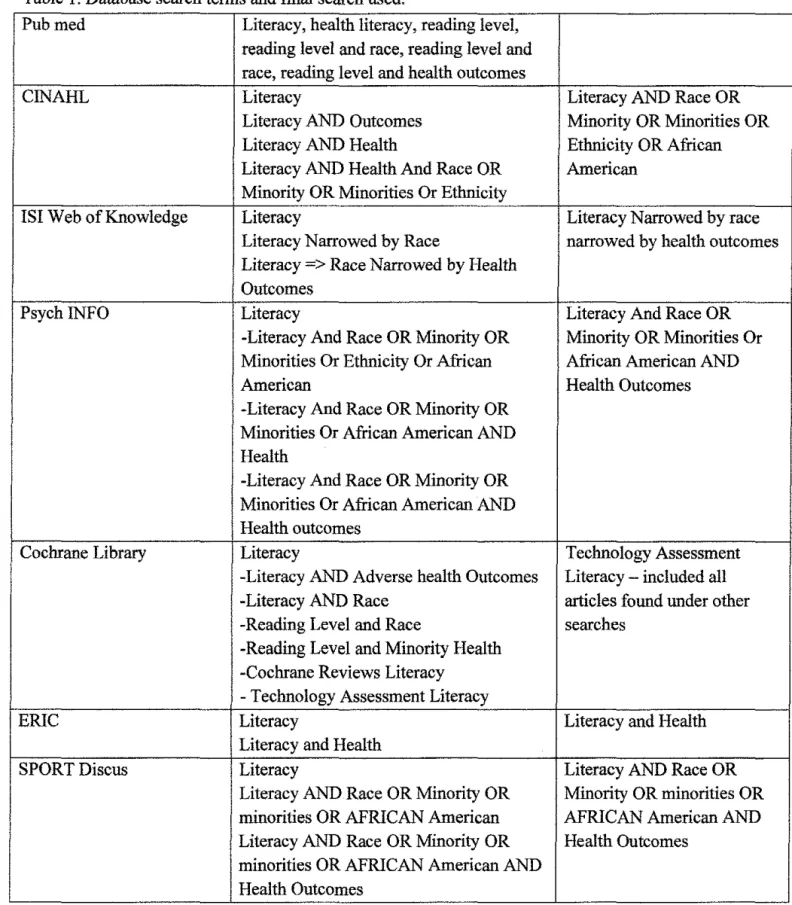
search limits were established. Multiple arrangements of key tenns were used in each database in
an effort to narrow down the number of articles found on each search, while increasing the number of articles that contain information relevant to answering the key question.
Literature Search
The literature search in each database differed, but the basic tenns used to search were; Literacy, low literacy, health literacy, reading level, reading, race, minority, minorities, African
American, health, health outcome, and outcomes. In non-science or clinical databases the tenns
literacy and health were used as opposed to health outcomes based on the suggestion of Librarian data base search consultant. These databases included ERIC, SPORT Discus, and psych INFO. In Pub med, additional articles were researched using the Related Articles search tab linking to other articles from Sentell TL et al31 study and 486 items were returned, which included all
Table l. Database search terms and flnal search used.
Pubmed Literacy, health literacy, reading level, reading level and race, reading level and race, reading level and health outcomes
CINAHL Literacy Literacy AND Race OR
Literacy AND Outcomes Minority OR Minorities OR
Literacy AND Health Ethnicity OR African
Literacy AND Health And Race OR American Minority OR Minorities Or Ethnicity
lSI Web of Knowledge Literacy Literacy Narrowed by race
Literacy Narrowed by Race narrowed by health outcomes Literacy => Race Narrowed by Health
Outcomes
Psych lNFO Literacy Literacy And Race OR
-Literacy And Race OR Minority OR Minority OR Minorities Or Minorities Or Ethnicity Or African African American AND
American Health Outcomes
-Literacy And Race OR Minority OR Minorities Or African American AND Health
-Literacy And Race OR Minority OR Minorities Or African American AND Health outcomes
Cochrane Library Literacy Technology Assessment
-Literacy AND Adverse health Outcomes Literacy- included all -Literacy AND Race articles found under other
-Reading Level and Race searches
-Reading Level and Minority Health -Cochrane Reviews Literacy
-Technology Assessment Literacy
ERIC Literacy Literacy and Health
Literacy and Health
SPORT Discus Literacy Literacy AND Race OR
Literacy AND Race OR Minority OR Minority OR minorities OR minorities OR AFRICAN American AFRICAN American AND Literacy AND Race OR Minority OR Health Outcomes
minorities OR AFRICAN American AND Health Outcomes
Inclusion and Exclusion Criteria, and Search Limits
Studies were limited to those pertaining to health care related literature, in which a specific health outcome was looked at. Each study had to use a validated literacy testing
instrument, to assess the literacy level of the population in question. Studies could test literacy or
health literacy as both measures reflect a patient understanding of print material. Literacy was preferred as it is a more basic skill needed to develop necessary health literacy, however, due to
the scarcity ofliterature pertaining to the question at hand, differentiating between the two and subsequently excluding studies based on usage of health literacy as opposed to literacy would have severely reduced the pool of eligible material.
Studies were not excluded if they chose to measure additional items such as education or
cognitive measures as long as they include race, literacy, and a specific health outcome in their analysis. Nor were articles excluded if they did not analyze data based on the stratification of
literacy levels, i.e. adequate, marginal, or inadequate. Studies were limited to English language only, published after 1990, with a focus on literacy. Articles had to be published in print in a journal, and could not be under review or accepted for publication prior to appearing in a journal.
No limits were placed on the location of the study. The most important requirement was the analysis of race, literacy, and health outcomes via logistic regression (LR) I multivariate analysis
(MV A) statistical models. No exclusions were made based on quality of data. Validated literacy testing instruments were defined as those previously used in published studies or those compared
Table2. Validated Instruments used in the Assessment Health of Literacy
Instrument Method of Number Information Provided by Cronbach Score/
Abbreviation Assessment or of Test Alpha Evaluation
Skill Tested Studies score of
Used In Assessment
Tool (G/F/P)
S- Prompts and 1 Measures Functional 0.68 G
TOFHLA- Cloze method Health Literacy
Short Test of -reading - numeracy and reading Functional comprehension comprehension
Health Cronbach's Literacy alpha= 0.68
REALM- Word 1 Identifies patients with low 0.91 G
Rapid Recognition literacy levels
Estimate of and -providing reading est. for Adult Pronunciation pts reading at less than 9'h Literacy in Cronbach's grade level
Medicine alpha= 0.91
NALS- Test Prose, 1 measure the ability to Not p
National Document, and respond to practical literacy Given
Adult Quantitative demands and Function
Literacy Literacy on 0- Health Literacy Survey 500 scale
..
Cronbach's Alpha Score-measure of rehabthty and mternal consistency, scored on a scale of0-1, with higher scores indicating greater reliability and internal consistency .
Article Selection
Using the key words listed in Table 1, searches in each of the previously mentioned databases were done. Each search was narrowed using more detailed search terms until the search returned items pertaining to literacy, literacy and race, and health literacy with and
without race. This was assessed via an article title review and a detailed reading of the presented abstracts that were evaluated using the established inclusion and exclusion criteria. All of the articles that were returned via the final search underwent abstract and title review, and those that
did not relate to answering the key question were eliminated. After this elimination, all remaining abstracts underwent further review utilizing the inclusion and exclusion criteria.
Next, all remaining articles underwent full text review to verify that the pertinent
information met all inclusion and exclusion criteria and was analyzed using a multivariate analysis including race, a specific health outcome, and literacy. Articles not meeting established
criteria were eliminated; those remaining were chosen for quality assessment and were included in the fmal systematic review. After a full text review, three of the six articles failed to answer the key question and were excluded from further analysis, leaving a total of three studies retained
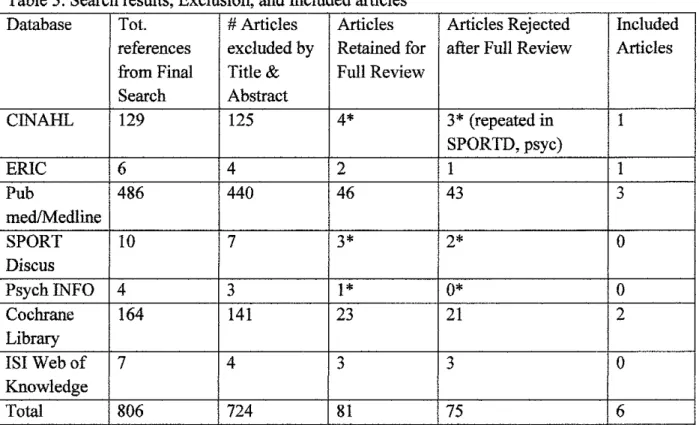
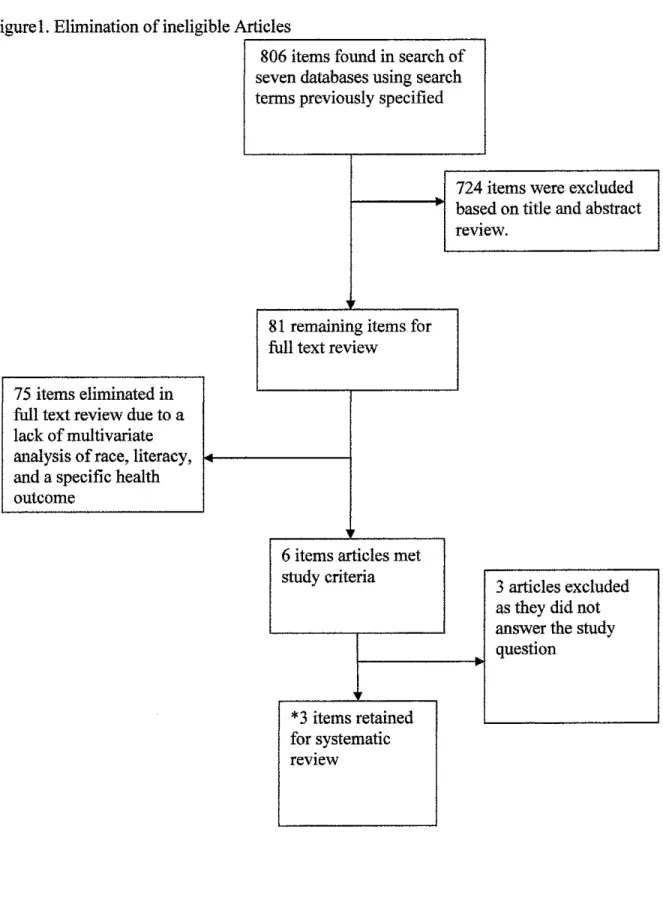
for final review. The number of articles found by each database, with those excluded, reviewed further, and fmally included are shown in Table 3. A flow diagram of the article review and
Table 3. Search results, Exclusion, and Included articles
Database Tot. #Articles Articles Articles Rejected Included references excluded by Retained for after Full Review Articles from Final Title & Full Review
Search Abstract
CINAHL
129
125
4*
3*
(repeated in1
SPORTD, psyc)
ERIC
6
4
2
1
1
Pub
486
440
46
43
3med!Medline
SPORT 10
7
3*
2*
0
Discus
Psych INFO
4
31*
0*
0
Cochrane
164
141
23
21
2
Library
lSI Web of
7
4
3
3
0
Knowledge
Total
806
724
81
75
6
*
One article was Identified as meeting all mclus10n I exclusiOn cntena, but was the repeated m SPORT Discus, psych INFO, and CINAHL data bases. Hence, the article was only included one time in the first database in which it was encountered .Figure 1. Elimination of ineligible Articles
75 items eliminated in full text review due to a lack of multivariate analysis of race, literacy, and a specific health outcome
.---,
806 items found in search of seven databases using search terms previously specified724 items were excluded
1---__,~ based on title and abstract
review.
81 remaining items for full text review
6 items articles met study criteria
*
3 items retained for systematic reviewArticle Review
Items retained after review of title, abstract, and full text for meeting inclusion and
exclusion criteria were evaluated for quality by the author. A critical appraisal review form from a graduate class on Critical Appraisal of scientific research was adapted to review articles grading of review items as Good= sufficient addressing of the item on critical appraisal form,
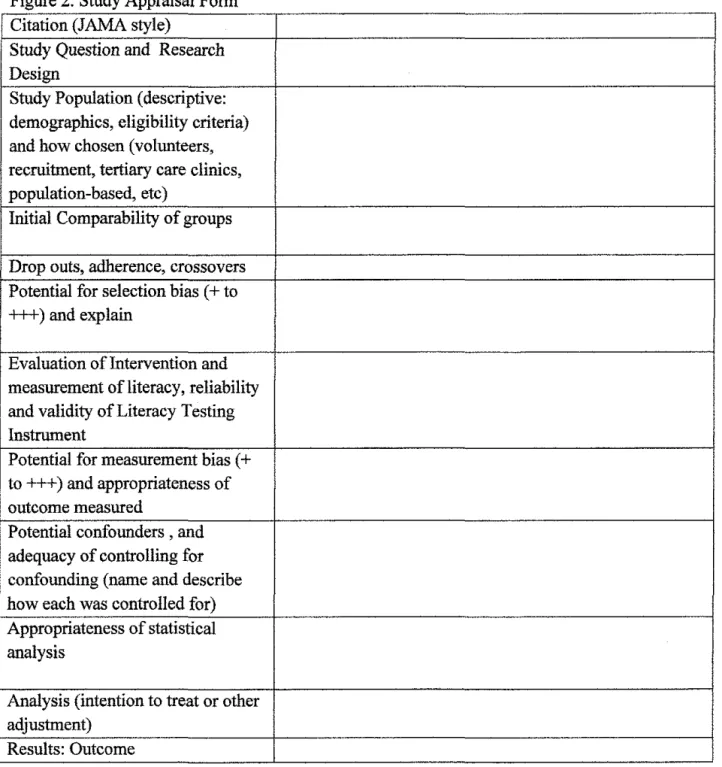
Fair= addressed all items on critical appraisal form, but did not do a sufficient job as important details are missing or not mentioned, and a grade of P= poor reflecting a failure to address the items assessed using the critical appraisal form. All final scores will be analyzed to determine what constitutes a poor, fair, or good quality article. Items graded are itemized in Figure 2.
Each Critical appraisal review form will be used to assess each article for population
make up in or between groups, patient and community demographics, and recruitment process. Along with potential for selection bias, measurement bias, confounders, appropriateness of statistical measures, and results, selection bias will asses ifthere are any possible differences or . factors within or between study groups that may affect the outcome or results of the study.
Evaluation of each article for measurement bias potential will focus on whether statistical measures are used uniformly across groups and statistical measures used appropriately in each
study. Evaluation for confounders focused on identifYing potential confounders not addressed or acknowledged by the study authors.
The internal validity of each article was assessed after review of the data abstracted from each article via the appraisal form
in
figure 2, Table 7, and in Appendix B. The methods section was the main focus of review in determining the internal validity of each article, as each retained articles used logistic regression I multivariate analysis in conjunction with a bivariate I X2section was reviewed for stated inclusion and exclusion criteria, recruitment process, staff I team training, literacy assessment tool, data collection and verification, and community I patient
demographics.
External validity of each study was assessed for reproducibility and generalizability to
other patient populations. A table of the results of this assessment may be found in Table 7, and
Results
Determination of Acceptable Studies Retained for Further Review
Six articles met
the
pre-set inclusion and exclusion criteria of this systematic review. After a full review of these six articles, I found that three articles failed to answer the studyquestion. The three studies, instead, focused on the role race and other variables played in determining health literacy levels, as opposed to examining the role that health literacy and race play in determining health outcomes. The three articles excluded from further review were:
Morrow et al37, TenHave et al34, and Gazmararian et al7. Furthermore, a fourth article, Sentell et
af1 was excluded due to a Jack of internal validity. This article was excluded from further review after receiving a grade of Poor for internal validity; the variables the study claimed to measure were not measured, subsequently invalidating the result and making conclusion drawn from the study unacceptable. Appendix B contains a full table review of internal and external validity of
all six articles meeting the initial inclusion and exclusion criteria. Figure 1 provides a flow chart of article exclusion, and appendix A contains completed appraisal forms for each article that met the pre-set inclusion and exclusion criteria.
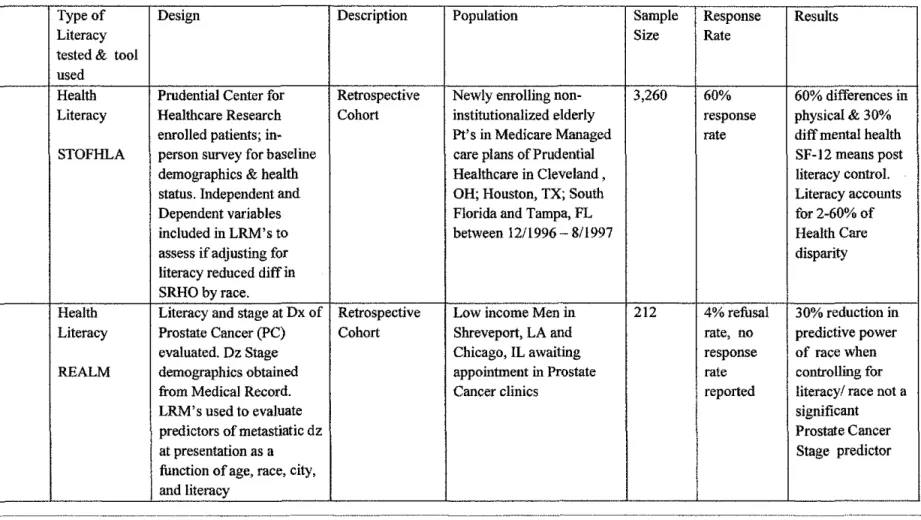
In the end, Bennett et af5 and Howard et al36 were the only two articles retained for
analysis after a full text review. These two studies were retrospective cohort studies. Each article that was retained for inclusion in this systematic review was reviewed by the author using the pre-specified evaluation form found in figure 2. The completed forms are located in Appendix A. In addition to the variables evaluated by the critical appraisal form, the articles were assessed for design, description, population make-up, and sample size. Studies were also evaluated to identify what skill set they tested, literacy or health literacy, and if they included non-native
English speakers tested in English. Each article was graded as good, fair, or poor based on study type, design, population, and sample size. Table 5 summarizes the characteristics of each study.
Figure 2. Study Appraisal Form Citation (JAMA style)
Study Question and Research Design
Study Population (descriptive: demographics, eligibility criteria) and how chosen (volunteers, recruitment, tertiary care clinics, population-based, etc)
Initial Comparability of groups
Drop outs, adherence, crossovers Potential for selection bias ( + to +++)and explain
Evaluation of Intervention and measurement ofliteracy, reliability and validity of Literacy Testing Instrument
Potential for measurement bias ( + to+++) and appropriateness of outcome measured
Potential confounders , and adequacy of controlling for confounding (name and describe how each was controlled for) Appropriateness of statistical analysis
~
---·-·---····---·--··--····---·--- ···-·-··--·----~ Table 4. Review of Study type, Design, Description, and Result- - · · ---·-~---·---·-- --·--·--·-··~·-J
Author Type of Design Description Population Sample Response Results
Literacy Size Rate
tested & tool used
Howard'" Health Prudential Center for Retrospective Newly enrolling non- 3,260 60% 60% differences in
Literacy Healthcare Research Cohort institutionalized elderly response physical & 30%
enrolled patients; in- Pt' s in Medicare Managed rate diff mental health
STOFHLA person survey for baseline care plans of Prudential SF-12 means post
demographics & health Healthcare in Cleveland, literacy control.
status. Independent and OH; Houston, TX; South Literacy accounts
Dependent variables Florida and Tampa, FL for2-60% of
included in LRM's to between 12/1996-8/1997 Health Care
'
assess if adjusting for disparity
literacy reduced diff in SRHO by race.
Bennett,' Health Literacy and stage at Dx of Retrospective Low income Men in 212 4% refusal 30% reduction in
Literacy Prostate Cancer (PC) Cohort Shreveport, LA and rate, no predictive power
evaluated. Dz Stage Chicago, IL awaiting response of race when
REALM demographics obtained appointment in Prostate rate controlling for
from Medical Record. Cancer clinics reported literacy/ race not a
LRM's used to evaluate significant
predictors of metastiatic dz Prostate Cancer
at presentation as a Stage predictor
function of age, race, city, and literacy
-
--·---~---·--···---·----·---·-------is-1
Analysis of Retained Studies
Howard DH et al. used the STOFHLA in their study, which is a well known and validated test. The results of the study showed that persons with inadequate health literacy had significantly worse health outcomes, and were significantly less likely to receive the influenza
vaccine. 52% of African Americans participating in this study had inadequate literacy, 61% had less than a high school (HS) diploma, and 69% had an income ofless than $15,000 a year. Additionally, this low literacy group had higher rates of stroke, hypertension, asthma, diabetes, and arthritis. In this study, 64% of whites and 51% of African Americans had a history of past or current tobacco use. There was a difference by race in the physical and mental health SF-12
score means of 1.3 and 2. 7 respectively. Blacks had worse Physical health SF-12 mean scores than whites at 43.6 and 44.9 rated on a scale of0-100, and worse mental health SF-12 score at 53.0 and 55.7 respectively, also rated on a 0-100 scale. Without health literacy controls SF-12
physical health scores differed by ten percentage points between blacks and whites. After controlling for literacy, SF -12 physical health means differed by 60 percentage points, with SF-12 scores of African Americans surpassing those of whites at 45.1 and 44.6 respectively. The
difference in mental health SF-12 score means after controlling for health literacy was 0.2 representing a 30 %change, and the difference in self-reported health score means was .06 representing a two percentage point change. The author reports that if health literacy levels held
constant differences in self reported health status by education and race would about 20-25%. There were no differences in receipt of vaccines either influenza or pneumococcal, between
1996 and August 1997. There was no comparison of community and patient demographic and risk factors between groups based on location. There was a less than 60% survey response rate,
and non-responders were generally more likely to be White high school graduates. It is not clear if the non-response population may represent illiterate individuals who were unable to complete the survey. Additionally, all the study data, including SF-12 scores, was collected via self
reported surveys, and were not verified with medical records. Patient reported data is subject to
recall and acceptability bias, and this was not addressed by the author. SF-12 scores, although not discussed in the article, are a measure of self reported health status and are assessed via completion of a written survey consisting of twelve question concerning limitations in activities of daily living secondary to any health issues. The results of this assessment should be
considered with a degree of caution, as it is a written survey and those with low literacy may have had difficulty reading and understanding the contents of the SF-12 form4·9·ll. Additionally,
the SF-12 survey was developed to be used repeatedly, at pre-set time intervals, in efforts to
accurately monitor any improvements or declines in ones health status, however, in this study it was only used to assess health status once, calling into question the validity of the one time
measure of health status via the SF-12 questionnaire38. For a more detailed discussion ofSF-12
scores and a sample of the questionnaire please see Appendix C.
The Bennett CL et al35 study used the REALM to assess health literacy and showed that,
after adjustment for marked differences in literacy levels, race was not a statistically significant predictor of advanced stage Prostate cancer at presentation. After controlling for literacy the
author reports that the adjusted odds ratio was reduced to 1.4, a 30% decrease from the pre-adjusted value. Literacy differed by stage, race, and site of care, but not by age. Men with
metastatic cancer at presentation were 1.5 times more likely to have lower literacy levels, black
men were more likely to have lower literacy levels, and patients with prostate cancer from Louisiana were more like to have lower literacy scores than those in Illinois. Additionally, approximately three times as many individuals were tested in Louisiana than in Illinois35. This
may negatively affect the results, as over-sampling the less literate Louisiana patients may have falsely skewed data away from the null, as compared to the result of an equal sampling of both
the Chicago and Shreveport cohorts. Men with literacy levels less than sixth grade were more likely to present with advanced stage prostate cancer, and black men were twice as likely to present with advanced stage disease.
The study used well-defmed adverse outcomes, a well-defined, but very restricted study
population, and a good assessment of race and literacy. The authors used minimal inclusion and exclusion criteria and did a good job of explaining who trained data collectors, patient recruiters,
and test administrators. However, the study did not address how patients were identified for recruitment in prostate cancer clinic waiting rooms. The study had a small sample size of212, had a 96% response rate, sampled from a very sick population, and only consisted of low income
individuals. No sensory or cognitive testing was done to ensure that no physical barriers existed that may prevent successful completion of literacy testing. Patients were recruited from low
income areas, and as previously mentioned, represented a very select population. Income was one of the overlooked variables, as no household income range was noted, although patients
Summary: Critical Analysis of Acceptable Studies
Studies that answered the key question had .16 - .6 point changes in means after controlling for
literacy. These changes in means represented 2-60% reductions in self reported health status and heath outcome odds ratio's, depending on the study. Each change also represented a loss of
significance in race as a positive predictor of self reported poor health status and adverse health outcomes. This suggests that literacy may account for 2-60% of the disparities in health
outcomes and reported health status between minorities and non-minorities currently attributed
to race.
Health Literacy vs. Literacy and the Quality of Assessment Tool
The two retained studies looked at Health Literacy. Each study used a validated, widely used and accepted Health literacy assessment tool. Bennett et at35, use the REALM which looks
at word recognition and pronunciation, while, Howard DH et al36 used the S- TOFHLA which
looks at Prompts and Cloze method reading comprehension. Both the REALM and the S-TOFHLA were rated good test of health literacy as they have been well validated, widely used, and compared against other tests in published studies 6.25'45•46.47.48• The REALM received a
Cronbach's score of 0.91, as compared to 0.68 for the S-TOFHLA indicating that the REALM is
a more reliable and valid test of health literacy than the S-TOFHLA. Hence, the data collected and presented in the Bennett et at35 represents more reliable and valid data than the literacy data collected in the Howard et al36 study. However, the data from the Howard study should still be
considered valid and reliable as both tests of health literacy, the REALM and S-TOFHLA, have been shown to be both reliable and valid in previous studies 6•25•45•46•47•48•
Summary: Health Literacy vs. Literacy and the Quality of Assessment Tool
Health literacy was well tested, as authors used established and well-validated testing
tools, the REALM and S-TOFHLA25•32•44. Those articles looking at literacy, exclusively, were
excluded from further consideration after an extensive article review. Each health literacy assessment tool was assigned a grade of Good, Fair, or Poor based on the data from the literacy assessment review, and each tool used received a grade of Good. Subsequently, the results of this
systematic review may be interpreted with confidence, as the health literacy tools utilized by the
d. h d · al'da' d' 'd 1 di I · 6254445464748
stu tes ave un ergone extensive v 1 tlon an m WI e y verse popu atwns ' · · · ' ' .
Evaluation of Study Inclusion and Exclusion Criteria
In evaluating each study, inclusion and exclusion criteria were considered. The methods section from each article was reviewed and the stated criteria abstracted, reviewed, and graded as Good, Fair, or Poor. The grades were assigned based on the detail ofthe explanation included in the methods and their pertinence to literacy I health literacy. Poor grades were given to articles
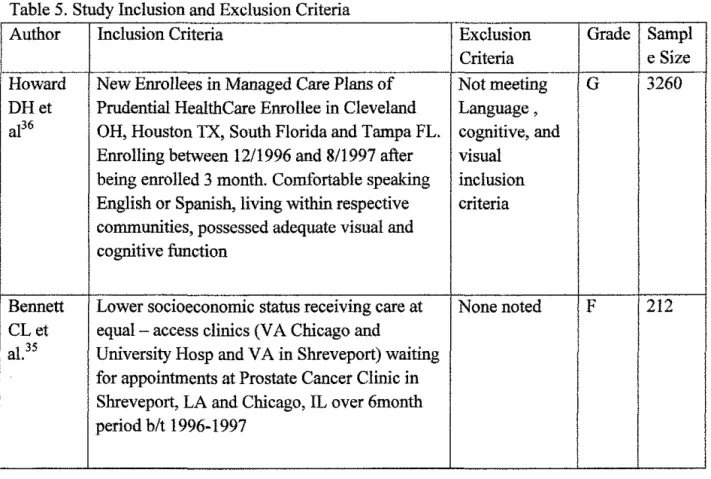
inclusion and exclusion criteria deemed pertinent to literacy. Summary grades for the evaluation of study inclusion and exclusion criteria are shown in Table 5.
Table 5. Study Inclusion and Exclusion Criteria
Author Inclusion Criteria Exclusion Grade Sampl
Criteria e Size
Howard New Enrollees in Managed Care Plans of Not meeting G 3260 DHet Prudential HealthCare Enrollee in Cleveland Language,
al36 OH, Houston TX, South Florida and Tampa FL. cognitive, and Enrolling between 12/1996 and 8/1997 after visual
being enrolled 3 month. Comfortable speaking inclusion English or Spanish, living within respective criteria communities, possessed adequate visual and
cognitive function
Bennett Lower socioeconomic status receiving care at None noted F 212 CLet equal- access clinics (VA Chicago and
al.35 University Hosp and VA in Shreveport) waiting for appointments at Prostate Cancer Clinic in Shreveport, LA and Chicago, IL over 6month period b/t 1996-1997
Howard et al36 did not perform cognitive or sensory variables, however, the study did
eliminate individuals who were not comfortable speaking English or Spanish, not living in the specified study areas, not Prudential Health Care participants, and those possessing inadequate visual and cognitive function. Additionally, the study provided English and Spanish literacy
testing with the S-TOFHLA. Of the articles retained for review, the Howard et al36 study provided the most detailed inclusion and exclusion criteria pertinent to the study of literacy,
earning the study a grade of Good.
Bennett received a Fair grade as the exclusion criteria consisted of being English
speaking, and the inclusion criteria consisted of being male, having prostate cancer, using equal access Prostate cancer clinics, and being oflow socioeconomic status .
• 0.
Summary: Evaluation of Study Inclusion and Exclusion Criteria
In the study ofliteracy, it is important to have a very diverse population, as the data in
this area is currently very limited; however, it is also important to ensure that literacy I health
literacy is successfully tested, and not the effect of sensory and cognitive deficiencies that may
impede successful literacy testing. The inclusion and exclusion criteria of the retained articles
were judged to be fair. Subsequently, the literacy testing scores and data abstracted from the
study should be interpreted with caution, as none of the retained studies did any detailed sensory
and cognitive testing, and the exclusion of non-native English speakers or providing tests in
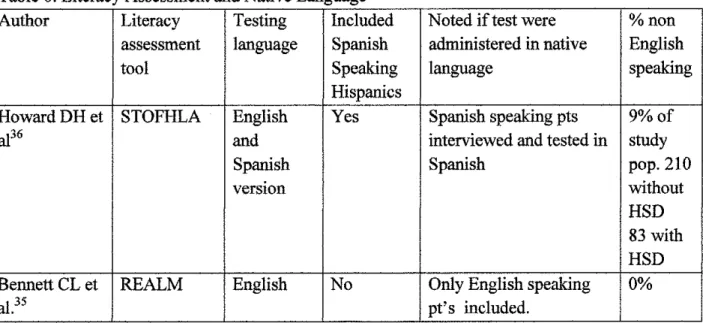
patients' native language was not a uniform practice (Table 6). Hence, the results may be biased
as a result of fair, as opposed to good, inclusion and exclusion criteria.
Table 6. Literacy Assessment and Native Language
Author Literacy Testing Included Noted iftest were %non
assessment language Spanish administered in native English
tool Speaking language speaking
Hispanics
HowardDHet STOFHLA English Yes Spanish speaking pts 9%of
al36 and interviewed and tested in study
Spanish Spanish pop.210
version without
HSD 83 with HSD
Bennett CL et REALM English No Only English speaking 0%
Internal Validity
Howard et al. used a large population of managed care patients (3260) that included individuals from four different cities and three different states. Each location had characteristics that made it distinctly different from the others; these variables were not compared between cities. The study had a 60% response rate, with Whites and HS graduates being over represented. Demographic variables, data on lifestyle, social history, and disease risk factor information were
collected. Formal cognitive and sensory testing was not done, but the authors noted inadequate cognitive and sensory function as an exclusion criterion. The study included English and Spanish
speaking individuals, and provided testing in both English and Spanish. There was no detailing of recruiter and test administrator training, nor was there detailing of the literacy assessment process, which is important as testing literacy in multiple individuals in the same room may test
literacy in the first individual, but test short-term memory in subsequent patients. Additionally, the researchers noted their limitations, admitting that some variables related to literacy may not have been tested; they discussed the shortcomings of the S-TOFHLA and the over sampling of
high school graduates and Whites. The study received a grade of fair as they did a good job with
inclusion and exclusion criteria. They tested native and non-native English speakers
appropriately, providing testing in native language for Spanish speaking individuals, and applied all measures to each group uniformly.
Bennett et allooked at two groups of patients, all low income individuals with prostate cancer. They used a small sample of212 individuals. Recruitment took place in Veteran Affairs and University Hospital equal access prostate cancer clinics in Shreveport, LA or Chicago, IL.
No comparison of city or community demographics was done. Patient demographics and risk
factors were not discussed or compared between races. The study only looked at African
Americans and Whites, and the same statistical measures, literacy assessment tools, and surveys were used on each patient. There was no cognitive or sensory testing done to ensure that there were no physical barriers to the successful completion of literacy testing. The authors did not
mention if they included any non-native English speakers in their population, but testing was done in English using the REALM. The study did not measure awareness or knowledge of
prostate cancer screening in the population which could account for the large number of African Americans presenting with late stage disease at initial visit. Hence, the study was graded as fair, as there were no patient demographics provided and no comparison between communities. Finally, the study population and the population at hand were low income individuals using
equal access clinics, and low income has been associated with increased rates oflow literacy34,36,37.
Summary: Internal Validitv
The overall internal validity of the body of literature amassed by this study is fair. Both of the retained articles, Bennett35 and Howard36 were given a rating of fair after an extensive
review. Literacy is a variable that is dependent on many factors, both tangible and intangible. Cognitive, native language and sensory factors must be assessed in order to ensure that literacy testing truly measures literacy, and not sensory deficits, such as poor vision37. However, a
number of other variables such as education, age, and socioeconomic status have been shown to
External Validity
Howard DH et al used an elderly population from the South and Midwest, enrolled in Medicare Managed Care plans. This may have resulted in the recruitment of a healthier patient
population than non-managed care individuals in the general population. There was a 60% response rate, with high school graduates and Whites over represented as non-responders. This is concerning as there is no mention of how the study accounted for incomplete data. Potentially
40% of the study population was analyzed with incomplete information, possibly skewing data towards the null showing no difference when controlling for literacy. People who are unable to
read may have difficulty completing a survey; hence, it is plausible that the non-responders may represent a more illiterate portion of the study population. Failing to include their data may under-estimate the difference between the pre and post adjusted means suggesting that literacy
plays a smaller role than it actually does. Additionally, the study used four different collection sites without identifYing defining community demographics and comparing the differences between these communities. Access to care and available resources contributing to health status may differ in each community. Howard's study noted additional limitations of the S-TOFHLA
being an imperfect measure of Health literacy, and there is also the possibility of other factors
influencing literacy not being accounted for36• All health information was collected via patient
report and was not verified via Medical Record. No detail was provided on patient recruitment, test administration, or recruitment training of staff. Overall, the study provided adequate
exclusion criteria and even offered literacy testing in English and Spanish. However, the study still received a Fair rating for external validity secondary to a low response rate and lack of generalizability due to a lack of comparison between testing sites, and patient demographics .
Bennett CL et al. used a small sample size, looking at low income patients from two different cities, using low income equal access Prostate Cancer clinics. There was no evaluation of knowledge of prostate cancer screening, or assessment of possible barriers to accessing care
outside offmancial hurdles. The study did not present any community or patient demographic
variables except for race and age. Additionally, the recruitment process was clinic based, as patients were recruited from the clinic waiting room prior to their appointment. Training of recruiters and test administrators was outlined well in the methods section and medical records
were used to review and verify disease stage. However, the study would be difficult to reproduce, as there were no demographic variables presented, and the population studied was very specific, providing little generalizability to other populations. Subsequently, external
validity was rated as Fair. Summary: External Validity
The overall body ofliterature retained for review was deemed as having fair external validity. An overall lack of detail concerning recruitment, study populations, community characteristics and demographic variables leaves readers without the ability to assess
generalizability to other populations. In both studies, the sample populations were made of very specific populations. The Howard et al study looked at Medicare Managed Care population, which suggest this was also an older population, while Bennett et al. looked at low income, male
patients with prostate cancer using equal access prostate cancer clinics in VA and University Healthcare systems Hence, despite being judged as fair, this information has the potential to be
After abstracting and evaluating the data in previous sections of the systematic review,
each article was reviewed to evaluate if it answered the key question. Sentell, Howard, and Bennett clearly answered the study question. However, despite answering the study question, Sentell et al31 was excluded from analysis due to a lack of internal validity.
Howard et al found that persons with inadequate health literacy had significantly worse health outcomes and were significantly less likely to receive the influenza vaccine. Additionally,
they found that literacy accounted for a 60 percentage point change in SF -12 physical health means, a 30% change in mental health, and a 2% change in self reported health status. Further, the authors reported that if literacy levels were held similar, differences in self reported health status means by education and race would be 20% to 25% lower.
Bennett found that men with metastatic prostate cancer at presentation were 1.5 times more likely to have lower literacy levels. Black men were more likely to have lower literacy levels, with 53.3% having below a 6th grade literacy level compared to 8.7% of whites. After adjusting for literacy, the study found that the odds ratio for advanced-stage cancer among blacks was reduced to 1.4 representing a 30% decrease in race as a predictor of stage of prostate cancer
at presentation. This suggests that literacy may account for 30% of the disparity between
minority and non minority health outcomes currently attributed to race, since after adjustment for literacy, race was no longer a statistically significant predictor of advanced stage disease at
presentation.
Summary: Did the Study Address the Key Question?
Each of the retained articles answered the study question. The data shows that literacy is
positively associated with the number and severity of adverse health outcomes in minorities and may account for 2-60% or persisting health disparities between minorities and non-minorities
currently attributed to race.
TableS. Article Assessment
Study SB LTA MB CP IV EV AKQ Total Score
Sentell p p p p p p y 19/P
Howard p G G F F F y 12/F
Bennett p G F p F F y 14/F
SB- SelectiOn Btas, LTA- Ltteracy TooVAssessment, MB- Measurement Btas,
CP-Confounding Potential., IV- Internal Validity, EV External validity, AKQ- Answered Key Question. Scoring P=3 F=2 G=l Y=l N=2 Total Score 7-10=G, 11-15=F, 16-20=P
Discussion
A total of two published articles were retained for analysis in this systematic review. Both articles found that low literacy levels were significantly associated with an increase in the rate and severity of adverse outcomes, and that African Americans and Hispanics had
significantly lower literacy levels than Whites7•31•34•35•36•37. The data from the retained studies
showed that when literacy was adjusted for, it accounted for 2-60% of the health outcomes disparities currently attributed to race. These changes significantly reduced the predictive power
This systematic review is the first effort to conduct a review of the literature concerning race and literacy. Consequently, there is no body of existing work to compare the review
approach, analysis and results to. Additionally, there are very few studies in general that looked at race, literacy, and health outcomes, as a review of over seven databases and 806 pertinent articles only produced two quality studies for systematic review.
These results, however, identizy a starting point from which we may aim for new ideas and interventions to improve patient health outcomes. Understanding that skin color, a fixed and unadjustable variable, is not the final determinate of ones future health status, rather a single factor , that along with other factors such as literacy I health literacy work together to influence
ones overall health status, is inspiring. This suggests that with proper educational adjustments, continued research to expand the current knowledge base of significant determinates of literacy I
health literacy, in addition to well designed and precisely targeted interventions to identizy and address factors known to influence health status, disparities in health outcomes and the health
status between minority and non-minority populations currently attributed to race may be substantially reduced in the short term and in the future possibly eliminated.
Literacy Assessment
Literacy and health literacy are easy to measure and there are a number ofliteracy and health literacy assessment tools that have been validated and widely used in diverse
populations. However, it is very difficult to ensure that, when using a testing instrument, literacy is the only variable being tested, as literacy is influenced by a number of variables. Sensory variables, such as vision and hearing, may alter ones reading and pronunciation abilities, causing
an otherwise literate individual to perform poorly during literacy testing. Disease states, age, and
•
•
•
cognitive variables have also been shown to influence literacy levels 34,35,36•37• It is important to
control for these variables as they may falsely alter literacy levels if not addressed. Overall, the articles retained for inclusion in this systematic review did a fair job of assessing and controlling
for these physical variables
Literacy is associated with and influenced by a number of factors, including;
socioeconomic factors, shared cultural and linguistic knowledge, patient demographics (gender,
race), educational attainment, parental literacy, and parental educationallevel34•37•39•42. This
information may not be found in a medical record, and patient interaction and interviews are required. In most studies addressing literacy, these variables are assessed and collected via a patient survey. Although a patient reported survey opens a study to various forms of potential biases, such as acceptability and recall, it is the most practical, efficient, and widely used way to
gain this information for analytical purposes. However, this may weaken the data collected in each study by acting as a source of potential selection bias, as asking patients to fill out a survey and SF -12 may select for a more literate patient population as survey completion requires the
ability to read. Each study retained for review used a survey except the Bennett eta!. study,
which verified health data with a review of the medical record, reducing the potential for bias. Literacy and health literacy were assessed using two different assessment tools in this systematic review. One of the articles retained for review used the S-TOFHLA, and one used the