Addressing the Public Health Issue of Antimicrobial Resistance by Re-evaluating Penicillin Allergy with
a Multi-disciplinary Inpatient Team
By
Renee S. Kleris, MD
A Master’s paper submitted to the faculty of The University of North Carolina at Chapel Hill in partial fulfillment of the requirements for the degree
of Master of Public Health in the Public Health Leadership Program
Chapel Hill
2018
__________________________________________ Advisor:
__________________________________________ Date __________________________________________
Second Reader:
Acknowledgements
I would like to thank my research mentor, Patricia Lugar, MD, MS, who entrusted me with becoming the allergy representative for the stewardship allergy assessment team (StAAT) and gave me the idea to become involved with this work. I am incredibly grateful for all of the members of the StAAT. I additionally would like to thank my co-fellows and the faculty and staff of the division of Allergy and Immunology at Duke University Medical Center.
I am beyond grateful to my mentors, Cindy Feltner MD, MPH and Sue Tolleson-Rinehart PhD, for their guidance and constant support during my time in the Healthcare and Prevention MPH Track at UNC. Without them it would not have been possible for me to learn the skills necessary to work on becoming a leader in public health. I additionally am appreciative of Cindy Reilly for her constant administrative support and my peers within the program for their
comradery and encouragement.
Table of Contents
Research Article and Program Evaluation: Addressing the Public Health Issue of
Antimicrobial Resistance by Re-evaluating Penicillin Allergy with a Multi-disciplinary Inpatient Team
Title Page ……….4
Abstract ………...5
Introduction ………...….7
Methods ………...9
Results ………....12
Discussion ………..14
Tablesand Figures………23
Appendices Appendix I: Systematic Review of Antibiotic Selection Changes Secondary to Inpatient Penicillin Allergy Evaluations Introduction ………29
Methods ………...29
Results ………..31
Discussion ………33
Tables and Figures ……….35
Addressing the Public Health Issue of Antimicrobial Resistance by Re-evaluating Penicillin Allergy with a Multi-disciplinary Inpatient Team
Renee Kleris MD1,2, Monica Tang MD1,2, Rebekah Wrenn PharmD3,4, Christina Sarubbi PharmD3,4, Deverick Anderson MD, MPH2,4, and Patricia Lugar, MD, MS1, 2
Affiliations: Department of Pediatrics, Duke University Medical Center1 Department of
Medicine, Duke University Medical Center2 Department of Pharmacy, Duke University Medical Center3, Duke University Medical Center Duke Center for Antimicrobial Stewardship and Infection Prevention4
Abbreviations: Penicillin (PCN), Penicillin Skin Testing (PST), Stewardship Allergy Assessment Team (StAAT)
Keywords: Drug allergy, penicillin allergy, penicillin skin testing, oral challenge, clinical practice, medical record, antimicrobial stewardship, antibiotic resistance, de-labeling
Funding Sources: This research was supported byT-32 AI007062-39. Financial Disclosure: No authors have financial relationships to disclose.
Conflict of Interest: No authors have conflicts of interest to disclose.
Clinical Trial Registration: Not applicable.
What’s known on this subject: Penicillin allergic patients are found to have longer hospital stays and increased rates of serious infections secondary to suboptimal antibiotic options compared to non-penicillin allergic patients. Fortunately studies have shown that over 90% of patients who report penicillin allergy are able to, in fact, tolerate penicillin antibiotics. Patients are infrequently evaluated for true or persistence of penicillin allergy. Penicillin skin testing followed by oral challenge is a safe way to identify patients who are no longer allergic.
Providing penicillin skin testing to patients has the potential to improve care by allowing patients to receive first line penicillin and penicillin derivative antibiotics if preferred to treat their
infection. The conversion from broad spectrum antibiotics to penicillin antibiotics is estimated to lower health care costs and improve antibiotic usage.
Abstract
Background and Objective: A national urgency to prevent further antibiotic resistance has prompted federal funding for antibacterial resistance leadership groups and antimicrobial
stewardship programs. Penicillin skin testing (PST) is an important addition to these programs as skin testing can safely identify patients who are no longer allergic and may receive penicillin. Inpatient penicillin allergy evaluations are safe, validated, and will reduce broad spectrum antimicrobial use. Patients who are identified as no longer having penicillin allergy will be able to transition to first line antimicrobial agents, allowing for targeted antibiotic selection. The stewardship allergy assessment team (StAAT) consists of representation from pharmacy, infectious disease, and allergy who offer PST and evaluation for inpatients with penicillin allergy. This team strives to improve patient care by expanding accessibility to this evaluation. Methods: Healthcare providers place consults to the StAAT for inpatients with penicillin allergy. Eligible patients receive PST (prick and intradermal) with Pre-PenÒ and Penicillin G; those with negative test results receive a supervised oral challenge to amoxicillin. Data related to allergy history, indication for consult, test results, changes in antibiotic selection, length of stay, and cost are recorded.
Results: To date, the StAAT has completed 77 penicillin drug allergy evaluations. Indications for testing included the following: pneumonia, fever of unknown origin, neurosyphilis,
cefepime all decreased after the consult and these findings were significant for vancomycin, aztreonam, and cefepime. Of the 73 patients who were cleared, all (100%) electronic medical records were updated to reflect this updated status.
Introduction
Penicillin allergy is a challenge for both patients and practitioners. Allergy to penicillin
and derivatives are among the most commonly reported drug allergies with approximately 10%
of the U.S. population reporting this allergy1. Clinical studies, however, have suggested that
90% of this group is able to tolerate penicillin antibiotics1,2. Additionally when looking
specifically at inpatients, 15% report a penicillin allergy3-5. It is not common knowledge that
penicillin allergy can be outgrown or that validated skin testing combined with a supervised oral
challenge is a safe and definitive way to determine current penicillin allergy status. A negative
skin prick and intradermal test has a negative predictive value that approaches 100%6,7.
Completing the final step of testing which is an oral challenge eliminates any prior concerns and
gives the patient peace of mind that they can tolerate penicillin/penicillin derivatives.
Approximately 50% of patients can tolerate penicillin if the allergic reaction occurred
within 5 years; this number approaches 80% when the patient is 10 years past the initial allergic
reaction 1. There are several reasons patients initially labeled as penicillin allergic may later be
able to tolerate this drug. First, as the numbers imply above, patients have the ability to lose
sensitivity if penicillin is avoided after the initial reaction8. Secondly, penicillin allergy is often
misdiagnosed if a patient develops a rash while taking antibiotics when they have a concurrent
viral infection as viral infections can also cause viral exanthems and hives9. Additionally, if a
patient reports an adverse reaction to a penicillin or penicillin derivative such as nausea,
dizziness, or diarrhea, this entry may be misclassified as an allergy instead of an adverse drug
reaction and perpetuated in their medical record without re-evaluation. Another scenario
encountered is when patients report a penicillin allergy when a family member is allergic despite
allergy can result in treatment failures and unnecessary broad-spectrum antibiotic use, prompting
allergy involvement within the realm of antimicrobial stewardship10,11.
Clarifying penicillin allergy status improves patient outcomes and has the potential to
improve public health by reducing antibiotic resistance. Penicillin allergy is considered a public
health issue since penicillin allergic patients are often prescribed second-line broad spectrum
antibiotics, which can contribute to overall antibiotic resistance and the creation of
“superbugs”12. In addition, patients labeled as penicillin allergic have poorer outcomes as noted
by increased rates of serious infections, and tend to have longer hospital stays when
admitted10,11,13. Antibiotic resistances as well as infections from broad spectrum antibiotics such
as clostridium difficile and vancomycin-resistant enterococcus are two such infections that often
cause problems for penicillin allergic patients12. Additionally, evidence suggests that pregnant
women with penicillin allergy, with or without group B streptococcus (GBS) infections, have
higher rates of cesarean sections and spend more days in the hospital14. Although antibiotics
have changed the practice of medicine and allowed for the treatment of previously untreatable
diseases, their misuse and overuse has led to resistant bugs that are becoming increasingly
difficult to treat12. It is therefore important to use the correct and preferred antibiotic whenever
possible.
A national urgency has prompted federal funding for antibiotic stewardship leadership
programs and recently penicillin skin testing has been recommended to augment optimal
antibiotic use by the National Quality Forum15. Penicillin skin testing augments antibiotic
stewardship aims by helping to identify patients that are no longer penicillin allergic so that they
can receive penicillin or a penicillin derivative if this antibiotic is preferred15. Penicillin skin
challenge is a useful and safe approach to evaluate whether a patient’s allergy persists6.
Additionally, once a patient has had negative skin testing and passed an oral challenge, patients
are not at increased risk of resensitization after penicillin/derivative use16.
It is important that healthcare providers are aware of this intervention so that patients who
are no longer allergic to penicillin have the option to use penicillin and penicillin derivative
antibiotics when indicated. Allergists can provide education to patients and healthcare providers
and advocate for increased accessibility of allergy evaluation to address the public health
problem of penicillin allergy. Infectious disease providers and pharmacists are key partners in
addressing drug allergies as each bring their expertise to augment the education that allergists
provide regarding management of drug allergy.
Duke University Medical Center has an antibiotic stewardship program in place. In order
to improve current aims related to optimal antibiotic selection, a collaboration was formed
between allergy/immunology, infectious disease, and pharmacy to address penicillin allergy.
StAAT members perform penicillin skin testing and supervised oral challenges to de-label
patients who have outgrown their penicillin allergy in a safe way.
Methods
In November of 2016, the Stewardship Allergy Assessment Team (StAAT) was
established at Duke University hospital and consists of a collaboration between
allergy/immunology, infectious disease, and pharmacy. Initially one allergy/immunology fellow
and two pharmacists were trained by an allergy nurse in proper skin prick testing and intradermal
allergy/immunology fellows, an infectious disease fellow, and an infectious disease physician
assistant who underwent appropriate allergy skin testing training.
Eligible patients are identified for inpatient allergy assessment either by their health care
provider team or by a pharmacist. Patients are eligible if they would benefit from a penicillin,
penicillin derivative, or beta-lactam antibiotic during their current admission or in the near
future. Patients on medications that interfere with the histamine control (which is a standard part
of skin testing to ensure integrity of mast cells and their ability to release histamine is intact) are
not eligible for the assessment. Finally, patients have to be at least five years removed from their
allergic reaction unless discussed with an allergy/immunology attending.
In terms of process, once the team determines a patient would benefit from skin testing, a
thorough allergy assessment is completed (see Table 1 for list of questions asked). The
assessment includes the reaction type, details of the reaction, time since reaction, tolerance of
other beta-lactams, and a review of current medications. The assessment ensures that the reaction
reported is not consistent with a delayed hypersensitivity reaction (i.e. Steven’s Johnsons
Syndrome (SJS), Toxic Epidermal Necrolysis (TEN), Acute generalized erythematous pustulosis
(AGEP), or Drug rash with eosinophilia and systemic symptoms (DRESS), as skin testing is
contraindicated for these cases. Skin testing cannot identify if a patient will have a delayed
hypersensitivity reaction and is only useful in identifying whether a patient will experience an
immediate type 1 hypersensitivity reaction.
If the patient’s history is consistent with a type 1 hypersensitivity reaction and they agree
to the full evaluation, the patient is then skin tested. Skin prick testing uses the following
controls saline and histamine. Saline is used to control for dermatographism, and histamine is
used to ensure that the patient’s mast cells are releasing histamine appropriately (and not blunted
by use of other medications). After skin prick tests are placed, there is a 15 minute wait time
prior to reading and interpretation of the results. The test is considered positive if there is an area
of induration or redness 3 mm larger than the saline control for either the Pre-Penâ or Penicillin
G. If the skin prick test is negative, a total of five intradermal tests are placed. The intradermals
include Pre-Penâ in duplicate, Penicillin G in duplicate, and saline. The intradermal test is
considered positive if the intradermal site is 3 mm larger than the saline control after 15 minutes.
A test is considered equivocal, if the wheal is only slightly larger (2-3 mm) than the initial
injection bleb and control site, with or without erythematous flare or if the intradermal duplicate
tests are discordant.
If both the skin prick and intradermal tests are negative, the patient receives a one-time
dose of amoxicillin (250 mg) with increased monitoring where vitals are checked every 15
minutes for the first hour after ingestion. If the patient does not develop any objective findings
consistent with a type 1 hypersensitivity reaction after their oral challenge with amoxicillin, the
patient’s penicillin allergy is removed from the electronic medical record and their primary
health care team is notified. The patient is also advised that they are no longer allergic to
penicillin and can now safely receive penicillin and penicillin derivative antibiotics. Patients are
also given a wallet card with their updated penicillin allergy status to share with providers
outside of Duke’s system and local pharmacists who do not have access to their electronic
medical record. A team member additionally created an electronic alert notifying providers from
the StAAT if a penicillin allergy is erroneously re-entered on a patient who is cleared of their
In addition to providing inpatient evaluations, the allergy department also sought to
increase access to outpatient penicillin allergy evaluations. This goal was accomplished by
creating a bi-monthly dedicated penicillin allergy clinic. The clinic is staffed by one registered
nurse, one allergy/immunology fellow, and one allergy/immunology attending physician; up to
six patients are scheduled for evaluation during each clinic. The same procedure as the inpatient
evaluation is implemented with the exception of a two-step graded challenge with amoxicillin
instead of the one step graded challenge used in the inpatient setting. Partnerships between
transplant infectious disease and the perioperative anesthesia clinic are in place in attempts to
provide this testing pro-actively for patients who would benefit from penicillin/penicillin
derivative medications.
After obtaining IRB approval by Duke University, we collected data from patients who
were evaluated by the StAAT between November 2016 and February 2017. The data reviewed
included details related to prior allergy history (see Table 1 for Allergy Assessment
Questionnaire utilized by StAAT), indication for the consult and penicillin allergy evaluation,
and antibiotics prescribed pre and post evaluation. Our primary outcome was incident
de-escalation to more narrow spectrum and first line antibiotics.
Results
Data was collected from 77 inpatients evaluated by the StAAT between November 2016
to February 2018. This cohort does not include patients who were initially evaluated but not able
to complete skin testing; this may have occurred if patients were unable to mount an appropriate
histamine control, or if the skin testing was not able to be completed prior to hospital discharge.
(50.6%) were female. The majority of patients reported their race as white (n=61, 79.2%)
followed by 15 patients (19.5%) who were black, and 1 patient (1.3%) who reported being of
more than 2 races. The age range was from 21 to 92 years. Of note, the highest percentage of our
patients were in the 65-74 age bracket (n=21, 27.3%) followed by patients who were 75 or older
(n=17, 22.1%). Additionally, we did not exclude patients who were considered
immunosuppressed. A total of 8 (10.4%) of the patients tested were transplant patients. Twenty-one (27.3%) of patients had a history of cancer.
With regards to allergy history, the majority of patients (n=44, 57.1%) reported a history of rash or hives; others reported anaphylaxis (n=17, 22.1%), unknown history (n=11, 14.3%), angioedema (n=4, 5.2%), and other (n=1, 1.3 %). The other reaction reported was that the patient had an allergic reaction after eating meat that was treated with antibiotics and on a separate occasion developed leg swelling after taking a penicillin antibiotic. Figure 1 details the allergic reaction reported by patient history. The most common infectious indications evaluated included intravascular infection (n=21, 27.3%), urinary tract infection (n=13, 16.9%), intraabdominal (n=10, 13.0%), and bone and joint infections (n= 10, 13.0%). Other indications included the following: skin and soft tissue infection, pneumonia, central nervous system infection, fever of unknown origin, and prophylaxis. Refer to Figure 2 for full details regarding infectious
indications for testing.
equivocal test results occurred with the intradermal skin testing step. Of the 73 patients cleared of their penicillin allergy, one patient experienced an adverse event. The patient had a history of both penicillin and cephalosporin allergies. The patient developed a rash after receiving a cephalosporin antibiotic despite communication that the testing did not imply clearance of cephalosporin allergy in addition to penicillin allergy.
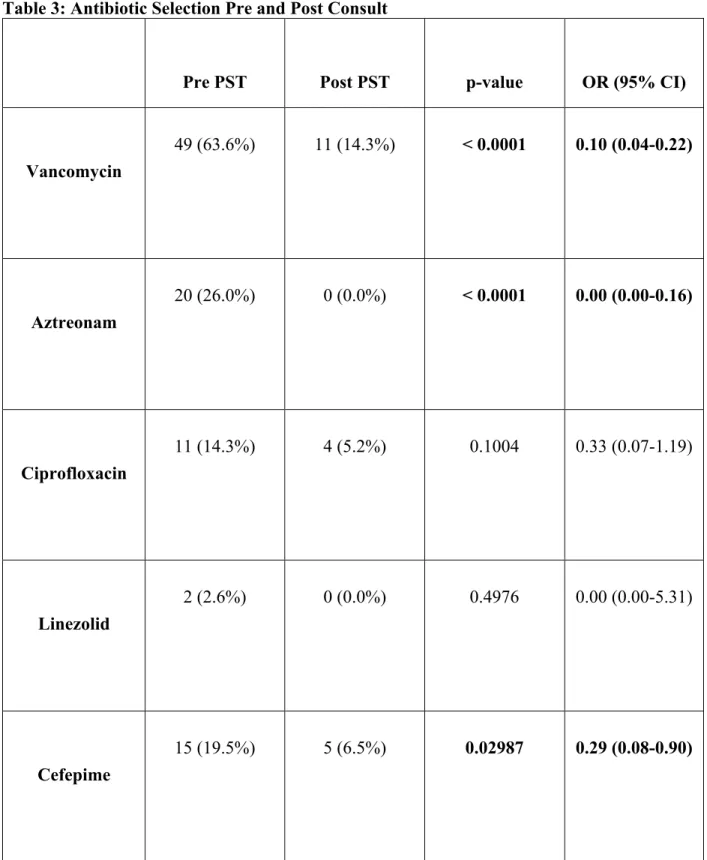
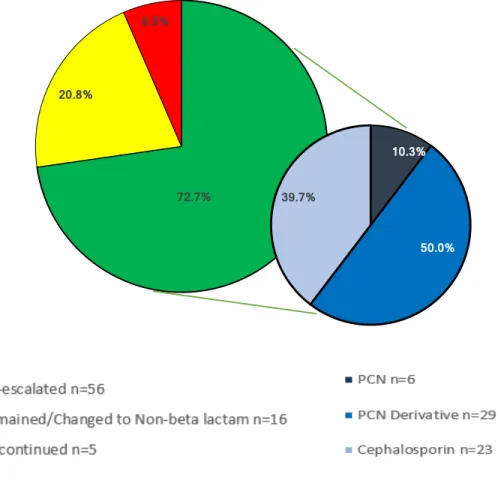
We reviewed the use of broad spectrum antibiotics including vancomycin, aztreonam, ciprofloxacin, linezolid, and cefepime before and after penicillin allergy evaluation consult. Refer to Table 3 for full details regarding changes made to a patient’s antibiotic regimen after testing. There were reductions in the use of all five of these antibiotics, however, the reduction was noted to be significant for cefepime, vancomycin, and aztreonam (p values of 0.02987, < 0.0001, and < 0.0001, respectively). With regards to antibiotic selection after consults, five patients (6.5%) had their antibiotics discontinued, 16 (20.8%) either remained on the same
regimen or were changed to a non-beta lactam antibiotic, and the majority (n=56, 72.7%) had
their antibiotics de-escalated to penicillin, a penicillin derivative, or a cephalosporin. Figure 3
details these changes. Of the patients who had their antibiotics de-escalated, many patients were
switched to start a penicillin derivative (n=29, 39.7%), cephalosporin (n=23, 50.0%), and
penicillin (n=6, 10.3%). See Figure 3 for these changes.
Discussion
Given the rise in anti-microbial resistance and the clinical implications associated with
penicillin allergy, it is critical to identify patients previously labeled as penicillin allergic who
can safely be treated with penicillin or a penicillin derivative. Our findings demonstrate that
inpatient penicillin skin testing followed by an oral challenge is feasible, safe and leads to
choice in what antibiotic can be prescribed, including first line narrow spectrum antibiotics such
as penicillin and penicillin derivatives.
Anti-microbial Changes as a Result of StAAT Consults
As we expected, providing inpatient consults to evaluate penicillin allergy significantly
reduced the use of broad-spectrum antibiotics, including vancomycin, aztreonam, and cefepime.
Most patients tested (72.7%) had their medications switched to an optimal beta-lactam following testing. There are some considerations for why all patients who were cleared of their penicillin allergy were not transitioned to beta-lactam antibiotics. Possible reasons that explain why a patient’s antibiotics were not changed include: the organism was not susceptible to beta-lactam antibiotics, provider preference, or an infection was later ruled out for patients who were started on empiric therapy. Our findings are consistent with other reports of inpatient penicillin skin testing programs that were also able to transition patients who tested negative for penicillin allergy to beta-lactam antibiotics5,17,18. The ability of patients to be transitioned to preferred antibiotics during their hospitalization likely explains why our team has informally received positive feedback from both providers and patients. We plan to measure satisfaction of providers and patients in the future to provide data regarding the value of the program from a satisfaction standpoint.
Cost
While the complete test takes on average 1.5-2 hours, the benefits that follow for a
patient who is able to be cleared surpass any inconvenience. While limitations are placed on
antimicrobial choices for penicillin allergic patients and affect a patient’s clinical course,
penicillin allergy additionally contributes to increased costs for these patients12. Inpatients with
hospitalization and also for discharge medications19. A study by Macy and Contreras compared
the cost of skin testing and money saved by shortening hospitalization days for 51,582 patients
with penicillin allergy13. The cost for testing was $131.37 per test (total of 6.7 million dollars)
however this testing contributed to a 64 million dollar savings for the three year study period,
which is a savings that is 9.5 times the cost of the evaluation13. A smaller study that looked at
cost-effectiveness of penicillin skin testing for fifty patients found an overall cost savings of
$11,005 ($297 per patient switched to a beta-lactam antibiotic)20. A systematic review completed
by Mattingly et al. found that outpatient prescriptions cost $14 to $193 more for penicillin
allergic patients21. Additionally, inpatients without penicillin allergy saved between $1145 to
$4254 for their inpatient admission21. Not all studies however have found that penicillin skin
testing results in cost saving. A study by Forrest et al. did not find a difference in antibiotic costs
for patients with negative penicillin skin testing who were switched to a penicillin antibiotics22.
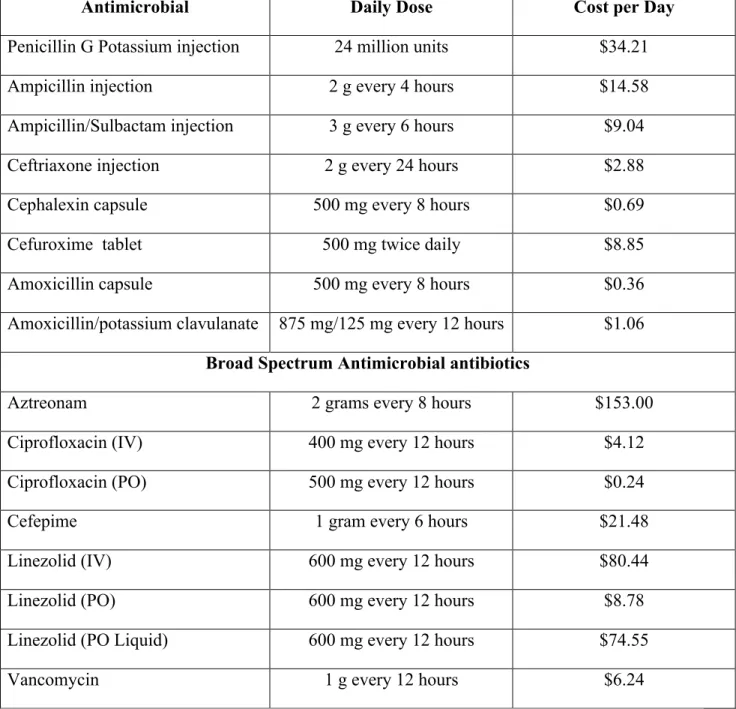
Our team plans to complete a cost-analysis as a future project. In reviewing the cost of
antibiotics at our institution, it is possible that switching off of certain antibiotics such as
aztreonam ($153.00 a day currently) will show significant cost savings while changing therapy
from vancomycin to a penicillin/penicillin derivative would not have as large a gain from a cost
perspective given that the cost of vancomycin is low at $6.24 a day. While a monetary cost from
changing from vancomycin to a penicillin/penicillin derivative will not be evident, the patient
can still benefit from avoidance of adverse side effects such as the development of
vancomycin-resistant enterococci, which in turn contributes to increased medical cost through treatment
failure and complications. It is important to consider indirect costs such as missed work from a
Continued studies that detail the long term outcomes that penicillin allergy evaluations allow for patients through increasing their antibiotic selection options are important. These studies and work can help to inform policy so that in the future, it is routine for all hospitals and healthcare centers to have the ability to complete allergy evaluations for patients with a history of penicillin allergy.
Implications for Hospital Wide Policy and Further Program Development
The results from the evaluation of the StAAT imply that penicillin allergy re-evaluation
should remain a part of the current anti-microbial stewardship initiatives. Initially, patients on
broad spectrum antibiotics should be prioritized for these evaluations until it is possible to have
the medical providers available to evaluate all patients with penicillin allergy who present as
inpatients. Rather than continue a patient on broad spectrum antibiotics, a thorough allergy
history should be obtained. If the patient has definitely tolerated a penicillin or derivative since
the allergic reaction (can be confirmed by medical record or history), the medical record should
be updated and the patient should be switched to a penicillin/penicillin derivative if best option
to treat their underlying infection. If the history is unknown or the patient has not tolerated the
medication since allergic reaction, the patient should undergo penicillin skin testing followed by
a supervised oral test dose to determine whether the allergy persists.
Strengths of a Multi-disciplinary Team
They are additionally excellent at providing education regarding why the evaluation will benefit their treatment course. Allergists complement antimicrobial stewardship programs as they are able to first distinguish whether the reaction that the patient experienced is consistent with an IgE-mediated allergic reaction and complete skin testing and interpret the results. In the instance that a patient remains allergic to penicillin, allergists can additionally provide the patient with a desensitization protocol, which will allow the patient to temporarily tolerate the preferred medication.
Limitations
This program was implemented at a large academic teaching institution and our results may not be generalizable to other institutions. Allergy specialists are not always available to complete drug allergy evaluations at all hospitals5,23. An IDSA survey noted that 60% of healthcare providers had penicillin skin testing available at their institution and 90% of this testing was performed by allergy/immunology providers24. Additionally, less than 15% of U.S. hospitals have the necessary skin testing reagents and materials on formulary5. While the penicillin allergy evaluation is ideally completed with allergy involvement, understandably not
every hospital or clinic has access to an allergist. Lack of personnel and time are two key barriers
for penicillin skin testing25. For hospitals that do not have an allergy presence, other interested
services can fill this need after appropriate education and training. Published protocols and
expert opinion from allergists can be implemented for health care systems that lack access to
allergy physicians.
Lessons Learned
Skin Testing Dilemmas
interfere with an appropriate histamine control and despite not taking medications that would
interfere did not mount an appropriate response. In looking at which patients did not mount
appropriate histamine responses, many of these patients were in the Intensive Care Unit (ICU).
Our team now typically will place a histamine before ordering skin testing reagents PrePen® and
Penicillin G for those patients who are in the ICU or recently came from the ICU to ensure that
the patient will be able to undergo skin testing that day. Further studies may identify an etiology
behind whether excessive stress to the body for certain patients (i.e. critical care or surgical)
effects the ability of their mast cells to release histamine and mount an appropriate histamine
response for skin testing.
Another lesson learned is that inpatients have the potential to have more fragile skin and
less surface area to complete skin testing because of intravenous lines or bruising. While we
typically use the volar surface of the arm for both prick and intradermal skin testing, at times
when skin surface area was limited, we utilized a patient’s back for the skin prick testing and
then used the volar surface of the patient’s arm for the intradermal testing. Given that inpatient
skin testing can be more challenging, we also modified our skin testing training for providers on
the StAAT to include both training at our outpatient allergy clinic and two to three allergy
provider supervised inpatient skin testing consults prior to sign-off. StAAT members additionally
always had an allergy/immunology attending on service available to discuss test results and
management of drug allergy should questions arise.
Electronic Medical Alert
Prior to the start of the inpatient program, an internal chart review was completed that
identified that allergy chart records were surprisingly not always updated to reflect that a patient
standard protocol that the allergy chart is updated after each consult and all patients who have
been cleared have their medical chart updated to reflect this change in allergy status.
Additionally an inpatient who had completed skin testing had their penicillin allergy erroneously
re-entered. To prevent re-entry of penicillin allergy when the patient was previously cleared, we
now have an electronic alert that will notify the provider re-entering the allergy as well as the
StAAT so that a patient’s allergy is not erroneously re-entered. Chen et al. had a similar
experience where 16 patients who were cleared had their allergy re-entered and mitigated this
problem by making an electronic medical record alert18. Their group additionally calls patients
2-4 weeks after testing to re-iterate education about allergy clearance18. Our team will consider
whether it would be beneficial to add phone calls as part of our follow up protocol. Our current
protocol includes providing education after the skin testing is completed and communicating
with the patient’s team to emphasize test results and education regarding options available. Using
technology in creative ways is important so that a patient’s chart correctly reflects updated
allergy results.
Future Directions
The StAAT is currently working on a cost analysis for the inpatient program. We are planning to determine the cost changes for patients who underwent penicillin allergy evaluation consults as an inpatient and measure this cost change considering also the cost of the skin testing and supervised oral challenge. We additionally will look at hospital days to determine cost savings if patients are able to be discharged earlier. Of note, the cost analysis is imperfect as we will not be able to account for intangible cost improvements which include patient and provider satisfaction, but are also important when determining value of this service.
benefit of re-evaluating prior history of penicillin allergy. Clinicians are not routinely taught drug allergy concepts5,26. Allergists can show leadership by providing education and support with regards to drug allergy management. Our allergy/immunology providers are currently involved in providing education for residents and fellows with regards to options for the evaluation and management of drug allergy. The team has additionally created a patient information pamphlet to provide patients with up to date information about penicillin allergy and testing available.
In order to accommodate a greater number of patients who can be evaluated for penicillin allergy, the allergy outpatient clinic added a dedicated penicillin allergy evaluation clinic twice a month so that we can take a proactive and preventative approach to evaluating penicillin allergy. We currently have partnerships in place between anesthesia and transplant infectious disease so that we can accommodate these patients who benefit from knowing their current penicillin allergy status prior to surgery or transplant. High-risk patients include but are not limited to surgery, transplant, hematology/oncology, and immunosuppressed patients and should receive
this evaluation, ideally prior to hospitalization, so that they will have better antimicrobial choices
available to them in the future.
Conclusions
Given the rise in anti-microbial resistance and both the clinical implications and
increased costs associated with penicillin allergy, it is crucial for patients identified as penicillin
allergic to be offered a penicillin allergy evaluation. Our experience details that healthcare
providers from different areas in medicine can complement each other and work well together to
take a preventative and proactive approach in an attempt to increase access to penicillin allergy
evaluations in the inpatient setting. Tackling the issue of penicillin allergy will continue to
resistance indirectly as patients are able to use first line antibiotics. Penicillin skin testing is
feasible and safe in the inpatient setting. This service improves patient care by allowing for
immediate antimicrobial changes and better treatment options for patients who are found to no
Table 1: Antibiotic Allergy Assessment Questions Asked of Patient/Patient’s Family
Question
1. What is/are the name(s) of the medication(s) that you reacted to?
2. How long ago did the reaction occur?
3. Which symptoms were involved in the reaction and what were the characteristics?
- Skin: rash, hives
- Breathing: shortness of breath, wheezing, feeling of "throat closing"
- Anaphylaxis: rapid onset of itchy rash, throat or face swelling, low blood pressure
- Gastrointestinal: nausea, vomiting, diarrhea
4. When during the course did the reaction occur? - Immediate (within 1-4 hours)
- Delayed (3 days or more)
5. Why was the medication prescribed?
6. What happened as a result of the allergic reaction?
- Did patient self-discontinue medication?
- Did patient have to take Benadryl (diphenhydramine)?
- Did patient have to use an EpiPen (epinephrine injector)?
- Did patient need to go to urgent care or the hospital for treatment?
8. Have you tolerated the same or similar medication(s) after the reaction? For similar medications this can include:
- Augmentin (common for sinus infections) - Keflex (common for dental procedures)
- Ceftin (common for UTIs, pneumonia, skin infections) - Omnicef (common for UTIs, pneumonia, skin infections)
Table 2: Demographics
Gender, n (%)
Female 39 (50.6%)
Race, n (%)
White 61 (79.2%)
Black 15 (19.5%)
2+ Races 1 (1.3%)
Ethnicity, n (%)
Hispanic 3 (3.9%)
Age, n (%)
< 21 1 (1.3%)
21-34 5 (6.5%)
35-44 8 (10.4%)
45-54 10 (13.0%)
55-64 15 (19.5%)
65-74 21 (27.3%)
Figure 1: Allergic Reaction by Patient History
Figure 2: Indication for Testing
Table 3: Antibiotic Selection Pre and Post Consult
Pre PST Post PST p-value OR (95% CI)
Vancomycin
49 (63.6%) 11 (14.3%) < 0.0001 0.10 (0.04-0.22)
Aztreonam
20 (26.0%) 0 (0.0%) < 0.0001 0.00 (0.00-0.16)
Ciprofloxacin
11 (14.3%) 4 (5.2%) 0.1004 0.33 (0.07-1.19)
Linezolid
2 (2.6%) 0 (0.0%) 0.4976 0.00 (0.00-5.31)
Cefepime
Figure 3: Antibiotic Selection Changes After Consult
*** Patients who had their anti-microbial regimen de-escalated were transitioned to either a penicillin, penicillin derivative, or cephalosporin antibiotic.Penicillin derivatives that patients
were transitioned to include: ampicillin, ampicillin-sulbactam, amoxicillin, augmentin, nafcillin,
piperacillin-tazobactam.
72.7% 20.8%
6.5%
10.3%
Table 4: Antimicrobial Cost Comparison
Antimicrobial Daily Dose Cost per Day
Penicillin G Potassium injection 24 million units $34.21
Ampicillin injection 2 g every 4 hours $14.58
Ampicillin/Sulbactam injection 3 g every 6 hours $9.04
Ceftriaxone injection 2 g every 24 hours $2.88
Cephalexin capsule 500 mg every 8 hours $0.69
Cefuroxime tablet 500 mg twice daily $8.85
Amoxicillin capsule 500 mg every 8 hours $0.36
Amoxicillin/potassium clavulanate 875 mg/125 mg every 12 hours $1.06 Broad Spectrum Antimicrobial antibiotics
Aztreonam 2 grams every 8 hours $153.00
Ciprofloxacin (IV) 400 mg every 12 hours $4.12
Ciprofloxacin (PO) 500 mg every 12 hours $0.24
Cefepime 1 gram every 6 hours $21.48
Linezolid (IV) 600 mg every 12 hours $80.44
Linezolid (PO) 600 mg every 12 hours $8.78
Linezolid (PO Liquid) 600 mg every 12 hours $74.55
Vancomycin 1 g every 12 hours $6.24
Appendix I: A Systematic Review ofChanges Made to Antibiotic Selection after Inpatient Penicillin Testing
Introduction
A documented penicillin allergy is associated with a number of adverse outcomes for patients including longer hospital stays and increased rates of resistant infections (secondary to limited treatment options and the use of broad spectrum antibiotics in lieu of penicillin)5,12,27,28. Not all patients with a previously documented penicillin allergy are truly allergic; for example, some may be misclassified, and others may have outgrown a reaction1,2. Antibiotic stewardship programs that include testing for penicillin allergy in appropriate patients are a promising strategy for improving treatment options and reducing rates of resistant infection in populations with a documented penicillin allergy27. The aim of this systematic review is to identify whether inpatient consults that address penicillin allergy with penicillin skin testing lead to changes in antibiotic treatment management to first line antibiotics. A secondary aim is to also assess the percentage of patients who tested negative for penicillin allergy to gain further insight on the number of inpatients determined to no longer be allergic to penicillin by skin testing.
Methods
With the assistance of an experienced medical research librarian, searches were
ongoing studies related to inpatients and penicillin skin testing, however, no eligible studies were identified. The key questions, inclusion/exclusion criteria, and search strategy are shown in Appendix I, Tables 1-3.
Full eligibility criteria are shown in Appendix I, Table 2. Trials and observational study designs were eligible for this review. The studies had to pertain to inpatients with penicillin allergy who underwent penicillin skin testing during their admission. Studies that included outpatients or where the setting was unclear and did not mention inpatients were excluded. This review includes studies that utilized penicillin skin testing with major and minor determinants, and followed this testing with an oral challenge if skin testing was negative. The different studies did exhibit some variability with regards to number of minor determinants included for the skin testing as well as the type of penicillin/penicillin derivative antibiotic administered for the oral challenge.
This review outlines changes in patient management with regards to antimicrobial choice after completion of penicillin skin testing. All titles and abstracts identified in database searches were assessed for relevance against the inclusion criteria by one reviewer; for titles and abstracts marked as potentially relevant, the full-text article was reviewed for eligibility. For each included study, one investigator extracted pertinent information about the methods, populations,
Results
A total of 4,027 citations were retrieved from all databases. After duplicates were
removed, 3,284 unique citations were screened by title and abstract. Of these, 98 were marked as potentially relevant and reviewed for full-text eligibility. A total of 17 studies met full eligibility criteria and were included. Appendix I: Figure 1 shows the article flow diagram and reasons for exclusion at the full-text stage. Clinical trials.gov was searched to identify any ongoing studies related to inpatients and penicillin skin testing, however, the current studies did not meet inclusion criteria for this systematic review.
Across the seventeen included studies, sample size for inpatient cohorts who underwent penicillin skin testing ranged from 23 to 4455,17,18,25,30-42. The majority of studies took place in the U.S. with the exception of two, which took place in Canada and Australia respectively34,40. All studies were limited to adults 18 years of age or older with the exception of one, which included a small number of patients (0.8%) younger than 18 years of age17. The majority of studies are classified as pre/post studies, and two were cohort studies 35,39. Further details related to study design, study setting, and age of participants is included in Appendix I, Table 5.
challenge, allergic reaction during skin testing, and development of a rash after oral challenge33,34,38.
Overall, inpatient penicillin skin testing did lead to a change in antibiotic selection for the studies reviewed. Patients were changed to penicillin, penicillin derivatives, or cephalosporins after inpatient penicillin skin testing in many cases. The use of vancomycin, aztreonam, and fluoroquinolones also decreased. The results from the individual studies are shown in Appendix I, Table 7.
Two studies by Arroliga et al. highlight that ICU inpatients benefit from skin testing as both studies showed that ICU inpatients with negative skin testing were transitioned to beta-lactam antibiotics30,31. Del Real et al. observed antibiotic changes for both ICU patients and inpatients, noting that 70.3% of ICU patients were changed to beta-lactam antibiotics compared to 57.4% of inpatients17. Blumenthal et al. found that patients who were tested when penicillin skin testing was available at their hospital had an increased odds of receiving a penicillin or cephalosporin with an adjusted OR of 5.7 (95% CI 2.6-12.5)5. Additionally, more patients during the skin testing time period compared to standard of care received a penicillin or cephalosporin at the time of discharge (26% vs 16%)5. Trubiano et al. found that patients who underwent an allergy evaluation and testing were more likely to be prescribed narrow spectrum antibiotics (2.81, 95% CI) and beta-lactam antibiotics (3.54, 95% CI)40.
Appendix I, Table 7. In addition to patients receiving first line antibiotics for their infection, cost savings ranged from $7,554.08 to $11,00532,33.
Discussion
Inpatient penicillin skin testing is a safe way for patients to re-evaluate prior allergy to penicillin. When patients are found to no longer be allergic to penicillin, they are able to take penicillin, penicillin derivatives, and cephalosporins. Key limitations for the studies evaluated include that these studies are subject to selection bias as the studies typically prioritized patients with penicillin allergy who would benefit from switching to a beta-lactam during their current inpatient stay or near future. Therefore the percentage of patients switched to beta-lactam
antibiotics is likely higher than it would be if all inpatients with penicillin allergy were evaluated. There additionally is a notable broad range in the percentage of patients who were transitioned to a beta-lactam antibiotic (38-100%). While patients were found to no longer have penicillin allergy in these studies (range of negative skin test results between 84-100%), many patients may have not seen a change in antibiotics either because of physician preference, an infection that would not benefit from a beta-lactam, or the patient having already completed empiric therapy for a suspected infection. Additionally many of the studies included had a small sample size and therefore these results are likely not generalizable and larger studies would help provide
additional information on this topic. Despite limitations mentioned, this review does show that inpatient penicillin skin testing is beneficial and provides patients with the option of receiving a first line antibiotic if the patient is able to be cleared successfully of prior penicillin allergy.
Given the clinical implications and increased costs associated with penicillin allergy, it is
when possible. Tackling the issue of penicillin allergy with penicillin skin testing will continue
to improve antimicrobial stewardship efforts and should additionally help to decrease
antimicrobial resistance as patients are able to use first line antibiotics. Penicillin skin testing is
feasible and safe in the inpatient setting. Re-evaluating penicillin allergic patients with penicillin
skin testing improves patient care by allowing for immediate antimicrobial changes and better
Appendix I, Table 1: Scope of Review and Key Question Key Questions
1 Among inpatients with penicillin allergy who underwent penicillin skin testing, were these patients transitioned to more appropriate beta-lactam antibiotics after their penicillin allergy was re-evaluated?
Appendix I, Table 2: Study Inclusion and Exclusion Criteria
Category Inclusion Criteria Exclusion Criteria
Population Inpatient penicillin allergic patients Inpatients without penicillin allergy and all outpatients
Intervention Underwent penicillin skin testing (skin prick and intradermal testing) followed by oral challenge
Comparator No comparator necessary however can include studies that include penicillin allergic patients who did not undergo skin testing followed by oral challenge
No comparator
Outcomes Changes noted in antibiotic selection pre and post skin testing/oral
challenge
Percent of patients with negative penicillin skin testing (found to be no longer allergic to penicillin)
Timing No limits No limits
Settings Inpatient Outpatient
Publication language English Admissible evidence (study design and other criteria)
Published in full
Original research, cross-sectional studies, clinical trials, cohort studies, case series, case reports, QI
initiatives with adequate
measurement methods, systematic Reviews
Studies not published in full, qualitative studies, results of cognitive interviews,
nonsystematic reviews, editorials, policy or recommendation
Appendix I, Table 3: MEDLINE, EMBASE, and Web of Science Search Strategy MEDLINE (via PubMed) Search date: 3/23/2018
#1 "beta-Lactams"[Mesh] OR penicillin*[tiab] OR aminopenicillin*[tiab] OR
amoxicillin*[tiab] OR ampicillin*[tiab] OR azlocillin*[tiab] OR mezlocillin*[tiab] OR piperacillin*[tiab] OR pivampicillin*[tiab] OR talampicillin*[tiab] OR
augmentin*[tiab] OR unasyn[tiab] OR amoxil[tiab] OR nafcil[tiab] OR benzylpenicillin*[tiab] OR amdinocillin*[tiab] OR cyclacillin*[tiab] OR
methicillin*[tiab] OR nafcillin*[tiab] OR oxacillin*[tiab] OR cloxacillin*[tiab] OR dicloxacillin*[tiab] OR floxacillin*[tiab] OR carbenicillin*[tiab] OR
sulbactam*[tiab] OR ticarcillin*[tiab] OR "β-lactam*"[tiab] OR "beta lactam*"[tiab] OR beta-lactam*[tiab]
207,048
#2 "Drug Hypersensitivity"[Mesh] OR "Skin Tests"[Mesh] OR allerg*[tiab] OR hypersensitiv*[tiab] OR skin[tiab] OR puncture[tiab] OR scratch[tiab] OR prick[tiab] OR patch[tiab] OR intradermal[tiab]
839,125
#3 "Hospitalization"[Mesh] OR "Inpatients"[Mesh] OR hospitaliz*[tiab] OR hospitalis*[tiab] OR inpatient*[tiab] OR "in-patient*"[tiab] OR "hospital patient*"[tiab]
456,011
#4 #1 AND #2 AND #3 1,203
#5 #4 NOT (Editorial[ptyp] OR Letter[ptyp] OR Case Reports[ptyp] OR Comment[ptyp])
1,072
EMBASE Search date: 3/26/2018
#1 'beta lactam'/exp OR 'penicillin derivative'/exp OR 'β-lactam*':ab,ti OR 'beta
lactam*':ab,ti OR penicillin*:ab,ti OR aminopenicillin*:ab,ti OR amoxicillin*:ab,ti OR ampicillin*:ab,ti OR azlocillin*:ab,ti OR mezlocillin*:ab,ti OR piperacillin*:ab,ti OR pivampicillin*:ab,ti OR talampicillin*:ab,ti OR augmentin*:ab,ti OR unasyn:ab,ti OR amoxil:ab,ti OR nafcil:ab,ti OR benzylpenicillin*:ab,ti OR amdinocillin*:ab,ti OR cyclacillin*:ab,ti OR methicillin*:ab,ti OR nafcillin*:ab,ti OR oxacillin*:ab,ti OR cloxacillin*:ab,ti OR dicloxacillin*:ab,ti OR floxacillin*:ab,ti OR carbenicillin*:ab,ti OR sulbactam*:ab,ti OR ticarcillin*:ab,ti
386,578
#2 'drug hypersensitivity'/exp OR 'skin test'/exp OR allerg*:ab,ti OR hypersensitiv*:ab,ti OR skin:ab,ti OR puncture:ab,ti OR scratch:ab,ti OR prick:ab,ti OR patch:ab,ti OR intradermal:ab,ti
1,198,495
#3 'hospitalization'/exp OR 'hospital patient'/exp OR hosptializ*:ab,ti OR hospitalis*:ab,ti OR inpatient*:ab,ti OR 'in-patient':ab,ti OR 'in-patients':ab,ti OR 'hospital patient':ab,ti OR 'hospital patients':ab,ti
2,743,817
#4 #1 AND #2 AND #3 6,202
#5 #4 AND ([embase]/lim NOT [medline]/lim) 2,408
#6 #5 NOT ('case report'/exp OR 'case study'/exp OR 'editorial'/exp OR 'letter'/exp OR 'note'/exp OR [conference abstract]/lim)
875
Web Science Search date: 3/26/2018
#1 (penicillin* OR aminopenicillin* OR amoxicillin* OR ampicillin* OR azlocillin* OR mezlocillin* OR piperacillin* OR pivampicillin* OR talampicillin* OR augmentin* OR unasyn OR amoxil OR nafcil OR benzylpenicillin* OR amdinocillin* OR cyclacillin* OR methicillin* OR nafcillin* OR oxacillin* OR cloxacillin* OR dicloxacillin* OR floxacillin* OR carbenicillin* OR sulbactam* OR ticarcillin* OR "β-lactam*" OR "beta lactam*" OR beta-lactam*) AND TOPIC: (allerg* OR hypersensitiv* OR skin OR puncture OR scratch OR prick OR patch OR intradermal) AND TOPIC: (hospitaliz* OR hospitalis* OR inpatient* OR "in-patient*" OR "hospital patient*")
Refined by: LANGUAGES: ( ENGLISH )
Appendix I, Table 4: Risk Of Bias In Non-randomized Studies - of Interventions (Modified List of Questions Considered)
Question
1 Specify the Review Question 2 List the confounding domains
Appendix I, Table 5: Study and Patient Characteristics
Study Type of Study Hospital Setting Patient Location Age Mean, y (Range)
Arroliga et al., 2000 Pre/Post Study Academic ICU 64.6 (41-87)
Arroliga et al., 2003 Pre/Post Study Academic ICU NR
Blumenthal et al., 2017
Pre/Post Study Academic Inpatients NR (48-80)
Chen et al., 2017 Pre/Post Study Academic Inpatients 49.3 (16-87)
Del Real et al., 2007 Pre/Post Study Academic ICU, inpatients, outpatients
59.4 (NR), 99.2% ≥18 y & 0.8% < 18 y
Heil et al., 2016 Pre/Post Study Academic ICU, inpatients NR
Jones et al., 2017 Pre/Post Study Community Inpatients NR
King et al., 2016 Pre/Post Study Unknown Inpatients 62 (NR)
Leis et al., 2017 Pre/Post Study 1 Academic, 2 Community
ICU, inpatients 68 (55-83)
Macy et al., 2004 Cohort Academic Inpatients Cases 63.7 (NR)
Controls 62.3 (NR)
Nadarajah et al., 2005 Pre/Post Study Community Inpatients NR
Ramsey et al., 2017 Pre/Post Study Academic Inpatients 66 (NR)
Rimawi et al., 2013 Pre/Post Study Academic Inpatients NR, all ≥18 y
Shannon et al., 2016 Cohort Community ICU, inpatients Cases 65.3 (NR)
Controls 68.5 (NR)
Trubiano et al., 2017 Pre/Post Study 2 tertiary referral centers
Inpatients 59 (47-70)
Wall et al., 2004 Pre/Post Study Academic Inpatients NR, all ≥18 y
Warrington et al., 2000 Pre/Post Study Tertiary care hospital
Inpatients 56.2
Appendix I, Table 6: Percentage of Negative Penicillin Skin Testing Results and Adverse Effects
Study Number of Patients
Skin Tested Negative PST (%) Adverse Effects
Arroliga et al., 2000 24 95.0% NR
Arroliga et al., 2003 96 88.5% NR
Blumenthal et al., 2017 278 100% NR
Chen et al., 2017 228 97.8% NR
Del Real et al., 2007 445 (Inpatient = 300, ICU = 145)
88.4% NR
Heil et al., 2016 76 84.0% NR
Jones et al., 2017 36 100% NR
King et al., 2016 50 (Medical and Surgical inpatients)
100% 1 patient with anaphylaxis during PO challenge. 98% of patients negative for PCN allergy considering PST and PO challenge.
Leis et al., 2017 90 94% 1 patient developed a rash after
switched to beta-lactam antibiotic
Macy et al., 2004 141 94.5% NR
Nadarajah et al., 2005 101 91.0% NR
Ramsey et al., 2017 50 94.0% NR
Rimawi et al., 2013 146 99% 1 patient experienced an
allergic reaction during PST.
Shannon et al., 2016 63 89% NR
Trubiano et al., 2017 110 NR
Wall et al., 2004 23 95.6% 1 equivocal skin test result. No
adverse reactions.
Warrington et al., 2000 53 100% NR
Appendix I, Table 7: Effect of Penicillin Skin Testing on Antimicrobial Selection Study Effect of PST (% BLA
post PST)
Other Effects/Observations
Arroliga et al., 2000
48% ---
Arroliga et al., 2003
39.5% ---
Blumenthal et al., 2017
72%
Patients in skin testing time period were at increased odd of receiving BLA (OR of 5.7 95% CI 2.6-12.5)
Patients in the PST group were also more likely to receive a PCN or cephalosporin antibiotic at discharge compared to SOC period (26% vs. 16%; p = 0.18)
Chen et al., 2017
38% Decline in the following medications: vancomycin (33%), clindamycin (61%), fluoroquinolones (36%), carbapenems (50%), aztreonam (68%) Del Real et al.,
2007
ICU patients 70.3% Inpatients 57.4%
Decrease in vancomycin, fluoroquinolones, 3rd generation cephalosporins, clindamycin, metronidazole, gentamycin Heil et al.,
2016
PCN 55%, Cephalosporin 40%,
Carbapenem 5%
Report that 80% received more effective therapy, 63% received narrower spectrum antibiotics, and 61% received more cost effective therapy
Jones et al.,
2017 75%
Reduced the use of aztreonam, carbapenems, vancomycin, and other broad spectrum antibiotics. Approximated a total cost savings of $7554.08.
King et al., 2016
75.5% Overall cost savings of $11,005 ($297 per patient)
Leis et al., 2017
98.8% ---
Macy et al., 2004 PCN 17%, Cephalosporins 58.9% --- Nadarajah et al., 2005 PCN 49%, Cephalosporin 48%
96% Reduction in use of vancomycin, 96% reduction in the use of fluoroquinolones
Ramsey et al., 2017
PCN 56%, 1st or 2nd generation cephalosporin 26%, 3rd
or 4th generation cephalosporin 24%
Avoided a total of 982 days of a second line antibiotic and at least 23 hospital days were prevented that would have been used to administer antibiotics.
Rimawi et al., 2013
99% tolerated full course of BLA
---
Shannon et al., 2016
57% Cases in allergy assessment group transitioned to BLA therapy more often than controls (57.0% vs. 22.0%).
Trubiano et al., 2017
--- Patients who underwent allergy testing were more likely to receive narrow spectrum BLA (3.54, 95% CI), more likely to receive appropriate antibiotics (12.27, 95% CI), and less likely to receive restricted antibiotics (0.16).
Wall et al., 2004
PCN or BLA 100% ---
Warrington et al., 2000
57% BLA therapy was recommended in 96% but only prescribed to 57%.
References:
1. Joint Task Force on Practice P, American Academy of Allergy A, Immunology, et al. Drug allergy: an updated practice parameter. Ann Allergy Asthma Immunol.
2010;105(4):259-273.
2. American Academy of Allergy AI. Ten things physicians and patients should question
Choosing Wisely, ABIM Foundation 2014; http://www.choosingwisely.org/clinician- lists/american-academy-allergy-asthma-immunlogy-non-beta-lactam-antibiotics-penicillin-allergy/. Accessed October 23, 2017.
3. Picard M, Begin P, Bouchard H, et al. Treatment of patients with a history of penicillin allergy in a large tertiary-care academic hospital. J Allergy Clin Immunol Pract.
2013;1(3):252-257.
4. MacFadden DR, LaDelfa A, Leen J, et al. Impact of Reported Beta-Lactam Allergy on Inpatient Outcomes: A Multicenter Prospective Cohort Study. Clin Infect Dis.
2016;63(7):904-910.
5. Blumenthal KG, Wickner PG, Hurwitz S, et al. Tackling inpatient penicillin allergies: Assessing tools for antimicrobial stewardship. Journal of Allergy and Clinical
Immunology. 2017;140(1):154-161.e156.
6. Macy E, Ngor EW. Safely diagnosing clinically significant penicillin allergy using only penicilloyl-poly-lysine, penicillin, and oral amoxicillin. J Allergy Clin Immunol Pract.
2013;1(3):258-263.
7. Solensky R. The time for penicillin skin testing is here. J Allergy Clin Immunol Pract.
2013;1(3):264-265.
8. Blanca M, Torres MJ, Garcia JJ, et al. Natural evolution of skin test sensitivity in patients allergic to beta-lactam antibiotics. J Allergy Clin Immunol. 1999;103(5 Pt 1):918-924. 9. Gonzalez-Estrada A, Radojicic C. Penicillin allergy: A practical guide for clinicians.
Cleve Clin J Med. 2015;82(5):295-300.
10. Blumenthal KG, Wickner PG, Hurwitz S, et al. Tackling inpatient penicillin allergies: Assessing tools for antimicrobial stewardship. J Allergy Clin Immunol. 2017.
11. Chen JR, Khan DA. Evaluation of Penicillin Allergy in the Hospitalized Patient:
Opportunities for Antimicrobial Stewardship. Curr Allergy Asthma Rep. 2017;17(6):40. 12. Solensky R. Penicillin allergy as a public health measure. J Allergy Clin Immunol.
2014;133(3):797-798.
13. Macy E, Contreras R. Health care use and serious infection prevalence associated with penicillin "allergy" in hospitalized patients: A cohort study. J Allergy Clin Immunol.
2014;133(3):790-796.
14. Desai SH, Kaplan MS, Chen Q, Macy EM. Morbidity in Pregnant Women Associated with Unverified Penicillin Allergies, Antibiotic Use, and Group B Streptococcus Infections. Perm J. 2017;21.
15. Penicillin Allergy Testing Should Be Performed Routinely in Patients with Self-Reported Penicillin Allergy. J Allergy Clin Immunol Pract. 2017;5(2):333-334.
17. del Real GA, Rose ME, Ramirez-Atamoros MT, et al. Penicillin skin testing in patients with a history of beta-lactam allergy. Annals of Allergy, Asthma, and Immunology.
2007;98(4):355-359.
18. Chen JR, Tarver SA, Alvarez KS, Tran T, Khan DA. A Proactive Approach to Penicillin Allergy Testing in Hospitalized Patients. J Allergy Clin Immunol Pract. 2017;5(3):686-693.
19. Sade K, Holtzer I, Levo Y, Kivity S. The economic burden of antibiotic treatment of penicillin-allergic patients in internal medicine wards of a general tertiary care hospital.
Clin Exp Allergy. 2003;33(4):501-506.
20. King EA, Challa S, Curtin P, Bielory L. Penicillin skin testing in hospitalized patients with beta-lactam allergies: Effect on antibiotic selection and cost. Ann Allergy Asthma Immunol. 2016;117(1):67-71.
21. Mattingly TJ, 2nd, Fulton A, Lumish RA, et al. The Cost of Self-Reported Penicillin Allergy: A Systematic Review. J Allergy Clin Immunol Pract. 2018.
22. Forrest DM, Schellenberg RR, Thien VV, King S, Anis AH, Dodek PM. Introduction of a practice guideline for penicillin skin testing improves the appropriateness of antibiotic therapy. Clin Infect Dis. 2001;32(12):1685-1690.
23. Gerace KS, Karlin E, McKinnon E, Phillips E. Varying penicillin allergy testing practices in the United States: A time for consensus. J Allergy Clin Immunol Pract. 2015;3(5):791-793.
24. Abbo LM, Beekmann SE, Hooton TM, Johannsson B, Polgreen PM. Management of Antimicrobial Allergies by Infectious Diseases Physicians. JAMA Intern Med.
2013;173(14):1376-1380.
25. Heil EL, Bork JT, Schmalzle SA, et al. Implementation of an Infectious Disease Fellow-Managed Penicillin Allergy Skin Testing Service. Open Forum Infect Dis.
2016;3(3):ofw155.
26. Blumenthal KG, Shenoy ES, Hurwitz S, Varughese CA, Hooper DC, Banerji A. Effect of a drug allergy educational program and antibiotic prescribing guideline on inpatient clinical providers' antibiotic prescribing knowledge. J Allergy Clin Immunol Pract.
2014;2(4):407-413.
27. Chen JR, Khan DA. Evaluation of Penicillin Allergy in the Hospitalized Patient: Opportunities for Antimicrobial Stewardship. Current Allergy and Asthma Reports.
2017;17(6):40.
28. Macy E, Contreras R. Health care use and serious infection prevalence associated with penicillin "allergy" in hospitalized patients: A cohort study. Journal of Allergy and Clinical Immunology. 2014;133(3):790-796.
29. Sterne JA, Hernan MA, Reeves BC, et al. ROBINS-I: a tool for assessing risk of bias in non-randomised studies of interventions. BMJ. 2016;355:i4919.
30. Arroliga ME, Wagner W, Bobek MB, Hoffman-Hogg L, Gordon SM, Arroliga AC. A pilot study of penicillin skin testing in patients with a history of penicillin allergy admitted to a medical ICU. Chest. 2000;118(4):1106-1108.
31. Arroliga ME, Radojicic C, Gordon SM, et al. A prospective observational study of the effect of penicillin skin testing on antibiotic use in the intensive care unit. Infection Control and Hospital Epidemiology. 2003;24(5):347-350.
32. Jones BM, Bland CM. Penicillin skin testing as an antimicrobial stewardship initiative.
33. King EA, Challa S, Curtin P, Bielory L. Penicillin skin testing in hospitalized patients with beta-lactam allergies: Effect on antibiotic selection and cost. Annals of Allergy, Asthma, and Immunology. 2016;117(1):67-71.
34. Leis JA, Palmay L, Ho G, et al. Point-of-Care beta-Lactam Allergy Skin Testing by Antimicrobial Stewardship Programs: A Pragmatic Multicenter Prospective Evaluation.
Clinical Infectious Diseases. 2017;65(7):1059-1065.
35. Macy E, Roppe LB, Schatz M. Routine Penicillin Skin Testing in Hospitalized Patients with a History of Penicillin Allergy. Perm J. 2004;8(3):20-24.
36. Nadarajah K, Green GR, Naglak M. Clinical outcomes of penicillin skin testing. Annals of Allergy, Asthma, and Immunology. 2005;95(6):541-545.
37. Ramsey A, Staicu M, Brundige ML. Use of a Penicillin Allergy Screening Algorithm and Penicillin Skin Testing for Transitioning Hospitalized Patients to First Line Antibiotic Therapy. Journal of Allergy and Clinical Immunology. 2017;139(2):AB182-AB182. 38. Rimawi RH, Cook PP, Gooch M, et al. The impact of penicillin skin testing on clinical
practice and antimicrobial stewardship. Journal of Hospital Medicine. 2013;8(6):341-345.
39. Shannon KT, Krop LC. Evaluation of the Implementation of an Allergy Assessment Tool as an Antimicrobial Stewardship Initiative. Infectious Diseases in Clinical Practice.
2016;24(6):332-336.
40. Trubiano JA, Thursky KA, Stewardson AJ, et al. Impact of an Integrated Antibiotic Allergy Testing Program on Antimicrobial Stewardship: A Multicenter Evaluation.
Clinical Infectious Diseases. 2017;65(1):166-174.
41. Wall GC, Peters L, Leaders CB, Wille JA. Pharmacist-managed service providing penicillin allergy skin tests. American Journal of Health-System Pharmacy.
2004;61(12):1271-1275.