EVALUATING THE PRESENT AND FUTURE ROLE OF FAITH-BASED ORGANIZATIONS IN IMPROVING UNDERSERVED COMMUNITIES IN THE U.S.
By
Karen Strater Maddox
A Master's Paper submitted to the faculty of the University of North Carolina at Chapel Hill
In partial fulfillment of the requirements for the degree of Master of Public Health in
the Public Health Leadership Program.
Abstract
Karen Strater Maddox
Evaluating the Present and Fntnre Role of Faith-Based Organizations in Improving Underserved Communities in the U.S.
(Under the direction of Lori A. Evarts, MPH P MP CP Hand Eddie L. Jumper, MD)
This paper reviews the racial and health disparities that exist in underserved communities
in the United States and how faith-based organizations have affected them. Reducing health
disparities remains a major public health challenge. With the persistence of these disparities,
faith-based organizations will continue to play a major role in the improvement of underserved
communities. In fact, these organizations are vital to the eradication of these differences. Health
disparities do not have a single root cause and many factors may lead to differences in health
care. To adequately address these disparities and their determinants, they must be approached at
multi-levels, including individual, family, and community improvements. Faith-based
organizations should be involved in this strategic effort, because they play an intricate role in the
lives of those living in underserved communities.
There are three major types of faith-based organizations: congregations (e.g. the local
church), denominational organizations (e.g. Catholic Charities, The Salvation Army) and
national networks (e.g. YMCA, YWCA), and freestanding organizations (non-profit
organizations). All three types have been involved in health initiatives and community-based
interventions. Some have exhibited success and some have highlighted the inherent limitations
organization involvement in community development are best illustrated in denominational
networks such as Catholic Charities, and in non-profit Community Development Corporations
(CDCs), such as the Abyssinian Development Corporation (ADC) in Central Harlem. Although
there are many models of success, a closer look at this evidence reveals that despite their broad
involvement in services, most faith-based organizations are not active in community
development. While the social services that are offered are vital to meeting individual human
needs, they do not scratch the surface of improving the community and society in underserved
areas.
In order for faith-based organizations to attain capacity to engage in effective and
sustaining community development, assistance from external sources is necessary. The Office of
Faith-Based and Neighborhood Partnerships established by President Obama can provide the
vehicle for education, resources, networking, and sharing of best practices that is necessary for
these organizations to develop these abilities. This Office will train the trainers, partner with
State and Local Offices, hold recipients responsible, and close the learning gap (Obama '08,
2008). Furthermore, commitment by federal and state offices to collaborate/educate these
organizations is vital to the increased commitment of faith-based organizations to community
development. This assistance must illuminate the shared goals of faith-based organizations and
the public health field (e.g. improved community for the underserved, ministry to the "whole"
person, better living conditions, better access to healthcare ), which will result in progress
Given the churches' demonstrated ability to motivate, to inspire, and to pull people
together, there is great potential for faith-based interventions and models to address health
disparities in the future (Kaplan et al., 2006). In fact, the past models of success, as well as
failures, which can be used as lessons learned, can propel faith-based organizations to the
forefront of community development that will reduce health disparities in underserved
Table of Contents
Abstract ... ii
List of Tables ... vi
L . . 1st o1 ,, rv· 1gures ... vu ·· L . 1st o•~"Abb . . . .. 1 revzatwns ... vm Introduction ... 1
Discussion of Problem ... 2
Review of Faith-Based Organizations ... 9
Faith-Based Organization Best Practices/Models ofSuccess ... 13
Faith-Based Organization Failures and Limitations ... 19
Federal Policy: Office of Faith-Based and Neighborhood Partnerships ... 23
Future Role of Faith-Based Organizations ...•... 26
List of Tables
Table I. Congregations I Social Service Activities ... 28
Table 2. Types of Community Changes by Strategy and Group ... 29
Table 3. Percentage of Congregations ... 30
List of Figures
Figure I. Determinants of Health ... 32
Figure 2. Familial Influences ... 33
Figure 3. HIVIAIDS Diagnoses among Adults and Adolescents by Race!Ethnicity ... 34
Figure 4. HIV/AIDS Disparities ... 35
Figure 5. Pathways to Health ... 36
ADC
AHRQ AIDS AME BIG CDC CDCs CDDPH CEO HHS HIV HUD IHP IOM ISIS KC-CDC NCC NHDR NIH OLPC OMH REACH RFP SAWSO VOHCDC YMCA YWCAList of Abbreviations
Abyssinian Development Corporation
Agency for Healthcare Research and Quality
Acquired Immunodeficiency Syndrome
African Methodist Episcopal
Balm in Gilead
Centers for Disease Control and Prevention
Community Development Corporations
Centers for Population Health and Health Disparities
Chief Executive Officer
U.S. Department of Health and Human Services
Human Immunodeficiency Virus
U.S. Department of Housing and Urban Development
Interfaith Health Program
Institute of Medicine
Intimate Sessions for Informed Sexuality
Kansas City- Chronic Disease Coalition
New Community Corporation
National Healthcare Disparities Report
National Institutes of Health
One Laptop per Child
Office of Minority Health
Racial and Ethnic Approaches to Community Health
Request for Proposal
The Salvation Army World Service Office
Vision of Hope Community Development Corporation
Young Men's Christian Association
Introduction
Americans are a deeply religious people, with more than 71 percent reporting that they
believe in God or a higher power, and faith-based organizations provide critical social services to
tens of millions of Americans every year. A recent Pew report noted that a majority of
Americans (66%) favor allowing churches and other faith communities to apply for government
funding to provide social services (Obama '08: Partnering with Communities of Faith [Obama
'08], 2008). Everyday these organizations develop innovative solutions to our nation's most
worrisome problems. For example, Catholic Charities is working to ensure that homeless
veterans are not sleeping on the streets of Chicago (Obama '08, 2008) and Ready4Work is a
faith-based initiative devoted to ensuring that ex-offenders do not return to a life of crime in 11
cities across the country (Obama '08, 2008). A diverse coalition ofre1igious groups have come
together for causes ranging from rebuilding New Orleans to fighting for secure wages for all
workers (Obama '08, 2008). Furthermore, with the persistence of health disparities in America,
faith-based organizations have and will continue to play a major role in the improvement of
underserved communities. In fact, these organizations are vital to the eradication of these
differences.
This paper will review the racial and health disparities that exist in underserved
communities in the United States and review how faith-based organizations have affected them.
It will also review the various types of faith-based organizations, their best practices, failures and
limitations, federal policies, and their future role. In summary, it will explore the present and
Discussion of Problem
Reducing health disparities remains a major public health challenge in the United States.
In its broadest sense, the term "health disparities refers to preventable differences in the
indicators of health of different population groups, often defined by race, ethnicity, sex,
educational level, socioeconomic status, and geographic location of residence" (Mensah,
Mokdad, Ford, Greenlund, & Croft, 2005, p. 1233). Health was defined as a state of"complete
physical, mental, and social well-being and not merely the absence of disease or infirmity"
(Fielding, 2008, slide 4) by the World Health Organization in 1948 and in 1996 it was defined by
Alvin Tarlov as an "individual's capacity in relation to aspirations and potential for living fully
in the social environment" (Fielding, 2008, slide 5). On the other hand, the word "disparity" can
be defined as "the condition or fact of being unequal, as in age, rank, or degree" (Agency for
Healthcare Research and Quality [AHRQ], 2003). The first National Institutes of Health
Working Group on Health Disparities defined disparities as including "differences in the
incidence, prevalence, mortality, and burden of diseases and other adverse health conditions"
(Mensah et al., 2005, p. 1233).
Health disparities do not have a single root cause and in fact many factors may lead to
differences in health care, especially with respect to aggregate measures of use. These include
different underlying rates of illness due to genetic predisposition, local environmental conditions,
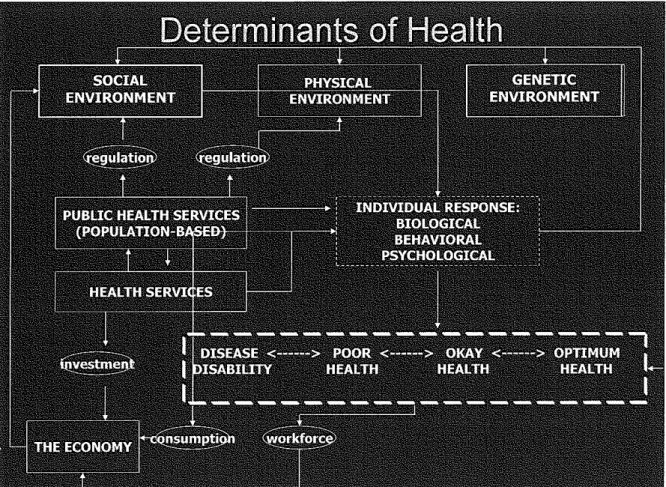
or lifestyle choices. As described by Fielding (2008), Figure I illustrates that a person's social,
physical, and genetic environment, as well as other factors such as public health services, health
services, and the economy affect health. There are also variations in patient care-seeking
behavior, which vary due to differing cultural beliefs, linguistic barriers, degree of trust of health
availability of care is dependent upon such factors as the ability to pay for care, the location,
management and delivery of health care services, clinical uncertainty, and health care
practitioner beliefs. There may also be differing perspectives regarding the appropriate division
of financial responsibility between the individual, the public sector, and the private sector in
regard to health services. Finally, population and family characteristics (e.g. race, ethnicity,
income, education, place of residence, age, etc.) may also influence access to health care, and
these effects are both independent and cumulative (see Figure 2 for health, demographic, and
household family characteristics) (Fielding, 2008).
Despite improvements in health care and overall health in the United States, health
disparities still persist in minorities. This is important because nearly one in two Americans will
be a member of a racial or ethnic minority, i.e. Black, Hispanic, Asian, or American Indian, by
the year 2050 (AHRQ, 2003). In 1985, the Report of the Secretary's Task Force on Black and
Minority Health documented the disparity in key indicators among certain groups of the U.S.
population, investigating long-standing disparities between the health status of
African-Americans, Hispanics, Asian/Pacific Islanders, and Native Americans compared to that of
Whites. The key finding of this Report was that 60,000 deaths occur each year in minority
populations with 80% of them accounted for by the following six causes of death: !)Cancer,
2)Cardiovascular disease and stroke, 3)Chemical dependency, measured by deaths due to
cirrhosis, 4)Diabetes, 5)Homicides and accidents (unintentional injuries), and 6)Infant mortality
(Perspectives in Disease Prevention and Health Promotion Report of the Secretary's Task Force
on Black and Minority Health [Secretary's Task Force], 1985). The Centers for Disease Control
and Prevention (2006) found twenty-one years after this study there was little change in the
Disease, 2)Cancer, 3)Stroke, 4)Unintentional injuries, 5)Diabetes, 6)Homicide, ?)Nephritis,
Nephrotic syndrome, and Nephrosis, &)Chronic lower respiratory disease, 9)HIV/ AIDS, and I 0)
Septicemia.
Moreover, by 2006 HIV/ AIDS had moved into the top ten leading causes of death among
African-Americans. Therefore, it is not surprising that African-Americans experienced the
highest rates ofHIV diagnoses among adults and adolescents of all ethnic groups from 2001
-2004 (see Figure 3). As documented by Sutton, et. al., a statistically significant decrease was
observed in the diagnosis ofHIV among African-American population from 2001 to 2004,
however much work is still required to eliminate the vast difference in this population from other
ethnic groups in the United States (Sutton, Durant, Prejean, Xiaohong, Wei, Lee, 2009).
Additionally, there are tremendous disparities in HIV I AIDS cases as reported by The Balm in
Gilead (n.d.). Although African Americans represent only 12 percent of the total U.S.
population, they account for 46 percent of total U.S. AIDS cases (Centers for Disease Control
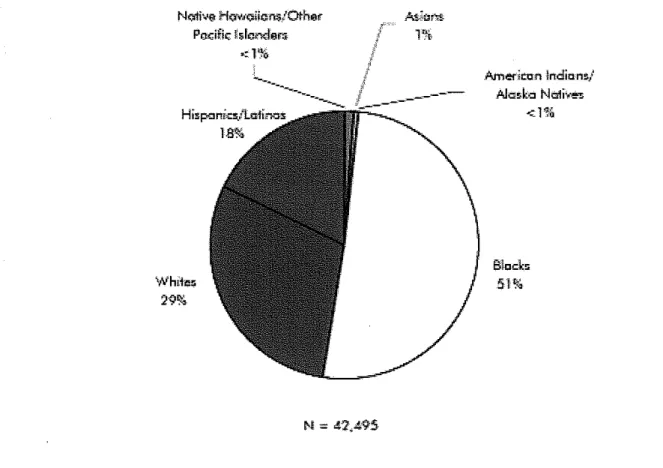
and Prevention [CDC], 2008). It was found in 2007 that more than 50 percent of newly reported
HIV infections in the United States is among African Americans (see Figure 4) (CDC, 2009). In
fact, AIDS is the number one cause of death in the U.S. for Black adults aged 25 to 44, before
heart disease, cancer and homicide, and Black children in the U.S. represent almost two-thirds
Because of these glaring disparities that have existed for decades, the Secretary's Task
Force (1985) made eight main recommendations:
I. Implement an outreach campaign, specifically designed for minority populations, to
disseminate targeted health information, educational materials, and program strategies,
2. Increase patient education by developing materials and programs responsive to minority
needs and by improving provider awareness of minority cultural and language needs.
3. Improve the access, delivery, and financing of health services to minority populations
through increased efficiency and acceptability.
4. Develop strategies to improve the availability and accessibility of health professionals to
minority communities through communication and coordination with nonfederal entities.
5. Promote and improve communication and coordination among federal agencies in
administering existing programs for improving the health status and availability of health
professionals to minorities.
6. Provide technical assistance and encourage efforts by local and community agencies to
meet minority-health needs.
7. Improve the quality, availability, and use of health data pertaining to minority
populations.
8. Adopt and support research to investigate factors affecting minority health, including
risk-factor identification, education interventions, and prevention and treatment services.
Since 1985, many of these recommendations have been acted upon and most progress has
been made through the institutionalization of minority-related health and service initiatives at the
established in 1985 to serve as the federal focal point for leadership, coordination, and guidance
on policies and programs aimed at improving minority health and ameliorating health disparities
to specifically address Recommendation 5 (Kaiser Family Foundation, 2005). This Office
advises the Secretary of the U.S. Department of Health and Human Services (HHS) and the
Office of Public Health and Science on public health policy and program activities affecting
minority communities. Following this approach, many states have developed their own Offices
of Minority Health to address disparities within their prospective state. These offices assist in
addressing Recommendations 6, 7, and 8. In 1990, the National Center for Minority Health and
Health Disparities of the National Institute of Health was established, which resulted in RFPs
for the first-time being released with the term "community-based participatory research" (Kaiser,
2005).
Also in 1998, President Clinton implemented a racial and ethnic health disparities
initiative entitled One America (One Laptop per Child [OLPC] Internet FAQ Archives, n.d.) that
changed the focus of government efforts from reducing disparities to eliminating them. After the
1999 publication of Healthy People 2010, the Centers for Disease Control and Prevention
introduced the Racial and Ethnic Approaches to Community Health (REACH) program, which
features community-based participatory research as a tool to achieve social justice in health care.
These institutes and programs addressed Recommendations 1 and 2. Besides this, national, state,
and local agencies have all improved their data collection methods to address Recommendation
7, which makes it possible to measure the health problems of minorities with increasing
sophistication (OLPC Internet FAQ Archives, n.d.). Furthermore, when the National Center on
Minority Health and Health Disparities was established as part of the Minority Health and Health
and centers were required to develop strategic plans for modifYing and eliminating health
disparities. Federally funded researchers were challenged to adopt research models combining
social, behavioral, clinical, and basic science. Reports published by the Institute of Medicine and
the National Academy of Sciences also described new multilevel, trans-disciplinary research
paradigms that integrated theories from the social and behavioral sciences with new research on
genetics and molecular biology. Together, all these developments created a strong stimulus for a
new approach to research by the federal government to address Recommendation 8.
In 2002, the National Institute of Environmental Health Sciences invited applications to
establish Centers for Population Health and Health Disparities ( CPHHDs) with eight CPHHDs
launched in September 2003. At the same time, the Agency for Health care Research and Quality
(AHRQ) initiated several programs that addressed disparities in health services. Reflecting the
design of the REACH program (Collie-Akers, Schultz, Carson, Fawcett, & Ronan, 2009), each
CPHHD was required to include at least one community-based participatory research project to
ensure that resulting new interventions would have external validity and relevance to public
health concerns and policy. Partnerships forged through local public health programs, advisory
boards, and the direct participation of community members in the research process have
expanded the research and service delivery infrastructure at the state and local level to again
address Recommendations 1, 2, 3, and 8 (Warnecke eta!., 2008).
Finally, Recommendation 4 has been addressed in many ways. A variety of programs
recruit minority-group members to become physicians and encourage them to practice in
underserved areas. Through the efforts of many medical schools and other organizations, the
proportion of minorities in medical school has increased significantly. In addition, programs
of service as a physician in underserved areas in exchange for significant relief from student loan
debts. As well, immigration rules permit thousands of foreign-trained physicians to come to the
United States for specialty training and many of them join programs in underserved areas (OLPC
Internet FAQ Archives, n.d.).
After the National Healthcare Disparities Report (NHDR) and an Institute of Medicine
(IOM) report confirmed that disparities were pervasive and that improvements were possible,
elimination of health disparities became one of the two overarching goals of the Healthy People
20 I 0 national public health agenda. Therefore, when exploring health determinants (see Figure
I), one must look at population health, as well as community health. Community health is
population health, but also includes the characteristics of the community that influence health
determinants over time, such as safety of parks, civic engagement, environmental problems, and
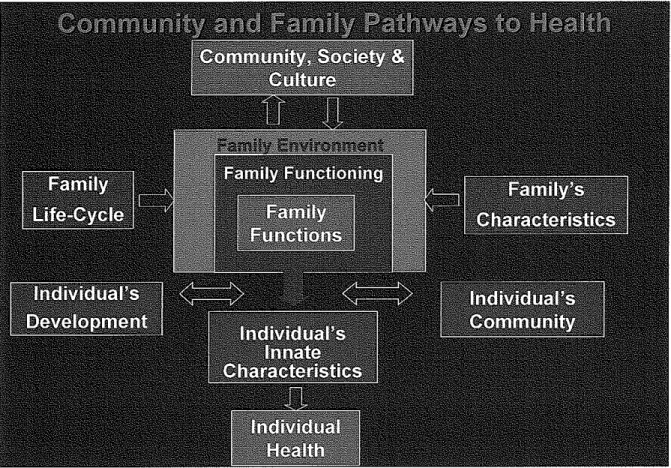
markets selling affordable fresh fruit and vegetables (Fielding, 2008). In addition, community
health is influenced by the collection of family environments that exists within a community and
these environments are impacted by individual family characteristics and family life-cycles (see
Figure 5 for community and family pathways to health). Thus, exploring family environments
will also shed insight into community health and health disparities.
Faith-based organizations are strategic vehicles, well positioned, to address not only the
Secretary's Task Force recommendations previously mentioned, but to facilitate community
health and development. Community development is asset building, which not only focuses on
human services that directly address issues such as healthcare, but also centers around housing
and community economic development, and includes developmental efforts, such as job training,
improvements are essential to tackling the health determinants that have resulted in the current
health disparities. Faith-based organizations should be involved in this strategic effort, because
they play an intricate role in the individual, familial, and communal lives of those living in
underserved communities.
Review of Faith-Based Organizations
There are three major types of faith-based organizations: congregations, denominational
organizations and national networks, and freestanding organizations. Many congregations
engage in activities that extend beyond worship and the National Congregations Study indicated
that 57 percent of congregations engage in some type of service or community activity (HUD,
2001), and the range of activities undertaken is vast, with human services and health-related
programs predominating. As reported in 200 I, the most frequently offered human services were
youth programs (including camps), marriage counseling, family counseling, and meal services or
food kitchens. The most widespread health-related activities were found to be visitation or other
supports for sick persons or shut-ins. When looking at specific activities, the most common
programs addressed food, housing/shelter, and clothing provision (HUD, 2001). Only 18 percent
of congregations participated in any type of housing program, the most common community
development activity, and only 1 percent engaged in employment-related programs (see Table 1)
(HUD, 2001).
Such a congregation that engages in community development activity is The New Hope
Baptist Church in Newark, NJ, which created the Vision of Hope Community Development
and distressed in the surrounding community (Vision of Hope Community Development
Corporation [VOHCDC], n.d.). Its overall mission is to service the needs of the Greater Essex
County population by affording residents an array of programs that will empower and support
them. This mission is executed by working in collaboration with other faith and community
based organizations (VOHCDC, n.d.). Some of the social services that the organization offers
are food and clothing services, substance abuse counseling and drug rehabilitation referrals,
employment resources, senior services, health services, fathers' ministry, domestic violence
counseling, and social service referrals (VOHCDC, 2008).
The second type of faith-based organizations is the national denominations and their
social arms, such as Catholic Charities, the Salvation Army, the United Jewish Federations, and
Lutheran Social Services that provide a wide variety of services, often on a much larger scale
than congregations. As a denominational organization, Catholic Charities works with
individuals, families and communities to help them meet their needs, address their issues,
eliminate oppression, and build a just and compassionate society (Catholic Charities, n.d.). The
organizational mission of Catholic Charities is "to provide service to people in need, to advocate
for justice in social structures, and to call the entire church and other people of good will to do
the same" (Catholic Charities, n.d.). Catholic Charities USA is the national office for over 1, 700
local Catholic Charities agencies and institutions nationwide (Catholic Charities, n.d.). It
provides strong leadership and support to enhance the work oflocal agencies in their efforts to
reduce poverty, support families, and empower communities. In fact, it traces its roots back to
1727 when the French Ursuline Sisters opened an orphanage in New Orleans (Catholic Charities,
n.d.). Catholic institutions were also established in major cities along the east coast, providing
early America. With the rise of immigration in the mid-1800s, which resulted in an increase in
poverty and orphans, the demand for Catholic charities increased, and by the early 20th century,
a Catholic Charities network had developed to provide social work and health care, and to serve
as an advocate for the poor. The National Conference of Catholic Charities was created to
promote the creation of diocesan Catholic "solidarity" among those in charitable ministries, and
to be the "attorney for the poor" (Catholic Charities, n.d.). People of many faiths work with
Catholic Charities, but essential traits characterize the organization: such as, being rooted in the
Scriptures, being an integral part of the Catholic Church, promoting the sanctity of human life
and the dignity of the human person, supporting an active public-private partnership, and
advocating for those in need (Catholic Charities, n.d.).
Similarly, The Salvation Army's motto is "DOING THE MOST GOOD" (Salvation
Army, n.d.). The Salvation Army's eleven articles offaith reflect its determination to remain
faithful to its standards and principles (see Figure 6). All members of The Salvation Army are
encouraged to review these principles periodically and to reaffirm their dedication to God and to
His good works. It is an international movement that is an evangelical part of the universal
Christian Church. The Salvation Army's message is based on the Bible and it is motivated by
the love of God, and its mission is to preach the gospel of Jesus Christ and to meet human needs
in His name without discrimination (Salvation Army, n.d.). Further, it seeks to work hand in
hand with communities to improve the health, education, living, economic and spiritual
conditions of the poor throughout the world. It accomplishes this through thrift stores, disaster
relief, The Salvation Army World Service Office (SA WSO), prisoner, drug and alcohol
rehabilitation, youth camps, Kroc centers, maternal and child health services, and community
National denominations are typically large, sophisticated entities with professional staff.
They tend to be much better than congregations at record-keeping, because they handle much
larger sums for which they are held accountable. Their social service agencies are also much
more likely than congregations to use public funding to support their work (HUD, 2001).
Together with national denominations, network organizations (such as the YMCA and YWCA)
provide many of the same kind of services congregations do, often with the same family focus,
but their greater size and resources enable them to provide more in-depth social services. The
six largest such social service providers assisted more than 60 million people in 1994 with an
estimated more than $1.6 billion in private contributions (HUD, 2001).
Lastly, freestanding faith-based organizations constitute a heterogeneous group. It
includes ecumenical and interfaith coalitions, large nonprofit institutions such as universities and
hospitals with a current or previous religious affiliation, and a multitude of smaller nonprofits.
Like congregations, small faith-based nonprofits are much more likely to provide direct services
than to engage in broader community benefit activities (HUD, 2001 ).
Such a freestanding organization is The Balm in Gilead, which is an organization that is
celebrating 20 years of service developing educational and training programs specifically
designed "to meet the unique needs of African American and African congregations that strive to
become community centers for health education and disease prevention" (The Balm in Gilead,
n.d.). Furthermore, its mission is to prevent diseases and to improve the health status of people
of the African Diaspora by "providing support to faith institutions in areas of program design,
implementation and evaluation which strengthens their capacity to deliver programs and services
develop and disseminate culturally appropriate educational materials to the African American
Christian community; provide training, organizational, and technical assistance to churches,
church groups, AIDS service organizations and health departments through its HIV/ AIDS
Technical Assistance Center; assist AIDS service organizations and health departments in
deepening their understanding of the African and African American community; and provide the
media industry with information about how the church meets the HIV/AIDS educational needs
of congregations and communities (The Balm in Gilead, n.d.).
Faith-Based Organization Best Practices/Models of Success
There have been numerous successful public health initiatives nationwide to reduce
health disparities through the involvement of faith-based organizations, individually and
col!aboratively. One such initiative was the Bronx Health REACH faith-based initiative which
took place in the Bronx, New York (Kaplan eta!., 2009). It used a community-based
participatory approach that was designed to educate community members about health
promotion and disease management and to mobilize church members to seek equal access to
health care services. This initiative utilized qualitative methods, including a logic model, focus
groups, interviews, analysis of program reports, and participant observation. It also examined
the three key aspects of the initiative's implementation: "I) the engagement of the church
leadership; 2) the use of church structures as venues for education and intervention; and 3)
changes in church policies" (Kaplan, Caiman, Golub, Ruddock, & Billings, 2006, p.l ). The key
findings included "the importance of a pre-existing relationship within the community and the
focus on health behaviors and health disparities" (Kaplan eta!., 2006, p.l ). This intervention
was highly successful and best practices can be gleaned from it.
Another successful project was the REACH 2010 initiative that was undertaken by the
Kansas City- Chronic Disease Coalition (KC - CDC). Through community mobilization of
neighborhood and faith organizations this initiative sought to change conditions to reduce risk
for cardiovascular disease and diabetes. These changes included such activities as increasing
engagement in physical activity (e.g. creating walking groups), increasing fruit and vegetable
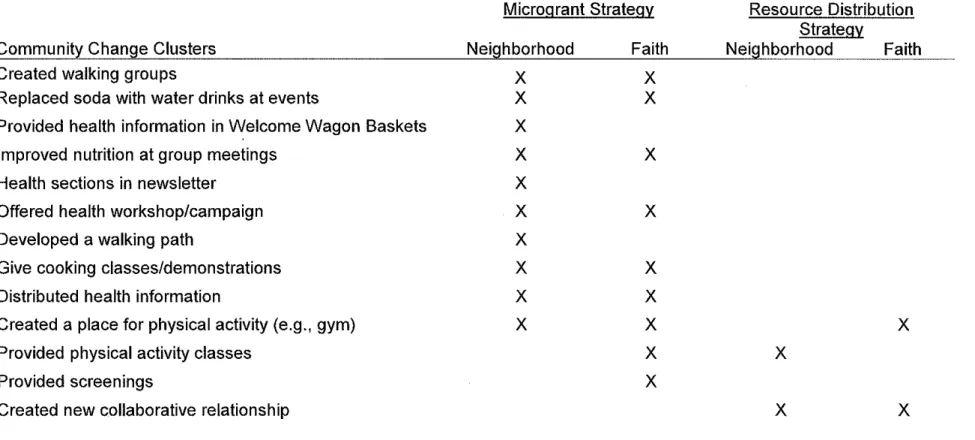
intake, and increasing the number of residents that had a primary care provider (see Table 2). As
a matter of fact, nutrition and physical activity were the most frequently targeted risk factors.
With partners in neighborhood and faith organizations, the KC - CDC implemented 306
community changes (Collie-Akers eta!., 2009). The results achieved between October 2001 and
September 2007 were the facilitation of 86% of the community changes by neighborhood
organizations and 90% of the community changes by faith organizations (Collie-Akers eta!.,
2009). Most of the changes facilitated were ongoing (64.8% among neighborhood associations
and 60% among faith organizations), as opposed to being events that occurred one or more times
(Collie-Akers eta!., 2009). The additional tools and strategies highlighted by this study may
help health practitioners to address health disparities where people live and worship to change
conditions for health and health equity in the community (Collie-Akers eta!., 2009).
As was previously discussed, reducing health disparities requires that multiple and
interrelated factors be addressed through change in multiple sectors in the community
(Collie-Akers eta!., 2009), (Fielding, 2008). In other words, faith-based organizations must address the
influencing the population, and therefore the individual (Fielding, 2008). That being said,
faith-based organizations' perceived importance of dealing with the "whole person" might give them
an advantage over their secular counterparts in developing communities. Specific examples
illustrate that congregations can achieve significant impact when they do become involved in
community development. For instance, faith-based organizations, collectively, spend between
$15 and $20 billion annually in privately-raised funds on social services, in addition to millions
of volunteer hours (HUD, 2001). Faith-based organizations can also provide indirect support
for community development through their social investments (HUD, 200 I).
Examining congregations specifically, it appears that these types of faith-based
organizations have a unique vantage point from which to enter community development, since
many possess the qualities that are needed to be successful, such as an organizational structure
and the dedication to improving the situations of low-income people and their neighborhoods
(AHRQ, 2003). Community development, as currently practiced by Community Development
Corporations (CDCs) and others, is best addressed by independently incorporated organizations
because this provides the greatest financial and legal security for the participating organizations.
This is the reason that faith-based CDCs are the most common examples of congregational
sponsorship of spin-off non-profit organizations that engage in community development (HUD,
2001). Interestingly, it was found that about 14 percent of the nation's CDCs reported that they
were faith-based (HUD, 2001). In the aggregate, evidence suggests that the group of
congregations most likely to become actively engaged in services includes large (>900
congregants) African American congregations that are located in lower-income communities,
but that attract as members significant numbers of congregants who are not themselves poor
A prominent model of success is the Abyssinian Development Corporation (ADC) that
was established by Abyssinian Baptist Church in Central Harlem (HUD, 2001). During its early
development, ADC received from its church important in-kind support, including rent-free
office space, free telephone and telephone answering service, access to Xerox and fax machines,
help from church volunteers, and high-quality financial management services from the
individual who performed the function for the church (HUD, 2001). ADC's first project in 1992
was a 25-unit transitional housing development, with on-site services, for formerly homeless
families (Vidal, 1998). By 1998, they had developed more than 400 units of housing, as well as
a variety of economic development projects (Vidal, 1998). Another example includes the
Greater Allen African Methodist Episcopal (AME) Cathedral of New York (formerly Allen
AME Church) in Jamaica, New York (HUD, 2001). The CDC started by this church began its
work in 1978 by developing a $13 million, 300-unit senior citizens center with funding from
Section 8 and Section 202 programs (Decaro, 1997). It was one of the largest faith-based
elderly housing developments ever constructed (Decaro, 1997).
In summary, congregations bring distinctive advantages to the table that have led to
success and represent possible best practices to future roles in community development with the
potential to serve as incubators, the potential to provide access to volunteers and financial
resources of the congregation and its affiliated organizations, and a context that engenders public
trust (HUD, 2001). This was shown to be true in Bridgeport, Connecticut where Freddie Mac,
the federally chartered financier of mortgage loans, joined with churches, CDCs, and lenders to
initiate faith-based efforts aimed at increasing rates of minority horneownership. Surveys and
focus groups conducted by Freddie Mac showed that a primary cause of the low rates within
2006). It was discovered that an emissary- that the potential minority homeowners
trusted-was needed to help them make the first step, and Freddie Mac found that to be the faith
community. Clergy involved in the initiatives vigorously preached "the virtues of
self-sufficiency and the financial benefits of homeownership at Sunday services, an aspect of their
ministry that members of the clergy say is critical to stabilizing their communities and halting
generational cycles of poverty" (Prevost, 2006).
At a denominational level, Catholic Charities is a model of success celebrating I 00 years
of service in 2010 (Catholic Charities, n.d.). Catholic Charities agencies throughout the country
are an integral part of the safety net that keeps people from utter destitution by providing a
continuum of services; food, shelter, supportive housing, clothing, financial assistance, and other
forms of help. Going beyond meeting peoples' daily needs, Catholic Charities also strives to
strengthen families and build stronger communities by offering a variety of other programs such
as counseling, immigration and refuge services, adoption, disaster response, child care,
employment training, and supports for seniors (Catholic Charities, n.d.). Catholic Charities has
built its reputation as a strong and trusted network through more than 280 years of
compassionate work in the United States and is recognized as one of the nation's largest social
service networks with more than 240,000 volunteers, staff, and board members (Catholic
Charities, n.d.). Its efficient operations allow ninety cents of every dollar donated to its agencies
to go directly to programs and services (Catholic Charities, n.d.). While every agency is unique,
they share a common goal of providing the services and programs that their particular
community needs the most. The National Office assists the individual agencies in determining
their community needs and provides assistance with program development, formal training and
For this reason, although each agency tailors its program, implementation, and evaluation
process to fit its particular needs, there is a certain amount of consistency among the programs
implemented across the U.S. One agency, Catholic Charities of the Archdiocese of Boston,
determines the needs of its community by using the logic model, and its outcomes measurement
system also follows the logic model (JustGive.org, n.d.). Agency-wide programs are evaluated
by measuring the indicators of short and long term outcomes and using corresponding data
collection tools to collect information, including indicators and influencing factors. Program
types are also evaluated on an agency-wide basis and information is solicited from and shared
with stakeholders, which helps to ensure that the programs are truly meeting the needs of those
in the community. Furthermore, the National Office also enhances the network by serving as a
national voice through federal advocacy and media efforts. In 2008, Catholic Charities across
the nation provided help for 8,522,997 people regardless of their religious, social or economic
backgrounds (Catholic Charities, n.d.). In all, 171 main Catholic Charities agencies, which
included 1,668 branches and affiliates, provided an array of vital community-based services
13,887,583 times (Catholic Charities, n.d.). In summary, Catholic Charities USA supports local
agencies through advocacy, networking, national voice, training, financial support, and
leadership.
New Community Corporation (NCC) is by far the largest faith-based CDC and it is a
freestanding organization (Briggs, Mueller, & Sullivan, 1997). It has developed more than 3,300
housing units and a number of economic development projects in its Central Ward neighborhood
of Newark, New Jersey (Briggs eta!., 1997). Through its affiliates, it also provides a variety of
social services. NCC's origins lie in a coalition of urban and suburban churches formed in
much smaller in size is The Balm In Gilead, which has mobilized The Black Church Week of
Prayer for the Healing of AIDS that engages Black churches to become centers for education,
compassion and care in the fight against HIV/AIDS (The Balm in Gilead, n.d.). Pernessa Seele,
the founder and Chief Executive Officer (CEO) of The Balm in Gilead, organized Harlem's first
Week of Prayer for the Healing of AIDS in 1989, and her efforts have led to a national
movement to address public-health issues through communities of faith (The Balm in Gilead,
n.d.). This approach has garnered Seele high-level recognition. In fact, she was a guest of
President and Mrs. Bush's at the State of the Union address, in which the President talked about
the disproportionate toll that AIDS is taking on the African-American community (Gorman,
2006). Those churches that Seele has worked with have broadened their AIDS education and
ministries, an important first step toward eliminating disparities. Seele has done this through
many programs such as The BIG Coffee Project, The Black Church Week of Prayer for the
Healing of AIDS, the Black Church HIV/AIDS Training Institute, Our Church Lights the Way,
Africa HIV/AIDS Faith Initiative, Denominational Leadership Initiative, The ISIS Project, and
The Faith Based HIV/AIDS National Technical Assistance Center (The Balm in Gilead, n.d.).
Faith-Based Organization Failures and Limitations
Although there are many models of success, a closer look at this evidence reveals that
despite their broad involvement in services, most faith-based organizations are not active in
community development. Con.gregations, in particular, typically approach their service activities
in a manner that appears poorly matched to current community development practice (HUD,
2001 ). Although Table 3 illustrates high levels of engagement that appear to imply the operation
programs are numerous, yet the amount of money involved is generally small. For example,
Hodgkinson, eta!. (as cited in HUD, 2001, p. 7) estimated that the "more than 236,000
congregations involved in human services/welfare activities devoted an impressive $4.4 billion
to them" (HUD, 2001, p.7). However, Chaves and Tsitsos (as cited in HUD, 2001, p. 7) found
that the "median dollar amount spent by congregations, directly in support of social service
programs [by which they mean all non-worship activities], is about $1 ,200" not counting the
value of staff or volunteer time or other donations to denominations. High rates of participation
supported by small amounts of funding are the approach congregations typically use with respect
to involvement in service activities. For instance, while 33 percent of congregations support
food programs, they do so in differing ways (HUD, 2001). Some donate money or supply
volunteers to meal-making projects or to a food bank; others distribute holiday food baskets to
the poor or operate a soup kitchen. While these services are vital to meeting individual human
needs, they do not scratch the surface of improving the community and society in underserved
areas. They simply address the symptoms of the problems and not the root causes.
This distinctive approach, high participation with a low financial commitment, used by
congregations, extends to participation in activities commonly considered part of community
development (see Table 3). For example, of all of the housing programs for seniors supported by
congregations, 86 percent of these programs are actually conducted by other organizations and
73 percent of affordable housing programs are also done that way. Chaves (as cited in HUD,
2001, p. 8) finds that supplying volunteers to Habitat for Humanity is by far the most common
form of congregational participation in housing as exhibited in Table 3, as opposed to
Although, some CDCs have been successful, more congregational efforts to start
independent community development entities have failed than have succeeded (HUD, 2001).
This has occurred for a number of reasons. One is the result of the high participation with a low
financial commitment approach, and another is that congregational staff and volunteers typically
lack the skills, knowledge, and time required to successfully sponsor community development
projects. Moreover, most congregations have not applied for government grants to sponsor
community development projects, and lack the management capacity to do so. Indeed, only a
fraction of organizations have the resources to successfully engage in community development
activities. However, the willingness of congregations to make use of public funding is essential,
since public funding is an irreplaceable part of much community development work.
Unwillingness to accept such funding could severely limit congregational participation in such
developments. Yet, acceptance of such funds does come with restrictions as outlined in the next
section.
Issues of faith must be also considered, as they may be limiting factors in the programs
faith-based organizations undertake. Many members of faith communities want their
participation in urban ministry to be valued as more than money, free space and cheap labor. To
that end, faith-based practitioners feel that they bring something distinctive and valuable to
community development. This frame of thought affects how faith makes a difference in the
character of community development work a congregation undertakes. In other words, a belief
system or ties to a religious organization affects decisions about whether and how development
is done. For example, faith-based organizations were important participants in the federal
housing production program, Section 236 (HUD, 200 I). However, anecdotal evidence suggests
"church groups often looked upon the projects they sponsored as a form of charity, kept rents
artificially low, and were willing to overlook delinquencies" (Comptroller General of the United
States, 1978). This view has had a significant impact on the failure rates since most CDC-built
housing is rental housing. To that end, it is important that faith-based organizations have the
willingness and ability to treat property management as a business rather than a service activity.
Based on an analysis of CDCs in 23 states, Walker and Weinheimer (as cited in HUD,
2001, p. 16) identified five factors important for successful, sustained CDC performance. CDCs
must have the ability and capacity to:
~ Plan effectively- This includes developing an understanding of community assets
and needs that inform a strategic vision for change, and internal planning to match its
programs, resources, etc. to the requirements of implementing that vision.
~ Secure resources - This includes acquiring grants, loans, contracts, fee or earnings,
and technical assistance.
~ Develop strong internal management and governance - This includes establishing
good working relationships between board and staff and representation of the
community on the board.
~ Deliver programs - This includes erecting systems to deliver the full range of
programs undertaken.
~ Network- This includes building relationships with other entities, both public and
private, inside and outside the community.
Neighborhood Partnerships discussed in the next section can provide the vehicle for education,
resources, networking, and sharing of best practices that is necessary for these organizations to
develop these capacities. As they develop experience with programs that result from these
factors, they will have a better understanding of how their work connects to community
development. This will lead to more programs that are specifically directed toward community
development, which will result in a reduction of health disparities. Along the same lines, more
programs specifically directed toward the reduction of health disparities will result in improved
communities.
In summary, congregations are encumbered with some disadvantages that have led to
failures and represent possible limitations to future roles in community development that include
the potential for projects to be viewed as church rather than neighborhood objectives,
congregational staff may have too many demands on their time, congregational staff may lack
necessary skills, and potential for conflicts between religious values and the demands of the
marketplace (HUD, 2001). However, previous research and findings provide both lessons
learned and a roadmap for possible future success.
Federal Policy: Office of Faith-Based and Neighborhood Partnerships
The Office ofF aith-Based and Community Initiatives was originally established by
President George W. Bush with a promise to "rally the armies of compassion." (Obama '08,
2008, p.l). In spite of this, the promise of the Office of Faith-Based and Community Initiatives
was never fully realized due to a number of factors. First, support for social services to the poor
elimination of the Commodity Supplemental Food Program, which benefited an average of
433,000 low-income seniors every month and was administered in part by local non-profits,
including faith-based groups (Obama '08, 2008). Second, former key officials in this Office
described how the Office was often used to promote partisan interests (Obama '08, 2008).
Finally, as a result of a lack of funding, robust training, and technical assistance, smaller
congregations and community groups that were supposed to be empowered by this initiative
were short-changed.
Nonetheless, with the election of President Barack Obama, there is the potential for this
Office to have a greater impact on the nation, especially in underserved communities. Obama
stated that:
We know that faith and values can be a source of strength in our lives. That's what it's been to me. And that's what it is to so many Americans. But it can also be something more. It can be the foundation of a new project of American renewal. And that's the kind of effort I intend to lead as president ofthe United States (Obama '08, 2008, p. 1).
Obama has established a new President's Council for Faith-Based and Neighborhood
Partnerships that will train the trainers, partner with State and Local Offices, hold recipients
responsible, and close the learning gap (Obama '08, 2008).
However, there will be some guiding principles which some faith-based organizations
may view as limitations or restrictions to their activities. Organizations receiving grants to fund
their community initiatives:
? Cannot use federal funds to proselytize or provide religious sectarian instruction.
? Cannot discriminate against nonmembers in providing services. They must
remain open to all and cannot practice religious discrimination against the populations they serve.
>-
Can only use taxpayer dollars on secular programs and initiatives.>-
Must prove their efficacy and be judged based on program effectiveness. Theywill be expected to demonstrate proven program outcomes to continue to receive funding. Obama will fund programs that work and end funding for programs that do not- whether they are large or small, well-established or new, faith-based or otherwise (Obama '08, 2008, p. 2).
Previous federal assistance and collaborations with faith-based organizations have proved
to be successful. In fact, in 2001, with financial support from the Centers for Disease Control
and Prevention (CDC), the Interfaith Health Program (IHP) at Emory University's Rollins School
of Public Health launched the Institute for Public Health and Faith Collaborations to address
health disparities (Kegler, Kiser, & Hall, 2007). The Institute's mission is to cultivate boundary
leadership needed to assure effective collaboration across religious and health sectors, and to
train teams of health and religious leaders to address community-level conditions associated with
health disparities. The logic underlying the Institute curriculum is depicted visually in Figure 7
(Kegler eta!., 2007). The logic model shows that for individuals, participation in the Institute
should result in: strengthened awareness and development of boundary leadership, increased
understanding of health disparities, increased appreciation and understanding of each
field/discipline, and strengthened understanding of systems, systems change, and community
transformation. These short-term outcomes should have informed a team's vision for community
change and a plan for community action that should have resulted in community and systems
change (if well implemented). These systems changes, should have contributed to the long-term
outcomes of improved community health, wholeness, and justice, as well as, widespread
behavior change.
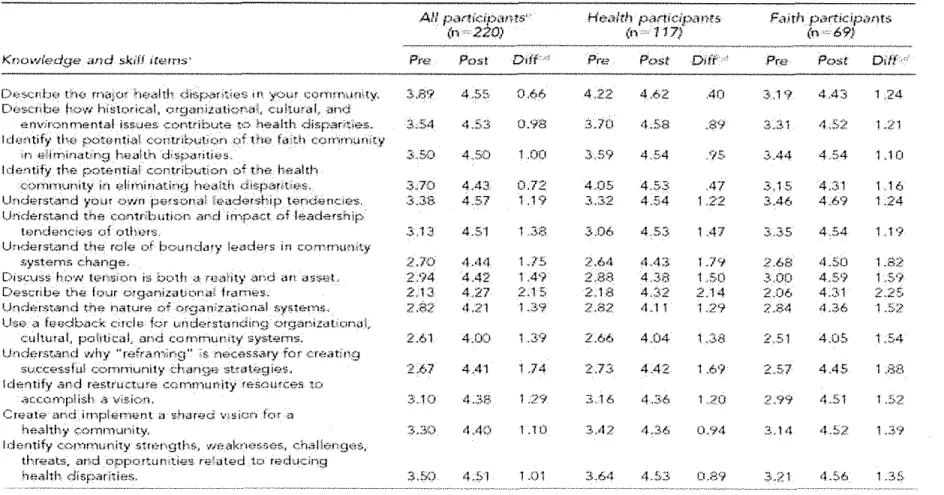
Detailed results from the retrospective pretest and posttest of the Institute's curriculum
the health and faith community fields, the largest increases were observed in describing the four
organizational frames, understanding the role of boundary leaders in community systems change,
and understanding why reframing is necessary in creating successful community change
strategies. A key attribute of "boundary leaders" as defined by Gary Gunderson is that they
"think, lead, and hope at the level of the whole system" (as cited in Kiser, 2009, p. 2).
Contrarily, health representatives reported the least change in describing major health disparities
in their communities and in identifying the potential contributions of the health community in
eliminating health disparities. On the other hand, faith representatives reported learning a great
deal about health disparities. Thus, there is considerable opportunity to increase the overall
effectiveness of faith-based organizations in community development and therefore produce a
reduction in health disparities, through the leadership offederal institutes and/or offices.
Future Role of Faith-Based Organizations
Given the churches' demonstrated ability to motivate, to inspire, and to pull people
together, there is great potential for faith-based interventions and models to address health
disparities in the future (Kaplan eta!., 2006). Faith organizations can be effective implementers
of new or modified programs, policies, and community changes related to reducing health
disparities. They can implement community changes that use a mixture of sustainable strategies.
They should also capitalize on their ability to diversify beyond housing because of their
orientation toward assisting "the whole person" and the conviction that the person reaches full
potential only in connection to community. Consequently, faith-based development groups do a
essential to community improvement (HUD, 2001). Moreover, leadership stability can be
increased and organizational capacity and production enhanced, because community
development practitioners are sustained by their faith in the face of burnout and poor
compensation.
In conclusion, optimism about the potential of faith-based organizations to engage in
community development is based in part on the active role many of them play in providing social
services and in part on the direction the newly established Office of Faith-Based and
Neighborhood Partnerships has taken. Given the tenor of current policy discussions and the
establishment of the federal office in which congregations are looked upon to assume new roles;
determining how best to help faith-based organizations move into community development on
their own is an obvious priority (HUD, 2001). Some of the groundwork toward this priority has
already been laid by the past and current initiatives and by the projects that faith-based
organizations have shown to be highly successful (HUD, 2001). These models of success, as
well as failures, which can be used as lessons learned, can propel faith-based organizations to the
forefront of community development that will reduce health disparities in underserved
communities. This increased community involvement by faith-based organizations must be
nurtured by the federal Office of Faith-Based and Neighborhood Partnerships, as well as state
and local offices. Commitment by these offices to collaborate and educate these organizations
will be vital to the increased commitment of these organizations' community development
efforts. This assistance can and must illuminate the shared goals of faith-based organizations
and the public health field (e.g. improved community for the underserved, ministry to the
"whole" person, better living conditions, better access to healthcare for the congregation and/or
Table 1. Congregations I Social Service Activities (Number of Congregations = 1 ,236)
Program Type Participating Congregations Congregants in (%) Participating Congregations
(%)1
Food 33
50
Housing/Shelter
18
32Clothing
11
18
Homelessness
8
16
Health 4
10
Education (not religious
6
10
education)
Domestic Violence 4
7
Tutoring/mentoring 3 4
Substance abuse 2 4
Employment
1
2All projects
57
75
1
These figures are larger because large congregations are more likely than smaller ones to offer services.
Table 2. Types of Community Changes by Strategy and Group
Microgrant Strategy Resource Distribution Strategy
Community Change Clusters Neighborhood Faith Neighborhood Faith
Created walking groups
x
x
Replaced soda with water drinks at events X X
Provided health information in Welcome Wagon Baskets
Improved nutrition at group meetings
Health sections in newsletter
Offered health workshop/campaign
Developed a walking path
Give cooking classes/demonstrations
Distributed health information
Created a place for physical activity (e.g., gym)
Provided physical activity classes
Provided screenings
Created new collaborative relationship
X
X X
X
X X
X
X X
X X
X X
X
X
X
X
Source: Collie-Akers, V., Schultz, J.A., Carson, V., Fawcett, S.B., & Ronan, M. (2009). REACH 2010: Kansas City, Missouri: Evaluating Mobilization Strategies With Neighborhood and Faith Organizations to Reduce Risk for Health Disparities. Health Promotion Practice, Vol. 10, No.2 Suppl, 118S-127S (2009).
X
X
0'>
Areas of Activity: Housing/shelter programs for homeless people Affordable housing development or
programs Housing programs for seniors Programs in community, including economic development, job training, etc. All Congregations 38.7 19.7 19.2 20.2
Table 3. Percentage of Congregations Engaged in Activity Areas by Program Types
(Number of Congregations: 257,648)
Program Run within All Programs Congregation
43.6 9.9
22.5 13.8
20.8 3.4
24.0 16.7
Note: Congregations could give multiple responses
Participates in, Supports, or is Affiliated with Program Programs in Other Separately Organizations or in Incorporated Denomination
6.9 83.3
12.9 73.3
10.6 86.1
11.3 72.1
Source: U.S. Department of Housing and Urban Development, Office of Policy Development and Research. (2001). Faith-Based Organizations
In Community Development [PDF file]. Retrieved October I, 2009 from www.huduser.org
0
Table 4. Pre/Post Assessments of Knowledge & Skills Gained
AU participants'- Ht7alth p;:-utlctJ><1Y?t5- FaJth particJpants
(n ···220) (n 117) (!F 69i
~~-~~~---~~~>·-~----~~---~-~~--~~~-~---,~·--·""~~----~--~-~--~~~-'---
..
--~·-·~~---Knowledge ~u~d skifJ itoems' Pr6~ Po-st Dlff•' Pre Post Diff··· Pre Post Dilf·'·
tho fn~1[0f ht.J4!th disp•,';(.)til.&.~ t H ',Y<>Uf CQf'f!HlUf)\ty, 3.89 455- 0,66 4.22 4.62 40 3,19 44~; 1.24 Desenb(;.l fv.;;~w hlstl)de-al, l'.)r-g~mLcatioN.,q, cuhu,-dt ~1nd
envir>~-;;.nmental iss>.Jes. .;;:ontribute to health. disp~ritles~ 3.54 453 o:i'a 3.70 4.59 .89 3.3-1 45:2 1.21
!de<1tify tho potont!~~~ <>;:)ntrl~>tJtJQn of t'h0 L.1ith ccrnff"'ttnity
<n -&iirr·,in,;,tXrtg huutt;,, ·<:b;pi.Hititc<i.L 3.50 4.50 1 .00 359 454 ,'($ JA4 454 1JO
I dentif~· the pot-entk':ii contribution of the hBalth
CQr''rti"Ot..mil>' In ~_?lirn!n~tinrJ hoct1th ctisp;:~mtn!\'.\L JJO 4A3 0.72 4,05 4.53 ,47 3,15 4.31 1.16
Und~?tst~nd ;•o>..H own -fJHtsoo;;)i h::Hldotship t""rHJBrKie-s. .3.38 4.57 1 .1 '? 3,32 4.54 122. 3.46 4.69 1.24
l)rider:f>WIII-d !;he l;:ru1t6bution and in""tpa<:t nf l<f!adershlp
tondum:ios of otfH>rs, 3,13 4.51 L3B J.06 453 1 .47 3.35 4.54 1.19
UnderstAnd the role ;)f Ln;:.nmdmy !o?ttders in
syst~ms:. ch~,nge. 2.70 4.44 1.15 2.64 4.4::$ 1.79 2.68 4.~;o L82
DiscuS--s h:>'A' tet:tt10n is bolh .:t-re-~'lht~· .;;Jnd an d~$€1L 2.'?4 4AZ 1 A9 2.88 4 .. }8 LSO .3.00 4.5'1 1
Des.-.:nbe the- four o.rgantzatJona\ frames. 2.13 4.27 2.15 2.18 4.32 2.14 2,06 4.J;1
Unde-rstand dtt* nature of o.rgani;ratlc--J-nal $";yste-n-;s, 2.82 <1.21 1.39 2.8:? 4.11 L29 2.:?4 <t.36 LS2
u~!;i;,) <) ftte-dbl!ck citdB- for undorstandin~} organilcttir.m.:Jl,
CLiltural, political.. -and cornrnunity systems. 2.61 4.00 1 .28 2.66 4.04 1 .JB 2.51 4.0S 1.54
l)nderst.~~nd w·hy "refra.rn-Jng" is nt:~cess~~ry for cr-ec,'1tfng
sv.t·.c-essfu! r.:ornmunlty -ch<:1nge-;:;Uiltf,:.gies. 2.67 4A1 1.74 2.73 442 1 .6'? 257 4AS 1 }38
!df.:ntif_y and restructure cor:ntnunit:_,' reSc.wces- tn
-~c:(;(.rrnp!is-h .~ vis,ion, :;!;.10 4.~-)S 1 .29 ;; 16 4.36 1,;10 '''.99 4.Si 1.:::-:c Create nnd irnp!eP"1f.":nt ;) s-h.:.n.:::ci v;si<:;n for n
healthy yornn1unity, 3.30 4.40 1.10 2..42 4.:~.6 0.'7'4 .;!., l <1 4.!:.2 1.39
Identify cornn;(;nity strt:,ngths-, ·N.-~akn<>.~$-ses, ch"'l'llt5>ngtf:"to, threats. m-:yd opportunities reh;ited tc; redt.J<:::ing
h.f!a!th disparities. 3.f:4) 4.5'1 1.01 3.64 4.S3 1).89 .?.21 4.56 1.35
Note: Participants rated their confidence in their ability to perform each skill prior to the Institute and then again on the last day of the Institute using response options ranging from I
=
not at all confident to 5=
completely confidentSource: Kegler, M.C., Kiser, M., & Hall, S.M. (2007, Nov.-Dec.). Evaluation Findings from the Institute for Public Health and Faith Collaborations. Public Health Reports 122(6), 793-802.
Figure 1. Determinants of Health
Figure 2. Familia/Influences
Figure 3. HIV/AIDS Diagnoses among Adults and Adolescents by Race/Ethnicity
Source: Sutton, M., Durant, T., Prejean, J., Xiaohong, H., Wei, X., & Lee, L. (2009). The HIV/AIDS Epidemic and African Americans [Slide 21]. Centers for Disease Control and Prevention Retrieved September 15, 2009 from
Figure 4. HIVIAIDS Disparities
Race/ethnicity of persons (including children) with HIV/AIDS diagnosed during 2007
N!!Jrli\1@ Ho-v.!Qi!cll$/Othrali Pod~i( ~,slcrd~w!i
"~Nhi'i:e!ii
29%
~"' 1%
American lndions/
Alasi:<J N<rli""'
<1%
Slacb 51%
Note. Based on data from 34 states with long-term, confidential name-based HIV reporting.
Source: Centers for Disease Control and Prevention. (2009). HIVIAIDS among African Americans. Retrieved September 15, 2009 from
Figure 5. Pathways to Health
The Salvation Army's eleven articles of faith reflect our determination to remain faithful to our standards and principles. All members of The Salvation Army are encouraged to review these
principles from time to time and to reaffirm before God their dedication to Him and to His good
works.
We believe that there is only one God, who is infinitely perfect, the Creator, Preserver, and
Governor of all things, and who is the only proper object of religious worship.
~~'J~It"~~~&~ff:fi~r~<lr~ {f1f~e Ji~~6n$J~ ~h~2~1JH~~a.c:ithe
..
Father, the Son,· and the. HolyG"h~sti'hriil iStdedil")~~.~~ri2~;t,;c! ~o!i¢~G~t ;~·i>o>\ler·~ric!9 lory. ··
". __ ,, _________ ; : -·--- ----: ---- "._, __ ---:. ---- ·'- -- _., --- "> -- ,_ ----f,_ --- _._,' --- --' ---' - - " --,- --- '
Vfe.b~lieyeth,atintne
perspnClfjesusChristthe Divine and human natures are united, sothat He is .truly and properly God and truly and properly man.
sanctified, and that their whole
resll!f~<:tiol1•.of the bod\', in the general
th•e.~_nd (lf)h•.e l@lr(d./_ir(tfleete,rnal11aJJP_i?ess <Jf the righteous, and in the
Figure 7. Logic Model for the Institute for Public Health and Faith Collaborations
Inputs
Activities
iHP Consultants CDC
Outcomes
Short-term 3V/{-ift}(l(}&:'innd davtdopment of
boun-dary spanner
!c.r.i0(ship
lr\Cfi;:tdStJd ;Jf'id>)r.stonding
of hea1th &s:paritH::.s
Strencth~n~d undet:;t.andi'~g nf systttms
ch;mge and <:mnmumty
transforrmJtion
Faith health
::ollaborativ.a
vis,ion, <:(W~mom fot cofidT,uniry char-ge,
and plan fer <Ornt'fR•nity action
long-term
_.··'·a a
I I I I I I I I •• • impl.Jm~Jntotk~) of :• . I
• acttan p .;tr; •
••••••••••••••••••
Ct.::ommunity aJd sysv.vrs ch..ang-.;
'::====~ ~ck:~~~c"~"'''~''.
(l \l
;ncreased i:ippre-.::iation and tmderstJnding of
ea<:-h ~rekYd>1>r.'ipiif1&
ln!provr:d
!
! 1Nidt>Spn~~:vJwmmun1ty ~~ b:;>h:i,6or
h:a:th, •Hho!enfr.:;&:,- f
I
(h~1n~J0t'