
HIV/AIDS and Older Women:
Understanding HIV Testing Behaviors in a High-Risk Community
Aletha Akers, MD
Public Health Leadership Program March, 2006
Date:~
March, 2006
Aletha Akers,
Americans 50 years of age and older have consistently represented 10% of all HIV/AIDS cases since early in the epidemic.'· 2 However, in recent years, the proportion of cases among older persons has begun to rise3 with people over the age of 50 represented 14% of all HIV/AIDS cases in 20034 As with younger adults, HIV/AIDS cases among older adults are not equally distributed between different socio-demographic groups. Males are primarily affected but rates among older women are rising faster than rates among older mens There are also marked racial/ethnic disparities with African Americans and Hispanics disproportionately affected. 5• 6 Despite these facts, HIV testing rates among older persons are low compared to younger adults, particularly among older women. Although 44% of young adults have been tested in their lifetime, only 10-15% of those aged 45-64 have undergone testing.7 Older adults who are tested frequently do so late in their disease course. As a consequence, they are more likely to present with
opportunistic infections, progress to AIDS, or die within a year of HIV diagnosis leaving little opportunity for treatment or secondary prevention8· 9
For my Master's paper, I performed a secondary data analysis examining the socio-demographic factors associated with past HIV testing, current interest in HIV testing, and the reasons for interest in HIV testing in an older, female population. In the background section which follows, I describe what is known about the HIV epidemic among older Americans focusing specifically on the epidemic among women and ethnic minorities who comprise the bulk of the sample in my study. This will provide a context for the
manuscript that follows.
Scope of problem
March, 2006
Aletha Akers,
cases4 This proportion has increased in recent years with older American representing 14% of cases in 20034 The steady growth of the population of Americans over age 50 means that the absolute number of older American with HIV/AIDS has been steadily increasing even though the proportion of older Americans with HIV/AIDS had remained relatively constant. There were 16,288 cases in 1990 and 90,513 cases by the end of December 2001.11·12
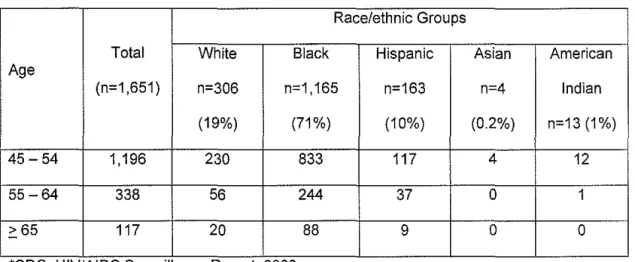
In order to understand the HIV/AIDS epidemic among older Americans, one must first recognize that older persons with HIV/AIDS represent two distinct populations: (1) those who were infected at younger ages but who have survived due to anti-retroviral therapy, and (2) those who actually contracted the virus later in life. Distinguishing between these two populations is difficult since data collected at the national level does not distinguish between these two categories. In fact, national level data is generally reported as newly diagnosed AIDS cases, not HIV cases. In addition, not all states report incident HIV infections which makes it hard to get an accurate picture of the epidemic. Since the majority of AIDS cases among older Americans occur among the youngest of this cohort (see Table 1) one might presume most were infected a decade or more earlier but it is difficult to know for sure. Several factors have led to the conclusion that the proportion of people infected after age 50 is also rising rather than the epidemic simply reflecting a cohort affect in which people infected at younger ages are simply aging. First, as the population of older Americans has grown, so too has the number of older Americans who are separated, widowed, or divorced and therefore re-entering the dating seen. The lack of HIV education and prevention programs targeting the middle-aged and elderly13,
evidence of misdiagnosis of disease among those presenting with atypical symptoms 1· 14· 15
March, 2006
Aletha Akers,
Who Among Middle-Aged and Older Adults is getting HIV/AIDS?
As observed among younger adults, HIV/AIDS cases are not equally distributed throughout the older population. Disparities are seen primarily by age, gender, and race/ethnicityH 18 As of December 1997, more than 60,000 people had been diagnosed with AIDS at age 50 and older. The bulk of the cases were among those aged 50-65 with only 8530 cases diagnosed in people aged 65 and older.19 The majority of cases occur in males which this has been true since the epidemic began. Yet, women have come to represent and increasing proportion of cases and have experienced a slower decline in disease rates compared to men.1·81n 1986, women represented 7% of all AIDS cases but by 1999, they comprised 23% of AIDS cases and 32% of all new HIV diagnoses.12 According to the most recent data available from the CDC, women accounted for 26% of all HIV/AIDS cases in 20028 Table 1 shows the distribution of cases by gender for persons over age 451.
Table 1: Distribution of HIV/AIDS Cases Among Persons Over Age 45, 2002 Gender
Age Total, n (%)
Males % Females %
45-54 4,514 (72%) 3,318 74 1 '196 26
55-64 1,330 (21%) 992 75 338 25
:::_65 427 (7%) 310 73 117 27
Total 6,270 4,620 74 1,651 26
* Data from Table 13, Centers for D1sease Control and Prevention, HIV/AIDS Surveillance Repor\,2003.
1
The CDC stratifies HIV/AIDS data according to those who are
March, 2006
Aletha Akers,
Marked racial/ethnic disparities in HIV/AIDS cases among the elderly also exist with ethnic minorities disproportionately affected.20 Rates of newly diagnosed HIV/AIDS cases are 10 to 15 times higher among older African Americans and 5 times higher among Hispanics than among whites (Table 2)4 The corresponding rates for American Indians, Alaska Natives, and Asian and Pacific Islanders are unreliable because of the small number of cases4 These racial/ethnic disparities are also observed among older women as shown in Table 2.
Table 2: Reported cases of HIV/AIDS, by race/ethnicity and age group, 1999-2002* Race/ethnic Groups
Total White Black Hispanic Asian American
Age
(n=1 ,651) n=306 n=1,165 n=163 n=4 Indian
(19%) (71%) (10%) (0.2%) n=13 (1%)
45-54 1,196 230 833 117 4 12
55-64 338 56 244 37 0 1
~65 117 20 88 9 0 0
* CDC, HIV/AIDS Surveillance Report, 2003.
March, 2006
Aletha Akers,
The Changing Nature of the Epidemic Among Older Americans
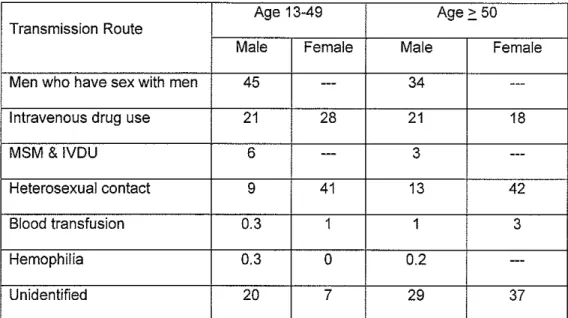
The major transmission routes for HIV do not vary substantially between older and younger populations although the risk attributable to each route may vary. Men who have sex with men (MSM) have always comprised the main overall risk category for both younger and older populations although rates within this group declined sharply over the first two decades of the epidemic due to aggressive HIV education programs targeting this community.' Among older people, transmission due to blood transfusions was among the top three transmission routes in the first decade of the epidemic. The risk categories among older persons have changed somewhat with time. In the first decade of the epidemic, the major transmission routes for older men were MSM (61%), intravenous drug use (IVDU) (14%), and blood transfusions (8%) Among older women the major transmission routes were heterosexual contact (41%), blood transfusion (25%), and IVDU (20%). By 1999, heterosexual transmission had replaced blood transfusion as the third most common transfusion route for older men. Among older women, heterosexual contact remained the most common exposure followed by unknown exposures and IVDU. When comparing transmission routes between older and younger adults,
March, 2006
Aletha Akers,
Table 3 HIV Transmission Routes 1999
Age 13-49 Age.:: 50
Transmission Route
Male Female Male Female
Men who have sex with men 45
---
34---Intravenous drug use 21 28 21 18
MSM &IVDU 6
---
3---Heterosexual contact 9 41 13 42
Blood transfusion 0.3 1 1 3
Hemophilia 0.3 0 0.2
---Unidentified 20 7 29 37
Risk factors and Risk behaviors
Older people, especially older women, are both biologically and socially vulnerable to HIV. Physiological changes associated with aging, make older women more vulnerable than younger women.'· 22 Hypoestrogenemia causes thinning of the vaginal mucosa making it more susceptible to microabrasions and therefore HIV infection.'· 23 Older persons may also have more chronic diseases and other co-morbidities that compromise their immune systems thereby increasing their risk of HIV acquisition.'' Male factors are also important in understanding sexual decision making among women. Older men may have erectile dysfunction making condom use difficult. 23
There are a number of social factors that affect HIV risk among the middle-aged and elderly. Many in this age group did not come of age sexually during the HIV epidemic. Thus, they may be less socially prepared navigate a sexual marketplace which includes HIV risk.1• 2• 5· 24• 25 Older people often assume that with age comes maturity, monogamy,
March, 2006
Aletha Akers,
sexual historys, 28 They may be less familiar with using condoms and therefore less comfortable negotiating condom use with new partners. In addition, because the risk of pregnancy no longer exists, they may be less likely to see a need for condom use. With advancing age, the male-to-female ratio decreases which could result in older women being more willing to make certain sexual compromises such as forgoing condom use in order to keep a partner. 5
Low HIV risk perception and lack of knowledge about HIV transmission and risk factors is common among older persons, even among those who have risk factors for HIV
transmissions. 15' 28-30 "Seniors as a rule are in denial. They seem to think that age is some kind of vaccine and that since they're not young, it's not going to happen to them," says Jane Fowler, co-Founder of the National Organization for on HIV After Fifty and Founder and Director of HIV Wisdom for Older Women27 Older women in particular have been noted to low knowledgeable about HIV risk and transmission factors thus their perceived risk is often based on unfounded assumptions!8
In terms of risk behaviors, older persons generally engage in fewer risk behaviors compared to younger adults.22· 31 However, they are also less likely to use condoms or
undergo HIV testing than younger adults, even when HIV risk factors are present!9 Two studies found a 10% prevalence of HIV risk behaviors among a group of people over age 5029' 31 This most commonly observed risk behaviors were multiple sexual partners, a
March, 2006
Aletha Akers,
patients raises the concern that the epidemic among older women is, in part, fueled by missed opportunities for HIV education and prevention.
Health care providers generally do not associate HIV/AIDS with older people thus they are less likely to consider the diagnosis.'2 Providers often assume older people are not sexually active despite evidence to the contrary.28• 33' 34 As a result, providers infrequently perform sexual risk assessments or provide risk-reduction counseling to older persons, even those residing in high-risk communities.33 Providers also lack experience discussing sex with older patients and may avoid the issue due to their own discomfort or concern about embarrassing the patient.13• 34' 35 Providers also often miss the diagnosis in HIV infected older people because HIV is rarely on the differential diagnosis list and older patients often present with atypical symptoms which can be confused with symptoms of other potentially present chronic diseases or with the normal aging process.' As a result, older people with HIV usually present later in the disease course and have lower survival rates than younger people. HIV/AIDS education and prevention programs that target both older persons as well as their providers are needed to raise awareness about the risk of the disease within this population and the need for risk assessment, counseling, and testing.
HIV Testing Among Older Adults
March, 2006
Aletha Akers,
Study Rationale
Several studies have examined HIV testing behaviors in older populations.16· 36 However, few have examined HIV testing behaviors in older, predominantly minority women residing in a high incidence community in the southern United States. Older persons in high incidence communities have been noted to have less knowledge about HIV/AIDS and more misperceptions about the disease.37 In the manuscript which follows, we examined interest in HIV testing in a sample of older, predominantly African American women residing in Atlanta, Georgia. In 2001, Georgia had the eighth highest number of AIDS cases in the U.S. and the fifth highest rate of AIDS cases per 100,000 population." More than 68% of the AIDS cases in Georgia were in the Atlanta metropolitan area20' 39,
62% of reported cases were among African Americans and 78% of cases among women were in African American women20
Our objectives were to describe the demographic and behavioral characteristics associated with interest in HIV testing among women over the age of 50; to identify potentially modifiable characteristics associated with lack of interest in HIV testing among older women who had never been tested and among moderate-high risk women; and to identify women's reasons for their interest or lack of interest in HIV testing.
References
1.
LiebermanR.
HIV in older Americans: an epidemiologic perspective. J Midwifery Womens Health. Mar-Apr 2000;45(2):176-182.2. Ory M, Mack,
K.
Middle-aged and older people with AIDS. Research on Aging. November 1998;20(6).3. Adler J. The number of older HIV/AIDS patients is growing. Herald News. August 2, 2005.
4. Janssen
R.
HIV/AIDS Among Persons 50 Years of Age and Older, Testimony before the Special Committee on Aging. ATlanta, GA: Centers for Disease Control and Prevention, Division of HIV/AIDS Prevention, US Department of Health and Human Services; May 2001 2001.5. Zablotsky D. Overlooked, ignored, and forgotten. Research on Aging. November 1998;20(6):760-776.
6. anonymous. HIV testing among racial/ethnic minorities--United States, 1999. MMWR- Morbidity & Mortality Weekly Report. 2001 ;50(47):1 054-1058.
7. Centers for Disease Control and Prevention. Number of persons tested for HIV--United States, 2002. Atlanta: Centers for Disease Control and Prevention; 2004. 8. Centers for Disease Control and Prevention. HIV/AIDS Surveillance Report, 2003
(Vol15). Atlanta: Centers for Disease Control and Prevention; 2004 2004.
L
l
t
l
March, 2006
9. Gordon SM, Thompson S. The changing epidemiology of human
immunodeficiency virus infection in older persons. Journal of the American Geriatrics Society. 1995;43(1 ):7-9.
10. U.S. Census Bureau. Profiles of General Demographic Characteristics 2000: Census 2000. Washington, DC: U.S. Census Bureau; March 26, 2006 2001.
11. Mack KA, Ory MG. AIDS and Older Americans at the end of the Twentieth Century. JAIDS. 2003;33(Supp 2):S68-S75.
12. Centers for Disease Control and Prevention. HIV/AIDS Surveillance Report, 1999.11 (No. 2).
Aletha Akers,
13. Agate LL, Mullins JM, Prudent ES, Liberti TM. Strategies for reaching retirement communities and aging social networks: HIV/AIDS prevention activities among seniors in South Florida. J Acquir Immune Defic Syndr. Jun 1 2003;33 Suppl 2:S238-242.
14. Wallace Jl, Paauw DS, Spach DH. HIV infection in older patients: when to suspect the unexpected. Geriatrics. 1993;48(6):61-64.
15. Zelenetz PD, Epstein ME. HIV in the elderly. AIDS Patient Care & Stds. 1998; 12( 4):255-262.
16. Mack KA, Bland SD. HIV testing behaviors and attitudes regarding HIV/AIDS of adults aged 50-64. Gerontologist. 1999;39(6):687 -694.
17. Ory MG, Zablotsky DL, CrystalS. HIV/AIDS and aging: Identifying a prevention research and care agenda. Research on Aging. NOV 1998;20(6):637-652.
18. Kellerman S, Wortley P, Fleming P. The Changing Epidemic of HIV. Curr Infect Dis Rep. Oct 2000;2(5):457-465.
19. anonymous. AIDS among persons aged greater than or equal to 50 years--United States, 1991-1996. MMWR- Morbidity & Mortality Weekly Report. 1998;47(02):21-27.
20. Department of Health Education and Promotions HIV/AIDS Statistics. NAESM. Available at: http://naesmonline.org/hiv aidstats.htm. Accessed December 22, 2005, 2005.
21. Hader SL, Smith DK, Moore JS, Holmberg SD. HIV infection in women in the United States: status at the Millennium. JAMA. 2001 ;285(9): 1186-1192.
22. Riley MW, Ory M, Zablotsky D. AIDS in an aging society: What we need to know. New York: Springer; 1989.
23. Linsk NL. HIV among older adults: age-specific issues in prevention and treatment. AIDS Read. Jul 2000; 1 0(7):430-440.
24. Makulowich GS. Older women still do not protect themselves against HIV infection. AIDS Patient Care STDS. Jun 1997;11(3):200-201.
25. Makulowich GS. Certain social and cultural factors put women at risk of HIV infection. AIDS Patient Care STDS. Jun 1997;11(3):201.
26. Allison-Otley S, Ferguson RP, Heym K. Characteristics of AIDS in older patients: a follow-up study.[comment][erratum appears in J Am Geriatr Soc 1999
Sep;47(9): 1144]. Journal of the American Geriatrics Society. 1999;47(6):764-765.
27. AMFAR. Seniors Hidden HIV Risk Group: Lack of Prevention, Misdiagnosis Fuel Epidemic. Available at:
http://www.amfar.orglcqi-bin/iowalnews/record.html?record-105. Accessed March 26, 2006, 2006. 28. Zablotsky D, Kennedy M. Risk factors and HIV transmission to midlife and older
women: knowledge, options, and the initiation of safer sexual practices. J Acquir Immune Defic Syndr. Jun 1 2003;33 Suppi2:S122-130.
29. Stall R, Catania J. AIDS risk behaviors among late middle-aged and elderly Americans. The National AIDS Behavioral Surveys. Archives of Internal Medicine. 1994; 154( 1 ):57 -63.
30. Henderson SJ, Bernstein LB, George DM, Doyle JP, Paranjape AS, Corbie-Smith G. Older women and HIV: how much do they know and where are they getting their information? Journal of the American Geriatrics Society.
March, 2006
31. Binson D, Pollack L, Catania JA. AIDS-related risk behaviors and safer sex practices of women in midlife and older in the United States: 1990 to 1992. Health Care for Women International. 1997;18(4):343-354.
Aletha Akers,
32. ei-Sadr W, Gettler J. Unrecognized human immunodeficiency virus infection in the elderly. Arch Intern Med. Jan 23 1995;155(2):184-186.
33. Skies! DJ, Keiser P. Human immunodeficiency virus infection in patients older than 50 years. A survey of primary care physicians' beliefs, practices, and knowledge. Archives of Family Medicine. 1997;6(3):289-294.
34. Wooten-Bielski K. HIV & AIDS in older adults. Geriatric Nursing.
1999;20(5):268-272.
35. Quinn-Krach P, Van Hoozer H. Sexuality of the aged and the attitudes and knowledge of nursing students. J Nurs Educ. Oct 1988;27(8):359-363.
36. Rodgers-Farmer AY. HIV risk factors, HIV antibody testing, and AIDS knowledge among African Americans age 55 years and older. Social Work in Health Care. 1999;29(3):1-17.
37. McCaig L. Knowledge about AIDS and HIV in the US Adult Population: Influence of the Local incidence of AIDS. American Journal of Public Health.
December,19911991;81(No. 12).
38. HIV/AIDS at a Glance. Georgia Department of Human Resources. Available at: http://dhr.georgia.gov/DHR/DHR CommonFiles/844684HIVAIDSA TAG LANCE. p df. Accessed December 22, 2005, 2005.
HIV Testing in Older Inner-City Women: Who Wants to be Tested and Why
Short Title: HIV Testing in Older Inner-City Women
Aletha Akers, M.D.
Robert Wood Johnson Clinical Scholar, Department of Obstetrics & Gynecology, Division of Women's Primary Health
Affiliation: University of North Carolina at Chapel Hill Address: 5034 Old Clinic Building, CB#71 05
The University of North Carolina Chapel Hill, NC 27599-7105 Phone: (919) 966-3713
Fax: (919) 843-9237
Email address: [email protected]
Lisa Bernstein, M.D.
Assistant Professor, Department if Internal Medicine, Division of General Internal Medicine
Affiliation: Emory University School of Medicine Email address: [email protected]
Susan Henderson, M.D.
Adjunct Assistant Professor in the Department of Family and Preventive Medicine, Division of Community Health
Affiliation: Emory University School of Medicine Email address: [email protected]
Giselle Corbie-Smith, M.D., M.Sc (alternate Author) Associate Professor of Social Medicine and Medicine
Affiliation: University of North Carolina at Chapel Hill Address: 378 Wing D, CB #7240
Phone: Fax: Email:
The University of North Carolina Department of Social Medicine Chapel Hill, NC 27599-7240 (919) 843-6877
(919) 966-7499 [email protected]
Financial Support for the study: Emory Medical Care Foundation
Abstract
Objective: To determine factors and reasons associated with interest in HIV testing among older women in a high incidence, inner-city community.
Methods: We conducted a cross sectional survey of women over age 50 presenting for routine medical care to a general internal medicine clinic at a large, inner-city hospital. Measurements included whether participants were interested in HIV testing and the reasons for their interest or disinterest.
Results: Five hundred and fourteen women completed the survey (91%). Only 24% were interested in HIV testing. Compared to women who were interested in HIV testing, those who lacked interest were older (63.3 vs 58.4, p<0.001), more likely to be African
American (77% vs 60%, p<0.001), not sexually active (77% vs 66%, p=0.02), had poor knowledge scores (68% vs 57%, p=0.02) and perceived themselves at low risk of contracting the HIV virus (82% vs 69%, p=0.01). In multivariable logistic regression modeling, increasing age, African American race, low HIV knowledge scores, and low perceived risk were associated with lack of interest in HIV testing among women without prior testing. Among women with moderate or high risk factors for HIV, increasing age and African American race were associated with lack of interest in testing. Common reasons for lacking interest in testing were perceived lack of need (29%), perceived lack of risk (17%) and prior HIV testing (17%).
Conclusion: Few older women in this community were interested in HIV testing.
Educational messages should be tailored to the needs of specific high risk groups such as African American women.
INTRODUCTION
According to the Centers for Disease Control and Prevention (CDC), the number of reported cases of HIV/AIDS among people over the age of 55 rose more than 70% between 2000-2003.1 While many of these individuals were infected at younger ages, the number of people infected after age 50 is increasing2 HIV risk is not equally distributed among older adults. Ethnic minorities are at disproportionately higher risk: African Americans represent 70% of cases and Hispanics 10%.3 Despite the rising numbers, older persons have been largely overlooked by HIV prevention and testing programs and continue to have low HIV testing rates compared to younger adults4·6 While 44% of adults have been tested in their lifetime, only 10-15% of those aged 45-64 have undergone testing7 Older adults who are tested frequently do so late in their disease8·11 As a consequence, they are more likely to present with opportunistic infections, progress to AIDS, or die within a year of HIV diagnosis 1 leaving little opportunity for treatment or secondary prevention.12
HIV prevalence shows great regional variation with the highest rates in the South and in urban centers.' Although several studies have examined HIV testing behaviors in older populations 11· 13, there is a lack of information about HIV testing behaviors in older women residing in high incidence communities. In this study, we examined interest in HIV testing in a sample of older women residing in Atlanta, Georgia. In 2001, Georgia had the eighth highest number of AIDS cases in the U.S. and the fifth highest rate of AIDS cases per 100,000 population.14 More than 68% of the AIDS cases in Georgia were in the Atlanta metropolitan area.15· 16 Our objectives were to describe the demographic and behavioral characteristics associated with interest in HIV testing among women over the age of 50; identify potentially modifiable characteristics associated with lack of interest in HIV testing among older women who had never been tested and among moderate-high risk women; and to identify women's reasons for their interest or lack of interest in HIV testing.
MATERIALS AND METHODS
PARTICIPANTS
We recruited participants from a general internal medicine clinic in a large inner-city hospital in Atlanta, Georgia between June 2001 and July 2002. Women were eligible to participate if they were English-speakers over age 50 presenting for a routine medical visit. Exclusion criteria included current incarceration or acute illness requiring immediate medical attention. The study protocol was approved by the local Institutional Review Board.
DATA COLLECTION
We recruited and trained research assistants who were demographically similar to the target population. Eligible women were approached while they waited for their clinic appointments. After confirming eligibility and obtaining written informed consent, a 68-item questionnaire was administered in a private area using face-to-face interviews. We used this data collection method because previous studies noted low health literacy levels in public hospitals similar to our study site.17
STUDY MEASURES
There were two main outcome measures. The first was interest in HIV testing which was determined based on participant's response to the question, "Would you be interested in having an HIV test today". The second was the reason for participant's interest in HIV testing. After the first 150 participants were recruited, two open-ended questions were added to explore participants' reasons for being interested or not interested in testing: "What is your reason for wanting an HIV test today?" and "Why do you
not
want an HIV test today?"We selected independent factors shown in prior studies to infiuence HIV risk18· 19 and HIV testing behavior11· 2D-2J These included demographic variables, prior HIV testing, whether a provider ever recommended HIV testing, HIV knowledge, and perceived and actual HIV risk. We also included a measure of participants' level sexually activity (abstinent or without a partner versus sexually active) since this could affect their risk assessment. Demographic variables included age, self-identified race/ethnicity, marital status, education, employment status, and sexual orientation. Since most women (73%) identified themselves as African American, race was dichotomized as African American or other. We modified previously validated measures of HIV knowledge, perceived HIV risk, and actual HIV risk. We assessed HIV knowledge using nine items representing HIV transmission and prevention knowledge.28' 29 Correct answers were determined using
CDC criteria, review by study authors, and expert opinion by an HIV specialist. Possible scores ranged from 0 to 9, with higher scores indicating greater knowledge. We
dichotomized scores into high versus low knowledge using a median split. We assessed perceived risk with the question, "I feel I am personally at risk for HIV or AIDS"28· 30 Those responding "strongly agree" or "agree" were classified as having high perceived risk. We adapted criteria used by Lauver, et al31 to determine actual HIV risk. Women were classified as high risk if they reported a history of intercourse with a high-risk male partner (i.e., men with history of IV drug use, male sex partners, HIV, or prostitution), engaged in high-risk behaviors (i.e., street drug use, blood transfusion between 1979-1985, sex for money, .::_ 6 sexual partners since 1978), had.::_ 2 sexually transmitted infections in the past 5 years, or if they had a personal history of hemophilia. Women were classified as moderate risk if they did not meet high-risk criteria but reported at least one of the following: one STI in the past 5 years, 2-5 sexual partners since 1978,
exposure to blood products, receipt of untested sperm, or intercourse with a moderate risk partner. Since we later analyzed moderate and high risk women as a single group, the potential misclassification of some high risk women into the moderate risk category
was deemed acceptable. To be classified as low risk, a woman had to deny all high and moderate risk factors.
STATISTICAL ANAL YSJS
We performed bivariate analyses using Pearson's
l
or the Fisher exact test for categorical variables and the student !-test or Mann-Whitney test for continuousvariables. We fit two separate multivariable logistic regression models to identify factors associated with lack of interest in HIV testing. The first model was for women who had never undergone HIV testing and it included age, marital status, race, education, HIV knowledge, perceived risk, and sexual activity. The second model was for moderate and high risk women and it included age, marital status, race, education, HIV knowledge, perceived risk, sexual activity, whether a provider had ever recommended HIV testing, and whether a woman had previously been tested for HIV. The variables for employment status and sexual orientation were excluded from both models because there were too few women in more than one category for each of these variables to provide stable results when placed in the models. The variable for whether a provider ever suggested HIV testing was excluded from the first model for the same reason. We used the beta estimates from the logistic regression models to calculate the adjusted proportions between each of these factors and Jack of interest in HIV testing. We chose to estimate and report adjusted proportion of women Jacking interest in rather than odds ratios because HIV testing was a common outcome, thus the resulting odds ratios could overstate the magnitude of the effects. Two-tailed p-values were used throughout with statistical significance set at p<0.05. Statistical analysis was performed using STAT A version 8.1 (StataCorp. 2005. State Statistical Software: Release 8.1. College Station, TX: StataCorp LP.)
Responses to the two qualitative questions were grouped based on participants' interest in HIV testing. AA and GCS independently reviewed responses in each category and
grouped them thematically. Coding was performed using deductive application of themes identified in other published literature on H IV testing acceptance and refusal. 20-22· 25· 32 Since no new themes emerged, the categories were then reduced based on thematic review and consensus.
RESULTS
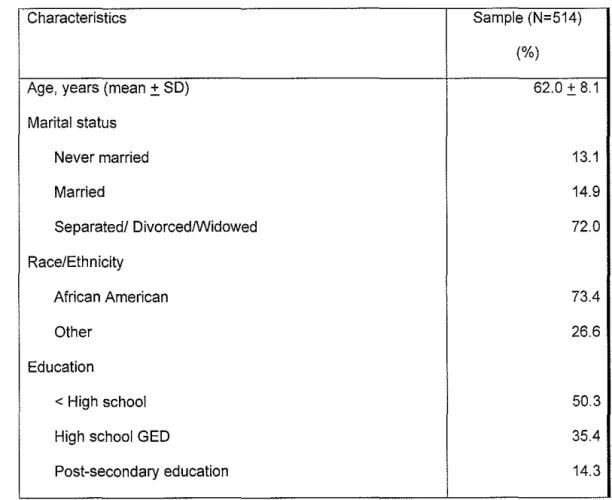
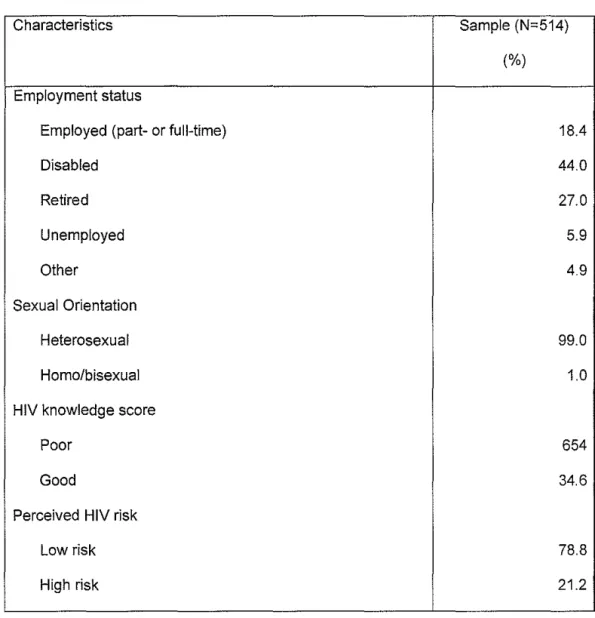
Of the 564 eligible women who were approached, 514 (91 %) agreed to participate. The majority were African American, heterosexual, not sexually active, had a high school education or less, low HIV knowledge scores, perceived themselves to be at low risk of acquiring HIV, had moderate or high risk factors, and did not recall a provider ever recommending HIV testing (Table 1 ). Of the 35% who had previously had an HIV test, 92% percent knew the results of their test and 2 (1%) reported being HIV positive.
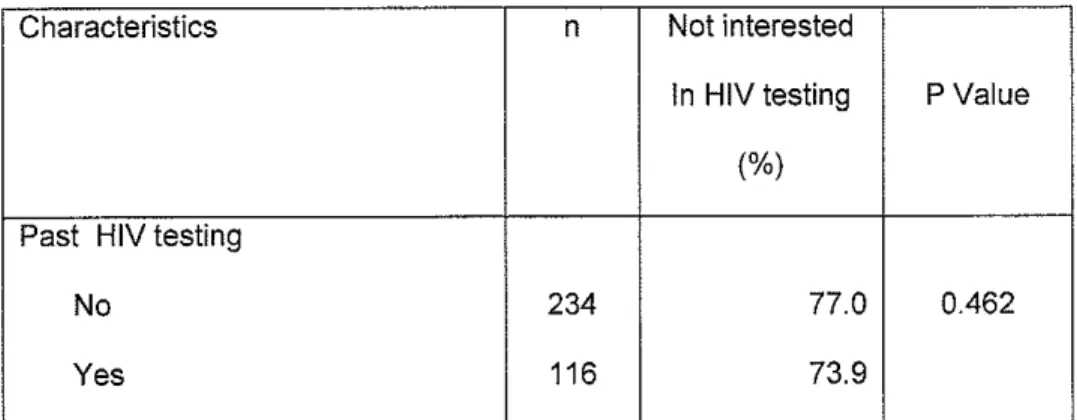
In bivariate analysis, previously tested women were more likely to be younger (57.6 vs 64.2 years, p<0.001), sexually active (32% vs 21%, p=0.011), have high HIV knowledge scores (41% vs 32%, p=0.042), higher HIV risk perception (27% vs 18%, p=0.040), moderate or high risk factors for HIV (63% vs 51%, p<0.001 ), and report that a provider had recommended HIV testing (63% vs 3%, p<0.001 ). Women with a prior history of HIV testing were no more likely to be interested in HIV testing than those who had never been tested (26% vs 23%, p=0.462).
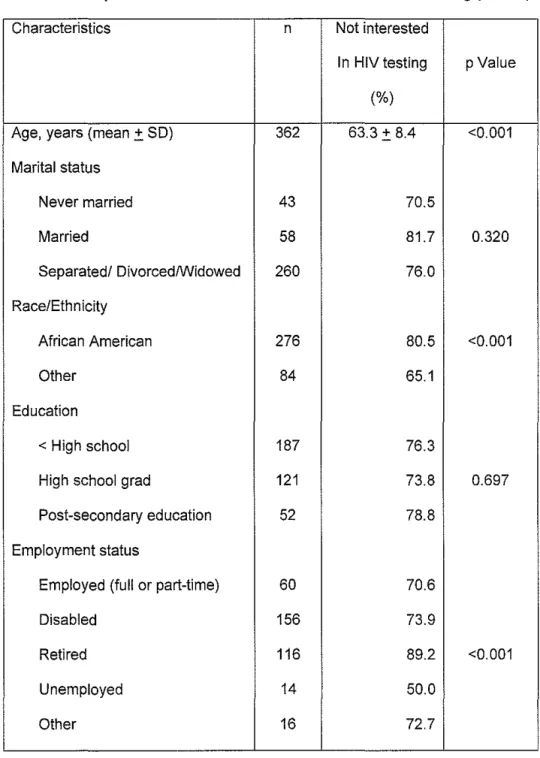
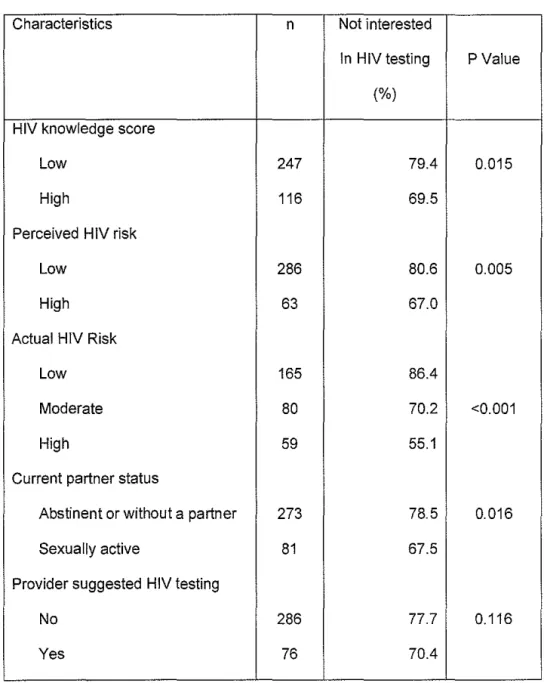
The characteristics of women based on their interest in HIV testing are shown in Table 2. Compared to women who were interested in HIV testing, those who lacked interest were more likely to be older, African American and not sexually active. They were also more likely to have low HIV knowledge scores, low HIV risk perception, and moderate or high risk factors for HIV. Neither a prior history of HIV testing nor having a provider
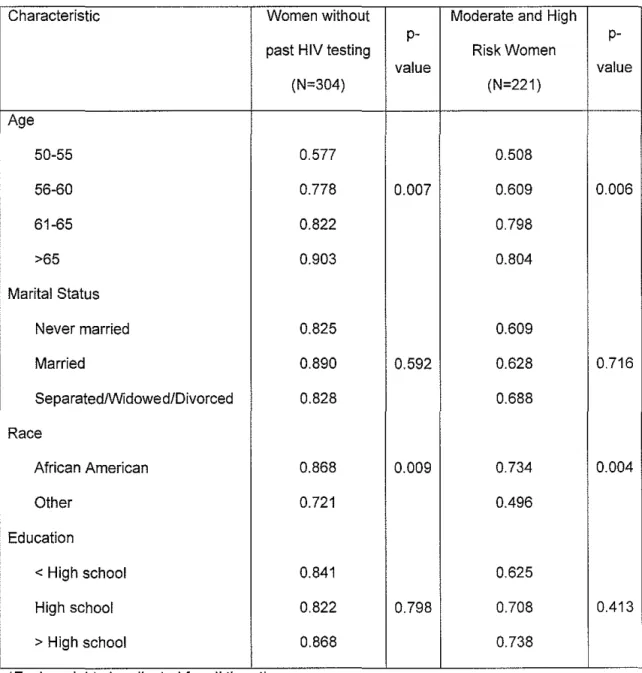
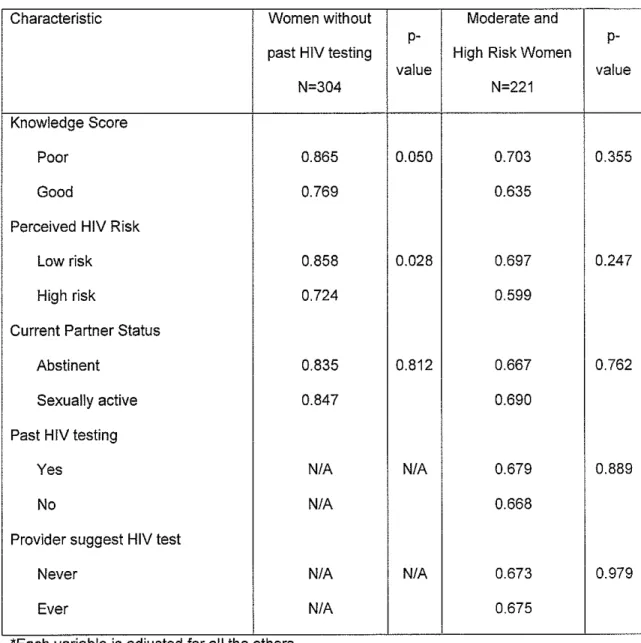
recommend testing were associated with interest in HIV testing. In multivariable logistic regression modeling, we found that increasing age, African American race, poor HIV
knowledge scores, and low perceived risk were associated with Jack of interest in HIV testing among women who never had an HIV test (Table 3). Among women with moderate or high risk factors for HIV, only increasing age and African American race were associated with Jack of interest in HIV testing.
QUALITATIVE FINDINGS
Ninety five percent of women who were asked to give a reason for their interest or Jack of interest in HJV testing responded (Table 4). Among women who were interested in HIV testing, almost two-thirds cited curiosity or safety concerns:
"Better to be safe than sorry."
"Because you never know what someone has left behind." Ten percent expressed concerns about a current or previous partners' behaviors:
"My ex was bisexual; he died in 1995."
"[My]long-distance boyfriend might be unfaithful."
Seven percent indicated they had previously been tested but never received their test results. Four percent indicated the survey had made them think about their health and the possible need to be tested.
Among women who were not interested in HIV testing, the most common reasons were the belief that there was no need for testing (29% ), perceiving oneself as not at risk (17%), and a history of previous testing (17%). Although believing there is no need for testing may seem similar to perceiving oneself as not at risk, there is an importance difference between these two groups of women. Women who stated there was no need to be tested but who did not provide any reason to explain their conclusion were classified as believing there was no need for testing.
"Don't feel like I need it."
In contrast, women who indicated there was no reason to be tested but who qualified their statement with some evidence of risk assessment were categorized as perceiving themselves to not be at risk.
"[I] don't have sex outside of marriage." "[I have] safe sex with my ex-husband."
A third of the women who were not interested in HIV testing reported moderate or high risk factors for contracting the disease. In examining the comments made by these women, we found that these women tended to ascribe HIV risk as belonging to people other than themselves or their partners:
"I've not been in contact with those people."
A small number of women who were not interested in HIV testing stated they did not have HIV (4%), yet none of these women had ever been tested for HIV and 56% had moderate or high risk factors.
DISCUSSION
In this study of older women residing in a community with high rates of HIV, we found that more than half our sample had moderate or high risk factors for HIV, yet few had ever had an HIV test and most were not interested in testing. The factors associated with lack of interest in testing - less knowledge about HIV, lower perception of risk, and having HIV risk factors - as well as the reasons women cited for their testing interest, were notably similar to those reported in studies of younger adults.11 Unlike younger women, older women have been largely ignored by HIV education, prevention and testing programs. As a consequence, they appear to less capable of accurately assessing their risk of
contracting the virus even when they reside in communities with high rates of HIV infection. This may increase their likelihood of exposure and delay HIV testing, diagnosis, and treatment.
Most HIV education and prevention programs target traditional high risk groups such as intravenous drug users, adolescents and young adults, and men who have sex with men. Programs that do target women generally do so in venues with a lower likelihood of reaching older women such as sexually transmitted disease clinics, substance abuse programs, prenatal clinics, and prisons.33' 34 HIV media campaigns also exclude older
women by using the voices and faces of younger adults. This conveys the subtle message that HIV risk is not a concern for older people therefore HIV testing among older adults is not necessary. HIV prevention programs that increase HIV knowledge and empower individuals to accurately assess their HIV risk status and that of their partners
have been shown to be effective in older adults but have simply not been widely adopted.35
Women in our sample had higher HIV testing rates compared to women in nationally representative samples of older adults. A third of our sample had previously been tested compared to 21% of women over age of 55 in national surveys-" The higher observed rate in our study is likely due to several factors. First, HIV testing is more common in high-prevalence areas like our target community-'6• 37 This could also explain why our sample had higher HIV knowledge scores, higher HIV risk perception, and more risk factors compared to other studies of older adults3840 Second, women in our sample were relatively young compared to other studies of older adults, with more than half under 60. Testing rates are highest among the middle-aged and decrease thereafter-" Lastly, the predominance of African Americans in our sample I ikely played a role since African Americans have higher HIV testing rates compared to other ethnic groups.11' 36
While the higher HIV testing rate in our sample compared with national estimates was encouraging, it was low given that more than half the sample had moderate or high risk factors for HIV. Risky sexual behaviors were responsible for much of this risk. Almost 30% of moderate and high risk women had a history of multiple partners, 10% had a high
risk partner, and 6% had been paid for sex. Ten years ago, Stall and Catania38 noted similar sexual behaviors among older women although only 10% of their sample reported at least one high risk behavior compared to more than 50% of our sample. The fact that the behaviors we observed are remarkably similar to, but more prevalent than those reported more than a decade ago, again highlights the fact that the lack of HIV education and prevention messages targeting older women has left this population vulnerable.
Despite the fact that more than half the women in this study reported moderate or high risk factors, less than 25% recalled a provider ever recommending HIV testing. This is concerning given that CDC recommends providers routinely offer HIV testing to all patients from high risk communities such as our study site.41 As providers, we are uniquely positioned to address HIV risk with older women. However, health professionals often assume older patients are either not sexually active or do not engage in high risk behaviors8• 42• 43 Providers frequently fail to perform sexual risk assessments, provide risk-reduction counseling, or recommend HIV testing for older female patients8 They also lack experience discussing sex with older patients and may avoid the issue due to their own discomfort or concern about embarrassing the patient.35• 42' 44 Provider-based barriers to HIV testing are unfortunate since our study found that older women were more likely to get testing if a provider recommended it. The question then becomes, 'how do we get providers to perform sexual risk assessments on their older female patients and recommend HIV testing when appropriate?' Issuing additional screening mandates to busy providers is unlikely to significantly increase screening rates. Tailoring health systems to support screening activities is potentially a more effective option. Wei et al found an improvement in colorectal cancer screening in community practices after instituting a protocol to identify eligible patients45 In the case of HIV testing, anticipatory guidance prompts could be incorporated into medical record systems in high risk
communities reminding providers to offer testing to all patients regardless of age. Another option is to increase women's capacity to perform more accurate risk assessments.
Educational campaigns targeting high-risk women and patient-oriented decision aids have been shown to increase patient knowledge, comfort, participation in medical decision-making for a variety of screening and treatment issues. 46 Both these options would take the onus off physicians while still potentially improving HIV testing rates.
Our study has several important limitations. Because of the cross-sectional design, we cannot determine the directionality of the observed associations. While our sample is representative of older women in ambulatory care settings, it cannot be generalized to all older women in the US. Although we measured interest in HIV testing, we did not assess actual HIV testing rates. However, health behavior theory indicates that behavioral intentions are a valid proxy for future action47 The accuracy of our HIV risk assessment was likely affected by participants' limited recall of sexual behaviors and partners from several years prior to the questionnaire. This could explain why almost 20% of participants were unable to provide sufficient data to perform risk assessment. In addition, due to the sensitivity of the topic, women may not have been forthright about their sexual histories and that of their partners. Even with these potential biases, we were able to assign risk to greater than 80% of women, more than half of whom reported moderate or high HIV risk factors. We also recognize that our criteria for assigning actual HIV risk were stringent; however, these assignments were based on previously validated measures. Finally, for women who recalled that a health care provider had recommended HIV testing, we did not determine when that suggestion was made.
CONCLUSION
The findings in this study underscore the fact that older women's motivation for obtaining HIV testing is influenced by race, perceived risk of contracting the virus, and provider behaviors. This should not come as a surprise since similar factors have been shown to influence HIV testing behaviors in younger people and other at-risk groups. As providers and public health professionals, we are finally recognizing the potential danger of
overlooking older women in HIV education and prevention programs as the epidemic shifts in their direction. We need to develop educational messages that specifically target older women, particularly those from high risk groups such as older African American women. In addition, health providers should perform HIV risk assessments and
recommend HIV testing for older women residing in high risk communities. Older women and their providers need to appreciate the benefits of HIV testing and early disease identification, particularly in this era in which HIV treatment is available.
ACKNOWLEDGEMENTS
Author Contributions:
Conception and design: Joyce Doyle, Lisa Bernstein, Giselle Corbie-Smith Data collection: Lisa Bernstein, Joyce Doyle, Giselle Corbie-Smith
Statistical analysis: Aletha Akers
Interpretation of data: Aletha Akers, Lisa Bernstein, Susan Henderson, Giselle Corbie-Smith
Drafting of manuscript: A letha Akers, Lisa Bernstein, Susan Henderson, Giselle Corbie-Smith
Critical revision of manuscript for important intellectual content: Aletha Akers, Lisa Bernstein, Susan Henderson, Giselle Corbie-Smith, Diane Marie St-George Obtained funding: Joyce Doyle, Lisa Bernstein, Giselle Corbie-Smith
Sponsors Role: None.
REFERENCES
1.
HIV/AIDS Surveillance Report, 2003 (Vol15). Atlanta: Centers for Disease Control and Prevention; 2004; 1-46.2. Linsk NL. HIV among older adults: age-specific issues in prevention and treatment. AIDS Read Jul2000;10(7):430-440.
3. Cases of HIV infection and AIDS in the United States, by race/ethnicity, 1998-2002. Atlanta: Centers for Disease Control; 2003; 1-38.
4. Riley M. AIDS and Older People: The Overlooked Segment of the Population. AIDS in an Aging Society: What We Need to Know. New York: Springer Publishing Co.; 1989:3-57.
5. Zablotsky D. Overlooked, ignored, and forgotten. Research on Aging November 1998;20(6):760-776.
6. Chiao EY, Ries KM, Sande MA. AIDS and the elderly. Clinical Infectious Diseases 1999;28(4):740-745.
7. Number of persons tested for HIV--United States, 2002. Atlanta: Centers for Disease Control and Prevention; 2004; 1110-3.
8. Skies! OJ, Keiser P. Human immunodeficiency virus infection in patients older than 50 years. A survey of primary care physicians' beliefs, practices, and knowledge. Archives of Family Medicine 1997;6(3):289-294.
9. Ferro S, Salit IE. HIV infection in patients over 55 years of age. Journal of Acquired Immune Deficiency Syndromes 1992;5(4):348-353.
10. Justice A, Weissman S. The survival experience of older and younger adults with AIDS: is there a growing gap in survival? Research on Aging Nov
1998;20(6):665.
11. Mack KA, Bland SD. HIVtesting behaviors and attitudes regarding HIV/AIDS of adults aged 50-64. Gerontologist 1999;39(6):687-694.
12. Gordon SM, ThompsonS. The changing epidemiology of human
immunodeficiency virus infection in older persons. Journal of the American Geriatrics Society 1995;43( 1 ):7 -9.
13. Rodgers-Farmer AY. HIV risk factors, HIV antibody testing, and AIDS knowledge among African Americans age 55 years and older. Social Work in Health Care 1999;29(3):1-17.
14. HIV/AIDS at a Glance. Georgia Department of Human Resources (online). Available at:
http://dhr.georgia.gov/DHR/DHR_CommonFiles/844684HIVAIDSATAGLANCE.p df. Accessed December 22, 2005.
15. Department of Health Education and Promotions HIV/AIDS Statistics. NAESM (online). Available at: http://naesmonline.org/hiv_aidstats.htm. Accessed December 22, 2005.
16. HIV/ AIDS surveillance report. Atlanta: Centers for Disease Control; 2002.
17. Williams MV PR, Baker DW et al. Inadequate functional health literacy among patients at two public hospitals.[comment]. JAMA 1995;274:1677-1682.
18. Binson D, Pollack L, Catania JA. AIDS-related risk behaviors and safer sex practices of women in midlife and older in the United States: 1990 to 1992. Health Care for Women International 1997;18(4):343-354.
19. Williams D, Yu Y, Jackson J, Anderson N. Racial differences in physical and mental health: socioeconomic status, stress and discrimination. Journal of Health Psychology 1997;2:335-351.
20. Aynalem G, Mendoza P, Frederick T, Mascola L. Who and why? HIV-testing refusal during pregnancy: implication for pediatric HIV epidemic disparity. AIDS Behav Mar 2004;8(1 ):25-31.
21. Kellerman SE, Lehman JS, Lansky A, et al. HIV testing within at-risk populations in the United States and the reasons for seeking or avoiding HIV testing. J Acquir Immune Defic Syndr Oct 1 2002;31 (2):202-21 0.
22. Spielberg F, Kurth A, Gorbach PM, Goldbaum G. Moving from apprehension to
action: HIV counseling and testing preferences in three at-risk populations. AIDS
L
Education & Prevention 2001 ;13(6):524-540.23. Brown BS, O'Grady KE, Farrell EV, Flechner IS, Nurco ON. Factors associated with frequent and infrequent HIV testing. Substance Use & Misuse
2001 ;36(12):1593-1609.
24. Jones JL, Hutto P, Meyer P, Dowda H, Gamble WB, Jr., Gunn RA. HIV
seroprevalence and reasons for refusing and accepting HIV testing. Sex Transm Dis Nov-Dec 1993;20(6):334-337.
25. Behrendt C, Kendig N, Dambita C, Horman J, Lawlor J, Vlahov D. Voluntary testing for human immunodeficiency virus (HIV) in a prison population with a high prevalence of HIV. American Journal of Epidemiology 1994;139(9):918-926.
26. Phillips KA, Coates TJ, Catania JA. Predictors of follow-through on plans to be tested for HIV. American Journal of Preventive Medicine 1997;13(3): 193-198.
27. Phillips KA, Coates TJ, Eversley RB, Catania JA. Who plans to be tested for HIV or would get tested if no one could find out the results? American Journal of Preventive Medicine 1995; 11 (3):156-162.
28. Hobfoll S, Jackson, A., Lavin, J., Britton, P., Shepard, J. Safer sex knowledge, ~-behavior, and attitudes of inner-city women. Health Psychology
1993;12(6):481-488.
29. Henderson SJ, Bernstein LB, George OM, Doyle JP, Paranjape AS, Corbie-Smith G. Older women and HIV: how much do they know and where are they getting their information? Journal of the American Geriatrics Society
2004;52(9): 1549-1553.
30. Paranjape A, Bernstein L, George OMS, Doyle J, Henderson S, Corbie-Smith G. Effect of relationship factors on safer sex decisions in older inner-city women. Journal of Women's Health 2006 2006;15(1):90-97.
31. Lauver D, Armstrong K, Marks S, Schwarz S. HIV risk status and preventive behaviors among 17,619 women. JOGNN- Journal of Obstetric, Gynecologic, & Neonatal Nursing 1995;24(1 ):33-39.
32. Wortley PM, Chu SY, Diaz T, et al. HIV testing patterns: where, why, and when were persons with AIDS tested for HIV? Aids May 1995;9(5):487-492.
33. Revised recommendations for HIV screening of pregnant women. Atlanta: Centers for Disease Control Prevention; 2001; 63-85.
34. Schable B, Chu SY, Diaz T. Characteristics of women 50 years of age or older with heterosexually acquired AIDS. American Journal of Public Health
1996;86(11):1616-1618.
35. Agate LL, Mullins JM, Prudent ES, Liberti TM. Strategies for reaching retirement communities and aging social networks: HIV/AIDS prevention activities among seniors in South Florida. J Acquir Immune Defic Syndr Jun 1 2003;33 Suppl 2:S238-242.
36. lnungu JN. Potential barriers to seeking human immunodeficiency virus testing among adults in the United States: data from the 1998 National Health Interview Survey. AIDS Patient Care STDS Jun 2002;16(6):293-299.
37.
HIV Testing - United States, 2001. Atlanta: Centers for Disease Control; June 13, 2003 2003; 540-45.38. Stall R, Catania J. AIDS risk behaviors among late middle-aged and elderly Americans. The National AIDS Behavioral Surveys. Archives of Internal Medicine 1994;154(1 ):57 -63.
39. Maes CA, Louis M. Knowledge of AIDS, perceived risk of AIDS, and at-risk sexual behaviors among older adults. J Am Acad Nurse Pract Nov
2003;15(11 ):509-516.
40. Rose MA. Knowledge of human immunodeficiency virus and acquired immunodeficiency syndrome, perception of risk, and behaviors among older adults. Holistic Nursing Practice 1995;1 0(1 ): 10-17.
19
L
41. Revised Guidelines for HIV Counseling, Testing, and Referral, 50(RR19). Atlanta: Centers for Disease Control; November 9 2001; 1-57.
42. Wooten-Bielski K. HIV & AIDS in older adults. Geriatric Nursing. 1999;20(5):268-272.
43. Providers not diagnosing HIV in older women: females over 50 are the 'invisible victims' of HIV. AIDS Alert June 1995;10(6):77.
44. Quinn-Krach P, Van Hoozer H. Sexuality of the aged and the attitudes and knowledge of nursing students. J Nurs Educ Oct 1988;27(8):359-363.
45. Wei EK, Ryan CT, Dietrich AJ, Colditz GA. Improving colorectal cancer screening by targeting office systems in primary care practices: disseminating research results into clinical practice. Arch Intern Med Mar 28 2005;165(6):661-666. 46. O'Connor AM, Stacey D, Rovner D, et al. Decision aids for people facing health
treatment or screening decisions. Cochrane Database Syst Rev 2001 (3):CD001431.
47.
Montano D, Kasprzyk D. The theory of reasoned action and the theory of planned behavior. In: Glanz K, Rimer B, Lewis F, eds. Health behavior and health education. San Francisco: Jessey-Bass; 2002:67-98.Table 1: Sample Characteristics at Baseline and Based on HIV Testing History
Characteristics Sample (N-514)
(%)
Age, years (mean :!: SD) 62.0:!: 8.1
Marital status
Never married 13.1
Married 14.9
Separated/ Divorced/Widowed 72.0
Race/Ethnicity
African American 73.4
Other 26.6
Education
< High school 50.3
High school GED 35.4
Post-secondary education 14.3
SO-Standard Dev1at1on; GED-General Education Diploma
Table 1: Sample Characteristics at Baseline and Based on HIV Testing History
(cant)
Characteristics Sample (N-514)
(%) Employment status
Employed (part- or full-time) 18.4
Disabled 44.0
Retired 27.0
Unemployed 5.9
Other 4.9
Sexual Orientation
Heterosexual 99.0
Homo/bisexual 1.0
HIV knowledge score
Poor 654
Good 34.6
Perceived HIV risk
Low risk 78.8
High risk 21.2
Table 1: Sample Characteristics at Baseline and Based on HIV Testing History
(cent)
Characteristics Sample (N-514)
(%) Actual H IV risk
Low risk 44.7
Moderate risk 28.6
High risk 26.7
Current Partner Status
Abstinent or without a partner 74.8
Sexually active 25.3
Provider suggest HIV testing
No 76.5
Yes 23.5
Past HIV testing
No 65.4
Yes 34.6
Interested in testing
No 75.9
Yes 24.1
Table 2: Sample Characteristics Based on Interest in HIV Testing (N=363)
Characteristics n Not interested
In HIV testing pValue
(%)
Age, years (mean:':. SO) 362 63.3 :':. 8.4 <0.001 Marital status
Never married 43 70.5
Married 58 81.7 0.320
Separated/ Divorced/Widowed 260 76.0
Race/Ethnicity
African American 276 80.5 <0.001
Other 84 65.1
Education
< High school 187 76.3
High school grad 121 73.8 0.697
Post-secondary education 52 78.8
Employment status
Employed (full or part-time) 60 70.6
Disabled 156 73.9
Retired 116 89.2 <0.001
Unemployed 14 50.0
Other 16 72.7
Table 2: Sample Characteristics Based on Interest in HIV Testing (N=363) (cont)
Characteristics n Not interested
In HIV testing PValue
(%)
HIV knowledge score
Low 247 79.4 0.015
High 116 69.5
Perceived HIV risk
Low 286 80.6 0.005
High 63 67.0
Actual HIV Risk
Low 165 86.4
Moderate 80 70.2 <0.001
High 59 55.1
Current partner status
Abstinent or without a partner 273 78.5 0.016
Sexually active 81 67.5
Provider suggested HIV testing
No 286 77.7 0.116
Yes 76 70.4
Table 2: Sample Characteristics Based on Interest in HIV Testing (N=363) (cont)
Characteristics n Not interested
In HIV testing P Value (%)
Past HIV testing
No 234 77.0 0.462
Yes 116 73.9
SO-Standard Dev1at1on, GED-General Education Diploma, HIV-Human Immunodeficiency Virus
Table 3: Adjusted Probability of Lack of Interest in HIV Testing*
Characteristic Women without Moderate and High
p-
p-past HIV testing Risk Women
value value
(N=304) (N=221)
Age
50-55 0.577 0.508
56-60 0.778 0.007 0.609 0.006
61-65 0.822 0.798
>65 0.903 0.804
Marital Status
Never married 0.825 0.609
Married 0.890 0.592 0.628 0.716
Separated/Widowed/Divorced 0.828 0.688
Race
African American 0.868 0.009 0.734 0.004
Other 0.721 0.496
Education
< High school 0.841 0.625
High school 0.822 0.798 0.708 0.413
> High school 0.868 0.738
*Each vanable IS adJusted for all the others.
Table 3: Adjusted Probability of Lack of Interest in HIV Testing (cent)
Characteristic Women without
past HIV testing N=304 Knowledge Score
Poor 0.865
Good 0.769
Perceived HIV Risk
Low risk 0.858
High risk 0.724
Current Partner Status
Abstinent 0.835
Sexually active 0.847
Past HIV testing
Yes N/A
No N/A
Provider suggest HIV test
Never N/A
Ever N/A
* Each vanable IS adjusted for all the others. HIV=Human Immunodeficiency Virus
28
Moderate and
p-High Risk Women value
N=221
0.050 0.703
0.635
0.028 0.697
0.599
0.812 0.667
0.690
N/A 0.679
0.668
N/A 0.673
Table 4: Reasons for Interest or Non-Interest in HIV Testing
Reasons for interest in testing (N=90) Reasons for non-interest in testing
(N-255)
Curiosity (39%) Not necessary (29%)
"Always good to know" "I do not see the need for the test" "I had one before and didn't get results" "I don't have a reason to"
"You never know until tested" "Don't feel like I need it"
Safety (23%) Previously tested ( 17%)
"Be on the safe side" "Already been tested"
"Because you never know what someone "I had the test 1 year ago ... not active
has left behind" since then"
"Better to be safe than sorry" "Had HIV test in 1991"
"I'm sexually active" "I just had one done. Don't need it again"
Partner issues ( 1 0%) Not at risk (17%)
"Ex was bisexual; died in 1995" "I don't feel like I'm at risk"
"Past partner used drugs" "Don't have sex outside of marriage" "For reason of retest... husband died with "I don't mess around, kiss or drink after
AIDS" anyone"
"Just like to know ... husband unfaithful" "I don't do anything to get AIDS"
Table 4: Reasons for Interest or Non-Interest in HIV Testing (cont)
Reasons for interest in testing (N=90) Reasons for non-interest in testing (N=
255)
"Safe sex with ex-husband" "Not sexually active"
Never tested (7%) Not Today (12%)
"I never had one before" "Not today ... I'm tired" "I don't have time today"
"I just want to get home; I'd like one later"
"I don't want blood taken today"
To be healthy (4%) Do not want the test (9%)
"I'd like to know about my health" "I just don't want one" "Not at this stage of life"
"I just don't want it ... if I die, don't want to
know"
Because of the survey (4%) Do not have HIV (4%) "From your questionnaire information" "I know I'm not HIV+" "These questions made me think about my " 'Cause I ain't got it" health"
"I've had blood tests before, if I had it, they would know by now"
"I think I'm ok"
Table 4: Reasons for Interest or Non-Interest in HIV Testing (cant)
Reasons for interest in testing (N-90) Reasons for non-interest in testing (N- 255) Never received results of a previous test (2%) Do not want needle (3%)
"Don't want to be stuck"
"I don't' like needles and I don't want this test"
"I've already had too many tests today"
Other (10%) Other (8%)
"Because it's free" "Not what I came for today" "It's a waste of my time"
"This is too nerve racking for me" "Only if a doctor told me to do it"
Page I of2
Aletha Akers
fr~Pil;,
Sent:
Tuesday, March 28, 2006 1 0;06 AM To: Aletha Akers;Subject:
Re; Master's PaperAletha
Congratulations on your new job!
;!Jr4
Aletha Akers wrote:
Nope. I think providers should ask older women if they are still sexually active (which I always do at their
annual exams) and assess them for risk factors for STis/HIV. This is especially true for middle-aged
women. Also, CDC recommends offering screening for all adults residing in high risk communities
defined as those with an incidence rate of
I%.
By that definition, all the women in our study population
should have been offered testing.
Thanks for taking a look at this so quick. I figured I'd give you a couple of weeks since the end of the
semester (and therefore work backlog) is quickly approaching. If you want to sign the paper and send it
back to me via campus mail (Box 7105), I'll turn it into the registrar's along with Dr. Corbie-Smith's. By
the way, I took a job at the University of Pittsburgh Dept of OB/GYN and just got word that I was
accepted into the school's new multidisciplinary K12 program!
Aletha
Aletha Y. Akers, MD
The Robert Wood Johnson Clinical Scholars Program
Crl 7105, 5034 Old Clinic Building
UNC-Chapel Hill
Chapel Hill, NC 27599
Phone: 919-966-3713
Fax: 919-843-9237
3/28/2006
---Original Message---From:

![A study of Lipoprotein [a] Estimation in stroke patients with Diabetes Mellitus](data:image/gif;base64,R0lGODlhAQABAIAAAP///wAAACH5BAEAAAAALAAAAAABAAEAAAICRAEAOw==)