Project Title:
FKBP5 variant rs3800373 alters FKBP5 RNA secondary structure and prevents stress-induced microRNA-320a downregulation of FKBP5, resulting in glucocorticoid resistance and
increased vulnerability to chronic posttraumatic pain Abstract
Background: Chronic pain affects more Americans than cancer, heart disease, and diabetes combined and has a reported economic impact of more than 600 billion dollars annually. Despite these alarming statistics, the pathophysiology of chronic pain is not well understood, thus precluding the development of improved or novel therapeutics. In an effort to understand the underlying pathogenesis of chronic pain development, our group recently showed that genetic variant rs3800373 in the 3’UTR of FKBP5, an important regulator of the stress response, is associated with increased chronic pain severity following trauma exposure. In the current study, we aimed to validate this finding in an additional post-trauma cohort, and to understand the mechanism by which this allele affects chronic pain states.
Methods: To validate our previous genetic association results showing increased severity of chronic pain in individuals with the minor allele at rs3800373, we used an additional prospective cohort of individuals experiencing trauma. This cohort included African American (AA, n = 930) men and women presenting to the Emergency Department (ED) following motor vehicle collision (MVC) trauma. RNA and DNA (via blood) were collected in the ED and chronic pain severity was evaluated six weeks following MVC using established questionnaires. Because rs3800373 is located in the 3’UTR of FKBP5 near a microRNA-320a binding site, we used molecular and in silico assays to test whether this allele affects binding by miR-320a, a microRNA shown to be associated with fibromyalgia, a related pain disorder.
Results: In general linear models the influence of FKBP5 rs3800373 on chronic pain severity after MVC in AA depended on the level of peritraumatic distress. Individuals who reported higher levels of peritraumatic distress and had one or more copies of the minor allele experienced more severe pain six weeks following MVC than individuals with the major allele. Analysis of microRNA expression levels from individuals in the same study showed that in distressed individuals, lower expression levels of 320a predict increased chronic pain six weeks following MVC. Molecular studies showed that miR-320a binds to the FKBP5 3’UTR and that in the presence of the risk allele binding is less efficient. Further, this difference in miRNA binding was shown via in silico analyses to be caused by allele dependent changes in the secondary structure conformation of the 3’UTR.
Introduction
Chronic pain affects more Americans than cancer, heart disease, and diabetes combined and has a reported economic impact of more than 600 billion dollars annually.1 One of the most common causes of chronic pain is exposure to traumatic/stressful events.2,3 However, little is known regarding the pathogenesis of post-traumatic chronic pain, precluding the development of novel therapeutics for secondary intervention.
One type of traumatic event causing persistent pain development is exposure to motor vehicle collision (MVC). In the US, more than 10 million motor vehicle collisions (MVC) occur each year. A substantial proportion of individuals experiencing MVC report to Emergency Departments (EDs) for care, however more than 90% of the individuals do not have life threatening physical injury and are discharged to home after ED evaluation.4 Persistent post-MVC musculoskeletal pain (MSP) develops in 10-40% of individuals who experience such “minor” MVCs. Current evidence indicates that altered stress system signaling (e.g. glucocorticoid and catecholaminergic pathway signaling) plays an important role in the pathogenesis of post-MVC chronic pain.5-10
Data supporting the role for stress system biology in post-MVC chronic MSP includes (1) a substantial proportion of individuals developing chronic MSP also develop neuropsychiatric diseases previously shown to be caused by trauma/stress, (2) peritraumatic distress at the time of injury is a strong predictor of chronic MSP development following MVC, (3) stress exposure in animals results in increased hyperalgesia compared to non-stressed animals, and (4) a number of genetic association studies demonstrate that polymorphisms in key glucocorticoid and catecholaminergic system genes predict post-MVC chronic MSP development.7,8,10,11
Genetic association analyses are a powerful method of assessing the potential role that biological pathways play in post-MVC chronic MSP pathogenesis. Our group recently showed that polymorphisms in the glucocorticoid receptor co-chaperone, FKBP5, strongly predicts chronic MSP development following MVC.12 The main polymorphism that tagged the risk haplotype for chronic MSP following MVC, rs3800373, has previously been shown to be associated with co-morbid neuropsychiatric disorders such as depression and PTSD. Despite this wealth of data implicating rs3800373 in adverse post-traumatic sequelae, little is known regarding molecular mechanisms through which this polymorphism affects the pathogenesis of chronic MSP and related disorders. However, such studies could provide insight into the molecular pathogenesis of chronic MSP and thereby identify novel targets for therapeutic intervention.
For my thesis studies, I assessed whether (1) there are allele-dependent effects of rs3800373 on glucocorticoid resistance, an established mechanism through which FKBP5 can affect neuropsychiatric outcomes, (2) rs3800373, which is located in the 3’UTR of FKBP5, affects regulation by miR-320a, and (3) the ability of miR-320a to bind FKBP5 is affected by allelic effects on RNA secondary structure. This work builds upon previous work I contributed towards in the Linnstaedt lab showing that miR-320a predicts chronic MSP development following MVC9, and also involves a collaboration with Alain Laederach’s group in the Biology Department at UNC.
Methods
Study design, setting, and eligibility criteria
A prospective longitudinal study enrolling African American individuals ≥ 18 and ≤ 65 years of age presenting to the ED within 24 hours of MVC was used to study chronic post-traumatic pain outcomes. The details of this study have been described previously.13 The study was approved by the institutional review boards at the data coordinating center (The University of North Carolina at Chapel Hill) and at all participating hospitals. Each study participant provided written informed consent before enrollment.
Participant demographic characteristics (including age, gender, income, height, weight, and educational attainment) were obtained from the ED medical record and from participant self-report.
DNA collection and genotyping
Study personnel collected blood samples from each participant at the time of enrollment using PAXgene DNA tubes. Following DNA purification (PAXgene blood DNA kit, QIAGEN), genotyping using the Infinium Multi-Ethnic Global Array (Illumina) was performed. DNA from an individual with known genotype (NA19819, 1000 genomes) and two repeat samples were included in each genotyping batch (96 samples) to ensure genotypic accuracy and reliability. SNP rs3800373 was in Hardy-Weinberg equilibrium (p > 0.05) and had an excellent call rate (>99%).
RNA collection and sequencing
For RNA sample collection, research assistants collected blood samples in the ED at the time of enrollment using PAXgene RNA tubes. Total RNA (including miRNA) was isolated using the PAXgene blood miRNA kit (QIAGEN) and stored at -80˚C until use. RNA concentration and purity were measured using a NanoDrop 1000 (Nanodrop Technologies, Wilmington, DE).
Small RNA sequencing: Template libraries for miRNA Next Generation Sequencing were produced from 1.0 ug total RNA using two similar protocols. An initial set of 69 samples (randomly chosen from 930 participant cohort) were prepped using an adaptation of published protocols as described previously.14,15 A second set of 89 samples (also randomly chosen) were prepped using TruSeq Small RNA library prep kits according to manufacturer’s specifications (Illumina, San Diego, CA). Six samples were library prepped using both methods. Twelve barcoded libraries were combined per lane and sequenced on a HiSeq 2000 (Illumina). Raw sequence reads were processed using a custom bioinformatics pipeline as described previously15, and were normalized using upper quartile normalization. In order to normalize potential technical biases between the two methods of library preparation, the sequencing reads from the six samples that were prepped using both methods were averaged and the difference in averages between the two methods was subtracted from the values in the second set of samples.
Total RNA (excluding miRNA) sequencing: Template libraries for total RNA sequencing were produced from 600ng total RNA using Ovation Human Blood RNA-Seq Library Systems kit (NuGen, San Carlos, CA) according to manufacturer’s specifications. Libraries were multiplexed in groups of six and sequenced on a HiSeq 2000 at the UNC High Throughput Sequencing Facility.
Plasma collection and measurement of cortisol levels
For plasma collection, research assistants collected blood samples in the ED at the time of enrollment using EDTA tubes. (Blood samples collected in the early morning between 5am and noon were not considered for analysis in order to avoid potential confounding by early morning spikes in cortisol levels.) To separate plasma, EDTA blood tubes were centrifuged within one hour of collection at 1,500xg for 15 minutes and plasma was frozen at -20°C until use.
Cortisol was measured using the MILLIPLEX MAP Steroid / Thyroid Hormone Magnetic Bead Panel - Endocrine Multiplex Assay (STTHMAG-21K, Millipore, Darmstadt, Germany). This assay was designed to measure cortisol, estradiol, and progesterone and have <10% cross-reactivity; samples were prepped according to the manufacturer’s specifications and assayed on a Bio-Plex 200 system (BioRad, Hercules, CA) using version 6.0 Bio-Plex Manager software. Data were exported to Excel after manual outlier removal to achieve optimal 5-Parameter Logistic fit probabilities of the standard curves.
RT-qPCR and measurement of FKBP5 mRNA expression levels
gene as an endogenous control. Intron spaning primers were used for both FKBP5 (Assay ID: Hs01561006_m1) and TBP (Assay ID:Hs00427620_m1).
Characterization of rs3800373
The miRdSNP online database (http://mirdsnp.ccr.buffalo.edu/) and TargetScan16 were used to assess whether rs3800373 directly interferes with miRNA binding and to determine miRNAs predicted to bind 300nt upstream or downstream of the SNP.
DNA constructs
Lentiviral constructs containing either a firefly luciferase gene (pL-SV40-GL3) or a renilla luciferase gene (pL-SV40-RLUC) were used for dual luciferase assays.17 All primers used for the creation of the following constructs are detailed in Table 2. The 3’UTR of FKBP5 was amplified from HEK293T cells using primers 1-F and 1-R. The resullting 2125bp product was cloned downstream of the firefly luciferase gene in pL-SV40-GL3 using XhoI and EcoRI restriction enzyme sites. This newly created construct, pL-GL3-FKBP5-maj, was sequenced to confirm the major allele, T, at position rs3800373 in the FKBP5 3’UTR, and was then used as template to mutate the major allele to the minor allele, G, using the QuickChange II Site-Directed Mutagenesis Kit (Promega) and primers 2-F and 2-R. This new construct, pL-GL3-FKBP5-min, was then sequenced to confirm the presence of the minor allele and absence of introduced mutations.
A shortened version of the FKBP5 3’UTR, “FKBP5-truncated”, was amplified from the full length 3’UTR using primers 3-F and 3-R. This shortened version is 588bp and contains only the genomic region of the 3’UTR used to predict structural changes using RNAsnp. Mutations in three nucleotide positions that were predicted to disrupt complimentarity between miR-320a and the FKBP5 3’UTR seed binding region were engineered into FKBP5-truncated using primers 4-F and 4-R, to create a new construct termed “miR-320a mut”.
The miRNA coding reigons for miR-99a, miR-122, and miR-320a were amplified from HET293T cells using primers 5-F/R,6-F/R, and 7-F/R respectively. The resulting products, approximately 400bp in length containing the the full pre-miRNA sequence, were cloned into a pcDNA backbone using EcoRI and XhoI restriction sites. The pLCE-s320a sponge construct and associated controls, pLCE and pLCE sCXCR4 were generously donated from the Cullen Lab (Duke University).
Cell culture
HEK293T cells were grown at 37˚C, 5% CO2, in Dulbecco’s Modified Eagle’s Medium (DMEM) with 10% fetal bovine serum (FBS) and 1% gentamicin. Human neuroblastoma SK-N-AS cells were cultured in DMEM with 10% FBS, 0.1 mM Non-essentail Amino Acids (NEAA), and 1% gentamicin. Other neuroblastoma cell lines used to test miR-320a and FKBP5 expression levels (N-SH, BE-2C, SK-N-MC, SH-SY5Y, and IMR-32) were grown as suggested by ATCC guidelines.
Dual luciferase reporter assays
Binding of miR-320a to FKBP5 3’UTR contstructs described above was assessed using FLUC and RLUC-based indicator vectors, pL-SV40-GL3 and pL-SV40-RLUC (also described above). HEK293T cells were co-transfected with 120fmol pC-320, 5fmol pL-SV40-RLUC, and 30fmol of either pL-GL3-FKBP5-maj or pL-GL3-FKBP5-min using Fugene 6 Transfection Reagent (Promega). Seventy-two hours after transfection cells were collected and lysed. RLUC and FLUC levels were measured on a SpectraMax microplate reader (Molecular Devices) using substrates from a dual luciferase reporter assay kit as described (Promega); FLUC values were normalized to RLUC values and relative luciferase activity calculated between compared samples.
Generation of neuroblastoma cells stably knocked down for miR-320a expression
pLCE (GFP control), or PLCE-sCXCR4 (‘sCXCR4’, a control sponge). Each sponge construct contained the GFP gene. HEK293T cells were transfected using Fugene 6 Reagent (Promega). 48 hours after transfection, viral media was collected, filtered, and concentrated using Amicon Ultra centrifugal columns, then added to the culture medium atop SK-N-AS cells, and integration of sponge sequence was monitored by GFP expression. Cells with the top 30% mean GFP fluorescence were sorted using FACS analysis (ARIA II) and grown in culture until sufficient numbers of cells were available for RNA isolation via TRIzol (Life Technologies) or for protein isolation via RIPA buffer (Pierce).
RT-qPCR and Western blotting
For analysis of FKBP5 mRNA expression, RNA was first treated with DNaseI (New England Biolabs) to remove genomic DNA. Random primers were used for reverse transcription as described (High Capacity Reverse Transcription Kit, Life Technologies) and SYBR reagents were used for qPCR with transcript specific primers as instructed (Life Technologies). Primer sequences for detecting FKBP5 mRNA, 8-F and 8-R are shown in Table 2. Endogenous control primers were designed against GAPDH, 9-F and 9-R; their sequences are also shown in Table 2.
To compare FKBP5 protein levels, concentrations of protein lysate were first measured with a BCA Protein Assay (Pierce) and equal amounts of protein (5µg per lane) were loaded onto a 4-12% Bis-Tris gel (LifeTechnologies) and analyzed by Western blotting. Primary rabbit anti-FKBP5 was from Santa Cruz Biotechnology (sc-28983), and primary rabbit anti-β-actin was from Cell Signaling Technology (13E5, #4970) both at a 1:1000 dillution. Secondary anti-rabbit IgG HRP was from Cell Signaling Technology (#7074) at a 1:2000 dillution. Signals were developed using ECL Western Blotting Substrate (Pierce) and signal intensities quantified using NIH supported software, ImageJ.
Analyses
Correlation analyses were bivariate linear regression models performed using SPSS statistical software (IBM Corporation, Armonk, NY, U.S.A) Pearson correlation coefficients (r) and p values were derived from these analyses. Mann Whitney analyses were used to determine significance of differential microRNA binding to FKBP5 3’UTR between constructs with either major or minor alleles
Selective 2′-hydroxyl acylation analyzed by primer extension (SHAPE)
Allele-specific sorting and SHAPE profile calculation
Sequencing reads were aligned to the FKBP5 3′ UTR using bowtie2 (v2.2.9) 23. The aligned reads were then split into separate FASTQ files by the allele at the SNP position. For each allele, the SHAPE profile of the amplified region was derived from the allele-specific sorted sequencing reads, using the ShapeMapper pipeline (v1.2) 22. The SHAPE reactivity at each position corresponds to the difference between the mutation rate in the treatment condition and the mutation rate in the background control, normalizing the mutation rates by a multiplier so that the distribution of SHAPE reactivities matched that of a reference mRNA.
Results Participants
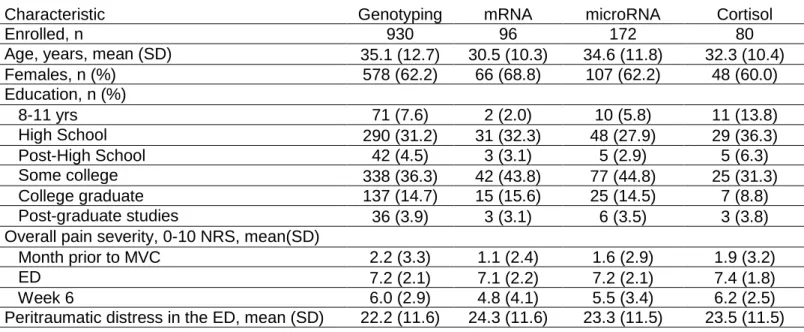
Baseline characteristics of participants in the AA MVC study are shown in Table 1. Of 930 participants enrolled, 766 individuals provided DNA, were genotyped, and completed 6-week pain questionnaires. Total RNA was sequenced from blood samples collected from 96 participants, microRNA from 172 participants, and cortisol from plasma of 80 participants. Due to only a subset of participants having plasma collected, not all participants overlapped with sequencing/cortisol data. For each subset of participants, most individuals were women, with an average age of 35 years and had at least high school education (Table 1).
rs3800373 allele affects glucocorticoid resistance
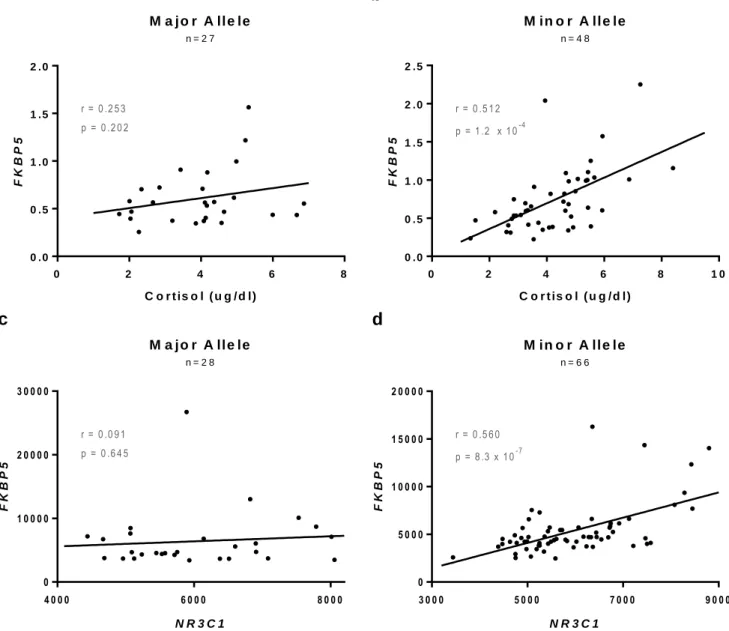
In order to determine whether the risk allele at rs3800373 affects glucocorticoid resistance, correlations between FKBP5 expression and (1) circulating cortisol or (2) NR3C1 mRNA levels were determined (Figure 1). In individuals with two copies of the major allele, there was no correlation between FKBP5 mRNA levels and circulating cortisol levels (Figure 1A), however the correlation was significant for individuals with one or more copies of the minor allele (p=1.2 x 10⁻⁴) (Figure 1B). Additionally, the correlation between FKBP5 mRNA levels and NR3C1 mRNA expression levels was not significant for individuals with two copies of the major allele (Figure 1C), but was significant for those with one or more copies of the minor allele (p=8.3 x 10⁻⁷) (Figure 1D).
The genomic locus of rs3800373 is located in the 3’UTR and affects miR-320a binding
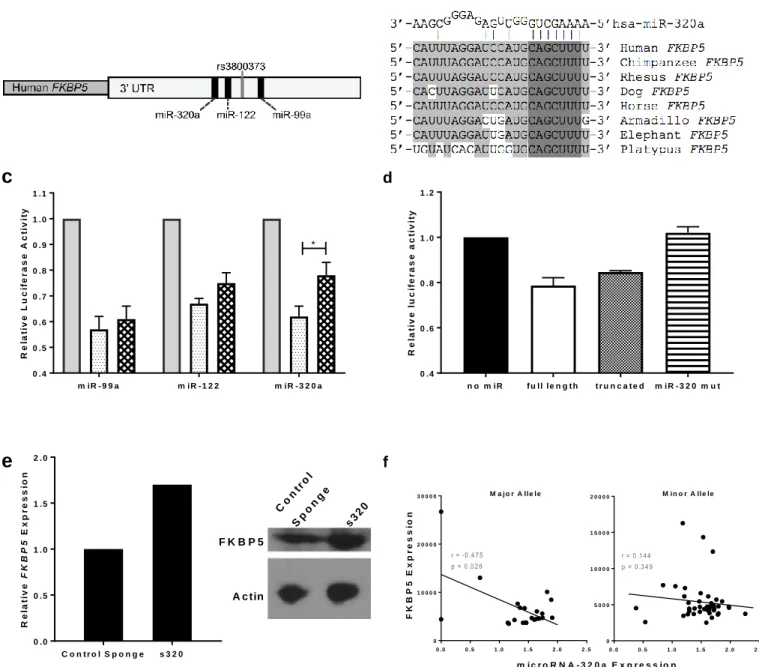
The location of rs3800373 in the 3’UTR of FKBP5 (Figure 2A) made it an ideal candidate as a functional SNP based on the immense regulatory roles established for the 3’UTR region of RNA transcripts.24,25 The seed site for miR-320a is also broadly conserved across mammals (Figure 2B). We used luciferase assays to test binding to the predicted miRNA seed regions (miR-99a, 122, and 320a) (Figure 2C). The presence of the minor allele had a significant effect on miRNA binding only for miR-320a. miR-320a binds the 3’UTR of FKBP5 containing the minor allele less efficiently (p = 0.025) than it binds the 3’UTR with the major allele. Figure 2D shows mutational analyses which rule out the possibility that other binding sites apart from the one in the SNP-related binding region of the FKBP5 3’UTR are responsible for miR-320a binding, indicated by the restored luciferase signal upon mutation of the miR-320a seed site.
miR-320a regulates endogenous expression of FKBP5 in neuroblastoma cells
The SK-N-AS neuroblastoma cell line was transduced with either a control sponge or one specific to miR-320a. Upon isolation of cellular RNA and protein, levels of FKBP5 were assessed. Cells which were treated with the s320 sponge showed higher relative expression levels of FKBP5 mRNA and FKBP5 protein as compared to cells transformed with the control sponge (Figure 2E).
lease one copy of the minor allele did not show correlation between these RNAs (r=0.144, p=0.349). (Figure 2F)
FKBP5 RNA adopts different secondary structures in the 3’UTR depending on the allele at rs3800373
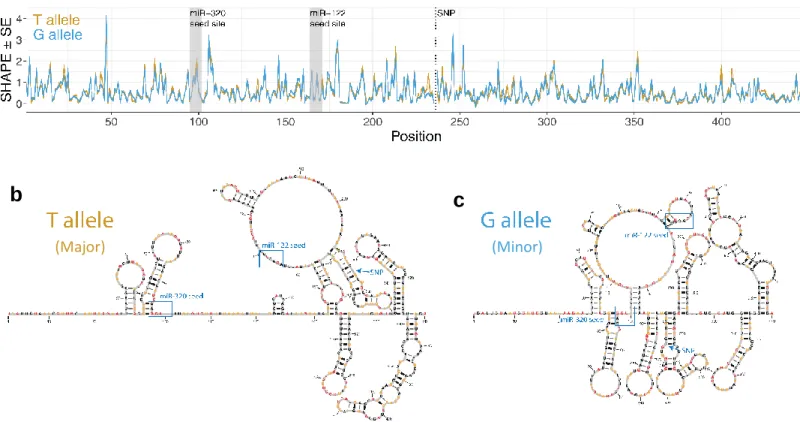
Figure 2A showed that rs3800373 is not located in a miRNA seed region. However, luciferase assays showed that the allele at rs3800373 affects miR-320a binding efficiency, suggesting some other mechanism through which the SNP alters miR-320a binding. Preliminary in silico data from RNAsnp predicted allele-dependent RNA secondary structures for the 3’TUR containing the minor allele versus the major allele (p = 0.0136, data not shown). This data suggests that rs3800373 might be a riboSNich.26 At the miR-320a binding site, in vivo SHAPE data showed higher SHAPE reactivity in mRNA transcripts containing the major allele versus transcripts with the minor allele (Figure 3A, gold trace). Predicted 3’UTR structures are shown in Figures 3B and 3C.
Discussion
The results of this study helped to further solidify that the SNP rs3800373 is predictive of chronic pain development following trauma. The process we predict to be responsible for this is through the development of glucocorticoid resistance in affected individuals. In her review27, Binder summarizes the normal function of the HPA Axis and how FKBP5 fits into the process. Following stress exposure, the HPA axis is responsible for the release of glucocorticoids which have a wide array of systemic effects, including anti-inflammatory action. Circulating cortisol enters cells and binds to the glucocorticoid receptor (GR) which then serves as a transcription factor upon translocation into the nucleus. The result is upregulated transcription of genes important for the body's response to stress, including those involved in feedback loops responsible for terminating the response. One of the genes involved in feedback is FKBP5, a co-chaperone of the GR that when bound, reduces cortisol binding affinity to GR and the efficiency of the complex’s nuclear translocation. Although FKBP5 production is initially caused by the GR to help terminate the stress response, dysregulation of FKBP5 production results in overly high levels of FKBP5. Increased levels of FKBP5 lead to increases in both circulating cortisol and cellular GR through disruption the negative feedback that typically results from GR-cortisol binding. Resistance to circulating corticoids results could result in a state of chronic inflammation and be a potential source of chronic pain.
Our determination of glucocorticoid resistance relies on the assertion that it is result of increased FKBP5 levels which leads to increased levels of circulating cortisol as well as glucocorticoid receptor. The results in Figure 1 help to show this as a probable cause. Only in patients with the minor allele were the levels of these FKBP5, NR3C1, and cortisol correlated. However, if increased FKBP5 levels are responsible for glucocorticoid resistance, there needs to be a mechanism for stressful encounters to attenuate its expression under normal conditions. This mechanism could be through FKBP5 repression by miR-320a. Since our results showed that the minor allele reduces miR-320a binding efficiency through changes in the mRNA secondary structure, this would account for more uncontrolled increases of FKBP5 protein in individuals with the risk allele. Additionally, we would expect that for individuals with similar levels of miR-320a expression, those with the minor risk allele at rs3800373 would have increased levels of FKBP5. Our results did show that, in fact, as expected in patients with the major allele, there is an expected negative correlation between miR-320a expression and FKBP5 levels. This correlation is lost in individuals with the minor allele, suggesting that miR-320a has lost its ability to regulate FKBP5 expression. This result, in conjunction with, previous publications which show decreased levels of miR-320a as predictive of chronic pain development9 suggest that expression of miR-320a may be stress induced and normally play a role in protection from glucocorticoid resistance. Patients with lower levels of miR-320a or an inability to respond to increasing miR-320a would in turn have higher FKBP5 expression and be at risk for developing chronic pain.
binding. Therefore SHAPE data demonstrates that rs3800373 is a ribosnitch and that RNA structures in a representative YRI individual show increased flexibility in the miR-320a seed binding site when the UTR contains a T allele. The increased flexibility would suggest a more accesible seed region for miR-320a binding, represented visually by Figures 3B and 3C. This shows that changes in secondary structure could be the mechanism by which rs3800373 alters miR-320 binding.
As evidence increases for the importance of miRNA in regulating pain development, studies like this will hopefully shed insight on key ways in which miRNA regulation is disrupted and leads to a disease state. The fact that the miR-320a seed site is so broadly conserved across mammals suggests it could play an important evolutionary role. In this study, we showed that SNPs have the ability to alter mRNA secondary structure in such a way that miRNA binding is affected.
There are additional ways in which chronic pain might manifest. Data from rat models has shown that prolonged stress exposure leads to dysregulation of normal stress pathway signaling resulting in nociceptor sensitization and increased hyperalgesia. Sensitization was also achieved through overstimulation of the glucocorticoid receptor through direct, chronic administration of cortisol.28 This would process would also be consistent with our assessment that adverse outcomes following MVC are a result of the stress associated with the trauma. The question remains then how to connect the two phenomena, glucocorticoid resistance and nociceptor sensitization. It is uncertain if the two processed are mutually exclusive or if they complement each other. It is possible that glucocorticoid resistance could lead to chronically elevated cortisol levels and eventual peripheral nociceptor sensitization and chronic pain development. However, more studies on the specifics of these processes would be necessary.
One limitation to our study is the relatively small sample size for many of our sequencing analyses. Another is that the only tissue type we can work with in human samples is blood. Rat models of pain are widely used, and expanding some of the findings in this study to a rat model could help provide more insight on the sequence of events leading from trauma exposure to chronic pain development.
Further studies could be done to try and confirm that changes in secondary structure are in fact what alters miR-320a binding.
Conclusion
Figures
Table 1. Baseline characteristics of participants in the AA MVC study
Characteristic Genotyping mRNA microRNA Cortisol
Enrolled, n 930 96 172 80
Age, years, mean (SD) 35.1 (12.7) 30.5 (10.3) 34.6 (11.8) 32.3 (10.4)
Females, n (%) 578 (62.2) 66 (68.8) 107 (62.2) 48 (60.0)
Education, n (%)
8-11 yrs 71 (7.6) 2 (2.0) 10 (5.8) 11 (13.8)
High School 290 (31.2) 31 (32.3) 48 (27.9) 29 (36.3)
Post-High School 42 (4.5) 3 (3.1) 5 (2.9) 5 (6.3)
Some college 338 (36.3) 42 (43.8) 77 (44.8) 25 (31.3)
College graduate 137 (14.7) 15 (15.6) 25 (14.5) 7 (8.8)
Post-graduate studies 36 (3.9) 3 (3.1) 6 (3.5) 3 (3.8)
Overall pain severity, 0-10 NRS, mean(SD)
Month prior to MVC 2.2 (3.3) 1.1 (2.4) 1.6 (2.9) 1.9 (3.2)
ED 7.2 (2.1) 7.1 (2.2) 7.2 (2.1) 7.4 (1.8)
Week 6 6.0 (2.9) 4.8 (4.1) 5.5 (3.4) 6.2 (2.5)
Peritraumatic distress in the ED, mean (SD) 22.2 (11.6) 24.3 (11.6) 23.3 (11.5) 23.5 (11.5)
Table 2. Primers for DNA Constructs and SYBR qPCR analyses
Primer
Name Primer Sequence (5’ 3’)
Added R.E.
site Use
1-F ATGATGCTCGAGGTGAACTCGGCCCCTCCTCAATGG XhoI To make
2125 bp FKBP5 insert
1-R ATGATGGAATTCGCTGACTTGGCAATCCATATGCAG EcoRI
2-F GCTTAATTTTTAAAAACAAAATCTGTAGGGTTGACAAATAAATAGTTGCTCTTCTAC N/A Quickchange
to create minor allele
2-R GTAGAAGAGCAACTATTTATTTGTCAACCCTACAGATTTTGTTTTTAAAAATTAAGC N/A
3-F ATCATCCTCGAGCACAGUACUUCCUCCCAGC XhoI Truncated
588 bp FKBP5
3-R ATCATCGAATTCGGGTTGCCAAATGCATTCC EcoRI
4-F CCAUGCCGGCUUUUUUGUCUUUUUAAGAUUAUUGGC NaeI Mutate
miR-320 site to NaeI
4-R CAAAAAAGCCGGCATGGATCCTAAATGAC NaeI
5-F ATCATCGAATTCGCATCCTTAGAACTCAGC EcoRI miR-99a
Expression construct
5-R ATCATCCTCGAGGTTGAGAATTGAAGCCTGC XhoI
6-F ATCATCGAATTCGCTCAAGATGCTTGTACC EcoRI miR-122
Expression construct
6-R ATCATCCTCGAGGAGAGGCAGGGTTCAGC XhoI
7-F ATCATCGAATTCTCTCCGCGCCGGGC EcoRI miR-320a
Expression construct
7-R ATCATCCTCGAGCAGCTACCCCGAAGCTCC XhoI
8-F CTCCCTAAAATTCCCTCGAATGC N/A FKBP5
qPCR
8-R CCCTCTCCTTTCCGTTTGGTT N/A
9-F GGAGCGAGATCCCTCCAAAAT N/A GAPDH
qPCR
0 2 4 6 8 0 . 0
0 . 5 1 . 0 1 . 5 2 . 0
M a jo r A lle le n = 2 7
C o r t is o l ( u g / d l)
F
K
B
P
5
r = 0 .2 5 3 p = 0 .2 0 2
0 2 4 6 8 1 0
0 . 0 0 . 5 1 . 0 1 . 5 2 . 0 2 . 5
M in o r A lle le n = 4 8
C o r t is o l ( u g / d l)
F
K
B
P
5
r = 0 .5 1 2
p = 1 .2 x 1 0-4
4 0 0 0 6 0 0 0 8 0 0 0
0 1 0 0 0 0 2 0 0 0 0 3 0 0 0 0
M a jo r A lle le n = 2 8
N R 3 C 1
F
K
B
P
5
r = 0 .0 9 1 p = 0 .6 4 5
3 0 0 0 5 0 0 0 7 0 0 0 9 0 0 0
0 5 0 0 0 1 0 0 0 0 1 5 0 0 0 2 0 0 0 0
M in o r A lle le n = 6 6
N R 3 C 1
F
K
B
P
5
r = 0 .5 6 0
p = 8 .3 x 1 0-7
a b
c d
m i R - 9 9 a m i R - 1 2 2 m i R - 3 2 0 a 0 . 4
0 . 5 0 . 6 0 . 7 0 . 8 0 . 9 1 . 0 1 . 1
R e la ti v e L u c if e r a s e A c ti v it y *
n o m i R f u l l l e n g t h t r u n c a t e d m i R - 3 2 0 m u t
0 . 4 0 . 6 0 . 8 1 . 0 1 . 2
R e la ti v e l u c if e r a s e a c ti v it y
C o n t r o l S p o n g e s 3 2 0
0 . 0 0 . 5 1 . 0 1 . 5 2 . 0
R e la ti v e F K B P 5 E x p r e s s io n
A c tin F K B P 5
Co ntr ol Sp on ge s3 20
0 . 0 0 . 5 1 . 0 1 . 5 2 . 0 2 . 5
0 1 0 0 0 0 2 0 0 0 0 3 0 0 0 0
r = -0 .4 7 5 p = 0 .0 2 6
M a jo r A lle le
0 . 0 0 . 5 1 . 0 1 . 5 2 . 0 2 . 5
0 5 0 0 0 1 0 0 0 0 1 5 0 0 0 2 0 0 0 0
r = 0 .1 4 4 p = 0 .3 4 9
M in o r A lle le
m i c r o R N A - 3 2 0 a E x p r e s s i o n
F K B P 5 E x p r e s s io n a b c e d f
Figure 3. In silico data from RNAsnp show that the predicted FKBP5 3’UTR mRNA secondary structure is different depending on the identity of the allele at rs3800373 (a). The secondary structure with the major allele (left) has more loop regions than the structure with the minor allele (right),
suggesting greater accessibility for miRNA binding. The miR-320a binding site is indicated in black (with a red arrow) and SNP rs3800373 is indicated by a blue arrow. In vivo SHAPE analysis of the FKBP5 3’ UTR in an African-derived (YRI) cell line heterozygous for rs3800373. (b) SHAPE results for RNA containing the major allele (T, gold trace) vs RNA containing the minor allele (G, blue trace). The SNP and predicted binding locations for miR-320a and miR-122 are indicated. (c, d) predicted minimum free energy structures for FKBP5 3’UTR RNA with the major allele vs the minor allele based on SHAPE data. The predicted RNA secondary structure is different depending on the identity of the allele at rs3800373.
a
b
c
References
1. Institute of Medicine (U.S.). Committee on Advancing Pain Research Care and Education. Relieving pain in America : a blueprint for transforming prevention, care, education, and research. Washington, D.C.: National Academies Press; 2011.
2. Young Casey C, Greenberg MA, Nicassio PM, Harpin RE, Hubbard D. Transition from acute to chronic pain and disability: a model including cognitive, affective, and trauma factors. Pain 2008;134:69-79.
3. Vlaeyen JW, Linton SJ. Fear-avoidance and its consequences in chronic musculoskeletal pain: a state of the art. Pain 2000;85:317-32.
4. Platts-Mills TF, Hunold KM, Esserman DA, Sloane PD, McLean SA. Motor Vehicle Collision-related Emergency Department Visits by Older Adults in the United States. Academic emergency medicine : official journal of the Society for Academic Emergency Medicine 2012;19:821-7.
5. McLean SA. The Potential Contribution of Stress Systems to the Transition to Chronic WAD. Spine 2011;36:S226. 6. McLean SA, Clauw DJ, Abelson JL, Liberzon I. The development of persistent pain and psychological morbidity after motor vehicle collision: integrating the potential role of stress response systems into a biopsychosocial model. Psychosomatic medicine 2005;67:783-90.
7. McLean SA, Diatchenko L, Lee YM, et al. Catechol O-methyltransferase haplotype predicts immediate
musculoskeletal neck pain and psychological symptoms after motor vehicle collision. The Journal of Pain 2011;12:101-7. 8. Linnstaedt SD, Bortsov AV, Soward AC, et al. CRHBP polymorphisms predict chronic pain development following motor vehicle collision. Pain 2016;157:273-9.
9. Linnstaedt SD, Riker KD, Walker MG, et al. MicroRNA 320a Predicts Chronic Axial and Widespread Pain
Development Following Motor Vehicle Collision in a Stress-Dependent Manner. J Orthop Sports Phys Ther 2016;46:911-9.
10. Linnstaedt SD, Walker MG, Riker KD, et al. Genetic variant rs3750625 in the 3'UTR of ADRA2A affects stress-dependent acute pain severity after trauma and alters a microRNA-34a regulatory site. Pain 2016.
11. Bortsov AV, Smith JE, Diatchenko L, et al. Polymorphisms in the glucocorticoid receptor co-chaperone FKBP5 predict persistent musculoskeletal pain after traumatic stress exposure. PAIN® 2013;154:1419-26.
12. Bortsov AV, Smith JE, Diatchenko L, et al. Polymorphisms in the glucocorticoid receptor co-chaperone FKBP5 predict persistent musculoskeletal pain after traumatic stress exposure. Pain 2013;154:1419-26.
13. Linnstaedt SD, Hu J, Liu AY, et al. Methodology of AA CRASH: a prospective observational study evaluating the incidence and pathogenesis of adverse post-traumatic sequelae in African-Americans experiencing motor vehicle collision. BMJ Open 2016;6:e012222.
14. Pfeffer S, Sewer A, Lagos-Quintana M, et al. Identification of microRNAs of the herpesvirus family. Nat Methods 2005;2:269-76.
15. Linnstaedt SD, Walker MG, Parker JS, et al. MicroRNA circulating in the early aftermath of motor vehicle collision predict persistent pain development and suggest a role for microRNA in sex-specific pain differences. Mol Pain
2015;11:66.
16. Agarwal V, Bell GW, Nam JW, Bartel DP. Predicting effective microRNA target sites in mammalian mRNAs. Elife 2015;4.
17. Gottwein E, Cullen BR. A human herpesvirus microRNA inhibits p21 expression and attenuates p21-mediated cell cycle arrest. J Virol 2010;84:5229-37.
18. Ebert MS, Neilson JR, Sharp PA. MicroRNA sponges: competitive inhibitors of small RNAs in mammalian cells. Nat Methods 2007;4:721-6.
19. Dull T, Zufferey R, Kelly M, et al. A third-generation lentivirus vector with a conditional packaging system. J Virol 1998;72:8463-71.
20. Genomes Project C, Auton A, Brooks LD, et al. A global reference for human genetic variation. Nature 2015;526:68-74.
21. Smola MJ, Rice GM, Busan S, Siegfried NA, Weeks KM. Selective 2'-hydroxyl acylation analyzed by primer extension and mutational profiling (SHAPE-MaP) for direct, versatile and accurate RNA structure analysis. Nat Protoc 2015;10:1643-69.
22. Siegfried NA, Busan S, Rice GM, Nelson JA, Weeks KM. RNA motif discovery by SHAPE and mutational profiling (SHAPE-MaP). Nat Methods 2014;11:959-65.
24. Barrett LW, Fletcher S, Wilton SD. Regulation of eukaryotic gene expression by the untranslated gene regions and other non-coding elements. Cell Mol Life Sci 2012;69:3613-34.
25. Pichon X, Wilson LA, Stoneley M, et al. RNA binding protein/RNA element interactions and the control of translation. Curr Protein Pept Sci 2012;13:294-304.
26. Halvorsen M, Martin JS, Broadaway S, Laederach A. Disease-associated mutations that alter the RNA structural ensemble. PLoS Genet 2010;6:e1001074.
27. Binder EB. The role of FKBP5, a co-chaperone of the glucocorticoid receptor in the pathogenesis and therapy of affective and anxiety disorders. Psychoneuroendocrinology 2009;34 Suppl 1:S186-95.