ORIGINAL RESEARCH ARTICLE
Predictors of Discontinuation of Subdermal Levonorgestrel
Implants (Jadelle) at the Lagos University Teaching Hospital,
Lagos, Nigeria: An Analytic Cohort Study
DOI: 10.29063/ajrh2020/v24i2.5
Ephraim Ohazurike
1, Joseph A Olamijulo
1, 2*, Latifat Ibisomi
3, 4, Gbenga Olorunfemi
3, Ayodeji
A. Oluwole
1, 2Department of Obstetrics and Gynaecology, Lagos University Teaching Hospital, (LUTH), Lagos, Nigeria1 Department of Obstetrics and Gynaecology, College of Medicine, University of Lagos, Nigeria2; Division of Epidemiology and Biostatistics, School of Public Health, University of the Witwatersrand, Johannesburg, South Africa3, Division of Monitoring and Evaluation, Nigerian Institute for Medical Research, Yaba, Lagos4
*For Correspondence: Email: [email protected]; Phone: +2348063964966
Abstract
Uptake and continuation of long acting reversible contraceptives (LARC) such as subdermal levonorgestrel implants are pivotal to the achievement of some sustainable development goals (SDG). We evaluated Jadelle uptake and factors affecting its discontinuation in the first three years of initiation at the Family Planning Clinic of the College of Medicine, University of Lagos (CMUL), Nigeria. A retrospective cohort study was conducted among 517 consecutive new Jadelle acceptors, at the family planning clinic of CMUL, between 1 October 2007 and 30 September 2010, who were followed up till 30 September 2011. Survival life table analysis, Kaplan-Meier plots and multivariable Cox proportional hazard regression were conducted to evaluate factors affecting time to Jadelle discontinuation. Stata version 13 statistical software (StataCorp USA) was used for analysis. The mean age of Jadelle acceptors was 32.9 (S.D: ±5.4) years and uptake rate of Jadelle was 61.8%. The overall discontinuation rate was 19 per 100 women-years while the 1-year, 2-year and 3-year Jadelle discontinuation rates were 7.1%; 27.0% and 58.1% respectively. Increased age, (P=0.047) and previous contraceptive use (P <0.001) were independent predictors of Jadelle discontinuation. Menstrual irregularity (51.4%) and intention to get pregnant (40.3%) were the commonest reasons for discontinuation. The failure rate was low at 0.27 per 100 women-years. This study showed that Jadelle had a high uptake rate complimented by a low failure rate; and is quite suitable for postpartum childbirth spacing as well as ongoing long term contraception. (Afr J Reprod Health 2020; 24[2]: 48-63).
Keywords: Clinical experience, Jadelle, Lagos, long acting reversible contraceptives (LARC), progestogen only implant, survival analysis, Nigeria
Résumé
que Jadelle avait un taux d'absorption élevé complété par un faible taux d'échec; et est tout à fait adapté à l'espacement des naissances post-partum ainsi qu'à la contraception à long terme en cours. (Afr J Reprod Health 2020; 24[2]: 48-63).
Mots-clés: Expérience clinique, Jadelle, Lagos, contraceptifs réversibles à longue durée d'action (LARC), implant progestatif seul, analyse de survie, Nigéria
Introduction
Effective contraception reduces unintended pregnancy, unsafe abortion and maternal and child morbidity and mortality1–3. However, overall contraceptive prevalence in Nigeria is low at about 15%4. and this is associated with high fertility rate (5.5 per woman)4, coupled with high maternal and child mortality estimates5–7. Also, failure to use effective contraception leads to unsafe abortion which accounts for 18-25% of maternal morbidity and mortality in the country1,7,8. In addition to a dysfunctional reproductive health system, the aforementioned poor reproductive health indicators also suggest some degree of discrimination against women and denial of the sexual and reproductive health rights to girls and women in Nigeria. Therefore, efforts must be made to increase the prevalence and continuation rates of effective contraception among Nigerian women in order to achieve the sustainable development goals (SDG) 3 and 59.
Long acting reversible contraceptives (LARC) such as levonorgestrel (Jadelle) have the advantages of being effective, convenient, cost effective, independent of coitus and generally
safe11,12. With LARC, women would have reduced
risk of situational barriers to contraceptive use and thus be in control of their fertility10 . However, there are possible side effects of levornorestrel. Women mainly experience menstrual irregularity during the first year of levonorgestrel insertion but the abnormal bleeding pattern improves afterwards10,11,13. Other possible side effects are headaches, weight gain, acne, hair loss, hirsutism, dizziness, breast tenderness, fatigue, nausea and lower abdominal pain 10, 11, 13. Occasional complications may be related to levonorgestrel rod insertion and removal 10,11,13. The menstrual irregularities following levonorgestrel insertion can be managed expectantly with proper counselling or with low dose estrogen, combined
oral contraceptive pills (COCP), mifepristone or COX 2 selective inhibitors14. Nonetheless, some clients would discontinue progestin only implants at different times of follow-up for varying reasons2,10,13–21. Given the high risk of unintended pregnancy associated with abrupt discontinuation of a contraceptive method13,15,18,21–23 and the fact that early removal of implants prevents the maximization of the cost effectiveness of the method18, it is appropriate to determine the associated risks of discontinuation in our setting to aid proper counselling and improve practice.
Although about eleven million women are reported to be using levonorgestrel implant globally10, but previous Nigerian studies showed that male condom and Intrauterine Contraceptive
Device (IUCD) were the most popular
its discontinuation among a cohort of family planning clients at a foremost publicly owned family planning clinic in Lagos, South Western Nigeria. This would serve to provide data for programmatic public health evaluation and interventions aimed at improving contraceptive practice.
Methods
This study was a retrospective cohort study of consecutive new clients who attended the family planning clinic of the CMUL, Lagos, South Western Nigeria, from 1 October 2007 to 30 September 2010. This study covers the period of the first three years of initiation of Jadelle at the clinic. The family planning clinic is located adjacent to the ante natal clinic of Lagos University Teaching Hospital (LUTH) and is open to all clients from Lagos state. At the first visit, the baseline socio-demographic and reproductive health information of each client was entered into a structured health record file after obtaining informed consent. The clients were counseled by the family planning nurse practitioners, registrars or consultants on the various contraceptive methods to enable them make an informed choice. Afterwards, insertion of Jadelle rods was performed for the acceptors according to the protocol of the association for voluntary surgical contraception (AVSC) for Jadelle®. In the absence of complications, routine post insertion follow up visits are at one week, six weeks, three months, six months and then annually. Clients were advised to visit the clinic at any time if there are complaints. At each follow-up visit, the clients‘ weight and blood pressure are measured. Clients that complained about any side effect are attended to as appropriate. Events at each visit were clearly documented.
The records of all contraceptive acceptors at the clinic during the study period of 1 October 2007 to 30 September, 2010 were reviewed. The total number of clients and their choice of contraceptive method were determined. The records of new Jadelle acceptors from 1 October 2007 to 30 September 2010 were then retrieved in October 2011 for further analysis. This ensured
that all the clients would have had at least one year of follow-up. Anonymized data that were obtained from the records included clients‘ age, parity, number of children alive, desire for more children at baseline, educational status, marital status, religion, occupation, previous contraceptive use, duration of Jadelle use (in months), side effects and reasons for discontinuing Jadelle®.
Statistical analysis
The time-variable outcome of interest was ‗time to discontinuation of Jadelle (in months)‘ and all clients that were lost to follow-up or continued Jadelle beyond September 2011 were right censored. All descriptive statistics of the variables were conducted while normally and non-normally distributed variable(s) were presented as mean
±standard deviation (SD) and median
(Interquartile range (IQR) respectively. Association between categorical and continuous variables and Jadelle discontinuation was conducted with the aid of Pearson‘s Chi –square and students t-test (or Wilcoxon rank sum test in case of non-normally distributed variable) respectively.
For time to event analysis of Jadelle discontinuation, survival analysis, Kaplan-Meier plots and life table probabilities were utilized to describe the overall risk of discontinuation of Jadelle at 6 months, 12 months, 24 months and 36 months respectively. Similar risk analysis was conducted according to age, ethnic groups, educational status, and reasons for discontinuation. A log-rank test of equality of survivors was also conducted to check for differences in discontinuation risks among the categories of a variable.
included in the multivariable analysis using a stepwise forward regression process. Age group and ‗desire for more children‘ were selected a priori based on literature and experience of the researchers3,14,16,21,26. Two models were built: (i) with and (ii) without the variable ―previous contraceptive use‖ since this variable can potentially have collinearity with other variables such as ―current contraceptive use‖ and‖ desire for more children‖. Also, ‗parity‘ or ‗child alive‘ and ‗educational level‘ or ‗occupation‘ respectively was not included in the same model because there was collinearity when they were added together. The best model was the model with smallest statistically significant Wald‘s overall P-value. The final model was tested for violation of the assumption of Cox proportionality by utilizing the Global test of Schoenfeld. Statistically significant levels were set at 95% confidence interval (P-value<0.05). Variance estimator with the robust option (VCE [robust]) was utilized for analysis to obviate for any misspecification and violation of regression analysis. Two-tailed test of hypothesis was assumed. All analyses were conducted using Stata 13 (Stata Corporation TX USA) statistical software.
Results
Cohort characteristics
Figure 1 shows that 837 clients accepted various contraceptive methods at the family planning clinic during the study period. Majority (n=517, 61.8%) of the clients accepted Jadelle. Ninety (17.4%) of the Jadelle acceptors, were lost to follow-up and were right censored while 283 (54.7%) of the acceptors who continued using Jadelle beyond the end of the study period were also right censored. However, 144 (27.9%) Jadelle acceptors discontinued during the study period.
The mean age of Jadelle acceptors was 32.9 (±5.4) years. Majority of the acceptors were married (n=505, 97.7%), had post-secondary education (n=366, 70.8%), were professionals or skilled individuals (n=360, 69.7%) and of the Christian faith (470, 90.9%). (Table 1)
From Table 1, marital status, religious belief, occupational class, ethnic group and educational attainment were not statistically different among those that discontinued Jadelle and those that continued or were lost to follow-up.
From Table 2, the median parity of the cohort was 3 (Interquartile range (IQR): 2- 4) while the number of living children ranged from 0 – 11 with a median of 3 (IQR: 2-4). Almost all the Jadelle acceptors had used a contraceptive method before Jadelle uptake (486/517, 93%). At baseline, majority 459 (88.8%) of the clients wished to have more children in the future. The mean age (34.8 (±4.9) Vs. 32.1(±5.4), P-value<0.001) and median number of children alive (4 (IQR: 3-5) Vs. 3 (IQR: 2-5), (P-value <0.001)) were slightly higher among those that discontinued Jadelle as compared to others that continued or were lost to follow up (Table 1 and Table 2). Nearly half (44.7%, n=200/447) of the Jadelle acceptors with complete data reported side effects (Table 2). Further, complete case analysis showed that there was no difference in the distribution of side effects among clients that discontinued Jadelle and those that did not (P-value = 0.479). Data not shown
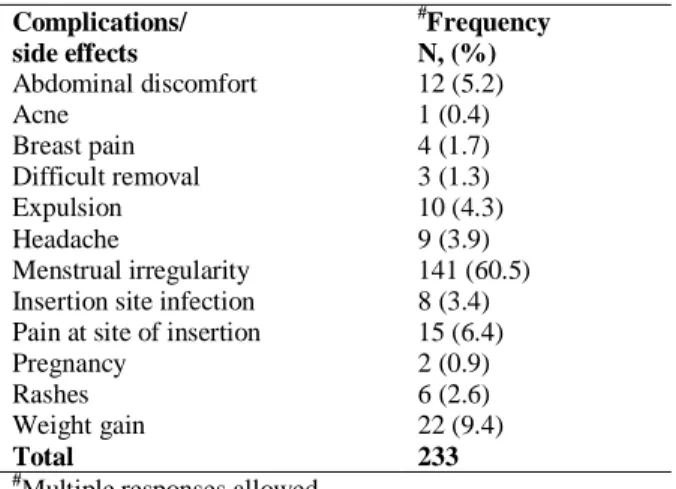
Table 3 shows that the commonest complaints were menstrual problems (60.5%) and menorrhagia was the leading menstrual problem. Two of the women became pregnant while on Jadelle giving a failure rate of 0.39% and Pearl index of (cumulative pregnancy rate) of 0.27 per 100 women-years.
Jadelle discontinuation risks from life tables
and Kaplan Meier plots
Figure 1: Flow chart showing clients‘ choice of Contraceptive Methods at the Family Planning Clinic, College of
Medicine, University of Lagos (CMUL), Nigeria
Table 1: Comparison of the Socio-biological characteristics of the Jadelle acceptors who discontinued Jadelle and those who were censored
Characteristics Participants that were right censored
N=373 (%)
Participants who discontinued Jadelle N= 144 (%)
Total N=517 (%)
P-value
Age (mean±sd) 32.1(± 5.4) 34.8 (±4.9) 32.9 (±5.4) <0.001*#
<20 4 (1.1) 0 (0.0) 4 (0.8) <0.001*
20-24 23 (6.2) 3 (2.1) 26 (5.0)
25-29 88 (23.6) 14 (9.7) 102 (19.7)
30-34 141 (37.8) 53 (36.8) 194 (37.5)
35-39 84 (22.5) 49 (34.0) 133 (25.7)
40-44 27 (7.2) 20 (13.9) 47 (9.1)
45-49 6 (1.6) 5 (3.5) 11 (2.1)
Marital status
Married 382 (97.1) 143(99.3) 505 (97.7) 0.306
Single 10 (2.7) 1 (0.7) 11 (2.1)
Divorced 1 (0.3) 0 (0.0) 1 (0.2)
Religion
Christianity 335 (89.8) 135 (93.8) 470 (90.9) 0.344
Islam 37 (9.9) 9 (6.3) 46 (8.9)
Others 1 (0.3) 0 (0.0) 1(0.2)
Occupation
Professional 43 (11.5) 9 (6.3) 52 (10.1) 0.302
Skilled 216 (57.9) 92 (63.9) 308 (59.6)
Semi-Skilled 26 (7.0) 11 (7.6) 37 (7.2)
Unskilled 88 (23.6) 32 (22.2) 120 (23.2)
Jadelle acceptors (517) (61.8%)
Lost to Follow-up (90)
Continued Jadelle beyond the study
period (283)
Discontinued Jadelle (144)
Family planning clients (837 participants)
IUCD (N=197, 23.5%) Norplant (N=3, 0.36%) Injectable (N=114, 13.6%)
Tribe
Hausa 2 (0.5) 0 (0.0) 2 (0.4) 0.552
Igbo 119 (31.9) 43 (29.9) 162 (31.3)
Yoruba 209 (56.0) 79 (54.9) 288 (55.7)
Others 43 (11.5) 22 (15.3) 65(12.6)
Educational attainment
Primary 24 (6.43) 5 (3.5) 29 (5.6) 0.368
Secondary 85 (22.8) 37 (25.7) 122 (23.6)
Post-secondary 264 (70.8) 102 (70.8) 366 (70.8)
*IQR: Interquartile range; !P-value for Mann-Whitney test; # P-value for student‘s t-test.
Table 2: Comparison of the Contraceptive and reproductive history of women who discontinued Jadelle and others
Characteristics Participants that were right censored N=373 (%)
Participants who discontinued Jadelle N= 144 (%)
Total N=517 (%)
P-value
Parity (Median±IQR) 3(2-4) 3(2-4) 3(2-4) <0.001!
None 15 (4.1) 1 (0.7) 16 (3.1) 0.014*
1-4 315 (85.4) 117 (81.3) 432 (84.2)
5 and above 39 (10.6) 26 (18.1) 65 (12.7)
Desire for more children
Yes 333 (89.3) 126 (87.5) 459 (88.8) 0.566
No 40 (10.7) 18 (12.5) 58 (11.2)
Ever used contraceptive before accepting Jadelle
Yes (IUCD) 19 (5.1) 29 (20.1) 48 (9.3) <0.001*
Yes, (Pills) 16 (4.3) 24 (16.7) 40 (7.7)
Yes, (Norplant) 21 (5.6) 6 (4.2) 27 (5.2)
Yes, (Injectable) 34 (9.1) 58(40.3) 92 (17.8)
Yes, (Barrier/condom) 13 (3.5) 21(14.6) 34 (6.6)
Yes, (Not specified) 234 (62.7) 6 (4.2) 240 (46.4)
No 36 (9.7) 0 (0.0) 36 (7.0)
^
Complaints after Jadelle use
Yes 136(36.5) 64 (44.4) 200 (36.7) <0.001
No 147(39.4) 80(55.6) 227 (43.9)
Missing data 90 (24.1) 0(0.0) 90 (17.4)
$
Specific complaints after Jadelle use
Menstrual irregularity 88(23.6) 51 (35.4) 51 139 (26.9) <0.001
Weight gain 18 (4.8) 4 (2.8) 22 (4.3)
Other complaints 30 (8.0) 9 (7.3) 39 (7.5)
No complaints 147(39.4) 80 (55.6) 227 (43.9)
Missing data 90 (19.8) 0 (0.0) 90 (17.4)
*IQR: Interquartile range;!P-value for Mann-Whitney U test; #P-value for Student‘s t-test ^Analysis of complete data (without the missing data): P-value = 0.479
$
Analysis of complete data (without the missing data): P-value = 0.162
oral contraceptive pills (COCP) (2/32, 6.3%). Data not shown in table. The overall discontinuation rate of Jadelle for the study period was 19 per 100
women-years and the median time to
discontinuation of Jadelle was 35 months (Figure 2). However, the overall 6-month, 1-year, 2-year and 3-year cumulative discontinuation risks of Jadelle were 2.2%, (95% CI: 1.1 - 4.1), 7.1 (95% CI: 5.0-10.2), 27.0% (95% CI: 22.3 - 32.6) and 58.1% (95% CI: 50.5 - 65.8) respectively (Figure
Table 3: Reported side effects/ complications after Jadelle insertion
Complications/ side effects
#
Frequency N, (%)
Abdominal discomfort 12 (5.2)
Acne 1 (0.4)
Breast pain 4 (1.7)
Difficult removal 3 (1.3)
Expulsion 10 (4.3)
Headache 9 (3.9)
Menstrual irregularity 141 (60.5)
Insertion site infection 8 (3.4) Pain at site of insertion 15 (6.4)
Pregnancy 2 (0.9)
Rashes 6 (2.6)
Weight gain 22 (9.4)
Total 233
#
Multiple responses allowed
Table 4: Reasons for discontinuation of Jadelle among the acceptors
Reasons for discontinuation Frequency Percent
Due to complications 74 55.3
Desire for more children 58 43.3
Cultural belief/myth 0 0
Personal fears 1 0.7
Pressure from spouse 1 0.7
Not stated 10 6.9%
Total 144 100
Furthermore, there was a statistically significant difference in pattern of discontinuation based on the previous use of contraception (P-value<0.001) while the pattern of discontinuation did not significantly differ based on the complaints of side effects (P-value =0.2118) Figure 3.
Although Christians appeared to discontinue Jadelle earlier than Muslims but the difference was not statistically significant (P-value = 0.0853) (Figure 4). In addition, women who had tertiary education appeared to have longer duration of continuing Jadelle as compared to others, but the difference did not reach statistical significance (P-value = 0.1494) (Figure 4)
Furthermore, Table 5 shows that teenagers though few had 100% Jadelle continuation rate (or 0.0% discontinuation risk) while women aged 35 -39 years had the highest risk of discontinuation followed by women aged 30 – 34 years.
This pattern was more pronounced from 24th month (P-value = 0.0382). Women who desired to have more children had a higher risk of Jadelle discontinuation especially after 24 months of use. Also, previously contraceptive naïve individuals had a 100% cumulative risk of Jadelle continuation (or 0.0% discontinuation risk) while
those who had previously used other
contraceptives had varying levels of
discontinuation risk (P<0.001). Intention to get pregnant as reason for discontinuation became pronounced after 24 months (60.7% (95% CI: 43.5 - 78.3)) and 36 months (96.4% (95% CI: 84.6 - 99.7)) of Jadelle insertion respectively (Table 5).
Factors
associated
with
Jadelle
discontinuation (Cox regression analysis)
From Table 6, the univariable Cox proportional hazard regression analysis shows that women who were 30 years and older had about two-fold risk of discontinuing Jadelle contraceptive as compared with women younger than 30 years (For 30- 39 HR = 1.94, 95% CI: 1.15-3.28, P-value =0.013). Among clients with previous contraceptive experience, previous COCP users had the highest likelihood of about 2.7 fold hazards of discontinuing Jadelle (HR =2.70, 95% CI: 1.02 - 3.96, P-value = 0.044)
However, on multivariable analysis, only ‗previous contraceptive use‘ had statistically significant association with Jadelle discontinuation (P-value <0.05) in the first multivariable model that included this variable. Of those acceptors who had prior contraceptive experience, COCP, injectable and condom users had between 2 to 3 fold likelihood of discontinuation as compared to previous Norplant implant users (Table 6). But the median time to discontinuation of Jadelle among previous COCP (22 months), injectable (27 months) and condom (29 months) users was still relatively long (Table 5).
Figure 2: Kaplan Meir plot showing the overall cumulative discontinuation risk of Jadelle, by age group, number of children alive and desire for more children
Figure 3: Kaplan Meir plots of the discontinuation risk of Jadelle by previous contraceptive use, and main complaint during Jadelle use
0.
00
0.
25
0.
50
0.
75
1.
00
0 10 20 30 40
Time to discontinuation (Months)
<20 years 20-24 years 25-29 years 30-34 years
35-39 years 40-44 years 45-49 years
P-value< 0.0382
Kaplan-Meier estimates of discontinuation risk of Jadelle by age group
0.
00
0.
25
0.
50
0.
75
1.
00
0 10 20 30 40
Time to discontinuation (Months)
Kaplan-Meier estimate of overall cumualtive discontinuation risk of Jadelle
0
.0
0
0
.2
5
0
.5
0
0
.7
5
1
.0
0
0 10 20 30 40
Time to discontinuation (months)
None 1 -4 children >4 children
P-value = 0.8607
Kaplan-Meier estimates of Jadelle discontinuation risk by no of children alive
0
.0
0
0
.2
5
0
.5
0
0
.7
5
1
.0
0
0 10 20 30 40
Time to discontinuation
Did not intend to have more children Desire more
P-value== 0.2573
Kaplan-Meier estimates of Jadelle discontinuation risk by desire for more children
0
.0
0
0
.2
5
0
.5
0
0
.7
5
1
.0
0
0 10 20 30 40
Time to discontinuation
IUCD Pills Norplant Injectable
Condom yes, but type not specified No previous use
P-value = <0.0001
Kaplan-Meier estimates of discontinuation risk of Jadelle by previous contraceptive use
0
.0
0
0
.2
5
0
.5
0
0
.7
5
1
.0
0
0 10 20 30 40
Time to discontinuation (Months)
Menstrual irregularity Weight gain
Other complaints No complaints
P-value = 0.2118
Figure 4: Kaplan Meir plots of the cumulative discontinuation risk of Jadelle by religious belief and educational attainment
the risk of discontinuing Jadelle increased with age as women older than 39 years had about 2 fold increased risk of discontinuing Jadelle as compared to women younger than 30 years (Table 6). There was no violation of the proportionality assumptions since the global P-value was greater than 0.05. (For model I: P-value = 0.4968, for model II: P-value = 0.5411).
Discussion
This study utilized robust analytic methods to determine the pattern of uptake and predictors of time to discontinuation of Jadelle at a public family planning clinic in Lagos, Nigeria. During the study period, Jadelle was accepted by three out of five family planning clients. The overall discontinuation rate for Jadelle was 19 per 100
women years with a median time to
discontinuation of 35 months. This study showed that menstrual irregularities were the leading side effect experienced among the cohort of Jadelle acceptors, with menorrhagia being the commonest. However, the commonest reason for Jadelle discontinuation was a desire to get pregnant which applied in 40.3% of cases. The main risk factors for Jadelle discontinuation were age of the clients and previous contraceptive history before using Jadelle. On multivariable analysis, only ‗previous
contraceptive use‘ had statistically significant association with Jadelle discontinuation (P-value <0.05) in the first multivariable model that included this variable.
This study found a shift in preference from IUCD to Jadelle at the study centre24. A similar finding of increased uptake of progestogen implants was reported in South Eastern part of Nigeria during similar period as our study12,17. In contrast, the uptake of progestin implants was reported to be relatively low in the South-South17,29 and Northern parts21,29 of Nigeria as well as in most sub-Saharan African countries (SSA), where IUCD and progesterone injectable were more popular10. Provision of incentives and subsidy, availability of the commodity, proper counselling and extended clinical experience of its use were reasons proffered for the reported increased uptake of Jadelle in other parts of Nigeria10,13,21,26,29. The shift from IUCD to hormonal implants by clients who wished to space child birth indicates that the previous suspicion of reduced fecundity that was attributed to hormonal contraceptives may have been eliminated in our environment by education and counselling.
The modal age group in the study population was 30-34 years and majority (82.9%)
were within the age range of 25 and 39 years similar to findings from previous studies in
0
.0
0
0
.2
5
0
.5
0
0
.7
5
1
.0
0
0 10 20 30 40
Time to discontinuation (Months)
Christianity Islam/Others
P-value = 0.0853
Kaplan-Meier estimates of cumulative discontinuation risk of Jadelle by religion
0
.0
0
0
.2
5
0
.5
0
0
.7
5
1
.0
0
0 10 20 30 40
Time to discontinuation (months)
No formal education or Primary school Secondary Tertiary
P-value = 0.1494
Table 5: Cumulative probability (risk) of Jadelle discontinuation (life tables) among acceptors at 6 months, 12 months and 36 months
Characteristics Cumulative risk of discontinuation Jadelle (%, 95% CI)
6 months 12months 24months 36months
Overall 2.2(1.1-4.1) 7.1(5.0- 10.2) 27.0(22.3 – 32.6) 58.1(50.5 65.8)
Age
<20 0.0 0.0 0.0 0.0
20-29 2.0 (0.5- 7.8) 5.5(2.3– 12.7) 22.4 (13.5–35.6) 27.9(16.2– 45.5)
30-39 2.6(1.3– 5.4) 7.5 (4.8- 11.4) 27.7 (21.9– 34.7) 65.6(55.5 – 73.6)
40-49 2.1(0.3-13.9) 8.6(3.3– 21.4) 31.2 (19.3 – 47.8) 58.3 (41.1– 76.5)
Marital status
Married 2.2 (1.2- 4.2) 7.3 (5.1-10.4) 27.2 (22.3 - 32.8) 58.6 (51.0 - 66.4)
Single/ Divorced 0.0 0.0 25.0 (4.0 - 87.2) 25.0 (4.0 - 87.2)
Desire for more children
Yes 0.04 (0.01 -0.13) 0.11(0.05-0.23) 0.33(0.20 -0.51) 0.71 (0.47-0.91)
No 0.02 (0.01 -0.03) 0.06(0.04- 0.10) 0.26 (0.21-0.32) 0.57 (0.49 - 0.65)
Religion
Christianity 2.1(1.1 - 4.1) 7.5(5.2 - 10.8) 27.9 (22.9 - 33.7) 58.9 (51.1 - 66.9)
Islam/ Others 2.7(0.4-17.7) 2.7(0.4 -17.7) 17.0 (6.5 - 40.5) 44.7 (22.5- 74.8)
Occupation
Professional 2.9(0.4-18.6) 12.6 (4.9-30.2) 42.1 (20.6 - 72.7) 71.1 (31.6- 98.2)
Skilled 1.2(0.4-3.6) 6.3 (3.8-10.2) 28.4 (22.4- 35.7) 60.1(50.6 – 69.7)
Semi-Skilled 0.00 (0.00) 3.6 (0.5– 22.8) 14.2 (4.6- 39.5) 80.0(53.0-96.8)
Unskilled 5.1(2.2–11.8) 8.6(4.4-10.4) 23.5 (15.3-35.1) 42.9 (30.3-58.1)
Tribe
Hausa/Others 3.9(1.0-14.5) 8.0 (3.1– 19.9) 24.7(13.8-41.7) 54.3 (36.6-73.8)
Igbo 3.1(1.2-8.0) 8.9 (5.0-15.6) 30.3 (21.8-41.0) 60.2 (46.5-74.2)
Yoruba 1.7(06-4.4) 5.9(3.5-10.0) 25.8 (19.7-33.3) 58.4(48.2 – 69.0)
Educational attainment
Primary 9.1 (2.4-31.7) 14.1 (4.8-37.8) 14.1 (4.8-37.8) 31.3(10.2-73.2)
Secondary 2.9(0.9-8.6) 7.1 (3.4 -14.3) 23.7 (15.6 – 35.1) 50.6(37.1 – 65.8)
Post-secondary 1.4 (0.5-3.6) 6.6(4.2 – 10.3) 29.1 (23.3 – 36.0) 62.7(53.5 – 71.9)
Parity
Nulliparous 0.0 0.0 50.0(9.0-99.4) 50.0(9.0-99.4)
1-4 1.8 (0.8-4.3) 7.0(4.5 – 10.9) 27.1 (21.2 – 34.3) 54.7(45.2 – 64.9)
5 and above 3.0(1.1– 7.7) 7.8(4.4 – 13.9) 26.6 (19.1 – 36.2) 62.9(51.0 – 74.8)
Type of contraceptive used prior to Jadelle
IUCD 2.4 (0.3 – 15.7) 7.3 (2.4 – 20.9) 47.7 (32.5 – 65.6) 70.1 (53.3 – 85.3)
Pills 6.1 (1.6 – 22.1) 25.2(13.5– 44.2) 59.2 (40.9 – 78.3) 79.6 (60.8 – 93.3)
Norplant 0.00 5.9 (0.9 – 35.0) 26.7 (8.8 – 64.6) 70.7 (30.3 – 98.5)
Injectable 7,2 (3.3 – 15.4) 14.6 (8.6 – 24.3) 47.4 (36.8 – 59.3) 83.1 (72.0 – 91.7)
Condom 7.4 (1.9 – 26.5) 12.0 (4.0 – 33.1) 41.0 (23.6 – 64.4) 95.1 (79.8 – 99.7)
Type (Not specified) 0.6 (0.11 – 3.9) 1.2 (0.3 – 4.6) 2.3 (0.7 – 7.2) 9.0 (3.7 – 20.7)
Never used any 0.0 0.0 0.0 0.0
Reasons for discontinuation of Jadelle
Menstrual irregularity 7.1 (1.8 - 25.7) 25.0(12.8 - 45.4) 67.7 (50.7- 83.9) 85.7 (70.5-95.5) Weight gain/abdominal
pain
12.5 (1.9 - 61.3)* 25.0(6.9-68.5)** 75.0(44.2 -96.3)*** 100.0****
Wants to get pregnant 3.6 (0.5 - 22.8)^ 17.9(7.9 - 37.7) 60.7 (43.5-78.3) 96.4 (84.6-99.7)
Other reasons 8.8 (4.3-17.5) 18.8(11.8-29.2) 51.3 (40.9 - 62.6) 87.5 (79.3 - 93.6)
Table 6: Univariate and multivariate Cox proportional hazard regression analysis of the risk factors of discontinuation of Jadelle among acceptors
Characteristics Unadjusted Cox proportional hazard regression analysis
Multivariable Cox proportional hazard regression analysis
HR CI P-value ^AdjHR CI
P-value Age
<30 1.00 Ref Ref 1.00 Ref Ref
30-39 1.94 1.15-3.28 0.013* 1.93 1.13 - 3.29 0.016*
40-49 1.89 1.03 -3.46 0.040* 1.93 1.01- 3.67 0.047*
Parity
Nulliparous 1.00 Ref Ref 1.00 Ref Ref
1-4 1.41 0.21-9.65 0.725 0.82 0.13 - 5.17 0.838
5 and above 1.51 0.22-10.40 0.676 0.83 0.13-5.23 0.832
Desire for more children
No 1.00 Ref Ref 1.00 Ref Ref
Yes 1.32 0.78-2.25 0.300 1.42 0.83 - 2.42 0.203
Complaints with Jadelle use
No complaint 1.00 Ref Ref 1.00 Ref Ref
Menstrual
irregularity 1.41 0.98 - 2.00 0.062 1.41 1.00 -1.99 0.05
Weight gain 0.71 0.26 -1.89 0.488 0.74 0.26 - 2.07 0.567
Other complaint 1.10 0.61-1.96 0.758 0.92 0.45 - 1.87 0.818
Ever used Contraceptives before Jadelle
Norplant 1.00 Ref Ref #1.00 Ref Ref
IUCD 1.52 0.75 -3.10 0.248 1.83 0.90 -3.72 0.093
Pills 2.70 1.31-5.58 0.007* 2.82 1.34 - 5.94 0.007*
Injectable 2.01 1.02-3.96 0.044* 2.07 1.01 - 4.24 0.047*
Condom 2.38 1.20 -4.74 0.014* 2.22 1.08 - 4.57 0.031*
Not specified 0.10 0.04- 0.28 <0.001* 0.10 0.04-0.29 <0.001*
No 1.8e-20 7.8 e-21-4.4e-20 <0.001* 4.8e-17 1.8e-17-1.3e-16 <0.001*
Educational qualification
At least Primary 1.00 Ref Ref
Secondary school
1.81
0.68-4.80 0.231
Tertiary 2.19 0.85-5.64 0.106
Religion
Islam/others 1.00 Ref Ref
Christianity 1.77 0.94-3.34 0.077
Marital status
Single/Divorced 1.00 Ref Ref
Married 2.48 0.35-17.72 0.367
Number of children alive
None 1.00 Ref Ref
1-4 1.70 0.25-11.42 0.586
5 and above 1.66 0.24 -11.46 0.608
Occupation
Unskilled 1.00 Ref Ref
Professional 1.89 0.87-4.13 0.110
Skilled 1.33 0.88 -2.01 0.173
Semi-skilled 1.26 0.73- 2.19 0.408
Tribe
Hausa/Others 1.00 Ref Ref
Ibo 0.97 0.59-1.57 0.889
Yoruba 0.90 0.58-1.38 0.626
#
Nigeria and elsewhere10,12–14,17,19–21,28,29. It is apparent that our family planning clinic was not commonly used by teenagers and young adults possibly due to socio-cultural and other barriers. This suggests that teenagers have unmet contraceptive needs that might increase prevalence of unintended pregnancies and unsafe abortion among them1,8. This calls for strategies to make the family planning clinic to be adolescent and youth friendly12. Nonetheless, Jadelle continuation rate was 100% among the few teenagers in the study. This confirms the position of the American College of Obstetrics and Gynecology (ACOG) that Jadelle and other progestin implants are safe and acceptable among teenagers11. Teunissen et al
also provided evidence that LARC drastically reduced unintended pregnancy and abortion among teenagers14. In our environment where young women are not empowered to negotiate sex because of socio-cultural reasons8, Jadelle would be useful to them since it is independent of coitus and discrete. However, because of the high prevalence of sexually transmitted infections especially HIV in our setting, the double Dutch system incorporating Jadelle and condom should be advocated among young women31.
Cox multivariable analysis showed that the likelihood of discontinuing Jadelle increases with age and the discontinuation risk among women at the end of the reproductive spectrum (40-49 years) was about two folds compared to women younger than 30 years. However, the Kaplan Meier plot showed that women older than 45 years had relatively low chance of early discontinuation until close to the 38th month of use when the risk abruptly increased. Such a pattern may suggest that women of that extreme age used Jadelle to limit family size and/ or discontinue as they approach menopause. The higher likelihood of Jadelle discontinuation of about 1.9 folds among women within the ages of 30 and 39 years as compared to women younger than 30 years may be because the former were eager to have more children.
It was expected that women with very high parity (five or more) would use Jadelle as ‗limiters‘ while those with parities less than five
would use Jadelle as ‗spacers‘. Surprisingly, there was no statistically significant difference in discontinuation pattern among the two groups (Kaplan Meier log rank P-value = 0.8). Both groups behaved like child spacers because less than 10% discontinued after 12 months of use and the median time to discontinuation was about 36 weeks among the two groups. However, each group would have discontinued for different reasons. Lower parity group may discontinue so as to have more children while higher parity (who may be older) may discontinue because of peri-menopausal symptoms. Nonetheless, since this study was for 48 months, the expected difference in discontinuation pattern between the two parity groups may only become apparent with prolonged follow-up. Nulliparous women who accepted Jadelle are likely to be neither spacers nor limiters and may not be married. Thus, discontinuation risk was low among them.
Marital status, religion and educational attainment did not affect the discontinuation risk in this study and the life table analysis still suggests prolonged use of Jadelle. This contrasts with findings from a study in Northern Nigeria where Muslims had a higher risk of discontinuing Jadelle, probably because of its menstrual side effects that may debar them from attending the mosque21. Ironically, another hormonal contraceptive (progesterone injectable) was said to be popular in the Northern part of the country21,29, supposedly because of its association with periods of amenorrhea. This study also had relatively few Muslims. However, adequate motivation and counseling may have played a role in the low discontinuation rate of Jadelle among Muslims in our cohort.
discontinuation rates of most studies from High income countries (40-60%) 13,30.. This study found that one in three women was likely to request for Jadelle removal, two years after insertion and about half may stop after three years of use. This may not be far-fetched since the majority (88%) of our clients had the desire to have more children at baseline and the median parity of the cohort was 3 (which was relatively low in the African context). Also, a considerable proportion (40.3%) of those that discontinued Jadelle did so because they wanted to get pregnant. However, the Kaplan Meier plot and life table showed that the difference in discontinuation risk between those that wanted to have more babies and those that did not was not apparent until after the 24th month of use, when the former group discontinued abruptly. The foregoing suggests that most of the clients used Jadelle to space child-birth.
More than 93% of Jadelle acceptors had previously used other contraceptive methods. They might have switched from other methods to Jadelle, possibly because of side effects or because of the publicity and promotion of Jadelle at its initiation at our centre. Furthermore, the clients are well educated, highly skilled and mostly Christians, attributes that have been previously reported to increase contraceptive prevalence in our environment24,31. Surprisingly, the previous contraceptive naïve Jadelle acceptors had 100% continuation rate during the study. Further study is therefore required on the motivation for the Jadelle continuation rate among the contraceptive naïve clients. However, women who previously used
COCP had an increased likelihood of
discontinuing Jadelle of about 2.8 folds as compared with previous Norplant users. But the life table still showed that the median time to discontinuation of Jadelle among previous COCP users was still relatively long (22 months). Thus, the previous pill users are also child birth spacers and not long term users as 10 out of 24 (41.7%) of them stopped because of their desire to get pregnant and none of them stopped on account of menstrual or abdominal side effects.
This study found that menstrual irregularities were the leading side effect
experienced among our cohort of Jadelle acceptors, with menorrhagia being the commonest. This pattern is similar to findings from previous studies10,12–14,17,19–21,28,29. However, in contrast to previous studies that reported side effects as
playing significant roles in implant
discontinuation14, we found that there was no statistically significant difference in discontinuation risk among those who had complaints and those that did not after multivariable analysis. This may be due to a difference in statistical analysis but may indicate that the clients were better counseled and motivated; and that the side effects were managed to their satisfaction. The failure rate of less than 1% (0.39%, with Pearl index of 0.27 per 100 women-years) over the four year study period. This is within the low range of failure rate of 0-1.1% obtained both in Nigeria and elsewhere13,30, such that the effectiveness of progestin implants is comparable to permanent contraceptive methods30. It is noteworthy that the two clients who became pregnant got pregnant in the first month of Jadelle insertion. This raises the suspicion that they might have been pregnant before the insertion since the effect of Jadelle commences within 12 to 24 hours after insertion 10. Similar experience has also been reported in Jos, North Central Nigeria and elsewhere19. Comprehensive menstrual and sexual history is therefore necessary before Jadelle insertion and if in doubt, a blood β-HCG test may be necessary to rule out pregnancy 19.
Strengths and Limitations
This was an ongoing cohort study of family planning acceptors which utilized survival analysis, life tables and person-year approach to evaluate discontinuation risk of Jadelle contraceptives. Previous studies in Nigeria utilized descriptive statistics without considering the person-years of follow-up in contrast to the more robust survival analysis methods employed in this study10,12,13,17,19–21,28,29. It may therefore be difficult to strictly compare the results with other previous local studies.
generally well educated, skilled professionals and of high socio-economic status and may not be representative of the general population. Medical/obstetric conditions such as HIV, hypertension, sickle cell disease may affect discontinuation rate of Jadelle but were not reviewed in this study. A significant proportion (17.4%) of the clients was lost to follow-up and was right censored. This pattern was also reported at Benin City, Nigeria13. But since the insertion and removal of Jadelle was provider dependent, those lost to follow-up might have continued with Jadelle without any complication to warrant their visiting the clinic13. However, when we compared the baseline characteristics of the right censored participants and those that discontinued there was no difference.
Conclusion
Jadelle is an effective and safe LARC and the uptake increased dramatically at our centre after its initial introduction. The discontinuation risk of Jadelle was minimal in the first 12 months but quadrupled after 24 months and its discontinuation risk increased with increasing age of the client. Although intention to get pregnant and menstrual irregularities were common reasons for discontinuation, menstrual irregularities appear not to play major role in the Jadelle discontinuation pattern after considering all other associated factors. Thus, it appears that most of the acceptors of Jadelle in this study used it to space child-birth. This represents a paradigm shift since there was a previous suspicion of reduced fertility by hormonal contraceptives among child spacers in our environment. Proper counselling, commodity availability, cost reduction and appropriate motivation can improve uptake and continuation of Jadelle in Nigeria. This will support the efforts to protect the reproductive and sexual rights of women and contribute towards achieving the SDG 3 and 5 10,21. A further follow-up study throughout the life span of Jadelle (5 years) would be necessary to provide additional relevant information. In addition, a multi-centre pooled analysis of various family planning centres in Nigeria (currently in process) can further provide
insight into the subject in lieu of a large population study that addresses some of the highlighted limitations.
Acknowledgement
We are grateful to the participating clients for their time.
Conflict of Interests
None
Funding
Dr Gbenga Olorunfemi is funded by the Glaxo Smith Kline (GSK) /DELTAS Africa Initiatives
Grant No. 107754/z/15/z-DELTAS Africa
SACCAB to study for a PhD in Public Health (Biostatistics) at the University of Witwatersrand. The views expressed in this publication are those of the authors and not necessarily those of the funders.
Contribution of Authors
EOO: Research conceptualization, research design, data collection, data acquisition, literature search, writing of draft manuscript.
JAO: Research conceptualization, research design, data collection, data acquisition, critical review of manuscript for intellectual content and structure LI: Research design, Data analysis and manuscript review for intellectual content.
GO: Contributed to research concept and study design. Data analysis and literature search. Manuscript review for intellectual content
AAO: Research conceptualization, research design and manuscript review for intellectual content.
References
3. Elias B and Hailemariam T. Implants Contraceptive Utilization and Factors Associated among Married Women in the Reproductive Age Group (18-49 years) in Southern Ethiopia. J Women s Heal Care [Internet]. 2015;4(7). Available from: http://www.omicsgroup.org/journals/implants- contraceptive-utilization-and-factors-associated- among-married-women-in-the-reproductive-age- group-1849-year-in-southern-ethiopia-2167-0420-1000281.php?aid=63946
4. National Population Commission, ICF. Nigeria Demographic and Health Survey 2013.
5. Alabi OO, Olorunfemi G, and Onile TG. The trend in maternal mortality in an upgraded tertiary facility in North Central Nigeria. Niger J Med. 2012; 21: 282–9.
6. WHO. Trends in Mternal Mortality: 1990-2013. Estimates by WHO,UNICEF, UNFPA, The World Bank and the United Nations Population Division. World Health Organization[Internet]. 2014;56.
Available from:
http://apps.who.int/iris/bitstream/10665/112682/2/9 789241507226_eng.pdf?ua=1
7. Olamijulo JA, Olorunfemi G, Olaleye O, Ogedengbe OK and Giwa-Osagie OF. Trends in maternal mortality at the Lagos University Teaching Hospital, Lagos,
Nigeria. Nig Q J Hosp Med [Internet]. 2012;22: 72–9.
8. Bankole A, Oye-Adeniran BA, Singh S, Adewole IF, Wulf D, and Sedgh G, . Unwanted Pregnancy And Induced Abortion In Nigeria: Causes And Consequences [Internet]. Vol. 32, International Family Planning Perspectives. 2006.
9. Starbird E, Norton M and Marcus R. Investing in Family Planning : Key to Achieving the Sustainable Development Goals. Glob Heal Sci Pract. 2016;4(2):191–210.
10. Jacobstein R and Polis CB. Progestin-only contraception: Injectables and implants. Best Pract Res Clin Obstet Gynaecol [Internet]. Elsevier Ltd; 2014;28(6):795– 806.
11. American Congress of Obstetricians and Gynecologists. Long-Acting Reversible Contraception :Implants and Intrauterine Devices [Internet]. Vol. No. 121, ACOG Practice Bulletins. 2011. Report No.: 121. 12. Okafor II. Uptake of Long-Acting Reversible
Contraceptive Methods in Enugu State University Teaching Hospital. Divers Equal Heal Care. 2016;13:216–20.
13. Aisien AO. Contraception with levonorgestrel subdermal implants (Norplant) in Benin-City, Nigeria: a 12-year review. Afr J Reprod Health 2007;11:90–7. 14. Teunissen AM, Grimm B, Roumen FJME. Continuation
rates of the subdermal contraceptive Implanon® and associated influencing factors. Eur J Contracept Reprod Heal Care. 2014;19:15–21.
15. Raine TR, Foster-rosales A, Upadhyay UD, Boyer CB, Brown BA and Sokoloff A, . One-Year
Contraceptive Continuation and Pregnancy in Adolescent Girls and Women Initiating Hormonal Contraceptives. Obs Gynecol 2011;117:363–71. 16. Maina SW, Osanjo GO, Ndwigah SN and Opanga SA.
Determinants of Discontinuation of Contraceptive Methods among Women at Kenyatta National Hospital , Kenya. African J Pharmacol Ther. 2016; 5:28–34.
17. Igwe NM, Nnamdi EB and Jude AJ. A 5-Year Clinical Evaluation of Subdermal Implants Among Abakaliki Acceptors. J Basic Clin Reprod Sci | 2016;2:1–5.
18. Kalmuss D, Davidson AR, Cushman LF, Heartwell S and Rulin M. Determinants of early implant discontinuation among low-income women. Fam Plann Perspect. 1996; 28(6): 256–60.
19. Mutihir JT and Nyango DD. Indications for removal of etonogestrel implant within two years of use in Jos, Nigeria. East Afr Med J. 2010; 87(11): 2010. 20. Enyindah CE and Kasso T. Jadelle subdermal implants .
Preliminary experience in a teaching hospital in the Niger Delta Region of Nigeria . Niger J Med 2011; 20(2) :270–4.
21. Madugu NH, Abdul MA, Bawa U and Kolawole B. Uptake of Hormonal Implants Contraceptive in Zaria , Northern Nigeria. Open J Obstet Gynecol [Internet]. 2015;5:268–73. Available from: http://www.scirp.org/journal/ojog
http://dx.doi.org/10.4236/ojog.2015.55039 22. Ramstrom KC, Barón AE, Crane LA and Shlay JC.
Predictors of contraceptive discontinuation in a sexually transmitted disease clinic population. Perspect Sex Reprod Health. 34(3):146–522 23. Curtis S, Evens E and Sambisa W. Contraceptive
discontinuation and unintended pregnancy: An imperfect relationship. Int Perspect Sex Reprod Health. 2011;37(2):58–66.
24. Adegbola O and Ogedengbe O. The acceptance rate of intrauterine contraceptive device (IUCD) amongst family planning clinic users in Lagos University Teaching Hospital (LUTH). Nig Q J Hosp Med 2008; 18: 175–80.
25. Aisien AO and Enosolease ME. Safety, efficacy and acceptability of Implanon a single rod implantable contraceptive (etonogestrel) in University of Benin Teaching Hospital. Niger J Clin Pract. 2010;13:331–5.
26. Abasiattai AM, Utuk NM and Inyang-etoh EC.
Subdermal Contraceptive Implants: Profile of Acceptors in a Tertiary Hospital in Southern Nigeria. Int J Gynecol Obstet Neonatal Care. 2014; 1: 9–13.
27. Ozumba B, Chukudebelu W and Snow R. Norplant as a contraceptive device in Enugu, Eastern Nigeria. Adv Contracept. 1998;14(2):109–19.
clinic of University of Nigeria Teaching Hospital (UNTH. Niger J Med. 2011;4:448–50. 29.
29. Muhammad Z and Maimuna DG. Contraceptive trend in a tertiary facility in North Western Nigeria : A 10 ‐
year review. Niger J Basic Clin Sci. 2014; 11(2) :99–103.
30. Bahamondes L. Subdermal implantable contraceptives
versus other forms of reversible contraceptives or other implants as effective methods of preventing pregnancy. Geneva: WHO; 1998.