Australian Journal of Basic and Applied Sciences
ISSN:1991-8178Journal home page: www.ajbasweb.com
Corresponding Author: Mahargyantari Purwani Dewi, Gunadarma University, Psychology Departement, Faculty of Psychology, Box 16424. Depok. Indonesia.
Collace from Neglected Child
1Hendro Prabowo and 2Mahargyantari Purwani Dewi
¹Gunadarma University, Psychology Departement, Faculty of Psychology, Box 16424. Depok. Indonesia ²Gunadarma University, Psychology Departement, Faculty of Psychology, Box 16424. Depok. Indonesia
A R T I C L E I N F O A B S T R A C T Article history:
Received 30 September 2014 Received in revised form 17 November 2014 Accepted 25 November 2014 Available online 6 December 2014
Keywords:
Collace, neglected child
The effect ofsexual abused and neglect are both physical and psychological. This paper describes briefly about the experience of therapy, while the client was adult female who suffered sexual abused and neglected at the childhood. The client voluntarily made four collages after counselling and therapy. All of these collaces are client‟s expression of thought and feeling, and these symbolised suffering and aspiration.
© 2014 AENSI Publisher All rights reserved. To Cite This Article: Hendro Prabowo and Mahargyantari Purwani Dewi., Collace from Neglected Child. Aust. J. Basic & Appl. Sci., 8(23): 78-83, 2014
INTRODUCTION
Collace is an artwork that is made by attaching pieces of material such as paper to flat surface (Merriam-Webster Dictionary, 2014). Meanwhile, art alone is a powerful tool in communication. It is now widely understood that art expression is a way to visually communicate thoughts and feelings that are too painful to put into words. Creative activity has also been used in psychotherapy and counselling not only because it serves another language but also because of its inherent ability to help people explore emotions and beliefs, reduce stress, resolve problem and conflicts (Malchiodi, 2003).
The British Association of Art Therapists (2014) definition of Art Therapy is “... a form of psychotherapy that uses art media as its primary mode of communication. It is practised by qualified, registered Art Therapists who work with children, young people, adults and the elderly. Clients who can use art therapy may have a wide range of diificulties, disabilities or diagnoses. These include, for example emotional, behavioural or mental health problems, learning or physical disabilities, life-liming conditions, brain-injury or neurological conditions and physical illness. Art therapy may be provided for groups, or for individuals, depending on clients‟ needs. It is not a recreational activity or an art lesson, although the sessions can be enjoyable. Clients do not need to have any previous experience or expertise in art.”
On the other hand, the art therapist, like other mental health professionals, needs to be prepared to administer psychological first aid in times of crisis (Kramer, 2000). In other situations, art therapist may be used art therapy as an adjunct to treatment, to enhance verbal therapy through working with the client to increase self-understanding and insight (Malchiodi, 2003). Kramer (2000) argued that an art therapist may become a primary therapist for no better reasons than default; even when many modes of treatment are available, it may be the opinion of a therapeutic team that art therapy is the single therapy of choice and therefore an art therapist may be assigned chief responsibility for a particular patient, individually or in a group; or the art therapist may reasonably serve as the person responsible for guiding and coordinating several different modes of treatment.
assessment and intervention. For this reason alone, helping professionals are increasingly using drawing activities and other expressive art media in therapeutic intervention (Malchiodi, 2003).
The definition of neglect is largely corresponds to that of the latest guidance in Working Together Book
(Department for Children, School and Families, 2010).
“Abuse and neglect are forms of maltreatment of a child. Somebody may abuse or neglect a child by inflicting harm, or by failing to act to prevent harm. Children may be abused in a family or in an institutional or community setting, by those known to them or, more rarely, by a stranger for example, and via the internet. They may be abused by an adult or adults, or another child or children.”
There are three kind of neglect including physical abuse, emotional abuse and sexual abuse.
“Physical abuse may involve hitting, shaking, throwing, poisoning, burning or scalding, drowning, suffocating, or otherwise causing physical harm to a child. Physical harm may also be caused when a parent or carer fabricates the symptoms of, or deliberately induces, illness in a child” (DfCSF, 2010).
“Emotional abuse is the persistent emotional maltreatment of a child such as to cause severe and persistent adverse effects on the child‟s emotional development. It may involve conveying to children that they are worthless or unloved, inadequate, or valued only insofar as they meet the needs of another person. It may include not giving the child opportunities to express their views, deliberately silencing them or „making fun‟ of what they say or how they communicate. It may feature age or developmentally inappropriate expectations being imposed on children. These may include interactions that are beyond the child‟s developmental capability, as well as overprotection and limitation of exploration and learning, or preventing the child participating in normal social interaction. It may involve seeing or hearing the ill-treatment of another. It may involve serious bullying (including cyberbullying), causing children frequently to feel frightened or in danger, or the exploitation or corruption of children. Some level of emotional abuse is involved in all types of maltreatment of a child, though it may occur alone” (DfCSF, 2010).
“Sexual abuse involves forcing or enticing a child or young person to take part in sexual activities, not necessarily involving a high level of violence, whether or not the child is aware of what is happening. The activities may involve physical contact, including assault by penetration (for example, rape or oral sex) or non-penetrative acts such as masturbation, kissing, rubbing and touching outside of clothing. They may also include non-contact activities, such as involving children in looking at, or in the production of, sexual images, watching sexual activities, encouraging children to behave in sexually inappropriate ways, or grooming a child in preparation for abuse (including via the internet). Sexual abuse is not solely perpetrated by adult males. Women can also commit acts of sexual abuse, as can other children” (DfCSF, 2010).
Research evidence and practice wisdom strongly suggest that the most lasting effects of sexual abuse and neglect are reported to be psychological rather than physical, carrying equally if not more serious consequences for the child immediately and later in life (Iwaniec, 2006). In addition, babies and children who are physically and emotionally neglected are at high risk of suffering, among others: gross under stimulation; failure to thrive, which can lead to poor growth, developmental delay and, in an extreme form, death; disturbances in emotional attachment; language delay; conduct disorder; poor educational performance; severe nappy rash and other skin infections; recurrent and persistent minor infections. As they grow older they will feel unloved and unloving, powerless and hopeless, a severe lack of self-esteem, and isolated from peers and adults (The Bridge Consultancy cited in Stevenson, 2007).
This paper describes the experience of therapy, while the client was an adult female who had sexual abused and neglected at the childhood and the therapist was not art therapy but transpersonal therapist who used meditation techniques as the treatment. The client voluntarily made collace after exercised music therapy and meditation.
Description of Therapy:
Brief description of this therapy follows the 5W's and 1H question words. Question what is to identify the event, the therapy. Question who is to identify people who involve in therapy, the therapist and the client. Question where is to identify the place of the therapies were done. Question when is to identify when the therapies were done. Question where is to identify why the client came to the therapist. And, the question how is to identify the method of the therapy.Table 1 briefly describes the therapy based on the 5W's and 1H question words.
Ratu born to mothers who are much older than his father, both parents is also different social classes. This family lived in Manila. When her father got the job to another island, Ratu separated from the mother and lived with her uncle. The decision of her mother made she felt abandonment. When the age of 4-5 years, Ratu suffered sexual abuse by her cousin, and the abuse stopped when she back home at the age of sixth years old. When she was seventh years old, her father was died.
Table 1: Description of Therapy.
Questions Description
What Actually, the therapy here is a transpersonal therapy, especially to make the client‟s unconscious conscious. After two sessions of counselling and two days therapy, client exercised the methods alone at her boarding house. Then,
client voluntarily made four collaces.
Who The therapist was the first author (HP), when he was pursuing a doctoral degree in psychology at a state university in Yogyakarta.
The client was Ratu, female, 39 years, Ph D student, lived in Yogyakarta, and survivor of sexual abuse in childhood. Where Counselling and therapy sessions conducted in the city of Yogyakarta. Counselling is done in clients‟s boarding
house, while therapy is conducted in a private university in Yogyakarta, together with students of the psychology profession program.
When In the year of 2008 – 2009
Why Clients complained about the delays in the completion of his doctoral course in Spain. She chose to stay in Yogyakarta, because the data collection will be and is being done in Indonesia. Previously, the client had consulted
with a therapist in a state hospital in Yogyakarta. Then, the hospital therapist recommended to the therapist (HP). How Counseling:deal with some subpersonalities, particularly as a neeglected.
Therapy:music therapy (with Natura Sound Therapy), guided imagery and music, peaceful place, letting go, and mindfulness.
When Ratu met the therapist, the counselling was dealing with some her subpersonalities particularly as a neglected. Subpersonalities are patterns of thought, feeling, and behaviour, developed in relationship to various environments, that have advanced to the level at which they can operate as distinct, semi-independent entities (Firman & Gila, 2010). Ratu told to the therapist about her self-similar of the neglected. For example, when she wrote undergraduate thesis, she choose a Muslim minority of The Philippine in Manila. Religion in the Philippines around 80% of the country‟s citizens are Roman Catholic Christians. Of the remaining people, 10% are from other Christian denominations and around 5% are Muslim (The Philippines Population 2014). Unconsciously, Ratu prefer to choose neglected people as a reflection of herself. Ratu continued her studies in Europe and received a two degree of master. Two research thesis for a master's degree both were done in Indonesia. The first was about Nahdatul Ulama (NU) during New Order era. Nahdatul Ulama (NU) is a traditionalist Sunni Islam group in Indonesia. The NU is one of the largest independent Islamic organizations in the world (Wikipedia, 2014). Similarly, the NU in the New Order era was seemingly rejected by the Indonesia government. Second, about a small Muslim community in East Timor that lost identity during the formation of new states, Timor Leste in 1999. According to Clarkson (2002), we will notice that subpersonality is like a fractal, self-similar across time and space.
RESULT AND DISCUSSION
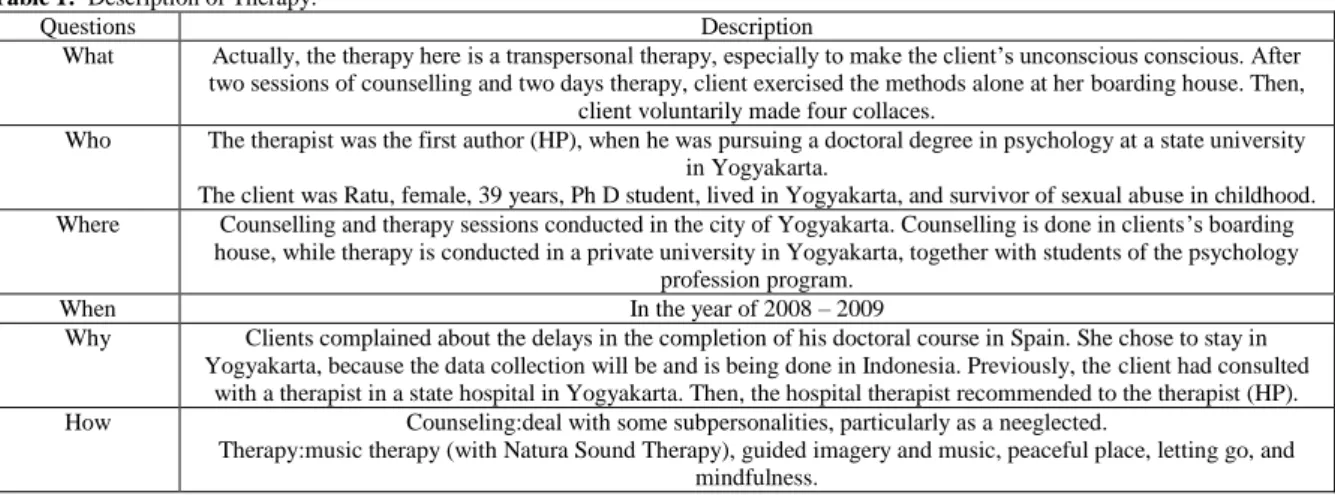
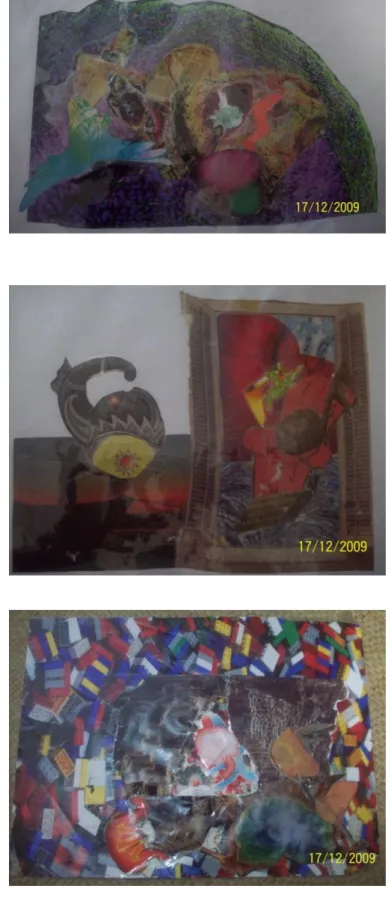
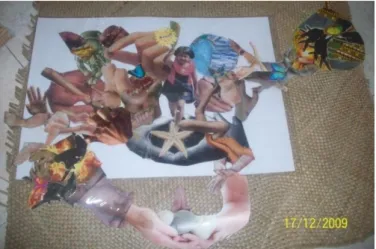
Figure 1-4 shows the four collaces made by the client after therapy, that themeaningswere retold by the client to the therapist.
Figure 1tittled Stoutting Pope was inspire by a Barongsai shape and with dry field as a background. The collage also influence by the work of Frida Kahlo, a Latin American painter. In this collage, there are some object like flying birds means freedom; eye means observed; brain to repair schizophrenic; broken heart and a kind of flower means should close to the earth.
Figure 2 consists of two parts, the right and the left. The right side is a window that is opened so that it can be seen, among others: light means hope; purified heart; turmeric means antiseptic or cleaning; music means grow with singing; chair means comfort zone; stairs with barbed wire means passing life with obstacles. The window itself means to see cleaned heart. On the left there are two objects, namely the image of a child playing in a boat parked means inner journey with rest in mind and Gatotkaca‟s hat with sun face means self-exploration to enlighten. Gatotkaca is a character in the epic Mahabharata, known as the son Bimasena or Werkoedara of family Pandavas.
Figure 3 backgrounded by many toy Lego which means freedom to shape. While the objects among others are: canyon means scary to shape yourself, so we need a bravery; insect trap and hot water (anger) both means not bad at all; and body organ include heart and painful stomach.
Figure 4 is Vuelta or departure. The inspiration of this collace is hand transaction before “Buka
puasa”during Ramadan Fasting at Pasar Gejayan, Yogyakarta. Buka puasa is eaten after sunset during the
appetizers that can be obtained by buying at traditional markets. A variety of snacks offered by merchants and it‟s demanded by the people who run fasting.
Fig. 1: Stoutting Pope.
Fig. 2: No Tittle.
Fig. 3:No Tittle.
Furthermore, more pieces of images on hand, among other things: the hand that illustrates afraid and doubt (hand pressed), sow flowers and balance (hand-worship). At the bottom of collage, there is hands grasp three pieces of stone, which means the burden of life. On the left of hand to grasp the stone, there is a fire means anger and hand wrapped in plastic means pure. In the next stage, some palms describe among others: victim of the game; stop; OK, I am guilt; rivalry with cousin; something was written; choices; comfort zone; and shaping something. There is a butterfly on hand and five butterflies means letting go. At the end of the stage there weresun means enlightenment; yin and yang which means heart, and then heart means leave and celebrate life.
Fig. 4: Vuelta (Spain); means departure.
Conclusion:
Turning operation was performed on Al 6061 by using dry machining cutting condition. The influence of Al 6061, PVD and CVD coated carbide inserts, cutting speed and feed rate on tool wear was investigated. Based on the results obtained, the following conclusions can be drawn:
a. Material adhered when machining using dry condition.
b. Cutting speed was not the influential parameter on the tool wear. The value of tool wear is remaining the same for both cutting speed.
c. The effect of feed rate is the most influential parameter. Higher feed rate produced higher tool wear range. d. The CVD coated carbides tools have shown lower tool wear when compared to PVD coated carbide tools. e. The CVD coated carbide tool has shown the same performance like PVD (HC-K10) in terms of tool wear.
ACKNOWLEDGEMENT
The author is grateful to Nosan Feri and Fiertrika Primadewi for assisting therapy, counselling and mentoring.
REFERENCES
Al6061.AlcoaEngineeringProduct,”Available:http://www.alcoa.com/adip/catalog/pdf/Extruded_Alloy_606 1.pdf. [Accessed: March, 2011]
Cathy A. Malchiodi, 2003. Handbook of art therapy. The Guilford Press: New York.
Clarkson, Petruska, 2002. The transpersonal relationship in psychotherapy: The hidden curriculum of spirituality. Whurr Publishers.
Clarkson, Petruska, 2013. Transactional analysis psychotherapy: An integrated approach. Routledge. Demir, H. and S. Gündüz, 2009. The effects of aging on machinability of 6061 aluminum alloy. Materials and design, 30: 1480-1483.
Departement for Children, School and Families, 2010. Working together to safeguard children: A guide to inter-agency working to safeguard and promote the welfare of children. http:www.education.gov.uk/publications/eorderingdownload/00305-2010dom-en-v3.pdf[Accessed: July, 2014].
Dorota, I., 2006. The emotionally abused and neglected child: identification, assessment and intervention; a practice handbook. John Wiley & Sons.
Edith Kramer, Edited by Lani Alaine Gerity, 2000. Art as therapy collected papers. Jessica Kingsley Publisher : London, Philadelphia. ISBN 1 85302 902 5.
John, F. and A. Gila, 2012. A psychotherapy of love: Psychosynthesis in practice. SUNY Press.
Kamata, Y. and T. Obikawa, 2007. High speed MQL finish-turning of Inconel 718 with different coated tools. Journal of Materials Processing Technology, 192-193: 281-286.
Khan, M.M.A., M.A.H. Mithu and N.R. Dhar, 2009. Effects of minimum quantity lubrication on turning AISI 9310 alloy steel using vegetable oil-based cutting fluid. Journal of Materials Processing Technology, 209: 5573-5583.
Kramer, E., Edited by Lani Alaine Gerity, 2000. Art as therapy collected papers. Jessica Kingsley Publisher: London, Philadelphia. ISBN 1 85302 902 5.
Malchiodi, C.A., 2003. Handbook of art therapy. The Guilford Press: New York.
Merriam-Webster Dictionary www.merriam-webster.com/dictionary/collage[Accessed: July, 2014]. Munz, W.D., 1986. J. Vac. Sci. Technol., A4: 2717.
Nahdlatul Ulama, 2014. ”Available:http://en.wikipedia.org/wiki/Nahdlatul_Ulama[Accessed: July, 2014] Olive Stevenson, 2007. Neglected children and their families. Second edition. Blackwell Publishes: Hongkong.
Petruska, C., 2002. The transpersonal relationship in psychotherapy: The hidden curriculum of spirituality. Whurr Publishers.
Petruska, C., 2013. Transactional analysis psychotherapy: An integrated approach. Routledge.
Ruddy, R. and D. Milnes, 2009. Art therapy for schizophrenia or schizophrenia-like illness (review). The Cochrane collaboration: John Wiley & Sons publishers.
Sreejith, P.S., 2008. Machining of 606I aluminium alloy with MQL, dry and flooded lubricant conditions. Materials Letters, 62: 276-278.
Stevenson, O., 2007. Neglected children and their families. Second edition. Blackwell Publishes: Hongkong The Philippines Population, 2014. http://worldpopulationreview.com/countries/the-philippines-population/ [Accessed: July, 2014].