ARTIGO ORIGINAL
Multidrug-Resistant Tuberculosis by Strains of Beijing
Family, in Patients from Lisbon, Portugal: Preliminary
Report
Tuberculose Multirresistente por Estirpes da Família
Beijing, em Doentes de Lisboa, Portugal: Estudo Preliminar
1. Serviço de Doenças Infecciosas. Hospital de Curry Cabral. Centro Hospitalar de Lisboa Central. Lisboa. Portugal. 2. Serviço de Patologia Clínica. Centro Hospitalar de Lisboa Central. Lisboa. Portugal.
3. Instituto de Saúde Ambiental. Faculdade de Medicina. Universidade de Lisboa. Lisboa. Portugal.
4. Instituto de Investigação do Medicamento (iMed.ULisboa). Faculdade de Farmácia. Universidade de Lisboa. Lisboa. Portugal. 5. Departamento de Microbiologia e Imunologia. Faculdade de Farmácia. Universidade de Lisboa. Lisboa. Portugal.
Autor correspondente: Francisco Antunes. [email protected]
Recebido: 24 de maio de 2016 - Aceite: 28 de outubro de 2016 | Copyright © Ordem dos Médicos 2017
Fernando MALTEZ1, Teresa MARTINS1, Diana PÓVOAS1, João CABO1, Helena PERES2, Francisco ANTUNES3,
João PERDIGÃO4, Isabel PORTUGAL5
Acta Med Port 2017 Mar;30(3):175-184 ▪ https://doi.org/10.20344/amp.7882
RESUMO
Introdução: As estirpes de Mycobacterium tuberculosis da família Beijing estão associadas à multirresistência. As estirpes da família Lisboa prevalecem entre os doentes com tuberculose multirresistente e extensivamente resistente desta região, mas vários estudos documentam a presença da família Beijing, embora desconhecendo-se as características dos doentes donde foram isoladas. Material e Métodos: Estudo retrospectivo de 104 estirpes multirresistentes e extensivamente resistentes de Mycobacterium
tubercu-losis, isoladas e genotipadas, de 1993 a 2015, de igual número de doentes de Lisboa. Avaliámos a prevalência de ambas as famílias
de estirpes e as características epidemiológicas e clínicas, dos infectados por estirpes Beijing.
Resultados: Setenta e quatro estirpes (71,2%) pertenciam à família Lisboa, 25 (24,0%) apresentavam padrão genotípico único e cinco (4,8%) pertenciam à família Beijing, estas identificadas depois de 2009. Os infectados pela estirpe Beijing eram de nacionalidade angolana (n = 1), ucraniana (n = 2) e portuguesa (n = 2), na maioria jovens, quatro em cinco imunocompetentes e sem história de tu-berculose anterior. Todos tinham tutu-berculose multirresistente. Não detectámos apresentações clínicas ou radiológicas diferenciadoras, nem padrão de resistências predominante. A taxa de cura foi alta (quatro doentes).
Discussão: Apesar do número de doentes infectados pela estirpe Beijing ser reduzido, sugere proporção importante de tuberculose primária, potencial de transmissão na comunidade, mas, também, melhor evolução clínica do que a descrita para outras estirpes, como a W-Beijing ou a Lisboa.
Conclusão: Apesar das estirpes da família Lisboa serem as principais responsáveis pelos casos de tuberculose multirresistente e extensivamente resistente na região de Lisboa, as estirpes Beijing transmitem-se na cidade e poderão modificar as características locais da epidemia.
Palavras-chave: Mycobacterium tuberculosis/genética; Portugal; Tuberculose Resistente a Múltiplos Medicamentos; Variação Gené-tica
ABSTRACT
Introduction: Beijing family strains of Mycobacterium tuberculosis are associated with multidrug-resistance. Although strains of the Lisboa family are the most common among multidrug-resistant and extensively drug-resistant patients in the region, several studies have reported the presence of the Beijing family. However, the features of patients from whom they were isolated, are not yet known. Material and Methods: Retrospective study involving 104 multidrug-resistant and extensively drug-resistant strains of Mycobacterium
tuberculosis, from the same number of patients, isolated and genotyped between 1993 and 2015 in Lisbon. We assessed the prevalence
of strains of both families and the epidemiologic and clinical features of those infected with Beijing family strains.
Results: Seventy-four strains (71.2%) belonged to the Lisboa family, 25 (24.0%) showed a unique genotypic pattern and five (4.8%) belonged to the Beijing family, the latter identified after 2009. Those infected with Beijing family strains were angolan (n = 1), ukrainian (n = 2) and portuguese (n = 2), mainly young-aged and, four of five immunocompetent and with no past history of tuberculosis. All had multidrug-resistant tuberculosis. We did not find any distinctive clinical or radiological features, neither a predominant resistance pattern. Cure rate was high (four patients).
Discussion: Although the number of infected patients with Beijing strains was small, it suggests an important proportion of primary tuberculosis, a potential for transmission in the community but also a better clinical outcome when compared to other reported strains, such as W-Beijing and Lisboa.
Conclusion: Although Lisboa family strains account for most of the multidrug and extensively drug-resistant tuberculosis cases in Lisbon area, Beijing strains are transmitted in the city and might change the local characteristics of the epidemics.
Keywords: Genetic Variation; Mycobacterium tuberculosis/genetics; Portugal; Tuberculosis, Multidrug-Resistant
INTRODUCTION
Multidrug-resistant tuberculosis (MDR TB) and exten-sively drug-resistant tuberculosis (XDR TB) represent a
relevant public health concern.1 In total, 9.6 million new
tuberculosis (TB) cases were reported worldwide in 2014,
3.3% of which presented with MDR TB, 20% of previous-ly treated cases and 9.7% of MDR TB patients presented
with XDR TB.2 According with the Portuguese
ARTIGO ORIGINAL a 2.5% prevalence rate of MDR TB was found in Portugal in 2014, considering those cases notified and tested in
Portugal, from which 26% presented with XDR TB, particu-larly concentrated in the Lisbon and Tagus Valley region. Approximately 78% of MDR TB patients (n = 18) affected Portuguese patients and the remaining 22% (n = 5) affected patients from Eastern Europe (n = 1), Western Europe (n =
1), Africa (n = 2) and Asia (n = 1).3
Beijing family has been the most studied strain family of Mycobacterium tuberculosis (M. tuberculosis) worldwide and was first described in 1995, when it was identified
in the Beijing province (China) and in Mongolia,4 later
isolated in different neighbouring countries and currently corresponding to the predominant family in Asia, with a prevalence of 48% in Vietnam, 44% in Thailand, 70% in Hong-Kong and over 50% in many other countries as China
and South Korea.4-8 Ninety per cent of TB patients were
infected by Beijing family strains in a study carried out in a Chinese province, 27% of which were multidrug-resistant (MDR) and, in Japan and in Taiwan, these represented
70% of XDR and 48% of MDR TB cases, respectively.9-11
A high prevalence of Beijing family strains has also been found in Russia, where these were responsible by 48% of
MDR TB cases and by active spread into the community.12-15
Beijing family strains were also found in the USA.16,17
W-Beijing family strains emerged in the nineties in New York and were responsible by major outbreaks in hospitals and in prisons, associated with human immunodeficiency virus (HIV) infection, showing multidrug-resistance, rapidly
spreading and involving a difficult management.16-18 A group
of 267 patients were affected by these micro-organisms in four hospitals in New York and caused over 90% mortality, characterised by specific drug susceptibility testing (DST) pattern and laboratorial abnormalities. The genetic analysis of these strains found a recent transmission in 40% of the patients, contrasting with the concept of reactivation or
the involvement of inadequate treatment.16,19,20 More than
500 patients were described in New York between 1990 and 1995 and strains were transmitted to ten other North-American states, being responsible by more than 25% of
MDR TB patients in the USA.16,21
In Europe, a Swedish study showed that only 13% of MDR strains were from the Beijing family and were mostly isolated in Asian immigrants, even though no transmission has been documented in this country, in Denmark or in Finland (where very low incidence rates were also found), despite the geographic proximity with Russia and the Baltic
countries.22 In Poland, these strains were exclusively found
in 9% of MDR TB patients, suggesting that these have
some responsibility in its community transmission.23 Finally,
a predominance of the Beijing family has been found in France between 2009 and 2010 (75%) among the MDR strains isolated from patients from Central and Eastern Europe and from Asia, including from French patients,
even though with no epidemiological connection between
patients.24
Beijing family strains are therefore spread all over the world and seem associated with multidrug-resistance. In Iran, 15 immunocompetent patients infected with Beijing and Harlem family strains of M. tuberculosis were found in 2009, showing resistance to all second-line anti-TB drugs, having been called as totally drug-resistant tuberculosis
(TDR TB).25An overwhelming worldwide distribution of this
strain family has been found and its intrinsic characteristics and defining environmental or host factors remain unclear. Even though it has been already involved (such as the N strain family) in epidemics of drug-sensitive tuberculosis and in non-resistance associated clusters, an association with resistance to anti-TB drugs and generally inducing more severe forms of TB, higher therapeutic failure and higher number of relapsing cases, when compared to other families, has been found in many regions (Estonia, Germany, South Africa, Cuba) and whether the acquisition of multidrug-resistance is easier or there is more tendency
for transmission remains unclear.12,26-34 In addition, strain
virulence (defined by its ability to cause excessive morbidity and mortality) also remains unclear.
A predominant family, called Lisboa family, due to the presence of a genetically distinct genotype related to the Latin-American-Mediterranean (LAM) genotype, has also been identified in Portugal between 1992 and 1994, based on samples from 124 HIV co-infected and
immunocompetent patients.35 Since then, these strains
have been identified over the years as highly prevalent
in MDR TB and XDR TB patients found in the area.36-39A
2010 study found that more than 50% of XDR TB patients in Lisbon were infected with this strain family and it remains predominant and spreading over more than 20 years, as
found in a more recent study.40,41 At the same time, some
studies have described the identification of Beijing family strains in MDR and XDR TB patients from Lisbon, with prevalence rates below 2.5%, even though no study has up to date characterised the patients infected with this family strain as regards epidemiology, clinical presentation and
progression.42,43
Aims
This study aimed at the identification of the strains of M. tuberculosis isolated and genotyped from MDR and XDR TB patients attending a Lisbon hospital between 1993 and 2015, at the evaluation of Lisboa and Beijing family strains and the epidemiological and clinical characteristics of the latter, particularly as regards DST patterns as well as the outcome in MDR and XDR TB patients living in the Lisbon area.
MATERIAL AND METHODS
ARTIGO ORIGINAL XDR TB patients attending the Department of Infectious
Diseases of the Hospital de Curry Cabral (HCC) in Lisbon between 1 Jan 1993 and 31 Dec 2015 with available
genotypic and phenotypic characterisation of M. tuberculosis
strains isolated by culture. Lisboa and Beijing family strains were identified.
Demographic, epidemiological, clinical, laboratorial, microbiological, therapy and outcome information was obtained from the clinical records of patients infected with Beijing strains. TB was classified into pulmonary and
extra-pulmonary according with the WHO criteria.2 TB diagnosis
was established based on the identification of acid-alcohol fast bacilli (AFB) in direct smear (Ziehl-Neelsen staining)
and by isolation of the M. tuberculosis in culture from at least
one biological specimen. Specimen cultures were obtained using the Lowenstein-Jensen solid medium method until 1995 and, from that year, also using the Bactec 460 TB
(Becton Dickinson Diagnostic Instruments Systems®,
Towson, MD, USA) liquid medium, which has been replaced by the Bactec MGIT 960 (Becton Dickinson Microbiology
Systems®, Sparks, MD, USA) medium in 2010. The strains
of M. tuberculosis were phenotypically characterised as regards their resistance to first-line and second-line anti-TB drugs for MDR strains. Middlebrook 7H11 solid medium was used until 1995, Bactec 460 TB liquid medium between 1995 and 2010 and Bactec MGIT 960 liquid medium has been used from this year onwards for TB drug susceptibility testing, according with the proportion method (1993 to 1994). The following drugs and concentrations were used with the Middlebrook 7H11 solid medium – isoniazid (INH) – 0.2 µg/mL and 0.5 µg/mL, rifampicin (RMP) – 1.0 µg/mL, streptomycin (SM) – 2.0 µg/mL), ethambutol (EMB) – 7.5 µg/mL, ethionamide (ETO) – 10.0 µg/mL, cycloserine (CS) - 50 µg/mL and para-aminosalicylic acid (PAS) - 0.5 µg/mL. INH (0.1 µg/mL), RMP (2 µg/mL), SM (2 µg/mL and 6 µg/ mL), EMB (2.5 µg/mL and 7.5 µg/mL), pyrazinamide (PZA) - 100 µg/ml, capreomycin (CM) – 1.25 µg/mL), amikacin (AM) – 1.0 µg/mL, kanamycin (KM) – 5.0 µg/mL, ofloxacin (OFX) – 2.0 µg/mL, sparfloxacin (SFX) – 0.4 µg/mL, rifabutin (RFB) – 0.5 µg/mL, ETO (1.25 µg/mL), clofazimine (CFZ) – 0.5 µg/mL, PAS (4.0 µg/mL) and ciprofloxacin (CFX) – 0.5 µg/mL and 1.0 µg/mL with Bactec 460 TB liquid medium. INH (0.1 µg/mL), RMP (1.0 µg/mL), SM (1.0 µg/mL), EMB (5 µg/mL), PZA (100 µg/mL), ETO (5.0 µg/mL), OFX (2.0 µg/mL), CM (1.25 µg/mL), AM (1.0 µg/mL), linezolid (LZD) – 1.0 µg/mL and moxifloxacin (MFX) – 0.25 µg/mL were used with Bactec MGIT 960 liquid medium. Multidrug-resistant tuberculosis was defined as the presence of resistance to at least INH and to RMP and XDR TB as multidrug-resistant tuberculosis with the addition of resistance to any fluoroquinolone and to any injectable second-line anti-TB drug (CM, KM and AM). TDR TB was also considered with the presence of in vitro resistance to all first and second-line
anti-TB drugs tested.44Primary resistance or among new
TB cases was defined as the presence of resistance to one or more anti-TB drugs in patients who were not previously
exposed to these drugs.45 Acquired resistance or among
previously treated patients (or secondary resistance) was defined as the presence of resistance to one of more anti-TB drugs, related to inadequate or insufficient therapy due to poor adherence to treatment, poor drug absorption or
wrong prescription.45
Strain typification (molecular identification) was obtained up to 2002 by using the restriction fragment length polymorphism technique, followed by hybridization with
the sequence of insertion 6110 (RFLP-IS6110) and from
2013 onwards by using the mycobacterial interspersed repetitive units-variable number of tandem repeats (MIRU-VNTR) technique and finally, since 2009, also by spacer
oligonucleotide typing (Spoligotyping).46-48
A cluster was defined as the presence of two or more isolates with RFLP-IS6110 patterns and differing by one or two bands or as the presence of two or more isolates with similar MIRU-VNTR profiles. A family was defined as a
group of isolates showing over 90% homology.35
Patients were considered cured when, upon treatment completion (at least 18 or 24 months upon the last
positive culture), symptoms remitted (clinical cure) and M.
tuberculosis was no longer identified in the same specimen as it was previously isolated (microbiological cure). TB-related death was considered when no clinical and / or microbiological cure was found at the moment when it
happened.49
RESULTS
In total, 104 patients with an available MDR or XDR M. tuberculosis genetic strain characterisation, living in the Lisbon area, were included in the study. No more than one genotyping or genotyping from different specimens per patient was available.
Seventy-four (71.2%) out of 104 strains that were isolated from our group of patients were included into two predominant clusters already identified in the nineties as being infected with Lisboa family strains, mainly affecting HIV co-infected patients, drug users and poorly adherent patients to medication for previous TB episodes (with no DST pattern of resistance to anti-TB drugs). In addition, 5 Beijing family strains (4.8%) and 25 different strains (24.0%) that were called as ‘other’ due to the presence of individually unique genotypic patterns were found. Very different polymorphisms were found among strains, with the predominance of Lisboa family strains that were always found in this study between 1993 and 2015, while Beijing family strains were only found from 2009 onwards (Table 1).
Characterisation of the patients infected with Beijing family strains
ARTIGO ORIGINAL
sputum culture from a male, Caucasian, 56-year-old, immunocompetent patient from Angola temporarily living in Lisbon, with a history of anti-TB drug sensitive pulmonary TB (documented in Luanda two years before), poorly adherent to treatment and presenting with MDR pulmonary TB. Symptoms started 60 days earlier and chest XR and CT scan showed a diffuse bilateral nodular interstitial infiltrate involving the entire lung fields, with bilateral cavitations located at the upper zones and the apices. Sensitivity tests to first and second line anti-TB drugs showed resistance to INH, RMP and ETO. This strain was not found in any other biological specimen and the patient was treated according with the drug susceptibility testing (DST) and was cured. As regards patient no. 2, the strain was isolated in
sputum culture from a male, Caucasian, 35-year-old patient from Ukraine, living in Lisbon for 10 years, hepatitis C virus (HCV) / HIV co-infected, injection drug user (IDU), with no previous TB history and no contact with TB patients or with miliary TB patients. TB infection revealed the underlying
immunodeficiency and showed a CD4+ T-lymphocyte
count of 62 cells/µL. Symptoms started 120 days earlier and the patient did not seek medical care. Chest imaging showed a micronodular miliary pattern, with liver and splenic micronodules and also with choroidal tubercles on
fundoscopy. The strain of M. tuberculosis was identified
from pulmonary specimens and DST showed resistance to INH, RMP, EMB, SM, PZA, ETO, KM and AM. Even though treated with anti-TB and antiretroviral drugs, cultures did not negativize and the patient died due to TB 87 days upon therapy was started.
As regards patient no. 3, the strain was isolated from a female, Caucasian, 38-year-old, immunocompetent patient from Ukraine, living in Lisbon for 10 years and with no previous TB history. The patient described a contact with her brother who had died three years before in Ukraine due to MDR TB and who had visited her in Lisbon. Thirty days upon onset of symptoms, the patient was diagnosed with cavitating pulmonary TB, showing alveolar condensation and nodular infiltrate at the upper lobes and apical zone of the right lung. AFB were identified in direct sputum smear microscopy and in culture; DST showed resistance to INH, RMP, EMB, SM, PZA, ETO and AM. Anti-TB drugs were started and the patient showed good adherence to treatment; 29 days later, direct smear was negative and culture was negative two months upon treatment was started and the patient progressed towards the cure. As regards patient no. 4, the strain was isolated from a female, Caucasian, 32-year-old, immunocompetent patient born in Lisbon, where she had always lived and with no previous TB history. Around 60 days upon onset of symptoms, she was diagnosed with cavitating pulmonary TB, showing condensation and nodular infiltrate of the middle and the lower lobe of the right lung. Diagnosis was based on the DST pattern that showed resistance to INH, RMP, EMB, SM and ETO. Upon therapy, cultures were Table 1 – Annual distribution of 104 strains of multidrug-resistant
and extensively drug-resistant M. tuberculosis
Year Lisboa strainsn Beijing strainsn Othern
1993 5 0 1
1994 1 0 0
1995 17 0 4
1996 18 0 4
1997 1 0 0
2000 1 0 0
2001 5 0 0
2003 4 0 1
2004 7 0 3
2005 4 0 1
2006 0 0 1
2007 1 0 1
2009 0 1 1
2010 1 1 2
2011 2 0 3
2012 3 0 0
2013 0 1 2
2014 1 2 1
2015 3 0 0
Total (%) 74 (71.2) 5 (4.8) 25 (24.0)
n: Number of strains or patients
Table 2 – CDemographic and epidemiological characteristics of five MDR TB patients infected with Beijing family strains of M. tuberculosis between 2009 and 2015
Patient Year Age Ethnicity Gender Nationality Residence HIV Previous TB Contact with TB patients
1 2009 56 C M Angola (temporary)Lisbon Neg Yes Unknown
2 2010 35 C M Ukraine (10 years)Lisbon Pos No Unknown
3 2013 38 C F Ukraine (10 years)Lisbon Neg No Yes
4 2014 32 C F Portugal Lisbon Neg No Yes
5 2014 36 C M Portugal Lisbon Neg No Yes
ARTIGO ORIGINAL negative and the patient progressed towards the cure.
As regards patient no. 5, the strain was isolated from a male, Caucasian, 36-year-old, immunocompetent patient living in Lisbon, brother of patient no. 4, with no previous TB history, with a negative tuberculin skin test obtained three months earlier. Twenty one days upon onset of symptoms, the patient was diagnosed with cavitating pulmonary TB, showing a nodular infiltrate and condensation affecting the upper lobes and apices of both lungs. This strain of M. tuberculosis showed an overlapping DST with her sister’s. Upon therapy, microscopy was negative at D28 and culture at two months and the patient progressed towards the cure. The five Beijing family strains found in this study regarded one patient from Angola, two patients from Ukraine and two Portuguese patients, all living in Lisbon and aged 32-38, except patient no. 1 (Table 2). Patient no. 1 had been previously diagnosed in Angola with drug-sensitive TB, had been poorly adherent to treatment and therefore suggesting the presence of a sequential resistance accumulation, i.e. acquired MDR TB and strain importation to Portugal. Both patients from Ukraine, living in Lisbon for 10 years, with no previous TB history, suggested the presence of primary MDR TB. AS regards HIV co-infected patient no. 2, no contacts were known with other TB patients and the
reactivation of the strain of M. tuberculosis from Ukraine
could not be ruled out; the fact that MDR TB emerged at an advanced stage of immunosuppression may suggest the presence of a recent transmission. On the contrary, a recent contact had been described by patient no.3 with her brother who had died in Ukraine from MDR TB and who may have introduced a Beijing family strain in Lisbon. As regards patient no. 4 and 5, these were siblings living at the same house, with no previous TB history and who had not travelled abroad, who were infected with two strains with an overlapping resistance phenotype, also suggesting the presence of primary MDR TB and a recent transmission. In fact, patient no. 5 had a negative tuberculin skin test three months before diagnosis.
Apart from those described, no other epidemiological connections were found between these five patients. Clinical manifestations and imaging were in line with the conventional TB clinical presentation and no particular detail had been found; the TB dissemination or the absence of pulmonary cavitation in HIV/HCV co-infected patient (patient no. 2) were not surprising. Apart from this patient, who presented with miliary TB, all the remaining were immunocompetent patients and presented with cavitating pulmonary TB and no extra-pulmonary involvement (Table 3) and all sought medical attention at an earlier stage (HIV co-infected patient only sought medical attention upon onset of symptoms).
Direct sputum smear microscopy was positive in the first specimen tested in immunocompetent patients, allowing for a DST and immediate treatment for MDR TB. Diagnosis was
Table 3
– Clinical and imaging characteristics of five MDR
TB patients infected with Beijing family strains of M. tuberculosis between 2009 and 2015
Patient Onset of symptoms (days) Fever Cough Sputum Haemoptysis Thoracic pain Night sweats Other
Chest XR / CT (infiltrate) Extra-pulmonary involvement
1 60 No Ye s Purulent No Ye s No Anorexia Bilateral, nodular , with cavitation No 2 120 Ye s No No No No Ye s
Asthenia, anorexia and weight loss
Miliary Ye s 3 30 Ye s Ye s No No No No
Asthenia and anorexia
Unilateral, nodular
,
with condensation and
cavitation No 4 60 Ye s Ye s Haemoptoic No Ye s Ye s Asthenia Unilateral, nodular ,
with condensation and
cavitation No 5 21 Ye s Ye s No No No No
Asthenia and weight loss
Bilateral, nodular
, with
condensation and
cavitation
No
XR: Chest X-ray; CT
ARTIGO ORIGINAL only obtained at an advanced stage of the disease in patient no. 2, showing a CD4+ T-lymphocyte count of 62 cells/µL and repeated direct sputum smear was only positive 12 days upon admission, leading to a late start therapy for MDR TB. Multidrug-resistance was confirmed by culture in the five patients and no XDR or TDR TB was found (Table 4). In immunocompetent patients, the identification of bacilli in direct microscopy or isolated in culture exclusively occurred in sputum, even though other biological specimens were tested. DST patterns found in specimens of the five patients were different from patient to patient, except regarding patient no. 4 and 5. All immunocompetent patients were cured.
DISCUSSION
Lisboa family strains of M. tuberculosis were mostly
found in MDR and XDR TB patients living in the Lisbon area
(71.2% of 104 strains), in line with other studies.36,40,41 Only
4.8 % (n = 5) Beijing family strains were found from 2009 onwards. Even though the evaluation of the prevalence of this strain family in MDR and XDR TB patients living in the Lisbon area was not the primary aim of the study, its relevance in the epidemics is in fact higher, considering the identification of these strains in this region since 1999 and
the prevalence rates already found in other studies41-43 as
well as considering the fact that spoligotyping technique has been regularly used from 2009 onwards. This method was for the first time introduced in 1997 and, even though it has a lower discrimination ability when compared to RFLP-IS6110 and MIRU-VNTR typing, it is particularly useful for the identification of Beijing, LAM, Harlem, CAS
strain families as well as other strains and lineages of M.
tuberculosis and has emerged as a quick, sensitive and cost-effective alternative method that can be directly used
on the specimen, with no culture.48,50
The epidemiological and clinical characterisation of our group of patients (a small group of patients infected with Beijing family strains) showed that these strains were mainly
found in young immunocompetent patients with no previous TB history, no comorbidities, suggesting the presence of primary TB and acquired from recent transmission. A study carried out in Vietnam showed that 71% of the patients infected by Beijing family strains (54 out of 76) were aged under 25, leading to the conclusion that transmission had
been recent.7 Other studies involving a more significant
number of patients have found that strains from this family had some prominence in the active transmission into the
community and in primary TB.10,11,15,23 In addition, what
may have happened with these strains in the Lisbon area remains unclear, namely over the first years of MDR TB epidemics, in which HIV co-infected patients, IDUs, patients with MDR TB secondary to poor adherence to treatment
and Lisboa family strains were predominant.36,38
No clinical manifestations or radiological signs related to Beijing family strains were found regarding any of the five patients in this study, in immunocompetent patients as in the HIV co-infected patient, all with pulmonary TB; however, the frequent presence of cavitation should be mentioned. Other studies involving larger samples also did not show any relation between the infection with Beijing family strains and any specific clinical manifestation or radiological abnormality, including the presence of cavitation; a febrile
response to treatment was the only association found.51,52
All the patients presented with pulmonary TB and bacilli were only found in direct microscopy and in culture using specimens collected from the respiratory tree (negative in gastric juice, urine and blood in immunocompetent patients and also in cerebrospinal fluid in the HIV co-infected patient). A concomitant extra-pulmonary involvement was only found in the HIV co-infected patient, enabled by immunosuppression. Extra-pulmonary TB usually occurs in 10-42% of TB patients, depending on patient’s ethnicity, presence or absence of any underlying disease as well as on patient’s immune status, but also on the genotype of M. tuberculosis strain.53 The association of Beijing family strains with a small number of cases of extra-pulmonary TB
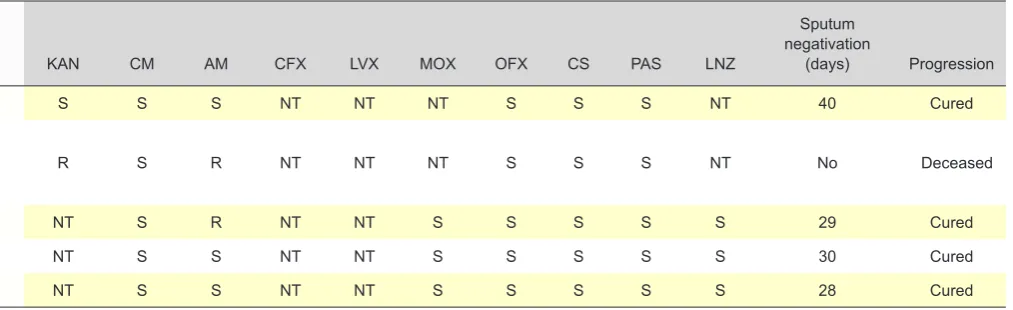
Table 4 – Diagnosis, DST patterns and clinical progression of five MDR TB patients infected with Beijing family strains of M. tuberculosis, between 2009 and 2015
Patient Diagnosis(days) Specimen DST pattern INH RMP EMB SM PZA ETO KAN CM AM CFX LVX MOX OFX CS PAS LNZ
Sputum negativation
(days) Progression
1 1 Sputum MDR R R S S S R S S S NT NT NT S S S NT 40 Cured
2 12 secretions and BALSputum, bronchial MDR R R R R R R R S R NT NT NT S S S NT No Deceased
3 1 Sputum MDR R R R R R R NT S R NT NT S S S S S 29 Cured
4 1 Sputum MDR R R R R S R NT S S NT NT S S S S S 30 Cured
5 1 Sputum MDR R R R R S R NT S S NT NT S S S S S 28 Cured
ARTIGO ORIGINAL cannot be established from our small group of patients as
well as whether this stems from any intrinsic factors and from lower bacterial aggressivity or from the fact that it mostly affect immunocompetent patients.
The pattern of resistance was different in patients infected by Beijing family strains and none of the patients presented with XDR or TDR TB. As described in other studies, no correlation may be established between genetic
patterns and drug resistance phenotypes,as these may vary
depending on the isolation timing and the DST technique, even though we did not find any predominant pattern, which does not allow for the determination of whether these strains have been accumulating resistances or have been spreading into the community, due to the dimension of our
sample.36,38
Some studies showed that Beijing family strains, when compared to others, are usually associated with more severe lung abnormalities, with pneumonia and death and also with
a weaker immune response.54 A more recent study showed
that Beijing family strains were a risk factor for therapeutic failure and relapse, regardless of the identification of drug
resistance.55 Different studies have also shown that these
strains are associated with the induction of more severe forms of TB and with more therapeutic failures, when compared
to other strain families.12,29,56On the contrary, a higher cure
rate has been found in this study (four out of five patients). All immunocompetent patients were cured, even though an early diagnosis may have contributed to the outcome, due to the subsequent availability of molecular drug resistance testing, allowing for more timely treatment. Upon therapy was started, not only high rates of cure were obtained as also direct sputum microscopy quickly became negative, patients remained smear-positive for a short time and the risk of transmission was prevented. The only deceased patient, HIV co-infected and presenting with an advanced-stage disease, only sought medical attention 120 days upon onset of symptoms. When confirmed by studying a larger number of patients, cure rates will certainly improve, even
above those found in other regions of the world involving other MDR strains of M. tuberculosis in the eighties and in the nineties, which were characterised by high mortality and quick progression, such as W-Beijing family strains in the
USA or Lisboa family strains in Portugal.16,17,21,37,38,57
Prevalence rates of 44.7, 27.9, 12.5 and 8.9% have been found with Beijing family strains in Asia, Europe, Africa and in America, respectively and 81.6% of the strains were associated with resistance (with higher rates in China and
in Russia).4,5,58
Molecular genotyping methods have an important role in understanding transmission pathways and worldwide
distribution of MDR and XDR TBand allow for the conclusion
that there is a strong association between patient’s country
of origin and MDR family isolates.24 Patient no.1 was infected
by a Beijing family strain found in a patient from Angola that was imported from this country. The second and the third strain affected patients from Ukraine and may have been imported or may have been recently transmitted in Lisbon, while the remaining two strains affected Portuguese patients and were acquired from a transmission in Lisbon. The fact that most were immunocompetent, young patients, with no previous TB history, with no risk factors (alcohol addiction or homeless patients, for instance) and no comorbidities may suggest a high level of potential transmission of these strains into the community.
In addition, even though there is no evidence of any widespread transmission of Beijing family strains in Portugal (shown by epidemiological or genotypic studies), these patients show that strains from other geographical regions regularly or irregularly invaded the Portuguese territory and may spread and become prevalent and even aggravate TB clinical progression and outcome in Portugal, which shows some epidemiological instability. It should be reminded that Lisbon is a reference for the immigration of patients from regions where MDR TB and Beijing family strains are highly prevalent, such as Sub-saharan Africa or Eastern Europe.
Table 4 – Diagnosis, DST patterns and clinical progression of five MDR TB patients infected with Beijing family strains of M. tuberculosis, between 2009 and 2015
Patient Diagnosis(days) Specimen DST pattern INH RMP EMB SM PZA ETO KAN CM AM CFX LVX MOX OFX CS PAS LNZ
Sputum negativation
(days) Progression
1 1 Sputum MDR R R S S S R S S S NT NT NT S S S NT 40 Cured
2 12 secretions and BALSputum, bronchial MDR R R R R R R R S R NT NT NT S S S NT No Deceased
3 1 Sputum MDR R R R R R R NT S R NT NT S S S S S 29 Cured
4 1 Sputum MDR R R R R S R NT S S NT NT S S S S S 30 Cured
5 1 Sputum MDR R R R R S R NT S S NT NT S S S S S 28 Cured
ARTIGO ORIGINAL CONCLUSION Lisboa family strains are the main responsible by MDR
and XDR TB epidemics occurring in Lisbon at least since 1993. This family strains were highly prevalent in our group of patients (71.2% of genotyped strains) and, according with other studies, prevalence rates of 47-61 and 55-76% were found among MDR and XDR TB patients living in Lisbon,
respectively.59
Beijing family strains only corresponded to 4.8% of the strains found in the study (five patients, 2009 to 2015), showing a periodical introduction of strains imported from other geographical regions into the Lisbon area. Even though currently with lower epidemiological relevance, these strains spread into the community and may aggravate or impair the control of the epidemics or even become predominant. There is an evidence of their transmission into the community, even though we still may not determine that resistances have been accumulating. Beijing family strains already represented 11% of all the isolates tested worldwide in 2002 and, considering their association with MDR, its prevalence in certain regions of the world and globalisation, they may become a serious concern for TB
control in Portugal, if uncontrolled.60
The small number of Beijing family strains identified is the greater limitation to this study, making its epidemiological and clinical characterisation more difficult. Even so, the results suggest the presence of particular characteristics that contrast with the rate of therapeutic failure described with these and other strains in other regions and that may correspond to different virulence, namely with lower bacterial aggressivity, lower mortality, better cure rates and better outcome when compared to W-Beijing family or Lisboa family strains.
This is the first study aimed at the evaluation of patients living in Lisbon and infected with MDR Beijing family strains of M. tuberculosis. Molecular research should be extended,
in conjunction with epidemiology and clinical research, in order to improve the detection and control ability of transmission pathways of this family strains and to optimize sensitivity and early diagnosis, as a contribution for outcome improvement.
ACKNOWLEDGMENTS
The authors wish to acknowledge all the healthcare professionals working at the Clinical Pathology and
Radiology Departments at the Hospital de Curry
Cabral-CHLC, at the Laboratório de Micobactérias of the Instituto Nacional de Saúde Dr. Ricardo Jorge and at the Centro de Patogénese Molecular (Unidade dos Retrovírus e Infecções Associadas) of the Faculdade de Farmácia at the University of Lisbon, for their contribution to diagnosis which has made this study possible.
HUMAN AND ANIMAL PROTECTION
The authors declare that the followed procedures were according to regulations established by the Ethics and Clinical Research Committee and according to the Helsinki Declaration of the World Medical Association.
DATA CONFIDENTIALITY
The authors declare that they have followed the protocols of their work centre on the publication of patient
data.
CONFLICTS OF INTEREST
The authors declare that there were no conflicts of interest in writing this manuscript.
FINANCIAL SUPPORT
The authors declare that there was no financial support in writing this manuscript.
REFERENCES
1. Gandhi NR, Nunn P, Dheda K, Schaaf HS, Zignol M, van Soolingen D, et al. Multidrug-resistant and extensively drug-resistant tuberculosis: a threat to global control of tuberculosis. Lancet. 2010;375:1830-43. 2. World Health Organization. Global tuberculosis report 2015. Geneva:
WHO; 2015.
3. Direcção-Geral da Saúde. Programa Nacional para a Infecção VIH/ SIDA. Portugal, Infecção VIH, SIDA e Tuberculose em números-2015. Lisboa: DGS; 2015.
4. van Soolingen D, Qian L, de Haas PE. Predominance of a single genotype of Mycobacterium tuberculosis in countries of east Asia. J Clin Microbiol. 1995;33:3234-8.
5. Glynn JR, Whiteley J, Bifani PJ, Kremer K, van Soolingen D. Worldwide
ocurrence of Beijing/W strains of Mycobacterium tuberculosis: a
systematic review. Emerg Infect Dis. 2002;8:843-9.
6. Anh DD, Borgdorff MW, Van LN, Lan NT, van Gorkom T, Kremer K, et
al. Mycobacterium tuberculosis Beijing genotype emerging in Vietnam.
Emerg Infect Dis. 2000;6:302-5.
7. Prodinger WM, Bunyaratvej P, Prachaktam R, Pavlic M. Mycobacterium
tuberculosis isolates of Beijing genotype in Thailand. Emerg Infect Dis.
2001;7:483-4
8. Chan MY, Borgdorff M, Yip CW, de Haas PEW, Wong WS, Kam KM, et al. Seventy percent of the Mycobacterium tuberculosis isolates in
Hong-Kong represent the Beijing genotype. Epidemiol Infect. 2001;127:169-71.
9. Wang J, Liu Y, Zhang CL, Ji BY, Zhang LZ, Shao YZ, et al.Genotypes and
characteristics of clustering and drug susceptibility of Mycobacterium
tuberculosis isolates collected in Heilongjiang Province, China. J Clin
Microbiol. 2011;49:1354-62.
10. Murase Y, Maeda S, Yamada H, Okhado A, Chikamatsu K, Mizuno K, et al. Clonal expansion of multiresistant and extensively drug-resistant tuberculosis, Japan. Emerg Infect Dis. 2010;16:948-54. 11. Hsu AH, Lin CB, Lee YS, Chiang CY, Chen LK, Tsai YS, et al Molecular
epidemiology of multidrug-resistant Mycobacterium tuberculosis in
Eastern Taiwan. Int J Tuberc Lung Dis. 2010;14:924-6.
12. Toungoussa OS, Sandven P, Mariandsyshev AO, Nizovtseva NI,
Bjune G, Caugant DA. Spread of the drug-resistant Mycobacterium
tuberculosis strains of the Beijing genotype in the Archangel Oblast,
Russia. J Clin Microbiol. 2002;40:1930-7.
13. Toungoussova O, Mariandyshev A, Bjune G, Sandven P, Caugant
D. Molecular epidemiology and drug resistance of Mycobacterium
tuberculosis isolates in the Archangel Prison in Russia: predominance
of the W-Beijing clone family. Clin Infect Dis. 2003;37:665-72. 14. Drobniewski F, Balabanova Y, Nikolayevsky V, Ruddy M, Kuznetzov
ARTIGO ORIGINAL
dominance of the Beijing strain family in Russia. JAMA. 2005;293:2726-31.
15. Afanas’ev MV, Ikryannikova LN, Il’ina EN, Kuz’min AV, Larionova EE, Smirnova TG, et al. Molecular typing of Mycobacterium tuberculosis
circulated in Moscow, Russian Federation. Eur J Clin Microbiol Infect Dis. 2011;30:181-91.
16. Bifani PJ, Plikaytis BB, Kapur V, Stockbauer K, Pan X, Lutfey ML, et al. Origin and interstate spread of a New York City multidrug-resistant
Mycobacterium tuberculosis clone family. JAMA. 1996;275:452-7.
17. Hewlett D Jr, Franchini D, Horn D, Alfalla C, Yap R, Di Pietro D, et al. Outbreak of multidrug-resistant tuberculosis at a hospital - New York City, 1991. Morb Mortal Wkly Rep. 1993;42:427-33.
18. Frieden TR, Sterling T, Pablos-Mendez A, Kilburn JO, Cauthen GM, Dooley SW. The emergence of drug-resistant tuberculosis in New York City. N Engl J Med. 1993;328:521-6.
19. Alland D, Kalkut GE, Moss AR, McAdam RA, Hahn JA, Bosworth W, et al. Transmission of tuberculosis in New York City: an analysis by DNA fingerprinting and conventional epidemiological methods. N Engl J Med. 1994;330:1710-6.
20. Bifani P, Mathema B, Liu Z, Moghazeh SL, Shopsin B, Tempalski B, et al. Identification of a W variant outbreak of Mycobacterium tuberculosis
via population-based molecular epidemiology. JAMA. 1999;282:2321-7. 21. Agerton TB, Valway SE, Blinkhorn RJ, Shilkret KL, Reves R, Schluter
WW, et al. Spread of strain W, a highly drug-resistant strain of
Mycobacterium tuberculosis, across the United States. Clin Infect Dis.
1999;29:85-92.
22. Ghebremichael S, Groenheit R, Pennhag A, Koivula T, Andersson
E, Bruchfeld J, et al. Drug resistant Mycobacterium tuberculosis
of the Beijing genotype does not spread in Sweden. PLoS ONE. 2010;5:e10893.
23. Jagielski T, Augstynowicz-Kopec E, Zozio T, Rastogi N, Zwolska Z. Spoligotype-based comparative population structure analysis
of multidrug-resistant and isoniazid-monoresistant Mycobacterium
tuberculosis complex clinical isolates in Poland. J Clin Microbiol.
2010;48:3899-909.
24. Sougakoff W. Molecular epidemiology of multidrug-resistant strains of
Mycobacterium tuberculosis. Clin Microbiol Infect. 2011;17:800-5.
25. Velayati AA, Masjedi MR, Farnia P, Tabarsi P, Ghanavi J, Ziazarifi AH, et al. Emergence of new forms of totally drug-resistant tuberculosis bacilli: super extensively drug-resistant tuberculosis or totally drug-resistant strains in Iran. Chest. 2009;136:420-5.
26. Milan SJ, Hauge KA, Kurepina NE, Lofy KH, Goldberg SV, Narita M, et al. Expanded geographical distribution of the N family of Mycobacterium
tuberculosis strains within the United States. J Clin Microbiol.
2004;42:1064-8.
27. Caminero JA, Pena MJ, Campos-Herrero MI, Rodriguez JC, Garcia I, Cabrera P, et al. Epidemiological evidence of the spread of a
Mycobacterium tuberculosis strain of the Beijing genotype on Gran
Canaria island. Am J Respir Crit Care Med. 2001;164:1165-70. 28. Douglas JT, Qian L, Montoya JC, Musser JM, Van Embden JD,
Van Soolingen D, et al. Characterization of the Manila family of
Mycobacterium tuberculosis. J Clin Microbiol. 2003;41:2713-6.
29. Krüüner A, Hoffner SE, Sillastu H, Danilovits M, Levina K, Svenson SB, et al. Spread of drug-resistant pulmonary tuberculosis in Estonia. J Clin Microbiol. 2001;39:3339-45.
30. Niemann S, Rusch-Gerdes S, Richter E. IS6110 fingerprinting of
drug-resistant Mycobacterium tuberculosis strains isolated in Germany during 1995. J Clin Microbiol. 1997;35:3015-20.
31. Streicher EM, Warren RM, Kewley C, Simpson J, Rastogi N, Sola C, et al. Genotypic and phenotypic characterisation of drug-resistant
Mycobacterium tuberculosis isolates from rural districts of the Western
Cape province of South Africa. J Clin Microbiol. 2004;42:891-4. 32. Diaz R, Kremer K, de Haas PE, Gomez RI, Marrero A, Valdivia JA, et
al. Molecular epidemiology of tuberculosis in Cuba outside of Havana, July 1994 – June 1995: utility of spoligotyping versus IS6110 restriction fragment length polymorphism. Int J Tuberc Lung Dis. 1998;2:743-50. 33. Velayati AA, Farnia P, Mirsaeidi M, Reza Masjedi M. The most prevalent
Mycobacterium tuberculosis superfamilies among Iranian and Afghan
TB cases. Scand J Infect Dis. 2006;38:463-8.
34. Pfyffer GE, Strassle A, van Gorkum T, Portaels F, Rigouts L, Mathieu C, et al. Multidrug-resistant tuberculosis in prison inmates, Azerbaijan. Emerg Infect Dis. 2001;7:855-61.
35. Portugal I. Epidemiologia molecular de estirpes de Mycobacterium
tuberculosis isoladas em Lisboa: descrição preliminar de um genotipo
único em Portugal. Rev Port Pneumol. 1996;2:393-401.
36. Portugal I, Brum L, Viveiros M, Moniz Pereira J, David H. Tipificação
genética de estirpes multirresistentes de Mycobacterium tuberculosis
isoladas na região de Lisboa. RPDI. 1998;21:54-9.
37. Hannan M, Peres H, Maltez F, Hayard AC, Machado J, Morgado R, et al. Investigation and control of a large outbreak of multi-drug resistant tuberculosis at a central Lisbon Hospital. J Hosp Infect. 2001;47:91-7. 38. Portugal I, Covas MJ, Brum L, Viveiros M, Ferrinho P, Moniz-Pereira J, et
al. Outbreak of multiple drug-resistant tuberculosis in Lisbon: detection by restriction fragment length polymorphism analysis. Int J Tuberc Lung Dis. 1999;3:207-13.
39. Portugal I, Maia S, Moniz-Pereira J. Discrimination of multidrug-resistant
Mycobacterium tuberculosis IS6110 fingerprinting subclusters by rpoB
gene mutation analysis. J Clin Microbiol. 1999;37:3022-4.
40. Perdigão J, Macedo R, Malaquias A, Ferreira A, Brum L, Portugal
I. Genetic analysis of extensively drug-resistant Mycobacterium
tuberculosis strains in Lisbon, Portugal. J Antimicrob Chemother.
2010;65:224-7.
41. Perdigão J, Silva H, Machado D, Macedo R, Maltez F, Silva C, et al.
Unraveling Mycobacterium tuberculosis genomic diversity and evolution
in Lisbon, Portugal, a highly drug resistant setting. BMC Genomics. 2014;15:991.
42. David S, Portugal C, Antunes A, Cardoso A, Calado A, Barros V, et al. Identificação molecular pelo método de Spoligotyping de estirpes do
complexo Mycobacterium tuberculosis isoladas no Hospital Fernando
Fonseca. Rev Port Pneumol. 2004;X:193-204.
43. David S, Barros V, Portugal C, Antunes A, Cardoso A, Calado A, et
al. Novos dados sobre os Spoligotypes de estirpes do complexo
Mycobacterium tuberculosis isoladas no Hospital Fernando Fonseca
(Amadora-Sintra, Portugal). Rev Port Pneumol. 2005;XI:513-31. 44. Parida SK, Axelsson-Robertson R, Rao MV, Singh N, Master I, Lutckii
A, et al. Tottaly-drug resistant tuberculosis and adjunct therapies. J Int Med. 2015;277:388-405.
45. Dye C, Scheele S, Dolin P, Pathania V, Raviglione MC. Consensus statement. Global burden of tuberculosis: estimated incidence, prevalence, and mortality by country. WHO Global Surveillance and Monitoring Project. JAMA. 1999;282:677-86.
46. Van Soolingen D, Hermans PW, de Haas PE, Soll DR, van Embden
JD. Occurrence and stability of insertion sequences in Mycobacterium
tuberculosiscomplex strains: evaluation of an insertion
sequence-dependent DNA polymorphism as a tool in the epidemiology of tuberculosis. J Clin Microbiol. 1991;29:2578-86.
47. Supply P, Lesjean S, Savine E, Kremer K, van Soolingen D, Locht C. Automated high-throughput genotyping for study of global epidemiology
of Mycobacterium tuberculosis based on mycobacterial interspersed
repetitive units. J Clin Microbiol. 2001;39:3563-71.
48. Kamerbeek J, Schouls L, Kolk A, van Agterveld M, Van Soolingen D, Kuijper S, et al. Simultaneous detection and strain differentiation of
Mycobacterium tuberculosis for diagnosis and epidemiology. J Clin
Microbiol. 1997; 35:907-14.
49. Mukherjee JS, Rich ML, Socci AR, Joseph JK, Viru FA, Shin SS, et al. Programmes and principles in treatment of multidrug-resistant tuberculosis. Lancet. 2004;363:474-81.
50. Brudey K, Driscoll J, Rigouts L, Prodinger WM, Gori A, Al-Hajoj SA, et
al. Mycobacterium tuberculosis complex genetic diversity: mining the
fourth international spoligotyping database (SpoLDB4) for classification, population genetics and epidemiology. BMC Microbiol. 2006;6:23. 51. van Crevel R, Nelwan RH, de Lenne W, Veeraragu Y, van der Zanden
AG, Amin Z, et al. Mycobacterium tuberculosis Beijing genotype
strains associated with febrile response to treatment. Emerg Infect Dis. 2001;7:880-3.
52. Borgdorff MW, van Deutekom H, de Haas PE, Kremer K, van Soolingen
D. Mycobacterium tuberculosis, Beijing genotype strains not associated
with radiological presentattion of pulmonar tuberculosis. Tuberculosis. 2004;84:337-40.
53. Caws M, Thwaites G, Dunstan S, Hawn TR, Lan NT, Thuong NT, et
al. The influence of host and bacterial genotype on the development of
disseminated disease with Mycobacterium tuberculosis. PloS Pathog.
2008;4:e1000034.
54. Lopez B, Aguilar D, Orozco H, Burger M, Espitia C, Ritacco V, et al. A marked difference in pathogenesis and immune response induced by
different Mycobacterium tuberculosis genotypes. Clin Exp Immunol.
2003;133:30-7.
55. Ngoc Lan NT, Lien HT, Tung LB, Borgdorff MW, Kremer K, van Soolingen
D. Mycobacterium tuberculosis Beijing genotype and risk of treatment
failure and relapse, Vietnam. Emerg Infect Dis. 2003;9:1633-5. 56. Cowley D, Govender D, February B, Wolfe M, Steyn L, Evans J, et al.
ARTIGO ORIGINAL
tuberculosis in Cape Town. S Afr Clin Infect Dis. 2008;47:1252-9.
57. Maltez F, Peres H, Machado J, Pina T, Cardoso O, Rodrigues P, et al. Multidrug resistant tuberculosis and HIV infection – a review concerning
152 patients. Varsóvia: 9th European AIDS Conference; 2003.
58. Ramazanzadeh R, Sayhemiri K. Prevalence of Beijing family in Mycobacterium tuberculosis in world population: systematic review and meta-analysis. Internat J Mycobact. 2014; 3:41-5.
59. Perdigão J, Macedo R, Silva C, Pinto C, Furtado C, Brum L, et al. Tuberculosis drug-resistance in Lisbon, Portugal: a 6-year overview. Clin Microbiol Infect. 2011;17:1397-402.
60. Filliol I, Driscoll R, Rigouts L, Kreiswirth BN, Kremer K, Valetudie G.
Global distribution of Mycobacterium tuberculosis spolygotypes. Emerg