European Journal of Physical Education and Sport Science
ISSN: 2501 - 1235 ISSN-L: 2501 - 1235 Available on-line at: www.oapub.org/edu
doi: 10.5281/zenodo.3840686 Volume 6 │ Issue 4 │ 2020
DETERMINING THE SPORTS PARTICIPATION
MOTIVATIONS OF SKI ATHLETES
Mehdi Duyan1i, İlker Günel2
1Inonu University, Faculty of Sport Sciences, Malatya, Turkey 2Uşak University, Faculty of Sport Sciences,
Uşak, Turkey
Abstract:
The research was carried out to determine the motivation of sports participation for licensed skiers who have been actively working for at least 3 years within Bitlis, Erzurum,
Hakkâri, Muş Youth and Sports Provincial Directorate. In the sample of this descriptive
study, a total of 125 athletes between the ages of 11-19 were included. Frequency, percentage, and arithmetic average calculations were made statistically. Besides, according to normality test, since the data did not show normal distribution, the Mann Whitney U test was used for binary comparisons from nonparametric tests, and Kruskal Wallis H variance analysis was used to compare more than two groups. p <0.05 was considered statistically significant. The most important sub-dimensions of skating athletes' participation in sports are "Skill Development" (1,17 ± 0,327), "Moving / Being Active" (1,19 ± 0,365), "Physical Fitness" (1,25 ± 0,353), "Competition" (1,26 ± 0,392), "Entertainment" (1,28 ± 0,368), "Success / Status" (1,30 ± 0,356), "Team Membership / Spirit" (1, 32 ± 0.430) and “Friendship” (1,38 ± 0,458) respectively. While there was no
significant difference according to gender and age variables, “Team Membership /
Spirit”, “Friendship”, “Physical Fitness” and “Entertainment” sub-dimensions were found to be significant differentiation. As a result, it can be said to have an important role for ski athletes to have a sense of togetherness, to evaluate their leisure time, to have a healthy and high moral strength through sport.
Keywords: skiing, sport, motivation
1. Introduction
The concept of motivation is a concept that is based on self-determination (self-efficacy). In the theory of self-determination, the focus is on the reasons that speed up action in the
individual (Terlemez, Şahin and Dilek, 2015). Motivation is an important factor that can determine participation in sports (Qurban et al., 2019), as well as the physical competence of the athlete, psychological competence also plays an important role in achieving success, and the most important of the psychological factors is the motivation of the
individual (Yalçın, Turğut, Gacarand Çalık, 2017). The motivation to participate in sports
is also one of the main factors that affect individuals' starting sports and sporting success
in the process after they start (İlhan and Gencer, 2013). The word motivation is derived
from the word "movere", which means "to act" in Latin. Motivation is defined as the process that initiates, directs and maintains targeted behavior. It includes biological, emotional, social and cognitive forces that activate behavior. Motivation is what causes us to act, such as drinking water to quench our thirst or reading books to gain knowledge (Goyal, 2015). In general, motivation is related to purposeful behavior. Because every individual has several requirements that he constantly tries to satisfy his needs. The motivation process begins with these needs in the individual. The individual will tend to certain behavior to meet these needs, and this behavior will be in the direction and
purpose of fulfilling the needs of individuals (Şahin, 2004). Therefore, motivation positively affects emotional well-being as a result of the target behaviors that the
individual wants to realize due to their wishes or needs (Demir and Cicioğlu, 2018).
Individuals can have many different sources of motivation to play sports. These sources of motivation are examined in three basic dimensions: internal, external and non-motivational. While individuals find peace and happiness in participation in sports constitute the source of intrinsic motivation, factors such as reward and punishment constitute external sources of motivation. The individual is affected by the source of lack of motivation when he/she cannot establish a cause and effect relation in participation in
sports (Demir and İlhan, 2019). The motivated person turns thought into action, sets its goals and takes action to reach them (Soyer et al., 2010). The clearest examples of extrinsically motivated behaviors are those that are carried out to receive a concrete reward or to avoid a penalty (Deci and Ryan, 2008). Including the elements that make up the self-determination perspective in the hierarchical model of intrinsic and extrinsic motivation, Vallerand (1997) proposes the new motivational series that is stated as "Social Factors → Psychological Mediators → Motivation Types Results". It can be seen that social factors (for example, success/failure, cooperation, coach feedback, etc.) affect athletes' perception of competence, autonomy, and relevance (i.e. psychological mediators) and this determines their motivation. Intrinsic motivation and extrinsic motivation then lead to a series of consequences (excitement, athleticism, and persistence in sports). Researches reveal that athletes can be motivated both internally and externally (Vallerand and Losier, 1999).
physiological and physiological aspects, which should be made and possessed by athletes. The more endurance and aerobic power of the sportsmen dealing with skiing in the northern discipline come to the fore. Alpine discipline skiing, on the other hand, is more difficult than many sports in terms of the way it is made, although its anaerobic power is more prominent; Motoric features such as balance, coordination, strength,
speed, endurance, and mobility must be performed very well (Kıyıcı, 2006, as cited in Alaeddinoğlu and Kaya, 2012). Therefore, it is clear that coaches will directly affect the
technical, tactical, mental, spiritual and social aspects of athletes (Tatlıcı and Kırımoğlu,
2008). It is unpredictably difficult to motivate an athlete and at the same time keep the athlete motivated. Therefore, many factors directly affect the motivation level and success of the athlete. Factors that enable the athlete to succeed include social communication, (family and friends circle) income level, connection with his trainer and teammates
(Özgün, Yaşartürk, Ayhan and Bozkuş, 2017). According to the literature review, the motives that determine individuals' tendency to sports as active or passive participants are positive stress, self-esteem, escape economy, entertainment, aesthetics, group environment, and family. Since there are different sources of motivation that affect individuals' orientation to sports, it is clear that different groups of individuals show
different interactions and are influenced by different motives (İkizler and Tekin, 2008).
However, as a result of the researches, it has been observed that the motivation of athletes who actively participate in physical education and sports programs is low. To encourage children to be more physically active and to adopt a healthy lifestyle, more research is needed to better understand the motivation processes and success behaviors of children. Therefore, more research on motivation in sports and physical activity is a requirement (Gao, Lee and Harrison, 2008). Societies aiming to increase the participation of
individuals in sports have to deal with motivation to participate in sports (Tekkurşun,
İlhan, Esentürk and Kan, 2018). Therefore, in this research, it was aimed to determine the
motivation of sports participation motivations of athletes who are actively interested in
ski sports for at least 3 years within Bitlis, Erzurum, Hakkâri and Muş provinces.
2. Method
2.1. Study Group
In this study, the data were obtained from 125 athletes between the ages of 11 and 19 who were actively interested in skiing for at least 3 years in the provinces of Bitlis, Erzurum,
Hakkâri and Muş.
2.2. Data Collection Tools
As a data collection tool in the research; “Sports Participation Motivation Scale”, which
including the reasons for the individual's participation in sports. Physical Fitness / Energy Spending (5 items), Competition (3 items), Movement / Being Active (3 items).The reasons for the students' participation in sports were evaluated on the 3-point Likert type scale as "Unimportant (1), Less Important (2), Very Important (3)". The low scores obtained from the scale indicate that motivation to participate in sports is important, and high scores indicate that it is unimportant (Gill et al, 1983). The scale consists of 30 items and 8 sub-dimensions (Skill development (3 items), Team Membership / Spirit (4 items), Entertainment (4 items), Friendship (3 items), Success / Status (5 items), including the reasons for the individual's participation in sports. Physical Fitness / Energy Spending (5 items), Competition (3 items), Movement / Being Active (3 items).The reasons for the students' participation in sports were evaluated on the 3-point Likert type scale as "Unimportant (1), Less Important (2), Very Important (3)".The low scores obtained from the scale indicate that motivation to participate in sports is important, and high scores indicate that it is unimportant (Gill et al, 1983).
2.3. Data Analysis
The reliability analysis of the prepared scale was made. Cronbach's alpha coefficient was found at 0.778. Statistically, frequency, percentage, and arithmetic mean calculations were made. Also, according to the normality test, since the data did not show normal distribution, the Mann Whitney U test was used for binary comparisons from nonparametric tests, and Kruskal Wallis H variance analysis was used to compare more than two groups.p <0.05 was considered statistically significant.
3. Findings
Table 1: Distribution of ski athletes by gender and age
Gender Frequency Percent
Male 69 55,2
Female 56 44,8
Total 125 100,0
Gender Frequency Percent
11-13 18 14,4
14-16 63 50,4
17-19 44 35,2
Total 125 100,0
Table 2:Average and Standard Deviation Values of Sports Participation Sub-Dimensions of Ski Athletes
Sub Dimensions N X̄ SS Order of importance
Skill Development 125 1,17 0,327 1
Moving / Being Active 125 1,19 0,365 2
Physical Fitness 125 1,25 0,353 3
Competition 125 1,26 0,392 4
Entertainment 125 1,28 0,368 5
Success / Status 125 1,30 0,356 6
Team Membership Spirit 125 1,32 0,430 7
Friendship 125 1,38 0,458 8
When Table 2 is analyzed, the most important sub-dimensions of ski athletes' participation in sports are "Skill Development" (1,17 ± 0,327), "Moving / Being Active" (1,19 ± 0,365), "Physical Fitness" (1,25 ± 0,353), "Competition" (1,26 ± 0,392), "Entertainment" (1,28 ± 0,368), "Success / Status" (1,30 ± 0,356), "Team Membership / Spirit" (1, 32 ± 0.430) and “Friendship” (1,38 ± 0,458) respectively.
Table 3: Statistical Analysis Results of the Difference Between the Sports Participation Motive Scale Sub-Dimension Scores According to the Gender Status of Ski Athletes Subdimensions Gender N Mean Rank Sum of Ranks U Z P Skill Development Male 69 61,27 4227,50
1812,500 -0,759 0,448 Female 56 65,13 3647,50
Team Membership Spirit Male 69 59,32 4093,00
1678,000 -1,348 0,178 Female 56 67,54 3782,00
Entertainment Male 69 66,78 4607,50
1671,500 -1,389 0,165 Female 56 58,35 3267,50
Friendship Male 69 61,77 4262,00
1847,000 -0,449 0,653 Female 56 64,52 3613,00
Success / Status Male 69 62,36 4303,00
1888,000 -0,229 0,819 Female 56 63,79 3572,00
Moving / Being Active Male 69 67,21 4637,50
1641,500 -1,750 0,080 Female 56 57,81 3237,50
Physical Fitness Male 69 59,78 4125,00
1710,000 -1,173 0,241 Female 56 66,96 3750,00
Competition Male 69 63,35 4371,00
1908,000 -0,135 0,892 Female 56 62,57 3504,00
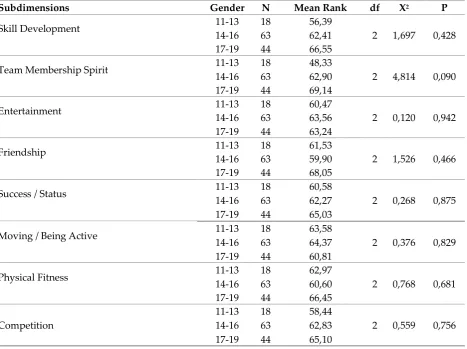
Table 4: Statistical Analysis Results of the Difference Between the Sports Participation Motive Scale Sub-Dimension Scores according to the Age Variable of Ski Athletes
Subdimensions Gender N Mean Rank df X2 P
Skill Development 11-13 18 56,39
2 1,697 0,428 14-16 63 62,41
17-19 44 66,55
Team Membership Spirit 11-13 18 48,33
2 4,814 0,090 14-16 63 62,90
17-19 44 69,14
Entertainment 11-13 18 60,47
2 0,120 0,942 14-16 63 63,56
17-19 44 63,24
Friendship 11-13 18 61,53
2 1,526 0,466 14-16 63 59,90
17-19 44 68,05
Success / Status 11-13 18 60,58
2 0,268 0,875 14-16 63 62,27
17-19 44 65,03
Moving / Being Active 11-13 18 63,58
2 0,376 0,829 14-16 63 64,37
17-19 44 60,81
Physical Fitness 11-13 18 62,97
2 0,768 0,681 14-16 63 60,60
17-19 44 66,45
Competition
11-13 18 58,44
2 0,559 0,756 14-16 63 62,83
17-19 44 65,10
When Table 4 is examined, the Kruskal Wallis H test was performed to determine whether the ski athletes differed significantly between the sub-dimensions of the motivation scale of sports participation by age variable and there was no statistically significant difference between the groups in the sub-dimensions of motivation scale (p>0,05).
Table 5: Statistical Analysis Results of the Difference Between the Scale of Sports Participation Motivation Scale of Ski Athletes according to School Level Variable Subdimensions School Level N Mean Rank Sum of Ranks U Z P
Skill Development Secondary school 36 56,39 2030,00 1364,000 -1,660 0,097 High school 89 65,67 5845,00
Team Membership Spirit Secondary school 36 50,76 1827,50 1161,500 -2,567 0,010* High school 89 67,95 6047,50
Entertainment Secondary school 36 59,56 2144,00 1478,000 -0,726 0,468 High school 89 64,39 5731,00
Friendship Secondary school 36 53,75 1935,00 1269,000 -1,934 0,053 High school 89 66,74 5940,00
Success / Status Secondary school 36 59,01 2124,50 1458,500 -0,819 0,413 High school 89 64,61 5750,50
Physical Fitness Secondary school 36 62,49 2249,50 1583,500 -0,107 0,915 High school 89 63,21 5625,50
Competition Secondary school 36 57,19 2059,00 1393,000 -1,293 0,196 High school 89 65,35 5816,00
When Table 5 is examined, the Mann Whitney U test tested whether ski athletes differ significantly between the sub-dimensions of the motivation scale according to the school level variable, and the sub-dimensions of the motivation scale for participation in sports; team membership/spirit (U= 1161,500; z=-2.567; p= 0,010<0.05) in favor of the dimensions of the high school athletes were determined. As regards the other sub-dimensions of the motivation scale for participation in sport; there was no statistically significant difference between the groups (p>0,05).
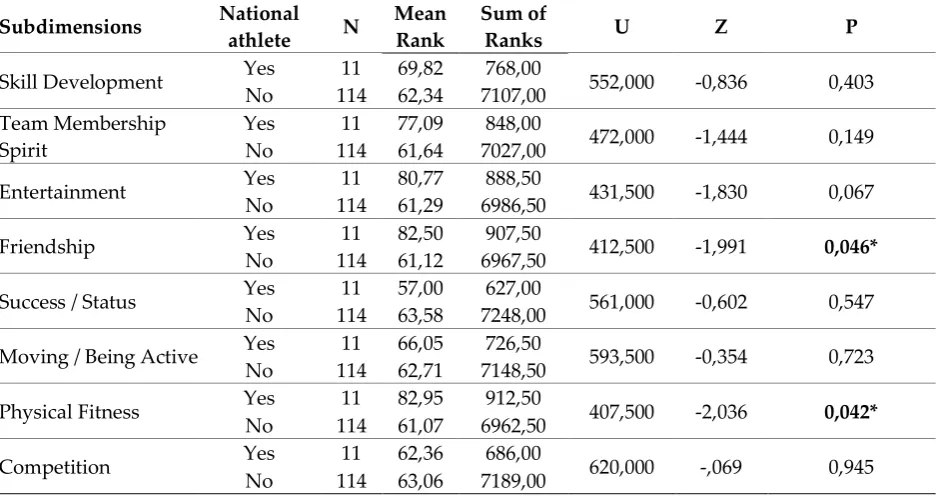
Table 6: Statistical Analysis Results of the Difference Between Skiing Athletes' Scale of Sports Participation Motivation Scale According to the National Athlete Variable
Subdimensions National athlete N
Mean Rank
Sum of
Ranks U Z P
Skill Development Yes 11 69,82 768,00 552,000 -0,836 0,403 No 114 62,34 7107,00
Team Membership Spirit
Yes 11 77,09 848,00
472,000 -1,444 0,149 No 114 61,64 7027,00
Entertainment Yes 11 80,77 888,50 431,500 -1,830 0,067 No 114 61,29 6986,50
Friendship Yes 11 82,50 907,50 412,500 -1,991 0,046* No 114 61,12 6967,50
Success / Status Yes 11 57,00 627,00 561,000 -0,602 0,547 No 114 63,58 7248,00
Moving / Being Active Yes 11 66,05 726,50 593,500 -0,354 0,723 No 114 62,71 7148,50
Physical Fitness Yes 11 82,95 912,50 407,500 -2,036 0,042* No 114 61,07 6962,50
Competition Yes 11 62,36 686,00 620,000 -,069 0,945 No 114 63,06 7189,00
When Table 6 is examined, the Mann Whitney U test tested whether ski athletes differ significantly between the sub-dimensions of the motivation scale according to the national athlete variable and the sub-dimensions of the motivation scale; friendship (U= 412,500; z=-1.991; p= 0.046<0.05) and Physical Fitness (U=407,500;z=-2.036; p=0.042<0.05) in favor of the sub-dimensions of the national athletes were determined. In relation to the other sub-dimensions of the scale; there was no statistical meaning between the groups.
Table 7: Statistical Analysis Results of the Difference Between the Sports Participation Motivation Scale of Skiing Athletes according to Sports Branch Type Sub-Dimension Scores Subdimensions Sports Branch Type N Mean Rank Sum of Ranks U Z P
Skill Development Alp Discipline 64 63,80 4083,00 1901,000 -0,322 0,747 Northern Discipline 61 62,16 3792,00
Northern Discipline 61 60,42 3685,50
Entertainment Alp Discipline 64 54,18 3467,50 1387,500 -2,995 0,003* Northern Discipline 61 72,25 4407,50
Friendship Alp Discipline 64 61,34 3925,50 1845,500 -0,560 0,575 Northern Discipline 61 64,75 3949,50
Success / Status Alp Discipline 64 62,47 3998,00 1918,000 -0,176 0,860 Northern Discipline 61 63,56 3877,00
Moving / Being Active Alp Discipline 64 63,21 4045,50 1938,500 -0,081 0,936 Northern Discipline 61 62,78 3829,50
Physical Fitness Alp Discipline 64 59,47 3806,00 1726,000 -1,188 0,235 Northern Discipline 61 66,70 4069,00
Competition Alp Discipline 64 63,98 4094,50 1889,500 -0,350 0,726 Northern Discipline 61 61,98 3780,50
When Table 7 is analyzed, whether the ski athletes differed significantly between the sub-dimensions of the sport participation motivation scale according to the sports branch type variable was tested by using the Mann Whitney U test and among the sub dimensions of the sport participation motivation scale; significant differences were found in favor of the northern discipline sports type in the sub-dimension of entertainment (U = 1387,500; z = -2,995; p = 0,003 <0.05). In relation to the other sub-dimensions of the scale; there was no statistical meaning between the groups.
4. Discussion and Conclusion
The research was carried out to determine the motivation of licensed ski athletes who have been actively operating for at least 3 years within the body of Bitlis, Erzurum,
Hakkâri, Muş Youth and Sports Provincial Directorate in terms of different variables.The
most important sub-dimensions of ski athletes' participation in sports are “Skill
Development” (1,17 ± 0,327), “Moving / Being Active” (1,19 ± 0,365), “Physical Fitness” (1,25 ± 0,353), “Competition” (1,26 ± 0,392), "Entertainment" (1,28 ± 0,368), "Success / Status" (1,30 ± 0,356), "Team Membership / Spirit" (1,32 ± 0,430) respectively. At the end of the motivational factor of participation in sports, it was found that the sub-dimension
of “Friendship” (1.38 ± 0.45) was included. In this sense, it can be said that the research
group's “skill development” and “acting / being active" sub-dimension of the sports they play in the most important order arises from the need of participants to act to discharge their energy and to improve their skills in their own sports branches.Thus, participants are often influenced by the drive to demonstrate physical skill, achieve the best individual result, or win an organized competition (Tekin et al., 2017). Our research result is similar
to the findings of many studies in the literature. Şirin et al. (2008) tried to determine the
factors affecting the motivation of sportsmen students attending the high school, as a result of the research, the most important factor in their motivation to participate in sports
participation in sports in all sports branches were identified as "Skill Development" and "Competition". In a study on tennis athletes, Kaman et al. (2017) found that the most
important motivational factor in sports participation was “skill development”. Altıntaş
et al. (2010) investigated the motivation motives of young football players, and the participation motive sub-dimension they deemed the most important was determined as skill development.
When it was evaluated in terms of gender and age variable in the sports participation motivations of the research group, it was determined that there was no difference between the sports athletes' motivation in terms of all sub-dimensions. There are studies to support the results of our study in terms of gender and age variable. In the doctoral thesis of Karaç (2017), it was found that there was no significant difference between all sub-dimensions of the participation motivation scale of athletes according to
the gender variable. As a result of a study in which Tekkurşun Demir, and İlhan (2019)
examined the motivation of participation in sports for visually impaired athletes, no significant difference was found in the sub-dimensions of the motivation to participate in sports in terms of gender. As a result of a study conducted Polat, Hazar ve Eker (2018) on sports high school students and sports center members, it was determined that there was no significant difference in the motivation of participation in sports in terms of
gender. Polat, Doğan and Mutlu (2018) showed that there was no significant difference
between the motivation scale sub-dimensions of sports according to gender and age variable as a result of the study examining the motivation of participation of sports university students. As a result of the study in which Hazar et al. (2018) examined the motivation of high school students to participate in sports, there was no statistically significant difference in all sub-dimensions of the scale in terms of gender and age variable. Temel (2018) found that as a result of the research that examines the motivation of table tennis and wushu athletes in university teams, no significant difference was found between gender and age variables. This similarity can be said to be made by female
and male ski athletes in the research group with close sources of motivation (İlhan and
Gencer, 2013; Van Heerden, 2014; Polat, Hazar and Eker, 2018). However, some studies suggest findings opposite to these results. Afsanepurak et al. (2012) found that there was a significant difference between men and women as a result of a study in which they
examined their motivation to participate in sports. Şirin et al. (2008) found a significant
difference according to gender variable in their motivation to participate in sports as a
result of their research on athletes who were trained in high school. Yıldırım (2017) found
terms of sport type and branch variable. Holden et al. (2017) found that there was a significant difference in the sub-dimensions of motivation to participate in sports in the study in which male and female college athletes who played in baseball, basketball, cross country, football, golf, volleyball, tennis, athletics and volleyball teams examined their motivation to participate in sports.
Regular physical activities are important for child development.When studies in this field are examined, it is stated that there are differences between children who regularly participate in physical activities and children who do not.These regular physical activities contribute to the development of children in terms of physical, physiological, psychological, sociological and motoric features (Koç and Tekin, 2011). At the same time, long-term and regular movement training programs improve the physical fitness features of 10-12-year-old children positively (Saygın et al., 2005). It is a more
positive use of the motivating factor in increasing the total physical activity time (Genç et al., 2011), which will directly affect the general physical, emotional and social development of the individual (Er et al., 2014). Gould (1982) stated that researches with motivation to participate in sports will be useful in preparing programs for coaches and managers, and in this way, coaches can meet the needs of individuals participating in the activities more easily and will have a positive effect on the psychological and motor development of individuals whose needs are determined and directed towards the
activity in this direction (Yıldırım, 2017). As a result, a significant differentiation in the sub-dimensions of "Team Membership/Spirit", "Friendship", "Physical Fitness" and "Entertainment" can be said to have an important role for ski athletes to have a sense of togetherness, to evaluate their leisure time, to have a healthy and high moral strength through sport. In order to reduce physiological (obesity, diabetes, cardiovascular diseases, high blood pressure, etc.) and psychological (stress, anxiety, depression, etc.), benefits can be developed by local governments to encourage individuals' participation in sports. As the data obtained as a limitation of this study was collected only from athletes actively interested in skiing in Eastern Anatolia (Bitlis, Erzurum, Hakkâri, and
Muş) Region, it can be suggested that the study can expand the scope of the research with
a larger sample group by conducting researches in groups similar to this group.
About the Author
Dr. Mehdi Duyan is Assistant Professor in the Faculty of Sport Sciences at Inonu University, Turkey. His research area is sports management.
Dr. İlker Günelis Assistant Professor in the Faculty of Sport Sciences at Uşak University,
Turkey. His research area is sports management.
References
Alaeddinoğlu, V., and Kaya, İ. (2012). Investigation on the anthropometric and physiological features of alpine discipline and nordic discipline turkish national ski teams. Sports View: Journal of Sports and Educational Sciences, 3(2), 116-123.
Altıntaş, A., Hacıoğlu, O., Sağtürk, B., Belman, C., and Aşçı, F. H. (2010). An Examination of the Relationship Between Perception of Success and Participation Motivation
Among Youth Soccer Players. Turkiye Klinikleri Journal of Sports Sciences, 2(1),
26-31.
Arslan, Y., and Altay F. (2009). The examination of sport participation motives of the elementary school male students in school teams. CBU Journal of Physical Education and Sports Sciences, 4(2), 59-66.
Bingöl, T. (2017). Investigation of sports participation motivations of secondary school students
particıpating in the support and training courses ( Bitlis-Tatvan Example). Master
Thesis, Ağrı İbrahim Çeçen University, Institute of Social Sciences, Ağrı.
Deci, E. L., and Ryan, R. M. (2008). Facilitating optimal motivation and psychological
well-being across life's domains. Canadian psychology/Psychologie canadienne, 49(1),
14.
Demir, G. T., and Cicioğlu, H. İ. (2018). Motivation scale for participation in physical
activity (MSPPA): A study of validity and reliability. Journal of Human Sciences,
15(4), 2479-2492.
Demir, G. T., and İlhan, E. L. (2019). Motivation for participation in sports: A research on
the visually impaired athletes. Gaziantep University Journal of Sports Sciences, 4(1),
157-170.
Er, G., Çamlıyer, H., Çamlıyer, H., Çobanoğlu, G., and Er, N., (2014). The effects of sport activities on children and adolecence in the means of manner and social
development. CBU Journal of Physical Education and Sports Sciences, 3(3), 29-38.
Gao, Z., Lee, A. M., and Harrison, L. (2008). Understanding students' motivation in sport and physical education: From the expectancy-value model and self-efficacy theory perspectives. Quest, 60(2), 236-254.
Genç, A., Şener, Ü., Karabacak, H., and Üçok, K. (2011). Investigation of physical activity
and quality of life differences between male and female young adults. The Medical
Journal of Kocatepe, 12(3), 145-150.
Gill, D. L., Gross, J. B., Huddleston, S. (1983). Participation motivation in youth sports.
International Journal of Sport Psychology, 14, 1-14.
Goyal, P.K. (2015). Motivation: Concept, theories and practical implications. International
Research Journal of Commerce Arts and Science, 6 (8), 71-78.
Hazar, Z., Demir, G. T., and Can, B. (2018). Investigations of high school students from
different variables to sport participations. Spormetre The Journal of Physical
Educatıon and Sport Sciences,16(4), 225-235.
Holden, S. L., Pugh, S. F., and Schwarz, N. A. (2017). Achievement motivation of collegiate athletes for sport participation. International Journal of Sports Sci, 7, 25-28.
İkizler, H. C., and Tekin, A. (2008). Motives and gender caused by fanaticism in Sports.
İlhan, L., and Gencer, E. (2013). Determination of participation motivation of high school
athlete students that participated in badminton competition. Gazi Journal of
Physical Education and Sport Sciences, 18(1-4), 1-6.
Kaman, M. B., Gündüz, N., and Gevat, C. (2017). Research on the motivation of tennis
players for participating in sports. Spormetre The Journal of Physical Educatıon and
Sport Sciences, 15(2), 65-72.
Karaç, Y. (2017). Athletics branch in athlete training centers examination of student-athlete's success perceptions and sports participation motives. Ph.D. Thesis, Hitit University, Institute of Social Sciences, Çorum.
Koç, H., and Tekin, A. (2011). Effect of physical education courses on some certain motoric features of children. Journal of The Faculty of Education, 8(Special).
Oyar, Z. B., Aşçı, F. H., Çelebi, M. and Mülazımoğlu, Ö. (2001). Validity and Reliabilty of "Participation Motivation Questionnaire”. Hacettepe Journal of Sport Sciences, 12(2), 21-32.
Özgün, A., Yaşartürk, F., Ayhan, B., and Bozkuş, T. (2017). Examination of handball players’ levels of sports-specific achievement motivation and happiness.
International Journal of Cultural and Social Studies, 3(2), 83-94.
Polat, E., Doğan, B., and Mutlu., F. (2018). An investigation of sport participation motives of the individuals doing recreative sports and competitive sports. International Journal of Social Science Research, 7 (2) , 175-187.
Polat, E., Hazar, S., and Eker, Y. (2018). Comparing sport participation motivation of sport
high school students and sport center members in terms of some variable. Journal
of Human Sciences, 15(4), 2579-2591.
Qurban, H., Wang, J., Siddique, H., Morris, T., and Qiao, Z. (2019). The mediating role of parental support: The relation between sports participation, self-esteem, and
motivation for sports among chinese students. Current Psychology, 38(2), 308-319.
Saygın, Ö., Polat, Y., and Karacabey, K. (2005). The effects of movement training, applied
to children on their physical fitness parameters. Fırat University Medical Journal of
Health Sciences, 19(3), 205-212.
Soyer, F., Can, Y., Güven, H., Hergüner, G., Bayansalduz, M., and Tetik, B. (2010). Investigation of relation between motivation of success and team unity of
sportsmen. Journal of Human Sciences, 7(1), 225-239.
Şahin, A. (2004). The relationship between management theories and motivation. Journal of Selcuk University Institute of Social Sciences, (11), 523-547.
Şirin, E. F., Çağlayan, H. S., Çetin, M. Ç., and İnce, A. (2008). Determination of factors affecting sports participation motivation of high school students who make sports.
Journal of Physical Education and Sports Sciences, 2(2), 98-110.
Tatlıcı, M., and Kırımoğlu, H. (2008). Examination of professional burnout levels of
athletics trainers. Journal of Physical Education and Sports Sciences, 2(1), 34-47.
Tekkurşun, D. G., İlhan, E.L., Esentürk, O.K., and Kan, A. (2018). Motivation scale for
sports participation of people with disabilities (MSSPPD): A study of validity and reliability. Spormetre The Journal of Physical Educatıon and Sport Sciences, 16(1), 95-106.
Temel, V. (2018). Analyzing of the table tennis and wushu athletes’ participation of the
motivation ques. Gazi Journal of Physical Education and Sport Sciences, 23 (3) , 143-152.
Terlemez, B., Şahin, D., and Dilek, F. (2015). Opinions of health services vocational school students at Namık Kemal university academic motivation levels. Pamukkale Journal of Eurasian Socioeconomic Studies, 2(2), 67-78.
Üstün, Ü.D., and Kalkavan, A. (2013). Investigation of the factors that motivate physical education and sports school students to participate in recreational activities. II. Recreation Research Congress,Aydın.
Vallerand, R. J. (1997). Toward a hierarchical model of intrinsic and extrinsic motivation. In M. P. Zanna (Ed.), Advances in experimental social psychology (Vol. 29, pp. 271- 360). New York: Academic Press.
Vallerand, R. J., and Losier, G. F. (1999). An integrative analysis of intrinsic and extrinsic motivation in sport. Journal of applied sport psychology, 11(1), 142-169.
Van Heerden, C. H. (2014). The relationships between motivation type and sport
participation among students in a South African context. Journal of Physical
Education and Sport Management, 5(6), 66-71.
Yalçın, İ., Turğut, M., Gacar, A., and Çalık, F. (2017). Investigation of sport participation
motivation of female sportsmen who study at school of physical education and sports according to some variables. International Journal of Cultural and Social Studies (IntJCSS), 3(2), 201-210.
Yıldırım, M. (2017). Determination of Factors Affecting Sports Participation Motivationof
Players Who Make Sports in University Teams (Sampleof Eskişehir Osmangazi
Creative Commons licensing terms