ISSN 1479-4403 233 ©ACPIL
Editorial for EJEL Volume 14 Issue 4
Rozhan M. Idrus and Nurkhamimi Zainuddin
Welcome to this special edition of EJEL, which shares a selection of extended papers initially presented at the 11th International Conference on E-Learning (ICEL), which was held in June 2016 at the Universiti Sains Islam Malaysia. In this issue five papers are presented which discuss and reflect on research into the assistive role of technology and the realization of redesigning the learning environment for more learner focussed challenges facing the educational experience of the 21st century.
Technology is becoming more immersive and more seamless, which has given rise to a pedagogies paradigm. It is time to explore the origins of pedagogy and the often overlooked traditions of thinking and practice associated with it. As we come full circle with the infusion of technology, pedagogy has to be considered through the lecturers thinking, as well as the way in which they address the learners, care for and about them and the way they bring learning into and to life.
We are now also faced with a s in which it is
possible to ascertain where, when and how the learner undertakes educational tasks as the environment is highly digital, virtual and open. With the availability of pedagogically articulated content from open resources and the support of the Internet, students are no longer confined within the four walls, nor the constraint of
Leveraging the technology itself, teachers must now prepare and present to the learners a buffet of educational resources so that learners have the ability to choose where, when and how they might want to conduct their studies. The teachers play an active facilitating and participatory role in the digital learning environment of the present time. This has been well explored by our contributors in the issue.
The contribution by Wendy Barber and Sherry King is highly engaging, perhaps without them realizing it. Although the issue being addressed is the concept of problem based learning, they have most aptly made the realization that digital learning environments require significant pedagogical shifts on the part of the teacher. Further, in an effort to manifest the educational outcome of problem based learning (PBL) via an online delivery mechanism, they have once again stumbled on the realization that that proficiency in teaching online is fast becoming an essential pedagogical skill. More importantly, the protocol and conduct of PBL via Adobe Connect and the interplay of student-centred and collaborative learning, the shifts in teacher-learner roles and the ability for students to take ownership of the learning; become involved in the assessment process, and define their own course of learning has given rise to what the authors describe as a perception that the pedagogy becomes virtually invisible. In truth, this is the immersive and seamless trait of technology and affordance to teachers to be creative with the pedagogies and have a wider variety of non-specific learning outcomes based on the new needs (as in technology enhanced) of students. There is no doubt that this paper will be referred to from both the use of technology and instructional design of PBL.
The following two contributions highlight the learner-centred teaching and learning experience in 21st century class environment. Through the promotion of e-Learning in the campus of INTI International University, a
simple research project different learning environment:
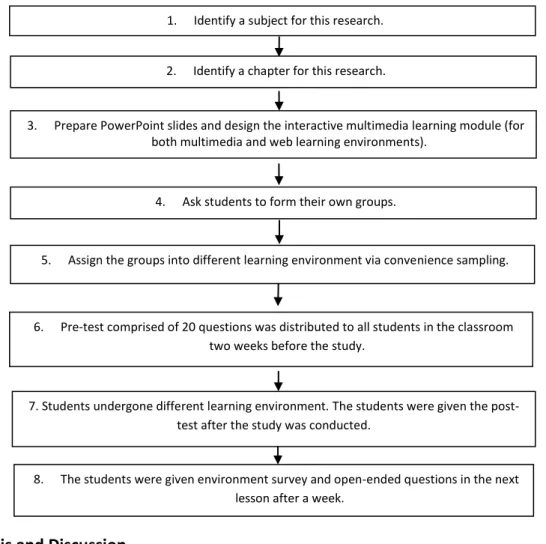
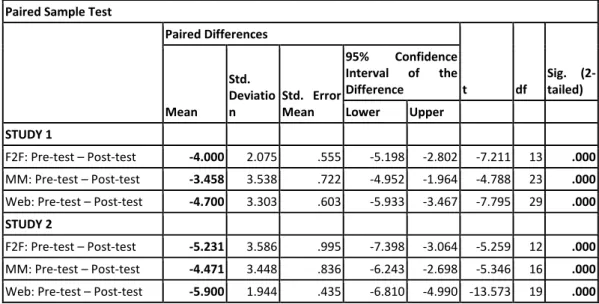
face-to-face, multimedia and web. In two studies conducted over two years by Yap Wei-Li, Neo Mai and Neo Tse-Kian, the learners were given the opportunities to be taught in the face-to-face teaching approach and the use of the PowerPoint (referred as F2F), and a face-to-face encounter via the interactive multimedia learning module, and at the same time students were allowed to access the same learning module from the computers (referred as MM). They were also allowed to adopt their own independent learning by accessing the web-based interactive multimedia learning module (referred to as Web). This was conducted in a quasi-experimental design. Although the assistive role of educational and multimedia technologies in the experimented W L -Centred Teaching model could promote better learner experiences by increasing retention rate and improving learner motivation, this effort was more of an acculturation process in the use of technologies and creative pedagogies in the campus and the commitment for the provision of facilities in the teaching and learning process.
The acculturation quest for technology enhanced activities in the campus of INTI International University continues through the work of Fui-Theng Leow, Mai Neo and Soon Hin Hew in their use of technologies and media-rich content to co-construct new meaning and knowledge. As simple as it sounds, these key attributes such as improved work relationships, improved leadership, and refined collaborative learning has critical
With the support of web resources, engaged online communication and meaningful presentations
experience becomes one with the technology itself in the digital educational environment.
In a manner of natural progression of the (digital) learning environment, the remaining two papers address learning management systems, namely Blackboard and Moodle. From their case study, Vuyisile Nkonki and Siyanda Ntlabathi sought to classify and evaluate the form and function of teaching and learning innovations using Blackboard. Although the SAMR models were used as interpretive lenses for the study, the authors admitted that the transformative learning potential of Blackboard depends on the fundamental reconceptualization and reorganisation of the teaching and learning dynamic. To be fair to Blackboard, it can only serve teaching and learning innovations stemming from the content creator, and not being the initiator of the pedagogical underpinning as it remained a tool at best. At the end of the day, the onus is on the teacher to accentuate 21st century digital learning scenarios via the use of technology (in this case, Blackboard) to significantly transform the teaching and learning tasks.
Nurkhamimi and colleagues presented to us their showcase of the utilization of Moodle in the offerings of postgraduate open and distance learning (ODL) courses by Universiti Sains Islam Malaysia (USIM). Based on Moodle, an e-learning system known as the Global Open Access Learning (GOAL) System was established, serving two mandatory courses (Research Methodology and Data Analysis) and the many applications and features that contribute to the increase of shared knowledge and communication between students. In tandem with Blackboard, the successful use of the Moodle platform in the teaching and learning context critically depends on the teachers having knowledge about the tools, being aware of how they should be used and being capable of organizing all the communication process. Only minor cosmetic and interface issues are required for further enhancement of the appropriate use of the system.
The selection of papers for this Special Issue demonstrate the evolution and future direction of e-learning research and the interdisciplinary nature of the e-learning field, which can be positioned within the focus to the learner and learning experiences as well as key attributes in achieving core competencies of the future generations. The acculturation is encouraging as we seek to align the capacity and capability of multimedia computing to excite, motivate and alleviate educational experiences to a new realm.
Rozhan M. Idrus & Nurkhamimi Zainuddin Guest Editors
ISSN 1479-4403 235 ©ACPIL Reference this paper: Barber W and King S T -Student Perspectives of Invisible Pedagogy: New Directions in Online
in Online Problem-Based Learning Environments
Wendy Barber and Sherry King
Faculty of Education, University of Ontario Institute of Technology, Oshawa, Ontario, Canada
Faculty of Pre-Health Studies., Confederation College, Thunder Bay, Ontario, Canada
[email protected] [email protected]
Abstract: Universities and institutions of higher education are facing economic pressures to sustain large classes, while simultaneously maintaining the quality of the online learning environment (Deming et al, 2015).. Digital learning environments require significant pedagogical shifts on the part of the teacher.. This paper is a qualitative examination of the nature of teaching in the digital age, and the significant changes facing teachers in the 21C. The authors describe key features of quality distance pedagogy that were exhibited during 12 weeks of a synchronous undergraduate course held in Adobe Connect. The central research questions are 1. How can problem-based learning pedagogy enable instructors to form smaller cohesive groups of students that take greater responsibility for their own learning? 2. What strategies can be used by teachers to develop communities of practice and inquiry? 3. How can an instructorin a large virtual class co-create the level of social capital that is required to build and maintain the relationships that are a necessary condition for a high quality learning experience? and 4. What are the perceptions of teachers about the challenges and benefits of facilitating a high quality problem based learning environment through invisible pedagogy?
The research is grounded in literature through the work of Cousins and Bissar (2012), Kaufman (2013), Badge, Saunders and Cann (2012), Flavin (2012) and McNeill, Gosper and Xu (2012). These authors examine how teachers and learners adapt to the digital age. In addition, more recent work by Bowers and Kumar (2015), Hoadley (2016), Deming et al (2015) and Gunduz et al (2016) are examined.In these digital spaces, teachersbecome facilitators, guides, collaborators and learners themselves, thus making traditional pedagogy virtually invisible.
Further, the paper uses qualitative semi-structured interviews of two assistant professors who instructed the two groups of undergraduate students The teachers identify challenges and successes to using problem based learning as a tool for attaining 21C learning outcomes in digital learning spaces.
Keywords/phrases: Teacher Development, Online Pedagogy, Problem-Based Learning
1
Introduction
It is clear that teachers in the 21C exist in a world that continually reinvents itself. Thus, a key skill for online
T
ledge that our first action when
W
from others, but our initial reaction is to use the technology to find the answers for ourselves. Not only have we invented a new verb to describe this self-directed learning process, but this, in itself, demonstrates that
C I
broader competencies than what have been considered in traditional teacher-centred pedagogy.
As costs of tuition continue to rise, the popularity and accessibility of such digital learning environments becomes more available to students. Bowers and Kumar believe that
In the past decade online education has experienced dramatic growth. According to a recent report from Sloan Consortium (Allen & Seaman, 2011) there are currently more than 6.1 million students enrolled in at least one online course. The growth rate for online enrollments (10%) has exceeded the growth in the overall higher education student population (less than 1%) in the United States. The report estimates that 31% of students enrolled in higher education take at least one online course. To address the increasing demand of online education, it is estimated that about 90% of higher education institutions offer some form of online education. Online education has now become an integral part of long-term strategy for over 65% of higher education institutions. Online learning is no longer considered a new phenomenon and has become an important part of our education system. (2015, p. 27).
This phenomenon of increasing numbers and decreasing costs of online education has a significant impact on instructors, who may now face the possibility of learning to teach well online or be out of a job. As evidenced by the comments of the teachers interviewed in this research, proficiency in teaching online is fast becoming an essential pedagogical skill. Institutions who move more of their courses online can have significant financial savings, as long as the quality of online pedagogy is maintained. Deming et al (2015) concur that
online education is concentrated in large for-profit chains and less-selective public institutions. We find that colleges with a higher share of online students charge lower tuition prices. We present evidence of declining real and relative prices for full-time undergraduate online education from 2006 to 2013. Although the pattern of results suggests some hope that online technology can "bend the cost curve" in higher education, the impact of online learning on education quality remains uncertain.(2015, p. 496)
Further to this, our pedagogy is being reshaped by the digital world to have a wider variety of non-specific learning outcomes based on the new needs of students. Within the context of this online environment, the traditional roles of teacher and learner became reciprocal and symbiotic. The pace of information flow and knowledge mobilization in 21C learning environments mean that instructors no longer act as top down experts. Several authors have re-defined the essential skills required of the 21C learner. Many of these authors concur that these skills include the development of creativity, self-motivation, innovation, problem-solving and collaboration skills (McNeill, Gosper & Xu, 2012; Voogt, Erstad, Dede & Mishra, 2013; Kaufman, 2013). Several institutions, including the World Economic Forum (2016), the Conference Board of Canada (2015) and the Ontario Ministry of Training Colleges and Universities (2015) concur that teachers need to provide opportunities for students to develop these types of characteristics. As a result, online pedagogy cannot be in lecture format, it must be shaped in ways that students can co-develop the learning goals and
C
these are also skills that are developed by students in a problem-based learning context. According to Savin-Baden (2007) there are significant characteristics of PBL that include the following:
Table 1. Characteristics of Problem Based Learning.
C
Students work in teams to confront the problem, to identify learning gaps, and to develop viable solutions. Students gain new information through self-directed learning.
Staff act as facilitators
Problems lead to the development of clinical problem-solving capabilities. (Savin-Badin, 2007)
In a PBL learning environment, the focus is on student-centred and collaborative learning, moving beyond cooperative learning to an environment where critical feedback and challenge between peers and instructor are essential. Shifts in teacher-learner roles occur, students take ownership of the learning, become involved in the assessment process, and define their own course of learning. Thus, there is a perception that the pedagogy becomes virtually invisible.
This approach to teaching is one avenue to better prepare students for the situations that await them beyond the walls of post-secondary education. Although universities have not traditionally been in the position of preparing students for specific work roles in the economy, financial and other pressures are continually
D
that the world is in a continual state of flux, it becomes almost impossible for universities to predict which content is key for students to learn. This is especially so due to the fact that over the course of an
undergra T
becomes incumbent upon university instructors to shift their pedagogy, put students at the centre of the learning experience and provide opportunities, situations and experiences to develop the kinds of broad competencies that are required for the 21C economy. Although it has not been the historical purview of universities to provide society with workers, the 21C economic situation of colleges and universities requires them to market themselves as institutions from which students will graduate prepared and ready to enter the workforce.
In response to this, an interesting set of parameters has been proposed by the Conference Board of Canada Employability Skills 2000+ (Conference Board of Canada, 2000). These 21C skills include (a) Fundamental Skills
(the ability to communicate, manage information, think and solve problems, and use numbers), (b) Teamwork Skills (the ability to work with others and participate in projects and tasks), and (c) Personal Management Skills (the ability to learn continuously, demonstrate positive attitudes and behaviors, be responsible, be adaptable and work safely). These align clearly with some of the elements that surround a problem-based learning pedagogy, one which essentially puts students at the centre of the process and renders the instructor
2
Methodology
This research was conducted in two phases using qualitative case study methodology (Merriam (1998). Phase One: Participants in the study were two groups of 30 students taking a synchronous undergraduate class in a fully online environment. The instructors were Assistant Professors in the Faculty of Education. Classes met once per week using video conferencing through Adobe Connect. Students completed a Likert style questionnaire pre and post course to indicate their level of comfort, engagement and competence in an online community, as well as their self-reported level of their ability to be self-directed learners and take responsibility for their own learning. Further to this, a focus group for each of the two groups was convened in Adobe connect after the course had completed to discuss each of the three research questions. 1. How did a PBL structure help/not help students to take greater responsibility for their learning as a member of a small group? 2. What strategies did the instructor use to develop communities of practice and inquiry? And 3. How did the instructor create or develop/not develop greater social capital in the online class. The researchers analyzed and coded the data to identify key themes that emerged through the class recordings, focus groups, and questionnaire results.
Phase Two: The two instructors of each section were interviewed for one hour each using semi-structured qualitative questions to answer the fourth research question: 4. What are the perceptions of teachers about the challenges and benefits of facilitating a high quality problem based learning environment through invisible pedagogy? Interview questions included:
What was your previous experience using Problem Based Learning?
What was your previous experience teaching in synchronous Adobe Connect? What were the challenges you faced using Problem Based Learning?
What challenges or barriers did you encounter in fully online pedagogy? Did the roles change between you and the students and if so how? How would you describe the level of social capital in your class?
Did the level of social capital have an effect on the learning experiences of your students? What means of assessment did you use in the course?
Were these different than types of assessment you use in face to face courses?
Can you describe the student -based learning?
Do you believe invisible pedagogy is a good pedagogical tool in digital learning environments?
3
Data Collection
Ethical review was passed (Research Ethics Board # 14-029) and informed consent of participants was obtained. Data were collected via recordings of classes in Adobe connect, including both formal and informal chat rooms for review. Recordings of classes were kept on a secure server located at the university. Students were asked to maintain weekly comments in Blackboard chat rooms and use this as a journal format to record their observations about their online community. Anecdotal information from focus groups was recorded and kept on a secure server. Observations of external professional learning communities created by the students in Linked In and Facebook were obtained. In phase two, interviews were recorded and then transcribed and analyzed by the researcher. Transcripts were stored in a password protected file on a university server and audio recordings were then destroyed as per the ethical review.
Table 2: Elements of Invisible Pedagogy: the Role of Teacher and Student in PBL vs Traditional University Lecture Environments
Pedagogy in PBL Pedagogy in Traditional Lecture
Student-centred Teacher-centred
Real world situations Theoretical situations
Collaborative work Individual work
Co-constructed solutions Individual solutions
Multiple outcomes One correct outcome
Assessment in PBL Assessment in Traditional Lecture
Uses real world tasks often assessed in groups Theoretical concepts individually tested
Collaborative assessment Individual assessment
Students involved in assessment criteria Teacher develops assessment criteria Many possible solutions are correct One or few possible solutions are correct Assessment embedded formatively throughout the
learning process
Assessment is summative at the end of a course or unit
Community in PBL Community in Traditional Lecture
Community-based learning Individual learning
Inquiry-based learning allows students to drive learning outcomes
Teacher sets learning outcomes Students take ownership of learning by selecting
problems
Teacher retains power by setting the problems to be solved Learning is dynamic and ongoing Learning is contained within course outcomes
Community extends beyond course parameters through digital means
Any group work is contained within confines of the course Social Capital is at a high level Social Capital is not connected to learning
Student Engagement at a high level and depends on peer interaction and teacher as facilitator
Student Engagement depends on teacher as leader
Table 3: Teacher Interviews:
Topic Instructor #1 Instructor #2
Previous PBL experience I had never taught with PBL so I found
I
I
PBL part well
I PBL I
taught this way for a while, but, transferring to online has been challenging.
Previous Adobe experience Very comfortable using Adobe Connect
Very comfortable using Adobe Connect
Challenges of PBL Students either buy in or buy out and I I
course but they kept needing direct instruction
Well, I teach in a college program where the motivation is challenging because my students, many of whom are in poverty or living on Aboriginal reserve. So, I think the PBL model
I
worked so well this time. Challenges of fully online pedagogy I think fully online pedagogy is the way
I
way though as I have taught asynchronous and video based Lots more challenges I think for students
access depending on band width and other tech stuff
Access to high speed technology
Roles of teacher and learner Well at the beginning I thought I was the teacher, then I thought I lost control in PBL, but I stuck with it and in the end, some students took it as a So I guess I have to learn to step back
Here I have to be the teacher, because, that is what the community and the culture expect. I, as a teacher, have respect. So strange compared to what I grew up with in a city. I hope someday these roles change but I
and they have to learn to step up for awhile. Level of social capital There was lots of social capital in the
tech savvy students. I worried about those in international situations that due to time zones and lack of good wi fi they might not feel they belonged
In the community there is a high level of social capital. A high level of respect, and also lots of problems. But in this class, I think students found a digital home
Social capital and learning I believe social capital, or basically taking the time to know and understand your students, is a huge factor in them learning online.
Yes community means a lot, but it depends if the students know about and have social media accounts and have ethics on how to use them.
Means of assessment I I I
them a rubric for self and peer assessment, but I did feel pressured by the college to produce grades based on written assignments
I used traditional things like quizzes
what I thought I wanted to see, things like greater independence and confidence.
Online vs. F2F assessment I A
how do we do online assessment and
the task?
I really think in this community at this time face to face is better than online.
“ PBL W I
B
then we created this space where we could talk. And then it worked.
In some ways it is how they grew up. For the students who came to class, they had a very positive response to PBL.
4
Key Themes
(i) Problem Based Pedagogy: Student responses to the PBL environment were overwhelmingly positive, however two general trends occurred based on student demographics. For those undergraduates who had recently left a secondary school environment that was based on traditional pedagogy, they found the problem based strategies frustrating. Having not been empowered to be self-directed or to be involved in guiding their own learning, many wanted to be told what to do, how to go about it and what the results should look like. By contrast, mature students (who were working full time and pursuing their undergraduate degree online part time) found the constructivist and social elements of PBL very engaging. As adult learners, they responded very well to the independence, autonomy, and self-direction of the assignments. In addition, having had work experience, this may have prepared them better to work as part of a collaborative team, to contribute their
own strength M
tended to demonstrate more of the Conference Board of Canada (2000) skills already in place, and this may have been why they embraced PBL readily, as it mirrored what they experienced in their own professional world of work. Teachers with little experience in PBL found the experience challenging, and the process of adaptation can take time, so a recommendation would be to have colleagues share experiences in PBL, share assessment strategies, and dialogue about the successes and challenges of implementing a digital PBL learning space.
(ii) Role of the Teacher: Invisible pedagogy does not mean the teacher is absent, nor does it imply that the pedagogy is simple. In fact, done well, it can be more challenging, more artful, more creative and widely diverse. The instructor must step out of his/her traditional role and become the disruptor, creating situations and experiences that both challenge, inspire, support students while providing critical feedback throughout
T F H
digital technologies are brought into the classroom setting, the lecturer may have to relinquish some of their
(Flavin, 2012, p. 104). Cochrane (2012) identifies this unique sharing of the digital learning environment as one of the critical success factors in mobile learning. He states that features of a successful virtual learning environment include
Pedagogical integration of technology into the course and assessment, lecturer modelling of the pedagogical use of the tools, creating a supportive learning community, and creating sustained interaction that explicitly scaffolds the development of ontological shifts that is the reconceptualization of what it means to teach and learn within social constructivist paradigms, both for the lecturers and the students. (Cochrane, 2012, p. 125)
F ongoing aptitude to embrace new technologies as they develop, in order to help students, not from a position at centre stage, but quietly from the background, empowering students to choose and develop the 21C skills they need. In certain cultural settings, where teachers are imbued with respect almost automatically, this shift to having student-centred pedagogy may be challenging. However, using mobile devices that students already use for social networking can aid in the transition to helping students see the possibility of learning anywhere
T d to acquire 21st century
V E D
Mishra, 2013, p.408).
(iii) Online Community: L L
relationship aggregation, facilitated by internet-based technology, in which users communicate and build
W “
collaboration among community members with the potential of transforming the activities of off-line into an
L L W ant
challenge to educators, effective online pedagogy relies on how skilled the instructor is at developing and sustaining a sense of belonging to the digital community. By combining problem-based learning and a strong sense of community, educators can become adept at helping students become independent autonomous learners who are capable of solving the complex problems facing 21C learners. Instead of taking the power role normally assumed by the teacher, instructors become equal members of the community, bringing unique strengths and learning needs themselves. In this way, instructors blend into the community, become one with
B
disappears, and reappears as something completely different as facilitator, lurker, guide and co-learner. As evidenced by the teacher interviews, there may be some cultural differences in accepting online learning and this can create a barrier to accepting new ways to build digital communities. Teachers need to align their pedagogy with the values in the local culture to enable digital learning to be more accessible and user friendly.
(iv) Development of Social Capital:K
1). Students in these classes invested a great deal of time in developing social networks within the course, many indicated that they also created a Linked In or Facebook group to supplement their contact with peers, following Twitter feeds on their mobile devices outside of scheduled class time. Kearney et al (2012) reiterate -cultural view of learning takes into consideration both technical characteristics as well as social L J , Beetham and McGill (2012) agree that the social elements
“ onses in the anecdotal
focus groups indicated that they felt safe to take risks, ask questions and go to peers for support and present seminars with confidence. Many attributed this to the PBL climate of the course, and the expectation that a community of mutual respect had been developed. Within this relationship-based community, it became the norm to challenge, ask critical questions, provide feedback and respond to it constructively. As a result, the level of engagement, motivation and the quality of products generated by students increased. Again, it is important to understand, what the cultural values are when discussing social capital. In addition, it is key to consider whether there is an equitable access to technology.
(v) Development of 21C Skills:A M N G X
the value of skills such as problem solving, critical thinking and creativity, yet the curriculum needs to be designed to support and scaffold development of these skills. 92012, p. 283). They go on to state that
“ PBL
collaboration, the ability to come to a variety of workable and diverse solutions, and they also acknowledged that each member of the community, while possessing different skills, had an important and valuable place in the group. These are critical skills for anyone working in the knowledge economy. LittleJohn, Beetham and McGill (2012) indicate that the nature of the workplace has changed, and digital forms of information are changing the meaning of what it means to work. They state that these changes are being exacerbated by three factors
First, workplaces are being transformed such that production and practice are increasingly knowledge driven. Second, work problems are becoming more complex and third, people are
regularly and repeatedly transitioning into new roles and careers, necessitating life-long learning. (2012, p.547)
Students in this study were often mature adults who had changed careers several times, and during the focus groups it was mentioned several times that the PBL approach to learning enabled them to contextualize their learning to their workplace, as well as develop the confidence and competence to use digital tools to solve work-related problems. During the teacher interviews, both instructors mentioned the ongoing challenges of keeping up with new developments in technologies, and the difficulty of having students know more about the technology than they did as instructors. However, once they accepted it, they began to take more of the ize roles in the community. They did mention, however, that there still existed some challenges begin bound by the university/college grading system, noting that it was somewhat artificial to give students power during class, and then take back the power when it came time for giving grades. As a result, they started to dialogue about alternative means for assessing students, and they both appreciated the ongoing conversation about what assessment and evaluation can, or should look like when assessing 21C skills.
(vi) Student Self-Responsibility: During the course of the twelve weeks students built a considerable amount
T
within the learning community was a key feature in helping students take more responsibility for their own learning. An interesting feature that emerged was that students also felt an element of responsibility to the community, to come to class prepared, to engage in discussions, to prepare thought-provoking seminars and
case study presentations. Self-
students indicated that because of the community they had built they felt safer to ask questions, take risks and help one another. What evolved was not only an improvement in student self-responsibility, but a redefinition of it. Being self-directed also meant a reliance on others for critical feedback, discussion and challenge, as well as being prepared to provide reciprocal feedback for peers to enable their learning and development.
5
Discussion
This paper examines four primary research questions: 1. How can problem-based learning pedagogy enable instructors to form smaller cohesive groups of students that take greater responsibility for their own learning? 2. What strategies can be used by teachers o develop communities of practice and inquiry?? 3. How can an instructor in a large virtual class co-create the level of social capital that is required to build and maintain the relationships that are a necessary condition for a high quality learning experience? 4. What are the perceptions of teachers about the challenges and benefits of facilitating a high quality problem based learning environment through invisible pedagogy?
To answer question one, it is clear from the surveys and comments of students and the observations of the instructor that PBL pedagogy can work effectively to enable instructors to step out of the way, to empower students in smaller groups to take ownership of the learning. While the research began asking the question of how individuals can take greater self-responsibility, it became apparent that the PBL process also means individuals feel a greater responsibility to their community of inquiry. Students commented that they felt the seminars each week were improving, that each member of the group felt a certain obligation to their peers to be well prepared and deliver an engaging and thought provoking seminar or case study. Thus, it is only by allowing students more control, that the instructor can take on large classes effectively. By investing up front and modelling a PBL structure, smaller groups of students can grow into the autonomy required to develop successful pods within a large class.
Responses to question two involve strategies to build online communities. In this case, the initial use of Digital Moments, a community building strategy in the first few classes means that individuals share in an Adobe connect video pod a photo or visual image that shows the community a bit about themselves, their learning backgrounds, reasons for taking the course, age and stage of career, and their personal goals and learning outcomes. In this way, the instructor can see more readily how to create diverse groups, can identify the students having greater experience with PBL, and those that may need greater support. In addition, it appears important that students connect outside of class time, using social media, Twitter, Facebook or LinkedIn. This occurred around the third week of the twelve week course. This phase appears to be important in order for students to invest more of themselves in the course, since they become more accountable to one another and thereby own the learning experience more fully.
Third, how can a network of students in a large virtual class create the level of social capital that is required to build and maintain the relationships that are a necessary condition for a high quality learning experience? Many of the students in this class were simultaneously taking classes with other instructors who were not using a full PBL pedagogical model. Often they commented that the level of social capital in this class was far superior to courses where they did not connect to others. Several students said they had taken full courses
another. It was not, in fact, necessary for all students to connect or get along with everyone, but respect for diversity was a key factor. By sharing personal backgrounds (work, family, weekly challenges) the students gravitated to those with whom they felt they had commonalities. At the same time they worked collaboratively in diverse groups, often commenting that this diversity was an important feature in helping
F llaboratively about
teaching online and using problem-based learning strategies to develop greater social capital and sense of
A
new technologies, and often found their students knew more about the latest affordances than they did. However, they successfully learned to adapt and relinquish some control as they themselves were placed in the role of the learner. In addition, teachers mentioned the need to move towards more open educational resources (OER) as this would be a big step forward in increasing access for low income communities. Further, isolated or rural communities can greatly benefit from online education that may not have been accessible due to long distances from colleges or universities, so students would be able to remain in their local communities
W
acknowledged that it would be a work in progess because both they and their students were products of a more traditional teacher-centred model.
Overall, several key themes emerged through this learning environment that ultimately wove together to create increased levels of student self-responsibility. The primary aspect included a focus on a problem-based pedagogy which clearly put students at the centre of the learning process. Second, there were significant changes in the roles of the teacher-learner, requiring the instructor to step into the background and have less
T
community of learners that broadened to the larger digital world beyond the class. Using social media and mobile devices, students stayed connected beyond traditional class time. This then resulted in a significant level of social capital and networking, which increased student engagement, commitment, accountability to peers and improved the quality of assignments they produced. Teacher reflections indicated clearly that they favoured open access educational resources, and felt that problem based learning was a unique and successful strategy for facilitating the development of 21C skills. Finally, the interdependent combination of all these themes created an environment in which students could develop the confidence and competence that they needed to be successful in a digital workplace.
6
Conclusion
This paper hasprovided a qualitative analysis of a case study in problem based learning, where the pedagogy of PBL helps undergraduate students develop greater self-responsibility for the learning process. The authors have argued that a significant outcome of PBL is also the enhancement of what many have termed 21C skills.
This L B M G
K
‘
V boration, communication, digital
literacy, citizenship, problem-solving, critical thinking, creativity and productivity are essential for living in and
contributing to o
Universities and other institutions of higher education have a moral and social obligation to prepare big thinkers for the needs of the 21C. To accomplish this, teachers need the opportunity and resources to develop skills in digital pedagogy. Using open educational resources, this should not come at an additional cost, however, investing in teacher development for online pedagogy will be a significant direction for higher
education. Despite the fact that these colleges and universities are undergoing severe economic cutbacks, surely it is still incumbent upon them to provide education that is relevant, forward thinking and that empowers students to become contributing members of society. While financial pressures may require universities to hold very large classes with one instructor, PBL can be used as a pedagogical strategy to empower students in smaller learning pods. In this way we maintain or enrich the quality of learning by placing it in the hands of the community of students, and the teachers become learners as well.
The problems of the 21C are complex, multi-dimensional and diverse, situated in different geographies, economies and cultures. People living and working in these environments must continually use digital technologies to learn, relearn and come to collaborative solutions. Problem-based pedagogy can be one aspect of higher education that can prepare students for what they will experience in this new world. It prepares them to take responsibility for their own learning as well as contribute to the learning of their colleagues, a skill that they will need as they continually change careers and roles in the workplace. As educators, we must step out of the way, facilitate PBL environments and experiences that help students to leap forward while we, as instructors, simultaneously move quietly into the background. Universities will still
References
Badge, J., Saunders, N. & Cann, A. (2012). Beyond marks: new tools to visualize student engagement via social networks. Research in Learning Technology, 20(16283). doi: 10.3402rlt.v2010/16283
Bowers, J. & Kumar, P. (2015). Students' Perceptions of Teaching and Social Presence: A Comparative Analysis of Face-to-Face and Online Learning Environments. International Journal of Web-Based Learning and Teaching Technologies (IJWLTT) 10(1) 27-44.
Cochrane, T. (2012). Secrets of m-learning failures: confronting reality. Research in Learning Technology, ALT-C Conference Proceedings, http://dx.doi.org/10.3402/rlts2010.19186
Conference Board of Canada (2000) A Report on Employability Skills 2000+
http://www.conferenceboard.ca/topics/education/learning-tools/employability-skills.aspx
Cousins, S. & Bissar, D. (2012). Adapting to the digital age: a narrative approach. Research in Learning Technology, 20(18976), 1-13.
Deming, D. J., Goldin, C., Katz, L. F., & Yuchtman, N. (2015). Can Online Learning Bend the Higher Education Cost Curve?. The American Economic Review, 105(5), 496-501.
Flavin, M. (2012). Disruptive technologies in higher education. Research in Learning Technology, ALT-C 2012 Conference Proceedings. http://dx.doi.org/10.3402/rlt.v2010.19184
Gündüz, A.Y., Alemdag, E., Yasar, S. & Erdem, M. (2016) Design of a Problem-Based Online Learning Environment and Evaluation of its Effectiveness. Turkish Online Journal of Educational Technology 15(3), 49-57.
Hoadley, C. (2016). Online Pedagogy from the Learning Sciences Perspective. In The SAGE Handbook of E-learning Research, 2nd ed., 25. (C. Haythornthwaite, R. Andrews, J. Fransman, E. Meyers, Eds.)
Kaufman, K. (2013). 21 Ways to 21st century skills: why students need them and ideas for practical implementation. Kappa Delta Pi Record, 49(2), 78-83. doi: 10.1080/00228958.2013.786594
Kearney. M., Schuk, S., Burden, K. & Aubusson, P. (2012). Viewing mobile learning from a pedagogical perspective. Research in Learning Technology, 20(14406). doi: 10.3402/rlt.v2010.14406
Lin, H. & Lee, G. (2006). Determinants of success for online communities: an empirical study. Behavior and Information Technology, 25(6), 479-488.
Littlejohn, A., Beetham, H. & McGill, L. (2012). Learning at the digital frontier: a review of digital literacies in theory and practice. Journal of Computer Assisted Learning, 28, 547-556. doi: 10.1111/j.1365-2729.2011.00474.x
McNeill, M., Gosper, M. & Xu, J. (2012). Assessment choices to target higher order learning outcomes: the power of academic empowerment. Research and Learning Technology, 20(17595) doi: 10.3402/rlt.v2010.17595 Merriam, S. (1998). Qualitative Research and Case Study Applications in Education. San Francisco, CA: Jossey-Bass. Ontario Ministry of Training, Colleges and Universities (2016). Essential Employability Skills. Retrieved from
http://www.tcu.gov.on.ca/pepg/audiences/colleges/progstan/essential.html
Savin-Baden, Maggi. Challenging models and perspectives of problem-based learning. Management of change: Implementation of problem-based and project-based learning in engineering (2007): 9-30.
Voogt, J., Erstad, O., Dede, C. & Mishra, P. (2013). Challenges to learning and schooling in the digital networked world of the 21st century. Journal of Computer Assisted Learning, 29, 403-413. doi: 10.1111/jcal.12029
World Economic Forum (2016). The 10 skills you need to thrive in the Fourth Industrial Revolution. Retrieved from http://www.weforum.org/agenda/2016/01/the-10-skills-you-need-to-thrive-in-the-fourth-industrial-revolution
ISSN 1479-4403 244 ©ACPIL Reference this paper: Leow,F.T., Neo, M. and Hew, S. H. I K A E “ L
Experience in 21st Century Class Environment The Electronic Journal of e-Learning Volume 14 Issue 4 2016, (pp244-256)
Experience in 21st Century Class Environment
Fui-Theng Leow
1, Mai Neo
2and Soon Hin Hew
31
University of Nottingham, Ningbo, China
2, 3
Multimedia University, Cyberjaya, Malaysia
[email protected] [email protected]
Abstract: The 21st century marks the beginning of digital age with the extensive use of digital media, mobile devices, and Internet resources. Recent studies found that this digital era has expanded the landscape of student experiences, and
educational t
learning. This has redefined the meaning of effective learning and the approaches in motivating students. Therefore,
redesigning the learning environme
classrooms. In this study, the 21st J G
to employ the constructivist learning approach, organize the information processing, and design the instructions to support
I st
century class environment, this study employed the mixed methods approach, includes conducting exploratory factor analysis on the questionnaire response and the
T
who studied at INTI International University, Malaysia. The exploratory factor analysis has identified four main factors, group learning, motivation, skills development and knowledge transfer. In the discussion, this study presents the key attributes, the main contributors to the attributes and its impact on student learning. For instance, the factor of group learning can be stimulated by emphasizing on the identified key attributes, such as improved work relationship, improved leadership, and refined collaborative learning which enhancing student learning experience as they are keen to attempt different approach, and anticipate changes. This study aims to identify the factors and elaborate the key attributes for
supporting the
promote effective learning.
Keywords: st century class environment, effective learning, key attributes
1
Introduction and Literature Review
The 21st century marks the beginning of digital age with the extensive use of social media, mobile devices, and Internet resources. The arrival of digital revolution is now repositioning the process of teaching and learning with the capabilities to promote effective learning and enhance student learning experience. As opposed to the rote memorization, the social process has expanded the educational landscape by encouraging students to exchange ideas, explore new knowledge, co-construct new meanings, and generate mutual understanding (Vygotsky, 1978; Chisanu, Sumalee, Issara & Charuni, 2012; Harris, Jones & Baba, 2013). Studies also show that the well-designed learning environments play an important role in motivating students to form learner community and work collaboration, where they can pool the talents, reflect opinions and develop their own interpretations for problem-solving (Vygotsky, 1978; Cecez-Kecmanovic & Webb, 2000; Johnson & Johnson, 2008; Chiong & Jovanovic, 2012). However, due to the diversities and the lack of study in re-designing the classroom environments, it was reported that students are overwhelmed by the complexity of collaboration and peer interaction, interaction and capabilities in the class environments (Cecez-Kecmanovic & Webb, 2000; McLoughlin & Lee, 2010). On the other hand, literatures reveal that effective learning is not guaranteed merely by incorporating digital learning technologies, instead it
includes enhancing motivation. However, t are still lack of
understanding on the appropriate use of technologies that best suited a situation and support
(Laurillard, Charlton, Craft, Dimakopoulos, Ljubojevic, Magoulas, Masterman, Pujadas, Whitley & Whittlestone, 2011; Stohlmann, Moore & Roehrig, 2012; Downey, Mohler, Morris & Sanchez, 2012). In this study, the
discussion focuses on identifying the that bring
In constructivism, knowledge cannot be transmitted but can be constructed through the meaning making process that related to the real-world situations. Studies found that effective learning can be promoted when the instructional materials and instructional strategies are determined based on the experiences. Particularly, when experiencing the challenges, different collaborative approaches and the use of technologies, it can enhance , performance and capabilities. Subsequently, it requires less prompting and teacher support as students become more confident and willing to put forth more effort in the learning environments (Duffy and Jonassen, 1992; Neumann & Hood, 2009; Chitanana, 2012; McLaughlin, Roth, Glatt, Gharkholonarehe, Davidson, Griffin, Mumper, 2014). In addition, the growth of social media and online tools bring further social engagement and generate mutual understanding. The knowledge that acquired from social processes and collaborative efforts among students set the opportunities for students to apply conception into practice, debate with their peers, and compare their own practice with that of their peers. This can strengthen the student-student relationships and stay engaged for continued participation, therefore leading to higher sense of ownership in the student-centred learning environment (Vygotsky, 1978; Neumann & Hood, 2009; Laurillard, 2009).
Gagne believed that human learning is the permanent change in human capability and occurs with internal processes and external processes. According to Ga
be achieved when the knowledge is communicated efficiently, and the instruction is broken down into simple building blocks with potential values. As such, Gagne stressed that designing the learning environments and developing the learning materials require identifying appropriate mental conditions in order to promote a specific type of learning. For instance, by giving the right problem, appropriate rules and guidance,
and intermediate Wager, n.d). These processes also
require exposing students to the social interaction and conditions that use their cognitive processes (internal events) for interpreting the environmental stimuli (external events). G includes the nine events of instruction (1-gaining attention, 2-informing objectives, 3-stimulating recall of prior knowledge, 4- presenting stimulus material, 5-providing learner guidance, 6-eliciting performance, 7-providing feedback, 8-assessing performance, 9-enhancing retention) as a framework for developing educational modules. These events of instruction are described as the external events that can be used by the instructors to address the conditions of learning and structure the learning process for promoting effective learning and enhancing student capabilities (Gagne, 1985; Gagne, Wager, Golas & Keller, 2005). In this study, these events are incorporated in redesigning the learning environment, to support student learning and enhance their capabilities in the group project context.
2
Research methodology
2.1
Design of the 21st Century Class Environment
One of the main objectives of this study is to redesign the conventional class environment into the 21st century class environment where students are tasked to complete a multimedia group project that focus on problem-solving and peer interaction. This design approach was inspired as the literatures show that with the increase of digital literacy among the students, they become more capable to build learner-generated contents and construct new knowledge, especially through exploration, articulation and reflection, it has
learning experience (Duffy & Jonassen, 1992; Jonassen, 1999; McLoughlin & Lee, 2010).
The design of 21st century class environment J G J
model employs the constructivist learning approach to encourage students to construct new knowledge and
meaning through the perso G
-solving skills (Dempsey,
2002). The multimedia group project is the main emphasis of the 21st century class environment. This is also
G
trained when the right problem and appropriate guidance are given. Hence, this project includes a problem situation and the development process includes considering restrictions, defining the meaning, showing the relevance, creating new ideas, as well as making sense to the context. One of the samples of the project title is that M M eds to rebrand their products with new appearance and presents through an interactive e- Y D M T -book will be added in the official website and the touch-screen kiosks at supermarkets. The e-book includes a new design of product logo and tagline
with a trendier appearance; proposes new packaging design with Malaysia context but the core design should
M
2.2
Data Collection Process
The data collection process employs multiple research instruments, including questionnaire, open-ended questions, and interview. The questionnaire consists of 40 survey items. The survey items were adopted from several research projects with similar research scope. Each item is to be responded based on 5-point Likert scale, ranging from 1 as a result of strongly disagree to 5 as a result of strongly agree. The open-ended
pinions on
developing a multimedia group project. It aims to collect fuller details and more aspects of expression to complement and extend the limit of survey questions. In the process of data analysis, the collected data are triangulated in the mixed-method approach to study the impact of this 21st century class environment on
student learning, particularly
2.3
Research Sample
The research sample consists of 300 undergraduate students. The selection was based on the simple random sampling technique in which it represented the entire student population who enrolled in IT courses at INTI
I U M G D A s
period of data collection, from year 2012 to year 2015. The student demography recorded that 74.2% of Malaysian students, and 25.8% of international students, and among all, majority are male students, consisted of 79.7%, and 23.3% of female students. The class environment was set at the lecture classes at INTI International University, with the emphasis on developing the multimedia group project that involved every student in the development process throughout the whole semester. This learning process focused on developing problem-solving skills, communication skills, and critical thinking skills, as well as the software skills in using the multimedia development software for content creation.
3
Data analysis and results
The data analysis was done to generate the results for discussions.
3.1
Exploratory factor analysis
Exploratory Factor analysis (EFA) was used to analyse the item response in the questionnaire for exploring the perceptions and learning experiences. Overall, this research study has executed four rounds of the EFA process to present a clean factor structure which consists of only loadings of .5 and above. The 5-step Exploratory Factor Analysis Protocol was employed to ensure the accuracy (Field, 2009; Williams & Brown, 2010; Taherdoost, Sahibuddin & Jalaliyoon, 2014).
1. In determining the sample size, the sample size of 300 is acceptable to perform EFA. This is considered a larger sample size which is more adequate and accurate in defining the number of factors.
2. In selecting the factor extraction method, the PCA with orthogonal varimax rotation is employed as it is the most commonly used multivariate technique for identifying the linear components and to maximizing the dispersion of factor loadings and making the factors more interpretable and meaningful (Field, 2009; Tabachnick & Fidell, 2012). The correlation matrix indicates that the correlation is between 0.3 to 0.9, which shows that the survey items correlate well as the loading of 0.30 is the minimal and 0.50 is considered significant to display the inter-correlations (Hair, Black, Babin & Anderson, 2009; Tabachnick & Fidell, 2012). The record of .928 in Kaiser-Meyer-Olkin (KMO) Measure shows high confidence on the sampling adequacy. The result of Bartlett s test of Sphericity, X2 (300) = 3453.604, p <.001, also shows that the correlations between items is also proved sufficiently large for PCA (Field, 2009; Hair et al., 2009; Tabachnick & Fidell, 2012).
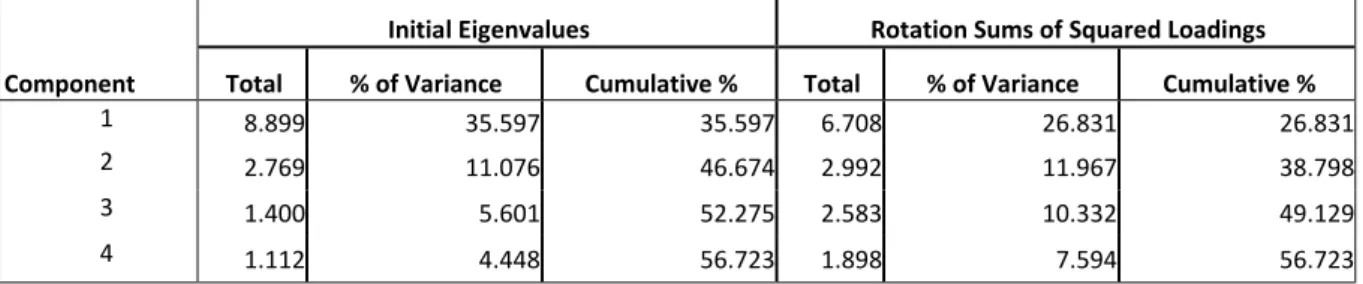
3. In determining number of factors to retain, Kaiser s criteria is selected as it is more accurate when the sample size exceeds 250 and the average communality is very close to 0.6 (14.18/25 = 0.5672) (Field, 2009; Williams & Brown, 2010). The result of factor extraction shows a cumulative percentage of variance of 56.723% with a total of 4 factors which have an eigenvalue of greater one (see Table 1).
Table 1: Total Variance Explained
Component
Initial Eigenvalues Rotation Sums of Squared Loadings
Total % of Variance Cumulative % Total % of Variance Cumulative %
1 8.899 35.597 35.597 6.708 26.831 26.831
2 2.769 11.076 46.674 2.992 11.967 38.798
3 1.400 5.601 52.275 2.583 10.332 49.129
4 1.112 4.448 56.723 1.898 7.594 56.723
Extraction Method: Principal Component Analysis.
4. Based on the scree plots of eigenvalues, the curve begins to flatten out after 4 factors, which representing the point of inflexion. Hence, in lining with Kaiser s rule, four factors are to be retained for interpretation (see Figure 1).
Figure 1: Scree plots of eigenvalues
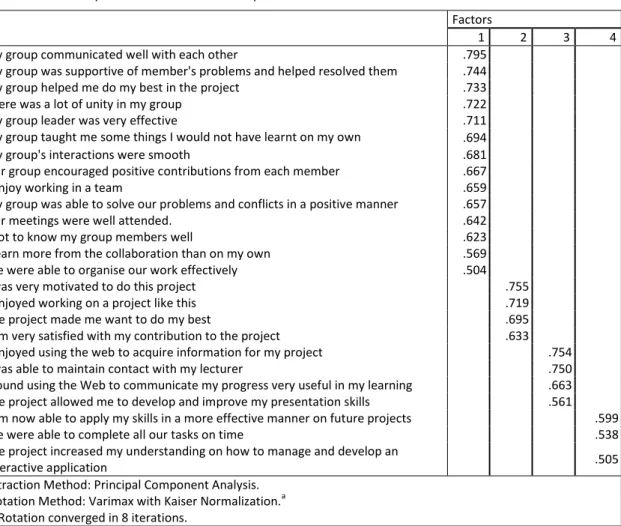
5. In selecting the rotating methods, the orthogonal varimax rotation which capable of maximizing high item loadings is used to produce factor structures. The factor loading is set at 0.5 as the cut-off point as it is considered as strong factor loading coefficient (Tabachnick & Fidell, 2012; Yong & Pearce, 2013). A total of 25 variables were remained in the rotated component matrix after executing four rounds of EFA process to suppress the loadings below .5. Table 2 shows the rotated component matrix with four factors. As each factor is considered meaningful with at least two highly loaded variables, it is acceptable that 14 items are loaded onto factor one, 4 items are loaded onto factor two, 4 items are loaded onto factor three, 3 items are loaded onto factor four.
6. In summarizing and labelling data, the factor structure is developed from 25 survey items with the sample size of 300 by using the principle component analysis (PCA) and orthogonal varimax rotation. The Kaiser-Meyer-Olkin (KMO) measure shows adequate sampling with the result of .928. The
B X2
T K
1, and capable of explaining 56.723% of the variances. The attributes of the survey items are considered in setting the themes for each identified factors for the interpretations (see Descriptive Analysis section). The theme for each factor are: Group learning (FAC1), Motivation (FAC2), Skills Development (FAC3), and Knowledge Transfer (FAC4).
Table 2: Rotated Component Matrix with 4 components
Factors
1 2 3 4
My group communicated well with each other .795
My group was supportive of member's problems and helped resolved them .744
My group helped me do my best in the project .733
There was a lot of unity in my group .722
My group leader was very effective .711
My group taught me some things I would not have learnt on my own .694
My group's interactions were smooth .681
Our group encouraged positive contributions from each member .667
I enjoy working in a team .659
My group was able to solve our problems and conflicts in a positive manner .657
Our meetings were well attended. .642
I got to know my group members well .623
I learn more from the collaboration than on my own .569
We were able to organise our work effectively .504
I was very motivated to do this project .755
I enjoyed working on a project like this .719
The project made me want to do my best .695
I am very satisfied with my contribution to the project .633
I enjoyed using the web to acquire information for my project .754
I was able to maintain contact with my lecturer .750
I found using the Web to communicate my progress very useful in my learning .663 The project allowed me to develop and improve my presentation skills .561 I am now able to apply my skills in a more effective manner on future projects .599
We were able to complete all our tasks on time .538
The project increased my understanding on how to manage and develop an
interactive application .505
Extraction Method: Principal Component Analysis. Rotation Method: Varimax with Kaiser Normalization.a a. Rotation converged in 8 iterations.
3.2
C
A
T R
I C s Alpha test for reliability was
conducted. Overall, it shows the result of 0.921 for all 25 retained items. Particularly, factor 1 (with 14 items) C s Alpha test result of 0.927, factor 2 (with 4 items) shows the result of 0.764, factor 3 (with 4 items) shows the result of 0.722, factor 4 (with 3 items) shows the result of 0.580. According to George & Mallery (2003) rules of thumb, all 25 retained items as well as factor 1, factor 2, and factor 3 can be C s Alpha test result is above 0.7. On the other hand, with a larger sample size and considering the number of items in one factor, factor 4 which has the result below the average cut-off point of 0.7 can still be accepted as a reliable survey (Gliem & Gliem, 2003).
3.3
Descriptive Analysis
Descriptive analysis is used to present the mean scores and standard deviation of each identified factor. It also studies the mean, the cumulative percentage of agreed response (combining both strongly agree and agree) of each of the survey item. As for the factor of Group Learning (FAC1), due to the large number of items, another round of factor analysis was done to sub-divide into two sub-factors, themed as peer interaction and teamwork. The Peer Interaction sub-factor (FAC1-sub1) consists of nine items with the mean of
3.9252 and
the standard deviation of .63520 (see Table 3).Table 3: Descriptive Statistics for peer interaction (FAC1-sub1)
N Minimum Maximum Mean Std. Variance Skewness
Statistic Statistic Statistic Statistic Statistic Statistic Statistic Std. Error
Fac1_1 300 1.56 5.00 3.9252 .63520 .403 -.591 .141
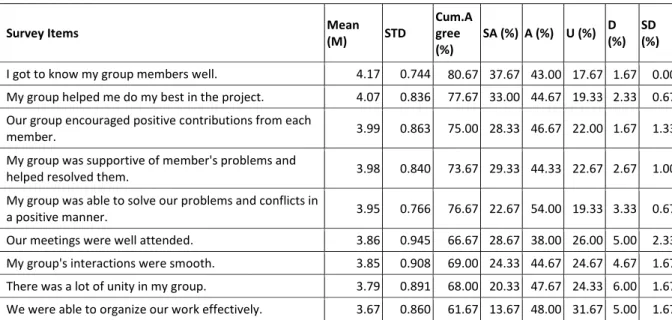
The responses of survey items for peer interaction (FAC1-sub1) can be seen in Table 4. Table 4: Responses to survey items for peer interaction (FAC1-sub1)
Survey Items Mean
(M) STD
Cum.A gree (%)
SA (%) A (%) U (%) D (%)
SD (%) I got to know my group members well. 4.17 0.744 80.67 37.67 43.00 17.67 1.67 0.00 My group helped me do my best in the project. 4.07 0.836 77.67 33.00 44.67 19.33 2.33 0.67 Our group encouraged positive contributions from each
member. 3.99 0.863 75.00 28.33 46.67 22.00 1.67 1.33
My group was supportive of member's problems and
helped resolved them. 3.98 0.840 73.67 29.33 44.33 22.67 2.67 1.00
My group was able to solve our problems and conflicts in
a positive manner. 3.95 0.766 76.67 22.67 54.00 19.33 3.33 0.67
Our meetings were well attended. 3.86 0.945 66.67 28.67 38.00 26.00 5.00 2.33 My group's interactions were smooth. 3.85 0.908 69.00 24.33 44.67 24.67 4.67 1.67 There was a lot of unity in my group. 3.79 0.891 68.00 20.33 47.67 24.33 6.00 1.67 We were able to organize our work effectively. 3.67 0.860 61.67 13.67 48.00 31.67 5.00 1.67
By selecting the items with the mean score of above 4.0, it shows that:
80.67% of students agreed that they know their group members well.
77.67% of students agreed that the group helped to do his/her best in the project. By selecting the items with the mean score of above 3.9, it shows:
75% of students agreed that their group encouraged positive contributions. 73.67% of students agreed that their group supported in problem solving.
76.67% of students agreed that their group was able to solve problems and conflicts. By selecting the items with the mean score of above 3.8, it shows that:
66.67% of students agreed that members attended the group meeting. 69% of students agreed that their group interactions were smooth. By selecting the items with the mean score of above 3.7, it shows that:
68% of students agreed that the members are united.
61.67% of students agreed that they were able to organize the work efficiently.
T m the good relationship among
T we knew each
other for quite a long time team members have their own strengths and weaknesses which can compliments to the development we have work with each other before and are familiar with each
other's capabilities T
personal preferences determine the process of building the work relationship in the group project. With good work relationship, students become more comfortable and active in contributing efforts and providing their supports. These include staying proactive in uniting the group members, sharing the capabilities and
resources T
such as
all of us seconded his idea and add more, whatever happened, we just work together, we don't blame each
other
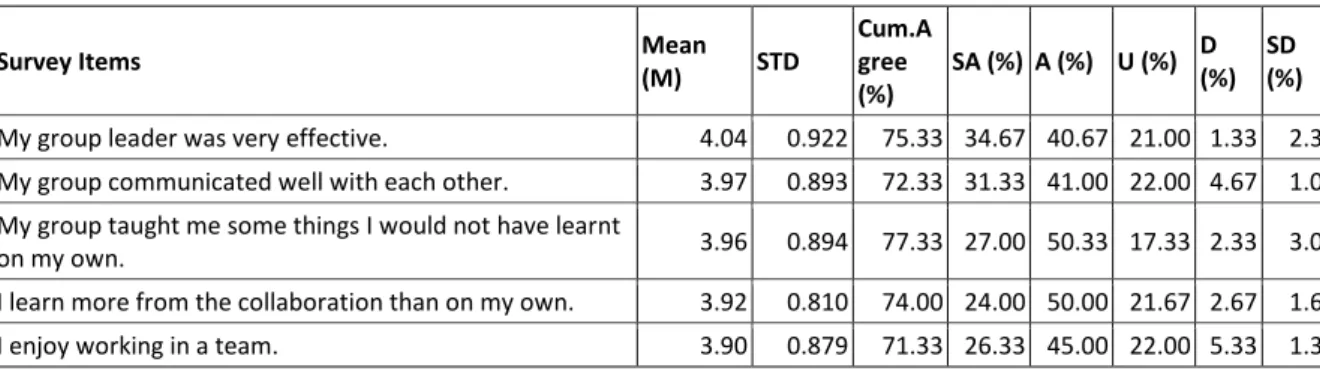
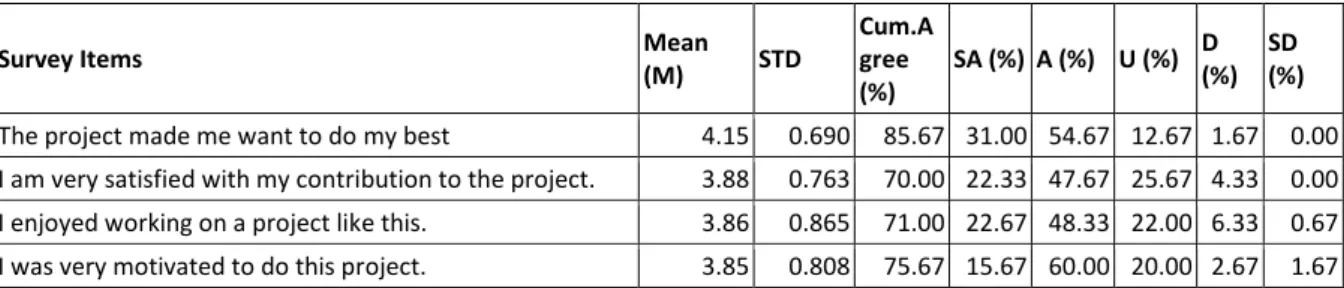
The sub-factor Teamwork (FAC1-sub2) consists of five items with the mean of 3.9573 and the standard deviation of .70168 (see Table 5).