The glue that binds us together
A cognitive comparison of anatomically modern humans and Neandertals through Palaeolithic adhesive making
The glue that binds us together
A cognitive comparison of anatomically modern humans and Neandertals through Palaeolithic adhesive making
Miriam Amé Hiltemann
Master Thesis Archaeology course code:1040X3053Y student number: s0421561
supervisors: Dr. K. MacDonald and A.P. Jagich palaeolithic Archaeology
Table of Contents
Chapter 1: Introduction p5
1.1 Background and research questions p5
1.2 Methods and data p13
1.3 Chapter outline p15 Chapter 2: Approaches to cognitive research in archaeology:a critical review p18
2.1 Chapter introduction p18
2.2 Problems and ways forward p18
2.3 When did sophisticated cognition evolve? p24
2.4 Symbolism and Language p26
2.5 Theory of Mind p30
2.6 Modularity and Working Memory p32
2.7 Apprenticeship and Learning p37
2.8 Chapter conclusions p40
Chapter 3: Sibudu Cave, South Africa: a case study p42
3.1 Chapter introduction p42
3.2 Key trends and research questions in MSA South Africa p42
3.3 Site description p43
3.4 Evidence of hafting p47
3.5 Production Process p49
3.6 Key procedures and knowledge p55
3.7 Cognitive prerequisites p57
3.8 Apprenticeship and learning p66
3.9 A guideline for cognitive inferences p68
3.10 Chapter conclusions p70
Chapter 4: Neandertal adhesive making in palaeolithic Europe p72
4.1 Introduction and research context p72
4.2 Background and Research context p72
4.4 Inden-Altdorf, Germany p77
4.5 Adhesive production process p79
4.6 Key procedures and knowledge p85
4.7 Cognitive Prerequisites p86
4.8 Apprenticeship and learning p91
4.9 Conclusions p92
Chapter 5: Discussion and Conclusions p94
5.1 Methods p94
5.2 Results p95
5.3 Alternative explanations p99
5.4 Concluding remarks and possibilities for future research p100 References
List of tables and figures
Figures
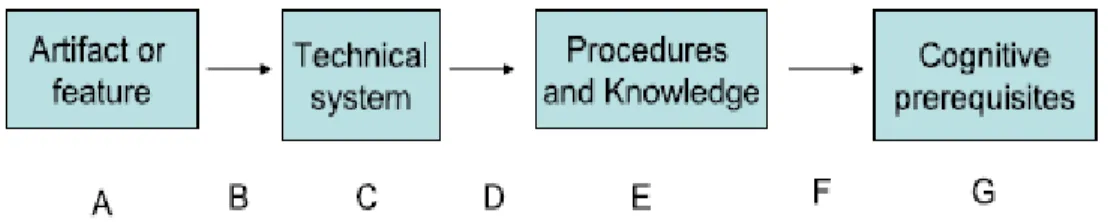
Figure 1 Schematic overview of Henshilwood and d'Errico's argument p23 (Botha 2008)
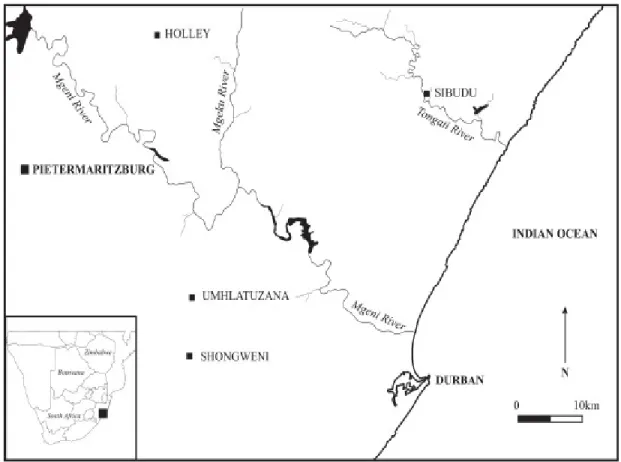
Figure 2 The location of Sibudu Cave (Wadley 2006) p44 Figure 3 Diagram of the stratigraphy on the Northern wall of the p45 Sibudu Cave test pit (Wadley 2006).
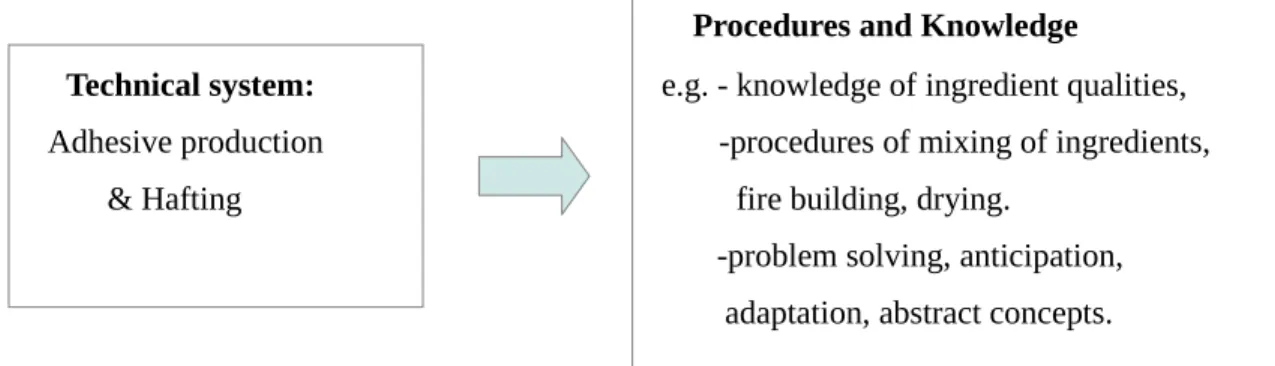
Figure 4 Wynn's (2009) adapted form of Botha's (2008) schematic p49 argument.
Figure 5 Wadley's inferential step from technical system to procedures p50 and knowledge, based on Wynn's (2009) adapted form of
Botha's (2008) schematic argument.
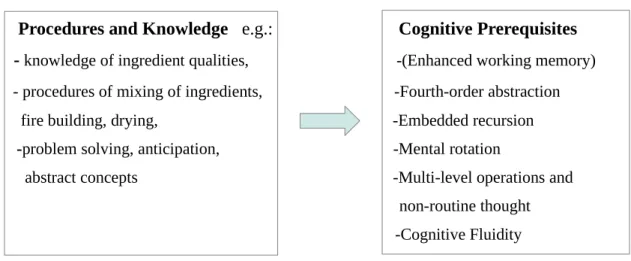
Figure 6 Flow chart of the AMH adhesive making process p56 Figure 7 Wadley's inferential step from procedures and knowledge, p57 to cognitive prerequisites, based on Wynn's (2009) adapted
from of Botha's (2008) schematic argument.
Figure 8 Map showing the location of Königsaue and Inden-Altdorf. p75 Figure 9 Pitch pieces from Königsaue A and B, respectively p75 (Koller et al. 2001).
Figure 10 Stratigraphy showing the Middle Palaeolithic horizons A, B p76 and C of the northern bank of former lake Ascherleben
(Koller et al. 2001).
Figure 11 Stratigraphy of the eastern slope of the Inde valley excavation, p78 showing Eemian layers (Pawlik and Thissen 2011).
Figure 12 Birch pitch residues found on artefacts from Inden-Altdorf p79 (Pawlik et al. 2011)
Figure 13 Inferential step from artefact or feature to technical system, p81 based on Wynn's (2009) adapted form of Botha's (2008)
Figure 14 Inferential step from technical system to procedure and p85 knowledge, based on Wynn's (2009) adapted form of Botha's
(2008) schematic argument.
Figure 15 Flow chart of the Neandertal adhesive production sequence. p86 Figure 16 Inferential step from procedure and knowledge to cognitive p87 prerequisites, based on Wynn's (2009) adapted form of Botha's
(2008) schematic argument
Tables
Table 1 Guideline for the requirements necessary for cognitive p68 inferences with archaeological and cognitive validity.
Table 2 Knowledge and Procedures shown in AMH adhesive p70 production process that correspong to cognitive inferences.
Chapter 1. Introduction
1.1 Background and research questions
The workings of the human mind as well as the evolution of mankind itself are areas that remain greatly unexplored. As a psychologist and an archaeologist, they are both of great interest to me. The combination of these two fields of research in the fairly recent
practice of cognitive archaeology might not seem very logical however. What can a study focusing on living subjects and their neurological and behavioural actions and responses contribute to one focusing on the remains of people living thousands of years ago? The obvious second question is of course why we would want to go into this line of research. Can cognitive research truly contribute to the archaeological field of study, and is it worth studying? Because of this seemingly weak link, the importance of cognitive research, and its relevance to the archaeological field need to be underlined before moving on to further research and results that are based on the interaction between these two disciplines.
Archaeology in itself is limited by several interpretative constraints. Problems of preservation and discontinuity play a major role in the interpretation of archaeological data. Despite being limited by these constraints, its interests are broad, and include the reconstruction of not just past human behaviour, but society as a whole and all its influencing factors, including the cognitive processes underlying behaviour. When looking at the evolution of mankind, it is not only our physical and cultural qualities that are part of this evolution, but also our cognitive capabilities. Archaeology is not capable of dealing with these matters on its own however. Archaeological data might be able to provide a time line and background to the evolution of our cognitive capacities, but it cannot explain the reasons behind the behavioural changes seen in the record or the questions they raise concerning their bases in changes in cognitive and neural characteristics. These can only be answered through the incorporation of modern
cognition studies. Archaeology has thus through necessity become more interdisciplinary throughout the years, incorporating psychological and neurological research and theory into its repertoire in the process. This had led to the introduction of cognitive
Through the incorporation of these cognitive sciences, the field of cognitive archaeology tries to reconstruct the nature of the prehistoric mind, in an attempt to explain the behaviour reflected by the material remains in the archaeological record.
The application of this cognitive research to archaeology has led to further problems however. The models and theories of cognitive science were not made with archaeology in mind, nor were archaeological models made with cognition in mind. Because of this separation, most of these theories are not especially well suited to the other respective field, and their application often does not live up to the standards of both fields.
Regardless of these problems, there have been several attempts within
archaeology to comment on the evolution of human cognition. In order to do so within archaeology, we must necessarily look at the material remains of past human behaviour, and try to link this behaviour to aspects of cognition. Because much of the research is focused on finding out when humans evolved the cognitive skillset we posses today, this has led to the discussion of which behaviours are and which are not representative of modern day cognition.
al. 2007; Soffer 2009).
The same is true for the term “modern cognition”. There is no agreed upon set of constructs which constitute “modern”cognition. The term is often used to imply different cognitive constructs that are thought to reflect hallmark aspects of current cognitive sophistication, such as syntactical language, symbol-use, enhanced working memory, or multiple intelligences (Nowell 2010).
A further point of confusion is that the term “modern behaviour” is not always used in connection with cognition. Not all researchers are of the opinion that the changes in behaviour seen through the archaeological record reflect changes in cognition. Some believe rather that these changes reflect social, demographic, historical, or cultural factors (Nowell 2010). Chase (2006) argues for instance that symbolic behaviour was present in humans long before it became detectable, and only became visible in the archaeological record after it started to influence social behaviour.
As the purpose of this thesis is to evaluate certain aspects of cognition however, I will be focusing on cognitive explanations of behaviour. I will be using the term
“sophisticated” cognition, to indicate aspects of cognition which are thought to represent modern-day cognitive capabilities. The term “modern” will be used only to describe other authors' opinion on the subject of behavioural and cognitive modernity, as used by them.
Despite all these issues, several theories have been put forth by different authors on how, when and where modern humans developed the cognitive capacities they possess today (McBrearty and Brooks 2000; d'Errico 2003; Bar-Josef 2003; Klein and Edgar 2002; Wynn and Coolidge 2009).Some have argued for a relatively sudden onset of modern behaviour and cognition around 50.000 years ago (Bar-Yosef 2003; Klein and Edgar 2002; Wynn and Coolidge 2009), while others have posited that this was the result of a much more gradual development, with characteristics of cognitive sophistication having been assembled over a period of over 200.000 years over several different continents (McBrearty and Brooks 2000). Still others have suggested a parallel and gradual development of aspects ofcognition in different regions throughout the world, by different groups of hominins (d'Errico 2003).
behavioural evolution, they generally do not explicitly mention what these cognitive changes precisely entail. There have been some theories in which this has been attempted. These can be generally divided into three main categories. The first focuses on
symbolism and language (e.g. Henshilwood 2004). The second focuses on Theory of Mind, the ability to attribute mental states such as beliefs, intents and desires to oneself and to others (e.g. Barnard 2010). The third focuses on modularity; the division of the mind into closed-off, domain specific modules; and working memory, a cognitive construct that is responsible for holding information in active memory for further processing (e.g. Mithen 1996; Wynn and Coolidge 2009). Especially the symbolic
approach has been very popular within cognitive archaeology. Research into this field has unfortunately not always taken the modern views of cognitive science into account, and has often failed to be specific about the cognitive abilities under discussion, or whether these abilities are recognized by cognitive science (Wynn and Coolidge2009).
Studies incorporating more recent lines of cognitive theory, have gradually moved away from this symbolic approach, and have underlined the importance of probabilistic (non-symbolic) reasoning and information processing as one of the underlying factors in cognitive sophistication (Doya et al. 2007; Chater and Oaksford 2009; Clark 2008). This suggests that we should be more rigorous in carrying out cognitive archaeology and consider non-symbolic explanations along with the other theories that have been put forth.
So far, all the theories that have been mentioned have focused on the cognitive development of anatomically modern humans (AMH). Very few attempts have been made to accurately determine cognition for other hominin species throughout history, whose cognitive abilities are often viewed as simply “not human”, and therefore less impressive or less interesting. The focus on anatomically modern humans is not completely surprising, as much of what drives cognition research is the interest in how our particular cognition developed throughout time, and the ability to possibly help answer current cognitive questions.
cognitive capacities evolved in different stages throughout evolution. They point out that as some of these aspects are shared with other primates, in order to understand human cognition we cannot look at Homo sapien cognition alone. Determining similarities and differences between primates and modern humans for instance can help answer questions of when certain aspects of cognition may have developed. Research into this area can also aid in explaining the extinction and survival of groups of hominins, by looking for evidence of cognitive abilities that would have aided or limited their survival. It can also be helpful in determining questions of relatedness with other species, alongside evidence from fossil morphology and DNA.
All these issues are relevant to our own evolution. Of course from an
archaeological perspective, it has equally as much value in itself, without necessarily informing us about anatomically modern humans. By looking at the evolution of
cognition of hominins in general, it can provide valuable information regarding all sorts of questions concerning the archaeological record, and why specific traces are found or lacking in it.
Specifically research into Neandertal cognition, being our closest relative in time, could provide great insight into our evolutionary history. There have been a few attempts made at determining the cognitive sophistication of Neanderthals (e.g. Wynn and
Coolidge 2004; Mithen 1996). These have been mostly based on interpretations of Neanderthal behaviour as seen through the archeological remains.
For a long time before the arrival of AMH, from around 200 to 30 ka (Wynn and Coolidge 2011) Neandertals ruled throughout Europe, adapting to the constantly
changing climatic conditions. Studies have shown Neandertals to have adapted to these changing circumstances very well, allowing them to dominate in Europe for thousands of years. Neandertals have often been left behind in the discussions concerning
language (Deacon 1997; McBrearty and Brooks 2000; Adler et al. 2006; Tattersall 2009). Evidence for range expansion for instance comes from recent research (Krause et al. 2007) showing Neandertals to have expanded their range even further than previously thought. Evidence has been found of their presence at the sites of Teshik Tash,
Uzbekistan; where the remains of a human child were found to carry Neandertal mtDNA; and Okladnikov cave, Siberia; where the remains of an adult and sub-adult individual were found to have belonged to a population related to European and Western Asian Neandertals (ibid.). This evidence shows Neandertals to have traveled some 2000 kilometers further east than previously thought, and to clearly have been capable of adapting to differing climatic circumstances(ibid.)
Indications of long-term planning come from evidence of hunting behaviours that are very similar to that of AMH, with the two being equally skilled at exploiting a range of different ecological zones (Adler et al. 2006).
Evidence from sites such as the Grotte du Renne, Caune de Belvis, Saint-C´esaire and Quinçayalso indicate Neandertal production of ornaments and bone tools, seen through the presence of re-fittings and by-products (d'Errico 1998; d'Errico and Zilhao 1999; Zilhao 2007). Though this is disputed by certain authors (Higham et al. 2010), claiming intrusion of symbolic artefacts from overlying Protoaurignacian layers, other authors (Caron et al. 2011) deny this statement, arguing for stratigraphic integrity. If stratigraphic integrity is indeed maintained, this could indicate the use of symbolism by Neandertals, on which as we have seen many indications of cognitive complexity for AMH have been based (Deacon 1996, 1997; McBrearty and Brooks 2000; Henshilwood 2004; Tattersall 2009)
Analysis of Neanderthal anatomy indicates that they were also probably capable of speech, though the precise level of speech is not known (Wynn and Coolidge 2011). Evidence from fossil endocasts of Neandertal skulls, indicating an expanded Broca's area (a region in the brain used to control speech production) supports this idea (ibid.)
2010). This has raised questions of phylogenetic relatedness of our two species.
These behaviours are all very similar to those seen in AMH, but have not led to similar inferences on their possible cognitive capabilities.If such areas of cultural, technological and subsistence overlap between Neandertals and modern humans indeed existed, and there were enough physical and genetic similarities to allow for successful interbreeding, the possibility of there having been cognitive similarities as well is not so far-fetched. Even though the link between Neandertals and specific cognitive capabilities might be difficult to make, it seems that it has remained disproportionately unresearched.
The link between modern humans and their cognitive evolution is clearly a fragile one. However, the evidence that has been accepted as implying sophisticated cognitive capabilities for AMH should be applied to the Neandertal record with equal validity if similar evidence is found. Most research seems to rather easily set aside the possibility of Neandertal cognitive sophistication to work on AMH cognition, often assuming it to be less complex than our own and possibly not worth much effort. This is of course very much in line with, and possibly influenced by, the general and popular view of Neandertals being merely simple cavemen, of not especially high intelligence.
This corresponds to Roebroeks and Corbey's (2001) suggestion of a double standard being used when it comes to interpretations of archaeological evidence from the Upper Palaeolithic period and AMH, and the Middle and Lower Palaeolithic periods and earlier hominin species. This double standard is illustrated by the authors through an example concerning the interpretation of evidence for purposeful burial by Neandertals. While the criteria set up for intentional burial (Gargett 1988) are applied very strictly to the Neandertal context, leaving the record with no remaining intentional burials by Neandertals, these criteria are applied much more loosely to the Upper Palaeolithic period for AMH burials. The authors note that should these criteria be equally strictly applied to the Upper Palaeolithic period, most (22 out of 28) of these so-called burials would also not live up to the proposed standards (Villa 1989) of intentional burial. This illustrates the tendency of many researchers to view evidence of Neandertal behaviour in a different light than that of AMH, leading to obvious biases in interpretation.
standards in this area through a specific case study. The aim of this thesis will be to compare specific findings from the Neandertal record with similar findings from the AMH record that have been used to imply cognitive sophistication for AMH. This comparison will then be used to comment on Neandertal cognition. Through a comparison of a generally well-accepted source of evidence for AMH cognitive sophistication at Sibudu Cave, South Africa (Wadley et al. 2010), and several sources from the European Neandertal record (Koller et al. 2001, Pawlik and Thissen 2011 ), I will attempt to comment on the level of cognitive sophistication of the Neandertal mind. I will use the evidence from Sibudu Cave, South Africa (Wadley et al. 2010) as a starting point for this comparison. This research shows modern humans to have manufactured a compound adhesive used to attach stone points to shafts to create spears. These adhesives date to around 70 ka (ibid.). Through a very well documented replication of the adhesive production process, it has been argued that creating this adhesive required several
cognitive skills equally advanced as those modern humans possess today, namely
enhanced working memory (Wynn and Coolidge 2009), fourth-order abstraction (Barnard 2010), multi-level operations and non-routine thought (Amati and Shallice 2007), mental rotation (Kane 2004), embedded recursion (Reuland 2010), and cognitive fluidity
(Mithen 1996).
My reasons for using this specific research are twofold. The first is that the cognitive implications that are made are based on technical procedures and knowledge rather than indications of symbolism. Where the weight and meaning of symbolic
behaviour has been greatly disputed in archaeological as well as cognitive interpretations, this is less so for tool manufacture. The second reason is that similar examples of
adhesive production can be found in the European record associated with Neandertals (Koller et al. 2001; Mazza et al. 2006; Pawlik and Thissen 2011), thus allowing for an optimum comparison between the two species.
have been described by many however as merely “simple” adhesives (Wadley et al. 2009), that do not involve much effort to create, and certainly do not imply any advanced cognitive abilities. They have therefore not been linked to any cognitive theories, nor have any attempts been made to draw any conclusions as to the cognitive capabilities of Neandertals from them.
Though an analysis of the cognitive implications made by Wadley for the adhesive production at Sibudu Cave has already been made (Wynn 2009), in order to accurately compare this case with examples from the Neandertal record, a more in-depth analysis is required as a basis for a cognitive comparison.
1.2 Methods and data
The main research question for this thesis will be whether it is possible to comment on Neandertal cognition through the study of AMH and Neandertal adhesive production. This research question will be divided into several subquestions. The first question will be whether the inferences on AMH cognition, based on the evidence for adhesive production are convincing and well-founded. The second will be whether the adhesive production processes of AMH and Neandertals under review are can be reliably compared. The third question will be whether the cognitive capacities that have been linked to AMH, and found to be valid, can be linked to Neandertals as well. The fourth and final question will be whether alternative cognitive explanations can be found to account for the adhesive production of Neandertals and AMH other than the constructs of cognitive sophistication that have been suggested.
These questions will be investigated by looking at the adhesive production process for AMH at Sibudu Cave as well as the accompanying cognitive inferences, which will be evaluated with respect to their validity. The production process of the two German Neandertal sites will then be inspected and compared to that of Sibudu Cave, and possible cognitive implications based on this process will be considered.
detail below. The two sets of guidelines that will be used for this evaluation will be Botha's (2008) concepts of groundedness and warantedness, and Wynn and Coolidge's (2009) strict standard. These two guidelines can be used simultaneously because they have similar requirements. Wynn and Coolidge's strict standard (2009), made up of the criteria of archaeological and cognitive validity, correspond broadly to Botha's (2008) requirements of groundedness and warantedness, respectively. These criteria will be applied by looking at the archaeological data, assessing whether the methods that were used are in line with current archaeological approaches for this type of evidence, and evaluating the cognitive/psychological evidence for the inferred constructs and relating this to cognitive validity.
The data for this study will consist of published material on Palaeolithic adhesives from Sibudu Cave, South Africa (Wadley 2010); Königsaue, Germany (Koller et al. 2001), and Inden-Altdorf (Pawlik and Thissen 2011), also in Germany. In addition, I will use literature on experimental and cognitive studies (Wynn and Coolidge 2009,Barnard 2010, Amati and Shallice 2007; Kane 2004; Haidle 2010; Reuland 2010, and Mithen 1996) which are used as a basis for evaluating the cognitive inferences of the adhesive production process at Sibudu Cave.
I have chosen the site of Sibudu Cave because it is a generally well-accepted source of evidence for modern human cognitive sophistication, for which a very elaborate description is available of the production process of the adhesive created there by early humans. The elaborate nature of the description of the production process, including detailed accounts of the production sequence, chemical investigations, use-wear studies, and microscopic analysis, will allow for a thorough analysis of the production process itself as well as the interpretations of cognition based on that process.
relative closeness in age of these samples compared to those at Sibudu Cave (~70 ka) (Wadley 2010) also makes for a good comparison. I have chosen to use two sites for this analysis because it will provide a larger sample and thereby a better foundation for my conclusions of Neandertal cognition being comparable in certain aspects to that of anatomically modern humans.
1.3 Chapter outline
Following the introduction, the second chapter will underline the importance of
cognitive research in archaeology. Beginning with a detailed description of the problems one encounters when applying cognitive theory to the archaeological setting, and possible ways to circumvent these, this will be followed by a more elaborate description of the cognitive theories that have been applied to the archaeological setting within the field of cognitive archaeology. I will analyse their strong and weak points, and discuss the more recent influences coming from the field of cognitive science regarding these theories, as well as the manner in which they might be applied to the archaeological setting. Wynn and Coolidge's (2009) strict standard, and Botha's (2008) criteria of groundedness and warantedness will be discussed as guidelines for the structuring of a valid argument in cognitive archaeology, which will then be applied to the following chapters.
This overview will aid in my analysis of the models used by Wadley (2010) for Sibudu Cave, help me to critique them, and suggest possible alternative models that could be applied to the evidence for adhesive production
Chapter 3 will entail a description and analysis of the production process of the hafting material used at Sibudu Cave as described by Wadley in her 2010 article
use-wear studies, residue analyses, and microscopic analysis, which have provided identifying markers to indicate hafting (Rots 2002). This information will come from Wadley's current analysis as well as from earlier work (Lombard 2005, 2006; Delagne et al. 2006; Shae 2006; Wadley 2006). This analysis will be used to summarize the key procedures and knowledge shown in the production process.
This will be followed by an analysis of the cognitive inferences made by Wadley in the article. The link between the procedures and knowledge that are used, and the cognitive abilities that are inferred from them, will be analysed. In order to do this, I will evaluate the cognitive models on which Wadley bases her claims for cognitive
sophistication, and comment on their relevance, strong and weak points, and their validity and acceptance within the field of cognitive science. The inferences themselves will be critiqued on their archaeological and cognitive validity according to Wynn and Coolidge's strict standard (Wynn and Coolidge 2009), as well as Botha's arguments for groundedness and warantedness (Botha 2008).
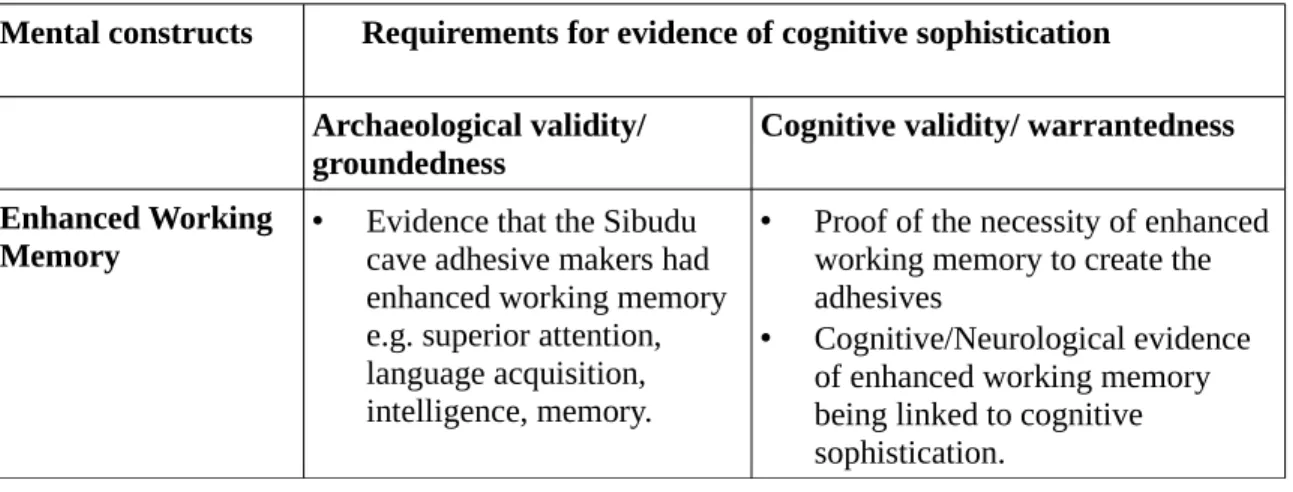
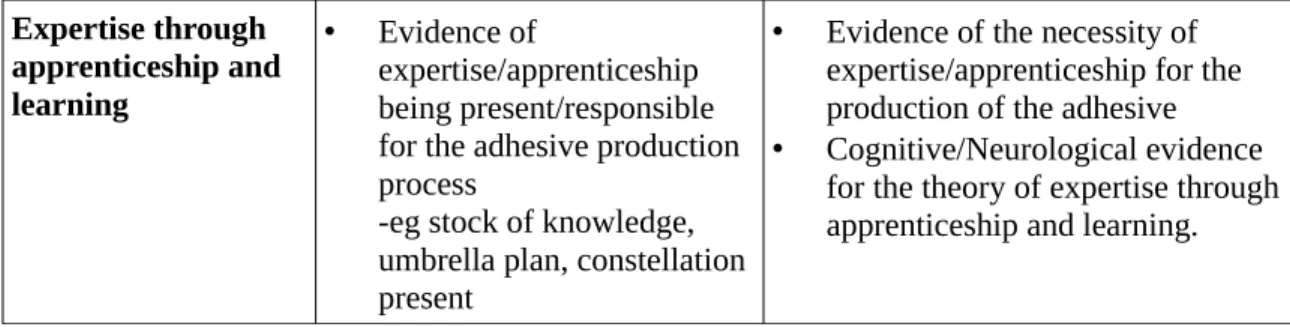
On the basis of this analysis a guideline will be set up for the knowledge and procedures required for these cognitive inferences. In order for these inferences on cognition to live up to the criteria for archaeological validity, they must be clearly indicated in the archaeological record. For cognitive validity, the procedures and skills must be shown to be necessary for the production process, and have support from
cognitive science. These guidelines will then be connected to the actual procedures and/or skills described in the production process. This guideline will then be employed in the next chapter in order to comment on the cognitive sophistication of Neandertals, and to see which inferences might be made with regard to the local adhesive production process.
made that these would have been responsible for the production process, rather than the more advanced ones (Wynn and Coolidge 2009).
Chapter 4 will entail an analysis of the two German sites. This will again involve the description and analysis of the hafting procedure at the sites of Königsaue, and Inden-Altdorf, Germany, based on residue analysis, use-wear studies and microscopic analysis (Koller et al. 2001; Pawlik and Thissen 2011). The same careful evaluation will be applied to these sites as was applied to Sibudu Cave in the previous chapter. The validity of the claim of adhesive and tool production will be looked into first, again with respect to its archaeological validity (Wynn and Coolidge 2009), and Botha's (2008) requirement of groundedness. A description will be given of the possible adhesive manufacturing process at the sites, along with an evaluation of the ingredients and techniques that are used in this sequence.
As there have been no former attempts to link the production sequences at these sites to cognition for Neandertals, this will be the goal of the following section. Careful evaluation of the production process will determine precisely which actions and/or skills were required to produce the adhesives at these sites. I will then determine which
cognitive inferences might be made based on these actions that can satisfy the criteria for cognitive validity (Wynn and Coolidge 2009) and warantedness (Botha 2008). I will further attempt to find possible alternative cognitive explanations that might be applied to the Neandertal context, once again drawing from my earlier analysis and other sources of cognitive science.
Chapter 2. Approaches to cognitive research in archaeology: a critical review
2.1 Chapter introduction
The goal of this thesis is to compare AMH and Neandertal cognitive abilities involved in adhesive making. In order to do this, I must first give an overview of the different models and theories used in cognitive archaeology to make this kind of
comparison. In order to gain a better understanding of the intellectual background of this field, and where its research has brought us so far, this chapter will serve to outline the different approaches that are used, their successfulness and current standing within cognitive science, and their usefulness for this thesis. It will outline the difficulties in such cognitive applications to archaeology and provide guidelines for overcoming these difficulties. This will aid me in my analysis of Wadley's research by identifying the cognitive background of the inferences made by her, and help me to evaluate them more accurately. It will also help me identify alternative approaches that might be applicable to Wadley's research.
Before the main theories are explained more fully, it is necessary to acknowledge some of the main problems in applying cognitive research to the archaeological field, and the ways in which we might overcome these problems. There have been a few researchers who have set up guidelines for carrying out sound cognitive archaeology (Botha 2008; Wynn and Coolidge 2009). These will be discussed currently.
2.2 Problems and ways forward
results unfortunately cannot be replicated as in laboratory circumstances. A lot of material can only be analysed a limited amount of times, and it is impossible to go back and document items in their original state again once they've been removed. Everything needs to be documented correctly the first time, or risk biasing all future interpretations based on that documentation.
A second problem is that of preservation. Material remains that are found are necessarily biased, as some materials survive more than others in the archaeological record, and many do not survive at all. This is why stone tools are by far the largest group of artifacts found in the record. Some environments, such as very dry or cold areas, preserve material much better than for instance tropical areas (Wynn 2002), causing a definite skew in the apparent location of finds. One area can appear to be a highly favoured location for past hominin visitation, due to its high find density, whereas another produces no finds at all. These areas might be labeled as unfavourable, when in reality the difference is merely due to different levels of preservation. Colder areas might seem more behaviourally diverse than warmer ones for instance, because more material has survived there. Age is another influencing factor, for the further back in time we go, the less we find, giving a misleadingly progressive appearance to the record (Wynn 2002). This will tend to make more recent behaviour seem more varied, and lead to the interpretation of increasingly complex cognition, when this is not necessarily the case.
Wynn, having studied these issues intensely for quite some time (Wynn
1979;1985;1991;2002; 2010) has boiled these problems and biases in the record down to two concrete questions concerning cognitive implications that are based on this record. The first question is “if traces of actions can reliably inform us about aspects of
cognition”(Wynn 2002, 389). The second is “if archaeologists can overcome the methodological problems accompanying these issues” (Wynn 2002, 389).
should be any doubt, or possible alternative explanations, there is no test subject to fall back on to strengthen your theoretical arguments. Archaeologists need to provide highly reliable evidence of the cognitive meaning of archaeological finds. This is of course not very easy, partly due to the fact that cognitive models were not created with the
archaeological setting in mind, nor archaeological models with cognition in mind. Looking at archaeological approaches for instance, the technocultural taxonomy used in archaeological classifications is an organizational system that was defined based purely on tool types and manufacturing techniques, and did not have cognition in mind when it was created (Wynn and Coolidge 2009). These periodizations can affect interpretations of behaviour and cognition (Roebroeks and Corbey 2001).
Wynn and Coolidge have argued that many researchers have approached cognitive archaeology the wrong way around. They start with archaeological remains, and try to build a cognitive argument from there, when instead they should be starting with a behaviour linked to an aspect of modern cognition, and try to identify archaeological indications of this behaviour (Wynn and Coolidge 2009).
In order to make sure cognitive implications based on archaeology are indeed reliable, Wynn and Coolidge have developed what they have called a “strict standard” for cognitive archaeology (Wynn and Coolidge 2009). This strict standard is made up of two main components: cognitive validity and archaeological validity. Cognitive validity requires that the cognitive ability that is argued is not only recognized by cognitive science, but is also necessary for the behaviour stated, and that this behaviour must be required for the archaeological traces implying this behaviour. Archaeological validity holds that the archaeological evidence in itself must be credible, and based on accepted scientific archaeological methods (ibid.).
In this strict standard, they argue that for a cognitive archaeological argument to be persuasive and to have cognitive validity, it needs to adhere to three methodological requirements. The first requirement listed by Wynn and Coolidge states that “it is
cognition. The second requirement is that “the archaeologist must identify specific actions or sets of actions that are enabled by the ability in question”(ibid., 118). Because the archaeological record consists of traces of actions, not traces of cognition, the link between the two must be explicit. The third and final argument states that “the
archaeologist must then define a set of criteria (attributes), by which these actions can be reliably identified in the archaeological record”(ibid.,118). It is through adherence to this type of framework that archaeologists will be capable of making reliable cognitive inferences from traces of actions.
This brings us to the second question, whether archaeologists are able to overcome the methodological difficulties accompanying the inherent problems in archaeology. Wynn (2002) proposes that in order to overcome the obstacles of an
incomplete record, and preservation and age biases, cognitive archaeologists should look from a more psychological perspective, instead of a purely archaeological one, and avoid using standard archaeological classifications of time periods and cultural complexes to comment on cognition. Rather than trying to define differences in cognition for certain industries or complexes, they should work from a more evolutionary scale, focusing on long-term patterns of change instead of specific changes in technology or cultural complexes (ibid.).
that fully syntactical language would have been required (ibid.).
Botha has argued however that the underlying arguments for this line of reasoning are not sound. He introduces the two concepts of groundedness and warantedness, which he applies to the arguments at hand. The first concept, that of groundedness, states that “inferences about (language) evolution need to be grounded in data or empirical
assumptions about properties of phenomena that are well-understood” (Botha 2008, 200), in other words, they must have some evidential basis in order for them to be valid. The second concept, that of warantedness, states that “the inferential steps leading to conclusions about what (language) evolution involved need to be suitably warranted or licensed” (ibid. 200). In other words, there should be a good argument explaining how these different phenomena are connected, and how the inferential step can be made from one domain to another, also known as “bridge theory” (Botha 2003).
According to Botha however, the inferences involved in the case of the shell beads at Blombos cave lack suitable grounding and warranting on several levels (Botha 2008). He argues that in order for there to be evidence of fully syntactical language, there are several assumptions that are made which need to be better supported by evidence. For instance, what is the evidence that these beads are in fact symbols or representations at all, and if so why did the people who made them require a fully syntactical language to do so? Why couldn’t they have had a less evolved language and still have made these beads, or have no language at all and still have used symbols (Botha 2008, 206-207)? The steps taken in the argument to link beads to language are made clear by use of a
schematic overview (fig 1). According to Botha, some of the bridging arguments (steps D and F) lack suitable grounding and warranting to connect the inferences made through them; such as the beads representing symbols (C to E) or the symbols requiring
syntactical language (E to G); to be considered scientifically valid.
For the “bead window” for instance, Henshillwood and colleagues argue that the beads are in fact symbols. They use definitions of the meaning of symbols to support there arguments. These state that “symbols are objects that have a meaning” (Botha 2008, 203), “The meaning of symbols is assigned by arbitrary social conventions, tacit
display of information external to the human brain” (ibid., 203). Botha argues however, that for their argument to be valid they need to provide evidence of these symbol
properties. The specific meaning these beads had to the Blombos Cave inhabitants would need to be specified, the social conventions, agreements or codes on which the meaning of these symbols was based would need to be provided, and the information that was stored through these beads would need to be given, all of which they fail to do. This leaves the inference of beads being symbols ungrounded.
Figure 1 Schematic overview of Henshilwood and d'Errico's argument (Botha 2008)
Both Wynn and Coolidge's strict standard and Botha's theory of groundedness and warantedness show the need for strong arguments and supporting evidence when making inferences on cognition. I believe that it is only through the application of such strict measures that we can make a truly sound cognitive argument in archaeology. I will therefore use these strict measures in my own analysis of the adhesive production process at Sibudu Cave, along with up to date and well-supported cognitive scientific theories, and apply them to the cognitive inferences that are made based on this production
process. Archaeological validity will be assessed through an examination of the evidence given to support the inferences. These will be evaluated on whether they are up to date with current archaeological methods used to make these inferences. Cognitive validity will be assessed through several ways. An evaluating will be made of Wadley's
references on the coming background review. Lastly, the necessity of the cognitive construct for the related behaviour will be analysed. This will provide a framework for my analysis of the Sibudu Cave adhesive manufacture.
2.3 When did sophisticated cognition evolve?
Despite all these problems, the question of how and when sophisticated human cognition evolved has been of interest to many researchers, and several attempts have been made to describe and trace human cognitive evolution throughout the past. These attempts have been based mainly on lists of traits seen in the archaeological record, originally those distinguishing Middle Palaeolithic (MP) and Upper Palaeolithic (UP) records in Europe. Some authors relate these traits to the appearance of certain types of behaviour (e.g. McBrearty and Brooks 2000). These behaviours are then used by some to imply changes in human cognition (e.g. McBrearty and Brooks 2000; Wynn and Coolidge 2009). The discussion in this area has gone mainly between people favouring a gradual evolution of “modern” behaviour and early cognitive change (McBrearty and Brooks 2000), and those that favour a more sudden and later onset (Bar-Josef 2003; Klein and Edgar 2002; Wynn and Coolidge 2009).
Those in favour of a more revolutionary type of change argue that the transition from the Middle to the Upper palaeolithic reflects such a change in specific behaviour and material types, that is is likely that this was also the transition to sophisticated cognition as we know it today. Bar-Josef (2003) for example, has taken the side of the “human revolution”, claiming that many of the distinctly modern traits seen in the Upper Palaeolithic, such as standardization and variability in tool types, the exploitation of certain raw materials for ritual purposes, the use of body decorations and long distance exchange networks, were not present in the same way in the late Middle Palaeolithic. According to these researchers (Bar-Josef 2003; Klein and Edgar 2002; Wynn and Coolidge 2009), the changes in the Upper Palaeolithic occurred at a much more rapid pace than those seen in the Middle Palaeolithic, and therefore indicate a revolutionary change.
(McBrearty and Brooks 2000). According to them these former “revolutionary” findings are based on an incomplete record, as there is much less evidence from parts of Asia and Africa than from the European record, giving a clear bias to the sample. McBrearty and Brooks argue instead that this “revolution” was not a revolution at all, but a gradual change over time. According to them, many of the traits that some would describe as not occurring until the Upper Palaeolithic, such as specialized hunting strategies (McBrearty and Brooks 2000, 510) can actually be seen in parts of Africa much earlier than they are seen in Europe. They suggest that this set of behaviours did not occur suddenly, but was assembled over a period of 200 ka (McBrearty and Brooks 2000, 458) in Africa, and only later dispersed to neighbouring regions such as Europe. It is their belief that Africa has been dismissed as the source of complex behaviour because researchers have focused on trying to find a “human revolution” similar to the one supposedly seen in Europe during the transition from the late Middle palaeolithic to the Upper palaeolithic. According to McBrearty and Brooks this transition has been unjustly equated with the African
transitional period between the Middle Stone Age and the Late Stone Age, when the two should not be so compared. The lack of such a revolution in Africa has been interpreted as lack of evidence for these changes, when according to the authors this is merely because the changes were much more gradual.
Finds from Blombos cave in South Africa are used to support these claims of earlier “modern” behaviour in Africa. Two ochre fragments found at the site bear
similarly engraved geometric patterns (Henshilwood et al. 2002), dated to around 77 ka, and according to d’Errico and colleagues suggest ritual use (d'Errico 2003). Recent evidence has shown a number of other MSA sites to also possess stone and ochre items with engraved pattern, supporting this claim (Henshilwood and Dubreuil 2011).
McBrearty and Brooks make the valid argument that if this type of artifact is seen as evidence for “modern” behaviour in Europe, then the same interpretation must be made regarding the African finds. This would give the African record the earlier evidence of “modern” behaviour and cognition, as the dating on these fragments far precedes any found in European context.
the parallel and gradual development of cognition in different regions throughout the world. They suggest that different groups of hominins may have reacted in a similar way to comparable ecological conditions or pressures (d'Errico 2003). Through the course of this thesis, I will analyse if cognitive inferences made for Homo sapien cognition can also be applied to Neandertal cognition, assessing whether, for these constructs, cognitive development was similar.
The arguments that have been discussed so far have focused on the chronology and geographical origin of “modern” human behaviour. Another question is how the changes in the record can be explained. Both cognitive change and other processes provide possible explanations. Explanations in terms of cognition can be roughly divided into those based on symbolism and language, those based on Theory of Mind, those on modularity and working memory, and some alternative approaches. These different approaches will be discussed below.
2.4Symbolism and Language
A heavy emphasis in much of the existing literature is placed on symbolism and language as a basis for sophisticated cognition and behaviour. Several researchers have argued that language and symbolism, though not equivalent, are nonetheless interconnected and are two of the main components of the evolution of the modern human mind (Deacon 1997, Tattersall 2009). Deacon (1996), for instance, has argued that the evolution of the human mind is mainly about the evolution of language, of which symbols are the essential
element. He described symbols as “representations of social conventions, tacit agreement, or explicit codes that link to one another and are mediated by some formal or merely agreed upon link irrespective of any physical characteristics of either sign or object” (Deacon 1997, 70). He believes that the evolution of language can be explained through the acquisition and manipulation of these symbols and symbol-relations. Similarly, Tattersall (2009) has argued for the uniqueness of Homo sapiens in the natural world, specifically because of their possession and use of symbolic reasoning, while other hominin species are argued have been far behind in this aspect.
of recursion. Recursion is the repeating of items in a self-similar way. In language it is the method of combining and restructuring sentences, while keeping their inherent meaning. Recursion has been central to many theories of language, most prominently those of Noam Chomsky (1959). The link has been made from language to tool use, arguing that the manipulation of objects can show structural and cognitive parallels to language, including recursion and concepts such as past and future (Haidle 2010), which is
discussed in more detail in the following chapter. Though the importance of recursion in language has been challenged by some (Everett 2005), claiming that not all people use a language in which recursion plays an essential role, it has recently been shown through neurolinguistic studies to be supported by neurobiological brain structures that deal specifically with recursive language, which are present in all humans (Kaan et al. 2002).
The focus on language and mainly symbolism in explaining archaeological phenomena brings about several problems. One problem with using so-called symbols found in the archaeological record, is that because of their connection with language, they are often used to make inferences on it. Several authors (McBrearty and Brooks 2000) have noted however, that it is highly unlikely that the first signs of symbolism in the archaeological record actually coincide with the beginning of language. Indeed, others suggest that language probably developed much earlier in humans than it was manifested in their material culture (Henshilwood and Marean 2003). Though this is important to remember, it a probably a generally unavoidable issue in cognitive archaeology.
A second problem is shown by Botha's (2008) critiques, namely the difficulty in extracting valid and scientifically founded conclusions from instances of so-called symbolism in the record, especially when attempting to make inferences on cognition. The bridging arguments for this line of reasoning need to be very strong and grounded in archaeological and cognitive evidence.
77 ka at Blombos cave (Henshilwood 2004). If symbolism is truly the distinguishing characteristic of modern humans, and if, as Renfrew points out, it is indeed a genetic characteristic that is the cause of these changes to symbolic behaviour (Renfrew 2008), why then, do we not find earlier traces of it in the archaeological record? Though this might be a general problem in cognitive archaeology, related to the incomplete state of the archaeological record, it it still a valid point, and worth looking into.
Klein has suggested (Klein 2001), in line with Wynn and Coolidge (2009), that this might be due to a genetic mutation that was not accompanied by any physical changes. If this mutation took place after the transition to anatomical modernity, this would explain the delay in cognitive sophistication, implying that anatomical modernity does not refer to cognition. Others have suggested that it might not be due to a single genetic mutation or occurrence, but due the gradual development of an increasingly symbolic way of thinking (Renfrew 2007), which would be more in line with the gradual development of modern behaviour proposed by McBrearty and Brooks (2000).
These explanations all still imply that symbolic reasoning is fundamental for cognitive sophistication. This is where cognitive archaeology and cognitive science diverge. Whereas cognitive archaeology still very much relies on these explanations of symbolism, cognitive science has increasingly started questioning this connection
(Thelen and Smith 1993; Ballard 1991), and has since moved on to different explanations of cognitive complexity.
According to cognitive science, the emphasis placed on symbolism relies on the belief that symbolism needs to be reflected in a physical or functional way through the use of material symbols, when that does not necessarily need to be the case (Thornton 2012). Even though symbolism was long thought to be critical to complex cognition and integration (Marr 1977; Boden 1977; Winston 1984), the necessary neurological
et al. 2008). These are all cognitive abilities that have been linked to modern cognitive sophistication (Coolidge and Wynn 2001, 2005, Wynn and Coolidge 2003). Symbolic reasoning has not been shown to have this type of neurological link to sophisticated cognition.
Research into artificial intelligence has shown that symbolic reasoning machines do not to have the same amount of power and fluidity as the modern human mind, even when capable of similar levels of symbolism (Clark 1997). This would imply that
symbolism on its own is not a necessity for sophisticated cognition. Critics have made the point that approaches that focus on symbolic reasoning to explain cognition are
philosophically flawed (Wheeler 2005). They are argued to be dependent on conceptual projection, i.e. requiring physical representations (Thornton 2012). Thornton makes the point that where a set of ideas is responsible for a certain behaviour, these ideas or
behaviours do not need to have a physical representation (Thornton 2012; Wheeler 2005). Instead of looking purely at symbolism and its physical representations therefore, it is suggested that instead the focus should be on the underlying processes of symbolism.
More recent approaches in cognitive science underline the greater likelihood and neurological foundation of probabilistic (non-symbolic) forms of reasoning and
incorporation of more up to date cognitive scientific theories through more interdisciplinary work between the two fields.
Though I agree with the need to reevaluate archaeology's reliance on symbolic theory, the problem with not linking symbolic ideas to actual physical representations of those ideas, but rather to abstract ideas, is that it would make it very hard to find any archaeological evidence to comment any further on the evolution of our cognition. Though it is necessary to stay up to date with cognitive science in order to create valid conclusions, the restriction inherent to the archaeological field might not allow us to follow al lines of modern cognitive science like these.
The above review has identified several issues when it comes to the use of symbolism and language in cognitive archaeology. Both concepts do not leave strong traces in the archaeological record, making them very hard to identify. Any traces that are found, are often so disputed that they need very strong evidence to back them up in order to meet the criteria for archaeological validity. Especially when making inferences on cognition, these concepts need to be represented by exceptionally clear evidence for them to be warranted in inferring any cognitive capabilities. Though evidence of language use is hard to find archaeologically, it does have cognitive and neurological support for its importance as an aspect of sophisticated cognition. The same cannot be said for symbolism, which, though used frequently by archaeologists, had received more and more criticism from cognitive science as a construct for identifying cognitive
sophistication. These issues often make any cognitive inferences made from language and symbolism speculative. I will therefore not be using these approaches in my analysis of adhesive production and comparison of cognitive capabilities of AMH and Neandertals.
There are some alternative approaches to cognitive evolution other than language and symbolism however, two prominent ones being Theory of Mind and Modularity, which will be discussed presently.
2.5Theory of Mind
(Premack and Woodruff 1978) and refers to the ability to attribute mental states such as beliefs, intentions, desires and knowledge, not only to oneself, but also to others. It includes the understanding that others may not share the same beliefs and ideas as we do. It is often equated with the term “meta-representation”, or the ability to represent mental representations. This ability is often listed as one of the cognitive capabilities specific to modern human cognition (Amati and Shallice 2007; Barnard 2010).
Research into chimpanzee behaviour has shown them also to have a partial Theory of Mind however. They have a basic understanding for instance of what others see and how this may influence their behaviour, though there is no evidence that they understand the beliefs of others, or concepts such as prior intentions, different
perspectives, and attention (Tomasello et al. 2003). Though chimpanzee Theory of Mind may not be as developed as that of modern day humans, who do possess these aspects of Theory of Mind as well as the ones shared by chimpanzees, it does allow for the
assumption that this reduced level of Theory of Mind was also present in our common ancestor (Kane 2004).
This has allowed theories based on Theory of Mind to suggest a development of the concept throughout our evolutionary history. One such theory proposes that human cognition developed from a basic model regulating sensory input and output to one with many different subsystems, that represents fully modern cognition with all its abilities, including conceptual planning, Theory of Mind, an aesthetic sense and an algorithmic capacity, that supports productivity and learning (Barnard 2010). This theory has been used to support the claims of cognitive sophistication based on hafting adhesives created at Sibudu Cave, which will be discussed in more detail later.
ecological function, supported by the fact that primates appear more skilled at solving social problems than ecological ones (Cheney and Seyfarth 1990). Study has shown primates and humans to spend about 20% of their time in social interaction (ibid.). For primates this is done through grooming, and the time spent grooming has been shown to be correlated with their neocortex size and the size of their social group (Kudo et al. 1999). Because of mankind's evolution to a larger brainsize, and thereby a larger neocortex size, this would increase human group size as well as their time spent
grooming. The group size and grooming time of primates was therefore used to predict grooming time for humans with their increased neocortex and group size. This turned out to be around 40% of their time, much in excess of what would be possible in order to stay alive (Dunbar 1998). Dunbar suggests that Theory of Mind and language developed as mechanisms to deal more effectively with this increase in group- and brainsize, and that grooming was gradually replaced by “vocal-grooming-at-a-distance”, to allow for better time management (Aiello and Dunbar 1993). Dunbar proposes a date of 250 ka as the point in time where this change in grooming mechanism would have taken place, corresponding broadly with the emergence of our own species (Dunbar 1998). This theory would correspond with the findings of human having a more advanced Theory of Mind than chimpanzees (Tomasello et al. 2003).
This capacity is one that is well-defined and researched as well as supported by cognitive science. Though chimpanzee research would indicate that it is not a matter of presence or absence of Theory of Mind for Neandertals and AMH, the question can be raised if their levels of Theory of Mind were as advanced as those of modern day people. Though the concept could prove difficult for archaeologists to work with directly, as ideas, beliefs and intentions are unlikely to be clearly visible in the archaeological record, primate research could be very useful in determining the levels of Theory of Mind of past hominin species, adding to our knowledge of their cognitive capacities.
2.6 Modularity and Working Memory
theory, and refers to the idea that the mind is composed of independent, closed, domain-specific processing modules.
Cognitive fluidity is a term coined by Mithen (1996) in the nineties, and used in his model for human intelligence, based on the principal of modularity, where it
represents the interaction of different forms of intelligence, allowing for original and creative thought, problem solving, information storage, abstract thought, metaphor, analogy and more (ibid.) This model is based on human a intelligence evolving through 3 different phases, which Mithen (ibid.) compares to the structure of a cathedral. Phase one involves the basic framework of general intelligence, or the outer structure of the
cathedral dome as described by Mithen(ibid.) This phase is evident in chimpanzees, and therefore most likely mirrors the intelligence of our common ancestor (ibid.). Phase two involves the evolution of different domains of intelligence surrounding the general intelligence, described by Mithen (ibid.) as separate alcoves in a cathedral, yet still not in direct contact with one another. These domains represent different forms of intelligence, namely: social intelligence, which deals with the interaction with other humans; technical intelligence, concerning the production and use of tools; natural history intelligence, to due with elements of the natural world relevant to us; and language intelligence (ibid.). Phase two can be seen, or at least inferred from the archaeological context, in early humans. In this phase, and according to Mithen (ibid.), early humans therefore did not have cognitive fluidity. This conclusion is based on analyses of environmental evidence, settlement patterns, hunting strategies and analyses of social, technical and linguistic accounts. It is only in phase three that the different domains come into contact with each other, and interaction between different forms of intelligence, known as cognitive fluidity, becomes possible. This phase, according to Mithen (ibid.), is seen only in anatomically modern humans, and can be witnessed through the combination of natural history intelligence and technical intelligence culminating in rock art, cave paintings, multi-component tools and such. Other examples are ornaments, created through the
anatomically modern humans.
This is contradicted however, by the wooden spears found in Schöningen, dating to 300.000 to 400.000 ka BP (Thieme 1999, 2005). As these spears have been found to require a specific woodworking technique (whittling), according to Mithens (1996) theory this should be a clear case of the crossing of domains (natural history and technical intelligence) (Haidle 2012). This would contradict Mithen's (1996) idea of cognitive fluidity only being present from around 50 ka BP onward.
Further criticism of Mithen's (1996) theory has been aimed at the lack of compelling evidence to support it. Critiques have regarded a lack of explanation as to why modularity should suddenly have broken down, and what the benefit was for the individual to no longer have a modular mind, especially after millions of years of it being assumingly beneficial to earlier hominin species (Sambrook 1999). Also questioned, is the storage of information in the modules and their lack of interaction up to phase three. A disregard for the possibility of knowledge being stored in more than one module is suggested. Bone, for example, could be stored in the natural history module, being part of an animal, and in the technical module, being a raw material for tool manufacture (ibid.). Further critique is aimed at the lack of any supporting evidence from neurological
science. There has been no support found for any structures or regions on the brain being responsible for domain specific aspects of intelligence (McDermott 1997). Without this support, it remains an untested theory.
concepts have been linked to modern cognitive sophistication through executive function (Coolidge and Wynn 2001, 2005, Wynn and Coolidge 2003). Some researchers have created theories and models of cognitive evolution around the concept of working memory and how the many cognitive constructs involved in it came into being (Wynn and Coolidge 2009). Wynn and Coolidge for instance have proposed that a neural mutation led to an increase in working memory capacity, which in turn led to the
development of these aspects of modern cognition and behaviour listed above (Wynn and Coolidge 2009). They argue that this is not at all a strange suggestion, as humans are in fact the products of a long history of genetic mutations and natural selection. They propose that it was not the single genetic event was the cause of instant changes to modern cognition but that it acted on a preexisting set of cognitive abilities that resulted in a marked change in behaviour towards what we now call “modern” behaviour. A less sophisticated cognitive technique suggested by Wynn and Coolidge (2007b) that may have been employed before this change in behaviour and cognition, is that of expertise through apprenticeship and learning, which will be discussed below.
Though executive functions play an important role in many theories of cognitive sophistication, the working memory model used by Wynn and Coolidge has been called into question by several cognitive psychologists (Barnard 2010; Beaman 2010; Engle 2010; Martin-Loeches 2010). These critics focus mainly on the fact that there has been no convincing evidence tying cognitive indicators of modern cognition to an extension of working memory (Haidle 2010). Haidle (2010) underlines the fact that the evolution of working memory cannot be studied in the same manner as is used usually applied for neurological studies on living subjects however. She argues that in order to trace the development of executive brain functions such as working memory, archaeological material must be found in the record to support this, which is already limited (Haidle 2007). A further problem is that the features of “modern” behaviour and cognition often named by archaeologists, that need to be tied to this extension, are too narrow and static to allow for proper tracking of these constructs on an evolutionary scale (ibid.).
cognitive complexity, flexibility and decision making through the concept of problem-solution distance (Haidle 2010). She poses that tool behaviour, which has been
recognized as an extension of indirect thinking (Kohler 1926), can be seen as an indication of the problem-solution distance (Haidle 2010). When tools are employed to solve a problem, the ultimate goal of for instance obtaining an item of food, must be temporarily set aside in favour of a temporary goal of finding a tool with which to accomplish this ultimate goal of finding food. According to Haidle (ibid.) this problem-solution distance yields information on the cognitive flexibility of a species. Here she gives the example of a comparison between different animal species. Where some species are known to use tools for very specific purposes, such as birds using sticks to build a nest, others use tools for very varied purposes and in many different ways. Chimpanzees for instance, use a range of tools such as sticks, stones, leaves, twigs, and branches in order to obtain food, investigate their surroundings, to communicate, play, defend themselves, and more (ibid.). The more flexibility that is shown within this problem-solution paradigm, the more decisions therefore need to be made on how to reach the desired goal (ibid.).
According to Haidle (ibid.) this problem-solution distance is reflective of several general aspects of the executive functions of working memory such as planning,
attention, decision making, flexibility, and the integration, comparing, processing and rehearsal of information. She argues that a similar comparison can be made for humans by looking at operational sequences of tools. More complex problem-solution units, such as are required for composite tools, are then reflective of further developed executive functions of working memory (ibid.).
chapters.
2.7 Apprenticeship and Learning
An alternative model recently proposed by Wynn and Coolidge (2007b) as possibly having played a large part the history of tool proficiency, is that of apprenticeship and learning (ibid.). This model is based on the performance of certain actions through the construct of expertise. Expertise is described here as being “based on patterns and procedures that are held in long-term memory and that can be accessed quickly and deployed with a minimum of attention” (ibid., 45). Still one of the main problem-solving strategies used by people today, it is responsible for many learned behaviours, such as driving, playing a musical instrument (well), cooking, and many other actions that require practice. The main difference between expertise and other forms of problem solving is that it is learned through apprenticeship. Wynn and Coolidge have identified the main elements in apprenticeship to be procedural memories, which require great amounts of practice to learn fully (ibid.). These procedural memories are stored in what is known as long term working memory (LTWM) (ibid.).
Unlike regular working memory, LTWM can hold information in storage for a longer period of time (ibid.). Using retrieval cues (items of knowledge linked to longer encodings of knowledge) (Ericsson and Kintsch 1995) people are able to encode and retrieve information very rapidly into LTWM. This type of information storage is only used by people within their areas of expertise though, and is not easily required. Ericsson (1995) has estimated a time span of around a decade to adequately learn the required technique in any field, not just to master the basic skills, but also to be able to handle any changes in circumstances that might occur during the process by drawing on a large store of internalized procedures and routines. Though this is a very flexible and powerful way of thinking, it a rather narrow domain, being limited to a person's area of expertise only (Wynn and Coolidge 2004).
Wynn and Coolidge (2004) illustrate this by looking at the practice of
used, namely “stock of knowledge”, “umbrella plan”, and “constellation” (Kellar 1996). Stock of knowledge refers to the entirety of knowledge held by the smith on materials, procedures, results, and visual and tactile information, as well as semantic
knowledge(Wynn and Coolidge 2004). This, according to Wynn and Coolidge is comparable to the information stored in LTWM (ibid.). “Umbrella plan” is the smith's mental representation of the production process and final goal, including the exact procedures required to achieve that goal (ibid.). Umbrella plans include knowledge of materials, time, costs, as well as visual and tactile information (ibid.). Wynn and Coolidge (ibid.) have suggested that this umbrella plan also relies on retrieval cues, as they are formed according to the task at hand. The concept of “constellation” represents the “configurations of ideas, implements, and materials” (Keller and Keller 1996, 91) which account for the completion of one step in the production process. It includes the actual tools and materials required to reach this stage. According to Wynn and Coolidge (2004) these constellations are retrieval structures linked to tools and materials, which can access the required images and procudures, and can encode new knowledge into long term memory (ibid.)