LONGITUDINAL PREDICTORS OF GENDER ATTITUDES AND RELATIONSHIPS AMONG GENDER ATTITUDES, GENDER IDENTITY AND EDUCATIONAL CHOICES
OF BLACK AND WHITE YOUTH
Olivenne D. Skinner
A dissertation submitted to the faculty at the University of North Carolina at Chapel Hill in partial fulfillment of the requirements for the degree of Doctor of Philosophy in the Department
of Psychology (Developmental).
Chapel Hill 2014
iii ABSTRACT
Olivenne D. Skinner: Longitudinal Predictors of Gender Attitudes and Relationships Among Gender Attitudes, Gender Identity and Educational Choices of Black and White Youth
(Under the direction of Beth Kurtz-Costes)
This study focuses on two domains of gender development: Gender attitudes and gender identity. Based on Bronfenbrenner’s bioecological model (Bronfenbrenner & Morris, 1997), and Eccles et al.’s (Eccles, 1987, 1994) model of achievement related choices, I hypothesized that individual characteristics and contextual factors are related to the development of youth’s gender attitudes (Study 1), and that gender attitudes and gender identity are related to educational attainment expectations in Grade 11, traditionality of college major, and educational attainment three years post high school. Race and gender were examined as moderators of these
relationships (Study 2). Data were drawn from the Maryland Adolescent Development in
Contexts Study (MADICS; Eccles, 1997). Study 1 used four waves of longitudinal data across 7 years (N=1343). Study 2 data (N = 796) were from Grade 11 and three years post high school graduation.
iv influence gender identity.
In Study 2, endorsement of more traditional gender attitudes was negatively related to educational attainment expectations among boy and girls, but traditional gender attitudes predicted lower educational attainment among boys. Educational attainment expectations mediated the relationship between gender attitudes and educational attainment. Gender identity was also important in youth’s achievement related choices. Boys who reported higher self-perceptions of femininity reported lower educational expectations, and youth of both genders who reported higher self-perceptions of femininity attained less education. Among boys, higher levels of masculine gender identity positively predicted educational attainment expectations and years of education. Girls’ self-perceptions of masculinity were unrelated to educational
v
vi
TABLE OF CONTENTS
LIST OF TABLES ... vii
LIST OF FIGURES ... ix
GENERAL INTRODUCTION ...1
STUDY 1: PREDICTORS OF GENDER ATTITUDES FROM ADOLESCENCE THROUGH YOUNG ADULTHOOD ...7
Study 1 Method ...18
Study 1 Results ...21
Study 1 Discussion ...31
STUDY 2: GENDER ATTITUDES, GENDER IDENTITY AND ADOLESCENT’S EDUCATIONAL CHOICES ...53
Study 2 Method ...62
Study 2 Results ...65
Study 2 Discussion ...74
GENERAL DISCUSSION ...80
APPENDIX 1: STUDY MEASURES. ...96
vii
LIST OF TABLES
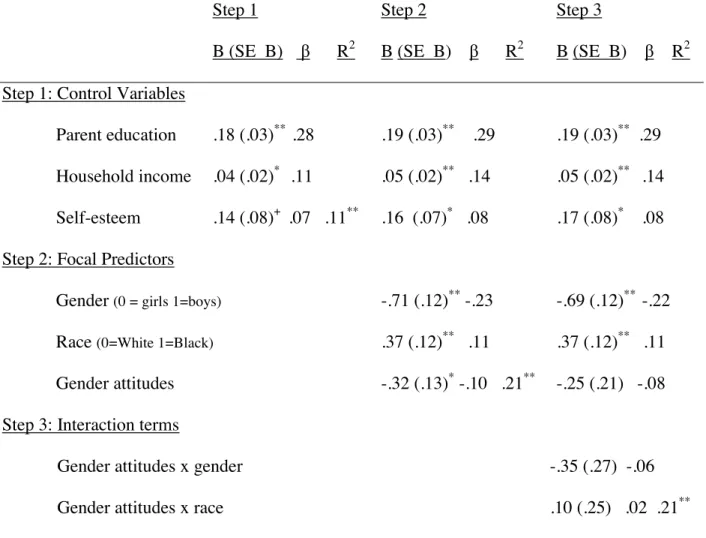
Table 1.1 - Bivariate Correlations Between Key Study Variables ...41 Table 1.2 - Mean and Standard Deviations of Study 1 Variables ...42 Table 1.3 - Unconditional Latent Growth Models for Girls and
Boys’ Gender Attitudes...43 Table 1.4 - Conditional Latent Growth Models Predicting Girls’
and Boys’ Gender Attitudes with Equality Constraints ...44 Table 1.5 - Coefficients and R2 Values for Stepwise Regression
Models Predicting Gender Attitudes Three Years post High School ...46 Table 1.6 - Regression Models Testing Auto-Regressive and
Cross-Lagged Relations Between Gender Attitudes and
Feminine Gender Identity for Girls...47 Table 1.7- Regression Models Testing Auto-Regressive and
Cross-Lagged Relations Between Gender Attitudes and
Feminine Gender Identity for Boys ...48 Table 1.8 - Regression Models Testing Auto-Regressive and
Cross-Lagged Relations Between Gender Attitudes and
Masculine Gender Identity for Girls ...49 Table 1.9 - Regression Models Testing Auto-Regressive and
Cross-Lagged Relations Between Gender Attitudes and
Masculine Gender Identity for Boys ...50 Table 2.1 - Bivariate Correlations Between Study 2 Variables ...83 Table 2.2 - Mean and Standard Deviations of Study 2 Variables ...84 Table 2.3 - Coefficients and R2 Values for Stepwise Regression
Models Predicting Youth’s Grade 11 Educational Attainment
Expectations From Grade 11 Gender Attitudes ...85 Table 2.4 - Coefficients and R2 Values for Stepwise Regression
Models Predicting Youth’s Grade 11 Educational Attainment
viii
Table 2.5 - Coefficients and R2 Values for Stepwise Regression Models Predicting Youth’s Grade 11 Educational Attainment
Expectations From Grade 11 Masculine Gender Identity...87 Table 2.6 - Coefficients and R2 Values for Stepwise Regression
Models Predicting Educational Attainment Three Years
Post High School From Grade 11 Gender Attitudes ...88 Table 2.7 - Coefficients and R2 Values for Stepwise Regression
Models Predicting Educational Attainment Three Years
Post High School From Grade 11 Feminine Gender Identity ...89 Table 2.8 - Coefficients and R2 Values for Stepwise Regression
Models Predicting Educational Attainment Three Years
Post High School From Grade 11 Masculine Gender Identity ...90 Table 2.9 - Coefficients Predicting the Traditionality of Youth’s College
Major Three Years Post High School From Grade 11 Gender Attitudes ...91 Table 3.0 - Coefficients Predicting the Traditionality of Youth’s College
Major Three Years Post High School From Grade 11
Feminine Gender Identity ...92 Table 3.1 - Coefficients Predicting the Traditionality of Youth’s College
Major Three Years Post High School From Grade 11
ix
LIST OF FIGURES
Figure 1.1 - Changes in Gender Attitudes From Grade 8 to Three Years Post H.S ...51 Figure 1.2 - Hypothesized Latent growth Curve Model for Gender Attitudes ...52 Figure 2.1 – Youth’s Grade 11 Educational Attainment Expectations
as a Mediator of the Relationship Between Gender
1
GENERAL INTRODUCTION
It is undeniable that the work and family roles of men and women in American society have changed over time. At the turn of the 20th century both women and men contributed to the financial well-being of the family unit because much of the work was done in the home.
However during the mid 20th century it was believed that the roles of women were to nurture children and be the emotional bedrock of the family unit while husbands worked outside the home. Today, more than 85% of mothers are in the work force, but they encounter challenges in the form of the gender wage gap, lack of subsidized childcare, and other gender discriminatory practices because of society’s subtle belief that the “place” of women is in the home. Such gender cognitions that define distinct roles for men and women based on perceived differences about their abilities and nature are evident in local and national policies as well as in individuals’ personal choices. Given the importance of these cognitions for individuals’ and society’s well-being, research is needed to understand how these cognitions develop and their consequences for adolescents’ achievement-related beliefs and behaviors. The goal of this project is to increase our understanding of youth’s gender attitude development and to examine the relationships among gender attitudes, gender identity, and youth’s educational attainment expectations and
educational choices. The unique changes that occur during adolescence (e.g., physical maturation which heightens the salience of gender, changes in family and peer relationships, increased cognitive development, and identity exploration) make this an important
2
The processes of interest will be investigated in two studies using data from the Maryland Adolescents in Context Study (MADICS; Eccles, 1997). In Study 1, I examine if individual characteristics (sex, gender identity), experiences (attending college) and family contextual factors (social class and mothers’ gender attitudes, employment, and marital status), are related to the construction of youth’s gender attitudes. In Study 2, I examine if gender attitudes and gender identity predict youth’s educational attainment expectations, educational attainment, and college major during early adulthood. In the following sections, I discuss the two gender
constructs that are the focal point of both studies: Gender attitudes and gender identity.
Gender Attitudes
A variety of gender attitudes have been studied during adolescence and early adulthood, ranging from work-family gender ideology (Davis & Pearce, 2007) to beliefs about girls’ and boys’ abilities in gender-typed academic domains (e.g., Kurtz-Costes, Rowley, Harris-Britt & Woods, 2008). In the present study, I use gender attitudes to refer to beliefs about the ways that roles should (or should not) differ based on gender, or are more or less suitable for men and women (e.g., It is usually better for everyone involved if the man is the "breadwinner" outside the home and the woman takes care of the home and family). Gender attitudes represent an important dimension of gender development because they are theoretically related to the life choices individuals make (Eccles, 1994), and empirical evidence shows that they are directly related to expectations about the age of transitions into adult roles (Crockett & Beale, 2012), educational attainment expectations (Davis & Pearce, 2007), educational attainment and family formation (Cunningham, Beutel, Barber, & Thornton, 2005). Although gender attitudes become more flexible through childhood and early adolescence, there may not be a universal
3
We know much about the gender attitude development of White, middle class youth; however, relatively little attention has been devoted to understanding the gender attitude development of Black youth. It has been suggested that Black adolescents might have more egalitarian gender attitudes than their White peers because they are raised by gender egalitarian parents, but results from one longitudinal study using a national dataset did not show race differences in gender attitudes among Black and White adolescents (Davis, 2007). The few studies in which the gender attitudes of Black youth have been examined suggest that, similar to African American adults, they endorse both traditional and egalitarian gender roles depending on the domain. For example, in one study although the majority of low-income African American adolescents and young adults did not endorse traditional roles for women such as “raising children should be the role of the woman,” most agreed that a man’s role includes protecting women (West & Rose, 2000). African American girls have reported that women should be caretakers, emotionally strong, and financially independent, whereas their male counterparts reported that men should be financially independent, tough, and sexually skilled (Kerrigan et al., 2007). Using the Attitudes Towards Women Scale (Galambos, Petersen, Richards, & Gitelson, 1985), a measure that focuses on beliefs about the roles and appropriate behaviors of men and women, Ward, Hansbrough, and Walker (2005) found that, on average, African American high school students did not strongly endorse traditional gender attitudes. Overall, the variety of measures used, the lack of longitudinal studies, and diversity in socioeconomic status of the participants in prior research prevents conclusive statements regarding the gender attitudes of African American youth.
4
Gender identity in its most basic sense, knowing that one is a boy or girl, emerges between two and three years of age (Fagot & Leinbach, 1989). However, many other definitions and measures of gender identity have been used in the literature with the intent to capture a person’s sense of self as male or female (Zucker & Bradley, 1995) including feelings about biological sex and self-presentation as male or female (Berenbaum et al., 2006). The definition of gender identity I use in this project is related to Spence’s (1993) definition: an individual’s basic psychological sense of belongingness to his or her biological sex, but more specifically, the degree to which an individual sees him- or herself as masculine and feminine.
Rather than being polar ends of a continuum, masculinity and femininity are two independent dimensions (Bem, 1981). In most western societies it is generally considered appropriate for men to display masculine characteristics such as dominance, competiveness, assertiveness, and other instrumental traits, whereas women are expected to be warm,
relationship oriented, passive, cooperative, and to show other expressive characteristics (Stets & Burke, 2000). Unlike biological sex, femininity and masculinity are socially constructed. It is possible for a man to perceive himself as highly feminine or a woman to perceive herself as highly masculine, or for members of both genders to endorse high levels of masculinity and femininity.
5
expectations about personality traits, abilities, behaviors and preferences (Spence, 1993). Similarly, children and adolescents use different factors to arrive at a general sense of how typical they are as members of their gender category, or their gender typicality (Egan & Perry, 2001; Skinner et al., 2014).
Although some researchers continue to use the traits instrumentality and expressivity to infer masculine and feminine gender identity, it is misleading to infer one’s overall level of masculinity or femininity based on gender typing in one area because gender is multidimensional and multifactorial (Perry & Pauletti, 2011; Spence, 1994). Using Egan and Perry’s (2001) multidimensional conceptualization of gender identity many interesting findings have emerged. For example, among children and adolescents gender typicality is related to psychological adjustment and to men’s choice of non-traditional college majors (e.g., Corby & Hodges, 2007; Egan & Perry, 2001; Leaper & Van, 2008). Examining gender identity in terms of overall feelings of masculinity and femininity may inform our understanding of other developmental outcomes such as the achievement related choices adolescents make. A goal of Study 2 is therefore to examine if adolescents’ self-perceptions of masculinity and femininity are related to their educational expectations, educational attainment, and traditionality of their college major.
Theoretical Foundations of Study 1 and Study 2
6
that shape the development of youth’s gender attitudes. More specifically, I examine if
adolescents’ personal characteristics (sex, masculine gender identity, feminine gender identity), and experience (attending college) are related to their endorsement of traditional gender roles during the summer prior to high school, and if these factors are related to the longitudinal trajectories of their gender attitudes. In addition, I examine the ways in which adolescents’ gender and race interact with features of their family context (mothers’ gender attitudes,
household income, and mothers’ marital and employment status) to shape their gender attitudes. In Study 2, I draw on Eccles et al.’s (Eccles 1987,1994) model of achievement related choices. In this model, individuals’ educational, vocational, and other achievement-related choices are shaped by their expectations for success and the value they place on the options that are available. These achievement-related beliefs and values are further linked to several factors, including gender role beliefs. For example, Eccles (1994) suggests that the images individuals develop of themselves or who they want to become include their beliefs about the proper roles of men and women. Eccles et al.’s model underscores the complexity of the educational,
7
STUDY 1: PREDICTORS OF GENDER ATTITUDES FROM ADOLESCENCE THROUGH YOUNG ADULTHOOD
Because gender attitudes have implications for individuals’ personal and professional lives (Corrigall & Konrad, 2007; Crockett & Beale, 2012; Cunningham et al., 2005; Davis &
Greenstein, 2009), it is important to examine factors that influence their development. Although much is known about factors that are related to the gender attitudes of adults, less is known about gender attitude development across adolescence and young adulthood. The overarching goal of Study 1 is to examine individual and contextual factors that are associated with the gender attitudes of Black and White youth.
Katz and Ksansnak (1994) outlined four possible trajectories of gender development outcomes from middle childhood through late adolescence. Aligning with socialization theories, the first trajectory is that, as they learn the values and cultural assumptions of their own societies, youth express increasingly traditional gender typed traits, behaviors, and attitudes from
8
and declines again during later adolescence (Crouter et al., 2007). Evidence has been found in support of each of these trajectories, as well as others, suggesting that there may not be a universal pattern in gender development, and that the trajectories may depend on personal and contextual factors (Crouter et al., 2007; Katz & Ksansnak, 1994). For example, Crouter and colleagues (2007) found that the developmental course of children’s gender attitudes varied depending on the child’s own characteristics and his or her family environment. Results of the current study, which focused on the personal and contextual factors that shape gender attitudes from adolescence into early adulthood, might inform the theoretical possibilities outlined by Katz and Ksansnak (1994).
Personal Characteristics and Experience: Gender, Gender Identity, Race, and College Enrollment
Gender. Across age groups, women have been found to hold more egalitarian gender beliefs than men (Anderson & Johnson, 2003; Crouter, Whiteman, McHale, & Osgood, 2007; Davis, 2007; Fan & Marini, 2000). There is also some evidence that the longitudinal trajectories of gender attitudes also vary by gender. For example, Davis (2007) found that boys became more egalitarian over time, such that the differences between boys’ and girls’ gender attitudes
decreased with age. In contrast, other studies show that girls become more egalitarian over time, whereas boys increase in traditionality (Galambos, Almeida, & Petersen, 1990). Sex also
interacts with features of the family context such as parents’ gender attitudes and the presence of a brother or sister, to predict the longitudinal trajectories of gender attitudes from middle
childhood through early adolescence (Crouter et al., 2007). For example, girls with more
9
childhood and early adolescence, by late adolescence both groups of boys endorsed traditional gender attitudes (Crouter et al., 2007).
Despite girls’ more egalitarian attitudes, similar personal and contextual factors shape the gender attitudes of both sexes during adolescence and young adulthood (Cunningham et al., 2005; Davis, 2007).Drawing from previous research and theoretical explanations that suggest that men are more likely than women to benefit from gender inequalities (Ferree, 1990), I expect that gender will predict gender attitudes in middle adolescence. Specifically, I hypothesize that boys will report more traditional attitudes than girls in early adolescence, but overall both groups will endorse increasingly egalitarian gender attitudes from middle adolescence through early adulthood. I expect attitudes to become less traditional with age because of increased cognitive flexibility and increased exposure to instances that challenge traditional notions of gender roles in society. I also expect differences in the ways that youth’s personal characteristics, such as masculine and feminine gender identity (discussed below) and family contextual factors are related to the development of youth’s gender attitudes.
Gender Identity. Researchers typically focus on the relationship between biological sex and gender attitudes; however, gender cognitions that vary both across and within genders such as masculine and feminine gender identity may influence individuals’ gender attitudes.
10
Unlike attitudinal pathway models, which suggest that attitudes about others (i.e. gender attitudes) shape individuals’ behaviors and self-views (e.g., Bussey and Bandura, 1999), in the personal pathway model proposed by Liben et al., (2002), individuals’ own gendered qualities are hypothesized to shape their gender attitudes. Evidence was found for this causal pathway among boys in a short-term longitudinal study: Boys who self-endorsed a greater number of feminine traits early in Grade 6 endorsed more egalitarian attitudes by the end of Grade 7 (Liben et al., 2002). Some researchers have suggested that egalitarian gender attitudes may be protective for men when their perceived gender typicality is low because it can help them justify and accept their non-conformity (Leaper & Van, 2008). It is likely, however, that the relationship between gender attitudes and gender identity is bi-directional, such that, for example, high levels of masculine gender identity (for girls) and feminine gender identity (for boys) are related to more egalitarian gender attitudes across time, and that attitudes, in turn, shape gender identity. One of the goals of this study is to examine the relationship between masculine and feminine gender identity and gender attitudes across adolescence into early adulthood.
11
adults have converged over time as Whites have become increasingly egalitarian. Similar to results with adult samples, Davis (2007) found that African American and European American youth did not differ in initial levels of gender egalitarianism or their trajectories of gender attitudes from adolescence through early adulthood.
Although Black and White youth may have similar beliefs about the work and family roles of men and women, different factors may shape their gender attitudes. This idea is
supported by research showing that education, income and employment outside the home better predict the gender attitudes of Whites adults than Black adults (Blee & Tickamyer, 1995; Kane, 2000; Ransford & Miller, 1983). Experiences such as parenting and employment may have different meanings for Blacks in comparison to Whites and thus may differentially impact their gender attitudes (Kane, 2000). For example, because Black women have a longer history of labor force participation in the United States and are more likely to be the primary caregivers in their families than White women, women’s employment outside the home may be more
normative for Blacks than Whites. As a result, mothers’ employment outside the home may have a different impact on the gender attitudes of Black as compared to White youth. To my
knowledge, race differences in the factors that are related to adolescents’ gender attitudes have not been explored. In this study, I examine if family contextual factors (e.g., mothers’ gender attitudes, mothers’ employment status, income, mothers’ marital status), and personal factors and experience (e.g. attending college) that may be related to youth’s gender attitude construction vary by race.
12
Davis, 2007). The college context provides experiences besides classroom instruction, such as connection with career-minded individuals who may influence youth’s attitudes about the roles of men and women (Cunningham et al., 2005). This idea is consistent with socialization theories, in particular exposure-based explanations, which suggest that individuals develop or change their understanding of women’s place in society when they encounter ideas and situations that pertain to egalitarian ideas (Bolzendahl & Myers, 2004).
Attending college has been thought to influence adolescents’ attitudes and values so that they become more liberal with respect to women’s roles both inside and outside of the home (Pascarella & Terenzin, 2005). Data from a national survey with two generations of family (adult children and their parents) showed that adult men and women’s experiences during young adulthood such as attending college greatly increased the odds that they would become
forerunners in gender ideologies (i.e., endorsing less traditional gender attitudes than their own generation and their parents’ generation) (Myers & Booth, 2000). Anderson (2005) also found
that after four years of college male and female students became more egalitarian about the home and family activities of married women. The effect of college attendance, however, may vary for Black and White students. Because it is normative for African American women to work outside the home and have leadership positions in the community, African American adolescents’ gender attitudes, compared to those of Whites, may reflect more egalitarian attitudes about men’s and women’s roles before attending college. In other words, experiences in college may not produce great changes in their gender attitudes. Thus, overall, I expect that college enrollment will have a greater impact on the gender attitudes of White students than Black students.
Family Context: Social Class, Mothers’ Gender Attitudes and Mothers’ Employment Status
13
higher income tend to have more egalitarian gender attitudes (Harris & Firestone, 1998; Wilkie, 1993), perhaps because of higher levels of education and experiences that challenge traditional gender roles. McHale and colleagues (2003) outlined several reasons why family income may be related to adolescents’ gender attitudes. First, in families where few resources are available, parents may treat their children in more sex-typed ways, such as providing more academic resources for boys or depending more on girls for help around the house. In addition, economic factors may constrain or enable parents’ ability to enact their gender attitudes in parenting and the behaviors they model in terms of their household responsibilities and leisure activities (McHale et al., 2003).
Economic constraints can also affect the meanings attributed to family activities and roles (McHale et al., 2003). For example, a teenage son who is responsible for babysitting his siblings and preparing dinner because his single mother has to work and cannot afford to hire a babysitter may not necessarily internalize the importance of egalitarian gender roles because of the context in which these behaviors are performed. In contrast, if these same responsibilities are a regular part of this boy’s duties in a middle class family where he has sisters, he may endorse more egalitarian attitudes.
Because of differences in parenting and the meanings that may be attributed to activities and roles in the family based on socioeconomic status, I hypothesize that middle-income youth will endorse more egalitarian attitudes in comparison to low-income youth. Although higher income is thought to produce more egalitarian gender attitudes, some scholars have suggested that this relationship might be different for African Americans. Hill (2000) theorized that middle class Blacks embrace traditional gender roles as a way of distancing themselves from the
14
but this study provides an opportunity to test if income is related to the gender attitudes of African American and European American youth in the same manner.
Mothers’ gender attitudes. From a social learning perspective, parents play an important role in shaping their children’s gender development through the behaviors they model and in their roles as instructors and opportunity providers (e.g. what parents communicate about gendered roles; organization, management and provision of resources to support development) (McHale, et al., 2003). Parents’ gender attitudes are modestly related to their children’s gender attitudes during childhood and adolescence (Cunningham, 2001; Fulcher & Sutfin, 1998; Tennenbaum & Leaper, 2002; Updegraff et al., 2014). Crouter and her colleagues (2007) found that parents’ gender attitudes were related to the longitudinal trajectories of their children’s gender attitudes from middle childhood through late adolescence, such that parents who were more egalitarian had children who endorsed increasingly egalitarian gender attitudes across time. As previously discussed, the longitudinal relationship between parents’ gender attitudes and children’s gender attitudes also varied according to the child’s sex.
In contrast to these results, Davis (2007) found that although parents’ gender attitudes and employment status (as well as educational attainment) were related to their children’s gender attitudes during adolescence, these factors were unrelated to the longitudinal trajectories of gender attitudes into young adulthood. It is important to note however, that Davis’ (2007) measure of gender attitudes focused on gender attitudes about family and work roles, whereas Crouter and her colleagues (2007) used the Attitudes Towards Women Scale, which addresses a variety of roles and behaviors of women and men. In addition, Crouter et al.’s (2007)
15
Additional research is needed to understand the extent to which mothers’ gender attitudes are related to changes in their children’s gender attitudes as they enter young adulthood and whether adolescents’ race, gender or experiences from other contexts such as attending college play a more important role in the formation of their beliefs than their parents’ attitudes.
Mothers’ employment status and marital status. Mothers’ full-time employment status is associated with less traditional gender attitudes in their adolescent and adult children, but is unrelated to changes in children’s gender attitudes from adolescence into young adulthood (Davis, 2007; Myers & Booth, 2002).The impact of mothers’ work status on their children’s gender attitudes, however, may depend on the mothers’ marital status. Single mothers who are primary caregivers are likely to be employed regardless of their gender attitudes in order to provide for their families. As a result, their employment status may not reflect their gender attitudes. The experience of working could also influence mothers to adopt more egalitarian gender attitudes (Cunningham et al., 2005) because of exposure to other working women and egalitarian ideas or simply to prevent dissonance between their behaviors and attitudes. It is likely that mothers’ employment status will be most strongly related to their children’s gender attitudes when mothers are married. Mothers who are married and employed not only model wage-earning behaviors, but may also structure and manage their family responsibilities in more egalitarian ways in comparison to married mothers who are not employed. Full time
16
longitudinal trajectory of youth’s gender attitudes and examine variations by racial group.
Overview of Hypotheses
The overall goal of Study 1 is to examine the factors that are related to the gender attitudes development of African American and European American adolescents. Using data collected over four time periods, I examine if adolescents’ personal characteristics including gender, and family contextual factors such as family income, mothers’ gender attitudes, mothers’ marital status, and mothers’ employment status (reported when youth were in Grade 7) are related to youth’s gender attitudes during Grade 8 and their gender attitude trajectory from adolescence into early adulthood. I also explore the relationship between gender identity (measured in Grades 8, 11, one year post high school, and three years post high school) and gender attitudes over time and test the effect of attending college on youth’s gender attitude.
Hypothesis 1 concerns the average trajectory of youth’s gender attitudes and Hypotheses 2A-2D concern group differences (gender, family income, etc.) in gender attitudes during Grade 8 (intercept of growth trajectory) and the trajectory of gender attitudes (slope of growth
trajectory). Hypothesis 2E concerns the effect of college attendance on the trajectory of youth’s gender attitudes and Hypothesis 3A focuses on changes gender attitudes from 1 year post high school to three years post high school. The final hypothesis examines the relationship between gender attitudes and gender identity over time.
Hypothesis 1: Youth’s gender attitudes will show a linear decline (indicating less traditional attitudes) between Grade 8 and three years post high school.
17
Hypothesis 2B: Adolescents whose mothers endorse more traditional gender attitudes when they are in early adolescence will report more traditional gender attitudes in Grade 8 than adolescents whose mothers endorse less traditional gender attitudes. I will test if this relationship varies for Black and White youth and if patterns of change in gender attitudes vary according to mothers’ gender attitudes and youth’s race.
Hypothesis 2C: Family income will be related to youth’s gender attitudes, such that youth from lower income families will report more traditional gender attitudes than youth from middle income families during Grade 8. I will test if this relationship varies for both Black and White youth and if patterns of change in gender attitudes vary according to family income and race.
Hypothesis 2D: Adolescents whose mothers work full-time and are married will endorse less traditional gender attitudes in Grade 8 in comparison to youth whose mothers work part-time or are unemployed. Mothers’ employment status will be unrelated to children’s gender attitudes if they are unmarried regardless of their gender attitudes. I will test if this relationship varies for Black and White youth and if patterns of change vary according to mothers’ employment status and marital status. Thus, support for this hypothesis would come from a significant marital status x maternal employment x race interaction predicting the intercept and slope of the growth
trajectory.
Hypothesis 2E: Full time college attendance one year and three years post high school graduation will have the effect of decreasing traditional gender attitudes one year post high school and three years post high school respectively. This effect will be stronger for White students than Black students.
Hypothesis 3: Full-time college attendance one year post high school will predict
18
post high school graduation. This relationship will be stronger for White students than Black students.
Hypothesis 4: Gender identity (i.e., masculine gender identity and feminine gender identity) and gender attitudes will influence each other over time. For example, I expect that boys with high levels of feminine gender identity and girls with high levels of masculine gender identity will endorse increasingly less traditional gender attitudes across high school into young adulthood. Gender attitudes will also influence girls’ and boys’ masculine and feminine gender identities, with more traditional attitudes predicting increased sex-typing (i.e., higher levels of masculine identity and lower levels of feminine identity among boys across time, and the reverse among girls).
Study 1 Method
Data Source and Sample
19
During Waves 1, 3 and 4 adolescents and their primary caregivers completed a 50-minute face-to-face interview and a 30-minute self-administered questionnaire. During the final two waves of data collection the self-administered questionnaires were mailed to participants’ homes.
Analyses for the present study utilize data collected from adolescents during the years in which the gender attitudes questions appeared on the questionnaire: Wave 3 (summer following Grade 8), Wave 4 (Grade 11), Wave 5 (one year post high school graduation), and Wave 6 (three years post high school graduation). During Wave 3, there were 1,343 adolescent participants (66% Black youth; 51% boys). During the first wave of the study when youth were in Grade 7, 1,244 female primary caregivers (e.g., mothers, aunts, grandmothers) participated and they reported a mean age of 39 years (SD = 6.3).
Measures
Items for all study measures are presented in Appendix 1. Youth completed measures of gender attitudes, gender identity and college attendance. Mothers completed measures of their own gender attitudes, employment status, marital status and household income. Participants’ self reported their race and gender.
20
representing more traditional gender attitudes. Cronbach’s alphas for the four time points ranged from .59 to .67 for Black youth and .58 to .73 for White youth.
Mothers’ gender attitudes. Primary caregivers reported their beliefs about traditional gender roles in the family context when youth were in Grade 7. Only ratings provided by female caregivers were used. Four items were rated on a 1 (strongly agree) to 4 (strongly disagree) scale. Items were reverse-coded so that higher scores represented more traditional gender attitudes; the questions were averaged to create a measure of gender attitudes, Cronbach’s alpha = .72.
Masculine gender identity. At each of the four time points youth responded to two
questions about how masculine they felt and how masculine they looked. Ratings were based on a 1 (not masculine) to 7 (very masculine) scale. The two questions were averaged to form an overall rating of masculine gender identity. The two items were highly correlated rs = .69 and .77 for girls and boys respectively.
Feminine gender identity. At each of the four time points youth responded to two
questions about how feminine they felt and how feminine they looked. Ratings were based on a 1 (not at all feminine) to 7 (very feminine) scale and were averaged across the two items. The two items were highly correlated rs =. 73 and .69 for boys and girls respectively.
Family income. When youth were in Grade 7, primary caregivers were asked to report their total family income before taxes during the preceding tax year. Responses were recorded using a scale from 1 (less than $5,000) to 16 (more than $75,000). Families reported an average income of approximately $45,000-49,000 per year (SD = 15,000- 20,000).
21
enrolled in college. Responses were recoded such that a score of 1 indicated that the youth was a college student and zero represented all other categories.
Mothers’ employment status. During Waves 1 and 3 mothers reported their employment
status and the number of hours they worked each week. This information was recoded as a dichotomous variable indicating whether or not a mother worked full-time at any point when the participating child was in early adolescence (Grade 7, Grade 8). Mothers were considered full-time employed if they worked 35 or more hours per week during one of the waves in which employment status was collected. Mothers who worked full time during at least one of the waves received a code of 1, and mothers who were unemployed or employed part-time at both time periods assessed received a score of zero. Using this coding system, approximately 85% of mothers worked full-time.
Mothers’ marital status. Mothers’ marital status was collected when youth were in Grade 7 and Grade 8. Five response options were given: Married, widowed, separated, divorced, and never married. Responses were recoded so that marital status was a dichotomous variable indicating whether mothers were married at any point (married = 1; unmarried = 0) when youth were in Grade 7 or Grade 8.
Study 1 Results
22
those that have been traditionally used such as list wise deletion or mean imputation (Schafer & Graham, 2002).
Preliminary analyses. Means, standard deviations, and bivariate correlations for key variables are presented in Tables 1.1 and 1.2. Several preliminary analyses were conducted before examining the growth trajectory of youth’s gender attitudes. First, an examination of the distribution of the gender attitudes ratings showed that it was approximately normally
distributed. Youth’s gender attitudes ratings were weakly to moderately correlated across time, rs = .16 to .54, ps < .05 for boys and rs= .30 to .49 for girls, ps < .01. The means of youth’s gender role attitudes from Wave 1 (Grade 8) through Wave 6 (three years post high school graduation) increased consistently, suggesting that the growth trajectory was linear. In spite of increases in traditional gender attitudes across time, most average scores were close to 2, indicating that on average youth tended to disagree with traditional family and work roles for men and women. Plots for the means of gender attitudes are displayed in Figure 1.1.
An unconditional latent growth curve model was used to test if the growth trajectory and variances of gender attitudes differed for Black and White youth. A linear trajectory model was adequate for both groups (TLI = .99, CFI = .99, RMSEA= .02, SMR = .03). A multi group growth model with invariant intercepts and slopes, invariant variance of the random intercept, random slopes and error variances, which were added in a systematic manner as recommended by Bollen and Curran (2006), did not significantly alter the model fit indices. In addition, chi-square difference tests used to test for race differences in these parameters were not significant. These results revealed that it was appropriate to include Black and White youth in the same growth curve model (Bollen & Curran, 2006).
23
to test for race differences in family background variables and college attendance. On average, Black youth lived in households with lower family incomes (M = $40, 000- 45,000) than White youth (M = $50,000 - 54,999), F(1, 1247) = 48.56, p < .001. African American youth (92%) were more likely than White youth (69%) to reside with a female primary caregiver who was employed fulltime outside the home, χ2= 88.54 (1, N = 1041), p < .001) and was unmarried (41% parents of Black youth; 16.3% parents of White youth), χ2= 74.08 (1, N = 1139), p <
.001). One year post high school graduation, White youth (67%) were only marginally
significantly more likely to be enrolled in college in comparison to their Black peers (60%), χ2=
3.50 (1, N = 786), p = .06). Race difference in rates of college enrollment, χ2= 2.45 (1, N = 802),
p > .10) were not present three years post high school.
Change across Time in Gender Attitudes
24
indicating measurement invariance of the parameters that have been constrained to be equal (Muthén & Muthén, 2012).
Results of the unconditional growth curve trajectory are shown in Table 1.3. Goodness-of-fit statistics indicated that a linear trajectory model was a good fit to the data (RMSEA = .03, SMR = .04, CFI = .98, TLI = .98). Girls’ and boys’ gender attitudes were defined by an intercept of 1.75 and 2.07 respectively, and there was significant variability in the intercepts for boys (B = .13 SE B = .02, p < .01) and girls (B = .10, SE B = .01, p < .01). The trajectory of youth’s gender attitudes was defined by a slope of .08 (SE B = .01) for girls and .06 (SE B = .01) for boys, ps < .01. The significant positive slopes indicated that the model-implied initial values of gender attitudes increased by .08 and .06 units per grade for boys and girls respectively, thus contrary to Hypothesis 1, youth endorsed more traditional gender attitudes over time.
There was significant variability in the slope for boys’ gender attitudes (B = .02 SE B = .00, p < .01). In contrast, the residual variance for girls was negative and nonsignificant (B = -.00 SE B = .00, p > .05), indicating no significant variability in the rate of change of their gender attitudes. This path was therefore constrained to zero and model parameters involving girls’ slope were not calculated. The covariance between the intercepts and slopes for boys was negative and significant (B = -.03 SE B = .01, p < .01), indicating that boys who endorsed more traditional gender attitudes during Grade 8 experienced slower rates of change in their attitudes across time than boys who endorsed less traditional gender attitudes.
Prediction of Gender Attitudes in Grade 8 and of Change Across Time
Chi-square difference tests were used to examine gender differences in gender attitudes during Grade 8 and changes in gender attitudes across time (Hypothesis 2A). When the
25
significant, χ2 (1) = 90.70, p < .01, indicating that the intercepts for boys’ and girls’ gender
attitudes were significantly different from each other. As hypothesized, girls reported more egalitarian gender attitudes in comparison to boys at the end of Grade 8. When the slopes for boys and girls were constrained to be equal the chi square difference test was not significant, χ2
(1) = 2.95, p = .23. This result indicated that youth of both genders experienced similar
increases in their gender attitudes across time. In sum, although girls were more egalitarian than boys in Grade 8, gender did not predict the growth trajectory of youth’s gender attitudes
(Hypothesis 2A).
An important goal of Study 1 was to examine if youth’s gender attitudes varied according to their own personal characteristics and family circumstances. To address this goal, mothers’ gender attitudes, mothers’ employment status, family income, mothers’ marital status, mothers’ marital status x mothers’ employment status and the interaction of these variables with youth’s race were regressed on the slope and the intercept (i.e. gender attitudes during Grade 8) of youth’s gender attitudes (Hypotheses 2B-2D). College attendance one year and three years post high school graduation (time varying covariates) and the interaction of these variables with race were regressed on gender attitudes one year and three years post high school respectively (Hypothesis 2E).
26
the conditional model for boys, mothers’ gender attitudes was qualified by a marginally
significant mothers’ gender attitudes x race interaction term (B = -.16, SE B = .08, p = .05). None of the hypothesized predictors were significantly related to the slope and therefore to patterns of change in youth’s gender attitudes. Neither the main effects of college attendance nor the college attendance x race interaction terms were significant for girls or boys, ps >.05, one year
post high school. Neither the effects of college attendance nor the college x race interaction were significant for girls or boys, ps >.05 three years post high school graduation.
Chi-square difference tests indicated that the effect of mothers’ marital status x race x employment status, and mothers’ gender attitudes x race on youth’s gender attitudes was the same for boys and girls, χ2 (10) = 17.33, p = .07 and χ2 (14) = 18.77, p = .17, respectively. As a
result, equality constraints were placed on these terms and the model was retested.
Table 1.4 provides coefficients for the growth curve model with equality constraints. The previously significant two- and three-way interaction terms became nonsignificant with the addition of the equality constraints. The influence of mothers’ gender attitudes on youth’s gender attitudes remained significant for girls (B = .14, SE B = .04) and boys (B = .17, SE B = .04), ps < .01. Therefore, in partial support of Hypothesis 2B, in Grade 8, adolescents whose mothers endorsed more traditional gender attitudes also endorsed more traditional gender attitudes in comparison to their peers whose mothers endorsed less traditional gender attitudes. However, mothers’ gender attitudes did not predict patterns of change in youth’s gender attitudes. All other covariates were nonsignificant.
27
significantly alter youth’s gender attitudes above and beyond the latent growth trajectory that was modeled. Moreover, there were no significant differences among Black and White youth in the factors that were related to their gender attitudes in Grade 8. Goodness-of-fit statistics for this final model showed some improvement over the previous model, but the TLI remained low (CFI = .94, TLI= .91 RMSEA= .02, SRMR= .03). The results from this model should therefore be interpreted with caution.
College Attendance and Changes in Gender Attitudes
According to Hypothesis 3, full time college attendance one year post high school graduation was expected to predict changes in youth’s gender attitudes from one year post high school to three years post high school. Hypotheses were tested using multiple regression and variables were entered in the model in a stepwise fashion so that the change in R2 could be observed. Gender attitudes three years post high school was the dependent variable. Race, gender, college attendance one year post high school graduation and gender attitudes one year post high school graduation were entered in the first step, followed by the college attendance x gender, and college attendance x race interaction terms.
Results of multiple regression analyses are shown in Table 1.5. College attendance one year post high school was marginally significantly related to changes in youth’s gender attitudes, (B = -.08, SE = .04, p = .06), and accounted for 1% of the variance in the dependent variable. Youth who were enrolled in college one year after they graduated from high school experienced marginally significant declines in traditional gender attitudes three years post high school
28
Relationships Across Time Between Gender Attitudes and Gender Identity
Two multiple group cross-lagged path models were used to examine the strength of the temporal relationships between gender attitudes and masculine gender identity, and between gender attitudes and and feminine gender identity (Hypothesis 4). In these models the relationships between each of the variables at subsequent time points are examined. By comparing the cross-lagged relationships, one is able to determine which variable is a stronger temporal predictor of the other, which can be considered evidence that one variable is a more likely cause of the other (Martens & Haase, 2006). In cross-lagged models there are two main paths that are of interest- the paths within each variable and the paths between variables. The paths that link the variables with the same variable measured earlier provide information about the relative stability of the construct (e.g., relationship between gender attitudes from Grade 8 to Grade 11). Higher values indicate greater stability. The paths measured across variables provide information about the degree to which one variable is a stronger temporal predictor of the other (e.g., relationship between gender attitudes in Grade 11 and masculine gender identity one year post high school graduation). The cross-lagged path models included the following controls: Race, mothers’ gender attitudes, mothers’ marital status, mothers’ employment status, and income.
Tables 1.6 through 1.9 show the results for Hypothesis 4, which stated that gender attitudes and gender identity would influence each other over time. Overall, there was little evidence for the hypothesized cross-lagged associations between feminine gender identity and gender attitudes for either sex. The only significant hypothesis-relevant path was from Wave 3 gender attitudes to Wave 4 feminine gender identity for girls (Β= -.28 SE = .10, p < .01) (Table
29
school rated themselves as less feminine one year later in high school. The chi-square difference test in which this significant path was constrained for both sexes was significant χ2 (2) = 28.91, p
< .01, suggesting that this relationship was significantly different for boys and girls. The model for boys provided no evidence for longitudinal relations between feminine gender identity and gender attitudes, ps >.10 (Table 1.7). In addition, there was no evidence among girls that feminine gender identity influenced gender attitudes, ps > .05.
Modest support emerged for the hypothesized cross-lagged associations between masculine gender identity and gender attitudes. In the model for girls, Wave 4 gender attitudes predicted Wave 5 masculine gender identity (Β= -.23, SE = .10, p = .03) (Table 1.8). Girls who
endorsed more traditional gender attitudes in Grade 11 rated themselves as less masculine one year post high school graduation. The chi square difference test in which this significant path was constrained to be equal for boys and girls was significant χ2 (2) = 24.09, p < .01, indicating
that gender moderated the relationship between gender attitudes and masculine gender identity. For boys, gender attitudes one year post high school predicted masculine gender identity three years post high school (Β = .37, SE = .14, p = .01) (Table 1.9). As hypothesized, young men
who endorsed more traditional attitudes one year post high school rated themselves as more masculine two years later in comparison to men with less traditional gender attitudes. There was no evidence that gender identity influenced gender attitudes for either sex.
30
of traditional gender attitudes reported lower levels of subsequent feminine gender identity was contrary to expectations. There was no support for the hypothesis that feminine or masculine gender identity influenced subsequent gender attitudes.
Summary of Results
Results from the growth curve model showed that on average, youth disagreed with traditional gender roles for men and women, but there was significant variability in levels of endorsement. Contrary to hypotheses, youth endorsed more traditional attitudes regarding the work and family roles of men and women as they entered young adulthood, although changes were low in magnitude. As hypothesized, girls were more egalitarian than boys at the end of Grade 8, but developmental changes in gender attitudes did not vary by gender, and girls
remained more egalitarian than boys at all four time points. Overall, there was little evidence that family background factors other than mothers’ gender attitudes were related to youth’s gender attitudes in Grade 8, and none of the hypothesized predictors were related to changes in gender attitudes.
Results from the growth curve model also showed that young adults who attended college one year post high school graduation and three years post high school graduation did not have a different gender attitude trajectory than young adults who did not attend college. However, results from the regression analyses suggested that college attendance one year post high school graduation resulted in marginally significant decreases in traditional gender attitudes from one year post high school to three years post high school graduation.
Black and White youth differed in family characteristics: White youth resided in
31
these differences, Black and White youth did not differ in ways in which gender and family characteristics influenced their gender attitudes. In addition, the effect of college attendance on changes in gender attitudes did not vary for Black and White youth.
The cross-lagged path models provided limited support for the hypothesis that gender attitudes influenced gender identity. In Grade 8, girls who endorsed more traditional gender attitudes perceived themselves as less feminine in Grade 11. In high school, during Grade 11, girls who endorsed more traditional gender attitudes later perceived themselves as less
masculine, and young men who endorsed more traditional gender attitudes one year post high school graduation later perceived themselves as more masculine. Paths from earlier identity to later attitudes were not significant.
Study 1 Discussion
Much of the research on gender attitude development has been conducted with middle income European American youth, and we know very little about the gender attitude
32
were unrelated to youth’s gender attitudes in Grade 8 and their gender role attitude trajectories. Some support was found for the hypothesis that attending college resulted in decreases in traditional gender attitudes. There was limited support for the role of gender attitudes in the construction of masculine gender identity. Below I discuss some of the findings from the study, implications of these results and suggested topics for future research.
The Development of Youth’s Gender Attitudes
During the 1990s, similar to today, it was normative for mothers to be actively employed outside the home, Therefore, the fact that on average, youth disagreed with traditional work and family roles was not surprising. The trajectory of linear increase in traditional gender attitudes from adolescence into young adulthood was contrary to hypothesis, but is consistent with the first trajectory of gender development outcomes described by Katz and Ksansnak (1994). Because of youth’s increased ability to interpret complex information and increased reasoning abilities, it was expected that they would become more flexible in their thinking about gender roles as they moved through adolescence into early adulthood. In addition, because of increased autonomy during adolescence it was expected that youth would have the opportunity to observe diverse family arrangements and deviations from traditional gender roles, which could encourage more egalitarian gender attitudes.
The pattern of increases in traditional gender attitudes may be related to the
33
Katz and Ksansnak’s (1994) theorizing that increases in traditional gender roles reflect societal expectations regarding courtship and occupational expectations.
Second, it is important to consider the context in which the study took place. During the 1990s, a wave of men rallies took place across the U.S. in which leaders called for men to take responsibility for their households as fathers and husbands. The Million Man March organized by the Nation of Islam leader, Louis Farrakhan, and the Promise Keepers rally organized by conservative Christian leaders may have been particularly salient for the youth in this study because they took place at the National Mall in DC (close proximity to the county where study participants resided). These events, which drew hundred of thousands of men (Goodman, 1995) were highly publicized, so high school students would have been aware of the events even if they did not participate. In an era when men were being called to take back their positions as leaders in their families and communities, it is not surprising that, on average, participants in the study reported more traditional gender attitudes as they entered young adulthood. Although I did not explore the relationship between youth’s attendance/awareness of these events and their gender attitudes, these ideas are consistent with ecological theory (Bronfenbrenner & Morris, 1998), which highlights the role of the social context in shaping development. It should be noted, however, that total change was quite small across the seven years, and it is likely that some factors may have pushed youth toward more egalitarian attitudes, whereas others encouraged more traditional attitudes.
34
Factors Related to Youth’s Gender Attitudes
Onlygender and mothers’ gender attitudes emerged as significant predictors of youth’s gender attitudes at the end of Grade 8. The gender difference in gender attitudes is consistent with a large body of research showing that girls have more egalitarian gender attitudes than their male peers (e.g., Crouter et al., 2007; Davis, 2007; Udpegraff, et al., 2014). Traditional gender attitudes afford men power and respect and releases them from equal distribution of domestic responsibilities, thus endorsement of traditional gender attitudes has benefits for men.
Nonetheless, gender differences in gender attitudes may have consequences for youth’s romantic relationships given that when husbands report more traditional gender attitudes than their wives, they report lower marriage quality (Stanik & Bryant, 2012).
The positive relationship between mothers’ gender attitudes and youth’s gender attitudes is also consistent with the research literature (Crouter et al., 2007; Tenenbaum & Leaper, 2002; Udpegraff et al., 2014). This study, however, further highlights the importance of mothers’ gender attitudes in that neither race nor gender moderated the relationship between mothers’ gender attitudes and youth’s gender attitudes. Other family contextual factors including mothers’ employment status were unrelated to youth’s gender attitudes. These results suggest that
involvement in the paid labor force is not a marker for mothers’ gender attitudes, and
35
role of mothers’ employment in the transmission of their gender attitudes to their children. Contrary to my hypothesis, the relationship between mothers’ employment status and youth’s gender attitudes did not differ according to marital status of the mother. I had anticipated that the relationship between maternal employment and youth’s gender attitudes would be significant in families where mothers were married, but data did not support the hypothesis. Going beyond the “social addresses” of marriage and employment status to examine processes within the marital relationship (e.g., division of household labor, caring for elderly parents) between partners who are both employed may provide support for the role of family contextual factors in the construction of youth’s gender attitudes and other gender development outcomes (McHale et al., 2003). In support of this idea, it was found that adolescent girls and boys spent more time in gender typed chores when their parents had a more traditional division of
housework (Crouter, Manke, & McHale, 1995). However, in a Swedish sample, mothers’ and fathers’ division of labor in the home was not related to their adolescent children’s attitudes about equality in the home (Evertsson, 2006). More research is needed to further examine how working mothers’ division of responsibilities with their partners is related to their children’s gender attitude development.
College Attendance and Youth’s Gender Attitudes
36
development. For example, Bryant (2003) found that after four years of college, students became more liberal in their views about married women. Factors such as taking women’s studies classes, residing in a dorm and majoring in the humanities were negatively associated with traditional attitudes.
The Relationship between Gender Attitudes and Gender Identity Across Time
Results from the cross-lagged path models used to examine the relationship between gender attitudes and gender identity over time did not provide any evidence that gender identity plays a role in the construction of youth’s gender attitudes. The results did offer some limited support for the attitudinal pathway model (Bussey & Bandura, 1999), which suggests that attitudes influence self-perceptions. Three significant paths emerged: At the end of Grade 8, girls who endorsed more traditional gender attitudes rated themselves as less feminine in Grade 11; in Grade 11, girls who endorsed more traditional gender attitudes later rated themselves as lower in masculinity; one year post high school graduation, young men who endorsed more traditional gender attitudes rated themselves as higher in masculine gender identity. The
relationship between gender attitudes and feminine gender identity from Grades 8 to 11 was not in the direction anticipated for girls; however, the expected patterns emerged later in
development for both girls and boys. Perhaps a greater understanding of the meaning of
37
positions. The association of traditional gender attitudes with lower self-perceptions of masculinity among girls may be one pathway that perpetuates gender inequalities such as the continuing objectification of women and the wage gap. Women who endorse traditional
attitudes of men as wage-earners and women as relegated to the home later perceived themselves as less masculine—perceptions that might cause them to doubt their autonomy. Women with traditional gender attitudes may avoid traditionally masculine activities such as majoring in certain STEM fields, or pursuing leadership positions—pursuits that would enhance their well-being as well as that of their families.
Although there was no evidence from this study that gender identity influences gender attitudes, it is important to investigate how other characteristics of the youth themselves may contribute to the development of their gender attitudes. Adolescents’ pubertal status or religious identification are two personal characteristics of the youth themselves that may play a role in the development of their views about the work and family roles of men and women (Crouter et al., 2007).
Race and the Construction of Youth’s Gender Attitudes.
Although I did not expect race differences in youth’s endorsement of traditional gender attitudes, I examined if the family contextual factors examined would be related to the attitude construction of White and Black adolescents in the same manner. Some researchers have
38
mind however, that the African American families in MADICS are not representative of African Americans in the US. For example, the median income of African American families in
MADICS was $40,000-$44,999. During the 1990’s, the median family income of a Black family in the US was approximately $29,712 (U.S Census Bureau, 2012). Race differences in the construction of youth’s gender attitudes might have emerged with a lower income sample of Black families and their White peers.
Macrosystem factors such as racial discrimination that Blacks are more likely to
experience in comparison to their White peers may be one important factor that is related to the construction of Black youth’s gender attitudes. This idea is consistent with research showing that African American parents’ experiences of racial discrimination are related to amounts of
preparation for gender bias they give their children (Shearer, 2007). In addition, some recent research shows that African American mothers’ discrimination experiences are negatively related to their children’s gender attitudes (Lam, Stanik & McHale, 2014). Although Lam et al., (2014) did not examine the process by which mothers’ discrimination experiences are related to their children’s gender attitudes, it is possible that discrimination experiences heighten individuals’ awareness and criticism of inequalities and in turn encourage more egalitarian gender roles.
Missing from the literature is the relationship between youth’s own experiences of racial discrimination and the development of their gender attitudes. Youth’s discrimination
experiences, particularly in adolescence and young adulthood, may influence them to adopt less traditional gender attitudes. This idea is consistent with research showing that men who
experience blocked opportunities in the work force adopt more egalitarian gender attitudes (Gerson, 1996 as cited in Davis & Greenstein, 2009). Young men who experience
39
household (e.g., having a stay-at-home wife) in the future and embrace more egalitarian gender attitudes.
In sum, although there were no race differences in youth’s gender role attitudes, and family contextual factors such as mothers’ gender attitudes, income and mothers’ work status did not have a differential impact on the gender attitudes of Black and White youth, it is important to examine experiences that are unique to each racial group. Some research suggests that African Americans’ racial discrimination experiences may heighten their awareness of gender
inequalities and thus produce more egalitarian gender attitudes.
Suggestions for Future Research
This study leaves important questions unanswered regarding the construction of youth’s gender attitudes as they enter young adulthood. Although mothers’ gender attitudes were related to their adolescent children’s gender attitudes, mothers’ attitudes did not predict the trajectory of youth’s attitudes across adolescence. Thus, children of more and less traditional mothers did not differ in their gender attitude trajectories. It is important to know what experiences in young adulthood are significant enough to change individuals’ gender attitude trajectories. Results from this study suggest that attending college may produce more egalitarian gender attitudes, but may not change its developmental course. Experiences in romantic relationships or having children may also be factors that are powerful enough to have an impact on youth’s gender attitudes trajectories (Davis, 2007).
40
behaviors. Examining other family contextual factors that may play a role in the development of youth’s gender attitudes such as birth order may also provide insight about the role of the family context in the development of gender attitudes. Perhaps family contextual features such as mothers’ employment status may play a larger role in the construction of the gender attitudes of first born children, and other factors such as peers and the media might have a larger effect on later born children.
Finally, because attitudes about the work and family roles of men and women are related to important outcomes for adolescents, it is important for researchers to understand the
development of other attitudes that are closely tied to gender. Attitudes about dating
relationships, women in leadership roles and stereotypes about men and women’s abilities in gender typed domains may be promising areas for future research. An important question that has not been examined is whether different forms of gender attitudes follow the same