ASSESSING THE ORGANIZATIONAL READINESS OF THE ZAMBIA MINISTRY OF HEALTH TO ADOPT A NEW IMMUNIZATION SUPPLY CHAIN DISTRIBUTION SYSTEM
Evan Simpson
A dissertation submitted to the faculty of the University of North Carolina at Chapel Hill in partial fulfillment of the requirements for the degree of Doctor of Public Health in the Department of Health
Policy and Management in the Gillings School of Global Public Health.
Chapel Hill 2018
Approved by: John E. Paul
iii
ABSTRACT
Evan Simpson: Assessing the Organizational Readiness of the Zambia Ministry of Health to Adopt a New Immunization Supply Chain Distribution System
(Under the direction of John E.Paul)
In 1974 the World Health Organization launched the Expanded Program on Immunization (EPI)
with the goal of vaccinating all children. To implement the EPI, a standardized in-country
immunization supply chain (iSC) design was developed and implemented by most low-income
countries in Asia and Africa. Today, the iSC design faces an influx of new and more expensive vaccines
putting additional strain on an already antiquated system, and little attention is being paid to the
ability of the traditional iSC to absorb this increase. To do so, global health and vaccine experts are
calling for a change to the current iSC.
Implementation science proposes that organizational readiness for change (ORC)—such as that being proposed to the iSC—is a critical antecedent to the successful adoption of evidence-based programs and the uptake of new systems and innovations (Weiner 2009).
Scaccia and colleagues (2015) provide a useful approach to measuring ORC. Their formula consists of determining the relative strengths and weaknesses of three ORC components: (1) motivation for carrying out a program or innovation, (2) general organizational capacity for implementation, and (3) innovation-specific capacity, which is specific to the program or innovation being considered (Scaccia et
al. 2015).
iv
system. Using focus groups (n=17) and key informant interviews (n=6), the assessment revealed a high level of motivation, but relatively low levels of general capacity and innovation-specific capacity. Specifically, the lack of infrastructure, particularly transport, energy, and communications, as well as low-skill levels of facility staff, are a barrier to ORC in Zambia.
v
To Louise, Theron, and Lydia, for their support, encouragement, and sense of humor.
vi
ACKNOWLEDGEMENTS
I am grateful for the guidance and support of so many faculty and staff of UNC’s DrPH program. I am particularly indebted to my Chair, Dr. John Paul, whose wisdom, advice, and encouragement kept me moving forward one step at a time, and to my entire committee (Dr. Susan Helm-Murtagh, Dr. Jim Harrington, Dr. Chris Shea, and Dr. Bryan Weiner) for their time, interest, and feedback.
To Cohort 10, thank you for your friendship and all you taught me. I miss our weekly gatherings to share, encourage, and commiserate. I wish you all the best.
I am extremely grateful to my many friends and colleagues at PATH, my employer for many, many years, who encouraged me and supported my participation in the DrPH program. Through them I have made lifelong friends and have seen the world at its best and, a few times, at its worst. These experiences have confirmed in me that I can contribute to making a positive difference.
vii
TABLE OF CONTENTS
LIST OF TABLES……….. ix
LIST OF FIGURES……… x
LIST OF ABBREVIATIONS……… xi
CHAPTER I: INTRODUCTION AND BACKGROUND……….. 1
The immunization supply chain system………. 6
Current and proposed changes to the iSC distribution system……… 7
Need for change to the iSC distribution system in Zambia………. 8
Organizational readiness for change………. 12
Purpose and specific study objectives………. 13
CHAPTER II: LITERATURE REVIEW………. 15
What is organizational readiness for change?... 17
What are the components of readiness? ……….. 19
Level of analysis: individual vs. organizational……….. 21
Assessing readiness for change………. 22
Organizational readiness for change in developing countries………. 26
Organizational readiness for change and scaling-up……….. 27
Discussion……….... 30
CHAPTER III: METHODOLOGY……… 31
Conceptual framework………. 31
Study setting……… 33
Study design………. 37
CHAPTER IV: RESULTS.……… 45
Focus-group responses to the current and proposed iSC……… 48
viii
Organizational readiness for change……….. 60
Summary of readiness components……… 70
Key informant interviews……… 74
CHAPTER V: DISCUSSION………. 78
Is Zambia ready for a change to the iSC?……… 80
Key issues……….. 81
Study limitations……….. 86
Conclusion……… 88
CHAPTER VI: PLAN FOR CHANGE……….. 90
Training objective………. 92
Logistician objective……….. 95
Tools objective……… 96
Policy objective………. 99
APPENDIX A: FOCUS GROUP MODERATOR GUIDE……… 100
APPENDIX B: KEY INFORMANT INTERVIEW GUIDE……… 105
ix
LIST OF TABLES
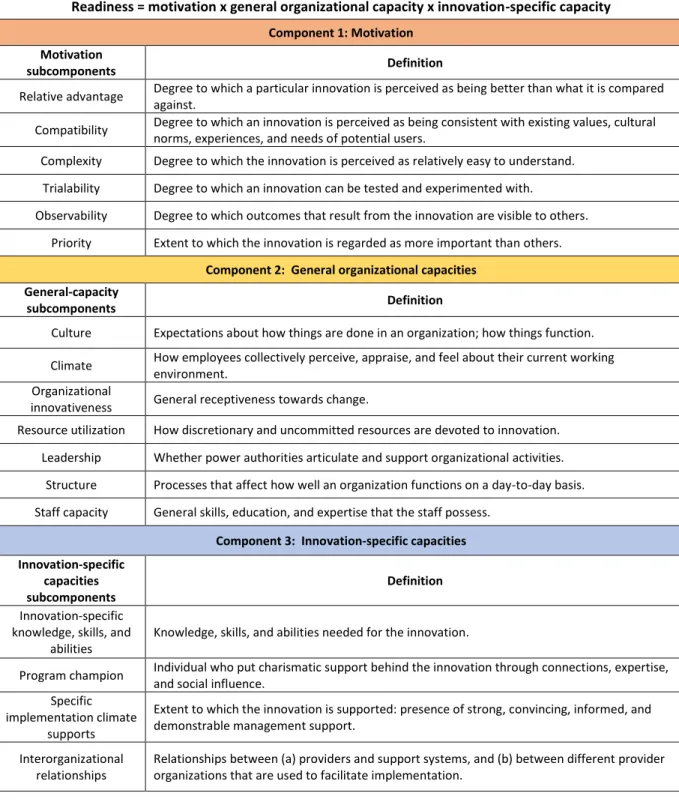
2.1 Armenakis’s “Five Change Beliefs” Defined……… 20 2.2 Success factors and barriers to scaling-up public-health interventions in rank order………. 29 3.1 Components and subcomponents of organizational readiness for change……… 32
3.2 Coverage of DPT 1 and DPT 3 by province and urban/rural areas, and all vaccines, in Zambia with comparison to sub-Saharan Africa……… 35 3.3 Summary of focus group sample characteristics for three districts and the province in
Western Province, Zambia………. 39 4.1 Location, title, and number of focus-group participants……….. 47 4.2 Organizational readiness for change components and subcomponents……….. 61 4.3 Results of focus groups assessing motivation, general capacity, and capacity specific to a
x
LIST OF FIGURES
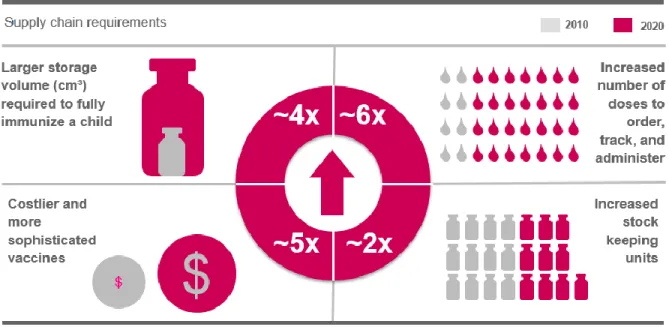
1.1 Estimated supply chain requirements and trends………. 5
1.2 Standard four-tier immunization supply chain distribution system……….. 7
1.3 Current and proposed alternative iSC distribution system designs in Zambia……….. 11
3.1 Building organizational readiness……….……… 33
3.2 Provincial map of Zambia……… 34
3.3 DPT 3 coverage, Africa, 2012……….. 36
4.1 Proposed alternative supply chain distribution system, Zambia……….. 45
4.2 Zambia’s current EPI supply chain………. 49
4.3 Proposed alternative supply chain distribution system, Zambia……….. 52
5.1 Provincial map of Zambia……… 82
6.1 Building organizational readiness………. 91
6.2 Artist’s rendering of a medical supply UAV……… 97
xi
LIST OF ABBREVIATIONS
CIDRZ Center for Infectious Disease Research in Zambia DHO district health office
DPT diphtheria, pertussis, tetanus vaccine EPI Expanded Program on Immunization EVM Effective Vaccine Management iSC immunization supply chain Gavi Gavi, the Vaccine Alliance KII key informant interview MCH maternal and child health MOH ministry of health
NGO nongovernmental organization NSO National Statistical Office
ORC organizational readiness for change PHO provincial health office
1
CHAPTER I: INTRODUCTION AND BACKGROUND
Within health-care organizations, readiness for change is considered a critical precursor to the successful adoption of new systems, practices, and innovations (Weiner et al. 2008). The lack of organizational readiness for change (ORC) is thought to contribute to nearly half of the failures of all change initiatives (Kotter 1996). As a result, organizational readiness for change has become a significant research domain within implementation science (Armenakis et al. 1993).
In the low-income countries of Africa and Asia, ministries of health, nongovernmental organizations (NGOs), and other organizations are often adopting, adapting, and/or scaling-up new systems, practices, and evidence-based interventions to achieve better population health outcomes, improve efficiency, and build greater capacity of health-care workers. Despite the attention devoted to organizational readiness for change in countries with advanced health-care systems, and the evidence supporting its importance, there is almost no literature to suggest that assessing readiness for change is practiced in low-income countries, which may be a contributing factor to the limited success to change and scale-up initiatives in those regions.
2
or community-outreach program. This system mirrors the administrative governance structure of most ministries of health in low-income countries (Kaufmann 2011).
This current iSC distribution system is based on an outdated and inefficient supply chain model that was established over 40 years ago by the World Health Organization (WHO) and other global entities. Recent evaluations indicate that in many countries of Africa and Asia, the current iSC distribution system is highly inefficient, is barely able to adequately deliver existing vaccines, and is unlikely to provide sufficient access to new vaccines in the development pipeline (Zafran 2013). There is strong global consensus that in many developing countries, the current iSC system needs to change, including distribution systems (Elias and Chan 2016). Without a change, the universal goal of ensuring that every child receives full coverage of routine immunization will remain elusive.
Several countries have designed and piloted a new distribution system as part of a redesigned iSC. These countries have concluded from pilot studies that eliminating or bypassing at least one of the layers in the existing delivery system structure resulted in greater efficiency and cost savings. The results of these pilot projects are now influencing iSC distribution system design changes in other countries. As countries look toward broad scale-up of a new iSC distribution system, the readiness for change among the EPI staff supporting the iSC should be assessed in order to identify areas where readiness levels are high and low, and to inform efforts to strengthen readiness and increase the likelihood of success in changing the iSC distribution system.
3
were subsequently discussed through key informant interviews (KIIs) with members of the National Immunization Program’s Technical Working Group (TWG) to validate the findings of the assessment and to determine the appropriate steps to strengthen readiness for change to the iSC distribution system. It concludes with a plan for change and a set of recommended approaches for improving overall readiness among key participants to achieve the desired changes to Zambia’s iSC distribution system.
Significance of the issue
In 1974 the World Health Organization launched the Expanded Program on Immunization with the goal of vaccinating all children. To support the EPI and ensure availability of vaccines everywhere, a standardized in-country iSC design was developed and implemented by most low-income countries in Asia and Africa. Gavi1 defines the iSC as follows:
The immunisation supply chain encompasses all the activities, tools, resources and planning necessary to ensure that vaccines stay safe and effective and reach all those who need them. This can include, for example, the cooling equipment the vaccines are stored in, the routes through which they are distributed, the data collected to track and evaluate the distribution, and the people who manage the systems (Gavi 2015).
Designed over 40 years ago for the technology, infrastructure, and communication contexts existing at that time, and supporting the distribution of relatively few and inexpensive vaccines, the iSC contributed to extraordinary gains in vaccination coverage and, as a result, prevented countless cases of disease and saved millions of lives across the developing world.
Despite this progress, global immunization coverage rates have stagnated, and the EPI has struggled to increase or, in some cases, even maintain coverage rates in many developing countries (Elias and Chan 2016). Full coverage rates of the three doses of DPT vaccine (diphtheria, pertussis, tetanus) are viewed as a valid proxy for overall strength of the EPI system and its ability to provide
1Gavi is shorthand for Gavi, the Vaccine Alliance, an international nonprofit that finances and supports vaccine
4
coverage of all routine immunizations (Tsega 2014). WHO estimates that 20 million children globally have not received the full, three-dose course of DPT vaccine coverage, which suggests a significant access gap to routine vaccination (WHO Call to Action 2014). Since 2010, global coverage of DPT has increased by only 1 percent (WHO 2016).
Since 1990 the demands on the iSC have grown dramatically with several new vaccines added to the system and more coming. New vaccines are in development for critical diseases unique to
developing countries, such as malaria, typhoid, and cholera, as well as vaccines for HIV. New vaccines tend to be bulkier, taking up more space by volume within the system, and far more expensive, which makes wastage and loss as a result of an inadequate iSC all the more costly. Global assessments of vaccines and immunizations indicate that by 2020, low-income countries will be managing twice as many vaccine products as in 2010. By 2025 the health workers responsible for ensuring successful vaccine program outcomes will need to administer six times as many vaccine doses per person as they do now, in much more complex environments, but little attention is being paid to the ability of the traditional iSC to absorb this increase (Zafran 2013).
5
In addition, existing EPI programs primarily target children under age two and pregnant women, while many new vaccines require reaching older children, adolescents, and adults, and in more places, including schools, pharmacies, and hospitals (Zafran 2013). While these new vaccines represent major scientific and public-health achievements, the current supply chain system relied upon to ensure widespread access is woefully inadequate.
Poor performance of the iSC and its distribution system has been linked with delays in new vaccine introductions, excessive waste of expensive vaccines, and reduced availability of all vaccines at the point of immunization (WHO 2014). Based on modeling and the bottlenecks countries are now experiencing as they attempt to introduce new vaccines, the evidence is clear that the long-standing iSC design simply cannot accommodate the requirements placed on it. In many countries, changes to the existing iSC are needed.
6 The immunization supply chain distribution system
The actual distribution of vaccines in a country is a critical and challenging component of the overall iSC. Many developing countries have poor transportation infrastructure and inadequate inventory tracking mechanisms which contributes significantly to vaccine wastage and stock-outs. A survey by WHO found that only 15 percent of the low- and middle-income countries they surveyed complied with the recommended practice for vaccine distribution as specified in WHO’s Effective Vaccine Management (EVM) protocol which sets global standards for vaccine management and distribution practices (WHO, EVM 2016).
In most developing countries, the distribution of vaccines through the iSC utilizes some
variation of a four-tier system that starts at the central administrative level and cascades downward to provincial and district levels and finally to a clinic or health outpost for administration. This system reflects the administrative, top-down governance hierarchy of the ministries of health, in general. Figure 2 depicts the current system, as it is generally applied in most countries. At the national level, the MOH either procures vaccines directly from the manufacturer, or they are provided by a third party (e.g., UNICEF). The vaccines are delivered to the primary level, the national central medical warehouse, where they are prepared for distribution to the rest of the country through the iSC. From the national store, vaccines are typically distributed to provincial-level stores or warehouses. In many instances, staff from district-level facilities are then responsible for traveling “up the chain” to the provincial warehouse to obtain vaccines and then returning to supply the district stores, the lowest-level storage facility, usually on the grounds of a district health facility. Similarly, staff from the lowest level, the health facilities, or from the community-level vaccine outreach program within a district, routinely travel to pick up vaccines from the district-level store, often traveling long distances.
7
Vaccine Manufacturer or UNICEF
National store
(Primary level)
Vaccine stores that receive vaccine direct from an international vaccine manufacturer or distributors (e.g., UNICEF) or a local vaccine manufacturer.
Provincial stores
(Subnational level)
Vaccine stores that receive vaccine from a primary store or higher-level subnational store. Serve one or more provinces or similar subnational geography.
District stores
(Lowest distribution level)
Vaccine stores that obtain vaccine from a primary level or a subnational store and supply vaccine to one or more health facilities. Lowest distribution level. Most often district-level staff travel “up the chain” to the provincial stores to obtain vaccines for their district.
Health facilities
(Service point level)
Facilities that receive vaccine from any higher-level store and supply immunization services. Typically facility staff travel “up the chain” to the district to obtain vaccines for their facility.
As indicated, however, this iSC distribution system in many countries is no longer able to meet the needs of an expanding and more complex immunization program.
Current and proposed changes to the iSC distribution system
In response to the need for change to the iSC distribution system, many organizations and ministries of health have embarked on an iSC system design and transport modeling process to identify the barriers and gaps of existing systems and to design a more efficient and effective system (Rao 2017). Evidence has emerged from the system design process in several countries indicating that a more
Figure 1.2: Standard four-tier immunization supply chain distribution system
Source: WHO 2015. Effective Vaccine Management
8
streamlined distribution system, one focusing more on distribution—moving vaccines—and less on managing large inventories of stored vaccines at the various storage levels, results in significant system improvements as measured by efficiency, transport costs per dose, and coverage (Kaufmann et al. 2011).
Evidence from pilot projects in Benin, Mozambique, and Niger found that by reducing or
consolidating the number of intermediate storage levels in the system, making more frequent deliveries to the lowest levels in the system (district levels and health facilities), and eliminating the highly
inefficient and expensive practice of already overburdened health-care workers traveling “up the chain” to fetch vaccines contribute significantly to greater system efficiency, lower transport costs per dose, and increased availability of vaccines (Prosser et al. 2017; Assi et al. 2017; Brown et al. 2017).
The success of the pilot projects in these countries and elsewhere has resulted in interest from other countries in replicating the changes to the iSC distribution system, including Zambia.
Need for change to the iSC distribution system in Zambia
In recent years, a number of countries have begun to respond to the pressures on the existing iSC and to seek changes to its structure and functioning. Several countries have voiced to global
stakeholders, such as UNICEF, WHO, and Gavi, a desire for making improvements to strengthen the iSC, starting with assessments of current challenges and bottlenecks, followed by a systems-design process aimed at developing an alternative iSC distribution system.
9
In Zambia the iSC distribution system is based on the standard four-tier model. The national level delivers to 10 provinces, from which 103 districts collect vaccines, and more than 2,000 health facilities collect vaccines from districts typically every month, with variances of weekly to once per quarter.
In 2014, Gavi conducted an evaluation of the EPI system in Zambia and found a number of deficiencies resulting in inefficiencies, stock-outs, increased costs, and substandard coverage, particularly in rural and remote districts. These deficiencies included a weak iSC distribution system particularly at district and health-facility levels. In addition, Zambia’s Demographic and Health Survey, 2013–2014, found that DPT3 coverage was 85 percent and had remained unchanged since 2007.
The following is a summary of the key challenges to the Zambian iSC as reported by an independent analysis conducted by the Center for Infectious Disease Research in Zambia (2016):
The capacity to accurately forecast and deliver vaccines and other essential medicines to health facilities remains a major constraint to achieving better health outcomes in Zambia.2 Stock-outs at health facilities are common, unknown or unreported, resulting from distribution inefficiencies, improper stock management and reporting, insufficient cold chain, and other challenges. Although the country has achieved gains in immunization coverage in recent years, supply chain bottlenecks pose a risk to ensuring equitable coverage of immunizations for all children. Data quality challenges also persist, with reported coverage rates above 100 percent in nearly 25 percent of districts,3hindering the country’s ability to accurately forecast and allocate resources. Many health facilities are reporting administered vaccines that are well above the total amount of stock they received and the forecasted target populations for their catchment area.
Health facilities are the last stop in the supply chain and the most important to reaching children. They are also the most burdened with regard to resource constraints, both human and financial. Zambia has a growing population, new health facilities and districts, and an expanding EPI portfolio with increased budgetary requirements. An efficient and high-performing supply chain
will help protect the country’s investment in vaccines for all children.
Most health facilities in Zambia (91 percent) travel to district stores to pick up vaccines. The frequency with which health staff pick up vaccines ranged by province with some health facility staff going weekly in Copperbelt, and others waiting two and a half months between pick ups in parts of Western Province. In addition to the money required for per diems and transport, this resulted in a considerable time investment by health workers away from the health facility. In
10
total, it was found that health facility staff spend an average of >100,000 hours per year – an equivalent of 48 FTE of clinical staff – away from other healthcare activities to pick-up vaccines.
While the average distance travelled to the district was 54km, there was great variability in these distances. Poor road conditions were common in remote areas and demonstrated
challenges many health facilities face in getting vaccines. A range of transportation options were used. In addition to vehicles, boats and public transport, there were several health facilities picking-up vaccines by oxcart.
The immunization-coverage data and the results from the various assessments and analyses, and, later, the positive results from the experience of other countries making changes to iSCs, prompted the Zambian Ministry of Health in 2016 to convene a four-day system-design workshop to identify current problems and bottlenecks in the existing iSC and identify potential changes and improvements. In addition, modeling exercises were conducted to examine potential benefits of different designs. The workshop and the modeling resulted in a number of recommendations for change, including:
• removing a layer from the distribution system • optimizing the use of cold-chain equipment • improving transportation routes
• involving dedicated logisticians for delivery and data management.
Figure 1.3 depicts the current Zambian iSC distribution system and the proposed alternative design of the iSC distribution system. These designs were an output from the systems-design workshop. Specifically, the alternative design calls for:
1. the removal of the district-level vaccine storage in favor of distribution from the provincial level directly to the health facilities/posts, the lowest level in the system (note: district-level stores would still maintain a reserve or buffer stock of vaccines to fill gaps); and
11
The modeling exercise informed the systems-design workshop and determined that the proposed changes to the iSC distribution system would achieve the following results4:
• 9% reduction in the logistics cost per dose of vaccine • 9% reduction in the overall total vaccine cost per dose • 15% reduction in the transportation costs
• 94% reduction in the staff time spent on logistics
The change modifies or eliminates many of the activities and responsibilities of the district-level EPI staff. These staff include:
• district medical officer
• district maternal & child health coordinator • district pharmacist
• health facility maternal & child health officer in charge • district cold-chain technician
In almost all cases, these district staff have other full-time responsibilities outside of their roles in the EPI program, and the proposed change to the iSC would result in a significant change in their roles
4 Source: Zambian Immunization Supply Chain Assessment: Baseline Modeling Results presentation, 2016. Zambian Ministry of
Health, VillageReach, CIDRZ.
Figure 1.3: Current and proposed alternative iSC distribution system designs in Zambia
12
in the system. This is the intention. Staff time spent traveling, often long distances, to district medical stores to fetch vaccines reduces time available for patient care and other responsibilities.
The proposed alternative iSC can be seen as a significant organizational change. Specifically, key participants in the iSC are being asked to adopt a new system, and at various levels, roles and
responsibilities will change. In keeping with organizational readiness for change theory, which is described further below, the success or failure of the change to the iSC is contingent in part on the readiness of the organization to make the change. Therefore, assessing the level of readiness of EPI staff and determining areas for strengthening readiness is warranted.
Organizational readiness for change
In implementation science, ORC and the role that readiness plays in ensuring successful uptake and implementation of new or modified systems, policies, and interventions have been well
documented in a number of sectors, including health services (Weiner 2008; Drzensky 2012). The interest in ORC is based on the view that many change initiatives fail to achieve their aims due to a lack of attention to or understanding of organizational readiness for change. (Kotter 1995; Drzensky et al. 2012). Despite the extensive change-readiness literature, the definition of ORC and its constructs remains varied and elusive (Holt 2006; Weiner 2008; Raferty 2013).
A review of the literature finds many definitions of ORC, reflecting the evolution of the thinking around ORC. Earlier research looked at ORC from an individual level of analysis, which considered primarily individual psychological components. More recently, the view has expanded to include analysis of structural and contextual components of ORC as well (Weiner 2009; Armenakis et al. 2007).
13
“Organizational readiness refers to organizational members’ change commitment and change efficacy to implement organizational change.”
Weiner focuses his theory and the level of analysis on the “supra-individual” (e.g., team or department) and goes on to state that, “implementing complex organizational change involves a collective action by many people, each of whom contributes something to the implementation effort.” This attention to collective action is particularly relevant to individuals working within a system, such as the iSC distribution system.
Based on the definition and theory provided by Weiner, as well as others, Scaccia and colleagues developed a conceptual framework for assessing organizational readiness for change, as well as an approach for building or strengthening organizational readiness for change. The Scaccia framework identifies the three components of organizational readiness as: motivation to implement the innovation, general capacities of the organization, and the innovation-specific capacities for the innovation (Scaccia 2015).
The research project described here applies Weiner’s definition and theory of ORC, and utilizes the Scaccia conceptual framework, to assess through qualitative analysis of focus-group results the readiness of district- and provincial-level EPI staff in Zambia to adopt a new iSC distribution system and establishes a plan for change—increasing readiness for a new iSC distribution system among provincial and district EPI staff—which is further enhanced by KIIs with the TWG advising Zambia’s National Immunization Program.
Purpose and specific study objectives
14
Objective 1: Through focus groups assess the readiness of provincial and district EPI staff in Zambia to adopt the proposed new iSC distribution system.
Objective 2: After completion of Objective 1, conduct KIIs to validate the findings from the focus groups and to assess the overall commitment to change among members of the national EPI Technical Working Group. The TWG provides input and guidance to the National Immunization Program and consists of representatives from global organizations such as UNICEF, WHO, and Gavi, as well as the MOH and local NGOs supporting vaccine programs.
15
CHAPTER II: LITERATURE REVIEW
In implementation science, the role of ORC in ensuring successful uptake and implementation of new or modified systems, policies, and interventions has been the subject of research and commentary in many sectors, including health services. The interest in ORC is based on the view that many change initiatives fail to achieve their intended outcomes due in part to a lack of consideration of and attention to ORC (Kotter 1995).
Despite the extensive change-readiness literature in a number of sectors, the definition of readiness, its constructs and components, as well as the validity of the various ORC measurement tools, remain elusive (Greenhalgh et al. 2004; Holt et al. 2006; Weiner 2008; Raferty 2013). This may be due to the fact that ORC is widely viewed as a broad, highly contextual, multidimensional and multilevel construct, but at the same time is influenced largely by intuitive understanding of change and of readiness.
In 2008, Weiner and colleagues conducted an exhaustive and widely cited review of the ORC literature to determine how readiness for change was being defined and to assess the validity of the various tools being used to measure readiness. A subsequent review of the literature in 2016, also by Weiner and colleagues, further detailed the level of evidence and/or psychometric qualities of published readiness measures.
16
review looked at 183 articles, 42 of which were published since the initial 2008 Weiner review. Of those 42, 11 were health-care related. The 47 health-care-related ORC articles from the 2008 review and the 11 from the 2016 review were reviewed for additional references and to establish a conceptual understanding of the topic. In addition, the non-health-care-related articles that are referenced frequently in the health-care articles, and which provide theoretical or conceptual insights into ORC, were also reviewed.
The aim of the review was to identify the following elements of ORC: • The commonly used definitions of readiness and ORC
• The components of readiness
• The levels of assessment (e.g., individual, organizational, etc.) • Mechanisms for assessing ORC
• Assessing the parallels between frameworks for ORC and for “scaling-up”
This review also confirms what Weiner’s 2008 review first indicated and which he reconfirmed in
2016: There is almost no published literature that considers ORC in the context of low-income or developing countries. Of the 187 reviewed in 2016, Weiner found that fewer than four articles pertained to ORC in the developing-country context. However, despite the dearth of literature pertaining to ORC in developing-country settings, there are a few that are worth noting and are discussed towards the end of this review.
17 What is organizational readiness for change?
Assessing ORC is a part of a larger change process or continuum. It is the preimplementation phase, and is part of, or contributes to, a comprehensive planning framework that includes needs assessment, goal setting, planning, evaluation, and identification of best practices (Scaccia 2014).
Despite the stated importance of assessing readiness for change as part of the overall change process, of the 106 articles in Weiner’s 2008 review, more than half of the articles reviewed did not
provide any definition of readiness. This may suggest that for many, the definition of readiness is best left to the “collective common sense” or is based on our own capacity to assess our individual readiness for change intuitively (Weiner 2008; Scaccia 2014).
While a single definition of readiness has not fully emerged, the definition established by Armenakis and colleagues in 1993 is arguably the most widely referenced and forms the basis of many subsequent definitions. Of the 106 articles reviewed by Weiner in 2008, 47 provided definitions of readiness for change. Of those, 20 used, modified or supported the following definition provided by Armenakis and colleagues:
“Readiness is reflected in organizational members’ beliefs, attitudes and intentions regarding the extent to which changes are needed and the organization’s capacity to successfully
make those changes. Readiness is the cognitive precursor to the behaviors of either resistance to, or support for, a change effort.”
ORC, its meaning and constructs, is rooted in the term “readiness.” Earlier research mostly
focused on the individual and individual readiness for change and heavily emphasized the psychological components of readiness—beliefs, attitudes, intentions—articulated by Armenakis. Since then, the examination of readiness has taken on greater dimension, and the definition has expanded to include perceptions of structural and contextual aspects of the organization that may influence or be
18
Weiner’s 2009 definition and theory have also been widely cited and reflect the Armenakis view of readiness and its psychological components. Weiner states, “Organizational readiness refers to organizational members’ change commitment and change efficacy to implement organizational
change.” He goes on to expand on this definition and to suggest that change commitment reflects a “shared resolve” for change, and that ORC is a “shared team property” which involves, “collective action
by many people, each of whom contributes something to the implementation effort.”
Others share the view that the psychological components of readiness are greatly influenced by structural factors as well, perhaps building from Armenakis’s definition, where he underscores the influence on readiness resulting from “the organization’s capacity” (Holt et al. 2009; Lehman, Greener, and Simpson 2002; Greenhalgh 2004; Rafferty 2013; Weiner 2009; Scaccia et al. 2016). These structural components reflect the capacity or capability of the organization, and the effects of these factors on ORC.
Holt et al. provide a useful definition of readiness for change as well as three areas to be considered to effectively evaluate readiness, which reflect the influence of Armenakis, but also the increasing attention being paid to the level of analysis (individual, organizational, or both). They define readiness as, “the degree to which those involved are individually and collectively primed, motivated,
and technically capable of executing the change.” To effectively assess readiness in the health-care setting using this definition, the authors suggest considering three areas: psychological factors, structural factors, and level of analysis (Holt 2009).
19 What are the components of readiness?
Taking the view that ORC includes both psychological and structural components, Holt and colleagues commented that ORC, “is comprised of both psychological and structural factors, reflecting the extent to which the organization and its members are inclined to accept, embrace, and adopt a particular plan to purposefully alter the status quo” (Holt et al. 2009). The Armenakis definition and the others spawned by it reflect the psychological and structural elements of ORC, which are often referred to in more specific terms—motivation and capacity—which are detailed, discussed, and debated extensively in the ORC literature.
Motivation
Scaccia wrote that motivation is the “cognitive andaffective perceptions of a change” that influence enthusiasm, acceptance, or resistance to change (Scaccia 2014). This definition is supported by the “five key change beliefs” developed by Armenakis, which can be viewed as the underlying
20
Table 2.1: Armenakis’s “Five Change Beliefs” Defined
Component Definition Author(s)
1. Discrepancy
Discrepancy between the desired end-state and the present end-state/status quo.
Self and Schraeder 2008; Holt et al. 2010
2. Efficacy Belief that the change recipient can
successfully implement a change.
Armenakis and Harris 2009; Holt et al. 2007, 2009; Weiner et al. 2008, 2009; Vakola 2014
3. Appropriateness Belief that a change is needed. Armenakis and Harris 2009; Holt et al.
2007, 2010; Self and Schraeder 2008
4. Personal
valence
The change is viewed as valued, or beneficial, to the change recipient.
Jones et al. 2005; Holt et al., 2007, 2010; Shea et al. 2014; Boukenoughe 2010; Rafferty et al. 2013; Weiner 2009
5. Principal support
Belief or understanding that formal leaders in an organization are
committed to the success of a change.
Holt et al. 2007, 2010; Self and Schraeder 2008
Readiness for change, and a successful outcome, depends upon “buy-in,” which is reflected in high or positive levels of each belief component (Armenakis 2007).
In addition to the five beliefs, many have come to believe that there is a significant affective component to motivation for change (Rafferty 2013; Holt 2013; Vakola 2012; Weiner 2009;
Damschroder 2009). Affect refers to the emotions an individual might experience as a result of change or the potential for change (Rafferty 2013). Holt et al. wrote that change readiness does have an affective or emotional content, stating that readiness is, “the extent to which an individual or individuals
are cognitively and emotionally inclined” to accept or implement change (2013).
Capacity
The view that structural components are critical to readiness is widely shared (Holt et al. 2009; Lehman, Greener, and Simpson 2002; Greenhalgh 2004; Rafferty 2013; Weiner 2009; Flaspohler 2008). These structural factors generally represent the views of the organization’s capacity or capability for
21 Context, culture, and climate
Additional components that influence ORC overlap with or underlie motivation and capacity, but are significant enough in the literature that they are important to mention.
Context is a widely discussed component of readiness. These are primarily structural in nature, and may include leadership (Kavanagh and Ashkanasy 2006; Bouckenooghe et al. 2009),
communications (Armenakis et al. 2009; Holt 2007); management support (Cinte, Duxbury, and Higgins 2009), and organizational support (Cinte, Duxbury, and Higgins 2009). Weiner indicated that readiness is “highly situational,” which could be interpreted to mean it is contextual, and it is not a “general state of affairs” (Weiner 2009). Similarly, Damschroder and colleagues stated, “context is the set of unique factors that surround a particular implementation effort” (2009).
Jones et al. pointed out that a key contributor to the success of ORC is the culture of the organization. The culture reflects the organizational values and habits that shape or influence beliefs, attitudes, and intentions (2005). Greenhalgh affirmed the importance of context, culture, and climate components, specifically labeling them “leadership style, power balances, social relations, and attitudes toward risk taking” (2004).
Lehman et al. developed a widely used ORC assessment tool that assessed four domains that reflect motivational, climate, culture, and capacity components. These domains included motivation for change, institutional resources of the program, personality attributes of the staff, and organizational climate of the program (2002).
Level of analysis: individual vs. organizational
22
that readiness was an individual-level construct, and 57 percent indicated that readiness as an organizational construct (2008).
At the center of the debate is the belief that, historically, most of the research has focused on the individual and individual readiness for change, which is then used, often incorrectly, as a proxy for the readiness of the organization (Bouckenooghe 2010; Vakola 2013; Rafferty 2013). Instead, there is a perception that organizational readiness reflects shared beliefs, shared resolve, and collective impact (Weiner 2009; Raferty 2013; Vakola 2013), and can be assessed at both the individual and organizational levels (Holt et al. 2009).
Raferty wrote, “a work group’s change readiness and an organization’s change readiness
attitude emerge from the cognitions and affects of individuals that become shared because of social interaction processes and that manifest as higher level collective phenomena: work group and organizational readiness for change” (2013).
As the definition of ORC has evolved from primarily psychological and cognitive components of the individual to including also capacity and related structural components, the level of analysis has expanded to include both individual and organizational constructs and theories (Holt et al. 2009; Weiner 2008). Both individual and organizational constructs have applications to the change being considered to the iSC because the iSC distribution system involves the collective efforts of many in ensuring
implementation, so it seems appropriate that both organizational- and individual-level constructs should be applied.
Assessing readiness for change
23
Measuring readiness can be qualitative, quantitative, or some combination of the two
(Armenakis et al. 2009). However, establishing valid approaches for assessing readiness for change has proven very challenging. In the 2008 review, Weiner and colleagues found in their review of the 43 published instruments for measuring organizational readiness for change, most exhibited “limited
evidence of reliability or validity.”
Rather than an established and valid methodology, there seems to be a tendency to manipulate existing instruments to fit a single context or purpose. Weiner’s subsequent review in 2016 found that of the 183 articles reviewed, 76 provided readiness measures. Of those, “72 percent of readiness
measures were used only once by the authors who developed them and never used again.” While this undermines efforts to establish reliability, when measures are applied it seems as though the context and environment for change are typically unique to a particular circumstance, so much so that establishing a one-size-fits-all instrument may be very challenging.
In concluding his 2016 review, Weiner identified several ORC measures that do have merit, based on a relatively high degree of validity and reliability, and could be considered for application in the health-care setting. These are summarized below in terms of the components or factors considered.
Individual Readiness for Organizational Change (Holt et al. 2007). The authors contend that readiness is an attitude that is influenced by a set of beliefs about the content (what is being changed), the process (how is change being implemented), the context (circumstances in which change is
24
components. As the name implies, this instrument was designed to measure individual readiness and has been used in several subsequent readiness studies.
Organizational Readiness for Implementing Change (Shea et al. 2014). ORIC was designed as a brief, reliable, and valid measure for assessing readiness of the “supra-individual,” that is, anything more than the individual (team, department, organization). The authors base ORIC on Weiner’s theory of organizational readiness for change (2009) and the two key components: change commitment and change efficacy.
ORIC establishes the determinants of the two components: task knowledge, resource availability, situational factors. Measuring the level of these components is then the focus of the quantitative survey and reflect an underlying consideration of both psychological and structural components.
A relatively new construct, ORIC was found to be valid and reliable, but, as yet, there are very few instances of it being applied.
Perceived Organizational Readiness for Change (Cinite, Duxbury, and Higgins 2009). The PORC construct was designed to assess the readiness and unreadiness for change in the public sector and to determine what organizational actions are often associated with organizational readiness and
unreadiness. It primarily examines contextual factors associated with change and identified the following behaviors as important influencers of change management:
• Commitment of senior management to change (readiness) • Competence of the change agents (readiness)
• Support of the immediate manager (readiness) • Poor communications of change (unreadiness) • Adverse impact of the change on work (unreadiness)
25
Organizational Change Recipients’ Beliefs Scale (Armenakis et al. 2007). Not surprisingly, after establishing the five beliefs, Armenakis and colleagues established the OCRBS as a framework for a questionnaire to assess organizational readiness. This 24-question instrument consists of subscale measurements of each of the five beliefs: discrepancy, appropriateness, efficacy, principal support, and valance.
The OCRBS focuses on the individual level of analysis and has been used in several studies and was viewed by Weiner and colleagues as having excellent structural validity and good reliability.
R=MC² (Scaccia et al. 2015).This conceptual framework consists of a formula for determining the relative strength and weakness of three ORC components that include both psychological and
organizational factors: (1) an organization’s motivation to implement a change or innovation; (2) the general organizational capacities; and (3) the organization’s specific capacity for a specific change or innovation. They developed a shorthand nonmathematical formula for their conceptual framework: R=MC², where R=readiness, M=motivation, and C²=general organizational capacity times innovation specific capacity. Each of the three OR components consist of a number of subcomponents.
The Scaccia conceptual framework borrows critical elements of both individual psychological constructs and structural and organizational components established by the frameworks described above, and others. It provides an approach for assessing the level of each of the three components and their subcomponents, and can help to identify areas of strength and weakness within each component. The results are then used to inform efforts to strengthen areas of weakness or to build greater
readiness.
26
model and implemented by the Healthy Teen Network, a public health program in Baltimore, Maryland, and supported by the Centers for Disease Control (Lamont et al. 2014).
Because Scaccia includes aspects of several influential frameworks mentioned above and incorporates both individual and psychological components in an assessment, as well as offering a method for strengthening readiness as a result of the assessment, it appears to be a good framework for assessing the ORC of EPI staff in Zambia.
Organizational readiness for change in developing countries
The few published articles related to ORC that reflect the context of developing countries are generally focused on the concept of “e-readiness”—readiness to adopt internet-based technologies for health and business (a.k.a. “e-health” or “e-commerce”).
In the business literature, Molla and colleagues published a description and assessment of two interrelated e-readiness constructs aimed at assessing the capacity of businesses to adopt e-commerce approaches (internet-based operations and sales), which were tested in South Africa. One construct is focused internally, the perceived organizational e-readiness construct, and the other, externally focused, the perceived external e-readiness construct (Molla and Liker 2010).
The internal construct isolated several key e-readiness variables that are primarily related to capacity: awareness, commitment, human resources, technological resources, business resources, and governance. The external construct is largely focused on context, which includes the role of government and product markets in e-commerce. These tools look exclusively at the individual’s assessment of the organization and the larger business environment.
27
health-care institutions, and the health-care system itself are prepared to participate and succeed with e-health implementation” (2007).
Through a sequential exploratory design they developed a 50-question instrument that had five categories of inquiry: core readiness, technological readiness, learning readiness, societal readiness, and policy readiness. These categories and their subscales were wide ranging, at times capturing beliefs, but also assessing need for and access to technology. The authors did not present any foundational
conceptual framework or theory to guide the development of their assessment (Khoja et al. 2006, 2007). A search did not find any subsequent published results using the Khoja approach, and the Weiner assessment did not find any level of validity or reliability.
Organizational readiness for change and scaling-up
In global health and development, the implementation-science domain that most mirrors readiness for change is “scale-up.” Mangham and Hansen describe scale-up as “the ambition or process of expanding the coverage of a health intervention” (2010). Others used the definition established by Expandnet (www.expandnet.net),, a community of practice for global public-health practitioners focused on developing and promoting best practices at scale. They describe scale-up as “the deliberate efforts to increase the impact of health service innovations successfully tested in pilot or experimental projects” (WHO 2009). Clearly ORC and scale-up are rooted in change and the adoption of new
innovations, practices, and policies. As a form of change, scale-up is often hugely challenging and often slow, haphazard, and frequently unsuccessful (McCannon, Berwick, and Massoud 2007). Scaling-up also suffers from a lack of consensus around a definition (Yamey 2011).
28
2009; Greenhalgh et al. 2004). Despite the similar roots of scale-up concepts and ORC, and a focus by both on change, there seems to be almost no acknowledgement of ORC or its components in the scale-up literature.
A sampling of articles appearing in Expandnet was reviewed to identify references, frameworks, or approaches that might overlap with or reflect similar constructs as ORC.
Several articles reference context as a key component of scale-up, but in almost all cases the context references the setting in which the intervention is introduced (e.g., primary care) (Milat, Bauman, and Redman 2015; Moran et al. 2012).
29
These factors are based on the needs of a system or program but have little correlation with ORC. It seems as though ORC and scale-up, while rooted in the same implementation-science discipline, and which share a forward-thinking perspective, have yet to be viewed in a way that suggests a possibly
Table 2.2: Success factors and barriers to scaling-up public-health interventions in rank order (Milat, Bauman, and Redman 2015)
Success factors
1. Establishing monitoring and evaluation systems
2. Costing and economic modeling of intervention
approaches
3. Active engagement of a range of implementers and
the target community
4. Tailoring scale-up approaches to local context and use of participatory approaches
5. Systematic use of evidence
6. Infrastructure to support implementation such as
training, delivery systems, technical resources
7. Strong leadership and champions
8. Political will
9. Well-defined strategy
10. Strong advocacy
11. Flexible responses to human resource
constraints
12. Formative research to ensure appropriate
design
13. Equity of intervention delivery and monitoring of intended and unintended consequences across sociodemographic profiles
14. Effective communications strategy
15. Effective governance and coordination
16. Clear role definition and delineation
17. Keeping the intervention model simple
18. Financing models
19. Programs are visible, publicized, and effectively packaged
20. Developing strategies for integration into existing services
Barriers
1. Not adapting intervention approaches to the local
context Intervention costs and other economic factors
2. Lack of human resources
3. Resistance to the introduction of new practices due
to capacity constraints
4. Insufficient investment in implementation
infrastructureincluding training, monitoring, and evaluation systems
5. Maintaining quality and consistency of health
interventions
6. Staff recruitment and staff turnover 7. Lack of political will
8. Traditional research funding processes are not
flexible enough to support evaluation of scale-up
Leadership changes amongst implementation agencies
9. Poor engagement with stakeholders and
30
mutually reinforcing relationship. It seems as though scale-up is primarily concerned with the beneficiaries of change, while ORC is concerned with the implementers of change.
Discussion
This review set out to find a viable definition of ORC, an understanding of its components, and a plausible conceptual framework to utilize in assessing the readiness of EPI staff to adopt a new iSC distribution system.
What it found is that ORC is a complex and disorderly implementation-science discipline, made more so by the confusing lack of standard definitions and terms. What one author refers to as
components of readiness, others use terms like variables, factors, aspects, elements, attributes, etc. The lack of concrete terminology hinders understanding of the subject and its many determinants.
Often, readiness for change is defined by what it is not. Much of the literature points out that readiness for change is distinct from resistance to change, need for change, attitudes towards change, commitment to change, etc. (Armenakis 1993; Holt 2007; Weiner, in press). Despite this distinction, components of these other constructs play an influential role in ORC, which makes isolating an ORC construct difficult.
The review found very little research applying ORC theories or constructs to the developing-country context, and a cursory review of the literature around scaling-up interventions and innovations, a process widely used in global health and development, did not find references to any of the influential ORC literature.
31
CHAPTER III: METHODOLOGY
As a qualitative research study, this dissertation follows a grounded theory of inquiry to inform data collection and analysis. Grounded theory is an approach to qualitative research that “derives a general, abstract theory of a process, action, or interaction grounded in the views of the participants” (Corbin and Strauss 2007). This approach is used to achieve the following objectives: Objective 1: Through focus groups, assess the readiness of provincial- and district-level EPI staff in Zambia to adopt the proposed new iSC distribution system.
Objective 2: After completion of Objective 1, conduct key informant interviews to validate the findings from the focus groups and to assess the overall commitment to change among members of Zambia’s national EPI Technical Working Group.
Objective 3: Using the results from Objectives 1 and 2, develop a plan for change that increases the readiness of provincial- and district-level EPI staff in Zambia to adopt the proposed new iSC distribution system through training, technical assistance, quality improvement, and the application of specific tools.
Conceptual framework
In 2015, Scaccia and colleagues published a conceptual framework that assesses readiness for change by measuring both the psychological factors as well as the organizational factors associated with ORC. Their formula consists of determining the relative strength and weakness of three OR
32
Each of the three OR components consists of a number of subcomponents which are defined in Table 3.1 below. The subcomponents listed are illustrative and nonexhaustive.
Table 3.1: Components and subcomponents of organizational readiness for change (Scaccia et al. 2015)
Readiness = motivation x general organizational capacity x innovation-specific capacity
Component 1: Motivation Motivation
subcomponents Definition
Relative advantage Degree to which a particular innovation is perceived as being better than what it is compared against.
Compatibility Degree to which an innovation is perceived as being consistent with existing values, cultural norms, experiences, and needs of potential users.
Complexity Degree to which the innovation is perceived as relatively easy to understand.
Trialability Degree to which an innovation can be tested and experimented with.
Observability Degree to which outcomes that result from the innovation are visible to others.
Priority Extent to which the innovation is regarded as more important than others.
Component 2: General organizational capacities General-capacity
subcomponents Definition
Culture Expectations about how things are done in an organization; how things function.
Climate How employees collectively perceive, appraise, and feel about their current working environment.
Organizational
innovativeness General receptiveness towards change.
Resource utilization How discretionary and uncommitted resources are devoted to innovation.
Leadership Whether power authorities articulate and support organizational activities.
Structure Processes that affect how well an organization functions on a day-to-day basis.
Staff capacity General skills, education, and expertise that the staff possess.
Component 3: Innovation-specific capacities Innovation-specific
capacities subcomponents
Definition
Innovation-specific knowledge, skills, and
abilities
Knowledge, skills, and abilities needed for the innovation.
Program champion Individual who put charismatic support behind the innovation through connections, expertise, and social influence.
Specific implementation climate
supports
Extent to which the innovation is supported: presence of strong, convincing, informed, and demonstrable management support.
Interorganizational relationships
33
This conceptual framework allows for a critical examination of each of the three components and can help to identify areas of strength and weakness within each component, which in turn can inform efforts to strengthen areas of weakness and to achieve successful change.
Several health-care organizations have utilized the Scaccia framework to generate survey tools to assess their readiness to adopt certain health services, programs, or systems (Wandersman 2016). The information collected by the assessment of OR is then used as the basis for strengthening OR through a number of approaches suggested by Scaccia and colleagues, including training, technical assistance, quality improvement, and application of specific tools (Scaccia 2015). Figure 3.1 shows the process diagram for building or improving OR. This approach will support the achievement of
Objective 3.
Figure 3.1: Building organizational readiness
(Modified from Scaccia et al. 2015)
Study setting
The purpose of this dissertation is to provide an assessment of the readiness for district- and provincial-level EPI staff to adopt a new iSC distribution system in Zambia. Zambia is a landlocked country in sub-Saharan Africa, with a population of approximately 16 million; three million of whom are under the age of five years. It has one of the highest fertility rates in the world, with 6.2 births per woman. More than half the population live in rural or semirural areas. Figure 3.2 maps the country’s 10 provinces.
Determine initial OR measures of:
• Motivation
• General capacity
• Innovation-specific capacity
+
Strengthen OR by providing:
• Training
• Tools
• Technical assistance
• Quality improvement
=
Improved readiness outcomes:
• Motivation
• General capacity
34
According to the Zambia Demographic and Health Survey 2013–2014, the most recent national data, the DPT 3 immunization coverage rate for Zambia was 86 percent. Complete coverage of routine immunization was 68 percent.5 Zambia performs better than sub-Saharan Africa in all three categories. Table 3.2 provides DPT 1 and 3 and routine coverage rates for each of Zambia’s 10 provinces and for urban and rural areas, and provides a comparison with overall rates for countries in sub-Saharan Africa.
5Complete coverage is defined by WHO as those children who receive all of the following routine immunizations in the first 12
months of life: Bacillus Calmette–Guérin, measles, and three doses each of DPT-HepB-Hib and polio vaccine.
35
Province DPT1 (%) DPT3 (%) Complete coverage of all vaccines (%)
Central 90 82 66
Copperbelt 98 94 81
Eastern 96 87 63
Lusaka 97 91 59
Luapula 95 80 72
Machinga 95 79 60
Northern 97 86 72
Northwestern 96 82 62
Southern 95 83 69
Western 93 81 63
Urban areas 97 92 75
Rural areas 93 82 64
Sub-Saharan African
Countries (2016) 83 74 80
Ideally, DPT1 and DPT3 would be the same, however loss-to-follow-up results in lower coverage of DPT3, and has several causes including lack of access in rural areas. The most significant disparity between coverage of DPT1 and DPT 3 in Zambia is happening in the most remote and rural provinces (Central, Machinga, Northwestern, Southern, Western), where coverage of all vaccines is low.
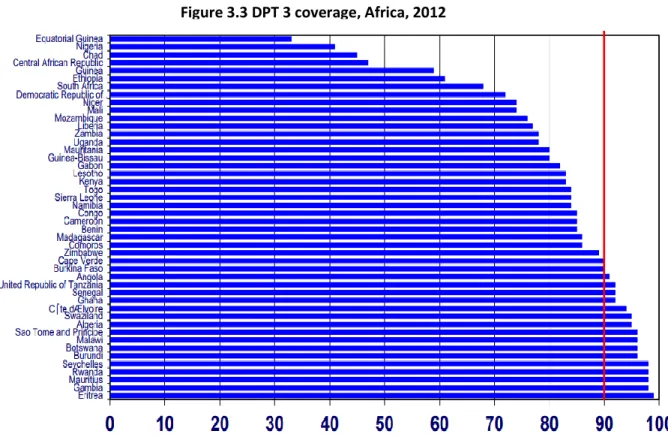
Coverage of DPT 3 in Zambia is lower than many other African countries. Figure 3.3 shows rates of DPT 3 coverage for all of Africa in 2012, when a goal of 90 percent coverage was established for the region by WHO. Zambia, at that time, had the 13th lowest coverage rate of all African countries (WHO /UNICEF 2016).
Table 3.2: Coverage of DPT1 and DPT3 by province and urban/rural areas, and all vaccines, in Zambia with comparison to sub-Saharan Africa.
36
In Zambia, routine immunization is provided largely through the public health system, with some variations in contributions by private or nonprofit organizations in the 10 provinces. Immunization service is provided by staff based mostly at public health facilities run by the districts. However, private health facilities also offer routine immunization services through affiliation with the public health facilities in their catchment areas.
The district health office (DHO) headed by a district medical officer (DMO) oversees
immunization services at the district level. The maternal and child health (MCH) coordinator, under the supervision of the DMO, is directly in charge of delivering immunization services, and a pharmacist manages logistics.
Figure 3.3 DPT 3 coverage, Africa, 2012
37
At the provincial level, the provincial medical officer is responsible for all health service provisions, while the principle nursing officer and/or a pharmacist under the MCH is in charge of immunization. At the national level, the EPI program sets strategy, establishes budgets, procures vaccines and supplies, and evaluates the overall system.
A local research partner, the Center for Infectious Disease Research in Zambia (CIDRZ), assisted with the implementation of this research project. CIDRZ is a well-respected and well-established nonprofit research organization that works closely with the government of Zambia, the University of Zambia, and other local and international NGOs (www.cidrz.org). CIDRZ played an instrumental role in leading the system design phase of the redesign of the iSC distribution system. For this study, CIDRZ helped to facilitate the Institutional Review Board process in-country, obtained permission of central MOH and provincial-level authorities, and facilitated the focus groups. In addition, because of their strong reputation and relationships with key stakeholders, they initiated initial contact with the participants in the key informant interviews and served as a conduit to the MOH for obtaining permissions and to provide background on the study aims.
Study design
Assessing ORC using the Scaccia framework has primarily been conducted using quantitative surveys administered to individuals within an organization (ASPE 2014; Wandersman and Scaccia 2016). These surveys generally utilize a Likert scale for measuring levels of perceived readiness and its
38 Focus groups
Focus groups are also useful in this study because they provide insights into the collective responses of the EPI team, recalling, as Weiner stated, that ORC involves “collective action by many people, each of whom contributes something to the implementation effort.” Nili and colleagues write, “compared to other methods, such as individual interviews and surveys, the interactive and
synchronous group discussion aspect of focus groups allows participants to discuss, agree, or dissent with each other’s ideas and to elaborate the opinions they have already mentioned” (2017).
EPI and the iSC distribution system that supports it, is very much a team or collective effort, and each individual relies on others to fulfill their responsibility in order to implement a successful system. Their interaction in the focus group should provide additional collective input and views that would be helpful in designing approaches to improving readiness. The focus-group approach seems well suited to capture the collective views of EPI staff relative to ORC.
The results of the focus groups were shared with key stakeholders through key informant interviews for interpretation of the focus-group findings and to elicit feedback pertaining to EPI’s ORC and reflect on the potential approaches to increasing ORC among EPI staff at district and provincial levels.
Focus-group sampling and recruitment