Segmented Versus Traditional Crisis
Intervention Team Training
Gary S. Cuddeback, PhD, Robert A. Kurtz, PhD, Amy Blank Wilson, PhD, LSW,
Tonya VanDeinse, MSW, and Stacey E. Burgin, MA
There are more than 2,500 Crisis Intervention Teams (CIT) in operation across the country. Results of research on the effectiveness and impact of CIT are mixed. One aspect of CIT training that has yet to be examined is the expert-derived suggestion that 40 consecutive hours of training is an essential element of CIT for law enforcement officers. That is, CIT training is delivered in one 40-hour week, but it is unclear whether the training could be delivered in segments and still achieve its desired outcomes. Segmented training could make CIT more accessible to smaller, particularly rural, law enforcement agencies. Can segmented CIT achieve outcomes similar to those of traditional CIT training? We compared the knowledge and attitudes of 47 police officers who received traditional CIT training and 32 officers who received segmented CIT training. Our findings suggest that segmented CIT training and traditional CIT training produce comparable results regarding officers’ knowledge of mental illness and attitudes toward persons with mental illness, providing preliminary support for this adaptation to the delivery of CIT training.
J Am Acad Psychiatry Law 44:338 – 43, 2016
The formation of Crisis Intervention Teams (CIT) has increased dramatically in recent years, with more than 2,500 CIT programs in operation across the country.1 CIT programs are police-based prebook-ing jail diversion programs that include three main elements: specialized training for select police offi-cers; partnerships between various mental health, law enforcement and community-based providers; and organizational changes focused on increasing offi-cers’ access to mental health services on behalf of those whom they encounter.2 Research on CIT training programs has shown that they improve cers’ knowledge about mental illness, improve offi-cers’ ability to deescalate crisis situations, access treatment rather than jail for persons displaying symptoms of mental illness, and improve safety out-comes for officers and persons with mental illness during police encounters.3– 8
Officer training is one of the most widely imple-mented aspects of the program.3The training com-ponent is a central element of the CIT intervention because it is where officers receive the guidance needed to improve their ability to recognize and manage encounters involving people with mental illness.3,6,9 Forty hours of training are delivered across five consecutive days and include lecture and experiential learning exercises that focus on teaching officers about mental illness, verbal de-escalation, crisis management and a review of local treatment services and resources available to per-sons with mental illness.3,6
However, the evidence base for CIT, especially concerning critical components, best training prac-tices, outcomes, and effects across different settings, is limited and needs further development.5,6,10,11For example, research has found that CIT training can have a positive impact on several aspects of officers’ knowledge and attitudes about mental illness, but there is some evidence that the knowledge gained from this training can begin to decrease in a matter of months.12In addition, research results on the effec-tiveness of CITs in reducing arrests of people with mental illness are mixed: one study found that CIT had no direct effect on the arrest rates of people with mental illness, whereas another study found that it
Dr. Wilson is an assistant professor. Dr. Cuddeback is an associate profes-sor. Ms. VanDeinse is a doctoral candidate, and Ms. Burgin is a research associate, School of Social Work, University of North Carolina, Chapel Hill, NC. Dr. Kurtz is Program Manager, Justice System Team, Commu-nity Policy Management Section, Division of MH/DD/SAS, Raleigh, NC. Address correspondence to: Gary S. Cuddeback, PhD, University of North Carolina at Chapel Hill, 325 Pittsboro Street, CB#3550, Chapel Hill, NC, 27599. E-mail: [email protected].
reduced contact-only interactions with such individ-uals and increased referrals to services by officers who had a positive view of mental health services and who had a personal relationship with someone with a mental illness.12,13These findings suggest that CIT can influence officer behavior, but that there is a need for further research on CIT programs.
One aspect of the CIT program that has yet to be examined is whether the delivery of training during a 40-hour 1-week period is essential.1,6,8 There are practical reasons for determining whether a training period of 40 hours within 1 week is essential to the success of a CIT program. CIT was originally devel-oped for use in large urban police departments.14 Police chiefs and sheriffs in rural settings and smaller police departments may have difficulty in adequately staffing patrol shifts to provide for the public safety needs of their communities and counties when they send their officers to a week-long CIT training course. Those sentiments are supported by the results of a brief, local survey of 23 CIT coordinators in North Carolina, to which 17 (74%) responded.15 Among those who responded, 82 percent (n⫽ 14) reported that the week-long absence for CIT training presents a significant barrier to their smaller local law enforcement agencies’ developing a CIT program and 71 percent (n⫽12) indicated that CIT training provided in segments over several months would en-able their officers to participate in CIT.
If offering training in segments over several months is an acceptable modification of the CIT model, then this modification could be promoted to make CIT easier to implement, especially for smaller departments that would otherwise have difficulty staffing patrol shifts while other officers participate in CIT training. We report the results of a quasi-experimental study conducted to determine whether police officers who received CIT training in the tra-ditional 40-hour format were better prepared than those who received it over a longer time (i.e., seg-mented training). We sought to answer the following question: compared with 40-hour CIT training, does segmented CIT training produce similar results with respect to officers’ knowledge and attitudes about persons with mental illness?
The opportunity for addressing this question was made available when a CIT program serving a rural, five-county area in central North Carolina agreed to offer segmented CIT training, in which the 40 hours were delivered over a 3-month
pe-riod. The first two days of training took place during one week, and, a month later, two more days of training were scheduled, with the final day of training occurring in the third month. Concur-rently, a traditional CIT program continued to offer 40-hour, week-long training to law enforce-ment officers from sheriff’s offices and police de-partments in the five-county area. Comparisons were made between the outcomes of the 40-hour training provided in 1 week and the outcomes of the same training delivered in segments spread over several months.
Methods
Study Design
We used a quasi-experimental study design and standardized measures of knowledge and attitudes about persons with mental illness to compare tradi-tional and segmented CIT training. Police officers were recruited for traditional or segmented CIT training in a five-county area in central North Caro-lina. The same trainers, presentations, and order of training were used in both the traditional and seg-mented programs. At the beginning of the training, officers were informed about the study and that their participation was voluntary. Data were gathered dur-ing traindur-ing offered from January 2009 through June 2012.
This study was reviewed and found exempt by the Institutional Review Board at the University of North Carolina at Chapel Hill.
Sample
Assignment of officers to either the traditional or segmented CIT training was not random, but was made by each law enforcement agency according to the staffing needs of that agency. In total, 79 law enforcement officers participated in this study: 47 received the traditional CIT training and 32 received the segmented training. Three (4%) officers who were to undergo the training (traditional or seg-mented) refused to participate in the study. Officers in this study worked in five rural law enforcement agencies with police forces that ranged in size from 46 to 130 sworn officers. The percentage of officers who were CIT trained in each of these five depart-ments ranged from 11 to 45 percent.
were white and 79 percent (n⫽37) were male with an average age of 37.0 ⫾ 10.5 (SD) years. Officers had an average of 9.6⫾7.8 years of law enforcement experience and reported an average of 4.9⫾8.7 en-counters with persons with mental illness in the month before training and also reported an average of 25.8 ⫾ 45.1 such encounters over the past six months. In addition, 57 percent (n⫽ 26) reported having a friend or family member with mental illness and 64 percent (n ⫽ 30) had volunteered for CIT training.
Among the 32 officers who participated in the segmented CIT training, 56 percent (n⫽18) were white and 88 percent (n ⫽ 28) were male with an average age of 38.0⫾7.7 years. The officers reported an average of 11.1 ⫾6.2 years of law enforcement
experience, reported an average of 7.3 ⫾ 17.8 en-counters with persons with mental illness in the month before their CIT training and reported ap-proximately 32.1⫾105.7 such encounters over the six months before their training. Also, 59 percent (n⫽19) reported having a friend or family member with mental illness, and 31 percent (n ⫽ 10) had volunteered for CIT training.
Measures
Officers completed the following pre- and post-training measures of their knowledge about mental illness and attitudes toward persons with mental ill-ness, including the perceived dangerousness of and desire to maintain social distance from persons with mental illness.
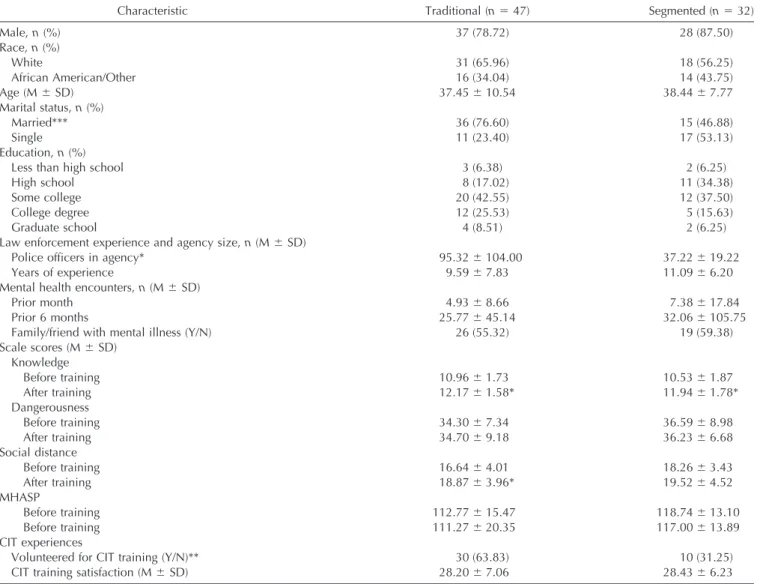
Table 1 Participant Characteristics, Knowledge, Attitudes
Characteristic Traditional (n⫽47) Segmented (n⫽32)
Male,n(%) 37 (78.72) 28 (87.50)
Race,n(%)
White 31 (65.96) 18 (56.25)
African American/Other 16 (34.04) 14 (43.75)
Age (M⫾SD) 37.45⫾10.54 38.44⫾7.77
Marital status,n(%)
Married*** 36 (76.60) 15 (46.88)
Single 11 (23.40) 17 (53.13)
Education,n(%)
Less than high school 3 (6.38) 2 (6.25)
High school 8 (17.02) 11 (34.38)
Some college 20 (42.55) 12 (37.50)
College degree 12 (25.53) 5 (15.63)
Graduate school 4 (8.51) 2 (6.25)
Law enforcement experience and agency size,n(M⫾SD)
Police officers in agency* 95.32⫾104.00 37.22⫾19.22
Years of experience 9.59⫾7.83 11.09⫾6.20
Mental health encounters,n(M⫾SD)
Prior month 4.93⫾8.66 7.38⫾17.84
Prior 6 months 25.77⫾45.14 32.06⫾105.75
Family/friend with mental illness (Y/N) 26 (55.32) 19 (59.38) Scale scores (M⫾SD)
Knowledge
Before training 10.96⫾1.73 10.53⫾1.87
After training 12.17⫾1.58* 11.94⫾1.78*
Dangerousness
Before training 34.30⫾7.34 36.59⫾8.98
After training 34.70⫾9.18 36.23⫾6.68
Social distance
Before training 16.64⫾4.01 18.26⫾3.43
After training 18.87⫾3.96* 19.52⫾4.52
MHASP
Before training 112.77⫾15.47 118.74⫾13.10
Before training 111.27⫾20.35 117.00⫾13.89
CIT experiences
Volunteered for CIT training (Y/N)** 30 (63.83) 10 (31.25)
CIT training satisfaction (M⫾SD) 28.20⫾7.06 28.43⫾6.23
Data were missing for race for one observation. Data were missing for one respondent for family/friend with mental illness. *p⬍.05; **p⬍
Knowledge of Mental Illness
The officers completed a 15-item measure devel-oped by Compton and colleagues,8which contained questions about symptoms of mental illness, treat-ment of treat-mental illness, and etiology. Scores ranged from 0 to 15, with higher scores indicating greater knowledge.
Perceived Dangerousness
The participants completed an 8-item scale to as-sess perceptions about the dangerousness of persons with mental illness.8 Scores ranged from 8 to 56, with higher scores indicating decreased perceptions of dangerousness.
Social Distance
The Social Distance Scale, a 7-item scale adapted for use by police officers was completed by the par-ticipants.8Scores ranged from 7 to 28, with higher scores indicating increased comfort with persons with mental illness.
Attitudes of Law Enforcement Toward Persons With Mental Illness
The officers completed the Mental Health Atti-tude Survey for Police (MHASP), a 33-item scale specifically developed to measure attitudes of law en-forcement officers toward persons with mental ill-ness.8Higher scores indicate more positive attitudes toward persons with mental illness.
Satisfaction with CIT Training
A 7-item, researcher-created measure was ad-ministered to assess officers’ satisfaction with their CIT training. Scores ranged from 8 to 32, with higher scores indicating greater satisfaction with CIT training.
Data Analysis
We used descriptive analyses to present frequen-cies and means of independent and dependent vari-ables and dependent-groupsttests to examine with-in-group changes over time on measures of officers’ knowledge and attitudes. We then used independent groupsttests to examine differences between groups (segmented versus traditional) in officers’ knowledge and attitudes. We conducted two-tailed tests with ␣⫽.05. All analyses were conducted using SAS 9.2 (SAS, Cary, NC).
Results
With three exceptions, there were no significant differences between groups on demographic or law enforcement variables. Compared with officers who received segmented training, officers who received traditional training came from larger agencies (95 officers versus 37 officers, respectively, for traditional and segmented groups, (t(50.88)⫽3.73;p⬍.001)), were more likely to be married (77 versus 47%, re-spectively, for the traditional and segmented groups; 2
(1)⫽7.35;p⬍.01), and were more likely to have volunteered for CIT (64 versus 31%, respectively, for the traditional and segmented groups;2(1)⫽8.08; p⬍.01).
As shown in Table 1, there were no statistically significant differences between the traditional and segmented CIT training groups in the pre- or post-training measures of knowledge, dangerousness, so-cial distance, or attitudes, and no statistically signif-icant differences with respect to satisfaction with CIT training.
Among those 47 officers who received traditional CIT training, scores on the measure of knowledge of mental illness improved significantly in posttest sur-veys from a mean of 10.96⫾1.73 before training to 12.17⫾1.58) after training (t(46)⫽ ⫺3.91;p⬍ .001). In addition, scores on the measure of social distance improved significantly, indicating increased comfort with persons with mental illness, from a mean of 16.64 ⫾ 4.01 before training to 18.87 ⫾ 3.96 after training (t(46)⫽ ⫺3.15,p⬍.01). How-ever, within this group, no statistically significant differences were found between the pre- and post-test scores for measures of perceived dangerousness and attitudes toward persons with mental illness.
Among those 32 officers who received segmented CIT training, scores on the measure of knowledge of mental illness improved from a mean of 10.53 ⫾ 1.87 before training to 11.94⫾1.78 after training, and this was a statistically significant difference (t(31)⫽-4.19, p ⬍ .001). However, within this group, no statistically significant differences were found between the pre- and post-training scores for measures of social distance, perceived dangerousness, and attitudes toward persons with mental illness.
Discussion
atti-tudes when compared with traditional CIT training. This finding challenges the assumption that CIT training must be delivered within one 40-hour week. It also has important implications for smaller law enforcement departments where traditional week-long CIT training may not be feasible or practical from a staffing perspective. Delivering CIT training in segments over several months rather than within one week may be a practical adaptation that enables smaller law enforcement agencies to develop a CIT. Law enforcement officers routinely encounter per-sons with mental illness and should know how to handle those encounters effectively to reduce unnec-essary incarcerations, physical confrontations, and use of force. CIT training attempts to provide offi-cers with the skills to de-escalate the behavior of in-dividuals in crisis, and instructs them on when it is appropriate to seek treatment for these individuals, rather than take them to jail. CIT training programs should be conceptualized as just one part of a larger system of jail diversion and treatment interventions. Indeed, for CIT programs to be effective, law en-forcement officers also must have knowledge of crisis and outpatient services and have access to acute care drop-off facilities.
In a policy environment where CIT is becoming so pervasive that whole states are implementing training programs,16,17it is important to study how the training should be adapted to support program implementation in police departments of various sizes and resources. Urban police departments have dominated the research on CIT;12however, attempts at widespread implementation of this intervention must consider the needs of smaller police depart-ments as well, because more than 85 percent of police departments in the United States employ fewer than 50 sworn police officers.18
The study was focused on whether different training modalities could accomplish similar outcomes in officer knowledge and attitudes. As far as we know, there are no studies that address the optimal level of knowledge or scores on the measures of attitudes and perceptions that are associated with better outcomes among CIT-trained officers. The results presented here show that there were statistically significant improvements in of-ficers’ knowledge about mental illness and perceptions of social distances within each training format, but not in their perceptions of dangerousness. It is difficult to say whether the amount of change in officers’ knowl-edge, attitudes, and perceptions in this study,
indepen-dent of the type of training they received, is of concern, and further research is warranted.
It is also important to note that only about half of the officers who participated in the CIT training programs in this study were volunteers and that the number of volunteers was lowest in the segmented training pro-gram. We examined the relationship between volunteer status and officers’ attitudes and knowledge and found that volunteers did not differ from nonvolunteers on these measures. Nevertheless, this is an important con-cern for further research, especially in light of efforts among many local criminal justice authorities, and en-tire states for that matter, to mandate CIT training for all law enforcement officers.
Another finding that requires further exploration is the high percentage of officers in this study (57%) who reported having friends or family members with mental illness. We examined this relationship in our data and found that officers with friends or family members with mental illness did not differ in their attitudes or perceptions of persons with mental ill-ness when compared with officers who did not report having friends or family members with mental ill-ness. At least one study has found that having a per-sonal relationship with a person with mental illness can have a positive effect on outcomes among CIT officers.13Further investigation is needed to under-stand how this relationship affects CIT training and officers’ outcomes.
Because of the small sample size and the limita-tions in our study design, the results presented here should be viewed as offering preliminary support for the idea that police departments have more flexibility in the timing of the delivery of CIT training than previously thought. Nevertheless, this study takes ad-vantage of a natural quasi-experiment, uses standard-ized measures, and contributes to the literature, in that it addresses a question that was previously unad-dressed in the growing body of research on CIT. Further studies using more rigorous experimental de-signs and across more diverse samples are needed to confirm these results.
Conclusion
smaller law enforcement agencies is promising and has important practice, policy, and research implications in light of efforts among many criminal justice authorities to mandate CIT training for all law enforcement officers.
References
1. University of Memphis Crisis Intervention Team (CIT) Center: A resource for CIT programs across the nation. Available at: http:// www.CIT.Memphis.edu. Accessed October, 28 2014
2. Dupont R, Cochran S: Police response to mental health emergen-cies: barriers to change. J Am Acad Psychiatry Law 28:338 –344, 2000
3. Watson AC, Morabito MS, Draine J, et al: Improving police response to persons with mental illness: a multi-level conceptual-ization of CIT. Int’l J Law Psychiatry 31:359 –368, 2008 4. Deane MW, Steadman HJ, Borum R,et al: Emerging
partner-ships between mental health and law enforcement. Psychiatr Serv 50:99 –101, 1999
5. Steadman HJ, Deane MW, Borum R,et al. Comparing outcomes of major models of police responses to mental health emergencies. Psychiatr Serv 51:645– 649, 2000
6. Compton MT, Bahora M, Watson AC,et al: A comprehensive review of extant research on Crisis Intervention Team (CIT) pro-grams. J Am Acad Psychiatry Law 36:47–55, 2008
7. Teller J, Muentz M, Gil K,et al: Crisis intervention team training for police officers responding to mental disturbance calls. Psychi-atr Serv 57:232–237, 2006
8. Compton MT, Esterberg ML, McGee R,et al: Crisis intervention team training: changes in knowledge, attitudes, and stigma related to schizophrenia. Psychiatr Serv 57:1199 –1202, 2006
9. Bonfine N, Munetz M, Ritter C: Police officer perceptions of the impact of crisis intervention team (CIT) programs. Int J Law Psychiatry 37:341–350, 2014
10. Geller JL: Commentary: Is CIT today’s lobotomy? J Am Acad Psychiatric Law 36:56 –58, 2008
11. Morrissey JM, Fagan JA, Cocozza JJ: Commentary: New models of collaboration between criminal justice and mental health sys-tems. Am J Psychiatry 166:1211–1214, 2009
12. Compton M, Chein V: Factors related to knowledge retention after crisis intervention team training for police officers. Psychiatr Serv 59:1049 –1051, 2008
13. Watson AC, Ottati VC, Morabito M,et al: Outcomes of policy contacts with persons with mental illness: the impact of CIT. Adm Policy Ment Health 37:302–317, 2010
14. Skubby D, Bonefine N, Novisky M,et al: Crisis intervention team (CIT) programs in rural communities: a focus group study. Com-munity Ment Health J 409:756 –764, 2013
15. Kurtz R. A Survey of Crisis Intervention Training Coordinators in North Carolina. A report submitted to the North Carolina De-partment of Health and Human Services’ Division of Mental Health/Developmental Disability and Substance Abuse Services, Raleigh, NC, August 2012
16. Munetz M, Morrison A, Krake J,et al: Statewide implementation of the crisis intervention team program: the Ohio model. Psychi-atr Serv 57:1569 –1571, 2006
17. Oliva JR, Compton MT: A statewide crisis intervention team (CIT) initiative: evolution of the Georgia CIT program. J Am Acad Psychiatry Law 36:38 – 46, 2008