The Within Poverty Differences in the Occurrence and Developmental Outcomes of Physical Neglect.
Meghan E. Shanahan
A dissertation submitted to the faculty of the University of North Carolina at Chapel Hill in partial fulfillment of the requirements for the degree of Doctor of Philosophy in the Department of Maternal
and Child Health.
Chapel Hill 2010
ii
ABSTRACT
MEGHAN E. SHANAHAN: The within poverty differences in the occurrence and developmental outcomes of physical neglect.
(Under the direction of Dr. Jonathan Kotch)
The purpose of this dissertation is to examine the within poverty differences in the risk factors for physical neglect, as well as isolate the impact of physical neglect on the developmental
trajectories of impoverished children. A secondary data analysis of data from the Longitudinal Studies on Child Abuse and Neglect were used to address these goals. The first paper of this dissertation examined the within poverty differences in the occurrence of physical neglect. Logistic regression analyses revealed that poor children whose caregivers have depression are more likely to experience physical neglect than impoverished children whose caregivers do not have depression (p=.0072). Poor children whose caregivers have a history of physical and sexual abuse were more likely to experience physical neglect than poor children whose caregivers did not have a history of child abuse (p=.0096). Impoverished children living in lower quality neighborhoods were more likely to experience physical neglect than poor children who live in higher quality neighborhoods (p=.0464). The second paper of this dissertation examined the influence of physical neglect on the developmental trajectories of impoverished children. Three developmental outcomes were examined using Latent Curve
iv
TABLE OF CONTENTS
LIST OF TABLES ……….………. iv
Chapter I. INTRODUCTION………...…………...……….. 1
References………...………..………..12
II. WITHIN POVERTY DIFFERENCES IN THE OCCURRENCE OF PHYSICAL NEGLECT………..………...……….. 17
References………..………..………….. 35
Tables ………...…………..………… 39
III. WITHIN POVERTY DIFFERENCES IN THE DEVELOPMENTAL OUTCOMES OF PHYSICAL NEGLECT…...…… 43
References………..……..…….. 65
Tables………...…………..…………. 70
IV. CONCLUSION………..……….…………... 77
LIST OF TABLES Table
2-1. Correlation Matrix: Physical Neglect Items from
About My Parents………..…… 39 2-2. Differences between those missing outcome data and
those not missing outcome data……….…... 40 2-3. Sample Characteristics: Categorical variables…….………...………….. 41 2-4. Sample Characteristics: Continuous variables………..…….………….. 42 2-5. Final Model: Predictors of physical neglect among
an impoverished sample. Logistic regression analysis results………... 42 3-1. Correlation Matrix: Physical Neglect Items from
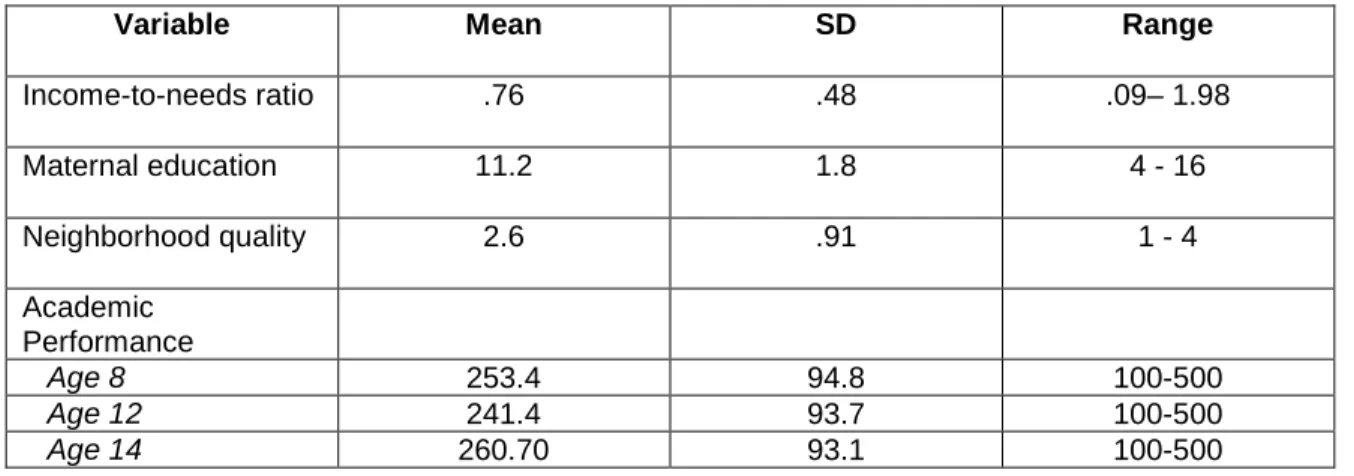
About My Parents………...70 3-2. Sample Characteristics for Academic Performance
Analysis: Categorical variables………71 3-3. Sample Characteristics for Academic Performance
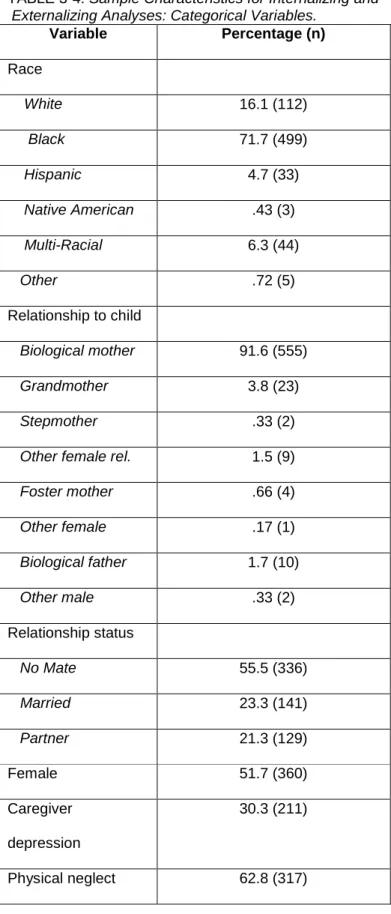
Analysis: Continuous variables.………72 3-4. Sample Characteristics for Internalizing and Externalizing Analyses:
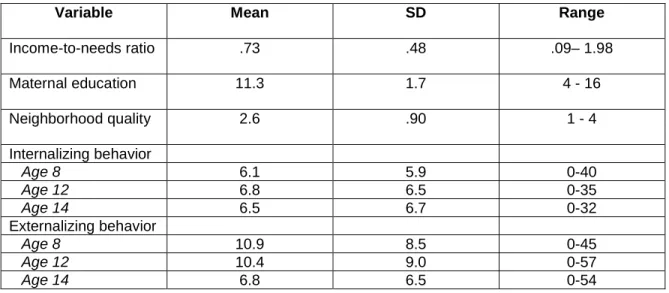
Categorical Variables………..73 3-5. Sample Characteristics for Internalizing and Externalizing Analyses:
Continuous Variables ………….………...74 3-6. LCM results: Outcomes of experiencing physical neglect………75 3-7. Differences between those missing academic performance data and
those not missing academic performance data………...76
Overview
Child maltreatment is a significant public health problem in America. Estimates place the number of children maltreated annually in the U.S. between 772,0001 and 2.9 million.2 The forms of child maltreatment included in that number are sub-divided into physical neglect, physical abuse, sexual abuse, emotional abuse, and medical neglect.3 Neglect is the most common and accounts for the majority of the official reports.1,2,4 It also results in more deaths each year than any other type of maltreatment.4 Of all the types of neglect, physical neglect is the most frequent2 and therefore will be the focus of this dissertation. Physical neglect is defined as the failure of a caregiver to provide adequate care or supervision for a child and meet his/her basic needs.5 Numerous risk factors for neglect have been identified in the literature,6,3,7-16 including poverty,3,8,13,14-16 but not all studies have found a relationship between poverty and neglect,17,18 and most children living in poverty are not neglected.7 Prior studies have explored within poverty differences in experiencing neglect,19-22 but these studies are fraught with methodological problems. Therefore, it is not apparent why some impoverished children are neglected and others are not. Both neglect and poverty have been linked to poor developmental outcomes,23-34 but the isolated effect of neglect on the developmental trajectories of impoverished children is not known. The within poverty differences in the occurrence and developmental consequences of neglect are not clear. The ecological framework for
maltreatment, an adaptation of Bronfenbrenner’s ecological systems model,35 may provide an avenue of insight into why some impoverished children are neglected, as well as help elucidate the role of neglect in their developmental outcomes over time.
The purpose of this dissertation is twofold. The first aim is to examine the within poverty differences in the occurrence of neglect. This will be addressed in the first paper of this dissertation. The second goal is to examine the developmental outcomes of children who experience neglect among a low-income sample, which will be addressed in the second paper. This dissertation utilizes the ecological framework for maltreatment, an adaptation of Bronfenbrenner’s ecological systems model, to examine both distal and proximal factors that may predict neglect among low-income children, as well as the developmental impact of neglect on children living in poverty. This chapter serves as an introduction to both manuscripts and as such much of the literature reviewed here will also be discussed in the introduction of each of the papers that comprise this dissertation.
Child neglect is a national problem
According to the 2005-2006 National Incidence Study (NIS-4), the incidence of neglect was 16.2 per 1,000.2 Close to 1.2 million children are physically neglected each year, accounting for forty-one percent of maltreated children.2 By comparison, 6.5 per 1,000 children were physically abused, and 2.4 per 1,000 were sexually abused.2 Other data support the significant numbers of children experiencing neglect. A 2002 anonymous telephone survey of mothers in North and South Carolina determined that, in a one month period, 14 per 1,000 children experienced physically neglectful behaviors.38 It is important to note that since maltreatment often occurs in private, these numbers likely underestimate the true extent of the problem.39
Definition of child neglect
3
appropriate food, clothing, shelter, supervision, and a safe environment for the child.39 Failure to provide appropriate medical care is sometimes included in the definition of physical neglect;39 however, this dissertation will not include medical neglect.
Child Poverty in the United States
In 2008, 13.2 percent of the US population , or 39.8 million people, were living in poverty.42 This poverty rate was the highest since 1997.42 Ten percent of families live in poverty.42 Persons under the age of eighteen account for more individuals in poverty than any other age group and are disproportionately represented among the poor. While children accounted for 24. 6 percent of the population in 2008, 35.3 percent of those living in poverty were under eighteen years of age.42 Even though the US is one of the wealthiest nations in the world, the child poverty rate is higher than many European countries.43,44
Growing up in poverty is associated with many negative outcomes. Mortality rates among children living in poverty are higher than rates among children who are not impoverished.45 Children whose families are impoverished are five times as likely to be in poor or fair health as children whose families are not living in poverty.46 Interestingly, children in near poor families are more likely to have unmet medical needs, delayed medical care, and be uninsured than children who live in poverty and those who are not impoverished.46 This is likely due to the fact that children who live near poverty are not eligible for many of the programs aimed at helping children in poverty, such as TANF or
Adaptation of Bronfenbrenner’s ecological systems model
Bronfenbrenner’s ecological systems model posits that development occurs within the context of nested, interconnected systems.35 The first level within this system is called the
microsystem, which refers to the immediate setting of the developing person.35 The next level is the mesosytem which contains the setting in which the developing person participates, followed by the exosystem which contains surroundings in which the developing person does not engage, yet is affected by.35 The final level is the macrosystem, which refers to the culture in which the other levels are embedded.35 According to Bronfenbrenner, a person’s development is affected by all levels of this system, as well as by the relationships between the levels.35 Jay Belsky adapted the ecological systems model into the ecological framework for child maltreatment in order to examine abuse and neglect.36,49 While the basic principle of considering the context in which a person develops is maintained, the levels are slightly different (i.e., individual level, family level, community level, and societal level).36 These levels all have the same meaning in this framework as they did in
Bronfenbrenner’s model. Given that this model suggests that development occurs within the context of various settings, both immediate and distal to the individual, it is useful in examining both the occurrence of neglect and its consequences. While the ecological framework for child maltreatment is often used to examine the etiology of child maltreatment,18,50 Bronfenbrenner’s model has been used to examine the effect of poverty on child development.37 Therefore, it is appropriate to apply the ecological framework of child maltreatment to both aims of this dissertation.
Etiology of child neglect
5
Only one individual level characteristic has been associated with experiencing neglect. Boys are at an increased risk of experiencing neglect when compared to girls.52 Numerous parental and family level characteristics have been found to predict neglect. However, findings regarding these associations have not been consistent.7 Children who live with several siblings or other children are at a greater risk of experiencing neglect than children who don’t live with several other children.6,7 Specifically, children who live with four or more children were physically neglected at almost three times the rate of children who don’t live with siblings or other children.6 Children who live with a single parent are also more likely to experience neglect than children who live with both parents.6 Children born to young mothers are more likely to experience neglect than children born to older mothers.9 Additionally, parents who experienced physical10,53,54 or sexual abuse10,53 as children are more likely to maltreat their children than parents who were not maltreated in their childhood.10 While these studies did not distinguish abuse from physical neglect, given the evidence of the intergenerational transmission of child maltreatment, it is important to consider caregiver history of abuse when discussing risk factors for physical neglect. Parents with mental health disorders are more likely to neglect their children than parents who do not have mental health problems.7,11,12 Finally, families who live in poverty are more likely to neglect their children than families who are not impoverished.6,8,13,14
for child maltreatment will not be considered in this dissertation because the dataset that will be used does not include indicators at this level.
The literature suggests that social support may be a protective factor against neglect.18,21,22 In a prospective study of neglect, pregnant women who reported low levels of social support were more likely to be reported to CPS for neglect by the time their children were four years of age than women who did not report low levels of social support while pregnant.22 One study determined that the effect of life stressors on maltreatment reports is mitigated by levels of social support.18 Mothers who are neglectful receive fewer resources from both their mothers and partners than women who have not maltreated their children.21 Mothers who have been reported to CPS for neglect report less emotional support from their own mothers than those who have not maltreated their children. However, these mothers report the same level of emotional support from their partners as women who have not maltreated their children.21 The protective effects of emotional social support may vary depending on who is providing the support.
Within poverty differences in the occurrence of neglect not clear
The only potential risk factor that occurs at both the family and community level of the ecological framework is poverty. While the relationship between poverty and neglect seems logical, particularly since limited financial resources can hinder a caregiver’s ability to meet the needs of his/her children,7 it is important to note that most impoverished parents do not neglect their children.7 Furthermore, it is not clear why some children in poverty are neglected and others are not. It is possible that it is the other risk factors for neglect, which tend to cluster among impoverished
individuals,7 that lead to the occurrence of child neglect among those who are impoverished. Perhaps more interesting is that there may be protective factors, such as social support, that explain why most children in this at-risk group are not neglected. It is possible that social support among those living in poverty may facilitate sharing of resources, which may in turn alleviate the potential for neglect created by the presence of the risk factors previously mentioned.
7
neglect by only including those living in poverty in the sample.19-22 Three of these studies examined the role of social support in the occurrence of neglect.19,21,22 However, only two found social support to be a significant protective factor.21,22 Two studies only examined one risk factor for neglect.20,21
Additionally, one study’s only measure of poverty was that the participants utilized a clinic for impoverished individuals.212 Finally, and perhaps most importantly, all of these studies used CPS reports to determine whether or not the children had been neglected.19-22 Children who are reported to CPS for child maltreatment represent only a small portion of children who are actually maltreated,6 and reporting biases regarding which families become know to CPS6 may distort our understanding of risk and protective factors; studies using CPS records to classify a child’s neglect status are actually examining the risk factors for being reported for neglect, rather than the risk factors for experiencing neglect. Furthermore, CPS agencies vary in what behaviors and situations are substantiated as neglect.55 It is less likely that that a parent will be criminally prosecuted for a substantiated case of neglect than for a physical or sexual abuse substantiation.56 Therefore, an abuse allegation may be substantiated as neglect in order to avoid a criminal charge while still ensuring that the family will receive social service intervention.56 Consequently, not everything that is substantiated as neglect in CPS reports is clearly neglect, due to these other considerations.
Child outcomes associated with neglect
Neglect has a negative impact on child development.23-30 Specifically, neglect has been shown to affect aspects of biological, emotional, cognitive, and behavioral development. 23-30 Some evidence suggests that neglect has a worse effect on developmental outcomes than other forms of maltreatment.23,24 However it is important to note that not all studies support this finding.25 These differences may be because all three studies examining this issue utilized convenience samples and used different measures of development.23-25
difficulty recognizing and distinguishing emotions based on facial expressions when compared to physically abused and control children.24 Neglect has also been found to be associated with cognitive deficits24 and poor academic achievement.27 Specifically, children who were neglected, as well as children who were abused, were found to have lower scores on measures of receptive language and IQ than non-maltreated children.25 Additionally, a study comparing the school readiness of children from middle class families, children from families who receive Aid to Families with Dependent Children (AFDC), and children who had been maltreated (the majority neglected) determined that maltreated children were less ready to learn than the other two groups of children.26 It has also been determined that neglected children received lower grades in Math and English than non-maltreated children across kindergarten to twelfth grade.27 It is important to note, however, that not all studies have found an association between neglect and poor cognitive outcomes.30 This may be due to how neglect was defined in these studies. The two studies that found a relationship between neglect and poor cognitive outcomes used CPS reports to determine a child’s neglect status;25,26 the study that did not find a relationship used multiple sources, including interviewer assessment of the home
environment, observations of parent-child interactions, and maternal report, to determine neglect status.30 Children who have been neglected have more behavior problems than children who have not been neglected.25,28-30 Specifically, neglected children have been reported to engage in fewer social interactions25 and be more aggressive29 than children who were not neglected. Interestingly, one study determined that early neglect was more predictive of later aggression than early abuse, later abuse, or later neglect,28 indicating that the developmental timing of neglect plays an important role in the experience of negative developmental outcomes. Additionally, cumulative neglect has been found to be positively associated with internalizing behavior problems.30
Poverty and developmental outcomes
9
children, even when controlling for maternal education and family structure.31 Another study
determined that children who live below the poverty line score lower on a measure of development and cognition than children whose families live at three times the poverty level, when controlling for maternal depression, race, marital status, and maternal age.32 Using instrumental variable analysis, Morris and Gennetian found that income level predicted school engagement with lower income associated with less school engagement.33 A study conducted by the NICHD found that poverty predicted both cognitive abilities and problem behaviors, with children living in chronic poverty scoring worse than children who had experienced transient poverty or never lived in poverty.34
Given that neglect occurs more frequently in low income families than higher income
families2, it is difficult to disentangle the effects of neglect from living in poverty on child outcomes. It has been suggested that the quality of the home environment, as well as maternal sensitivity, may mediate the relationship between poverty and cognitive development.34 However this relationship has not been found for all developmental outcomes.57 Additionally, no studies have examined the
relationship among poverty, neglect, and developmental outcomes specifically; all have used measures of poor parenting,34,57 but not necessarily neglect. When considering the impact of neglect on the development of children over time, it is important to consider the effects of living in poverty.
The effect of neglect on the developmental trajectories of children
While numerous studies have examined the impact of neglect on developmental outcomes, only one study utilized longitudinal methods to explore the effect of neglect on development, specifically aggressive behavior.28 However, in addition to only examining one developmental
Significance and summary
Neglect is the most common form of child maltreatment1,2,4 and poverty is often cited as a risk factor for its occurrence.6,8,13-16 However, it is not clear why some children in poverty are neglected and others are not. The first paper of this dissertation investigates the within poverty differences in experiencing neglect by examining the risk factors for being neglected among a sample of
impoverished children. Two sources (CPS records and self report) will be used to classify a child’s neglect status, thereby assuring that the analysis will examine the risk and protective factor(s) for experiencing neglect and not solely the risk factors for being reported to CPS for neglect. Additionally, the first paper of this dissertation examines risk factors at the individual, family, and community levels of the ecological framework, therefore taking into consideration the complex context in which neglect may occur. Social support at both the individual and neighborhood level was considered as a protective factor.
Neglect has been found to be associated with poor developmental outcomes,23-30 yet little is known about its impact on the development of children over time. Further complicating this issue is the fact that poverty is both associated with the occurrence of neglect3 and poor developmental outcomes.31-34,57 Therefore, given the confounding nature of poverty, it is difficult to isolate the role of neglect on child development among children living in poverty. The second paper of this dissertation examines the within poverty differences of the effects of neglect on child development, specifically, by assessing the effect of neglect on the developmental trajectories of impoverished children. This was accomplished by comparing the developmental trajectories of children who are impoverished and neglected to children who live in poverty but did not experience maltreatment. Additionally, other influences on development at the individual, family, and community level were controlled for in the analyses.
11
References
1. US Department of Health and Human Services. Administration for Children and Families. Administration on Children, Youth, and Families, Children’s Bureau. Child Maltreatment 2008. Washington, DC: Government Printing Office; 2010.
2. Sedlak AJ, Mettenburg J, Basena M, Petta I, McPherson K, Greene, A, Li S. Fourth National Incidence Study of Child Abuse and Neglect (NIS–4): Report to Congress. Washington, DC: U.S. Department of Health and Human Services, Administration for Children and Families; 2010
3. US Department of Health and Human Services. Children’s Bureau.
http://www.acf.hhs.gov/programs/cb/pubs/cm04/chapterthree.htm. Accessed on September 22, 2006.
4. Administration on Children, Youth, and Families, (2001). Child maltreatment 1999: Reports from the states to the National Child Abuse and Neglect Data System. Washington, DC: U.S.
Government Printing Office (Department of Health and Human Services Publication).
5. American Psychological Association Committee of Professional Practice, Standards Guidelines for psychological evaluations in child protection matters. Am Psychol 1999;54:586-593.
6. Sedlak AJ, Broadhurst DD. Third National Incidence Study of Child Abuse and Neglect. Washington, DC: National Clearinghouse on Child Abuse and Neglect Information; 1996.
7. Carter V, Myers MR. Exploring the risks of substantiated physical neglect related to poverty and parental characteristics: A national sample. Child Youth Serv Rev 2007; 29:110-121.
8. Jones ED, McCurdy K. The links between types of maltreatment and demographic characteristics of children. Child Abuse Negl 1992;16:201-215.
9. Lee BJ, Goerge RM. Poverty, early childbearing, and child maltreatment: A multinomial analysis. Child Youth Serv Rev 1999;21:755-780.
10. Golden O. The federal response to child abuse and neglect. Am Psychol 2000;55:1050-1053.
11. Kelleher K, Chaffin M, Hollenberg J, Fischer E. Alcohol and drug disorders among physically abusive and neglectful parents in a community-based sample. Am J Public Health 1994; 84:1586-1590.
13
13. Brown J, Cohen P, Johnson JG, Salzinger S. A longitudinal analysis of risk factors for child maltreatment: Findings of a 17-year prospective study of officially recorded self-reported child abuse and neglect. Child Abuse Negl 1998;22:1065-1078.
14. Chaffin M, Kelleher K, Hollenberg J. Onset of physical abuse and neglect: Psychiatric, substance abuse, and social risk factors from prospective community data. Child Abuse Negl
1996;20(3):191-203.
15. Gillham B, Tanner G, Cheyne B, Freeman I, Rooney M, Lambie A. Unemployment rates, single parent density, and indices of child poverty: Their relationship to different categories of child abuse and neglect. Child Abuse Negl 1998;22:79-90.
16. Drake B, Pandy S. Understanding the relationship between neighborhood poverty and specific types of child maltreatment, Child Abuse Negl 1996;20(11):1003–1018.
17. Coulton CJ, Korbin JE, Su M. Neighborhoods and child maltreatment: A multi-level study. Child Abuse Negl 1999;23:1019-1040.
18. Kotch JB, Browne DC, Ringwalt CL, Stewart PW, Ruina E, Holt K, Lowman B, Jung JW. Risk of child abuse or neglect in a cohort of low-income children. Child Abuse Negl 1995;19(9):1115-1130.
19. Slack KS, Holl JL, McDaniel M, Yoo J, Bolger K. Understanding the risks of child neglect: an exploration of poverty and parenting characteristics. Child Maltreat 2004;9(4):395-408.
20. Christensen MJ, Brayden RM, Dietrich MS, McLaughlin FJ, Sherrod KB. The prospective
assessment of self-concept in neglectful and physically abusive low income mothers. Child Abuse Negl 1994;18(3):225-232.
21. Coohey C. Neglectful mothers, their mothers, and partners: the significance of mutual aid. Child Abuse Negl 1995;19(8):885-895.
22. Brayden RM, Altemeier WA, Tucker DD, Dietrich MS, Vietze P. Antecedents of child neglect in the first two years of life. J of Pediatr 1992;120(3):426-429.
23. Teicher MH, Dumont NL, Ito Y, Vaituzias C, Giedd JN, Anderson SL. Childhood neglect is associated with reduced corpus callosum area. Biol Psychiatry 2004;56:80-85.
24. Pollak SD, Cicchetti D, Hornung K, Reed A. Recognizing emotion in faces: Developmental effects of child abuse and neglect. Dev Psychol 2000;36(5):679-688.
26. Aber JL, Allen JP, Carlson V, Cicchetti D. The effects of maltreatment on development during early childhood: recent studies and their theoretical, clinical, and policy implications. In: Cicchetti D, Carlson V, editors. Child Maltreatment. New York, NY: Cambridge University Press; 1989. p. 579-619.
27. Kendall-Tackett K. Timing of academic difficulties for neglected and nonmaltreated males and females. Child Abuse Negl 1997;21(9):885-887.
28. Kotch JB, Lewis T, Hussey JM, English D, Thompson R, Litrownik AJ, Runyan DK, Bangdiwala SI, Margolis B, Dubowitz H. Importance of early neglect for childhood aggression. Pediatrics 2008;121(4):725-731.
29. Knutson JF, DeGarmo DS, Reid JB. Social disadvantage and neglectful parenting as precursors to the development of antisocial and aggressive child behavior: testing a theoretical model. Aggr Behav 2004;30:187-205.
30. Dubowitz H, Papa MA, Black MM, Starr RH. Child Neglect: outcomes in high-risk urban preschoolers. Pediatrics 2002;109(6):1100-1107.
31. Korenmann S, Miller JE, Sjaastad JE. Long-term poverty and child development in the United States: Results from the NLSY. Child Youth Serv Rev 1995;17(1/2):127-155.
32. Petterson SM, Albers AB. Effects of poverty and maternal depression on early child development. Child Dev 2001;72(6):1794-1813.
33. Morris PA, Gennetian LA. Identifying the effects of income on children’s development using experimental data. J Marriage Fam 2003;65:716-729.
34. National Institute of Child Health and Human Development Early Child Care Research Network. Duration and developmental timing of poverty and children’s cognitive and social development from birth through third grade. Child Dev 2005;76(4):795-810.
35. Bronfenbrenner, U. The Ecology of Human Development. Cambridge, MA: Harvard University Press; 1979.
36. Belsky J. Child maltreatment: An ecological integration. Am Psychol 1980;35(4):320-335. 37. Eamon MK. The effects of poverty on children’s socioemotional development: An ecological
systems analysis. Soc Work 2001;46(3):256-266.
15
39. Acts of Omission. What is Neglect? Available at: Welfare
http://www.childwelfare.gov/pubs/focus/acts/actsa.cfm. Accessed on September 29th, 2008.
40. Manly JT. Advances in research definitions of child maltreatment. Child Abuse Negl 2005;29:425-439.
41. Erickson MF, Egeland B. Child Neglect. In Myers JEB, Berliner L, Briere JN, Hendrix CT, Reid TA, Jenny CA, editors. APSAC Handbook on Child Maltreatment California: Sage Publications Inc.; 1996. p. 4-20.
42. DeNavas-Walt C, Proctor BD, Smith JC. U.S. Census Bureau, Current Population Reports, P60-236, Income, Poverty, and Health Insurance Coverage in the United States: 2008, U.S.
Government Printing Office, Washington, DC, 2009.
43. Heuveline P, Weinshenker M. The international child poverty gap: Does demography matter? Demography 2008;45(1):173-191.
44. Yeakey CC, Richardson JW, Buck JB. America’s shame: Children living in the shadows of America’s prosperity. In: Yeakey CC, Richardson JW, Buck JB , editors. ‘Suffer the little children’: National and international dimensions of child poverty and public policy. Oxford: Elsevier; 2006.
45. Singh GK, Kogan MD. Widening socioeconomic disparities in US childhood mortality, 1969–2000. Am J Public Health 2007; 97:1658–1665.
46. Bloom B, Cohen RA, Freeman G. Summary health statistics for U.S. children: National Health Interview Survey, 2008. National Center for Health Statistics. Vital Health Stat 10(244). 2009.
47. Aber JL, Bennet NG, Conley DC, Li J. The effects of poverty on child health and development. Annu Rev Public Health 1997;18:463-483.
48. Holzer H. The economic cost of child poverty: Testimony before the U.S. House Committee on Ways and Means. Available at: http://www.urban.org/publications/901032.html. Accessed on May 7th, 2010.
49. Garbarino J. The human ecology of child maltreatment: A conceptual model for research. J Marriage Fam 1977;39(4):721-735.
50. Kotch JB, Browne DC, Dufort V, Winsor J, Catellier D. Predicting child maltreatment in the first four years of life from characteristics assessed in the neonatal period. Child Abuse Negl 1999;23(4):305-319.
52. Hussey JM, Chang JJ, Kotch JB. Child Maltreatment in the United States: Prevalence, risk factors, and adolescent health. Pediatrics 2006;118(3):933-942.
53. Dixon L, Browne K, Hamilton-Giachitsis C. Risk factors of parents abused as children: a meditational analysis of the intergenerational continuity of child maltreatment (Part 1). J Child Psychol Psychiatry 2005;46(1):47-57.
54. Pears KC, Capaldi DM. Intergenerational transmission of abuse: a two-generational prospective study of an at-risk sample. Child Abuse Negl 2001;25:1439-1461.
55. Coohey C. Defining and classifying supervisory neglect. Child Maltreat 2003;8:145-156.
56. Runyan DK, Cox CE, Dubowitz H, Newton RR, Upadhyaya M, Kotch JB, et al. Describing maltreatment: Do child protective service reports and research definitions agree. Child Abuse Negl 2005;29:461-477.
INTRODUCTION
Child maltreatment is a significant public health problem in America. Estimates place the number of children maltreated annually in the U.S. between 772,0001 and 2.9 million.2 The forms of child maltreatment included in that number are sub-divided into physical neglect, physical abuse, sexual abuse, emotional abuse, and medical neglect.1 According to the 2005-2006 National Incidence Study (NIS-4) 4.0% of children experience child maltreatment each year.2 Neglect is the most
common and accounts for the majority of the official reports.1-3 It also results in more deaths each year than any other type of maltreatment.3 According to the NIS-4, neglect accounted for sixty-one percent of maltreated children.2 Furthermore, 6.5 per 1,000 children are physically abused, 2.4 per 1,000 are sexually abused, and 16.2 per 1,000 are physically neglected each year.2 Other data support the significant numbers of children experiencing neglect; a 2002 anonymous telephone survey of mothers in North and South Carolina determine that in a one month period, 14 per 1,000 children experience physically neglectful behaviors.4 It is important to note that since maltreatment often occurs in private, these numbers likely underestimate the true extent of the problem.5 Of all the types of neglect, physical neglect is the most frequent3 and therefore will be the focus of the current study.
safe environment for the child.5 Failure to provide appropriate medical care is sometimes included in the definition of physical neglect;4 however, this study will not include medical neglect.
Bronfenbrenner’s ecological systems model posits that development occurs within the context of nested, interconnected systems.9 The four levels of this model refer to the immediate setting of the developing person, the setting in which the developing person participates,
surroundings that affect the person, but with which he/she does not engage, and finally the culture in which the other levels are embedded.9 According to Bronfenbrenner, a person’s development is affected by all levels of this system, as well as by the relationships between the levels.9 Jay Belsky adapted Bronfenbrenner’s model into the ecological framework for child maltreatment which has the following levels: individual, family, community, and societal.10,11 The basic principle of considering the context in which a person develops is maintained in this framework and the levels have the same meaning as they did in Bronfenbrenner’s model.10 Given that this model suggests that development occurs within the context of various settings, both immediate and distal to the individual, it is useful in examining the occurrence of neglect. The ecological framework is the most frequently cited
explanatory model for the etiology of child maltreatment;12,13 therefore, it is appropriate to apply the ecological framework of to the current study.
Numerous risk factors and one protective factor for neglect have been identified in the literature. However, much of the literature regarding neglect examines both abuse and neglect, without drawing a distinction between the two.14 The focus of this study is solely on neglect therefore, only studies that have distinguished neglect from abuse will be reviewed, unless otherwise noted.
19
experience neglect than children born to older mothers.16 This appears contradictory to the risk factor of living with four or more siblings, as it not likely that a younger mother would have four or more children. Given this, it is important to mention that the relation between the number of children in the family and physical neglect did not consider other potential risk factors and was therefore considered separate from maternal age. Additionally, parents who experienced neglect,16 sexual abuse,19 or physical abuse19,20 as children are more likely to maltreat their children than parents who were not maltreatedin their childhood. While these studies did not distinguish abuse from physical neglect, given the evidence of the intergenerational transmission of child maltreatment, it is important to consider caregiver history of abuse when discussing risk factors for physical neglect. Parents with mental health disorders, including depression,21,22 are more likely to neglect their children than parents who do not have mental health problems.18,21,22 Finally, families who live in poverty are more likely to neglect their children than families who are not impoverished.17,15,23-25
Community characteristics are associated with neglect. Rates of unemployment in
neighborhoods are positively associated with rates of neglect.26 Specifically, it was determined that male unemployment rates were associated with two-thirds of the variance in neglect rates between neighborhoods.26 Neighborhood poverty levels have also been associated with rates of neglect.26 In fact, it has been suggested that neighborhood poverty is more strongly associated with neglect than other forms of child maltreatment.27 It is possible that the relationship between neighborhood poverty and neglect is indirect;27 there may be factors associated with a family living in poverty that are also related to a child experiencing physical neglect, such as depression. However, not all studies that have examined the relationship between neighborhood poverty and neglect have found a strong relationship.26
partners than women who have not maltreated their children.28 Mothers who have been reported to CPS for neglect report less emotional support from their own mothers than those who have not maltreated their children. However, these mothers report the same level of emotional support from their partners as women who have not maltreated their children.28 The protective effects of emotional social support may vary depending on who is providing the support.
The only potential risk factor that occurs at both the family and community level of the ecological framework is poverty. While a relationship between poverty and neglect seems logical, particularly since limited financial resources can hinder a caregiver’s ability to meet the needs of his/her children,12 most impoverished parents do not neglect their children.18 It is not clear why some children in poverty are neglected and others are not. It is possible that other risk factors for neglect, which tend to cluster among impoverished individuals,18 lead to the occurrence of child neglect among those who are impoverished. Perhaps more interesting is that there may be protective factors, such as social support, that explain why most children in this at-risk group are not neglected. It is possible that social support, either instrumental or emotional, among those living in poverty may facilitate sharing of resources, which may in turn alleviate the potential for neglect created by the presence of the risk factors previously mentioned.
While some of the studies discussed above have utilized samples that are predominantly impoverished, 17,23 a few studies have explicitly investigated within poverty differences in experiencing neglect by only including those living in poverty in the sample.28-31 Three of these studies examined the role of social support in the occurrence of neglect.28-30 However, only two found social support to be a significant protective factor.28,29 Two studies only examined one risk factor for neglect.29,31 Additionally, one study’s only measure of poverty was that the participants utilized a clinic for impoverished individuals.29 Finally, and perhaps most importantly, all of these studies used CPS reports to determine whether or not the children had been neglected.28-31 Children who are reported to CPS for child maltreatment represent only a small portion of children who are actually
21
for experiencing neglect. Furthermore, CPS agencies vary in what behaviors and situations are substantiated as neglect.32 It is less likely that that a parent will be criminally prosecuted for a substantiated case of neglect than for a physical or sexual abuse substantiation.33 Therefore, an abuse allegation may be substantiated as neglect in order to avoid a criminal charge while still ensuring that the family will receive social service intervention.33 Consequently, not everything that is substantiated as neglect in CPS reports is clearly neglect. This study will address this issue through two avenues. The first is that the CPS reports in the dataset have been recoded to ensure that the behavior(s) the child experienced are actually physical neglect. The second is that two measures of neglect (CPS reports and self report) were utilized to form a composite neglect variable.
Neglect is the most common form of child maltreatment,1-3 and poverty is often cited as a risk factor for its occurrence.17,22-27 However, it is not clear why some children in poverty are neglected and others are not. The current study examines within poverty differences in child neglect by examining the risk factors for being neglected among a sample of impoverished children. Two sources (CPS records and self report) will be used to classify a child’s neglect status, therefore assuring that the analysis will examine the risk and protective factor(s) for experiencing neglect, and not solely risk factors for being reported to CPS for neglect. The current study will utilize the
ecological framework for child maltreatment to examine risk factors at the individual, family, and community levels of the ecological framework, taking into consideration the complex situations that may lead to the perpetration of neglect among this at-risk group. Social support at both the individual and neighborhood level will be considered as a protective factor. While other studies have examined risk factors for experiencing neglect, this is one of the first studies to use two indicators of neglect status (CPS report and self report). The following hypothesis will be tested:
support will reduce the likelihood of neglect by moderating the relationship between each of the hypothesized risk factors and physical neglect.
METHODS
A secondary data analysis of a subset of the Longitudinal Studies in Child Abuse and Neglect (LONGSCAN) dataset will be used to test the hypothesis this study. LONGSCAN is a national
consortium of longitudinal studies of child maltreatment.34 Five sites contribute data to
LONGSCAN,34 three of which were used for the current study: Southern, Midwestern, and Eastern. The five sites each have their own goals and study aims. However given their use of similar data, collection schedules and common measures, the data from these sites can be combined for
analyses.34 Data from the Southern, the Midwestern, and the Eastern sites include children who are at-risk for being maltreated, children who were maltreated, and controls. Therefore, the dataset for the current study contains both children who were physically neglected and children who did not experience any form of maltreatment. If a child did not experience physical neglect, but did have a report of maltreatment according to CPS records, he/she was excluded from the current sample. This ensured that children included in the non-neglected group were not known to CPS for any report of maltreatment. 26 children were excluded based on this criterion. It was not possible to determine if the children in the non-neglected had a self-report of another form of maltreatment. Children who experienced physical neglect in this sample may also have experienced physical, sexual, or emotional abuse. Data from when the children were younger than 4 years of age, 4, 6, 8, and 12 years of age were included in the analyses. This secondary data analysis received approval from the Public Health-Nursing Institutional Review Board at the University of North Carolina at Chapel Hill.
Variables
23
Neglect: A physical neglect variable was constructed from a systematic review of CPS records and
from About My Parents (a youth self report measure of neglect). The process of coding maltreatment records for LONGSCAN has been described previously.33 Only physical neglect that occurred before the age of eight years of age was included in the current analyses. Given that neglect occurs more frequently among younger children,2,18 this accounts for most cases of neglect. Both unsubstantiated and substantiated reports of physical neglect, according to CPS records, were included in the LONGSCAN neglect variable. Unsubstantiated reports were included in addition to substantiated reports because analyses have demonstrated that outcomes for children do not differ when
comparing substantiated cases to unsubstantiated cases of maltreatment.35 The CPS reports variable was coded dichotomously (yes/no).
An indication of physical neglect by a child on six items from the About My Parents 36 instrument at the age twelve data collection point were used to determine neglect status for this instrument. These six items ask the child to retrospectively report on their experiences in elementary school. A correlation matrix was run for these six items and two separate variables emerged: Supervisory Neglect and Failure to Provide (Table 2-1). Two items comprised the Supervisory
Neglect variable and four items comprised the Failure to Provide variable. These data were also
coded dichotomously (yes/no). If a child endorsed either “Sometimes” or “A lot” for an item, that item was coded as “yes”. Positively phrase items were reverse coded (i.e., I was given enough to eat). If any of the items were coded as “yes” then the child was coded as experiencing physical neglect.
neglect; 70 children were identified by CPS report as being physically neglected, but not self-report; 112 children were identified by self-report and not by CPS; and 90 children had CPS reports of physical neglect, but were missing self-report data. The distribution of risk factors for neglect did not differ greatly between these groups. The only differences were regarding caregiver’s history of maltreatment and the number of children living in the home. The caregivers of children who were known to CPS only were more likely to have a history of physical or sexually abuse than children who were identified by self-report only. The same was true for children who were known to CPS and were missing self-report data. Children who only had a CPS report lived with more children than children who were identified by self-report only. The same was true for children who were identified by CPS reports and self-report and children who were known to CPS and were missing self-report data.
Poverty: An income-to-needs ratio was constructed in order to measure poverty. Family income is
collected from LONGSCAN participants as part of a project developed measure, and it was divided by the appropriate U.S poverty income guideline for that particular family size and the year of data collection in order to calculate the income-to-needs ratio. The income information, as well as family size information, collected at the first data collection time point was used to generate the income-to-needs ratio. In LONGSCAN, income is collected as a categorical variable. Given this, the mid-point of each income bracket was used as the income variable in the needs ratio. The income-to-needs ratio was included in the analysis as a continuous variable. This included children who live in poverty, as well as those who are near poverty. Therefore, the children included in the analysis had an income-to-needs ratio that was equal to or less than 1.99.
Child’s gender: Information regarding the gender of the child was taken from demographic data
collected as part of a project-developed measure. These data are categorical with male coded as 1 and female coded as 2.
Child’s race: Information regarding the race of the child was taken from demographic data collected
25
1, Black coded as 2, Hispanic coded as 3, Native American coded as 4, Multi-Racial coded as 5, and Other coded as 6. These data were not included in regression analyses, but were used to describe the sample.
Respondent’s relationship to child: Information regarding the relationship of the respondent to the
child was obtained from the Caregiver Interview. These data are categorical with biological mother coded as 1, adoptive mother coded as 2, grandmother coded as 3, stepmother coded as 4, other female relative coded as 5, foster mother coded as 6, other female coded as 7, biological father coded as 8, and other coded as 14. Data collected at the 0-4 interviews were used for the current study. These data were not included in the regression analysis, but were used to describe the sample.
Mother’s age at birth of target child: This information is gathered as part of a project-developed
demographics measure that is administered to mothers. Data from the first wave of data collection was used in the proposed analyses. This variable was included in the analysis as a continuous variable.
Caregiver history of physical/sexual abuse: This information is gathered as part of a
project-developed measure of the caregiver’s history of loss and victimization. Data collected at the first wave of data were used in the proposed analyses. Eight items were used to create this variable. Two of the items captured experiencing physical abuse and the other six measured sexual abuse. This variable was coded dichotomously (yes/no). If any of the eight items were endorsed, the maternal history of maltreatment variable was coded as “yes”.
(yes/no). If a caregiver scored 16 or higher on the CES-D she was coded as having experienced depression.
Number of other children in the home/siblings: A project-developed measure of family/household
composition collects these data in LONGSCAN. Data collected at the assessment at age four were used in the proposed analyses. The number of children in the household was included in the analysis as a continuous variable.
Single parent: A project-developed measure of family/household composition collects these data.
Data collected at the assessment at age four were used in the proposed analyses. This variable measured if the respondent was living in a spouse-like relationship. Given that multiple categories were used to measure this variable, three dummy variables were created: No adult mate, living with a wife/husband, and living with a male or female partner.
Neighborhood quality: A project-developed measure of neighborhood characteristics, the
Neighborhood Short Form, generates these data. Data collected at the first wave of data collection were used in the proposed analyses. Four items from this measure that indicate the quality of the neighborhood were used to create this variable. An average of the four items was because it was not hypothesized that one of the items would be a stronger indication of neighborhood quality than any of the others. This variable ranges from 1 (very much like my neighborhood) to 4 (not at all like my neighborhood). The four items included in this variable are: Most people in this neighborhood are on welfare; It’s dangerous in this neighborhood; The buildings and yards in this neighborhood are really run down; and There are people in this neighborhood who might be a bad influence on my child(ren). High scores on this measure of neighborhood quality indicate higher quality. This variable was used as an indicator of neighborhood poverty.
Social support: Given that there are many types of social support, three measures were used to
27
the three measures were considered separately in analyses. For all three measures, data collected at the first or second wave of data collection were used in the current analysis.
The first measure is a modification of the Duke-UNC Functional Social Support Questionnaire (FSSQ). This form measures an individual’s perceived social support.41 This modified version
contains three scales: Confidant Support, Affective Support, and Instrumental Support.41 The total score on the FSSQ, which could range from 10 to 50, was used in the analysis.
The current study also used the Family APGAR scale42 to assess social support. This measure assesses social support within the family by asking individuals to report their satisfaction with family relationships.41 The total score for the Family APGAR scale was used for the current analysis. The potential scores range from 5 to 15.
Finally, neighborhood social support was measured using the Support scale from a project developed measure of neighborhood characteristics. There were 25 items on this questionnaire that measure neighborhood support. Each variable had a range of 1 to 5. An average of these 25 variables was used to create the neighborhood support variable.
Site: Dummy variables were created for each of the LONGSCAN sites included in the current
analysis, with the Southern site as the referent category.
ANALYSIS
A secondary data analysis of the LONGSCAN project was used to address the aims of the current study. In order to be included in the current analysis, children must live with families that are poor or near poor (income-to-needs ratio below 2.0). Children who were included in the neglected group must have experienced physical neglect by the age of eight. Children in the non-maltreated group must not have experienced any form of maltreatment before the age of eight.
Logistic regression analysis was conducted with physical neglect as the dependent variable. The following factors were analyzed: gender, number of children in the home, maternal age at birth of the target child, caregiver history of neglect, caregiver depression, income-to-needs ratio,
included as continuous variables: number of children in the home, maternal age at birth of the target child, income-to-needs ratio, neighborhood quality, and social support. Caregiver history of neglect, respondent living in a spouse-like relationship, and caregiver depression were coded dichotomously for each risk factor (yes/no). The site dummy variables were included as control variables. Separate regression analyses were run for each of the three hypothesized moderators. In each analysis, interaction terms were created between the moderator of interest and each of the nine risk factors.
Given that the ecological model of child maltreatment was used to address this specific aim, it may appear that the data are nested and that a hierarchical logistic model should be used. However, all of the data are measured at the individual level (i.e., only one child per family is included, and neighborhood poverty is measured as the individual’s perception of his or her neighborhood poverty), and therefore a hierarchical model is not appropriate. Multiple imputation by chained imputations was used to account for any missing data; twenty datasets were imputed. Only variables with less than 20% missing data were imputed; variables with more than 20% missing data were not included in the analysis.43 SAS software was used for all analyses.
RESULTS
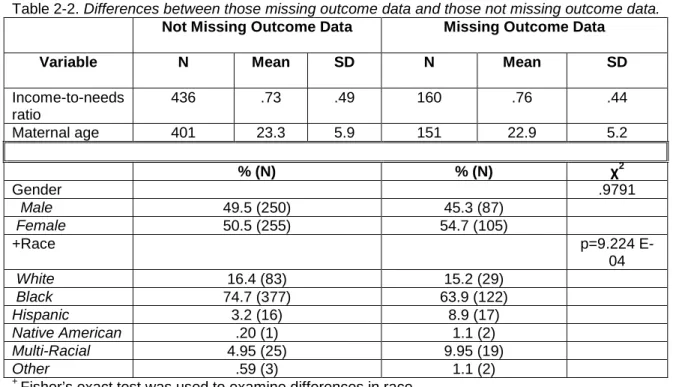
There were 697 children in the LONGSCAN sample who met the eligibility criteria for the current study. The outcome variable, physical neglect, was missing for 192 children, who were therefore excluded from the study. These 192 children were missing the self-report neglect data and did not have a CPS report. The final sample included in the analysis was 505 children. These children did not significantly differ from those who were excluded from the sample on demographic variables, such as gender, income-to-needs ratio, or maternal age at the birth of the referent child. (See Table 2-2.) They were statistically significantly different from those excluded from the sample on race; there were more Black children in the analyzed sample than in the group of children who were excluded from the analysis.
29
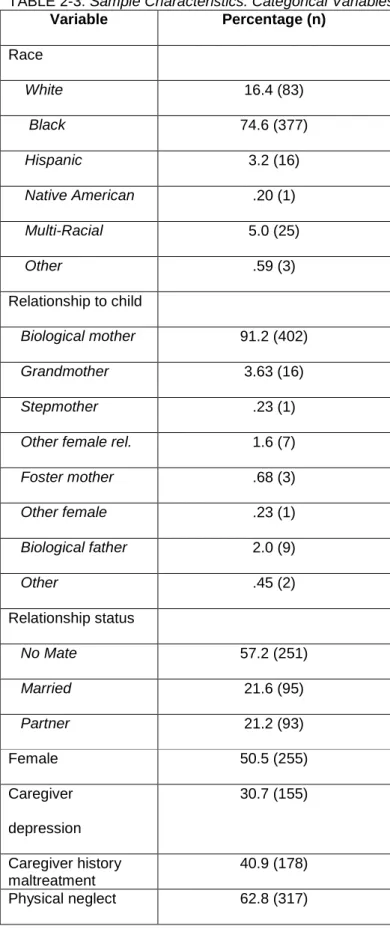
respondents were female caregivers (97.55%), with most being the child’s biological mother (91.2%). The remaining respondents were grandmothers (3.6%), other female relatives (1.6%), foster mothers (.68%), stepmothers (.23%), other females (.23%), or biological fathers (2.0%). The majority of the respondents were not living in a spouse-like relationship (57.2%). 30.6% of the caregivers met CES-D criteria for depression, and 40.9% of the caregivers had experienced maltreatment as children. The average number of children in the household was 3, and the average level of neighborhood quality was 2.5. Even though everyone included in the sample was living in or near poverty, there was still quite a bit of variability in the needs measure. On average, families had an income-to-needs ratio of .73 (minimum 0.11; maximum 1.97). The average level of perceived social support according to the FSSQ was 38.6 (minimum 10 maximum 50). The average level of support provided by family members was 12.3 (minimum 5; maximum 15). Caregivers reported, on average, moderate levels of neighborhood support (3.43; minimum 1.3; maximum 4.84). Finally, 62.8% of the children in the sample experienced physical neglect.
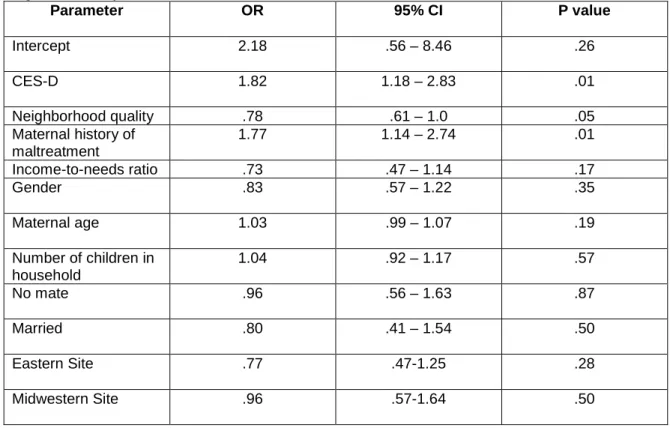
Multivariate logistic regression analysis was used to examine the association among
maternal age, child gender, caregiver depression, caregiver history of maltreatment, income-to-needs ratio, number of children in the home, marital status, neighborhood quality, and physical neglect. Results of this analysis are described in Table 2-5. Net of other factors, children whose caregivers have depression are 1.83 times as likely to experience physical neglect as children whose caregivers are not depressed (95% CI 1.18, 2.83; p=.0072). Children whose caregivers reported experiencing child maltreatment were 1.77 times as likely to experience physical neglect as children whose mothers did not experience maltreatment as a child (95% CI 1.14, 2.74; p=0.0096). Furthermore, children who live in higher quality neighborhoods are .78 times as likely to experience physical neglect as children who live in lower quality areas (95% CI 0.61, 0.999; p=0.0464). None of the other hypothesized predictors of physical neglect were statistically significant in this sample of
DISCUSSION
This study examines differences within poverty in the occurrence of physical neglect in early childhood. Previous studies have indicated that factors at the individual, family, and community levels of the ecological framework for child maltreatment are associated with physical neglect. The current study examined variables at these three levels of the framework and the results indicate that there are individual and community level characteristics that predict physical neglect among a sample of impoverished children. Two risk factors and one protective factor were identified in this poor and near poor sample. It was important to include children who live near poverty because it has been
suggested that these children may be in similar, or possibly worse, conditions as children living in poverty.44 This is because children in near poverty may be ineligible for certain programs, such as Temporary Assistance for Needy Families (TANF) and Medicaid, which are available to children in poverty.44 Therefore, children living near poverty may actually have fewer available resources than children in poverty.
The strongest effect found was for caregiver depression. Children whose caregivers’ scores on the CESD indicated depression were almost twice as likely to be physically neglected as children whose caregivers’ scores did not indicate depression. These results are similar to previous research that found mothers who did not provide adequate supervision for their child were more likely to meet criteria for clinical depression than mothers who did properly supervise.22 Another study that sought to identify parental characteristics associated with physical neglect found that caregivers with mental health problems were more likely to physically neglect their children than caregivers who did not have poor mental health.18 The current study was not able to infer causality and therefore it is not know if caregiver depression causes physical neglect, only that the two are associated.
31
a significant risk factor for a child experiencing physical neglect. This supports the notion that the intergenerational transmission of child maltreatment is not simply a reenactment of what a caregiver experienced in her/his own childhood, but rather a more complex process.
Children who live in higher quality neighborhoods are less likely to experience physical neglect than children who live in lower quality neighborhoods. This finding is in line with other studies that have found that indicators of neighborhood poverty are associated with child maltreatment26,27 and neglect in particular.27 However, both of these studies utilized official reports of child maltreatment and therefore may only have found associations between neighborhood poverty and the likelihood of being reported to CPS, not actual maltreatment. Therefore, the current study adds to this body of literature by including both self-report and CPS reports in its neglect variable. Additionally, neither of the previous studies included only an impoverished sample. That neighborhood quality was found to be a predictor of physical neglect within an impoverished sample is an interesting finding. This indicates that for children whose families have a low income-to-needs ratio, living in a higher quality neighborhood can be a protective factor for physical neglect.
It was unexpected that none of the social support factors were found to moderate the relationship between the proposed risk factors and the occurrence of physical neglect. Previous studies have indicated that levels of social support play a role in the occurrence of physical
neglect.12,28,29 It is possible that social support was operationalized differently in the current study, and therefore none of the social support variables were found to moderate the relationship between the risk factors for physical neglect and physical neglect. This finding is particularly surprising since living in a higher quality neighborhood was found to be a protective factor, which may be due to the
emotional and/or tangible support neighbors can provide. Future studies should further explore the role of social support in the occurrence of physical neglect within families living in poverty.
Limitations
are several limitations to the current study. The first is that the sample is a non-probability, convenience sample. Children in this secondary data analysis were recruited to be in the larger LONGSCAN study because they met certain eligibility criteria, namely they were at risk of
maltreatment, had been maltreated, or could serve as a matched control for the study. These children and their families may not be representative of the general population of poor and near-poor families, therefore limiting the generalizability of the current findings to children who participated in the three LONGSCAN sites included in the study. There was a considerable portion of the sample that was excluded from the current analyses because they were missing the self-report measure of physical neglect. However, these children did not significantly differ from those who were included in the analyses on most demographic variables. Another limitation is that the current study is cross-sectional, therefore limiting the ability to make inferences about temporality and causality.
Additionally, given the data collection plan for the LONGSCAN study, it is possible for neglect to have occurred before some of the predictors were measured, further limiting interpretations about
causality.
Implications of findings
33
A caregiver’s self-reported history of physical and sexual abuse was also found to be a significant predictor of physical neglect in an impoverished sample. This highlights the need for the prevention of child abuse and neglect in order to interrupt the cycle of child maltreatment. It has been suggested that intergenerational transmission of child maltreatment occurs because child
maltreatment results in insecure attachment styles and this insecure attachment style is represented within the child as an internal working model. An individual who has been maltreated uses this insecure working model as an archetype for future relationships.47 Therefore, a caregiver who has an insecure attachment style will be unable to form a secure attachment with her own children46 and may be at-risk of maltreating them as a result.47,48 It is the parent-child relationship that is transmitted between the generations, not necessarily child maltreatment.47 There are several interventions that are effective in improving maternal sensitivity and attachment49 and therefore may reduce the likelihood that a mother who has experienced maltreatment herself will maltreat her child. Mothers who were abused as children could be referred to these intervention programs in order to reduce the likelihood that they will physically neglect their own children.
The current study also determined that poor children who live in higher quality neighborhoods are less likely to experience physical neglect than poor children who live in lower quality
neighborhoods. Given that living in a nicer neighborhood appears to be protective for children, it is important to increase affordable housing in more affluent neighborhoods. This could be done through subsidized housing or through US Department of Housing and Urban Development programs (HUD). As a way to improve the lives of children and prevent physical neglect, HUD should be sure to provide affordable housing in affluent neighborhoods, not just in poor neighborhoods, through their programs.
Summary
35
REFERENCES
1. US Department of Health and Human Services. Administration for Children and Families. Administration on Children, Youth, and Families, Children’s Bureau. Child Maltreatment 2008. Washington, DC: Government Printing Office; 2010.
2. Sedlak AJ, Mettenburg J, Basena M, Petta I, McPherson K, Greene, A, Li S. Fourth National Incidence Study of Child Abuse and Neglect (NIS–4): Report to Congress. Washington, DC: U.S. Department of Health and Human Services, Administration for Children and Families; 2010
3. Administration on Children, Youth, and Families, (2001). Child maltreatment 1999: Reports from the states to the National Child Abuse and Neglect Data System. Washington, DC: U.S.
Government Printing Office (Department of Health and Human Services Publication).
4. Theodore A, Runyan DS, Chang JJ. Measuring the risk of physical neglect in a population-based sample. Child Maltreat 2007;12:96-105.
5. Child Information Gateway. Acts of Omission. What is Neglect? Available at:
http://www.childwelfare.gov/pubs/focus/acts/actsa.cfm. Accessed on September 29th, 2008.
6. Manly JT. Advances in research definitions of child maltreatment. Child Abuse Negl 2005;29:425-439.
7. American Psychological Association Committee of Professional Practice, Standards Guidelines for psychological evaluations in child protection matters. Am Psychol 1999;54:586-593.
8. Erickson MF, Egeland B. Child Neglect. In Myers JEB, Berliner L, Briere JN, Hendrix CT, Reid TA, Jenny CA, editors. APSAC Handbook on Child Maltreatment California: Sage Publications Inc.; 1996. p. 4-20.
9. Bronfenbrenner, U. The Ecology of Human Development. Cambridge, MA: Harvard University Press; 1979.
10. Belsky J. Child maltreatment: An ecological integration. Am Psychol 1980;35(4):320-335.
11. Garbarino J. The human ecology of child maltreatment: A conceptual model for research. J Marriage Fam 1977;39(4):721-735.
13. Kotch JB, Browne DC, Dufort V, Winsor J, Catellier D. Predicting child maltreatment in the first four years of life from characteristics assessed in the neonatal period. Child Abuse Negl 1999;23(4):305-319.
14. Erickson M, Egeland B, Pianta R. The effects of maltreatment on the development of young children. In Cicchetti D, Carlson V, editors. Child maltreatment: Theory and research on the causes and consequences of child abuse and neglect. New York: Cambridge University Press; 1989. p. 647-684.
15. Hussey JM, Chang JJ, Kotch JB. Child Maltreatment in the United States: Prevalence, risk factors, and adolescent health. Pediatrics 2006;118(3):933-942.
16. Golden O. The federal response to child abuse and neglect. Am Psychol 2000;55:1050-1053.
17. Sedlak AJ, Broadhurst DD. Third National Incidence Study of Child Abuse and Neglect. Washington, DC: National Clearinghouse on Child Abuse and Neglect Information; 1996.
18. Carter V, Myers MR. Exploring the risks of substantiated physical neglect related to poverty and parental characteristics: A national sample. Child Youth Serv Rev 2007; 29:110-121.
19. Dixon L, Browne K, Hamilton-Giachitsis C. Risk factors of parents abused as children: a meditational analysis of the intergenerational continuity of child maltreatment (Part 1). J Child Psychol Psychiatry 2005;46(1):47-57.
20. Pears KC, Capaldi DM. Intergenerational transmission of abuse: a two-generational prospective study of an at-risk sample. Child Abuse Negl 2001;25:1439-1461.
21. Kelleher K, Chaffin M, Hollenberg J, Fischer E. Alcohol and drug disorders among physically abusive and neglectful parents in a community-based sample. Am J Public Health 1994; 84:1586-1590.
22. Coohey C. Home alone and other inadequately supervised children. Child Welfare 1998;77:291-310.
23. Jones ED, McCurdy K. The links between types of maltreatment and demographic characteristics of children. Child Abuse Negl 1992;16:201-215.
24. Brown J, Cohen P, Johnson JG, Salzinger S. A longitudinal analysis of risk factors for child maltreatment: Findings of a 17-year prospective study of officially recorded self-reported child abuse and neglect. Child Abuse Negl 1998;22:1065-1078.
25. Chaffin M, Kelleher K, Hollenberg J. Onset of physical abuse and neglect: Psychiatric, substance abuse, and social risk factors from prospective community data. Child Abuse Negl
37
26. Gillham B, Tanner G, Cheyne B, Freeman I, Rooney M, Lambie A. Unemployment rates, single parent density, and indices of child poverty: Their relationship to different categories of child abuse and neglect. Child Abuse Negl 1998; 22: 79-90.
27. Drake B, Pandy S. Understanding the relationship between neighborhood poverty and specific types of child maltreatment, Child Abuse Negl 1996;20(11):1003–1018.
28. Coohey C. Neglectful mothers, their mothers, and partners: the significance of mutual aid. Child Abuse Negl1995;19(8):885-895.
29. Brayden RM, Altemeier WA, Tucker DD, Dietrich MS, Vietze P. Antecedents of child neglect in the first two years of life. J of Pediatr 1992;120(3):426-429.
30. Slack KS, Holl JL, McDaniel M, Yoo J, Bolger K. Understanding the risks of child neglect: an exploration of poverty and parenting characteristics. Child Maltreat 2004;9(4):395-408
31. Christensen MJ, Brayden RM, Dietrich MS, McLaughlin FJ, Sherrod KB. The prospective
assessment of self-concept in neglectful and physically abusive low income mothers. Child Abuse Negl 1994;18(3):225-232.
32. Coohey C. Defining and classifying supervisory neglect. Child Maltreat 2003;8:145-156.
33. Runyan DK, Cox CE, Dubowitz H, Newton RR, Upadhyaya M, Kotch JB, et al. Describing maltreatment: Do child protective service reports and research definitions agree. Child Abuse Negl 2005;29:461-477.
34. Hunter W, Knight E. LONGSCAN Research Briefs, Vol 1. Washington DC: National Center on Child Abuse and Neglect (DHHS/OHDS). Summer 1998.
35. Hussey JM, Marshall JM, English DJ, Knight ED, Lau AS, Dubowitz H, Kotch JB. Defining maltreatment according to substantiation: Distinction without a difference? Child Abuse Negl 2005;29(5):479-492.
36. LONGSCAN. About My Parents. Available at:
http://www.iprc.unc.edu/longscan/pages/measures/Ages12to14/index.html. Accessed on May 16th, 2010.