DEVELOPMENT AND VALIDATION OF AN OBSERVATIONAL MEASURE OF ALCOHOL-SPECIFIC COMMUNICATION
Alison Reimuller Burns
A dissertation submitted to the faculty at the University of North Carolina at Chapel Hill in partial fulfillment of the requirements for the degree of Doctor of Philosophy in the Psychology
Department (Clinical) in the College of Arts and Sciences.
Chapel Hill 2014
2014
ABSTRACT
Alison Reimuller Burns: Development and Validation of an Observational Measure of Alcohol-Specific Communication
(Under the direction of Andrea Hussong)
ACKNOWLEDGEMENTS
This research was funded by a predoctoral Institutional National Service Award (NRSA) granted to the Center for Developmental Science by the National Institute of Child Health and Human Development (T32-HD0007376) and the University of North Carolina at Chapel Hill Stephenson and Lindquist Award.
First and foremost, I am indebted to the caregivers and adolescents who sacrificed their time to participate in this research study and willingly reflected upon their alcohol use beliefs. Without them, this research would not have been possible.
I must also sincerely thank my mentor, Dr. Andrea Hussong, who taught me not only about the field of psychology and conducting quality research, but also about integrity, work ethic, and what it means to be a professional woman. In addition to the invaluable training I received under your mentorship, I am incredibly grateful for your support, guidance, and kindness throughout the years.
I would also like to thank my committee members, Dr. Don Baucom, Dr. Susan Ennett, Dr. Deborah Jones, and Dr. Keith Payne who provided insightful feedback along this journey. Your enthusiasm for this study fueled my passion and drive for this line of research.
TABLE OF CONTENTS
LIST OF TABLES ... ix
LIST OF FIGURES ... x
LIST OF ABBREVIATIONS AND SYMBOLS ... xi
CHAPTER 1: INTRODUCTION ... 1
Parenting and Alcohol Use ... 2
Alcohol-Specific Communication ... 3
A Comprehensive Model of Alcohol-Specific Communication ... 7
The Current Study ... 20
CHAPTER 2: METHODS ... 24
Participants ... 24
Procedures ... 25
Observational Coding ... 26
Measures ... 27
CHAPTER 3: RESULTS ... 34
Preliminary Analyses ... 34
Descriptive Analyses ... 35
Aim 1: Reliability ... 39
Aim 2: Construct Validity ... 39
Aims 3 and 4: Convergent and Divergent Validity ... 43
Aim 5: Predictive Validity ... 46
CHAPTER 4: DISCUSSION ... 49
The Structure of Content and Process of Communication ... 54
Psychometric Properties of the Observational Coding System ... 57
How do Content and Process of Communication Predict Outcomes of Interest ... 60
Strengths, Limitations, and Future Directions ... 62
Conclusions and Implications ... 65
TABLES ... 67
FIGURES ... 79
APPENDIX 1: ALCOHOL-SPECIFIC COMMUNICATION CODING SYSTEM ... 84
APPENDIX 2: SELF-REPORT MEASURE OF ALCOHOL-SPECIFIC COMMUNICATION ... 112
LIST OF TABLES
Table 1 – Specific study hypotheses ... 67
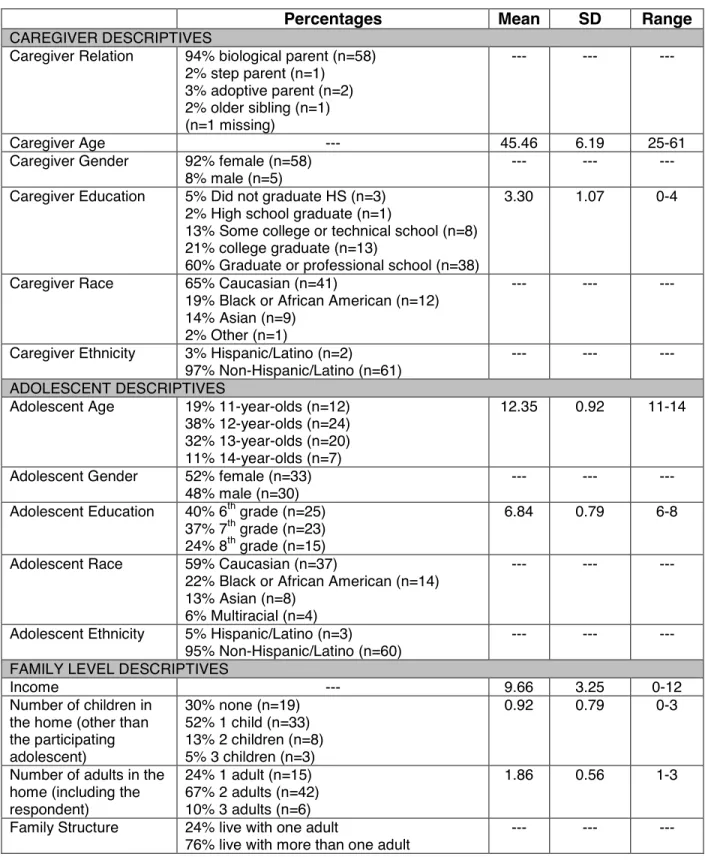
Table 2 – Sample descriptives ... 68
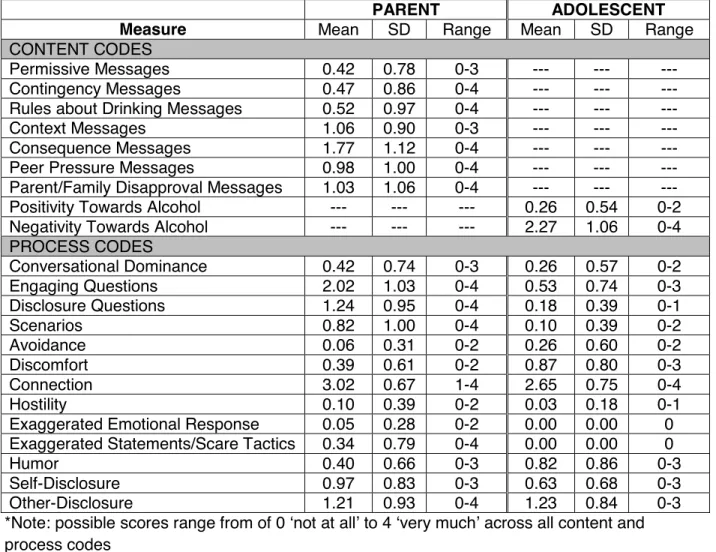
Table 3 – Descriptive information for observational coding variables ... 69
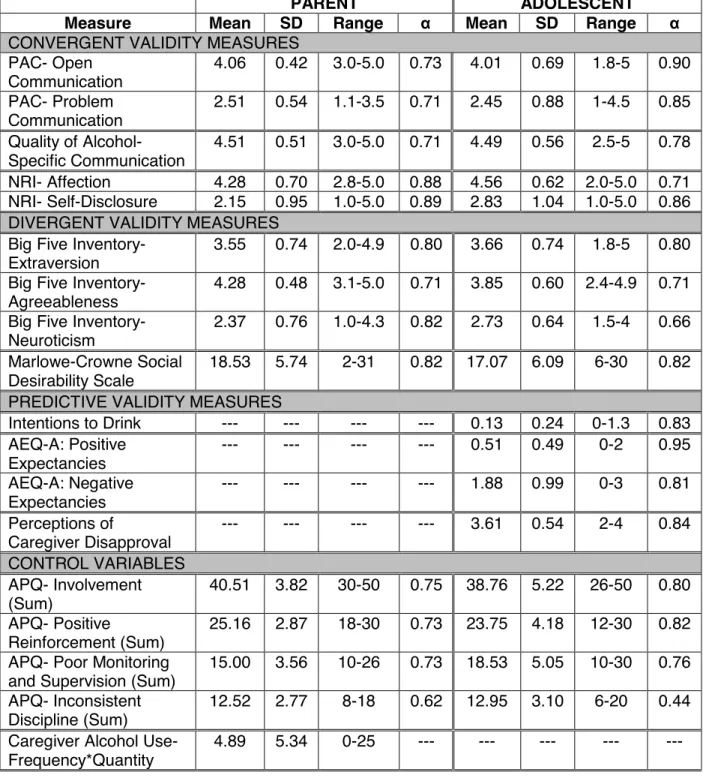
Table 4 – Descriptive statistics for survey measures ... 70
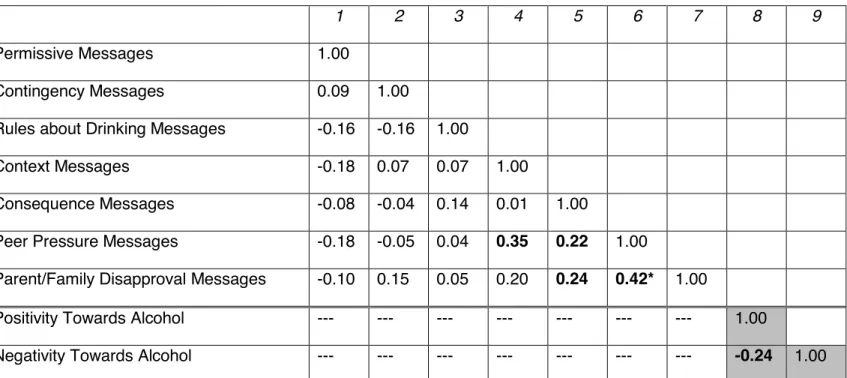
Table 5 – Correlations of observer-rated content codes ... 71
Table 6 – Correlations of observer-rated process of communication ... 72
Table 7 – Correlations between observer ratings and self-report of content and process of communication during the observational task ... 73
Table 8 – Exploratory factor analyses ... 74
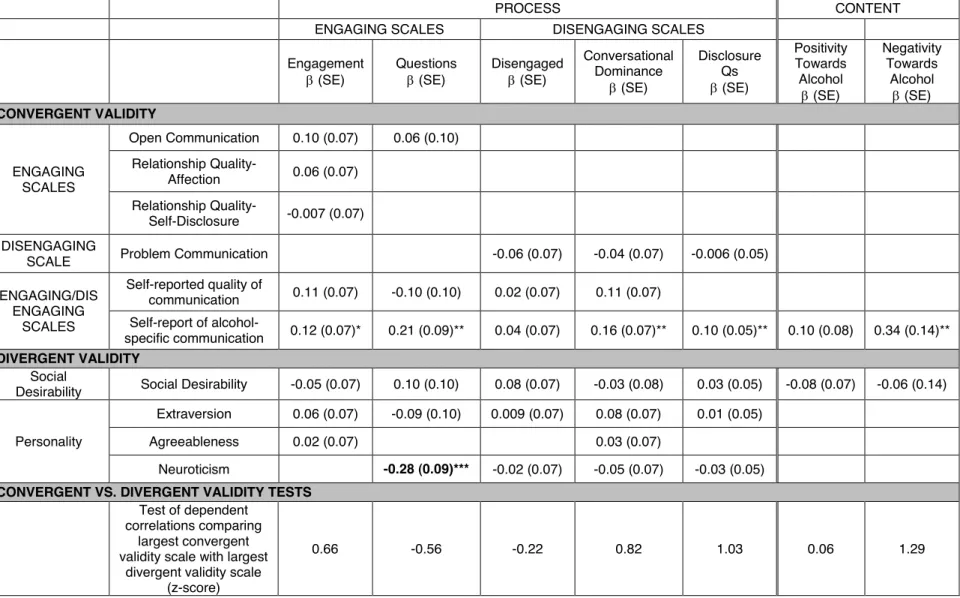
Table 9 – Caregiver convergent of divergent validity analyses ... 75
Table 10 – Adolescent convergent and divergent validity analyses ... 76
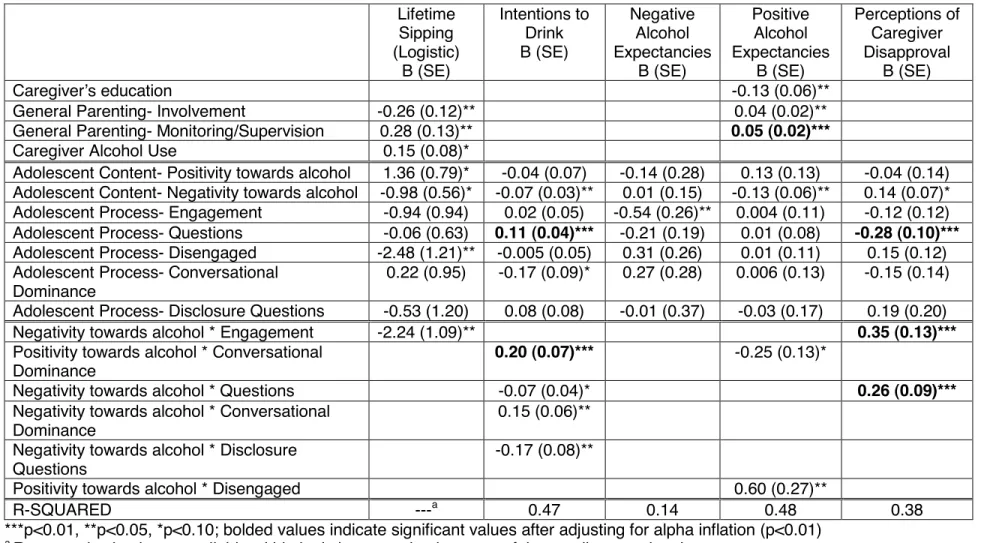
Table 11 – Predictive validity analyses: Caregiver-report models ... 77
LIST OF FIGURES
Figure 1 – Caregiver disclosure significantly moderated the relation
between contingency messages and intentions to drink alcohol ... 79 Figure 2 – Caregiver engagement significantly moderated the relation
between contingency messages and perceptions of caregiver disapproval ... 80 Figure 3 – Adolescents’ conversational dominance significantly moderated
the relation between positivity towards alcohol and intentions to drink ... 81 Figure 4 – Adolescents’ use of questions significantly moderated the relation
between negativity towards alcohol and perceptions of caregiver disapproval ... 82 Figure 5 – Adolescents’ engagement significantly moderated the relation
LIST OF ABBREVIATIONS AND SYMBOLS Cronbach’s alpha
Unstandardized regression coefficient Standardized regression coefficient
EFA Exploratory Factor Analysis
m Mean
n Number of subjects p p-value
r Pearson’s correlation coefficient sd Standard deviation
t t-statistic
CHAPTER 1: INTRODUCTION
Alcohol is the primary substance used by youth with 72% of 12th grade students reporting that they have tried alcohol in their lifetime (Johnston, O'Malley, Bachman, & Schulenberg, 2009). As widely acknowledged, adolescent alcohol use is a significant public health issue because it is associated with negative consequences such as decreased academic performance and educational attainment as well as increased delinquency and risky sexual behavior (U.S. Department of Health and Human Services, 2007). Importantly, those who begin drinking prior to age 15 are five times more likely to have alcohol-related problems later in life (U.S. Department of Health and Human Services, 2007). Even with empirically-supported treatments, the course of recovery from such alcohol-related problems is often marked by chronic relapse and multiple treatment attempts (Chung & Maisto, 2006; Winters, Stinchfield, Latimer, & Stone, 2008).Preventing or at least delaying adolescent alcohol use, prior to the need for intervention when problems arise, is thus a strategy with significant public health impact.
A frontline context for preventing early adolescent alcohol use is the family. Examining family-based influences, like positive parenting, that deter adolescent alcohol use is a promising avenue given the continued importance of family during adolescence (Bauman et al., 2002; De Goede, Branje, Delsing, & Meeus, 2009; Wood, Read, Mitchell, & Brand, 2004)and the
Parenting and Alcohol Use
Parenting has been posited to occur on three levels (McKee, Jones, Forehand, & Cuellar, 2013). The first and most global of these levels is parenting style, a term attributed to Baumrind (1966), which refers to a constellation of parenting behaviors. Parenting style captures unique combinations of parenting behaviors such as warmth and limit setting (e.g., high warmth and high limit setting characterizes an authoritative parenting style). Parenting style is thought to be a general approach to parenting used across multiple contexts.The second level of parenting consists of individual parenting behaviors, such as warmth or limit setting measured as separate constructs rather than being combined to capture parenting style (Schaefer, 1965). Parenting behaviors capture a single dimension of parenting and are conceptually narrower than parenting style. The third and most narrow level of parenting is
specific parenting, which includes parenting behaviors specific to a certain topic or concern such as adolescent alcohol use.
Even though the concept of specific parenting is relatively new, many researchers have identified dimensions of alcohol-specific parenting, including monitoring for alcohol use (e.g., smelling an adolescent’s breath upon returning home from a party), parental modeling of alcohol use, and talking with adolescents about alcohol directly. The current study examines parent-adolescent communication about alcohol use as one particular aspect of specific parenting around the issue of adolescent alcohol use. Alcohol-specific communication is conceptualized here as the behaviors that occur within the direct communication between an adult and an adolescent regarding alcohol use. Jaccard, Dodge and Dittus (2002) provide a similar description, applied to discussions regarding sexual behavior, and characterize such conversations as a “dyadic interaction between one parent and one child where the parent consciously attempts to communicate information about sex or birth control to the child” (p.11). As evident in both definitions, this form of specific parenting includes overt communication in which parents and adolescents actively discuss a particular topic. It is posited that alcohol-specific communication is an important alcohol-specific parenting behavior because it affords an opportunity for parents to provide information about alcohol to the adolescent, express explicit disapproval of use, and help the adolescent negotiate this developmentally normative
experience.
Alcohol-specific Communication
Studies vary in the percentage of adolescents who report having had a discussion with a parent about alcohol. As expected, with increasing age, more parents have reportedly spoken to their adolescent about substance use (43% in a sample with mean age=13, Miller-Day, 2002; 71% in a sample with mean age=14, Reimuller, Hussong, & Ennett, 2011; 93% in a sample with mean age=18.5 Miller-Day, 2008). Findings regarding the impact of more frequent
safe drinking practices (Booth-Butterfield & Sidelinger, 1998) and the less alcohol use and alcohol-related problems are reported (Mares, van der Vorst, Engels, & Lichtwarck-Aschoff, 2011). Similarly, parents who less frequently caution their young adolescents about alcohol use have adolescents who are more likely to initiate drinking one year later (Andrews, Hops, Ary, Tildesley, & Harris, 1993). On the other hand, Ennett and colleagues (2001) found that the frequency of parent-adolescent communication about substance use was not associated with risk of alcohol initiation. Examining what occurs during these discussions may help to explain such discrepant findings.
A small, but growing, body of literature has also produced mixed results regarding the association between the content of alcohol-specific communication and adolescents’ drinking behavior. Generally, these studies suggest that alcohol use has a negative association with rule-based messages (e.g., the adolescent will be disciplined for use; Mares, Lichtwarck-Aschoff, Burk, van der Vorst, & Engels, 2012; Schelleman-Offermans, Knibbe, & Kuntsche, 2012; Spijkerman, van den Eijnden, & Huiberts, 2008; van der Vorst, Engels, Meeus, Dekovic, & Van Leeuwe, 2005)and health consequence messages (e.g., resulting health problems
associated with alcohol use; Andrews et al., 1993), and a modest, positive association with permissive messages (e.g., parents allow the adolescent to drink alcohol at home; Freire, 2008; Jackson, Henriksen, & Dickinson, 1999; Reimuller et al., 2011; Wood et al., 2004). However, other studies have found no association or even a positive association between rule-based messages and adolescent drinking and no association between consequence messages and drinking outcomes (Ennett et al., 2001; Reimuller et al., 2011). Therefore, studies that have examined the content of parent-adolescent discussions have returned mixed findings regarding the influence of a particular message on adolescent alcohol use, suggesting that delivering a particular message to an adolescent also does not robustly predict alcohol use.
communicationand the content of such discussions. However, Jaccard, Dittus, and Gordon (1998) posited that frequency and content are only two qualities that characterize parent-adolescent communication. Another quality is the process of communication, or the manner or style in which communication occurs. Regardless of how ideal the content may be, alcohol-specific communication may not have a positive effect on adolescent behavior if delivered poorly. Not accounting for how parents and adolescents talk about alcohol may in part explain the mixed findings characterizing the impact of alcohol-specific communication frequency and content on adolescents’ alcohol use.
Unfortunately, research on the way in which alcohol-related messages are delivered is even more limited than that on frequency or content of communication. One study examined the relation between subjective reports of quality of communication during alcohol-specific
discussions (defined as constructive and respectful communication) and adolescent drinking behavior in a sample of 12-17 year old Dutch adolescents who drank in the past year
(Spijkerman et al., 2008). Results showed that when adolescents perceived communication about alcohol to be high in quality, they drank less alcohol, engaged in binge drinking less frequently, and reported fewer alcohol-related problems. A second study found that although adolescent’s perceptions of quality of communication did not directly influence alcohol use, quality of communication indirectly influenced alcohol use through increased self-efficacy to refuse alcohol (Mares, Lichtwarck-Aschoff, & Engels, 2013). Furthermore, high quality
associated with increased anti-alcohol beliefs (Kam & Middleton 2013; Kam, Potocki, & Hecht, 2012), greater consideration of the risks associated with alcohol (Kam et al., 2012), and reduced substance use (Shin & Hecht, 2013).
Thus, preliminary work demonstrates that the manner in which such conversations occur influences substance use outcomes. Moreover, research on the effects of parent-adolescent communication about sexuality supports the importance of the quality or process of
communication as both what parents say and how they say it impacts youth outcomes (Dutra, Miller, & Forehand, 1999). Taking into consideration the process of communication as well as the content is posited to better predict future drinking behavior than content alone.
However, identifying the impact of “constructive and respectful communication” does not provide parents with specific behavioral suggestions regarding how to discuss alcohol with teens in order to reduce the risk of teen drinking. Quality of communication is a global measure of the overall tone of alcohol-specific communication. In contrast, parents are typically more concerned with what they should do in their interactions with teens, how to express their views, and how to respond to their teen (Beatty & Cross, 2006). A strategy responsive to this need, intervention curriculums that aim to teach parents how to approach a specific conversation about alcohol focus on the process of a particular conversation. Additional research is needed to identify specific communication processes that occur within the context of a particular alcohol-specific conversation and prevent or delay teen drinking.
effective (Bauman et al., 2002; Strandberg & Bodin, 2011; Turrisi et al., 2001). This limited effectiveness may reflect a failure to consider neglected content and process factors. Other interventions do not test whether alcohol-specific communication is the active ingredient in a larger intervention (Brody, Chen, Kogan, Murry, & Brown, 2010) and even those that do have yet to isolate specific content and process factors that occur during these conversations. This prevents identification of specific content and processes that are effective, ineffective, and detrimental in preventing adolescent substance use. Additional research that identifies specific content and process factors that prevent teen drinking is needed to guide such public health initiatives.
A Comprehensive Model of Alcohol-specific Communication
Most of the literature to date has examined parental content in alcohol-specific communication as it predicts adolescent behavior. This emphasis on the parent’s role is consistent with potential prevention and intervention implications of teaching parents how best to communicate with adolescents about alcohol. However, communication is a dyadic process that involves interaction between two individuals to create a broader context for the discussion and shape the flow of the conversation (Wilmot, 1987). Reciprocal influences occur such that one dyad member influences another dyad member’s behavior or reactions (Walsh, Baucom, Tyler, & Sayers, 1993). This indicates that the adolescent’s content and communication process may guide the parent’s content (e.g., does the adolescent’s positive view on alcohol influence the parent to include more alcohol-related consequence messages?) and behavior (e.g., does adolescent avoidance result in more questions asked by the parent?). Thus, the proposed model seeks to understand not only the parent’s role in alcohol-specific communication (i.e., parental content and process) but also the adolescent’s role (i.e., adolescent content and process).
very different from the individual’s actual behavior and makes translation into prevention efforts difficult. Observational methodology, on the other hand, provides an objective measure of dyadic interactions while reducing the potential for reporter biases (Aspland & Gardner, 2003). In addition, reliable observational measures define a construct of interest exactly the same way across participants (Aspland & Gardner, 2003). Although observational tasks within a laboratory setting do not always provide an accurate picture of what naturally occurs, such as when
observers are present or cameras are noticeable (see Gardner, 2000 for a review), the current study does not aim to identify what naturally occurs but rather to identify specific elements of communication that when they occur are associated with positive adolescent outcomes.
measurement of this construct than is currently available. The current study proposes a
comprehensive model and assessment paradigm of alcohol-specific communication, including a broad range of content and process indicators needed to inform future research and public health initiatives (e.g., media campaigns, universal prevention curriculums, and family-based interventions).
Content of Alcohol-Specific Communication
Parental content is defined by specific messages used during alcohol-specific
communication. Parental messages are posited to be an important intervention target, resulting in the need for a more nuanced understanding of messages that parents use as well as the impact of specific messages on adolescent outcomes. Of the seven specific messages
investigated in the current study, permissive messages, contingency messages, and rules about drinking are defined similarly to previous work. Consequence, peer pressure, and explicit
family/parent disapproval messages are based upon the literature but are extended to define the constructs more broadly. And context messages have been developed for the purpose of the current study.
Permissive messages relay an open and approving attitude about alcohol or actively encourage adolescent alcohol use. As discussed above, prior work has consistently
drive home), but they may also implicitly condone drinking. In fact, contingency messages have been found to be positively associated with adolescent alcohol misuse (Freire, 2008). Although conceptually similar in their underlying approval of alcohol use and empirically similar in their association with increased alcohol use, a study of alcohol-specific communication content found contingency messages to be distinct from permissive messages within a confirmatory factor analysis model (Freire, 2008). Additionally, the function of the message is slightly different with one actively encouraging use (permissive messages) and another implicitly doing so in an effort to decrease consequences of teen drinking (contingency messages).
Parents often discuss the rules related to alcohol or punishments associated with alcohol use with their adolescents. As indicated above, the relation between rule-based messages and drinking outcomes have been inconsistent with some studies finding a negative association, others finding a positive association, and some demonstrating no association. Similar to Ennett and colleagues’ (2001) definition, rule-based messages include both explicit statements of the family rules regarding alcohol use (e.g., you cannot have even one drink) and punishments associated with use (e.g., you will be grounded if you come home drunk).
Consequences that occur from alcohol use extend beyond those impacting health, which have been the primary focus of previous studies (Andrews et al., 1993). The current study expands upon previous work examining health-related consequences to include content related to legal consequences, social or relationship consequences, and academic consequences, all of which are noted in the DSM-IV-TR (American Psychiatric Association, 2000), as well as
information about the effects of alcohol (e.g., blacking out or vomiting). This expanded definition of consequence messages may capture a broader net of information parents provide to their adolescents about alcohol.
ways to refuse alcohol offers. Given the extent of peer pressure that occurs in regards to drinking in adolescence (Kaplan, 1996), this content may be especially beneficial in preventing or delaying alcohol use. School-based curriculums that focus on teaching adolescents to resist peer pressure (Life Skills Training; Botvin, Baker, Renick, Filazzola, & Botvin, 1984; Alcohol Misuse Prevention Study; Dielman, Shope, Butchart, & Campanelli, 1986) have demonstrated significant reductions in alcohol use and misuse (Botvin, Baker, Dusenbury, Botvin, & Diaz, 1995; Shope, Copeland, Maharg, & Dielman, 1996). Moreover, although currently untested, the National Institute on Alcohol Abuse and Alcoholism developed an online interactive version of the Alcohol Misuse Prevention Study curriculum in an effort to deliver such peer pressure resistance messages to teens more broadly (thecoolspot.gov). Incorporating peer pressure messages within the context of parent-adolescent communication about alcohol is posited to result in similar reductions in alcohol use.
Parents may also explicitly express their disapproval of drinking or indicate that they or the family would be disappointed if the adolescent began drinking. Other content areas implicitly convey disapproval of adolescent alcohol use, whereas explicit statements of disapproval may be an alternative approach that requires the adolescent to make fewer interpretations. Explicit disapproval is conceptually distinct from rules about drinking in that disapproval emphasizes the parent’s or family’s preference or beliefs, rather than articulating a rule or punishment for
drinking. Evidence suggests that perceived parental disapproval reduces adolescent alcohol use and, although findings are inconsistent, delays onset of alcohol use (Ryan et al., 2010). Although no studies to date have examined explicit statements of disapproval, it is posited that stating disapproval clearly would result in similar beneficial outcomes.
environments or state a rule about the adolescent’s association with such individuals or
presence in such environments. Parents may use these types of messages to reduce exposure to alcohol or set limits about drinking but they do so through the environmental context rather than discussing the child’s drinking specifically. No studies to date have assessed these messages as they relate to alcohol-specific communication or examined the impact they have on adolescent drinking behavior.
For younger adolescents, the content of alcohol-specific communication may not yet be very differentiated, but may simply reflect two dimensions, namely the extent to which drinking was discussed in a positive or negative light. This simplistic categorization allows for a broad understanding of the adolescent’s content that is hypothesized to be appropriate for this development period. In addition, given the long-term intervention goal of teaching parents to effectively communicate with their teens about alcohol, the current study’s focus is not on the specific nature of the adolescent’s content but rather, gaining a general understanding of the valence of the adolescent’s statements and opinions about alcohol.
Process of Alcohol-Specific Communication
Although no research to date has investigated the relation between specific communication processes and adolescent drinking behavior, with the exception of self-disclosure, many studies have described communication processes that occur in parent-adolescent communication about other risky behavior. The majority of this work has identified communication processes that occur during conversations about sexuality with only a small number of studies examining discussions of tobacco and substance use. The current study draws from this extant literature and posits that similar communication processes occur during alcohol-specific communication and are predictive of adolescent alcohol use. Thirteen
commonly engage in some processes whereas parents would more commonly engage in other processes.
First, conversational dominance is the extent to which an individual dominates the conversation, or attempts to control and influence what is discussed during the interaction or how the conversation proceeds. Conversational dominance may be perceived by others as an indication that their opinion is not important or respected, and in turn, may elicit responses such as shutting down, not listening, or resentment towards what is being said. The general parent-adolescent communication literature has found that taking turns and listening to one another is more effective than a conversation dominated by one individual (Foster & Robin, 1989).
Communication about risky behavior appears to be similar to general communication with more dominance predicting worse outcomes. Specifically, maternal conversational dominance when discussing sexuality was negatively associated with the adolescent’s knowledge about AIDS (Lefkowitz, Romo, Corona, Au, & Sigman, 2000) even after accounting for maternal AIDS knowledge (Lefkowitz, Kahlbaugh, & Sigman, 1996), as well as both high and low levels of adolescent worry about AIDS (as compared to medium levels of worry; Lefkowitz et al., 1996). Similar to findings in both the general parent-adolescent communication and communication about sexuality literatures, conversational dominance by either the parent or adolescent is hypothesized to be associated with higher levels of adolescent alcohol risk.
between questions that ask about the adolescent’s opinions and levels of engagement during the conversation (Romo, Nadeem, Au, & Sigman, 2004). Adolescents who ask engaging questions may obtain more information about alcohol and may elicit the parent’s views on alcohol that helps shape their views. Interestingly, when male adolescents ask questions during discussions about sexuality, mothers were observed to ask fewer questions of the son
(Lefkowitz, Boone, Sigman, & Au, 2002), suggesting that when adolescents ask questions, parents do more talking during the conversation. On the other hand, disclosure questions may be posed in an effort to elicit particular information of interest. Disclosure questions may elicit a defensive response, deterring, rather than facilitating, further beneficial communication. In fact, asking questions about personal experiences with dating and sexuality was associated with greater negative affect and engagement, suggesting greater conflict during the conversation (Romo et al., 2004). Although engaging questions are hypothesized to be beneficial and disclosure questions detrimental in parent-adolescent communication about alcohol, no
research to date has examined the impact of either type of question on drinking behavior. More work is needed to understand the impact that engaging questions and disclosure questions during alcohol-specific communication have on adolescent behavior.
An extant literature has found that avoidance is related to adolescent psychological functioning. Adolescent avoidance as a conflict resolution strategy is associated with greater adolescent internalizing problems (Rubenstein & Feldman, 1993). It is posited that avoidance occurs frequently when discussing sensitive topics such as alcohol use as parents and
adolescents begin to feel uncomfortable or disagree with the others’ statements. Similar to the conflict resolution literature, negative outcomes, including increased drinking, are posited to result from avoidance during alcohol-specific communication. No studies to date have explored avoidance within alcohol-specific communication. However, in a study that assessed
demand/withdrawal as a dyadic interaction style, parent demand/adolescent withdrawal while discussing substance use (i.e., alcohol and other drugs) was associated with increased adolescent substance use whereas adolescent demand/parent withdrawal was negatively associated with adolescent substance use (above and beyond the adolescent’s report of parent-adolescent conflict; Caughlin & Malis, 2004). Moreover, when communicating about sexuality, parental withdrawal was not associated with adolescent risky sexual behavior (Wilson & Donenberg, 2004). More research is needed before conclusions may be drawn regarding the effect of avoidance during alcohol-specific communication. However, preliminary evidence suggests that adolescent avoidance, but not parental avoidance, may be associated with increased adolescent alcohol use.
influences a discussion and results in avoidance of future communication (Afifi, Joseph, & Aldeis, 2008). Mother-daughter pairs who reported being uncomfortable during a conversation about sex displayed poorer eye contact, used fewer gestures, and spoke more softly than pairs who reported being comfortable (Pluhar & Kuriloff, 2004). Although more work is needed to understand the direct impact of discomfort on adolescent drinking outcomes, feeling
uncomfortable reduces engagement in the conversation, which is posited to reduce the effectiveness of the conversation on later alcohol use.
Connection is the extent to which an individual demonstrates warmth or concern, or appears to have rapport with the other person. However, it is important to distinguish connection from support or approval of behavior (Walters & Walters, 1983) as indiscriminate nurturing or support is posited to be positively associated with negative outcomes. Presence of connection does not indicate agreement with another’s opinions or behaviors but rather demonstrates caring and concern and sets a positive tone for the conversation. Connection during alcohol-specific communication is posited to be an important predictor of alcohol use as dyads that communicate in a caring (or concerned) and positive way may be more invested in the conversation, less defensive, and more willing to entertain the other’s ideas. However, no empirical evidence is available to confirm this hypothesized relationship. Descriptive studies have shown that the level of connection displayed by mothers is positively correlated with connection displayed by the adolescent suggesting that parents and adolescents mutually impact one another and the tone of the environment (Kahlbaugh et al., 1997; Lefkowitz et al., 2002). Although Caucasian parents demonstrate more connection than Latino parents above and beyond the effect of socioeconomic status (Lefkowitz et al., 2000), the impact of differences across ethnic group on youth behavior has yet to be tested.
associated with higher adolescent delinquency (van Doorn, Branje, & Meeus, 2008). This demonstrates that hostility not only impacts the interpersonal relationship between parents and adolescents, but that it also has an effect on adolescent behavior. Although no studies have examined the impact that hostility during alcohol-specific communication has on adolescent behavior, it is hypothesized that it functions similarly to the broader literature. Thus, with greater hostility displayed by either parents or adolescents when discussing alcohol, adolescents are posited to be more at risk for alcohol-related outcomes. Hostility creates a negative environment that may result in defensiveness or rejection of the message being relayed. Not surprisingly, adolescents more commonly engaged in hostile behavior during conversations about sexuality than did parents (Kahlbaugh et al., 1997).
Reactions during the context of a conversation can either facilitate communication or shut down communication, such as in cases where exaggerated emotional responses occur. Parents and adolescents may demonstrate extreme levels of emotion (e.g., shock, sadness, fright, or anger) that are out of proportion to the situation and are a response to their own distress. For example, 8 out of 15 adolescents reported that their mother cried or yelled at them when discussing smoking (Levy et al., 2010). These reactions may shut down communication in the moment and may prevent future communication (Walters & Walters, 1983). Additionally, adolescents report feeling angry if parents overreact to something that was said during a conversation about sex (Pluhar & Kuriloff, 2004). High emotional intensity during parent-adolescent conversations may make it more difficult to effectively communicate with one another (Foster & Robin, 1998).
unrealistic and so counter to an individual’s current knowledge that it is not taken seriously or rejected completely. In addition, parents may lose credibility as a source of information when they appear to blow things out of proportion. Although no prior research has investigated the impact of exaggerated statements on adolescent drinking outcomes, scare tactics are hypothesized to be associated with increased risk.
Humor serves many interpersonal functions that may occur in conversations about alcohol. Graham, Papa, and Brooks (1992) suggest 24 different functions of humor in interpersonal communication, two of which include tension reduction and disclosure of
something that may be difficult to discuss. Humor that attempts to reduce tension in the moment may make it easier for both the parent and adolescent to engage in the discussion but could also inadvertently reduce the seriousness of the conversation. In fact, when discussing sexuality, male adolescents seemed to use sarcasm in an effort to reduce the tension and seriousness of the discussion (Afifi et al., 2008). Humor may also be a more comfortable way for an adolescent to acknowledge that they have initiated alcohol use or for a parent to disclose their alcohol use history. The desire to reduce tension through the use of humor is posited to be present in alcohol-specific communication given that such discussions can be uncomfortable for both parents and adolescents. Although no prior work has assessed the impact of humor during alcohol-specific communication on adolescent drinking outcomes, it is posited that humor may be negatively associated with teen drinking outcomes as it may reduce the tension and thereby facilitate the discussion.
from parents (content other than alcohol use) results in higher quality of communication between individuals (Noller & Callan, 1990), parental disclosure of stressful information is associated with increased psychological distress (Lehman & Koerner, 2002). Recent studies have found that parental self-disclosure of alcohol use is associated with onset of drinking (Handley & Chassin, 2013) and reduced anti-substance use beliefs (Kam & Middleton, 2013). On the other hand, parental self-disclosure has also been indirectly associated with reduced alcohol use by increasing adolescent self-efficacy to refuse alcohol, although direct effects were nonsignificant (Mares et al., 2013). These mixed findings suggest that the process of parental self-disclosure may be inextricably linked with content. For example, a parent who discloses their past alcohol use may intend for their adolescent to learn from their mistakes but may unintentionally reinforce use by providing information that conveys that alcohol use is normative (Kam & Middleton, 2013). In addition, the impact of parental self-disclosure may also depend upon the rationale for or the function of the disclosure. For example, disclosing personal
information in an effort to relate on a peer level rather than a parent level (Afifi et al., 2008), or to provide entertainment (Thorne, McLean, & Dasbach, 2004) may encourage alcohol use as it provides positive reinforcement and support for engaging in such behavior, similar to the concept of deviancy training (Dishion, Spracklen, Andrews, & Patterson, 1996). Parents may also disclose their use history with the hope that their adolescent will learn from their mistakes (Miller-Day & Dodd, 2004; Nwoga, 2000; Pluhar & Kuriloff, 2004), and thereby deter the adolescent from engaging in risky behavior. This body of work highlights the importance of assessing the content of a discussion along with the disclosure behavior to best understand the impact of self-disclosure on adolescent alcohol risk.
Adolescent disclosure about activities and friends more broadly is negatively associated with norm-breaking and delinquent behavior above and beyond parental solicitation of
reduced drinking risk. Stattin and Kerr’s (2000) work on parental monitoring highlighted that parental behavior (e.g., asking disclosure questions) may not be effective in preventing negative outcomes if adolescents do not share information with their parent.
Although no prior work has examined the construct of other-disclosure, parents and adolescents are posited to disclose information about other individuals’ use of alcohol during alcohol-related discussions. For example, parents and adolescents may discuss the drinking habits of a family member, friend, celebrity, or neighbor. The current study hypothesizes that discussing other’s alcohol use is positively related to adolescent drinking risk when used by parents, but negatively related to drinking risk when used by adolescents for reasons similar to those discussed for self-disclosure.
The Interaction of Content and Process
Although the content and process of alcohol-specific communication are each posited to be uniquely associated with teen drinking outcomes, interaction effects among content and process may occur. As discussed above, the effect of a particular message on adolescent alcohol use may depend upon the way in which that message is delivered. Content that is typically associated with increased alcohol use, such as permissive messages, may not be as detrimental to youth if delivered well. On the other hand, content that is typically associated with reduced risk, such as rules about drinking, may be ineffective, or even iatrogenic, if delivered poorly. However, due to the dearth of research on the process of communication, this has yet to be examined.
The Current Study
table 1 for specific hypotheses). First, it was hypothesized that adequate to high reliability would be established at the level of the tape.
Second, although it was anticipated that codes would be somewhat independent, it was also expected that content and process codes would have underlying structures, or
superordinate dimensions. More specifically, it was hypothesized that parents would tend to use content that discusses alcohol in either an approving (i.e., permissive messages and
contingency messages) or a disapproving way (i.e., rules about drinking messages, context messages, consequence messages, peer pressure messages, explicit family/parent disapproval messages).It was also hypothesized that individuals would tend to engage in communication processes that either foster or encourage communication (i.e., engaging questions, scenarios, connection, humor, self-disclosure, and other-disclosure) or discourage or inhibit communication (i.e., conversational dominance, disclosure questions, avoidance, discomfort, hostility,
exaggerated emotional response, and exaggerated statements/scare tactics).
Third, it was hypothesized that this measure of alcohol-specific communication would be highly associated with self-reported content and process during the interaction task as well as self-reported communication during alcohol-related discussions more broadly. This would suggest that the observational coding system measures alcohol-specific communication similarly to an individual’s perception of the content and process of the specific interaction as well as alcohol-specific communication more globally. Additionally, although it is posited that alcohol-specific communication is a narrower construct than general family communication (i.e., in contexts outside of discussing alcohol), communication processes that occur while discussing alcohol were expected to be related to general family communication processes. Relationship quality (i.e., affection and self-disclosure) reported to exist between dyad members was also hypothesized to be associated with the process of alcohol-specific communication.
validity (i.e., general family communication, relationship quality, and self-reports of alcohol specific communication). Alcohol-specific communication is conceptualized as communication that occurs between parents and adolescents within a specific context. Therefore, it is expected that the process of communication reflects characteristics of a dyadic interaction rather than aspects of an individual’s personality. In addition, the content and process of alcohol-specific communication was hypothesized to be unrelated to social desirability.
Fifth, it was posited that alcohol-specific communication would predict alcohol use and other alcohol-related outcomes (i.e. intentions to drink, alcohol expectancies, and perceptions of parental disapproval) above and beyond the effect of general parenting behavior. In addition to main effects of communication scales, it is posited that content and process of communication will interact to predict alcohol use outcomes (e.g., disapproving content x discouraging
processes may be associated with risky outcomes). Intentions to drink and adolescent cognitions (i.e., alcohol expectancies and perceptions of parental disapproval) are not only posited to be related to alcohol-specific communication but may also be proximal indicators of future drinking behavior. Intentions to drink and alcohol expectancies are early risk markers of alcohol use initiation (Andrews, Tildesley, Hops, Duncan, & Severson, 2003; Smith & Goldman, 1994) and perceived parental disapproval is associated with reduced alcohol risk (Ryan et al., 2010). Proximal indicators and early risk markers for alcohol use are outcomes of interest for prevention efforts and predictors of such outcomes, targets of interest. Thus, examining such outcomes may provide information about the mechanism through which parental communication impacts teen drinking. Specifically, alcohol-specific communication is posited to influence teen drinking by altering alcohol expectancies, intentions to drink, and perceptions of parental disapproval.
with positive adolescent outcomes allows for clear translation into prevention targets in
CHAPTER 2: METHODS Participants
Participants were 63 adolescent-caregiver dyads enrolled in the 6th, 7th, or 8th grade. Caregivers were at least 18 years old and the adolescent’s legal guardian to ensure they played a significant role in the adolescent’s care and they could give consent for the adolescent to participate. Only one caregiver-adolescent dyad per family was allowed to participate to prevent dependence of observations due to nesting within family.
Of the 63 participating caregivers, 58 (or 94%) were biological parents, 2 (or 3%) were adoptive parents, 1 (or 2%) was a stepparent, and 1 (or 2%) was an older sibling (see table 2). Caregivers were predominately female (n=58, 92%) and spanned from 25 to 61 years of age (M=45.46, SD=6.19). Because race/ethnicity was not an exclusion criteria (though lack of conversant English was), the current sample of caregivers (65% Caucasian, 19% African American, 14% Asian, 3% Hispanic/Latino, and 2% Other) was approximately representative of the school district and community. However, the mean ($60,000-$70,000) and median ($90,000 or more) household income of the current sample was significantly above the average of the school district and national averages (US Census Bureau, 2010). The sample was highly educated with 60% (n=38) of caregivers with graduate or professional training.
Participating adolescents ranged in age from 11- to 14-years-old (M=12.35, SD=0.92) with 40% enrolled in the 6th grade, 37% in the 7th grade, and 24% in the 8th grade (M=6.84, SD=0.79). Fifty-two percent of adolescents were female and the majority of adolescents (76%) lived with more than one adult (M=1.86, SD=0.56) and at least one other child (M=0.92,
of the race/ethnicity distribution of the school district and community (57% Caucasian, 10% Hispanic or Latino, 14% Asian, 12% African American, and 7% Multiracial, totaling
approximately 43% ethnic/racial minority). One adolescent reported being ‘not at all honest’ on computerized questionnaires and therefore was dropped from analyses involving questionnaire data (but videotaped interactions were retained). Moreover, a second family spoke in their native language, Chinese, during the interaction task and therefore the interaction could not be coded. This resulted in a final sample size of 62 for both videotaped interactions and
questionnaire data. Procedures
Caregiver-adolescent dyads were recruited through several avenues. First, flyers were sent home in report cards within a public school district on two occasions and once via an electronic database for students and caregivers in a private school. Second, flyers were sent out to a major southeastern university’s staff and employee listserv and the affiliated hospital’s listserv. Third, flyers were distributed to YMCA afterschool programs that serve middle school students. Lastly, flyers were posted throughout the community (e.g., UNC clothing stores, ice cream shops, ballet studios, etc.). Interested dyads completed a brief phone screening (i.e., to confirm adolescent age and grade in school, guardianship, and English proficiency) and were scheduled for a 90-minute testing session.
Caregivers consented for their own participation as well as for the adolescent’s
of stress for the adolescent for 7 minutes, counterbalanced to prevent order effects. Study staff was not present in the room during the observational tasks but waited outside the door in case any questions or concerns arose. Study staff provided instructions for each of the three
observational tasks, asked the family to start the conversation when they left the room, and returned after the allotted time to end the task. After completing all three videotaped
interactions, caregivers and adolescents were separated again to answer more computerized measures.
The assessment took approximately 90 minutes and was conducted at the Center for Developmental Science. The laboratory space includes a one-way mirror through which observational tasks were taped so as not to interfere with the conversations. Moreover, the lab space is only accessible with a key card, providing additional privacy for the dyad during the assessment. Each participant was given $20 for their participation and entered into a drawing for a Kindle Fire.
Observational Coding
Undergraduate research assistants were recruited and trained to assist with
observational coding. Training began with an introduction to observational coding in general before being trained on the observational coding system developed for the current study. Reliability coders evaluated either the caregiver or the adolescent across all tapes assigned. The principal investigator served as the lead coder, coding all tapes with the order of coding (i.e., adolescent or caregiver coded first) counterbalanced. Reliability coders practiced on two training tapes and discussed codes assigned with the principal investigator to refine
reliability coders returned to the training process by coding training tapes until they reached an ICC of 0.70 at which point they would return to coding reliability tapes.
It should be noted that the coding manual was revised after approximately 20 tapes were coded. Coders had difficulty differentiating between several codes and more description was needed to differentiate levels within particular codes. The principal investigator recoded all tapes and different tapes were selected to be double coded by reliability coders. The training and reliability process outlined above was completed with the new coding manual.
Measures
Alcohol-specific communication. Caregivers and adolescents were asked to discuss alcohol for 10 minutes. Study staff provided the following directions: “
Videotaped discussions about alcohol were coded for content as well as process of communication using a macrolevel coding system developed for the current study. A 5-point likert response scale ranging from (0) ’not at all’ to (4) ’very much’ was used for each code. The draft of the final coding manual is included in Appendix A.
parent/family disapproval messages (i.e., explicit statements that alcohol use would disappoint the caregiver or is inconsistent with the family’s values). The adolescent’s content was simply assessed as the extent to which alcohol was discussed negatively (i.e., how frequently or strongly the adolescent’s comments demonstrated a negative view towards
alcohol) or positively (i.e., how frequently or strongly the adolescent’s comments demonstrated a positive view towards alcohol) throughout the 10-minute interaction.
Thirteen process codes drew upon previous observational studies of
caregiver-adolescent communication about sexuality (e.g., Lefkowitz et al., 2002; Pluhar & Kuriloff, 2004) and substance use (Wakschlag et al., 2011; T. Chaplin, personal communication, April 19, 2013). Processes of interest included conversational dominance (i.e., the extent to which an individual attempts to control or influence the conversation), engaging questions (i.e., the extent to which questions were posed that sought the other’s opinion or attempted to engage the other individual), disclosure questions (i.e., the extent to which questions were posed that elicited information about the other’s experience with alcohol), scenarios (i.e., the extent to which scenarios were posed as a ‘what if’ or role play), avoidance (i.e., the extent to which an individual pulls back from the conversation so as to avoid discussion of the issue), discomfort (i.e., the extent to which the individual demonstrates distress or uneasiness), connection (i.e., the extent to which an individual demonstrates warmth or appears to have rapport with the other person), hostility (i.e., the extent to which an individual is hostile, critical, or harshly rejecting of the other’s opinions, behaviors, and/or personal characteristics), exaggerated emotional response (i.e., the extent to which an individual’s emotional reaction is out of proportion to the context), exaggerated statements/scare tactics (i.e., the extent to which an individual’s statements are unrealistic or out of proportion to the situation), humor (i.e., the extent to which joking or light teasing is used), self-disclosure (i.e., the extent to which an individual discusses their own alcohol use or, in the adolescent’s case, their exposure to alcohol), and
adolescent’s case, another’s exposure to alcohol). These codes assess both the frequency and the extent to which an individual engages in such behavior during the 10-minute interaction. Descriptive information for each content and process code is provided in table 3. Descriptives for all other measures described below are reported in table 4.
Convergent Validity Measures.
Family Communication.The Parent-Adolescent Communication scale (PAC; Olson et al., 1985) was computer-administered to both adolescents and caregivers. Participants
responded to 20 items on a 5-point likert scale (1=’strongly disagree’ to 5=’strongly agree’). 10 items were averaged to create an Open Communication scale and another 10 items were averaged to create a Problem Communication scale for each respondent. High internal
consistency was demonstrated across scales and reporter with cronbach’s alpha ranging from 0.71 to 0.90.
Quality of Alcohol-Specific Communication. A self-report scale currently being used in the literature to measure quality of communication about substances was computer
administered to establish convergent validity of the observational coding system process codes. The measure was developed by Harakeh and colleagues (2005) to assess the quality of
smoking-specific communication globally (rather than as it pertains to a particular conversation) and includes 6 items rated on a 5-point scale (ranging from 1=‘completely not true’ to
5=’completely true’). Example items include ‘My mother/father/child and I are interested in each other’s opinion on smoking’ and ‘My mother/father/child and I can easily communicate about my views on smoking’. Items were adapted such that ‘drinking’ was substituted for ‘smoking’ as has been done in prior work (Spijkerman et al., 2008). Internal consistency was adequate for both reporters in the current study ( = 0.71 for caregiver report; = 0.78 for adolescent report).
communication about alcohol has occurred (e.g., ‘at least one of my parents…has not directly talked with me about alcohol use, but has given hints that I should not use’), 3 items assess content of communication (e.g., ‘at least one of my parents…has warned me about the dangers of drinking alcohol’), and 6 items assess the process of communication (e.g., ‘at least one of my parents…has lectured me or given me a speech about drinking alcohol’). Although others have created a composite communication score by averaging across all 10 items, the current study used data on an item level to establish convergent validity as assessing content and process separately was a key goal.
Self-Report of Alcohol-Specific Communication Content and Process. To establish validity of the alcohol-specific communication observational coding system, self-report items assessing content and process of communication were developed based upon the coding system (see Appendix B for items). Immediately after the observational tasks, both dyad members rated the extent to which they used each type of content and engaged in each process level behavior on a 5-point scale. Self-report indices allow for an assessment of the consistency of the observational coding system with the participant’s perceptions of the conversation.
Relationship Quality. Relationship quality was assessed through two scales of the Network of Relationships Inventory (NRI; Furman & Buhrmester, 1985) including affection and self-disclosure. One additional item, suggested by Barrera, Chassin, and Rogosh (1993), was included to capture reciprocity in the affection subscale (i.e., ‘How much do you really both like each other?’). This resulted in three items measuring self-disclosure and four items measuring affection. Response options ranged from (1) ‘little or none’ to (5) ‘the most possible’. The current study demonstrated adequate to high reliability across scales and dyad members ( = 0.71 and = 0.88 for adolescent and caregiver report of affection, respectively, and = 0.86 and = 0.89
Divergent Validity Measures.
Personality. The Big Five Inventory (BFI; John, Donahue, & Kentle, 1991) assesses Extroversion, Agreeableness, Neuroticism, Openness, and Conscientiousness by having individuals respond to 44 statements on a 5-point likert scale from (1) ‘strongly disagree’ to (5) ‘strongly agree’. Dyad members completed the appropriate form (adult and adolescent forms are available). Neuroticism, Extroversion, and Agreeableness scales were used to establish divergent validity of the observational coding system due to theoretical associations with process codes. Adequate reliability was demonstrated across scales for both dyad members (cronbach’s alpha ranged from 0.66 to 0.82).
Social Desirability. The Marlowe-Crowne Social Desirability Scale (Crowne & Marlowe, 1960) includes 33 true/false items that assess desirable responding (e.g., “I never hesitate to go out of my way to help someone in trouble”). Adequate reliability was demonstrated for both adolescents and caregivers ( = 0.82 for both dyad members).
Predictive Validity Measures.
Adolescent Alcohol Use. Alcohol use was assessed using items selected from the NIH Phenx Toolkit (Hamilton et al., 2011). Adolescents reported whether or not they have ever used alcohol, and if so, the frequency and quantity of consumption over the past year (Grant et al., 2003). Given the younger age range of the sample and the goal of early prevention, a binary indicator of lifetime sipping behavior (child has sipped alcohol vs. child has never sipped) was also obtained and was used to establish predictive validity of the observational coding system. 41% (n=25) of the sample reported having a sip of beer, wine, or hard liquor at some point in their lifetime with only 14% (n=5) reporting that they drank more than a few sips of alcohol at some point in their lives.
Monitoring the Future(Johnston, O’Malley, & Bachman, 2003) and previous research on intentions to drink (Andrews et al., 2003; Sawyer & Stevenson, 2008).These items were averaged to create a composite scale, which demonstrated adequate reliability in the current sample ( = 0.83).
Alcohol Expectancies. Adolescents completed an adapted version of the Alcohol
Expectancies Questionnaire- Adolescent Form (AEQ-A; Brown, Christiansen, & Goldman, 1987) which includes 34 items that loaded most highly from the original scale (Mann, Chassin, & Sher, 1987). These items assess an individual’s perceptions regarding the effects of alcohol on a 4-point scale from (0) ‘strongly disagree’ to (3) ‘strongly agree’. 4 items were averaged to create a positive expectancies scale and 30 items were averaged to create a negative expectancies scale, both of which demonstrated high reliability in the current study ( = 0.95 and = 0.81,
respectively).
Perceptions of Caregiver Disapproval. Adolescents were asked how they think their caregiver would feel if they were to drink alcohol, drink occasionally, drink regularly, or have 5 or more drinks at a time using a 5-point scale from (0) ‘strongly approve’ to (4) ‘strongly
disapprove’. These items are adapted from Monitoring the Future (Johnston, O’ Malley,
Bachman, & Schulenberg, 2005) and Trucco and colleagues (2011). In addition, two items were written for the purpose of this study that assess disapproval of drinking at home if the caregiver were home and disapproval of drinking if there was other adult supervision (i.e., at a friend’s house). All six items were averaged to create a composite scale, which demonstrated high internal consistency ( = 0.84).
Control Variables.
Demographics. Caregivers reported on personal information (gender, age, race,
assessed by asking caregivers to describe the relationship of the adolescent to all adults (e.g., biological mother, step-father) and other children (e.g., full sibling, cousin) living in the home.
Parenting Behaviors. Caregiver and adolescent reports of parenting behavior were assessed with 4 subscales of the Alabama Parenting Questionnaire (APQ; Frick, 1991)
including Parental Involvement, Positive Reinforcement, Poor Monitoring and Supervision, and Inconsistent Discipline. Participants responded to 39 items using a 5-point response scale (1= ‘Never’ to 5=‘Always’) and items were summed in order to create composite scales. Three scales (Parental Involvement, Positive Reinforcement, Poor Monitoring and Supervision) demonstrated adequate internal consistency (cronbach’s alpha ranged from 0.73-0.82 across scale and reporter). However, the Inconsistent Discipline scale demonstrated poor reliability for both reporters and, therefore, was not used in further analyses.
Caregiver Alcohol Use. Caregiver alcohol use was assessed using items selected from the NIH Phenx Toolkit (Hamilton et al., 2011).Caregivers reported whether they have ever used alcohol, and if so, the frequency and quantity of consumption over the past year (Grant et al., 2003). Caregiver alcohol use, as indicated by a frequency-quantity product, was controlled for in predictive validity analyses. On average, caregivers drank about 2 to 3 days a month and
CHAPTER 3: RESULTS Preliminary Analyses
Adolescent and Caregiver Substance Use.Adolescent and caregiver substance use was also assessed using items selected from the NIH Phenx Toolkit (Hamilton et al., 2011) to
provide additional information about the sample.One adolescent reported trying cigarettes or other tobacco-related products at the age of 8 years old but had not smoked or used cigarettes in the past year. In addition, another adolescent reported using marijuana ‘once or twice’ in the past year (beginning at age 13). No other illicit drug use was reported by the current sample of adolescents.
Twenty-four caregivers reported having tried tobacco over their lifetime with the age of onset spanning ages 10 to 32 (m=17.04, sd=4.67). Two caregivers smoked daily in the past month and 1 caregiver smoked once or twice in the past month. Thirty-five caregivers endorsed marijuana use in their lifetime, with age of onset spanning ages 11 to 23 (m=16.74, sd=3.26). Over the past month, two caregivers reported using marijuana ‘once or twice’, one caregiver reported using once a week, and one caregiver reported using 2-3 times a week. Lastly, 14 caregivers endorsed other illicit drug use over their lifetime, with an age of onset spanning 13 to 25 years of age (m=18.00, sd=3.40), but zero caregivers reported use in the past month or year. Drugs used include amphetamines/speed (n=4), cocaine/crack (n=8), LSD/Hallucinogens (n=4), and ‘you name it besides cocaine’ (n=1).
adolescents and 3% (n=2) of caregivers reported being ‘somewhat honest’ and 82% (n=49) of adolescents and 97% (n=60) of caregivers reported being ‘very honest’. T-tests indicated no significant differences in adolescent or caregiver alcohol use based upon self-reported honesty.
Generalizability. Each dyad member rated how similar the conversation about alcohol was to a typical conversation using a 4-point likert scale from (0) ‘not at all typical’ to (3) ‘very typical’. 4 adolescents and 5 caregivers reported that the alcohol conversation was ‘not at all typical’ or ‘not very typical’ whereas 57 adolescents and 57 caregivers reported that the
conversation about alcohol was ‘somewhat typical’ or ‘very typical’ of conversations they’ve had at home.
Descriptive Analyses
Descriptive analyses were conducted to explore patterns of alcohol-specific
communication in the current sample. Of note, no variability was present with observer ratings of adolescent exaggerated emotional response and exaggerated statements/scare tactics and therefore, analysis of either indicator was not possible.
First, observer ratings of content and process of communication were tested for order effects. Two sample t-tests showed no significant differences in what parents and adolescents say or how they say it across counterbalanced conditions (out of 20 caregiver comparisons, Bonferroni adjusted alpha- p<0.009; out of 13 adolescent comparisons, adjusted alpha- p<0.005). (Of note, all alpha adjustments conducted in the current study used the Bonferroni correction method).
caregiver comparisons for each demographic group, adjusted alpha-p<0.005; 13 adolescent comparisons for each demographic group, adjusted alpha- p<0.008; 11 comparisons for dyad member, adjusted alpha-p<0.009). However, several significant differences were noted in the current sample. Caregivers who completed college or graduate/professional school were less likely to use parent/family disapproval messages than those with less education (t=3.13, p=0.003). Moreover, caregivers were more likely to ask engaging questions (t=9.20, p<0.0001) and disclosure questions (t=8.16, p<0.0001), pose scenarios (t=5.32, p<0.0001), and display connection (t=2.92, p=0.004) than adolescents. Adolescents, on the other hand, were more likely than their caregivers to display discomfort (t= -3.79, p=0.002) and to use humor during the conversation (t= -3.04, p=0.003).
Third, correlations of content codes and process codes were examined to identify communication factors that occur in combination frequently. Correlations amongst observer rated content codes are displayed in table 5. Caregiver messages that aim to deter use were found to be highly correlated with one another. Specifically, peer pressure messages were positively correlated with the use of context messages (r=0.35), consequence messages (r=0.22), and parent/family disapproval messages (r=0.42). Moreover, caregivers who
discussed parent/family disapproval were also likely to discuss alcohol-related consequences (r=0.24). However, after controlling for alpha inflation (p<0.005), only 1 out of 21 caregiver content correlations, namely the association between peer pressure messages and
parent/family disapproval messages (r=0.42), remained significant. Adolescent content codes were negatively correlated such that adolescents who discussed alcohol in a positive light were less likely to discuss alcohol in a negative light (r= -0.24).
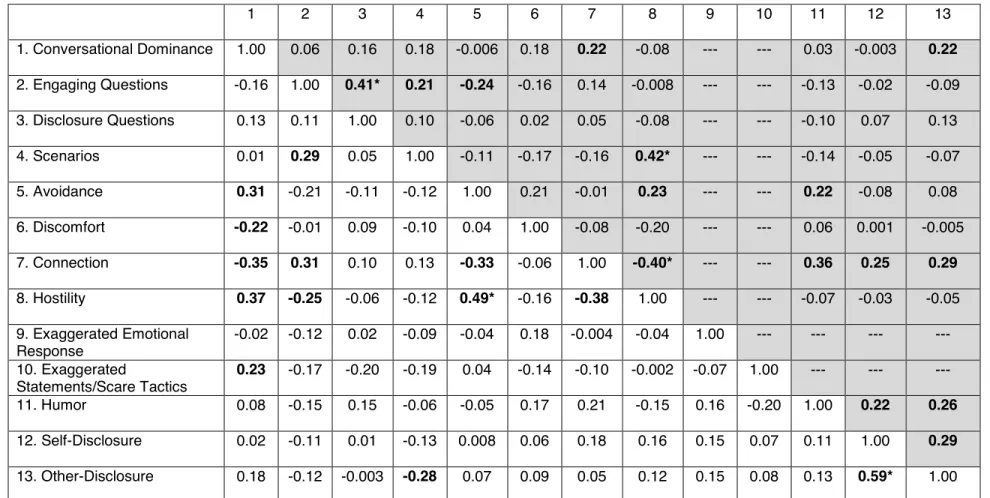
correlated with discomfort (r= -0.22). Avoidance was also highly correlated with hostility (r=0.49). On the other hand, ‘encouraging communication processes’ were also highly correlated with one another, including engaging questions and scenarios (r=0.29), engaging questions and connection (r=0.31), and self-disclosure and other-disclosure (r=0.59).
Furthermore, several encouraging communication processes were negatively correlated with discouraging communication processes. Hostility was found to be negatively associated with engaging questions (r= -0.25), and connection was negatively correlated with conversational dominance (r= -0.35), avoidance (r= -0.33), and hostility (r= -0.38). Caregiver disclosure questions and humor were not significantly correlated with other process indicators. After controlling for alpha inflation (p<0.001), however, only 2 of 78 correlations remained significant including the correlations between avoidance and hostility (r=0.49) as well as self-disclosure and other disclosure (r=0.59).
and hostility (r= -0.40). After controlling for alpha inflation (p<0.002), 3 out of 55 correlations remained significant, namely the relation between engaging questions and disclosure questions (r=0.41), scenarios and hostility (r=0.42), and connection and hostility (r= -0.40). Interestingly, these three correlations include one process hypothesized to be encouraging and one process hypothesized to be discouraging.
Correlations amongst content and process indicators were examined to identify patterns of communication used during the observational task. After correcting for alpha inflation, 4 significant correlations (out of 91, p<0.001) were found for caregivers and 2 (out of 26; p<0.004) were found for adolescents. Caregivers who used permissive messages were more likely to use self-disclosure during the conversation (r=0.43), and context messages were frequently used in combination with scenarios (r=0.52). Caregivers who used exaggerated statements/scare tactics were likely to discuss consequences and peer pressure with their adolescents (r=0.59 and r=0.44, respectively). Adolescents who were positive about alcohol were rated as more conversationally dominant (r=0.36) and those who discussed alcohol negatively were rated as more connected to their caregiver (r=0.41).
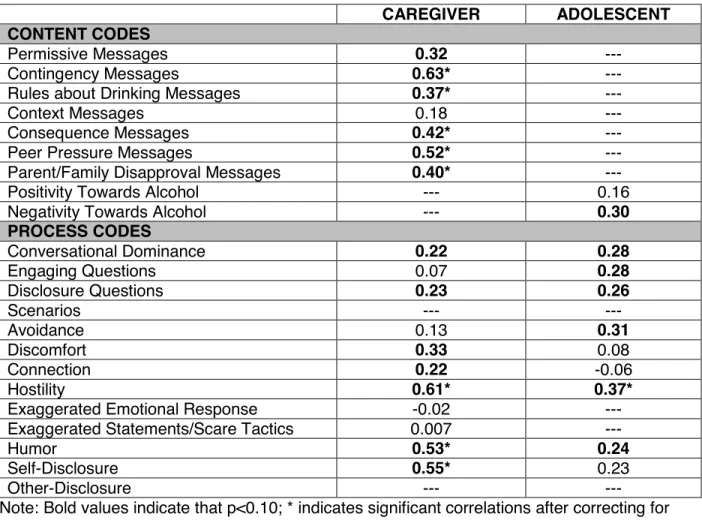
Fourth, self-report of content and process during the alcohol-specific communication task were correlated with observer ratings at the individual code level to assess for consistency between reporters. After correcting for alpha inflation (18 caregiver correlations, p<0.006; 11 adolescent correlations, p<0.009), results indicate that self-report and observer report of most caregiver content messages, but not adolescent content, were significantly correlated (see table 7). Specifically, observer ratings were highly consistent with self-reports of contingency
messages (r=0.63), rules about drinking messages (r=0.37), consequence messages (r=0.42), peer pressure messages (r=0.52), and parent/family disapproval messages (r=0.40).
Correlations between self-reported and observer rated process of communication showed consistency across raters on caregiver hostility (r=0.61), caregiver humor (r=0.53), and