PARENT COMMUNICATION DURING SHARED READING
WITH GIRLS WITH RETT SYNDROME: THE IMPACT OF PRINT REFERENCING
Allison L. Dennis
A dissertation proposal submitted to the faculty at the University of North Carolina at Chapel Hill in partial fulfillment of the requirements for the degree of Ph.D. in Applied Developmental
Sciences and Special Education in the School of Education.
Chapel Hill 2018
ABSTRACT
Allison L. Dennis: Parent Communication During Shared Reading With Girls With Rett Syndrome: The Impact Of Print Referencing
(Under the direction of Karen A. Erickson)
Shared reading is an engaging activity that can be used to facilitate communication between parents and their children. This is true for children with and without disabilities. The current study describes the communication that mothers used during shared reading with their daughters with Rett syndrome when reading unfamiliar books before and after the mothers learned to use a print referencing strategy (Justice & Ezell, 2004; Sim & Berthelsen, 2014). Three mother and daughter dyads were recorded six times each while engaging in their typical style of shared reading using unfamiliar electronic books. Then, mothers were taught a print referencing strategy, and their communication during shared reading was, again, recorded six times while reading unfamiliar, electronic books. The shared reading interactions were
ACKNOWLEDGEMENTS
First, I would like to give thanks to God. Without Him, I would not have found the people I needed to help me make it through this arduous journey.
To my advisor and mentor, Karen Erickson, thank you for the kindness and patience you have shown me during this process. I would not have been able to complete this story without your unwavering support.
To the other members of my dissertation committee, Mary Ruth Coleman, Deb Eaker-Rich, Claire Greer, and Penelope Hatch, thank you for the personal and professional guidance you have given me. I hope I have the opportunity to pay it forward.
To April, Faith and Skip, I am eternally grateful for your friendship. Thank you for seeing me through many successes and failures along the way.
To Brent, thank you for your patience. I love you, and I appreciate you letting me chase my dream.
TABLE OF CONTENTS
LIST OF TABLES ... ix
CHAPTER I... 1
Shared Reading ... 2
Parents as partners in shared reading ... 2
Parent communication during shared reading ... 3
Print referencing during shared reading ... 4
Shared reading and children with disabilities... 5
Parent communication during shared reading with children with disabilities ... 6
Shared book reading with children with Rett syndrome ... 6
Purpose ... 7
CHAPTER 2: REVIEW OF THE LITERATURE ... 10
Rett Syndrome ... 10
Parent Communication ... 12
Shared Reading ... 18
Shared reading and children without disabilities ... 19
Shared reading and children with significant disabilities ... 24
The use of print referencing ... 30
Book selection in shared reading ... 32
Familiar versus unfamiliar books ... 33
Electronic versus paper books ... 34
Coding Parent Communication During Shared Reading ... 35
Summary ... 36
CHAPTER 3: METHODS ... 38
Research Questions ... 38
Participants ... 39
Dyad descriptive information ... 39
Parent participation ... 40
Measures ... 41
Procedures ... 42
Technology ... 42
Shared reading procedures ... 42
Coding ... 44
Analysis ... 45
CHAPTER 4: RESULTS ... 47
Child Participants ... 47
Child one ... 48
Child two ... 48
Maternal Communication While Reading ... 49
Maternal Communication During Shared Reading Before Print Referencing ... 50
Maternal Communication During Shared Reading After Print Referencing ... 52
Differences in Maternal Communication During Shared Reading Before and After Print Referencing... 55
Summary ... 57
CHAPTER 5: DISCUSSION ... 58
Key Findings in Previous Research... 58
Parent communication... 59
Joint attention ... 60
Semantic and pragmatic use of language ... 61
Training and structured approach ... 61
Scaffolding ... 62
Modeling language ... 63
Length of interaction after intervention ... 64
Electronic books ... 64
Print referencing ... 65
Study Limitations ... 66
Implications and Future Directions ... 68
Final Conclusions ... 69
APPENDIX A: CHILD ASSESSMENTS AND PARENT INTERVIEWS ... 72
LIST OF TABLES
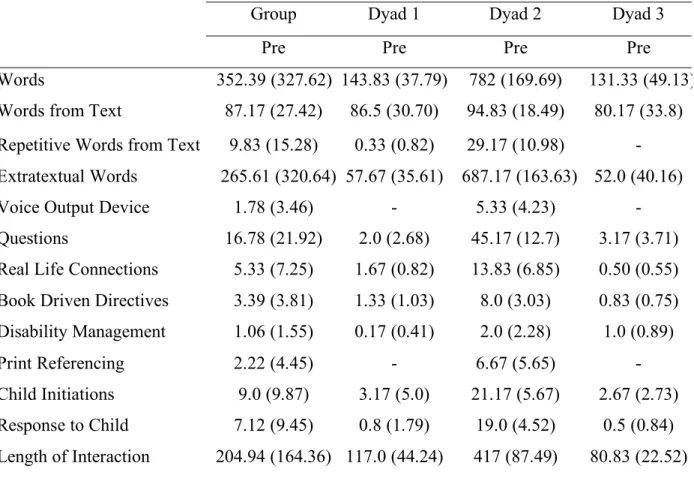
Table 3.1 Child Participant Demographics ... 40 Table 3.2 Electronic Books Selected for Shared Reading ... 44 Table 4.1 Average (Standard Deviation) Frequency Count for Each Variable
for the Group and Individual Mothers Pre Print Referencing Intervention ... 51 Table 4.2 Group and Individual Dyad Performance Post Print Referencing Intervention ... 54 Table 4.3 Number of Positive, Negative and Tired Paired Differences
CHAPTER 1
The purpose of the current study was to identify the language and communication
mothers use during shared reading of unfamiliar, electronic books with girls with Rett syndrome before and after mothers learned a print referencing strategy. Shared reading provides an
important context to support language and is a common activity between parents and their children. For children with Rett syndrome, a genetic disorder characterized by difficulties with purposeful use of hands, cognitive abilities, motor planning, communication, and language (IRSF, 2014), supporting language and communication development are especially important. Identifying the language used by mothers of girls with Rett syndrome, during multiple conditions of shared reading, has the potential to lead to information about the things parents can and should say to support cognitive, communication, and language development in their daughters.
Shared reading is an engaging activity that parents and children can complete together to help develop emergent language and literacy skills (National Early Literacy Panel, 2004). During shared reading, parents can use their child’s interests to capture and sustain attention for the purpose of supporting interaction. This activity is particularly useful for parents because it requires little training and no formal materials. There are several different approaches to shared reading but each has the common element of an adult and child interacting around a text.
Shared Reading
There has been a great deal of research conducted with young children to determine the effects of shared reading on language and literacy development. As a result, shared reading is an activity that is used regularly with children without disabilities (Hargrave & Sénéchal, 2000; Justice, Kaderavek, Fan, Sofka, & Hunt, 2009; Price, van Kleeck, & Huberty, 2009; van Kleeck, 2008) and is recommended for early childhood educators and parents (National Early Literacy Panel, 2004). Shared reading has proven to be successful when delivered one-on-one or in small groups (Hargrave & Sénéchal, 2000), with a parent (Gettinger & Stoiber, 2014) or teacher (Liboiron & Soto, 2006), in school settings (Liboiron & Soto, 2006) and in home settings (Leech & Rowe, 2014). While the research supports shared reading as an intervention with many
different reading partners, the fact that parents can do it successfully ultimately increases the learning opportunities for children.
Parents as partners in shared reading. As mentioned, one of the benefits of shared reading is that parents can successfully use it with their children (Gettinger & Stoiber, 2014). This is the case for children with disabilities (Hargrave & Sénéchal, 2000; Jordan, Miller, & Riley, 2011; Skotko, Koppenhaver, & Erickson, 2004) and without disabilities (Price, van Kleeck, & Huberty, 2009). The main purpose of shared reading is to promote interaction about and around the text to build language, communication, and emergent literacy understandings. The role of the parent is to facilitate the interaction, which provides a platform to scaffold skills that are critical to literacy acquisition (Bellon-Harn & Harn, 2008). Examples include: (a)
connections to the story (e.g., “My friend Karen has a big goldfish at her house.”). Since parents are familiar and well informed regarding their child’s experiences, the opportunity to make connections is more likely to occur than it might with other adult reading partners. To maximize shared reading outcomes, parents must work to scaffold the shared book reading experience and facilitate a safe and supportive environment in which the child feels comfortable exploring new skills and possibly making mistakes (Liboiron & Soto, 2006). To facilitate this, much of the previous research related to shared reading has been conducted in home settings with parents who have an established rapport with their child (Bellon-Harn & Harn, 2008; Skotko et al., 2004).
In their work on shared book reading, Justice and Kaderavek (2003) discussed the fact that “adult-child interactions during storybook reading are reciprocal, dynamic, and mediated by children’s maturing linguistic capabilities” (p. 395). It follows that reading every word on the page from start to finish is often not the best way to read with young children (Bellon &
Ogletree, 2000), as it minimizes interactions between the child and the reader. Instead, the parent should engage the child through commenting and responding to the child’s initiations. In fact, it is important that the parent attempt to engage the child in multi-step communication exchanges, meaning back and forth interactions regarding the things that engage the child’s interest. In order for the child to have a truly reciprocal and dynamic interaction with the adult, the two must establish a common respect for one another. Thus, the selection of parents as the reading partner for repeated book readings is quite effective.
Parent communication during shared reading. Research regarding parent
Sarkin, 1996; Skotko et al., 2004). Specific information about the things that parents say during shared reading is valuable when determining the types of communicative interactions that influence child outcomes. There are certain types of words, comments, questions, etc. that contribute to or detract from the overall benefit of shared reading for children.
A variety of coding systems have been used to categorize the way parents communicate during shared reading. For example, during shared reading of unfamiliar storybooks, parents have been categorized as describers, collaborators, and comprehenders (Haden, Reese, & Fivush, 1996). Parent communication has also been described when reading expository texts as
compared to storybooks (Hammett-Price, van Kleeck, & Huberty, 2009). During expository readings, parents engaged in increased instances of comments that were extratextual (i.e., use of language not found in the book) and offered feedback (i.e., praise and reinforcement in response to child language). Coding parent communication by style and context increases the opportunity for researchers to understand how parents provide models of language during shared reading.
Parent communication during shared book reading has been explored from a variety of perspectives including children of different ages, genders, and abilities using a variety of texts and methods for coding the language parents use (Leech & Rowe, 2014; Pellegrini, Brody, & Sigel, 1985; Vandermaas-Peeler, Sassine, Price, & Brilhart, 2011; Walsh & Blewitt, 2006). This existing body of research influenced and informed the coding system for the current study.
Print referencing during shared reading. One specific shared reading intervention with an increasing research base is print referencing. This is an intervention that is designed to
2003; Catts & Kamhi, 2005; Hargrave & Sénéchal, 2000); (b) phonological awareness (Allor & McCathren, 2003); and (c) print awareness (Catts & Kamhi, 2005).
The main focus of the research on print referencing has been child outcomes, but there is reason to believe that print referencing might influence the things that parents say during shared reading (Justice & Ezell, 2004; Sim & Berthelsen, 2014). Research does indicate that print referencing leads to increases in parent behaviors such as: (a) discussing the book; (b) making comments about words and letters on the page; (c) posing questions about words about letters; (d) pointing to the words when talking about the story; (e) tracking the words when reading; (f) commenting about rhyme; (g) commenting about words having the same beginning or ending sound; and (h) talking about the letters (Sim & Berthelsen, 2014). Research shows that print referencing increases visual attention to print and positively supports a variety of literacy outcomes for children (Allor & McCathren, 2003; Catts & Kamhi, 2005; Hargrave & Sénéchal, 2000), but more needs to be known about the potential impact print referencing has on parent communication during shared reading.
literacy and language skills that are developed with children without disabilities (Hargrave & Sénéchal, 2000; Jordan et al., 2011; Skotko et al., 2004).
Parent communication during shared reading with children with disabilities. Multiple
studies have been conducted to investigate the language that parents use during shared reading with children with disabilities (e.g., Bellon-Harn & Harn, 2008; Liboiron & Soto, 2006; Light, Binger, & Smith, 1994; Skotko et al., 2004). Several studies have also explored the roles that parents take in shared reading interactions with their children. For example, in a study conducted by Light, Binger, and Smith (1994), mothers of children with developmental disabilities were found to dominate the conversation with directives when engaging in shared reading with their children. Other researchers, such as Liboiron and Soto (2006), found that parent communication with their children with disabilities reflected a more equal, conversational interaction. Parents accounted for 53.3% of the total interaction while the child accounted for the other 46.7% of the interaction. The communication strategies the parents in Liboiron and Soto’s study used
included: (a) questions; (b) cueing; (c) print references; (d) expansions; (e) cloze procedures; and (f) binary choices. These studies provide important information regarding parent communication during shared reading with children with disabilities, but additional research is essential.
One of the specific populations that has been the focus of early work on shared reading is Rett syndrome. The current study was designed to build on this research and explore the possible effects of parent communication during shared reading interactions before and after the
introduction of a print referencing intervention with a group of children with developmental disabilities known to benefit from shared reading.
Shared book reading with children with Rett syndrome. Multiple studies have
this looks like for parents and their girls with Rett syndrome (Koppenhaver, Erickson, & Skotko, 2001; Skotko et al., 2004). This study investigated the impact of unfamiliar storybooks, hand splints for the girls, interactions with and without the use of picture communication systems, and changes in the nature of the shared reading interaction before and after parent training.
One aspect of shared reading that Skotko et al. (2004) explored was the communication that mothers used during shared reading with their daughters with Rett syndrome. The
researchers coded videos of shared readings that occurred in each stage of the study focusing on parent communication and behavior. Researchers determined that over the course of 4 months, the mothers decreased the number of directives used and increased instances of comments that were coded as prediction, inference, question, confirmation, and requesting clarification. The overall positive effects of shared reading on children increased when meaningful parent communication expanded. This study demonstrated that parent communication is an important factor in successful shared book reading. Although the findings from this research were
important, the research was conducted nearly 2 decades ago, and it did not address the use of print referencing as an important component of shared reading. The current study aimed to gather additional information about the ways that parents engage in shared reading with their children with Rett syndrome, specifically the language that parents use while sharing unfamiliar books before and after being taught a print referencing strategy.
Purpose
referencing strategy. This research involved three mothers and their daughters. The children were between the ages of three and eight and had a confirmed diagnosis of Rett syndrome. The
mothers interacted with their daughters in natural settings using electronic books provided by the researcher.
An audio recording of the mother-daughter interaction was taken during each shared reading session. The recordings were transcribed and instances of parent communication were coded to determine the similarities and differences in parent communication while reading unfamiliar books, pre- and post-print referencing. Evaluating this condition may provide
additional information about the factors that influence parent communication during shared book reading with girls with Rett syndrome.
The following research questions guided the investigation:
• What is the function of what mothers say to their daughters with Rett syndrome while
engaging in shared reading with unfamiliar electronic books?
• What is the function of what mothers say to their daughters with Rett syndrome while
engaging in shared reading of unfamiliar electronic books after learning a print
referencing strategy?
• Are there significant differences in each of the functions of communication that mothers
use during shared reading before and after learning to implement a print referencing
strategy?
CHAPTER 2
REVIEW OF THE LITERATURE
The current study is focused on the communication between mothers and their daughters with Rett syndrome during shared reading interactions. Specifically, the study investigated things mothers said to their daughters while reading unfamiliar electronic books before and after
learning a print referencing strategy. Rett Syndrome
Rett syndrome, which occurs almost exclusively in females, is a neurological disorder that is caused by a genetic mutation that is typically identified between 6-18 months of age. Rett syndrome is characterized by a gradual deterioration of hand use and language loss (American Psychiatric Association, 2000). It is estimated that Rett syndrome affects approximately 1 in 10,000 females worldwide (Amir & Zoghbi, 2000). Although extremely rare, Rett syndrome can also occur in males. Prior to this onset of symptoms, parents and caregivers report normal development typically including the development of some speech and walking (Cass, Reilly, Owen, & Wisbeach, 2003); however, the onset of Rett syndrome is marked by a regression in or loss of these previously acquired skills.
Children with Rett syndrome experience difficulties with brain functions, which impact cognitive, emotional, and motor functions (IRSF, 2014). Early on, Rett syndrome is
of hands. Children with Rett syndrome typically have apraxia, a disorder that effects planned movements, which is exacerbated by the fact that children with Rett syndrome typically engage in repetitive, nonfunctional hand movements (Smeets, Pelc, & Dan, 2011). These physical challenges can impair the child’s ability to engage in her immediate surroundings. Furthermore, children with Rett syndrome often exhibit irritability and are frequently misdiagnosed as being on the Autism spectrum based on these characteristics (Matson, Fodstad, & Boisjoli, 2008). The characteristics of Rett syndrome can make interacting with others and engaging in educational activities very challenging. Additionally, health issues are a pervasive problem among children with Rett syndrome. These issues include seizures, respiratory problems, difficulty sleeping, and feeding complications (Neul, et al., 2010).
Although children with Rett syndrome can experience intellectual delays, their abilities are thought to be much higher than previously reported (Bylers & Symons, 2013). This is based on medical and educational research, advances in technology, and changes in assessment
Parent Communication
The ways that parents communicate with their children impact the ways that children develop socially, emotionally, and academically (Mol, Bus, de Jong, & Smeets, 2008). Parent communication includes any means of passing information back and forth between parent and child including speech, sign language, gestures, pictures, communication devices, facial
expressions, and vocalizations (Buijzen & Valkenburg, 2008). Although research has confirmed the importance of parent communication, the term “communicate” has been defined in many different ways in the research literature. Many studies of parent communication focus on two types of communication patterns: concept-oriented communication that emphasizes negotiation, individual ideas, and opinions, and socio-oriented communication, which emphasizes obedience and harmony (Carlson & Grossbart, 1988; Chaffee, McLeod, & Atkin, 1971). These studies suggest that some parents use a co-construction style of communication (concept-oriented) while others communicate in a more directive way (socio-oriented).
Language outcomes are of particular importance when parents communicate with young children. The language support that occurs during the early years of development has long lasting effects on performance. As such, parent-child communication has been the focus of numerous descriptive and intervention studies. For example, an intervention developed by Yoder and Warren (2002) examined the ways that parent communication can maintain child initiated requests and comments using Responsivity education and Pre-linguistic Milieu Training
intervention aimed at using child centered play to teach intentional requesting and commenting (Yoder & Warren, 1998). Child-parent dyads were randomly assigned to the RPMT or control groups. Observational data were collected using: (a) the Communication and Symbolic
Communication Scales (Prizant & Wetherby, 1993), (b) experimenter-child play sessions, and (c) parent-child sessions (Yoder & Warren, 1998). The resulting data were recorded and transcribed. What researchers found was that RPMT accelerated language growth compared to the control group. Additionally, RPMT facilitated more frequent and proportional parent responses to child comments. When parents increased their language modeling, there were increases in verbal responses from their children. These communication exchanges were most successful when parents relied on all types of communication behaviors from the child (e.g. gestures, eye gaze). The parents’ use of RPMT helped children to generalize, maintain, and increase child initiated comments.
Establishing a shared point of interest, or joint attention, is the first step in successful parent-child communication.
Joint attention describes a shared focus in a shared context between a child and adult. According to Shaffer (1992), joint attention describes “an encounter between two individuals in which the participants pay joint attention to, and jointly act upon, some external topic” (p. 101). Since children rely on adults to help interpret the world, this joint attention is an important early means of engaging in communication activities. During infancy adults begin facilitating joint attention using objects and activities, or by sharing ideas (Smith, 1992). In a study of joint attention in New Zealand, 200 children, less than 24 months old, were observed for one hour on two separate days. A running record was kept to determine the communication interactions between the child and a caregiver. Researchers found that joint attention occurred most frequently during toy related play, followed by caregiver activities (e.g. dressing, diaper changing), and book reading. Book reading was an effective strategy for improving joint attention because it provided the framework for a meaningful interaction and a clear focus of shared attention. This activity led to more child initiated comments than other common activities. Specifically, the number of child-initiated comments was positively correlated with the number of adult-initiated comments. Furthermore, increasing the overall number of communication exchanges between the adult and child led to increased instances of joint attention (Smith, 1992).
Parents also support emotional development through their communication styles. This was shown in a study that examined styles of parent communication behaviors during
discussions about emotionally charged topics (Leibowitz, Ramos-Marcuse, & Arsenio, 2002). Parents who used communication that addressed the child’s emotions while showing
influenced that child’s understanding of the emotional experiences. Parents who communicated in a directive way (e.g., “You were scared of that dinosaur. You don’t want to see those again.”) did not succeed in helping the child understand emotionally charged topics and develop
emotional openness (Bretherton, 1991; Cassidy, 1994). Interestingly, a failure to communicate anything resulted in the same outcome as communicating in a directive way.
Directiveness and other aspects of parent communication behavior have been compared between parents of typically developing children and parents of children with developmental delays. For example, Siller and Sigman (2002) conducted a longitudinal study that examined communication between caregivers and children who had been diagnosed with autism, children who had been identified as having developmental delays, and children who were classified as being typically developing. The parent communication behaviors they found included variations of avoidance, intrusiveness, hindrance, reciprocity, co-construction, and support of child
emotions. Researchers observed the same parent communication behaviors across parents of each of the three groups. The amount of time that mothers spent with their child during engaging activities, the mother’s use of language to identify and label objects, and the frequency of
utterances with various pragmatic functions were all found to be common parent communication behaviors regardless of the abilities of the child.
the child and one of the target emotions. Parents were intentionally given vague directions regarding the task in an attempt to decrease researcher interference. The observations suggest that parents who used child-referenced emotions, exhibited little to no negativity, and followed the child’s interests had children who were more likely to reciprocate. This, in turn, increased the opportunity for parents to co-construct dialogue with their children.
Similarly, a university laboratory was used to observe caregiver communication
behaviors during non-structured play activities (Siller & Sigman, 2002). Parents were instructed to play with their children and one of ten preselected toys. Parent communication behaviors were initially recorded during two separate sessions. Follow-up observations took place after one year, ten years, and sixteen years. At each time interval, parent communication behaviors were
transcribed and coded. Specific parent communication behaviors that were observed and recorded included indicating behaviors (e.g., pointing, nodding, gestures, avoidance) and
verbalizations. At the one-year follow-up, children’s communicative gains were small and could not be predicted by the parents’ communication; however, a significant correlation was found between non-demanding parent utterances and child language outcomes at the ten-year and sixteen-year follow-up. This coding system and subsequent analysis led the researchers to conclude that caregivers who used non-demanding communication behaviors (both verbal and nonverbal) during the baseline observation continued to practice the same behaviors at each follow-up. Furthermore, non-demanding communication behaviors were positively correlated with child communication outcomes at the last two measurement points.
shows that following the child’s interest is a useful method of parent communication. This can include mirroring or simple pointing, showing, and talking about an object.
Based on a theory proposed by Oppenheim and Waters (1995), parents can also engage their children in communication exchanges through a narrative format. A study conducted by Leibowitz, Ramos-Marcuse, and Arsenio (2002) supported this assumption by showing that parents who engaged in open emotional conversations that had the structure of a story or narrative, had children who spoke more coherently about their emotions to parents as well as other adults. Similarly, as part of a larger study, Kelly and Bailey (2013) examined the co-constructed narratives of 31 mother-child dyads. Mother-child communication exchanges about topics such as illness, hospitalizations, birthday parties, a Chuck-E-Cheese visit, and a roller coaster ride, were transcribed and analyzed. Maternal supports during conversations with their children were categorized by: (a) narrative additions, (b) the use of event prompts, and (c) the use of detail prompts. Data analysis revealed that maternal scaffolding had a significant effect on child response regardless of age. Additionally, mothers’ additions significantly increased the children’s ability to make their own additions to the co-constructed narratives. When mothers modeled narrative communication behaviors they provided language information to the child and increase the likelihood that communication will be on-topic and reciprocal.
Research has investigated parent-child communication exchanges in a range of contexts; however, a relatively limited set of parent behaviors (e.g., pointing, nodding, gestures,
parent communication behaviors. One context that is of particular importance in the current investigation is shared book reading. It provides a focused context within which parent
communication directly influences children. The following section describes the work that has been done to understand parent-child communication exchanges during shared book reading. Shared Reading
In 1985, the Commission on Reading of the National Institute of Education called shared book reading “the single most important activity for developing the knowledge required for eventual success in reading” (p. 23). In 2009, the report of the National Early Literacy Panel confirmed the positive impact shared reading had on multiple language outcomes for a broad range of children. According to Justice and Ezell (2004), shared book reading is “the interaction that occurs when a child and adult look at or read a book together.” It is a broad concept that refers to interactive reading without specific comprehension instruction. Furthermore, shared book reading is a reliable instructional practice that supports emergent literacy development (e.g., oral language, phonological awareness, print awareness) in children with and without disabilities (Hargrave & Sénéchal, 2000; Justice, Kadervavek, Fan, Sofka, & Hunt, 2009; Liboiron & Soto, 2006; Skotko et al., 2004).
Children without disabilities typically develop emergent literacy understandings before they start school or soon after they begin formal schooling (Catts & Kamhi, 2005). Oral
Successful shared reading is dependent on well-constructed exchanges between adults and children. When executed appropriately, shared reading is language-rich, child focused, and print based (Hargrave & Sénéchal, 2000; Justice et al., 2009; Liboiron & Soto, 2006; Skotko et al., 2004). Since reading is a language-based skill that shares many of the same components as oral language (Catts & Kamhi, 2005), the type of communication that adults use is critical to a child’s oral language development. In fact, research indicates that a student’s language
competence is a strong predictor of later literacy skills (Mehta, Foorman, Branum-Martin, & Taylor, 2005). Parents of children with and without disabilities can capitalize on the opportunity to use effective parent communication to engage in shared reading as a means of supporting language development as well as other positive social and academic student outcomes (Khami & Catts, 1999).
A wealth of research exists to address the things that parents say and do as a means of communicating with their child during shared book reading. This body of research began by examining the communication behaviors of parents with typically developing children during shared reading. In the last two decades, this research has expanded to include children with disabilities. In the following sections, the current body of research will be examined to identify parent communication used during shared reading activities with children with and without disabilities.
Shared reading and children without disabilities. In their work on shared book
shared book reading has been conducted in home settings with parents and children who have an established rapport and a history of communication exchanges. Conducting research in home settings is one way to facilitate a safe and supportive environment where parents can model effective communication (Bellon-Harn & Harn, 2008; Skotko et al., 2004).
Research conducted with parents and their typically developing children has identified several important characteristics of parent communication during shared reading. These characteristics include modeling successful communication, supporting reciprocity (Allor & McCathren, 2003), articulating sounds and individual words, and modeling narrative discourse (Schickedanz, 1999). According to Clay (2013), language is a valuable source of information for literacy activities, and it follows that parent communication would support child language and communication development.
Shared book reading provides a platform for parents to exhibit communication, which scaffolds skills that are critical to literacy acquisition (Bellon-Harn & Harn, 2008). During shared book reading, critical aspects of parent communication appear to include: (a) labeling objects in the illustration (e.g., “I see a big, red boat.”), (b) talking about what is going on in the book (e.g., “I wonder where that boat is going?”), (c) referring to real life connections to the story (e.g., “I rode on a boat last summer!”), and (d) referencing the print (Justice et al., 2009). Additionally, parents are most able to model useful communication when focused on engaging in communication with their children by commenting and responding to the children’s initiations and interests rather than reading every page from start to finish (Bellon & Ogletree, 2000).
2010). These skills are important because semantics is the feature of language that regulates the meaning of words, while pragmatics refers to the ways in which language is used in context (Catts & Kamhi, 2005). When engaging in shared book reading, parents use communication to assist children in developing knowledge of semantics to determine word meaning (i.e., lexical semantics) and sentence meaning (i.e., sentential semantics). Parents can engage in think aloud processes during shared book reading to model how they make sense of words and sentences. Over time, children can apply this knowledge to real-life communication exchanges (i.e., situational pragmatics; Moats, 2010).
exchange, it highlights the significant influence and potential benefits of adult communication in the context of shared reading.
Although some parents and teachers successfully engage in shared reading without training or specific supports, others appear to benefit from training and a structured approach. According to Huebner and Meltzoff (2005), shared reading is most effective when the adult involves the child. Whitehurst et al. (1988) were the first to describe Dialogic Reading as a framework for structuring shared reading and involving a child in shared reading to the greatest extent possible. Like other approaches to shared reading, Dialogic Reading emphasizes reading with a child as opposed to reading at or to a child. Dialogic Reading is characterized by
techniques including asking questions, giving feedback, and adjusting language to the child’s developmental level. The three main tenants of Dialogic Reading are: (a) use of illustrations to encourage child communication, (b) providing informative feedback by expanding or modeling what the child says, and (c) adapting and remaining aware of the child’s needs (Mol, Bus, de Jong, & Smeets, 2008). Variations in parental reading style can affect the development of child language, thus Dialogic Reading provides a research proven structure to guide adult language during shared reading.
Dialogic Reading is somewhat formulaic and is often described using two mnemonics: PEER and CROWD. The process framework for Dialogic Reading is PEER. This stands for:
(e.g. “How many blind mice were in the story?”); Open ended (“I love candy. Do you have a favorite type of candy?”); Wh- (e.g. Where was little bunny Foo Foo walking?”); and Distancing
(e.g. “The dog in the book is named Clifford. I know you have a dog at home. What is your dog’s name?”). Combining PEER and CROWD provides adults with the help they need to conduct Dialogic Reading in a way that positively supports the child’s language development.
A Dialogic Reading intervention for “at risk” children was implemented in a study conducted by Brannon, Dauksas, Coleman, Israelson, and Williams (2013). These researchers used an approach called PARTNERS training (i.e. Parents as Reading Teachers Nightly Encouraging Reading Success) to assist parents in using Dialogic Reading. Thirteen families, with a child between 3 and 4 years old, participated in the study. Each received a 12-minute training video about Dialogic Reading along with children’s books, corresponding parent notes that reiterated the Dialogic Reading strategy and included sample questions parents could ask their children, and suggestions for vocabulary that could be introduced based on the specific books being used for the intervention. The subsequent intervention required parents to read 10-15 minutes a day for 12 weeks using Dialogic Reading strategies. Children were given a new book to read at the beginning of each week. Reading sessions were audio recorded and
Regardless of a child’s current knowledge, shared book reading is a language rich activity that has been shown to support substantial growth in oral language development (Hargrave & Sénéchal, 2000). This is because adult communication during shared reading provides rich language that children can build upon. Regardless of disability status, when children engage in shared book reading, story related language and structures begin to appear in their oral language (Liboiron & Soto, 2006). Since shared book reading is designed to be conversational and
centered around communication, it also teaches important concepts about language
(Koppenhaver, Coleman, Kalman, & Yoder, 1991). This is the case for children with and without disabilities.
Shared reading and children with significant disabilities. It has long been believed that children with significant disabilities are unable to ever learn to read and write; however, this is an erroneous belief (Crowe, Norris, & Hoffman, 2000; Dale, Crain-Thoreson,
Research has been conducted to determine the benefits of shared book reading on young children with a range of disabilities (Bellon-Harn & Harn, 2008; Kaderavek, Pentimonti, & Justice, 2013; Liboiron & Soto, 2006; Skotko et al., 2004). A study by Bellon-Harn and Harn (2008) explored shared reading as an intervention for a six-year-old girl with moderate cognitive disabilities. In condition one, shared reading was observed with scaffolding while condition two included scaffolding combined with access to an augmentative and alternative communication (AAC) device. Scaffolding consisted of three separate strategies: wh-questions, modeling, and expansion. Under both conditions, the parent consistently used modeling more than wh-questions and expansion. Total parent communication increased with the inclusion of AAC because, as the authors suggest, the device provided an additional language support. Within conditions, the complexity of parent comments increased across readings. The authors attributed this to the familiarity that resulted from repeated readings. Overall the parent primarily used modeling during shared reading, which in turn provided the child with more opportunities to engage in communication exchanges.
in diverse ways to meet the needs of the children they teach. Conversely, parents carry the responsibility of modeling and initiating communication with a single child, which likely restricts the diversity of their communication. Differences aside, the most commonly used form of communication for both parents and teachers involved prompting children to think abstractly.
Shared reading between mothers and children with disabilities in the home setting has been examined. In a study conducted by Justice and Kaderavek (2003), shared reading interactions between 11 mother-child dyads were transcribed and analyzed to determine the language parents used with their children. This was a part of a larger study aimed at examining storybook interactions between parents and children with language impairments (see Justice, Kaderavek, & Grimm, 2003). Communication exchanges were captured four times a week for two weeks for this particular analysis. Maternal utterances were coded with the following codes: (a) introduces new topic; (b) maintains own topic; (c) supporting partner topic; (d) joint topic (adding to the partner’s topic); (e) extension of joint topic; and (f) reinforcement. Results revealed that 42% of maternal comments introduced a new topic. The subsequent categories included supporting partner topic (18%), maintain own topic (17%), and joint topic (16%). Behaviors coded as an extension of the joint topic and reinforcement comments were used nominally. This indicated that shared book reading is an opportunity for mothers to introduce new topics and model language, using the support of the text.
behavior, verbal participation, and response to prompt type. Parents were observed during shared reading sessions with their child then trained on the PEER and CROWD strategies and asked to engage in shared reading sessions again. Dialogic Reading had little to no effect on on-task behavior, but sessions after the Dialogic Reading training lasted longer than the baseline shared reading sessions. Furthermore, the verbal participation of all three children increased; however, the prompts that elicited the most responses varied among children. Dialogic Reading was used to support parent communication during shared reading, extend the length of the shared reading, and increase the verbal participation of the children.
While other researchers have investigated interventions they called shared reading, their theoretical foundation, goals, and procedures do not reflect the definition of shared reading in the current study. For example, Mims, Browder, Baker, Lee, and Spooner (2009) stated that their goal for employing shared reading was “increasing emerging literacy skills in students with significant disabilities” (pg. 409). However, instead of emphasizing the interaction and language learning they, like Browder, Lee, and Mims (2011), utilized a task analysis method for the purpose of improving the students’ ability to respond to comprehension questions. Participants in both studies were taught to respond correctly (e.g. touching an object, vocalization) to specific comprehension questions about the text. The goal was not to increase interaction or support the development of important emergent literacy understandings. The goal was to improve ability to respond to comprehension questions, which is quite different from the early language and literacy goals typical of most shared reading interventions.
communication that occurs during this intervention. Refining the intervention strategy and examining possible differences in parent communication with specific populations of children will continue to influence the way best practice for shared reading is defined.
Girls with Rett syndrome. At this time a study by Skotko and colleagues (2004) is the
only known study that addresses the issue of parent-child shared reading with girls with Rett syndrome. The authors reported the results in three different articles (Koppenhaver, Erickson, & Skotko 2001; Koppenhaver et al., 2001; Skotko et al., 2004), but the Skotko et al., (2004) report will be the focus here since it offers the most systematic analysis of the parent communication in the study.
Skotko et al., (2004) reported results for four females with a diagnosis of Rett syndrome, ages 3.6-7 years old, and their mothers. This study was as a part of a larger project aimed at understanding the way girls with Rett syndrome engage with text (e.g. attention to text,
communication attempts) during shared book reading with a parent. The researchers addressed specific questions regarding the use of unfamiliar text under four conditions (i.e. baseline, hand splinting of girls, introduction of augmentative and alternative communication, print referencing intervention; see Koppenhaver, et al. (2001) for the most complete description of each
condition). Each condition was investigated in one of four phases, which each spanned one month.
were asked to use during the final phase included: (a) attributing meaning to all communication attempts; (b) prompting the use of communication devices using natural comments, not
directing; (c) providing sufficient wait time; and (d) asking questions and making comments that make use of the voice output communication device and symbols provided by the researchers. Although data on parent communication was collected during all four phases, it was only during the last phase that parents were provided instruction regarding their own communication during shared book reading.
Parent communication and behaviors were coded across all sessions using the following codes: (a) requests for attention, (b) pointing to symbols, (c) pointing in books, (d) labeling, (e) describing, (f) relating scenes to the child’s life, (g) directives, (h) action in the book, (i)
prediction or inference comments and questions, (j) emphasizing print or sound concepts, (k) confirming or requesting clarification, (l) behavior management, and (m) assisting the girl with turning book pages. The codes were then used to determine the parent communication behaviors that best predicted a girl’s appropriate use of the voice output communication devices and symbols, as well as their labeling and commenting. At the conclusion of the four-month project, it was determined that there were no significant differences in the familiar and unfamiliar book reading conditions. For this reason, both conditions were collapsed into a single unit.
After participating in the parent training session, three of the mothers showed a dramatic decrease in the number of direct commands used while the number of prediction and inference comments increased. The fourth mother increased her use of prediction and inference comments while still using direct commands. Additionally, all four mothers increased the frequency of confirmation, praise and modeling by pointing to illustrations. The changes in parent
During phase IV, overall communicative interactions increased and the focus on mothers directing their daughter’s communication behaviors shifted to a dialogue between the two. Although mothers initially read the text with dramatic emphasis it was not until phase IV that all four mothers extended their communication behaviors to include pointing to picture symbols, asking prediction or inference questions, labeling illustrations, describing, and relating the text to the child’s life. The results of the intervention revealed the addition of specific parent
communication behaviors in phase IV resulted in increased engagement and meaningful communication for the child.
The use of print referencing. Print referencing can be described as an intervention in which adults point out specific features of print during shared reading. This can be accomplished using verbal communication behaviors such as commenting, questioning, or requesting. Non-verbal communication behaviors (e.g. finger tracking print while reading) can be also be used during print referencing (Justice, Pullen, & Pence, 2008). This intervention supports numerous literacy skills identified in the National Early Literacy Panel Report (NELP; National Early Literacy Panel, 2004), which makes print referencing a high priority activity to incorporate in shared reading (Breit-Smith, Justice, McGinty, & Kaderavek, 2009). For example, print
knowledge, a predictor of later word recognition (NELP, 2004), is one of the skills specifically supported by print referencing. While print referencing is accepted as an important intervention, researchers cannot agree on the intensity and frequency of print referencing needed to promote positive impacts on children’s literacy skills (Breit-Smith et al., 2009).
(e.g., “How many L’s do you see on this page?”), commenting about print (e.g., “This word is dog.”), or tracking one’s finger along print while reading. In a study conducted by Justice, Kaderavek, Bowles, and Grimm (2005), print referencing embedded in the context of shared reading was used as an intervention for supporting print awareness. During the intervention, 23 teachers and 106 typically developing children were randomly assigned to condition one (i.e., shared book reading with print referencing) or condition two (i.e., shared book reading delivered as normal). Teachers who used the print referencing strategy were provided with a 1-day
workshop. The intervention took place over the course of 30 weeks, with both groups reading the same books. The results of the intervention revealed that the children who received shared
reading with print referencing had significantly higher gains in print concept knowledge (i.e., knowledge of the way that print is organized in various texts and the function it serves), alphabet knowledge (i.e., the names and distinctive features of individual alphabet letters), and name writing ability. Although print referencing during shared reading does not immediately result in word reading skills, the fact that it improves print knowledge contributes to later success in reading.
intervention information revealed that teachers’ post training use of print referencing reflected a large treatment effect. Child engagement increased by 25%, alphabet knowledge increased by an average of 5-6 letters, and concepts of print increased by an average of 4-5 concepts. Gettinger and Stoiber (2014) determined that adult use of print referencing with many opportunities to respond, had positive outcomes on child engagement and language.
When using print referencing during shared reading, researchers have paid particular attention to the books they select with particular consideration of features such as print and print saliency (Justice & Ezell, 2004; Justice et al., 2009; Justice, Skibbe, McGinty, Piasta, & Petrill, 2011). It appears that print referencing requires the selection of books with print that is salient, which means the print is not embedded in the illustration nor otherwise blends with the
background of the page. This provides parents opportunities to communicate in a way that supports print knowledge during shared reading.
Familiar versus unfamiliar books. Parents using shared reading to support language and
literacy development in their children need texts that interest and engage their children. Using familiar storybooks provides parents and children with text that includes frequently occurring and easy to predict words. McArthur, Adamson, and Deckner (2005) examined the change in parent communication, as unfamiliar books became familiar books through repeated readings. Parent communication focused on specific, tangible aspects of the text when the book was unfamiliar; however, their communication shifted to address a wider variety of topics when the text was familiar. Furthermore, parents reading familiar books asked more complex questions and pushed their children to think about less tangible aspects of the book. Familiarity with the book allowed parents and their children to engage in communication that extended beyond the text when reading familiar books.
In contrast, unfamiliar books are important because they provide parents with the opportunity to highlight unfamiliar vocabulary and support the acquisition of new vocabulary. Unfamiliar text offers parents the context to introduce new language, which can then be mirrored by the child (Hammett-Price, van Kleeck, & Huberty, 2009). A study conducted by van Kleeck, Gillam, Hamilton, and McGrath (1997) compared the quantity and complexity of parent
elaborated on the text when the topic was new and less familiar to the child. Unfamiliar books can become familiar books after repeated readings, which may be part of the value found in repeated reading (Bedrosian, 1999).
Electronic versus paper books. As technology advances at a rapid rate, the question of
electronic versus paper books has arisen in the research. It is agreed that good text is important for both formats of books. Important features include bold print, few words on each page, and illustrations that relate to the text (Justice & Kaderavek, 2003). The small amount of research available suggests that there are negative or neutral effects of electronic books on language development in children. For example, when children take charge of the actual mechanics of book reading, parents tend to use less language, and the interactive communication diminishes (Cheng & Tsai, 2014).
The way that technology is often used in society is to provide autonomy and
independence; therefore, the use of electronic books may shift the goal of shared reading to focus on behaviors other than language (Hillman & Marshall, 2009). Parent communication becomes less of a focus as children learn how to maneuver a mouse or keyboard, or navigate a specific computer program. It is possible that parent’s language becomes less rich when using electronic books and book related behaviors become the targeted skill; however, the long-term effects of electronic books have yet to be systematically researched (Parish-Morris, Mahajan, Hirsh-Pasek, Golinkoff, & Collins, 2013). Furthermore, the impact of electronic books has not been studied when parents maintain control over the mechanics and intentionally continue the communication exchange.
books during shared reading at this time. More research is needed to better understand the impact of electronic versus traditional paper books on the interactions parents have with their children. Regardless of the type of books used, it remains important to identify the language and
communication parents are using during shared reading. This can be done through careful
observation, transcription, and analysis of shared reading interactions between a parent and child. Coding Parent Communication During Shared Reading
A number of coding systems have been employed to describe the language parents use during shared reading. For example, one study by Haden, Reese, and Fivush (1996) utilized a set of six codes to categorize language used by parents during shared reading with familiar and non-familiar books. The codes included: (a) descriptions, (b) predictions/inferences, (c) general knowledge, (d) print knowledge, (e) confirmations, and (f) other (i.e., off task comments). As stated previously, the researchers used these codes to determine that parents fell into three categories: describers, collaborators, or comprehenders. When reading unfamiliar books, describers used comments that emphasized vocabulary; collaborators primarily used confirmations and followed their child’s interest; and comprehenders used predictions and inference questions as well as general knowledge comments. The researchers set out to compare parent language during reading of familiar and unfamiliar books, but there were no differences between the two conditions so the data were collapsed.
that engaged in more talk, engaged in shared reading for longer periods of time. It was also determined that significantly more (approximately twice the amount) parent-child
communication and extratextual comments occurred when reading expository text, which had more information and more diverse vocabulary than storybooks. When reading expository text, parents also provided children with more feedback and acknowledgement, which may have contributed to the child’s confidence and willingness to participate. With both types of text, parents tended to use language that was slightly above the average expressive language abilities for children of the same age.
Summary
CHAPTER 3 METHODS
The purpose of the proposed study was to examine the communication of mothers when engaging in shared reading of electronic texts with their daughters with Rett syndrome before and after learning to use print referencing. Twelve shared reading interactions between each mother-daughter dyad were recorded for the purpose of the current study. Audio recordings were transcribed and each mother’s communication was analyzed for trends as well as similarities and differences across conditions.
Research Questions
Research questions for the current study were developed to target variations of shared book reading with unfamiliar books, before and after implementing a print referencing strategy. The specific questions were:
• What is the function of what mothers say to their daughters with Rett syndrome while
engaging in shared reading with unfamiliar electronic books?
• What is the function of what mothers say to their daughters with Rett syndrome while
engaging in shared reading of unfamiliar electronic books after learning a print
referencing strategy?
• Are there significant differences in each of the functions of communication that mothers
use during shared reading before and after learning to implement a print referencing
Participants
Three girls with Rett syndrome, ages 36-96 months, and their mothers participated in the current study. Child participants were required to have a confirmed diagnosis of Rett syndrome. The age range was selected to ensure that the child participants would be in the same relative stage of Rett Syndrome development. The children had to have no known uncorrected vision or hearing loss. Participants were part of a larger study focused on the impact of print referencing on visual attention to print among girls with Rett syndrome. The dyads in the current study were the first three dyads to complete the protocol in the larger study.
Participants were recruited through the International Rett Syndrome Foundation.
Specifically, multiple foundation liaisons were contacted and provided with an email, contact information and details of the study, which was shared with members via email, social media, and word of mouth. Interested families contacted the researchers of the larger study. The contact information was turned over to the researcher who made initial contact with each family,
responded to questions they had, and secured consent before proceeding with coordinating completion of the study with each dyad.
families had two children and one family had three children. Both parents in all dyads lived in the home. All three fathers were employed full time outside of the home. All three families received a range of therapy and support services in their homes and all three girls attended school or preschool each week. All three girls had complex communication needs and used or were learning to use an augmentative and alternative voice output communication device that they accessed via eye-gaze technology. Demographics are summarized in Table 3.1.
Table 3.1
Child Participant Demographics
Age Siblings School Communication Device
Child 1 62 months 1 – younger sister 1 – older sister
Full-time, public, kindergarten
Tobii Dynavox with eye gaze access Child 2 49 months 1 – older sister Part-time, private,
preschool
Tobii Dynavox with eye gaze access Child 3 74 months 1 – younger sister Full-time, public, first
grade
Tobii Dynavox with eye gaze access
Parent participation. Initial communication with parents consisted of an email
confirming their interest and asking them to provide times they could be contacted by phone. The phone calls included an overview of the purpose, protocol, and commitment for the larger study. Parents were given the opportunity to ask questions about the study and provide information about their daughter with Rett syndrome. At the conclusion of the phone call, parents were asked if they were still interested in participating in larger study. Parents who confirmed interest were offered a hard copy or email copy of the consent form to sign and return.
recordings were a part of the data being used. They also knew that the focus of the larger study was understanding how their child visually attended to print and pictures in the book during their shared reading interactions.
Measures
During the initial stage of the study, mothers were asked to complete the Inventory of Potential Communicative Acts (Sigafoos et al., 2000), which is a measure of pre-symbolic communication development. An interview, consisting of two measures including the Activity Recall Literacy Orientation (Needleman, Fried, Morley, Taylor, & Zuckerman, 1991) and Parent Reading Belief Inventory (DeBaryshe, 1993) was conducted. For the Activity Recall Literacy Orientation (Needleman et al., 1991), each mother provided feedback about her daughter’s typical day including meal times, school, time with siblings, and therapies. The interview also gathered information about the child’s preferred activities, interests, TV characters, etc. This information was useful in determining the types of books that would appeal to participants. The
Parent Reading Belief Inventory (DeBaryshe, 1993) is a Likert scale questionnaire that probes the mother’s beliefs about reading such as the importance of reading, her daughter’s ability to read, her own interest in reading, and her daughter’s potential to read in the future. Copies of these assessments are provided in Appendix A.
Procedures
Upon completion of child assessments and parent interviews, a laptop computer was shipped to the home of each dyad. The researcher worked with mothers to help them become familiar with the computers, the software, and the procedure for completing a shared book reading using the electronic books. Mothers then used the computers to engage in shared reading with their daughters with Rett syndrome. Each reading was recorded automatically on the
computer used to read the books.
Technology. The PC laptops provided to each family where shipped with charger, a Tobii PCEye Go, and a packet of parent information detailing the step-by-step process for: (a) turning the computer on; (b) attaching the PCEye Go; (c) signing in and using Skype (audio and video software); (d) starting the Minimal Eye Reader software; (e) selecting books from Tar Heel Reader bookshelf; and (f) closing down all programs and shutting down the computer. Laptops were pre-loaded with Skype and Minimal Eye Reader (records and saves audio from shared reading). Minimal Eye Reader is a software program that was developed at the University of North Carolina at Chapel Hill to automate the process of recording reading sessions and
automatically saving them for later analysis. Minimal Eye Reader made it possible for mothers to click on a single shortcut icon on the computer’s desktop to launch all of the required software and initiate the save process automatically. The use of the Minimal Eye Reader and directions for selecting Tar Heel Reader books was also described during interactions on Skype.
10 books after the mother requested specific topics that were of interest to her daughter. All of the books were created in collaboration with the researchers from the larger study to control for length, topic, and number of words per page. Mothers were asked to read a different unfamiliar book during each reading session. During the first six reading sessions, mothers were told to select a book from the electronic bookshelf and use their typical style of shared reading. The book titles and features of all books are described in Appendix B. The specific titles selected by each dyad read are provided in Table 3.2.
After completing the first six readings, mothers were taught a print referencing strategy (Justice et al., 2008). Teaching was conducted remotely using Skype. The print referencing parent development session consisted of a nine slide PowerPoint and three short videos depicting examples of print referencing during shared reading. The researcher led PowerPoint discussion lasted approximately 30 minutes, followed by a short video. Mothers were then provided links and asked to watch the other two videos before starting the second portion of the study.
Once mothers felt comfortable using the print referencing strategy, they completed a practice shared reading with their daughter. The practice session was not included in study data. Since the practice session was viewed remotely, necessary feedback regarding the print
Table 3.2
Electronic Books Selected for Shared Reading
Book 1 Book 2 Book 3 Book 4 Book 5 Book 6
Dyad 1 Pre
Intervention
Hot Air Balloons
Swimming Let’s Start a Band What to Wear Puppies Grow Martha the Cow Post Print Referencing Intervention Feel the Ocean Breeze Flying on Airplanes Spring Break Balloon Rhymes
A Trip to the Zoo Max and Maggie Dyad 2 Pre Intervention Martha the Cow
A Trip to the Zoo
Spot and the Storm
Pet Party Crazy Colors If You Give a Bear Some Bacon Post Print Referencing Intervention Sammy
Squirrel My Friends Love to Eat Strange Families How to Clean a Dirty Dog
The Busy
Spider Will and Jack
Dyad 3 Pre Intervention Growing My Sunflower Puppies Grow Colors of Flowers From Seed to Plant Hot Air Balloons On Sunday Post Print Referencing Intervention What to Wear Feel the Ocean Breeze The Busy Family Let’s Start a Band
Potatoes A Good Friend
Coding. Audio files of shared readings were transcribed and then reviewed by the researcher to identify appropriate coding categories. The specific codes are defined in detail in Appendix C and include: (a) words, (b) words from text, (c) repetitive words from text, (d) extratextual words, (e) words generated on voice output device, (f) questions, (g) real life
After the primary researcher coded all parent transcripts, one transcript from the before and after intervention condition was randomly selected for each dyad. A second researcher with a master’s degree in education coded the randomly selected transcripts. The two sets of coded transcripts were compared point to determine interrater reliability. Average point-by-point agreement across all codes was 90.8% and ranged from a low of 79.4% (disability management) to 99.8% (extratextual utterance).
Analysis
Data from coded transcripts were used to determine the similarities and differences in parent communication while reading unfamiliar text before and after implementing print referencing. For each condition, the coded transcripts were analyzed to determine the total number of: (a) words, (b) words from text, (c) repetitive words from text, (d) extratextual words, (e) words generated on voice output device, (f) questions, (g) real life connections, (h) book driven directives, (i) disability management, (j) print referencing, (k) child initiations, and (l) response to child. The total length (in seconds) was also determined for each reading sessions so that codes could be converted to a common per second metric to support comparison across books, phase, and dyad.
These dependent variables were analyzed with reference to each of the research questions as described below:
• What is the function of what mothers say to their daughters with Rett syndrome while
• What is the function of what mothers say to their daughters with Rett syndrome while
engaging in shared reading after implementing a print referencing strategy? Descriptive statistics were used to summarize mothers’ communication across the six shared readings in the post print referencing condition.
• Are there significant differences in each of the functions of communication that mothers
use during shared reading before and after learning to implement a print referencing
CHAPTER 4 RESULTS
The purpose of this study was to examine the ways mothers communicate with their daughters with Rett syndrome when engaging in shared reading before and after learning to use print referencing. In this chapter, the results are presented relative to each research question for the group and dyads individually. First, more complete descriptions of each child participant is provided.
Child Participants
Before dyads began shared book reading, the researcher worked with the mothers to gather information about each child in order to establish a greater understanding of her literacy and communication skills at baseline. The mothers completed the Inventory of Potential
Communicative Acts (Sigafoos et al., 2000), which is a measure of pre-symbolic communication development, and participated in an interview comprised of the Activity Recall Literacy
Orientation (Needleman, Fried, Morley, Taylor, & Zuckerman, 1991), which gathers information about the daughter’s typical day and interests, and the Parent Reading Belief Inventory