LECTURE PRESENTATIONS
For CAMPBELL BIOLOGY, NINTH EDITION
Jane B. Reece, Lisa A. Urry, Michael L. Cain, Steven A. Wasserman, Peter V. Minorsky, Robert B. Jackson
© 2011 Pearson Education, Inc.
Lectures by Erin Barley Kathleen Fitzpatrick
Hormones and the Endocrine
System
Overview: The Body’s Long-Distance
Regulators
• Animal hormones are chemical signals that are
secreted into the circulatory system and
communicate regulatory messages within the body
• Hormones reach all parts of the body, but only
target cells have receptors for that hormone
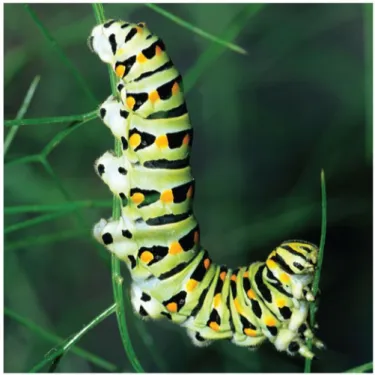
• Insect metamorphosis is regulated by hormones
• Two systems coordinate communication
throughout the body: the endocrine system and the nervous system
• The endocrine system secretes hormones that coordinate slower but longer-acting responses including reproduction, development, energy metabolism, growth, and behavior
• The nervous system conveys high-speed
electrical signals along specialized cells called neurons; these signals regulate other cells
Concept 45.1: Hormones and other
signaling molecules bind to target receptors,
triggering specific response pathways
• Endocrine signaling is just one of several ways
that information is transmitted between animal cells
Intercellular Communication
• The ways that signals are transmitted between
animal cells are classified by two criteria
– The type of secreting cell
– The route taken by the signal in reaching its target
Endocrine Signaling
• Hormones secreted into extracellular fluids by
endocrine cells reach their targets via the bloodstream
• Endocrine signaling maintains homeostasis,
mediates responses to stimuli, regulates growth and development
Figure 45.2
(a) Endocrine signaling Blood vessel Response Response Response Synapse Response Response (b) Paracrine signaling
(c) Autocrine signaling Neuron
(d) Synaptic signaling Neurosecretory cell
Blood vessel
Paracrine and Autocrine Signaling
• Local regulators are molecules that act over short distances, reaching target cells solely by diffusion
• In paracrine signaling, the target cells lie near the secreting cells
• In autocrine signaling, the target cell is also the secreting cell
Figure 45.2a
(a) Endocrine signaling Blood
vessel Response
Response
Response (b) Paracrine signaling
Synaptic and Neuroendocrine Signaling
• In synaptic signaling, neurons form specialized
junctions with target cells, called synapses
• At synapses, neurons secrete molecules called
neurotransmitters that diffuse short distances and bind to receptors on target cells
• In neuroendocrine signaling, specialized
neurosecretory cells secrete molecules called
neurohormones that travel to target cells via the bloodstream
Figure 45.2b
Synapse
Response
Response Neuron
(d) Synaptic signaling
Neurosecretory cell
Blood vessel
Signaling by Pheromones
• Members of the same animal species sometimes
communicate with pheromones, chemicals that
are released into the environment
• Pheromones serve many functions, including
marking trails leading to food, defining territories, warning of predators, and attracting potential
mates
Endocrine Tissues and Organs
• In some tissues, endocrine cells are grouped
together in ductless organs called endocrine
glands
• Endocrine glands secrete hormones directly into
surrounding fluid
• These contrast with exocrine glands, which have
ducts and which secrete substances onto body surfaces or into cavities
Figure 45.4
Chemical Classes of Hormones
• Three major classes of molecules function as
hormones in vertebrates
– Polypeptides (proteins and peptides) – Amines derived from amino acids
– Steroid hormones
• Lipid-soluble hormones (steroid hormones) pass easily through cell membranes, while
water-soluble hormones (polypeptides and amines) do not
• The solubility of a hormone correlates with the
location of receptors inside or on the surface of target cells
Lipid-soluble (hydrophobic) Water-soluble (hydrophilic)
Polypeptides Steroids
0.8 nm
Insulin Cortisol
Amines
Epinephrine Thyroxine
Cellular Response Pathways
• Water- and lipid-soluble hormones differ in their
paths through a body
• Water-soluble hormones are secreted by
exocytosis, travel freely in the bloodstream, and bind to cell-surface receptors
• Lipid-soluble hormones diffuse across cell
membranes, travel in the bloodstream bound to transport proteins, and diffuse through the
membrane of target cells
Pathway for Water-Soluble Hormones
• Binding of a hormone to its receptor initiates a
signal transduction pathway leading to
responses in the cytoplasm, enzyme activation, or a change in gene expression
© 2011 Pearson Education, Inc.
Animation: Water-Soluble Hormone
• The hormone epinephrine has multiple effects in mediating the body’s response to short-term stress
• Epinephrine binds to receptors on the plasma
membrane of liver cells
• This triggers the release of messenger
molecules that activate enzymes and result in the release of glucose into the bloodstream
Figure 45.7-1
Epinephrine
G protein
Adenylyl cyclase
G protein-coupled receptor
GTP
ATP
Figure 45.7-2
Epinephrine
G protein
Adenylyl cyclase
G protein-coupled receptor
GTP
ATP
cAMP Second messenger
Inhibition of glycogen synthesis
Promotion of glycogen breakdown
Pathway for Lipid-Soluble Hormones
• The response to a lipid-soluble hormone is
usually a change in gene expression
• Steroids, thyroid hormones, and the hormonal
form of vitamin D enter target cells and bind to protein receptors in the cytoplasm or nucleus
• Protein-receptor complexes then act as
transcription factors in the nucleus, regulating transcription of specific genes
© 2011 Pearson Education, Inc.
Animation: Lipid-Soluble Hormone
Figure 45.8-1
EXTRACELLULAR FLUID
Hormone (estradiol)
Estradiol (estrogen)
receptor Plasma
membrane
Figure 45.8-2
EXTRACELLULAR FLUID
Hormone (estradiol)
Estradiol (estrogen)
receptor Plasma
membrane
Hormone-receptor complex
NUCLEUS
DNA
CYTOPLASM
Vitellogenin mRNA
Multiple Effects of Hormones
• The same hormone may have different effects on
target cells that have
– Different receptors for the hormone
– Different signal transduction pathways
Different receptors Same receptors but different
intracellular proteins (not shown)
Different cellular
responses Different cellularresponses
Epinephrine Epinephrine Epinephrine
receptor receptor receptor
Glycogen deposits
Vessel
dilates. Vesselconstricts. Glycogen
breaks down and glucose is released from cell.
(a) Liver cell (b) Skeletal muscle
blood vessel (c) Intestinal bloodvessel
Signaling by Local Regulators
• Local regulators are secreted molecules that link
neighboring cells or directly regulate the secreting cell
• Types of local regulators
– Cytokines and growth factors – Nitric oxide (NO)
– Prostaglandins
• In the immune system, prostaglandins promote fever and inflammation and intensify the
sensation of pain
• Prostaglandins help regulate aggregation of
platelets, an early step in formation of blood clots
• The endocrine and nervous systems generally act coordinately to control reproduction and
development
• For example, in larvae of butterflies and moths,
the signals that direct molting originate in the brain
© 2011 Pearson Education, Inc.
• In insects, molting and development are controlled by a combination of hormones
– A brain hormone (PTTH) stimulates release of ecdysteroid from the prothoracic glands
– Juvenile hormone promotes retention of larval characteristics
– Ecdysone promotes molting (in the presence of juvenile hormone) and development (in the
absence of juvenile hormone) of adult characteristics
Brain
Neurosecretory cells Corpora cardiaca Corpora allata PTTH
Prothoracic gland
Ecdysteroid
Juvenile hormone (JH)
EARLY LARVA
Brain
Neurosecretory cells Corpora cardiaca Corpora allata PTTH
Prothoracic gland
Ecdysteroid
Juvenile hormone (JH)
EARLY
LARVA LATER
LARVA
Brain
Neurosecretory cells Corpora cardiaca Corpora allata PTTH
Prothoracic gland
Ecdysteroid
Juvenile hormone (JH)
Low JH
EARLY
LARVA LATER
LARVA PUPA ADULT
Concept 45.2: Feedback regulation and
antagonistic hormone pairs are common
in endocrine systems
• Hormones are assembled into regulatory
pathways
Simple Hormone Pathways
• Hormones are released from an endocrine cell,
travel through the bloodstream, and interact with specific receptors within a target cell to cause a physiological response
• For example, the release of acidic contents of the stomach into the duodenum stimulates endocrine cells there to secrete secretin
• This causes target cells in the pancreas, a gland
behind the stomach, to raise the pH in the duodenum
Pathway Example
Stimulus Low pH in duodenum
Endocrine cell
S cells of duodenum secrete the hormone secretin ( ).
Hormone
Blood vessel Target
cells Pancreas
Response Bicarbonate release
• In a simple neuroendocrine pathway, the stimulus is received by a sensory neuron, which stimulates a neurosecretory cell
• The neurosecretory cell secretes a
neurohormone, which enters the bloodstream and travels to target cells
Pathway Example Stimulus Suckling Sensory neuron P o si ti ve f ee d b ac k Hypothalamus/ posterior pituitary Neurosecretory cell Neurohormone Blood vessel Target cells Response Posterior pituitary secretes the neurohormone oxytocin ( ).
Smooth muscle in breasts
Milk release
• A negative feedback loop inhibits a response by reducing the initial stimulus, thus preventing
excessive pathway activity
• Positive feedback reinforces a stimulus to produce an even greater response
• For example, in mammals oxytocin causes the
release of milk, causing greater suckling by
offspring, which stimulates the release of more oxytocin
© 2011 Pearson Education, Inc.
Insulin and Glucagon: Control of Blood
Glucose
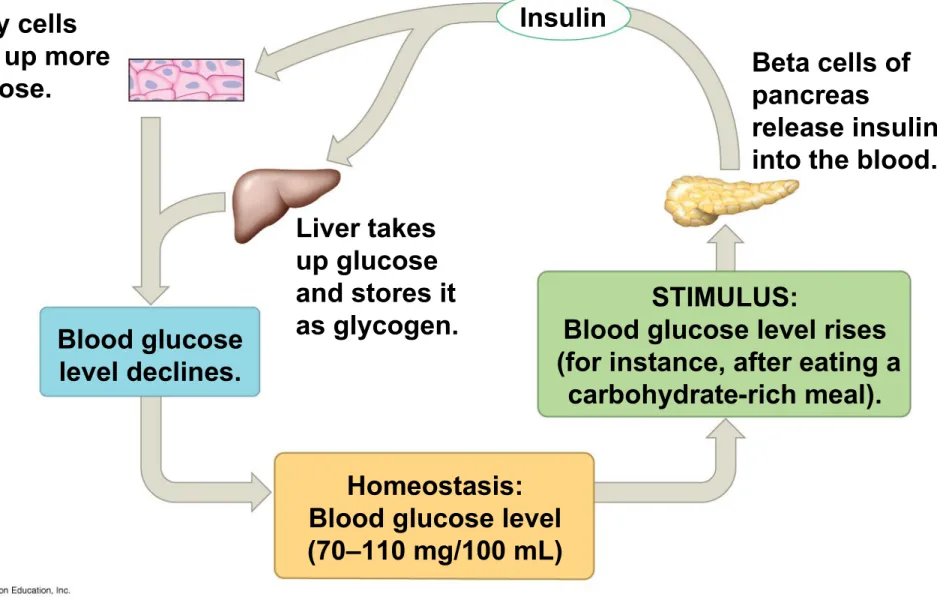
• Insulin (decreases blood glucose) and glucagon
(increases blood glucose) are antagonistic
hormones that help maintain glucose homeostasis
• The pancreas has clusters of endocrine cells
called pancreatic islets with alpha cells that produce glucagon and beta cells that produce insulin
Body cells take up more glucose.
Insulin
Beta cells of pancreas
release insulin into the blood.
Liver takes up glucose and stores it as glycogen. Blood glucose level declines. Blood glucose level rises. Homeostasis: Blood glucose level (70–110 mg/m100mL)
STIMULUS:
Blood glucose level rises (for instance, after eating a
carbohydrate-rich meal). Liver breaks down glycogen and releases glucose into the blood.
Alpha cells of pancreas release glucagon into the blood.
Glucagon
STIMULUS: Blood glucose level falls (for instance, after
Figure 45.13a-1
Insulin
Beta cells of pancreas
release insulin into the blood.
Homeostasis: Blood glucose level (70–110 mg/100 mL)
STIMULUS:
Blood glucose level rises (for instance, after eating a
Figure 45.13a-2
Body cells take up more glucose.
Insulin
Beta cells of pancreas
release insulin into the blood.
Liver takes up glucose and stores it as glycogen. Blood glucose
level declines.
Homeostasis: Blood glucose level (70–110 mg/100 mL)
STIMULUS:
Blood glucose level rises (for instance, after eating a
Figure 45.13b-1
Homeostasis: Blood glucose level (70–110 mg/100 mL)
Glucagon
STIMULUS:
Blood glucose level falls (for instance, after
skipping a meal).
Figure 45.13b-2
Blood glucose level rises.
Homeostasis: Blood glucose level (70–110 mg/100 mL)
Liver breaks down glycogen and releases glucose into the blood.
Alpha cells of pancreas release glucagon into the blood.
Glucagon
STIMULUS:
Blood glucose level falls (for instance, after
Target Tissues for Insulin and Glucagon
• Insulin reduces blood glucose levels by
– Promoting the cellular uptake of glucose – Slowing glycogen breakdown in the liver – Promoting fat storage, not breakdown
• Glucagon increases blood glucose levels by
– Stimulating conversion of glycogen to glucose in the liver
– Stimulating breakdown of fat and protein into glucose
Diabetes Mellitus
• Diabetes mellitus is perhaps the best-known endocrine disorder
• It is caused by a deficiency of insulin or a
decreased response to insulin in target tissues
• It is marked by elevated blood glucose levels
• Type 1 diabetes mellitus (insulin-dependent) is an autoimmune disorder in which the immune
system destroys pancreatic beta cells
• Type 2 diabetes mellitus (non-insulin-dependent)
involves insulin deficiency or reduced response of target cells due to change in insulin receptors
Concept 45.3: The hypothalamus and
pituitary are central to endocrine regulation
• Endocrine pathways are subject to regulation by
the nervous system, including the brain
Coordination of Endocrine and Nervous
Systems in Vertebrates
• The hypothalamus receives information from the nervous system and initiates responses through the endocrine system
• Attached to the hypothalamus is the pituitary
gland, composed of the posterior pituitary and anterior pituitary
• The posterior pituitary stores and secretes hormones that are made in the hypothalamus
• The anterior pituitary makes and releases
hormones under regulation of the hypothalamus
Pineal gland
Cerebellum
Spinal cord
Cerebrum
Thalamus
Hypothalamus
Pituitary gland
Posterior pituitary
Anterior pituitary Hypothalamus
Posterior Pituitary Hormones
• The two hormones released from the posterior
pituitary act directly on nonendocrine tissues
– Oxytocin regulates milk secretion by the mammary glands
– Antidiuretic hormone (ADH) regulates physiology and behavior
Neurosecretory cells of the
Anterior Pituitary Hormones
• Hormone production in the anterior pituitary is
controlled by releasing and inhibiting hormones from the hypothalamus
• For example, prolactin-releasing hormone from
the hypothalamus stimulates the anterior pituitary
to secrete prolactin (PRL), which has a role in
milk production
Tropic effects only: FSH
LH TSH ACTH
Nontropic effects only: Prolactin
MSH
Nontropic and tropic effects:
GH Hypothalamic releasing and inhibiting hormones Posterior pituitary Neurosecretory cells of the hypothalamus
Portal vessels
Endocrine cells of the anterior pituitary
Pituitary hormones
HORMONE FSH and LH TSH ACTH Prolactin MSH GH
TARGET Testes or Thyroid Melanocytes
ovaries Adrenalcortex Mammaryglands other tissuesLiver, bones,
Thyroid Regulation: A Hormone Cascade
Pathway
• A hormone can stimulate the release of a series
of other hormones, the last of which activates a nonendocrine target cell; this is called a hormone cascade pathway
• The release of thyroid hormone results from a
hormone cascade pathway involving the
hypothalamus, anterior pituitary, and thyroid gland
• Hormone cascade pathways typically involve
negative feedback
Figure 45.17 Pathway Example Stimulus Cold Sensory neuron Hypothalamus Neurosecretory cell Releasing hormone Blood vessel Anterior pituitary Tropic hormone Endocrine cell Hormone Target cells Response N eg at iv e fe ed b ac k Hypothalamus secretes thyrotropin-releasing hormone (TRH ).
Anterior pituitary secretes thyroid-stimulating
hormone (TSH, also known as thyrotropin ).
Thyroid gland secretes thyroid hormone
(T3 and T4 ).
Body tissues
Pathway Example
Stimulus Cold
Sensory neuron
Hypothalamus
Neurosecretory cell
Releasing hormone Blood vessel
Anterior pituitary
Tropic hormone
Hypothalamus secretes thyrotropin-releasing hormone (TRH ).
Anterior pituitary secretes thyroid-stimulating
hormone (TSH, also known as thyrotropin ).
Anterior pituitary Tropic hormone Endocrine cell Hormone Target cells Response
Anterior pituitary secretes thyroid-stimulating
hormone (TSH, also known as thyrotropin ).
Thyroid gland secretes thyroid hormone
(T3 and T4 ).
Disorders of Thyroid Function and
Regulation
• Hypothyroidism, too little thyroid function, can
produce symptoms such as
– Weight gain, lethargy, cold intolerance
• Hyperthyroidism, excessive production of
thyroid hormone, can lead to
– High temperature, sweating, weight loss, irritability, and high blood pressure
• Malnutrition can alter thyroid function
• Graves disease, a form of hyperthyroidism caused by autoimmunity, is typified by
protruding eyes
• Thyroid hormone refers to a pair of hormones
– Triiodothyronin (T3), with three iodine atoms – Thyroxine (T4), with four iodine atoms
• Insufficient dietary iodine leads to an enlarged
thyroid gland, called a goiter
Figure 45.18
Low level of
Evolution of Hormone Function
• Over the course of evolution the function of a
given hormone may diverge between species
• For example, thyroid hormone plays a role in
metabolism across many lineages, but in frogs has taken on a unique function: stimulating the resorption of the tadpole tail during
metamorphosis
• Prolactin also has a broad range of activities in
vertebrates
Tadpole
Adult frog
Figure 45.19a
Figure 45.19b
• Melanocyte-stimulating hormone (MSH)
regulates skin color in amphibians, fish, and reptiles by controlling pigment distribution in melanocytes
• In mammals, MSH plays additional roles in
hunger and metabolism in addition to coloration
Tropic and Nontropic Hormones
• A tropic hormone regulates the function of
endocrine cells or glands
• Three primarily tropic hormones are
– Follicle-stimulating hormone (FSH)
– Luteinizing hormone (LH)
– Adrenocorticotropic hormone (ACTH)
• Growth hormone (GH) is secreted by the anterior pituitary gland and has tropic and nontropic actions
• It promotes growth directly and has diverse
metabolic effects
• It stimulates production of growth factors
• An excess of GH can cause gigantism, while a
lack of GH can cause dwarfism
• Endocrine signaling regulates homeostasis, development, and behavior
Concept 45.4: Endocrine glands respond to
diverse stimuli in regulating homeostasis,
development, and behavior
Parathyroid Hormone and Vitamin D:
Control of Blood Calcium
• Two antagonistic hormones regulate the
homeostasis of calcium (Ca2+) in the blood of
mammals
– Parathyroid hormone (PTH) is released by the
parathyroid glands
– Calcitonin is released by the thyroid gland
Parathyroid gland (behind thyroid)
PTH
Homeostasis: Blood Ca2 level
(about 10 mg/100 mL)
STIMULUS: Falling blood
Active vitamin D Increases Ca2
uptake in intestines
Stimulates Ca2
uptake in kidneys
Stimulates Ca2 release
from bones
Parathyroid gland (behind thyroid)
PTH
Blood Ca2
level rises.
Homeostasis: Blood Ca2 level
(about 10 mg/100 mL)
STIMULUS: Falling blood
• PTH increases the level of blood Ca2+
– It releases Ca2+ from bone and stimulates
reabsorption of Ca2+ in the kidneys
– It also has an indirect effect, stimulating the kidneys to activate vitamin D, which promotes intestinal uptake of Ca2+ from food
• Calcitonin decreases the level of blood Ca2+
– It stimulates Ca2+ deposition in bones and
secretion by kidneys
Adrenal Hormones: Response to Stress
• The adrenal glands are adjacent to the kidneys
• Each adrenal gland actually consists of two
glands: the adrenal medulla (inner portion) and
adrenal cortex (outer portion)
Catecholamines from the Adrenal Medulla
• The adrenal medulla secretes epinephrine
(adrenaline) and norepinephrine (noradrenaline)
• These hormones are members of a class of
compounds called catecholamines
• They are secreted in response to stress-activated
impulses from the nervous system
• They mediate various fight-or-flight responses
• Epinephrine and norepinephrine
– Trigger the release of glucose and fatty acids into the blood
– Increase oxygen delivery to body cells
– Direct blood toward heart, brain, and skeletal muscles and away from skin, digestive system, and kidneys
• The release of epinephrine and norepinephrine
occurs in response to involuntary nerve signals
Spinal cord (cross section)
(a) (b) Long-term stress response
and the adrenal cortex Short-term stress response
and the adrenal medulla
Stress Nerve signals Nerve cell Releasing hormone Hypothalamus Anterior pituitary Blood vessel Nerve cell ACTH
Adrenal medulla secretes epinephrine and norepinephrine. Adrenal gland Kidney Adrenal cortex secretes mineralo-corticoids and glucocorticoids.
Effects of epinephrine and norepinephrine: Effects of
mineralocorticoids: Effects of glucocorticoids: • Glycogen broken down to glucose;
increased blood glucose • Increased blood pressure • Increased breathing rate • Increased metabolic rate
• Change in blood flow patterns, leading to increased alertness and decreased digestive, excretory, and reproductive system activity
• Retention of sodium ions and water by kidneys
• Increased blood volume and blood pressure
• Proteins and fats broken down and converted to glucose, leading to increased blood glucose
• Partial suppression of immune system
Spinal cord (cross section)
(a) Short-term stress response and the adrenal medulla
Stress Nerve signals Nerve cell Nerve cell Adrenal medulla secretes epinephrine and norepinephrine. Adrenal gland Kidney Effects of epinephrine and norepinephrine:
• Glycogen broken down to glucose; increased blood glucose
• Increased blood pressure
• Increased breathing rate
• Increased metabolic rate
• Change in blood flow patterns, leading to increased alertness and decreased digestive, excretory, and reproductive system activity
Hypo-thalamus
Steroid Hormones from the Adrenal Cortex
• The adrenal cortex releases a family of steroids
called corticosteroids in response to stress
• These hormones are triggered by a hormone
cascade pathway via the hypothalamus and anterior pituitary (ACTH)
• Humans produce two types of corticosteroids:
glucocorticoids and mineralocorticoids
(b) Long-term stress response and the adrenal cortex Stress Releasing hormone Hypothalamus Anterior pituitary Blood vessel ACTH Adrenal cortex secretes mineralo-corticoids and glucocorticoids. Effects of
mineralocorticoids: Effects of glucocorticoids: • Retention of sodium
ions and water by kidneys
• Increased blood volume and blood pressure
• Proteins and fats broken down and converted to glucose, leading to
increased blood glucose • Partial suppression of immune system
Adrenal gland
Kidney
• Glucocorticoids, such as cortisol, influence glucose metabolism and the immune system
• Mineralocorticoids, such as aldosterone, affect salt and water balance
• The adrenal cortex also produces small amounts
of steroid hormones that function as sex hormones
Gonadal Sex Hormones
• The gonads, testes and ovaries, produce most of
the sex hormones: androgens, estrogens, and progestins
• All three sex hormones are found in both males
and females, but in significantly different proportions
• The testes primarily synthesize androgens,
mainly testosterone, which stimulate
development and maintenance of the male reproductive system
• Testosterone causes an increase in muscle and
bone mass and is often taken as a supplement to cause muscle growth, which carries health risks
Chromosome Set
Appearance of Genitalia
No surgery
Embryonic gonad removed
XY (male)
XX (female)
Male
Female
Female
Female
RESULTS
• Estrogens, most importantly estradiol, are responsible for maintenance of the female reproductive system and the development of female secondary sex characteristics
• In mammals, progestins, which include
progesterone, are primarily involved in preparing and maintaining the uterus
• Synthesis of the sex hormones is controlled by
FSH and LH from the anterior pituitary
• Between 1938 and 1971 some pregnant women at risk for complications were prescribed a
synthetic estrogen called diethylstilbestrol (DES)
• Daughters of women treated with DES are at
higher risk for reproductive abnormalities,
including miscarriage, structural changes, and cervical and vaginal cancers
© 2011 Pearson Education, Inc.
• DES is an endocrine disruptor, a molecule that interrupts the normal function of a hormone
pathway, in this case, that of estrogen
Melatonin and Biorhythms
• The pineal gland, located in the brain, secretes
melatonin
• Light/dark cycles control release of melatonin
• Primary functions of melatonin appear to relate to
biological rhythms associated with reproduction
Pathway N eg at iv e fe ed b ac k Stimulus Endocrine cell Hormone Blood vessel Target cells Response Glycogen breakdown, glucose release into blood Liver Pancreas secretes glucagon ( ).
Low blood glucose Example
Figure 45.UN03
Drug administered None
Dexamethasone
Normal Patient X