R E S E A R C H
Open Access
The housing first model (HFM) fidelity index:
designing and testing a tool for measuring
integrity of housing programs that serve active
substance users
Dennis P Watson
1*, John Orwat
2, Dana E Wagner
3, Valery Shuman
4and Randi Tolliver
4Abstract
Background:The Housing First Model (HFM) is an approach to serving formerly homeless individuals with dually diagnosed mental health and substance use disorders regardless of their choice to use substances or engage in other risky behaviors. The model has been widely diffused across the United States since 2000 as a result of positive findings related to consumer outcomes. However, a lack of clear fidelity guidelines has resulted in inconsistent implementation. The research team and their community partner collaborated to develop a HFM Fidelity Index. We describe the instrument development process and present results from its initial testing.
Methods:The HFM Fidelity Index was developed in two stages: (1) a qualitative case study of four HFM
organizations and (2) interviews with 14 HFM "users". Reliability and validity of the index were then tested through phone interviews with staff members of permanent housing programs. The final sample consisted of 51 programs (39 Housing First and 12 abstinence-based) across 35 states.
Results:The results provided evidence for the overall reliability and validity of the index.
Conclusions:The results demonstrate the index’s ability to discriminate between housing programs that employ different service approaches. Regarding practice, the index offers a guide for organizations seeking to implement the HFM.
Keywords:(3–10): Housing, Fidelity, Implementation, Instrument development, Mixed methods, Harm reduction, Low-demand
Background
Substance abuse is often offered as an explanation for the difficulty homeless individuals have accessing and maintaining housing. While substance abuse likely con-tributes to housing instability in some way (e.g., poten-tial difficulty managing money and paying rent or increased potential for interpersonal disputes), it is also important to recognize that structural-level barriers to stable permanent housing also exist. Chief among these barriers are the stated and unstated policies determining
who is eligible to access housing and the behaviors they must engage in to retain it [1]. Many policies guiding homeless services follow an abstinence-based approach requiring consumers to obtain sobriety (typically for 30–90 days) before they become eligible for housing. Likewise, individuals often must remain sober to keep their placement and/or advance to more independent levels of housing. This abstinence-based approach has been connected to problems such as higher consumer dissatisfaction and disengagement from services [2,3].
Developed in response to problems such as these, the Housing First Model (HFM) places lower demands on consumers. It has become the driving force of policies aimed at ending chronic homelessness due to its success engaging “hard-to-serve” individuals [4-6]. Despite this, * Correspondence:[email protected]
1Department of Health Policy and Management, Indiana University, Richard
M. Fairbanks School of Public Health, Indiana University-Purdue University Indianapolis, 714 N. Senate Ave, Indianapolis, IN 46202, USA
Full list of author information is available at the end of the article
wide diffusion coupled with a lack of clear implementa-tion guidelines has led to confusion as to the elements of the model necessary for replication [7-9]. We created the HFM Fidelity Index in an effort to address the gap between HFM policy and community practice. In this paper we present results related to the development and testing of the index.
Description of the HFM and its diffusion
The HFM was developed to serve individuals who are chronically homeless and who have been dually diagnosed with both a serious mental illness and a substance use dis-order—a group that makes up anywhere from 10 to 20 percent of the total homeless population [4,5,10]. Path-ways to Housing Inc. developed what is often credited as the first HFM program (then named the Consumer Pref-erence Supported Housing Model) in the early 1990s. A key feature that distinguished the Pathways program from those following an abstinence-based approach was a lack of a sobriety requirement for admission to and retention of housing [11]. This lack of requirement is based in a harm reduction approach to services, which seeks to re-duce the negative consequences related to substance abuse (and other high-risk behaviors) rather than eliminating substance use altogether [12,13].
In addition to reduced substance use and abuse [14], some of the key outcomes differentiating HFM from abstinence-based programs are: fewer emergency room visits and hospitalizations [15]; higher perceived choice in services [16,17]; reduced involvement in criminal ac-tivity [18]; and higher housing retention rates [19,20]. The United States Interagency Council on Homelessness and the National Alliance to End Homelessness became advocates of the HFM after programs based on its dem-onstrated ability to retain consumers in housing (i.e., residential stability) [4,6]. These endorsements resulted in rapid, nation-wide diffusion of the model over the past 12 years, which is largely related to local-level pol-icies focused on ending chronic homelessness through a Housing First approach. This approach largely entails redirecting monies from traditional shelter services to-ward the development of more permanent and support-ive housing options, particularly those that operate using the HFM [21].
Despite the intent of these policies, previous research has demonstrated challenges related to implementation of the HFM. In one study, George et al. [7] found that some providers who had experience working in an abstinence-based environment had difficulties under-standing HFM policies and practices, particularly those related to harm reduction. Misunderstandings such as these can lead to modifications during the implementa-tion process that can severely weaken a program model [22,23]. Indeed, Pathways staff have even begun to
differentiate their program from other HFM programs as differences in implementation (and possible issues as-sociated with it) have been recognized: “we [Pathways staff] refer to it as the Pathways Housing First (PHF) program to distinguish it from other programs that also identify with the Housing First approach”[24] (p. 4).
Seeking to better understand HFM implementation in the community, the U.S. Department of Housing and Urban Development (HUD) commissioned an explora-tory study that sought to understand the characteristics of HFM programs [9]. The program characteristics the authors of this study point to include: (a) direct placement of consumers into permanent housing; (b) availability of supportive services without requirement to participate; (c) use of assertive outreach to engage reluctant consumers; (d) approaches to ensure relapse does not result in evic-tion; and (e) continuation of housing and case manage-ment services if clients leave for short time periods. This study was an important first step in understanding how the HFM has translated into community practice.
Fidelity
Many factors can negatively affect an organization’s deci-sion to adopt a specific evidence-based model for sub-stance abuse intervention and its resulting implementation (e.g., size, resources, staff attitudes and education, local laws and policies) [25,26]. In this light, it is necessary for researchers, policy makers, and practitioners to have tools at their disposal for measuring the extent to which a model has been implemented in practice. This helps reduce the chance that outcomes, positive or negative, will be misappropriated to a model never fully implemented in practice, a phenomenon referred to as a Type III error in the implementation literature [27]. Fidelity measures are just such a tool, and research has established there is a positive association between fidelity and program out-comes [22,23]. Despite this, intervention effectiveness stud-ies rarely pay attention to fidelity [28].
modifications were made with knowledge that they would result in lower fidelity to the original model [32]. Matejkowski and Draine found that ACT services were often adapted among a sample of HFM programs due to the model’s focus on consumer choice in services [33]. For those who see adaptation as beneficial, program implementation is a complex process for which organizational context is an important factor, and modi-fications are allowable as long as the program delivers the “critical elements” that distinguish it from other models [22,34]. Identification of the critical elements provides a guide as to what can be modified during adaptation to local conditions [25,35].
While adaptations to the HFM might be appropriate and necessary in many instances, modifications that are in direct conflict with its basic underlying philosophy— those that are abstinence-based rather than harm reduction-based—are not appropriate. Therefore, devel-opment of a HFM fidelity instrument is critical to the successful implementation and measurement of the model. The focus of this paper is the development and testing of a HFM fidelity index.
Methods
The study was carried out between August 2009 and August 2011. Researchers collaborated with staff at Heartland Health Outreach (referred to as Heartland hereafter). Heartland is a large social service organization that operates HFM programming, and also offers training and technical assistance to agencies seeking to implement HFM-based policies and practices. Researchers and Heart-land staff worked in collaboration to ensure knowledge gained from the study would be appropriate for dis-semination through both the academic and practice communities [36]. Procedures were approved by the Insti-tutional Review Boards at Loyola University Chicago and Heartland Alliance.
Development of the fidelity index
No fidelity instrument had been created at the time we started development of the HFM Fidelity Index. Recognizing wide diffusion of the HFM without fidel-ity guidelines had resulted in variations from the ori-ginal model, we took a bottom-up approach to the development of the index that sought to identify and operationalize the critical elements of the HFM that differentiate it from the abstinence-based approach [37,38]. What this means is that we sought to under-stand the policies and practices of programs as they existed in a wide variety of contexts in an effort to identify those most central to the HFM’s success. We developed an initial index through two phases. We de-scribe these phases and the initial instrument before discussing its final testing.
Phase 1
We provide a brief overview of Phase 1 in this section (methods and results for this phase are described in greater detail in another article [39]). Phase 1 was carried out by the first author, who employed a qualitative case study methodology with four local housing agencies [40]. Purposeful sampling techniques were used to select pro-grams that were (a) strong examples of the HFM and (b) different enough in relation to program characteristics such as consumer capacity, population served, number of years operating a HFM, and housing type (single-site or multiple-site) to better assure similarities in themes would be related to the HFM rather than the organizational con-text [41]. Data were collected from 4 administrative inter-views, 4 consumer focus groups (24 total participants), 3 staff focus groups (18 total participants), 21 consumer in-terviews, and 16 staff interviews. Staff received a $5 coffee shop card and consumers received a $30 grocery store card for their participation (consumers received a larger amount because staff completed the interviews during their work hours, and were therefore being compensated by their employers). Data collection and analysis were overlapping so incremental learning could guide collec-tion efforts at subsequent levels [40]. Themes were iden-tified both within and across cases as they related to the research questions. Emerging themes were discussed with administration at each agency and local housing experts, a qualitative approach to ensuring rigor and validity [41].
This process resulted in the identification of 6 broad elements of the HFM that were shared by the four orga-nizations. (1) Each of the programs had low-threshold admission policy (LTAP) designed to place as few re-quirements as possible on potential consumers for pro-gram entry. Staff discussed the LTAP as the primary feature of their program that made it, and other Housing
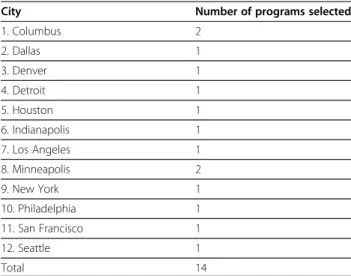
Table 1 Location of phase 2 participants
City Number of programs selected
1. Columbus 2
2. Dallas 1
3. Denver 1
4. Detroit 1
5. Houston 1
6. Indianapolis 1
7. Los Angeles 1
8. Minneapolis 2
9. New York 1
10. Philadelphia 1
11. San Francisco 1
12. Seattle 1
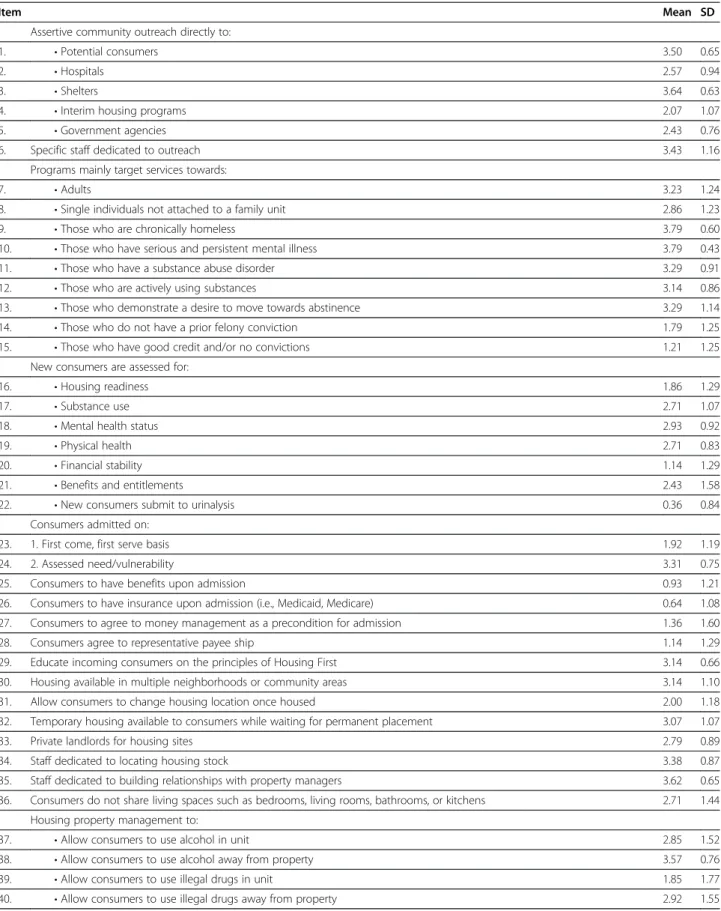
Table 2 Means and standard deviations for specific items inquired about in phase 2“user”interviews
Item Mean SD
Assertive community outreach directly to:
1. •Potential consumers 3.50 0.65
2. •Hospitals 2.57 0.94
3. •Shelters 3.64 0.63
4. •Interim housing programs 2.07 1.07
5. •Government agencies 2.43 0.76
6. Specific staff dedicated to outreach 3.43 1.16
Programs mainly target services towards:
7. •Adults 3.23 1.24
8. •Single individuals not attached to a family unit 2.86 1.23
9. •Those who are chronically homeless 3.79 0.60
10. •Those who have serious and persistent mental illness 3.79 0.43
11. •Those who have a substance abuse disorder 3.29 0.91
12. •Those who are actively using substances 3.14 0.86
13. •Those who demonstrate a desire to move towards abstinence 3.29 1.14
14. •Those who do not have a prior felony conviction 1.79 1.25
15. •Those who have good credit and/or no convictions 1.21 1.25
New consumers are assessed for:
16. •Housing readiness 1.86 1.29
17. •Substance use 2.71 1.07
18. •Mental health status 2.93 0.92
19. •Physical health 2.71 0.83
20. •Financial stability 1.14 1.29
21. •Benefits and entitlements 2.43 1.58
22. •New consumers submit to urinalysis 0.36 0.84
Consumers admitted on:
23. 1. First come, first serve basis 1.92 1.19
24. 2. Assessed need/vulnerability 3.31 0.75
25. Consumers to have benefits upon admission 0.93 1.21
26. Consumers to have insurance upon admission (i.e., Medicaid, Medicare) 0.64 1.08
27. Consumers to agree to money management as a precondition for admission 1.36 1.60
28. Consumers agree to representative payee ship 1.14 1.29
29. Educate incoming consumers on the principles of Housing First 3.14 0.66
30. Housing available in multiple neighborhoods or community areas 3.14 1.10
31. Allow consumers to change housing location once housed 2.00 1.18
32. Temporary housing available to consumers while waiting for permanent placement 3.07 1.07
33. Private landlords for housing sites 2.79 0.89
34. Staff dedicated to locating housing stock 3.38 0.87
35. Staff dedicated to building relationships with property managers 3.62 0.65
36. Consumers do not share living spaces such as bedrooms, living rooms, bathrooms, or kitchens 2.71 1.44
Housing property management to:
37. •Allow consumers to use alcohol in unit 2.85 1.52
38. •Allow consumers to use alcohol away from property 3.57 0.76
39. •Allow consumers to use illegal drugs in unit 1.85 1.77
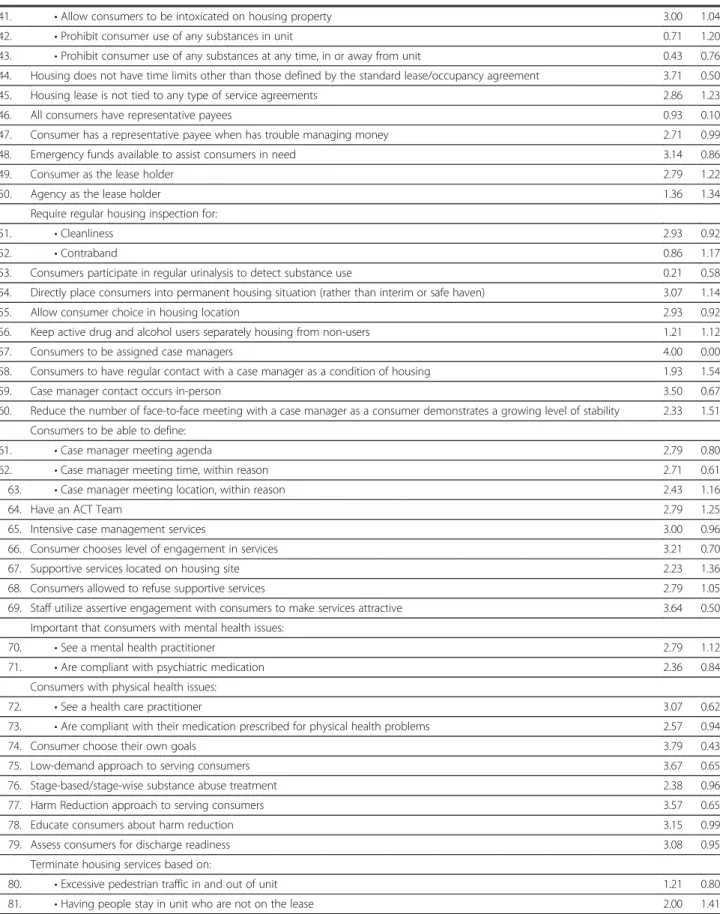
Table 2 Means and standard deviations for specific items inquired about in phase 2“user”interviews(Continued)
41. •Allow consumers to be intoxicated on housing property 3.00 1.04
42. •Prohibit consumer use of any substances in unit 0.71 1.20
43. •Prohibit consumer use of any substances at any time, in or away from unit 0.43 0.76
44. Housing does not have time limits other than those defined by the standard lease/occupancy agreement 3.71 0.50
45. Housing lease is not tied to any type of service agreements 2.86 1.23
46. All consumers have representative payees 0.93 0.10
47. Consumer has a representative payee when has trouble managing money 2.71 0.99
48. Emergency funds available to assist consumers in need 3.14 0.86
49. Consumer as the lease holder 2.79 1.22
50. Agency as the lease holder 1.36 1.34
Require regular housing inspection for:
51. •Cleanliness 2.93 0.92
52. •Contraband 0.86 1.17
53. Consumers participate in regular urinalysis to detect substance use 0.21 0.58
54. Directly place consumers into permanent housing situation (rather than interim or safe haven) 3.07 1.14
55. Allow consumer choice in housing location 2.93 0.92
56. Keep active drug and alcohol users separately housing from non-users 1.21 1.12
57. Consumers to be assigned case managers 4.00 0.00
58. Consumers to have regular contact with a case manager as a condition of housing 1.93 1.54
59. Case manager contact occurs in-person 3.50 0.67
60. Reduce the number of face-to-face meeting with a case manager as a consumer demonstrates a growing level of stability 2.33 1.51
Consumers to be able to define:
61. •Case manager meeting agenda 2.79 0.80
62. •Case manager meeting time, within reason 2.71 0.61
63. •Case manager meeting location, within reason 2.43 1.16
64. Have an ACT Team 2.79 1.25
65. Intensive case management services 3.00 0.96
66. Consumer chooses level of engagement in services 3.21 0.70
67. Supportive services located on housing site 2.23 1.36
68. Consumers allowed to refuse supportive services 2.79 1.05
69. Staff utilize assertive engagement with consumers to make services attractive 3.64 0.50
Important that consumers with mental health issues:
70. •See a mental health practitioner 2.79 1.12
71. •Are compliant with psychiatric medication 2.36 0.84
Consumers with physical health issues:
72. •See a health care practitioner 3.07 0.62
73. •Are compliant with their medication prescribed for physical health problems 2.57 0.94
74. Consumer choose their own goals 3.79 0.43
75. Low-demand approach to serving consumers 3.67 0.65
76. Stage-based/stage-wise substance abuse treatment 2.38 0.96
77. Harm Reduction approach to serving consumers 3.57 0.65
78. Educate consumers about harm reduction 3.15 0.99
79. Assess consumers for discharge readiness 3.08 0.95
Terminate housing services based on:
80. •Excessive pedestrian traffic in and out of unit 1.21 0.80
Table 2 Means and standard deviations for specific items inquired about in phase 2“user”interviews(Continued)
82. •Keeping the unit in an unclean, hazardous state 2.43 1.28
83. •Excessive noise 1.79 1.18
84. •Threats of violence 3.14 0.95
85. •Physical violence 3.79 0.43
86. •Relapse 0.14 0.36
87. •Alcohol use in room 0.36 0.93
88. •Illegal substances in room 1.50 1.65
89. •Any illegal activity in the room besides use of illegal substances 2.31 1.44
90. •Nonpayment of rent 2.29 1.33
91. Have formal eviction prevention protocol 3.64 0.84
92. Continue providing services if housing is lost 3.08 1.32
93. Work with consumers to prevent homelessness in preparation for eviction from housing 3.86 0.36
94. Work with consumers to locate new housing if evicted 3.57 0.65
95. Have a staff member dedicated to eviction and/or homelessness prevention 2.07 1.90
96. Eviction and/or homeless prevention specialist is full-time 2.30 1.70
97. Follow-up with consumers after voluntary discharge from housing/services 2.71 1.14
98. Hold housing for consumers if they leave for short periods 3.64 0.63
99. Continue case management services while housing is being held 3.31 0.63
100. Minimum education qualifications for case managers 3.00 0.88
101. Have an ethnically and culturally diverse staff 3.86 0.36
102. Have formal protocol for hiring ethnically and culturally diverse staff 3.07 1.07
Have the following types of professionals at agency:
103. •Psychiatrist or psychiatric nurse practitioner 3.29 0.73
104. •Licensed mental health professional (e.g., social worker, psychologists, therapist, or counselor) 3.00 1.04
105. •Certified substance abuse counselor 2.36 1.22
106. •Vocational rehabilitation specialist 2.36 0.84
107. •Medical doctor, nurse practitioner, or physician’s assistant 2.57 1.16
108. •Nurse 2.57 1.02
109. •Peer counselors 2.86 1.23
110. 24/7 availability of at least one staff member 3.36 1.01
111. Case managers are accessible (via phone) outside of normal working hours 2.07 1.27
112. Case manager offices located in separate location from housing 1.54 1.61
113. Separate program staff who work with property management to enforce rules and regulations of housing if case manager offices are onsite
3.00 1.00
114. Allow staff to have flexible working schedules 2.93 0.83
115. Staff meet regularly with a supervisor 3.64 0.50
Important for staff to be trained in:
116. •Motivational interviewing 3.57 0.65
117. •Crisis intervention 3.86 0.36
118. •Harm reduction 3.64 0.63
119. •12-step model 1.93 0.10
120. •Stages-of-change treatment 2.93 0.83
121. •Cultural sensitivity 3.71 0.50
122. •Other_____________ n/a n/a
123. •Interdisciplinary team meetings 3.57 0.51
First programs, unique from the abstinence-based pro-grams with which they were familiar. (2)Harm reduction
was considered the practice or“tool” used to keep con-sumers housed. Harm reduction strategies do not re-quire consumers to be abstinent from alcohol and drug use—harm reduction focused policies and practices stood out as the most critical element for running a suc-cessful Housing First program in all four sites. (3) Evic-tion prevenEvic-tion refers to a form of case management intervention aimed to prevent consumers from losing housing in light of lease violations. Because eviction of a consumer was an example of a programmatic failure in all of the organizations, eviction prevention was neces-sary for helping to assure program success. (4) Reduced service participation requirements, compared to those found in abstinence-based housing, were demonstrated to be important. Interview and focus group participants discussed how allowing consumer choice over their level of service participation was a powerful tool for facilitat-ing positive change. (5) Separation between property management and case management roles and responsi-bilities was demonstrated to be important due to the effect on the consumer-staff relationship. While all pro-grams had some separation between these two types of providers, it became increasingly difficult for consumers to develop trusting relationships with case managers as the lines between case management and property management roles blurred. (6) Strategies to inform and educate con-sumers about HFM policies and practices were important since their understandings of housing services were largely based on their histories with abstinence-based programs. Consumer-level data repeatedly demonstrated that education about the HFM was the mechanism that helped them attach meaning to the choices provided to them through the elements of harm reduction and reduced service requirements.
Phase 2
The goal of Phase 2 was to develop a more exhaustive list of elements with stronger operational definitions. To accomplish this goal, we carried out semi-structured phone interviews with“users” of the HFM (i.e., individ-uals who were Housing First program administrators or managers). The interview instrument for this stage was
developed based on results from Phase 1 and a review of the existing HFM literature. Through this initial process, we developed a series of questions used to identify and create operational definitions for the elements included in the final index (a copy of this instrument can be obtained by contacting the first author). One hundred and twenty-nine of these questions asked users to deter-mine how important they understood specific items to be to the HFM (on a scale from “0”/“not important” to “4”/“extremely important”). Additional questions in-quired about such things as frequency, intensity, and duration related to specific items.
We recruited “users” from HFM programs located in the 25 largest urban areas in the country (where Hous-ing First programs were likely to be) as identified by 2000 U.S. Census estimates. We identified 70 programs in these areas that operated using a HFM through an internet search and assistance from local government of-ficials who oversaw the management of homeless service funds. Our goal was to recruit 20 users; however, we were only able to conduct 19 interviews due to time constraints. Five of these participants were removed from the sample after interviews were completed because we determined early in our analysis that they were employing a strict abstinence-based service approach that conflicted with the core philosophy of the HFM. Therefore, our final sample for Phase 2 comprised 14 HFM users from 12 cities (see Table 1). Participants received a $5 coffee shop gift card, and their program was entered into a drawing to win a $500 electronics store gift card.
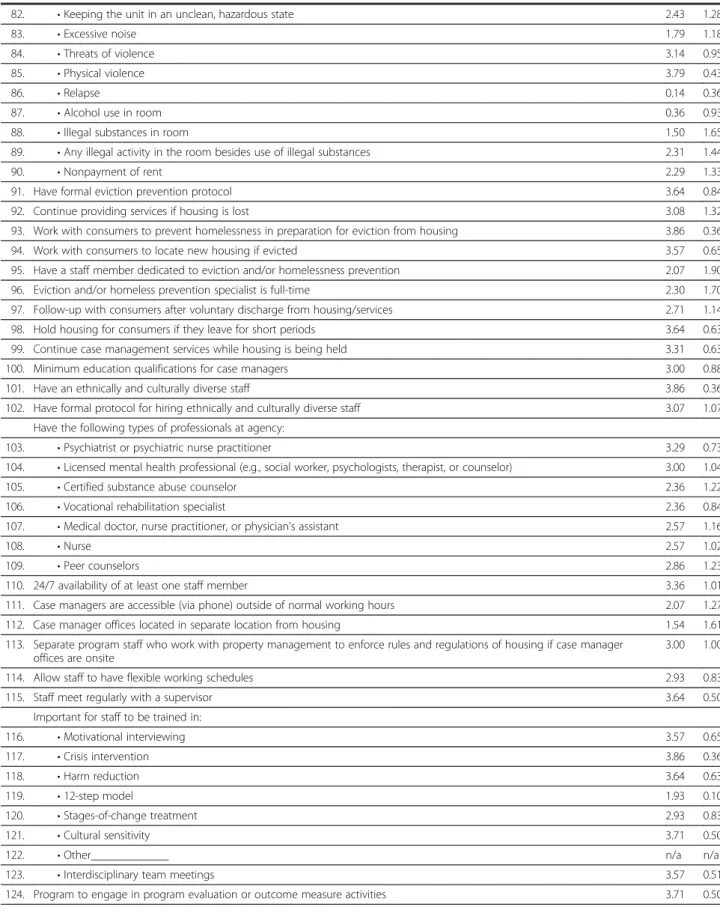
In order to determine which items users understood to be most important to the HFM, we calculated de-scriptive statistics (mean and standard deviation) for each. We sorted all of the items by mean in ascending order so we could compare and discuss their relative im-portance (Table 2 displays the means and standard devi-ations for these items).
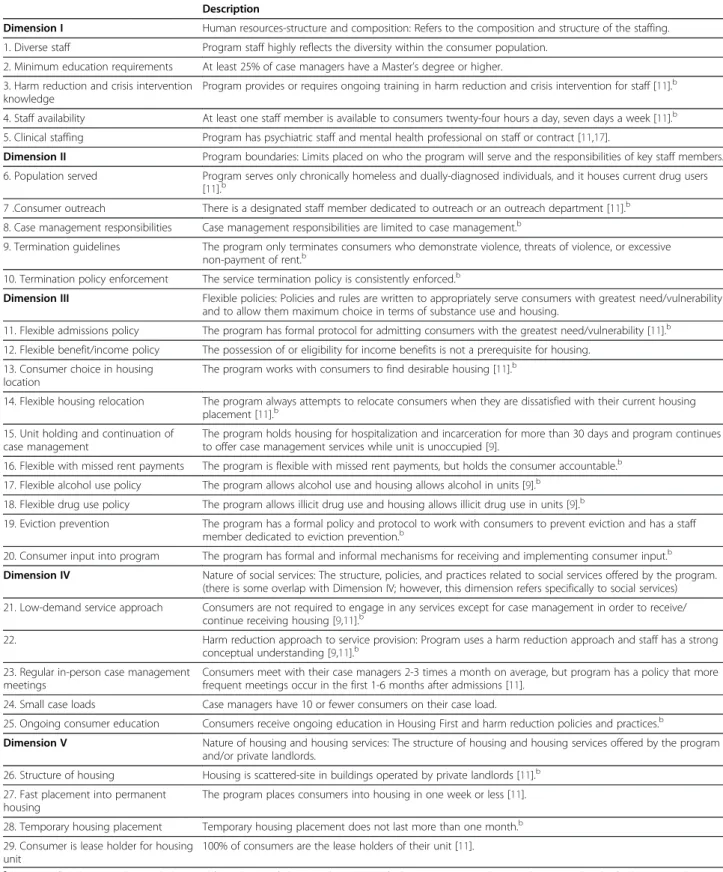
Through this process, we identified a total of 29 ele-ments of the HFM, which we organized into 5 categories or overarching dimensions based on face validity. Our goal in this process was to create an instrument that would make conceptual sense to housing providers. Table 3 provides descriptions of each of the elements and their dimensions.
Table 2 Means and standard deviations for specific items inquired about in phase 2“user”interviews(Continued)
125. Involve consumers in program decision making 3.21 0.80
Agency to be involved in Housing First policy discussions at:
126. •Local level 3.77 0.44
127. •State level 3.46 0.66
128. •National level 3.15 1.14
Table 3 Dimensions and elements of the fidelity index and rational supporting inclusion in instrumenta
Description
Dimension I Human resources-structure and composition: Refers to the composition and structure of the staffing.
1. Diverse staff Program staff highly reflects the diversity within the consumer population.
2. Minimum education requirements At least 25% of case managers have a Master’s degree or higher.
3. Harm reduction and crisis intervention knowledge
Program provides or requires ongoing training in harm reduction and crisis intervention for staff [11].b
4. Staff availability At least one staff member is available to consumers twenty-four hours a day, seven days a week [11].b
5. Clinical staffing Program has psychiatric staff and mental health professional on staff or contract [11,17].
Dimension II Program boundaries: Limits placed on who the program will serve and the responsibilities of key staff members.
6. Population served Program serves only chronically homeless and dually-diagnosed individuals, and it houses current drug users [11].b
7 .Consumer outreach There is a designated staff member dedicated to outreach or an outreach department [11].b
8. Case management responsibilities Case management responsibilities are limited to case management.b
9. Termination guidelines The program only terminates consumers who demonstrate violence, threats of violence, or excessive non-payment of rent.b
10. Termination policy enforcement The service termination policy is consistently enforced.b
Dimension III Flexible policies: Policies and rules are written to appropriately serve consumers with greatest need/vulnerability and to allow them maximum choice in terms of substance use and housing.
11. Flexible admissions policy The program has formal protocol for admitting consumers with the greatest need/vulnerability [11].b
12. Flexible benefit/income policy The possession of or eligibility for income benefits is not a prerequisite for housing.
13. Consumer choice in housing location
The program works with consumers to find desirable housing [11].b
14. Flexible housing relocation The program always attempts to relocate consumers when they are dissatisfied with their current housing placement [11].b
15. Unit holding and continuation of case management
The program holds housing for hospitalization and incarceration for more than 30 days and program continues to offer case management services while unit is unoccupied [9].
16. Flexible with missed rent payments The program is flexible with missed rent payments, but holds the consumer accountable.b
17. Flexible alcohol use policy The program allows alcohol use and housing allows alcohol in units [9].b
18. Flexible drug use policy The program allows illicit drug use and housing allows illicit drug use in units [9].b
19. Eviction prevention The program has a formal policy and protocol to work with consumers to prevent eviction and has a staff member dedicated to eviction prevention.b
20. Consumer input into program The program has formal and informal mechanisms for receiving and implementing consumer input.b
Dimension IV Nature of social services: The structure, policies, and practices related to social services offered by the program. (there is some overlap with Dimension IV; however, this dimension refers specifically to social services)
21. Low-demand service approach Consumers are not required to engage in any services except for case management in order to receive/ continue receiving housing [9,11].b
22. Harm reduction approach to service provision: Program uses a harm reduction approach and staff has a strong conceptual understanding [9,11].b
23. Regular in-person case management meetings
Consumers meet with their case managers 2-3 times a month on average, but program has a policy that more frequent meetings occur in the first 1-6 months after admissions [11].
24. Small case loads Case managers have 10 or fewer consumers on their case load.
25. Ongoing consumer education Consumers receive ongoing education in Housing First and harm reduction policies and practices.b
Dimension V Nature of housing and housing services: The structure of housing and housing services offered by the program and/or private landlords.
26. Structure of housing Housing is scattered-site in buildings operated by private landlords [11].b
27. Fast placement into permanent housing
The program places consumers into housing in one week or less [11].
28. Temporary housing placement Temporary housing placement does not last more than one month.b
29. Consumer is lease holder for housing unit
100% of consumers are the lease holders of their unit [11].
a
Citations reflect literature that guided rational for inclusion of element when Phase II findings were not conclusive and/or assisted in the final operationalization of the element.
b
Next we developed an index that would capture varia-tions in each of the 29 elements. We created five ordinal anchors for each of the 29 elements for which a “5” de-scribed the strongest level of implementation of the element and “1” described the weakest. We created op-erational definitions for each of the anchors using the descriptive statistics calculated from the 129 items in the user interview as a guide. Generally, those items with a mean of 3 or higher were incorporated into the anchor describing the strongest level of implementation, and items with smaller means were incorporated into those anchors describing weaker levels. There were times when the descriptive statistics did not provide enough information for the construction of categories or con-flicted with our understanding of the model. In these in-stances, we consulted the Phase 1 findings and the Housing First literature to guide the decision making process (see Table 3).
The anchors for the elements were complex due to their qualitative nature. Therefore, we developed a series of interview questions to ensure the information neces-sary to identify each element’s correct anchor would be collected. To ensure face and content validity, re-searchers reviewed each of the elements, their dimen-sions, anchors, and interview questions with Heartland staff at multiple times throughout the instrument devel-opment process.
The instrument resulting from this two-phase process was designed to gather information about each of the 29 elements, background information about each program (e.g., type of housing offered, whether case managers were on-site or off-site, program self-identification as Housing First or abstinence-based, and how long the program had been in operation), and other data neces-sary to develop a housing retention score for each pro-gram (retention is the primary outcome of interest
Table 4 Means and standard deviations for individual elements by housing type
AB (n =12) HF/AB (n =18) HF (n =21)
Element Mean SD Mean SD Mean SD
1. Diverse staff 3.42 1.31 3.89 1.02 3.76 1.26
2. Minimum education requirements 3.92 1.51 4.17 1.54 4.67 0.97
3. Harm reduction and crisis… 2.75 1.71 3.61 1.69 3.48 1.72
4. Staff availability 4.67 0.78 4.50 1.04 3.71 1.49
5. Clinical staffing 2.83 1.34 3.39 1.09 3.57 1.33
6. Population served 2.58 1.00 2.61 1.04 2.67 0.91
7. Consumer outreach 2.50 1.31 2.67 1.24 2.90 1.48
8. Case management responsibilities 1.92 0.67 2.28 0.83 2.86 0.96
9. Termination guidelines 1.25 0.62 2.44 1.42 2.90 1.14
10. Termination policy enforcement 4.00 1.13 3.83 1.38 3.38 1.28
11. Flexible admissions policy 3.25 1.36 3.50 1.34 3.52 1.25
12. Flexible benefit/income policy 3.50 1.17 4.50 0.71 4.00 1.18
13. Consumer choice in housing… 2.67 1.78 1.83 1.15 3.43 1.43
14. Flexible housing relocation 2.08 1.44 1.61 1.04 3.14 1.53
15. Unit holding and continuation… 4.08 1.31 3.50 1.65 4.14 1.28
16. Flexible with missed rent payments 3.25 1.42 3.00 1.33 3.81 1.33
17. Flexible alcohol use policy 1.67 1.37 3.61 1.75 4.62 0.80
18. Flexible drug use policy 1.08 0.29 1.83 1.34 3.10 1.04
19. Eviction prevention 3.00 1.04 2.83 0.79 3.52 0.87
20. Consumer input into program 4.08 1.24 4.17 1.10 4.14 1.06
21. Low-demand service approach 3.50 1.45 3.72 1.23 4.10 1.04
22. Harm reduction approach… 2.08 1.16 3.00 1.41 4.76 0.54
23. Regular case management… 2.42 1.73 2.06 1.66 2.62 1.75
24. Small case load 3.83 0.94 3.78 1.17 4.10 0.94
25. Ongoing consumer education 1.00 0.00 2.17 1.29 2.81 1.29
26. Structure of housing 3.42 1.51 2.72 1.71 4.48 1.21
27. Fast placement into… 2.83 1.53 3.33 1.78 2.57 1.54
28. Temporary housing placement 2.67 1.87 3.00 1.97 1.71 1.38
housing programs use to measure their success). Ques-tions pertaining to each element were placed with its anchors in the survey. A copy of the final fidelity instru-ment is available from the first author.
Testing of the instrument Participating programs
HFM and abstinence-based programs were recruited for participation. Abstinence-based programs are an ideal comparison group for determining discriminant validity because the HFM was developed as a solution to the problems associated with this type of housing [11]. To be included in the sample all programs had to (a) pri-marily serve individuals, rather than families, and (b) provide permanent housing. We randomly selected 140 permanent housing programs from a publicly available list of all 2009 U.S. Department of Housing and Urban Development (HUD) grant award recipients [42].
Research assistants called organizations and asked ad-ministrative officials whether their program followed a Housing First or abstinence-based model, as well as requesting their organization to participate in the study. We acquired consent for participation from each pro-gram’s administrative office.
Our goal was to recruit a total of 40 HFM and 20 abstinence-based programs for participation in the study by randomly selecting programs from the list of 140 until our quota was met. We over-selected HFM pro-grams in order to capture the diversity of propro-grams that we understood to exist in practice based on previous re-search and the experience of Heartland staff. We com-pleted 42 HFM and 13 abstinence-based interviews because of time restrictions related to our source of re-search funding. However, we removed one abstinence-based program and two HFM programs from the sample prior to analysis because we determined after the
Table 5 Item-total correlations for individual elements
All programs (n= 51)
Element Total fidelity score = 145 Total fidelity score = 120
1. Diverse staff -.023
---2. Minimum education requirements 0.19 0.14
3. Harm reduction and crisis… 0.32 0.26
4. Staff availability -.01 —
5. Clinical staffing 0.33 0.33
6. Population served 0.27 0.27
7. Consumer outreach 0.15 0.16
8. Case management responsibilities -.030
---9. Termination guidelines 0.33 0.26
10. Termination policy enforcement -.022
---11. Flexible admissions policy 0.01 0.01
12. Flexible benefit/income policy 0.10 0.10
13. Consumer choice in housing… 0.35 0.45
14. Flexible housing relocation 0.45 0.55
15. Unit holding and continuation… 0.30 0.31
16. Flexible with missed rent payments 0.31 0.35
17. Flexible alcohol use policy 0.57 0.56
18. Flexible drug use policy 0.50 0.54
19. Eviction prevention 0.22 0.27
20. Consumer input into program 0.33 0.31
21. Low-demand service approach 0.24 0.19
22. Harm reduction approach… 0.50 0.51
23. Regular case management… 0.03 0.08
24. Small case load 0.05 0.06
25. Ongoing consumer education 0.55 0.59
26. Structure of housing 0.41 0.50
27. Fast placement into… 0.06 0.08
28. Temporary housing placement 0.08 0.09
---interviews that they did not meet the inclusion criteria despite the information administrators provided during the screening process (two did not primarily serve indi-viduals and one did not provide permanent housing). We removed a fourth HFM program because significant parts of the interview were contradictory (the inter-viewee stated that staff were regularly trained in harm reduction, but also said the organization did not use harm reduction practices). The final sample consisted of 51 programs—39 Housing First and 12 abstinence-based —from 35 states.
Interview procedure
Program case managers (or staff members who provided case management services) were invited to participate in fidelity interviews. Case managers were chosen, rather than administrators or managers, because they are in a key “front-line”position to understand (a) the program’s policies and (b) the extent to which those policies are ac-tually being implemented/practiced [43]. The interview took approximately 30–60 minutes to complete. Case managers received a $5 coffee shop gift card for their participation and their program was entered into a drawing to win one $500 or one of two $250 electronics store gift cards.
Analysis and results
Subsequent to performing the fidelity interviews, we classified each program into one of three categories: (1) Abstinence-Based (AB; n = 12), (2) Housing First with
abstinence-based principles and/or practices (HF/AB;
n= 18), and (3) Housing First withoutabstinence-based principles and/or practices (HF; i.e., true Housing First programs;n= 21). Our reason for dividing the programs that self-designated as“Housing First”into two categor-ies was that a large number of them were employing abstinence-based policies and practices that conflicted with the core philosophy of the HFM. In order to create the groups, we identified all questions in the survey that indicated the presence of abstinence-based policies and/or practices (e.g., Does the program explicitly refuse to admit active substance users?; Does policy dictate that the
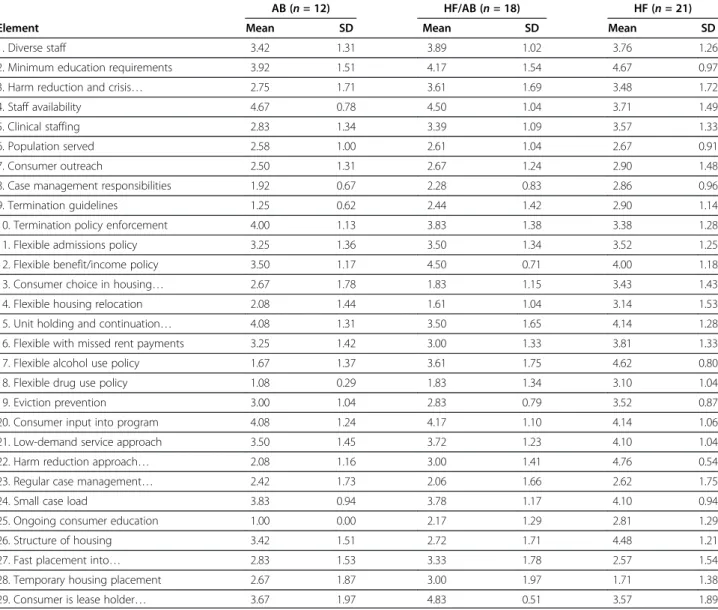
program terminate consumers for active substance use?; Does your program require drug and/or alcohol abstin-ence of all consumers? Does your program work with sub-stance abusing consumers using an abstinence-based approach?) and we moved a HF program to the HF/AB category if answers to any of these questions indicated the presence of abstinence-based policies and/or practices. Table 4 displays descriptive statistics for each of the 29 ele-ments by each housing type.
Next, we summed the scores for each of the 29 ele-ments to create an overall fidelity score. A program could score anywhere from 29 (lowest fidelity/least ideal implementation of the elements) to 145 (highest fidelity/ most ideal implementation of the elements).
We developed a number of questions to test the reli-ability and validity of the instrument. Each of these questions and the analysis approach we used to test them are listed below. All analyses were performed using SAS 9.3 statistical software. Because of the multiple steps involved in testing the instrument, we have com-bined a description of each analysis, its results, and some discussion in the sections that follow for the purpose of of providing greater clarity to the reader.
Question 1: Do all 29 elements contribute to the reliability of the instrument
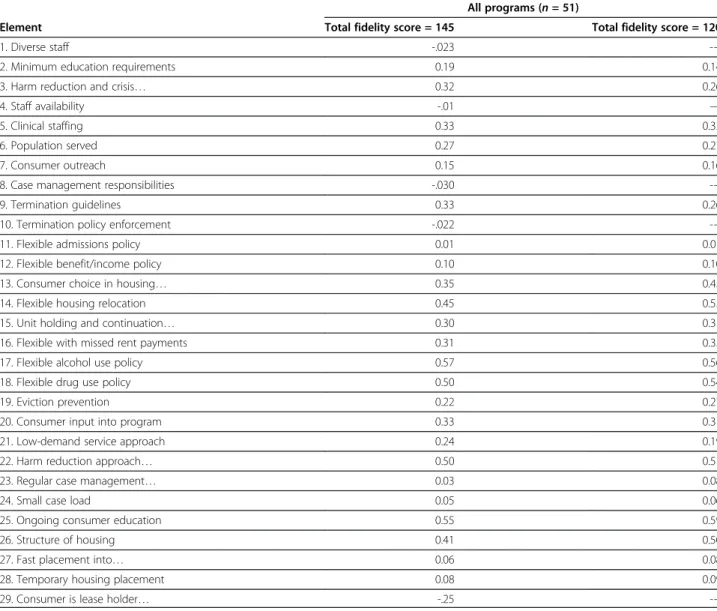
To investigate the relationship between scores on indi-vidual elements and the total fidelity score, we calculated item-total correlations, which assist in determining which elements contribute to the index’s reliability more than others. We expected that there would be variation in the relationship between each element and overall fi-delity. We further expected that removing the negatively correlated items from the instrument would improve its internal consistency (i.e., raise Cronbach’s alpha).
Table 5 displays correlation coefficients demonstrating the relationships between the overall fidelity score and each of the elements. The first column displays correl-ation coefficients related to all 29 of the original ele-ments. A correlation of 0.30 or higher is considered desirable when interpreting item-total correlations [44]. However, we chose to only eliminate elements with
Table 6 Reliability of housing first dimensions before and after elimination of items with negative item-total correlations
Dimension Cronbach’s alpha Cronbach’s alpha
(with original 29 items) (with final 24 items)
I. Human resources (structure and composition) 0.39 0.39
II. Program boundaries 0.17 0.05
III. Flexible policies 0.66 0.67
IV. Nature of social services 0.35 0.35
V. Nature of housing and housing services 0.26 0.38
negative correlations because we consider the face valid-ity established using the methods in the previous two phases to be a strength of the instrument.
The first column in Table 5 displays correlation coeffi-cients related to all 29 of the original elements, 5 of which had negative relationships with the overall fidelity score. The second column in the table displays scores after removing the negatively correlated items and adjusting the total possible fidelity score to 120.
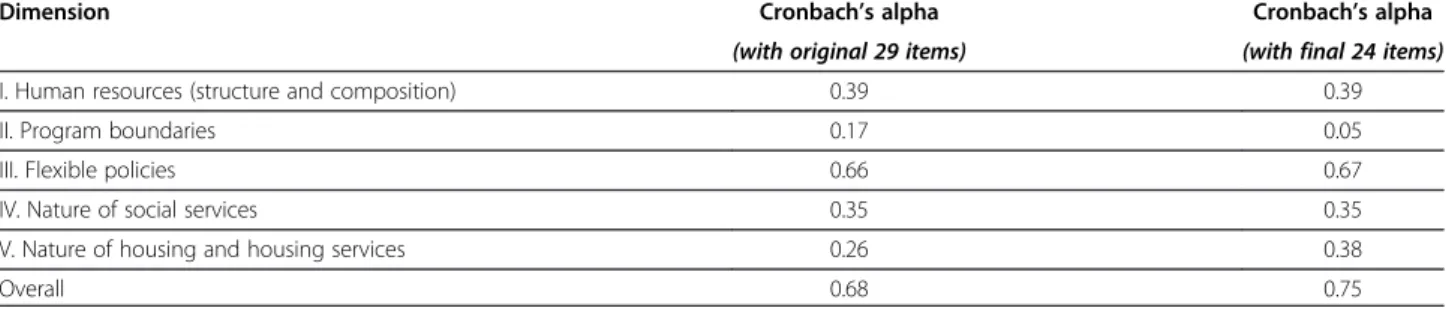
Table 6 displays Cronbach’s alpha coefficients for the overall index and each of the subdimensions before and after the removal of the negatively correlated
ingredients. A score of 0.70 is the minimum desired for establishing internal consistency of an instrument [45]. As the table demonstrates, removal of the 5 negatively correlated items improved the internal consistency of the overall index. Only one of the subdimensions, flex-ible policies, was close to attaining a minimally desirable alpha coefficient in both analyses. This likely represents poor grouping of the elements given the internal consistency of the overall scale.
Subsequent analyses were conducted using items from the adjusted instrument. Figure 1 displays a histogram of the adjusted fidelity scores.
Figure 1Histogram of adjusted fidelity scores (total possible score = 120).
Question 2: Are there differences in mean fidelity scores between groups (i.e., Program Type)
Finding differences in mean fidelity scores between the three groups (AB, HF/AB, HF) is useful because it con-firms that we formed the groups correctly and assists in establishing discriminant validity (i.e., fidelity scores should be higher among HF programs). We conducted a trend analysis in ANOVA with program type as the in-dependent variable and fidelity score as the in-dependent variable [44]. We predicted that there would be a linear pattern where HF/AB programs would have higher mean fidelity than AB programs and HF programs would have a higher mean fidelity than HF/AB programs.
The mean fidelity score for the entire sample was 76.27 (SD=12.94). Figure 2 demonstrates the mean fidel-ity score for each of the program types with confidence limits. Results demonstrate that fidelity scores between the three groups were significantly different from each other in the predicted pattern, ψ3= 18.51, t(48) = 4.79,
p < .0001. HF programs had the highest mean fidelity score at 84.76 (SD= 9.89;n= 21; 95% CI [59.57, 72.93]), followed by HF/AB at 73.06 (SD = 11.61; n = 18; 95% CI [67.28, 78.83]), and AB programs at 66.25 (SD= 10.51;
n= 12; 95% CI [80.26, 89.27]).
Thus, we found a key strength of the instrument is that it is able to differentiate between program types.
This ability is rooted in the intensive qualitative work of the previous phases. It is through this work we were able to identify incompatibilities between the integration of abstinence-based policies and procedures and the under-lying philosophy of the HFM. This provided the conceptual logic upon which we were able to recognize and create op-erational definitions for two different types of HFM pro-grams (HF and HF/AB), which may be useful for those seeking to implement and or measure the HFM at varying levels. This is particularly true for housing agencies that seek to develop HFM implementation plans while facing structural, policy, and/or philosophical barriers that might limit their ability to carry out harm reduction activities.
The relatively small mean difference between AB and HF (18.51 points on a scale of 120) is notable. This is likely due to the fact that a number of the elements in-cluded in the instrument are aspects of quality housing programming that are not limited to the HFM. Future re-search warrants the investigation and possible removal of such elements from the index and/or weighting of those elements demonstrated to be more central to the model.
Question 3: Is fidelity score related to housing retention
In order to determine criterion validity, we calculated
Spearman’s rho correlations between total fidelity score and two measures of housing retention employed by
Figure 3Scatterplot of First Housing Retention Score (HR1) and fidelity score by program type.
Heartland as part of its federal funding requirements. We calculated the first measure of housing retention (HR1) by dividing the total number of consumers who had been served by the program for a minimum of 12 months (including those who were served 12 months be-fore entering the fiscal year and those who were served 12 months during the fiscal year regardless of whether they left the program during the fiscal year or not) by the total number of consumers served that fiscal year. We calculated the second measure (HR2) by dividing the total number of consumers who remained in the project from the first to the last day of the fiscal year (i.e., those who did not exit the project regardless of their length of stay) by the total number of consumers served during the year. We expected that fidelity would be posi-tively associated with both types of housing retention.
Scatterplots of housing retention scores and fidelity are depicted in Figures 3 and 4. We calculated Spearman’s rho correlations between fidelity scores and both measures of housing retention. HR1 was not significantly associated with fidelity (rs= .14,p= .32), and HR2 had a significant but weak correlation (rs= .33,p< .05).
There are two possible explanations for the lack of correlation between fidelity and HR1. As discussed above, programs operating using abstinence-based policies and procedures often have difficulty retaining hard-to-serve consumers. Therefore, the HR1 score might be inflated in AB and HF/AB programs due to the increased emphasis this measure places on con-sumers who are more stable (i.e., those who have been housed for 12 months or more). A second pos-sible explanation is AB and HF/AB programs are more likely to admit consumers they understand to be more stable and who are likely to be successful in their programs, a process known as “creaming” [43]. This is particularly true regarding the AB programs that only accept consumers who have demonstrated the ability to remain abstinent for some time period. Contrasting this, HF programs do not have prerequi-sites for consumer admission. Because it results in differences in consumer populations across program types, creaming could lead one to conclude that the program, as opposed to traits of the consumer, is re-sponsible for positive consumer outcomes.
In contrast, it is likely that we found a significant relationship between fidelity and HR2 because this puts less weight on consumer stability. That is, the measure takes into account that HF (and to some ex-tent HF/AB) programs are more likely to take in higher risk individuals due to the presence of a low-threshold admission policy. Indeed, it can be argued that the HR2 measure is more appropriate for under-standing the relationship between fidelity and outcomes for this reason.
Conclusions
The development of the HFM Fidelity Index is an im-portant step in ensuring the quality and consistency of HFM implementation. Our results demonstrate the index was generally valid and reliable. Arguably the most successful result is its ability to discriminate between the three different types of housing described. Overall, the results point to those elements related to harm reduc-tion as being the most critical to the HFM. Despite this, a number of Housing First programs participating in the study had abstinence-based approaches to service provision that stood in direct conflict to a harm reduc-tion approach. This confirms results from previous re-search that demonstrate how misunderstandings of the HFM result in programs having flexible admissions pol-icies coupled with strict abstinence-based rules by which consumers must abide in order to keep their housing [7]. This is problematic considering the HFM was devel-oped due to the difficulty “hard-to-serve” consumers have remaining permanently housed in programs with rules such as these [11].
Despite promising results, there are study limitations that need to be considered. Resource and time con-straints prevented us from collecting data that would allow for the measurement of reliability beyond internal consistency (e.g., inter-rater, test-retest). Second, the Cronbach’s alpha coefficient demonstrates that the index is reliable overall; however, there is need to further in-vestigate the organization of the subdimensions based on the results. Third, our sample was relatively large for an organizational-level study; however, future studies with larger sample sizes would allow for additional ana-lyses. Fourth, the findings might have been stronger had we eliminated elements with low item-total correlations from the instrument. We chose not to eliminate these elements because we see this study as a first step in the development of the instrument. Future work might jus-tify their removal. Finally, the possibility of creaming (i.e., the tendency to recruit or admit only those con-sumers who are likely to be successful) within programs might be a confounding factor related to the housing retention measures. The inability to control for this issue demonstrates a limitation of the community-based re-search design; however, this is a reality of conducting research in naturalistic settings.
even more important as the HFM is expanding beyond the United States [46]. Since we began our study, Pathways to Housing has also published an Essential Ingredients Checklist that should prove useful as an im-plementation guide [24]. However, Pathways has stated the checklist was designed to measure fidelity to the PHF model, and might not be appropriate for measuring fidelity in programs that have made adaptations, whether purposeful or accidental, to their model. Those pro-grams specifically seeking to implement the PHF model should consult the Pathways fidelity checklist for guid-ance. Therefore, our index is likely to have greater flexi-bility when it comes to measuring the wide range of HFM programs that exist in practice. Finally, from a pol-icy perspective, the index can be used by funders that support the HFM to help them assure their monies are being used in an appropriate fashion by programs that represent themselves as“Housing First.”
Regarding next steps, we would like to investigate other approaches to establishing reliability of the index and its subdimensions. One of our primary goals is to col-lect a larger sample that will allow us to test the index using Item Response Theory and to compare those results to those obtained using classical test theory methods. This will assist in identifying those elements that are not truly repre-sentative of the underlying construct (i.e., the HFM), thus improving the instrument's validity [47]. We also plan to explore different approaches for identifying and organiz-ing the subdimensions beyond face validity, which will potentially lead to stronger internal consistency.
Abbreviations
AB:Abstinence-based programs that were part of the study sample; HF: Housing First programs without abstinence-based principles that were part of the study sample; HF/AB: Housing First programs with abstinence-based principles that were part of the study sample; HFM: Housing First Model; HR1: A measure of housing retention calculated by dividing the total number of consumers who remained in the program for at least 12 months by the total number of consumers served during the contract year; HR2: A measure of housing retention calculated by dividing the total number of consumers who remained in the project during the contract year by the total number of consumers served during the contract year; HUD: U.S. Department of Housing and Urban Development; LTAP: Low-threshold admission policy; PHF: Pathways Housing First.
Competing interests
The authors have no competing interests to declare.
Author’s information
DPW is Assistant Professor in the Richard M. Fairbanks School of Public Health and Faculty Research Associate at the Center for Health Policy at Indiana University-Purdue University Indianapolis.
JO is Assistant Professor in the School of Social Work at Loyola University Chicago. DW is Doctoral Candidate in the Department of Psychology at Loyola University Chicago.
VS, is the Associate Director of Heartland’s Midwest Harm Reduction Institute in Chicago.
RT is Director of the Illinois Co-Occurring Center for Excellence at Heartland Health Outreach, Inc.
Authors’contributions
DPW was the primary investigator for the entire study participated in the drafting of the manuscript. JO participated in the study design and the drafting of the manuscript. DW was project manager and statistical analyst for the project and participated in the drafting of the manuscript. VS participated in the research design and analysis. RT provided significant input regarding the interpretation of the data as it related to practice. All authors read and approved the final manuscript.
Acknowledgements
Research funding provided by the National Institute on Drug Abuse (R36 DA027770).
Author details
1
Department of Health Policy and Management, Indiana University, Richard M. Fairbanks School of Public Health, Indiana University-Purdue University Indianapolis, 714 N. Senate Ave, Indianapolis, IN 46202, USA.2School of Social Work, Loyola University Chicago, 820 N. Michigan Ave, Chicago, IL 60611, USA.3Department of Psychology, Loyola University Chicago, 1032 W. Sheridan Rd, Chicago, IL 60660, USA.4Midwest Harm Reduction Institute,
Heartland Health Outreach Inc, 1207 W. Leland Ave, Chicago, IL 6064, USA.
Received: 2 November 2012 Accepted: 29 April 2013 Published: 3 May 2013
References
1. Dickson-Gomez J, Convey M, Hilario H, Corbett AM, Weeks M:Unofficial policy: Access to housing, housing information and social services among homeless drug users in Hartford.Connecticut Subst Abuse Treat Prev Policy2007,2:8.
2. Hopper K, Jost J, Hay T, Welber S, Haugland G:Homelessness, severe mental illness, and the institutional circuit.Psychiatr Serv1997,48:659–665. 3. Simpson DD, Joe GW, Broome KM, Hiller ML, Knight K, Rowan-Szal GA:
Program diversity and treatment retention rates in the Drug Abuse Treatment Outcome Study (DATOS).Psychol Addict Behav1997,11:279–293. 4. National Alliance to End Homelessness:A plan, not a dream: How to end
homelessness in ten years.Washington DC: National Alliance to End Homelessness; 2000.
5. U.S. Department of Housing and Urban Development:The 2009 annual homeless assessment report to Congress.Washington, D.C: Office of Community Planning and Development, HUD; 2010.
6. United States Interagency Council on Homelessness:Opening doors: Federal strategic plan to prevent and end homelessness: 2010 fact sheet.2010. 7. George C, Chernega JN, Stawiski S, Figert A, Bendixen AV:Connecting
fractured lives to a fragmented system: Chicago housing for health partnership.Equal Oppor Int2008,27:161–180.
8. Henwood BF, Stanhope V, Padgett DK:The role of housing: A comparison of front-line provider views in Housing First and traditional programs.
Adm Policy Ment Health2010,38:77–85.
9. Pearson CL, Locke G, McDonald WR:The applicability of Housing First models to homeless persons with serious mental illness.Washington, D.C.: U.S: Department of Housing and Urban Development Office of Policy Development and Research; 2007.
10. Kuhn R, Culhane DP:Applying cluster analysis to test a typology of homelessness by pattern of shelter utilization: Results from the analysis of administrative data.Am J Community Psychol1998,26:207–232. 11. Tsemberis S, Asmussen S:From streets to homes–The Pathways to
Housing Consumer Preference Supported Housing Model.Alcohol Treat Q 1999,17:113–131.
12. Des Jarlais DC:Harm reduction–a framework for incorporating science into drug policy.Am J Public Health1995,85:10–12.
13. MacMaster SA:Harm reduction: a new perspective on substance abuse services.Soc Work2004,49:356–363.
14. Padgett DK, Stanhope V, Henwood BF, Stefancic A:Substance use outcomes among homeless clients with serious mental illness: Comparing Housing First with treatment first programs.Community Ment Health J2010,47:227–232.
16. Greenwood RM, Schaefer-McDaniel NJ, Winkel G, Tsemberis SJ:Decreasing psychiatric symptoms by increasing choice in services for adults with histories of homelessness.Am J Community Psychol2005,36:223–238. 17. Tsemberis S, Gulcur L, Nakae M:Housing first, consumer choice, and harm
reduction for homeless individuals with a dual diagnosis.Am J Public Health2004,94:651–656.
18. DeSilva MB, Manworren J, Targonski P:Impact of a Housing First program on health utilization outcomes among chronically homeless persons.
J Prim Care Community Health2011,2:16–20.
19. Mares AS, Rosenheck RA:Evaluation of the collaborative initiative to help end chronic homelessness.2007.
20. Perlman J, Parvensky J:Denver Housing First Collaborative: Cost benefit analysis and program outcomes report.Denver, CO: Colorado Coalition for the Homeless; 2006.
21. National Alliance to End Homelessness:A shifting focus: What’s new in community plans to end homelessness.Washington, D.C: National Alliance to End Homelessness; 2009.
22. Dusenbury L, Brannigan R, Falco M, Hansen WB:A review of research on fidelity of implementation: implications for drug abuse prevention in school settings.Health Educ Res2003,18:237–256.
23. Durlak JA, DuPre EP:Implementation matters: a review of research on the influence of implementation on program outcomes and the factors affecting implementation.Am J Community Psychol2008,41:327–350. 24. Tsemberis S:Housing First: The Pathways Model to End Homelessness for people with mental illness and addiction.Center City, MN: Hazelden; 2010. 25. Carroll C, Patterson M, Wood S, Booth A, Rick J, Balain S:A conceptual
framework for implementation fidelity.Implement Sci2007,2:40. 26. Rieckmann T, Fuller BE, Saedi GA, McCarty D:Adoption of practice
guidelines and assessment tools in substance abuse treatment.
Subst Abuse Treat Prev Policy2010,5:4.
27. Scanlon JW, Horst H, Nay JN, Schmidt RE, Waller AE:Evaluability assessment: Avoiding type III and IV errors. InEvaluation Management: A Source Book for Readings.Charlottesville, VA: U. S. Civil Service Commission; 1997:71–90.
28. Michie S, Fixsen D, Grimshaw JM, Eccles MP:Specifying and reporting complex behaviour change interventions: The need for a scientific method.Implement Sci2009,4:40.
29. Dane AV, Schneider BH:Program integrity in primary and ealry secondary prevention: Are implementation effects out of control?Clin Psychol Rev 1998,18:23–45.
30. Goodman RM:Bridging the gap in effective program implementation: From concept to application.J Community Psychol2000,28:309–321. 31. Orwin RG:Assessing program fidelity in substance abuse health services
research.Addiction2000,95:309–327.
32. Neumiller S, Bennett-Clark F, Young MS, Dates B, Broner N, Leddy J, Kendall D, Richards S, De Jong F:Implementing assertive community treatment in diverse settings for people who are homeless with co-occurring mental and addictive disorders: A series of case studies.J Dual Diagn2009,
5:239–263.
33. Matejkowski J, Draine J:Investigating the Impact of Housing First on ACT Fidelity.Community Ment Health J2009,45:6–11.
34. Damschroder LJ, Aron DC, Keith RE, Kirsh SR, Alexander JA, Lowery JC:
Fostering implementation of health services research findings into practice: a consolidated framework for advancing implementation science.Implement Sci2009,4:50.
35. Century J, Rudnick M, Freeman C:A framework for measuring fidelity of implementation: A foundation for shared language and accumulation of knowledge.Am J Eval2010,31:199–218.
36. Nyden P, Hossfeld L, Nyden G:Public sociology: Research, action, change. Thousand Oaks, CA: Pine Forge Press; 2011.
37. McGrew JH, Bond GR:Critical ingredients of Assertive Community Treatment: Judgments of the experts.J Ment Health Adm1995,22:113–125. 38. McGrew JH, Bond GR, Dietzen L, Salyers M:Measuring the fidelity of
implementation of a mental health program model.J Consult Clin Psychol 1994,62:670–678.
39. Watson DP, Wagner DE, Rivers M:Understanding the critical ingredients for facilitating consumer change in Housing First programming: A case study approach.J Behav Health Serv Res2013:1–11.
40. Eisenhardt KM, Graebner ME:Theory building from cases: Opportunities and challenges.Acad Mang J2007,50:25–32.
41. Patton MQ:Qualitative research and evaluation methods.Sage Publications; 2002.
42. U.S. Department of Housing and Urban Development:HUDHRE.info -- Grant Awards Search Results.http://www.hudhre.info/index.cfm?do=actionGrant AwardsSearch&yr=2009&rptType=CoC&pickScope=all&optTwo=&optThree=] 43. Lipsky M:Street-level bureaucracy: Dilemmas of the individual in public service.
Russell Sage Foundation; 2010.
44. Field A, Miles J:Discovering statistics using SAS.SAGE Publications; 2010. 45. DeVellis RF:Scale Development: Theory and Applications.3rd edition.
Thousand Oaks, CA: Sage; 2011.
46. Atherton I, Nicholls CM:“Housing First”as a means of addressing multiple needs and homelessness.European J Homelessness2008,2:289–303. 47. Wright BD, Masters GN:Rating scale analysis. Rasch measurement.
MESA Press; 1982.
doi:10.1186/1747-597X-8-16
Cite this article as:Watsonet al.:The housing first model (HFM) fidelity index: designing and testing a tool for measuring integrity of housing programs that serve active substance users.Substance Abuse Treatment, Prevention, and Policy20138:16.
Submit your next manuscript to BioMed Central and take full advantage of:
• Convenient online submission
• Thorough peer review
• No space constraints or color figure charges
• Immediate publication on acceptance
• Inclusion in PubMed, CAS, Scopus and Google Scholar
• Research which is freely available for redistribution