Journal of Research Practice
Volume 6, Issue 2, Article M14, 2010
Main Article:
Capturing and Retaining Knowledge to Improve
Design Group Performance
Seymour Roworth-Stokes
University for the Creative Arts, Falkner Road, Farnham Surrey GU9 7DS, UNITED KINGDOM
Abstract
This article explores the management and organisational context for capturing and retaining knowledge transferred through the design process.
It is widely acknowledged that our ability to successfully organise and transfer design knowledge is dependant upon the context in which it is situated. However the knowledge generated through the creative process is often viewed from the perspective of the artefact, and the outcome of its production, rather than the process itself.
An understanding of the knowledge-based resources operating in design groups, and how these are used, could lead to improvements in competitiveness and organisational development. Yet, a systematic literature review of leading design and educational management journals found limited empirical evidence that shed light on the influence of knowledge management on design group performance.
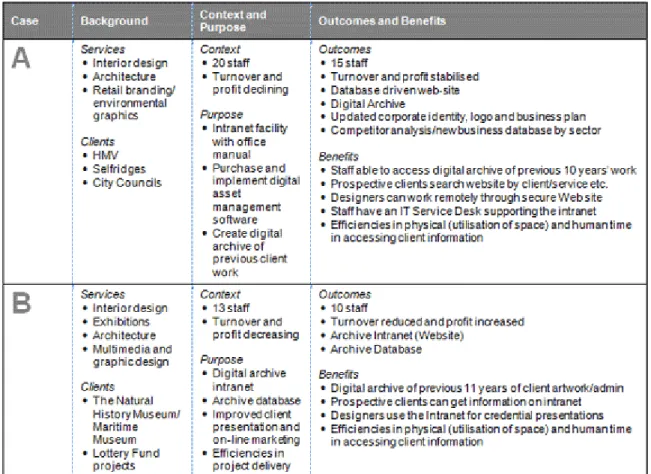
The article addresses this gap in the literature. Based on two in-depth case studies with interior design companies implementing new digital asset management systems over a 2-year period, the paper explores the findings in relation to design practice and policy, alongside implications for the contribution of the creative industries to the knowledge economy.
Keywords: digital asset management systems; knowledge management; design process; design knowledge
1. Introduction
This article presents a reflection on two case studies selected from Knowledge Transfer Partnerships (KTP) in the UK creative industry. The KTP programme is funded by the UK government and a consortium of public-sector organisations, which aim to “strengthen the competitiveness, wealth creation, and economic performance of the UK by the enhancement of knowledge and skills and the stimulation of innovation through collaborative projects between business (including social enterprises) and the knowledge base” (KTP homepage). Through the programme, a recently qualified graduate (termed as Associate) is supported to undertake an innovative project within a host organisation, under the joint supervision of personnel from the host organisation and a university.
Given more than 3 decades of experience of such collaborations between universities and business organisations in the UK, there is fertile ground for research on how design organisations embed new knowledge to improve their operations. However, whilst the ability to successfully manage the knowledge assets of an organisation is already known to improve commercial and competitive advantage (Alavi & Leidner, 2001) little is known about the way in which knowledge is retained or managed in design groups. This is further complicated as design knowledge transforms as it transfers (Ashton, 2007).
Previous research has focused on the long-term impact of design strategies to innovate new products and services through the KTP scheme after a 10-year period (Hands, Edge, & Jerrard, 2004) but the emphasis has often been on economic outcomes rather than design knowledge. This research aims to develop a framework to identify the knowledge generated as it progresses from one phase of the design process to the next. In doing so it helps to explore the relationship between an individual’s creativity, the tacit and experiential knowledge generated through the design process, and the institutional systems and processes which retain both visual and textual information for organisational advantage.
The cases described will draw upon the personal accounts of those involved in the projects including two recently qualified graduates, employed as Associates, the Managing Directors (referred to as Directors in section 4), and Supervisors appointed by the university whose role within the scheme is to oversee the knowledge transfer process. The article will commence with a discussion of the issues surrounding the management of knowledge in a design group, before moving onto the findings within the cases themselves.
2. Managing Knowledge in the Design Group
This kind of knowledge is cross-disciplinary in nature and it is focused on the solution of specific problems. The production of such knowledge has been found to follow a process that is distinct from the more traditional process of discipline-based inquiry (Gibbons, Limoges, Nowotny, Schwartzman, Scott, & Trow, 1994). Clark (1998) has proposed that this cross-disciplinary knowledge production is a characteristic of entrepreneurial organisations and it mirrors the way design groups manage knowledge for organisational advantage. Multidisciplinary teams are constituted, with members having backgrounds in psychology, engineering, and management, to solve client problems.
Robertson and Hammersley (2000) found that consultancies wanted knowledge workers to develop their own knowledge--by sharing their own expertise and learning from others--in order to satisfy client demands and to be part of the cross-disciplinary and collaborative knowledge structure of the organisation.
Thus project team working was not hindered by consultants jealously guarding their personal knowledge and expertise . . . Valuable organisational knowledge and skills were thus retained within the firm over time . . . Expert consultants were selected on the basis of their cultural fit . . . Cultural fit implied a willingness and ability to share knowledge and . . . which allowed them to work with others from different specialisms and further develop and enhance their own intellectual capital. (Robertson & Hammersley, 2000, p. 251)
Recognising the importance of the creative industries to an economy, there is a need to study the ability of design groups to capture and retain multidisciplinary knowledge within the design process. This article will explain the practical interventions which address this issue and will then go on to explore the implications for policy and practice.
3. Methodology
Universities play a significant role in national innovation systems and are regularly cited in economic studies concerned with improving competitiveness through innovation and technology transfer.
Table 1. Description of Case Studies.
The inquiry focused on the interaction of cause and effect relationships during three stages of the project: origination, implementation, and development. Building upon Eisenhardt’s approach to deriving theory from case study research (Eisenhardt, 1989), documentary evidence, autobiographical interviews, and semi-structured interviews were conducted with a range of staff.
Interviews were explored in depth, to identify the key events, milestones, and the forces at play. A key feature of this approach was to establish as full an account as possible in the respondents’ own words with minimal intervention by the researcher. This technique, as described by Plummer (1983), was employed to give voice to each individual view. As Plummer argues: “views, truths and conceptions of the real can never be wholly ripped away from the people who experience them” (Plummer, 1983, p. 57).
Careful wording of each question within the interview protocol was critically important to attaining as full and open a response as possible--striking a balance between the need to guide the discussion around topics whilst not wanting to phase respondents with management speak they might not relate to. For example, the theme of management sought to clarify perceptions towards resources and communication which led to the question: “To what extent has the scheme improved the sharing of information and knowledge, e.g., client work, contacts, etc.?”
All quotations were fully transcribed and pseudonyms and codifications were used for all people and places to provide confidentiality and anonymity.
4. Findings
As recognised by Eisenhardt (1989) and Miles and Huberman (1984), there is a risk that there may arise a divide between the actual data obtained and the conclusions derived. The huge amount of qualitative data accumulated can mean a lack of clarity within the filtration procedure and a lack of consistency in the process of condensation.
Analyzing data is the heart of building theory from case studies, but it is the most difficult and least codified part of the process. Since published studies generally describe research sites and data collection methods, but give little space to discussion of analysis, a huge chasm often separates data from conclusion. (Eisenhardt, 1989, p. 539)
A process of coding was undertaken to develop nodes by highlighting each element of text that had meaning for the respondent. For example: “once I had got the commitment of the staff, I got going” was coded as trust. Here, Strauss and Corbin’s (1990) method of building substantive and formal theory from qualitative data was employed, whereby open coding was used to label discrete events or phenomena and categories were identified to group concepts identified through phenomena pertaining to common themes.
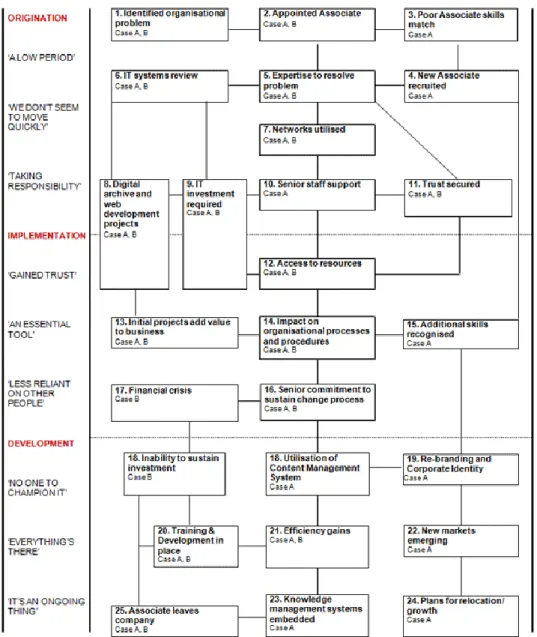
In order to summarise the relationships identified and to make sense of the complex interaction of nodes and themes, a visual approach to the display of data was sought. As described by Miles and Huberman (1994), the causal connection diagram was employed, which is presented below (see Figure 1). This incorporates a chronological timeline on the left hand side of the diagram while the nodes on the right signify connections between the incidents, happenings, and events identified.
Miles and Huberman suggest, “such a chain helps analysts lay out explicitly what may be causing certain phenomena. Although the chain does represent a simplification, that very simplification carries with it the seeds of a fuller explanation” (Miles & Huberman, 1994, p. 227).
interviewed as “a low period” due to the need to manage knowledge more effectively throughout the organisation.
In determining the significance of a cause and effect relationship, the author draws upon Flanagan’s definition, in that it “must occur in a situation where the purpose or the intent of the act seems fairly clear to the observer and where its consequences are sufficiently definite to leave little doubt concerning its effects” (Flanagan, 1954, p. 327). These broad patterns of causality form the basis for the discussion below, which is structured along the three project stages: origination, implementation, and development. Brief quotations are provided from interview transcripts, which illustrate the organisational issues depicted in the nodes of Figure 1.
4.1. Origination 4.1.1.“a low period”
At the point of origination, both companies had identified similar organisational problems to improve efficiency and increase competitiveness (Node 1 in Figure 1).
The company had different digital assets which were difficult to find . . . over 10 years of data structures which were badly structured throughout the organisation . . . they were repeating a lot of information and designers couldn’t find anything. (Associate, Case A, interview record, 2006)
The need to improve digital asset management had the potential to improve communication and reduce duplication of client artwork between designers whilst enhancing awareness of design expertise through web based promotion and marketing.
Each Associate used their technical and educational background to conduct an audit of the organisation’s knowledge management systems (Nodes 2, 3, 4).
When I first arrived I was asked to look at the organisation and see what areas needed improvement . . . but there were various other problems such as the Web site needed upgrading and there wasn’t any form of intranet. (Associate, Case B, interview record, 2006)
4.1.2. “we don’t seem to move quickly”
As the Director of Case A pointed out, “2 years ago we could just about get by” but the pressure to address this gap in performance had changed with a downturn in business following the millennium boom in redevelopment and other capital investment projects. A lack of in-house technical competence and expertise in Web design and intranet development had the potential to significantly reduce future success.
4.1.3. “taking responsibility”
The Associates, who were recent graduates, used their initiative to improve the level of awareness, trust, and commitment towards the knowledge transfer project (Nodes 7, 10, 11).
4.2.Implementation 4.2.1. “gained trust”
Gradually, senior staff begin to recognise the benefits of the new systems as these systems are put in place and start functioning (Nodes 8, 9).
The second year was a discovery, you suddenly understood what was going on, the work that had been put in . . . so I was as much a student as the Associate in that process. (Director, Case A, interview record, 2006)
4.2.2. “an essential tool”
Once the primary objectives had been achieved (Node 15), attention turned to the need to fully embed the new technology within the culture of the organisation (Nodes 13, 14). Concept and detailed design work is recorded alongside client data as the design process unfolds. The Web site and the digital management system also facilitate access to files remotely through the Internet, creating new working methods for the designers.
We have a common international language of design . . . the systems have to be consistent and we are all scribbling away using the same tools . . . but we can now work together no matter where it is. (Director, Case A, interview record, 2006)
4.2.3. “less reliant on other people”
As knowledge assets are captured as part of the creative process, there is less reliance on the Associates (Node 16) to manage the process. However Case B highlights the fragility of the design services sector; when the company is affected by an economic downturn (Node 17) staff resource are diverted towards new business development (Node 18).
Involvement in the archive intranet was far greater than in the creation of the archive database, because the archive intranet was a greater priority to the practice in terms of generating new business. (Supervisor, Case B, interview record, 2006)
4.3.Development
4.3.1. “no one to champion it”
There has been a lot of internal efficiency, we have a few people leave and new people come in and they have been able to adapt quickly to the new structure. (Associate, Case B, interview record, 2006)
Case A continues to invest time and resources into the partnership and there is a shared ownership over the knowledge management systems created (Node 23).
The Office Manager has learnt quite a bit . . . and her role has changed . . . she got through to the heart of the matter and set up the electronic document filing systems because she could see what we were trying to get at. (Director, Case A, interview record, 2006)
4.3.2. “everythings there”
Benefits of the new asset management systems become apparent in both companies. The use of the intranet and the digital archives provide a platform to capture and retain creative and non-creative outcomes. Staff are able to use their time more effectively (Node 21) and the Directors stress the importance of these systems in organisational development:
There is less collective leadership and more autonomy . . . everyone knows what they are supposed to be doing and people have such access to information. (Director, Case A, interview record, 2006)
In a business sense, it makes us much more effective . . . you are definitely more efficient. (Director, Case B, interview record, 2006)
Case A utilises the enhanced understanding of its collective knowledge to revise its mission and purpose (Node 15). The project becomes a catalyst for the company to align its business more closely with architecture, which also becomes a key feature of its branding and new corporate identity (Node 19).
4.3.3. “it’s an ongoing thing”
At the end of the project implementation (Node 25), the emphasis has moved to the sustainability of processes and procedures which capture and retain knowledge. Investment in information management becomes an asset and driver for development rather than a risk to be managed. New market opportunities became evident through larger contracts (Node 22) and the companies realise the potential for growth.
5. Analysis
Before we consider the policy implications, it is useful to reflect upon the findings of the research and the interventions identified to retain knowledge generated through the design process.
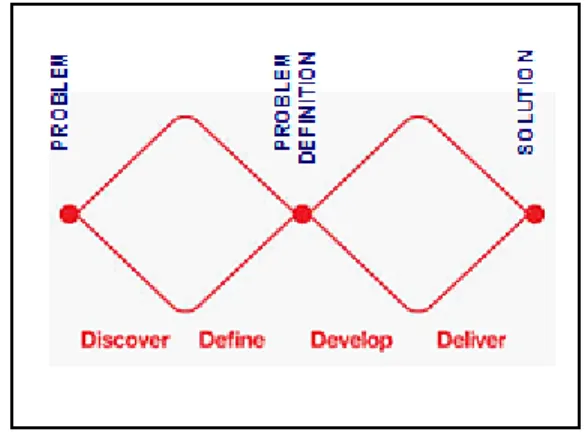
There are many models to describe the design process originating from Archer’s (1965) seminal work on design methods. More recently, research conducted in the UK by the Design Council has proposed a simple double diamond diagram to explain how one might manage design more effectively under the headings of Discovery, Define, Development, and Deliver. The diagram is used below to describe these four distinct areas which show the different modes of thinking that designers encounter when they embark upon a new design project.
Figure 2. The “double diamond” design process model (Design Council, UK, 2007)
The Design Council model offers an iterative process in which knowledge is captured and retained as designers progress from one stage to the next. The discover stage begins with an initial idea or problem identified from user need or demand before the second stage operationalises the design problem into a managed process. This is followed by the development stage based on the generation of concepts, ideas, and potential solutions before the delivery stage when the product or service is tested, agreed, specified, and launched in the marketplace.
In contrast, the cases studies suggest that prior to the commencement of the digital asset management systems, knowledge appeared to being utilised in an unsystematic manner due to inherent problems with the operational structure and working practices.
Table 2. Influence of Interventions on Design Group Knowledge
5.1. Discover
The interviews demonstrated the importance of visualising the brief at the commencement of the design process. Common design tools, such as Mood and Theme Boards are used to communicate and clarify the market context, consumer/audience profile, and style or finish being considered between the client and the design group. The analysis would suggest that the retention of these knowledge assets in digital format can enhance communication throughout the project, providing clarity and purpose while ensuring common understandings or interpretations among designers and clients. The digital versions make the understanding explicit and durable, as these are retained even when individuals change within the project team.
5.2. Define
5.3. Develop
Increasingly the two design groups were moving towards open and accessible working practices to facilitate multidisciplinary approaches to resolve design problems. Specialist knowledge was drawn upon in the co-production of knowledge to resolve complex technical and operational problems. This included input from engineers, technologists, psychologists, sociologists, and anthropologists, amongst others, as required.
Digital asset management systems were able to facilitate access and input to the design process, including remote working, in a cost-effective way alongside file sharing for prototype development and market testing to refine/redesign product proposals.
5.4. Delivery
Case A suggests that the process of implementation of the digital asset management process had an effect on the design group’s knowledge and understanding of itself within its sector. The recognition of a specific market proposition and subsequent rebranding exercise are evidence of socially constructed knowledge whereby the group shares and operates within a common set of meanings and cultural processes underpinning the brand equity.
Equally both cases demonstrate that the information/digital asset management systems offered further advantages in the enhancement of client services whilst the data captured throughout the design process could be used quickly and easily to develop alternative design solutions, if required in the future.
6. Conclusions
Performance through business management is often characterised by strategies, processes, and procedures to exploit market opportunity and optimise efficiency levels (Gibb & Davies, 1990).
The findings of this research would suggest that the management of design groups can be enhanced through appropriate forms of knowledge management. Using technology to capture visual material and the knowledge inherent within it has proven to be useful in practice (e.g., Bassi, 1997; Ruggles, 1998). However, there is a need to guard against a technocratic notion of knowledge management that overlooks human and social aspects (Gumbley, 1998; Robertson & Hammersley, 2000). In summary, to translate “designerly ways of knowing” (Cross, 1982) into tangible knowledge assets requires new “knowledgeable ways of designing.”
digitise outcomes led to a strategic change in working practices but this required an adaptive approach to the design process and new working practices.
Therefore, technical systems in themselves may only provide a means to facilitate effective knowledge production and dissemination. This research would suggest that a combination of trust in management and the intended purpose for the knowledge, as well as good social interaction (as suggested by Robertson & Hammersley, 2000), may be necessary for its successful implementation.
In addition, the exploitation of knowledge is intrinsically linked to the ability to attract and retain design “talent” or “knowledge workers” as often cited in the knowledge management text. The ability to capitalise on this resource throughout the design process requires a balance to be struck between the personal fulfilment of designers (often with a desire for high levels of autonomy and responsibility) and the need for regulation and control. Equally, from a policy perspective, if the contribution of the Creative Industries to the knowledge economy is to be sustained, leaders in design groups have to engender change in organisational culture to effectively capture and exploit knowledge throughout the design process.
Acknowledgements
The author would like to thank the Associates and Directors for their openness and honesty during the interviews and, in particular, the supervisors and staff at the University for the Creative Arts for their help during the research.
References
Alavi, M., & Leidner, D. E. (2001). Knowledge management and knowledge
management systems: Conceptual foundations and research issues. Management Information Systems Quarterly, 25(1), 107-136.
Archer, L. B. (1965). Systematic method for designers. London: The Design Council.
Ashton, P. (2007). Transferring and transforming design knowledge. In C. Smith, K. Niedderer, & L. Reilly (Eds.), Experiential knowledge: New knowledge in the creative disciplines (Proceedings of the First Experiential Knowledge Conference, EKSIG 2007, pp. 1-9), University of Hertfordshire, UK. Retrieved November 28, 2010, from
http://sitem.herts.ac.uk/artdes_research/papers/wpdesign/wpdvol3/ashton.pdf
Bassi, L. J. (1997). Harnessing the power of intellectual capital. Training and Development, 51(12), 25-30.
Cross, N. (1982). Designerly ways of knowing. Design Studies, 3(4), 221-227.
Department for Culture, Media and Sport, UK. (2001). Creative industries mapping document, 2001. London: Author. Retrieved November 28, 2010, from
http://www.culture.gov.uk/reference_library/publications/4632.aspx
Design Council, UK. (2007). Eleven lessons: Managing design in eleven global brands. London: Author. Retrieved November 28, 2010, from
http://www.designcouncil.org.uk/elevenlessons
Eisenhardt, K. (1989). Building theories from case study research. Academy of Management Review, 14, 532-550.
Flanagan, J. (1954). The critical incident technique. Psychological Bulletin, 51(4), 327-358.
Gibbons, M., Limoges, C., Nowotny, H., Schwartzman, S., Scott, P., & Trow, M. (1994). The new production of knowledge: The dynamics of science and research in
contemporary societies. London: Sage.
Gibb, A. A., & Davies, L. (1990). In pursuit of frameworks for the development of growth models of the small business. International Small Business Journal, 9(1), 15-31.
Gumbley, H. (1998). Knowledge Management. Work Study, 47(5), 175-177.
Hands, D., Edge, S., & Jerrard, B. (2004). Design as an integrated process: Haley Sharpe Associates--ten years on. The Design Journal, 7(1), 43-54.
Harvey, J., Pettigrew, A., & Ferlie, E. (2002). The determinants of research group performance: Towards mode 2? Journal of Management Studies, 39(6). 747-774.
Miles, M., & Huberman, A. (1984). Qualitative data analysis: A sourcebook of new methods. Beverly Hills, CA: Sage.
Miles, M., & Huberman, A. (1994). An expanded sourcebook: Qualitative data analysis. Thousand Oaks, CA: Sage.
Robertson, M., & Hammersley, G. (2000). Knowledge management practices within a knowledge-intensive firm: The significance of the people management dimension. Journal of European Industrial Training, 24(2/3/4), 241-253.
Ruggles, R. (1998). The state of the notion: Knowledge management in practice. California Management Review, 40(3), 80-9.
Strauss, A., & Corbin, J. (1990). Basics of qualitative research: Grounded theory procedures and techniques. London: Sage.
Received 25 February 2010 Accepted 17 October 2010