VOLUME 18 ISSUE 2 (2020), Page 97 – 108
TOWNSCAPE APPRAISAL AND CONTRIBUTION OF PHYSICAL FEATURES TOWARDS THE CHARACTER OF IPOH OLD TOWN
Fairuz Syahidah Mohd Lazim1, Shahrul Yani Said2
1,2Faculty of Architecture, Planning and Surveying
UNIVERSITI TEKNOLOGI MARA MALAYSIA
Abstract
Urban character refers to the combination of elements that constitute a town. Ipoh is one of the colonial towns that portrays the character of an old town, where physical heritage elements within its historic area remain intact. However, Ipoh is now developed with many new modern developments and this impacted the physical features of the old city. This paper explores the character of the historic buildings in the old part of Ipoh through townscape appraisal and urban morphology focusing on the building plot. Besides, the study aimed to evaluate the changes in urban fabric following the changes that occurred to the old and historic buildings in Ipoh. The study revealed that rapid urbanisation and changes in urban form resulted in the diverse change of urban characters of Ipoh Old Town. An important contribution can be made to the conservation and management of urban built heritage in Ipoh Old Town, on the one hand, explaining the typologies and evolution of heritage buildings as part of important urban elements could improve the understanding about the building issues so that best conservation practices are suggested.
INTRODUCTION
Urbanisation in Malaysia has taken place since the British colonial era, when the first local authority was established in Georgetown. Since then, urbanisation had proliferated in towns of Malay States, where the building of shophouses contributed to population increase in town areas. Besides, several administration buildings, service facilities, as well as transportation infrastructure, such as train stations were built (Harun & Jalil, 2012). Ipoh is one of the towns considered as an old town, where many of the physical elements still exist today. Nonetheless, being the state capital of Perak, the development of the town has been ongoing. Numerous events have changed the landscape, which has been affected by modernisation. However, many old shophouses which carry significant historical values, have managed to survive through intense urban development, and have contributed to the continuation of local activities, such as retailing within the old town circle. There is an increased variety of activity patterns within the old town area, as the physical elements in the urban space have been improvised and diversified to cater to current needs. This paper is commissioned to identify how those physical features in Ipoh had contributed to the changes in the character of the town itself. Besides, the urban character is also determined based on the urban morphology of the town from the pre-colonial era until the present.
RESEARCH BACKGROUND
The elements within a town have often brought people together to create a collective of enjoyment. When the elements are related to each other, they offer an aesthetic pleasure that attracts people to experience the diversity of visual and aesthetic elements through time. Consequently, a town has a specific visual impact on the people who live in it or on those who visited the town. In this context, the visual effect is represented by the changes in the landscape and appearance due to physical development (James Hutton Institute, 2014).
Under those circumstances, the physical forms of a town and its related activities contribute to urban quality. It is known as an urban character when the combination of available elements creates a lively and vibrant urban setting that
typifies a living town. For the recognition of a town’s existence, it is necessary to
give a positive impact that is crucial to the urban environment. However, the urbanisation pattern nowadays can affect the former identity or character of an old town, which might endanger the cultural heritage value of the nation.
Old towns that are still standing today are evidence of the evolutionary phases of Malaysian history, besides showing different and various identities of urban forms through the history of their morphology (Harun & Jalil, 2012). Most city centres in Malaysia were initially developed as colonial towns with pre-war buildings, such as Georgetown, Kuala Lumpur, and Ipoh (Omar et al., 2016). Today, Kuala Lumpur is well known as the capital city of Malaysia, whereas Georgetown is well-recognised as a UNESCO World Heritage Site since 2008 (Georgetown World Heritage Incorporated, 2018).
Ipoh maintains historical significance that represents its identity as an old town. In fact, it is a historic area that remains intact with heritage elements built within it. Ipoh Local Plan 2020 and the National Heritage Act acknowledged 14 buildings and monuments out of 1,540 in total as significant heritage buildings (Majlis Bandaraya Ipoh, 2012). Ipoh is one of the early towns opened by the British, with a unique character in terms of urban form through building architectural styles and urban morphology with colonial characteristics (Harun & Jalil, 2014).
However, nowadays Ipoh old town is affected by the construction of
new buildings to fulfil development needs and to meet people’s current demands.
With more modern buildings erected around the old colonial town, a sort of competition is generated between the old and new town, which endangers the existence of the old town (Omar et al., 2016). The study attempted to identify and understand Ipoh old town, in terms of morphological and physical features that form a unique urban character. Physical features of a town are often considered as living evidence that characterises its historical attributes and strengthen its
‘sense of place’. Hence, the character of an old town and the physical features
can be seen and felt through the environmental significance.
RESEARCH OBJECTIVES
The first objective is to study the urban morphology of the Ipoh old town from the pre-colonisation period until the present, while the second objective is to identify and compare the changes of the urban character based on its physical features seen in the town.
Townscape as the combination of physical properties and environmental aspects in urban area
interchanges of economic activities, architectural ideas, and socio-cultural diversities (Shamsuddin, 2011). The concept of townscape should be implemented in a city to ensure the creation of a strong character that can potentially contribute to a lively sense of place. Most importantly, this can be beneficial to people in their daily activity patterns and routines. Indeed, it is essential to realise that a pleasant townscape is determined by the quality and attractive attributes of the components.
The process of strengthening townscape requires the combination of physical properties and environmental aspects, such as nature, social life circle, economy, and cultural environment. Townscape integrates economic, socio-cultural, and environmental concepts into a city (Shamsuddin, 2011). It can symbolise a social life with a harmonious relationship and bring character to the culture. Historic old towns rely on physical attributes so its nature can be resilient as it should be.
The main elements in urban spaces play a role in providing significant meanings to a location or a place, which contribute towards the character of the case study. These elements include streets, squares, buildings, and activities that can be classified as the urban fabric. The activities and physical characteristics of the physical features within the case study were concluded to have created a unique identity for the historic urban space; hence, in the context of this present study, it is referred to as the character of the historic old town.
In general, old towns in Malaysia have many significant attributes that preserve various unique heritage values. Urbanisation is essential, but at the same time, old towns must be conserved to emphasise their unique characters, so that they can be appreciated as an identity.
Townscape Appraisal
The best approach to evaluate the extent of the components’ usefulness in
representing the townscape is by applying townscape appraisal, a vital tool to assess and evaluate the relationship among elements that form the urban fabric and the generation of movements and activities. Such evaluation is necessary to identify the effects of a townscape to the city, which creates the city’s character.
Figure 1:
Townscape Appraisal Approach
Said et al., (2014) explained that studies by Solomon and Johnston in the late 1960s emphasised the importance of townscape analysis to study the relationship of buildings and their occupants (Solomon, 1966). The authors explained that to understand the character of a townscape, a detailed analysis of the structures and their historical context could provide guidelines for the townscape characteristics. Townscape can be overviewed by using three approaches that involve physical evaluation, socio-cultural evaluation, and historical and morphology (Figure 1). These mixed-method approaches are carried out at the stage where field study and secondary data research were being conducted (Shamsuddin, 2011).
The assessment of these criteria is made through observation, structured interviews with the residents, and property managers. Nevertheless, cultural and religious values are often subjective, and thus, difficult to be quantified. However, a fractal analysis extended by Cooper et al., (2013) to include Taiwanese evidence suggested that culture has a deep-seated influence on the formation of a townscape attitude. The study on the layout of historical cities in Malaysia reflected the importance of religious and cultural aspects in the society. This supports the need for assessing both values to learn how regeneration can affect a diverse, multi-ethnic society, such as the one in Malaysia.
METHODOLOGY
This research adopted mixed methods that involve old documents and old map review, visual survey through direct observation of physical elements in the
heritage of old town and questionnaire to obtain respondents’ perception. Most
parts of this paper are based on primary data that applied a qualitative descriptive method as the core. A quantitative method was also adopted, so the analysis would be sufficiently valid to support the findings from the qualitative method. Thus, this research conducted both data collection methods simultaneously to ensure the data interpretation was more reliable.
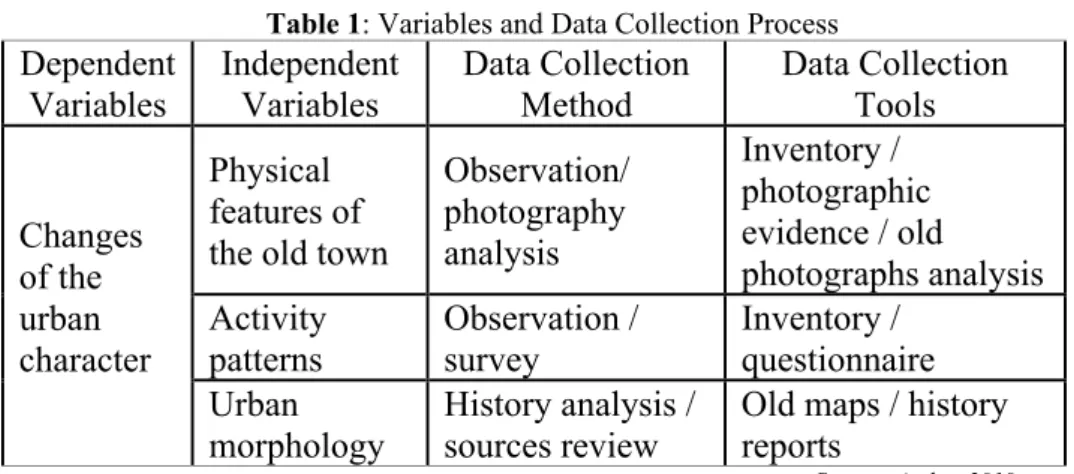
Table 1: Variables and Data Collection Process
Dependent
Variables
Independent
Variables
Data Collection
Method
Data Collection
Tools
Changes
of the
urban
character
Physical
features of
the old town
Observation/
photography
analysis
Inventory /
photographic
evidence / old
photographs analysis
Activity
patterns
Observation /
survey
Inventory /
questionnaire
Urban
morphology
History analysis /
sources review
Old maps / history
reports
Source: Author,2019
Photographic analysis is essential to identify and compare the changes of the urban character based on physical features in the historical elements. It involves the collection of old photographs and current photographs. Additionally, inventory is prepared to record the outcome of the visual survey which based on intuitive feelings that describe how the researcher observed and experienced the
place, in terms of the buildings’ appearance, people’s activities, public seating
areas, public facilities, and street furniture within the old town area. A supporting medium, such as photographs, were attached to the observation inventory. This direct observation approach was applied to understand the relationship between physical features and its effects on the urban character. It was conducted at Jalan Dato Maharajalela – Tun Sambanthan, Jalan Dato Sagor, Jalan Sultan Yusuff, Jalan Bandar Timah, Jalan Market, Jalan Panglima, Tingkat Pasar, Hala Pasar Baru and Lintasan Pasar Baru.
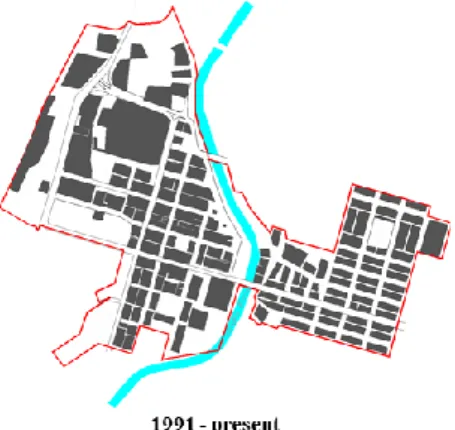
Questionnaires are outlined into three (3) sections, which consist of the background profile to identify the characteristics of visitors that tend to be in the area, activities that were carried out in the study area to identify the purpose of visiting the area, and perceptions of respondents to acknowledge the opinions on the changes and current condition of the area. The respondents were randomly selected among the visitors within the study area, to ensure the validity and reliability of the analysed outcome for the research. As for the urban morphology analysis, it was carried out to understand how Ipoh Town had initially started and developed rapidly until the present. The scope of the analysis involves the year 1870 until the present day.
FINDINGS
Figure 2: Urban Morphology of Ipoh Old Town
Source: Author, (2019)
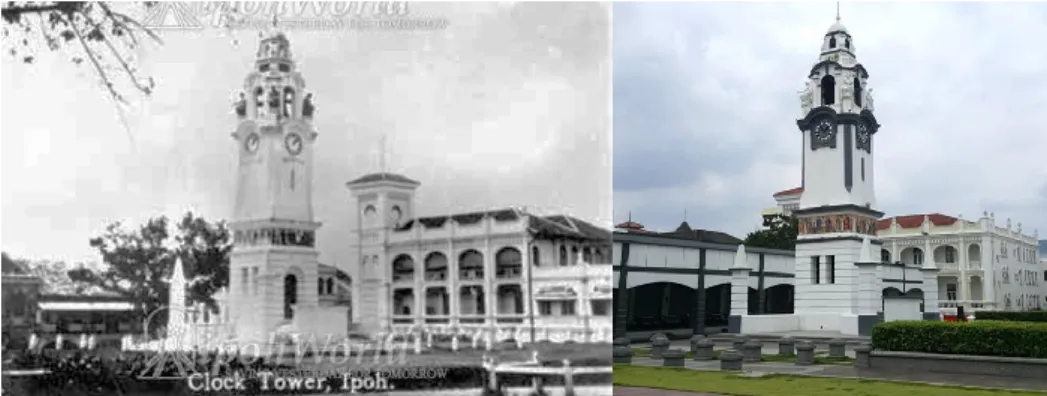
Figure 3: Memorial Clock Tower of J.W.W Birch Year 1920 (left) and Present (right)
Source: Anderson (2007) and Author, (2019)
The main elements that create the character of the place are streets, squares, buildings, and activities. In reference to Ipoh, users tend to walk around and involve in street activities, such as taking pictures, hanging out, retailing, and enjoying visual attractions featured by the old buildings. As for example, Concubine Lane, formerly known as Lorong Panglima, was an empty small lane of local houses. Now, the lane is occupied with retail activities and visitors (Figure 4). Moreover, questionnaire survey has found that most of the respondents are attracted to the physical features in the area, followed by visual and photography attractions, social activity at the area, and for self-enjoyment (Figure 5). This shows a current scenario that is influenced by surrounding elements has strengthen the ambience of the historic old town, which can be the pull factor to attract visitors.
Figure 4: Concubine Lane in 2010 (left) and in Present (right)
Figure 5: Responds on Questionnaire
Source: Author, (2019)
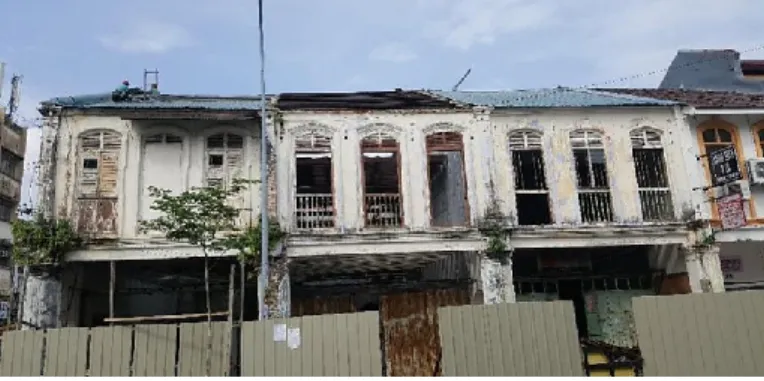
On the other hand, most of the remaining old features have been preserved to maintain their significant aesthetic values. Attention should be given to several old buildings because poor appearance can contribute to unpleasant feelings and unsightly visual impacts (Figure 6).
Figure 6: Decaying Old Shophouses at Jalan Market
Source: Author, (2019)
physical features is intertwined between distinctiveness, diversity and heritage values which are of importance for their preservation.
CONCLUSION
Physical changes play a significant role in the morphology of a town, since the changes in townscape elements enrich the history of the place. Urban conservation is a way to maintain the character of a town. Nonetheless, additional modern development should complement the existing townscape. For Ipoh, the heritage buildings in the old town should be conserved and preserved as local
assets and for the sake of the town’s character. Successful old town preservation
creates a diverse social activity among local users and visitors. This will ensure the socio-cultural value is not lost over time. Indeed, it is a norm for a town to undergo rapid changes as part of the urbanisation process. However, the aesthetic value of a town needs to be maintained, revitalised, preserved, and conserved as it will display diversity between old and new development.
ACKNOWLEDGEMENTS
This research is part of the study to understand the changes in townscapes, carried out for FRGS Research (IRMI-600-FRGS 5/3 (026/2017) funded by the Ministry of Education.
REFERENCES
Anderson, I. (2007). Memorial Clock Tower of J.W.W Birch. Retrieved from https://db.ipohworld.org/view.php?type=id&id=746#search_form_wrapper Cooper, J., Su, M. l., Oskrochi, R. (2013). The influence of fractal dimension and
vegetation on the perceptions of streetscape quality in Taipei: with comparative comments made in relation to two British case studies. Environment and Planning
B: Planning and Design 40(1) 43-62. doi: 10.1068/b38010
Georgetown World Heritage Incorporated. (2018). The Georgetown UNESCO World Heritage Site. Retrieved from http://gtwhi.com.my/about-us/george-town-unesco-world-heritage-site/
Harun, S.N. & Jalil, R.A. (2012). The Morphological History of the Malaysian Urban Form. Proceedings of the International Economics Development and Research, 111-116. doi: 10.7763/IPEDR.2012.V48.24
Harun, S.N. & Jalil, R.A. (2014). The History and Characteristics of Malay Early Towns in Peninsular Malaysia. Asian Journal of Humanities and Social Studies 2. 403-409. ISSN: 2321-2799
Majlis Bandaraya Ipoh. (2012). Laporan Ringkasan Eksekutif Rancangan Tempatan
Daerah Ipoh 2020. Ipoh: Majlis Bandaraya Ipoh.
Mohmad Shukri, S., Wahab, M. H., Che Amat, R., Taib, I. & Ismail, S. (2018). The Morphology of Early Towns in Malay Peninsula. Journal of Engineering and Technology. Vol 7 (3.9) 77-80. doi: 10.14419/ijet.v7i3.9.15274.
Omar, S. S., Sakip, S. R. M. & Akhir, N. M. (2016). Bringing the New to the Old: Urban Regeneration through Public Arts. AMER International Conference on Quality of Life. Medan: Elsevier. doi: 10.1016/j.sbspro.2016.10.270
Rohayah, C. A., Shuhana, S. & Ahmad, B. S. (2013). The Contribution of Historic Urban Spaces in Influencing the Character of George Town UNESCO World Heritage Site, Malaysia. The Sustainable City 2013, vol. 179. doi: 10.2495/SC131012 Said, S. Y, Zubir, S. S. & Rahmat M. N. (2014), Measuring Physical Changes in an Urban
Regeneration Scheme, The Sustainable City IX: Urban Regeneration and Sustainability, 1-10. doi: 10.2495/SC140982
Shamsuddin, S. (2011). Townscape Revisited: Unravelling the Character of the Historic Townscape in Malaysia. Johor Bahru: Cetak Ratu Sdn. Bhd.
Solomon, R. J. (1966). Procedures in Townscape Analysis. Annals of the Association of American Geographers 56 (2), 254-268. doi: 10.1111/j.1467-8306.1966.tb00557.x
Times of Malaya. (2010). Times of Malaya. Retrieved from
http://imesofmalaya.blogspot.com/2010/08/concubine-lane-lorong-panglimaipoh.html