A Study of the Effectiveness of
Special Schools
December 2005
Education and Manpower Bureau
Hong Kong Special Administrative Region of
Contents
Chapter
Page
Executive
Summary
ii
1 Introduction
1
2
A Summary of International Trends
3
3
Development of Special Education in
Hong Kong
7
4
The Study Process
13
5 Main
Findings
15
6
Managing Special Schools More
Effectively
24
7 Summary
and
Recommendations
36
Appendices
I.
List of Local and Overseas Experts
Participating in the Study of Ten
Special Schools
II.
Framework for the Study of the
Effectiveness of Special Schools
III.
Membership of the Core Team for the
Study
IV.
Findings from the Study of the
Effectiveness of Special Schools
V.
A Review Framework for Special
Schools
41
42
43
44
53
Executive Summary
Background
The Education and Manpower Bureau (EMB) is committed to providing quality special education in Hong Kong. In the forthcoming reform of academic structure, emphasis will be placed on the learning outcomes for students with Special Educational Needs (SEN) and expected learning outcomes will be clearly delineated in the curriculum. The Government has consistently invested considerable resources in special education. With the reform of academic structure, it is opportune for EMB to conduct a comprehensive review of special education. This present study on the effectiveness of special schools is to assess whether resources have been effectively deployed to support and enhance students’ learning. The focus will be on the extent to which the schools appropriately deploy and manage the existing resources to maximize positive outcomes for students.
The Study
This report presents the main findings and recommendations of a study of the work of special schools in Hong Kong. The study draws on findings from inspections of policy and practice in a sample of ten special schools including Visually Impaired, Hearing Impaired, Physically Disabled, Mild and Moderate Mental Handicap, Mild Mental Handicap, Moderate Mental Handicap, and Severe Mental Handicap. The inspections were conducted in October 2005 by teams of local and overseas inspectors to address the following questions:
y Are special schools appropriately resourced?
y How well do they manage their resources in order to foster student learning and development?
y How successful are the schools in achieving learning outcomes for their students?
y How might their resources be used more effectively?
Subsequent to the school inspections, a core team comprising senior officers of EMB, a local expert and two international consultants on special education analyzed and consolidated the findings to compile this report.
Main Findings
Special schools will continue to have an important part to play within Hong Kong’s educational provision for the foreseeable future. Parents of children with SEN view these schools as viable and effective settings in which to provide for their children’s needs. However, there will be significant changes in their roles, particularly in their partnership with mainstream schools, as the process of inclusion develops. These trends are consistent with international developments. While the future of the special school sector is assured, this is contingent on these schools undertaking major reforms similar to those required of mainstream schools. Staying the same is not an option. While many strengths have been identified within the special school sector, as well as a significant number of weaknesses, major changes are required if all special schools are to meet the future educational challenges of providing their students with the highest possible level of personal autonomy and educational achievement consistent with their capabilities.
The special education sector faces major challenges, some of which arise from the tendency for students in the special schools to have more complex impairments. This, in turn, is a result of advances in medical science and the more accurate and timely identification of children requiring significantly different educational provisions. There are also opportunities for the schools to develop wider roles in relation to developments for responding to student diversity within mainstream schools.
The overall resource allocation to Hong Kong’s special schools, human, financial and capital, is good by world standards. In particular, it is noted that the schools are well staffed with suitably qualified teachers, most of whom are highly committed and hardworking. The schools are also fortunate by standards in other developed countries in that they have available a range of specialists, such as speech therapists, many of whom are located in the schools on a full time basis. In addition, the schools have other personnel, such as nurses, social workers and teaching assistants,
who are available to support teachers in their work and students in their learning. The current levels of resources should enable them to operate effectively and successfully in the interests of their students. The real challenges lie elsewhere, i.e. in resource management. The extent to which these resources are appropriately and effectively deployed varies greatly from school to school. In a few instances the deployment of resources is ineffective, resulting in student learning outcomes which are unacceptably low. There are, however, examples of good practice that can be used as the basis for improvement across the system.
Additional support to the schools, in the form of administration, training and school visits, comes from EMB staff and representatives of the various sponsoring bodies. This brings into the schools further expertise and energy which adds value to their work. In some instances, sponsoring bodies provide schools with networks within which they can share expertise. As a result, principals also meet together, as do teachers who share the same specialism or subject discipline. Again, there is a significant variation between the groups in the extent to which such networking occurs and those schools not in the network are relatively disadvantaged.
In the more successful schools, the management of resources is characterized by a strong sense of purpose. Here, leadership tasks are distributed amongst many members of staff, an emphasis is placed on team work and evidence is strategically used to formulate priorities. The implementation of plans is also closely monitored. Where the practice is good, many staff, including less experienced teachers, are encouraged to take up curriculum leadership roles. This means that these schools are effective in ensuring that resources are well targeted in relation to development tasks that are seen to be important, giving them the capacity to address the new challenges they face. Unfortunately, however, about half of the schools inspected appear to be rather ‘stuck’; whilst resources are generally well used to achieve the requirements of day-to-day maintenance activities, there is much less evidence of a capacity for managing change. Given the many new challenges that special schools face, this apparent lack of capacity to handle change is a matter of considerable concern. It points to the need for managers who are skilful and confident in providing effective leadership.
Those employed in special schools work hard to provide a secure and caring environment for their students. This effort should be matched by quality leadership and management that will maximize the benefits to students from the considerable investment represented in these schools. Such quality leadership is insufficiently
established at present and management at all levels calls for improvement.
In many of the schools, it is necessary to develop a broader curriculum that will help to prepare the students for independent lives within the community. There are examples of good practice that can be used as the basis for future reform efforts. These include well managed processes of school-based curriculum development within which intended learning outcomes have been determined and efforts made to create links between different subject disciplines. A majority of the special schools have set objectives in line with the curriculum reform and a similar number have flexible timetabling to cater for the needs of particular groups of students. Others have no curriculum targets to guide the selection of content or to set appropriate expectations of students. In a few cases, the curriculum is narrow and skills-based with targets mostly related to “rehabilitation” and heavily influenced by therapists. It is not explicitly based on an entitlement to a broad and balanced curriculum. Many panel heads seem to be detached from the latest thinking within the mainstream curriculum and see their role as being largely administrative. Clearly, the new situation within the schools demands that these members of staff should take on the key role of leading curriculum development and innovation.
The difficulties that exist regarding curriculum breadth seem to arise from the absence of a clear statement as to the overall purposes of special education and the lack of an agreed curriculum framework. The existing categorical frameworks are out of date by international standards and tend to reinforce low expectations. They also encourage a rather narrow and functional view of the overall purposes of education in the special schools. The principle of ‘the same curriculum framework for all’ is, therefore, helpful in addressing this concern. It can be used to affirm the right of every student to take part in a broad curriculum that prepares them to be valued members of society, albeit in ways that take account of their individual characteristics as learners. New teaching strategies and methods of assessment that will lead to higher levels of achievement should be adopted. The curriculum of special schools should work in parallel with that of mainstream schools and must prepare students for a worthwhile and fulfilling adult life.
The quality of lessons was, in the main, satisfactory, although there was considerable variation from school to school. Some examples of good practice were noted but, in a few instances, standards were found to be unacceptably low. Most staff members are hardworking and committed, and students are usually well behaved and highly motivated to learn. Relationships between staff and students, and the
level of care that is provided, are excellent across the sector. The teaching strategies in special schools must shift towards practices which empower students and challenge them to become more active and independent learners. Too often, the range of teaching strategies used is narrow and mainly adult-directed, didactic in style. As a result, students are often passive during lessons and there is little use of student-to-student interaction as a strategy for stimulating engagement and learning. The fact that middle managers are mainly focused on administrative tasks means that many of the schools lack a capacity to support and challenge teachers in exploring new practices in their classrooms.
The inspectors found difficulty in determining the quality of learning outcomes in the schools they visited, since most had inadequate systems in place for monitoring teaching and learning and tracking the progress of individual students. Teachers and administrators in special schools should make full use of Individualized Education Plans (IEP) as a means of determining priorities for student learning. The IEP should form the basis for curriculum planning, target setting, classroom practices, inter-disciplinary problem solving and home-school cooperation.
Upon leaving special schools, students should receive forms of accreditation that are universally recognized and respected as a celebration of achievement and a qualification for further study or employment. Parents and schools currently cooperate well but that should be a partnership which demands more of students, setting and maintaining higher expectations of achievement. In general, parents expressed satisfaction with the work of the schools and the progress their children were making. Some parents are involved in assessing homework tasks and students’ progress in independent living. However, in most of the schools they are not involved in reviewing progress in relation to learning targets. Consequently, their views may well be based on more general impressions of the overall working atmosphere within the schools.
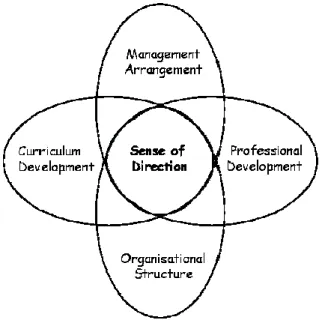
Special schools are experiencing considerable uncertainty and change, particularly in terms of curriculum reform and a more varied and challenging student intake. They lack a sense of direction and their role within the educational community needs to be redefined.
Recommendations
Taking account of these findings, the following recommendations are proposed:
1. Purposes: There should be a clear statement of the principles upon which special education provision will be based in the future. This must make clear the expectations that the community has of its special schools. It must also emphasize the importance of working towards social integration.
2. Curriculum: Special schools should be provided with a statement of the curriculum framework that they are required to follow. This should be based on the idea of ‘the same curriculum framework for all’ and should point to the importance of having closer links with mainstream developments. Each school then has to establish an effective mechanism for developing a version of the overall framework, stating intended learning outcomes and taking account of the characteristics of its students. The school-based curriculum framework should also reflect the school culture and its development goals.
3. Classroom practice: Powerful strategies should be introduced to support and challenge staff in all of the special schools in developing their classroom practice. Staff development and school improvement measures should be more closely linked. Schools need to have mechanisms in place to monitor teaching and learning, including staff appraisal systems. Special school teachers should develop creative approaches to structure alternative environments for students with challenging behaviours. As the curriculum is developed, intended learning outcomes should be identified as part of the curriculum design and assessment arrangements should be built into routine classroom practice.
4. Management and leadership: Arrangements should be put in place to strengthen management and leadership practices within the special schools. Particular emphasis needs to be placed on the development of the expertise of principals and the strengthening of the leadership of middle managers in relation to the development of a balanced curriculum and the improvement of classroom practice.
5 Monitoring: Effective procedures should be introduced to ensure that the progress of students is assessed and monitored regularly, and that parents are fully involved in these procedures. In addition, special schools should develop
rigorous procedures for setting targets for organizational improvement and collecting evidence in order to monitor progress towards the achievement of these targets. Arrangements should also be put in place to monitor what happens to students when they leave special schools. This will provide feedback for continuing improvement of the school curriculum to meet the needs of its students in enjoying an improved quality of life.
6. Support: The changes that are required are likely to be challenging to the thinking and practice of all school personnel. Consequently, there will be a need for effective systems of school-based staff development and the provision of high quality in-service training for all levels of school staff. It will be important to provide credible external support for those involved, particularly in relation to the management of change, curriculum development and the improvement of learning and teaching. With this in mind, it will be helpful to set up networks locally and with colleagues in other countries who are struggling to introduce similar reforms.
7. Regulation: More effective procedures should be maintained to monitor and review policies, practices and learning outcomes in the special schools through processes of self-evaluation and external school review, moderated by occasional inspections. Sponsoring bodies need to be closely involved in the monitoring process and, where there are concerns, these should lead to rapid and effective intervention.
8. Implementation: Given the importance and extent of the proposals outlined in this report, it will be important to have an effective strategy for ensuring that appropriate action is taking place. Coordination of effort will be essential and it would be sensible to create a Steering Group, comprising representatives of school principals and senior officers from EMB. The Group will take on the tasks of monitoring progress and coordinating networking across the system.
Way Forward
It is suggested that progress in implementing these recommendations should be reviewed two years after decisions on allocation of resources to special schools under the new academic structure have been finalized.
Special schools should move more quickly to the full implementation of IEP as the central tool for ensuring progression in student learning and, in doing so, review their overall educational priorities. In best practice the IEP forms the basis for curriculum planning, target setting, classroom strategies, inter-disciplinary problem-solving and home-school cooperation.
School leaders need to be able to link planning more closely to implementation and set up staffing structures and school processes that enable changes to have an impact across the whole school.
1. Introduction
Background
As pledged in the Action Plan for the Reform of the Academic Structure for Senior Secondary Education and the meetings of the Legislative Council Sub-committee, EMB is formulating a proposal on the related implementation details. In this connection, EMB is taking forward a comprehensive review on special education. The review will collect views from teachers, parents, students where appropriate and external experts. As an integral part of the comprehensive review of special education, the present study on the effectiveness of special schools is to assess whether resources have been effectively deployed to support and enhance students’ learning. The focus will be on the extent to which the schools appropriately deploy and manage the existing resources to maximize positive outcomes for students.
The Study
This report presents the main findings and recommendations of a study of the work of special schools in Hong Kong. The study draws on findings from inspections of policy and practice in a sample of ten special schools including Visually Impaired, Hearing Impaired, Physically Disabled, Mild and Moderate Mental Handicap, Mild Mental Handicap, Moderate Mental Handicap, and Severe Mental Handicap. The inspections were conducted in October 2005 by teams of local and overseas inspectors to address the following questions:
y Are special schools appropriately resourced?
y How well do they manage their resources in order to foster student learning and development?
y How successful are the schools in achieving learning outcomes for their students?
The report was compiled by a group of senior EMB officers, a local expert and two international consultants on special education. Together they considered the individual reports of the ten special schools inspected, linking their analysis to trends in the field internationally in order to develop findings that can be used to guide future school and system development. Despite the moves for more inclusive education, special schools remain viable and effective settings for students with SEN. However, like all schools, special schools are required to change in order to provide more effective and quality education for children with different special needs.
The report consists of six sections. Following this short introduction, Chapter 2 provides an analysis of international trends in order to provide areas of focus for the review. Chapters 3 and 4 outline the local policy context and describe the way in which the sample of ten special schools was inspected. Then, in Chapter 5, findings are presented, based on the evidence collected from the ten reports. This leads to a discussion of resource management in Chapter 6, followed by a series of recommendations in Chapter 7.
2. A Summary of International Trends
In order to provide a broader context for the study, both local and overseas experts in the field are engaged. Developments in other countries are summarised in order to provide reference points for the analysis of the Hong Kong situation.
International Trends
The 1990s saw considerable efforts in many countries to develop more equitable forms of schooling. The United Nations’ strategy, ‘Education for All’, encouraged such initiatives, focusing specifically on the need to reach out to excluded and marginalised groups of learners, not least those with disabilities. Further impetus was encouraged by UNESCO’s Salamanca Statement, in 1994, on the future of special needs education. It argued that the development of mainstream schools with an inclusive orientation is the best means of achieving ‘Education for All’.
In the light of these trends, internationally, special education is involved in a period of considerable uncertainty. In particular, the emphasis on inclusive education that is now evident in many countries, challenges practitioners to reconsider their own thinking and practice. This context of uncertainty provides the special education field with new opportunities for continuing its historical purpose of representing the interests of those learners who become marginalised within existing educational arrangements. At the same time, many of the assumptions that have guided the organisation and practices of special education may no longer be relevant to the task. The field is subject to considerable debate and, indeed, dispute with respect to future directions.
A brief look at history reminds us that in the 19th Century special educators in many countries argued for, and helped to develop, provision for children and young people with disabilities, who were excluded from educational plans. Only much later did this provision become adopted by national governments. Similarly, provision for children experiencing difficulties within mainstream schools grew as a result of a gradual recognition that some students were either marginalised within, or
excluded from, existing arrangements for providing education. As this provision developed during the latter part of the 20th century, there was also increased emphasis on notions of integration, as special educators explored ways of supporting previously segregated groups in order that they could find a place in mainstream schools.
It can be argued that the current emphasis on inclusive education is but a further step along this historical road. It is a major step in that the aim is to transform the mainstream in ways that will increase its capacity for responding to all learners. Such moves require the participation of many stakeholders in ways that challenge much of the status quo in both the special and mainstream sectors.
New Approaches
As a result of the moves towards greater inclusion, in many countries the numbers of special schools are gradually being reduced. It is also evident that greater emphasis is being placed on ensuring that the special schools that do exist are more closely linked to mainstream developments. At the same time, like all schools, they are under greater pressure from their communities to improve their performance standards in terms of student outcomes. Progress in this respect seems to be associated with the requirement of special schools to make use of the overall curriculum framework that all schools are expected to follow, plus target setting and regular monitoring of student progress, carried out in partnership with parents. In addition, much more emphasis is being placed on ensuring that special schools have access to external support in relation to curriculum development and the improvement of teaching, often through closer links with mainstream schools. Finally, arrangements for ensuring accountability have been strengthened through the introduction of rigorous systems of school inspection and school review processes.
There is also evidence that the changing context is encouraging special schools to explore new roles. These new approaches aim to build closer links with mainstream schools in order to widen curriculum and social learning experiences for special school students. The main emphasis is on finding ways of ensuring these young people are helped to become independent and valued members of the community. At the same time, the changes that are occurring are attempts to use the expertise and resources of special schools to support a larger number of vulnerable learners within the mainstream.
internationally, it is possible to discern four main approaches:
1. The development of what might be described as enclaves within mainstream schools so that special school students can experience aspects of the mainstream curriculum;
2. Strategies to provide direct support to individual students in the mainstream who are seen as being vulnerable to exclusion, or referral for possible transfer to special provision;
3. The development of partnership roles for the special school in strengthening inclusive practices more generally within the mainstream through joint school and staff development initiatives; and
4. The co-locating of special schools within mainstream buildings in order to facilitate sharing of resources and the informal movement of students between the partner organizations.
In some countries the emphasis that is now being placed on networks or clusters of schools seems to be particularly helpful in creating contexts within which these new forms of school-to-school collaborations can be explored. Such arrangements are also a means by which principals can support one another as they introduce the forms of flexible organization and distributed leadership that are necessary to develop such partnerships.
Dilemmas and Challenges
Such initiatives draw attention to the dilemmas and challenges that face special schools as they seek to explore ways of working within the so-called ‘inclusion agenda’. For example, in some countries special schools have outstanding facilities and resources, not least in terms of technology. Given this evident strength, why should parents see the mainstream as a positive option? At the same time, in order to ensure the continuation of their current financial arrangements, special schools need to maintain their student numbers. So, what incentive is there to put more effort into strengthening mainstream provision? Additionally, is it sensible to invest staff time in supporting individual students within mainstream schools if this reduces the quality of provision made for those within the special school context?
In some countries, principals of special schools involved in various types of inclusion-related initiatives, refer specifically to staffing issues that have to be addressed. From a management perspective, for example, a key strategic issue relates to the need to arrange staff time so that they can be out of school supporting mainstream activities. In some schools it is one teacher who mainly does the mainstream link work. Other schools have decided that it is better to involve many staff, including support assistants, in these activities.
Those in special schools point to wider contextual factors that can act as barriers to the further development of their roles. In particular, it is noted in some countries that national policy initiatives to ‘raise standards’ tend to leave mainstream schools with less space, time and resources in order to experiment with collaborative arrangements. In addition, rigidity of curriculum and teaching approaches, and the need to achieve improved examination results are also seen as problems. It is evident, too, that confusion about the purposes of inclusion can act as a barrier to further development, leading some in the special school sector to argue that greater progress would be possible if there was a clearer lead from national governments.
Implications for Hong Kong
These international developments suggest some areas that need to be borne in mind when reviewing the situation in Hong Kong. In particular, they show the need to consider how far the schools are geared to the development of new ways of working that will broaden opportunities for their students through developments in curriculum and teaching, and through closer links with the mainstream.
In this context, special schools will need to have flexible arrangements for the use of human resources and organizational cultures that encourage experimentation and collective problem-solving. Such cultures are necessary in order to develop more effective ways of responding to the increasingly challenging populations within the special schools. It may also be that they are the most important gift that the special education community can offer to the movement towards more inclusive forms of education.
3. Development of Special Education in
Hong Kong
This section outlines the development of provision for students with special educational needs (SEN) in Hong Kong, focusing in particular on the contribution of special schools. It also explains how a sample of ten schools was inspected in order to provide the evidence upon which the report was written.
Special Education
Special education is provided for children who cannot benefit from provision in mainstream schools because of a learning difficulty or disability. The aim of special education is to help them develop their full potential and achieve independence as well-adjusted individuals in the community.
Early development of special education services in Hong Kong was mainly led by philanthropic organizations and missionaries, with the focus on care-giving. In 1863, for example, Catholic Canossian sisters founded a home for the blind: other missionaries founded the first school for the deaf in 1935. In 1960 the government established a Special Education Section within the Education Department to take responsibility for special education services. Between the 1960s and 1980s, these services expanded rapidly through an increase in the number of special schools.
At present, there are 62 special schools with approximately 8,000 children enrolled. These schools are classified according to the categories of children they serve, as follows:
y visually impaired
y hearing impaired
y physically disabled
y social development
y mildly mentally handicapped
y severely mentally handicapped
y mildly and moderately mentally handicapped
y hospital schools
The largest number of special schools is in the category of intellectual disability, previously described as mental handicap. For these schools, the Intelligence Quotient (IQ) score is the key criterion used for identification and admission purposes. The scores used to determine the various grades are: Mild (IQ 50-69), Moderate (IQ 25-49), and Severe (IQ below 25). If the student has more than one handicapping condition, the primary handicap will be used to determine school placement. Thus, a child identified as having a mild grade intellectual disability together with autistic features, will be placed in a special school for mildly intellectually disabled students. Parental consent is required before a student can be placed in a special school.
Most special schools offer primary and junior secondary programmes. There are some special schools that offer preparatory courses for children aged four years and other senior secondary education courses. From September 2006, responsibility for preparatory classes will be transferred to the Social Welfare Department.
Special schools are fully funded by the Government and operated in line with the provisions of the ‘Code of Aid for Special Schools’. In addition to teachers, special schools are also provided with specialist staff, such as speech therapists, occupational therapists and physiotherapists, according to the categories of children they serve.
Integrated Education
Hong Kong has followed the worldwide trend towards integration, described in Chapter 2, to enable students with SEN to benefit from mixing and interacting with their age peers in a mainstream school environment. In September 1997, the government launched a two-year pilot project Integrated Education (IE) for integrating students with five types of disability: mild mental handicap, visual or hearing impairments, physical disabilities and autism with average intelligence. Forty-nine SEN children from seven primary and two secondary schools were involved in this integration project. The pilot schools were resourced with an additional teacher, a learning support assistant, where appropriate, and a grant from the government. Besides establishing a school integration policy, they were encouraged to use collaborative teaching, Individualized Education Plans (IEP), assistive technology, peer support and parental participation. The integration project was extended in 2003 and the number of IE schools has increased progressively to a
current total of 117.
In 2004, the government initiated a new funding mode to replace the integration project, marking a new phase in the development of integrated education. It involves whole school support for students with special needs and flexible funding to provide for the coordination of all support services. In the school year 2005/2006, 334 schools are using this new approach. Besides, sixteen special schools have taken on an additional role to become resource centres. They are expected to provide professional support and advice to mainstream schools, whose students include those with SEN.
Some children with borderline performance have adjusted well to mainstream schools and will continue to receive their education there. This has resulted in a reduced demand for special school places for children with mild learning difficulties. At the same time, there has been an increase in the number of children with additional and multiple disabilities placed in special schools. Special schools are, therefore, under pressure to adapt and strengthen their capacity in order to cater for increasing student diversity.
Current Curriculum Practice
The curriculum for children with SEN should follow closely the aims described by the Education Commission (2000) and the curriculum framework, ‘Learning to Learn’ (Curriculum Development Council, 2001). Government policy is to ensure that all students, including those with SEN, have equal opportunities for learning in line with the principle of ‘the same curriculum framework for all’.
Some students with SEN, particularly those with sensory impairments or physical disability, are capable of studying the mainstream curriculum in special schools. They can learn well, with appropriate curriculum and assessment adaptations and extra time and support.
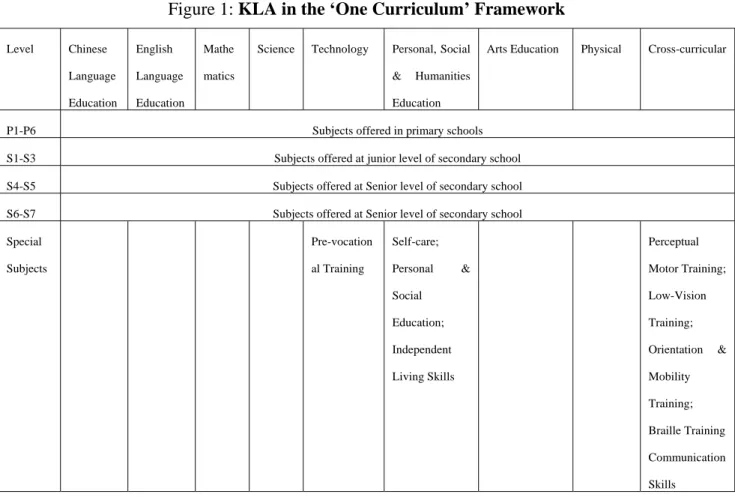
Hong Kong has adopted a common curriculum framework for setting the learning targets and monitoring the standards of students at various stages of schooling. The existing framework comprises three interconnected components, ‘Key Learning Areas’ (KLA), ‘Generic Skills’ and ‘Values & Attitudes’. For the special schools for intellectually disabled students, the curriculum selects and adapts aims, targets, content and assessment outcomes appropriate to the specific needs, abilities and interests of students. The generic skills, values and attitudes of the
common curriculum can be applied, with some adaptation, for students with intellectual disability in both mainstream and special schools. There may be difficulties, however, in applying the curriculum content of the eight KLA for these students. Often, the curriculum content will differ significantly from that for students with no identified special needs.
The subjects offered in the different KLA are, generally, consistent across primary and secondary schools but this may not be the case in special schools. The table below illustrates the differences. Special schools are encouraged to design a ‘school-based’ curriculum to suit the needs of their students. Because of the specific needs of students with SEN, some special schools may find it difficult to achieve a well balanced school-based curriculum.
Figure 1: KLA in the ‘One Curriculum’ Framework
Since the 2002 school year, special schools for children with intellectual and physical disabilities have begun to introduce the Extension of Years of Education gramme. This provides for an additional two years of school education r c ocial Level Chinese Language Education English Language Education Mathe matics
Science Technology Personal, S & Humanities Education
Arts Education Physical Cross-curricular
P1-P6 Subjects offered in primary schools S1-S3 Subjects offered at junior level of secondary school S4-S5 Subjects offered at Senior level of secondary school S6-S7 Subjects offered at Senior level of secondary school Special Subjects & on; Perceptual ing; sion & aining ation Pre-vocation Self-care; al Training Personal Social Educati Independent Living Skills Motor Train Low-Vi Training; Orientation Mobility Training; Braille Tr Communic Skills (EYE) pro
school to work and post-school institutions, and to lay a good foundation for an improved quality of adult life.
New Academic Structure for Senior Secondary Education and
igher Education
etter prepare students for the challenges of a new century and rapidly developing knowledge-based society. This new academic system will
re for Senior
EMB sees the need to engage in more active dialogue with stakeholders on the cial schools. Since May 2005, a number of meetings have been eld with parents and different types of special schools on issues including the years
H
The direction for developing a new senior secondary (NSS) and university system has been set to b
a
enable all students to study for three years in the senior forms of secondary school. It aims to better prepare all students for work or further learning, with enhanced language and mathematical abilities and a broadened knowledge base.
Since all students will be entitled to three years of senior secondary education, the current provision for students with SEN and the specific needs of different groups of students will have to be reviewed. The ‘New Academic Structu
Secondary Education and Higher Education First Consultation Report (2005)’ has proposed that special schools for the visually impaired and those for social development will maintain the current mainstreaming policy. For special schools for the hearing impaired and the physically disabled, ten years of basic education will be maintained, to be followed by three years of senior secondary education. For students with intellectual disability, including those attending other types of special schools, it is proposed that they should have six years of secondary education based on the present EYE curriculum. For hospital schools, EMB will explore the possibility of extending their services to senior secondary students.
Overall Review
way forward for spe h
of schooling, resources and curriculum arrangements. The meetings also raised questions on class size, extension of boarding services for students with physical disability and the introduction of Liberal and Career-Oriented Studies. In this connection, EMB is undertaking a comprehensive review of special education, of which this present study on the effectiveness of special schools, is an integral part. Its importance lies in the fact that the Government has placed a high priority on
providing resources for education. The findings will contribute to the formulation of an overall policy for resourcing students with SEN under the new academic structure and in general. The study provides a picture of how human, financial and other resources in special schools are deployed and how effectively these resources are used to support teaching and learning and the achievement of appropriate learning outcomes for students. Furthermore, findings in respect to individual schools can be used to inform their future development.
4. The Study Process
Ten schools were selected to form a representative sample of the 62 special schools in Hong Kong. They included provision for the following categories of special needs:
Physical disability Hearing impairment Visual impairment Mild mental handicap Moderate mental handicap Severe mental handicap
A number of special schools selected cater for students with a wide range of needs, including autistic spectrum disorder, multiple and complex disabilities. During the study, each school was visited over a period of four days by a team of five to seven members, comprising local and overseas experts in special education [see Appendix I] and special education inspectors and officers of the Bureau. It should be noted that each of the teams included members with considerable experience in conducting inspections of special schools either in Hong Kong or overseas.
The inspections of the ten schools took place in October 2005, and focused on resource management and its impact on learning and teaching. The inspectors employed the following methods to understand the situation of the school and to evaluate its performance in respect to resource management:
y Observation of lessons
y Meetings with principals, senior and middle managers, teachers, therapists, boarding and other support staff, parents and students
y Scrutiny of documentation, students’ work, assessment data and other information provided by the school
y Observation of school activities including break periods, therapy sessions, extra-curricular groups, assemblies and arrival/departure procedures
framework for the inspections. In each case, the findings, derived from the corporate judgement of the inspection team, were shared with the principal and other staff members at the conclusion of the process. The findings with recommendations were outlined in a written report, which would be sent to the school.
The framework for the effectiveness study [see Appendix II] and the scope of the inspections included:
y Management of resources, including
Human resources as represented by teachers, therapists and other non-teaching professionals (e.g. librarians, support and site staff and boarding staff);
Finance, including funding and grants;
Facilities, such as library, therapy and other specialist rooms; and IT resources.
y Curriculum, teaching and learning outcomes
y Parental views
y Data collection for comparison, locally and overseas, including detailed evidence regarding teachers’ workload and responsibilities, timetabling, teacher/student ratios, etc.
Subsequent to the school inspections, a core team comprising senior officers of EMB, a local expert and two international consultants on special education met in November to compile this overall summary, together with recommendations as to the way forward.
5. Main Findings
This chapter highlights the main findings that emerged from the analysis of the inspection of the ten special schools; in particular, the impact on student learning and development. Efforts are also made to determine the extent to which the schools have the capacity to address the new challenges they face. The key strengths and weaknesses identified during the inspections of the ten special schools are summarized [see Appendix IV].
In reading this analysis, it is important to be sensitive to the pressures under which special schools have to work. There have been considerable changes in the characteristics of the student population, not least as a result of medical developments in recent years. These changes have posed challenges for schools in working effectively with children who have increasingly complex impairments that create considerable barriers to their learning. As a result, curriculum and teaching practices have to be continually modified to suit the changing needs of students. It is important to have a high degree of cooperation amongst teachers, other professionals and the parents.
Consequently, those who manage special schools have to deal with the organizational complexities that are created by these new situations. They are also required to be knowledgeable about a wide range of educational, social and technical issues. At the same time, the presence of representatives of different professions within the schools and the need to ensure close links with the families of the students present further management challenges. This means that principals, and their senior colleagues, have to carry out the same task as their colleagues in mainstream schools, whilst having added demands on their time.
Further challenges arise from the sense of uncertainty that faces the whole special education sector, leaving it with a sense of unease as to the overall direction it should be taking. Recent policy discussions about the idea of inclusive education tend to add to the sense of uncertainty. Special schools will continue to play an important but much changed role.
highlights the following areas that need to be considered in relation to the future work of special schools:
1. Resources
2. Planning and Evaluation 3. Curriculum
4. Learning and Teaching 5. Student Learning Outcomes
Resources
The inspectors concluded that the schools are appropriately resourced to meet the needs of their students and that the provision for different categories of special schools is in accordance with the Code of Aid. In particular, it was noted that the schools are well staffed with suitably qualified teachers, most of whom are highly committed and hardworking. The schools are also fortunate by standards in other developed countries in that they have available a range of specialists, such as speech therapists, many of whom are located in the schools on a full time basis. In addition, the schools have other personnel, such as nurses, social workers and teaching assistants, who are available to support teachers in their work. Most schools have an open, fair and effective staff appraisal system for development.
It is worth noting that, in general, relationships between the various stakeholders tend to be cordial in a way that provides a sound foundation for collaborative activity. These positive relationships are, of course, mainly the result of the efforts of staff in the schools to build partnerships with other stakeholders; particularly prominent is the involvement of families, many of whom are willing to be actively involved in supporting school activities. For instance, some parents serve daily as teachers’ assistants in the classrooms, coaches in the extra-curricular sessions or helpers in the lunch time activities.
The inspectors judged material resources in the schools to be good by international standards. Buildings are generally spacious and comfortable, and those that are below standard are currently being improved. Within the buildings, there are appropriate facilities and equipment, including a good range of information technology (IT). The latter, though, is used mainly for administration rather than for teaching and learning, and it was reported that there are sometimes difficulties in
obtaining appropriate software. Most of the schools have established good resource banks for sharing and most have created a good learning atmosphere to facilitate students in using IT for browsing the internet and communicating through E-mails.
The schools generally have good financial monitoring measures in place. They are prudent in their use of money and utilize their funding in line with their needs. Some of the schools are particularly successful in campaigning for extra funds to launch new projects and to supplement their budgets. This leads to an impression that other schools are slightly less well resourced. This impression is reinforced by the practice in some schools of allocating significant sums to support student welfare activities, such as visits and picnics, which in other schools would normally be funded through parental contributions.
There are some good examples of the utilization of resources such as a number of effective energy-saving measures in the use of electricity, paper and other expenses in half of the schools. One school has extended its therapy service to the summer vacation, when parents and students can continue to use the hydrotherapy pool, making it more cost effective. Some schools make good use of their Capacity Enhancement Grant (CEG) to employ extra staff to support students’ particular needs, or new school initiatives. Another school makes good use of the CEG to employ deaf adults to be sign language teaching assistants, where they may also serve as good role models for students. Another has converted its facilities to install a rock climbing wall and a mini tuck-shop, so as to provide different learning experiences for students.
Likewise, there are good examples of staff deployment. For example, there is inter-disciplinary collaboration between teachers and specialists in most of the schools, although the degree and quality varies. In addition, some schools make good use of their specialists in curriculum planning, collaborative teaching and in the development of assistive technology for their disabled students. The boarding section of one school also has significant input in the training for life skills and extra-curricular activities, extending the learning time to the evenings.
Additional support to the schools, in the form of administration, training and school visits, comes from EMB staff and representatives of the various sponsoring bodies. This brings into the schools further expertise and energy which adds value to their work. In some instances, sponsoring bodies provide schools with networks within which they can share expertise. As a result, principals also meet together, as
do teachers who share the same specialism or subject discipline. Again, there is a significant variation between the groups in the extent to which such networking occurs and those schools not in the network are relatively disadvantaged.
On the other hand, there are a few examples of under-utilization of resources. For instance, a majority of the schools inspected deployed their teachers, specialists and supporting staff in a rigid and inflexible way, such as assigning a teacher to teach a variety of subjects and age groups, or giving too many teachers to teach a single class. There is a lack of challenge for some members of staff, such as the school librarian or teacher assistants, whose roles are sometimes inappropriate. There is also insufficient use of IT for interactive learning and the use of IT does not integrate fully into the whole education programme of the school. In some other instances, computer rooms and libraries are under-utilized, particularly by the more severely disabled students. Generally speaking, there are adequate numbers of staff found in most special schools, but deployment of these staff to support learning and teaching is often weak.
Planning and Evaluation
The school inspections indicate that there is considerable variation in the extent to which available resources are used to support student learning. In the more successful schools, the management of resources is characterized by a strong sense of purpose. Here, leadership tasks are distributed amongst many members of staff, an emphasis is placed on team work and evidence is strategically used to formulate priorities. Where the practice is good, many staff members, including less experienced teachers, are encouraged to take up curriculum leadership roles. The implementation of plans is also closely monitored. This means that these schools are effective in ensuring that resources are well targeted in relation to development tasks that are seen to be important, giving them the capacity to address the new challenges they face.
Unfortunately, however, about half of the schools appear to be rather ‘stuck’. That is to say, whilst resources are generally well used to achieve the requirements of day-to-day maintenance activities, there is much less evidence of a capacity for managing change. So, for example, whilst all the schools have development plans, some are poorly implemented. This is partly due to a lack of staff involvement in establishing priorities and poor decision making in the allocation of funding and
human resources to support development tasks. A further weakness in a number of schools relates to the use of evidence in formulating priorities and monitoring progress. This is exacerbated by a lack of data on student achievement. At the same time, whilst there is appropriate investment in staff development activities, these tend to involve attendance at off-site courses, and are often disconnected from school development agendas.
Given the many new challenges that special schools face, this apparent lack of capacity to handle change is a matter of considerable concern. It points to the need for managers who are skilful and confident in providing effective leadership. It is worrying that many of the principals seem to be rather isolated from mainstream settings and would surely benefit from having more opportunities to work with their counterparts in these schools. More specifically, they need greater support in learning how to develop organizational cultures that encourage experimentation and collective problem-solving in response to the challenge of increased student diversity. They also need to be skilful in strategic thinking in order to take advantage of the opportunities that exist to develop the roles of their schools.
Curriculum
A majority of the special schools have set objectives in line with the curriculum reform and a similar number have flexible timetabling to cater for the needs of particular groups of students. Others have no curriculum targets to guide the selection of content or to set appropriate expectations of students. In a few cases, the curriculum is narrow and skills-based with targets mostly related to “rehabilitation” and heavily influenced by therapists. It is not explicitly based on an entitlement to a broad and balanced curriculum.
The curriculum tends to be unbalanced in about a half of the schools, with too great a focus on functional learning and the teaching of basic skills. The inspectors also report that many panel chairs seem to be detached from the latest thinking within the mainstream curriculum and see their role as being largely administrative. Timetabling often reflects a lack of curricular vision. Clearly, the new situation within the schools demands that these members of staff take on the key role of leading curriculum development and innovation. In a sense, they have to be the ‘engine for change’ and, in this respect, they need advice and support in carrying out this important task.
Few examples are found of special school students having opportunities to take part in lessons within the mainstream. As noted above, this is an approach that is being used increasingly in other countries in order to widen the curriculum diet and enable special school students to gain credible qualifications. On the other hand, it is a cause for concern for insufficient attention given to practical experiences that will stimulate learning and, in many instances, not enough thought is given to ways of preparing students for their lives beyond school.
Despite this worrying analysis, there are examples of good practice that can be used as the basis for future reform efforts. These include well managed processes of school-based curriculum development within which intended learning outcomes have been determined and efforts made to create links between different subject disciplines. There are also a few excellent examples of target setting arrangements that provide the basis for on-going monitoring of student progress and cooperation amongst professionals and families.
Apart from the difficulty in organizing activities and deploying appropriate and available manpower, some schools are able to provide a good range of sports, art and extra curricular activities, as well as class-based learning experiences beyond the classroom. Various uniform groups have been developed to enrich students’ experience and boost their self-confidence. Schools have tried to promote some of the Four Key Tasks (Reading to Learn, Project Learning, Information Technology for Interactive Learning, and Moral and Civic Education) for their disabled students, particularly in relation to IT. Some schools have spent much effort in developing computer assisted learning (CAL) for individual students. Reading tends to be more popular where library periods, reading time and extensive reading programmes are provided. One school has devoted time and effort to recording library books onto audio tapes or transcribing them into Braille format.
The difficulties that exist regarding curriculum breadth seem to arise from the absence of a clear statement as to the overall purposes of special education and the lack of an agreed curriculum framework. The existing categorical frameworks are out of date by international standards and tend to reinforce low expectations. They also encourage a rather narrow and functional view of the overall purposes of education in the special schools. Experiences in other countries have led to similar problems and so the trend internationally is not to have category-based curriculum guidelines. Rather the emphasis is on schools relating the overall national curriculum framework to the needs of individual students through careful target
setting.
The principle of ‘the same curriculum framework for all’ is, therefore, helpful in addressing this policy vacuum. It can be used to affirm the right of every student to take part in a broad curriculum that prepares them to be valued members of society, albeit in ways that take account of their individual characteristics as learners. Experience in other countries suggests that moves to broaden and enrich the curriculum will also make work much more stimulating for staff and, as a result, will encourage higher expectations as to what can be achieved. Closer links with subject specialists in mainstream schools will be needed in order to support such developments.
Learning and Teaching
The school inspections concluded that the quality of lessons was, in the main, satisfactory, although there was considerable variation from school to school. Some examples of good practice were noted but, in a few instances, standards were found to be unacceptably low. Most staff members are hardworking and committed and students are usually well behaved and highly motivated to learn. Relationships between staff and students, and the level of care that is provided, are excellent across the sector.
There is encouraging evidence of collaborative planning amongst teachers in many of the schools. For example, a few special schools are involved in using ‘learning study’ (sometimes called ‘lesson study’), an approach that can provide a powerful mechanism for professional development. It sets out to improve the effectiveness of the experiences that teachers provide for all of their students by involving teams of teachers in designing a lesson plan, which is then implemented by each teacher. Observations and post-lesson conferences are arranged to facilitate the improvement of the research lesson between each trial. Further work has been carried out in Hong Kong schools recently to explore ways in which this strategy can be strengthened in order to reach those learners who are experiencing more severe difficulties. The evidence is that it has the potential to foster the development of more effective classroom practice for children with SEN.
However, the successful use of such school-based staff development programmes demands that appropriate organizational conditions are in place. In particular, it
requires effective leadership from senior staff. The fact that middle managers are mainly focused on administrative tasks means that many of the schools lack a capacity to support and challenge teachers in exploring new practices in their classrooms. One encouraging example involves arrangements for new teachers to take a Braille assessment to guarantee their basic standard for teaching visually impaired students. However, it is regrettable that there are no similar requirements regarding aspects of communication for teachers of students with hearing impairments.
For more than half of the schools, the range of teaching strategies used is narrow and mainly adult-directed, didactic in style. As a result, students are often passive during lessons and there is often too much teacher-talk but little use of student-to-student interaction as a strategy for stimulating engagement and learning. Not enough practical work take place, for example word or Mathematics games, in groups to stimulate students’ learning. Often teachers’ expectations for the more able students are not high enough to enhance their learning. In addition, the lack of effective mechanisms for monitoring the learning outcomes of teaching means that there is little stimulus to experiment with new approaches. Sometimes, when withdrawal remedial groups are formed, there is a curriculum within a curriculum. Activities are not audited and students have a fragmented experience. Schools need help in understanding that students’ “rehabilitation” needs can be met within a richer, broader curriculum framework.
Despite the presence of good equipment, few examples were found of technology being used effectively to broaden the range of curriculum experiences provided for students and as a means of overcoming barriers to learning. Again, there are some examples of good practice to build on. For example, a few schools have developed sophisticated systems for overcoming rehabilitation and communication difficulties. Predictably, these developments usually arise because of an emphasis on team work, involving teachers, other specialists and, sometimes, family members working together.
Student Learning Outcomes
The inspectors found difficulty in determining the quality of learning outcomes in the schools they visited, since most had inadequate systems in place for monitoring teaching and learning and tracking the progress of individual students. To some extent this difficulty arises because of the absence of clearly stated intended learning
outcomes. Many of the schools do not have a complete set of aggregated data to show the overall students’ abilities, such as independent living skills by key learning stages. This concern relates to the monitoring of the progress of individual students, as well as the extent to which schools as a whole are setting themselves challenging improvement targets.
There is evidence of emerging good practice in one of the schools, where a set of comprehensive Key Stage assessment tests is being developed, integrating the Territory-wide System Assessment, assessment by various therapists, and assessment of students’ psychological and personality development. This is helping the school to track the progress of students throughout the years.
About a third of the schools make use of ‘individualized education plans’ (IEP) as a means of determining priorities for students. In theory, such documents should form the basis for curriculum planning, target setting, classroom practices, inter-disciplinary problem-solving and home-school cooperation. In most cases, however, the IEP seem to be largely administrative documents that have little or no impact on learning and teaching. Three examples were found of schools using IEP as the basis for target setting and teaching, although in these instances this approach was mostly used with exceptional students.
In general, parents expressed satisfaction with the work of the schools and the progress their children were making. Some parents are involved in assessing homework tasks and students’ progress in independent living. However, in most of the schools they are not enlisted in reviewing progress in relation to learning targets, a practice that has been found to be very effective in other countries. Consequently, their views may well be based on more general impressions of the overall working atmosphere within the schools and, in most cases, parental expectation of the students’ academic performance is low.
Evidence regarding post-school outcomes suggests a rather bleak picture. Relatively few special school students move into open employment or higher education. It is also a matter of concern that few leave schools with forms of accreditation that signal their achievements. There also seems to be little attention given to the monitoring of what happens to former students once they have left the schools, such as by tracking the educational employment opportunities offered to them. Of course, the problems facing these young people in finding suitable employment is a challenge, not only for the schools, but also for the wider community.
6. Managing Special Schools
More Effectively
The findings outlined in the previous section indicate that there are a number of major challenges facing the special education sector in Hong Kong. Foremost among these is the future role and purpose of special schools in the context of the current education reform agenda. This is designed to increase educational achievement by providing,
“…all students with the opportunity to receive a higher standard of education, and to provide them with a more suitable curriculum catering to their individual needs and abilities, so as to help them to pave their way to success” (Professor Arthur K.C. Li – Secretary for Education & Manpower)
Clearly this imperative applies as much to special schools as to the mainstream school sector.
This Chapter reflects on the findings of the study and outlines the actions that need to be taken in order to provide a ‘higher standard of education’ for all students in special schools and to respond to the new challenges that these schools face. In so doing, it outlines a framework that has emerged from the evidence that was collected. It is proposed that this framework should be used to guide and monitor the future development of the schools.
Looking to the future
The findings of this study set the helm for much stronger links between special schools and the mainstream sector. They envisage strong and sustainable special schools, interacting openly and productively with mainstream schools in a way that breaks down existing barriers, and opens up dialogue and professional interchange at a leadership and staff level, as well as providing greater fluidity in student placements.
As the findings make clear, the overall resource allocation to special schools in Hong Kong, human financial and capital, is good by world standards. The current levels of resources should enable them to operate effectively and successfully in the interests of their students. The real challenges lie elsewhere, i.e. in resource management.
This report concludes that, while the future of the special school sector is assured, the future is contingent on these schools undertaking major reforms similar to those required of schools in the mainstream sector. While many strengths have been identified within the special school sector, as well as a significant number of weaknesses, major changes are required if all special schools are to meet the future educational challenges of providing their students with the highest possible level of personal autonomy and educational achievement consistent with their capabilities. In order to achieve this, the curriculum provided needs to be strengthened and teaching practices need to be improved.
In this sense the real challenge for the special school sector is not to increase its level of resourcing but to utilize existing resources more effectively in order to make changes in curriculum and teaching that will open up greater educational and life opportunities for their students.
Far from this being a threat to special schools, this report concludes that the current policy context opens up new opportunities for them to contribute significantly to the strengthening of the capacity of the entire system to better meet the individual needs for higher levels of achievement for all students, at all levels of capability.
However, the task of responding to these opportunities is a major challenge for the special schools and a particular challenge for school leaders. The task also represents a significant challenge for EMB in providing the support that is required to build professional capacity throughout the sector. In particular a sustainable leadership, a broad and balanced curriculum and an increased repertoire of teaching strategies are required if the necessary reforms are to be successfully implemented.
Leadership for purpose
The challenge for school level management and leadership is, therefore, considerable. It requires principals and other school leaders to introduce and