THE APPLICATION OF ART THERAPY TO REDUCE THE LEVEL OF
DEPRESSION IN PATIENTS WITH HEMODIALYSIS
Atikah Fatmawati1*, M. Rachmat Soelaeman2, Imas Rafiyah3
1Medical Surgical Nursing, STIKES Majapahit, Mojokerto, Indonesia 2SMF Ilmu Penyakit Dalam, Rumah Sakit Hasan Sadikin, Bandung, Indonesia 3Mental Health Nursing, Faculty of Nursing, Universitas Padjadjaran, Bandung, Indonesia
*Corresponding author: Atikah Fatmawati
Medical Surgical Nursing, STIKES Majapahit, Mojokerto
Jl. Raya Jabon KM.2, Tambak Rejo, Gayaman, Mojoanyar, Mojokerto, Jawa Timur Indonesia 61364 Email: [email protected]
Abstract
Background: Depression can occur in patients with chronic kidney disease undergoing hemodialysis and can lead to decreased quality of life, and will have a two-fold risk for the occurrence of death and hospitalization.
Objective: The purpose of this study was to identify the effects of art therapy on the level of depression patients with hemodialysis.
Methods: This study used a quasi-experimental method with pretest posttest with control group design. Collecting data using questionnaires of Beck Depression Inventory (BDI-II) versions of Indonesia, which was done twice, before and after art therapy intervention. Data were analyzed using paired t-test and unpaired t-test.
Results: The results showed that after given intervention of art therapy there were differences in the average scores of depression in the intervention group (t = 0.764; p-value = 0.000). Art therapy is a medium to expose and express the feelings, fears or perceived problem, so it can be used as an adaptive coping method in patients with chronic kidney disease undergoing hemodialysis.
Conclusion: It is concluded that art therapy could reduce depression in patients with chronic kidney disease undergoing hemodialysis.Nurses can act as a facilitator to provide art-based therapy in order to improve the ability of psychological adaptation in patients with chronic kidney disease undergoing hemodialysis.
Keywords: art therapy; chronic kidney disease; depression; hemodialysis
INTRODUCTION
Current disease trends shift from initially infectious diseases to degenerative diseases, one of which is kidney disease that will eventually develop into Chronic Kidney Disease (CKD). CKD is defined as an abnormality of renal structure and function for more than 3 months, which has health implications (Levin et al., 2013; Mariotti & Rocha de Carvalho, 2011). Based on data from the Centers for Disease Control and Prevention in 2007 mentioned that the incidence of CKD increased dramatically over a decade, from 261.3 events per one million inhabitants in
1994, increasing to 348.6 events per one million population in 2004 (Kring & Crane, 2009).
Management of CKD is one of them is hemodialysis and will be lived in a long time, so patients must have high awareness and coping mechanisms appropriate to deal with changes in psychological conditions that can arise (Lii, Tsay, & Wang, 2007). This may be due to patients who are reluctant to discuss or discuss the illness-related feelings experienced by health personnel, loss of privacy, changes
© 2018 The Author(s)
This is an Open Access article distributed under the terms of the Creative Commons Attribution 4.0 International License which permits unrestricted non-commercial use, distribution, and reproduction in any medium, provided the original work is properly cited.
in body image, decline or loss of self-esteem, and feelings of helplessness (Kring & Crane, 2009). Tsay, Lee & Lee (2005) mentioned that patients undergoing hemodialysis are confronted with complicated routines, including food and fluid restrictions, fears about changes in body appearance, and feelings of uncertainty about the future or job disruption. All of these conditions can cause depression in hemodialysis patients (Tsay, Lee, & Lee, 2005). Depression often accompanies chronic disease conditions and is the most common psychological problem in patients with PGK undergoing hemodialysis (Battistella, 2012; Bautovich, Katz, Smith, Loo, & Harvey, 2014; Tavallaii, Ebrahimnia, Shamspour, & Assari, 2009).
Depression is a condition that can affect the body, mind, and feelings and can affect the diet, sleep, and mood of the individual. Depression can be a risk factor to inhibit the treatment process. Patients with depression will be three times as likely to not adhere to planned treatment as compared to non-depressed patients (Yunitri, 2012). The integration between pharmacological and non-pharmacologic interventions is needed to meet the psychological needs of patients with CKD undergoing hemodialysis (Kring & Crane, 2009).
Innovative and holistic therapy using a complementary approach can be used to improve the psychological adaptability of CKD patients, and the expected end is to improve the overall quality of life (Kring & Crane, 2009). One therapy that can be applied to reduce depression is art therapy. Through art therapy, nurses can facilitate the patient in order to express feelings related to the condition of the illness experienced, in a way that is considered not scary and even can be regarded as a game. One indication of this art therapy is in adolescents and adults who cannot afford and do not want to talk about his thoughts and feelings (Setyoadi, 2011). Previous research has shown that the application of art therapy interventions has a positive impact on the psychological condition and quality of life of patients. The study was
conducted in patients with cancer in Japan involving only 7 respondents and did not use the control group. Art therapy interventions are given as much as 2 sessions with 1 hour for each individual in each session. The results showed that there was a decrease in depression and fatigue in the respondents as measured using Profile of Mood Scale (POMS). However, there are some patients who want the number of intervention sessions to be added (Ando, Imamura, Kira, & Nagasaka, 2013). Another study was conducted by Vella & Budd, which involved 28 female patients with stage I and II breast cancer in the United States. The intervention of art therapy is given as much as 3 sessions, i.e. on the first day, the seventh day, and after 6 weeks later. The results showed that there were decreases in 3 domains, namely depression, anxiety, and somatic stress measured by using Brief Symptom Inventory (BSI) (Vella & Budd, 2011).
Of the two studies that have been done, it was found that art therapy could reduce depression in breast cancer patients. Will therapy gauge used is not specific to measure depression. In addition, there is a difference in the number of sessions given, although in one literature it is stated that there is no specific reference on the number of art therapy implementation sessions. Another thing to note is the existence of differences in cultural context between the two studies, which allegedly can also affect the results of research. Individuals in Japan and the United States may already be accustomed to using the image media as a method to express the feelings or problems it faces. However, in Indonesian culture, it is rare for individuals to use the media to express feelings.
METHODS
Study design and setting
This study used a quasi-experimental method with pretest posttest with control group design.
Setting
The study was conducted for 4 weeks (from December 2014 to January 2015) in the Hemodialysis Unit of Jombang General Hospital, Indonesia.
Sample
The population in this study were all patients with a diagnosis of chronic kidney disease who outpatient hemodialysis at RSUD Jombang. While the number of samples used in this study was 26 samples for each group. This study used purposive sampling. The inclusion criteria in this study were 18 years old, had routine hemodialysis schedule twice a week, had hemodialysis at least 6 months, had mild to moderate depressive condition, had stable hemodynamic condition, conscious compos mentis consciousness, and could read and write. The exclusion criteria in this study were respondents who did not follow the intervention sessions until the end and the patients who had to undergo hospitalization in the middle of the intervention sessions.
Intervention
The intervention of art therapy was done separately between the intervention group and the control group to respect the ethics of research that is the aspect of justice. In the intervention group, respondents were given one blank sheet of paper and were given the freedom to choose the color instrument to be used (colored pencils, markers, or crayons). Respondents were released to draw in accordance with what was felt at the time. Art therapy intervention was administered for 4 sessions (2 sessions per week) according to the respondent's hemodialysis schedule. Interventions are provided in accordance with the SOP that have been prepared and there are 4 phases in each of the intervention sessions, that is unfreezing phase, doing phase, dialoguing phase, and ending and integrating phase.
Instrument
The instrument used in this research is BDI (Beck Depression Inventory). It consists of 21 statement items, which include cognitive domains (8 items), emotional/affective (8 items), and somatic/vegetative (5 items). Each item is rated on a scale of 0 - 3. BDI-II has a significant positive correlation to DS14 (D-Personality Scale) and BAI (Beck Anxiety Inventory) with r = 0.52 and p = 0.01. The reliability test shows Cronbach's alpha coefficients are at a value of 0.90 for all items in the Indonesian version of BDI-II and values for each domain, i.e. 0.80 (cognitive), 0.81 (somatic), and 0.74 (affective). This indicates that this instrument has a high internal consistency. This instrument has been translated in accordance with the International Test Commission Guidelines for Test Adaptation. Original English questionnaire translated into Indonesian by qualified translators in their field. Then the Indonesian version is translated back into English by a native English translator. The translator did not understand the purpose of this instrument (Ginting, Näring, van der Veld, Srisayekti, & Becker, 2013).
Ethical consideration
This research has been through ethical test from The Health Research Ethics Committee Faculty of Medicine Universitas Padjadjaran with a code number of ethics: No.725/ UN6.C2.1.2/KEPK/PN/2014
Data analysis
Independent t-test and paired t-test were performed in this study.
RESULTS
respondent in control group and intervention group.
Based on Table 2, it was seen that there was no significant difference in mean depression score before giving intervention in the form of art therapy between the intervention group and the control group (p = 0.251). While after intervention it was seen that there was a significant difference in mean depression score
between intervention group and control group (p = 0.000).
In each group, there was no significant difference in mean depression score before and after intervention in the control group (p = 0.226). While in the intervention group, the results showed that there was a significant difference in mean depression score before and after intervention (p = 0.000).
Table 1 Frequency Distribution of Respondent Characteristics
Characteristics
Group
x p-value
Control Intervention
F Percentage (%)
F Percentage (%)
Age 18-25
26-30 31-50 51-60 >60
0 0 15
8 3
0 0 57.7 30.8 11.5
0 0 19
5 2
0 0 73.1 19.2 7.7
1.515 0.224a
Mean (SD) 50.4 (4.24) 49.1 (4.94)
Gender Men
Woman 13 13 50 50 17 9 65.38 34.61 1.231 0.267b
Marital Status No Married
0 26
0 100
0 26
0 100 Education No
SD SMP SMA College
0 16
5 2 3
0 61.53 19.23 7.69 11.53
0 15 10 0 1
0 57.69 38.46 0 3.84
0.178 0.859c
Job No
Working 18 8 69.23 30.76 19 7 73.07 26.92 0.303 0.762c Duration of
hemodialysis
<6 months >6 months
0 26
0 100
0 26
0 100
Table 2 Different Tests of Mean Depression Score Before and After Intervention
Group Pre-Intervention Mean (SD) Post Intervention t p-value
Control Group (n=26) 17.42 (2.759) 18.00 (2.383) -1.241 0.226a
Intervention Group (n=26) 18.23 (2.383) 15.04 (2.144) 11.506 0.000a
t -1.160 0.764
p-value 0.251b 0.000b
Note: a : paired t-test | b : independent t-test
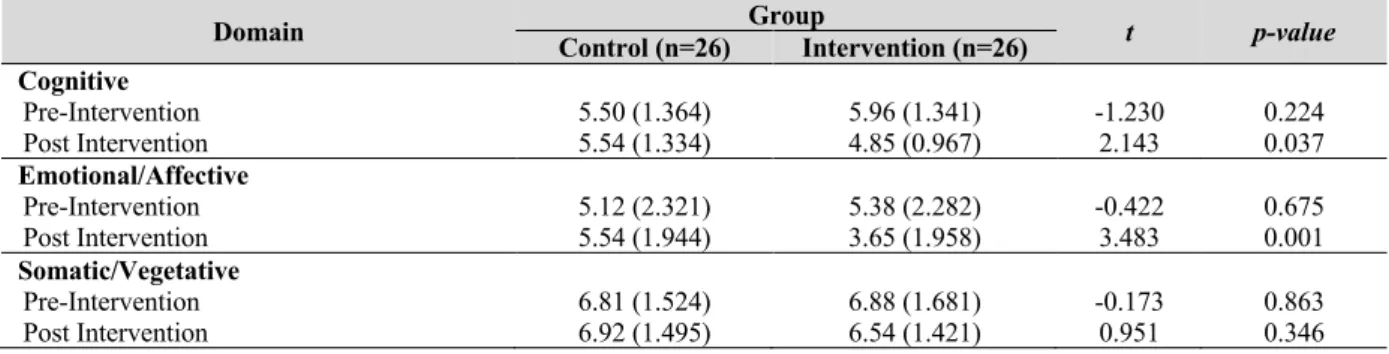
Table 3 The Difference of Mean in BDI-II Instrument Domain
Domain Control (n=26) Group Intervention (n=26) t p-value
Cognitive Pre-Intervention Post Intervention
5.50 (1.364) 5.54 (1.334)
5.96 (1.341) 4.85 (0.967)
-1.230 2.143
0.224 0.037 Emotional/Affective
Pre-Intervention
Post Intervention 5.12 (2.321) 5.54 (1.944) 5.38 (2.282) 3.65 (1.958) -0.422 3.483 0.675 0.001 Somatic/Vegetative
Pre-Intervention Post Intervention
6.81 (1.524) 6.92 (1.495)
6.88 (1.681) 6.54 (1.421)
-0.173 0.951
Based on Table 3, it can be seen that in the cognitive and emotional/affective domains there are differences between before and after intervention in the control and intervention groups (p = 0.037 and p = 0.001). While in the somatic/vegetative domain there is no difference (p = 0.346).
DISCUSSION
The different test result of mean depression score showed that there was no significant difference in mean depression score before giving art therapy intervention between intervention group and control group with significance value 0.251 (p> 0.05). So, it can be concluded that the condition of depression between the two groups is the same. According to the researchers, this is probably due to the characteristics of respondents who tend to be the same, both from age (p = 0.224), gender (p = 0.267), education (p = 0.859), and job (p = 0.762). The result of the analysis showed that the absence of average difference of depression score before giving intervention in control group and intervention was due to the homogeneity of respondent characteristics in this study.
From the test results of the difference of the average depression score in each group, there are significant differences in both groups. In the control group, the p value was 0.226, which means that there was no difference in mean of depression score before and after giving art therapy intervention in control group (p> 0.05). While in the intervention group obtained p-value of 0.000, which means there is the difference in mean score of depression before and after giving intervention art therapy in the intervention group (p <0.05). Art therapy offers a nonverbal way for individuals to be seen and heard and provides an alternative form of communication for those with psychological disorders. It is suitable for CKD patients undergoing hemodialysis and is often reluctant to discuss the problem with the family or the professionals (Mok & Tam, 2001). The method is simple enough, that the
patient is given the opportunity to express his feelings through art activities, such as drawing, painting, sculpture, or sculpting. The results of creativity are not assessed aesthetically (good or not) but viewed from the way the patient to express feelings.
Art therapy has several benefits, including communication and revisiting life. In terms of communication, art therapy offers a nonverbal way for individuals to be seen and heard and provides an alternative form of communication for those with psychological disorders. One descriptive study was conducted to identify the coping method commonly used by 50 patients undergoing hemodialysis in Hong Kong. The results show that the patient's tendency to discuss the problem, either to the family or friends and to the professionals is at a low rate (each mean scores 1.2 and 0.98) (Mok & Tam, 2001). As a result, these problems will be personally stored by the patient and the end result is not infrequently the condition of depression, which also appears in patients with chronic disease.
One way that can be used to express one's feelings is through the art. Art is a mode or way of a sensory system that will naturally express when there is touch, olfactory, and other senses gained from previous experience. Drawing and other art activities mobilize expressions of sensory memories that cannot be done through interviews and verbal interventions (Malchiodi, 2011). In this study, respondents were given 4 therapy art therapy interventions, each session was conducted for approximately 30 - 45 minutes. In one study, two-session art therapy interventions reduced depression in 7 respondents (Ando et al., 2013). Each session of the study was conducted for 1 hour. From the results of the study, respondents wanted the intervention-giving sessions to be added. However, when viewed from the number of respondents, the study still involves a small number, i.e. only 7 respondents and do not use the control group.
average score is indeed a decrease in the intervention group, which is 3.19, and in the control group increased, namely 0.58. However, when viewed from the category level depressing, no change in the level. That means the condition of depression is at the same level before and after the intervention of art therapy. This can be due to the unpopularity of respondents in the way offered by researchers, namely drawing therapy. In the control group who were not given art therapy intervention, there was an increase, indicating that the current therapy given is not effective enough to overcome the psychological disorders that occur in CKD patients undergoing routine hemodialysis.
Nurses as a comprehensive nursing care nurse can play a role in improving the psychological well-being of patients. Nurses in dealing with the psychological condition of CKD patients undergoing hemodialysis should be in accordance with the conditions and needs of patients. This can be started by not excluding the study of the psychological condition in the patient so that it not only focuses on the physical condition alone. As has been explained that one of the interventions that can be done in depressed patients is to improve therapeutic relationships. Given the routine assessment of the patient's psychological condition, it is expected to improve the therapeutic relationship between patient and nurse.
It can be seen also from the results of this study that there is a difference in the cognitive domain after giving art therapy intervention (t = 2.143; p-value = 0.037). This result is supported by findings from Pike (2013), which states that giving art therapy intervention gives a positive effect on the cognitive ability of the respondents (Pike, 2013). As it is known that cognitive can be defined as the thinking ability of a person. The ability to think is inseparable from brain function. The brain structure provides an alternative pathway that can be used to access and process information that is visual, motor, and memorable. Art therapy has unique properties because it is a medium that can facilitate alternative pathways that exist in
the brain and activate it through the use of media art in therapy (Lusebrink, 2004), so as to improve the ability of a person's cognition as a result of the ease in processing existing information.
The results also showed that there were differences in the emotional/affective domain between before and after art therapy intervention (t = 3.483; p-value = 0.001). In terms of managing emotions, participation in creating art provides a mechanism for emotional representation and resolution. The multi-sensory experience of making art creations is a creative process that can strengthen, stimulate memory, free emotions, and increase the level of activity. Making art has a calming effect on anxious patients (Johnson, Johnson, & Zhang, 2005).
In the somatic/vegetative domain, the results of this study showed that there was no difference between before and after art therapy intervention (t = 0.951; p-value = 0.346). This result is different from some studies that have been done before. The result of the study was that after art therapy intervention there was an improvement in physical/somatic condition (Ando et al., 2013; Thyme et al., 2009). All three studies were similarly used female respondents with breast cancer. However, no mention of how long the respondent has suffered from cancer. In this study, the researchers used respondents who were suffering from CKD patients who have been in the final stage and undergo hemodialysis at least 6 months, with frequency 2 times a week. When viewed from the tendency of physical condition, there is a difference between findings of this study with previous research. Respondents in this study were largely unemployed as before they suffered CKD and underwent hemodialysis.
CONCLUSION
patients, especially patients with Chronic Kidney Disease undergoing hemodialysis, looking at situations and time spent at least 4 hours for each hemodialysis process. Knowledge and understanding related to art therapy that can be used to overcome psychological disorders, especially in patients with Chronic Kidney Disease undergoing hemodialysis, need to be owned and improved by nurses. This can be done by holding discussions, seminars, and training on art therapy.
Declaration of Conflicting Interest None declared.
Funding
This study has been supported by STIKES Majapahit, Mojokerto, Indonesia.
Author Contribution
All authors contributed equally in this study.
References
Ando, M., Imamura, Y., Kira, H., & Nagasaka, T. (2013). Feasibility and efficacy of art therapy for Japanese cancer patients: A pilot study. The Arts in Psychotherapy, 40(1), 130-133.
Battistella, M. (2012). Management of depression in hemodialysis patients. Cannt Journal, 22(3), 29-34. Bautovich, A., Katz, I., Smith, M., Loo, C. K., & Harvey,
S. B. (2014). Depression and chronic kidney disease: A review for clinicians. Australian and New Zealand Journal of Psychiatry, 48(6), 530-541.
Ginting, H., Näring, G., van der Veld, W. M., Srisayekti, W., & Becker, E. S. (2013). Validating the Beck Depression Inventory-II in Indonesia's general population and coronary heart disease patients. International Journal of Clinical and Health Psychology, 13(3), 235-242.
Johnson, C. M., Johnson, T. R., & Zhang, J. (2005). A user-centered framework for redesigning health care interfaces. Journal of Biomedical Informatics, 38(1), 75-87.
Kring, D. L., & Crane, P. B. (2009). Factors affecting quality of life in persons on hemodialysis. Nephrology Nursing Journal, 36(1), 15.
Levin, A., Stevens, P. E., Bilous, R. W., Coresh, J., De Francisco, A. L., De Jong, P. E., . . . Lamb, E. J. (2013). Kidney Disease: Improving Global Outcomes (KDIGO) CKD Work Group. KDIGO 2012 clinical
practice guideline for the evaluation and management of chronic kidney disease. Kidney International Supplements, 3(1), 1-150.
Lii, Y. C., Tsay, S. L., & Wang, T. J. (2007). Group intervention to improve quality of life in haemodialysis patients. Journal of Clinical Nursing, 16(11c), 268-275.
Lusebrink, V. B. (2004). Art therapy and the brain: An attempt to understand the underlying processes of art expression in therapy. Art Therapy, 21(3), 125-135. Malchiodi, C. A. (2011). Handbook of art therapy. New
York: Guilford Press.
Mariotti, M. C., & Rocha de Carvalho, J. G. (2011). Improving quality of life in hemodialysis: impact of an occupational therapy program. Scandinavian Journal of Occupational Therapy, 18(3), 172-179. Mok, E., & Tam, B. (2001). Stressors and coping
methods among chronic haemodialysis patients in Hong Kong. Journal of Clinical Nursing, 10(4), 503-511.
Pike, A. A. (2013). The effect of art therapy on cognitive performance among ethnically diverse older adults. Art Therapy, 30(4), 159-168.
Setyoadi, K. (2011). Terapi modalitas keperawatan pada klien psikogeriatrik [Nursing modality therapy in client with psychogeriatric]. Jakarta: Salemba Medika.
Tavallaii, S. A., Ebrahimnia, M., Shamspour, N., & Assari, S. (2009). Effect of depression on health care utilization in patients with end-stage renal disease treated with hemodialysis. European Journal of Internal Medicine, 20(4), 411-414.
Thyme, K. E., Sundin, E. C., Wiberg, B., Öster, I., Åström, S., & Lindh, J. (2009). Individual brief art therapy can be helpful for women with breast cancer: a randomized controlled clinical study. Palliative and Supportive Care, 7(1), 87-95.
Tsay, S. L., Lee, Y. C., & Lee, Y. C. (2005). Effects of an adaptation training programme for patients with end-stage renal disease. Journal of Advanced Nursing, 50(1), 39-46.
Vella, E. J., & Budd, M. (2011). Pilot study: Retreat intervention predicts improved quality of life and reduced psychological distress among breast cancer patients. Complementary Therapies in Clinical Practice, 17(4), 209-214.
Yunitri, N. (2012). Pengaruh terapi kelompok suportif ekspresif terhadap depresi dan kemampuan mengatasi depresi pada pasien kanker [Effect of expressive supportive group therapy on depression and ability in dealing with depression in patients with cancer]. Jakarta: Universitas Indonesia.
Cite this article as: Fatmawati, A., Soelaeman, M.R., Rafiyah, I. (2018). The application of art therapy to
reduce the level of depression in patients with hemodialysis. Belitung Nursing Journal,4(3), 329-335.