Published with Creative Commons licence: Attribution–Noncommercial–No Derivatives
‘Accumulation by Wind Energy’: Wind energy
Development as a Capitalist Trojan Horse in Crete,
Greece and Oaxaca, Mexico
Zoi Christina Siamanta
Postdoctoral Researcher, Department of Environment University of the Aegean
Alexander Dunlap
Postdoctoral Research Fellow, Centre for Development and the Environment University of Oslo
Abstract
Keywords
Wind energy; green economy; Crete; Oaxaca; green grabbing; climate change
Introduction
Investments in Renewable Energy Sources (RES), including in wind, are globally promoted as one ‘solution’ to ecological, climate and economic crisis.1 RES projects are globally embraced not only as an important tool for reducing GHG emissions, but also as a lever for economic growth and recovery through, amongst others, job creation, rising incomes and poverty alleviation (e.g. CEC, 2008; UN, 2009). Applause for wind energy systems and transition stretches from international (non-governmental) organisations to environmental movements and corporate boardrooms, while local opposition to them is frequently deemed a manifestation of the Not-In-My-Back-Yard Syndrome (NIMBYS). The global installed wind capacity has quadrupled since 2008 (REN21, 2018) and is expected to rise substantially, especially under the Paris Agreement which set a global action plan from 2020 for limiting global warming to at least 1.5oC above pre-industrial levels (UN/FCCC, 2015).
This article dissects wind energy development beyond the NIMBYS and market-based environmentalism. It explores two different experiences of wind energy development in Greece and Mexico, focusing on Crete and the Isthmus of Tehuantepec region in Oaxaca, known locally as the
Istmo. Wind parks are approached from the perspective of green grabbing —land and resources grabbing under an environmental ethic and rational— providing a comparative analysis and detailing the commonalities and differences found between the cases. Both regions are experiencing significant wind energy development based on ‘win-win’ discourses of climate protection/ecological sustainability and economic prosperity. Greece and Mexico are both semi-periphery countries which have experienced intensive neoliberal structural adjustment, albeit in different ways and historical periods. Greece is formally recognised as a developed country, while Mexico as developing, with both retaining different environmental landscapes, socio-political and economic histories. These commonalities and differences presented here reveal variation and (broader) similarities in wind energy development across sites. Also, wind parks remain under-examined with regard to ‘green grabbing’ (for exceptions see Dunlap, 2017a, 2018a, 2019a; Siamanta, 2019) and, with the exception of Avila (2018), comparative literatures are nearly non-existent in the field of political ecology.
The paper demonstrates that wind energy development is anything but innocuous. In these regions, land and the ability to exploit wind resources are being grabbed by transnational, amongst other, companies for capital accumulation, intensifying the social inequality and ecological degradation engendered by the existing trajectories of development. We argue that wind energy development serves as a capitalist Trojan horse for ‘rolling out’ new markets, grabbing land and natural resources and resulting, overall, in ‘accumulation by wind energy’. Accumulation by wind energy performs the process of accumulation by dispossession (Harvey, 2005) via intensive land appropriation, wind resource capture and financialisation in an attempt to temporarily mediate the contradictions of capitalism that create economic and environmental crises. While the specific processes and outcomes of accumulation by wind energy vary in (our) cases, there are similar logics and strategies adapted to the respective contexts to facilitate it, similar trends regarding outcomes and several key defining features. These features include, amongst others, operationalising ecological/climate and economic
crisis, direct state intervention to ‘roll out’ regulatory structures for a green economy and land grabbing.
In the next section we develop our argument on ‘accumulation by wind energy’, in parallel with discussing green grabbing and critical literature on wind parks. This is followed by the methods section, before we present wind energy development in Crete and the Istmo. The two sections discuss the regime of developing wind parks, land grabbing and key socio-ecological outcomes. Then, we offer our comparative reading, discussing the commonalities and differences observed. We assert that wind energy serves as a systemic Trojan horse for capitalism’s reproduction and expansion through ‘accumulation by wind energy’ with important variegated socio-ecological effects. We conclude by suggesting areas of further research.
‘Accumulation by wind energy’
During the past three decades, neoliberal policies have radically penetrated nonhuman natures, developing old and creating new accumulation strategies (McCarthy and Prudham, 2004; Smith, 2007; Büscher et al.,2014). This is especially so under the recent transition to the so-called ‘green economy’. Critical social scientists assert that green economy policies are facilitating the further commodification, marketisation and financialisation of nonhuman nature altering the global access to land and natural resources (e.g. Fairhead et al., 2012; Sullivan, 2013; Cavanagh and Benjaminsen, 2017; Hunsberger et al., 2017). ‘The green economy’, Corson et al. (2013) argue, is an environmental expression of neoliberalism. ‘Neoliberalism’ represents a relatively ‘new political, economic, and social arrangement within society that emphasises market relations, re-tasking the role of the state, and individual responsibility’, extending competitive markets into all areas of life (Springer, 2016, 2). This includes ‘rolling-back’ the state apparatus via trade and tariff deregulation and public sector privatisation and ‘rolling out’ new modes of governance and state forms via reregulation (Peck and Tickell, 2002; Springer, 2016). Neoliberalism is ‘accumulation by dispossession’ (Harvey, 2005), which is capital accumulation through: the dispossession of public and private lands; the redistribution of state resources; the manipulation of crises to advance economic privatisation objectives; and financialisation more generally. Accumulation by dispossession stresses the permanent and continuous character of primitive accumulation2 that is dependent on grabbing land for capital accumulation (see Borras et al., 2012; Holmes, 2014). The distinctly ‘green’ character of environmental crisis has led to appropriations and dispossessions of land and resources in the name of ‘sustainable development’, ‘green growth’ and ‘climate change mitigation’, later coined as ‘green grabbing’ (Fairhead et al., 2012; Dunlap and Fairhead, 2014).
‘Green grabbing’ reflects ‘the appropriation, transfer of ownership or user rights and control over land and resources’ to powerful actors based on a green rhetoric (Fairhead et al., 2012, 238). It involves novel forms of ecosystem valuations and commodification designed to create, or ‘roll out’, new national and international markets (Fairhead et al., 2012; Corson et al., 2013). The ‘grab’ in green grabbing also implies a diversity of deceptive and/or coercive tactics to acquire land which ignite old and new conflicts over natural resources (Dunlap and Fairhead, 2014; Dunlap, 2017a, 2019a; Avila, 2018). Green grabbing, according to Dunlap (2017a, 18), thus ‘represents the proliferation of ecological distribution conflicts arising from new economic valuations of natural resources’.Ecological distribution conflicts result from the unequal distribution of power/agency in development projects
2 Marx (1867/1976) saw primitive accumulation as the initial enclosure of land and labour for capitalism’s beginning.
(e.g. inclusion in planning processes) and the unequal distribution of benefits (e.g. money, jobs) and costs (e.g. pollution, noise) arising from a project (Martínez-Alier, 2002). This extends to conflict generated by unequal acknowledgment of cultural (Escobar, 2008) and ontological perspectives/practices (Blaser, 2013). Green grabbing not only concerns physical land grabs and control over land, but also grabbing financial resources (McCarthy et al., 2012; Siamanta, 2017) and the rights to and control over entire industries (e.g. Siamanta, 2019).
Wind parks remain under-examined with regard to green grabbing (for exceptions see for example Dunlap, 2017a, 2018a, 2019a; Siamanta, 2019). Yet, increasing critical literature on wind energy development suggests: unequal power and top-down dynamics in the decision making processes; coercive and deceptive tactics employed to grab land and recourses; political corruption, green militarisation and (violent) ecological distribution conflicts; unequal distribution of benefits; and unfavourable implications for ecosystems, livelihoods and culture (e.g. Toke, 2002; Devine-Wright, 2005; Wolsink, 2007; Pasqualetti, 2011; Lawrence, 2014; Zografos and Martínez-Alier, 2009; Oceransky, 2010; Howe et al, 2015; Avila, 2017, 2018; Brannstrom et al., 2017; Dunlap, 2017b, 2018a, 2018b; Franquesa, 2018; Siamanta, 2019). However, what we also see concerning wind parks is much more systemic and relates to the contemporary function of capitalism and its current engagement with nonhuman nature.
Under ‘disaster capitalism’ (Klein, 2007), the climate and economic crisis created by capitalist production have been constructed as impending disasters and are employed as a source to further profit and economic/financial expansion via the creation of new and the strengthening of old markets around energy and conservation, to name a few (e.g. Fletcher, 2012; Sullivan, 2013). Wind parks serve as an excellent manifestation of disaster capitalism and ‘roll-out’ and ‘roll-back’ neoliberalism for expanding old green energy markets (Peck and Tickell, 2002; Springer, 2016). Meanwhile, critical scholars claim that (green) economy policies are not only used for accumulation by dispossession, but also for temporarily mediating the two key contradictions of capitalism.3 For example, following accumulation by dispossession, Bumpus and Liverman (2008) characterise investment in carbon offsets as a strategy of ‘accumulation by decarbonization’, arguing that carbon offsets represent a ‘spatial fix’ for capitalism’s on-going growth.4 Sullivan (2013) refers to ongoing primitive accumulation involving natural frontiers and particular discursive framings of ‘nature’ and ‘crises’ as ‘primitive eco-accumulation’, discussing how particular mechanisms and tools (e.g. biodiversity offset schemes and credits) facilitate capitalism’s on-going growth. Büscher and Fletcher (2015, 1) speak of ‘Accumulation by Conservation’ (AbC): ‘a mode of accumulation that takes the negative environmental contradictions of contemporary capitalism as its departure for a newfound ‘sustainable’ model of accumulation for the future’ which potentially amounts to a new phase of capitalism. Huff and Brock (2017) discuss the rise of ‘the restoration economy’ associated with the Land Degradation Neutrality Fund launched during the COP13. They demonstrate how offsetting schemes are formulating new dynamics in conservation finance creating a ‘demand for degradation’ and,
3 Capitalism’s first contradiction lies between the forces of production (i.e. a combination of labour and infrastructure) and
the relations of production (i.e. the social system supporting capitalism) and creates periodically overaccumulation/overproduction crises (Marx, 1867/1976), like the recent global economic one. Capitalism’s second contradiction lies at ‘the way that the combined power of capitalist production relations and productive forces self-destruct by impairing or destroying rather than reproducing the conditions necessary to their own reproduction’ (O’Connor, 1998, 165). Climate change can be understood as an extreme example of this contradiction.
4 A spatial fix serves for hindering, temporarily, overaccumulation/overproduction crises by providing opportunities for
consequently, a process of ‘accumulation by restoration’. Regarding energy, McCarthy (2015) sees the global expansion of RES projects as a socioecological fix (or nested set of fixes) to current forms of capitalist and climate crisis for continuing capital accumulation via appropriating and commodifying new aspects of nonhuman nature. McCarthy (2015, 11) understands a socioecological fix as a combined spatial fix (Harvey, 2003; 2005) and neoliberal environmental one, ‘which resolves, mitigates, or postpones a structural impediment —including an environmental one— to sustained capital accumulation’. Siamanta (2017; 2019) argues that private and public-private wind parks, and green energy in general, represent a socioecological fix to the global economic crisis and climate change for temporarily mediating capitalism’s two key contradictions.5
Thus, wind energy development not only involves unfavourable, yet variegated, consequences for livelihoods, ecosystems and cultural practices. Rather, by purporting to save the climate and the economy and through intensifying land grabs and the financialisation of wind resources, wind energy development may represent a particular mode of accumulation for temporarily mediating the two afore-mentioned contradictions of capitalism via ‘accumulation by wind energy’. In other words, wind energy development is advancing continued economic/financial, and by extension industrial expansion, through further appropriating, commodifying and financialising the nonhuman world, opening up new accumulation avenues. It represents another socioecological fix (in the later sense mentioned) to climate change and the global economic crisis.
Methods
The analysis for Greece is based on 12 in-depth semi-structured interviews and 2 open discussions with key actors from the state, Environmental Non-Governmental Organisations (ENGOs), RES companies, the political party SYRIZA, a RES market body and a pan-Cretan social movement opposing RES.6 These interviews and open discussions are part of a larger set of 21 interviews and 2 open discussions conducted for examining wind park growth generally in post-crisis Greece, which provided primary data on the case’s background. The analysis for Oaxaca is based on participant observations and semi-structured and select oral history interviews in three towns in the Istmo: La Ventosa, Juchitán, and Álvaro Obregón. This included conducting random door-to-door interviews with residents, local land owners, social property holders, opposition groups and human rights defenders. Interviews in the Istmo totalled 123, which also drew on Free, Prior and Informed Consent (FPIC)7 consultation transcripts at which wind companies and collaborating land owners presented their positions publically. Moreover, several primary and secondary data were collected for both cases through reviewing various informational sources, such as legal documents, company reports and social movement websites.
Fieldwork in Athens and Crete was conducted between 2012 and 2015, while in the Istmo between January and May 2015. The interviews in the Istmo are numbered differently so as to designate particular towns: 1. signifies La Ventosa; 2. Juchitán; and 3. Álvaro Obregón. This includes other numbers and representations, which reflect a filling system. Fieldwork in the Istmo was implemented in collaboration with an interpreter. The difference in the number of interviews conducted
5 This is a combined ‘spatio-temporal’ (Harvey, 2003; 2005) and neoliberal environmental fix. A spatio-temporal fix serves
too for hindering, temporarily, overaccumulation/overproduction crises by providing opportunities for accumulation by dispossession through geographical expansion and temporal deferral.
for the two cases can be explained by the difference in the length of interviews and thus the amount and depth of empirical data collected through each one. Interviews that included data for the Cretan case ranged between 45 minutes and 2 hours (average of about 1 hour), whereas in the Istmo between 8 minutes and 3 hours (average of about 25-35 minutes). The difference can also be explained by the variegation in the range of actors interviewed and the subsequent range of empirical data collected.8
The comparative analysis of wind energy development between Crete and Oaxaca sought to reveal the dynamic, yet often similar, processes and issues taking place across the two sites for critically reflecting on the realities of ‘the green economy’ and the present mode of climate change mitigation. We were inspired by ‘individualizing comparison’ (Tilly, 1984), were historical and socio-political details take centre stage in the comparative analysis (see also Ward, 2010). Drawing on anthropological methods (participant observation, informal and semi-structured interviewing) and theory (from political ecology and critical agrarian studies), the ‘functional equivalence’ was embedded in the comparative analysis to examine the modes, patterns and processes employed across the two sites (see Jessop et al., 1999). Inspired by comparative urban studies (Ward, 2010), a relational comparative approach was employed that ontologically views wind park territorialisation as constructed, politicised and dynamic. This approach is epistemologically rooted in neo-Marxian and post-structural/colonial theory, while methodologically is qualitatively rooted in anthropology and human geography.
Wind park development in Crete
Wind park growth in Greece and on the island
Wind parks in Greece exhibited a moderate growth from 1998 onwards until the acknowledgement of the Greek economic crisis in 2009 (HRMEECC, 2009), based on climate change mitigation narratives and less on economic growth ones. The recognition of the crisis, along with accelerating climate change and the country’s first structural adjustment program in 2010, led to a particular green energy discourse in the country since 2009. Private investments in photovoltaics and wind parks were portrayed by a green economy friendly alliance in the country (the various governments9, large ENGOs, mainstream media and RES market bodies) as one antidote to both these crises, via inflows of capital, profits for citizens, green jobs and emissions-free energy (Siamanta, 2017). Several measures were taken by the governments from 2010 onwards for attracting private wind park investments and expanding the green energy market in line with this discourse, building on an existing institutional framework developed progressively along neoliberal lines (Siamanta, 2019). For example, these measures involved the institution of new increased Feed-In Tariffs,10 great limits of installed capacity for wind parks for 2020 and 2040, and procedural fast-tracking of large wind parks (Siamanta, 2019). In 2012, Greece agreed with the European Union (EU), the European Central Bank (ECB) and the International Monetary Fund (IMF) through its second structural adjustment program to fully transpose and implement the renewable energy Directive 2009/28/EC and further develop wind
8 Data was not collected for the purpose of this particular comparative paper, but has been used for the comparative analysis (see next paragraph). Some material (e.g. data obtained through interviews) and associated arguments for Crete and Oaxaca included in the case study sections have appeared before in Siamanta (2019) and Dunlap (2017a; 2018a; 2018b; 2018c; 2019).
9 There have been many governments since 2010 in Greece.
energy for allegedly enhancing its economic growth (Greece MoUSEPC, 2012, 764). Based on the 2012 and ensuing 2015 Memorandum of Understanding, the different Greek governments instituted new measures for private wind parks and for restructuring the green energy market, such as a competitive bidding process and a new tariff regime (Siamanta, 2019). Consequently, many areas in Greece have seen a substantial growth of private wind parks and are expected to see a proliferation of them in the near future. Private wind parks have received direct state subsidies or tax exemptions, indirect state subsidies through tariffs and funds from citizens through a state-imposed green levy (Siamanta, 2019).
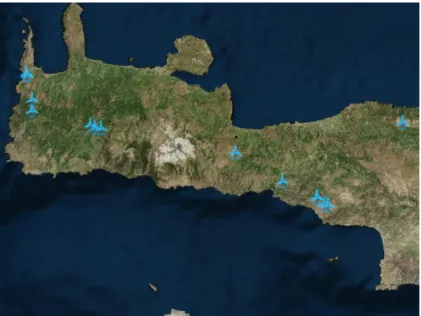
Crete is one region subject to significant private wind energy development. In May 2017, there were 40 wind parks operating on the island with an installed capacity of about 200 MW and 8 more wind parks of approximately 27 MW were under installation (DAC-DITC-SPESC, 2019; see Figure 1 and 2).11 A large private-public hybrid RES project12 (81MW wind farms-pumping system of 50MW guaranteed capacity) is in the licensing stage but at a standstill, amongst other various hybrid private wind park projects. Also, numerous wind parks are in the initial licensing stage (RAE, 2019).13 The largest companies owning and/or planning to build wind parks on Crete include the transnational companies Iberdrola-Rokas, ENEL Green Power, Électricité de France (EDF) Energies Nouvelles,
Ellaktor, TERNA Energy and ELICA Group.14
11 Most were installed prior to 2009.
12 Hybrid is an electrical energy production station which involves one or more form of RES technology.
13 The temporary limit for wind parks (without their own connection cable to the mainland) in Crete is 250MW. This limit
does not include hybrid stations involving wind parks, while will be reassessed when Crete connects to the national interconnected electricity network (now expected partly in 2020 and finally in 2022).
14 In May 2017, the Public Power Company Renewables (PPC Renewables) had 8 operating wind parks of 34.2 MW in
Figure 1: Operating and under installation wind parks in Western Crete, 17 May 2017, Scale: 1:1000000. Source: (DAC-DITC-SPESC, 2019).
Land grabbing
Wind energy development on Crete is being accompanied by public but mostly private land grabs by RES companies.15 Indicatively, until the end of 2013 most wind parks in Crete occupied between 1.1 and 45 hectares of land each, while larger parks between 45.1 and 216 each (Hadjimihalis, 2014a). This suggests a noteworthy amount of land grabbed for the 48 operating/under construction wind parks and to be grabbed even if only a few under the licensing process are implemented. Firstly, private and public land grabbing in Greece, and in Crete, is accomplished through the wind park licensing process. Different types of land (grasslands, pasture lands) can be designated by forest inspection agencies as ‘forests’ or ‘forest expanses’ through the so-called Forest Characterisation Acts (FCAs) when companies apply for land approvals (Siamanta, 2019; PCNAIRES, 2015a). If the land characterised as forest or forest expanse is public the state can lease it to RES companies at low prices, while if the land characterised as forest or forest expanse is private it can be expropriated and then leased by the state to RES companies again at low prices (Law 2941/2001; Siamanta, 2019). The publication of FCAs is a legal requirement (Law 3851/2010) and private land owners can object to them and to the ownership issue that may follow (i.e. to the ownership of the land), but the licensing processes continue regardless of long-term legal disputes. If land is not a ‘forest’ or ‘forest expanse’ and is public, it can be leased or sold by the state to companies, except in cases such as public land belonging to the European protection and conservation NATURA 2000 Network. These forms of land grabbing have been advanced in the name of public benefit and after the economic crisis also as a national priority (Siamanta, 2019). In Crete, however, land rights are often informal and unclear. There is a unique pasture, grasslands and forests proprietary regime mostly due to the way Crete was annexed in Greece and harmonised with Greek law after its liberation from the Ottoman Empire. Most of the former Ottoman lands passed on to the ownership of Cretans without (valid) titles,16 meaning that land owners missing them cannot prove ownership and cannot be compensated for land expropriation or have to go into long-term costly legal battles. According to key actors from The Pan-Cretan Network Against Industrial RES (PCNAIRES), hereafter the Network, lack of ownership titles and economic inability to go into long-term costly legal disputes is common in Crete.17
The case of Apopigadi of Chania manifests not only the afore-mentioned problem with ownership titles, but also deceptive strategies by the state for facilitating private wind parks by circumventing legislation. In Apopigadi, two hundred and seventy hectares of, as asserted by locals, private land were designated as public forest expanse between 2004-2006 for allegedly the construction of a small wind park by EDF EN (e.g. SYRIZA, 2010; PCNAIRES, 2015a).18 Some of the FCAs were inappropriately published (SYRIZA, 2010) and thus land owners were not aware and could not appeal to them despite most having titles.19 After struggles from the local Initiative, the FCAs were published
15 What land is public or private in Crete is in many cases subject to disputes.
16 Interview 1: Pan-Cretan Network Against Industrial RES (PCNAIRES), 15/11/2014. 17 Interview 1, Interview 2: PCNAIRES, 08/10/2013.
18 Interview 3: The Initiative of Inhabitants of Spina, Florion, Old Roumaton and Sebrona-Apopigadi (TIISFORSA)/Local
inhabitant, 18/03/2015. While a wind park was built and currently operates, years later a hydroelectric-water pumping-wind parks project for this area received the required environmental license but it appears it will not be implemented.
correctly after many years.20 However, the inappropriate publication of these FCAs, along with the lack of ownership titles in other cases, led to seizures without compensations (Siamanta, 2019).21 An actor from the Initiative notes:
So many people [in Apopigadi] lost their land…And this land was not gifted to Cretans, it was bought from the Turks…This was organised in such a way that no one became aware of it and all of the sudden bulldozers came. We, then, started searching for what had been happening and the authorities were not even giving us information and the official papers we requested.22
On top of these, an inhabitant of the Apopigadi area whose land was seized claimed in 2015 that he still had not received any compensation despite having valid ownership titles.23 The Apopigadi case also indicates illegal practices by the company as it was fined for violating environmental regulations after complaints from inhabitants (Dionellis, 2013a).
Secondly, private land grabbing is actualised —as in the rest of Greece (Siamanta, 2019)— directly by RES companies by promising land owners financial returns and jobs ‘behind closed doors’.24 Land expropriation is a time-consuming process and companies seek to buy/lease private areas where it is easy.25 Actors of the Network further claimed corruption and/or attempted bribery by RES companies and (elected) local lords. For example, a key actor involved in the establishment of the Network mentioned that he was approached by a RES company but when he said he wanted to discuss in public rather than in private they never called him back.26 Also, an actor from Apopigadi noted that he was offered 120,000 Euros in cash for permitting wind turbines on their land.27 Such phenomena resonate with the clientelistic relationships the state maintains with the private sector and demonstrate attempts to accelerate the construction of wind parks (i.e. without the long expropriation processes) and undermine local opposition. Nevertheless, land owners are pressured into leasing/selling their land with the promise of monetary returns and employment for family members. Economic crisis and neoliberal restructuring in Greece has been resulting in high-levels of unemployment, reduced incomes and increasing poverty. Unemployment in Crete in the first trimester of 2013 reached 26.3% (HSA, 2013). Until 2015, the lowest income households in Greece (30% of households) lost 34-86% of their total income due to the crisis (Giannitsis and Zografakis, 2015). These place greater pressure on locals to open up their lands to wind energy development. Land-use change is indirectly enforced through economic crisis geared towards encouraging FDI and mega-development projects (see Dalakoglou and Kallianos, 2018), with wind energy development serving as an example. The late notification of land
20 Interview 3. 21 Interview 3. 22 Interview 3.
23 Interview 4: TIISFORSA/Local inhabitant, 16/05/2015. 24 Interviews 1, 2, 3.
25 Interview 5: Ministry of Environment, Energy and Climate Change (YPEKA), 03/07/2013. 26 Interview 2.
owners (i.e. when companies apply for land approvals),28 the absence of (valid) ownership titles and the high legal costs of long-term land disputes further combine to advance this form of state sanctioned top-down land grabbing.
Meanwhile, in May 2017, six small and larger wind parks were found in four NATURA 2000 areas and more were under installation (DAC-DITC-SPESC, 2019) and the initial licensing stage (RAE, 2019) (for other) ones.29 This has been facilitated through older Laws and the 2008 National Special Spatial RES Plan (JMD 49828/2008) and in the post-crisis era through old and new Laws (e.g. Law 2941/2001; 3468/2006; 3851/2010) and decisions, which permit wind parks within NATURA 2000 areas under specific conditions.30 However, wind parks are not permitted in Sites of Community Importance and in the ‘core’ of all NATURA 2000 areas.
Land and natural resources appropriation for building wind parks is leading to unfavourable social and ecological consequences in this context. Public land grabbing translates into the loss of access to natural resources for prior local users (i.e. shepherds). A key actor from the Network claims that denial of access due to wind parks is a frequent phenomenon,31 while an inhabitant of Apopigadi mentions how they are threatened with police arrest if their animals graze even in areas close to the installations.32 Furthermore, wind parks in public NATURA 2000 areas are altering land relationships in them, since grazing is not forbidden in them as these areas do not have Management Plans that disallow it (HRPC, 2012; Oikoskopio, 2014; Kyriakopoulou et al. 2017). Meanwhile, land exchange prices in Greece have dropped —depending on the area— 15-30% between 2009-2014 compared to 2005 prices (Hadjimihalis, 2014b) due to the economic crisis and the measures adopted to combat it. Prices for leasing/selling private land or compensations for it thus do not reflect the land’s value and/or the income previously earned working it, while there are cases of companies not paying land owners the leases agreed.33 Moreover, land grabbing without compensation suggests extreme marginalisation and impoverishment, such as in Apopigadi. As explained, the land grabbed in Apopigadi was used for agricultural and livestock purposes and represented the only livelihood means of locals.34 An inhabitant of Apopigadi who used the land seized without compensation to produce an agricultural product mentioned economic inability to even travel from his village to the city.35 These entail significant implications on the livelihoods of local shepherds, farmers and of other social groups
28 Interview 6: Rokas-Iberdrola, 09/09/2013.
29 GR4310013 Asterousia Ori-Kofinas, GR431009 Krousonas-Bromwnero Idis, GR4320016 Ori Zakrou and GR4320006
Voreioanatoliko Akro Kritis. One of the under installation ones involves repowering with new turbines.
30 An Environmental Assessment Approval (EAA) is needed for wind parks in NATURA 2000 areas, and for all other wind
parks in Greece of category A of works (wind parks likely to have very important or important consequences to the environment). It is different from an Environmental Impact Assessment (EIA), which is submitted in order for the state to issue the EAA. For NATURA 2000 areas, a Special Ecological Assessment is needed within the submitted EIA and particularly for the Special Protection Areas of the Birds Council Directive 79/409/EEC an Ecological Assessment on birds (aka an Ornithological study).
leading to their further dispossession. These are intensified by reduced incomes, new taxes (including taxes for stockbreeders), unemployment, rising living costs and, overall, an accelerating economic crisis.
Additionally, NATURA 2000 land grabbing for wind parks in Greece is occurring under the framework of insufficient, or ‘copy-paste’, Environmental Impact Assessments (EIAs) and Ornithological Studies36 and under an inadequate examination of the (cumulative) ecological implications of wind turbines both in and outside the NATURA 2000 network (Siamanta, 2019). NATURA 2000 areas in Crete, as elsewhere in Greece, are protected ‘only on paper’ (e.g. HRPC, 2012). Wind parks in NATURA 2000 land in Crete thus not only have led to deaths of rare, endangered and protected birds, such as the Gyps fulvus (HOS, 2011),37 but also entail implications for other species and ecosystems in these areas. Protected birds have also been found dead due to wind turbines situated outside protected areas (Fountoulaki, 2013).38 A key actor from the Hellenic Ornithological Society (HOS) confirms that there are very negative implications for birds.39
Key actors from Terna Energy and the Hellenic Wind Energy Association (HWEA) argue that a wind park has only minimal environmental impacts.40 Yet, the extensive introduction of wind parks in Crete (40 operating in May 2017) suggests considerable ecological implications. This is because (the introduction of) wind parks, along with new access roads and worksites, can have unfavourable impacts on biodiversity and cumulative ecological ones, such as habitat conversion and destruction and shifting predator-prey relations (Tabassum-Abbasi et al., 2014; World Bank Group, 2015). Wind energy development in Crete thus includes various impacts on species and ecosystems, which require further examination.
Resistance
Wind park growth on Crete and numerous proposals for RES works have resulted in significant reactions from local communities. The Pan-Cretan Network Against Industrial RES (PCNAIRES) was founded in 2009, as a collection of 105 local associations, collectives and movements, and of numerous individuals (PCNAIRES, 2014). Various actions have been realised under this ‘umbrella’ Network both at the local and regional level, such as meetings for decision making, organised protests and appeals to the Supreme Court of Greece for cancelling RES projects (see PCNAIRES, 2015b).41 The case of Apopigadi is characteristic in terms of direct local activism against wind parks, which has been met with state repression, leading to arrests and trials. For example, on 19April, 2010, inhabitants of the area obstructed a truck, belonging to EDF EN, transporting wind turbines to be installed on a former private estate seized by the state (Dionellis, 2013b; Maridakis, 2014). Residents also implemented a symbolic tree planting on the estate and seventeen people were arrested and prosecuted (Dionellis, 2013b; Maridakis, 2014). One of the locals mentions that the district attorney and company:
36 Interview 7: PCNAIRES, 10/10/2013. 37 Interview 2,7.
38 Interview 3, 4.
39 Interview 8: Hellenic Ornithological Society, 23/10/2012.
had brought 200 policemen from the Units for the Reinstatement of Order [riot police]. We were sitting down on the road so that the truck wouldn’t pass. The policemen dragged and pulled us from the ground. They carried us out of there. They were pulling and handcuffing elderly people.42
These actions are accompanied by counter-discourses on green energy. Protesting locals assert that RES in general, and wind parks in particular, in their present form and scale represent a new form of ‘fascist’ occupation in Greece via extensive land and natural resources grabbing by transnational companies and their institutional partners. They claim that wind parks are socio-ecologically destructive: degrading the natural environment and NATURA 2000 areas, killing (endangered and/or rare) birds, irreversibly altering the natural landscape and negatively impacting the rural economy (agriculture, stockbreeding and tourism) and associated livelihoods (PCNAIRES, 2012a, 2012b).43 These discourses and associated actions are also animated by the wider neoliberal restructuring in Greece since 2010. Wind energy development is discursively connected with the broader neoliberal policies coming from the global and European centres of governance (PCNAIRES, 2012a, 2012b), making resistance against wind parks deeply embedded to Greece’s structural adjustment programs. Crete has historically experienced severe consequences from wars, notably the German occupation in WWII, and has exhibited intense civilian resistance to foreign armed forces (Nessou, 2009; Polmar and Allen, 2012). These experiences are deeply embedded in the Cretans’ historical consciousness and life-worlds and have also incited local struggle against wind parks, highlighting a generational struggle over land and against ‘foreign supervisory regimes’. The following excerpt from one of the Network’s resolutions is one example:
Let them know [investors/occupiers] that this island, Crete, which still smells of fire and gunpowder, sweat and blood, is not negotiable, will not be surrendered, nor given...We have a Debt -the only debt we recognise- and a heavy duty to continue the struggle of our ancestors, who fought to liberate us (PCNAIRES, 2012a, online).
These counter-discourses and associated actions are also instigated by particular local culture-nature ontologies. According to these, mountains, birds, land and nonhuman culture-nature in general are sacred and not commodities for sale, while ‘nature’ and ‘it’s’ beauties should be freely enjoyed under symbiotic relationships based on reciprocity (see PCNAIRES, 2015b).44 These, along with established sociocultural practices and relationships with nonhuman nature (e.g. agriculture, stockbreeding), must
thus be defended against invading wind turbines.45 Oppositional voices either reject wind parks altogether or endorse only small-scale ones wedded to the needs of local communities, their long-established socio-ecological practices and to their participation in projects based on shared ownership and/or energy self-production through RES.46 Protesting locals are portrayed by (the alliance of) actors supporting green energy as primitives resisting energy modernisation,47 unintelligent,48 egoists or
42 Interview 3. All locals trialled have now been acquitted of charges. 43 Interview 1, 2, 3, 4, 7, 11.
44 Interview 3, 4, 7.
regionalists,49 leftists,50 and behaving like ‘sheep’,51 with unfounded and irrelevant,52 and even disgusting53 arguments. This section has outlined the terrain of wind park development, accumulation practices and consequent conflict in Crete.
Wind park development in the Istmo
Oaxaca is the second poorest state in Mexico after Chiapas (CONEVAL, 2015). 418 out of 570 municipalities are governed by an indigenous form of governance (usos y costumbre) based on consensus decision-making in communal assemblies (Stephen, 2002). Oaxaca has the greatest concentration of social property (77.6%): ejidos and communal land (Gobierno de Oaxaca, 2011). The ejido emerges from the Mexican Revolution under the 1917 Constitution, which provided land for farmers to use, but not to buy and sell (Stephen, 2002). Ejidos are governed by local assemblies and are different from communal lands.54 Communal land is held collectively or shared communally, has no formal land title and does not have the same level of state involvement and control as ejidos. Both ejidos and communal land, however, are considered social property.
The Isthmus of Tehuantepec (Istmo) is one among seven principal geographical regions in Oaxaca located in the southwest corner of the state. The coastal Istmo begins at the foot of the Sierra Atravesada mountain range, where a strong south wind blows through the region and out to sea. The International Finance Corporation (IFC, 2014, 1) regards this as one of ‘the best wind resources on earth’. This was popularised by the 2003 United States Agency for International Development (USAID) sponsored report Wind Energy Resource Atlas of Oaxaca (Elliott et al., 2003, iv). The report made wind resources legible for a political economy aggressively restructured along neoliberal lines since the 1980s.
Mexico received thirteen structural adjustment loans from the World Bank from 1980 to 1991 (Paley, 2014). In 1992, the Mexican State passed the Agrarian Law that allowed the privatisation of social property (Stephen, 2002). It also passed the Electricity Public Service Law that contains the notion of ‘self-supply’ (autoabastecimiento) allowing companies to ‘acquire, establish, and/or operate an electrical generating facility in Mexico to meet the enterprise’s own supply needs’ (USAID, 2009, 2). This establishes three types of wind energy generation contracts in the Istmo.
First, as mentioned, are ‘self-supply’ wind parks. Self-supply wind parks reserve the energy generated for investors/co-owners of the project (i.e. private energy), constituting more than 90% of the energy capacity in the Istmo, with Acciona Energía and Iberdrola controlling roughly 65% of that capacity (Juárez-Hernández and León, 2014). Private electricity generated is transported to Guatemala, the United States and industrial areas within Mexico that power a range of industrial construction companies (e.g. Cementos-Moctezoma) and mining ones (Peñoles, Grupo Mexico), amongst other
48 Interview 9, 10. 49 Interview 6, 9, 10.
50 Interview 12: Greenpeace, 23/07/2013. 51 Interview 9.
52 Interview 6, 9, 10. 53 Interview 9.
commercial industries (Dunlap, 2017a, 2018a, 2019). Many of these wind parks are integrated into the Clean Development Mechanism (CDM), which creates Certified Emissions Reduction (CER) credits based on the Kyoto Protocol (1997). Companies are then allowed to buy, sell, trade and speculate on emissions certificates in financial markets to ‘offset’ their emissions (see Böhm and Dabhi, 2009). Second are Independent Power Production (IPP) contracts that represent wind parks built and operated by private companies, yet the energy generated from them is sold exclusively to the Federal Electricity Commission (CFE) (Juárez-Hernández and León 2014). Third, and the minority in the Istmo, are public sector wind parks operated by the CFE. Private wind parks are either using publically funded electricity infrastructure or are engaged in various forms of private-public contracting for expanding this infrastructure (see Friede, 2016), seeking to increase electricity production and distributive capacity to meet consumptive demands.
Neoliberal restructuring has continued with recent legislation in 2013 which is privatising, amongst others, the CFE that now manages an uneven private-public system of wind parks (Cypher, 2014; Payan and Correa-Cabrera, 2014; Friede, 2016). These policies have complemented emerging climate change legislation, which relies on market mechanisms for mitigating/adapting to climate crisis. Mexico’s National Climate Change Strategy has led to a series of ground breaking Laws and programs: the Renewable Energy and Energetic Transition Law (2008), the Special Climate Change Program (SCCP) 2009-2012 and the General Law on Climate Change (GLCC) (2012). The GLCC sought to reduce emissions by 30% by 2020 and 50% by 2050 based on year 2000 emission levels. It mandates the exploitation of renewable or ‘clean’ energy using ‘an incentive-based system, which
promotes and allows for profitable electricity generation through renewable energy such as wind, sun, and small hydro’ to generate 35% of Mexico’s electricity by 2024 (GLCC, 2012, 65, emphasis added; SCCP, 2014). These policies are attempting to ‘fight climate change and at the same time fight extreme poverty in our countries,’ according to ex-Mexican President Felipe Calderón, who contends ‘the answer to that is the green economy’ (UNEP, 2015).
The ‘wind’ rush in the Istmo began after the 2003 USAID report. As of March 2016, following the recent wind park in Asunción Ixtaltepec by ENEL Green Power (Rubí, 2016), the Istmo is home to 1,645 wind turbines, with more projects planned and in the works. The wind energy corridor occupies a surface area of more than 17,867.8 hectares (Navarro and Bessi, 2015), a large portion of which is situated on ejido and communal land (Oceransky, 2011; Juárez-Hernández and Leon, 2014; Dunlap, 2019a). The region has the potential to generate 10,000 MW which could result in the construction of 5,000 wind turbines (Bessi and Navarro, 2014; Rivas, 2015; ADNsureste, 2016). The transnational companies operating in this region are Iberdrola, EDF-EVM (Eléctricia del Valle de México), Acciona, Gamesa, Vestas and Clipper, which are all backed by investors globally. Thirty of the thirty eight wind energy permits granted by CFE in 2012 are for ‘self-supply’ wind parks, while the rest are Independent Power Production (IPP) and public wind parks (Juárez-Hernández and Leon, 2014).
Figure 3: Wind parks in the Isthmus of Tehuantepec. Source: Carl Sack.
North and south land relations and resistance
Generally speaking, wind parks are a source of discontent in the Istmo, unless you are a collaborating politician, union leader or land owner.55The North and South Coastal Istmo reflect two different archetypal, albeit overlapping, forms of resistance (Borras et al., 2012), revealing of their respective situations. In the North, opposition is centred on unequal, exploitative land deals and labour contracts with locals fighting for greater incorporation, as well as for collective and personal benefits (Oceransky, 2011; Hamister, 2012; Simon, 2013; Howe and Boyer, 2015; Friede, 2016; Dunlap, 2018c). In the South, there is total rejection of wind parks (Howe, 2014; Howe et al., 2015; Sánchez, 2016; Dunlap, 2017a, 2018a). In the North, resistance is sparse and fragmented due to selective dissemination of information to locals, a pre-existing concentration of political power and land ownership (Dunlap, 2017c; 2018c). Importantly, many people were largely unaware what wind energy was, the projects’ scale or their socio-ecological impacts (Dunlap, 2017c; 2018c). This combined with people seeking profit and hopes of social, sustainable and collective benefits for towns.
Ejido and communal land grabbing for wind parks in the Northern and Southern Istmo involved land contracts facilitated through company engineers, local political leaders (caciques), collective land commissioners(comisariado) and ‘Coyotes’. Local political leaders were paid large sums of money to secure land, which in turn used their clientelistic networks to organise land deals (Friede, 2016; Dunlap, 2017b). This included the use of Coyotes: middle men originating from within and/or outside the Istmo who reserve/secure land for wind companies. One land owner working with the wind companies in La Ventosa summarises the Coyote situation: ‘whoever is well prepared will get a good price, but if you are a dumb ass, no. He has to negotiate. That is how he gets his share’ (Dunlap, 2017a).56 Contract manipulation was incentivised, while included widespread reports of false promises, intimidation and using language differences and illiteracy to secure land contracts (Oceransky, 2011; Simon, 2013; Howe and Boyer, 2015; Friede, 2016; Dunlap, 2017a). Another land owner recounted their contracting experience:
Yes, they [the companies] came, but first they invited us to look at an information packet without a contract. Perhaps they did not want to give us information. We wanted to inform ourselves, so we sought an adviser and it was inconvenient for them, because once we tried to formally associate ourselves in a civil organisation and they did not want that. They refused to negotiate with an organised group. Like they say, “divide and conquer.”57
Since then, the towns in the North, such as La Venta and La Ventosa, have become engulfed by wind turbines. Other towns, like Santa Domingo Ingenio and Juchitán, have been only partially surrounded. Contracts negations were manipulated, social development was not delivered as promised and a type of rural gentrification made nearly everything in towns (land, rent, food, electricity and meat) go up in price (Dunlap, 2017a). Meanwhile, the electricity generated from wind turbines was exported to industrial zones in Mexico and other countries (Dunlap, 2017a). Discussing electricity a resident explains:
Every month, every two, the electric bill goes up higher. So when the bill comes in at 800 or 1,000 pesos [approx. 45-57 USD] the farmer does not have enough to pay for that bill. So then the CFE cuts off your power because you have not paid. Poor people. If it was generating electricity for our families we should be doing well, we should be able to enjoy that, but rather there is no benefit.58
Wind parks required land use change from agricultural patterns to wind turbines. This necessitated the clearing of trees, brushes and plants (habitat) to construct roads and wind turbine foundations that turned the abundant ground water into concrete. After their completion, reports of oil leakages and of bird and cow deaths were frequent (see also Navarro and Bessi, 2015).59 While bird deaths are a well-established ecological impact of wind parks in literature (Tabassum-Abbasi et al., 2014; Ledec et al., 2011), cow deaths emerge as a new feature that research participants claim arise from cows eating grass and drinking water contaminated with oil leaking from wind turbines (see also
56 Interview 1.49: 20/03/2015. 57 Interview 1.55: 26/03/2015. 58 Interview 1.35: 19/03/2015.
Dunlap, 2019a).60 Farmers also claimed that wind turbines were causing extreme drying and flooding of the land depending on the season making farming increasingly difficult61 (see also Dyer, 2009). Wind parks in La Ventosa resulted in wealth increases for some elites, land owners and people selected for employment, including several social development projects. The majority of residents interviewed, however, asserted that the social development projects were token, the wealth concentrated, and the work temporary and not to mention the benefits achieved were through protests and road blockades.62 Projects reinforced income inequality, caused poverty entrenchment and increased food vulnerability and dependency of landless workers on the construction of more wind parks as a source of income. Cumulatively, all of this led to an increase in environmental degradation. Now people in the Northern Coastal Istmo are fighting for social development, electricity subsidies and greater incorporation into project revenue streams.
The Southern Coastal Istmo, on the other hand, had watched the transformation of the northern towns and listened to the stories of land changes brought by wind parks. Politicians and some landowners were interested in negotiating the terms of the Barra and began titling the communal land outside Juchitán. Many more, however, were in total opposition. This resulted in the spread of conflict in various intensities to all the southern towns, notably San Dionisio del Mar, Álvaro Obregón, San Mateo del Mar and Juchitán, where conflict reached a noticeable intensity between 2011 and 2016. Repression against land defenders included surveillance (by authorities and unknown assailants), illegal detention, death threats, breaking in and vandalising homes, firing guns in front of houses, burning fields and assassination (Dunlap, 2017a, 2018a, 2019a, 2019b). This conflict continues today in various intensities, including struggles over a new wind park that will be providing energy to the Mexican military (Dunlap, 2017c).
The key difference between negotiation/incorporation with wind companies in the North and an insurrection against them in the South are the fishing communities. These towns are dependent on the sea for material and spiritual sustenance and see themselves deeply tied and related to the land and sea. A research participant explains: ‘If you take the sea, then how are people going to live? ...We are the sea.’63
T
his raises pressing concerns among locals about the environmental impacts of wind parks on the Laguna: construction, vibration, noise, leaking oil and aircraft warning lights. Additionally, land concentration was more diffuse with a higher concentration of ejidos and communal land, a relationship threatened by the arriving wind parks and the local political collaborators who worked to regularise legal titles and rent the land. One Ejidatrio in resistance in Álvaro Obregón mentions:The land belongs to each ejido, they did not have the right to sell their land…we [now] have the right to sell them, but only amongst ourselves. We are not going to sell even a needlepoint worth of land to the Spaniards.64
This statement not only directly contests the 1992 Agrarian Law and 2013 Energy Reform that allow the sale of social property to wind companies, but also retains a double meaning referring to Spanish colonial conquest in the sixteenth century.
60 Ibid interviews.
61 E.g. Interviews 1.2, 1.3, 2.1, 2.2.1, 2.22. 62 Interview 1.1, 1.3, 1.4.2.
Political corruption, unequal land deals and a loss of access to the sea, combined with mass-deaths of fish species during pilot wind turbine construction on the Barra, led villagers to unite and rise up against the wind companies and political parties in Álvaro Obregón or Gui'Xhi' Ro in Zapotec (Howe et al., 2015; Dunlap, 2018b, 2019b). The triangle of resistance formed around the Lagoon with Juchitán, San Dioniso and Álvaro Obregón. Resistance has been repeatedly slandered in newspapers, on the radio and in public events by politicians and entrepreneurs as a ‘minority’ of ‘lazy,’ ‘drunk,’ and ‘violent’ ‘bandits’ that are afraid of change and are just looking to get a better contract with companies.65 These notions remain irrelevant to the concerns raised and realities faced by locals opposing wind parks. People feel that their quality of life, land relations and livelihoods are jeopardised by the possibility of wind turbines on the Barra and the Lagoon. A teacher from Álvaro Obregón explains: ‘So the wind parks have not benefited us at all, on the contrary they have caused conflicts, family disintegration, theft, murder and, worst, land grabbing.’66 Locals have watched the changes not only in the North, but also since 2014 those brought by the construction of the Bíi Hioxo wind park on the Lagoon near Juchitán. Fishermen around the Bíi Hioxo park are now forced to travel and fish in other villages opposing wind parks, which local fishermen believe is due to fish displacement from wind tower lights, vibration and tide alterations (Dunlap, 2017a, 2018a). This has caused conflicts between fishermen in towns and groups resisting wind energy and fishermen collaborating and benefiting from the distribution of funds from the Bíi Hioxo wind park (Sánchez, 2016; Dunlap, 2018a). It has triggered what a local human rights activist calls an ‘inter-ethnic conflict’ between villages and fishermen.67
The Barra is a special place for local residents not only because they can graze animals, collect wood, hunt and fish, but also since it is a source of spiritual and cultural inspiration which manifests in festivals, ceremonies and daily praise. Taking 10,000 years to form and made of sand, vegetation and fresh water, the Barra is where Marña Renovables/Eólica del Sur sought to build 102 wind turbines in 2011. According to local testimonies, the first attempt at building a seventy meters deep foundation resulted in mass deaths of fish species as far as the eye could see, causing great sadness among fishermen (Dunlap, 2018b). This project also included the construction of barge docks, a less than one kilometre submarine transmission line and a 52 kilometre transmission line to Ixtepec substation (IDB, 2011). The completion of this park risks the potential of creating a situation of systematic noise, vibration, electrical currents and aircraft warning lights on the wind towers, pushing fish populations deeper into the lagoon. One member of the resistance in Álvaro Obregón explains:
Our land is not just a land that we walk on. It has a much greater significance. It is the air we breathe. That’s why we are against the multinational energy companies that want to build wind parks on our land without taking into consideration the catastrophic consequences for our natural environment, our ecosystem, our identity and our culture.68
In short, wind turbines represented a structure of systemic low-intensity environmental degradation. They entered the area through a participatory form of land grabbing, facilitated by law, state institutions and (select) local elites that use institutional power, clientelism and collaborating segments of the local population to takeover communal land to impose controversial energy projects. The end
65 Public Talk in Álvaro Obregón, 18/01/2015. 66 Interview 3.3: 09/05/2015.
67 Interview 6.3: 21/03/2015.
result is prioritising capitalist industrialisation which residents subsisting materially and spiritually on the sea in the Southern Istmo felt had to be stopped at all costs.
Discussion
Both cases manifest ‘green grabbing’ of land and natural resources by, amongst others, transnational (energy) companies. In Crete, public but mainly private lands (some used for livestock and/or agricultural purposes) are being grabbed, while in the Istmo, private land, but mostly social property (ejidos, communal land) directly used by farmers and/or entire communities is appropriated. Green grabbing, first, is advanced based on similar environmental and economic growth/recovery credentials, which mobilise climate and economic crisis to advance a market-based environmentalism and its infrastructural manifestation as the green economy. Second, green grabs are materialising through alliances between the state (governments and state bodies/institutions/branches), transnational companies and select regional (political) elites, based on variegated hybrid institutional arrangements and landscapes. In both cases, however, the state maintains a central role in facilitating land grabs (see Borras et al., 2012; Wolford et al., 2013), by justifying wind park investments and offering a regulatory framework designed for increased economic growth and, consequently, energetic consumption. In Greece, old neoliberal state measures, and a combination of old and new ones, have enabled and are enabling the state to provide parts of its national territory to private companies at low costs, and/or to act as a broker by grabbing private land and furnishing this to private capital again at low costs (Siamanta, 2019). In Mexico, the federal government continues the trajectory of neoliberal restructuring and privatisation of social property, not only with the further privatisation of public utility companies, but also with passing numerous renewable energy/climate change laws that are opening up renewable energy exploitation to private companies. In both cases, however, criticism exists within state bodies/institutions or regional authorities. Furthermore, the state has been financing in part private wind parks in different ways: in Oaxaca through tax breaks and tolerating tax avoidance69, appropriating existing electricity infrastructure and permitting a high-degree of unregulated private control of electricity generation with ‘self-supply’. In Greece, indirect state subsidies, direct state subsidies or tax exemptions, expropriated funds from citizens via a green levy and existing state-owned electricity infrastructure have supported private wind energy development, with at least indirect subsidies and the green levy to continue to do so in the future.
Moreover, direct state involvement is also observed in both cases by the manipulation of law and the deployment of public security forces to suppress opposition. State forces are instrumental to the coercive takeover of land and natural resources. Extra-legal coercion in the Istmo involves the use of the mafia, with incidents of beatings, shootings, death threats and assassination. Corruption and clientelistic politics, albeit in different ways, are also prevalent in both regions. Reflecting the regional history and the present political climate in Mexico, clientelistic politics were accompanied by extra-judicial violence to facilitate green grabbing in the Istmo. In line with Greece’s political tradition and culture, top-down state approaches, clientelistic politics and ‘soft’ disciplining techniques were key features of land grabbing in Crete. Ambiguous land title regimes in Oaxaca obstructed rapid land contracting and required their regularisation. In Crete, informal ownership and missing land titles served as an opportunity for wind park growth. Furthermore, promises for jobs, social development and financial returns by companies under an individualised land contracting approach or ‘behind closed doors’ surfaced in both cases. This also includes deceptive and/or illegal private land deals in both regions. Despite numerous contextual and developmental specificities, neoliberal restructuring emerges
as a defining feature of land and wind resource grabbing in Crete and Oaxaca. In Greece, however, wind park expansion and some relevant measures (e.g. regional spatial plans compatible with it) were conditions of the 2012 structural adjustment program, indicating the direct influence of the EU and the IMF in the materialisation of the ‘green economy’.
The research in Crete and Oaxaca resonates with existing research on political ecology and critical agrarian studies. Unequal power dynamics, the exclusion of locals from decision-making processes and, overall, top-down approaches animated by clientelism were central features of wind energy development in these regions (e.g. Pasqualetti, 2011; Lawrence, 2014; Zografos and Martínez-Alier, 2009; Oceransky, 2010; Avila, 2017, 2018; Franquesa, 2018). The cases also manifest similar patterns observed in contemporary land grabs (see Borras et al., 2012), whether ‘green’ or not, including coercive takeover of land, long-term leases and controlling access to natural resources. Despite variegation, wind parks in both cases have represented a vehicle for (further) appropriating and commodifying (new) aspects of nonhuman nature and for expanding green markets. Additionally, under conditions of national economic crises and stagnation of the economies, overaccumulated capital is finding a new long-term productive outlet through long-term wind park investments in both regions. Transnational energy companies are able in both cases to accumulate capital through long-term investment and make significant profits.
As with other wind park experiences mentioned in the second section, these two cases testify to important, yet variegated, socio-environmental implications of wind parks and associated green grabbing. The loss of access to previously used natural resources, and expropriations of privately-owned land in Crete, are leading to unfavourable consequences for the livelihoods of farmers and shepherds and to associated dispossession. In the Istmo, rises in electricity, food, rent and crime in areas of intensive wind energy development are amplifying existing conditions of marginalisation, while fishermen are migrating to other towns to secure their livelihoods. Both cases exhibit a mixture of rising taxes, income reduction, unemployment and the availability of temporary work due to economic crisis and neoliberal measures to combat it, intensifying these social outcomes. Yet, a key difference is that in the Istmo we see a mix of exclusionary and inclusionary approaches for allowing local populations to use the land where wind turbines have been built, whereas in Crete there is a predominately exclusionary approach in line with the history of large land grabs in the country (e.g. tourist developments). For example, in the Istmo, Gas Natural Fenosa is trying to make the Bíi Hioxo wind park commensurable with Indigenous-peasant life (GNF, 2013). This ‘co-existence approach’ is the result of concerted efforts by the Popular Assembly of the Juchiteco People (APPJ) to defend access to sacred sites, communal roads and land in these areas (see also Sánchez, 2016). Secondarily, it can be read as a culturally adaptive tactic by the wind company to gain ‘social license’.
There are also direct and indirect environmental implications of wind parks in both regions: deaths of (protected/rare) animals and other adverse impacts on biodiversity. Impacts on local ecologies are of course contingent on the particular contexts and thus wind parks have very different specific consequences for nonhuman natures on the ground. For example, in Crete, wind parks are also found and being installed within protected areas, while not in the Istmo. This is consistent with instances of grabbing of protected lands for tourist development in Greece since the 1990s. Moreover, wind companies in the northern Istmo have brought in security that is enforcing environmental regulations with harsh fines, clashing with traditional hunting practices.70 By contrast, in Crete, as in the rest of Greece, compliance to the environmental terms of wind parks (including in NATURA 2000 areas) is not being monitored by the state,71 due to clientelistic relations with companies.
The already felt socio-ecological and cultural impacts of wind parks, similar Indigenous-peasant land ontologies, as described above, and important historical events (e.g. structural adjustment) have incited local resistance in both cases. Resistance, however, has taken on different forms and is disciplined in different ways. While in both regions non-violent civil disobedience tactics and/or sabotage where frequently deployed, in Oaxaca, such tactics were more frequent and intense and included instances of low-intensity conflict, such as barricade fighting and a prisoner exchange in response to police arrests (Dunlap, 2018a, 2018b, 2019a). The repression in Crete includes police arrests and trials. In the Istmo, police, military and mercenary repression was used to pacify resistance, while an FPIC consultation was sculpted to this end (Dunlap, 2017c). In both cases, there is indirect disciplining by the alliance of actors supporting wind parks, whereby locals resisting wind parks are portrayed as ‘ignorant’, ‘leftists’ or ‘bandits’. Local struggles against wind parks in both regions, however, are legitimate generational struggles over land, livelihoods and culture-nature ontologies that are forced to negotiate cultural assimilation.72
Meanwhile, in Greece, GHGs emissions have decreased from 2008 to the end of 2016, but this is more due to the reduction of energy consumption because of the economic crisis and less due to wind and solar energy penetration (Siamanta, 2019). In the Istmo, many wind parks result in credits traded through the CDM, while most of the electricity produced through the remaining ones is exported to other countries or within Mexico to support commercial industries and emitting practices there. These indicate mixed and/or questionable outcomes of wind parks regarding climate change mitigation, given, on the one hand, the vital role of energy demand and consumption in reducing emissions. On the other hand, carbon markets —including the CDM— have been criticised for not working in favour of substantial (carbon) emissions’ reductions (e.g. Lohmann, 2011; Pearse and Böhm, 2014).
The findings outlined here, and other studies, lead us to invoke Greek mythology to conceptualise wind energy development. Wind parks are globally promoted as a ‘solution’ or in many ways as ‘a gift’ to avert climate change and combat economic crisis/propel economic growth. They have to be rolled ‘inside the gates’ of communities through new legislation enabling investments into nonhuman nature and renewable energy development. The true aims of this ‘gift’, however, have been concealed. Private and/or private-public wind parks in their present form —land deals, scale, location, quantity of turbines and energy-use— in actuality represent ‘Trojan horses’ for corporate land and natural resource grabbing. This is ‘accumulation by wind energy’: a particular mode of accumulation
70 Interview: Hist. 1. 71 Interview 11.