45 | P a g e
Using Computer-Assisted Language Learning (CALL) materials in English as Second
Language (ESL) classrooms: perspectives of teachers and students in United Arab
Emirates
Ramia Dirar Shehadeh Musmar
Abstract
Integrating scaffolding-learning technologies has been recognized for its potential to create intellectual and engaging classroom interactions. In the United Arab Emirates, having language teachers employ computers as a medium of new pedagogical instrument for teaching second languages generated the idea of Computer-Assisted Language Learning (CALL) as a medium of an innovative pedagogical instrument for facilitating and scaffolding language learning, with an aspiration that it will lead to improved English language attainment and better assessment results. This study aims at investigating the perspectives of students and teachers on the advantageous and disadvantageous impacts of CALL on learning and teaching English as a second language in one public school in the emirate of Abu Dhabi. The results show that CALL has a facilitating role in L2 classroom and that using CALL activities is advantageous in reducing English learning tension, boosting motivation, catering for student diversity, promoting self-directed language learning and scaffolding while learning English. The results additionally report that numerous aspects like time constraints, teachers’ unsatisfactory computer skills, insufficient computer facilities, and inflexible school courses undesirably affect the implementation of CALL in English classrooms. It is recommended that further studies should be undertaken to investigate the actual effect of CALL on students’ language proficiency.
Key words: computer assisted instruction, ESL, United Arab Emirates.
1. Introduction
1.1. Background of the study
In the age of rapid globalization, educational technology has flourished and become pedagogically more innovative in supporting student's learning. Educators internationally recognize the importance of computational approaches and techniques for learning and teaching different fields and the language field is no exception (Parmaxi et al, 2013). Integrating scaffolding-learning technologies has been recognized for its potential to create intellectual and engaging classrooms' interactions. It is also perceived that the operational practice of technologies nurtures
British University in Dubai, UAE
46 | P a g e students learning and supports them to academically construct intelligible representations of the world (Kocaman & Iskender, 2016).
Reinders and White (2010) highlighted that technology is considered an influential entity in language learning especially when sufficient resources are consistently incorporated into instructional methods. They further explained that the role technology plays in the creation and delivery of language-learning materials is prominently noticeable. Therefore, one can conclude that catching sights on ways to infuse technology into language pedagogy not only supports language learners acquire a second language (L2), but also empowers teachers in achieving the twenty-firstcentury skills, particularly the dynamic communication. Having language teachers employed computers as a medium of new pedagogical instrument for teaching second languages generated the idea of Computer-Assisted Language Learning (CALL). CALL has proved to influence the development of language-learning materials and thus brings insights on the role of the language teacher as a creator of CALL materials and a facilitator of the entire learning environment (Golonka et al. 2014). A host of scholars have emphasized the effectiveness of CALL in teaching English as a second language (ESL) and identified CALL's unique features that have provided it an advantageous position over other conventional non-CALL teaching methods (Al-Awidi & Ismail, 2014; Loucky & Ware , 2016; Kocaman & Iskender, 2016; Reinders & white, 2010; and Saqlain & Mahmood, 2013). To illustrate the numerous advantages of L2 acquisition through CALL, scholars pinpointed that the materials of CALL aid in developing computer literacy, communicative skills, building e-community, creating identity, learning in a collaborative platform and mentoring (Reinders & White 2010).
47 | P a g e the development of students' literacy skills and comprehension. Teachers are also provided with a reference book that encompasses step-by-step guidelines in order to make its implementation successful.
1.2. Problem Statement
Currently, since language learning has a sense of urgency, it has raised the requirement of computer literacy to the level of obligation (Beatty 2013). This requirement has been reflected in the educationalists' worldwide concerns in achieving English language proficiency. As technology has prospered and affected almost every facet of contemporary living, it has become more extensive in the different educational institutions. In education, it has revolutionized educational methodologies in terms of how content is developed and delivered including web educational games and interactive digital lessons (McCoy 2017). In the UAE, many scholars have revealed that students have a critical deficit in almost all English language skills and that was revealed in the unsatisfactory results in PISA international assessment results (O’Sullivan 2015). Having those concerns in mind, language teachers in the UAE have started to employ CALL as a medium of an innovative pedagogical instrument for facilitating and scaffolding language learning, with an aspiration that it will lead to improved English language attainment and better assessment results.
1.3. Aim and Purpose of the Study
The educational significance of digital activities principally lies in their potential to create dynamic-collaborative platforms that aim at making language learning constructive and purposeful. They are additionally supposed to boost student's motivation by scaffolding the mastery of English language skills and thus enhancing student's proficiency.
This study is grounded in the ADEC's aspirations that CALL may lead to positive effects on student's language competency. Therefore, in order to explore the effects of CALL integration in English classrooms, this study aims at investigating the perspectives of students and teachers on CALL's advantageous and disadvantageous impacts on learning and teaching English in one public school in the emirate of Abu Dhabi.
1.4. Rationale for the study
48 | P a g e is one of the teacher's, including the researcher's, paramount priorities to create a climate where creativity and innovation are the springboard to achieve excellence.
1.5. Significance of the study
Since technology is an extensively used practice in most educational institutions today, this research will be a significant attempt to extend the current literature and demonstrate how contextualized students and teachers' perspectives may contribute to a better understanding of the effects of technology literacy on supporting students’ achievement in English language.
This study will be beneficial to the teachers in the UAE in establishing a framework upon which to develop a comprehensive academic English curriculum that incorporates CALL teaching methods and materials. Students will also benefit from using CALL to enhance the learning experiences of students. By understanding the importance of promoting learning of language skills, teachers and students will be advantaged by the positive culture of knowledge and innovation. Moreover, this study will provide recommendations on how to perceive the role of CALL in English classrooms in the UAE and thus to embrace or exclude its implementation.
1.6. Research Questions
This research seeks answers to the following questions: Main question:
Does computer assisted language learning (CALL) have any effects on students’ academic language proficiency? Sub-questions:
How do teachers perceive using CALL materials in ESL classrooms? How do students perceive using CALL materials in ESL classrooms?
2. Literature Review 2.1. Introduction
49 | P a g e software such as multimedia compact disc, Power Point presentation and web-based interactive activities for learning languages.
2.2. Conceptual Analysis
The widespread usage of CALL has made investigating its characteristics, advantages and limitations in the different educational contexts and the diverse languages constant over the past few years. Considerable attention has been devoted to this research field with an attempt to identify its potentials in aiding the development of second language acquisition (SLA) in one hand, and enhancing critical skills needed to achieve academic language proficiency in the other (Parmaxi 2013).
CALL is defined as the study of computational applications aimed to promote language teaching and learning (Hubbard 2016). Hubbard (2016) further described it as a field that explores the utilization of computational methods and procedures in language learning and teaching processes. Consistently, Reinders and White (2010) described CALL as an effective approach assumed to improve learners’ linguistic competence in the computer-generated environments. In agreement with many scholars, Stockwell (2007) indicated that using CALL to promote students language proficiency has increased remarkably over the past decade. He further emphasized the effectiveness of CALL in learning English as a second language, and developing the teaching materials through CALL for that purpose. Supporting that claim, Lamy and Hampek (2007) established a model for online task development and argued that language learning in computer-generated medium begins at one of three stages that include; theoretical perspective, pedagogical framework and teaching technique. The supporters of CALL have asserted an immense importance to these levels appreciating them as dynamic and iterative procedures in terms of design and implementation. Davies, et al (2004) identified many types of CALL programs. Programs include any applications created to advance and aid learning languages, such as multimedia compact discs and web-based multimedia language activities. Additionally, CALL programs may consist of applications designed for general purposes, such as Microsoft Word and PowerPoint presentations. They also encompass Web-based learning programs like WebQuests, blogs and online dictionaries and encyclopedias or any other computer-mediated communication programs like discussion forums.
The advantages and disadvantages of this learning medium are expressed explicitly by numerous scholars. Having claimed that CALL materials support the progress of second language acquisition (SLA) and consequently follow equivalent academic potential actions, many discussions pointed that the effective materials of CALL aid in developing computer literacy, communicative skills (Torres 2005), building e-community (Koenraad &Westhoff 2003), creating identity, learning in a collaborative platform and mentoring (Tuan, 2011).
50 | P a g e opportunities for accessing materials outside the classroom which boosts motivation levels. Another aspect of cost-efficiency has been illustrated quite emphatically as an advantage. Miangah and Nezarat (2012) indicated that Mobile-assisted language learning as an example of CALL practices, may decrease the necessity to establish facilities and hence decrease the total costs of creating language-learning resources.
From an instructional perspective, CALL resources enhance learners' comprehensibility and communication skills through learner control and the interactions with remote audiences through the computer (Zhao 2005). Loucky and Ware (2016) correspondingly pinpointed that it is highly appreciating that CALL incorporates contemporary technological attributes like peer-to-peer networking, messaging and many more to overcome the pedagogical constraints and affordances. In addition, it was illustrated that the availability of multimedia technology like online video and information on internet enhances authenticity (Bueno-Alastuey & López Pérez 2014).
Among the appreciating features of CALL, the contribution of technology in empowering language learners in this format is worth mentioning. The infinite possibilities that technology has opened for CALL are valuable to be praised. For instance, the prompt feedback providing aspect is very helpful for the language learners. The parser-based CALL and language processing have the ability to provide potential feedback even prior to the process of language learning (Balushi 2012).
51 | P a g e listening activities which promote applying prior skills to produce new authentic knowledge; a consistent claim by Tuan (2011) who demonstrated that CALL materials positively established a significant development in student's levels of reading comprehension. To effectively address instructional technology, Doll (2007) established a framework in which he drew upon the effective application of CALL and relied upon developing an understanding of how the teachers and students' perceptions of several procedures of CALL affect its efficiency (Figure 1). The results revealed that there was a widespread inclination of teachers and students to use various applications of CALL in the classroom.
52 | P a g e grounded on pedagogical theories, and therefore many scholars have objected to this suspecting that students may unconsciously be misguided in the absence of an educator’s intervention (Ushioda 2013). Accessing learning materials without the supervision of the educators can be also a drawback to some extent (Gilakjani 2016) and sharing materials has opened the chances of plagiarism and dishonesty on student's part (Loucky and Ware 2016).
2.3. Theoretical Underpinning
The use of technology in language teaching and learning has been strongly linked to many contemporary learning theories. One of the theoretical underpinning adopted in this study is the concept of "Multiliteracies”. This theory addresses the changes in multiple literacies; mainly linguistic diversity and the emergence of communication technologies. The theory states that the rise of communication technologies is fundamentally expanding the visions of language learning in the 21st century and changing today learners' ways of making meaning of things into interactive, multimodal ways, which require them to acquire different sets of literacies like the digital and linguistic literacy besides the traditional print literacy. All those literacies are assumed to open channels of communication and thus increasingly impact the pedagogy of ESL (Westby 2010).
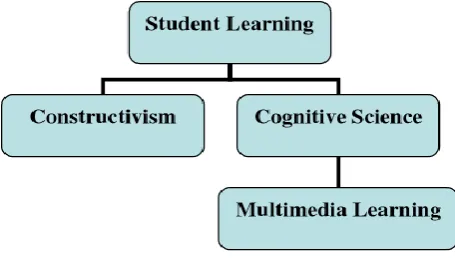
To further illuminate the findings of the study, Constructivism will be used as a theoretical framework. Constructivism posits that learning is a dynamic, constructive process that makes learners construct subjective mental representations based on their prior knowledge. Applying Constructivism in technology-rich classrooms is viewed by having actively engaged learners integrating verbal and visual thinking to construct, test and interpret knowledge based on their personal experiences and social interaction (Aljohani 2017).
53 | P a g e .
2.4. Review of Related Studies
Various experimental and empirical studies have been undertaken to investigate the role of CALL programs in ESL contexts using different research methods; quantitative, quantitative and mixed methods. The findings of those studies, which were emphatically described in the conceptual framework section, generally supported that judicious and well-planned and usage CALL programs which resulted in promoting student's language learning and having positive attitudes towards them (Al-Awidi & Ismail, 2014; Baskaran & Shafeeq, 2015; Dang 2011; Feng 2012; Kocaman & İskender, 2016; Nim Park & Son, 2009; Sorenson 2015; Tuan 2011; and Ushioda 2013).
2.5. The present Study
The current study was situated among the previously described studies in order to better address the research questions and to undertake the procedures of data collection, analysis and discussion of results.
The results of the study illustrated a detailed picture on the perceptions of the participant on CALL material, resources, and programs.
3. Methodology
This section describes the methodology adopted in the study. It also presents the study design, population, and sampling techniques. The researcher presents the instruments of data collection and interpretation.
3.1. Study Design
As this study aims at investigating the perceptions of teachers and students to gain a deeper understanding of the advantages and challenges of implementing CALL, the "intrinsic case study research" was employed in a public school in the UAE (Merriam & Tisdell, 2015, P.331). To communicate with the participants and directly collect data, the researcher adopted the qualitative methodological design which allowed to interpret and draw conclusions on the obtained data (O’Tool and Beckett, 2010).
54 | P a g e 3.2. Population and Sampling
The population was seized from one female secondary public school in the UAE in which ADEC's curriculum and learning resources are used. In order to select participants that are knowledgeable and experienced in using CALL in classrooms, purposeful-criterion sampling was utilized (Creswell, 2013). The researcher purposively chose 4 teachers of English, two native speakers, and two Arabic/English speaking teachers. All teachers have bachelor degrees in English language and instruction. The focus group consisted of 10 tenth-grade students.
3.3. Study setting
The school under study administers ADEC's framework for integrating Information Technology (IT) with other subjects like English. In the chosen school, IT subject is taught by three teachers four times a week while English is taught by four teachers eight sessions per week. The school is technologically equipped with three laboratories with an adequate number of high-speed internet access computers. In reference to a report of a standardized international examination, grade 10 student's average in English main skills is satisfactory (ADEC 2017).
3.4. Data collection
This study utilized two data collection instruments, namely; semi-structured interviews and focus group interviews (Appendixes A and B). The researcher consulted the results of standardized examination (2016) to determine the students’ language proficiency. Before conducting the interviews with the participants, the aims of the study were explained and then the researcher demonstrated that the merged data will be used for research purposes only. The participants’ responses were audio-taped and note-taken. The open-ended questions were adapted from the studies of Baskaran and Shafeeq, 2015; and Dang 2011.
On the other hand, focus group interviews with a homogeneous group of 10 students were employed. The researcher moderated the discussion and attempted to apprehend and record verbal and non-verbal data on the perspectives of students on CALL materials, their advantages and disadvantages and how they might facilitate or hinder their learning.
3.5. Validity and Reliability
55 | P a g e In order to determine whether the research protocol and instruments are adequate and effective, a pilot study was conducted. Having piloted the study and considered a screening procedure, the researcher could identify the potential problems associated with the case study.
3.6. Data Analysis
To produce a descriptive, reflective and informative synthesis and to systematically describe and analyze the perceptions of participants, the conventional and direct content analysis to systematically was used. Having immersed in the data, the researcher identified the themes that emerge through descriptive and analytical coding (Gay et al, 2009).
3.7. Ethical Considerations
In view of that ethical considerations were one of the researcher's main foundations of the study, employing a comprehensive ethical application to avoid any potential conflict that might arise was demonstrated. For that purpose, the researcher followed the British University in Dubai’s (BUID) ethical codes and thus ensured respect and confidentiality of the participants. Then the researcher obtained informed consent from the principal, teachers and the parents of the students in the school in order to commence the procedures of collecting data. A spring from the fact that the researcher's work and research site are the same, the researcher's role was vital in exploring the participants' perspectives by being unbiased throughout the data collection and analysis.
3.8. Study Limitations
As the findings of this study were restricted to the perspectives of the purposive study sample of one secondary public school for girls in the UAE, generalizing the results were confined to the setting, year, sample and data collection instruments used. Due to the difficulty to obtain ADEC's consent to collect data because of the time constraints, the researcher was not able to collect data from classroom observations or questionnaires.
These limitations should be considered in the future studies on this phenomenon.
4. Findings and results
This section describes the findings of the data analysis and thus highlights participants' perspectives on the advantages and challenges of implementing CALL in the school under study.
56 | P a g e 4.1. Availability of CALL materials
All teachers commended the visionary implementation of strategies to enhance learning English as a second language in the school, mainly the CALL resources provided by ADEC. All praised the fact that ADEC has been successful in the past few years in effectively managing CALL resources and orient teachers on how to best employ in the classroom. One teacher claimed that "having those CALL kits saved my time in preparing listening activities". Two participants stated that " we are computer-literate, so we find it easy to use CALL materials", however some of our colleagues need additional training to maximize the benefits of CALL". On the other hand, when the other participants were asked about that issue, their main response was "we are trying our best, but additional training will also foster our understanding". They further elaborated on the issue that students training is fundamentally significant. Another stated that integrating technology in learning and teaching English becomes a necessity as CALL materials provide students with "ample opportunities" to enhance language skills by interacting with reliable English language materials designed by specialists who are aware of the "unique social and cultural context of the UAE". Another teacher raised the issue that nowadays, teachers’ appraisal focuses on integrating technology in classrooms and "having the CALL resources CALL promoted my innovative teaching practices and improved the instructional strategies that I use which I guess increased English teaching effectiveness". The availability of CALL resources and the reference book was much-admired by one native speaker of English who demonstrated that "back home, we use flipped classroom as an instructional strategy to shift education to a learner-centered model" in which content delivery encompasses exploring and creating meaningful learning opportunities in conjunction of using educational technologies. All claimed that they have definitely employed them in their instruction, however, because of the rigid school curricula, time does not permit further exploration of those resources especially for very low-achieving students. Students generally acknowledged using CALL applications as "generators of motivating learning environments especially the interactive games".
4.2. CALL in ESL classroom
57 | P a g e mentioned that "since student's first language is not English", using CALL materials in the classroom helped students improve in English skills and positively contributed to the quality of instructional methodologies and techniques.
Students in the focus group stated that when the teacher allows us to practice the activities, we feel that we are learning the skills successfully. Some said that computer technology provides repeated lessons which deepen our understanding of the reading skill. On the other hand, teachers noted that although students study in a designed language classroom, there are 28 students with only one computer, one data show and limited multimedia facilities which may not be sufficient to meet the needs of all students. They stated that "since the IT teacher has classes, we cannot book the computer lab all the time and so we depend on projecting the materials and the activities
become often for the whole class and so we can’t take into account students' differences".
4.3. Advantages and disadvantages of CALL
All teachers indicated that using computers for language teaching has positive aspects. Three teachers stated that providing authentic language resources is supportive to developing students’ language skills. One teacher said "CALL materials are interesting, creative and visually appealing and thus attract student's attention"
All interviewees commended CALL's potentials in highly boosting student's motivation and increasing student's active participation and thus considered that the advantageous usages of CALL instruction. Another participant pointed out that in the computer-oriented learning environment, the teacher's role seems important in guiding and coordinating students' activities which will help students complete the CALL tasks independently.
Students in the focus group revealed that CALL activities are interesting and make them active during the English classes. Most claimed that CALL materials helped them to understand how to write with confidence different text types. Students demonstrated that using CALL materials which include the fun games and communicative activities reduce the English learning anxieties.
Although all participants illustrated the advantages of CALL in ESL classrooms, they pointed to numerous drawbacks of CALL. One teacher stated that "Students became highly enthusiastic when CALL materials are implemented at the beginning stages, however their attention, and motivation do not last long". Another teacher said" Sounds and videos draw student's attention but when they face difficulties understanding, they become unmotivated and noisy"; a point raised in the focus group discussion.
58 | P a g e learning, therefore students do not take them seriously and sometimes they feel that "is a free session". The majority demonstrated that the lack of time seems to be a hindrance to effectively implement CALL activities " because students have to complete two projects per term in addition to many quizzes on language skills and vocabulary". They further added that sometimes they feel that CALL activities do not encourage student's participation and thus described the interaction between learners and the computer as "one-sided, especially because some activities do not assess what students have acquired".
One teacher recalled a time she was observed by an external inspector who wrote her feedback on the observed lesson saying that "the teacher has to work on encouraging students to participate… the students are passive". The teacher further noted that "how come I explain that some students like to simply watch the screen and store information because they know that what they studied won't be in the required material for the exam".
Three teachers pointed to the importance of avoiding the excessive dependence on CALL materials in teaching different English skills since "some students need additional support in some skills which conventional materials may enhance" and thus emphasized the significance of the teacher's role.
The responses of some students in the focus group revealed that sometime CALL activities make them feel inactive and board especially if they are implemented in the English classroom "Don’t blame us if we are distracted easily… Activities will be really engaging if each student has her own computer and headphone". On the other hand, they claimed that using video maker helped them become more confident in the presentations in English and they enjoyed the interactive online games they played with their peers.
4.4. Discussion and Conclusion
Developing a generation of successful and innovative students has been a vital and indispensable vision of education in the UAE. It is indisputable that technology becomes the promising medium of communication and education in the UAE and that was reflected in the perceptions of the interviewed teachers and students.
An increasing conviction appears to illustrate that CALL has a facilitating role in L2 classroom, for example, but not limited participants pointed that using CALL materials and activities are advantageous in reducing English learning tension, boosting motivation, catering for student diversity, promoting self-directed language learning and scaffolding learning English language skills. Pervasive researches on language and technology for English language learners illustrate mounting evidence that utilizing CALL materials and activities is essential in promoting student's success at school.
59 | P a g e Overall, the results point out that the participants have supportive perceptions toward using CALL materials and resources. They consider them advantageous teaching and learning tools that can improve the pedagogical techniques by broadening learners’ experiences in actual and reliable contexts and providing students with arrays of language inputs. Those findings are inconsistent with the study of Nim Park and Son (2009) who indicated that the teachers in Korea have optimistic beliefs toward using computational activities and acknowledge the advantages of utilizing CALL resources. Correspondingly, the results are compatible with the findings of another study in the context of Saudi Arabia in which the researchers, Saqlain and Mahmood (2013) revealed that the participants are determined to use CALL resources by highlighting their facilitating roles in English learning. Agreeing with the findings, Kocaman and İskender (2016) found out that the students who studied English using CALL resources showed positive attitudes towards English classes than the ones who studied English using conventional instructional approaches; a consistent finding in the studies of Al-Awidi and Ismail (2014); Baskaran and Shafeeq (2015); Dang (2011) and Feng (2012).
The results additionally report that numerous aspects like time constraints, teachers’ unsatisfactory computer skills, insufficient computer facilities, and inflexible school courses undesirably affect the implementation of CALL in English classrooms. Therefore, it can be concluded that computer literacy and teachers and students' perceptions of implementing CALL activities correspondingly seem to considerably influence decisions on the use of CALL. Those findings were highlighted in the studies of (Al-Awidi & Ismail, 2014; Baskaran & Shafeeq, 2015; Dang 2011; Feng 2012; Kocaman & İskender, 2016; Nim Park & Son, 2009; Sorenson 2015; Tuan 2011; and Ushioda 2013).
Based on the previous findings, implications are contrived for more productive and effective CALL implementation in ESL contexts.
4.5. Implications and recommendations
60 | P a g e References
Abu Dhabi Education Council (ADEC). (2017). About ADEC [Online]. Available: www.adec.ac.ae/English/Pages/AboutADEC.aspx
Al-Awidi, H.M. and Ismail, S.A. (2014). Teachers’ perceptions of the use of computer assisted language learning to develop children’s reading skills in English as a second language in the United Arab Emirates. Early Childhood Education Journal, 42(1), pp.29-37.
Al Khan, M. (2014). Technology is key in modern classroom, UAE educators say. The National UAE [online]. Available at: http://www.thenational.ae/uae/education/technology-is-key-in-modern-classroom-uae-educators-say Aljohani, M. (2017). Principles of “Constructivism” in Foreign Language Teaching. Journal of Literature and Art
Studies, 7(1), pp.97-107.
Balushi, M. (2012). Computer Assisted Language Learning for English Language Teachers' Training in Oman. [online] Available at: http://linguistics.uoregon.edu/wp-content/uploads/2015/08/Al-Balushi-Mahfouda-Mar-12.pdf Baskaran, L. and Shafeeq,C.P. (2015). ESL Teachers’ Perception of CALL Integration in ELT. International Journal on
Studies in English Language and Literature (IJSELL)3(5), PP. 63-74
Beatty, K. (2013). Teaching & researching: Computer-assisted language learning. Routledge.
Bueno-Alastuey, M.C. and López Pérez, M.V. (2014). Evaluation of a blended learning language course: students’ perceptions of appropriateness for the development of skills and language areas. Computer Assisted Language Learning, 27(6), pp.509-527.
Creswell, J.W. (2013). Educational research: Planning, conducting, and evaluating quantitative (pp. 146-166). Upper Saddle River, NJ: Prentice Hall.
Dang, N.T. (2011). Exploring CALL options for teaching EFL in Vietnam. Theses, Dissertations, and Other Capstone Projects. Paper 273
Davies, G., Hewer, S., Rendall, H., & Walker, R. (2004). ICT4LT Module 1.4: Introduction to computer assisted language learning (CALL). [Online]. Available: http://www.ict4lt.org/en/en_mod1-4.htm
Feng, Y.L.(2012). English language teachers' perceptions of computer-assisted language learning. Texas A&M University-Kingsville.
Gamper, J., Knapp, J. (2002). A review of Intelligent CALL systems. Computer Assisted Language Learning15, 4, 329-342.
61 | P a g e Golonka, E.M., Bowles, A.R., Frank, V.M., Richardson, D.L. and Freynik, S. (2014). Technologies for foreign language
learning: a review of technology types and their effectiveness. Computer Assisted Language Learning, 27(1), pp.70-105.
Gilakjani, A.P. (2016). The Relationship between Information and Communication Technology and Foreign Language Teaching and Learning. Modern Journal of Language Teaching Methods, 6(4), p.67.
Hubbard, P. (2016). CALL and the future of language teacher education. Calico Journal, 25(2), pp.175-188
Kocaman, O. and İskender, M. (2016). The effect of computer-assisted foreign language teaching on the student’s attitude and success. Journal of Human Sciences, 13(3), pp.6124-6138.
Koenraad, A.L.M. and Westhoff, G.J. (2003). Can you tell a LanguageQuest when you see one? Design criteria for
TalenQuests. In Eurocall Conference. [Online] Available:
http://www.koenraad.info/call/tqeurocall.pdf/at_download/file
Lai, C., Yeung, Y. and Hu, J. (2016). University student and teacher perceptions of teacher roles in promoting autonomous language learning with technology outside the classroom. Computer Assisted Language Learning, 29(4), pp.703-723.
Lamy, M.N. and Hampel, R. (2007). Online communication in language teaching and learning. Palgrave Macmillan UK.
Leung, C.B. and Unal, Z. (2013). Advantages and disadvantages of classroom instruction with WebQuests: Connecting literacy and technology. Journal of reading education, 38(2), pp.31-38.
Lin, C.Y., Huang, C.K. and Chen, C.H. (2014). Barriers to the adoption of ICT in teaching Chinese as a foreign language in US universities. ReCALL, 26(01), pp.100-116.
Loucky, J.P. and Ware, J.L. eds. (2016). Flipped Instruction Methods and Digital Technologies in the Language Learning Classroom. IGI Global.
McCoy, W (2017). Five Positive Effects of Technology on Education. [Online] Available: http://smallbusiness.chron.com/five-positive-effects-technology-education-31222.html
Merriam, S.B. and Tisdell, E.J. (2015). Qualitative research: A guide to design and implementation. John Wiley & Sons Miangah, T.M. and Nezarat, A. (2012). Mobile-assisted language learning. International Journal of Distributed and
Parallel Systems, 3(1), p.309.
Nanjappa, A. and Grant, M.M. (2003). Constructing on constructivism: The role of technology. Electronic Journal for the integration of Technology in Education, 2(1), pp.38-56
62 | P a g e Oberg, A. and Daniels, P. (2013). Analysis of the effect a student-centred mobile learning instructional method has
on language acquisition. Computer Assisted Language Learning, 26(2), pp.177-196. Ormrod, J. (2008) . Educational Psychology. Carsile Publishing Services, USA.
O'Sullivan, K. (2015) Bilingual education–mismatch between policy and practice. International Journal of Arts & Sciences, 7(8), 425–438
O’Tool, J. & Beckett, D. (2010). Educational research: Creative thinking and doing. Victoria: Oxford University Press Parmaxi, A. (2013). Using Social Technologies in Computer Assisted Language Learning: Development of a
Theoretical and Methodological Framework. In EC-TEL Doctoral Consortium (pp. 87-92).
Parmaxi, A., Zaphiris, P., Papadima-Sophocleous, S. and Ioannou, A. (2013). Mapping the landscape of computer-assisted language learning: an inventory of research. Interactive Technology and Smart Education, 10(4), pp.252-269.
Reinders, H. and White, C. (2010). The theory and practice of technology in materials development and task design in N. Harwood (eds). English language teaching materials: Theory and Practice. Cambridge Language Education. pp58-79.
Saqlain, N. and Mahmood, Z. (2013). English Language Instructors' Perceptions about Technology-Based Language Learning at Northern Border University in Saudi Arabia. TOJET: The Turkish Online Journal of Educational Technology, 12(2).
Shih, Y.C. and Yang, M.T. (2008). A collaborative virtual environment for situated language learning using VEC3D. Educational Technology & Society, 11(1), pp.56-68.
Sorenson, S.L. (2015). The impact of computer assisted language learning on language proficiency. School of Education Student Capstones and Dissertations. Paper 123.
Stockwell, G. (2007). A review of technology choice for teaching language skills in the CALL literature. ReCALL, 19(2), 105–120.
Torres, I.P. ( 2005). WebQuest: a collaborative strategy to teach content and language on the Web. [Online]. Available at: http://sites.google.com/site/vsportal2007/isabelperez
Tuan, L. (2011). Teaching Reading through WebQuest. Journal of Language Teaching and Research, 2(3), 664673 Ushioda, E. ed. (2013). International perspectives on motivation: Language learning and professional challenges.
Springer.
Westby, C. (2010). Multiliteracies: The changing world of communication. Topics in Language Disorders, 30(1), pp.64-71.