http://mojem.um.edu.my
38
[1]
Graduate School of Hospitality and Tourism
Taylor’s University, Malaysia
Corresponding Author:
Graduate School of Hospitality and Tourism
Division of Hospitality, Tourism and Culinary Arts
Taylor’s University Malaysia
Email:
[email protected] Tel: +603-5629 5436
ABSTRACT
This research explores the gap between students and lecturers and introduces a theoretical concept of a technology-based evaluation system for higher education. This system tries to build a stronger connection between teaching and learning by using anonym continuous dynamic lecturer assessment from student feedback. It tries to bridge the gap between lecturers’ and students’ relationship in the case of giving feedback during classes by students to create a better learning outcome. As lecturers receive the feedback at the end of semester neither can they understand their weaknesses until the end of the course nor can students get the benefit of the lecturer improvements for themselves. This means if lecturer changes the teaching style in the following semester the current students would not get the benefits, whilst the needs of the new students may differ from the previous ones. This conceptual framework attempts to introduce a new way of dynamic evaluation which is active during the whole semester for students to anonymously enter their comments and questions. This will help lecturers deliver in a better way by analysing the feedback and questions immediately in the next class. This system will help the shy student who cannot speak openly and give their opinions. It also avoids the empty and invalid evaluation at the end of semesters. The results from this system could then be used as a part of lecturer appraisal.
Keywords: Lecturer assessment, student feedback, Higher Education, technological innovation in assessment
E-ISSN NO: 2289 – 4489
CONTINUOUS DYNAMICS STUDENT EVALUATION SYSTEM
IN AN ASIAN LEARNING CONTEXT
http://mojem.um.edu.my
39
INTRODUCTION
One of the most significant current discussions is that there should be a connection between teaching and student learning to have an effective learning outcome (Palermo, 2011). However, how can this connection be built? Lecturers are trying to understand their students’ learning progress by questioning students or by observation. On the other side, over the semester lecturers are receiving a lot of positive feedback but at the assessment time, lecturers realize that students still struggle in their courses.
In contrast, when students fill up the evaluation forms which they receive to assess the lecturer, they bring up negative points and rate the lecturer low. Afterwards they also complain to others that then lecturer did not know how to teach and they did not learn anything in the class.
Whose fault is this then? The lecturer does his/her best to deliver in the best way and even ask students and give them the opportunity to contact the lecturer whenever they have a problem. So what happens? Why do not the students ask for more explanation and help?
One possible reason is that, perhaps they do not realise that they have a problem and not learn or at the time they face problems, they do not have access to their lecturer. Another reason could be that they are shy and don not want to ask questions in front of the other students, because they are afraid of their friends’ or even the lecturer’s judgment (Schweisfurth, 2013). They may also be concerned that if they do complain about the lecturer’s teaching style, it may affect their results.
Another point is that students are not willing to fill up the evaluation forms, either they do not care or they do not like to spend time on it (White & Kiegaldie, 2011). The famous comment you can hear is: “The class is over and my feedback cannot benefit me!”
The project is looking for a tool to create a suitable link between lecturer, student and learning outcome. This will help the lecturer to improve their teaching style (White & Kiegaldie, 2011) during a particular semester. At the same time students can openly give their feedback in a way that would not affect the lecturer’s opinion about them and it will remain anonymous. The most important point is that students can get assistance from the lecturer in a way that they feel comfortable about asking any questions (Schweisfurth, 2013). Therefore their continuous and dynamic interconnections can help the lecturer to meet teaching excellence, which can help students during their semester.
BACKGROUND
Importance of Student Feedback in Evaluation
http://mojem.um.edu.my
40
the purpose of the latter is to encourage the professional progression and development of the lecturers and improve the performance by providing feedback (Peterson, 2000).The purpose of formative and summative evaluation is to evaluate lecturer performance; however, the formative way aims to evaluate the improvement of the lecturer performance, while the summative objective is to determine the sufficiency of performance improvement from which the lecturer can be rewarded. Although each of them is valuable they cannot reform on their own (Namaghi, 2010; Nygaard & Belluigi, 2011). The combination of them provides optimum opportunities for professional development (Nolan & Hoover, 2008) and tenure (Brandt, Mathers, Oliva, Brown-sims & Hess, 2007).
Some lecturer evaluation systems use summative evaluation instead of formative to build a case to dismiss incompetent lecturers. According to Danielson & McGreal (2000) this method has some weaknesses. (a) It would not provide an open and honest atmosphere between lecturers and supervisors or deans; (b) it could increase anxiety which makes it difficult to admit the weaknesses during discussion; (c) it would not encourage the lecturer to interact with other lecturers and colleagues on what they need to improve to guide students to success; (d) there is no clear guidance to improve performance; and finally (e) it does not motivate a mediocre lecturer to improve nor a good lecturer to be excellent.
Namaghi (2010) argued in his article that there are other factors which need to be considered to provide a better image of teaching performance. Students’ opinion should be taken into account in contrast to lecturers’ lesson plans, classroom observations should be done, self-evaluation is needed, profile assessment, the achievement of the students which is tested by a standard tool, and student sample work reviews. Although these are useful sources of information each of them has its own limitations.
The present project is focusing on the student assessment of lecturer, which is one of the most significant parts, as students are the most valuable element of each university. All the efforts are put for them to increase their achievements, so they have to play an effective role in the lectures assessment.
Gap in Knowledge
Using the rating system is a common practice in most higher education systems. The Likert 1-5 scale is used for these kinds of surveys that ‘1’ stands for “very poor” to ‘5’ for the “very good”. The two most important purposes of these rating systems are providing feedback for the faculty to improve teaching capability of the lectures and using it as a tool for lecturers’ appraisals (Marsh & Roche, 1997).
The rating system has some drawbacks: it does not give the opportunity to the students to give their personal opinions as they have to follow the planned questionnaire. As it is distributed at the end of last class (paper-base or online survey) students do not show their interest in filling up the forms so it may affect the result of survey. Students feel that they do not get the benefit of the result as their class finished.
http://mojem.um.edu.my
41
improvement or evaluation (Ramsden, 1992). According to Nygaard and Belluigi (2011) timing is on of the most important factor that impact the validity and relaiability of the evaluations.Figure 1. Lecturer Evaluation Time Line
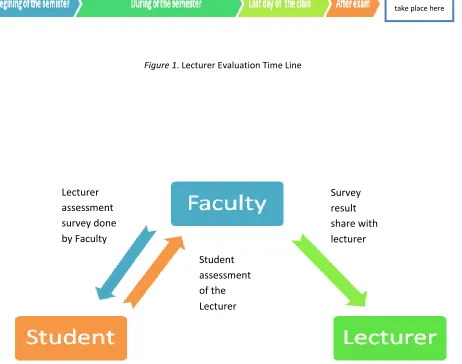
Figure 2. Lecturer Assessment by Student
The most important part of this system, which is the student and lecturer relationship, is not taken into consideration. The students want an immediate reaction after their feedback (Sprague, 2008), but in this kind of system students are not even informed of the result of the survey, and also the lecturer does not even realize the reason behind the evaluation.
Lecturer
assessment
survey done
by Faculty
Student
assessment
of the
Lecturer
Survey
result
share with
lecturer
http://mojem.um.edu.my
42
In the dynamic continuous lecturer assessment (Figure 3) by student system the students have the opportunity to share their opinion while it is anonymous and they will get the benefit of lecturer reaction accordingly in the next class. But why do not Asian students share their opinions in the classroom? There are some reasons behind it such as they are shy to ask or give feedback in classroom.Figure 3. Dynamic Continues Lecturer evaluation by Students System
Figure 4. Continuous Lecturer Evaluation Time Line
Asian students learning habits
Asian students are different from Western students. If a lecturer enters a university course in USA or Europe and starts to explain a theory or introduce a new topic, students will interrupt the lecturer and ask him specific questions until they understand the point. It is a normal and common procedure in Western culture (Burleson, 2006; Rao, Singhal, Ren, & Zhang, 2001). Students want to understand what they are learning and use any chance
Faculty Monitoring
This Process
Dynamic Continues Lecturer
Evaluation by Student system
http://mojem.um.edu.my
43
to gain knowledge. Which equates with the idea of Student Centred Learning (Zhang, Biggs, & Watkins, 2009). It does not mean that Asian students do not want to understand the theory which the lecturer is explaining. Asian students are also keen to learn more. However, in the classroom they are quiet and generally do not ask question or interrupt the lecturer (Rao et al., 2001). In their culture the lecturer is a wise person who should not be questioned. Furthermore, since this wise man takes his time to share his knowledge with his students, students shall be grateful for this opportunity. In China especially, lecturers face this learning style (Rapee et al., 2011). Confucius already explained in his books that students are not allowed to discuss a topic with their master before they understood it. In this point, understanding does not only mean that you understand the theory; it also includes re-thinking, practicing and professionalizing. Students have to get experience first, before they are allowed to discuss it with their Masters (Jahng, Krug, & Zhang, 2007). This learning picture still exists in today’s Chinese learning style and students are trained in it from the time they enter this education system. Another reason why Asian students are passive in classrooms is the teaching style. In Asia, frontal teaching (lecturer focus teaching) is the most used practice and in this way students do not have the chance to interrupt the lecturer (Denson & Zhang, 2010). This means, that the lecturer is the active person in the classroom, and from the beginning to the end of the class he will talk (Denson & Zhang, 2010). Questions from students are not allowed and if a student does not understand the topic of the class, he/she normally will find other resources to understand it. Questioning in classes is not common and if today a lecturer asks students: “Do you have a question?” students will keep silent, because they are not used to this scenario (Hofstede, Hofstede, & Minkov, 1991).Different generation of Higher Education students
http://mojem.um.edu.my
44
Generation Y
‘Net Generation’, ‘Digital Natives’ or ‘Generation Y’ are the labels which are given to the group of individuals who were born between 1980 and 1994. Recently they have attracted extensive attention to themselves (McCrindle, 2006). McCrindle, argued that this generation has been characterized by their information and communication technologies’ knowledge which they are dependent on. They spend most of their time with their electronic gadgets and games(Prensky, 2001; Schefiled, 1996)
Immediate answers and fast access to information are the Generation Y expectations. They seek information assertively and are experts at multitasking, although it seems they do not pay enough attention to the individual tasks (Barnes, Marateo, & Ferris, 2007; Prensky, 2001). In addition, Prensky (2001) mentioned that, there is wide gap between today’s university students and their lecturer which is named ‘Digital Immigrants’. Therefore, lecturers need to change their teaching methods to match their students’ skills and expectations.
The Net Generation, who has grown up in the digital culture, has different expectations, preferences and skills even in the education system (White & Kiegaldie, 2011). They prefer to receive information quickly; adept at processing the information rapidly; they prefer multi-tasking access to the information than a linear one; lower patience for lectures; prefer active learning; they want to have access to information via RSS feeds and so on, these are examples which Kennedy et al. (2007) mentioned in their article.
PROJECT DESCRIPTION
Lecturer Evaluation by students
Paper Base Evaluation Forms:The common form of the lecturer evaluation form is a scaled paper based system which is given to students at the end of semester. There are some points that are never asked of students in the scale form of feedback system. Almost all institutes and universities used the paper base feedback system. In this system, students evaluate the lecturers’ teaching capability, covering the syllabus and sharing knowledge by using the rating scale system. This system has some weaknesses. First, these kinds of rating systems will not give an opportunity to the students to give their feedbacks openly and they are limited to the questions. They cannot give their opinions and suggestions as they have to answer the prepared questions. Second, they rush to go and they do not like to answer and it may give invalid answers. Also, sometimes a personal issue could affect rating lecturer’s teaching ability. The third reason which also could affect the validity of the evaluation form is that some students fill up the scale carelessly as it will not benefit them as the class is finished. For more criticism of these formative and summative evaluations see Winchester and Winchester (2011).
http://mojem.um.edu.my
45
Dynamic Online Evaluation Forms: The online continuous dynamic feedback system offers a better solution to these problems. The system gives the student this opportunity to give their feedback whenever they want. This will help the lecturer to understand the weaknesses during the semester in order to take action. Students can share their suggestions, difficulty in learning, and ask for more discussion in the next class.
Why are we using Technology? Why Google Doc?
These days our life is much computerized and we do not want to lose even one moment in doing paper work. Paperless systems are very common nowadays; even school education systems are relying on the technology. On the other hand, generation Y are more into technology these days and like everything online. The other reason is that this system is internet-based and keeps the feedback anonymous and gives the student the feeling that they are free to write whatever they want. As nothing can be traced back to their emails and their handwriting they can share their feelings and ideas openly.
There are several tools for online lecturer and student interaction, but most of them do not have the factor of anonymity. Facebook is a very good tool for interacting but some lecturers do not like to share their Facebook account with students as they do not want to mix their personal and career life. Nor do they have time to create a new account dedicated to students. Facebook also does not have the anonymous factor as the student name or nickname will appear there. Forums and blogs also have the same problem.
The Google document online form provides the facility to keep the anonymity of the feedback as they do not need to provide their email address when anyone fills up the form. It is easily accessible even via smart phones. The other good thing about it is that lecturers can change the question according to the subject matter or get their opinions regarding one issue.
How the dynamic feedback system works
The dynamic continuous lecturer assessment has been developed using Google Document Form. There are five open-ended questions which can help lecturers improve their teaching capabilities. Lecturers can change the questions according to the class context. The form is posted to the students’ emails the first time which are then accessible during whole semester. Questions are about student feelings, understanding subject matter or any difficulty they may have and want to share with the lecturer.
For this project, open questions were chosen to focus on students’ feedback. If students were given closed or multiple-choice-questions, the possibility is high that they would not give their opinion as needed. Students would only give guided answers and not the “real feedback”. To ensure the right necessary feedback the student feedback survey is structured in 4 different sections:
http://mojem.um.edu.my
46
Section two seeks feedback about the course. Students are asked to give feedback about what they like and what they want to be improved in the course. For example, if a course is handling an intensive theory part, students might request that more examples be used to explain the idea of the topic in a clearer way.Section three seeks feedback about the lecturer. Students are asked to give feedback about the teaching methods of their lecturer. Feedback about teaching methods is an important factor as it shows students can follow the class and the lecturer. For example, a lecturer may tend to speak fast when he explains a topic making it difficult to follow and understand the course content. With the feedback of the teaching methods, lecturers can gain information about learning styles and preferred learning methods and can adjust his teaching in a way to support all students in the course.
The fourth and last question is an open ended question that gives students an opportunity to give comments related to the course but cannot be given in section two or three. For example, students are genuinely interested in one of the topics and would like to request more reading materials. Since this is not a feedback about the course or about the lecturer’s teaching methods, students get the opportunity to make these requests with the last question, which covers all other suggestions.
Project Activities
The continuous dynamic feedback system will be pilot tested in in a final year course of Bachelor students in Hospitality, Tourism and Culinary Arts. Students will be familiarized with the online feedback system at the beginning of the semester and reminded every week if needed. After the classes, the lecturer will analyse the feedbacks in a qualitative approach and will adjust the teaching methods based on the needs of the students. This procedural will be repeated every week of the semester to extend the learning outcome of all students.
What is the outcome of this feedback system?
This project is looking at three separate outcomes using the students’ feedback system:
The first outcome is to realize an instant and continuous feedback from students. Since learning is the centre of every classroom, it must be ensured that the best possible learning outcome can be achieved in every course (Dobozy, 2011). One way to achieve this is through students’ feedback. Students can give their feedback about what they like about the course/ lecturer’s teaching methods and what they would like to see improved. In this way students get an opportunity to share their comments and suggestions with their lecturer to frequently help to improve the course.
The second outcome is to support lecturers in collecting feedback from their students. As discussed earlier it is difficult for lecturers to get feedback from their students to understand them better and support them in the right way throughout the semester. With this student feedback system, lecturers are able to gain information continuously from their students and adjust their teaching methods according to the collected feedback.
http://mojem.um.edu.my
47
teaching methods according to the needs of their students throughout the semester. Therefore, the learning outcome should be maximized through this feedback system.CONCLUSION
Evaluation forms need to be designed in a way that lead the lecturer and faculty to professional development, while teaching should be seen as a practical activity rather than a technical one (Burden, 2008). Making a connection between academic and personal theory and daily planning and evaluation is a conflict that some lecturers deal with it. When the practice does not get any reflection it becomes routine and repetitive. That is why the need of continuous assessment is necessary to avoid repetitive mistakes and to take the students’ ideas into consideration.
The dynamic continuous teacher evaluation by student system will give the faculty, lecturer and students this opportunity to perform better. The faculty will have a more reliable data for assessing lecturers during and after classes. Also lecturers do not need to wait for the results of the evaluation survey to be conducted at the end of class to realize their weaknesses and students’ expectations. Students can also openly share their ideas, expectations and comments with the lecturers. They would get the immediate benefit of their feedback in the next class if it is realistic.
REFERENCES
Barnes, K., Marateo, R. C., & Ferris, S. P. (2007). Teaching and learning with the net generation. Innovate Journal of Online Education, 3(4).
Brandt, C., Mathers, C., Oliva, M., Brown-sims, M., & Hess, J. (2007). Examining district guidance to schools on teacher evaluation policies in the Midwest Region Summary schools on teacher evaluation Summary Prepared by Learning Point Associates Learning Point Associates Learning Point Associates. Evaluation.
Brennan, B. B. (2010). Generational Differences. Paper Age, (January–February).
Burden, P. (2008). Does the use of end of semester evaluation forms represent teachers’ views of teaching in a tertiary education context in Japan? Teaching and Teacher Education, 24(6), 1463–1475. doi:10.1016/j.tate.2007.11.012
Burleson, B. R. (2006). Chinese evaluations of emotional support skills, goals, and behaviors: An sssessment of gender-related similarities and differences. Communication Research, 33(1), 38–63.
http://mojem.um.edu.my
48
Denson, N., & Zhang, S. (2010). the impact of student experiences with diversity on developing graduate attributes.Studies in Higher Education, 35(5), 529–543.
Dobozy, E. (2011). Interaction design in LAMS - pushing the boundaries of traditional lecturing - formatted for Chris.
Hofstede, G., Hofstede, G., & Minkov, M. (1991). Cultures and organizations: Software of the mind (Vol. 2). London: McGraw-Hill.
Jahng, N., Krug, D., & Zhang, Z. (2007). Student achievement in online distance education compared to face-to-face education. Europian Jurnal of Open, Distence and E-Learning, 1.
Kennedy, G., Dalgarno, B., Gray, K., Judd, T., Waycott, J., Bennett, S., Maton, K., et al. (2007). The net generation are not big users of Web 2.0 technologies: Preliminary findings. ICT: Providing choices for learners and learning. Proceedings ascilite Singapore 2007 (pp. 517–525).
Lehrer, J. (2006). Generation next: The workplace [Motion picture]. LA, USA: PBS NEWSHOUR.
Marsh, H. W., & Roche, L. A. (1997). Making students’ evaluations of teaching effectiveness effective: The critical issues of validity, bias, and utility. American Psychologist, 52(11), 1187. doi:10.1037/0003-066X.52.11.1187
McCrindle, M. (2006). New Generations at Work: Attracting, Recruiting, Retraining & Training Generation Y. McCrindle Research.
McEwan, A. M., & Castells, M. (2009). Generation Y: Coming To a workplace near you. The Smart Work Company, 1–5.
Namaghi, S. A. O. (2010). A Data-Driven Conceptualization of Teacher Evaluation. Qualitative Report, 15(6), 1504– 1522.
Nolan, J., & Hoover, L. A. (2008). Teacher supervision and evaluation: Theory into practice. (2nd, Ed.). John Wielly & Sones.
Nygaard, C., & Belluigi, D. Z. (2011). A proposed methodology for contextualised evaluation in higher education. Assessment & Evaluation in Higher Education, 36(6), 657–671. doi:10.1080/02602931003650037
Palermo, J. (2011). Linking student evaluations to institutional goals: a change story. Assessment & Evaluation in Higher Education. doi:10.1080/02602938.2011.618880
Peterson, K. (2000). Teacher evaluation: A comprehensive guide to new directions and practices (2nd ed.). Thousand Oaks: CA: Corwin Press.
http://mojem.um.edu.my
49
PrincetonOne. (n.d.). What You Need to Know About the Millennials. Solutions (pp. 1–11). New Jersey.Ramsden, P. (1992). Learning to teach in higher education. London: Routledge.
Rao, N., Singhal, A., Ren, L., & Zhang, J. (2001). Is the Chinese self-construal in transition? Asian Journal of Communication, 11(1), 68–95.
Rapee, R. M., Kim, J., Wang, J., Liu, X., Hofmann, S. G., Chen, J., Oh, K. Y., et al. (2011). Perceived impact of socially anxious behaviors on individuals’ lives in Western and East Asian countries. Behavior therapy, 42(3), 485–92. doi:10.1016/j.beth.2010.11.004
Schiefer, D. (1996). G ENERATION Y IM Arbeitsumfeld. k/c/e Marketing2, 1–11.
Schofield, C. P., & Honoré, S. (2010). Generation Y and learning. The Ashridge Journal, 26–32.
Schweisfurth, M. (2013). Learner - Centred Education in International Perspective. Journal of International and Comparative Education, 2(1), 1–8.
Sprague, C. (2008). The Silent Generation Meets Generation Y : How to Manage a Four Generation Workforce with Panache. HCIWhite Paper.
White, G., & Kiegaldie, D. (2011). Gen Y learners: just how concerned should we be? The clinical teacher, 8(4), 263– 6.
Whitney Gibson, J., Greenwood, R. A., & F., M. E. (2011). Generational differences in the workplace: Personal values, behaviors, and popular beliefs. Journal of Diversity Management, 4(3), 1–8.
Winchester, M. K., & Winchester, T. M. (2011). If you build it will they come? Exploring the student perspective of weekly student evaluations of teaching. Assessment & Evaluation in Higher Education. doi:10.1080/02602938.2011.563278