www.biogeosciences.net/13/2061/2016/ doi:10.5194/bg-13-2061-2016
© Author(s) 2016. CC Attribution 3.0 License.
Generation of a global fuel data set using the Fuel Characteristic
Classification System
M. Lucrecia Pettinari and Emilio Chuvieco
Department of Geology, Geography and Environment, University of Alcala, Alcalá de Henares, 28801, Spain Correspondence to: M. Lucrecia Pettinari ([email protected])
Received: 27 September 2015 – Published in Biogeosciences Discuss.: 27 October 2015 Revised: 19 February 2016 – Accepted: 16 March 2016 – Published: 8 April 2016
Abstract. This study presents the methods for the generation of the first global fuel data set, containing all the parameters required to be input in the Fuel Characteristic Classification System (FCCS). The data set was developed from different spatial variables, both based on satellite Earth observation products and fuel databases, and is comprised by a global fuelbed map and a database that includes the parameters of each fuelbed that affect fire behavior and effects. A total of 274 fuelbeds were created and parameterized, and can be in-put into FCCS to obtain fire potentials, surface fire behavior and carbon biomass for each fuelbed.
We present a first assessment of the fuel data set by com-paring the carbon biomass obtained from our FCCS fuelbeds with the average biome values of four other regional or global biomass products. The results showed a good agreement both in terms of geographical distribution and biomass loads when compared to other biomass data, with the best results found for tropical and boreal forests (Spearman’s coefficient of 0.79 and 0.77).
This global fuel data set may be used for a varied range of applications, including fire danger assessment, fire behav-ior estimations, fuel consumption calculations and emissions inventories.
1 Introduction
Fire is an important process in the Earth system, with a global burned area of 3.0–3.8 million km2 (Giglio et al., 2013; Alonso-Canas and Chuvieco, 2015), and multiple biophys-ical, ecologbiophys-ical, and socioeconomic consequences. It has shaped the Earth’s vegetation through its history, altering vegetation composition by preventing the growth of some
plant types while promoting others, thus creating flammable ecosystems where other vegetation would exist based solely on climate or soil (Pausas and Keeley, 2009). Fire is also an important source of atmospheric gases and aerosol par-ticles, including gasses such as CO2, CO, and CH4(Schultz
et al., 2008).
bio-logical variables that allow for both fire behavior (through an adaptation of the Rothermels’ equations) and effects (emis-sions) calculations, which can be used for fuel management at different scales (McKenzie et al., 2007).
Maps including information on fuel types are a necessary input for fire risk and fire effects assessment. At local or re-gional scale, fuel maps are useful for spatial modeling of fire risk assessment (Finney et al., 2011; Chuvieco et al., 2014) and real-time analysis of fire behavior (Dymond et al., 2004; McKenzie et al., 2007). Continental or global fuel maps, meanwhile, are usually used for carbon-cycle or air-quality modeling (Keane et al., 2001; McKenzie et al., 2007; San Miguel-Ayanz et al., 2012), and they can also be used for the estimation of continental to global fire danger (Sebastián-Lopez et al., 2001; Pettinari et al., 2014).
Different approaches can be used to create fuel maps. Field surveys have been used to provide detailed information on fuel characteristics, but they are costly to implement, and thus are only useful for small areas (Keane et al., 2001; Rollins et al., 2004; McKenzie et al., 2007). Ecological mod-eling employs environmental gradients such as climate and topography, as well as ecosystem dynamic models, to cre-ate vegetation and fuel maps (Keane et al., 2001; Rollins et al., 2004). Remote-sensing approaches are sound alternatives to fuel type mapping, as they provide updated spatial cover-age and are sensitive to some of the critical variables for fuel type definition: fuel loads, horizontal and vertical continuity, fuel moisture, etc., particularly when using lidar observations (Riaño et al., 2004).
Previous fuel maps created at continental scales have lied on the use of remote-sensing information, usually re-classified to land cover classes, and ancillary data from other sources, such as potential vegetation, canopy cover, etc. Some examples of continental or sub-continental fuel maps are the National Fuel-type map for Canada (Nadeau et al., 2005), the LANDFIRE fuel maps for the United States, which include several fuel type classifications (http://www. landfire.gov/, last access: January 2016) and the European fuel map used by the European Forest Fire Information Sys-tem (EFFIS) (San Miguel-Ayanz et al., 2012).
The objective of this paper is presenting the methods to generate a global fuel map based on the FCCS approach. Our goal was to deliver a global product to the international com-munity interested in improving the modeling of fire danger and fire effects assessment. To our knowledge, global fuel maps are not yet available, thus this paper is a first attempt to generate a planetary fuel data set that is based on consistent inputs. In addition, since the FCCS is the base for the fuel typology, quantitative estimations of fire risk and behavior parameters can be generated from the final product. In a pre-vious study, we created a fuel map for South America using the FCCS methodology (Pettinari et al., 2014). In this study, we have extended that methodology to create a global fuel data set using FCCS, which required the inclusion of new sources of data to reflect the characteristics of biomes and
ecosystems not present in South America. Also, the method-ology was expanded, adding more spatial variability to the fuelbeds and updating some sources of information, amongst other improvements. In addition, we have undertaken a first assessment of our product by comparing the biomass esti-mations provided by the FCCS outputs of our fuelbeds with existing regional or global biomass products.
2 Methods
The development of the global fuelbed data set is based on the Fuel Characteristic Classification System (FCCS), which is both a conceptual framework and a software tool for quan-tifying fuels (Ottmar et al., 2007). The fuel characteristics are organized into six strata including trees, shrubs, grasses, woody surface fuels, litter and soil organic matter (duff), and are referred to as fuelbeds. We have used version 3.0 of the FCCS software, which is integrated into the Fuel and Fire Tools (FFT, available at http://www.fs.fed.us/pnw/ fera/fft/index.shtml, last access: September 2015). FFT is a software application that integrates different fire character-istics, behavior, and effects tools developed by the Fire and Environmental Research Applications Team (FERA) of the United States Forest Service (USFS).
FCCS was selected to develop the fuel data set because it has the advantage that it includes a wide set of physical char-acteristics of the fuels, and not only the ones required by a particular fire model such as NFFL or NFDRS. The NFFL models were developed for uniform continuous fuels and for the severe period of the fire season (Anderson, 1982; Rother-mel, 1983), and they do not describe fuels with higher live fuel moisture or that burn well at high humidity (Scott and Burgan, 2005). FCCS, meanwhile, allows creating fuelbeds for environments not contemplated by other models, such as moist ecosystems that are found in several parts of the world. Also, the parameters included in the FCCS fuelbeds also pro-vide information on the crown and ground fuels, not included in most models only developed for surface fuels (Cohen and Deeming, 1985; Scott and Burgan, 2005). This extends its use to other applications beyond fire behavior estimations, allowing also estimating crown fire potentials, the amount of available fuel or predicting fuel consumption.
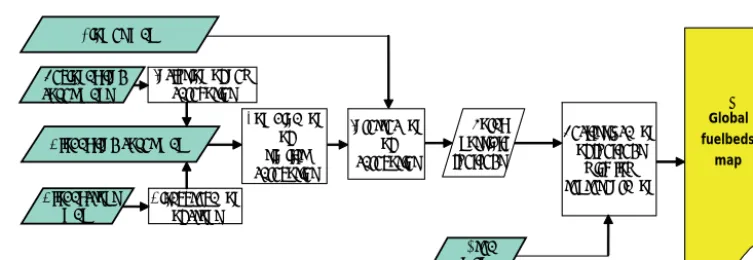
Global fuelbeds
map
Global fuelbeds parameters (spreadsheet)
Land cover maps Biomes map
FCCS or Photo Series parameters Species database Canopy height map
Canopy cover m ap
FCCS run
FCCS outputs: fire
potenals, fire behavior, biomass
[image:3.612.155.441.69.250.2]Mapped FCCS outputs
Figure 1. General flowchart of the methodology used for the generation of the global fuel data set. More detailed steps are shown in Figs. 2 and 3.
Inclusion of new categories
Intersecon of categories
Reclassificaon of fuelbeds
with low representaon
Global fuelbeds
map
Area map Disaggregaon
of crops Biomes map
Global land cover map Regional land cover maps
Global crops ap m
Combinaon of similar categories
Total possible fuelbeds
Figure 2. Flow chart of the steps performed for the generation of the fuelbeds.
2.1 Generation of the fuelbeds
The first stage of the development of the fuel map comprises the delineation of the fuelbeds, and the creation of the map itself. A flow chart summarizing the steps to obtain the fu-elbeds is included in Fig. 2.
The land cover information was extracted primarily from the GlobCover 2005 V2.2 product (Bicheron et al., 2008), developed from a temporal series of MERIS (Medium-Resolution Imaging Spectrometer) images acquired between December 2004 and June 2006. This product has a spatial resolution of 10 arcsec (∼300 m at the Equator) and its leg-end was defined using the Land-cover Classification System (LCCS) of the United Nations’ Food and Agricultural Orga-nization (Di Gregorio, 2005). The GlobCover V2.2 has both global and regional maps. The global map uses the Level 1 of LCCS, which consists of 22 classes, 18 of which include vegetation. In addition to the global GlobCover 2005 prod-uct, other land cover products were used to solve some prob-lems or limitations that we found in this map. For instance,
the Global GlobCover product did not include a specific class for needle-leaved deciduous forests (ND), which was mixed with the needle-leaved evergreen (NE) forests. Since both categories have distinct fire behavior, the regional GlobCover V2.2 maps (Bicheron et al., 2008) corresponding to Eastern Europe and Central Asia were used, as they discriminate be-tween NE and ND. For our map, the pixels from the global map were reclassified into those two categories following the regional GlobCover maps classification.
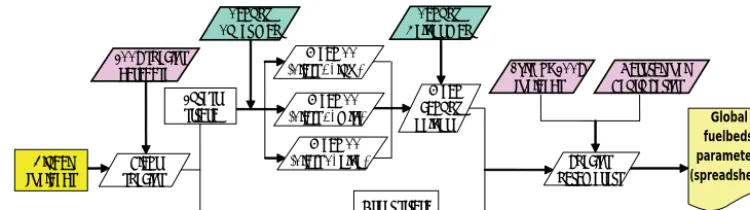
[image:3.612.108.485.298.428.2]Exisng FCCS fuelbeds
Global fuelbeds parameters (spreadsheet)
Global fuelbeds
Forest strata
Other strata Plant
species
Species parameters Canopy
Height map Canopy
Cover map
Mean CC (Class B: mid)
Mean CC (Class C: high)
Mean CC (Class A: low)
Mean canopy height FCCS species
database Natural fuel
[image:4.612.110.485.66.171.2]Photo Series
Figure 3. Flow chart of the steps performed for the parameterization of the fuelbeds. CC: canopy cover.
were created for that region. The GlobCover product as-signed vast regions of Australia as broadleaved decidu-ous (BD) forests, which was in disagreement with other sources of Australian vegetation information (Department of the Environment and Water Resources, 2007). In order to account for this, the map of major vegetation groups in Australia V3.0 (http://www.environment.gov.au/resource/ major-vegetation-groups-australia#map, last access: January 2016) was used to reclassify the pixels from BD to BE (mainly eucalyptus and acacias) when the Australian map showed a majority of this type of vegetation. A new land cover class was created to represent this type of vegetation.
Regarding the crops, even though the GlobCover V2.2 product only distinguishes between rainfed and irrigated croplands, fuel conditions and biomass are very different in some of the most extended crops. To assign individual crops species to the cropland classes the “Harvested Area and Yield of 175 crops” map was used (http://www.earthstat. org/data-download/, last access: January 2016). This map shows the global distribution of 175 different crops accord-ing to crop areas, yields, physiological types, and primary production in the year 2000, based on satellite data sets and national and regional agricultural statistics (Monfreda et al., 2008). Only the 15 crops with the highest global har-vested area were considered, and these data were extracted from the FAOSTAT’s crops production database (Food and Agriculture Organization of the United Nations, Statis-tics Division, http://faostat3.fao.org/faostat-gateway/go/to/ download/Q/QC/E, last access: January 2016). The land cover classes that include croplands were subdivided ac-cording to the world countries’ first order administrative divisions (extracted from the ESRI World Administrative Division Map, http://www.arcgis.com/home/item.html?id= d86e32ea12a64727b9e94d6f820123a2, last access: January 2016). For each land cover and administrative division, the crop with the highest harvested area from the 15 crops con-sidered was identified, and assigned to that land cover class and region. For the countries with no information in the crop’s map, the crop was assigned based on the FAOSTAT statistics.
Once the global land cover classes were complemented with the ancillary information, some of the classes were
com-bined. Both rainfed and irrigated were grouped when they corresponded to the same crop, because they did not repre-sent a difference in vegetation characteristics for the objec-tive of the fuelbed classification. Also, the classes that dif-fered only in their vegetation density (close or open) were merged.
The biomes description was extracted from the Map of Terrestrial Ecoregions (Olson et al., 2001), as it is widely used by different international organizations, including the World Wildlife Fund (WWF). The description includes 14 global vegetated biomes and more than 800 ecoregions. In order to decrease the total number of fuelbeds, we consid-ered that it was possible to eliminate biomes 9 (Flooded Grasslands and Shrublands) and 10 (Montane Grasslands and Shrublands), as they shared many vegetation characteristics with other fuelbeds in nearby biomes. The different patches of these two biomes were reclassified to the biomes that lim-ited with them. As a result, a total of 12 vegetated biomes were considered for the combination with the land cover classes.
The intersection of the land cover classes and the biomes was performed at the spatial resolution of the land cover map. An area map was developed to represent the area of each 10 arcsec pixel of the GlobCover map, and it was used to calculate the total area of each possible combination of land cover class and biome. The combinations with low represen-tation (<0.01 % of global land area: 14 900 km2) were re-classified into other similar categories. With this step, the fi-nal fuelbed map was generated, with the delineation and the geographic location of the global fuelbeds.
2.2 Parameterization of the fuelbeds
Once the spatial distribution of the fuelbeds was defined, a set of parameters that affect fire behavior and effects was assigned to each fuel stratum (tree, shrubs, grasses, woody surface fuels, litter, and ground fuels). These parameters are listed in Table 1. A flow chart of the steps followed is shown in Fig. 3.
Table 1. Parameters assigned to each fuelbed.
Stratum (and categories) Parameter
Canopy (primary and secondary layers) Percent covera, heighta, height to live crown (HLC), tree density, diameter at base height (DBH), existence of ladder fuels, tree species, and relative coverb
Shrub (primary layer) Percent cover, height, percent live, shrub species, and relative coverb
Herb (primary layer) Percent cover, height, percent live, load, herb species, and relative coverb
Woody fuels (sound woody) Percent cover, depth, fuel load by size class (1, 10, 100, 1000 h)
Litter, lichen, and moss Percent cover, depth, litter arrangement, and percent relative cover by type, moss type
Ground fuels (upper and lower duff) Percent cover, depth, type
aThese data were extracted from global products developed from remote sensing.
bPlant species were assigned based on vegetation form and foliage type. The rest of the variables were extracted from existing databases.
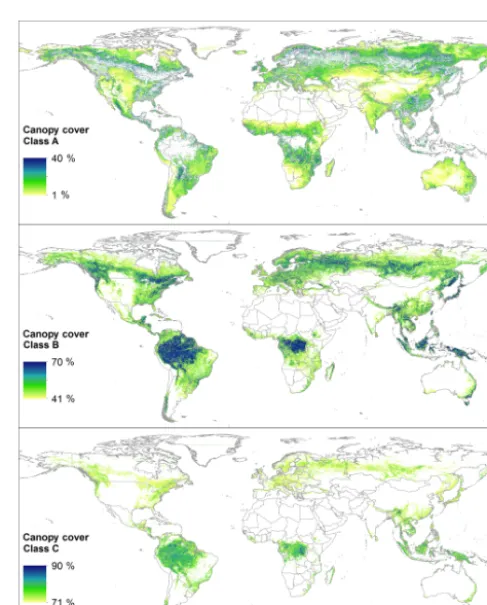
with the base land cover product. This product has a spatial resolution of 250 m (Carroll et al., 2011) and describes the percent of a pixel which is covered by tree canopy (>5 m high). The map was resampled to the land cover spatial res-olution. In order to include more variability in canopy cover (CC) than in previous studies (Pettinari et al., 2014), the per-centage of CC was subdivided into three classes: 0–40 % (named class A), 40–70 % (class B) and 70–90 % (class C) as shown in Fig. 4. The value of 40 % was assigned because that is the threshold used in FCCS to decide if canopy fire spread can occur (Prichard et al., 2013). The 70 % threshold was as-signed to divide the rest of the existing canopy percentage in two equal parts. No valid values above 90 % appeared in the resampled map. The area of each fuelbed corresponding to each CC class was calculated. If a fuelbed included two or three CC classes with an area higher than 0.01 % of global land area, it was subdivided into as many sub-fuelbeds as complied with the minimum area criterion. Otherwise, it re-mained as a single fuelbed. After this step, the canopy cover mean value was calculated for each fuelbed or sub-fuelbed, and assigned to it.
Canopy height was extracted from the global canopy height map developed by Simard et al. (2011), which was created using lidar data and ancillary data corresponding to slope, climate and vegetation characteristics. The lidar data was acquired in 2005 by the Geoscience Laser Altimeter Sys-tem (GLAS) on board the ICESat mission (http://nsidc.org/ data/GLAH14, last access: January 2016). The canopy height database had a spatial resolution of 1 km, and was resampled to the land cover map resolution using nearest neighbor inter-polation. As in the case of the canopy cover, the mean value of the canopy height was calculated for each fuelbed or sub-fuelbed, and assigned as one of the required parameters of the fuelbeds.
To assign the main species of trees, shrubs, and grasses to each fuelbed, the representative plant species for each biome were extracted from the description of the Terrestrial Ecoregions of the World Wildlife Fund (WWF) (http://www.
Figure 4. Percentage canopy cover, derived from the MODIS VCF Collection 5 product. The maps show the subdivision of the CC into the three classes considered for classification.
[image:5.612.307.551.262.564.2]agricultural fuelbed from the ones developed by French et al. (2013).
The remaining variables for each fuelbed (Table 1) were assigned based on information from existing fuelbeds in the FCCS database or from the Natural Fuels Photo Series from Mexico (Morfín-Ríos et al., 2008) and Brazil (Ottmar et al., 2001). The existing FCCS database, which includes fu-elbeds in most biomes, from the Alaskan Tundra to the trop-ical forests of Florida and Hawaii, was used if possible, be-cause its fuelbeds have all the necessary parameters required to calculate the fire potentials. For each global fuelbed, the existing similar FCCS fuelbeds were selected based on the biome in which they appear and their vegetation form, fo-liage type, and plant species, and the mean values of their pa-rameters were used to populate the global fuelbed variables, with some adjustments in the tree layer if necessary due to the differences in canopy cover and/or height. The Natural Fuels Photo Series were used primarily for the tropical fu-elbeds because they most accurately represent the vegetation found in those biomes. Some variables were assigned based on expert opinion whenever there was no other information available.
2.3 Fuel map assessment
Strict validation of our product was not feasible as it would imply a huge groundwork effort, particularly to obtain av-erage fuel parameters. Comparison with other fuel products was also problematic, as regional fuel types use many differ-ent classification systems (Rollins, 2009; San Miguel-Ayanz et al., 2012). For these reasons, as a first assessment of the fu-elbed data set we decided to compare estimations produced by FCCS with existing databases. We selected the carbon biomass, since this variable has been modeled at global and regional scales by different research groups.
FCCS estimates the amount of total biomass and carbon load per stratum based on the parameters assigned to each strata and a set of biomass equations for different types of vegetation (Prichard et al., 2013). This biomass is used for the calculation of the available fuel potential and biomass consumption in the Consume Module inside FFT (http: //www.fs.fed.us/pnw/fera/fft/consumemodule.shtml, last ac-cess: January 2016). For our product, once the biomass val-ues were computed at the raw resolution of the database (∼9 ha), they were aggregated into 0.5◦×0.5◦ cells. Cells with homogeneous land cover types (>80 % of the cell) were selected for the comparison exercise. The following biomass products were compared with our estimations:
– Global biomass from the Orchidee Dynamic Global Vegetation Model (DGVM) (Krinner et al., 2005), as estimated from Yue et al. (2015). The biomass was ob-tained from a vegetation distribution map classified into 13 plant functional types based on the IGBP vegetation map (Loveland et al., 2000).
– Northern boreal and temperate above-ground biomass (AGB) from the carbon stock and density map devel-oped by Thurner et al. (2014). This map is based on the growing stock volume (GSV) estimates obtained with the Biomasar algorithm (Santoro et al., 2011) using EN-VISAT ASAR images.
– Tropical biomass from the above-ground live woody vegetation carbon density map developed by Baccini et al. (2012).
– Tropical biomass from the forest carbon stocks map de-veloped by Saatchi et al. (2011).
Both of these tropical biomass data sets (from now on referred to as the Baccini and Saatchi maps) use similar remote-sensing inputs, mainly the lidar data from the ICE-Sat GLAS, but they use different ground-based data sets and modeling methods to extend the GLAS footprints to full-coverage AGB maps. The differences between the two maps are described in Mitchard et al. (2013).
3 Results
3.1 Global fuelbed map
The final fuelbed map contains 274 main fuelbeds. As some of them were subdivided considering their canopy cover, the value increased to 359 when the sub-fuelbeds were consid-ered. The resulting fuelbed map is shown in Fig. 5. Each fuelbed is identified by a number where the first two dig-its correspond to the biome, and the following three identify the land cover type associated with a pixel. For example, fu-elbed 13140 is in the Desert and Xeric Shrublands biome (13) and associated with grassland vegetation (140).
Figure 5. Global fuelbed map. The color legend details the number of the fuelbeds, and the land cover and biome that they represent.
6091), which is subdivided into two sub-fuelbeds: 6091a (1.8 million km2) and 6091b (2.5 million km2).
3.2 Carbon biomass
Figure 6 shows the FCCS estimations of carbon biomass val-ues computed from our product. There were 11 fuelbeds with biomass higher than 200 MgC ha−1. All of these fuelbeds represent forests with high canopy cover (sub-fuelbeds b or c). In five of those fuelbeds the main sources of biomass were the trees; these were the sub-fuelbeds 12091b, 5100c, 12061b, 4091c, and 4043c, which correspond to temperate and Mediterranean forests. In the remaining six fuelbeds with highest biomass, the main source of carbon biomass was lo-cated in the ground fuel stratum, corresponding to the duff. These sub-fuelbeds were located in the mangrove (14170c), in temperate ND (4092b), in boreal (6091c, 6092c, 6102b), and in tundra (11091b) forests.
Figure 6. Estimated global carbon biomass obtained from the global fuelbed data set.
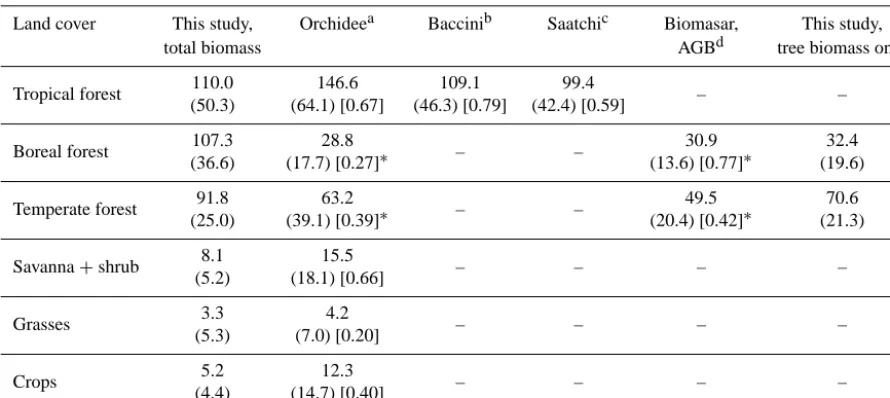
[image:7.612.306.551.508.609.2]Table 2. Carbon biomass obtained as mean values of the 0.5 degree pixels with at least 80 % of the land cover analyzed, in units of MgC ha−1. Standard deviation values are shown in parenthesis. The values of the Spearman’s rho coefficient compared to the results from this study are shown in brackets∗.
Land cover This study, Orchideea Baccinib Saatchic Biomasar, This study,
total biomass AGBd tree biomass only
Tropical forest 110.0 146.6 109.1 99.4 – –
(50.3) (64.1) [0.67] (46.3) [0.79] (42.4) [0.59]
Boreal forest 107.3 28.8 – – 30.9 32.4
(36.6) (17.7) [0.27]∗ (13.6) [0.77]∗ (19.6)
Temperate forest 91.8 63.2 – – 49.5 70.6
(25.0) (39.1) [0.39]∗ (20.4) [0.42]∗ (21.3)
Savanna+shrub 8.1 15.5 – – – –
(5.2) (18.1) [0.66]
Grasses 3.3 4.2 – – – –
(5.3) (7.0) [0.20]
Crops 5.2 12.3 – – – –
(4.4) (14.7) [0.40]
References to the data:aYue et al. (2015),bBaccini et al. (2012),cSaatchi et al. (2011),dThurner et al. (2014).
∗The coefficients marked with the asterisk are compared to the results from this study, considering tree biomass only. The rest of the values compare the
different products with the results of this study considering the total biomass.
also includes the Spearman’s rho correlation coefficient be-tween the different products and the results from our study. Figure 7 shows the biomass distribution of the different prod-ucts in the form of box plots.
The tropical forest carbon biomass shows the highest con-sistency between our estimations and the external products used for comparison, with a Spearman’s coefficient of 0.79 between this study and the Baccini product. Only the Or-chidee estimations are clearly above the others (by 40 %). The box plot distribution (Fig. 7a) also shows a similar biomass distribution amongst the fuelbeds and the Baccini and Saatchi map, with the Orchidee one having the biggest discrepancies.
Regarding the boreal forest fuelbeds, the values obtained in this study for total carbon biomass are 3.5 to 3.7 times higher than the other biomass products, which is easily ap-preciable in Fig. 7b. As described earlier in this section, in some of the fuelbeds with highest biomass located in bo-real, tundra or temperate biomes, a significant proportion of biomass for these regions is stored in the ground fuel stra-tum. The Biomasar product includes above-ground biomass (AGB) and root biomass, but does not have a duff compo-nent. For this reason, the values of carbon biomass corre-sponding only to the tree stratum of the fuelbeds were used for comparison. In that case, the tree carbon biomass from this study was similar to the Biomasar for the boreal for-est (only 5 % lower). The Spearman’s coefficient (ρs=0.77)
also shows a significant correlation between the results ob-tained for this study and the Biomasar data. Finally, taking into account only the tree biomass of the temperate forests
obtained for the fuelbeds, the mean and median values ob-tained are higher than the values obob-tained for the Orchidee and Biomasar products (see Table 2 and Fig. 7d). The cor-relation coefficients are also low to moderate (ρs=0.39 and
0.42, respectively).
The mean biomass of the grasses fuelbeds is similar to the one obtained from the Orchidee biomass map, but the corre-lation is poor (ρs=0.20). The box plot in Fig. 7f shows a
sig-nificant number of outlier values that could explain this low coefficient. In the case of the savanna and shrub areas, on the other hand, the mean biomass values are much lower for the fuelbeds than for the Orchidee estimations (52 %). The box plot for this land cover (Fig. 7e) shows that the median val-ues are similar for both products (7.04 for this study and 6.23 for the Orchidee map), but the mean value is different due to the much higher positive skew of the Orchidee biomass data. Still, the value obtained for the Spearman’s correla-tion is moderate (ρs=0.66), showing a reasonable
associ-ation between the values of the two products. Regarding the crops biomass (Fig. 7c), the differences in the skewness and the median values (3.76 vs. 8.56) between the two distribu-tions are more appreciable. This results in the mean biomass of the Orchidee product being 2.3 times higher than the value obtained for this study.
4 Discussion
Figure 7. Box plots of the carbon biomass obtained for each product for the different land covers: (a) tropical forest, (b) boreal forest, (c) crops, (d) temperate forest, (e) savanna and shrub, and (f) grasses.
for studies modeling fire impacts on the climate system as well as fire risk and fire management analysis. While dif-ferent global land cover maps are available (e.g., Loveland et al., 2000; Bartholomé and Belward, 2005; Bicheron et al., 2008), none of these products can be directly used to determine fire behavior, because they lack the required pa-rameters to run fire behavior models. The fuelbeds, on the other hand, include the necessary information on fuel char-acteristics to be input in FCCS, and can provide estimations of fuel potentials, biomass, and surface fire behavior.
To generate a global fuel data set product several gener-alizations and assumptions had to be made, which prevent the comparison of our product with regional more-detailed products. In addition, the uncertainty of each input variable to generate the final database should also be taken into ac-count if using our product for regional-scale studies. A few thoughts on our product limitations and strengths follow.
4.1 Fuelbed map
The development of the global fuelbed map includes sev-eral improvements compared to the previous product elabo-rated using this methodology, corresponding to the fuel map of South America (Pettinari et al., 2014). Supplementary formation was added to the canopy stratum, which now in-cludes a secondary layer of trees, and also duff information was incorporated, which is particularly relevant in the tem-perate and boreal biomes of the Northern Hemisphere. This
information adds to the total fuel and biomass information, and affects both the behavior outputs and total available car-bon biomass. The canopy cover data were also improved. On the one hand, a more recent version of the MODIS VCF was used (collection 5 vs. collection 3), which has a higher accu-racy compared to previous versions (Townshend et al., 2011). And on the other hand, the subdivision of the canopy cover into three groups, as well as the creation of sub-fuelbeds ac-cording to percentage of canopy cover, allowed obtaining more realistic results than before, because it allowed keep-ing a higher variability of canopy structure than in the case of using one mean value for the whole fuelbed.
Another improvement for this global map was the use of mean values from several existing fuelbeds or Photo Series, instead of using only one existing value as representative of each of the global fuelbeds. The use of different existing data of the same land cover and biome combination, but from sep-arate locations, provided a better characterization of the di-verse ecosystems, generalized by the use of the mean values. With this approach, each global fuelbed represents the mean conditions that could be found in different ecosystems of the same land cover–biome combination.
biophysical parameters (Sacks et al., 2010), it is also af-fected by socio-economic factors (Rasul and Thapa, 2003; Olesen et al., 2011). Distinct crops have different biomass, react differently to fire, and also the period and conditions in which crops are usually burned are not the same. For ex-ample, most of the crops are burned after harvest, to elimi-nate crop residue and for pest and weed control (Jenkins et al., 1992; McCarty et al., 2009). Sugar cane, on the other hand, is usually burned previous to harvesting, to remove trash, kill pests and facilitate the harvesting process (Can-navam Rípoli et al., 2000); and for this reason the biomass is live, and its amount is high compared to other crops. The inclusion of different crop fuelbeds in different geographic regions of the same land cover–biome combination tackles these issues, and will be able to provide more realistic results when fire behavior or effects are calculated from the fuelbed map.
The FCCS fuelbed database and the Photo Series from which the global fuelbeds were created, while including data from the different existing biomes, reflect the conditions of American ecosystems, and do not have information from other continents. Many studies have shown continental dif-ferences within biogeographical regions, including species richness (Barthlott et al., 2007; Kreft and Jetz, 2007), total biomass (Saatchi et al., 2011; Baccini et al., 2012; Banin et al., 2014; Thurner et al., 2014), and fire behavior (Lehmann et al., 2014; Rogers et al., 2015). Some of the most evident differences regarding vegetation behavior to fire were ad-dressed with the inclusion of the regional GlobCover map to account for needle-leaved deciduous trees (Larix) in Asia (fuelbeds with land covers 92, 102, 112 and 122), and with the creation of specific fuelbeds for Australia with Eucalyp-tus vegetation (land covers 43, 113, 123 and 133). The dis-aggregation of the crops also tackled this issue. Still, vari-ation of vegetvari-ation structure and characteristics within dif-ferent continents has not been directly addressed, and mean values from global canopy cover and height were used for each fuelbed.
At this point, only the existing FCCS fuelbeds and the Photo Series were used to populate the global fuelbed pa-rameters, because they include all (in the case of the FCCS fuelbeds) or most (in the case of the Photo Series) of the re-quired variables. Many other vegetation databases exist, but they only have information for some of the parameters re-quired. For instance, there are few field databases that in-clude information on dead woody fuels, such as some in the Brazilian Amazon (Cochrane et al., 1999) or in South African and Zambian savannas (Shea et al., 1996). This fuel stratum is critical in determining surface fire behavior, and as such should be included in the information used for the creation of the fuelbeds. But many databases, while having detailed information on tree characteristics, do not specify the dead woody fuels or other surface fuels such as shrubs or grasses (Prasad et al., 2001; Muche et al., 2012). Also, information on litter, lichen, moss, and duff loadings (which
affect the total combustible biomass and the fire emissions) is usually published without including detailed data on the rest of the fuels present in the site (Harden et al., 2006). Future improvements of the fuelbed map will involve the inclusion of fuel data from other continents, developing methods to ho-mogenize the information from different sources into fuelbed variables.
The global fuelbed map maintains some of the same lim-itations as the South American map. Modeling terrestrial ecosystems at a global scale implies the use of a generalized representation of their characteristics (Running and Hunt, 1993). This necessary generalization of the fuelbeds loses much of the complexity of the ecosystems, as mean values of the fuel parameters are assigned globally. Also, only one representative species (or two in the case of mixed forests) was assigned for each vegetation stratum. For this reason, while it is appropriate for global or continental applications, it should be used carefully when working at more detailed scales. Adjustments to the fuelbed parameters should be ap-plied to approximate them to particular regions if possible.
The map also carries the uncertainties and limitations of the original products from which it is based. The GlobCover product, as any other land cover map, includes some mis-classification of pixels in certain regions, which has been addressed in their validation report (Bicheron et al., 2008). Also, the Olson biomes’ map has sharp boundaries between biomes, while gradual transitions of environmental variables and vegetation cover between adjacent biomes are more re-alistic (Walker et al., 2003).
4.2 Carbon biomass
Even though the objective of our study was not estimat-ing carbon biomass, we considered comparestimat-ing this output of FCCS with other products as a first assessment of our results. The comparison can be considered successful, as the main spatial trends and actual values of our product agree quite acceptably with existing ones, particularly when considering the differences in methods and scopes between the products that were compared.
infor-mation on dead ground fuels, the two products were not anal-ogous. We also compared the biomass from the most impor-tant forested regions of the world (tropical forests, and North-ern Hemisphere temperate and boreal forests) with products developed using remote-sensing technology: Envisat ASAR in the case of the Biomasar product (Santoro et al., 2011), and GLAS in the tropical forest maps (Saatchi et al., 2011; Baccini et al., 2012).
The carbon biomass values for the boreal forests obtained in this study (considering only the tree stratum) were very similar to those obtained for the Biomasar map, with only a 5 % difference in their mean (30.9 vs. 32.4 MgC ha−1). Also, both these products and the Orchidee estimations had a simi-lar distribution of the values (see Fig. 7b). On the other hand, when the biomass obtained for all the strata of the fuelbeds was considered, the resulting biomass was much higher. This reflects the significant contribution of the ground fuels to the total carbon pool, as shown in other studies (Yu et al., 2010). In the case of the temperate forests, our estimations were approximately 30 % higher than the Biomasar biomass. This divergence can be explained by different reasons. First, it should be noted that both products are based on different land cover maps: while the fuelbeds are based on the GlobCover 2005, the land cover map used to determine the forest pixels in Biomasar was the GLC2000 (Bartholomé and Belward, 2005), with a different spatial resolution (1 km vs.∼300 m in our case). Different land cover products generally agree in land cover classification in relatively homogeneous areas, whereas in heterogeneous landscapes or transition zones the disagreement between diverse products can be high (Song et al., 2014). The temperate biome includes some of the widest cropland areas, in many cases intermixed with forest regions or other natural vegetation (García-Feced et al., 2015). These heterogeneous landscapes can be easily classified as forest, mosaic forest with crops or other vegetation, or even other classes, depending on the satellite sensor systems, the clas-sification algorithms, or the diverse legends of the different land cover products. This could cause discrepancies between the two products that are being compared. Simultaneously, as the objective of the biomass assessment was to compare homogeneous land cover areas, only the 0.5◦pixels which had at least 80 % of forest fuelbeds (or mosaics with pre-dominant forest fuelbeds) were included in the analysis, and many European forested areas were excluded. These forests have the highest carbon biomass value in the Biomasar map (Thurner et al., 2014), and their exclusion explains why the values in Table 2 were lower than the ones obtained for this study (49.5 vs. 70.6 MgC ha−1). But if the total Biomasar for-est pixels in the temperate biome are analyzed (see Thurner et al. (2014), Table 3), the results show values between 58 and 62 MgC ha−1, which are more similar to our estimations. For the tropical forests, the value obtained as the mean biomass from all the pixels with homogeneous forest cover was within the values found for the other three maps, and closest to the Baccini map (110.0 MgC ha−1for our
estima-tions versus 109.1 MgC ha−1 for the Baccini product). The two tropical biomass maps show differences in local biomass values, which have been explored and described by Mitchard et al. (2013, 2014). The results from our analysis showed biomass values for the Baccini higher than for the Saatchi one, which is in line with the results obtained by Mitchard et al. (2013). Even a combined product has been proposed to reduce the discrepancies (Langner et al., 2014). For the pur-pose of our analysis, we considered the separate products to be both adequate as comparison data. As in the case of the boreal and temperate forests, the biomass from the fuelbeds’ map represents a global mean, and does not take into con-sideration the continental variations. The values of carbon biomass for tropical forests obtained for the Orchidee map were around 30 % higher than the fuelbed map; that could be explained in part because the Orchidee model does not in-clude forest degradation (C. Yue, personal communication, 2015). Another important note should be made regarding the methodology used to obtain the carbon biomass values. Or-chidee, as many other DGVMs, relies on the use of plant functional types (PFTs) to parameterize vegetation proper-ties (Poulter et al., 2011). PFTs aggregate multiple species traits according to physiognomy, phenology, photosynthetic pathway, and climate, resulting in a group of small functional classes (Bonan and Levis, 2002). In the case of the Orchidee map, the PFTs were created assigning vegetation propor-tions from the IGBP DISCover map (Loveland et al., 2000), and the resulting PFTs include classes of woody vegetation (tropical, temperate or boreal; broadleaved or needle-leaved; summergreen, raingreen or evergreen) and grasses and crops (both C3 and C4). This means that the vegetation character-istics are generalized to a much greater extent than in our fuelbed classification.
The differences between the savanna and shrub biomass results between the Orchidee and the fuelbed maps (15.5 vs. 8.1 MgC ha−1) could be explained both due to the discrepan-cies between the underlying land cover products, and because the biomass assigned for the woody vegetation in Orchidee does not account for the lower biomass of the shrublands compared to forested areas. These discrepancies are likely aggravated in the case of the croplands. Cultivated areas are one of the most difficult categories to classify in land cover maps, since they can be confused with natural grasslands, and can also be characterized as different kinds of mosaics, depending on the sensor, criteria, threshold, etc., used for the land cover map development (You et al., 2008; Fritz et al., 2015). Discrepancies in cropland classification will pro-duce significant variation in biomass results, especially when comparing crops after harvest with very low biomass (as are most of the fuelbed crop categories) versus other land cover categories such as shrubland or forests.
work could include further information to the assessment of the biomass results, such as an estimation of soil carbon biomass using data extracted from the Harmonized World Soil Database (FAO/IIASA/ISRIC/ISSCAS/JRC, 2012), as was done by Carvalhais et al. (2014).
Future work will also analyze the continental differences in biomass from other products, in order to improve the spa-tial distribution of biomass worldwide. This is related to the incorporation of fuel data from different continents, as stated in the previous section.
4.3 Possible applications of the fuel data set
The global fuelbed data set developed in this study can be used for different applications, as the FCCS includes a wide set of characteristics of the fuels, and not only the ones re-quired for a particular fuel model. For example, FCCS cal-culates three fuel potentials (surface fire behavior poten-tial, crown fire potenpoten-tial, and available fuel potential) us-ing benchmark environmental variables, which can be used to evaluate fire danger based solely on fuel characteristics (Sandberg et al., 2007; Prichard et al., 2013). Also, spe-cific environmental variables (fuel moisture, slope, and wind speed) can be assigned to calculate expected surface fire be-havior for different weather conditions, as it provides results on rate of spread, flame length, and reaction intensity. Fur-thermore, the available fuel and carbon results obtained for each fuelbed can be used to calculate fuel consumption and pollutant emissions using tools such as Consume (Prichard et al., 2005).
All these results provide information for different appli-cations. The fuelbed map could be used for global or con-tinental fire danger assessment, using the values of fire po-tentials or fire behavior to complement existing early warn-ing systems, such as EFFIS (http://forest.jrc.ec.europa.eu/ effis/) (San Miguel-Ayanz et al., 2012) or the Global Wild-land Fire Early Warning System (GWFEWS, http://www. fire.uni-freiburg.de/gwfews/; de Groot et al., 2006). For those countries lacking information on fuel types, it may enhance current fire danger systems that are based solely on weather information.
Finally, our product could also be used to calculate emis-sions from wildland fires at country or continental scale from Consume or other fire emission models, complement-ing information supplied by other products as the Global Fire Emissions Database (GFED, http://www.globalfiredata.org/, last access: September 2015).
Due to the resolution of the map and the global character-istics of the fuelbeds, all of these applications are intended for regional to global studies and are not intended for the lo-cal slo-cale. For example, this map is not intended to predict “real-world” fire behavior at a local scale, which would need a much finer spatial resolution of the fuelbeds and equally detailed weather information. For this purpose, other systems
such as FlamMap (Finney, 2006) or FARSITE (Finney, 2004) would be a more appropriate option.
To obtain a more detailed fuelbed map for a local region (such as a country or province) we would suggest to use the methodology described in this article to create a custom fu-elbed map, using local vegetation information if possible. If no local information is available, it would be possible to cre-ate a data set with the same data sources used in this article, but assigning mean information on canopy cover, height, and fuelbed parameters related only to the study area, thus de-scribing better the local conditions.
Future research will focus on the application of this fu-elbed data set to different fire management issues, particu-larly obtaining fire behavior and potential values for fire dan-ger estimation.
5 Conclusions
This study developed the first global fuel data set for model-ing wildland fire danger and fire effects. The data set is based on the Fuel Characteristic Classification System (FCCS), and includes parameters that may be used to obtain quantitative estimations of fire behavior variables. The geographical dis-tribution of the fuelbeds was created by combining the Glob-Cover 2005 V2.2 land cover map and the Olson biomes’ map, with the aid of some ancillary information for particular land cover types or regions. A total of 274 fuelbeds were cre-ated (359 if the sub-fuelbeds are considered). Each fuelbed was assigned a set of parameters related to fire behavior, ex-tracted from global or regional databases. With these param-eters, FCCS can be run to obtain fire potentials, surface fire behavior, and carbon biomass for each fuelbed.
A comparison between the carbon biomass obtained for our fuelbeds and four other regional or global biomass prod-ucts showed reasonable agreement both in terms of geo-graphical distribution and biomass load. The highest Spear-man’s rho coefficients were found for tropical and boreal forests (ρs=0.79 and 0.77, respectively), with moderate
re-sults for the remaining land covers analyzed (coefficients be-tween 0.20 and 0.66). This fuel map could be used for a var-ied range of applications, including fire danger assessment, fuel consumption calculations or emissions inventory.
Data availability
The resulting global fuelbed map in GeoTIFF format, as well as a spreadsheet containing all the variables assigned to each fuelbed and the sources of the information used for their creation, is available from Pettinari (2015), https: //doi.pangaea.de/10.1594/PANGAEA.849808.
Acknowledgements. The authors thank Susan Prichard, Paige
FCCS, and Ernesto Alvarado and Nancy French for providing the information on the Mexican and agricultural fuelbeds, respectively. We would also like to thank Chao Yue and Martin Thurner for supplying their biomass data sets and for their useful comments regarding the carbon biomass results, and Edward Mitchard and Alessandro Baccini for providing the tropical biomass data sets.
Finally, we would like to thank the anonymous authors and the editor of the article for their suggestions, which helped us improve the document.
Edited by: K. Thonicke
References
Agee, J. K., Wakimoto, R. H., Darley, E. F., and Biswell, H. H.: Eucalyptus fuel dynamics, and fire hazard in the Oakland Hills, Calif. Agr., 27, 13–15, 1973.
Alonso-Canas, I. and Chuvieco, E.: Global burned area mapping from ENVISAT-MERIS and MODIS active fire data, Remote Sens. Environ., 163, 140–152, doi:10.1016/j.rse.2015.03.011, 2015.
Anderson, H. E.: Aids to Determining Fuel Models for Estimating Fire Behavior, USDA Forest Service, Intermountain Forest and Range Experiment Station, Odgen, UT, General Technical Re-port INT-122, 26 pp., 1982.
Baccini, A., Goetz, S. J., Walker, W. S., Laporte, N. T., Sun, M., Sulla-Menashe, D., Hackler, J., Beck, P. S. A., Dubayah, R., Friedl, M. A., Samanta, S., and Houghton, R. A.: Estimated carbon dioxide emissions from tropical deforestation improved by carbon-density maps, Nature Climate Change, 2, 182–185, doi:10.1038/nclimate1354, 2012.
Banin, L., Lewis, S. L., Lopez-Gonzalez, G., Baker, T. R., Que-sada, C. A., Chao, K.-J., Burslem, D. F. R. P., Nilus, R., Abu Salim, K., Keeling, H. C., Tan, S., Davies, S. J., Mon-teagudo Mendoza, A., Vasquez, R., Lloyd, J., Neill, D. A., Pitman, N., and Phillips, O. L.: Tropical forest wood produc-tion: a cross-continental comparison, J. Ecol., 102, 1025–1037, doi:10.1111/1365-2745.12263, 2014.
Barthlott, W., Hostert, A., Kier, G., Küper, W., Kreft, H., Mutke, J., Rafiqpoor, M. D., and Sommer, J. H.: Geographic patterns of vascular plant diversity at continental to global scales, Erdkunde, 61, 305–316, 2007.
Bartholomé, E. and Belward, A. S.: GLC2000: a new ap-proach to global land cover mapping from Earth ob-servation data, Int. J. Remote Sens., 26, 1959–1977, doi:10.1080/01431160412331291297, 2005.
Bicheron, P., Defourny, P., Brockmann, C., Schouten, L., Vancut-sem, C., Huc, M., Bontemps, S., Leroy, M., Achard, F., Herold, M., Ranera, F., and Arino, O.: GLOBCOVER: Products descrip-tion and validadescrip-tion report, MEDIAS-France/POSTEL, Toulouse, France, 47 pp., 2008.
Bonan, G. B. and Levis, S.: Landscapes as patches of plant functional types: An integrating concept for climate and ecosystem models, Global Biogeochem. Cy., 16, 5-1–5-23, doi:10.1029/2000GB001360, 2002.
Cannavam Rípoli, T. C., Molina Jr., W. F., and Cunali Rípoli, M. L.: Energy potential of sugar cane biomass in Brazil, Sci. Agr., 57, 677–681, 2000.
Carroll, M., Townshend, J., Hansen, M., DiMiceli, C., Sohlberg, R., and Wurster, K.: MODIS Vegetative Cover Conversion and Veg-etation Continuous Field, in: Land Remote Sensing and Global Environmental Change, edited by: Ramachandran, B., Justice, C. O., and Abrams, M. J., Remote Sensing and Digital Image Processing, Springer New York, 11, 725–745, 2011.
Carvalhais, N., Forkel, M., Khomik, M., Bellarby, J., Jung, M., Migliavacca, M., Mu, M., Saatchi, S., Santoro, M., Thurner, M., Weber, U., Ahrens, B., Beer, C., Cescatti, A., Randerson, J. T., and Reichstein, M.: Global covariation of carbon turnover times with climate in terrestrial ecosystems, Nature, 514, 213–217, doi:10.1038/nature13731, 2014.
Chuvieco, E., Aguado, I., Jurdao, S., Pettinari, M. L., Yebra, M., Salas, J., Hantson, S., de la Riva, J., Ibarra, P., Rodrigues, M., Echeverría, M. T., Azqueta, D., Román, M. V., Bastarrika, A., Martínez, S., Recondo, C., Zapico, E., and Martínez-Vega, F. J.: Integrating geospatial information into fire risk assessment, Int. J. Wildland Fire, 23, 606–619, doi:10.1071/WF12052, 2014. Cochrane, M. A., Alencar, A., Schulze, M. D., Souza Jr., C. M.,
Nepstad, D. C., Lefebvre, P., and Davidson, E. A.: Positive feed-backs in the fire dynamic of closed canopy tropical forests, Sci-ence, 284, 1832–1835, 1999.
Cohen, J. D. and Deeming, J. E.: The National Fire-Danger Rating System: basic equations, USDA Forest Service, Pacific South-west Forest and Range Experiment Station, Berkeley, CA, Gen-eral Technical Report PSW-82, 23 pp., 1985.
de Groot, W. J., Goldammer, J. G., Keenan, T., Brady, M. A., Lyn-ham, T. J., Justice, C. O., Csiszar, I. A., and O’Loughlin, K.: Developing a global early warning system for wildland fire, V International Conference on Forest Fire Research, Coimbra, Por-tugal, 12 pp., 2006.
Department of the Environment and Water Resources: Australia’s Native Vegetation – A summary of Australia’s Major Vegetation Groups, edited by: Department of the Environment and Water Resources, Australian Government, Canberra, 44 pp., 2007. Di Gregorio, A.: Land Cover Classification System. Classification
concepts and user manual, Software version 2, Environment and Natural Resources Series, FAO, Rome, 208 pp., 2005.
DiMiceli, C. M., Carroll, M. L., Sohlberg, R. A., Huang, C., Hansen, M. C., and Townsend, J. R. G.: Vegetation Continuous Field (MOD44B), Collection 5 Percent Tree Cover, University of Maryland, College Park, Maryland, 2011.
Dymond, C. C., Roswintiarti, O., and Brady, M.: Characterizing and mapping fuels for Malaysia and western Indonesia, Int. J. Wild-land Fire, 13, 323–334, 2004.
FAO/IIASA/ISRIC/ISSCAS/JRC: Harmonized World Soil Database (version 1.2), FAO, Rome, Italy and IIASA, Lax-enburg, Austria, 2012.
Finney, M. A.: FARSITE: Fire Area Simulator – Model develop-ment and evaluation, USDA Forest Service, Rocky Mountain Re-search Station, RMRS-RP-4 Revised, 52 pp., 2004.
Finney, M. A.: An Overview of FlamMap Fire Modeling Capabili-ties, in: Fuels Management-How to Measure Success, edited by: Andrews, P. L. and Butler, B. W., Conference Proceedings, 28– 30 March 2006, Portland, OR, Proceedings RMRS-P-41, Fort Collins, CO, U.S. Department of Agriculture, Forest Service, Rocky Mountain Research Station, 213–220, 2006.
compo-nents for the continental United States, Stoch. Env. Res Risk A., 25, 973–1000, doi:10.1007/s00477-011-0462-z, 2011.
French, N. H. F., McKenzie, D., Ottmar, R. D., McCarty, J. L., Norheim, R. A., Hamermesh, N., and Soja, A. J.: A US national fuels database and map for calculating carbon emissions from wildland and prescribed fire, 4th Fire Behavior and Fuels Con-ference, 1–4 July 2013, St. Petersburg, Russia, 8 pp., 2013. Fritz, S., See, L., McCallum, I., et al.: Mapping global
crop-land and field size, Glob. Change Biol., 21, 1980–1992, doi:10.1111/gcb.12838, 2015.
García-Feced, C., Weissteiner, C. J., Baraldi, A., Paracchini, M. L., Maes, J., Zulian, G., Kempen, M., Elbersen, B., and Pérez-Soba, M.: Semi-natural vegetation in agricultural land: European map and links to ecosystem service supply, Agron. Sustain. Dev., 35, 273–283, doi:10.1007/s13593-014-0238-1, 2015.
Giglio, L., Randerson, J. T., and van der Werf, G. R.: Analy-sis of daily, monthly, and annual burned area using the fourth-generation global fire emissions database (GFED4), J. Geophys Res.-Biogeo., 118, 317–328, doi:10.1002/jgrg.20042, 2013. Harden, J. W., Manies, K. L., Turetsky, M. R., and Neff, J. C.:
Ef-fects of wildfire and permafrost on soil organic matter and soil climate in interior Alaska, Glob. Change Biol., 12, 2391–2403, doi:10.1111/j.1365-2486.2006.01255.x, 2006.
Jenkins, B. M., Turn, S. Q., and Williams, R. B.: Atmospheric emis-sions from agricultural burning in California: determination of burn fractions, distribution factors, and crop-specific contribu-tions, Agr. Ecosyst. Environ., 38, 313–330, 1992.
Keane, R. E., Burgan, R. E., and van Wagtendonk, J.: Mapping wildland fuels for fire management across multiple scales: In-tegrating remote sensing, GIS, and biophysical modeling, Int. J. Wildland Fire, 10, 301–319, 2001.
Kesselmeier, J. and Staudt, M.: Biogenic volatile organic com-pounds (VOC): an overview on emission, physiology and ecol-ogy, J. Atmos. Chem., 33, 23–88, 1999.
Kreft, H. and Jetz, W.: Global patterns and determinants of vascular plant diversity, P. Natl. Acad. Sci. USA, 104, 5925–5930, 2007. Krinner, G., Viovy, N., de Noblet-Ducoudré, N., Ogée, J., Polcher,
J., Friedlingstein, P., Ciais, P., Sitch, S., and Prentice, I. C.: A dynamic global vegetation model for studies of the cou-pled atmosphere-biosphere system, Global Biogeochem. Cy., 19, GB1015, doi:10.1029/2003GB002199, 2005.
Langner, A., Achard, F., and Grassi, G.: Can recent pan-tropical biomass maps be used to derive alternative Tier 1 values for re-porting REDD+activities under UNFCCC?, Environ. Res. Lett., 9, 124008, doi:10.1088/1748-9326/9/12/124008, 2014.
Lehmann, C. E. R., Anderson, M. T., Sankaran, M., Higgins, S. I., Archibald, S., Hoffman, W. A., Hanan, N. P., Williams, R. J., Fensham, R. J., Felfili, J., Hutley, L. B., Ratnam, J., San Jose, J., Montes, R., Franklin, D., Russell-Smith, J., Ryan, C. M., Durigan, G., Hiernaux, P., Haidar, R., Bowman, D. M. J. S., and Bond, W. J.: Savanna vegetation-fire-climate relationships differ among continents, Science, 343, 548–552, doi:10.1126/science.1247355, 2014.
Loveland, T. R., Reed, B. C., Brown, J. F., Ohlen, D. O., Zhu, Z., Yang, L., and Merchant, J. W.: Development of a global land cover characteristics database and IGBP DISCover from 1 km AVHRR data, Int. J. Remote Sens., 21, 1303–1330, 2000. McCarty, J. L., Korontzi, S., Justice, C. O., and Loboda, T.: The
spatial and temporal distribution of crop residue burning in the
continental United States, Sci. Total Environ., 407, 5701–5712, doi:10.1016/j.scitotenv.2009.07.009, 2009.
McKenzie, D., Raymond, C. L., Kellogg, L.-K. B., Norheim, R. A., Andreu, A. G., Bayard, A. C., Kopper, K. E., and Elman, E.: Mapping fuels at multiple scales: landscape applications of the Fuel Characteristic Classification System, Can. J. Forest Res., 37, 2421–2437, doi:10.1139/X07-056, 2007.
Mitchard, E. T. A., Saatchi, S. S., Baccini, A., Asner, G. P., Goetz, S. J., Harris, N. L., and Brown, S.: Uncertainty in the spatial distribution of tropical forest biomass: a comparison of pan-tropical maps, Carbon Balance and Management, 8, 13 pp., doi:10.1186/1750-0680-8-10, 2013.
Mitchard, E. T. A., Feldpausch, T. R., Brienen, R. J. W., et al.: Markedly divergent estimates of Amazon forest carbon density from ground plots and satellites, Global Ecol. Biogeogr., 23, 935–946, doi:10.1111/geb.12168, 2014.
Monfreda, C., Ramankutty, N., and Foley, J. A.: Farming the planet: 2. Geographic distribution of crop areas, yields, physiological types, and net primary production in the year 2000, Global Bio-geochem. Cy., 22, GB1022, doi:10.1029/2007GB002947, 2008. Morfín-Ríos, J. E., Alvarado-Celestino, E., Jardel-Peláez, E. J., Vih-nanek, R. E., Wright, D. K., Michel-Fuentes, J. M., Wright, C. S., Ottmar, R. D., Sandberg, D. V., and Nájera-Díaz, A.: Photo se-ries for quantifying forest fuels in Mexico: montane subtropi-cal forests of the Sierra Madre del Sur and temperate forests and montane shrubland of the northern Sierra Madre Oriental., University of Washington, College of Forest Resources, Seattle, Pacific Wildland Fire Sciences Laboratory Special Pub. No. 1, 93 pp., 2008.
Muche, G., Schmiedel, U., and Jürgens, N.: BIOTA Southern Africa Biodiversity Observatories Vegetation Database, Biodiversity & Ecology, 4, 111–123, doi:10.7809/b-e.00066, 2012.
Nadeau, L. B., McRae, D. J., and Jin, J.-Z.: Development of a National Fuel-type Map for Canada Using Fuzzy Logic, Cana-dian Forest Service, Edmonton, Information Report NOR-X-406, 26 pp., 2005.
Olesen, J. E., Trnka, M., Kersebaum, K. C., Skjelvag, A. O., Seguin, B., Peltonen-Sainio, P., Rossi, F., Kozyra, J., and Micale, F.: Im-pacts and adaptation of European crop production systems to cli-mate change, Eur. J. Agron., 34, 96–112, 2011.
Olson, D. M., Dinerstein, E., Wikramanayake, E. D., Burgess, N. D., Powell, G. V. N., Underwood, E. C., D’Amico, J. A., Itoua, I., Strand, H. E., Morrison, J. C., Loucks, C. J., All-nutt, T. F., Ricketts, T. H., Kura, Y., Lamoreux, J. F., Wettengel, W. W., Hedao, P., and Kassem, K. R.: Terrestrial Ecoregions of the World: A New Map of Life on Earth, BioScience, 51, 933– 938, 2001.
Ottmar, R. D., Vihnanek, R. E., Miranda, H. S., Sato, M. N., and Andrade, S. M. A.: Stereo Photo Series for quantifying cerrado fuels in Central Brazil – Volume I, USDA Forest Service, Pacific Northwest Research Station, Seattle, General Technical Report PNW-GTR-519, 88 pp., 2001.
Ottmar, R. D., Sandberg, D. V., Riccardi, C. L., and Prichard, S. J.: An overview of the Fuel Characteristic Classification System – Quantifying, classifying, and creating fuelbeds for resource plan-ning, Can. J. Forest Res., 37, 2383–2393, 2007.
Pettinari, M. L.: Global Fuelbed Dataset, Alcala de Henares, doi:10.1594/PANGAEA.849808, 2015.
Pettinari, M. L., Ottmar, R. D., Prichard, S. J., Andreu, A. G., and Chuvieco, E.: Development and mapping of fuel characteristics and associated fire potentials for South America, Int. J. Wildland Fire, 23, 643–654, doi:10.1071/WF12137, 2014.
Poulter, B., Ciais, P., Hodson, E., Lischke, H., Maignan, F., Plum-mer, S., and Zimmermann, N. E.: Plant functional type map-ping for earth system models, Geosci. Model Dev., 4, 993–1010, doi:10.5194/gmd-4-993-2011, 2011.
Prasad, V. K., Kant, Y., Gupta, P. K., Sharma, C., Mitra, A. P., and Badarinath, K. V. S.: Biomass and combustion characteristics of secondary mixed deciduous forests in Eastern Ghats of India, At-mos. Environ., 35, 3085–3095, 2001.
Prichard, S. J., Ottmar, R. D., and Anderson, G. K.: Consume 3.0 User’s Guide, USDA Forest Service, Pacific Northwest Research Station, Seattle, WA, 239 pp., 2005.
Prichard, S. J., Sandberg, D. V., Ottmar, R. D., Eberhardt, E., An-dreu, A., Eagle, P., and Swedin, K.: Fuel Characteristic Classi-fication System Version 3.0: Technical Documentation, USDA Forest Service, Pacific Norhtwest Research Station, Portland, OR, PNW-GTR-887, 88 pp., 2013.
PROMETHEUS S.V. Project: Management techniques for opti-mization of suppression and miniopti-mization of wildfire effects, System validation, edited by: European Comission, Contract Number ENV4-CT98-0716, 1999.
Rasul, G. and Thapa, G. B.: Shifting cultivation in the moun-tains of South and Southeast Asia: regional patterns and fac-tors influencing the change, Land Degrad. Dev., 14, 495–508, doi:10.1002/ldr.570, 2003.
Riaño, D., Chuvieco, E., Salas, J., Palacios-Orueta, A., and Bastar-rika, A.: Generation of fuel type maps from Landsat TM images and ancillary data in Mediterranean ecosystems, Can. J. Forest Res., 32, 1301–1315, 2002.
Riaño, D., Chuvieco, E., Condés, S., González-Matesanz, J., and Ustin, S. L.: Generation of crown bulk density for Pinus
sylvestris L. from lidar, Remote Sens. Environ., 92, 345–352,
doi:10.1016/j.rse.2003.12.014, 2004.
Riccardi, C. L., Ottmar, R. D., Sandberg, D. V., Andreu, A., Elman, E., Kopper, K., and Long, J.: The fuelbed: a key element of the Fuel Characteristic Classification System, Can. J. Forest Res., 37, 2394–2412, doi:10.1139/x07-143, 2007.
Rogers, B. M., Soja, A. J., Goulden, M. L., and Randerson, J. T.: Influence of tree species on continental differences in boreal fires and climate feedback, Nat. Geosci., 8, 228–234, doi:10.1038/ngeo2352, 2015.
Rollins, M. G.: LANDFIRE: a nationally consistent vegetation, wildland fire, and fuel assessment, Int. J. Wildland Fire, 18, 235– 249, 2009.
Rollins, M. G., Keane, R. E., and Parsons, R. A.: Mapping fuels and fire regimes using remote sensing, ecosystem simulation, and gradient modeling, Ecol. Appl., 1, 75–95, 2004.
Rothermel, R. C.: A mathematical model for predicting fire spread in wildland fuels, USDA Forest Service, Intermountain Forest and Range Experiment Station, Odgen, UT, Research Paper INT-115, 40 pp., 1972.
Rothermel, R. C.: How to predict the spread and intensity of forest and range fires, National Wildfire Coordinating Group, USDA
Forest Service Intermountain Research Station, Boise, ID, INT-143, 166 pp., 1983.
Ruesch, A. and Gibbs, H. K.: New IPCC Tier-1 global biomass car-bon map for the year 2000, Oak Ridge National Laboratory, Oak Ridge, Tennessee, 2008.
Running, S. W. and Hunt, R. J.: Generalization of a forest ecosystem process model for other biomes, BIOME-BGC, and an applica-tion for global-scale models, in: Scaling physiological processes. Leaf to globe, edited by: Roy, J., Ehleringer, J. R., and Field, C. B., Academic Press, Inc., San Diego, 141–158, 1993. Saatchi, S. S., Harris, N. L., Brown, S., Lefsky, M. A., Mitchard,
E. T. A., Salas, W., Zutta, B. R., Buermann, W., Lewis, S. L., Hagen, S., Petrova, S., White, L., Silman, M., and Morel, A.: Benchmark map of forest carbon stocks in tropical regions across three continents, P. Natl. Acad. Sci. USA, 108, 9899–9904, doi:10.1073/pnas.1019576108, 2011.
Sacks, W. J., Deryng, D., Foley, J. A., and Ramankutty, N.: Crop planting dates: an analysis of global patterns, Global Ecol. Biogeogr., 19, 607–620, doi:10.1111/j.1466-8238.2010.00551.x, 2010.
San Miguel-Ayanz, J., Schulte, E., Schmuck, G., Camia, A., Strobl, P., Liberta, G., Giovando, C., Boca, R., Sedano, F., Kempeneers, P., McInerney, D., Withmore, C., Santos de Oliveira, S., Ro-drigues, M., Durrant, T., Corti, P., Oehler, F., Vilar, L., and Am-atulli, G.: Comprehensive Monitoring of Wildfires in Europe: The European Forest Fire Information System (EFFIS), in: Ap-proaches to Managing Disaster – Assessing Hazards, Emergen-cies and Disaster Impacts, edited by: Tiefenbacher, J., InTech, 87–108, 2012.
Sandberg, D. V., Riccardi, C. L., and Schaaf, M. D.: Fire po-tential rating for wildland fuelbeds using the Fuel Characteris-tic Classification System, Can. J. Forest Res., 37, 2456–2463, doi:10.1139/x07-093, 2007.
Santoro, M., Beer, C., Cartus, O., Schmullius, C., Shvidenko, A., McCallum, I., Wegmüller, U., and Weismann, A.: Retrieval of growing stock volume in boreal forest using hyper-temporal se-ries of Envisat ASAR ScanSAR backscatter measurements, Re-mote Sens. Environ., 115, 490–507, 2011.
Schultz, M. G., Heil, A., Hoelzemann, J. J., Spessa, A., Thon-icke, K., Goldammer, J. G., Held, A. C., Pereira, J. M. C., and van het Bolscher, M.: Global wildland fire emissions from 1960 to 2000, Global Biogeochem. Cy., 22, GB2002, doi:10.1029/2007GB003031, 2008.
Scott, J. H. and Burgan, R. E.: Standard fire behavior fuel mod-els: a comprehensive set for use with Rothermel’s Surface Fire Spread Model, USDA Forest Service, Rocky Mountain Research Station, Fort Collins, CO, RMRS-GTR-153, 80 pp., 2005. Sebastián-Lopez, A., San Miguel-Ayanz, J., and Libertá, G.: An
in-tegrated forest fire risk index for Europe, in: A decade of trans-european remote sensing cooperation, edited by: Buchroithner, M. F., Balkema, Rotterdam, 83–88, 2001.
Shea, R. W., Shea, B. W., Kauffman, J. B., Ward, D. E., Haskins, C. I., and Scholes, M. C.: Fuel biomass and combustion factors associated with fires in savanna ecosystems of South Africa and Zambia, J. Geophys. Res., 101, 23551–23568, 1996.
Song, X.-P., Huang, C., Feng, M., Sexton, J. O., Channan, S., and Townsend, J. R.: Integrating global land cover products for im-proved forest cover characterization: an application in North America, International Journal of Digital Earth, 7, 709–724, doi:10.1080/17538947.2013.856959, 2014.
Stocks, B. J., Lawson, B. D., Alexander, M. E., Van Wagner, C. E., McAlpine, R. S., Lynham, T. J., and Dubé, D. E.: Canadian For-est Fire Danger Rating System: an overview, ForFor-estry Chron., 65, 258–265, 1989.
Thurner, M., Beer, C., Santoro, M., Carvalhais, N., Wutzler, T., Schepaschenko, D., Shvidenko, A., Kompter, E., Ahrens, B., Levick, S. R., and Schmullius, C.: Carbon stock and density of northern boreal temperate forests, Global Ecol. Biogeogr., 23, 297–310, doi:10.1111/geb.12125, 2014.
Townshend, J., Hansen, M., Carroll, M., DiMiceli, C., Sohlberg, R., and Huang, C.: User Guide for the MODIS Vegetation Contin-uous Fields product Collection 5 version 1, University of Mary-land, MaryMary-land, 12 pp., 2011.
Walker, S., Wilson, J. B., Steel, J. B., Rapson, G. L., Smith, B., King, W. M., and Cottam, Y. H.: Properties of ecotones: Evidence from five ecotones objectively determined from a coastal veg-etation gradient, J. Veg. Sci., 14, 579–590, doi:10.1111/j.1654-1103.2003.tb02185.x, 2003.
You, L., Wood, S., and Sebastian, K.: Comparing and synthesiz-ing different global agricultural land datasets for crop allocation modeling, XXIst ISPRS Congress Technical Comission VII, Bei-jing, China, 1433–1440, 2008.
Yu, Z., Loisel, J., Brosseau, D. P., Beilman, D. W., and Hunt, S. J.: Global peatland dynamics since the Last Glacier Maximum, Geophys. Res. Lett., 37, L13402, doi:10.1029/2010GL043584, 2010.