*Corresponding author: Kumba C ISSN: 0976-3031
Research Article
A SYSTEMATIC REVIEW AND META-ANALYSIS OF GOAL DIRECTED INTRA-OPERATIVE
TRANSFUSION PROTOCOLS GUIDED BY VISCOELASTIC METHODS AND PERIOPERATIVE
OUTCOMES IN CHILDREN [CRD 42018103163].
Kumba C
1, Querciagrossa S
1, Harte C
1, Willems A
2, De Cock A
1, Blanc T
3,
Orliaguet G
4and Mélot C
51
Department of Pediatric Anesthesia and Critical Care, Necker Enfants Malades
University Hospital, Paris, France
2Pediatric Intensive Care Unit, Leids Universitair Medisch Centrum Leids, The Netherlands.
3
Department of Pediatric Digestive and Urologic Surgery,Necker Enfants Malades
University Hospital, Paris, France
4
Department of Pediatric and Obstetrical Anesthesia and Critical Care Department of Pharmacology and
Therapeutic Evaluation in Children and Pregnant Women, Necker University Hospital,
Paris Descartes (Paris V) University, Paris, France
5
Emergency Department, Erasme University Hospital, Brussels, Belgium
DOI: http://dx.doi.org/10.24327/ijrsr.2019.1003.3266
ARTICLE INFO ABSTRACT
Introduction: In children studies have shown that when viscoelastic hemostatic methods were used to guide
blood product administration in hemorrhagic surgery, the amount of transfusion was diminished, it has not been demonstrated that morbi-mortality was improved. This study was undertaken to analyse the impact of these methods on this outcome.
Methods: A systematic review and meta-analysis of randomised and non randomised trials was realised from
January to March 2019.The experimental group was where thromboleastography or rotational thromboelastometry were used to guide transfusion. The control group was where conventional coagulation tests were used to guide transfusion. Statistic analysis was realised with Rev Man 5.3 software.
Results: 9 studies with 1365 children <18 years in trauma, cardiac, craniosynostosis and liver transplantation
surgery were included.
1. In more than 900 children, mortality (OR 1.02 [0.34, 3.10], p=0.97) and morbidity (OR 1.95 [0.75,5.11],p=0.17) were not different.
2. In 891 children, the number of patients transfused with packed red blood cells was not different, OR 0.44 [0.18, 1.06], p=0.07.
3. In 227 children, the number of patients transfused with platelets was not different, OR 0.90 [0.08, 9.94], p=0.93.
4. In 891 children, the number of patients transfused with fresh frozen plasma was lower in the experimental group, OR 0.06 [0.01, 0.50], p=0.01.
5. In 185 children, the number of patients who received fibrinogen or cryoprecipitate was higher in the experimental group, OR 5.46 [1.83, 16.32], p=0.002.
6. In 821 children, length of hospital stay was lower in the experimental group, p=0.005.
Conclusion: In this pediatric study, when viscoelastic hemostatic assays were used in hemorrhagic surgery to
guide transfusion there was a reduction in the number of patients intraoperatively transfused with fresh frozen plasma, a reduction in length of hospital stay and an increase in the number of patients who received intraoperative cryoprecipitate or fibrinogen. There was no difference in morbi-mortality.
INTRODUCTION
Transfusion can be a necessary therapy in critically ill patients. However like any other medical treatment it can be related to some side effects in critical patients such as TRALI
(transfusion related acute lung injury), TACO (transfusion associated circulatory overload)1,2. Studies in pediatric surgical and critical pediatric patients
Available Online at http://www.recentscientific.com
International Journal of
Recent Scientific
Research
International Journal of Recent Scientific Research
Vol. 10, Issue, 03(E), pp. 31466-31471, March, 2019
Copyright © Kumba C et al, 2019, this is an open-access article distributed under the terms of the Creative Commons Attribution License, which permits unrestricted use, distribution and reproduction in any medium, provided the original work is properly cited.
DOI: 10.24327/IJRSR
CODEN: IJRSFP (USA)
Article History:
Received 4th December, 2018
Received in revised form 25th January, 2019
Accepted 23rd February, 2019 Published online 28th March, 2019
Key Words:
International Journal of Recent Scientific Research Vol. 10, Issue, 03(E), pp. 31466-31471, March, 2019
have shown that transfusion was an independent factor of morbidity 3. Are there any means to reduce transfusion or to improve transfusion protocols in order to reduce patient exposure to blood products and thus diminish morbidity? The European Society of Anesthesiology has published previously guidelines concerning the use of viscoelastic methods to guide transfusion and reduce blood loss in hemorrhagic surgeries 4. A recent Cochrane systematic review and meta-analysis demonstrated that when viscoelastic methods are used to guide transfusion in hemorrhagic surgery in adults, mortality and morbidity were reduced 5.
In children, studies in craniosynostosis, cardiac surgery, hepatic transplantation have shown that when blood product administration was guided by these methods, packed red blood cells, platelets units and fresh frozen plasma transfusion was reduced6-11.
Transfusion rates in pediatric hemorrhagic interventions varie according to the type of surgery : in craniosynostosis surgery it is between 17-45% 12, in scoliosis surgery it varies between 1.7% (idiopathic scoliosis)- 36% (neuromuscular scoliosis)13, in pediatric hepatic transplantation it is 31% 14 and in polytrauma patients 35%15. This study was undertaken to analyse if transfusion protocols guided with viscoelastic methods in hemorrhgic pediatric surgery reduced mortality, morbidity, blood product transfusion and length of hospital stay.
Objectives
To demonstrate whether intraoperative transfusion protocols using viscoelastic methods reduced perioperative morbi-mortality (primary outcome) (morbidity was defined as complications defined as organ failure or organ dysfunction and infections) in the pediatric surgical population.
To demonstrate whether intraoperative transfusion protocols using viscoelastic methods reduced intraoperative transfusion and the amount of intraoperative blood loss (secondary outcomes).
To demonstrate whether intraoperative transfusion protocols using viscoelastic methods reduced length of hospital stay (secondary outcome)
Description of the Condition
Potential hemorrhagic surgical interventions in children aged 0-18 years where viscoelastic methods or standard care are used to guide transfusion (Inclusion criteria). Exclusion criteria: patients over 18 years.
Description of the Intervention
Potential hemorrhagic surgical interventions such as scoliosis, craniosynostosis, liver transplantation, trauma and cardiac surgeries in children where blood product administration was guided by viscoelastic methods (TEG, Thromboelastograpy or ROTEM,
Rotational thromboelastometry) and compared to the same interventions where transfusion was guided using standard protocols other than viscoelastic methods.
Types of studies included :randomised and non randomised trials were included.
Outcomes
Primary Outcome
Intraoperative and postoperative morbi-mortality. Secondary Outcomes
Intraoperative blood products administration
Intraoperative blood loss
Length of hospital stay (LOS) Outcome measures
Primary outcomes measures were defined as the number of deaths and complications defined as organ failure or organdys function and infections in the intraoperative and postoperative period. Secondary outcomes measures were defined as :
1. Intraoperative number of patients transfused (with PRBC, FFP, CUP, fibrinogen or cryoprecipitate). 2. Intraoperative amount of blood loss.
3. Number of days spent in hospital (LOS) until discharge.
METHODS AND MATERIALS
Kumba C., et al A Systematic Review And Meta-Analysis of Goal Outcomes in Children Crd 42018103163 .
the characteristics of the included trials. Statistic analysis, collection were realised with Review Manager (RevMan) [Computer program]. Version 5.3
Copenhagen: The Nordic Cochrane Centre, The Cochrane Collaboration, 2014.Assessment of risk of bias in included studies was realized using the tools proposed by the Cochrane Handbook for systematic reviews of interventions which is included in the Rev Man 5.3 software.
Measures of treatment effect were dichotomous for morbi mortality and transfusion (how many patients died or many patients presented complications or how many patients were transfused with different blood product
red blood cells (PRBC), fresh frozen plasma (FFP), concentrated platelet units (CUP), fibrinogen cryoprecipitate and were presented as odds ratios (OR) with 95% confidence(CI).
Measures of treatment effect were continuous for length of hospital stay and were presented as mean differences
CI.
Forest plots were used to provide visual summary of data included. I² statistics was used to assess for
Funnel plots were used to assess for publication bias. Since some data were not always av
intraoperative amount of blood loss meta-analysis concerning this outcome was not realised and a descriptive qualitative analysis was realised. Wilcoxon test was used to compare the two groups (experimental and control) in terms of intraoperative blood loss. This outcome was
median value with the interquartile range. A p was considered significative.
Concerning the amount of intraoperative blood products administered (PRBC, FFP, CUP, fibrinogen and cryprecipitate), meta-analysis was not realised because of some missing data concerning these outcomes.
The experimental group was defined as the group where viscoelastic hemostatic assays namely thromboelastography (TEG) or rotational thromboelastometry (ROTEM)
to guide transfusion intraoperatively. The control group was defined as the group where standard care was used to manage transfusion intraoperatively. Standard care was defined as conventional coagulation tests i.e prothrombin time
activated thromboplastin time (aPTT), fibrinogen or when no coagulation tests were used to guide intraoperative transfusion. The level of evidence was assesed using the Grading of Recommendation Assessment, Development, and Evaluation (GRADE) system17.
RESULTS
9 studies were included6,8,9, 18-23with 1365 children less than 18 years old. For the characteristics of the studies see supplemental tables 1 and 2. Four studies concerned 381 children in cardiac surgey6,8,22,23, two trials with 819 children in trauma18,20, two studies with 127 children in craniosynostosis 9,19and one trial with 38 patients in liver transplantation21. 5 trials were retrospective
Analysis of Goal Directed Intra-Operative Transfusion Protocols Guided by Viscoelastic Methods and Perioperative
Statistic analysis, data Review Manager (RevMan)
The Nordic Cochrane Centre, The Cochrane Collaboration, 2014.Assessment of risk of bias in included using the tools proposed by the Cochrane systematic reviews of interventions which is
Measures of treatment effect were dichotomous for morbi-transfusion (how many patients died or how
or how many patients were transfused with different blood product including packed ood cells (PRBC), fresh frozen plasma (FFP), concentrated platelet units (CUP), fibrinogen and cryoprecipitate and were presented as odds ratios (OR) with
Measures of treatment effect were continuous for length of e presented as mean differences with 95%
Forest plots were used to provide visual summary of data included. I² statistics was used to assess for heterogeneity. Funnel plots were used to assess for publication bias.
Since some data were not always available for the analysis concerning this outcome was not realised and a descriptive qualitative analysis was realised. Wilcoxon test was used to compare the two groups (experimental and control) in terms of aoperative blood loss. This outcome was expressed in median value with the interquartile range. A p-value ≤ 0.05
Concerning the amount of intraoperative blood products administered (PRBC, FFP, CUP, fibrinogen and
analysis was not realised because of some
The experimental group was defined as the group where thromboelastography (TEG) or rotational thromboelastometry (ROTEM) were used intraoperatively. The control group was the group where standard care was used to manage transfusion intraoperatively. Standard care was defined as conventional coagulation tests i.e prothrombin time (PT), activated thromboplastin time (aPTT), fibrinogen or when no intraoperative transfusion. The level of evidence was assesed using the Grading of Development, and Evaluation
with 1365 children less than For the characteristics of the studies see supplemental tables 1 and 2. Four studies concerned 381 , two trials with 819 studies with 127 children in and one trial with 38 patients in liver . 5 trials were retrospective9,19-22,two were
prospective non randomised randomised8,23.
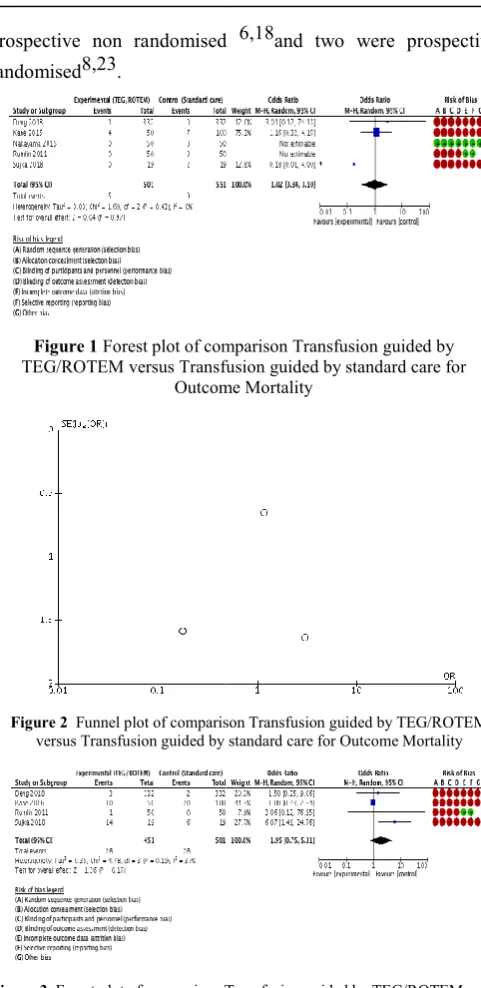
Figure 1 Forest plot of comparison Transfusion guided by
TEG/ROTEM versus Transfusion guided by standard care for Outcome Mortality
Figure 2 Funnel plot of comparison Transfusion guided by TEG/ROTEM
versus Transfusion guided by standard care for
Figure 3 Forest plot of comparison Transfusion guided by TEG/ROTEM versus
Transfusion guided by standard care for Outcome Morbidity.
Operative Transfusion Protocols Guided by Viscoelastic Methods and Perioperative
prospective non randomised 6,18and two were prospective
Forest plot of comparison Transfusion guided by versus Transfusion guided by standard care for
Outcome Mortality
Funnel plot of comparison Transfusion guided by TEG/ROTEM versus Transfusion guided by standard care for Outcome Mortality
International Journal of Recent Scient
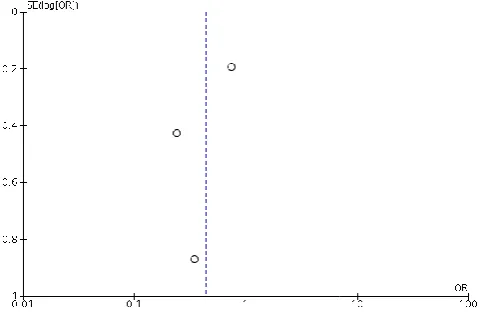
Figure 4 Funnel plot of comparison Transfusion guided by
TEG/ROTEM versus Transfusion guided by standard care for Outcome Morbidity.
Figure 5 Forest plot of comparison Transfusion guided by TEG/ROTEM
versus Transfusion guided by standard care for outcome Number of patients intraoperatively transfused with packed red blood cells.
Figure 6 Funnel plot of comparison Transfusion guided by TEG/ROTEM
versus Transfusion guided by standard care for outcome Number of patients intraoperatively transfused with packed red blood cells.
Mortality (figures 1 and 2)
5 studies with 1052 children analysed this outcome
Mortality was not different between the 2 groups, odds ratio (OR) 1.02 0.34-3.10, p=0.97. Heterogeneity was low equaled 0%. All studies had biases except the Nakayama study8. The risk for publication bias was low as
figure 2. With low heterogeneity, low risk of publication bias and and a great number of patients (>1000), the level of evidence (GRADE) was moderate.
Morbidity (figures 3 and 4)
4 studies with 952 children analysed this outcome Morbidity, in terms of organ dysfunction and or infections acute respiratory distress syndrome, acute rejection, reintervention for hemorrhage, thrombo bacteremia ; acute renal , liver , cardiac and failures) was not not different between the two groups, OR [0.75,5.11],p=0.17. Heterogeneity was low asI2
All studies had bias. Publication bias was present as illustrated in figure 4. The level of evidence (GRADE) was low (bias among the studies, publication bias) to moderate ( low heterogeneity and a great number of patients).
International Journal of Recent Scientific Research Vol. 10, Issue, 03(E), pp. 31466-31471
Funnel plot of comparison Transfusion guided by standard care for Outcome
Forest plot of comparison Transfusion guided by TEG/ROTEM versus Transfusion guided by standard care for outcome Number of patients
intraoperatively transfused with packed red blood cells.
Funnel plot of comparison Transfusion guided by TEG/ROTEM versus Transfusion guided by standard care for outcome Number of patients
intraoperatively transfused with packed red blood cells.
analysed this outcome6,8,20-22 Mortality was not different between the 2 groups, odds ratio
, p=0.97. Heterogeneity was low as I2 equaled 0%. All studies had biases except the Nakayama et al
low as illustrated in figure 2. With low heterogeneity, low risk of publication bias and and a great number of patients (>1000), the level of
analysed this outcome6,20-22 Morbidity, in terms of organ dysfunction and or infections (i.e acute respiratory distress syndrome, acute rejection, bleeding, reintervention for hemorrhage, thrombo-embolic events, ; acute renal , liver , cardiac and respiratory failures) was not not different between the two groups, OR 1.95 ,p=0.17. Heterogeneity was low asI2 equaled 37%. All studies had bias. Publication bias was present as illustrated evidence (GRADE) was low (bias the studies, publication bias) to moderate ( low heterogeneity and a great number of patients).
Number of Patients who Recieved Intraoperative Packed Blood Cells (figures 5 and 6)
4 studies with 891 children
There was no difference between the two groups, OR 0.440.18-1.06, p=0.07. Heterogeneity was high (I
All studies had bias. Publication bias was also present. The level of evidence (GRADE) was low because of high risk of heterogeneity, bias among the
Number of Patients who
frozen Plasma (Supplemental figures 2 and 3) 4 studies with 891 children analysed this outcome
number of patients who recieved intraoperative fresh frozen plasma was significantly lower in the TEG/ROTEMgroup, OR 0.06 0.01-0.50, p=0.01. Heterogeneity was high (I
All studies had bias. Publication bias was also present. The risk of heterogeneity, bias among the studies and publication was high. The level of evidence
bias and heterogeneity) to moderate (great number of patients, more than eight hunderd patients).
Number of Patients who Recieved Intraoperative Platelets (Supplemental figures 4 and 5)
3 studies with 227 children analysed this outcome was no difference, OR 0.90 0.08, 9.94
Heterogeneity was present ( supplemental figure 4). All studies had bias. Publication bias was present. The level of evidence (GRADE) was low.
Number of Patients who Received Intraoperative Fibrinogen or Cryoprecipitate (supplemental figures 6 and 7)
3 studies with 185 children
number of patients who recieved intraoperative fibrinogen or cryoprecipitate was higher in
5.45 1.83,16.32,p=0.002.
Heterogeneity was low. All studies had bias and publication bias was present. The level of evidence (GRADE) was low (only 185 children included) to moderate (low risk of heterogeneity).
Length of hospital, LOS (supplemental figures 8 and 9) 3 studies with 821 children
LOS was lower in the TEG/ROTEM group, p=0.005. Heterogeneity was low. All studies had bias and publication bias was present.The level of evidence was
bias) (GRADE) to moderate (low risk of heterogeneity and great number of patients).
Amount of intraoperative blood loss
Four studies with 196 children analysed this outcome9,19,21,23 There was no difference
groups, p=0.13. The level of evidence (GRADE) was 196 children were included.
31471, March, 2019
Recieved Intraoperative Packed red
4 studies with 891 children analysed this outcome6,9,19,20 no difference between the two groups, OR
, p=0.07. Heterogeneity was high (I2 =68%). All studies had bias. Publication bias was also present. The level of evidence (GRADE) was low because of high risk of heterogeneity, bias among the trials and publication bias.
who Received Intraoperative Fresh (Supplemental figures 2 and 3)
analysed this outcome6,9,19,20The number of patients who recieved intraoperative fresh frozen ma was significantly lower in the TEG/ROTEMgroup, OR , p=0.01. Heterogeneity was high (I2 =92%). All studies had bias. Publication bias was also present. The risk of heterogeneity, bias among the studies and publication was (GRADE) was low (high risk of bias and heterogeneity) to moderate (great number of patients,
hunderd patients).
Recieved Intraoperative Platelets (Supplemental figures 4 and 5)
analysed this outcome6,9,19 There 0.08, 9.94, p=0.93.
Heterogeneity was present ( supplemental figure 4). All studies had bias. Publication bias was present. The level of evidence
Received Intraoperative Fibrinogen (supplemental figures 6 and 7)
3 studies with 185 children analysed this outcome6,9,21The number of patients who recieved intraoperative fibrinogen or cryoprecipitate was higher in the TEG/ROTEM group, OR
Heterogeneity was low. All studies had bias and publication level of evidence (GRADE) was low (only 185 children included) to moderate (low risk of
(supplemental figures 8 and 9)
3 studies with 821 children analysed this outcome18-20 LOS was lower in the TEG/ROTEM group, p=0.005. Heterogeneity was low. All studies had bias and publication was present.The level of evidence was low (high risk of bias) (GRADE) to moderate (low risk of heterogeneity and
Amount of intraoperative blood loss (supplemental table 3) Four studies with 196 children analysed this
Kumba C., et al A Systematic Review And Meta-Analysis of Goal Directed Intra-Operative Transfusion Protocols Guided by Viscoelastic Methods and Perioperative Outcomes in Children Crd 42018103163 .
DISCUSSION
This systematic review and meta-analysis revealed several points. Mortality was not different in the two groups. This finding is new because a prior meta-analysis5 concerning adults and children showed a reduced mortality in the TEG/ROTEM group in adults but not in children, there were only two pediatric studies included. Mortality was not different in our meta-analysis because this outcome could be explained by other factors than transfusion3. This was also an evidence that conclusions concerning clinical practice in adult studies cannot always be extrapolated to children24.
Morbidity in terms of organ dysfunction and infections was not different. This outcome as for mortality could be explained by other factors than transfusion (the severity of illnes for instance) as it has been shown previously that morbi-mortality was predicted by multiple factors3.
The number of patients who recieved intraoperative PRBC and platelets was not different.The number of patients who received intraoperative fresh frozen plasma was lower in the TEG/ROTEM group.
The number of patients who received intraoperative fibrinogen or cryoprecipitate was higher in the TEG/ROTEM group. These findings are not suprising since viscoelastic hemostatic assays help to detecte coagulation alterations in case of hemorrhage25.
LOS was lower in the TEG/ROTEM group, it has been shown elsewhere that blood product transfusion increased length of hopsital stay3. Implementing patient blood management programs can help to reduce the rate of transfusion of some blood products i.e FFP and reduce LOS. Reducing LOS has been proven to reduce morbidity in surgical
pediatric patients 26.
Concerning the presence of high risk biases in the studies : most of the studies included (8 among 9) had biases except from one8, since situations where a critical condition like hemorrhage can occur, conducting randomised controlled blinded studies can be delicate and not always clinically practical and easy to realise. So we have to cope and manage with existing evidence that is to say retrospective or prospective trials in order to optimse patient outcome. The ideal utopic world is a place where everything is perfect, perfection does not exist but we can always do our best to come close to it.
CONCLUSION
This systematic review and meta-analysis in this pediatric setting has demonstrated that when TEG/ROTEM are integrated into patient blood management programs in hemorrhagic surgeries i.e trauma, cardiac, craniosynostosis and liver transplantation, the number of patients intraoperatively transfused with fresh frozen plasma and LOS were reduced. The number of patients who received intraoperative fibrinogen or cryoprecipitate was increased.
Acknowledgements: Many thanks for all the support to accomplish this work.
Contributions of authors: Authors contributed either by searching or selecting the articles or by reviewing the work.
Declarations of interest
There were no conflicting or competing interests Funding: There was no funding.
References
1. Mulder HD, Augustijn QJ, van Woensel JB, Bos AP, Juffermans NP, Wösten-van Asperen RM. Incidence, risk factors, and outcome of transfusion-related acute lung injury in critically ill children: a retrospective study. J Crit Care 2015 ;30(1):55-9. doi: 10.1016/j.jcrc.2014.10.005.
2. El Kenz H, Van der Linden P Transfusion-related acute lung injury Eur J Anaesthesiol 2013; 30:1–6.
3. Kumba C, Cresci F, Picard C ,Thiry C, Albinni S, Orliaguet G. Transfusion and Morbi-Mortality Factors : An Observational Descriptive Retrospective Pediatric CohortStudy. J Anesth Crit Care Open Access 2017 ; 8(4): 00315.
4. Kozek-Langenecker S, Afshari A, Albaladejo P, Alvarez Santullano C, De Robertis E, Filipescu DC, Fries D, Go ̈rlinger K, Haas T, Imberger G,Jacob M, Lancé M, Llau J, Mallett S, Meier J, Rahe-Meyer N, Samama CM, Smith A, Solomon C, Van der Linden P, Wikkelsø AJ,Wouters P, Wyffels P. Management of severe perioperative bleeding . Guidelines from the European Society of Anaesthesiology . Eur J Anaesthesiol 2013; 30:270–382.
5. Wikkelso A, Wetterslev J, Moller AM, Afshari A . Thromboelastography (TEG) or thromboelastometry (ROTEM) to monitor haemostatic treat versus usual care in adults or children with bleeding. Cochrane Database of Systematic Reviews 2016, Issue 8. Art.No. : CD007871.DOI :10.1002/14651858.D007871.pub3. 6. Romlin BS, Wåhlander H, Berggren H, Synnergren M,
Fariba Baghaei F, Nilsson K, Jeppsson A. Intraoperative Thromboelastometry Is Associated with Reduced Transfusion Prevalence in Pediatric Cardiac Surgery. Anesth Analg 2011 ;112 :30-36.
7. Romlin BS, Wahlander H, Synnergren M, Baghael F, Jeppsson A. Earlier detection of coagulopathy with thromboelastometry during pediatric cardiac surgery : a prospective observational study. Pediatr Anesth 2013 ;23 :222-227.
8. NakayamaY, Nakajima Y, Tanaka KA, Sessler DI , Maeda S, Iida J, Ogawa S, Mizobe T. Thromboelastometry-guided intraoperative haemostatic management reduces bleeding and red cell transfusion after paediatric cardiac surgery . British Journal of Anaesthesia 2015 ;114 (1) : 91-102.
International Journal of Recent Scientific Research Vol. 10, Issue, 03(E), pp. 31466-31471, March, 2019
Anesthesia 2014 ;24 :774-780.
10. Haas T, Spielmann N, Restin T, Schmidt A, Schmugge M, Cushing M. Economic aspects of intraoperative coagulation management targeting higher fibrinogen concentrations during major craniosynostosis surgery. Pediatric Anesthesia 2016 ;26 :77-83
11. Nacoti M, Corbella D, Fazzi F, Rapido F, Bonanomi E . Coagulopathy and transfusion therapy in pediatric liver transplantation. World J Gastroenterol 2016; 22(6): 2005-2023.
12. Bonfield CM, Sharma J, Cochrane DD, Singhal A, Steinbok P. Minimizing blood transfusion in the surgical correcton of craniosynostosis : a 10 year single center experience. Child’s Nervous System 2016 ; 32(1) :143-151.
13. Hassan N, Halanski M ,Wincek J ,Reischman D, Sanfilippo D, Rajasekaran S, Wells C, Tabert D, Kurt B, Mitchell D, Huntington J, Cassidy J . Blood mangement in pediatric spinal deformity surgery : review of a 2-year experience. Transfusion 2011 ;51 :2133-2141.
14. Chardot C et al. Preoperative risk factors for intraoperative bleeding in pediatric liver transplantation. Pediatr Transplantation 2016. DOI:10.1111/Petr.12794 15. Eckert M et al. Tranexamic acid administration to
pediatric trauma patients in combat setting: The pediatric trauma and tranexamic acid trauma study (PED-TRAX). Journal of Trauma and Acute Care Surgery 2014;77(6):852-858
16. Moher D, Liberati A, Tetzlaff J, Altman DG, The PRISMA Group (2009). Preferred Reporting Items for Systematic Reviews and Meta-Analyses: The PRISMA Statement. PloS Med 2009; 6(7): e1000097. Doi:10.1371/journal.pmed1000097.
17. Guyatt G, Oxman A, Vist G et al. GRADE :An emerging consensus on rating quality of evidence and strength of recommendations. BMJ 2008 ; 336 :924-926. 18. Aladegbami B, Choi PM, Keller MS et al.A Pilot Study of Viscoelastic Monitoring in Pediatric Trauma: Outcomes and Lessons Learned.J Emerg Trauma Shock 2018; 11(2): 98–103.
19. Nguyen TT, Hill S, Austin TM et al. Use of blood-sparing surgical techniques and transfusion algorithms: association with decreased blood administration in children undergoing primary open craniosynostosis repair. J Neurosurg Pediatr 2015; 16(5): 556–563. 20. Deng Q, Hao F, Wang Y et al.Rotation
thromboelastometry (ROTEM) enables improved outcomes in the pediatric trauma population. Journal of International Medical Research 2018; 46(12): 5195– 5204.
21. Sujka J, Gonzalez KW, Curiel KL et al. The impact of thromboelastography on resuscitation in pediatric liver transplantation.Pediatr Transplant 2018 ;22(4):e13176.
22. Kane LC, Woodward CS, Husein SA et al. Thromboelastographyddoes it impact blood component transfusion in pediatric heart surgery? J Surg Res 2016 ;200 (1):21-7.
23. CuiY, Hei F,Long Cet al. Perioperative Monitoring of Thromboelastograph on Blood Protection and Recovery for Severely Cyanotic Patients Undergoing Complex Cardiac Surgery. Artificial Organs 2010; 34 (11):955-960.
24. Farid-Kapadia M, Askie L, Hartling L et al. Do systematic reviews on pediatric topics need special methodological considerations? BMC Pediatrics 2017 ; 17:57. DOI 10.1186/s12887-017-0812-1
25. Lier H, Vorweg M , Hanke A et al.Thromboelatometry guided therapy of severe bleeding. Hamostaseologie 2013 ;33 :51-61.
26. Rove K, Edney J, Brockel M. Enhanced Recovery after surgery in children : promising evidence-based multidisciplinary care. Pediatr Anesth 2018 ; 00 :1-11.
How to cite this article:
Kumba C., et al 2019, A Systematic Review And Meta-Analysis of Goal Directed Intra-Operative Transfusion Protocols Guided by Viscoelastic Methods and Perioperative Outcomes in Children Crd 42018103163 .. Int J Recent Sci Res. 10(03),
pp.31466-31471. DOI: http://dx.doi.org/10.24327/ijrsr.2019.1003.3266