*Corresponding author: Aruna K ISSN: 0976-3031
Research Article
OPTIMIZATION AND PARTIAL CHARACTERIZATION OF PECTINASE PRODUCED BY
BACILLUS SUBTILIS STRAIN ARIUM 1115 ISOLATED FROM SPOILT APPLE
Mariam Khan and Aruna K*
Department of Microbiology, Wilson College, Mumbai-400007, India
DOI: http://dx.doi.org/10.24327/ijrsr.2017.0808.0735
ARTICLE INFO ABSTRACT
A pectinase producing bacterium was isolated from spoilt apple and was identified as Bacillus subtilis strain arium 1115 on the basis of morphological, cultural, biochemical and 16S rRNA sequence analysis using NCBI assessment with accession number NCBI- LC224327.1. Maximum production of pectinase (28.44 U/ml) was obtained by the 8% (v/v) of 0.2 O.D at 540 nm of Bacillus subtilis strain arium 1115 inoculated in an optimized medium containing Pectin (0.25%), Yeast extract (1%), Xylose (1.5%), pH 9 incubated on a shaker (120 rpm) at 45°C for 72 hrs. Maximum pectinase activity was observed at 45°C and pH 7.The residual enzyme activity in the presence of metal ions such as Mg²+ (76.9%), Na+ (34.8%), Cu²+ (30.5%), Mn²+ (26.4%), Ca²+ (25.8%), Ba²+ (22.9%), Zn²+ (21.4%), Fe²+ (16.6%), Ni²+ (14.1%), Li²+ (9.3%), Cd²+ (8.7%) and Hg²+ (5.5%) was
reported. The residual enzyme activity in the presence of inhibitors such as Tween 80 (20.8%), β-Mercaptoethanol (20.1%), EDTA (15.5%) and SDS (6.2%) was also studied. The potential application of pectinase as a clarifying agent was demonstrated.
INTRODUCTION
Pectic substances are complex high molecular mass glycosidic macromolecules found in higher plants. They are present in the primary cell wall and are the major components of the middle lamellae, a thin extracellular adhesive layer formed between the walls of adjacent young cells. In short, they are largely responsible for the structural integrity and cohesion of plant tissues (Rombouts and Pilnik, 1980; Alkorta et al., 1998). Three major pectic polyssacharides groups are recognized. Homogalacturonan (HG) is a linear polymer formed by D-galacturonic acid which can be acetylated and/or methyl esterified. It can also be called as smooth regions of pectin (Jayani et al., 2005). Rhamnogalacturonan I (RGI) is composed of the repeating disaccharide rhamnose galacturonic acid and Rhamnogalacturonan II (RGII) is a homogalacturonan chain with complex side chains attached to the galacturonic residues (Willats et al., 2001).
Pectins are hydrolyzed by pectinases. Several types of pectinases can be found, including protopectinases, polygalacturonases (PG), pectin lyases (PL) and pectin esterases (PE). Polygalacturonases (PG) are considered to be the richest pectinases, they hydrolyze the main chain using water. Pectin lyase (PL) cleaves the chain by trans-elimination while pectinesterase (PE) promotes de-esterifying of the methyl
ester linkages of the pectin backbone and is responsible for the release of pectins and methanol. Pectinolytic enzymes have wide application in many sectors such as fruit juice extraction, scouring of cotton, waste water treatment and vegetable oil extraction (Jayani et al., 2005). Acid pectinases are widely used in extraction, clarification and removal of pectin in fruit juices, in maceration of vegetables to produce pastes, purees and in winemaking. They are often produced by fungi, especially Aspergillus niger. Pectinase addition in the extraction process improves the fruit juice yield through an easier process, decreases the juice viscosity and degrades the gel structure,
thus improving the juice concentration capacity (Kashyap
et al., 2001). Alkaline pectinases are generally produced by bacteria, particularly species of Bacillus, but are also made by some filamentous fungi and yeasts (Kashyap et al., 2000). They may be used in the pretreatment of waste water from vegetable food processing that contains pectin residues; the processing of textile fibers such as flax, jute and hemp, coffee and tea fermentation, vegetable oil extraction and the treatment of paper pulp (Kapoor et al., 2001; Zhang et al., 2000). Pectinase producing organisms are Bacillus sp. TS47 (Takao et al., 2000), Bacillus macerans (Miyazaki, 1991), Aspergillus niger (Benkova and Slezarik, 1966), Saccharomyces pastorianus (Astapovich and Ryabaya, 1997). Most of the Bacterial isolates such as Bacillus sp and Pseudomonas.sp., Pseudomonas
International Journal of
Recent Scientific
Research
International Journal of Recent Scientific Research
Vol. 8, Issue, 8, pp. 19633-19644, August, 2017
Copyright © Mariam Khan and Aruna K, 2017, this is an open-access article distributed under the terms of the Creative Commons Attribution License, which permits unrestricted use, distribution and reproduction in any medium, provided the original work is properly cited.
DOI: 10.24327/IJRSR CODEN: IJRSFP (USA)
Article History: Received 05th May, 2017 Received in revised form 08th
June, 2017
Accepted 10th July, 2017
Published online 28st August, 2017
Key Words:
Mariam Khan and Aruna K.Optimization And Partial Characterization of Pectinase Produced by Bacillus Subtilis Strain Arium 1115 Isolated From Spoilt Apple
fluorescence and Bacillus subtilis, Bacillus sp. MFW7, Bacillus cereus, Bacillus licheniformis, Bacillus cereus, Bacillus sp. MBRL576, Bacillus firmus I-4071, Enterobacter aerogenes NBO2, Pseudoalteromonas haloplanktis strain ANT/505, Paenibacillus xylanolyticus, Bacillus firmus, Bacillus firmus (P1), Bacillus coagulans (P13), Bacillus endophyticus (P57) and Bacillus vietnamensis (P58), Bacillus subtilis BKDS1, Enterobacter sp. PSTB-1 and Staphylococcus aureus were reported as good pectinase producers (Geetha et al., 2012; Reetha et al., 2014; Mukesh kumar et al., 2012; Bhardwaj and Garg 2003; Bayoumi et al., 2008; Darah et al., 2013; Truong
et al., 2001; Giacobbe et al., 2014; Roosdiana et al., 2013; Aaisha and Barate, 2016; Kavuthodi et al., 2015; Reddy et al., 2016; Raju and Divakar, 2013a).
MATERIALS AND METHODS
Enrichment, isolation and screening and identification
Spoilt apple sample was collected from a local fruit market at Grant road, Mumbai. Enrichment of pectinase producing organisms was done by inoculating 1ml of the sample (1g of spoilt apple sample in 10ml of sterile Phosphate buffered saline pH 7.2) into 50ml of sterile Vincent’s Mineral Salt Broth (pH 7) (Vincent, 1970) on shaker (120 rpm) at 37°C for 7 days. The enriched broth was serially diluted using sterile Phosphate buffered saline pH 7.2 and plated on sterile Vincent’s Mineral Salt agar (VAM) plates which were incubated at 37°C for 24 hrs and obtained colonies were further isolated on Vincent’s Mineral Agar Medium (Lalitha et al., 2013).
All the isolates were checked qualitatively for the pectinase activity by spot inoculating on VAM plates. Plates were incubated at 37°C for 24 hrs. Pectinase activity was detected by adding a solution of Lugol’s iodine to the Vincent agar medium. Isolates that showed a yellow coloured zone around the spot indicated hydrolysis of pectin (Dharmik and Gomashe, 2013). Isolate giving maximum pectinase production was identified by using morphological, cultural and biochemical tests as per Bergey’s Manual of Determinative Bacteriology, 8th edition. Further confirmation of the strain’s identity by 16S rRNA sequence analysis was carried out at Sai Biosystems Private Limited, Nagpur for its identification.
Extraction and assay of pectinase
Pectinase activity was assayed by DNSA method (Miller, 1959). Briefly, the fermented broth was centrifuged at 5000 rpm at 4ºC for 30 mins. The clear supernatant was used as crude enzyme for enzyme assay (Lalitha et al., 2013). 0.5 ml of pectin dissolved in 50mM sodium phosphate buffer (pH 7) was mixed with 0.5 ml of crude pectinase enzyme incubated at 37ºC for 25 mins. After incubation 1 ml of DNSA was added, mixed and kept on a boiling water bath for 5 mins. The tubes were cooled in cold water and the absorbance was recorded at 540 nm. Reaction mixture containing heat-inactivated enzyme was used as a Blank. The absorbance of the test supernatant against the blank was obtained and plotted on the standard graph of Glucose (400 - 2000 mcg/ml) to obtain the amount of product formed. One unit of pectinase activity is the amount of pectinase enzyme which liberates 1μmole of glucose per min under standard assay conditions (Mukesh kumar et al., 2012).
Optimization of culture conditions for maximum pectinase production
Media screening for optimum pectinase production: The yeild
of pectinase was studied using 10 different media. The media used were: M-1 (Aguilar and Huitron, 1990), M-2 (Fonseca and Said, 1995), M-3 (Ikura and Horikoshi, 1987), M-4 (Contreras and Esquivel, 1999), M-5 (Poondla et al., 2015), M-6 (Torimiro and Okonji, 2013), M-7 (Sandhya and Kurup, 2013), M-8 (Raju and Divakar, 2013b), M-9 (Hitha and Girija, 2014) and M-10 (Vincent’s Mineral salt broth Medium) (Vincent, 1970).
Effect of different carbon sources on pectinase production:
The effect of different carbon sources on pectinase production was studied by adding 1% each of dextrose, maltose, sucrose, lactose, xylose, arabinose, sorbitol, mannitol and galactose in the optimized production medium which were incubated at 37°C for 48 hours under shaker conditions (Kaur and Kaur, 2014).
Effect of different concentrations of the optimized carbon
source on pectinase production: Different concentrations of
the optimized carbon source in the optimized production medium used were 0.5%, 1%, 1.5%, 2%, 2.5% and 3%.
Effect of different nitrogen sources on pectinase production:
The effect of different nitrogen source on pectinase production was studied by adding 1% of different organic and inorganic nitrogen sources in the optimized production medium (Kaur and Kaur, 2014).The different nitrogen sources used were peptone, beef extract, yeast extract, urea, NH₄NO₃, (NH₄)₂SO₄
and NH₄Cl.
Effect of different concentration of optimized nitrogen source
on pectinase production: Different concentrations of the
optimized nitrogen source in the optimized production medium used were 0.5%, 1%, 1.5%, 2%, 2.5% and 3%.
Effect of variable pH on pectinase production: The range of
pH used for the study was pH3 to pH10. The pH of the optimized production medium was adjusted using 1N HCl (3-7) and 1N NaOH (8-10) (El-sayed, 2015).
Effect of the incubation period on pectinase production: The
time required for pectinase production was studied over 24, 48, 72, 96, 120, 144 and 168 hours. The incubation period giving maximum pectinase yield was selected for further studies (Singhand Mandal, 2012).
Effect of aeration on pectinase production: The effect of
aeration on pectinase production was studied by incubating inoculated flasks, one under static condition and the other flask under shaker conditions (120rpm) at 37°C for 72 hrs respectively (Kouhoundé et al., 2015).
Effect of variable temperatures on pectinase production: The
temperatures used for the study were 30°C, 37°C, 45°C and 55°C (Aaisha and Barate, 2016).
Effect of optical density of a culure on pectinase production:
Effect of inoculum size of a culture on pectinase production: The effect of inoculum size on the production of pectinase was studied by using different inoculum size such as 2%, 4%, 6%, 8% and 10% (v/v) of culture of O.D. 0.2 at 540 nm (Bhardwaj and Garg, 2014).
Effect of different physicochemical parameters on pectinase activity
The characterization of pectinase activity was carried out based on stepwise modification of the parameters. For each experiment of optimization, the crude enzyme extract was incubated with pure pectin, after adjusting the parameters. The enzyme activity was detected by DNSA method (Miller, 1959). The experiments were carried out in triplicates. The following parameters were studied for obtaining maximum activity of the enzyme:
Effect of different temperatures on pectinase activity:
Different temperatures used were 30°C, 37°C, 45°C and 55°C. The assay was carried out by incubating enzyme-substrate mixtures at different temperatures. The activity was then determined (Kaur et al., 2016).
Effect of different pH on pectinase activity: The effect of pH
for pectinase activity was determined by incubating crude enzyme and buffers, adjusted to pH 3.0 -10, with 1% pectin at optimum temperature. The activity was then determined. The following buffer systems was used for obtaining a range of pH: sodium-acetate buffer (pH .0-6.0), sodium-phosphate buffer (pH 7.0-8.0) (Gummadi and Panda, 2003) and glycine-NaOH buffer (pH 9.0-11.0) (Rehman et al., 2014).
Effect of different metal ion concentration on pectinase
activity: The effect of various metal ions (5mM) such as Ca²⁺,
Mg²⁺, Fe²⁺, Cu²⁺, Mn²⁺, Zn²⁺, Na⁺, Cd²⁺, Li²⁺, Ni²⁺, Ba²⁺ and Hg²⁺on pectinase activity was investigated. The metal ions used were in the form of CaCl₂, MgCl₂, FeCl3, CuCl2, MnCl2,
ZnCl2, NaCl, CdCl2, LiCl2, NiCl2, BaCl2 and HgCl2 (Khatri
et al., 2015).The crude enzyme was pre-incubated with 5 mM solutions of the above mentioned metal ions for 1 hour at 45°C. The residual activity (%) was measured by standard pectinase assay.
Effect of different inhibitors on pectinase activity: The effect
of inhibitors such as β-mercaptoethanol, EDTA, SDS and Tween 80 on pectinase activity was investigated (Mei et al., 2013). The crude enzyme was pre-incubated with 1% solutions of the above mentioned compounds for 1 hour at 45°C. The residual activity (%) was measured by standard pectinase assay.
Purification of pectinase enzyme: The crude enzyme was
subjected to precipitation by various saturated concentration of ammonium sulphate (30% - 80% saturation) to precipitate the enzyme. Different amounts of solid ammonium sulphate were added to each part to attain different levels of saturation i.e., 30%, 40%, 50%, 60%, 70% and 80%. The addition of salt was done with constant stirring in an ice bath. The precipitate was collected by centrifugation at 10,000 rpm for 10 mins at 4°C. The precipitate pellet was dissolved in 1ml of 50mM sodium phosphate buffer (pH 7) and its enzyme activity was determined. It was further purified by dialysis.
Dialysis: Dialysis tubing with pore size 2.4nm was cut and
boiled for 10 minutes in 2% Na2CO3 and 1mM EDTA. It was
rinsed with distilled water and boiled in1mM EDTA for 10 mins. The tubing was allowed to cool and stored at 4°C. Prior to use it was washed thoroughly with distilled water. One end of the tubing was tied and it was filled with enzyme precipitate dissolved in buffer. The other end was tied. The tubing was then suspended in sodium-phosphate buffer (pH 7) to dialyse. The assembly was kept in ice bath overnight on a magnetic stirrer. The tubing was punctured and the dialysed enzyme was collected and assayed for its enzyme activity.
Application of pectinase as a juice clarifier: The banana fruits
were washed, peeled manually and cut into small pieces. Juice of 10ml from these were taken after heating at 85°C for 3 min to inactivate the natural fruit enzymes or microbes present and then cooled to 40ºC. 2.5 ml of crude enzyme was added. The samples were incubated for 4 hours and then treated at 85ºC for 3 min to inactivate the enzymes. Centrifuged at 3000rpm for 20 min and the supernatant were filtered out using Whatman’s filterpaper. Control was treated in the same way except addition of enzyme. Clarity of the juice was determined by measuring the absorbance at 660 nm using a UV–Vis spectrophotometer, distilled water was used as blank. The clarity was expressed in terms of percentage by using Absorbance value (Abs) (Hitha and Girija, 2014; Joshi et al., 2011) % CLARITY = {(Control – Test) / Control} × 100
RESULTS AND DISCUSSION
Enrichment, isolation, screening and identification of pectinase producing bacterium
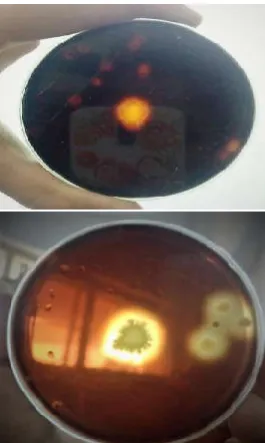
The samples were enriched in Vincent’s mineral medium with 1% pectin for 1 week at 37°C under shaker conditions (120 rpm). 51 isolates were isolated from the enriched medium and were maintained on Vincent’s mineral agar slants at 4°C. They were spot inoculated on Vincent’s agar plates with 1% pectin and incubated at 37°C for 48 hours. The isolates were subjected to Lugol’s Iodine test (Dharmik and Gomashe, 2013). Out of 51, 5 isolates showed pectinase production on Vincent’s mineral agar plates, characterized by a zone of hydrolysis around the spot inoculated culture (fig.1).
Mariam Khan and Aruna K.Optimization And Partial Characterization of Pectinase Produced by Bacillus Subtilis Strain Arium 1115 Isolated From Spoilt Apple
Out of 5 isolates, AM-8 was selected for further studies as it showed maximum pectinase activity (12.83U/ml) as shown in figure 2.
On the basis of morphological, cultural and biochemical characteristics according to Bergey’s Manual of Determinative Bacteriology, 8th Edition and by 16S rRNA gene sequencing analysis, isolate AM-8 was identified as Bacillus subtilis strain arium 1115 by the NCBI assessment with accession number NCBI- LC224327.1. Many of the researchers have also used apple wastes as their sample in order to get pectinase producing micro-organisms (Nahar et al., 2015; Hitha and Girija, 2014; Namasivayam et al., 2011). Many strains of Bacillus have been previously reported to produce extracellular pectinases, for eg., Bacillus subtilis Strain NVFO 19 (El-sayed et al., 2015), marine Bacillus subtilis (Joshi et al., 2013), Bacillus subtilis BKDS1 (Kavuthodi, 2015), Bacillus sphaericus MTCC 7542 (Jayani et al., 2010),Bacillus macerans (Miyazaki, 1991), Bacillus sp. TS47 (Takao et al., 2000), Bacillus sp.MBRL576 (Bhardwaj and Garg, 2014), Bacillus licheniformis KIBGE-IB21(Rehman et al., 2014), B. cereus, B. subtilis, B.stearothermophilus (Torimiro and Okonji, 2013), Bacillus firmus (Roosdiana et al., 2013), Bacillus gibsonii (Li et al., 2005) and Bacillus cereus (Namasivayam et al., 2011). Other pectinase producing microorganisms are Aspergillus niger (Benkova and Slezarik, 1966), Rhizopus stolonifer (Manachini
et al., 1987), Amycolata sp (Bruhlmann, 1995) and Saccharomyces pastorianus (Astapovich et al., 1997).
Optimization of culture conditions for maximum pectinase production
Media screening for optimum pectinase production
It was found that out of ten media studied, medium-5 facilitated maximum pectinase yield (16.21U/ml) by Bacillus subtilis strain arium 1115 and hence medium-5 containing commercial
pectin and yeast extract was used throughout the study (Fig. 3). Pectin serves as the substrate for the induction of pectinase enzyme in the organism, whereas Yeast extract serves as the source of carbon, nitrogen and different growth factors. Similar medium was also used by many researchers for pectinase production with a little modification or change in the composition (Kavuthodi et al., 2015; Rani et al., 2012; Alhijjaji, 2015; Roosdiana et al., 2013; Joshi et al., 2013).
Effect of carbon source on pectinase production
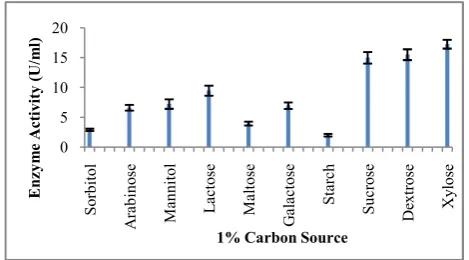
The present study was aimed at optimization of medium components which have been predicted to play a significant role in enhancing pectinase production. Pectin can be used as the source of carbon for pectinase but addition of carbohydrate further enhances pectinase production. As shown in Figure 4, maximum pectinase yield by Bacillus subtilis strain arium 1115 was observed in Medium-5 with 1% Carbon sources like Xylose (17.28 U/ml), followed by Dextrose (15.52 U/ml), Sucrose (15 U/ml), Lactose (9.49 U/ml), Mannitol (7.24 U/ml), Galactose (6.96 U/ml), Arabinose (6.61 U/ml), Maltose (3.95 U/ml), Sorbitol (2.91 U/ml) and Starch (2 U/ml). When different concentrations of xylose was used, Bacillus subtilis strain arium 1115 showed best pectinase production in the presence of 1.5% Xylose along with 0.25% pectin (19.40 U/ml) (Fig.5).
Different carbon sources have different impacts on pectinase production. In our studies with Bacillus subtilis Strain arium 1115, highest pectinase production was observed in presence of 1.5% Xylose and also with the increase in the concentration of the carbon source (xylose), production of the pectinase enzyme had decreased. However, earlier studies in case of Bacillus sp.
Fig 2 Pectinase activity of 5 different isolates.
0 2 4 6 8 10 12 14 16 E n zy m e A c ti v it y ( U /m l) Isolates
Fig 3 Effect of different media on Pectinase production by Bacillus subtilis
strain arium1115 0 5 10 15 20 M -1 M -2 M -3 M -4 M -5 M -6 M -7 M -8 M -9 V in ce n t E n zy m e A c ti v it y ( U /m l) Media
Fig 4 Effect of different carbon sources on pectinase production by
Bacillus subtilis strain arium1115
Fig 5 Effect of different concentrations of Xylose on pectinase production by Bacillus subtilis strain arium1115
0 5 10 15 20 S o rb it o l A ra b in o se M an n it o l L ac to se M al to se G al ac to se S ta rc h S u cr o se D ex tr o se X y lo se E n z y m e A c ti v it y ( U /m l)
1% Carbon Source
0 5 10 15 20 25
0.5 1 1.5 2 2.5
E n zy m e A c ti v it y ( U /m l)
MFW7, Bacillus sp. MBRL576, Bacillus circulans and Acinetobacter oleivorans DR1 showed that lactose, sucrose, galactose and cellulose supported maximum pectinase production respectively (Mukesh Kumar et al., 2012; Bhardwaj and Garg, 2014; Raju and Divakar, 2013a; Bhardwaj and Garg, 2003). There are reports which mentioned that different carbon sources have varied influence such as catabolite repression on the production of extracellular pectinase enzyme (Kilara, 1982; Ward and Fogarty, 2010). There has been observations that many micro-organisms demonstrate better pectinase production in the presence of crude carbon sources like citrus powder, wheat bran, apple pectin, orange waste peel and molasses (Joshi et al., 2013; Torimiro and Okonji, 2013; Rehman et al., 2015; Soares et al., 1999; Sughra et al., 2013; Ahmed et al., 2015; Patil and Dayanand, 2006; Jaradat et al., 2008).
Effect of nitrogen source on pectinase production
Besides the carbon source, the type of nitrogen source in the medium also influences the pectinase yield in the production broth. The highest pectinase production by Bacillus subtilis strain arium 1115 was observed in presence of 1% Yeast extract (19.18 U/ml) followed by Peptone (19.02 U/ml), Beef extract (13.58 U/ml), (NH4)2SO4 (11.31 U/ml), Urea (5.39
U/ml), NH4Cl (4.27 U/ml) and NH4NO3 (3.3 U/ml) (Fig.6).
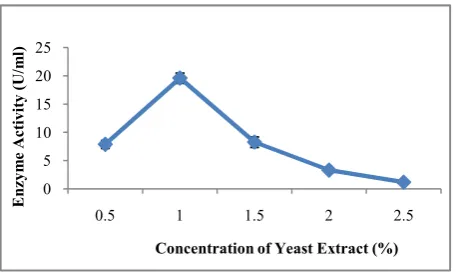
When different concentrations of Yeast extract were studied, the best pectinase production by Bacillus subtilis strain arium 1115 was seen in the presence of 1% yeast extract (Fig.7).
It can be inferred that organic nitrogen sources can induce pectinase production much better than the inorganic nitrogen sources. Yeast extract is a complex nutrient source with unknown composition containing essential amino acids, vitamins and other trace elements which may be responsible for
enhancingpectinase production (Rehman et al., 2015). Similar results were observed in case of marine Bacillus Subtilis (Joshi
et al., 2013), Bacillus cereus (Namasivayam et al., 2011), B. licheniformis KIBGE-IB21 (Rehman et al., 2015), Bacillus subtilis EFRL 01 (Qureshi et al., 2012), Bacillus circulans (Raju and Divakar, 2013a) and Enterobacter aerogenes NBO2 (Darah et al., 2013). However, Bacillus sp. MFW7, Bacillus sp. MBRL576 and Acinetobacter oleivorans DR1 exhibited maximum pectinase in presence of peptone, sodium nitrate (0.2%) and potassium nitrate (0.2%) respectively (Bhardwaj and Garg, 2014; Mukesh Kumar et al., 2012; Bhardwaj and Garg, 2003). However, in some cases of fungi, pectinase production was better in presence of inorganic nitrogen sources (Ibrahim et al., 2013; Tariq and Latif, 2012). Lonsane and Ramesh (1990) reported that ammonium salts enhanced the enzyme production and Sodium nitrate exhibited steep decrease in pectinase production.
Effect of pH on pectinase production: Pectinase production
was tested when the organism was cultured at different pH ranging from 3-10. As shown in Figure 8 the optimum pectinase production by Bacillus subtilis strain arium 1115 was observed at pH 9 (21.44 U/ml) and minimum pectinase production was exhibited at pH 3 (0.61 U/ml).
This can be an indication that the isolate requires alkaline conditions for its optimum enzyme production. Similarly optimum alkaline pH requirement for pectinase production was exhibited by many bacterial species such as Bacillus sp. RCPTM1 (Patil et al., 2012), Bacillus licheniformis KIBGE-IB21 (Rehman et al., 2015), Paenibacillus xylanolyticus
(Giacobbe et al., 2014), Bacillus subtilis EFRL 01 (Qureshi
et al., 2012), Bacillus pumilus (Sharma and Satyanarayana, 2006), Bacillus coagulans and Bacillus endophyticus (Aaisha and Barate, 2016). However, marine Bacillus subtilis, Bacillus sp, Bacillus firmus, Bacillus sp isolate FW2, Bacillus sp. MFW7, Bacillus coagulans and Bacillus sphaericus demonstrated optimum pH between 5 and 6 for pectinase production (Joshi et al., 2013; Kaur et al., 2016; Roosdiana
et al., 2013; Reda et al., 2008; Mehta et al., 2013; Mukesh Kumar et al., 2012; Odeniyi et al., 2009; Jayani et al., 2010). But some species like Bacillus sp. MBRL576 and Bacillus circulans have optimum pH like pH 4 and pH 7 for pectinase production respectively (Bhardwaj and Garg, 2014; Raju and Divakar, 2013a).
Effect of incubation period on pectinase production: As
shown in Figure 9 pectinase production by Bacillus subtilis
Fig 6 Effect of different Nitrogen sources on pectinase production by
Bacillus subtilis strain arium1115
0 5 10 15 20 25
E
n
zy
m
e
A
c
ti
v
it
y
(
U
/m
l)
Nitrogen Source
Fig 7 Effect of different concentrations of Yeast Extract on pectinase production by Bacillus subtilis strain arium1115 0
5 10 15 20 25
0.5 1 1.5 2 2.5
E
n
z
y
m
e
A
c
ti
v
it
y
(
U
/m
l)
Concentration of Yeast Extract (%)
Fig 8 Effect of different pH values on pectinase production by Bacillus subtilis strain arium1115
0 5 10 15 20 25
3 4 5 6 7 8 9 10
E
n
z
y
m
e
A
c
ti
v
it
y
(
U
/m
l)
Mariam Khan and Aruna K.Optimization And Partial Characterization of Pectinase Produced by Bacillus Subtilis Strain Arium 1115 Isolated From Spoilt Apple
strain arium 1115 started from 24 hrs of growth (7.18 U/ml) and maximum amount was produced in 72 hrs (23.54 U/ml) and then declined with further increase in duration of incubation. Further increase of incubation period decreases the rate ofpectinase production, sugar and protein concentration (Sughra et al., 2013).
In our case, Bacillus subtilis strain arium 1115 showed best pectinase production in the late log phase indicating that the organism takes time to produce its inducible enzyme pectinase. Similar results were found in the case of Bacillus subtilis BKDS1 (Kavuthodi et al., 2015), Bacillus sphaericus (MTCC 7542) (Jayani et al., 2010) and Bacillus sp. MFW7 (Mukesh kumar et al., 2012). Different species of Bacillus gave maximum pectinase production at different incubation time; eg., Bacillus firmus at 18 hrs (Roosdiana et al., 2013), Enterobacter aerogenes NBO2 and Bacillus sp. MBRL 576 at 24 hours (Darah et al., 2013; Bhardwaj and Garg, 2014), Bacillus cereus at 36 hrs (Namasivayam et al., 2011), Bacillus subtilis EFRL 01 and Bacillus circulans at 48hrs (Raju and Divakar, 2013a; Qureshi et al., 2012), Bacillus sp and Bacillus subtilis at 96 hrs (Kaur et al., 2016; Lalitha et al., 2014). However, the time taken by the bacillus species to produce pectinase is comparitively less than the time taken by the fungal species. Therefore, for the faster production of pectinase, Bacillus species are preferred over the fungus.
Effect of aeration on pectinase production: Different types of
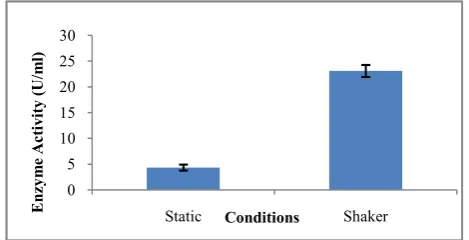
physicochemical conditions could affect the production of pectinase enzyme. As shown in figure 10, the shaker culture of Bacillus subtilis strain arium 1115 at 120 rpm gave optimum pectinase yield (23.08 U/ml) than the culture incubated at static conditions (4.34 U/ml). Shaker conditions are usually used for the production of extracellular enzymes by aerobic organisms, as it enhances the aeration rate.
Aeration in culture medium could lead to sufficient supply of dissolved oxygen in the production medium. This shows that shaker conditions provides excess amount of dissolved oxygen for cell growth as compared to the static condition which leads to improper mixing of media constituents and clumping of cells. Many bacterial pectinase producers such as Bacillus sphaericus (MTCC 7542) (Jayani et al., 2010), Bacilus firmus (Roosdiana et al., 2013), Bacillus subtilis (Joshi et al., 2013), Bacillus subtilis Strain NVFO 19 (El-Sayed, 2015), Bacillus
sp.(Patil et al., 2012), Bacillus subtilis BKDS1(Kavuthodi
et al., 2015), Paenibacillus xylanolyticus (Giacobbe et al., 2014), Acinetobacter oleivorans DR1, Bacillus sp. MBRL576 (Bhardwaj and Garg, 2003; Bhardwaj and Garg, 2014), Bacillus sp. MFW7 (Mukesh Kumar et al., 2013), Pseudomonas sp. (Sivasakthivelan et al., 2014) and Bacillus cereus (Namasivayam et al., 2011) also need aeration for maximum pectinase production. However, there are anaerobic and facultative anaerobic bacteria such as Erwinia carotovora, Clostridium butyricum and Clostridium felsineum which produce pectinolytic enzyme (Obi, 1981).
Effect of incubation temperature on pectinase production:
Bacillus subtilis strain arium1115 showed different pectinase yield at different incubation temperatures with the best pectinase production at 45°C (26.71 U/ml) (Fig.11).
This can be due to reduced growth rate, lower survival or the inactivity of the pectinase enzyme or suppression of cell viability at a temperature higher than 45°C. Similar results were observed in case of Bacillus sp. MBRL576 which showed best results at a temperature of 45°C (Bhardwaj and Garg,
2014). Other Bacillus species demonstrated slightly higher temperature for pectinase production such as Bacillus pumilus dcsr1 at 50°C (Sharma and Satyanarayana, 2006), marine Bacillus subtilis and Bacillus circulans at 40°C (Joshi et al., 2013; Raju and Divakar, 2013a). However, Bacillus cereus, Bacillus firmus I-10104, Bacillus cereus and Bacillus endophyticus and Bacillus coagulans exhibited maximum pectinase production at 37°C (Namasivayam et al., 2011; Aaisha and Barate, 2016; Reda et al., 2008). Temperature of 30°C was observed to yield maximum pectinase production in case of Bacillus sphaericus (MTCC 7542), Aspergillus niger, S. cerevisiae, Aspergillus foetidus and Kluyveromyces wickerhamii (Jayani et al., 2010; Ahmed et al., 2015; Kumar et al., 2012; Moyo et al., 2003).
Effect of optical density and inoculum size of culure on
pectinase production: Figure 12 exhibited the effect of
different optical density of Bacillus subtilis strain arium 1115
Fig 9 Effect of different incubation period (hrs) on pectinase production by
Bacillus subtilis strain arium1115 0
5 10 15 20 25 30
24 48 72 96 120 144
E
n
z
y
m
e
A
c
ti
v
it
y
(
U
/m
l)
Time in hours
Fig 10 Effect of aeration conditions on pectinase production by Bacillus subtilis strain arium1115
0 5 10 15 20 25 30
Static Shaker
E
n
z
y
m
e
A
c
ti
v
it
y
(
U
/m
l)
Conditions
Fig 11 Effect of different incubation temperatures on pectinase production by Bacillus subtilis strain arium1115
0 5 10 15 20 25 30
24 37 45 55
E
n
z
y
m
e
A
c
ti
v
it
y
(
U
/m
l)
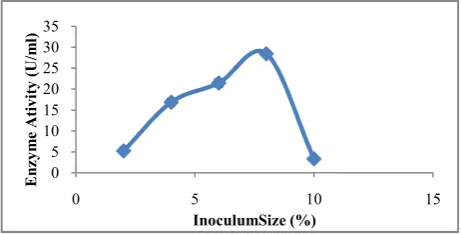
on pectinase production where the culture gave highest pectinase production at an Optical Density of 0.2 at 540nm (27.99 U/ml). Of all the inoculum size of Bacillus subtilis strain arium 1115 studied, an inoculum size of 8% of 0.2 O.D at 540 nm demonstrated the maximum pectinase yield (28.44U/ml) (Fig.13).
The pectinase production decreased with further increase in inoculum size, which caused a decline in the enzyme activity. An optimal inoculum level is necessary for maintaining the balance between proliferating biomass and available nutrients to obtain maximum enzyme yield. A lower enzyme yield at higher inoculum level could result from faster consumption of nutrients. And also lower inoculums levels may give insufficient biomass and allow the growth of undesirable organisms in the production medium (Kuhad et al., 2004). Similar results were observed where higher inoculum size was necessary in many Bacillus species such as Bacillus sp. MBRL576 (Bhardwaj and Garg, 2014), Bacillus circulans (Raju and Divakar, 2013a), Bacillus subtilis (Ahlawat et al., 2009), Bacillus pumilus (Sharma and Satyanarayana, 2006) and Bacillus sphaericus (MTCC 7542) (Jayani et al., 2010). However, the best inoculum size for Enterobacter aerogenes NBO2 and Acinetobacter oleivorans DR1 was found to be 3% (v/v)) and 2.5% (v/v) respectively (Darah et al., 2013; Bhardwaj and Garg, 2003).
Effect of different physicochemical parameters on crude pectinase activity
Effect of different temperatures on pectinase activity
Effect of different temperature on the pectinase activity was studied of which the pectinase enzyme showed maximum activity at 45°C (32.76U/ml) (Fig.14). Similar result was reported in case of Bacillus licheniformis (Rehman et al., 2013). However, there are reports where many Bacillus species showed different temperatures for pectinase activity such as
Bacillus sp. strain BR1390 (60°C) (Rastegari and Karbalaei-Heidari, 2014), Bacillus sp. TS47 (70°C) (Takao et al., 2000), Bacillus sp. HD2 (40°C) (Paudel et al., 2015), Bacillus firmus (50°C) (Roosdiana et al., 2013), Bacillus spp KSM-P15 B. (50-55°C) (Kobayashi et al., 1999), Bacillus cereus (37°C) (Namasivayam et al., 2011), Bacillus stearothermophilus (60°C), Bacillus cereus and Bacillus subtilis (50°C) (Torimiro and Okonji, 2013).
Effect of pH on pectinase activity
Of all different pH studied, the pectinase enzyme produced by Bacillus subtilis strain arium1115 exhibited highest pectinase activity at pH 7(32.50U/ml) (Fig.15).
Similar results were shown by Bacillus sp and Bacillus firmus (Soares et al., 1999; Roosdiana et al., 2013; Torimiro and Okonji, 2013). However, pectinase from most of the Bacillus species such as Bacillus coagulans, Bacillus endophyticus, Bacillus vietnamensis, Paenibacillus xylanolyticus, Bacillus sp. TS47, Bacillus spp KSM-P15, Bacillus licheniformis, Bacillus halodurans M29, Bacillus pumilus dcsr1, Bacillus macerans and Bacillus sp. RN1 show activity at alkaline pH range (pH8 - pH11) (Aaisha and Barate, 2016; Sharma and Satyanarayana, 2006; Kobayashi et al., 1999; Miyazaki, 1991; Takao et al., 2000; Giacobbe et al., 2014; Rehman et al., 2015; Mei et al., 2013; Sukhumsiirchart et al., 2009; Soares et al., 1999). Most of the fungal pectinases have optimal activity at acidic pH range (Kant et al., 2013; Kaur et al., 2016; Rani et al., 2013; Poondla et al., 2015).
Effect of different metal ions on pectinase activity
In general, the pectinase activity can be inhibited or activated by addition of metal ions. The presence of metal ions theoretically affects the bonding between active site of pectinase and substrates (Roosdiana et al., 2013). The effect of
Fig 12 Effect of different Optical Densities of Bacillus subtilis strain arium1115 on pectinase production
Fig 13 Effect of different inoculums size of Bacillus subtilis strain arium1115on pectinase production
0 5 10 15 20 25 30 35
0.2 0.4 0.6 0.8 1
E
n
zy
m
e
A
c
ti
v
it
y
(
U
/m
l)
Optical density at 540nm
0 5 10 15 20 25 30 35
0 5 10 15
E
n
z
y
m
e
A
ti
v
it
y
(
U
/m
l)
InoculumSize (%)
Fig 14 Effect of different Temperature (°C) on activity of pectinase produced by Bacillus subtilis strain arium1115 0
5 10 15 20 25 30 35 40
0 10 20 30 40 50 60
E
n
z
y
m
e
A
c
ti
v
it
y
(
U
/m
l)
Temperature
Fig 15 Effect of different pH on activity of pectinase produced by Bacillus subtilis strain arium1115
0 5 10 15 20 25 30 35
0 2 4 6 8 10 12
E
n
z
y
m
e
A
c
ti
v
it
y
(
U
/m
l)
Mariam Khan and Aruna K. Bacillus Subtilis
few metal ions was assessed by using various metal ions i 5mM concentration. The residual enzyme activity
subtilis strain arium 1115in the presence of metal ions such as Mg²⁺(76.9%), Na⁺(34.8%), Cu²+(30.5%), Mn²
Ca²⁺(25.8%), Ba²⁺(22.9%), Zn²⁺(21.4%), Fe² Ni²+(14.1%), Li²⁺(9.3%), Cd²⁺(8.7%) and Hg² observed. Among the metal ions tested, Mg
minimum inhibition with 76.93% residual activity and Hg demonstrated maximum inhibition with 5.53% residual activity (Fig.16).
In our studies pectinase from Bacillus subtilis
1115 was inhibited bymost of the divalent ions. However, the enzyme from Bacillus macerans, Bacillus
halodurans M29, B. pumilus DKS1, Bacillus polymyxa, xylophilus and Bacillus sp. HD2 was reported to have enhancement of activity in the presence of Ca²
Panda, 2003; Namasivayam et al., 2011; Mei
and Vaughn, 1971; Nagel and Vaughn, 1961; Kikuchi 2006; Sukhumsiirchart et al., 2009; Paudel et al
are reports of pectinase activity from many Bacillus sp. significantly enhanced in the presence of most divalent cation such as Ca2+ and Mg2+, but Hg2+ and Fe3+
inhibitor (Rastegari and Karbalaei-Heidari, 2014; Roosdiana
et al., 2013; Torimiro and Okonji, 2013). Similarly, Ca Mn2+ and Zn2+ were reported to activate pectinase from species like Penicillin italicum but was inhibited by Cu Fe2+ (Alana et al., 1990). Banu et al. (2010
effect of Mg2+ and Ca2+ on pectinase from P. chrysogenum.
Effect of different inhibitors on pectinase activity
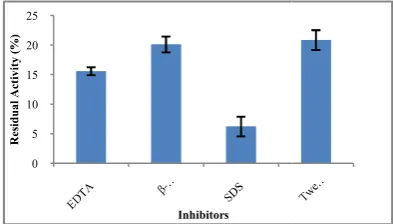
In an attempt to characterize the pectinase enzyme; different inhibitors were tested at 1% (w/v) concentrations. Results presented in Figure 17 demonstrated that Tween 80, β mercaptoethanol, EDTA and SDS showed pectinase residual activity of 20.8%, 20.1%, 15.5% and 6.2% respectively.
Fig 16 Effect of different metal ions on the activity of pectinase produced by Bacillus subtilis strain arium1115
0 20 40 60 80 100 R e si d u a l A c ti v it y ( % ) Metal Ions
Fig 17 Effect of different inhibitors on activity of pectinase produced by
Bacillus subtilis strain arium1115
0 5 10 15 20 25 R es id u a l A ct iv it y ( % ) Inhibitors
Mariam Khan and Aruna K.Optimization And Partial Characterization of Pectinase Produced by Bacillus Subtilis Strain Arium 1115 Isolated From Spoilt Apple
few metal ions was assessed by using various metal ions in 5mM concentration. The residual enzyme activity of Bacillus in the presence of metal ions such as (30.5%), Mn²⁺(26.4%), (21.4%), Fe²⁺(16.6%), (8.7%) and Hg²⁺(5.5%) was observed. Among the metal ions tested, Mg2+ showed minimum inhibition with 76.93% residual activity and Hg2+ demonstrated maximum inhibition with 5.53% residual activity
Bacillus subtilis strain arium most of the divalent ions. However, the Bacillus macerans, Bacillus cereus, Bacillus Bacillus polymyxa, B. and Bacillus sp. HD2 was reported to have enhancement of activity in the presence of Ca²+ (Gummadi and ., 2011; Mei et al., 2013; Dave and Vaughn, 1971; Nagel and Vaughn, 1961; Kikuchi et al.,
et al., 2015). There are reports of pectinase activity from many Bacillus sp. significantly enhanced in the presence of most divalent cations
3+
served as strong
Heidari, 2014; Roosdiana
). Similarly, Ca2+, Mg2+, were reported to activate pectinase from fungal but was inhibited by Cu2+ and
2010) observed little P. chrysogenum.
Effect of different inhibitors on pectinase activity
In an attempt to characterize the pectinase enzyme; different inhibitors were tested at 1% (w/v) concentrations. Results presented in Figure 17 demonstrated that Tween 80, β-mercaptoethanol, EDTA and SDS showed pectinase residual
15.5% and 6.2% respectively.
It was seen that the activity of pectinase enzyme from
subtilis arium 1115 got inhibited by these compounds, where the maximum inhibition was exhibited by SDS and the least inhibition was exhibited by Tween 80. Similar results were reported for pectinase enzyme activity from
halodurans M29 (Mei et al., 2013
enzyme from Bacillus sp. strain BR1390 was inhibited by 5 mM EDTA while SDS had no effect and Tween 80 stimulated the activity of it (Rastegari and Karbalaei
Purification of pectinase enzyme
The enzyme was precipitated
sulphate and purified by dialysis (Table 1). The partial purification of pectinase was carried out in our study by using ammonium sulphate precipitation followed by dialysis. The enzyme was precipitated at 80 % saturation by
sulphate. In case of Bacillus subtilis activity was found in the 40
(Kavuthodi et al., 2015). In case of
crude enzyme samples were partially purified by fractionation using ammonium sulphate (Merck) with 20
(Poondla et al., 2015).
The pectinase enzyme produced by
arium1115 showed 33% of clarity (Table 2 and Fig.18). Pectinases are now prerequisite in juice clarification because they not only bring down bitterness and
juices but also reduce viscosity of fruits, improve pressability of pulp and disintegrate jelly like pectin (
2001:Sandri et al., 2011; Kohli and Gupta, 2015; Poondla
et al., 2015; Tapre and Jain, 2014;
application of crude pectinase enzyme as a clarifying agent in fruit juice was evaluated in our present study. The results showed that pectinases have juice turbidity clarifying action and thus, can be used in juice and wine ind
Table 1 Purification of pectinase enzyme produced by Bacillus subtilis
Enzyme
Crude enzyme Undialyzed precipitate
Dialyzed enzyme
Table 2 Application of pectinase enzyme
Absorbance of control Absorbance of test
1.27
Fig 18 Application of pectinase enzyme produced by strain arium1115 as a clarifying agent in banana juice. on the activity of pectinase produced
strain arium1115
Effect of different inhibitors on activity of pectinase produced by strain arium1115
Optimization And Partial Characterization of Pectinase Produced by
It was seen that the activity of pectinase enzyme from Bacillus 1115 got inhibited by these compounds, where the maximum inhibition was exhibited by SDS and the least inhibition was exhibited by Tween 80. Similar results were reported for pectinase enzyme activity from Bacillus
., 2013) However, the pectinase enzyme from Bacillus sp. strain BR1390 was inhibited by 5 mM EDTA while SDS had no effect and Tween 80 stimulated
Rastegari and Karbalaei-Heidari, 2014).
Purification of pectinase enzyme
The enzyme was precipitated at 80% saturation by ammonium sulphate and purified by dialysis (Table 1). The partial purification of pectinase was carried out in our study by using ammonium sulphate precipitation followed by dialysis. The enzyme was precipitated at 80 % saturation by ammonium Bacillus subtilis BKDS1, the enzyme activity was found in the 40 - 100% salt saturation fraction ). In case of Saccharomyces cerevisiae, crude enzyme samples were partially purified by fractionation g ammonium sulphate (Merck) with 20–80% saturation
The pectinase enzyme produced by Bacillus subtilis strain 33% of clarity (Table 2 and Fig.18). Pectinases are now prerequisite in juice clarification because they not only bring down bitterness and cloudiness of fruit juices but also reduce viscosity of fruits, improve pressability of pulp and disintegrate jelly like pectin (Soares et al.,
., 2011; Kohli and Gupta, 2015; Poondla ., 2015; Tapre and Jain, 2014; Singh and Gupta, 2004). The
application of crude pectinase enzyme as a clarifying agent in fruit juice was evaluated in our present study. The results showed that pectinases have juice turbidity clarifying action and thus, can be used in juice and wine industries.
Purification of pectinase enzyme produced by Bacillus subtilis strain arium 1115
Enzyme activity (U/ml)
31.234 Undialyzed precipitate 34.265 Dialyzed enzyme 37.190
Application of pectinase enzyme
Absorbance of test % Clarity
0.85 33%
Application of pectinase enzyme produced by Bacillus subtilis
Similar result was reported for pectinase enzyme from Bacillus sp. MBRL576 which was used to clarify apple pulp (Bhardwaj and Garg, 2014).
CONCLUSION
In conclusion, it can be said that Bacillus subtilis strain arium 1115 isolate is a good source of pectinase which is active at neutral pH and at 45°C and showed clarification of juice which is an important application. Attempts should be made to adapt the enzyme to conditions that makes it more useful in terms of commercial applicability in industries such as juice industry, paper, textiles and tea industries.
References
Aaisha, G.A, and Barate D.L. (2016): Isolation and Identification of Pectinolytic Bacteria from Soil Samples of Akola Region; India. Int.J.Curr.Microbiol.App.Sci., 5(1): 514-521.
Aguillar and C. Huitron. (1990): Constitutive exopectinase produced by Aspergillus sp. CH-Y-1043 on different carbon sources. Biotechnology Letters., 12: 655-660. Ahlawat S., S.S., Dhiman, B. Battan, R. P. Mandhan and J.
Sharma. (2009): Pectinase production by Bacillus subtilis and its potential application in biopreparation of cotton and micropoly fabric. Process Biochemistry., 44(5): 521-526.
Ahmed I, Zia MA, Hussain MA, Akram Z, Naveed MT and Nowrouzi A. (2015): Bioprocessing of citrus waste peel for induced pectinase production by Aspergillus niger; its purification and characterization. J Radiat Res Appl Sci., 9: 1-7.
Alana A, Alkorta I, Dominguez JB, Llama MJ and Serra JL. (1990): Pectin lyase activity in a Penicillium italicum strain. Appl Environ Microbiol., 56: 3755-3759.
Alhijjaji FA. (2015): Studies on the microbial degradation of complex substrates.
Alkorta I, Gabirsu C, Lhama MJ and Serra JL. (1998): Industrial applications of pectic enzymes - a review. Proc Biochem., 33: 21-28.
Astapovich NI and Ryabaya NE. (1997): Isolation and characterization of polygalacturonase from Saccharomyces pastorianus. Prikl Bio- khim Microbiol., 33: 287-91.
Banu AR, Devi MK, Ganaprabhal GR, Pradep BV and Palaniswamy M. (2010): Production and characterization of pectinase from Penicillium chrysogenum. Indian J Sci Technol., 3(4): 377-381. Bayoumi Reda, A. Hesham, M.Yassin, Mahmoud, A.
Swelim, Ebtsam and Z.Abdel. (2008): Production of Bacterial Pectinases from Agro-Industrial Wastes Under Solid State Fermentation Conditions. J Appl Sci., 4 (12): 1708-1721.
Benkova LR and Slezarik A. (1966): Isolation of extracellular pectolytic enzymes produced by Aspergillus niger. Collect Chech Commun., 31: 122-119. Bhardwaj V and Garg N. (2003): Utilization of Fruits Waste for Pectinase. International Journal of Advances in Science and Technology., 269-274.
Bhardwaj, V and Garg, N. (2014): Production, Purification of Pectinase from Bacillus sp. MBRL576 Isolate and its
Application in Extraction of Juice. International journal of science and research., 3(6): 648-652.
Bruhlmann F. (1995): Purification and characterization of an extracellular pectate Lyase from an Amycolata sp. Appl. Environ. Microbiol., 61(10): 3580-3585.
Contreras, J.C., and Esquivel J.C.C. (1999): Aspergillus kawachii produces an acidic pectin releasing enzyme activity. J. Biosci. Bioeng., 88: 48-52.
Darah I, Nisha M and Lim SH. (2013): Polygalacturonase production by cal- cium alginate immobilized Enterobacter aerogenes NBO2 cells. Appl Biochem Biotechnol., 175(5): 2629-36.
Dave B.A. and Vaughn R.H. (1971): Purification and properties of a polygalacturonic acid trans eliminase produced by Bacillus pumilus, Journal of Bacteriology., 108: 166-174.
Dharmik PG and Gomashe A V. (2013): Bacterial Polygalacturonase (PG) Production from Agro Industrial Waste by Solid State Fermentation. Indian journel Appl Res., 3: 439-442.
El-sayed MH. (2015): Thermoalkali-Stable Pectinase from Bacillus subtilis Strain NVFO 19 Isolated from Agricultural Waste Dump Soil. Curr Res Microbiol Biotechnol., 3(6): 805-815.
Fonseca, M.J.V., and Said S. (1995): Sequential production of pectinases by Penicillium frequentans. World J.Microbiol.Biotechnol., 11: 174-177.
Geetha M, Saranraj P, Mahalakshmi S and Reetha D. (2012): Screening of Pectinase Producing Bacteria and Fungi for its Pectinolytic Activity Using Fruit Wastes. Int J Biochem Biotech Sci., 1: 30-42.
Giacobbe S, Pepe O, Ventorino V, Birolo L, Vinciguerra R and Faraco V. (2014): Identification and characterisation of a pectinolytic enzyme from Paenibacillus xylanolyticus. BioResources., 9(3): 4873-4887.
Gummadi SN and Panda T. (2003): Purification and biochemical properties of microbial pectinases - a review. Process Biochem., 38: 987-996.
Hitha .P.K and D.Girija. (2014): Isolation and screening of native microbiological isolates for pectinase activity. International journal of science and research., 3(5): 632-634.
Ibrahim, D., Salikin, N. H., Hong, L. S., Ahmad, R., Weloosamy and H. (2013): Pomelo peels as alternative substrate for extracellular pectinase production by Aspergillus niger HFM-8. Malaysian Journal of Microbiology., 9(4): 308-316.
Ikura, Y., and Horikoshi K. (1987): Stimulatory effects of certain amino acids on Pectinase production by alkalophilic Bacillus sp. Agric. Biol. Chem., 51: 3143-3145.
Jaradat, Z., Dawagreh, A., Ababneh, Q., Saadoun and I. (2008): Influence of Culture Conditions on Cellulase Production by Streptomyces Sp. (Strain J2). Jordan Journal of Biological Sciences., 1(4): 141-146.
Jayani RS, Saxena S and Gupta R. (2005): Microbial pectinolytic enzymes: A review. Process Biochem., 40(9): 2931-2944.
Mariam Khan and Aruna K.Optimization And Partial Characterization of Pectinase Produced by Bacillus Subtilis Strain Arium 1115 Isolated From Spoilt Apple
Production by Bacillus sphaericus (MTCC 7542). Enzyme Res., 1-5.
Joshi M, Nerurkar M and Adivarekar R. (2013): Use of Citrus Limetta Peels for Pectinase Production by Marine Bacillus Subtilis. Innov Rom Food Biotechnol., 12: 75-83.
Joshi, V.K., M. Parmar and N. Rana. (2011): Purification and characterization of pectinases produced from apple pomace and evaluation of its efficacy in fruit juice extraction and clarification. Indian J. Nat. Prod. Res., 2: 189-197.
Kant S.and R. Gupta. (2012): Purification of pectin methyl esterase from Lycopersicon esculentum and its application. Protein, pept.Lett. 19: 1205–1211.
Kapoor, M., Beg, Q.K., Bhushan, B., Singh, K., Dadhich, K.S, Hoondal and G.S. (2001): Application of an alkaline and thermostable polygalacturonase from Bacillus sp. MG-cp-2 in degumming of ramie (Boelumeria nivea) and sun hemp (Crotalaria juncea) bast fibers. Process Biochem., 36: 803-807.
Kashyap D.R., S. Chandra, A.Kaul and R. Tewari. (2000): Production, purification and characterization of pectinase from Bacillus sp. DT7. World journal of Microbiology and Biotechnology., 16: 277-282.
Kashyap DR, Vohra PK, Chopra S and Tewari R. (2001): Applications of pectinases in the commercial sector: A review. Bioresour Technol., 77(3): 215-227.
Kaur HP and G Kaur. (2014): Optimization of culturalconditions for pectinase produced by fruit spoilage fungi. International journal of advances in research., 3(4): 851-859.
Kaur Sukhvir , Harjot Pal Kaur, Bhairav Prasad and Tejaswani Bharti. (2016): Production and optimization of pectinase by Bacillus Sp. isolated from vegetable soil. Indo American Journal of Pharmaceutical Research., 6(1): 4185-4190.
Kavuthodi B, Thomas SK, Sebastian D, Martinez-Sobrido L and Mohamed Elshafei A. (2015): Co-production of Pectinase and Biosurfactant by the Newly Isolated Strain Bacillus subtilis BKDS1. Br Microbiol Res J., 10(2): 1-12.
Khatri, B. P., Bhattarai, T., Shrestha, S., Maharjan and J. (2015): Alkaline thermostable pectinase enzyme from Aspergillus niger strain MCAS2 isolated from Manaslu Conservation Area, Gorkha, Nepal. Springer Plus., 4: 488.
Kikuchi, T.H. Shibuya, T. Aikawa and J.T. Jones. (2006): Mol, Plant Microbe Interact., 19: 280-287.
Kilara and A. (1982): Enzymes and their uses in the processed apple industry: a review. Process Biochem., 17(4): 35-41.
Kobayashi T, Hatada Y, Higaki N, Lusterio D. D, Ozawa T, Koike K, Kawai S and Ito S. (1999): Enzymatic properties and deduced amino acid sequence of a high alkaline pectatelyase from an alkaliphilic Bacillus isolate. Biochemica et Biophysica Acta., 1427: 145-154. Kohli P and Gupta R. (2015): Alkaline pectinases: A review.
Biocatal Agric Biotechnol., 4(3): 279-285.
Kouhoundé SHS, Somda MK, Bokossa IY and Baba- LS. (2015): Screening of microorganisms producing
polygalacturonase (PG) in microbiota of fermented cassava. Int J Biochem Biotechnol., 4: 537-543.
Kuhad RC, Kapoor M, Rustagi R, (2004):Enhanced production of an alkaline pectinase from Streptomyces sp. RCK-SC by wholecell immobilization and solid-state cultivation, World J. Microbiol. Biotechnol., 20:257-263.
Kumar, Y.S., Vijayakumar, P., Reddy and O.V.S. (2012): Pectinase production from mango peel using Aspergillus foetidus and its application in processing of mango juice. Food Biotechnol., 26: 107-123.
Lalitha kumari B., Sudhakar, P., Hemamalini, K., Vijetha and P. (2014): Studies on Pectinase Production by Bacillus Subtilis using Agro-Industrial Wastes. Research Journal of Pharmaceutical, Biological and Chemical Sciences., 5(6): 330-339.
Lalitha kumari R. Lalitha, P. Sudhakar. (2013): Studies on Isolation, Purification and Molecular Identification of Pectinase Producing Bacteria. International Journal of Advanced Research., 1(5): 204-212.
Li, Z.M, Z.H.Bai, B.G. Zhang, H.J.Xie, Q.B.Hu, C.B.Hao, W.T. Xue and H.X. Zang. (2005): Newly isolated, Bacillus Gibsonii S-2 Capable of using sugar beet pulp for alkaline pectinase production. World J. Microbiol. Biotechanol., 21: 1483-1486.
Lonsane B K and Ramesh M V. (1990): Production of bacterial thermostable α-amylase by solid state fermentation: A potential tool for achieving economy in enzyme production and starch hydrolysis. Adv Appl Microbiol., 35: 1-56.
Manachini PL, Fortina MG and Parini C. (1987): Purification and properties of endopolygalacturonase produced by Rhizopus stolonifer. Biotechnol Lett., 9: 21.
Mehta SA, Rana M, Shaikh N, Patel N. (2013): Optimization of physiological parameters for pectinase production from soil isolates and its applications in fruit juice clarification. J Environ Res Develop., 7(4) :1530-1540. Mei, Y., Chen, Y., Zhai, R., and Liu, Y. (2013): Cloning,
purification and biochemical properties of a thermostable pectinase from Bacillus halodurans M29. Journal of Molecular Catalysis B: Enzymatic., 94: 77-81.
Miller, L.G. (1959): Use of dinitrosalicylic acid reagent for the determination of reducing sugars. Analytical Chemistry., 3: 426-428.
Miyazaki Y. (1991): Purification and characterization of endo-pectatelyase from Bacillus macerans. Agricultural and Biological Chemistry Journal., 55: 25-30.
Moyo, S., Gashe, B.A., Collison, E.K., Mpuchane and S. (2003): Optimising growth conditions for the pectinolytic activity of Kluyveromyces wickerhamii by using response surface methodology. Int. J. Food Microbiol., 85: 87-100.
Nagel C.W. and R.H. Vaughn. (1961): The characteristic of polygalactouronase produced by Bacillus polymyxa Arch. Biochem. Biophys., 93: 344-352.
Nahar, N., Haque, M., Khan, A. A., Haque and A. (2015): Plant Extract Regulating Pectate Lyase Production in Soft Rotting. A Scientific Journal of Krishi Foundation., 13(2): 81-88.
Namasivayam, E., John Ravindar, D., Mariappan, K., jiji, A., Kumar, M., Jayaraj and R. L. (2011): Production of extracellular pectinase by bacillus cereus isolated from market solid waste. Journal of Bioanalysis and Biomedicine., 3(3): 70-75.
Obi S. K. C. (1981): Pectinase activity of anaerobic and facultatively anaerobic bacteria associated with the soft rot of yam (Diascorea rotundata). Applied and Environmental Microbiology., 41: 563-567.
Odeniyi OA, Onilude AA and Ayodele MA. (2009): Production characteristics and properties of cellulase/polygalacturonase by a Bacillus coagulans strain from a fermenting palm-fruit industrial residue. African Journal of Microbiology Research., 3(8): 407-417.
Patil, S. R.,and Dayanand, A. (2006); “Production of pectinase from deseeded sunflower head by Aspergillus niger in submerged and solid-state conditions”. Bioresource Technology. 97(16): 2054-2058.
Patil RC, Murugkar TP and Shaikh SA. (2012): Extraction of pectinase from pectinolytic bacteria isolated from carrot waste. Int J Pharma Bio Sci., 3(1): B261-B266.
Paudel, Y. P., Lin, C., Shen, Z.,and Qin, W. (2015). Characterization of pectin depolymerising exo polygalacturonase by Bacillus sp. HD2 isolated from the gut of Apis mellifera L. Microbiology discovery., 3(2). Poondla V, Bandikari R, Subramanyam R and Reddy
Obulam VS. (2015): Low temperature active pectinases production by Saccharomyces cerevisiae isolate and their characterization. Biocatal Agric Biotechnol., 4(1): 70-76.
Qureshi, A.S., Bhutto, M.A., Chisti, Y., Khushk, I., Dahot, M.U., Bano and S. (2012): Pro- duction of pectinase by Bacillus subtilis EFRL 01 in a date syrup medium. Afr. J. Biotechnol., 11: 12563-12570.
Raju EVN and Divakar G. (2013b): Screening and isolation of pectinase producing bacteria from poultry waste. Int J Res Pharm Biomed Sci., 4(1): 151-154.
Raju Venkata Naga E and Divakar G. (2013a): Production of pectinase by using Bacillus circulans isolated from dump yards of vegetable wastes. Int J Pharm Sci Res: 4(7): 2615-2622.
Rani CS, Hasini PS and Rao LV. (2012): Isolation and Screening of Polygalacturonase-Producing Bacillus sp. Dyn Biochem Process Biotechnol Mol Biol., 6(1): 123-126.
Rani M. Helan Soundra, A. Elavarasi and M. Kalaiselvam. (2013): Studies on Pectinase production from halotolerant Aspergillus terreus by Submerged Fermentation. Journal of Scientific Research in Pharmacy., 2(1): 8-11.
Rastegari B. and Karbalaei-Heidari HR. (2014): Isolation and partial characterization of a bacterial thermostable
polymethyl galacturonase from a newly isolated Bacillus sp. strain BR1390. Iran J Biotechnol., 12(4): 41-46. Reda AB, Hesham MY, Mahmoud AS and Ebtsam ZA.
(2008): Production of bacterial pectinase(s) from agro-industrial wastes under solid state fermentation conditions. J Appl Sci Res., 4: 1708-1721.
Reddy MP Chandra and Saritha K V. (2016): Effects of the culture media optimization on pectinase production by Enterobacter sp. PSTB-1. 3 Biotech., 6(2): 1-11. Reetha S, Selvakumar G, Thamizhiniyan P, Ravimycin T and
Bhuvaneswari G. (2014): Screening of Cellulase and Pectinase by Using Pseudomonas fluorescence and Bacillus subtilis. Int Lett Nat Sci., 13: 75-80.
Rehman, H. U., Nawaz, M. A., Aman, A., Baloch, A. H., Qader and S. A. U. (2015): Immobilization of pectinase from Bacillus licheniformis KIBGE-IB21 on chitosan beads for continuous degradation of pectin polymers. Biocatalysis and Agricultural Biotechnology., 3(4): 282-287.
Rombouts, F. M. and Pilnik W. (1980): Pectic Enzymes. Economic, Academic Press., 5: 227- 282.
Roosdiana A, Prasetyawan S and Mahdi C. (2013): Production and Characterization of Bacillus firmus Pectinase. J Pure Appl Chem Res., 2: 35-41.
Sandhya R and Kurup G. (2013): Screening and isolation of pectinase from fruit and vegetable wastes and the use of orange waste as a substrate for pectinase production. Int Res J Biol Sci., 2(9): 34-39.
Sandri, I.G., Fontana, R.C., Barfknecht, M., Moura da Silveira (2011): Clarification of fruit juices by fungal pectinases. LWT - Food Sci. Technol., 44: 2217-2222. Sharma, D.C., Satyanarayana and T. (2006): A marked
enhancement in the production of a highly alkaline and thermostable pectinase by Bacillus pumilus dcsr1 in submerged fermentation by using statistical methods. Bioresour. Technol., 97: 727-733.
Singh S and Mandal SK. (2012): Optimization of Processing Parameters for Production of Pectinolytic Enzymes from Fermented Pineapple Residue of Mixed Aspergillus Species. Jordan J Biol Sci., 4(5): 307-14.
Singh and S.R. Gupta. (2004): Apple juice clarification using fungal pectinolytic enzyme and gelatin, Indian J. Biotechnol., 3: 573-576.
Sivasakthivelan P, Sujitha D, Sivasakthi S. (2014): Effect of Sucrose on Microbial Pectin Esterase and Pectate Lyate activity. Int J Adv Multidiscip Res., 1(1):9-13.
Soares MMCN, da Silva R, Carmona EC and Gomes E. (2001): Pectinolytic enzyme production by Bacillus species and their potential application on juice extraction. J Microbiol Biotechnol., 17: 79-82.
Soares, M.M., Silva, R.D, Gomes and E. (1999): Screening of bacterial strains for pectinolytic activity: characterization of the polygalacturonase produced by Bacillus sp. Revista de Microbiologia., 30: 299-303. Sughra MG, Dahot MU and Simair AA. (2013): Use of
molasses as a carbon source for the growth of fungi and production of pectinase. Pakistan J Biotechnol., 10(2): 63-73.
Mariam Khan and Aruna K.Optimization And Partial Characterization of Pectinase Produced by Bacillus Subtilis Strain Arium 1115 Isolated From Spoilt Apple
thermophilic pectate lyase of Bacillus sp. RN1 isolated from a hot spring in Thailand. Biosci. Biotecnol. Biochem., 73(2): 268-273.
Takao M, Nakaniwa T, Yoshikawa K, Terashita T and Sakai T. (2000): Purification and characterization of thermostable pectate lyase with protopectinase activity from thermophilic Bacillus sp. TS 47. Biosci Biotechnol Biochem., 64: 2360-2367.
Tapre, A.R., Jain and R.K. (2014): Pectinases: enzymes for fruit processing industry. Int. Food Res. J., 21: 447-453. Tariq A and Latif Z. (2012): Isolation and biochemical
characterization of bacterial isolates producing different levels of polygalacturonases from various sources. African J Microbiol Res., 6(45): 7259-7264.
Torimiro N and Okonji ER. (2013): A comparative study of pectinolytic enzyme production by Bacillus species. African J Biotechnol., 12(46): 6498-6503.
Truong L.V., Tuyen H., Helmke E., Binh L.T. and Schweder T. (2001): Cloning of two pectate lyase genes from the marine Antarctic bacterium Pseudoalteromonas haloplanktis strain ANT/505 and characterization of the enzymes. Extremophiles., 5: 35-44.
Vincent JM. (1970): A manual for the practical study of the Root nodule bacteria. Blackwell Scientific Publications., 75.
Ward OP and Fogarty WM. (2010): Polygalacturonase lyase production by Bacillus subtilis and Flavobacterium pectinovorum. Appl. Microbiol., 27: 346-350.
Willats, W.G.T., McCartney, L., Mackie, W., Knox and J.P. (2001). Pectin: cell biology for functional analysis. Plant Mol. Biol., 47: 9-27.
Zhang J, Henriksson G and Johansson G. (2000): Polygalacturonase is the key component in the enzymatic retting of flax. J. Biotechnol., 81: 85- 89.
*******
How to cite this article:
Mariam Khan and Aruna K.2017, Optimization And Partial Characterization of Pectinase Produced by Bacillus Subtilis Strain Arium 1115 Isolated From Spoilt Apple. Int J Recent Sci Res. 8(8), pp.19633-19644.