1
Doctoral school in Cognitive and Brain Sciences
XXVII cycle
Ph.D. Dissertation
Influence of reward history on visual
working memory representations
Elisa Infanti
1
Table of Contents
Summary ... 3
1
Motivational and automatic influence of reward on visual
processes ... 5
1.1 Motivational role of reward ... 8
1.2 Automatic and non-strategic influence of reward on visual processes ... 19
2
Reward associations impact both iconic and visual working
memory ... 35
2.1 Abstract ... 35
2.2 Introduction ... 37
2.3 Experiment 1 ... 40
2.4 Experiment 2 ... 47
2.5 Discussion ... 51
3
Limits of reward influence on visual working memory ... 57
3.1 Abstract ... 57
3.2 Introduction ... 59
3.3 General paradigm and rationale for the experiments ... 62
3.4 Experiment 1 ... 62
3.5 Experiment 2 ... 67
3.6 Experiment 3 ... 71
2
4.1 Abstract... 77
4.2 Introduction ... 79
4.3 Experiment ... 82
4.4 Discussion ... 90
5
General discussion and conclusions ... 93
References ... 99
3
Summary
Reward is a strong determinant of human and non-human behavior, influencing the exploration of the world around us and our interactions with it. Interestingly, the impact of reward and reward-associated objects is not limited to strategic changes in approach behavior or attention deployment, but also extends to situations in which prioritizing processing of such objects is not necessarily advantageous for current goals. In spite of converging evidence for the automatic influence of reward on attentional deployment, less is known about the impact of reward on other cognitive processes.
4
5
1
Motivational and automatic influence of
reward on visual processes
Prior experience is one of the key factors in guiding our daily interactions with the world. It influences our behavior, our choices, our expectations, the way we explore and allocate attention in space, and the way we weight sensory inputs and build perceptual representation of the world around us. Experience is fundamental in at least two ways: it has a predictive value yielding to anticipation and guiding interpretation of upcoming situations, and it also brings qualitative information about the value of familiar objects and the consequences of past choices and behaviors.
6
visual processing, specifically assessing its influence in visual working memory (VWM).
In our daily life, we encounter situations that are familiar to us and that can lead to positive or negative outcomes based on past encounters. In some cases we know it explicitly, whereas in others we may be unaware of it even if our brain has detected these regularities and has automatically driven us towards the most valuable option. Our brain constantly faces the challenge of combining past experience with available sensory information and current goals. In particular, the history of interaction with objects and their associated value plays an important role in influencing the way we explore and analyze the world around us. Crucially, situations or objects that we have learned to be valuable are not always currently relevant and an important challenge consists in understanding how our brain weights information gathered from experience and integrates it with what is relevant for current goals.
We know that our visual processing capacities are limited and objects compete for access to these limited resources (Desimone & Duncan, 1995). Perception and attentional deployment are driven by stimulus characteristics, such as raw salience (Theeuwes, 1991a, 1992; Yantis & Jonides, 1984), or current goals (Chelazzi, 1999; Egeth & Yantis, 1997). Furthermore, motivation and prior experience are two additional factors that play a very influential role (e.g. Anderson, Laurent, & Yantis, 2011a; Della Libera & Chelazzi, 2006, 2009; Engelmann & Pessoa, 2007; Gilbert & Fiez, 2004; Hickey, Chelazzi, & Theeuwes, 2010a; Mohanty, Gitelman, Small, & Mesulam, 2008; Pochon et al., 2002; Small et al., 2005). In the last twenty years, a lot of effort has been put in trying to describe the interplay between these factors and specifically in trying to isolate the automatic influence of reward in visual cognition in absence of motivational or strategic factors.
7
impact on encoding and maintenance of visual representations in VWM. Attention and VWM are two strongly connected cognitive processes (Gazzaley & Nobre, 2012; Zanto, Rubens, Thangavel, & Gazzaley, 2011) and understanding the extent to which reward can influence VWM can improve our understanding of the influence of reward on visual cognition in general.
8
1.1
Motivational role of reward
Motivational incentives in attention and memory
Animal theories of reinforcement learning have described that rewards, usually primary rewards such as food or water, can be effective motivators for behavior. In fact, reward has been influentially defined as the thing that makes you “come back for more” (Thorndike, 1911). The ability to learn reward contingencies in the environment is crucial to anticipate positive outcomes and thus to optimize value-oriented behavior. In terms of physiological mechanisms, influential research has shown that dopamine plays an essential role in reward motivate behavior, mediating learning of reward predicting cues (Schultz, 2002; Schultz, Dayan, & Montague, 1997), influencing behavior by selectively reinforcing associations between rewards and neutral stimuli in order to render them motivationally salient (for a review, see Wise, 2004). Furthermore, according to the “incentive salience hypothesis”, reward-related mesolimbic dopamine can drive approach towards reward-associated stimuli and directly guide perception by prioritizing the selection and processing of behaviorally relevant information that anticipates the arrival of reward (Berridge, 2007; e.g. Berridge & Robinson, 1998; McClure, Daw, & Read Montague, 2003).
9
information about trial value is available before target onset (e.g. Boehler, Hopf, Stoppel, & Krebs, 2012; Kiss et al., 2009; Krebs, Boehler, & Woldorff, 2010; Taylor et al., 2004; reactive paradigms are described more in detail in the next session of the Introduction).
Nowadays, there is large evidence that reward predicting cues can produce benefits on attentional orienting and motor response initiation towards valuable stimuli (Ikeda & Hikosaka, 2003; Peck, Jangraw, Suzuki, Efem, & Gottlieb, 2009; Platt & Glimcher, 1999; Roesch & Olson, 2003, 2007). Single cell recordings in the macaque brain have revealed that several regions in the frontal cortex show higher firing rate when preparing a saccadic response in highly rewarded trials (Roesch & Olson, 2003, 2007). The greater firing rate to high compared to low reward trials increases progressively moving towards posterior areas dedicated to preparation of motor responses, suggesting a motivation-dependent modulation of motor preparation (Roesch & Olson, 2003). On the other hand, anterior regions, such as the orbitofrontal cortex, appear to encode the value of the expected reward (Roesch & Olson, 2004). For example, in macaque frontal cortex distinct effects of reward can be observed in different frontal areas reflecting value processing and influence of motivation on response preparation (Roesch & Olson, 2007).
10
predicting reward as a reward itself (Bromberg-Martin & Hikosaka, 2009; Lauwereyns et al., 2002). These results altogether show that the value of motivational incentives changes activity in cortical and subcortical areas designated to the processing of the upcoming valuable information and the preparation of the motor response to it.
11
(EEG) study started to investigate more in detail the mechanisms underlying motivational benefits in spatial attention, specifically aiming to disentangle the contribution of cognitive and motor preparation (Risa Sawaki, Luck, & Raymond, 2015). Using spatial motivational cues that did not predict the specific motor response required to perform the task, Sawaki and colleagues demonstrated a behavioral benefit of reward that was not relying on motor preparation (Mir et al., 2011), but solely on the opportunity to engage in cognitive preparation.
12
Single cell recordings in non-human primates and imaging studies in humans have suggested an interaction of reward incentives also in cognitive control networks recruited during working memory tasks (Beck, Locke, Savine, Jimura, & Braver, 2010; Kawasaki & Yamaguchi, 2013; Krawczyk et al., 2007; Pochon et al., 2002; Taylor et al., 2004; Watanabe, 1996; Watanabe, Hikosaka, Sakagami, & Shirakawa, 2005). Reward incentives of different magnitude in a verbal working memory task can modulate activity in cortical areas already activated by working memory processing and sensitive to memory load, such as the dorsolateral prefrontal cortex (DLPFC) (Gilbert & Fiez, 2004; Pochon et al., 2002). Analogous observations has been reported by Krawczyk and colleagues (2007) that tested the influence of incentives in a VWM task. In this experiment, participants were presented with a stream of face or scene images and their task consisted in focusing on either one or the other category according to the instructions provided at the beginning of the trial. Importantly, the initial instructions also informed participants about the value of the current trial. Neural response in ventral visual areas responsible for processing of scenes or faces was significantly modulated by category relevance. Most importantly, this pattern was significantly amplified in high reward trials. As in previous studies (Gilbert & Fiez, 2004; Pochon et al., 2002; Watanabe, 1996), a significant response enhancement was measured in prefrontal regions for high reward trials. Krawczyk and colleagues suggested that reward motivation drives performance through top-down signaling in frontal regions involved in WM as long as in those visual areas that are selective for processing the visual inputs that had to be remembered.
13
Despite the absence of clear improvements in working memory capacity, these studies coherently suggest that reward incentives can significantly affect the neural activity in those cortical areas that were relevant for encoding and maintain relevant representations in working memory (Gilbert & Fiez, 2004; Pochon et al., 2002; Small et al., 2005; Taylor et al., 2004).
As discussed previously, this literature focuses on the strategic benefits of general arousal or increased invested effort aimed at optimizing task performance and maximizing the final income (Bijleveld, Custers, & Aarts, 2009, 2010; Pessoa, 2009). In the next section, I describe other approaches to assess behavioral and neural consequences of reward on cognitive processes in the absence of preparatory cues. Importantly this does not exclude the influence of top-down strategies, but it might rely on different mechanisms triggered at target onset (reactive paradigms).
Learned reward associations in attention and memory
14
the sharpening of the response profile across the populations of neurons within the regions of sensory cortex that are most important for encoding the relevant properties of objects. These results imply that objects value can influence performance not only by differentially weighting motor responses, but also by biasing the quality of relevant sensory inputs.
Among the studies on reward influence on visual cognition, one of the most investigated aspects concerns the influence of objects’ value on mechanisms of attention deployment and specifically on how objects’ value interacts with current goals (e.g. Della Libera & Chelazzi, 2006, 2009; Hickey et al., 2010a; Kiss et al., 2009; Kristjánsson et al., 2009) and stimulus properties (Navalpakkam, Koch, Rangel, & Perona, 2010). Top-down and bottom-up mechanisms have been identified as fundamental factors in orienting attention towards the most relevant objects and locations in space (Desimone & Duncan, 1995). Recent evidence suggests that together with individual goals and objects saliency, reward might hold a special role in determining how our limited resources should be distributed in exploring the environment around us.
15
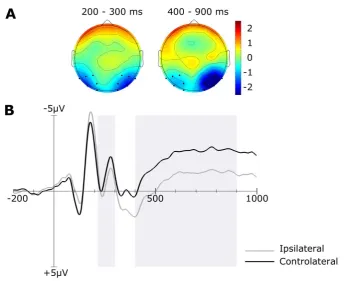
negativity), is a later component measured at posterior electrodes contralateral to the target which reflects additional processing of stimuli after their selection, including maintenance in visual working memory (Mazza et al., 2007; Mccollough, Machizawa, & Vogel, 2007; Vogel & Machizawa, 2004). The crucial result of this work is that more valuable objects evoked larger and earlier N2pc response than less valuable targets indicating a significant influence of reward on target selection that does not depend on the saliency of the object or the top-down attentional set. Interestingly, also CDA’s amplitude was increased for more valuable targets showing that reward influence does not restrict to initial selection of targets only, but it can also extend to the following processing stages. More cognitive resources are dedicated to the selection and further analysis of valuable items resulting in overall better performance. This study interestingly suggests that reward associated with objects can benefit their processing at different stages going beyond attentional capture and potentially contributing to any cognitive process that is relevant for efficiently dealing with the task. However, it is difficult to argue whether the benefit in CDA is the result of a genuine benefit on later object processing or if it reflects a carryover of benefit in selection: items that are better attended are also better processed after selection.
16
The hypothesis that the influence of reward extends to different cognitive processes according to current task demands motivates the entire work reported in this thesis (Chapter 2 and Chapter 4). In particular, we focused on the impact of reward on different stages of a VWM task, from encoding (Chapters 2 and 3) to maintenance (Chapter 4). As suggested in the last studies I reviewed (Kiss et al., 2009; Taylor et al., 2004), reward could directly affect the processing of relevant information also after object selection. The study reported in Chapter 4 specifically aims to investigate this issue by testing whether changes in VWM can arise in absence of a measurable effect in attentional capture.
Crucially, all studies reviewed so far do not allow one to disentangle the contribution of reward per se from the influence of top-down strategic effects. Such studies rely on varying targets’ value that directly affects participants’ motivation resulting in prioritized processing or allocation of resources to the most valuable target. This is an important limitation because it does indicate whether reward can automatically guide perception (and other cognitive processes) beyond current goals. In other words, the influence of reward is indistinguishable from that of top-down selection.
A first indication of the coexistence of automatic mechanisms and top-down effects of reward emerges from two clever experiments focusing on attention mechanisms (Kristjánsson et al., 2009) and cognitive control (Krebs et al., 2010, 2011).
17
automatic phenomena, such as repetition effects, were significantly affected by the actual reward feedback obtained in the preceding trial. This is an intriguing observation that suggests that objects’ value is continuously and automatically updated and can have immediate effects in subsequent encounters.
This interesting work shows that reward history, here characterized by reward contingencies and immediately preceding encounters, can drive attention orientation in both bottom-up and top-down ways. Krebs and colleagues found coherent results in a cognitive control task, but they also significantly extended them suggesting that reward associations can impact performance also against current goals (Krebs et al., 2010, 2011) .
18
19
1.2
Automatic and non-strategic influence of reward on visual
processes
The importance of reward history
As noted earlier, in most of animals and human studies, trials value is typically manipulated by changing either the amount of reward delivered for a correct response or the probability with which a reward is associated with a particular location or stimulus. Both manipulations have the effect of motivating individuals to mobilize resources for a more efficient control of attention in order to maximize success. Under these conditions the effects of reward on attention are hardly separable from those that can be elicited by any other cue or instruction inducing attentional deployment in a strategic fashion (Maunsell, 2004).
Recently, a growing number of studies has started to focus on non-strategic effects of reward, aiming at describing whether and how objects change their ability to recruit cognitive resources as a function of their reward history, without any overt advantage in prioritizing these objects over others in the current task. Different paradigms have been developed to this purpose, namely to investigate how exposure to items-reward associations affects the way these items are treated in future encounters. Two main lines of research can be identified on this respect: a) automatic immediate effects of reward feedback on subsequent encounters with the same stimuli in the absence of consistent object- or feature-reward associations; b) influence of learned object- or feature-reward associations during extinction.
20
Chelazzi, & Theeuwes, 2014; Hickey, Kaiser, & Peelen, 2015). Appropriate attention mechanisms engaged in performing a task, leading to selection or suppression of certain items, are reinforced, while less optimal ones, are suppressed. In other words, these studies suggest that mechanisms of visual selective attention can be adaptively adjusted to optimize the interactions with the environment.
Other approaches investigated the impact of learned reward-stimulus association in the absence of reward delivery, in what is known as extinction period (e.g. Anderson et al., 2011b; Pool, Brosch, Delplanque, & Sander, 2014; Raymond & O’Brien, 2009). Stimuli are imbued with a more or less positive value by means of a value learning procedure based on the reinforcement of appropriate attentional selections. Value learning paradigms can highly differ from experiment to experiment. Reward associations can be established by means of a single session training with a rewarded visual search task (Anderson et al., 2011b), or multiple training sessions distributed in consecutive days (Della Libera & Chelazzi, 2009); classical conditioning paradigms (Pool et al., 2014) or choice games (Raymond & O’Brien, 2009).
Both approaches have been used in the research reported in this thesis in order to address the impact of reward history on VWM, so it is worth describing more in depth the main differences and the individual specificities of the two general methods.
21
received was based on their performance, while it was in fact randomly assigned based on a predetermined schedule. Authors’ attention focused on the automatic influence of the amount of reward received on the following probe display, in which a second discrimination task was required. The authors reported a robust negative priming effect following highly rewarded responses to the prime stimuli, though the effect was eliminated when correct responses to the same stimuli were poorly rewarded. Analogous results were found in Experiment 2 with different stimuli (colored meaningless shapes) and task. These observations suggest that the attention mechanisms engaged to select a relevant target and to suppress a concurrent distractor were sensitive to the magnitude of reward obtained after response to the prime and were immediately coherently adjusted.
22
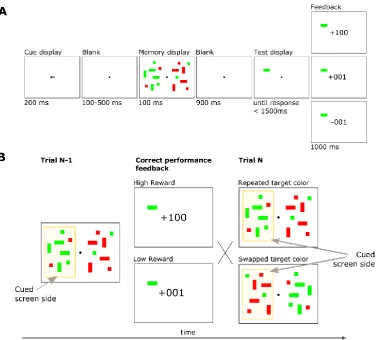
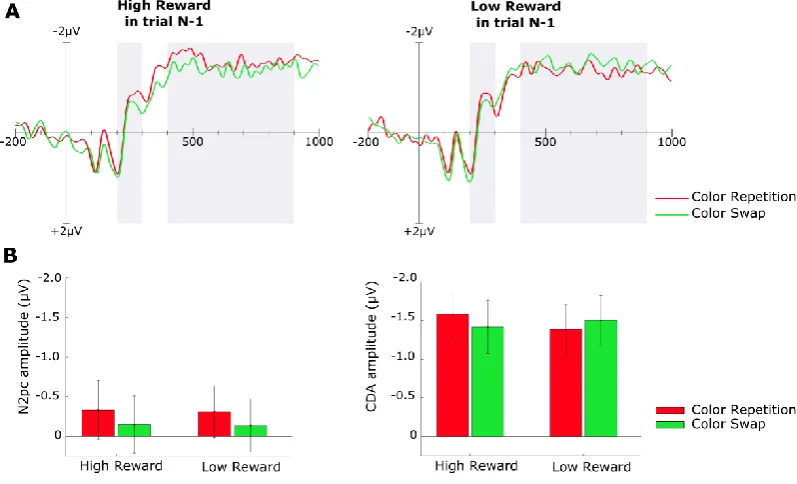
feature, but slowed responses when target and distractor features swapped. The opposite pattern of result was observed for low reward trials, suggesting that a poor outcome could cancel the cost of switch. Interestingly these results did not depend on participants strategically perseverating in selecting the previously rewarded item, because the same results were observed when participant were explicitly told that high reward feedback predicted a swap in target color (Experiment 1). When participants were able to strategically use the provided information to optimize performance (Experiment 2), the automatic effects of reward seemed to overcome the strategic attentional set adopted by participants.
Together these studies suggest that attentional mechanisms can flexibly and rapidly adapt to the more or less optimal consequences of a certain attentional set. In absence of reward feedback, priming effects show that cognitive processes can be adjusted online according to an internal evaluation of the consequences of recent selection, by means of an internal reinforcement mechanism that consolidates adaptive choices and devalues inappropriate ones (Roelfsema, van Ooyen, & Watanabe, 2010). The obtainment of an external reward feedback overwrites this internal evaluation and re-defines the most adaptive attentional mechanisms based on the external information. In particular, external reward feedback can yield to the reinforcement of attentional mechanisms that led to positive outcomes and the devaluation of those considered less optimal given the external feedback. Following this hypothesis, in Chapter 4 I report an experiment in which Hickey’s paradigm has been adapted to a visual working memory task to assess the cognitive and neural mechanisms underlying the impact of reward feedback on encoding and maintenance of visual representations in VWM.
23
quickly learn to take advantage of them to optimize behavior; on the other, they show how these automatic biases continue to drive attention also when it is detrimental for performance, when, for example, such motivationally salient objects become task-irrelevant distractors.
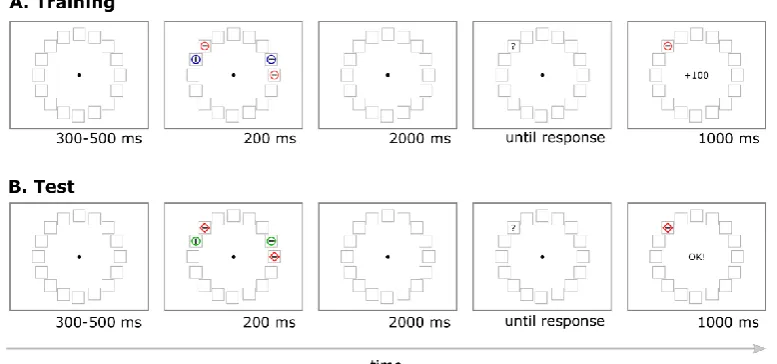
Raymond and O’Brien (2009) have adopted a choice game paradigm with win and losses to imbue face stimuli with different valence and motivational salience in order to investigate how these factors affect the subsequent ability to recognize these objects. In this framework, the value learning procedure was based on the explicit choice of one face between two alternatives with the explicit goal to try to maximize the gains. Individual faces were characterized by different motivational salience, i.e. the degree of their ability to predict a certain outcome (either high or low) and the valence of that outcome (win or loss). This paradigm is quite different from those described previously because it is explicitly based on the ability to learn the expected value of each individual stimulus. In a following testing phase, the ability to recognize such items is assessed in conditions where attentional resources are more or less available. Results showed that motivationally salient objects are better recognized than less salient ones irrespective of their predictive value. However, only rewards prioritize processing of objects when low attentional resources are available, making them resilient to the attentional blink phenomenon (Raymond, Shapiro, & Arnell, 1992; Shapiro, Raymond, & Arnell, 1997). The strength and generality of value learning procedures has been demonstrated also in studies implying primary rewards, instead of monetary ones, to modulate the affective relevance of otherwise neutral stimuli (Pool et al., 2014). Pool and colleagues adopted a Pavlovian conditioning paradigm to demonstrate that initially neutral stimuli can acquire the capacity to orient attention once they acquire affective relevance by the association with a primary reward such as a chocolate odor. They showed that reward associated figures were more efficient than neutral figures in the initial capture of attention in a spatial cueing paradigm (Posner, 1980), but that they would lose the ability to do so once they lost their affective relevance because of devaluation of the primary reward (satiation).
24
with a positive, negative or neutral value, but no actual task is performed on these items during training. Other approaches have embraced a slightly more sophisticated hypothesis suggesting that reward or value does not simply benefit salience of the associated object, but affects a more specific prioritization process (Anderson et al., 2011b; Della Libera & Chelazzi, 2009).
25
experiment is that the impact of reward associations is dependent on the specific attentional process activated during learning. The authors suggest that “every episode of attentional selection leaves behind a memory trace that incorporates information about the specific items involved, the specific attentional processes applied to them, and, crucially, the adaptive value associated with the episode”. To account for the better inhibition of good-outcome distractors, it is necessary to assume that learning does not blindly benefit stimuli processing or representation, but specifically reinforces the attentional process engaged for the obtainment of that reward (e.g. target selection or distractor inhibition, but see Della Libera, Perlato, & Chelazzi, 2011; Hickey, Chelazzi, & Theeuwes, 2011).
26
distractors, the strength of attentional capture during test was also modulated by the magnitude of associated reward (Anderson et al., 2011a).
In Chapters 2 and 3, I describe a value learning procedure modelled on the one introduced by Anderson and colleagues. In Chapter 2, a rewarded visual search task was used to imbue different colors with different reward associated values. In the following test, their influence on iconic and visual working memory performance was measured when they were presented as salient targets in an array of to-be-memorized objects. In Chapter 3, the training procedure, loosely based on Anderson and colleagues (Anderson et al., 2011b), was adapted to a visual working memory task. Participants performed a VWM task and were differently rewarded for their performance according to target color. During the test phase, the influence of feature-reward associations was measured on VWM representations of targets presented simultaneously with distractors of different value. Both studies documented the influence of learned reward associations in a VWM task during extinction. Importantly, in contrast to what found in previous studies (Anderson et al., 2011b), the influence of reward was visible both when reward-associated objects were salient singletons (Chapter 2) and when they were not (Chapter 3).
Cognitive and behavioral consequences of reward history
In the previous paragraph, I have already described the basic findings about the impact of reward history on mechanisms of deployment of attention, but interestingly reward influence extends more broadly to other aspects of visual cognition.
27
These observations suggest that attention is oriented towards the location occupied by the reward associated item which gets prioritized processing. Location specific inter-trial effects indicate a modulation of RTs to targets presented at locations previously occupied by highly valuable objects (Anderson et al., 2011b; Hickey et al., 2014). On the one hand, responses to a target are delayed when it appears in a location occupied by a high-value distractor on the previous trial (Anderson et al., 2011b), suggesting not only that attention is drawn at that location but also that the following suppression of the valuable distractor leaves an inhibitory trace at that location that hinders target discrimination. By contrast, locations occupied by previously rewarded items tend to receive prioritize analysis in future encounters, thus facilitating processing in case of targets and disrupting performance in case of distractors (Hickey et al., 2014).
28
Beyond affecting attentional capture, it has been argued that influence of reward associations also extends to other cognitive processes. Della Libera and Chelazzi reported that valuable distractors were indeed more difficult to select when presented as targets, but also easier to ignore when presented as distractors (Della Libera & Chelazzi, 2006, Experiment 1) proposing that the attentional set recruited to perform a task is adjusted according to the more or less rewarding consequences it leads to. However, a subsequent study did not fully replicate these results and suggested that reward associations can mainly prioritize or hinder target selection, while they cannot make distractors easier to suppress (Hickey, Chelazzi, et al., 2011).
Attention is strongly and deeply interconnected with a variety of other cognitive processes and plays a pivotal role in visual cognition. Therefore, it is not surprising that reward associations, either by enhancing the representation or by recruiting cognitive resources, emphasize conflict in control tasks (Anderson, Laurent, & Yantis, 2012; Krebs et al., 2010) or modulate context effects in cognitive control (Braem, Hickey, Duthoo, & Notebaert, 2014). In particular, attention and visual working memory are two processes that are strongly interconnected (Awh, Vogel, & Oh, 2006; Gazzaley & Nobre, 2012; Zanto et al., 2011) and the consistent effects of reward on attention measured with different paradigms raises the question of whether reward associations would improve memory performance for the reward-associated items as well.
Objects predictive of positive or negative outcomes are recognized more quickly and more easily than non-valuable objects (O’Brien & Raymond, 2012); moreover reward associated objects are identified also when the cognitive resources available are limited, partly overtaking the costs of attentional blink (Raymond & O’Brien, 2009). Interestingly, a recent study showed that learned feature reward associations can influence VWM as well (Gong & Li, 2014).
29
items (Experiment 2). Interestingly, an increase in VWM capacity was observed not only when one single reward-associated object was present on the display (Experiment 1), but also when all the relevant items were rendered in the same color (Experiment 3). This result suggests that reward can directly benefit the encoding of reward associated objects in a way that goes beyond attentional capture.
Despite reward was no longer provided during the test phase, it is difficult to exclude that these results do not reflect the perpetuation of previously advantageous strategies. Indeed, participants might engage more resources in memorizing objects that they have learned to be more valuable, given that perpetuating with this strategy produces no actual cost. In one of the studies reported in this thesis (Chapter 3), the reward value associated with distractors was manipulated during the test phase, rendering disadvantageous the persistence of strategies adopted during training. Nonetheless, a clear influence of learned feature-reward associations was observed.
30
The extent and limits of reward influence in visual cognition
Reward has been shown to effectively influence processing of specific stimuli, specific individuals of a certain category that are predictive of reward outcome, such as outlined nonsense shapes (Della Libera & Chelazzi, 2006, 2009; Della Libera et al., 2011), faces (Raymond & O’Brien, 2009), geometric figures (Pool et al., 2014). However, it is interesting to notice that reward can also be associated with simple visual features. In fact, most of the studies in the literature of reward influence on visual perception focused on how simple visual features, specifically color, showing that they can be imbued with different reward values and drive exploration. Importantly, this seems to influence the perception of the rewarded color also when it is presented in different contexts (Anderson & Yantis, 2012) and it also generalizes to its abstract meaning (Krebs et al., 2010). In an ecological context, being able to recognize color-reward associations has a clear adaptive value, for example helping to distinguish a sweet and juicy fruit from an unripe one. Color however is a very salient feature and it is important to verify how pervasive reward associations can be. In fact, it has been shown that reward can be effectively associated with other simple visual features such us orientation (Theeuwes & Belopolsky, 2012) and direction of motion (Seitz, Kim, & Watanabe, 2009). Interestingly, it has been recently shown that reward can also promote the processing of a whole category of objects when it is associated with positive outcomes, independently of the specific instantiations of that category (Hickey et al., 2015). This suggests that according to the task performed, the reward association can work at different levels, relying on simple features, individuals or whole categories. Lastly, different reward values can be paired not only with items, but prioritize also the processing of information presented at reward associated locations (Hickey et al., 2014) or moments in time (Hickey & Los, 2015).
31
2009; Della Libera et al., 2011) also several months later without further training (Anderson & Yantis, 2013).
As noted before, these effects do not emerge only when it is advantageous for performance, but also when the prioritization of reward associated objects plays against current goals (Hickey & van Zoest, 2012; Hickey et al., 2010a), suggesting that reward influence on visual processing does not depend on top-down attentional set (Hickey & van Zoest, 2013; Munneke, Hoppenbrouwers, & Theeuwes, 2015).
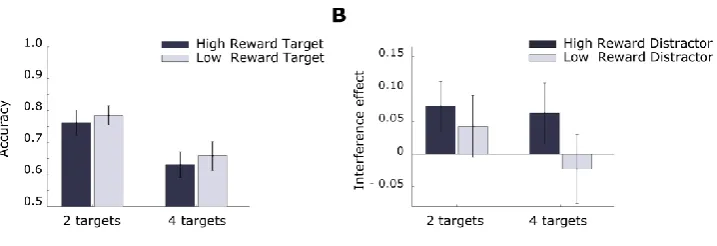
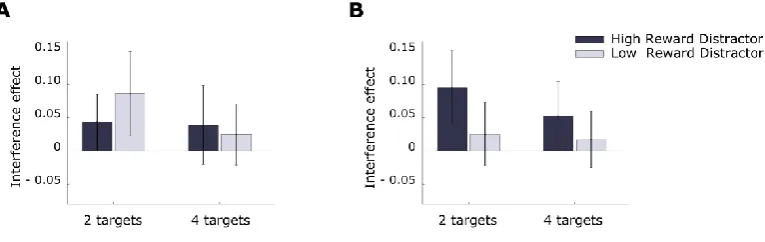
In Chapter 3 I report a series of experiments aimed at assessing the limits of reward influence of visual processing, specifically testing under which circumstances learned feature-reward associations are effective in influencing visual representations in VWM and when, on the other hand, they fail. In particular, influence of reward in VWM is assessed in conditions of increased attentional demands for target selection showing that the interference of reward-associated distractors is negligible when fewer resources are available for distractors processing.
Neural evidence of reward influence in visual cognition
32
automatically increasing salience of valuable objects. Similarly to the P1, also the N2pc was modulated in amplitude as a function of the amount of reward obtained in the preceding trials and the repetition or swap or target and distractor irrelevant features. Analogous changes in N2pc amplitude have been also documented for non-salient distractors that had been associated with high reward but were not currently rewarded (Qi et al., 2013). When a non-salient but valuable distractor was presented on the side of the screen opposite to target location, two N2pc components were elicited: the distracter-elicited N2pc followed by the target-elicited N2pc with opposite polarity. Despite this pattern of results provides compelling evidence for the attentional capture hypothesis, it was not observed on all trials, but only for those leading to slow RTs to the visual search task, and thus when reward associated distractor efficiently captured attention. By contrast, in fast RT trials, the emergence of a Pd component, reflecting active distractor suppression (Hickey, Di Lollo, & McDonald, 2009; R. Sawaki, Geng, & Luck, 2012; Risa Sawaki & Luck, 2010), suggested that in order to efficiently select task-relevant targets, the valuable distractor had to be actively suppressed.
33
targets and the suppression of reward-associated distractors in visual cortex (Hickey & Peelen, 2015).
These observations suggest that reward influences processing of visual stimuli already at early stages (Hickey et al., 2010a). By contrast, the study reported in Chapter 4 addresses the hypothesis that, according to the specific requirements of the task performed, reward could also influence other stages of visual processing, namely active maintenance of visual information in VWM. To test this hypothesis, the influence of reward is assessed on different components of evoked potentials measured while participants perform a VWM task.
Previous studies, investing strategic effects of reward on visual processing, have reported that objects value not only modulates N2pc amplitude, reflecting target selection, but also the following CDA component suggesting further impact on the analysis of the selected target (Kiss et al., 2009). In Chapter 4, I report the results of an electrophysiological study that investigates such post-selection processes in the absence of motivational incentives. While experiments described in Chapters 2 and 3 reported effects of interference in VWM representations that could be easily interpreted as the consequence of benefits in visual encoding of reward associated objects because of their increased salience and therefore capacity to capture attention; other studies have shown benefits in VWM capacity also in absence of competition between reward associated and non-reward associated objects, excluding a benefit resulting from attentional capture (Gong & Li, 2014). However, none of the previous studies directly addressed whether reward influence in a VWM task benefits encoding or maintenance stages of visual processing. The work reported in Chapter 4 starts to investigate this issue by evaluating which components in the evoked scalp activity are affected by reward associations. Specifically, the aim of the study was to assess whether a benefit in VWM could be measured in the absence of detectable changes in the deployment of attention. Interestingly in the specific task we adopted, it was possible to highlight an effect of reward on maintenance stages only, reflected in modulation of CDA amplitude, while no changes were observed for N2pc.
34
35
2
Reward associations impact both iconic
and visual working memory
Adapted from: Infanti, E., Hickey, C., & Turatto, M. (2015). Reward associations
impact both iconic and visual working memory. Vision research, 107, 22-29.
2.1
Abstract
36
37
2.2
Introduction
Rewards play a fundamental role in human cognition. The ability to learn reward contingencies
in the environment is crucial to anticipate positive or negative outcomes and optimize
value-oriented behavior. Rewards can accordingly act as motivational incentives, guiding the
deployment of cognitive resources in order to effectively orient attention and prioritize
processing of task relevant information (Engelmann et al., 2009; Pessoa & Engelmann, 2010;
Pessoa, 2009; Watanabe, 2007).
A growing number of studies have shown that learned stimuli-reward associations can modulate
the allocation of attention when rewards are no longer provided (for a review see Chelazzi et al.,
2013). Reward associations appear to automatically bias selective attention in favor of the
associated object or feature even when individuals are not aware of the established
feature-reward associations. Importantly, the processing of feature-reward associated stimuli is prioritized when
this confers no strategic advantage, and perhaps even when it creates a performance cost (
Anderson, Laurent, & Yantis, 2011a, 2011b; Della Libera & Chelazzi, 2006, 2009; Krebs,
Boehler, & Woldorff, 2010). Initially neutral visual features that have been linked to reward
through experience seem to subsequently become salient, acquiring the ability to draw attention
in space ( Anderson, Laurent, & Yantis, 2011a, 2011b; Della Libera & Chelazzi, 2006, 2009;
Hickey, Chelazzi, & Theeuwes, 2010a, 2010b, 2011) and time (Hickey & Los, under review;
Raymond & O’Brien, 2009), and to drive oculomotor capture (Anderson, Laurent, & Yantis,
2012; Hickey & van Zoest, 2012, 2013; Theeuwes & Belopolsky, 2012). These results have led
to the proposal that reward may act on attention through a mechanism that is independent of the
traditional dichotomy of bottom-up and top-down processes (Awh, Belopolsky, & Theeuwes,
2012).
38
encoded and stored only for a few hundreds of milliseconds after the offset of briefly presented stimuli (Coltheart, 1980; Neisser, 1967). Only a limited subset of the information retained in IM is then selected and transferred into the limited-capacity system of VMW, where it can be actively maintained for several seconds (Cowan, 2001). VWM is a system with limited resources where capacity is limited in terms of number of items that can be remembered and accuracy of the encoded representations (Alvarez & Cavanagh, 2004; Bays & Husain, 2008; Bays, Catalao, & Husain, 2009; Zhang & Luck, 2008). Whether information is selected and transferred from IM to VWM depends on its relevance for subject’s goals as well as perceptual properties of the visual input (Belopolsky, Kramer, & Godijn, 2008; Schmidt et al., 2002).
Recent studies have demonstrated that incentives can improve performance in a visual memory task, increasing VWM capacity (Kawasaki & Yamaguchi, 2013) and speeding response times for the most valuable stimuli (Krawczyk, Gazzaley, & D’Esposito, 2007). Interestingly, learned feature-reward associations have been shown to influence VWM also in the absence of direct incentive motivation, when rewards are no longer provided. Learned item-reward associations lead to enhanced VWM capacity for stimuli associated with high compared to low reward (Gong & Li, 2014).
The current study was designed to further characterize the influence of reward on the early stages of visual memory. On the one hand, we aimed to describe the influence of learned feature-reward associations on visual memory over time, from the earliest sensory storage of IM gradually moving to VWM. On the other, we wanted to investigate how the presence of a previously reward-associated item in the memory array influences the capacity to encode and store the identity of other neutral items in the display.
39
element within this item. Importantly, one of these items could have the color associated with reward during training, rendering it a color singleton. This item was no more likely to act as memory target than any of the other elements in the array.
Our test task was modeled on the partial report technique introduced by Sperling (1960). By presenting the probe at short or long delays after stimulus offset, Sperling used this task to investigate the content of IM independent of the limitations of working memory. As compared to full report paradigms, where observers are able to report around 3 to 5 items from the memory array, partial report studies suggest the presence and availability of much more information at short probe delays (i.e. partial report superiority).
We approached our results with interest not only in raw accuracy, but also in the interference created when a singleton stimulus was present in the display and participants were probed to report a non-singleton item. We quantified this interference effect as the accuracy difference between conditions where the response associated with the line inside the singleton was congruent to that of the line inside the probed target (same response, congruent trials) versus when it was incongruent (different response,
incongruent trials; see Theeuwes & Burger, 1998). This measure was examined for modulation as a function of the color-reward association established during the training phase.
40
2.3
Experiment 1
Methods
Participants. Thirty students of the University of Trento (26 female) participated in the
experiment. Mean age was 22 (ranging from 19 to 37). All had normal or corrected-to-normal vision, corrected-to-normal color vision, and were naïve to the purpose of the experiment. Participants were reimbursed for their participation, with compensation varying between 7.50€ and 9€ based on performance. Written informed consent was obtained from all participants and the experiment was carried out in accordance with the Declaration of Helsinki and was approved by the local Ethics Committee.
Apparatus. Stimuli were presented on a gamma-calibrated ViewSonic Graphic Series
G90fB 19’’ CRT monitor (1024 x 768) at a refresh rate of 100Hz. Participants were seated in a dimly illuminated room approximately 60 cm from the display with their head supported by a chinrest. Stimuli were created using a custom Matlab script (Mathworks Inc., Massachusetts, USA) and the Psychophysics Toolbox 3.8 (Brainard, 1997; Pelli, 1997).
Stimuli. All stimuli appeared on a uniform gray background (2.58 cd/m2) and were
regularly displaced along an imaginary circle at a radius of 5° of visual angle from the fixation point (0.12° in diameter). Stimuli were light gray lines (36.1 cd/m2; 1.5°x0.12°) oriented vertically or horizontally, presented inside a circle of 2° diameter (width 0.12°). We selected 7 colors to assign to the circles and these colors were adjusted to be physically equiluminant (~24 cd/ m2).
Procedure. The experiment lasted for about an hour and was structured in two parts.
41
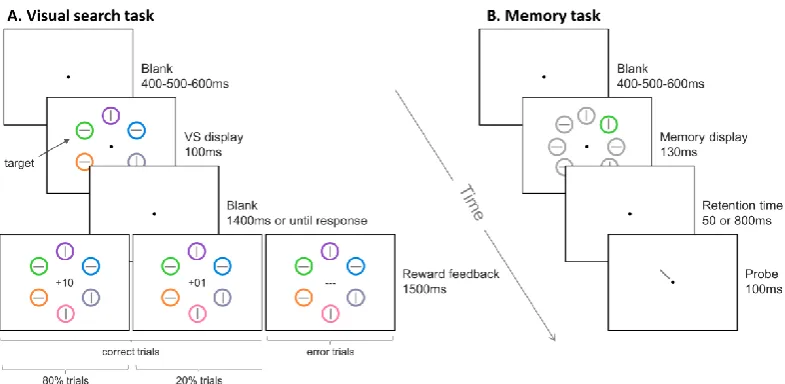
each surrounded by a uniquely colored circle. Targets were defined as circles of one of two possible colors and only one of them could be presented in each trial. Participants were instructed to report as fast and as accurately as possible the orientation of the line inside the target circle, pressing “m” for vertical or “z” for horizontal on a standard computer keyboard. Feedback was provided for 1500 ms beginning immediately after response. The feedback display was identical to the memory display except that light gray text indicating the number of earned points was overlaid at the center of the screen subtending about 1° of visual angle. Participants received either “+01” points or “+10” points for correct responses (10 points corresponded to €0.032). No points, indicated with three dashes “---“, were assigned for incorrect responses or trials where participants failed to response within 1400 ms. At the end of each block participants received feedback about the overall number of points accumulated.
42 Figure 2.1 Experimental design
(A) Visual search task. A visual search display of 6 elements was presented for 100 ms after a variable fixation delay. Either a green or a red target was presented in each trial and participants reported the orientation of the line inside it. Participants’ response was followed by a feedback display that indicated the number of points that were earned on each trial. The feedback did not depend on participants speed, but was determined by means of the probabilistic schedule: for each participant either red or green target were associated with high reward in 80% of the trials and to low reward in the remaining 20% of the trials (green in the illustrated example); the opposite association was made for the other color. (B) Memory task. A memory array of 8 elements was presented for a 130 ms. All but one item were gray. The uniquely colored circle could be defined by a color previously associated with a high or low reward target or a distractor. After a variable delay (50 or 800 ms) a line appeared and indicated one of the 8 locations. Participants’ task was to report the orientation of the line presented at the probed location. All locations were selected with the same probability. Neither reward nor feedback was provided during this task.
43
Each item in the memory array was probed with equal probability. Participants were required to report the orientation of the line seen at the probed location using the keyboard (“m” for vertical; “z” for horizontal”). Responses were unspeeded and accuracy was emphasized, but no feedback was provided. Target identity and position was fully counterbalanced and trials were randomly presented during the experiment.
Analyses and Results
Visual Search training performance. Statistical analysis of response times (RTs) over the course of training in the visual search task took the form of a repeated measures analysis of variance (ANOVA) with time (trials were divided in 4 bins of 120 trials each) and target-color-association (high-reward color vs. low-reward color) as factors. RT was significantly faster for high reward targets (main effect of reward F(1, 29) = 4.80; p = .037; 𝜂𝑝2= .14) and became faster over the course of the training (main effect of time F(1.8, 51.9) = 19.03; p < .001; 𝜂𝑝2 = .40) but these factors did not interact (F(3,87) = .67; p = .571; 𝜂𝑝2 = .02). A similar ANOVA based on arc-sine transformed accuracy revealed an improvement over the course of training (F(2.3, 65.3) = 28.1; p < .001; 𝜂𝑝2 = .49) but no effect involving target-color-association (F(1, 29) = 3.08; p = .090; 𝜂𝑝2 = .10; interaction: F < 1). Note that statistical results here and below reflect Greenhouse-Geisser corrected degrees of freedom where appropriate.
These results suggest that participants successfully learned the reward contingencies and became faster in recognizing the targets when they were associated with high reward value.
Iconic and Visual Working Memory task performance. Statistical analysis of the visual memory task began with a repeated-measures ANOVA of arc-sign transformed accuracy values with factors for target color (unique color vs. gray), singleton color-reward association (high-color-reward vs. low-color-reward vs. distractor color) and probe-delay (50 ms vs. 800 ms). Accuracy was significantly higher for singletons than non-singleton items (F(1,29) = 58.33; p < .001; 𝜂𝑝2 = .67) and for short compared to long delay
44
singleton and non-singleton targets separately. Accuracy for singletons was significantly higher at the short delay (F(1, 29) = 4.26; p = .048; 𝜂𝑝2= .13), but no effect of reward-color association was observed (F(2, 58) = .11; p = .898; 𝜂𝑝2 = .00) and these factors did not interact (F(2,58) = 1.16; p = .321; 𝜂𝑝2 = .04). Analysis of accuracy for gray items also revealed a main effect of delay (Figure 2.2; F(1, 29) = 4.59; p = .041; 𝜂𝑝2 = .14), but no effects of singleton-reward-association (reward: F(2, 58) = 1.15; p = .325; 𝜂𝑝2= .04; reward X delay: F(2, 58) = .16; p = .850; 𝜂
𝑝2= .01). Additional analyses of RTs
for correct responses, in the form of a repeated-measures ANOVA with target color (unique vs. gray), probe-delay (50 ms vs. 800 ms) and reward (high-reward vs. low-reward vs. distractor color) as factors, revealed a trend for shorter RTs for singletons than gray items (color: F(1, 29) = 4.16; p = .051; 𝜂𝑝2 = .13), but no other significant results (delay: F(1, 29) = 3.34; p = .078; 𝜂𝑝2 = .10; color X delay: F(1, 29) = 3.45; p = .073; 𝜂𝑝2= .11; all other Fs <1).
45
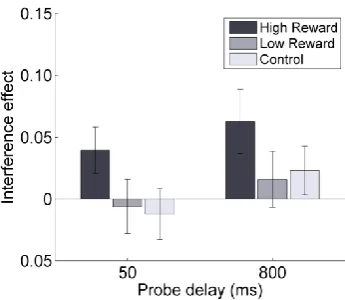
Figure 2.2 Experiment 1: interference effect in memory task.
The interference effect is an index of interference in memory performance for the target as a function of the congruency of the response to the singleton (it was computed as the difference in accuracy between congruent and incongruent trials). The interference effect was dependent on reward history and was strongest for high reward associated colors compared to low reward associated color or control. Errorbars here and below represent SEM.
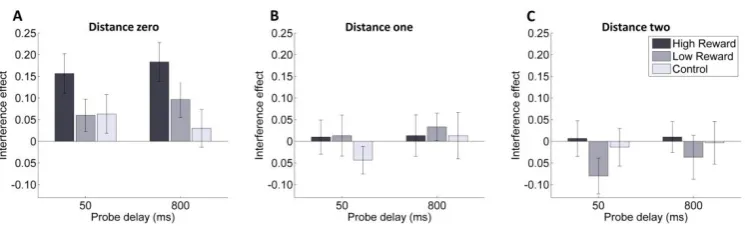
We conducted an additional analysis to examine the impact of target-singleton distance on the interference effect (Figure 2.3). To this end we conducted an ANOVA similar to that described above but with an added factor for the distance of the probed item from the singleton (distance zero: no items between target and singleton, distance one: one item between; distance two: two items between). This revealed a) that the interference effect was strongest for items closer to the singleton (main effect of distance F(2,58) = 9.08; p < .001; 𝜂𝑝2 = .24), and b) that the interference effect was dependent on reward (F(2,58) = 3.31; p = =.044; 𝜂𝑝2 = .24). No significant interaction between reward and
distance was observed (F(4,116) = 1.74; p = .145; 𝜂𝑝2= .06) and no other main effects or
interactions were detected (all Fs <1). An analogous measure of interference was computed for RTs (difference in RTs for congruent and incongruent trials), but analysis revealed no significant effects (delay: F(1,29) = 1.54; p = .224; 𝜂𝑝2 = .05; reward:
F(2,58) = 1.59; p = .213; 𝜂𝑝2= .05; delay X reward: F(2,58) = .16; p = .849; 𝜂𝑝2< .01).
Follow-up analyses revealed that when the probed item was adjacent to the singleton a strong main effect of reward could be detected (10% difference in accuracy; F(2,58) = 5.29; p = .008; 𝜂𝑝2=.15). Planned contrasts confirmed that the interference effect was
46
.030; Cohen’s d = .51) and when the singleton had high-reward versus neutral color (t(29) = 3.2 ; p < .001; Cohen’s d = .72), but that there was no difference when the singleton had low-reward versus neutral color (t(29) =. 8; p = .429; Cohen’s d = .18). The interference effect was negligible and was not significantly modulated by reward at other target-singleton distances (1-away: mean = -2%, se = 2%, 2-away: mean = 0%, se = 2%).
Figure 2.3 Experiment 1: interference effect as a function of
target-singleton distance.
The strength of the interference effect is modulated as a function of distance of target and color singleton. (A) Interference effect at distance zero (no items between target and singleton). (B) Interference effect at distance one (one item between target and singleton).
(C) Interference effect at distance two (two items between target and singletons).
47
2.4
Experiment 2
Methods
Participants. A new group of 20 students of the University of Trento (13 females) took
part in Experiment 2. The mean age of participants was 22 (ranging from 19 to 36). All had normal or corrected-to-normal visual acuity and color vision and were all naïve to the purpose of the experiments. Participants were reimbursed for their participation; the overall compensation could vary between 8€ and 10€ based on their performance. All participants gave their written consent to the participation to the experiment. The experiment was carried out in accordance with the Declaration of Helsinki and was approved by the local Ethics Committee.
Stimuli and procedure. Display settings and stimuli were as in Experiment 1 and the
training procedure was unchanged. The aim of Experiment 2 was to better characterize the temporal dynamics of the effect of reward on memory. To this end we had the memory probe appear at four temporal delays (10 ms, 50 ms, 100 ms and 500 ms). While we maintained the structure of the memory display as in Experiment 1, only a subset of the 8 possible locations was probed. The rationale behind this change was to increase power to detect modulation of the interference effect, which was strongest at the location adjacent to the singleton in Experiment 1. Only 5 of the 8 locations of the memory display were probed: the position occupied by the color singleton (16% of trials), the two adjacent locations at distance zero (20% of the trials at each location) and the two locations at distance two (22% of the trials at each location). We adopted this distribution in order to avoid participant adoption of a strategic bias toward the items centered around the color singleton. Note that while probe location was not fully random in this design, the target location was not rendered predictable and the location of the singleton was fully counterbalanced and randomly presented during the experiment.
48
each consisting of a training and test procedure. Each of the two training sessions comprised 240 trials of the visual search task, with each test session constituting 400 trials of the memory task. Participants took a short break between sessions. Our purpose here was to reduce the potential for extinction of the reward-color association over the course of the memory task (eg. Anderson, Laurent, & Yantis, 2011b).
Analyses and Results
Visual Search training performance. Participants were faster (F(1, 19) = 15.81; p =.001; 𝜂𝑝2=.45 ) and more accurate (F(1, 19) = 6.28; p = .021; 𝜂𝑝2= .25) in responding to high reward targets. Moreover, a significant improvement in performance over time was measured in accuracy (F(3, 57) = 32.84; p < .001; 𝜂𝑝2 = .63), but not response latency (F(3,57) = 1.71 ; p = .174; 𝜂𝑝2= .08). No significant interactions were observed (all Fs < 1).
Iconic and Visual Working Memory task performance. As was the case in Experiment
49
analyses of RTs, with color, probe-delay and reward as factors, revealed a main effect of color reflecting shorter RTs for singletons than gray targets (F(1, 19) = 20.5; p < .001; 𝜂𝑝2= .52) and a trend for color-delay interaction (F(3,57) = 2.77; p =.05; 𝜂𝑝2= .13),
no other effects were significant (reward X delay: F(3, 57) = 2.25; p = .09; 𝜂𝑝2= .11; all other Fs <1).
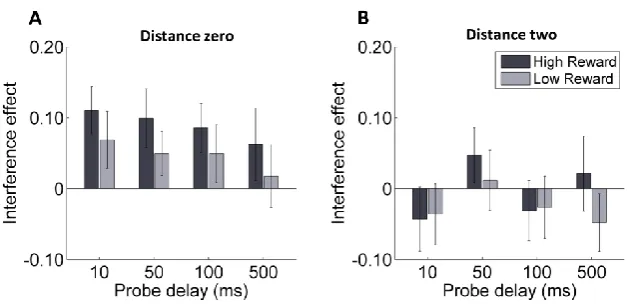
Statistical analysis of the interference effect took the form of a 2x4x2 repeated measures ANOVA with factors for singleton color-reward association (high-reward color vs. low-reward color), probe-delay (10ms vs. 50 ms vs. 100 ms vs. 500 ms) and distance (adjacent-to-singleton vs. far-from-singleton).
This confirmed that the feature-reward association established in the training phase induced a stronger interference effect when singletons’ color was associated with high than low reward (F(1, 19) = 5.90; p = .025; 𝜂𝑝2= .24), and this effect was strongest for stimuli adjacent to the singleton (F(1, 19) = 12.34; p = .002; 𝜂𝑝2= .39; Figure 2.4). The
interference effect did not vary reliably over probe delay conditions (F(3, 57) = 1.11; p = .352; 𝜂𝑝2= .06) and no interaction was observed (F(3,57) = 1.21; p = .316; 𝜂𝑝2= .03; all
other Fs < 1). An analogous measure of interference for RT showed no significant effects of probe-delay or reward manipulations (delay: F(2.44,46.46) = 2.03; p = =.133; 𝜂𝑝2= .10; reward: F(1,19) = 1.77; p = =.200; 𝜂
𝑝2= .09; delay X reward: F(3,57) = 1,92; p
50
Figure 2.4 Experiment 2: interference effect as a function of
target-singleton distance.
51
2.5
Discussion
Features and objects associated with delivery of reward become salient and draw attention in space and time, even when they are no longer rewarded ( Anderson, Laurent, & Yantis, 2011a, 2011b; 2012; Della Libera & Chelazzi, 2006, 2009; Hickey, Chelazzi, & Theeuwes,, 2010a, 2010b, 2011; 2014; Krebs, Boehler, & Woldorff, 2010; Raymond & O’Brien, 2009). Recent studies have also shown that reward-associated items are better maintained in visual working memory (Gong & Li, 2014).
The present study expands the existing knowledge about the influence of reward on visual memory, addressing content of visual memory at different delays from display offset and investigating both IM and VWM. This manipulation opens the opportunity to speculate at which stage reward associations can influence the memory process. A further element of novelty in our design is that we investigated VWM and IM not only for items directly associated with reward, but also for simultaneously presented items presented alongside such a reward-associated non-target. To index changes in the mnemonic representation of such items we employed an index reflecting the difference in accuracy between congruent and incongruent trials, which we term the interference effect. Importantly, our results show that memory performance for neutral items was influenced by the information contained in the color singleton, in a way that was dependent on the learned color-reward association, but not on the probe-delay.
52
showing that salient stimuli such as color singletons will disrupt the representation of targets in close proximity (Caputo & Guerra, 1998; Hopf et al., 2006; Mounts, 2000). This is thought a product of the misdeployment of attention to the salient object, whose selection would cause the suppression of surrounding stimuli including the target. However, in the current results we do not see an impact of proximity as a raw decrease in accuracy, but rather an increase in interference. It is not immediately clear how this effect is related to the suppression described in prior works, and there is a clear opportunity here for further dedicated research.
53
In either case, it appears that the relatively low-precision of the visual memory representation created an opportunity for the reward-associated object to interfere with memory for other items.
Another possible explanation of the interference effect is that items associated with reward are more persistent over time and less prone to decay. The decay of information from iconic to visual working memory is not abrupt but it follows a smooth decaying function (Graziano & Sigman, 2008). If reward reinforces the persistence of the memory trace, one would expect a slower decay of information for reward-associated items. This suggests that a larger impact of reward associations should be observed at longer probe delays, when the memory trace for neutral items has already faded away while reward-associated items are still accurately represented in memory. However, we failed to detect such a pattern in our results, with no hint of a statistical trend. The apparent stability of the effect over time speaks for an early influence of reward on the encoding of information in visual memory, which remains constant within the first 800 ms. However, it should be noted that we tested only the early period of transfer of information from IM to VWM. Further work with longer probe delays is necessary to directly address the hypothesis of the influence of reward on the maintenance stage of information into working memory.
Finally, there is the possibility that the interference effect arises at the level of response selection, such that the response triggered by the singleton biased participants’ performance. The orientation indicated by the singleton could have automatically triggered a motor response that interfered with the selection of the appropriate motor act required for the target. One feature of our design argues against this interpretation: participants performed the memory task with no time pressure and were encouraged to be as accurate as possible, presumably minimizing response-selection errors. Moreover, the interference effect was strongest for items adjacent to the singleton, consistent with the idea that interference occurred during perceptual or selective processing. However, strong evidence for or against this interpretation would also require further dedicated work.
54
value that each color assumed through a previous procedure of learning: features associated with high value led to a stronger interference effect than features associated with low value or features that were never presented as targets in the previous learning procedure.
Whereas Gong and Li (2014) observed a direct influence of feature reward associations on memory accuracy, we found an influence only on the interference effect, with raw accuracy unaffected. This may stem from our use of color singleton stimuli. Such stimuli automatically attract attention (e.g. Hickey, McDonald, & Theeuwes, 2006) and are better represented in memory (Schmidt et al., 2002), The possibly subtle impact of reward may have been overwhelmed by this raw visual salience. Moreover, our experiment was not designed to have the power to directly detect such change since we had only few trials in which we tested memory performance for singleton targets. On the other hand, in our experiments we tested relatively short delays, ranging from 10 to 800 ms, compared to 1000-2500 ms employed in Gong and Li. It is possible that reward directly affects maintenance of information in memory, but this is detectable only after longer intervals than were employed here.
55
understand the nature of the mechanisms involved in the influence of reward on the earliest stages of visual memory.
57
3
Limits of reward influence on visual
working memory
Adapted from: Infanti, E. & Turatto, M.. Limits of reward influence on visual
working memory. In preparation
3.1
Abstract
58
59
3.2
Introduction
Reward plays an important role in guiding human behavior (Skinner, 1953). Learning to recognize objects and situations that are predictive of positive or negative outcomes is fundamental for promoting optimal behavior in future encounters. Because of its powerful motivational value, it is well established that reward can efficiently guide the deployment of attention and cognitive resources towards reward-predicting stimuli (Engelmann & Pessoa, 2007; Kristjánsson et al., 2009; Pessoa, 2009; Risa Sawaki et al., 2015).
Frequently, however, the familiar environments we interact with are full of motivationally salient stimuli that are irrelevant for current goals. Interestingly, a growing body of literature over the last 10 years has demonstrated that learned reward associations can automatically influence our ability to select and process visual stimuli even when rewards are no longer provided (see Anderson, 2013; Chelazzi, Perlato, Santandrea, & Della Libera, 2013 for a review). In particular, it has been shown that features that are associated with positive outcomes acquire the power to attract and orient attention even beyond an individual’s current goals and interests (Anderson et al., 2011a, 2011b, 2012; Della Libera & Chelazzi, 2006, 2009; Hickey et al., 2010a; Raymond & O’Brien, 2009).
For example, to study the influence of reward history in visual cognition, Anderson and colleagues (2011b) developed a value-lea