Effect of tehina processing and storage in the physical-chemical
quality
Taha M. Rababah
1*,
Muhammad Al-U
’
datt
1,
Majdi Al-Mahasneh
2,
Mohammad Obaidat
3,
Ali Almajwal
4,
Aladdin Odeh
1,
Susan Brewer
5,
Wade Yang
6 (1. Faculty of Agriculture, Jordan University of Science and Technology, Irbid 22110, Jordan;2. Faculty of Engineering, Jordan University of Science and Technology, Irbid 22110, Jordan;
3. Faculty of Veterinary Medicine, Jordan University of Science and Technology, Irbid 22110, Jordan;
4. Department of Community Health Sciences, College of Applied Medical Sciences, King Saud University, Riyadh 11451, Saudi Arabia; 5. Department of Food Science and Human Nutrition, University of Illinois at Urbana-Champaign, Urbana, IL 6180, USA;
6. Department of Food Science and Human Nutrition, University of Florida, Gainesville, FL 32611-0370, USA)
Abstract: The effect of tehina processing and storage during six months at 25°C and 35°C on total phenolics, antioxidant activity, anthocyanins, and fatty acid analysis was evaluated. Tehina processing, storage period and temperature significantly (p≤0.05) decreased total phenolics, antioxidant activity and anthocyanins contents. The results showed that raw sesame seeds had the highest total phenolics (99.98 mg GAE/100 g) and lower levels were found in dehulled unroasted sesame seeds, tehina at zero time and roasted sesame seeds (62.53, 60.61 and 47.03 mg GAE/100 g, respectively). In addition, tehina during storage showed a significant decrease in total phenolics (60.61 to 42.45 mg GAE/100 g). Raw sesame seeds had the highest antioxidant activity (0.51 mg/mL), while the tehina, dehulled unroasted and roasted sesame had antioxidant activity values of 1.21, 1.35 and 1.79 mg/mL, respectively. Also, antioxidant activity of tehina at zero time was highest (1.21 mg/mL) and lowest was in tehina stored for six months (1.70 mg/mL). Sesame seeds and tehina had low levels of anthocyanins (1.26 and 0.50 mg cya-3-glu/100 g). Fatty acid analysis showed that sesame seeds (raw, dehulled unroasted and roasted) and tehina samples contain high percent of unsaturated fatty acid oleic (C18:1) and linoleic (C18:2).
Keywords: sesame seeds, phenols, antioxidant activities, anthocyanins
DOI: 10.3965/j.ijabe.20160905.2091
Citation: RababahT M, Al-U’datt M, Al-Mahasneh M, Obaidat M, Almajwal A, Odeh A, et al. Effect of tehina processing and storage in the physical-chemical quality. Int J Agric & Biol Eng, 2016; 9(5): 218-226.
1 Introduction
The importance of functional foods, nutraceuticals and other natural health products has been well recognized in connection with health promotion, disease
Received date: 2015-08-02 Accepted date: 2016-02-16
Biographies: Muhammad Al-U’datt, PhD, Associate Professor, research interests: food chemistry and analysis, Email: malodat@ just.edu.jo; Majdi Al-Mahasneh, PhD, Professor, research interests: food processing engineering, Email: [email protected];
Mohammad Obaidat, PhD, Associate Professor, research interests: food safety, Email: [email protected]; Ali Almajwal, PhD, Associate Professor, research interests: nutritional sciences, Email: aalmajwal@ksu. edu. sa; Aladdin Odeh, MSc, graduate student, research interests: food chemistry, Email: [email protected];
risk reduction and reduction in health care costs[1].
Phenolic compounds contain aromatic rings, with one or more hydroxyl groups[2].
The antioxidant activity of phenolic acids and their esters depends on the number of hydroxyl groups in the
Susan Brewer, PhD, Professor, research interests: food product development, Email: [email protected]; Wade Yang, PhD, Assistant Professor, research interests: food processing engineering, Email: [email protected].
September, 2016 Taha M R, et al. Effect of tehina processing and storage in the physical-chemical quality Vol. 9 No.5 219
molecule[3]. Examples of common plant phenolic
antioxidants include flavonoids, cinnamic acid derivatives, coumarins, tocopherols and poly functional organic acids[4,5]. These compounds classified according
structure from simple phenol structure to highly polymerize compounds known as important antioxidants because of their ability to donate hydrogen atom or an electron in order to form stable radical intermediate so prevent the oxidation of various biological molecules[6,7]. Phenolic compounds are closely associated with the sensory and nutritional quality of fresh and processed plant foods[8]. Their functions are not always known, but some are coloring agents and others are potentially protective, not only for the organism of origin but also as isolates in medicinal products, supplements and/or nutraceuticals[9].
Sesame (Sesamum indicum L.) seed and products contain a multiplicity of compounds with potentially beneficial biological activities such as phenolic and antioxidant properties[6]. Jannat et al.[10] reported that sesame seeds have some potential nutraceutical compounds such as phenolic and tocopherols with antioxidant activity that have significant effect on reducing blood pressure, lipid profile and degeneration of vessels impact reducing chronic diseases. Sesame lignans such as sesamin, episesamin, and sesamolin, and
ɣ-tocopherol from Sesamun indicum seeds play important role as phenolic antioxidants[11]. Sesame lignans have antioxidant and health promoting activities[12]. These compounds possess strong antioxidant activity[13]. Thus dietary antioxidants have gained considerable attention as preventive and healing agents. Many studies have suggested that consumption of certain natural antioxidants lead to a reduction in oxidative stress[14]. Anthocyanins are a group of polyphenolics that responsible for the color of many fruits, vegetables and flowers. They are water-soluble pigments bind to carbohydrate to form more stable structure that are located in the vacuoles and have a range of colors, from orange to purple[15,16]. Oxidative stability of sesame oil is superior to that of other vegetable oils although it contains nearly 85% unsaturated fatty acids, this could be attributed to endogenous antioxidants (lignans) together
with tocopherols[17]. In general, sesame oil contains
oleic 35.9%-47%, linoleic 35.6%-47.6%, palmitic 8.7%- 13.8%, stearic 2.1%-6.4%, as well as arachidic acids 0.1%-0.7%[18,19].
In most cases, processing negatively affects the bioactive components of functional foods and nutraceuticals. Therefore, minimally processed products better serve the health conscious consumers. The objective of the study was to evaluate the total phenolics, antioxidant activity, anthocyanins, and fatty acid analysis of sesame seeds (raw, dehulled unroasted and roasted) and tehina samples during storage at two temperatures (25°C and 35°C). These two temperatures were used because mainly the tahini product is usually found on supermarket shelve between these two temperatures. Also, the shelf life for tehina is one year at 25°C, then 35°C was used to accelerate the physical-chemical measurements instead the storage for one year.
2 Materials and methods
2.1 Chemicals
Sodium carbonate Na2CO3 was purchased from NTL,
U.K; methanol and Folin-Ciolateu reagents were purchased from MSDS, USA; Sulfuric acid was purchased from High Technology Corporation, Guandony, China; 2, 2-diphenyl-1-picrylhydrazyl (DPPH) was obtained from MSDS, USA; Gallic acid was purchased from New Jersey, USA;and HCL and all other chemicals, standards, were purchased from local agents. All solutions were prepared using distilled water.
2.2 Sample collection
Sesame seeds (row seeds, dehulled unroasted seeds, roasted seeds) and tehina samples were obtained from the Balsam Manufacturing Company, Amman-Jordan.
2.3 Sample preparations
tunnel (130°C) with mixer. Finally, roasted sesame seeds milled to a viscous paste using stone mills. After milling, tahini was filled into 250 g plastic containers. Tehina samples were stored at two temperatures (25°C and 35°C) during six months until the time of analysis for total phenolics, antioxidant activity, anthocynins and fatty acid contents.
2.3 Total phenolics
2.3.1 Phenolic compound extraction
Sesame seeds (raw, dehulled unroasted and roasted) and tehina extract was prepared as described by Rababah et al.[20] with some modification. About 2 g of each sample was weighed out, and mixed with 50 mL of methanol. Extraction was carried out by stirring for 60 min at 60°C, then cooled and filtered with filter paper (Whatman #3). Volume was made up to 50 mL for analysis.
2.3.2 Determination of phenolic compounds
Total phenolic compounds were determined using the Folin-Ciocalteu method[21] with slight modifications as the following: 1 mL of each extract was mixed with 0.5 mL of Folin-Cocalteu’s phenol reagent into 10 mL test tube and lift a side for 4 min, 1 mL of 5% of sodium bicarbonate was added. The tubes were allowed to stand for 1 h at ambient temperature, and the absorption was measured at 725 nm using Spectrophotometer (UV-1800, UK) against a blank (one mL methanol). Gallic acid was used as calibration standard, and the results were calculated as Gallic acid equivalent (GAE) (mg/100 g) on dry weight basis. Three replicates were used to calculate the mean value.
2.4 Antioxidant activity determination
2.4.1 Extract preparation
Sesame seeds and tehina extracts were prepared as described by Rababah et al.[20] with some modification.
About 2 g of each sample were weighed out, and extracted with 50 mL of absolute methanol. Extraction was carried out by stirring for 60 min at 60°C, then cooled and filtered with filter paper (Whatman #3). Volume was made up to 50 mL, and allowed to set in the dark until time of analysis.
2.4.2 Determination of antioxidants
Antioxidant activity of sesame seeds (raw, dehulled
unroasted and roasted) and tehina samples were determined according to Matthaus[22] method, using 2, 2-Diphenyl-1-picrylhydrazyl (DPPH). Fresh DPPH stock solution was prepared daily by weighing 50 mg of DPPH and dissolved in 100 mL of methanol which result in purple or violet color solution. Different levels of sesame samples methanolic extract were reacted with 0.2 mL of DPPH solution. The mixture was brought to a total volume of 4.0 mL. The mixture was mixed thoroughly and the absorbance for control at zero time at 515 nm wave length was determined, allowed to stand in the dark for 30 min. The decreasing absorbance was determined against blank of methanol. DPPH radical scavenging activity was expressed as % of inhibition according to the following formula[23,24].
Inhibition (%)=(A. of control–A. of sample)/A. of control)×100.
IC50 (the concentration of extract in mg/mL needed to
scavenge 50% of the DPPH radical) was calculated from their concentration-response curve. One of the popular synthetic antioxidants used as positive control is butylated hydroxytoluene (BHT); to compare the antioxidant activity of the investigated sesame and tehina. Three replicates were used to calculate the mean value.
2.5 Anthocyanin determination
2.5.1 Extract preparation
Two grams of sesame seeds (raw, dehulled unroasted and roasted) and tehina samples were weighed and dissolved in 50 mL of acidified methanol (1% HCl v/v). Extraction was carried out under shaking using water bath for 60 min at 60ºC. Each extract was filtered using filter paper (Whatman #3), filled accordingly in a 50 mL volumetric flask. Aliquant was kept in plastic bottles in refrigerator until time of analysis[25].
2.5.2 Determination of anthocyanins
The absorbance of the extracts was measured using a spectrophotometer (CELL, model CE 1020, England) at 530 nm and 657 nm. Formula A=(A530–0.25 A657) was
September, 2016 Taha M R, et al. Effect of tehina processing and storage in the physical-chemical quality Vol. 9 No.5 221
calculated by Rabino and Mancinelli[25] as follow:
Anthocyanin concentration=(Absorbance×449.2× dilution factor)/(29 600×sample weight)
where, 29 600=molar extinction coefficient; 449.2= molecular weight of Cyanidin-3-glucoside; Dilution factor=final volume/initial volume.
2.6 Extract preparation for fatty acid
Sesame oil extracted from sesame seeds and tehina samples for fatty acid, acidity and peroxide value determination. Hexane were used for extraction of oil from ground raw, dehulled unroasted and roaster sesame seeds by placing 50 g of each seeds sample in a beaker and 150 mL of hexane were added. Sesame oil extracted from tehina by centrifugation.
2.6.1 Fatty acid analysis
Fatty acid content of oil extracted from raw sesame seeds and tehina at zero time, after three months of storage and after six months of storage were determined. 2.6.2 Preparation of fatty acid methyl ester
Fatty acid methyl esters (FAMEs) of oil extracted from sesame seeds (raw, dehulled unroasted and roasted) and tehina samples were prepared according to Christopherson and Glass[29] method. Briefly: 50 mg of extracted oil was weighed, dissolved in 1 mL hexane (GC grade) and mixed by vortex for 1 min. A 0.2 mL of 2 M-potassium hydroxide prepared in anhydrous methanol was added and mixed for 30 s. Until the solution become clear, and then 0.2 mL of acetic acid was added and mixed for 30 s.
2.6.3 GLC analysis
The prepared methyl esters were analyzed using capillary GLC column (Restek, Rtx-225, USA, crossbond 50%-phenylmethyl polysiloxane, 60 m, 0.25 mm/D, 0.25 μm df) immediately after esterification by injection 1 μL of the hexane layer through the injection port of the GLC (model GC-2010, Shimadzu. Inc., Koyoto, Japan). The FAMEs were injected after adjusting the GLC conditions, column oven temperature was 180°C for 10 min, increased to 200°C (heating rate: 5°C/min) and kept at 200°C for 5 min, then increased to 210°C (heating rate: 3°C/min) and kept at 210°C for 20 min. Injector temperature was 250°C, flame ionization detector temperature was 260°C, flow rate 1.2 mL/min N2, and
split ratio used was 70. The fatty acids methyl esters (FAMEs) were identified using chromatogram of fatty acids standard. Two replicates were used to calculate the
mean value.
2.7 Statistical analysis
Data were analyzed using the general linear model (GLM) procedure with JMP statistical package (JMP Institute Inc., Cary, NC). Means were separated by LSD analysis at least significant difference of 0.05 p-value.
3 Results and discussion
3.1 Total phenols, antioxidant activities and anthocyanins
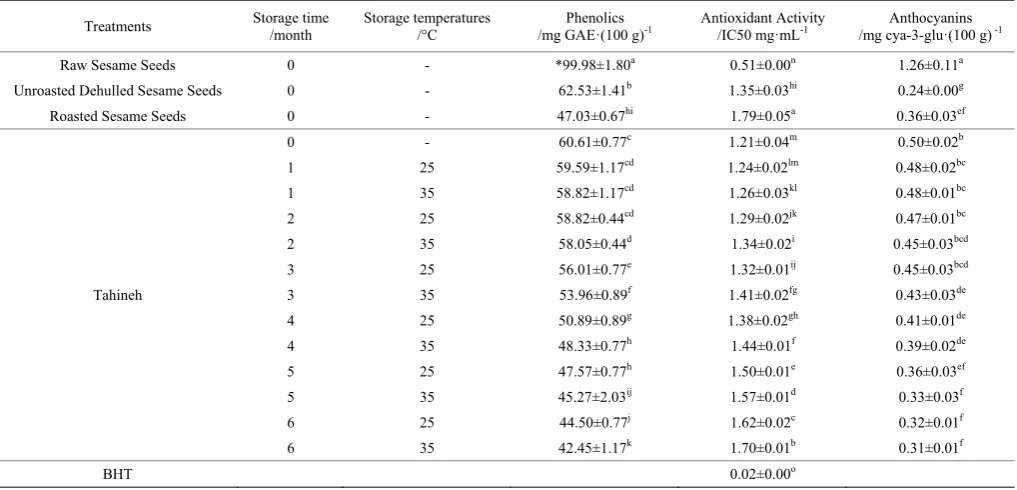
Total phenols, antioxidant activities and anthocyanins of sesame seeds (raw, dehulled unroasted and roasted) and tehina samples during six months of storage at two temperatures (25°C and 35°C) were investigated. The results showed that total phenol (shown in Table 1) ranged from 42.45 mg GAE/100 g (tehina sample stored for six months at 35°C) to 99.98 mg GAE/100 g (raw sesame seeds).
Phenolic compounds were decreased significantly after dehulling and roasting, while for tehina at zero time and storage temperature 25°C increased (60.6 mg GAE/100 g). Storage temperatures and periods were found to significantly decrease phenolic compounds in tehina samples. Lower content of phenolics in dehulled unroasted seeds than that in raw seeds was resulted from dehulling process of seeds coats. Konsoula and Kyriakides[26] reported that dehulling reduced the concentration of phenolic compounds in sesame extracts. Abou-Gharbia et al.[39] found higher amount of phenolics in sesame seeds coats (598.2 mg GAE/100 g) than that in whole raw seeds (87.8 mg GAE/100 g) which was lower than that found in this investigation, also they reported that coats of vegetable seeds, coats of cereal grains and peels of fruits (characterized by the high dietary fiber content) contain higher amounts of polyphenols than the cotyledon, the endosperm and the pulp fractions respectively.
studied polyphenols in raw sesame seeds and coats and its oil and found that roasting process significantly decreased polyphenols content. This significant decrease in total phenols of sesame seeds (raw, dehulled unroasted and
roasted) was observed by Konsoula and Kyriakides[26]
who found similar findings of phenolics decreasing in sesame seeds (raw, dehulled unroasted and roasted).
Table 1 Phenolics (mg GAE/100 g), antioxidant activity (IC50 mg/mL) and anthocyanins (mg cya-glu/100) of sesame seeds and tehina stored during six months at different temperatures#
Treatments Storage time
/month
Storage temperatures /°C
Phenolics
/mg GAE·(100 g)-1 Antioxidant Activity /IC50 mg·mL-1 /mg cya-3-glu·(100 g)Anthocyanins -1
Raw Sesame Seeds 0 - *99.98±1.80a 0.51±0.00n 1.26±0.11a
Unroasted Dehulled Sesame Seeds 0 - 62.53±1.41b 1.35±0.03hi 0.24±0.00g
Roasted Sesame Seeds 0 - 47.03±0.67hi 1.79±0.05a 0.36±0.03ef
Tahineh
0 - 60.61±0.77c 1.21±0.04m 0.50±0.02b
1 25 59.59±1.17cd 1.24±0.02lm 0.48±0.02bc
1 35 58.82±1.17cd 1.26±0.03kl 0.48±0.01bc
2 25 58.82±0.44cd 1.29±0.02jk 0.47±0.01bc
2 35 58.05±0.44d 1.34±0.02i 0.45±0.03bcd
3 25 56.01±0.77e 1.32±0.01ij 0.45±0.03bcd
3 35 53.96±0.89f 1.41±0.02fg 0.43±0.03de
4 25 50.89±0.89g 1.38±0.02gh 0.41±0.01de
4 35 48.33±0.77h 1.44±0.01f 0.39±0.02de
5 25 47.57±0.77h 1.50±0.01e 0.36±0.03ef
5 35 45.27±2.03ij 1.57±0.01d 0.33±0.03f
6 25 44.50±0.77j 1.62±0.02c 0.32±0.01f
6 35 42.45±1.17k 1.70±0.01b 0.31±0.01f
BHT 0.02±0.00o
Note: #All values are means of three replicates. *Means in the same column with the same letter are not significantly different (p≤0.05).
Phenolic compounds significantly increased after roasted seeds milling to produce tehina. This could be due to temperature of milling which is lower than that in roasting process may responsible for degradation of large phenolic and antioxidant substances to smaller like converting sesamin and sesamolin to sesamol which is a potent phenolic antioxidant and it was detected in low amounts in roasted seeds oil[27-30]. Fukuda et al.[31] reported that the sesamin and sesamolin showed very low antioxidative properties. The increment of the total phenolic content might be due to temperature dependent degradation of lignan glycoside (sesamin and sesamolin)[32]. Tehina samples storage time and temperature led to significant differences in phenolic compounds contents.
Storage temperatures effect appeared in the second month of storage compared to zero time tehina and values showed that 25°C storage temperature had higher content of phenolic than that found in the samples stored at 35°C, this could be due to degradation of phenolic compounds like ɣ-tocopherol, which was found to be the only
tocopherol present in sesame and also was found to decrease significantly after 35 day of storage[33]. Dimitrios[34] reported that the conditions of processing and storage are critical factors for the content of polyphenols. Peterson[35] found that tocopherols significantly degraded within one to two months of storage at room temperature in Oats.
As shown in Table 1, sesame samples antioxidant values were found to differ significantly; BHT (butylated hydroxyl toluene) was tested as reference synthetic antioxidant and showed the 50% inhibition of DPPH at 0.02 mg/mL. The lowest IC50 value in our investigation
was 0.51 mg/mL (raw sesames seeds). The extract of roasted sesame seeds had highest IC50 value 1.79 mg/mL.
High antioxidant activity detected in raw sesame seeds extract was found and that could be due to high antioxidant activity of sesame coats as showed by Shahidi et al.[36] who determined antioxidants in whole sesame
September, 2016 Taha M R, et al. Effect of tehina processing and storage in the physical-chemical quality Vol. 9 No.5 223
al.[36] studied the antioxidant activity of sesame seeds
(coated and dehulled) oil and found that antioxidants of oil from coated sesame seeds were significantly higher than those of dehulled sesame seeds oil. Roasting process could be responsible for lowering the antioxidant activity of roasted sesame seeds. The endogenous antioxidants content, namely sesamin, sesamolin, and
ɣ-tocopherol, sesamin which are the dominant lignan, were found to decrease significantly when sesame seeds roasted[33]. Tehina samples were found to contain lower IC50 than the roasted seeds, this could be related to
increasing phenolic compounds at the same stage. Storage period and temperatures were found to decrease antioxidant activity of tehina samples significantly.
Storage temperatures effect was appeared in the first month of storage compared to tehina at zero time and values showed that 25°C storage temperature had higher content of antioxidants than that found in samples stored at 35°C. Higher temperatures generally result in a higher rate of hydroperoxide decomposition, a higher reactivity of transition metal ions, and greater rates for general redox reactions[37].
Endogenous antioxidants of roasted and unroasted sesame seeds extract were found to decrease significantly when stored for 35 d at 65°C[29]. Relationship between phenol content and antioxidant (IC50) was established for
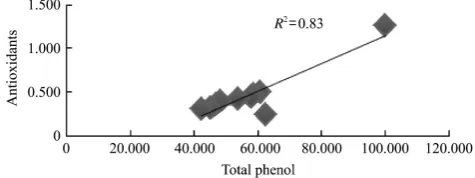
both storage temperatures (25°C and 35°C) as shown in Figures 1 and 2, where very strong relation (R2=0.91 and 0.92, respectively) in the investigated sesame samples was achieved. High content of phenolic compounds in the investigated samples could be responsible for their strong antioxidant activity (lower IC50 values).
Anthocyanin content in sesame seeds (raw, dehulled unroasted and roasted) and tehina samples were found to be in trace amounts vary significantly through processing and storage during six months at different temperatures and ranged from 0.31 mg of cya-3-glu/100 g (tehina stored for six months at 35°C) to 1.26 mg of cya-3-glu/100 g (raw sesame seeds). Raw sesame seeds have high anthocyanin content more than the dehulled unroasted seeds and this could be due to higher anthocyanin content of seeds coats. Roasted seeds anthocyanin was increased than that in unroasted seeds
may be due to increasing in color intensity of sesame seeds after roasting process.
Tehina samples significantly decreased during storage for six months. Relationship between phenol content and anthocyanins was established for both storage temperatures (25°C and 35°C) as shown in Figures 3 and 4, where strong relation in the investigated sesame samples (R2 = 0.84 and 0.83, respectively) was achieved.
Figure 1 Relationship between antioxidant activities (IC50, mg/mL) by DPPH assay and total phenol extracts (mg of GAE/100 g) of
sesame seeds and tehina stored during six months at 25°C
Figure 2 Relationship between antioxidant activities (IC50, mg/mL) by DPPH assay and total phenol extracts (mg of GAE/100 g) of
sesame seeds and tehina stored during six months at 35°C
Figure 3 Relationship between anthocyanins (mg of cya-3-glu/100 g) and total phenol extracts (mg of GAE/ 100 g) of
sesame seeds and tehina stored during six months at 25°C
Figure 4 Relationship between anthocyanins (mg of cya-3-glu/100 g) and total phenol extracts (mg of GAE/100 g) of
3.2 Fatty Acid Composition
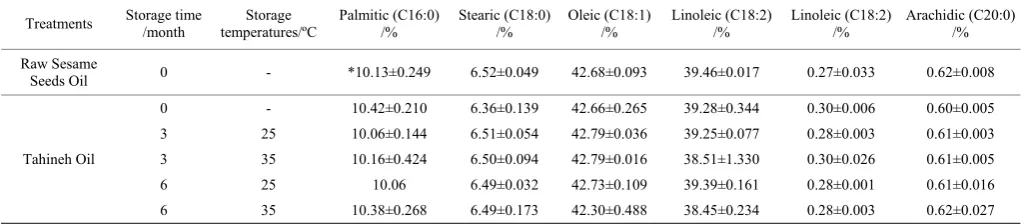
Fatty acid composition of the extracted oil from raw sesame seeds and tehina samples is presented in Table 2. No significant differences were found in fatty acid composition of raw sesame seeds and tehina samples oil resulted from processing and storage at different temperatures. The most abundant fatty acids were oleic acid, linoleic acid and palmitic acid, no significant difference occurred in these main fatty acids. Palmitic acid content ranged from 10.06% (tehina stored for three months at 25°C) to 10.42% (tehina at zero time).
Similar value of palmitic acid content was found by Elleuch et al.[38], while lower content of palmitic acid reported by Abou-Gharbia et al.[39], and Yoshida and Takagi[30]. Raw sesame seeds and tehina samples oil
were found to contain stearic acid and were ranged from 6.36% (tehina at zero time) to 6.52% (raw sesame seeds). Elleuch et al.[38] found comparable value of stearic acid in
raw seeds (6.4%), lower value were found by Borchani et al.[40] for raw sesame oil and tehina (5.76% and 5.88%) than that in the present study.
Table 2 Fatty acid analysis of sesame seeds and tehina stored during six months at different temperatures#
Treatments Storage time /month
Storage temperatures/ºC
Palmitic (C16:0) /%
Stearic (C18:0) /%
Oleic (C18:1) /%
Linoleic (C18:2) /%
Linoleic (C18:2) /%
Arachidic (C20:0) /%
Raw Sesame
Seeds Oil 0 - *10.13±0.249 6.52±0.049 42.68±0.093 39.46±0.017 0.27±0.033 0.62±0.008
Tahineh Oil
0 - 10.42±0.210 6.36±0.139 42.66±0.265 39.28±0.344 0.30±0.006 0.60±0.005
3 25 10.06±0.144 6.51±0.054 42.79±0.036 39.25±0.077 0.28±0.003 0.61±0.003
3 35 10.16±0.424 6.50±0.094 42.79±0.016 38.51±1.330 0.30±0.026 0.61±0.005
6 25 10.06 6.49±0.032 42.73±0.109 39.39±0.161 0.28±0.001 0.61±0.016
6 35 10.38±0.268 6.49±0.173 42.30±0.488 38.45±0.234 0.28±0.003 0.62±0.027
Note: #All values are means of duplicates. *Means in the same column with the same letter are not significantly different (p≤0.05).
Oleic acid had highest fatty acid content in both raw seeds and tehina samples oil and ranged from 42.30% (tehina stored for six months at 35°C) to 42.79% (tehina stored for three months at 25°C and 35°C). Borchani et al.[40] and Uzun et al.[41] were found lower oleic acid content in raw seeds oil than that we found (39.6%, 39.5% and 36.8% respectively). Oleic acid contents found by Borchani et al.[40] were comparable to our values of raw seeds and tehina oil (41.68% and 41.94% respectively). Linoleic acid also considered as a major fatty acid in sesame oil. Linoleic acid contents of sesame oil were ranged from 38.45% (tehina stored for six months at 35°C) to 39.46% (raw seeds oil). Comparable linoleic acid values for raw sesame seeds (38.29%) and tehina samples (37.48%) oil reported by Borchani et al.[40], Abou-Gharbia et al.[39] and Uzun et al.[41] were found higher than that in our investigation (45.66%, 44.80% and 45.30%). The lowest content of fatty acids was linolenic acid in both raw sesame seeds and tehina samples oil. No significant difference was observed and values were ranged from 0.27% (raw sesame seeds oil) to 0.30% (tehina stored at zero time and after three months of storage at 35°C). Linolenic acid
value was lower than that reported by Borchani et al.[40] on the other hand, comparable value was found by Abou-Gharbia et al.[39] Arachidic acid also was found in raw sesame seeds and tehina samples oil in low concentration. It ranged from 0.60% (tehina stored at zero time) to 0.62% (raw sesame seeds and tehina stored for six months at 35°C). Comparable values of arachidic acid were found by Borchani et al.[40] in raw seeds and tehina samples oil to our results. Also Abou-Gharbia et al.[39] found similar value of arachidic
acid in raw sesame seeds oil to that was found in this investigation (0.60%). Saturated fatty acid contents of sesame samples oil were found to be lower than that for olive oil[40].
4 Conclusions
September, 2016 Taha M R, et al. Effect of tehina processing and storage in the physical-chemical quality Vol. 9 No.5 225
found to decrease significantly during storage period at 35°C than stored at 25°C. Strong relation was found between the level of phenolic compounds and with both antioxidant activities and anthocyanins content.
Acknowledgment
The authors extend their appreciation to the Deanship of Scientific Research at King Saudi University for funding the work through the research group project (No. RGP-VPP-193).
[References]
[1] Shahidi F. Nutraceuticals and functional foods: whole versus processed foods. Trends in Food Science and Technology, 2009; 20(9): 376–387.
[2] Gotham J. In Methods in Plant Biochemistry, In: Harborne J B, Plant Phenolics (Ed.), editors. London: Academic Press, 1989. pp. 159–196.
[3] Dziedzic S Z, Hudson B J F. Polyhydroxy chalcones and flavonones as antioxidants for edible oils. Food Chemistry, 1983; 12(3): 205–212.
[4] Löliger J. Natural antioxidants. In: Rancidity in foods, editors Allen J C, Hamilton R J. London: Applied Science Publishers, 1983. pp. 89–107.
[5] Pratt D E, Hudson B J F. Natural antioxidants not exploited commercially. In: Hudson B J F(Ed.), editors. Food Antioxidants. London: Elsevier Applied Science, 1983. pp 171–192.
[6] Namiki M. The chemistry and physiological functions of sesame. Food Reviews International, 1995; 11(2): 281–329. [7] Jeong S M, Kim S Y, Kim D R, Nam K C, Ahn D U, Lee S C.
Effect of seed roasting conditions on the antioxidant activity of defatted sesame meal extracts. Journal of Food Science, 2004; 69(5): 377–381.
[8] Macheix J J, Fleuriet A, Billot J. Fruit Phenolics. Boca Raton: CRC Press, 1990. 378 p.
[9] Meulenberg E P. Phenolics: occurrence and immunochemical detection in environment and food. Molecules, 2009; 14(1): 439–473.
[10] Jannat B, Oveisi M R, Sadeghi N, Hajimahmoodi M, Behzad M, Choopankari E, et al. Effects of roasting temperature and time on healthy nutraceuticals of antioxidants and total phenolic content in Iranian sesame seeds (Sesamum indicum
l.). Iranian Journal of Environmental Health Science and Engineering, 2010; 7(1): 97–102.
[11] Jeng K C G, Hou R C W. Sesamin and sesamolin: nature’s therapeutic lignans. Current Enzyme Inhibition, 2005; 1(1): 11–20.
[12] Kato M J, Chu A, Davin L B, Lewis N G. Biosynthesis of antioxidant lignans in sesamum indicum seeds. Phytochemistry, 1998; 47(4): 583–591.
[13] Budowski P, Markley K S. The chemical and physiological properties of sesame oil. Chemical Reviews, 1951, 48(1): 125–151.
[14] Osawa T. Protective role of dietary polyphenol in oxidative stress. Mechanism of Aging and Development, 1999; 111(2-3): 133–139.
[15] Maas J L, Galetta G J, Stoner G D. Ellagic acid, an anticarcinogen in fruit, especially in strawberries: A review. HortScience 1990; 26(1): 10–14.
[16] Waterhouse A L. Wine and heart disease. Chemistry and Industry, 1995; 6(1): 338–341.
[17] Yoshida H, Shigezaki J, Takagi S, Kajimoto G. Variation in the composition of various acyl lipid, Tocopherols and lignans in sesame seed oil roasted in a microwave oven. Journal of Science and Food Agricultural, 1995; 68(4): 407–415.
[18] Elleuch M, Besbes S, Roiseux O, Blecker C, Attia H. Quality characteristics of sesame seeds and by-products. Food Chemistry, 2007; 103(2): 641–650.
[19] Weiss E A. Castor, sesame and safflower. London: Leonard Hill, 1971. pp. 311–525.
[20] Rababah T, Ereifej K, Howard L. Effect of ascorbic acid and dehydration on concentrations of total phenolics, antioxidant capacity, anthocyanins, and color in fruits. Journal of Agricultural and Food Chemistry, 2005; 53(11): 4444–4447.
[21] Singleton V, Rossi J. Caloremetry of the total phenoics with phosphomolybdic-phosphotungestic and reagents. American Journal of Encology and Viticulture, 1965; 16(3): 144–158.
[22] Matthaus B. Antioxidant activity of extracts obtained from residues of different oil seeds. Journal of Agricultural and Food Chemistry, 2002; 50(12): 3444–3452.
[23] Brand-Williams W, Cuvelier M E, Berset C. Use of a free radical method to evaluate antioxidant activity. LWT-Food Science and Technology, 1995, 28(1): 25–30.
[24] Lin Y T, Vattem D, Labbe R G, Shetty K. Enhancement of antioxidant activity and inhibition of Helicobacter pylori by phenolic phytochemical-enriched alcoholic beverages. Process Biochemistry, 2005, 40(6): 2059–2065.
[25] Rabino I, Mancinelli A. Light, temperature, and anthocyanins production. Journal of Plant Physiology, 1986, 81: 922–924.
[27] Budowski P, O’conner R T, Field E T. Sesame oil. IV. Determination of free and bound sesamol. Journal of American Oil Chemists’ Society, 1950, 27(8): 307–310. [28] Yoshida H, Shigezaki J, Takagi S, Kajimoto G. Variation in
the composition of various acyl lipid, Tocopherols and lignans in sesame seed oil roasted in a microwave oven. Journal of Science and Food Agricultural, 1995; 68(4): 407–415.
[29] Christopherson S W, Glass R L. Preparation of milk fat methyl esters by alcoholysis in an essentially nonalcoholic solution. Journal of Dairy Science, 1969; 52(8): 1289–1290.
[30] Yoshida H, Takagi S. Effect of roasting temperature and time on the quality characteristics of sesame (Sesame indicum L.) oil. Journal of Science and Food Agricultural, 1997; 75(1): 19–26.
[31] Fukuda Y, Nagate T, Osawa T, Namiki M. Contribution of lignan analogues to antioxidatvie activity of refined unroasted sesame seed oil. Journal of American Oil Chemists’ Society, 1986; 63(8): 1027–1031.
[32] Shyu Y S, Lin J T, Chang Y T, Chiang C J, Yang D J. Evaluation of antioxidant ability of ethanolic extract from dill (Anethum graveolens L.) flower. Food Chemistry, 2009; 115(2): 515–521.
[33] Offord E A, Guillot F, Aeschbach R, Loliger R, Pfeifer A M. Antioxidant and biological properties of rosemary components: implications for food and health. In: Shahidi F. Natural Antioxidants: Chemistry, Health Effects and
Applications. Champaign: American Oil Chemists’ Society Press, 1997. pp. 88–96.
[34] Dimitrios B. Sources of natural phenolic antioxidants. Trends in Food Science and Technology, 2006; 17(9): 505–512.
[35] Peterson D M. Oat Antioxidants. Journal of Cereal Science, 2001; 33(2): 115–127.
[36] Shahidi F, Chandrika M, Pathirana L, Dana S. Antioxidant activity of white and black sesame seeds and their hull fractions. Food Chemistry, 2006; 99(3): 478–483.
[37] Kamal-Eldin A, Appelqvist L A. The chemistry and antioxidant properties of tocopherols and tocotrienols. Lipids, 1996; 31(7): 671–701.
[38] Elleuch M, Besbes S, Roiseux O, Blecker C, Attia H. Quality characteristics of sesame seeds and by-products. Food Chemistry, 2007; 103(2): 641–650.
[39] Abou-Gharbia H A, Shehata A Y, Shahidi F. Effect of processing on oxidative stability and lipid classes of sesame oil. Food Research International, 2000; 33(5): 331–340. [40] Borchani C, Besbes S, Blecker C, Attia H. Chemical
characteristics and oxidative stability of sesameseed, sesame paste, and olive oils. Journal of Agriculture and Science Technology, 2010; 12(12): 585–596.