International Journal of Finance and Managerial Accounting, Vol.4, No.15, Autumn 2019
73
The Effect of Corporate Governance Mechanisms on Audit
Quality by Explaining the Intermediary Function of
Auditor's Behavioral Components
Hossein Badiei
Ph.D. Candidate, Department of Accounting, Allameh Tabataba'i University, Tehran, Iran [email protected]
Yahya Hasas Yeganeh
Faculty Member, Department of Accounting, Allameh Tabataba'i University, Tehran, Iran (Corresponding Author)
Ali Saghafi
Faculty Member, Department of Accounting, Allameh Tabataba'i University, Tehran, Iran [email protected]
Jafar Babajani
Faculty Member, Department of Accounting, Allameh Tabataba'i University, Tehran, Iran [email protected]
ABSTRACT
The purpose of this study was to investigate the structural pattern of the effect of corporate governance mechanisms (internal organization) on audit quality considering the role of the intermediary variable of behavioural components of auditors. The statistical population of this research is independent auditors and auditors working in audit firms. A sample of 395 people was selected by simple random sampling method. In this research, the correlation coefficient, hierarchical regression and Structural Equation Modeling (SEM) were used for statistical analysis. The results of the correlation test and hierarchical regression model confirm the role of auditors' behavioural components in the relationship between corporate governance mechanisms and audit quality as mediators. Then, by adapting the research data and conceptual model, structural equation model was fitted to examine the effect of auditors ' behavioural factors as an intermediary variable. Finally, the significant effect of corporate governance mechanisms on audit quality was demonstrated by explaining the mediating role of auditors' behavioural components.
1. Introduction
In this research, we have tried to focus on the impact of corporate governance on audit quality with regard to the role of mediating the behavioural components of auditors. In recent years, non-observance of professional ethics, trust, and ethics has led to several financial scandals. Enron, Worldcom, Adelphia, Tyco, Martha Stewart and Parmalat are companies that have unethical and nonprofit procedures. Another moral slippage has also been reported in the industry of joint venture funds and in the primary mortgage industry, although unethical behaviour in the primary mortgage industry has contributed to global problems (Donaldson, 2005). Copeland (2005) argues that although the impact of non-legal behaviours and moral slurs may be low, the collapse of the world's largest companies leads to a loss of hundreds of billions of dollars in shareholder value. Also, these scandals destroy the credibility and reputation of hundreds of thousands of people who spent their time on lending and doing the right thing. In analyzing these events, some people, using fundamental economic assumptions, have expressed human nature as opportunistic and ignorant of morality. Others see the decline of ethical values in society as a reason to undermine ethical standards (Eatemadi & Dianti Dilami, 2009).
Sama and Shoaf (2008) argue that the culture of an institution is one of the factors influencing the behaviour of individuals within the organization. If the culture governing the institute is not appropriate, it will lead to problems in leadership. For example, in the case of Arthur Anderson, the culture of the institute has been charged.
The need to establish a culture and ethical behaviour has been so great that many major organizations have responded to the legal and environmental pressures by establishing ethical cultures in organizations. Professional and ethical behaviour is considered necessary by auditors, educated people, supervisory boards, legislatures, and homeowners (Weaver et al., 1999). If the ethical culture was created and the auditors behaved responsibly, the unethical behaviour of American companies would not lead to the failures and scandals of the early 21st century. Some scholars believe that organizational culture is one of the things that leaders of organizations need to consider. The collapse of
Arthur Anderson is an opportunity to cultivate a moral culture by leaders (Jenkins et al., 2008).
2. Literature Review
An important study of areas related to the level of commitment and ethical inference of auditors was carried out by Lord and Dezvert in 2001. Unlike McNair, they used the "Case Study" method at the time of the sample test. The researchers hypothesized that subordination pressure and adaptive pressure played an important role in auditor behaviour led to an incorrect audit process, and emphasized that auditors who are subject to subversive pressure have higher levels of deviations than those who are subject to compliance pressure. Another assumption was that the research was related to social influence and levels of organizational and professional commitment. The level of tolerance for distortions is higher for auditors who, under the social influence, have less degree of professional and organizational commitment. The statistical sample of this study consisted of 171 members of the audit team of one of the international accounting firms in the United States. Subjects were provided with an error in asset valuation. After reviewing the subject, they were asked to answer two questionnaires: one related to organizational commitment and the other to a professional commitment. The result was that subordination pressure along with the orders of senior auditors led auditors to stop auditing that their content is incorrect. But on the pressure of compliance, the results and analyses showed that there is no significant effect of this pressure on the auditor's behaviour. It also concluded that when social influence is on the job, the effects of organizational and professional commitment disappear dramatically.
Research Background
Lightner et al. (1982) published a study on the behaviour of auditors that linked the consequences of such behaviour to social, moral and motivational factors. Unlike the previous one, the researchers used the questionnaire method to analyze the results. This study was conducted solely to determine the causes of unclaimed time (UCT). Researchers in this study analyzed specific factors that led to UCT. These factors were classified into three groups of five independent variables: motivation, moral factors (individual approval in not registering actual claims), and variables determined by location (supervisors' requests, the feasibility of meeting budgets, actual position). The sample population comprised 1016 responses to the questionnaire from three of the eight National Accounting Standards in the United States. This large sample was divided into two groups. The first group (506 responsive) was used to discover the relationship between the variables that were reciprocal validation and the second group (510 respondents) was used to test the compatibility of the findings of the first group. The least squares (OLS) method was used to analyze the results of the survey. The results showed that "the possibility of meeting budgets" is the best explanatory variable leading to the UCT. This was due to the perception of accountants and their reluctance to become inefficient, trying to maintain good customer service and doing a significant amount of work. The variable "Feasibility of meeting budgets" was related to the normative beliefs of employees and their willingness to refuse to report less behavioural work [demanded hours].
In 2004, Kouram et al. analyzed the decline in audit quality (RAQ) by two factors: the time pressure and the risk of false reports. They hypothesized that there was a negative relationship between RAQ and the risk of false reports. The 106 experienced auditors employed in the five largest audit firms in Australia comprised the statistical community of this study. The case filed about a hypothetical manufacturing company with plans for timing and audit tests, and a section for studying two possible RAQ positions were given as follows: 1) Accepting suspicious audit evidence and evidence, and 2) Reducing a sample. selected. The results showed that accepting suspect documents was directly influenced by the time budget pressure variable but did not apply to the risk of false reports. But to minimize the sample, the risk factor has
a contingent effect. In other words, when there is little risk in false reports, auditors tend to minimize the sample. As a result of the above analysis, Korm et al. Showed that auditors do not have the same effect on RAQ behaviours (accepting suspicious documents and shrinking sample selection).
The effect of senior auditors plays a major role in ruining the image of the audit profession (Herrbach, 2001). He formulates a hypothesis that behavioural quality reductions lead to negligent behaviour. He chose elements of psychological contracts (human environment, rights, education, authority and control) between auditors and their respective institutions. Dependent variables Defined by quality control by senior auditors and independent variables are elements of psychological contracts between auditors and audit firms. In addition, Herrbach analyzed non-professional behaviour against the following factors: control authority, training, rights, less time reporting and emotional commitment. He used the questionnaire methodology with a community of 170 auditors working in a large audit firm in France. He concludes that all psychological elements, except for rights, have a negative relationship with the increasing quality of audit behaviour. As these variables rise, degradation behaviour decreases. The study was conducted on a sample of senior auditors working in one of the French audit firms.
the professional level", "the size and structure of the institution, the reputation and credibility of the firm and partners, the expertise of the auditor in the industry, the proportion of audit fees to work, the staff and partner's shelf life, the period of tenure, time pressure and complexity of business and transactions "At the level of the institute and the audit work, they are known as intervening factors that Influence the audit.
3. Methodology
This research investigates the effect of corporate governance mechanisms on audit quality by explaining the role of mediating the behavioural components of auditors in active companies of the Tehran Stock Exchange. The current research is categorized based on purpose, is a type of applied research. According to the method, field research is descriptive. The statistical population of this study consists of independent auditors and auditors working in audit firms in 2018. In this study,
In this research, data collection was done in the field. At this stage, data are collected through questionnaires. This questionnaire was designed by referring to a questionnaire designed by Rabih Nahmeh et al., 2016, which was developed by applying the opinions of experts and experts in localization and using a 5-point Likert Scale to answer the questionnaire questions. One of the important features of this scale is to expand the scope of accountability selection and provide more options for that. The validity of the questionnaire was confirmed by the opinion of the professors and experts, and its reliability was confirmed by calculating the Cronbach's alpha (0.824) for a prototype.
Also, to determine the sample size according to the statistical society (auditing companies and independent auditors), the volume of which is finite and finite, simple sampling without placement was used. Due to the equal chance of all individuals, sampling was done using simple random sampling method. In view of the limited number of members of society, using the Cochran formula, the sample size for the model was determined 384. Considering the possibility of deleting some of the questionnaires due to possible defects, 395 questionnaires were completed by independent auditors and auditors working in the audit firms and collected.
To assess the effect of auditors' behavioural factors on the audit quality of companies operating in Tehran Stock Exchange based on Structural Equation Modeling (SEM), the effect of corporate governance on the behavioural factors of auditors was analyzed, and then their impact on the audit quality of the following model was based on Rabih Nehmeh et al., 2016 used.
In order to estimate the above model and analyze the relationships between variables, SPSS software, Smart-PLS using the collected data was used. One of the strongest and most suitable methods for analyzing behavioural sciences research is Structural Equation Modeling (SEM) because the nature of such topics is multivariate and cannot be solved by a two-variable method. This methodology or methodology is a complex mathematical and statistical compilation of multiple multivariate regressions that are compiled in a complex system to analyze complex phenomena.
Research hypotheses
The research hypothesis is as follows: "Corporate Governance has a significant effect on the quality of the audit, considering the role of the intermediate variable of the behavioural components of the auditors."
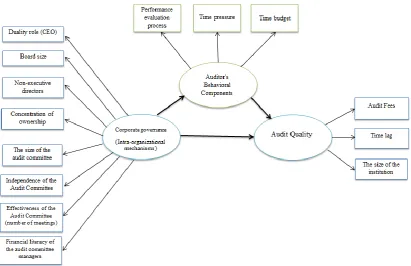
Given this hypothesis, the conceptual model and research variables are as follows:
Independent variable: corporate governance Dependent variable: Audit quality
Mediating variable: Behavioural components of auditors
Auditor's Behavioural Components: A set of beliefs that relate to ethical issues, especially in the profession, which are examined in this research through time, time pressure, and performance evaluation process.
Time budget: One of the factors of behavioural factors that was determined by questions 9 to 16 of the questionnaire.
Time pressure: One of the factors of behavioural factors that was determined by questions 17 to 22 of the questionnaire.
Performance evaluation process: One of the factors of behavioural factors that was determined by questionnaire 23 to 26 of the questionnaire.
based on the basic principles and questions 1 to 8 questionnaires were determined.
Audit quality: Market implication of the possibility that the auditor first discovers, in the first instance,
cases of material misstatement in the financial statements or the accounting system of the client, and subsequently reports the detected distortion.
Figure 1: Conceptual Model of Research
4. Results
The research hypothesis is as follows:
"Corporate governance has a significant impact on the quality of the audit, considering the role of mediating the behavioural components of auditors."
To investigate this hypothesis, Baron and Kenny's hierarchical regression has been used due to the mediator variable (Aiken & West, 1991). In this method, the regression model is fitted twice, which is entered at the first stage of the corporate governance variable, and in the second rank, the variables of corporate governance and the behavioural components of the auditors have been introduced. It should be noted that in both cases the dependent variable is the quality of the audit.
First, we compute the correlation coefficient between the variables of the research and examine the
relationships between the variables. The results are as follows:
Table 1: Correlation matrix of research variables
Audit Quality Auditor's Behavioural Components Corporate
governance variable
Correlation Coefficient Corporate
governance
P-value
0.457 Correlation Coefficient Auditor's
Behavioural
Components P-value 0.0001***
0.780 0.344
Correlation Coefficient Audit
Quality ***
0.0001 ***
0.0001 P-value
*** Significant at 5% level
The table above shows the correlation coefficient of the research variables. In examining relationships, there is a significant relationship between corporate governance and audit quality and behavioural components of auditors. The results of fitting the hierarchical regression are as follows:
Table 2: Model fit results
F-value
Rank
0.0001 12.561
0.123 First
0.0001 17.802
0.440 Second
Reference: Research Findings
Independent Variable First Order: Corporate Governance
Second-order Independent Variables: Corporate Governance and Auditor's Behavioural Components Dependent variable: Audit quality
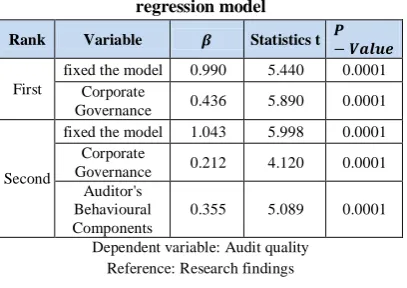
Table 3: The coefficients of the hierarchical regression model
Statistics t
𝜷 Variable
Rank
0.0001 5.440
0.990 fixed the model First
0.0001 5.890
0.436 Corporate
Governance
0.0001 5.998
1.043 fixed the model
Second
0.0001 4.120
0.212 Corporate
Governance
0.0001 5.089
0.355 Auditor's
Behavioural Components
Dependent variable: Audit quality Reference: Research findings
To test the effect of corporate governance on audit quality, hierarchical regression was used based on the mediating role of auditors' behavioural components. In order for the variable to have a mediator role, it must have the following conditions:
1) There is a significant correlation between the mediator variable and the independent variable.
2) There is a significant correlation between the mediator variable and the dependent variable. 3) By examining the effect of the mediating
variable, the relationship between the independent variable and the dependent variable will be weakened (Sarmad, 1999).
The matrix table shows the correlation between corporate governance variables and audit quality and auditors 'behavioural components. There is a significant correlation between the mediator variable and the independent variable, ie, auditors' behavioural components and corporate governance. Also, this table shows that there is a significant correlation between the mediating variable and the dependent variable, the auditors' behavioural components and audit quality.
Table 2 also shows that the corporate governance variable alone explains 12.3% of the audit quality variance in the first place, and in the second line, corporate governance and the behavioural components of the auditors, a total of 44% of the variance in audit quality is explained. The entry of the mediating variable, ie, the behavioural components of the auditors, significantly increases the coefficient of the regression equation.
Table 3 of the coefficients of the hierarchical regression model also shows that in the first place, the corporate governance regression coefficient on the audit quality is 0.436, and with the entry of the mediating variable, ie, the behavioural factors of the auditors in the second rank, the corporate governance regression coefficient on the audit quality with the value of 0.212 Significantly decreases. Therefore, it can be concluded that the behavioural components of auditors have a mediating role in the relationship between corporate governance and audit quality. Therefore, the main hypothesis can be accepted:
The main hypothesis: "Corporate governance has a significant impact on the quality of the audit, given the intermediary role of the auditors' behavioural components."
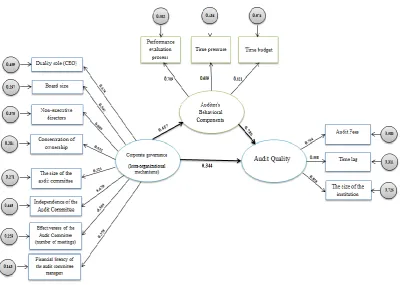
Figure 2. Structural analysis of the model
The previous diagram depicts the corporate governance structure structural equilibrium on audit quality by explaining the role of the intermediary of the auditors' behavioural components. The following table also shows the calculated coefficients in the model:
Table 4: Table of causal coefficients Causal coefficient effect
variable
0.344 Direct
Audit Quality Corporate
Governance
0.457 Direct
Auditor's Behavioural Components Corporate
Governance
0.780 Direct
Audit Quality Auditor's
Behavioural Components
0.356 Indirect
Audit Quality Corporate
Governance
0.700 total
Audit Quality Corporate
Governance
5. Discussion and Conclusions
coefficient of the second regression of the corporate governance mechanisms is on Audit quality is significantly reduced.
In order to investigate the effect of auditors' behavioural factors as an intermediary variable and adapt research data and conceptual model, structural equation model was fitted among organizational mechanisms of corporate governance, role duality (CEO), independence of the audit committee and non-executive directors Respectively, have the highest load factor, respectively. Also, according to independent auditors and auditors working in audit firms, factor load for auditors' behavioural components is related to time budget, performance evaluation process and time pressure. Regarding the dependent variable (audit quality) based on the conceptual model of research, the largest factor burden is the size of the institution and the lowest factor load is the time lag.
Finally, the study of the effect of corporate governance mechanisms on audit quality with the effect of intermediary role of auditors' behavioural factors showed that the direct causal factor of corporate governance mechanisms on audit quality is less than its indirect causal factor with the role of mediating the behavioural components of auditors. These results show that the indirect causal factor is considered more important than the direct causal factor, considering the variable of the behavioural components of the auditors as an intermediary, which is consistent with the result of the hierarchical regression. Therefore, it can be concluded that corporate governance mechanisms have a significant effect on audit quality due to the intermediary role of auditors' behavioural components.
In line with the research objectives and the results of testing the hypothesis of this section, it can be said that planners should have a special focus on corporate governance mechanisms and behavioural factors of auditors in order to increase the quality of the audit. Accordingly, the following suggestions are presented:
A: Proposals based on research results
1) Given the fact that the dichotomy of the CEO's role is the most factor in the intra-organizational mechanisms of corporate governance, and since Chang & Sun (2008) research has shown that after financial scandals, investors noticed that the duality of the role The CEO may threaten the board's
trustee's role in monitoring financial reporting and potentially increase the risk of the decision maker's final decision on financial reporting, so it is recommended that companies avoid duplication of managerial roles as far as possible.
2) Regarding the independence of the audit committee after dichotomy, the role of the CEO is the most important factor in the intra-corporate governance mechanisms of corporations, and as Verlaminck and Sarna (2015) concluded in their study that the independence of the audit committee increased the quality of the audit Gets Because the audit committee is a new control mechanism in financial reporting, and if an independent and effective audit committee exists, audit quality will be improved due to effective monitoring of the corporate financial reporting process. Therefore, it is recommended that companies pay special attention to the independence of their audit committee.
3) Since non-executive directors after the two above-mentioned variables have the greatest factor in the intra-organizational mechanisms of corporate governance, companies are recommended to use executive boards in the composition of the board of directors to increase their accountability and accountability.
B: Suggestions for future research
Considering the importance of the issue of audit quality, corporate governance mechanisms and behavioural factors of auditors, it seems that conducting other researches with consideration of other aspects and factors influencing the quality of audit can be useful and solvent with the following suggestions: :
1) Except for the factors studied in this research, other factors influencing the quality of the audit are investigated.
3) Using external organizational mechanisms of corporate governance and their impact test along with auditors' behavioural elements on audit quality.
References
1) Sensational Yeganeh, Yahya and Kaveh Azin Far. (1389). The relationship between audit quality and audit firm size. Accounting and auditing reviews. Volume 17. Number 61. p. 85 to 98.
2) Sensitive One, Yahya. (1395). The Effect of Corporate Governance Mechanisms on Audit Quality and Real Profit Management. Empirical Accounting Research. Volume 5. Number 4. Summer, 1395. p. 23-45.
3) Shayesteh, Hadi and Tabatabai, Sajjad and Kaviani, Mohsen and Taheri Fard, Ahmad Reza (1394). Investigating the relationship between corporate governance and audit quality in listed companies in Tehran Stock Exchange. Proceedings of the Third International Accounting and Management Conference.
4) Karami, Gholamreza and Vakili Far, Hamid Reza and Mehinani, Mehdi (1395). Investigate the relationship between time pressure, the complexity of work and audit effectiveness in the National Court of Audit. Audit knowledge. Number 63. Sixteenth Year. Summer 1395
5) Mashayekhi, Bita and Mehrani, Kaveh and Rahmani, Ali and Madahi, Azadeh (1392). Compilation of audit quality model. Stock Exchange Quarterly. Number 23. Fall 20132. Sixth year. Pp. 103-137.
6) Adjaoud, F., & Ben‐Amar, W. (2010). Corporate governance and dividend policy: shareholders’ protection or expropriation?. Journal of business finance & accounting, 37(5‐6), 648-667.
7) Anis, A., & Anis, A. (2017). Auditors’ and accounting educators’ perceptions of accounting education gaps and audit quality in Egypt. Journal of Accounting in Emerging Economies, 7(3), 337-351
8) Aubin, D. (2013). Analysis: Knives out for auditors as class actions go global http://www.reuters.com/article/2013/03/21/us-usa-accounting- lawsuitsidUSBRE92K0QB20130321 9) Baker, M., & Gompers, P. A. (2003). The
determinants of board structure at the initial public
offering. The Journal of Law and Economics, 46(2), 569-598
10)Black, B. S. Kim T, Chang. and Park, Love, I., Rachinsky, A. (2009). Corporate governance indices and firms' market values: Time series evidence from Koria, Emerging Markets Review. 11)Cohen, J., Krishnamoorthy, G., & Wright, A. M.
(2002). Corporate governance and the audit process. Contemporary accounting research, 19(4), 573-594.
12)Coram, P., J. Ng, and D. R. Woodliff. 2004. The Effect of Risk of Misstatement on the Propensity to Commit Reduced Audit Quality Acts under Time Budget Pressure. Auditing: A Journal of Practice and Theory 23(2):161-169.
13)Dickinson, D., & Villeval, M. (2008). Does monitoring decrease work effort? The complementarity between the agency and crowding-out theories. Games and Economic Behaviour, 63(1), 56-76.
14)Elder, R. J., M. S. Beasley, and A. A. Arens. 2010. Auditing and assurance services: An Integrated Approach. Pearson Prentice Hall.
15)Engel, E., Fischer, R., & Galetovis, A. (2002). A new approach to private roads. Regulation, 25, 18. 16)Ghafran, C., & O'Sullivan, N. (2017). The impact
of audit committee expertise on audit quality: Evidence from UK audit fees. The British Accounting Review.
17)Gürünlü, M. (2009). The evolution of corporate governance mechanisms after going public: evidence from Turkish panel data. International Journal of Economic Perspectives, 3(1), 59. 18)Haka, S., and P. Chalos. 1990. Evidence of
agency conflict among management, auditors, and the audit committee chair. Journal of Accounting and Public Policy 9 (4):271-292.
19)Herrbach, O. 2001. Audit quality, auditor behaviour and the psychological contract.
20)Hope, O. K., Hu, D., & Zhao, W. (2017). Third-party consequences of short-selling threats: The case of auditor behaviour. Journal of Accounting and Economics, 63(2), 479-498
21)Jain, B. A., & Kini, O. (1999). The life cycle of initial public offering firms. Journal of Business Finance & Accounting, 26(9‐10), 1281-1307. 22)Jensen, M. C., & Meckling, W. H. (1976). Theory
and ownership structure. Journal of financial economics, 3(4), 305-360.
23)Kang, M., Lee, H. Y., Son, M., & Stein, M. (2017). The association between human resource investment by audit firms and their audit quality. Asia-Pacific Journal of Accounting & Economics, 24(3-4), 249-271.
24)Kapopoulos, P., & Lazaretou, S. (2007). Corporate ownership structure and firm performance: evidence from Greek firms. Corporate Governance: An International Review, 15(2), 144-158.
25)Leventis, S., Weetman, P., & Caramanis, C. (2011). Agency costs and product market competition: The case of audit pricing in Greece. The British Accounting Review, 43(2), 112-119.
26)Lord, A. T., and F. Todd DeZoort. 2001. The impact of commitment and moral reasoning on auditors' responses to social influence pressure. Accounting, Organizations and Society 26(3):215-235.
27)Mahdavi, G., & Daryaei, A. A. (2017). Attitude toward the business environment of auditing, corporate governance and balance between auditing and marketing. Contaduría y Administración.
28)Masoud, N. (2017). An empirical study of audit expectation-performance gap: The case of Libya. Research in International Business and Finance, 41, 1-151.
29)McNair, C. J. 1991. Proper Compromises: The Management Control Dilemma in Public Accounting and its Impact on Auditor Behaviour. Accounting, Organizations and Society 16(7): 635-653.
30)Minnis, M., & Sutherland, A. (2017). Financial statements as monitoring mechanisms: Evidence from small commercial loans. Journal of Accounting Research, 55(1), 197-233.
31)Mohanty, P. (2004). Institutional investors and corporate governance in India. Retrieved from http://ssrn.com/abstract=353820
32)Nehme, R. (2017)," Performance Evaluation of Auditors A Constructive or a Destructive Tool of Audit Output ," Managerial Auditing Journal, Vol. 32 Iss 2 pp.
33)O'Connell, Vincent & Cramer, Nicole. (2010). The relationship between firm performance and board
structure in Ireland. European Management Journal. 28. 387-399. 10.1016/j.emj.2009.11.002. 34)Osioru, N. M. (2017). Effect of Auditing on
Management of the Public Finances in Kenya: The Case of Government Ministries. Strategic Journal of Business & Change Management, 4(2). 35)Porter, M. E. 1998. Competitive advantage:
Creating and sustaining superior performance.Free press.
36)Ritter, J. R., & Welch, I. (2002). A review of IPO activity, pricing, and allocations. The Journal of Finance, 57(4), 1795-1828
37)Sharma, V. D., & Kuang, C. (2014). Voluntary audit committee characteristics, incentives, and aggressive earnings management: evidence from New Zealand. International Journal of Auditing, 18(1), 76-89.
38)Sun, J., Lan, G., & Liu, G. (2014). Independent audit committee characteristics and real earnings management. Managerial Auditing Journal, 29(2), 153-172.
39)Ucar, E. (2015). Do Reputable Financial Intermediaries Help Firms in External Financial Markets? Effect of Auditor Reputation on SEO Transaction Costs. Journal of Accounting and Finance, 15(6), 104.
40)Ussahawanitchakit, P. (2012). Audit independence of tax auditors in Thailand: Roles of ethical orientation, professional responsibility, stakeholder pressure, and audit experience. Journal of Academy of Business and Economics, 12(1), 1-11. 41)Welbourne, T. M., & Andrews, A. O. (1996).
Predicting the performance of initial public offerings: should human resource management be in the equation?. Academy of management journal, 39(4), 891-919.