ABSTRACT
WARREN, JEFFREY MELVIN. The Impact of Social Cognitive Theory and Rational Emotive Behavior Therapy Interventions on Beliefs, Emotions, and Performance of Teachers. (Under the direction of Edwin R. Gerler, Jr., Ed.D.)
Mental health continues to be a concern for individuals of all ages in the United States. Teachers and students are greatly affected by the impact of mental health related issues. Teachers perform in less than effective ways and student success is hindered when distress is experienced at school.
Professional school counselors are in an excellent position to assist students and teachers in becoming more mentally healthy by providing interventions derived from counseling theory. A
quasi-experimental design was used in the following field study to examine the impact of two teacher
relationships were found amongst several of the constructs examined in this study. Irrational beliefs were found to be negatively related to general efficacy beliefs, while positively correlated with
The Impact of Social Cognitive Theory and Rational Emotive Behavior Therapy Interventions on Beliefs, Emotions, and Performance of Teachers
by
Jeffrey Melvin Warren
A dissertation submitted to the Graduate Faculty of North Carolina State University
in partial fulfillment of the requirements for the Degree of
Doctor of Philosophy
Counselor Education
Raleigh, North Carolina 2010
APPROVED BY:
____________________________ ____________________________ Sylvia C. Nassar-McMillan, Ph.D. Pamela P. Martin, Ph.D.
____________________________ ____________________________ Stanley B. Baker, Ph.D Edwin R. Gerler, Jr., Ed.D.
DEDICATION
To school counselors and teachers, present and future... May you be encouraged to continue to challenge yourself,
in the classroom and in life.
Be reminded that change is often hard, but very rewarding. Advocate for your self and each other,
your mission is complementary.
See the light in the eyes of the students you teach. They are our future...provide them with the tools for success.
BIOGRAPHY
Jeffrey M. Warren is a former teacher and school counselor currently in private practice. He also maintains a school-based counseling contract with Franklin County
Schools. He is a National Certified School Counselor (NCSC) as well as a National Certified Counselor (NCC), an Approved Clinical Supervisor (ACS), and a Licensed Professional Counselor (LPC). Jeffrey's interests related to school counseling include: the school counselor's role in professional development through consultation, school counseling and technology, and positive behavior support/classroom management. He is also interested the theory evolution of Rational-Emotive Behavior Therapy.
Jeffrey was born in Greenville, North Carolina. He resided in rural, eastern North Carolina during childhood and currently calls Wake Forest home. He earned a BS in Elementary Education and an MS in Counselor Education, both from East Carolina University. He has completed Primary and Advanced Trainings in Rational Emotive Behavior Therapy (REBT) at the Albert Ellis Institute in New York City. He has also attended numerous trainings and educational sessions related to school counseling, clinical supervision, and counseling theory and techniques.
ACKNOWLEDGEMENTS
First and foremost I would like to think my best friend and life partner, Jenna Noelle Warren for displaying great patience and support over the past four years. Throughout this experience Jenna constantly heard me say, “I have a lighter load next semester, we will have more time together.” Unfortunately, this idea never materialized. Yet, Jenna continued to encourage me. Now, with much delight, Jenna's and mine, I can safely say, “Next semester will be a breeze!” My son, Jameson, has continued to be a bright spot in my life and has relentlessly kept me active in sports and grounded in life. Thanks, Big Man! I would also like to thank my parents, Jimmy and Kaye Warren, as well as Sue and Mike Clemente, for their continued demonstration of love, patience, and support over the years. My
grandparents, especially Julius and Ethel Warren, have remained a significant source of strength over the years, despite their deaths many years ago. Additionally, I cannot fail to mention my appreciation for the guidance and support many other have offered along this rewarding academic journey. Thanks especially to: Dr. Jack Schmidt, Dr. Florence Weaver, Dr. Travis Lewis, and good friend, Dr. Robert Rawls, who since our early high school days has referred to me as “his protege.”
Dr. Gerler, my advisor, has undoubtedly been a “cheerleader” over the past four years. He has always offered helpful feedback and support while allowing me the freedom to
Lupton-Smith, and Dr. Martin for their unyielding support and guidance. My doctoral experience would not have been the same without you.
Lastly, I want to thank Marla Peoples, Director of Student Services for Franklin County Schools, for her assistance during the initial stages of this study. Without her efforts, this study may not have been possible. Additionally, I am grateful to the principals, school counselors, and teachers of Franklin County School for their support and/or participation in this study.
TABLE OF CONTENTS
LIST OF TABLES...viii
LIST OF FIGURES...ix
CHAPTER I –INTRODUCTION... 1
Rationale for Intervention... 1
Purpose of the Study...5
Importance of the Study... 6
Research Questions... 8
Assumptions... 8
Limitations...9
Delimitations...10
Definitions... 11
Organization of the Study...12
CHAPTER II –REVIEW OF HISTORY, THEORIES, AND LITERATURE...13
Current Trends in Professional Development in Education...13
Student Achievement... 15
The Role of the School Counselor in Student Success...17
Social Cognitive Theory... 19
Reciprocal Determinism... 19
Self-Efficacy... 21
Teacher Efficacy... 24
Rational Emotive Behavior Therapy... 26
Rational Emotive Education... 28
Potential Effect of REBT on Teacher and Student Performance... 29
Theory Integration... 33
Synopsis... 39
CHAPTER III –METHOD... 42
Participants... 42
Instruments... 42
Design... 50
Procedure... 53
Summary... 60
CHAPTER IV –RESULTS... 61
Description of Sample... 62
Preliminary Analysis... 65
Hypothesis One... 67
Hypothesis Two... 70
Hypothesis Three... 72
Hypothesis Four... 75
Hypothesis Six... 81
Summary... 90
CHAPTER V –DISCUSSION... 91
Hypothesis One...91
Hypothesis Two... 94
Hypothesis Three... 95
Hypothesis Four... 97
Hypothesis Five... 99
Hypothesis Six...101
Limitations of the Study... 106
Limitations of the Program... 109
Implications and Future Research... 110
Conclusion...114
REFERENCES... 117
APPENDICES...132
Appendix A: Informed Consent Form for Research...133
Appendix B: Depression, Anxiety, Stress Scale—21... 136
Appendix C: Teachers' Sense of Efficacy Scale—long form... 138
Appendix D: General Self Efficacy Scale... 140
Appendix E: Irrational Beliefs Inventory... 141
Appendix F: Teachers Irrational Beliefs Scale... 144
Appendix G: Post Interview Questionnaire... 147
Appendix H: Participant Demographic Form...149
Appendix I: Outline of Face-to-Face PEST Sessions...150
Appendix J: Outline of On-line PEST Sessions... 152
Appendix K: Descriptive Statistics for Pretest-Posttest Measures of Teacher Efficacy and Irrational Beliefs (Warren, 2010b)... 154
LIST OF TABLES
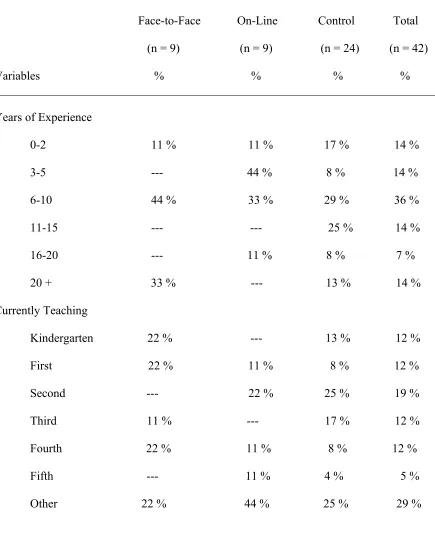
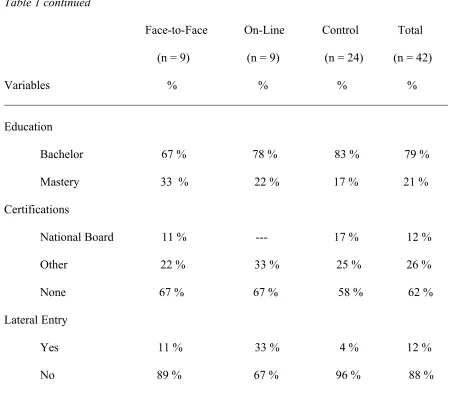
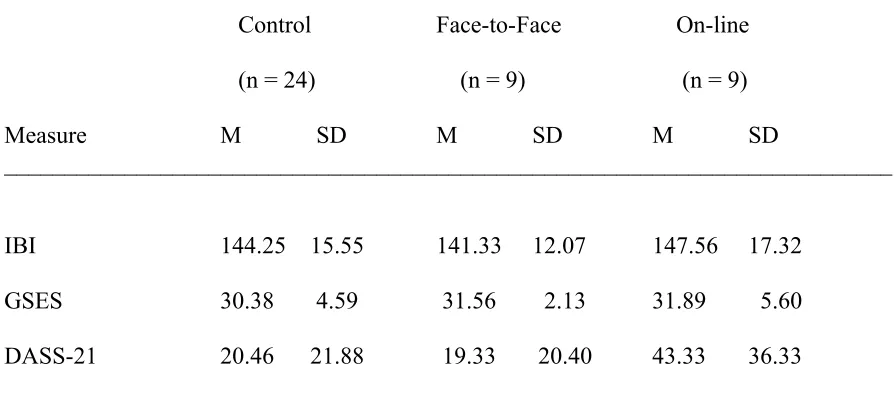
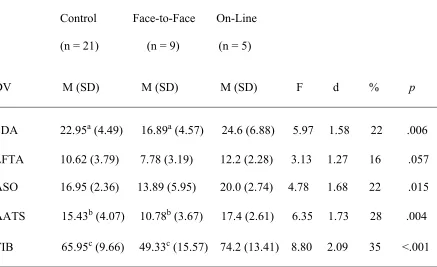
Table 1 Descriptive Statistics of Participants...63 Table 2 Means and Standard Deviations of Pre-Intervention Measures...66 Table 3 Means, Standard Deviation and Group Comparisons on Measures of
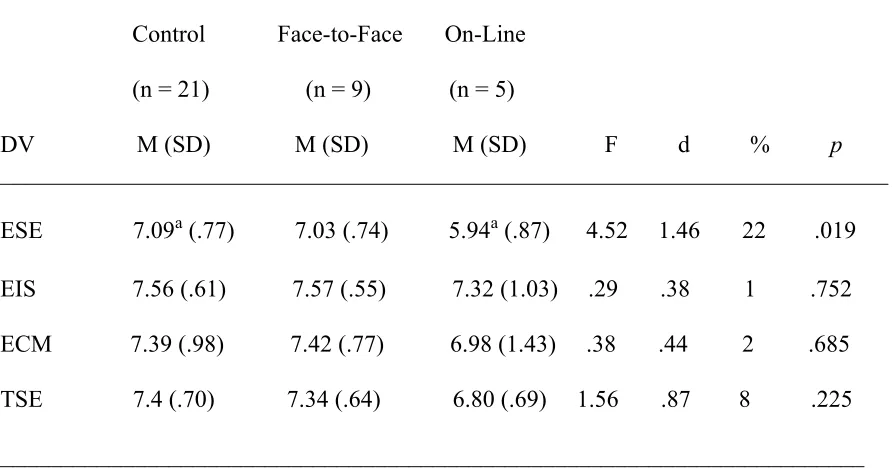
Teachers' Specific and General Irrational Beliefs at Posstest... 69 Table 4 Means, Standard Deviations, and Group Comparisons on Measures of Specific and General Teacher Efficacy at Posstest... 72 Table 5 Means, Standard Deviations, and With-in Group Comparisons on
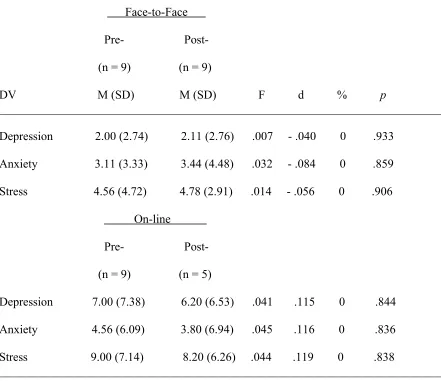
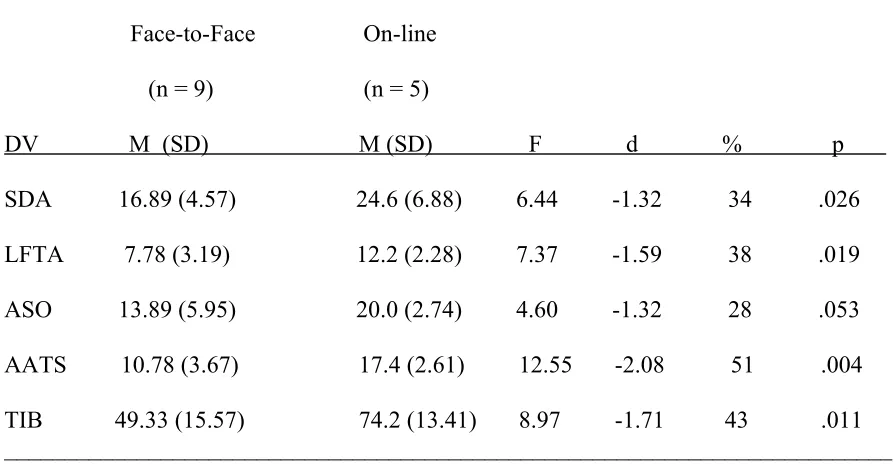
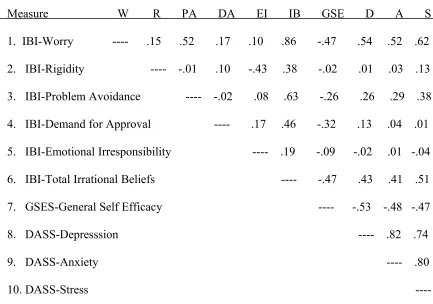
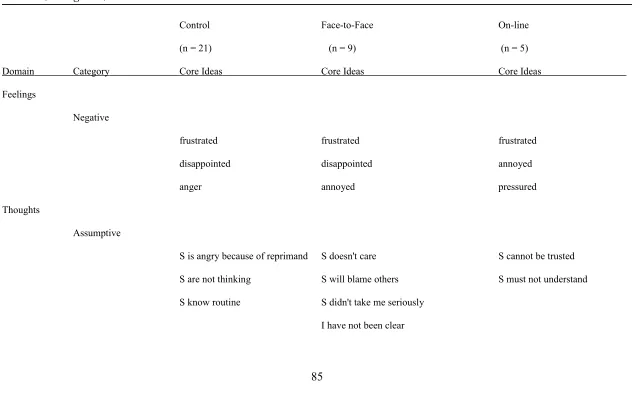
Measures of Depression, Anxiety, and Stress... 74 Table 6 Means, Standard Deviations, and Group Comparisons on Measures of Specific and General Irrational Beliefs at Posttest of Face-to-Face and On-line Groups... 77 Table 7 Correlations of Dependent Measures Compiled Across Groups at Pre- Intervention...80 Table 8 Qualitative Findings of Data Collected From Classroom Scenario
LIST OF FIGURES
CHAPTER I Introduction
School systems have implemented numerous initiatives (U.S. General Accounting Office, 2000), standards and strategies (Strong, Silver, Perini, 2001), and practices (NCREL, 2004) with the goal of effecting change in teacher performance and student achievement at the school level. Despite exhaustive research and interventions, however, achievement has been relatively stagnant over the past 30 years (Leschly, 2003). The U.S. Department of Commerce (USDOC, 1971-2007) compiled data confirming the completion rate for high school has lingered around 85-88% since the 1970s. Additionally, data collected by the U.S. Department of Health and Human Services indicates a consistent increase in mental health related issues for all ages (NCHS, 2008). Despite these bleak findings, theoretical
frameworks and empirical research suggest the potential exists for increasing student outcomes and promoting the mental health of teachers.
Rationale for Intervention
Several researchers have suggested that teacher efficacy is strongly related to the achievement of students (Ashton, Webb, & Doda, 1983; Berman, McLaughlin, Bass, Pauly, & Zellman, 1977). Ashton (1985) defined teacher efficacy as teachers’ “beliefs in their ability to have a positive effect on student learning” (p. 142). These beliefs impact teachers’ thoughts, emotions, behaviors, degree of tolerance for frustration, and exertion when
While teacher efficacy appears to be directly linked to teacher and student
performance, findings from several experimental studies suggested that Rational Emotive Education (REE) is effective in increasing student achievement (DiGiuseppe & Kassinove, 1976; Omizo, Cubberly, & Omizo, 1985). REE is a derivative of Rational Emotive Behavior Therapy (REBT) developed by William Knaus in the early 1970s. It is impossible to
determine the overall impact of REE or REBT on classroom settings because there is no empirical evidence of their utility in terms of teacher efficacy. Notwithstanding, research on this topic appears to have vitality and may lead to the identification of additional strategies or interventions that can be implemented to impact teachers, students, and society.
From a developmental perspective, it is most important to place emphasis for such interventions on elementary school teachers. Ellis (2005) suggested the beliefs individuals develop at an early age are often solidified through indoctrination and repetition.
Unfortunately, children are frequently witness to adults emoting and behaving in less than helpful ways. These emotions and behaviors often imply irrational thinking and become a part of the cognitive, emotional, and behavioral repertoire of children. However, if children are taught at an early age, through modeling and direct instruction, how to think, emote, and behave in self- and society-helping ways, they will be more adept at facing adversity.
influences in the lives of children entering school. The first years of school appear to be very crucial and often determine the ultimate success of students. Elementary school teachers may have the potential to increase student achievement by participating in interventions focused on addressing teacher beliefs. Academic success at an early age will likely provide a foundation for continued school success.
At the school-level, teachers and student support staff members, including school counselors and school psychologists, have successfully implemented the REE curriculum for students in elementary grades (Donegan & Rust, 1998; Knauss, 2001; Vernon, 2004).
School counselors can also mend the gap between counseling theory and practice for teachers as well. A shift in the delivery of school counseling services toward teacher consultation would allow school counselors to more effectively aid teachers in assisting students achieve success (Baker, 2000). Students would essentially be indirectly impacted by school
counselors' consulting with teachers in a prescriptive mode (Kurpius, 1978 in Baker, Robichaud, Westforth-Dietrich, Wells, & Schreck, 2009) about counseling theory and classroom application.
school counselors have the potential to foster student development in a number of ways. On the other hand, Strength-based School Counseling (SBSC) identifies school counselors as agents in promoting the well-being of students through the development of strengths (Galassi & Akos, 2007). SBSC focuses on identifying and building on strengths as well as the
development of new strengths (Galassi, Griffin, & Akos, 2008). School counselors can navigate both models by utilizing consultation to develop teacher and student strengths. An intervention focused on addressing the beliefs of teachers would exemplify the stated mission of SBSC (Galassi & Akos, 2007) and align with the ASCA National Model (ASCA, 2005). School counselors can develop strengths of teachers and students by providing training and consultation related to counseling theory. Therefore, knowledge of and the dissemination of counseling theory appears essential as school counselors strive to impact all students.
Purpose of Study
Through personal and professional experiences, teachers were noted responding to classroom situations in seemingly unfavorable ways. Examples of teacher responses
included: yelling, belittlement, negative non-verbals, and illogical student consequences. At times, responses remained covert or were internalized.
The main purpose of this study was to investigate the impact an intervention titled, Performance Enhancing Strategies and Techniques for Teachers (PEST-T) had on teachers' beliefs and emotional and behavioral responses to students and classroom situations. Developed by the principle investigator, PEST-T was based on the principles of Social Cognitive Theory (SCT; Bandura, 1986) and Rational Emotive Behavior Therapy (REBT; Ellis, 1962).
In addition to the experimental goals, correlations were explored for the major
constructs under investigation; irrational beliefs and efficacy beliefs. Warren (2010a, 2010b) suggested a relationship between these variables and demonstrated a need for further
investigation. Understanding the relationships between irrational beliefs and efficacy beliefs will guide future development and revisions of the PEST-T trainings.
A final goal included the exploration of participants' perceptions of likely cognitive, emotional, and behavioral responses to classroom scenarios. This investigation offered additional insight, beyond the experimental and correlational goals. A qualitative look at teachers thoughts, feelings, and behaviors may be invaluable as research in this area emerges.
Importance of the Study
Research Questions Experimental research questions:
1. Does PEST-T reduce irrational beliefs held by teachers? 2. Does PEST-T increase perceived efficacy of teachers?
3. Does PEST-T reduce feelings of depression, anxiety, and stress among teachers?
4. Which PEST-T intervention is more effective in reducing irrational beliefs? Correlational research question:
5. Is there a relationship between efficacy beliefs and irrational beliefs? Qualitative research question:
6. Will the PEST-T trainings lead teachers to respond in more helpful ways to the classroom situations presented on the Classroom Scenario Questionnaire?
Assumptions
Rational Emotive Behavior Therapy (REBT) suggests irrational beliefs lead to unhealthy negative emotions and self-defeating behaviors. This research assumed that irrational beliefs may be preceded or accompanied by efficacy beliefs. These two types of beliefs may theoretically overlap in some instances.
collected from this study, the groups were similar. Several measures were administered to explore the similarities among groups prior to the interventions.
The participants in this study used self-reporting to complete the measures. There was a potential for participants to report inaccurate information for numerous reasons when completing the measures. It was assumed however, that the data collected from the
participants was reliable and accurate.
Limitations
With any study, there are certain limits the researcher is unable to overcome. In this study specifically, there are several limitations worth noting. The sample for this study comprised voluntary participants. Voluntary, verses mandatory participation, hindered the size of the sample in this study. As a result, low statistical power may have led to a Type II error. In this case, a relationship may have existed but was likely overlooked. A voluntary sample also brings into question the reason for other potential participants' lack of
participation in the study. There may be a difference between the participants and those who choose not to participate thus skewing the findings of the study. This discrepancy therefore, suggests a threat to external validity. The findings of this study may not be generalizable to teachers that are not interested in learning “performing enhancing strategies.”
study. Remaining objective and free from bias was a key in reducing this threat throughout the study.
Delimitations
Delimitations refer to characteristics that may have limited the scope of a study. In this study, several boundaries were defined due to its experimental nature and societal constraints. This study only addressed beliefs, emotions, and performance of elementary school teachers. Middle and high school teachers likely experience similar thoughts and feelings but were not included in this study.
The majority of the teachers at the targeted schools in this study were female.
Definitions
• Beliefs – Thoughts/cognitions of self, others, or life.
• Irrational Beliefs – Rigid, dogmatic, absolutistic thoughts. • Rational Beliefs – Preferential, logical, and realistic thoughts • Efficacy – One's perceived ability to reach a desired goal.
• Emotions – Derived from thoughts of events or experiences.
• Health Negative Emotions –Feelings, including concern, frustration, and annoyance, that lead to helpful behaviors.
• Unhealthy Negative Emotions –Feelings, including anger, anxiety, depression, and guilt, that lead to unhelpful behaviors.
• Low Frustration Tolerance – Also known as “I-can't-stand-it-itis.” Assumption that a situation is too hard or too difficult to bear. Related to problem avoidance.
• Reciprocal Determinism – The interactive and bi-directional process that occurs between an individuals thoughts/emotions, behavior, and the environment. • Teacher Efficacy – A teacher's perception of their ability to complete or reach a
desired goal.
Organization of the Study
Five chapters are included in this dissertation. The rationale, purpose of the study, importance of the study, research questions, limitations, and assumptions are detailed in Chapter I, presented above. Definitions of key terms used throughout this dissertation are also included. Chapter II provides literature review of the current trends in professional development. This chapter also details Social Cognitive Theory and Rational Emotive Behavior Therapy. An integrative analysis of these two theories, which forms the basis for this study, is presented as well. Chapter III, titled Method, reports the participant
information, instrumentation, and the design of the study. A detailed account of the research procedure is provided, with a summary to conclude the chapter. The results of the
CHAPTER II
Review of History, Theories, and Literature Current Trends in Education
Professional Development
Each year, teachers are required to participate in various forms of professional development. This professional development, however, is rarely designed to help teachers improve themselves (Seferoglu, 1996). Instead, professional development is often centered around the delivery of instruction, academic content, and educational updates and revisions. Sparks and Hirsch (2000) described effective professional development as rigorous,
curriculum-based, and immersing teachers in subject content and teaching methodology. Teachers often experience feelings of stress, anxiety, and resentment as a result of the massive amounts of teaching methods and curriculum-based information rigorously
Due to the recent budget crises, many school districts are facing four-day school weeks. Additionally, student and teacher programs are being cut and positions are being eliminated (Cook, 2009). These cutbacks, aimed at balancing the budget, neglect to address the extra responsibility and burden teachers are acquiring. Teachers are experiencing larger class sizes, lack of autonomy, increased workloads, inadequate feedback, decreases in staff support, and increases in disciplinary issues (Cedoline, 1982, & Ursprung, 1986 in Pines, 2002). These environmental changes will likely lead teachers to experience increased levels of stress and intense emotion. Distressed teachers will further create a learning environment that is not conducive to teacher or student success.
Increases in teacher responsibility, stress, and burnout, due to recent budget cuts are all reasons for low-cost professional development targeting the mental health of teachers. By demonstrating concern for mental and emotional well-being, professional development will likely be perceived by teachers as helpful, practical, realistic, and encouraging.
School counselors can play an integral role in providing mental health-based
Conducting professional development, designed specifically to promote teacher wellness and mental health may foster a solution-focused consultation model and simply remind teachers that they matter (Dixon & Tucker, 2008).
Student Achievement
Leschly (2003) considers student achievement an educational outcome largely measured by standardized tests. While each state determines the measures used to assess student achievement, the United States as a whole, lacks uniformity and consistency (Grissmer, Flanagan, Kawata, & Williamson, 2000). This lack of congruence across the nation creates difficulty when exploring and comparing student achievement and effective interventions. Research findings, however, suggests that teachers can increase student achievement through perseverance (Ross & Bruce, 2007) , effectively managing their classroom (Woolfolk, Rosoff, & Hoy, 1990), paying close attention to at-risk students (Ashton, et. al, 1983; Ross & Bruce, 2007), attempting difficult new ideas (Ross, 1998), and increasing student efficacy (Ashton et. al, 1983). Strong, Silver, and Perini (2001) claimed that teachers can incorporate rigor, thought, diversity, and authenticity in the classroom as ways to increase student achievement.
Research and practice do not mirror each other in terms of strategies for increasing student achievement. Researchers suggest character and personality traits of teachers largely influence student achievement. On the other hand, school systems focus on student
report by the United States Department of Education (1998), stated some school systems are focusing on reading programs to help students learn to read as a way to increase student achievement. The United States General Accounting Office (2000) reported the use of school-community interventions aimed to increase student achievement. For example, some school systems are offering students with part-time jobs after-school and weekend instruction to accommodate their schedules. Yet, Darling-Hammond (2000) suggested that teacher training and certification is the best indicator of student achievement.
The Role of the Professional School Counselor in Student Success
The American School Counselor Association (ASCA; 2005) suggested school counselors can play a vital role in providing education and training to teachers. While largely unaware of issues surrounding curriculum and instruction, school counselors can utilize counseling theory and skills to impact teachers' ability to cope. Additionally, school counselors can support teachers in classroom management and behavioral practices. By addressing these two integral components of teaching, school counselors may indirectly influence the success of students.
System Support, one element of the ASCA National Model (ASCA, 2005), depicted school counselors in consultation, collaboration, and teaming roles. Additionally, Baker (2000) described various modes of consulting school counselors may employ when
support teachers in applying and demonstrating the frameworks of SCT and REBT in the classroom.
Including a venture of this magnitude within a comprehensive program would afford school counselors the opportunity to demonstrate leadership, advocacy, and collaboration, and the potential to foster systemic change (American School Counselor Association, 2005). Through leadership, advocacy, and collaboration, school counselors can promote the success of students. Systemic change would likely occur as school stakeholders, including teachers, principals, parents and students, gain insight into the intricacies of SCT and REBT and their integrative applicability in the classroom, at home, and life, in general.
Furthermore, it is plausible for students' personal and social development to be impacted as school counselors incorporate a psycho-educational component designed for teachers within the comprehensive school counseling program. Baker (2000) described school counselors as providing skill-enhancing programs designed to directly impact students. School counselors can also design skill-enhancing programs for teachers. This additional component would further improve the reach of the comprehensive school counseling program.
counselors would continue to provide classroom guidance, small group counseling, and individual sessions to promote personal and social development (Schmidt, 2003).
Review of Relevant Theories Social Cognitive Theory
Albert Bandura first presented Social Cognitive Theory (SCT) in 1986 as a derivative of Social Learning Theory (Pajares, 2002). This change was due, in part, to Bandura's increasing awareness of the impact of cognition, as opposed to learning, on human
functioning (Grusec, 1992; Pajares, 2002). Many of the hypotheses and principles Bandura contrived decades earlier however, remained the centerpiece for his revised work. Through SCT, Bandura promotes the notion that cognitive processes are a intermediary determinant of human functioning and largely responsible for the environments impact on behavior (Price & Archbold, 1995). Over the years, Bandura has hypothesized about numerous concepts including reciprocal determinism, self-efficacy, and teacher efficacy.
Reciprocal Determinism. Bandura (1978) described the interactions between the personal, behavioral, and environmental domains as reciprocal determinism. Thoughts, beliefs, and emotions, which comprise the personal domain, interact bi-directionally with the behavior domain. Essentially, the personal domain influences behavior and behavior
interactions may simultaneously occur. However, Bandura (1986) suggested (as cited in Zimmerman, 1989) these domains do not possess equivalence in power, but are in constant flux, dependent upon the other domains.
The concept of reciprocal determinism can be utilized to explore intrapersonal concerns, interpersonal actions, and societal issues (Bandura, 1978). The underlying philosophy of reciprocal determinism appears to support a constructivist view.
Constructivism refers to the notion that individuals create their own meaning or construct knowledge of their experiences (Hein, 1996). While the individual is not completely an independent agent, neither are they solely influenced by the environment (Bandura, 1989). There appears to be an intimate interplay between the individual and the environment that leads to a construction of various thoughts and behaviors.
Several characteristics encompass the interpretive and constructive nature of SCT including vicarious learning, symbolizing, forethought, self-regulation, and self reflection. These processes, occurring within the individual (personal domain), have the capacity to overlap, co-occur, and exist dually. These systems of self foster the capacity and agency for individual change and promotion. By engaging in these processes, consciously or
unconsciously, individuals self-guide in directions that appear to be the most attainable and appropriate.
experiences are often converted into symbolic meaning that the individual can more easily recollect (Crain, 2000). The symbols, created to make meaning of situations, are later retrieved when deem necessary by the individual. The retention of experiences allow individuals to engage in additional cognitive processes, specifically forethought,
self-reflection and ultimately self-regulation. Creating meaning of experiences through symbolic representation allows individuals to engage in forethought. Forethought is exercised when anticipation of consequences and outcomes, as a result of contemplated action, motivates an individual to set goals and respond (Bandura, 1989). A perspective grounded in forethought offers guidance, clarity, and purpose (Bandura, 2001). Bandura (1989) suggested that forethought along with self-regulation, guides action. Individuals regulate their emotions, behaviors, and degree of motivation through a system of “checks and balances” based on internal and external influences. While forethought is a precursor to self-regulation and motivation, self reflection significantly impacts the the decision to perform a specific
behavior (Bandura, 1989). When engaged in self reflection, individuals explore and modify their thoughts of their ability to perform a behavior or task. Efficacy beliefs play a vital role during the process of self-reflection. While not as central as efficacy beliefs, motivation is also influenced by the feedback received by the individual as well as the required length of time to complete the goal (Stone, n.d.).
self efficacy, is defined as “the conviction that one can successfully execute the behavior required to produce the outcomes”(Bandura, 1977, p. 193). Self-efficacy is largely determined through four sources of information. Self-efficacy is affected by personal experiences, witnessing others experiences, societal influences, and physiological reactions in various situations. Self-efficacy is thought to impact behavioral choices, effort and persistence, and cognitive and emotive responses (Bandura, 1986). Bandura (2001, p. 10) stated, “efficacy beliefs are the foundation of human agency.” Self efficacy appears at the core of all factors and determinants of motivation and behavior. Bandura (1977) described efficacy as an individuals perception of her or his ability to successfully complete a task. Efficacy beliefs lead an individual to choose a behavior, determine a level of effort, and persevere (Bandura, 2001).
energy, give up easily or yet, not attempt the task, while still inferring a particular behavior would lead to the desired outcome. A teacher with low self efficacy in the delivery of classroom instruction would offer little effort in motivating disengaged students.
Self efficacy, guided by four main sources of information, is largely the result of self-persuasion (Bandura, 1977, 1989). These information sources persuade individuals in their perceptions of their ability to complete a desired task. One source of information guiding efficacy beliefs is performance accomplishments. The outcome of a direct experience
beliefs, may have more of an impact on outcome expectancy. A final source of information that impacts efficacy beliefs is emotional arousal. Efficacy beliefs rely on the degree of the emotional response to a situation. Heightened emotions, such as fear and anxiety, often hinder performance. If an individual's emotions are heightened in a specific adverse situation, it is likely efficacy beliefs will diminish and alter performance outcomes.
Alternatively, if arousal is minimized and physiological symptoms are not present, efficacy beliefs may remain constant and support performance.
Efficacy beliefs for completing a task can be generalized to other tasks or situations (Bandura, 1977). If a teacher, for example, maintains a high efficacy belief for instruction, this perceived ability to effectively instruct may be extended to classroom management. The ability of individuals to generalize efficacy to other areas of life is indicative of the impact of cognitive processes on behavior and the environment.
Teacher Efficacy. Over the past few decades, educational researchers have pushed teacher efficacy to the forefront as an extension to Bandura’s theory of self-efficacy. Teacher efficacy is comprised of teaching efficacy and personal efficacy (Ashton, Webb, and
Researchers have linked many variables to increases or decreases in teacher efficacy. Huang, Lui, and Shiomi (2007) found a significant positive correlation between teacher efficacy and self esteem. The data suggested that as teachers acquire experience, teacher self efficacy and teacher self esteem increases. DiFabio & Palazzeschi (2008) found a significant positive relationship between teacher efficacy and emotional intelligence. Emotional
intelligence is defined as “the capacity to process emotional information accurately and efficiently, including the capacity to perceive, assimilate, understand, and manage emotion” (Mayer, Salovey, & Caruso in Mayer & Cobb, 2000, p. 165). These findings suggested that emotional intelligence is linked to teacher self efficacy in managing classroom behavior, engaging students, and implementing useful teaching interventions.
Ross and Bruce (2007) explored professional development and its impact on teacher efficacy. Designed to increase teacher efficacy, professional development appeared to produce changes in teachers' beliefs about their ability to manage classroom behaviors. Other changes in efficacy beliefs were not significant. Ross and Bruce (2007) concluded that professional development, although important in the advancement of educational endeavors, lacks utility in impacting teacher efficacy.
Researchers have recently explored teacher efficacy in relation to student
achievement. Henson (2001) purported that academic achievement increases and students are more successful when their teacher possesses high efficacy beliefs.
Low self efficacy has the potential to impede the ability of teachers to function optimally in classroom and educational settings. Pintrich and Schunk (1996) suggest that a teacher’s belief that he or she is unable to manage classroom behaviors is likely to lead to the avoidance of classroom management techniques. The teacher will often “give in” to unruly students because the task of managing the class is seen as exceeding their competence, thus perpetuating further lack of efficacy in classroom management. It is conceivable that this cycle is applicable to various other aspects of teaching, including working with low
functioning students, communicating with teachers and parents, and lesson plan development and delivery.
The impact of teacher efficacy on student achievement appears obvious and well supported. Poulou (2007) found that personality traits, self-perceptions, and drive influence teacher efficacy. Educational researchers, however, have devoted little effort and resources to exploring these factors and their impact on teacher efficacy.
Rational Emotive Behavior Therapy
Albert Ellis developed Rational Emotive Behavior Therapy (REBT) in the mid-1950s based on the premise that humans disturb themselves, not by what happens but
themselves, others, and life. Demands are statements of rigidity and often include words such as “should,” “must,” and “ought.” Evaluative thoughts most often accompany these demands. “I can’t stand it,” “It’s awful,” and “They are terrible,” are common thoughts used to evaluate situations. As a result of the demanding thoughts and evaluative beliefs,
unhelpful negative emotions including anxiety, anger, depression, shame, and guilt frequently emerge, leading to negative behavioral consequences (Dryden, 2003).
Rational beliefs are a more functional alternative to irrational thoughts. Rational beliefs include preferential statements such as “I prefer things go my way but they don’t have to” or “I would like for him to do what I say, but if he doesn’t, it’s not the end of the world.” Because of their logical manner and negation of the irrational, these thoughts lead to helpful negative emotions (concern, bother, or frustration) that elicit more helpful behavioral
consequences.
REBT framework in effecting change in thought and behavioral patterns (Ellis & MacLaren, 2005). A comprehensive body of literature spanning 60 years supports the usefulness and value of the REBT system of therapy (David, Szentagotai, Eva, & Macavei, 2005; Haaga & Davison, 1989).
Rational Emotive Education. Between 1970 and 1974, William Knaus (2001) developed Rational Emotive Education (REE), an educational program designed for classroom delivery, aimed to help children develop optimally through the promotion of rational thinking and helpful behaviors. REE consists of a series of lessons designed to educate and create awareness of the connections between thoughts, emotions, and behaviors. Much has been written on REE and its application and benefit toward children in the classroom. Related research has suggested that REE has excellent potential in providing students with a framework from which to explore their thoughts, feelings, and behaviors in classroom settings (Trip, Vernon, & McMahon, 2007). While tailored to teach students the connections between thoughts, feelings, and behaviors, REE largely ignores the influence teachers have on students (Vernon, 2004). REE appears to overlook the importance of educating teachers on classroom strategies such as modeling rational thinking and demonstrating self-helping behaviors.
researchers have conducted only a few studies related to the impact of REBT on classroom teachers (see Forman & Forman, 1980; Nucci, 2002). While research findings related to teacher efficacy suggest that REBT is a viable method for increasing teacher performance, more research is needed.
Potential Effect of REBT on Teacher and Student Performance
To date, few researchers have addressed the influence of professional development on teacher efficacy. Of the studies conducted, the primary focus of the professional
development for teachers entail practical solutions including communication skills (Fritz, Miller-Heyl, Kreutzer, & MacPhee, 1995) and peer coaching (Edwards, Green, Lyons, Rogers, & Swords, 1998). This type of professional development neglects to address teachers' core beliefs that influence their emotion and behavior (Ellis & Dryden, 1997). While this type of professional development offers support to teachers, irrational beliefs are maintained, leading to unhealthy negative emotions and unproductive behaviors. For teachers, efficacy beliefs are a way of rating their perceived success at a task. Because teachers are human, and humans are genetically predisposed to think irrationally, teachers often rate themselves as a whole, conditional of their success (Ellis, 2005). Thus, a teacher who has a high sense of efficacy in a certain task is likely to have a high self esteem when involved in the task, while the same teacher maintaining a low sense of efficacy for a
efficacy and self esteem. Self-esteem decreases when people base their self worth on an activity, such as teaching, and then negatively evaluate their performance as a teacher (Tschannen-Moran, Woolfolk Hoy, & Hoy, 1998). REBT supports these findings, while suggesting teachers accept themselves unconditionally. This implies teachers viewing themselves as humans who sometime fail and succeed at teaching related tasks. This failure does not translate to who they are as a teacher or person. This philosophical concept of REBT also supports unconditional other acceptance (UOA) and unconditional life acceptance (ULA), (Ellis & MacLaren, 2005). These humanistic tenets of REBT appear useful in
helping teachers form preferential, accepting philosophies of themselves, their students, and life.
A study conducted by Singh and Stoloff (2008) demonstrated the irrational beliefs that many teachers maintain. While the authors suggested that teachers’ participating in their study maintained personality traits exemplary of effective teachers, the inverse is presumed under the theoretical framework of REBT. An overwhelming majority of the participants appeared to hold strong, rigid beliefs regarding communication, respect, sensitivity towards students, and teacher inquisitiveness. REBT postulates that these strong, rigid beliefs held by teachers lead to unhealthy negative emotional and behavioral consequences (Dryden,
decrease if teachers are well-trained in classroom instruction, yet have emotional disturbances that impede instructional delivery.
Recent findings by Di Fabio and Palazzeschi (2008) suggested the intrapersonal and adaptability dimensions of emotional intelligence are linked to teacher self-efficacy.
Teachers who have difficulty understanding how they feel and trouble adapting to problem situations appear to have lower self-efficacy. Additionally, teachers with lower self efficacy may have difficulty identifying how they feel and adapting to problem situations. This concept has the capacity to become self-fulfilling and cyclical in nature. Without appropriate intervention, teachers may continue to reindoctrinate themselves with unhelpful thoughts leading to unproductive teaching and ultimately low student achievement. REBT, however, appears to address these dimensions of emotional intelligence and associated concerns (see Warren, 2010a).
Scientific and logical processes for exploring and controlling emotions are provided with this framework while promoting a flexible orientation to adverse events (Ellis, 1971). For example, Warren (2010b) developed and conducted teacher trainings based on REBT in a effort to reduce irrational beliefs and increase teacher efficacy. These trainings were presented in two formats; face-to-face and on-line. The findings of this study suggested both formats of the training were effective in reducing irrational beliefs. The findings also
suggested increased well-being and improved relationships. Teachers reported being less demanding of students, family, and life situations while thinking in more flexible ways. Teachers also reported the trainings led to more emotional control and more effective responses to adverse situations. The findings also suggested these variables
enhanced relationships with family and students (See Appendix L). Additionally, the face-to-face group participants (90.9%) and the on-line group participants (100%) indicated they would recommend this REBT training to other teachers.
Theory Integration
In a literature review,Warren (2010a) suggested REBT could be employed to increase teacher efficacy. Warren (2010b) later found a weak relationship between irrational beliefs and efficacy beliefs, despite low statistical power. While a strong relationship
between these constructs has not yet been confirmed, a theoretical backing appears solid and warrants further explanation.
Social Cognitive Theory (SCT) and Rational Emotive Behavior Therapy (REBT) are both considered cognitive behavioral theories due to their emphasis on cognition and
behavior. When exploring these two theories conjunctively, there appear to be several analogous and converging concepts. Although cognition is a central component of both, the theories focus on diverging thought processes that aid in the consolidation of the theories.
Both REBT and SCT support the claim that modeling can have a significant impact on human behavior, specifically childrens' behavior. Ellis (1975) suggested children, already susceptible to irrational thought, often solidify their beliefs as a result of observing and imitating their parents and teachers. For example, when children witness their teacher
behaviors, which according to REBT, are grounded in irrational belief. A teachers' display of unhelpful behaviors essentially serves as permission for students to behave in a likewise manner (Bandura, Ross, & Ross, 1961). When children act out these vicariously learned behaviors, they are often reprimanded or punished by a teacher, acting on irrational beliefs. The teacher and student will frequently continue this reindoctrination of thoughts, feelings, and behaviors.
For example, a teacher maintains the irrational belief, “Students should always do what I say and when they don't I can't stand it!” When a student does not follow this
demand, the teacher becomes angry or enraged. As a result of these dysfunctional emotions, she reprimands the student by yelling and pointing her finger. The next day while playing, the student demonstrates the vicariously learned behavior by yelling and pointing his finger at a classmate when he loses a game. The teacher again reprimands the student. This likely creates a conflict for the student who is reprimanded for imitating the behavior observed of the teacher. Thus, cognitive dissonance will likely be experienced as the student attempts to predict future outcomes and demonstrate control of his behavior (Bandura, 1997).
almost certainly decrease motivation and prevent the student from excelling in school. A similar pattern of events may transpire for the teacher in this situation as well. These interactions between this student and teacher demonstrate a clear convergence of SCT and REBT. Observational learning (SCT), efficacy beliefs (SCT), irrational beliefs (REBT), reciprocal determinism (SCT), and the interaction of thoughts, feelings and behaviors (REBT) all appear to influence the outcome of the above example.
One diverging, yet complementary, aspect of these theories is the focus on cognition type. SCT centers on inferential thoughts (ie. efficacy beliefs). Inferential thoughts, such as efficacy beliefs, are based on assumptions or what is thought to be truth. “There is nothing I can do to get through to difficult students,” is an example of an inferential thought. Bandura (1991) suggested that self efficacy beliefs impact other thought processes, emotion, and motivation. The specific thought processes Bandura (1991) referred to are not explicated however. Yet, REBT discounts inferential beliefs while suggesting evaluative beliefs are the source of emotional disturbance. Both thought processes however, appear to play a
The student then evaluated this inference or perceived self-efficacy. A plausible evaluation would be, “ I should be able to meet the expectations of the teacher and because I can't, that must prove I'm no good. Furthermore, I can't stand it!” These evaluations may lead to feelings of depression and anger. As a result of these dysfunctional feelings, the student may behave in unhelpful, self-defeating ways creating further detriment to academic success.
This pattern of thought, emotion, and behavior appears to be best accounted for through the integration of SCT and REBT. It is conceivable that SCT, while sound and logical in the detail of cognition, fails to address the full scope of the thought processes available to human agency. For example, it is plausible to assume that physiological responses may provide information about the perceived capability to perform a task (Bandura, 1977). However, it is not plausible to assume that anxiety will be experienced when faced with a situation in which the perceived self efficacy is low. Bandura (1977) suggests modeling and desensitization to reduce anxiety but fails to adequately address the cognitive process that precedes the physiological responses.
REBT suggests that the perceived inability to complete a task, if evaluated
An individual's thought processes, emotions, and behaviors continue to interact and impact the environment and each other just as Bandura (1978) described. A student receives feedback about his behavior, self-reflects, and regulates his behavior. These processes are based on vicarious learning as well as direct experiences, verbal persuasion, and emotional arousal. In the previous example, it should be noted that the feedback received for yelling, while negative in the classroom, may be successful in other settings (ie. home, playground, daycare). This may create further conflict and confusion when attempting to engage in self-regulation. The degree to which a child can apply higher order thinking skills to solve these internal conflicts also influences outcome. While this concept is not age specific, younger children may be more susceptible to experiencing this dissonance. It is likely that young children do not have the mental capacity to address these internal conflicts by thinking in more abstract ways. As a result, the ability to problem solve may be quickly diminished due to further failure, resulting in low frustration tolerance (Ellis, 1962).
A question such as, “How much can you do to motivate students who show low interest in schoolwork?” found on the Teacher Self Efficacy Scale (Bandura, n.d.), is
designed to assess a teacher's perceived ability in instruction. A teacher indicating nothing or very little when answering this question suggests little, if any, perceived ability in achieving this goal. In this case, the teacher would likely not be motivated to attempt to reach the goal. Essentially, the teacher implies the goal would be too hard or difficult to achieve. This would indicate the teacher is suffering from low self-efficacy or low frustration tolerance. The apparent theoretical convergence of efficacy beliefs and low frustration tolerance is demonstrated in this example. It is therefore plausible to hypothesize that increasing a teacher's frustration tolerance will essentially increase the degree of efficacy perceived for a given task.
Social Cognitive Theory (SCT) and Rational Emotive Behavior Therapy (REBT) are both dynamic frameworks for understanding human cognition, emotion, and behavior. Over the years, these theories have been applied separately in various settings with great success. SCT and REBT appear to have the capacity to be implemented in an integrative fashion.
An academic setting seems most appropriate for the application of this integration due to the influence and impact of teachers and schools on students. Instead of following societal expectations, subjecting and indoctrinating children to think and behave in less than helpful ways, schools can best serve their students by taking steps to address teachers' emotional disturbances and unhelpful practices. With teachers thinking, emoting, behaving in more rational, logical, and functional ways, students will likely follow.
Synopsis
emotions, and behaviors. This notion is congruent with social learning theory and
exemplified by the infamous Bobo doll experiment (Bandura, Ross, & Ross, 1961). In this experiment children exposed to an aggressive adult behaved in aggressive ways
similar to those of the model. Additionally, when presented with a nonaggressive adult, children responded with more composed behaviors. The influence of teachers' classroom behavior appears to be just as powerful. Ellis (1975) contended that children will adapt and incorporate a new healthier emotional philosophy if provided with training and modeling. When students witness their teacher consistently emoting and behaving in self-helpful ways, they are highly likely to demonstrate comparable reactions in similar situations.
Several limitations of this literature review are worth noting. There is much research and literature on teacher efficacy and its effects on student achievement. Additionally, the review found promising results for student achievement when REE was applied to students. This review, however, failed to find research on the effects of an REBT-based teacher intervention aimed at increasing teacher efficacy and/or student achievement. As such, the contents of this literature review are comprised only of concepts and ideas that appear to be applicable in school settings. Currently, these ideas lack data to support their utility and effectiveness.
implications of the concepts and ideas shared. Notwithstanding these efforts, there remains the potential for bias. Nevertheless, this review is thought to shed light on a viable
intervention that has the potential to change the present direction of education and mental health.
CHAPTER III Method Participants
The participants for this study comprised elementary school (kindergarten through fifth grade) teachers in a rural school system in the Southeast. The Director of Student Services notified the principals of the elementary schools about the opportunity for teachers to participate in a study. The principle investigator made follow-up contact with the
principals of each school. A day and time was arranged to present an overview of the study to the teachers of the participating schools. Teachers signed up to participate in the
interventions on a voluntary basis. Teachers interested in the trainings contacted the principle investigator via email. Continuing Education Units (CEUs) were awarded to the participants at the completion of the training. Prior to the study, the superintendent of the school system was contacted for approval to conduct the research. The study was also approved by the Institutional Review Board (IRB) at North Carolina State University.
Instruments
Depression Anxiety Stress Scale-21(DASS-21)
The DASS-21 (Lovibond & Lovibond, 1995) is a 21-item self-report measure designed to assess participants degree of depression, anxiety, and stress (see Appendix B). The original DASS contains 42 items. The DASS-21 consists of three scales (depression, anxiety, and stress), each containing 7 items each. The depression scale explores participants degree of dysphoria, hopelessness, devaluation of life, self- deprecation, lack of
interest/involvement, anhedonia, and inertia. Items within this scale include, “I felt I wasn't worth much as a person” and “I found it difficult to work up the initiative to do things.” The anxiety scale assesses autonomic arousal, skeletal musculature effects, situational anxiety, and subjective anxious affect. For this scale, participants respond to items such as “I found myself in situations that made me so anxious I was most relieved when they ended” and “I feared I would be “thrown “ by some trivial but unfamiliar task.” The stress scale investigates difficulty relaxing, nervous arousal, easily upset/agitated, irritable/over-reactive, and
impatience. Items within this scale include, “I found myself getting upset by quite trivial things” and “ I was intolerant of anything that kept me from getting on with what I was doing.”
are frequently converted into percentiles to determine severity rating for each variable and the three variables combined. Scores are considered 'normal' when ranging from 0-78th percentile. Scores can be classified as 'mild' (78-87), 'moderate' (87-95), 'severe' (95-98) or 'extremely severe' (98-100).
Cronbach's alpha was used to estimate reliability for each of the scales and the total score of the DASS for non-clinical populations. Reliability is adequate for all sub-scales and the total scale. Alpha ranged from .89 (anxiety) to .94 (depression). The reliability for stress was estimated to be .93. Alpha for the total score of the DASS is .96. Convergent validity of the DASS is considered to be high when compared to other scales measuring the same
constructs. Depression, anxiety, and stress are theoretically related, therefore the correlations between these scales are inherently high (Crawford & Henry, 2003).
Teacher Sense of Efficacy Scale (TSES)
Tschannen-Moran and Woolfolk Hoy (2001) developed the TSES (see Appendix C) with the goal of capturing teachers' perceived efficacy. Perceived efficacy is considered to be a self-judgment of a teachers' ability to control the outcome of a situation. Teacher efficacy is specifically related to perceived control of student engagement and learning.
Three sub-scales have been identified through factor analyses. One sub-scale,
Efficacy in Student Engagement, includes items such as, “How much can you do to help your students value learning?” The Efficacy in Instructional Strategies sub-scale incorporates items including, “How well can you respond to difficult questions from your students?” The third factor, Efficacy in Classroom Management, utilizes items such as, “How well can you establish a classroom management system with each group of students?”
The mean score for the TSES is 7.1. Higher scores on the TSES and its subscales indicate a greater likelihood for perceived control during the completion of teaching-related tasks. Low scores reflect a poor sense of ability to effect student learning. Reliability
estimates for the three sub-scales, Engagement (.87), Instruction (.91), Management (.90) and the total scale (.94) of the TSES are high. When the TSES was compared to other measures of teacher efficacy, positive correlations were found (Tschannen-Moran & Woolfolk Hoy, 2001). These findings suggest the TSES is a reliable and valid measure in assessing teacher efficacy.
General Self Efficacy Scale (GSES)
measure of specific samples as well. The GSES has been used as a measure of efficacy in over 1000 studies in various languages and counties (Schwarzer, 2009).
Ten items or statements are presented in this measure of perceived efficacy. A 4-point scale ranging from “1” (not at all true) to “4” (exactly true) is used when respondents report their level of agreement for each item. Statements include “I can always manage to solve difficult problems if I try hard enough” and “I am confident that I could deal efficiently with unexpected events.”
A study by Scholz, Gutierrez-Dona, and Schwarzer (2002) exploring perceived efficacy of individuals from 25 countries (N= 19,120) found adequate estimates of internal consistency for the GSES (.86). Cronbach's Alpha was .87 for the United States population (N= 1594). Additionally, the findings of this study suggested the GSES is unidimensional and can be considered valid and reliable across multiple cultures. In most samples, the mean score for the GSES has been around 2.9. Higher scores on the GSES indicate a greater sense of agency. This measure was utilized in this study to aid in capturing the construct of
perceived self-efficacy.
Irrational Beliefs Inventory (IBI)
consistent with those described in REBT. A 5-point likert scale, ranging from “1” (strongly disagree) to “5” (strongly agree), is provided for respondents to demonstrate a level of agreement for each item. A sample item reads, “If I can't keep something from happening, I don't worry about it.” The IBI is scored by summing all item responses. Low scores reflect a tendency to think rationally, while high scores indicate a propensity to think irrationally.
The IBI, was designed in an attempt to focus solely on irrational cognition, while isolating the construct from emotions (Bridges & Sanderman, 2002). It was developed from items found on the Irrational Beliefs Test (IBT; Jones, 1968) and the Rational Behavior Inventory (Shorkey & Whiteman, 1977). A factor analysis identified five factors: worrying, rigidity, need for approval, problem avoidance, and emotional irresponsibility. The internal consistency of the sub-scales of the IBI, for American samples, ranges from .69 (emotional irresponsibility) to .79 (worrying). These alpha levels suggest the IBI and its sub-scales are reliable. Correlations among the sub-scales of the IBI suggest they are independent of one another, thus supporting the scales validity. This scale has been used with many sample populations and several countries, including the Netherlands, Australia, and the United States.
Teachers' Irrational Beliefs Scale (TIBS)
REBT, include: low frustration tolerance, awfulizing, demandingness, and global
worth/rating. The TIBS evaluates these irrational beliefs across various teaching related areas. These areas are represented by four sub-scales: Self-Downing Attitudes, Low-Frustration Tolerance Attitudes, Attitudes to School Organization, and Authoritarian Attitudes Toward Students. A five-point scale is provided for teachers to demonstrate their level of agreement with items such as, “I think I am a failure when I haven't “got through” to a student or class.” The scale ranges from 1 (strongly disagree) to 5 (strongly agree). High scores on the TIBS suggest the respondent maintains irrational beliefs.
While four sub-scales are indicated on the TIBS, a parallel factor analysis revealed the items loading on three main factors: Demandingness, Self-Downing, and Low Frustration Tolerance (Bora, Bernard, Trip, Decsei-Radu, & Chereji, 2009). Adequate internal
consistency for this scale has been found with studies conducted on Australian and Romanian populations. Cronbach's alphas for the English version of the TIBS range from .70 - .85 across the subscales and the total scale score. Test-rest reliability for the TIBS is also
adequate (.80). The TIBS has been found to have low convergent validity in relation to other scales assessing irrational beliefs, specifically the Attitudes and Beliefs Scale 2 (ABS2; DiGiuseppe, Leaf, Exner, & Robin, 1988).
Classroom Scenarios Questionnaire (CSQ)
Teachers accessed the CSQ by typing http://jeffreywarren.net/Classroom_Scenario_
Questionnaire.html into a web browser. The CSQ homepage comprises instructions for
completion and a link to begin the questionnaire. Upon clicking on the link, teachers are presented with a pictorial representation of a classroom situation. A brief synopsis of the situation accompanies the picture. Teachers are asked to imagine themselves in these situations and respond to the open-ended questions. An example of one scenario includes a picture of a student disturbing others during a class activity. A brief summary of this situation is included below the picture. Respondents are asked questions such as, “What is your initial thought about what the student is doing?” and “How do you feel about the student interrupting classroom instruction.” Questions such as these are designed to explore teachers' beliefs and emotions related to possible classroom situations. Other questions including, “Would you perceive your ability to manage classroom behavior differently after this situation occurs?” This type of question is formatted to address efficacy beliefs. This qualitative measure was used post- intervention to gather rich details of respondents perceived thoughts and feelings of classroom experiences teachers may encounter. Post-Intervention Questionnaire (PIQ; Appendix G)
most beneficial piece of this in-service?” and “Would you recommend this in-service to other teachers? Why?” This questionnaire was completed by participants at the conclusion of the professional development experience. However, the data collected was not analyzed or presented in this study.
Demographic Questionnaire (DQ; Appendix H)
A brief questionnaire was used to gather demographic information of the participants at the onset of the study. Respondents were asked to indicate earned degree, certifications, grade level taught, and years of experience.
Design
This study comprised a between groups, modified pre-test, posttest
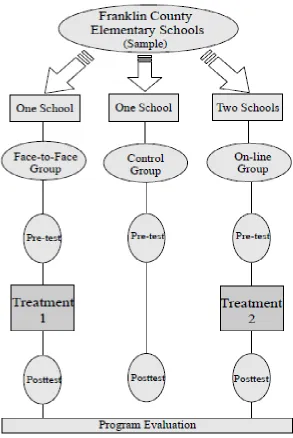
quasi-experimental design. All but one measure was used once during this study. The pre-tests were administered for multiple reasons; to assess the similarities of the groups under investigation and to explore the relationships between several of the constructs. The components of the experiment include: pre-test data collection, the PEST-T interventions, posttest data collection, and program evaluation (see Figure 1).
Procedure Preliminary Provisions
The principle investigator initially contacted each administrator of the participating elementary schools. The primary investigator requested participation during the weekly teacher meetings at each school to present the training opportunity. The principle investigator enlisted school counselors from the participating schools to help in the
recruitment of participants. One school participated in the face-to face intervention and two schools participated in the on-line intervention. The remaining school was designated as the control group. Cross-contamination was avoided as a result of assigning schools to specific conditions instead of randomly assigning teachers from the four schools to a treatment or control group.
The primary investigator consulted with the administrators of the schools receiving the face-to-face intervention to address logistical concerns (ie. location, times, etc).
Additionally, in preparation for the on-line intervention, the principal investigator assigned an arbitrary user name for each participant to use when posting to the discussion board. Participants were not required to disclose personal information via the discussion. Program Descriptions
participants detailed the theories of Social Cognitive Theory and Rational Emotive Behavior Therapy (see Appendix I).
Components of SCT including observational learning, efficacy, and reciprocal determinism were presented during the first session. Irrational beliefs, emotions, self-defeating behaviors and other principles of REBT were explored throughout the remaining sessions. Numerous strategies and techniques for increasing rational thought and efficacy beliefs were provided and demonstrated throughout the training. Many examples and analogies were used to explain the information presented during the sessions. The
intervention presentations focused on teaching and classroom situations to ensure relevancy for the participants. Interactive discussions, songs, humor, and participation in
demonstrations were encouraged throughout the training. Furthermore, all materials used in the face-to-face intervention was developed by the principle investigator with the assistance of various books, manuscripts, and websites.
On-line intervention. This intervention consisted of five sessions, across an eight-week period (see Appendix J). All communication for the five sessions took place through an on-line discussion board. The moderator of the discussion board, and principle
investigator of the study, corresponded with participants intermittently via email when providing training reminders and session deadlines.
board. Participants were responsible for commenting on the readings, and responding to other on-line participants' comments through the on-line format. Participants were required to dedicate approximately 1.25 hours a week engaged in the on-line discussion forum and applying SCT and REBT in daily living. Participants could access and complete sessions on the discussion board at their convenience due to the asynchronous format of the training. The principle investigator also participated in the on-line discussion forum by responding to participants' thoughts and comments.
Data Collection
Pre-intervention. Once the deadline for commitment was reached, participating teachers were gathered at their respective schools for meetings. The following materials and measures were distributed: the informed consent form, demographic form, the Depression Anxiety Stress Scale-21 (DASS-21), the General Self Efficacy Scale (GSES), and the Irrational Beliefs Inventory (IBI). All items were completed in large group settings and collected from the participants during these meetings.