Preparation of Stability Report for Apartment and
Techniques to be Adopted Based on the Report
Bernath Bershiya.N 1, Prof. J.Sahaya Nisha 2
PG Student, Dept. of Civil Engineering, Arunachala College of Engineering for Women, Nagercoil,Tamilnadu , India 1
Asst. Professor, Dept. of Civil Engineering, Arunachala College of Engineering for Women, Nagercoil,
Tamilnadu , India 2
ABSTRACT: Concrete is the most widely used structural material in the world due to its inherent properties. The need
to upgrade the deteriorated civil engineering infrastructure greatly enhances with the ever increasing demands. Ferro-cement is ideally suited as an alternate strengthening component for the rehabilitation of reinforced concrete structures. Strengthening of damaged RC beams using ferrocement laminates which are directly glued into the tension face of the beam is adopted in this study. Totally six beams have been casted and out of the six beams, one beam is kept as control specimen. Firstly the control beam is applied for ultimate load and calculated the deflection. Secondly all the remaining five beams are damaged by applying 80% load and calculated the deflections. Finally the five 80% damaged beams are strengthened by wrapping with the ferrocement laminates in different volume fractions in soffits and sides with epoxy resin. Then the strengthened beams are again tested by applying ultimate load and calculated the deflection. Then the deflection, cracking performance and ultimate flexural strength of ferrocement laminated beams are compared with the control specimen and the result is analyzed. This shows that the ferrocement laminated beam 1,2,3,4&5 has an improvement of about 30% ,50% ,40% ,47% &45% of deflection against the control beam. The ferrocement laminate increases the ultimate load by about 50%. From this experiment found that the retrofitted beam carries more load carrying capacity and less deflection than the control beam due to increase in the volume fraction of the laminate.
I. INTRODUCTION
II. PRELIMINARY TEST
RESULTS
Rebound hammer test is conducted to check the exisiting condition of the structure all the beams in the structure is checked for rebound number. The results are as follows.
Sample Compre Rebound Number
No. -ssive Horizo Vertical
strength ntal
(Mpa)
B-1 15.88 25.34 21.63 B-2 15.33 25.00 20.23 B-3 10.57 25.10 24.15 B-4 15.19 24..60 20.15 B-5 6.15 16.50 13.67 B-6 8.30 18.50 16.90 B-7 13.94 22.30 18.56
B-8 11.25 20.30 16.18 B-9 9.37 19.50 17.10 B-10 9.52 20.30 17.20 B-11 14.14 22.60 19.00 B-12 10.57 25.10 24.15 B-13 15.19 24..60 20.15 B-14 6.15 16.50 13.67 B-15 8.30 18.50 16.90 B-16 13.94 22.30 18.56
III. MESH DETAILS (Wrapping pattern)
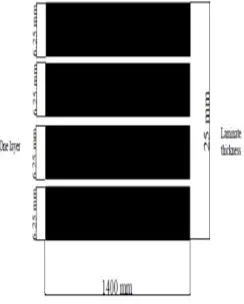
Figure 4.1 Two layer mesh details
Figure 4.2 Three layer mesh details
33 LOADING PATTERN
Figure 4.3 Loading pattern
IV. RESULTS AND DISCUSSION
4.1 COMPRESSIVE STRENGTH:
The 28 days compressive strength of concrete is calculated using compression testing machine.
Control Ferrocement laminated
beam beams
L Defl Bea Be Beam Be Be
o ectio m a NO:3 am am
a n(m NO: m NO NO
d m) 1 N :4 :5
K O:
N 2
02 2 2
1 0.06 0.04 0. 0.04 0.0 0.0
0 03 3 3
1 0.11 0.08 0. 0.07 0.0 0.0
5 06 6 6
2 0.17 0.12 0. 0.10 0.0 0.0
0 09 9 5
2 0.21 0.15 0. 0.13 0.1 0.1
5 11 1 2
3 0.26 0.18 0. 0.16 0.1 0.1
0 13 4 4
3 0.32 0.22 0. 0.19 0.1 0.1
5 16 9 8
20 1 2
4 0.49 0.34 0. 0.29 0.2 0.2
5 25 6 7
5 0.54 0.38 0. 0.32 0.2 0.3
0 27 9 0
5 0.60 0.42 0. 0.36 0.3 0.3
5 30 2 3
6 0.66 0.46 0. 0.40 0.3 0.3
0 33 5 6
6 0.74 0.52 0. 0.44 0.3 0.4
5 37 9 1
7 0.85 0.60 0. 0.51 0.4 0.4
0 43 5 7
7 0.94 0.66 0. 0.56 0.5 0.5
5 47 0 2
8 1.03 0.72 0. 0.62 0.5 0.5
0 52 5 7
8 1.12 0.78 0. 0.67 0.5 0.6
5 56 9 2
9 1.21 0.85 0. 0.73 0.6 0.6
Comparison between control beam and strengthened beams
The graph shown in Figure 6.6 shows that, for specimen 1, wrapped with two layers of weld mesh in the soffit and two layers of weld mesh in the sides has 30% improvement of deflection and ultimate flexural strength against the control specimen. For specimen 2,wrapped with two layer of weld mesh and one layer of woven mesh in the soffit and one layer of weld mesh and one layer of woven mesh in the sides has 50% improvement of
V. CONCLUSION
The study of strengthening the overloading damaged reinforced concrete beams using ferrocement laminates which are directly glued into the tension and side faces of the beam, the following conclusions are obtained from the experimental work:
For specimen 1, wrapped with two layers of weld mesh in the soffit and two layers of weld mesh in the sides has 30% improvement of deflection and ultimate flexural strength against the control specimen. For specimen 2,wrapped with two layer of weld mesh and one layer of woven mesh in the soffit and one layer of weld mesh and one layer of woven mesh in the sides has 50% improvement of deflection and ultimate flexural strength against the control specimen. For specimen 3,wrapped with one layer of weld mesh and one layer of woven mesh in the soffit and two layer of weld mesh and one layer of woven mesh in the sides has 40% improvement of deflection and ultimate flexural strength against the control specimen. For specimen 4,wrapped with three layer of weld mesh in the soffit and three layer of weld mesh in the sides has 47% improvement of deflection and ultimate flexural strength against the control specimen. For specimen 5,wrapped with two layer of woven mesh in the soffit and two layer of woven mesh in the sides has 45% improvement of deflection and ultimate flexural strength against the control specimen.The improvement is due to the increase in volume fraction.
Based on the experiments carried out, it can be concluded that , on the same value of load, the ferrocement laminated beam has lesser value of deflection compared with the control beam. This shows that the ferrocement laminated beam 1,2,3,4&5 has an improvement of about 30% ,50% ,40% ,47% &45% of deflection against the control beam. The ferrocement laminate increases the ultimate load for maximum of about 50%.Effective retrofitting of precracked damaged reinforced concrete beam with ferrocement laminated sheets which are directly glued with epoxy resin in the bottom tension face and sides resulted in improving the ultimate flexural strength. Better strength is achieved by providing the number of layers of mesh is increased, resulting in enhanced load carrying capacity of the beam. The result shows that the strengthening the overloading damaged reinforced concrete beams wrapped with ferrocement laminates in different volume fractions which are directly glued into the tension and side faces of the beam, have better flexural strength and lesser deflection.
ACKNOWLEDGEMENT
First and foremost we thank the almighty God for his wonderful presence with us throughout the completion of this project. This is great pleasure to express our deep sense of gratitude and thanks to our HOD Prof. B. Parthasarthi M.E.,(Ph.D)., Project Guide Asst. Prof. J.SAHAYA NISHAS M.E., and Publishing Guide Asst. Prof. Brightson M.E., (Ph.D)., for their valuable ideas, instantaneous help, effective support for the completion of this project.
REFERENCES
1. Akash Panchal and Ravi Dwivedi (2017), ‘Analysis And Design Of G+6 Building In Different Seismic Zones Of India’, International Journal Of
Innovative Research In Science & Engineering.
2. Amrutha Mary A. and Vasudev R.(2014), ‘Demolition of Structures Using Implosion Technology’, International Journal of Innovative Research in Science, Engineering and Technology An ISO 3297: 2007 Certified Organization Vol. 3, Special Issue 5, July 2014 International Conference On Innovations & Advances In Science, Engineering And Technology [IC - IASET 2014]
3. Annop A. and Fousiya Hussian (2016),‘Planning Analysis And Design Of Multi Storied Building by Staad.Pro.V8i, International Journal Of
Scientific & Engineering Research, Vol. 4, April-2016 ISSN 2229-5518
4. Kajol Mevawala, Liza Hirpara, Kavita Choksi and Darshan Mehta (2016) ‘Repair and Rehabilitation of RCC Structures: A Case Study’ , Global