Department of ECE, Adhiyamaan College of Engineering, Hosur, Tamilnadu, India.
High Throughput, Privacy and Security for
Handover in 5g Networks Using
Software-Defined Networking
B.Uma1, Dr.S.Sumathi2
PG Scholar, Department of ECE, Adhiyamaan College of Engineering, Hosur, Tamilnadu, India1
Professor, Department of ECE, Adhiyamaan College of Engineering, Hosur, Tamilnadu, India2
ABSTRACT:-Being a faster technology, 5G provides applications with highly social and economic value, leading to a
‘highly connected society’ in which internet will play an important role in people’s lives. We deploy cell development with spreading coverage through co-existing heterogeneous networks a prominent feasible solution for 5G mobile networks. However, this multi-layer architecture along with demanding latency requirements in 5G brings new challenges in security provisioning due to the frequent handovers and user authentications in 5G small cells. In this proposed idea, we instigate SDN into 5G as a platform to enable efficient latency achieving, authentication hand over and privacy protection. Our objective is to get low latency, less delay, simplify authentication handover by global management of 5G Networks through sharing of user dependent security context information among related access points. In this heterogeneous network we consider both macro and micro access points. We demonstrate that SDN-enabled latency reduction and security solutions are highly organized through its centralized control capability, which is essential for low latency and secured 5G communications.
KEYWORDS: 5G Networks, Heterogeneous Networks, SDN, Latency, location awareness and security
I. INTRODUCTION
Department of ECE, Adhiyamaan College of Engineering, Hosur, Tamilnadu, India.
As the association of the mobile industry,says that the GSMA will play an important role in shaping the planned, commercial and regulative development of the 5G ecosystem. This will include areas such as the definition of roaming and annex in 5G, and the identification and alignment of suitable spectrum bands. Once a standard solution of 5G is reached, the GSMA will function with its members to identify and develop commercially viable 5G applications.
Two definitions of 5G:
1)A service which views 5G as a combination of 2G, 3G, 4G(LTE), Wi-fi and other innovations providing far greater coverage, high reliability and security.
2)5G is defined as a significant change in data speed and order of extent reduction in end-to-end latency.
The technical requirements that constrain a true generational shift are sub-1ms latency and less than 1 Gbps, downlink speed, and only services that need at least one of these would be considered and use 5G. Achieving sub-1ms latency is a highly an exciting challenge. Moreover in 5G delivering 1ms latency over large network will be challenging task. If this were to happen, some 5G services may not be possible and the second definition of 5G would become less clear. This paper looks at the challenges that must overcome to deliver 1ms latency.
Meanwhile, 4G will continue to develop and evolve Technologies such as Het-Nets, etc., are already being deployed by operators and support in the developments of 5G.
Future 5G networks will become heterogeneous with small cell deployment & overlay coverage, owing to the poor signal propagation feature at extremely high frequencies, as shown in Fig. 1. Cellular/mobile networks operating at low frequencies (e.g., 2G, 3G, LTE) could offer wide area coverage capability, mobility support, privacy and control, while small cells operating at high frequencies guarantee high data transmission and reception rates in the area of spectral and energy efficiency.
In 5G, follows the progression from existing cellular technologies, by satisfying the requirements of increased data traffic, providing very high throughput using micro cells and underlying macro cells providing large-scale coverage. To achieve increased capacity with low cost 5G networking communication, small cells can be utilized. In spite-of that, density of the 5G network can be increased by using these low power small cells(crucial element)
II. LITERATURE SURVEY
"A QoS Oriented Vertical Handoff Scheme for WiMAX/WLAN Overlay Networks” Dong Ma, Maode Ma, 2012.” In this paper, an analysis of important issues for the inter-working of Mobile WiMAX and WLAN networks.A tightly coupled inter-working architecture is discussed in paper. Further, a consistent and proactive vertical hand-off scheme is designed based on the architecture which aims to provide the best quality of service for users. Both the performance of applications and network settings are considered in the hand-off process.
"Optimization of Vertical Handover Decision Processes for Fourth Generation Heterogeneous Wireless Networks” Xiaohuan Y, 2010.
This thesis presents a vertical hand over decision (VHD) scheme for improving the efficiency of vertical hand over processes in the 4G heterogeneous wireless networks.In this survey author review the recent bandwidth estimation of heterogeneous networks literature focusing on hidden techniques and procedures as well as open source bandwidth measurement tools.
III.SOFTWARE DEFINED NETWORKING-BASED 5G SYSTEM
Department of ECE, Adhiyamaan College of Engineering, Hosur, Tamilnadu, India.
On top of the controller application modules are implemented in-order to define the behavior of the SDN switches and APs. The base stations, switches and AP's are provided with SDN protocols that support Software Defined Networking. An external application programming interface is toused to achieve the above said facility. protocols like Open Flow is used for data control whereas Simple Network Management Protocol is used for device controlling.
An highly flexible and global connection, more faster routing and network management is provided by SDN based 5G network structure. Users can the access network services anywhere,anytime regardless of the network type (e.g., Wi-Fi, 3G, LTE, LTE-A) as long as these networks belong to the same network or there are agreements between operators. A proper authentication and privacy and security protection are also feasible by using this SDN based network.
In this paper, we explore SDN as a optimistic platform to introduce intelligence into 5G and address the security challenges. In particular, we explore SDN-based 5G network provide minimized redundant authentication and hand-over. In 5G, the hand-over authentication is highly controlled avoiding unnecessary procedures.The mobile users are shared with highly secured information. This network chooses many routing paths to transmit information simulataneously. More efficient security provisioning is achieved in 5G based system. This shared security data reduces handover complexity.Its privacy protection in different network routing paths during data transmission is checked in order to provide guaranteed communication and privacy protection.
IV.AUTHENTICATION AND 5G CHALLENGES
Our existing mobile cellular communications systems currently use forms of full duplex communication, these use different range of frequencies for transmit and receive data and voice signals, FDD - frequency division duplex method, or different times for transmission and reception method, TDD - time division duplex. Advanced 5G full duplex scheme being developed and that allows simultaneous transmission and reception on the same channel at the same time. – Base station model
– Relay station model – Subscriber station model
– A typical LTE system consists of three types of network elements: the base station (BS), the subscriber station (enodeb), MME , gateway and its interfaces.
– There are three types of relaying nodes we are considering in our project: – RSs—the standardized fixed relays
Department of ECE, Adhiyamaan College of Engineering, Hosur, Tamilnadu, India.
Network selection
The selection of network is based on types of networks we selected for our communication purpose. Here we selected two types of access points for our communication, one is macro access points and another one is micro access points. We consider micro access point as wifi and micro base station and macro access point as LTE advanced communication. We select our network based on heterogeneous communication system. Our modified and proposed idea select network based on low latency and defined highly security based on our software defined system as in our centralised networking system
.
Fig 2:Network Selection
Vertical handoff
If node and BS detects fading signal then signal handoff will taken into account Normally handoff is done in same network node mean then we are calling that handoff as horizontal handoff In this model, we are implementing the handoff in different network such as macro base station and micro station. This type of handoff is called as vertical handoff .Our extended 5g advancement the same channel is used for both the direction so the fading or its propagation characters remain the same; this reduces the air interface timings.
• In general, handoff is taken into account when the node notice signal fading.
• In our proposed model we are implementing the handoff, not only in signal
Fading
• When the no of user increased or delay is increased, handoff will be taken into account
• Due to this type of handoff, we can improve our network quality
Channel fading occurs mainly because of macro or micro user moves from one station to other station if the user is stationary then almost no time variations of the channel occur. The average fade duration specify how long the signal waste time below the threshold. Due to fading there should be delay normally our proposed scheme reduce the time delay by implementing the concept of full duplex single frequency.
Network security
Department of ECE, Adhiyamaan College of Engineering, Hosur, Tamilnadu, India.
Fig:3 Secure context flow
The 5G SDN controller shares the user’s SCI (secure context information) to next cell AP's along the predicted route is just like a authentic establishment from a previous AP before hand-over. The future cell AP's finishes the authentication with the user promptly and begin to monitor the user's service according to the SCI. If trace of the user is found, the risk of getting impersonated is significant, if not entirely minimized. The risk of service disruption in previous networks will be present, if the connection between APs and the authentication server is broken.
Under alike network conditions, however, our mechanism will not lose global network connectivity because another AP is programmed to monitor the user, which can help the controller retrieve the necessary information according to the pre-contributed SCI. Thus, the SDN-enabled security hand-over possesses high levels of tolerance to network failures.We have tested out project and path discovery module by following screen shot, which worked perfectly.
Application Considered – Voice calls
In this case, we are considering that both users are looking for the voice communication. For voice communication, the main thing considered here is better connectivity through the network region, instead of looking cost of the service, bandwidth, etc. As per the parameter values of the different kind of networks considering macro or micro base stations to provide the better connected network according to the distance function value. So, both the users are connected with the heterogeneous process of voice communication that is shown.
Fig 4 Secured communication
Department of ECE, Adhiyamaan College of Engineering, Hosur, Tamilnadu, India.
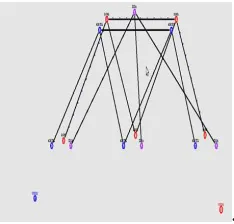
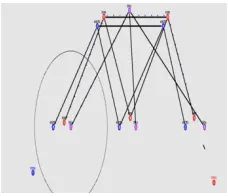
Fig 5.Node is moved inside another base station, so handoff has been done
Fig 6In above fig user moved to another base station region so here handoff time and connectivity latency reduction
V. PERFORMANCE ANALYSIS
Throughput and packet delivery ratio:
From this graph we can see the packet delivery function is high for VHO with Micro BS network compare than Macro VHO operation.
VI.CONCLUSION & FUTURE WORK
We have introduced a SDN protocol with security control technique for 5G systems with marginal modifications to the prototype. All other method maintains the less Security compare than our model due to SDN communication, and in our method the throughput level is maintained but some over head is increased due to withdrawal message sharing or key sharing and improvement in latency also made high.
Department of ECE, Adhiyamaan College of Engineering, Hosur, Tamilnadu, India.
identify current challenges on obtaining low latency, authentication handover and privacy protection in 5G. To address these challenges, we implement our work SDN-enabled authentication handover and privacy protection through sharing of user low latency specific security context information among related access points. The SDN enabled solution not only provides a re-configurable network management platform, but also simplifies authentication handover in accomplishing reduced latency. The performance of our work has been demonstrated through numerical simulations and examples. Security performance under different attacks, low latency achieving between two links, and effective use of secured information, could be explored for SDN-enabled 5G security mechanisms. We did our project as the prototype implementation model with throughput and overhead and Security with the relay link and access link checking process. Due to our less academic duration we have not tested with more result like different data rates, bandwidth availability and as like in real time 100’s of nodes with mobile relay functionality and number of antenna variation.
In our future work, to improve the more reliability we will test with bandwidth variations with different data rate for each user and we will try to reduce the overhead in the place of power control.
REFERENCES
[1] Energy-Efficient Network Selection with Mobility Pattern Awareness in an Integrated WiMAX and WiFi Network” Wen-Hsin Yang, You-Chiun Wang, Yu-Chee Tseng and Bao-Shuh P. Lin. OCT 2009.
[2] Movement-Aware Vertical Handoff of WLAN and Mobile WiMAX for Seamless Ubiquitous Access” Wonjun Lee, Eunkyo Kim, Joongheon Kim, Inkyu., Lee and Choonhwa Lee. Nov. 2007.
[3] Handoffs in Fourth Generation Heterogeneous Networks” Nidal Nasser, Ahmed Hasswa and HossamHassanein.Oct. 2006.
[4] A Seamless and Proactive End-to-End Mobility Solution for Roaming Across Heterogeneous Wireless Networks” ChuanxiongGuo, ZihuaGuo, QianZhangandWenwuZhu.June 2004
[5] A QoS Oriented Vertical Handoff Scheme for WiMAX/WLAN Overlay Networks” Dong Ma, Student Member, IEEE, and Maode Ma, Senior Member, IEEE., 2012
[6] A Framework of Handoffs in Wireless Overlay Networks Based on Mobile IPv6” Cheng Wei Lee, Li Ming Chen, Meng Chang Chen, and Yeali Sunny Sun. Nov. 2005
[7] Requirements of 4G-BasedMobile Broadband on FutureTransport Networks” Matthias Fricke, Andrea Heckwolf , Ralf Herber, Ralf Nitsch, Silvia Schwarze, Stefan Vob, and Stefan Wevering. Journal of Telecommunications and Information Technology, FEB.2012
[8] Diagnosis of capacity bottlenecks via passive monitoring in 3G networks: An empirical analysis” Fabio Ricciato , Francesco Vacirca, Philipp Svoboda. 2007.
[9] Handover between LTE and 3G Radio Access Technologies:Test measurement challenges and field environment test planning” JoonaVehanen, 2011.