Scholarship at UWindsor
Scholarship at UWindsor
Electronic Theses and Dissertations Theses, Dissertations, and Major Papers
1-1-2005
Not bad...for a girl: Media representation of physical differences
Not bad...for a girl: Media representation of physical differences
between the sexes: An analysis of the CBC coverage of the 2004
between the sexes: An analysis of the CBC coverage of the 2004
Summer Olympic Games in Athens.
Summer Olympic Games in Athens.
Sarah Hie
University of Windsor
Follow this and additional works at: https://scholar.uwindsor.ca/etd
Recommended Citation Recommended Citation
Hie, Sarah, "Not bad...for a girl: Media representation of physical differences between the sexes: An analysis of the CBC coverage of the 2004 Summer Olympic Games in Athens." (2005). Electronic Theses and Dissertations. 6961.
https://scholar.uwindsor.ca/etd/6961
This reproduction is the best copy available.
Summer Olympic Games in Athens.
by Sarah Hie
A Thesis
Submitted to the Faculty of Graduate Studies and Research through the Department of Communication Studies
in Partial Fulfillment of the Requirements for the Degree of Master of Arts at the
University of Windsor
Published Heritage Branch
395 Wellington Street Ottawa ON K1A 0N4 Canada
Your file Votre reference ISBN: 978-0-494-34986-1 Our file Notre reference ISBN: 978-0-494-34986-1
Direction du
Patrimoine de I'edition
395, rue Wellington Ottawa ON K1A 0N4 Canada
NOTICE:
The author has granted a non exclusive license allowing Library and Archives Canada to reproduce, publish, archive, preserve, conserve, communicate to the public by
telecommunication or on the Internet, loan, distribute and sell theses
worldwide, for commercial or non commercial purposes, in microform, paper, electronic and/or any other formats.
AVIS:
L'auteur a accorde une licence non exclusive permettant a la Bibliotheque et Archives Canada de reproduire, publier, archiver,
sauvegarder, conserver, transmettre au public par telecommunication ou par I'lnternet, preter, distribuer et vendre des theses partout dans le monde, a des fins commerciales ou autres, sur support microforme, papier, electronique et/ou autres formats.
The author retains copyright ownership and moral rights in this thesis. Neither the thesis nor substantial extracts from it may be printed or otherwise reproduced without the author's permission.
L'auteur conserve la propriete du droit d'auteur et des droits moraux qui protege cette these. Ni la these ni des extraits substantiels de celle-ci ne doivent etre imprimes ou autrement reproduits sans son autorisation.
In compliance with the Canadian Privacy Act some supporting forms may have been removed from this thesis.
While these forms may be included in the document page count,
their removal does not represent
Conformement a la loi canadienne sur la protection de la vie privee, quelques formulaires secondaires ont ete enleves de cette these.
This study examines the Canadian Broadcasting Corporation's coverage of the
2004 Summer Olympic Games in Athens. The commentary delivered throughout the
men's and women's events is explored for differences in the presentation of men's and
women's physical abilities in sport. Using biodeterminist research and feminist criticism
of biodeterminist research as a foundation for exploration of physical differences between
men and women, this study examines the media's presentation of a 'natural' segregation
between men and women in athletics.
Although much research has already been conducted on the media's
representation of women in sports, especially as it differs from their representation of
men in sports, little analysis has been given to the Canadian media and no analysis has
exclusively focused on the representation of a natural segregation between the sexes.
This study employed both quantitative and qualitative methods of analysis and
determined that commentators viewed the physical abilities of men and women
differently. Furthermore, direct statements of contrast between men and women in the
commentary revealed a bias that favoured male athleticism and supported biodeterminist
I am grateful to all the people in my life who have lent an ear during this entire
process. I would like to extend my appreciation to the faculty members who have guided
me through this process in one way or another and who have been so patient along the
way: to Dr. Wittebols for jumping in at the last hour with both feet and providing great
support and encouragement; to Dr. Bryant for her kindness and wonderful insights; to Dr.
McCrone for her expert knowledge; to Dr. Howsam for her enduring support and belief
in my abilities.
Thanks to Sandy Van Zetten, Ann Gallant, and the newest member of the
Communication Department Secretaries, Sharron Wanzy, for always answering my
endless questions and for the much-needed candy fixes.
Special thanks must be given to Karl Agnew for being a wonderful friend and
confidant and also for putting in endless hours of his own time to assist me with the
coding and data entry. Also deserving of many thanks are Tina Siegel and Robert
Steadman for their tremendous encouragement throughout the writing of this thesis and
Abstract... iii
Dedication... iv
Acknowledgments...v
List of Tables... viii
Chapter 1: Introduction...1
Chapter 2: History of Women and Sports...6
Approaching a New Century: 1890-1920... 7
Women and Sports in the Inter-war Period: 1920-1936... 9
Women and Sports in the Cold War Era: 1948-1970... 12
A New Era of Sports Feminism: 1970-present... 14
Summary... 19
Chapter 3: Literature Review...21
Biological Determinism... 21
Feminist criticism of Biodeterminist Research...22
Biomechanics... 25
Sports-Feminist Theories... 32
Liberal Feminism... 32
Radical Fem inism ... 35
Media Representation and Women in Sports... 36
Role of the Media... 42
Research Perspective of the Thesis...43
Organization of the Thesis... 44
Chapter 4: Methods... 45
Content Analysis... 45
Sample...46
Coding and Operational Definitions... 47
Intra-coder and Inter-coder Reliability... 51
V alidity... 53
Chapter 5: Data A nalysis... 55
Semantic Differential...56
Event Coverage: Combat... 58
Event Coverage: Team...61
Event Co verge: Track Events... 62
Event Coverage: Field...72
Summary of the Results... 91
Chapter 6: Summary... 96
Research Question Addressed... 96
Limitations of the Research... 99
Suggestions for Further Research...99
Conclusions... 100
References...103
Appendixes... 108
Appendix A: Standarized Coding Sheet... 108
Appendix B: Glossary of Categories and Term s... 109
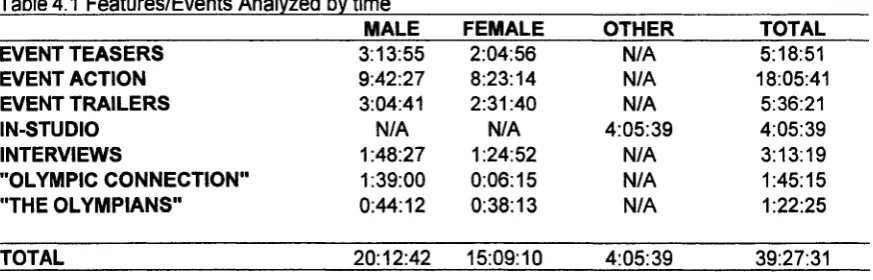
Table 4.1 Features/Events A nalyzed by T im e ... 47
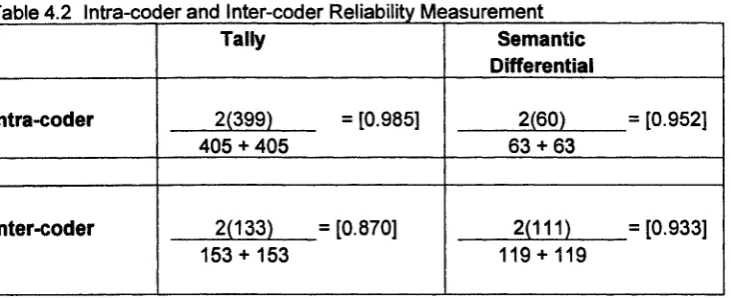
Table 4.2 Intra-coder and Inter-coder Reliability M easu rem en t...53
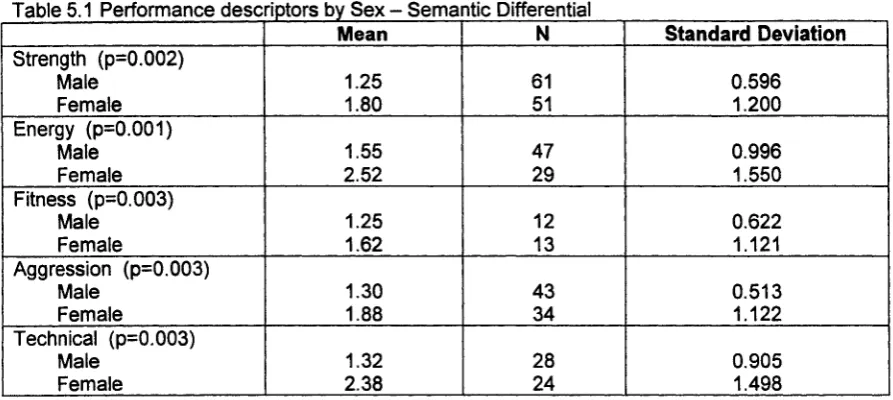
Table 5.1 Perform ance D escriptors by Sex - Semantic D ifferential... 57
Table 5.2 Event Tim e by Event C ategory...59
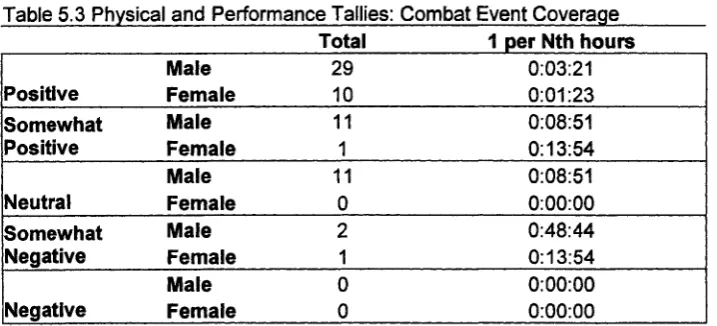
Table 5.3 Physical and Perform ance Tallies: Com bat Event C o v e ra g e ...60
Table 5.4 Physical and Perform ance Tallies: Team Event C o v erag e... 61
Table 5.5 100m R un and 200m Freestyle Swim - Tim e Com parisons by S ex ...63
Table 5.6 Com parison o f Event Teasers and Event A ction in S w im m in g ...63
Table 5.7 Physical and Perform ance Tallies: Track Event C overage... 65
Table 5.8 Strength Tallies: Track Event C o v erag e...67
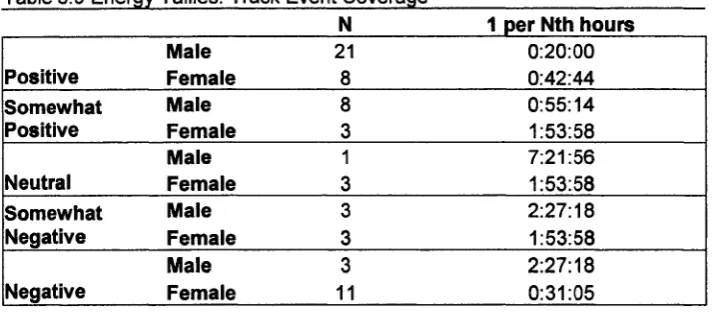
Table 5.9 Energy Tallies: Track Event C overage... 69
Table 5.10 Coverage Tim e o f the M en’s/W om en’s W eightlifting... 73
Chapter 1: Introduction
Sport, at first glance, appears to have little importance on the larger social issues.
Sport is primarily about entertainment for both the athlete and the spectators. We teach
our children that they are ‘there to have fun’ and that ‘it doesn’t matter who wins or
loses’. However, athletics play an important role in the overall development of values
and attitudes within our culture. Organized sport embodies many of the western
mainstream values o f competition, individualism, and personal/national achievement.
“Sport, as both a social institution and as a medium of communication, has become a
conduit for the transmission of images, symbols, and meanings that are central to our
society.” (Martyn, 2003: 159) It is this, perhaps, above all other reasons that makes sport
such an important social aspect to study.
Since the early developments of the modem sport club/organization, women have
struggled to find their place within this highly masculinized domain. Initial arguments
circulating with the established medical community held that women’s physical frailty
hindered them from all forms of athletic engagement. Over time, women began to
illustrate their abilities to be active without irreparable harm to themselves or to their
reproductive systems. Throughout the twentieth century, athletic women, time and again
have surpassed the assumed limitations “predetermined” to them by their sex.
Challenges to the “medically-proven” physical (and mental) limitations of the female sex
have resulted in the re-evaluation of medical studies and, eventually, the re-organization
of women’s athletics in varying degrees. The assumption that men and women are so
inherently physically different that women would be at a distinct disadvantage in sport
standards, but also remains the final social domain where gender segregation is not only
legal and expected, but unchallenged and under-discussed. So assumed is the natural
division between men and women the subject itself has been largely ignored. Other
possible divisions have been little explored and the modem feminist movements leave the
question unattended.
Although the contemporary women’s sports movement has not focused on the
issue of sex differences in athletics, it has concerned itself with the issue of gender and
sports. An emphasis on issues specific to gender (that is the social aspects which indicate
feminine or masculine, rather than the physical which indicate female or male), has made
its way into the discussion of women’s sporting rights. Since the mid 1980s, after most
of the western nations had their own battles to secure the economic and political equality
of sports for women and girls, much of the sports-feminist research has emphasized the
social barriers to women in sports. This work has been tremendously valuable to the
recognition of women’s athletic achievements and capabilities by challenging traditional
notions of femininity. Much of this work has focused on the media’s representation (or
lack therefore in many cases) of women’s athletics.
While the modem sports-feminist movement must be applauded for its excellent
work in assuring the rights of girls and women to compete, have equal resources as men,
and be given more important administrative and decision-making positions, the question
of segregation remains underexamined. Assuming that physical limitations did, on
average, exist for women, is it right to continue the enforcement of separate spaces?
Should women not have the right to decide they would rather play alongside or against
of this thesis, require further examination. To be analogous, should girls be excluded
from school subjects like science or mathematics simply because test scores show that
boys have, on average, a greater aptitude in these areas? Should we lower the standards
or expectations for girls in these subject areas?
To be clear, recent biomechanical and biological evidence argues that the physical
differences between women and men do not show women at a significant disadvantage in
athletics when the athletic event is divided according to height and weight. The degree of
disadvantage for women is directly proportional to the general size differences between
men and women. Athletic divisions according to size and height, like those found in
boxing and wrestling, equalize the events and negate the need for sexual division. In
many respects, this kind of division is the more equitable because, as we will see,
research has revealed that differences are greater within sexes than between them. (Dyer,
1982) Nevertheless, the division between male and female remains the more “natural”
division. Because the history of athletics has always asserted women’s physical
inferiority and a need to protect women from injury by the dominant male, athletics has
always been segregated.
A key agent in the formation of social opinion regarding women’s physical
abilities has always been the media. The women’s 800 metre run in 1928 was removed
from the 1932 games because a local newspaper reported on the exhausted appearance of
the athletes at the end o f the race. (Hall, 2002) When Gertrude Ederle swam the English
Channel in 1926, a London newspaper did not have time to withdraw the editorial
(Fausto-Sterling, 1992) That she beat the men’s world record by two hours must have been
astounding!
Current media representation analysis has focused almost exclusively on the
American media and particularly on the social aspects of women in sports. Media bias in
favour of male events and the trivialization of female athletes are the primary concerns of
most current research.
Focus of the Present Study
This study examines the Canadian Broadcasting Corporation’s (CBC) coverage of
the 2004 Summer Olympic Games in Athens. Although much research has been
conducted on the media’s representation of women in athletics (and especially at the
Olympic Games), almost none of this work has taken a Canadian perspective. Only the
Toronto Globe and Mail has been evaluated on its representation o f women in sports, and
only in comparison to the New York Times. This is significant for Canadian sports
feminists because, although there are many cultural similarities, there are also known
differences in media reporting styles and broadcasting regulations which potentially alter
the manner in which women’s sports may be valued in the Canadian media.
This thesis borrows the definition for sport from Hall (2002: 4). “In a word, I
mean organized sport, indicating that the learning of game skills becomes
institutionalized through teaching and systematic preparation and that organizations
evolve...whose purposes are to prepare competitors and regulate the competitions.”
coverage of the 2004 Summer Olympic Games, a sport will refer to any event established
by the International Olympic Committee as an Olympic event.
That the media have only been studied for gender issues in the representation of
women and sports poorly reflects the contemporary biomechanical and medical
challenges to the belief in the ‘natural’ separation of men and women in physical
competition. This thesis attempts to fill this gap in the research by synthesizing the
biomechanical and medical research regarding women’s physical abilities with an
analysis o f the media’s representation of women sports at the 2004 Summer Olympic
Games in Athens. Ultimately this thesis will address the question: to what extent does
the CBC represent the medical view of an unnecessary physical separation between men
Chapter 2: History of Women and Sports
In the latter half o f the nineteenth century, more women were beginning to engage
in active forms of recreation, but these numbers remained small and restricted. Activities
considered most suitable, by not only the established medical community but also the
women themselves, included such recreational pursuits as tobogganing, swimming, and
skating. (Hall, 2002) The popularity o f the bicycle, combined with a new sense of
modernity, brought about by the prospects of the twentieth century, introduced a new
form of leisure activity for many women that was out-of-doors, healthy, and physical, but
that did not interfere too sharply with Victorian ideas of decorum. (Hall, 2002) The
bicycle brought women out of doors like no other physical activity at the time.
This new form of recreation did not go unchallenged by the medical community
as ideas about its effect on the physical and moral stability of women circulated. Both
female and male medical practitioners held varied views of the benefits and dangers to
female cyclists. While there were some practitioners who held that cycling might be
beneficial for women, there were many others who believed the activity was “injurious
and should not be tolerated.” (Hall, 2002: 18) Hall (2002: 18) notes that the most
commonly held view at the time was a fear that the “saddle was not suited to female
anatomy, the uterus would be seriously jolted, and ‘pelvic m ischief would befall the
poor woman who rode during her menstrual period...What concerned some doctors far
more was the potential...that riding a bicycle ‘produces in the female a distinct orgasm.”
The belief in the separate roles for men and women during the nineteenth and,
indeed, well into the twentieth century is mirrored in the beliefs about separate physical
of no interest to the established medical community. Some of the earliest examples of the
debate on women’s ‘natural physical limitations’ occurred during this time. In 1873 Dr.
Robert Barnes argued that the “functions of ovulation, gestation, labour, lactation, the
menopause, in turn all dominate over the entire organism of woman.” (Hargreaves, 1994:
45) A woman’s physical ability was already strained by her role as potential mother. It
was held by some that excessive amounts of physical exercise would drain a woman of
her reproductive function, thereby threatening the very existence of the human race.
Constitutional overstrain, as it came to be known, was a profound argument against the
physical education o f girls in school, and was widely supported in the medical
community (Hall, 2002). The combination of malnourishment and poor muscle
development in women, caused primarily by the sedentary lifestyle of the middle and
upper class Victorian female, is the most probable reason that so many women fainted at
even light forms o f physical exercise. (Hargreaves, 1994: 45)
Approaching a New Century: 1890-1920
By 1890 changes were occurring in both men’s and women’s sporting activities. For
men, the first modem Olympic games, founded by Pierre de Coubertin, took place in
Athens in 1896. Coubertin’s views on women’s participation in these games were less
than flattering. Coubertin felt that sporting achievement was best held by men only and
in 1912 he defined the Olympic games as “the solemn and periodic exaltation of male
[emphasis added] athleticism, with internationalism as a base, loyalty as a means, art for
its setting, and female applause as reward.” (Joyner-Kersee, 1993: 185) It is not
exhibition events in both golf and tennis were included for women and archery was added
in 1904. Despite Coubertin’s very limiting views regarding women’s athletic function,
attitudes about women’s abilities were changing. It was common to see women
participating in some form of active recreation, cycling being among the most popular,
and included activities such as ice skating, tennis, golf, and swimming. Other activities,
such as fencing, ice hockey, and basketball were also being played by women in some
Canadian colleges and universities. The University of Toronto held paper chases on
Saturday mornings: a kind of race where one team would lay a course through woods and
fields using tom pieces o f paper and the visiting team would run it. (Hall, 2002)
By the late 1890s and early 1900s, the question in the medical community was no
longer whether women should engage in physical activity, but rather how much. This
debate would surface again and again throughout the twentieth century as women
continued to defy the limitations set upon them. The most prevalent view in the medical
community in both Canada and the United States was that although physical education
for women may be healthy (and therefore beneficial to the female reproductive organs),
aggressive competition was not. It was feared that excessive competition might lead to
mental over-strain, severe stress, and the loss of acceptable female decorum. It was held
that physical education should be left to trained physical educators who focused on
Swedish gymnastics and calisthenics. (Costa, 1994) But as the twentieth century
progressed, physical education saw a growing number of varsity teams, competitive
activities, and a growing number of eager participants.
The International Olympic Committee (IOC) also saw a growing number of
abundance o f exhibition events were organized for women at the Olympic games despite
Coubertin’s continued efforts to oppose women’s participation. The Olympic Committee
for the London Olympics in 1908 admitted women’s exhibition events in skating,
gymnastics, and aquatics (diving). In 1912, the Swedish Olympic Committee admitted
exhibition swimming. It was not until the 1920s however, that women, or men, would
have another chance to compete on the international stage. The First World War not only
brought an end to the Olympic Games scheduled for 1916, it also brought an end to
women’s complacency about their “exhibition” status.
Women and sports in the inter-war period (1920-1936)
Opposition to the belief that women should not participate in international
competition was spreading. Women were beginning to acquire recognition in voting,
education, and labour issues and were, therefore, becoming increasingly public. The
separation between the domestic and public was no longer explicitly divided according to
gender lines.
The first organized example of women’s challenge to both the IOC and the
established perspectives about women’s competitive abilities came in 1917. Alice Miliat,
a French woman, established herself as the counterpart to fellow countryman, Pierre de
Coubertin. In 1917, Miliat established the Federation Sportive Feminine Internationale
(FSFI). Through this organization, Miliat challenged the IOC’s rule that prevented
women’s competition in the Olympics. (Hargreaves, 1994) When her demand that
women’s competitions be officially included by 1920 was ignored, Miliat began plans for
would provide international competition for athletic women. The IOC responded by
demanding that the individual International Sports Federations take control of the
women’s athletic activities. (Costa, 1994) The International Amateur Athletic Federation
(IAAF) agreed to work with the FSFI and, being the governing body of the Olympics, it
was an encouraging lure for the women’s Olympic movement. However, when the IAAF
in i921 turned down the proposal for women’s competition at the 1924 Games, the FSFI
went ahead and conducted the scheduled Women’s Olympic Games in 1922. The one-
day event, which drew over 20 000 spectators, persuaded the IOC and the IAAF to
reconsider its position on women’s events and they agreed to include five official events
for women at the 1928 Olympics in Amsterdam. (Costa, 1994) The five events: 100
metre run, 200 metre run, high jump, discus, and the 400 metre hurdles, were enough to
placate the women’s sports movement into surrendering control to the IAAF.
Despite the growing legitimatization of women’s athletics, debates surrounding
biology were still numerous. A key publication, titled ‘Women’s Participation in
Athletics’ highlighted the circulating arguments regarding the need to slow the
development o f women’s athletic participation. (Hargreaves, 1994) Again, the primary
reason cited for caution was the potentially harmful effects on the female reproductive
system seemingly caused by the biological, physical, and mental limitations of women.
An overwhelming divide was emerging among early women’s sports advocates.
Although many groups held onto the struggle for women’s participation in competitive
sports, other women’s sports activist groups across Europe, the United States and Canada
Organized in 1923, the Women’s Division of the National Amateur Athletic
Federation (NAAF), a large American organization which included many state and city
physical education centres such as the YM/YWCA, articulated the established medical
opinion of the time in its philosophy regarding women’s athletics. It argued that although
athletic participation for girls and women was beneficial and healthy, competition was
ultimately destructive to them. It organized anti-Olympic campaigns and fought hard
against the admittance of women’s athletics in 1928. (Hall, 2002) The philosophical
emphasis for women and girls, according to the NAAF, should be on education rather
than competition and should embrace the unique qualities of the female sex, including
cooperation, team work, and acceptance. This philosophy is well illustrated in the NAAF
creed, ‘a team for every girl and every girl on the team.’ (Hall, 2002)
However these attempts to curb female competition failed. Women continued to
participate in competitive athletics, and both javelin and the 80 metre hurdles were added
to the list of events for women in the 1932 games in Los Angeles and gymnastics were
opened to women at the Berlin Games in 1936. The controversial Games held in Berlin,
sometimes referred to as the “Nazi Games”, featured 331 female athletes. The Berlin
Games also hosted the very first mass broadcast of the Games on twenty-five large
screens set up around the city for local audiences.
Women’s athletics were gaining acceptance. Even biological views regarding the
potential effects on women’s reproductive systems were beginning to wane, such that it
was becoming commonly held that perhaps only married women should be restricted
This was part of a general shift of roles for women in North America and Western
Europe as they increasingly moved out of the home and into public life. Voting,
education, and labour rights challenged established views of women’s limited mental
capacity, as the entrance into international sporting competition challenged their physical
limits. The Second World War halted the Olympics until 1948, and this time women
would emerge not only as fierce competitors but also as political and national examples
o f greatness.
Women and sports in the Cold War Era (1948-1970)
Generally there were few changes in the advancement of women’s athletics
immediately following the Second World War. Most o f women’s accomplishments and
advances in the competitive arena came during the interwar period, but the heightened
desire to prove national and ideological greatness during the Cold War may have
contributed to the increased support of women’s athletic abilities. Because Olympic
success is regularly seen not in terms of individual athletic achievement but in national
athletic achievement, it was seemingly irrelevant whether the number of medals won
came from male or female events. In the United States (and likewise in the Soviet
Union), attempts to increase medal counts resulted in the increase in training facilities for
men and women athletes. (Costa, 1994) The advancement of women’s athletic
achievements was characterized by the efforts to prove national superiority. Even so, the
admittance of new events for women was slow and biological theories of women’s
physical limitations were just as daunting as ever. What was at issue by 1950 was not
medical evidence for this was becoming buried under the mounting examples of
successful athletic mothers), but whether sports would cause women to become overly
masculine. A growing belief that certain sports were masculine or feminine was working
its way into the mind-set of athletic competition. In Coming on Strong: Gender and
sexuality in twentieth century women’s sports (1994: 217), Susan Cahn notes that the IOC
members of the 1950s argued that they could “determine which sports were ‘essentially
feminine’ in order to exclude women from those that were not.” Masculine sports were
largely defined along lines of strength, aggression, competitiveness, or physically
intensive activities while feminine sports were defined according to their emphasis on
skills, grace, or beauty. (Cahn, 1994) It is not surprising, therefore, that football
(American version) and boxing were defined as exclusively masculine events, while
synchronized swimming (sometimes referred to as water ballet) and rhythmic gymnastics
were defined as exclusively feminine events. As late as the 2004 Summer Games in
Athens, these events remained exclusive to their respective sexes. In those sports in
which female and male events existed, feminization of the events often occurred. “In
softball, tennis, basketball, track, gymnastics, and other sports, athletic administrators
devised gender-specific rules to mark women’s activities as different from, and usually
‘less than’, men’s.” (Cahn, 1994: 221) The struggle to include increasing numbers of
events at the Olympic Games was circumvented by IOC efforts to feminize the events.
So powerful was the belief that women’s athletic abilities were inferior to men’s, the IOC
ordered the inclusion of sex tests at the Olympic Games in the 1960s to thwart any
attempts by males posing as females from competing in women’s events. The early tests
and gynecologists in order to ensure the athlete was female. Although there had never
been any evidence to suggest that men were posing as women in women’s Olympic
competitions, these tests were said to be necessary for the protection o f females against
male intrusion.
So while there were increases in the participation of women in competitive
athletics during the 1950s and early 1960s, many of these gains and the shifts in attitude
they reflected were over-shadowed by efforts to prove national prowess and the increased
efforts to feminize or masculinize sports exclusively. Prior to the 1950s, sport in general
was seen as a masculine activity and therefore women’s attempt to enter the world of
sport was viewed as a challenge to male sporting dominance. After 1950 however, the
feminization o f events “re-balanced” male physical superiority by assigning less physical
events, shorter races, different rules, etc. to the female events. Many of these feminized
events remain today. An example is women’s softball which is played on a smaller field
with a larger ball for 7 rather than the 9 innings played by the men. Another example is
the women’s 100 metre hurdles, 10 metres shorter than the men’s event. However, the
women’s movement of the 1960s and early 1970s was opening the path for future sports
feminists who would challenge these conceptions. As legal challenges in other areas of
social life were unfolding, it was only a matter o f time before girl’s and women’s
athletics would be addressed as a legal issue of equality.
A New Era of Sports Feminism: 1970 - present
Some of the most rapid and extensive changes for women in sports came as a
issues such as sports and recreation, the legislative changes with which many of these
women were concerned prompted others to examine legal discrimination in athletics.
These changes occurred differently and at different times across North America and
Western Europe.
The leading legislative change was Title IX in the United States. An educational
amendment in 1972, Title IX required that all secondary and post-secondary educational
institutions in the United States provide equal financial support to male and female
athletes, proportional to their needs. (Costa, 1994) Although an important legislative
change, Title IX did nothing to protect women from other forms of athletic
discrimination. There were no provisions in the legislation requiring a certain number of
decision-making positions be available to women. Sports teams could still be segregated
on the basis o f skills (generally contact versus non-contact) which so far have always
resulted in the segregation of girls and boys teams. Because girls and boys teams were
usually segregated and fewer girls expressed interest in sports than boys, there were often
not enough girls to form teams.
Despite this legislative change in the United States, attitudes about women’s
abilities were slow to change. Through the 1970s there was almost no change in the
opinion about girl’s and women’s inferior physical ability. In Canada there was no
legislation protecting women’s sporting events and, as a consequence, a large number of
girls were rendered to the side-lines, despite the growing number of girls becoming
interested in athletic competition. Hall (2002: 165) notes that “in the mid-1970s, the long
might do irreparable damage to their reproductive system through strenuous activity was
still one of the physical explanations as to why fewer girls than boys chose sport.”
By 1981, a federal policy aimed at improving the conditions for women in sports
was enacted. Sports Canada developed a “Policy on Women’s Sport” which cited
“equality” o f opportunity as its primary objective. In keeping with ‘liberal feminist’
trends of the time, “equality” was implicated in the goal to “create an environment in
which no one is forced into a predetermined role or status because of gender.” (Hall,
2002:171)
In Britain, during the 1970s and early 1980s, there were no legislative or
government policy structures to protect the legal rights o f female athletes. The only
course of action available to girls and women was the UK Sex Discrimination Act
(SDA). However, under section 44 of the act organizations could disallow mixed
competitions on the basis of physical disadvantage. Hargreaves (1994) notes this clause
has been used exclusively to ban females from competition on the basis that the female
physique is inferior to the male. Furthermore, it was often used not only against adult
women, but also against pre-pubertal girls where there are no physical differences, except
a slight average advantage in height for girls. In 1978 the Football Association banned
Theresa Bennett from playing with the boys on a local team. The case, “Theresa Bennett
versus the Football Association”, initially settled in favour of Bennett on the grounds that
the FA failed to provide her with recreational facilities, but was later lost on an appeal
argued under section 44 of the SDA. Bennett’s lawyer argued that section 44 was
inapplicable on the grounds that Bennett was pre-pubertal and therefore not at a
to those of men, but they have not got the strength and stamina to run, kick, to tackle and
so forth.” (ILEA, 1984: 23)
In Canada twelve-year old Justine Blainey tried out, and made, the Toronto
Olympics A Peewee hockey team. According to Blainey, she wanted to play on the
boys’ club because it provided greater competition, more hours of ice time, better skating
hours, and more opportunities to play (i.e. more games and tournaments). However,
when the Ontario Hockey League discovered that Blainey was a girl, they refused to
issue her a license to play, rendering any game in which Blainey was on the roster forfeit.
Subsection 19(2) o f the Ontario Human Rights Code became the central issue in the 1984
case because the Code clearly stated that “membership in an athletic organization or
participation in an athletic activity [may be] denied solely on the basis of sex without
regard to any other factors...” (Robinson, 2002: 195)
This case threw open the doors not only on the legal rights of girls to have equal
opportunity to play, but questioned the very fabric of the biological arguments of female
physical inferiority. Blainey’s success in the case was contingent on the prosecution’s
ability to counter the defense team’s arguments of Blainey’s physical inferiority on the
team. The defense centered its arguments around the ‘scientific’ evidence that girls and
women could not play as well as boys and that also they would be at extreme risk from
the more aggressive, dominant, and individualistic male. Fortunately for Blainey, her
lawyers were prepared and, finally, on December 3,1987, after 3 years of fighting, the
verdict that subsection 19(2) was unconstitutional and that girls must be permitted to try
While it may seem that the Blainey case was a victory for girl’s athletics, attitudes
have been slow to change. In 2000, Risa Saraga made the boy’s basketball team at
Thornhill Public School in Toronto. She tried out for the team because there were too
few interested female athletes to form an all-girl’s team. The York Region District
School Board president, Phil Horseman, refused to allow Saraga to play on the grounds
that it was against their constitution to allow girls on boy’s teams. Given the media
attention this announcement made, Horseman retracted his position and the district
constitution was changed. (Robinson, 2002)
The International Olympic Committee has been even slower to advocate equality
in women’s athletics. Sex testing to ensure sex-appropriateness in women’s competitions
continued until 1999 and was only abandoned because of the dilemma it posed. After
1972 the gynecological exams were replaced by genetic tests to ensure the athletes
competing in the women’s events were indeed female. In several cases however, genetics
revealed sexual abnormalities in the chromosomal composition of some female athletes.
Sex testing has never been conducted on male athletes and so sexual abnormalities in
males have not been discovered by this method. Typically, the female sex consists of an
XX composition and the male sex consists of an XY. Occasionally, an XY chromosome
composition results in female development because the gene, found only on the male Y
chromosome, responsible for male development is inactive. Such was the case for
Spanish hurdler, Maria Patino. In 1985 it was discovered that Patino had an XY
chromosome construction, but the male gene was inactive and Patino, as a fetus,
developed a female body, external female gentialia, and a vagina. In every other way
was not eligible for men’s competition either. The Spanish track officials exposed
Patino’s situation to the press. (Robinson, 2002) Her ‘femininity card’ was revoked,
ensuring that she would not be allowed to compete in any national, or international,
competition.
The IOC has been slow to admit women’s events to the Games. Not until 1996
were the number of events for women roughly equal to the number of events for men,
although events continue to be added. Pole Vault was added for women in 2000, and one
division o f free-style wrestling was added in 2004. Boxing, steeple-chase, flat-water
canoeing, 1000 metre flat-water kayaking, white-water canoeing, keirin cycling, team
pursuit cycling, 1500 metre freestyle swim, Greco-Roman wrestling, and the 50 km race
walk are examples of Olympic events still only open to men. Synchronized swimming
and rhythmic gymnastics are the only events restricted from men.
Summary
It is clear from women’s sport history that women’s participation in organized
sport has always been met with restrictions based on the assumption of ‘natural’
limitations o f the female sex. These restrictions have altered throughout the past century
as expectations o f women’s physical inabilities continued to be overestimated. Claims of
women’s physical (and often mental) limitations in sports have characteristically been
based on social expectation and observation, rather than on concrete biological evidence.
Social expectations became the impetus for biological claims, institutionalized by the
medical community and upheld by policy within the sports organizations. In the late
belief in female physical and mental inferiority. Although disguised as ‘scientific’ by the
use of educated, medical language, “their positions had much more to do with social
attitudes and codes than with genetics and systematic investigation.” (McCrone, 1988:
193) Biological arguments surrounding women’s competitions during the 1920s and
1930s took a more social turn. Women, although capable of moderate athletic activity,
were still considered physically inferior to men (and therefore their athletic programs
were tailored to the needs o f women), but they were now facing a new problem of
competition as ultimately destructive to femininity. By the 1950s, this new issue of
femininity was compromised by encouraging women to participate in “feminine”
competitions, so as not to become overly masculine.
One constant has remained throughout the modem history o f organized sport.
Based on early biological assumptions that women were physically inferior to men,
sports organizations have unquestioningly segregated women from men’s competition.
This segregation has ultimately created a different history for women’s athletic
organization. As was the case during the 1920s, many women’s sports feminists and
activists believe in a different kind of sports culture for women than currently exists for
men, by celebrating a more cooperative and more inclusive kind of sporting experience.
Current arguments about women’s physical inferiority to men continue to permeate the
established sports culture, and segregation of events goes on without question. As was
the case in the early years of the development of sport organization, biological
assumptions about women’s physical limitations continue to reflect social expectations
Chapter 3: Literature R eview
Biological Determinism
Biodeterminists argue that certain masculine or feminine traits have evolutionary
roots and social structures and gender roles are natural and unchangeable. The
behaviours of competition, aggression, vigour, etc. are male sex traits, evolutionally
defined and hormonally generated, while passivity, sociability, and emotional
expressiveness are traits of the female sex. (Fausto-Sterling, 1992; Bleier, 1984) These
attitude and behaviour differences have been used to explain why sports are the
‘predominant’ and ‘natural’ domain of men. Marianne Wijngarrd (1997: 5) notes that
while feminists localize differences in behaviour between the sexes in social structures
and education, biomedical scientists base their arguments in hormonal effects on prenatal
brain development.
Possibly the most referenced researchers on prenatal brain development and
biologically determined behaviour are John Money and Anke Ehrhardt. Their publication
in 1972 on intersex-bom children marked the first research conducted of its kind on
human subjects. Their study of CAH girls, girls bom with masculinized genitals due to
abnormal hormone production of the adrenal gland in utero, identified ‘tomboyism’ as
the appearance of male behaviour in females. Their research found these ‘tomboys’ to be
more active than the control group girls, more likely to choose boy playmates, having a
higher energy level, enjoying aggressive play, having a preference for practical clothing
over dresses and fewer fantasies of motherhood. (Wijngarrd, 1997; Fausto-Sterling,
‘activity’ in humans, affected dress habits, career ambitions, and higher IQs. Because of
this, ‘normal’ females did not possess the qualities for vigorous athletic play or
competition, nor the ambition for an athletic career. Although they did not focus on
athletics specifically, their arguments of ‘normal’ male and female behaviour legitimized
institutional arguments about differences between the sexes. Jennifer Hargreaves, notes
that “...biological determinism is influential in the general discourse of sports academia.”
(1994: 7) Hargreaves (1994) states that the ideology of sexual difference is validated in
the sports sciences and that biological explanations provide a scientific explanation for
social behaviour.
Feminist Criticisms of Biodeterminist Research
Anne Fausto-Sterling-Sterling, Ruth Bleier, and Kenneth Dyer have all
challenged both the methodologies of biological determinists and the dichotomous
definitions of the male/female sex.
Inconsistencies in genetic tests have suggested that there may be more to sex than
meets the naked eye. Dyer (1982: 64)) offered five ways in which sex might be
interpreted and, therefore, the problem of studying sex in terms of male and female traits.
“Sex distinctions can in fact be made in five different ways: the appearance of the
external genitals, the possession or absence of a Y chromosome..., the amount of various
hormones which are produced in the body, the sex to which the individual is assigned at
birth,...and finally what the individual regards him or herself to be, that is, their gender.”
The biological distinctions of sex in terms of appearance, hormones, and
between these chromosomal, hormonal and/or physical definitions. Typically the female
chromosome configuration is XX, while the male is XY. When both of these
chromosomal configurations function typically, the results are the development of
‘normal’ female and male genitals and project that hormone levels in puberty will result
in the physical traits common to women and men, such as breast development or facial
hair. However, often enough these typical developmental patterns differ. Occasionally,
three other possible chromosomal occurrences challenge the notions o f male and female
exclusivity. (Fausto-Sterling, 1992; Bleier, 1984; Dyer, 1982) Individuals who possess
only a single X chromosome, or chromosomally XO, “...manifest what is termed Turner’s
Syndrome. They are sterile and obvious, if aberrant, females.” (Dyer, 1982: 63) Similar
to Turner’s Syndrome, some males bom with more than one X chromosome
(chromosomally XXY). Known as Klinefelter’s Syndrome, these individuals are bom as
partially or fully fertile males, but are sometimes able to pass as females when fully
clothed. (Dyer, 1982: 63)
Although the above chromosomal patterns happen occasionally, more commonly
chromosomal ‘mosaics’ occur; that is, “...some of the cells of the body are of normal
female constitution, that is XX, and some are normal male, that is XY, or one of the
above variants.” (Dyer, 1982: 63) Depending on the number of aberrant cells, the
distinction between male and female may be obvious, or very difficult. When it is very
difficult to determine the sex, the doctors and parents of the infant are often compelled to
make a decision and generally do so by the overall appearance o f the genitals. If the
genitals have developed a penis, the size of the penis is often used to determine whether
average, the construction will generally be to make female genitals, otherwise, the penis
might be enlarged or left and any female genital development removed. (Wijngarrd,
1997: 154)
Dyer points out that the number of adults with inconsistent sex definitions is
about ten percent and that the number of chromosome mosaics is unknown. These
numbers reflect a large enough percentage of non-traditional definitions of male and
female to warrant a firm challenge to the research on ‘normal’ male and female behaviour
and physicality as rooted in biology. It has also proved a challenge to “...sports
administrators wedded to the notion that there should be absolute distinctions between the
sexes.” (Dyer, 1982: 65)
More damaging to biodeterminist research has been the methods used and
linkages made by researchers. Fausto-Sterling-Sterling and Bleier have both written
extensively on the problems surrounding the methods employed by biological
determinists. First is the assumption that behaviours are universal. In other words, the
‘natural’ behaviours of males and females are identical across cultural, social, and
geographical divides. Bleier notes this assumption to be the greatest recurring flaw in
sociobiological and biological determinist research and comments that these universal
behaviours are “...curiously similar to social organizations in the white Western industrial
capitalist world.” (Bleier, 1984: 23)
Among the many traits that are said to differ among males and females, including
intelligence, emotion, and physicality, aggression research may be the most common.
The “male” hormone, testosterone, is commonly cited as the director o f aggressive
criticized this research by examining the links made by researchers who have concluded
that testosterone is the hormone responsible for aggression. The primary criticism by
both authors is the use of rodents (specifically rats and mice) in research leading to the
conclusion that testosterone is linked to aggression in humans. The problem with this is
two-fold. The first is that similar research in rhesus monkeys (the most genetically-
similar primate to humans) and in humans themselves have inadequately shown “...that
high levels of “male” hormone cause human aggression.” (Fausto-Sterling, 1992: 148)
The second problem is the tendency of biological determinists to omit examples which
show contradictory findings. For example, the evidence that gerbil and hamster females
are equally aggressive as males is commonly overlooked. (Fausto-Sterling, 1992)
Furthermore, as these animals are researched in laboratory settings, external
environmental conditions are seldom taken into consideration. Bleier (1984) argues that
caged animals in laboratories are different from wild, free-roaming animals.
Fewer criticisms have been published since 1991, although Fausto-Sterling-
Sterling published a new book in 2000 titled Sexing the Body. This text readdressed
some of her early work, but largely critiqued the biodeterminist research on intellectual
sex differences.
Biomechanics
Biomechanics, the study of the composition and movement o f the human body,
has been used by athletes and their coaches to improve performance and training
throughout the twentieth century. The work in biomechanics has largely involved the
disregarded the question of similarity and difference between men and women. Unlike
the field of biodeterminism, there has been little discussion in biomechanics on the
physical ‘inferiority’ of women. As Jackie Hudson writes, “One explanation for this
indifference is that men consider the inferiority to be obvious...Another explanation for
this indifference is that women consider the inferiority to be obvious. For instance, Birke
and Vines (1987) suggest that feminists have accepted the biologically deterministic view
of women’s inferiority in performance.” (Costa, 1994: 147) It is especially relevant to
make a distinction here between the biomechanics of children and that of adults because,
as Carol Christensen indicates in her article Basic Exercise Physiology, there are virtually
no sex-related differences in physiology between girls and boys before the age of about
twelve. (Cohen, 1993; Dyer, 1982) There are, however, general average similarities and
differences between fully developed men and women in muscularity, skeletal design,
body composition, blood circulation, and lungs and breathing.
Men, on average, are physically stronger than women and possess a greater
proportion of their body weight in muscle. However, the statistics vary from researcher
to researcher on the significance of the differences. Gina Daddario (1998) reported that
women have on average 17% less muscle mass than men, while Dyer (1982) reported a
difference o f only 7%. The greatest difference appears to be in upper body strength, that
is the upper torso, arms, shoulders and neck, where on average women possess a meagre
50% of men’s strength, or when matched for size, 80%. (Fausto-Sterling, 1985)
A more equal picture emerges of lower body strength so that the average woman
approximates 93%, and leg strength measured relative to lean body weight shows
women’s legs to be slightly stronger than men’s. (Fausto-Sterling, 1985)
There are a number o f differences between the average male and female in the
design of the skeletal frame. Women’s arms and legs are proportionally shorter when
compared to the rest of their bodies than are men’s, but women’s torsos are typically
proportionally larger. The pelvis tends to be broader in women than in men and women’s
shoulders are on average narrower and more rounded. Dyer (1982: 71) asserts that the
proportionally shorter upper arm, combined with narrower shoulders, causes “...throwing,
cycling or rotary movements o f the arm as a whole [to be] more difficult for women...”
In terms of height differences, women are, on average, shorter than men;
however, the degree of difference changes depending on the statistic. National averages
of height show varying degrees of difference between the sexes across the globe. In the
United States males average approximately five inches greater height than women
(Daddario, 1998) but globally Asian men only average one inch taller than American and
German women and Dutch women are generally taller than Japanese men. In fact, about
1 in 44 women in the Netherlands reach six feet tall while only one in 769 Japanese men
will reach that height. (Arjan, 2005)
Besides average difference in height there are other obvious differences in body
composition. Men and women carry their centre of gravity differently, with men
averaging their centre of gravity about 56.7% of their height above the ground while
women carry their centre of gravity approximately 56.1% of their height above the
ground. This slight difference may create a disadvantage for women in jumping events.
The greatest overall average difference between men and women is in the amount
of fatty tissue carried throughout the body. Women have far more fatty tissue than do
men, especially in sex-specific areas of the body including hips and breasts. Patty
Freedson estimates that between college-age females and males, “...the average total
percent of body fat is 27% for the female and 15% for the male... Approximately 12.5%
of the female’s sex-specific fat is in the breast tissue.” (Costa, 1994: 164)
Other differences in size also effect differences in blood circulation, heart size,
anaerobic power and lung size. Women generally have smaller lungs and hearts than
men, although these are proportionally equal to men in reference to size and weight.
However, men’s heart rates tend to be slower than women’s and can carry more oxygen
during both exercise and rest than can women. Women must pump nine litres of blood for
every one litre of oxygen, while a ratio o f eight to one is the average for men. (Dyer,
1982)
Anaerobic power is the capacity to give high-intensity activity in short bursts of
effort. Sprint events and rotational team sports like basketball and hockey rely heavily on
anaerobic power. “Muscle concentrations of enzymes responsible for anaerobic power
are equal in men and women...” (Cohen, 1993: 123). However, because women average
smaller amounts of muscle mass than men, men reflect superiority in anaerobic power.
The averages listed in the preceding paragraphs are commonly used to support
arguments that athletic events should be segregated along sex lines. Gina Daddario
(1998: 14), an American sports-feminist, asserts that “...males are both literally and
culturally the stronger sex, particularly in upper body strength and
sense against male athletes...” This position of women’s ‘inferior’ athletic ability seems
to stand in contrast to research which challenges the ‘natural’ physical superiority of men.
While certain physical differences are acknowledged, the importance o f these differences
on athletic achievement is questionable.
The use of averages often means that differences in physical ability or
performance are reflections o f women’s average height and weight differences. Because
height and weight are major indicators of physical ability, this presents a distorted view
of actual potential. Feminist biomechanic author, Jackie Hudson draws an illustration of
this distortion in a comparison between the world record holder of the men’s 100 metre
run and the record holder of the women’s 100 metre run. “...we see that Carl Lewis, who
stands 6'2" tall...and holds the men’s record of 9.92 seconds [later beaten by American
Tim Montgomery with 9.78 seconds in 2002] has a relative velocity of 5.36 heights per
second...Florence Griffith-Joyner who stands 5'6.5" tall and runs the 100 metre dash in
10.49 seconds, has a relative velocity of 5.64 heights/second.” (Costa, 1993: 147) This
statistic suggests that in this particular example, the female record-holding athlete was
slightly faster than the male record-holding athlete. Hudson argues that while males are
faster in absolute measures, when taken within the context of the individual the physical
abilities between men and women are approximately equal. (Costa, 1993) This is
particularly true for trained men and women as the differences in their averages are
considerably less than the differences in the averages o f the general population. (Fausto-
Sterling, 1992)
Furthermore, even when differences in height and weight are considered, Dyer
much variation within the sexes. A link has been made between social expectations and
physical qualities and the performance of women. The hormone responsible for height
and strength development is the aptly named growth hormone found in both growing
boys and girls. However, “physical inactivity during the growth years is linked with poor
health throughout the lifespan. In addition, physical inactivity during the growth years
may compromise the amount of growth.” (Costa, 1993: 154) Girls’ abilities have been,
and are often still, considered below the abilities of boys despite all biomechanical
evidence suggesting no physical differences between girls and boys before the on-set of
puberty. (Costa 1993) This often results in restricted levels of sport for girls, as in the
case of hockey where physical contact is restricted although, controversially, allowed in
some boys’ hockey organizations. Other social, non-sport-related expectations for girls
also restrict physical activity, including clothing. Indeed the “feminine” attire is often
constrictive attire. (Costa, 1993)
While there are unquestionable physical differences between the sexes,
biomechanic researchers agree that height and weight are the primary contributors to
strength and physical ability. These are the ingredients of anaerobic power, lung capacity,
and oxygen use. It is recognized in international competitions for events such as boxing,
weightlifting, and wrestling that height and weight play an essential role. These sports
are divided in accordance with these measures and a gold medal in the lower weight
category is not perceived as any less an accomplishment than a gold medal in the higher
weight divisions. Both Dyer (1982) and Hudson (1994) have articulated that the abilities
of trained women and men appear to be similar when matched for size. However, much
averages where differences are very apparent. The division o f competitive sports
between men and women presupposes that physical differences between the sexes
outweigh the physical differences within the sexes. In other words, this dichotomous
division assumes that a 5'2" female athlete would more fairly compete with a 6'2" female
athlete than a 5'2" male athlete. But as Dyer (1982: 17) pointed out, based on the
evidence to the contrary, “all of this argues for some modest differentiation of
competition into classes by height and/or weight in those events or groups of events
where there are inbuilt advantages...If this were done, the differentiation by sex might
come to be seen as unnecessary.”
Despite the research, in the field of athletics there has been little or no challenge
to the existing differentiation by sex. It would seem that the feminist community has not
taken particular notice of the challenge posed by Dyer and others regarding the physical
abilities of women as they compare to men. The reasons for this are unclear. Perhaps the
sports feminist organizations have not been adequately informed of the existing research,
although that possibility seems unlikely. Other, more likely, reasons for the lack of
challenge are that sport-feminist theorists either are still concerned with so many other
issues facing women in athletics that they do not have time for the issue of integration, or
that they are opposed to integration. Opposition to integration by sports-feminists is
certainly understandable as many of these women have worked hard to foster a space for
female athletes. Having been denied, or allowed only limited, access to the male sports
structure for so long, many sports-feminists might see integration as a rejection of the
hard work spent to give women a place to play. While understandable, the struggle
expected outcomes of women’s physical limitations. That women have more
opportunities to play or more resources to play does not mean that the test of expected
limitations is over.
Sports-Feminist Theories
While there are multiple approaches to sports-feminism, two categorically
different approaches to the field dominate the literature and research on women and
sports. The two dominant approaches, liberal feminism and radical feminism, are both
equally concerned with improving the overall status of women and girls in sports, but
define this improvement in such different ways that they appear hostile to one another.
Crossman (2003: 11) argues that “central to feminist theory is that gender roles are
created rather than biologically determined and that irrespective of gender, everyone
should have the opportunity to maximize his or her potential”. Hall (2002: 11) asserts
that the “emerging feminist paradigm...is concerned primarily with the ‘gendered’
practice o f sport.”
Liberal Feminism
Liberal feminism is rooted in Western liberal philosophical positions that extend
back to the 17th century and through the legacy o f eighteenth and nineteenth century
writers and thinkers such as Mary Wolstonecraft, John Stuart Mill and Harriet Taylor.
These liberal positions challenged, among other things, the dichotomous notions of male
positions argue for equality of opportunity through legislative reforms, fair resources, etc.
(Hargreaves, 1994; Hall, 2002; Lenskyj, 2003; Scraton and Flintoff, 2002)
In sports activism and research this approach focuses on removing policy barriers
that limit the participation, and consequently the overall potential, of girls and women in
athletics. (Lenskyj, 2003) It has called for more women in coaching, officiating, and
administrative positions and also for fairer representation in the sport media. (Lenskyj,
2003) The majority of sports activism since the 1960s has taken this approach and it has
shown dramatic social success. (Hargreaves 1994) The Canadian Association for the
Advancement of Women and Sport and Physical Activity (CAAWS) is both openly
feminist and government funded. It has, since its foundation in 1981, created an
organization dedicated to improving the opportunities for athletic women and girls and
has successfully generated awareness of the importance of female participation. It has
been successful in lobbying the government, posing legal challenges, and as an advocacy
organization. (Hall, 1996)
The liberal feminist position is not without its critics. Many other feminists,
primarily radical feminists, have criticized the liberal feminist position for working
within established structures. (Lenskyj, 2003; Scraton and Flintoff, 2002) The ‘add
women and stir’ argument poses that liberal feminism sees all women as a homogenous
group that can be simply added to the male-dominated system without consequences.
(Lenskyj, 2003) It fails to challenge the male-dominated models of sport and physical
activity which emphasizes winning and competition rather than cooperation and open
access to sports for all women. (Hall, 1996; Hargreaves, 1994; Lenskyj, 2003)
race and class, which, according to radical feminists, alter the ability of some women to
resist discrimination and oppression and consequently act as additional barriers to equal
opportunity in sport. (Lenskyj, 2003)
The liberal feminist perspective has not openly challenged the issue of sports
segregation. While it is unlikely that liberal feminism would be hostile to arguments of
integration, it appears to have become complacent with the idea of equality existing in
separate spaces. That is, equality o f resources, administration, and participation for
women in athletics would satisfy most liberal feminists, unless women within sports
began to argue for equality of competition. Because integration is still such an
unexplored issue for most women in athletics, liberal feminist organizations that have
been involved in integration issues have been so as representatives of the individual. For
example, when Blainey fought for the right to compete on the Toronto boy’s hockey
team, she was supported by the CAAWS. Other cases of young women fighting for the
opportunity to play on boys’ teams have been supported by CAAWS, but the issue of
integration is not generally explored. It must be not assumed however that because
liberal feminism has not adopted the issue, women and girls are uninterested in playing
with or against men and boys. If the general social belief is, as the research suggests, that
women and girls are at a physical disadvantage, then it is probable that many female
athletes assume that they are physically incapable o f competing against the males.
Differences in social opinion regarding women’s physical abilities may result in a larger
number of women becoming interested in competing in sports currently closed to women,
such as national, professional hockey, baseball, and football teams like those found in the