©
DOI: 10.1534/genetics.104.037887
A Unified Model of Codon Reassignment in
Alternative Genetic Codes
Supratim Sengupta and Paul G. Higgs
1Department of Physics and Astronomy, McMaster University, Hamilton, Ontario L8S 4M1, Canada
Manuscript received October 25, 2004 Accepted for publication February 9, 2005
ABSTRACT
Many modified genetic codes are found in specific genomes in which one or more codons have been reassigned to a different amino acid from that in the canonical code. We present a new framework for codon reassignment that incorporates two previously proposed mechanisms (codon disappearance and ambiguous intermediate) and introduces two further mechanisms (unassigned codon and compensatory change). Our theory is based on the observation that reassignment involves a gain and a loss. The loss could be the deletion or loss of function of a tRNA or release factor. The gain could be the gain of a new type of tRNA or the gain of function of an existing tRNA due to mutation or base modification. The four mechanisms are distinguished by whether the codon disappears from the genome during the reassignment and by the order of the gain and loss events. We present simulations of the gain-loss model showing that all four mechanisms can occur within the same framework as the parameters are varied. We investigate the way the frequencies of the mechanisms are influenced by selection strengths, the number of codons undergoing reassignment, directional mutation pressure, and selection for reduced genome size.
T
HE genetic code is a mapping between the 64 possi- terious effect of codon reassignment could be avoided if the codon first disappeared from the genome. Changes ble codons in mRNAs and the 20 amino acids. Thecanonical genetic code was established before the last in the translational system would occur when the codon was absent, and when the codon reappeared it would be universal common ancestor (LUCA). It was initially
be-lieved to be universal; however, many deviations from translated as a different amino acid. FollowingSchultz andYarus(1996), we call this the codon disappearance the canonical code have now been discovered in specific
(CD) mechanism.SchultzandYarus(1994, 1996) pro-groups of organisms and organelles (Knightet al. 2001a).
posed an alternative ambiguous intermediate (AI) mecha-Changes involve the reassignment of a codon or a group
nism that does not require the codon to disappear. of associated codons from one amino acid to another,
Instead, the codon is translated ambiguously as two dif-or from a stop codon to an amino acid, dif-or vice versa.
ferent amino acids during the period of reassignment. Reassignments are caused by changes in tRNAs or
re-Some cases of ambiguous translation are known (Lovett lease factors (RF). In many cases, the molecular details
et al. 1991; Santos et al. 1997; Matsugi et al. 1998), are known, but the mechanism by which the changes
and it is possible that other cases have passed through were fixed in the population is more puzzling. If the
such an ambiguous intermediate stage. translation apparatus changes so that a codon is
reas-In this article, we present a unified model for codon signed to a new amino acid, this will introduce an amino
reassignment that includes both CD and AI mechanisms acid change in every protein where this codon occurs.
as special cases and introduce two other possible mecha-We would expect this to be a selective disadvantage to
nisms. We refer to this as the gain-loss model, as it is based the organism, and hence selection should act to prevent
on our observation that codon reassignments involve a the change in the code spreading through the
popula-gain and a loss. By loss, we mean the deletion of the tion. The situation seems even worse for stop codons,
gene for the t RNA or RF originally associated with the where a change would lead either to premature
termina-codon to be reassigned or the loss of function of this tion of translation or to read-through. In spite of these
gene due to a mutation or base modification in the anti-perceived problems, a majority of the observed
reassign-codon. By gain, we mean the gain of a new type of tRNA ments involve stop codons.
for the reassigned codon (e.g., by gene duplication) or OsawaandJukes(1989, 1995) proposed that the
dele-the gain of function of an existing tRNA due to a muta-tion or a base modificamuta-tion, enabling it to pair with the reassigned codon.
1Corresponding author:Department of Physics and Astronomy, 1280
We consider two specific examples. First, in the
canon-Main St. W., McMaster University, Hamilton, ON L8S 4M1, Canada.
E-mail: [email protected] ical code, AUU, AUC, and AUA are all Ile, and AUG is
ment prior to the fixation of loss or gain. The codon remains absent during the intermediate stage of reas-signment until the fixation of a subsequent gain or loss event leads to the establishment of the new code. In that case, the gain and loss events will be selectively neutral, because in the absence of the codon the changes in the tRNAs make no difference to the organism. Therefore, the temporal order of gain and loss events is irrelevant. If the codon does not disappear, the order of gain and loss events is important. In the AI mechanism, the gain occurs before the loss. Two tRNAs can associate with the codon, and hence the codon will sometimes be mistrans-lated, causing a selective disadvantage for the organism. If the loss then occurs, the codon is no longer ambigu-ous, and a new code has been established. However, there is still a selective disadvantage because the
organ-Figure1.—A schematic of the codon reassignment process
interpreted in terms of the gain-loss framework. The strength ism is using the codon in places where the old amino
of selective disadvantage depends on the number of times a acid is required. As mutations to other synonymous
co-codon is used. There is no selective disadvantage if the co-codon dons occur, this disadvantage will gradually disappear.
disappears.
The reassigned codon can also begin to appear in posi-tions where the new amino acid is required, and this will not cause a selective disadvantage.
Met. In animal mitochondria, AUA is reassigned to Met.
Most organisms require two tRNAs to translate Ile co- A third possible mechanism is characterized by the loss occurring first, creating a state where there is no specific dons. One tRNA has a GAU anticodon, and this
trans-lates AUU and AUC codons. The other has a K2CAU tRNA for the codon. The subsequent occurrence of a gain establishes the new code. We call this the unassigned anticodon, where K2C is Lysidine, a modified C base
that is capable of pairing with A in the third position codon (UC) mechanism. In the unassigned state there will be a selective disadvantage because translation will of the AUA codon. The Met tRNA has a CAU anticodon
and pairs only with AUG. The Lysidine modification is be inefficient. We presume that, after loss of the tRNA, some other tRNA has some degree of affinity for the known inEscherichia coli(Muramatsuet al.1988), and
this tRNA gene is also found in all available complete codon, and that eventually an amino acid will be added for this codon, permitting normal translation to continue. genomes of proteobacteria (B. Tang, P. Boisvertand
P. G. Higgs, unpublished results) and in several protist In some cases (Yokobori et al.2001), loss of a specific tRNA can occur with little penalty because another more mitochondrial genomes (Gray et al. 1998). The same
mechanism is presumed to operate in all these cases. general tRNA is available that can pair quite well with the codon in question. For example, in Echinoderm, The Lysidine tRNA is absent in animal mitochondrial
genomes, and the tRNA-Met is modified so that it can Hemichordate, and Platyhelminthes mitochondria, an Ile tRNA with a GAU anticodon can pair with the AUA pair with both AUG and AUA codons. This can happen
either by a mutation to UAU or by base modification codon in the absence of the specific tRNA (with Lysidine in the wobble position) mentioned above. Also, in ca-to f5CAU (Tomitaet al.1999). Thus, in our model, the
loss represents the deletion of the K2CAU gene and the nonical code, AGA and AGG are Arg, but the corre-sponding tRNA-Arg has been lost from animal mito-gain represents the mito-gain of function of the tRNA-Met.
The second example is the reassignment of UGA from chondrial genomes. In some phyla, the AGR codons are unassigned and are absent from the genomes. In other stop to Trp. This involves the loss of the RF binding to
this codon (Tomitaet al.1999), and the gain of function phyla, a gain has also occurred: the Ser tRNA is modified to either UCU or m7GCU, which pairs with all four AGN of the tRNA-Trp by mutation and subsequent base
modi-fication from a CCA anticodon to U*CA, where U* codons (Matsuyamaet al. 1998). In the Urochordates, there has been a gain of a new tRNA-Gly specific to is a modified U that pairs with purines but not with
pyrimidines. AGR codons (Yokoboriet al. 1993;Kondowet al.1999).
Thus several different responses to the loss of the origi-Although the details of the molecular event causing
the gain and loss to differ for each case of codon reas- nal tRNA-Arg have occurred.
The gain-loss framework described here is related to signment, the common gain-loss framework (see Figure
1) applies to all of them. We begin with an organism the model of compensatory mutations (Kimura1985). This model considers two genes with two alleles 0 and following the canonical code and end with an organism
with a modified code, in which both gain and loss have 1, such that both genes are in the 0 state initially. Each of the 1 alleles has a deleterious effect when present occurred. For the CD mechanism, the change is initiated
com-pensate for one another and the fitness of the 11 state andSella2001;SellaandArdell2002) with the aim of understanding the pattern of amino acid associations is assumed to be equal to the 00 state. Kimura showed
that pairs of compensatory mutations can accumulate of codons and the observed redundancy of the canoni-cal code. It is likely that reassignments of sense codons relatively rapidly, and this is one form of neutral
evolu-tion. A specific place where compensatory mutations or capture of nonsense codons could occur more easily during the early period of evolution when various path-are frequent is in the paired regions of RNA secondary
structures. A population genetics theory for compensa- ways of establishing an optimal code were being ex-plored. On the other hand, the negative selective effects tory substitutions in RNA has been given by Higgs
(1998). A key point is that the pair of mutations can be of a reassignment process after the optimal canonical code has been established are likely to be very high. This fixed either at two successive times or simultaneously.
For example, if the population is initially GC , a mutation puts severe restrictions on the possible reassignments that can occur in the postcanonical code era.
at one site can create a GU pair that goes to fixation as
a slightly deleterious allele, and a second mutation can Although optimization of the code may have been important in the establishment of the canonical code, create an AU pair that compensates for the first change
and then becomes fixed. Alternately, if there is a signifi- we do not believe that historical codon reassignments have been driven by selection for changes that improve cant selective disadvantage to the GU pair, it is likely to
remain at very low frequencies in the population and on the canonical code. All the present-day alternative codes are much better than random codes, and the not go to fixation. If a second mutation occurs in a GU
sequence, this creates an AU sequence that can spread variant codes seem to be slightlyworsethan the canonical code (Freelandet al.2000). Our view is that reassign-as a compensatory neutral pair. In this creassign-ase both the A
and the U mutations become fixed simultaneously and ments arise due to chance gain and loss events that become fixed in the population. It is the strength of there is no period where the GU variant spreads
through-out the population. When real RNA sequences are ana- the negative selective effects acting during the period of reassignment that controls the rate of reassignment lyzed (Savill et al. 2001), the rate of double
substitu-tions is high compared to that of single substitusubstitu-tions, and the mechanism by which it occurs. Possible differ-ences in fitness between the codes before and after suggesting that this mechanism of simultaneous fixation
of compensatory pairs is frequent. This brings us to the completion of the reassignment are most likely negligi-ble with respect to the selective effects occurring during fourth possibility that can occur within our framework,
which we call the compensatory change (CC) mecha- the reassignment.
Having described the four possible mechanisms within nism. We presume that gain and loss events are occurring
continually in genomes at some low rate, creating indi- our framework, we now present a population genetics model in which all four of these mechanisms can be viduals with a selective disadvantage because of
ambigu-ous or unassigned codons. If this disadvantage is substan- shown to occur. We use simulations to investigate the relative frequency of the mechanisms.
tial, these variants are unlikely to reach high frequencies in the population. However, if the compensatory gain or loss occurs in one of these individuals, the gain and loss
THE MODEL may then spread simultaneously through the population.
Our model concerns historical changes in the code We consider an asexual, haploid population ofN indi-viduals, each possessing a genome ofLDNA bases, rep-that occurred after the establishment of the canonical
code. It is likely that there were also prehistoric changes resenting protein-coding regions. Noncoding regions are ignored. A target protein sequence is specified, con-that led to the establishment of the canonical code
before the LUCA . During this prehistoric stage, the sisting ofL/3 amino acids or stops. The DNA sequences of the population evolve under mutation, selection, and code may have had⬍20 amino acids, and changes may
have involved the addition of a new amino acid to the drift. The fitness of a DNA sequence is determined by how close its specified protein is to the target. Transla-code. The coevolution theory (Wong1975, 1976)
con-siders the way the increase in amino acid diversity in tion of the DNA is performed initially according to the canonical code, but when the code changes different the code was correlated to the synthesis of new amino
acids. It has been argued (Szathmary1991) that codon organisms in the population may be translated by differ-ent codes. For every amino acid that is differdiffer-ent from swapping reassignments driven by directional mutation
pressure could have played a role in establishing the the target amino acid (missense mutations) there is a factor (1⫺s) in the fitness. There is a factor (1⫺sstop) canonical code. Moreover, the canonical code appears
to be optimized so as to reduce the deleterious effects in the fitness for every stop where an amino acid should be and for every amino acid where a stop should be of nonsynonymous substitutions. Tests have shown that
the canonical code is better than almost all randomly (nonsense mutations). The fitness of a sequence withj
missense andknonsense mutations isw⫽(1⫺s)j(1⫺
reshuffled codes in this respect (FreelandandHurst
1998;Freelandet al.2000). A specific model for code sstop)k.
the previous generation with a probability proportional to its fitness. The DNA sequence of the offspring is copied from the parent. Mutations occur with a proba-bility u per site. Each base is replaced by one of the other three bases with equal probability. Each individual begins with a genome that exactly specifies the target protein. As mutations accumulate, the population reaches a state of mutation-selection balance where an individ-ual typically differs from the target at a few points. (Note that we choose parameter values where the population is not subject to Muller’s ratchet.)
In each run we consider only one codon reassign-ment, and we specify in advance which codon will be reassigned. Each individual possesses a loss gene and a gain gene with two alleles, 0 or 1. If loss⫽0, the original tRNA is still present and functional in the genome. If loss ⫽ 1, the original tRNA has been deleted or has become dysfunctional due to a deleterious mutation. If gain ⫽ 0, a new tRNA is not yet available to translate the codon. If gain⫽ 1, a tRNA capable of translating the codon with a new meaning has been acquired. Four types of individuals are defined by the gain and loss genes. Type 00 individuals use the old genetic code. Type 11 individuals use the new code, and the DNA sequence is translated according to the new code at the point when its fitness is calculated. Type 01 individuals have an unassigned codon. A penalty of (1 ⫺ sunas) is
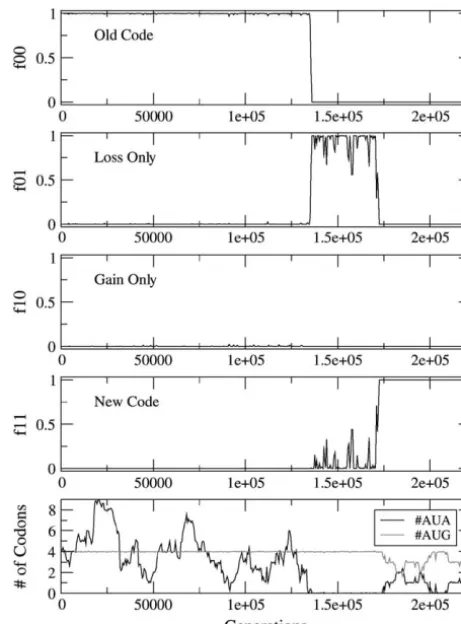
Figure2.—Reassignment of AUA via the CD mechanism. associated with each unassigned codon in a genome. Type
The frequencies of the four types of individuals are shown as 10 individuals have an ambiguous codon. Roughly half of a function of time. The bottom shows the mean number of the occurrences of this codon will be wrongly translated. AUA and AUG codons per genome. The parameters ares⫽ sstop⫽sunas⫽0.05,u⫽0.0001, and #AUA⫽4 in the original Therefore a fitness contribution of (1⫺s)1/2is associated
sequence. with such a codon whenever it appears in a position
where the target is either the old or the new amino acid. If the codon appears in a position where the target
disappear, the mechanism is AI if the gain is fixed first is neither of these, it will always be wrong; therefore, a
and UC if the loss is fixed first. factor of (1⫺ s) applies.
The probabilities of a gain and a loss occurring per generationper whole populationareUgandUl. If a gain
RESULTS or loss occurs then it is implemented in one random
individual. Mutation occurs from the 0 to the 1 allele Four specific examples:The following examples con-cern the reassignment of the AUA codon. The number in each case and we do not consider reversals of these
changes. Thus, the simulation will eventually end up of Ile codons in the target sequence was set to 12, 24, or 36. There were 4 codons for each of the 19 other with all individuals in the 11 state. However, for some
parameter values the population remains in the 00 state amino acids plus a single stop codon. Thus the total number of codons was 89, 101, or 113. The genome for as long as it is feasible to run the simulations. The
results presented below are for parameter values where lengths used were quite short due to constraints on computing time. The simulations were initiated with the codon reassignment occurred in a reasonable time.
By following the sequence of gain and loss events in equal numbers of AUA, AUU, and AUC codons (i.e., #AUA⫽4, 8, or 12 initially). The initial DNA sequence ourin silicoexperiment, we are able to determine the
mechanism responsible for the reassignment of a codon for the non-Ile codons was chosen randomly from co-dons corresponding to the target. The population size and the frequency of occurrence of each mechanism.
When counting the number of times each mechanism wasN⫽1000, andUg⫽Ul⫽0.1. The other parameters were varied between simulations.
occurs, the mechanism is defined as CD if the codon
disappears from the population during the reassign- Figure 2 shows an example of the CD mechanism.
The frequency of typeijindividuals is denotedfij. The
ment period, irrespective of the order of the gain and
Figure 3.—Reassignment of the AUA codon via the AI Figure4.—Reassignment of AUA by the UC mechanism.
mechanism. The parameters ares⫽sstop⫽sunas⫽0.01,u⫽ The frequencies of the four types of individuals are shown as
0.0001, and #AUA⫽12 in the original sequence. a function of time in the top four parts. The bottom part shows
the mean number of AUA and AUG codons per genome. The parameters ares⫽sstop⫽0.02,sunas⫽0.007,u⫽0.0001, and
#AUA⫽4 in the original sequence.
indicating that the loss happens first. However, in Figure 2, bottom, it is clear that #AUA goes to zero just before
f01increases. Hence, the reassignment process is
initi-Figure 4 shows the reassignment of AUA via the UC ated by the disappearance of the AUA codons. In this
mechanism initiated by the loss of the tRNA⫺Met with example, the selection against missense mutations,s, is
Lysidine in the wobble position. The penalty against the much greater than the mutation rate, u. This means
unassigned codon is smaller than the penalty against a that the mean number of codons for each amino acid
missense or nonsense translation. This would be the case is almost exactly equal to the number in the target
if another tRNA were available to translate the unassigned sequence. As AUG is the only Met codon, #AUG stays
codon reasonably well in the absence of the original spe-fixed close to 4 until the codon reassignment occurs.
cific tRNA. The loss occurs while the #AUA is nonzero, In contrast, #AUA can fluctuate due to third-position
leaving the AUA codons unassigned. #AUA is seen to mutations. After the change, both AUA and AUG code
fluctuate during the intermediate stage (whenf01ⵑ1) for Met; consequently #AUA⫹ #AUG⫽4.
and eventually goes to zero during the later part of the Figure 3 shows a reassignment occurring by the AI
intermediate stage. This is a manifestation of selection mechanism. #AUA is increased to 12 initially, which
acting to minimize the use of the unassigned codon makes it less likely for the codons to disappear due to
after the disappearance of its specific tRNA. However, random drift. Moreover,sis reduced, which makes the
since the number of codons is small, the disappearance penalty for the AI state less severe. The gain happens
could also be due to random drift. For lower values of
before the loss. #AUA does not disappear during the
sunas, the #AUA remains nonzero for the whole of the intermediate stage; however, it remains around 4 during
intermediate stage. The frequencies of the four types most of the AI stage—substantially less than the 12 AUA
of individuals are shown as a function of time in the codons originally present. This suggests that selection
top four parts. The bottom shows the mean number of is acting against the ambiguous codon during the
inter-AUA and AUG codons per genome. mediate stage. Another effect of reduction ofsis that
Figure 5 provides evidence of the reassignment of the number of Met codons fluctuates around its
TABLE 1
The frequencies of four mechanisms of codon reassignment measured in simulations
CD UC AI CC
a. Varying selection strengthsa
s⫽0.05 18 0 0 2
s⫽0.02 13 0 6 1
s⫽0.01 4 3 13 0
b. Varying the number of Ile codonsb
#AUA⫽4 4 3 13 0
#AUA⫽8 2 2 16 0
#AUA⫽12 1 2 17 0
c. Varying sstopc
sstop⫽0.01 0 3 16 1
sstop⫽0.02 13 3 3 1
sstop⫽0.04 13 7 0 0
d. Varying GC mutational pressured
G⫽0.25 2 2 16 0
G⫽0.3 4 2 14 0
G⫽0.4 12 1 5 2
e. Varyingsunase
sunas⫽0.02 12 0 5 3
sunas⫽0.007 6 11 3 0
sunas⫽0.003 1 19 0 0
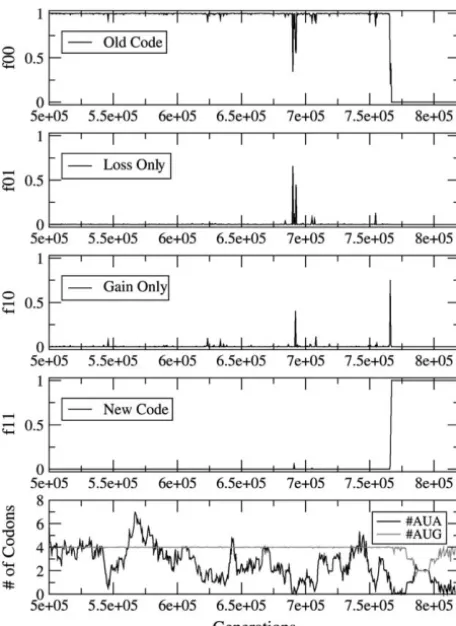
Figure5.—Reassignment of AUA by the CC mechanism.
f. Varying the advantage of genome size reduction␦f
The parameters are s⫽ sstop⫽ sunas⫽ 0.05,u⫽ 0.001, and
#AUA⫽4 in the original sequence. ␦ ⫽0 6 11 3 0
␦ ⫽0.001 7 8 2 3
␦ ⫽0.004 1 18 1 0
mechanism. There is no intermediate period and
nei-Results refer to simulations of AUA codon reassignment, therf01norf10is ever close to 1. The new code replaces except for c, which is for UGA.
the old code when the gain and loss are fixed in the a#AUA⫽4,u⫽0.0001,s⫽s
stop⫽sunasin all cases. bu⫽0.0001,s⫽s
stop⫽sunas⫽0.01. population simultaneously.
cWiths
unas⫽s⫽0.01,u⫽0.0001, #UGA⫽4 in the original Factors affecting the frequencies of the four
mecha-sequence.
nisms: We carried out many runs of the simulation to d
#AUA⫽8,u⫽0.0001,s⫽sstop⫽sunas⫽0.01. investigate the frequency of the different reassignment eWiths⫽s
stop⫽0.02,u⫽0.0001, #AUA⫽4. mechanisms. For each set of parameters, 20 runs were fs⫽s
stop⫽0.02,sunas⫽0.007,u⫽0.0001, #AUA⫽4. carried out using different random-number seeds. Table
1a shows the effect of varyings. These examples
corre-spond to AUA reassignment, and in this case the stop dons. The UC mechanism is less frequent than the AI mechanism, because of an asymmetry in the way we codon is not particularly relevant. Therefore we set
sstop⫽sto reduce the number of parameters. To deter- assigned fitness to ambiguous and unassigned codons. We supposed that the ambiguous codon was translated mine the value of sunas, we must consider two factors.
There will be a penalty for the delay involved in waiting incorrectly only half the time, so that the penalty was (1 ⫺ s)1/2 per ambiguous codon, whereas the penalty for a poorly matching tRNA to come along, and there
will be a penalty due to incorrect translation of the for an unassigned codon was (1⫺s). Additionally, we see that the CC mechanism occurs occasionally and that codon in cases where the wrong amino acid is inserted.
For this set of runs, we setsunas⫽s, for simplicity. This the frequency of CC appears to be higher for largers (although the number of runs is too small to demon-is appropriate if an incorrect amino acid demon-is inserted for
every occurrence of the unassigned codon, but the delay strate this statistically). We would expect the CC mecha-nism to be most relevant under conditions where it is effect is negligible. Whens ⫽0.05, almost all changes
occur via the CD mechanism. As selection is reduced, difficult for either the gain or the loss to be fixed in the population individually,i.e., when there is a strong there is a shift from predominantly CD to
co-the new code was also found to increase with increasing large number of observed reassignments involving the UGA codon.
s, as expected, since the deleterious effects of strong
For the runs in Table 1c, the CD mechanism takes negative selection make it more difficult to implement
place when #UGA goes to 0 due to random drift. How-code change.
ever, directional mutation pressure can also cause the Table 1b shows the effect of varying the number of
disappearance of a codon (OsawaandJukes1995). In Ile codons. As described above, #AUA initially was 4, 8,
the case of the AUA reassignment, biased mutation away or 12. As #AUA increases, there is a trend away from the
from A can cause AUA codons to be replaced by AUU CD mechanism toward the AI mechanism. The mean
or AUC and make it easier for the CD mechanism to fixation time for the new code via the AI mechanism
occur, even if the total number of Ile codons is quite increases with #AUA, since the cumulative deleterious
large. For the runs in Table 1d, we suppose that the effects of negative selection on many codons make it
rate of mutation from basei to basejis given by rij⫽
more difficult to establish the new code. The time taken
␣j, where j is the equilibrium frequency of base j.
for the CD mechanism also increases with the number
The average mutation rate isu⫽兺i兺j⬆iirij. We varied
of codons, because it is more difficult for a larger
num-the frequency G, keeping C ⫽ G, and A ⫽ U ⫽ ber of codons to disappear by chance. However, the
0.5⫺ G. We chose␣so thatuwas kept fixed at 0.0001. time for the CD mechanism increases faster, hence the
In these runs, #AUA was 8. Under these conditions the shift from CD to AI with increasing codon number.
predominant mechanism is AI when the base frequen-As reassignment of UGA from stop to Trp is one of
cies are equal. As the mutational bias toward GC is the most frequently observed reassignments, we wished
increased, the mechanism switches toward predomi-to consider this case specifically in the model. The target
nantly CD, which confirms the important influence of sequence used in this case had 93 codons for a full
directional mutation pressure on the CD mechanism. range of amino acids, plus 4 stop codons. Each of the
In Table 1e we consider variation insunaswhilesis fixed four stop codons was set to UGA in the initial DNA
at 0.02. Whensunasis also 0.02, CD is the predominant sequences. The loss gene represents a RF, which
recog-mechanism and UC is rare because of the asymmetry nizes UGA as a stop codon, and the gain gene represents
in selection against unassigned and ambiguous codons the Trp tRNA. We begin in Table 1c withsstop⫽ 0.01,
discussed above. Table 1e shows that when sunas is re-i.e., the same ass, and consider the effect of increasing
duced, the UC mechanism becomes more frequent than
sstopwhilesis fixed. The choice ofsunasdepends on what
either AI or CD. In this case there is an asymmetry that we would expect to occur if the stop codon became
favors unassigned codons over ambiguous ones. A low unassigned. In the absence of a specific RF, would
trans-value ofsunascorresponds to a case where another tRNA lation terminate anyway because another less specific
for the same amino acid would be able to translate the release factor was available, or would read-through
oc-codon after loss of the specific tRNA (Yokoboriet al.
cur? In the latter case the selection against an
unas-2001). In simulations wheresunasis made even smaller signed stop codon should be as high as the selection
than the values shown, the intermediate unassigned against a nonsense translation (sstop), but in the former state can be sustained for a very long time. This corre-case it should be less. For this simulation, we setsunas⫽ sponds to a case of reduction of the necessary number s, for simplicity and in the absence of clear biological of tRNAs for a codon family without change in the knowledge of what happens in this case. If the gain pre- genetic code (e.g., the number of tRNAs has been re-cedes the loss, an ambiguous intermediate stage is encoun- duced to 1 in all the four-codon families in mitochon-tered during which UGA is read simultaneously as both drial genomes).
factor (1⫺ ␦) shorter, and its fitness is a factor 1/(1⫺ ␦) ensure the accuracy of translation (IbbaandSoll1999). larger than a genome in which the loss has not occurred. When two competing tRNAs with distinct anticodons
Reclinomonas americanais a protist with a relatively large are available to decode a particular codon, as in the mitochondrial genome (L⫽69,034) (Grayet al.1998). ambiguous intermediate case, which of the two eventu-Both the UGA and the AUA codons retain their canoni- ally wins would be determined by factors such as the cal assignments in this organism, and the genome still efficiency of binding between the charged tRNA and possesses the tRNA-Ile specific to the AUA codon. This the elongation factor protein (Lariviere et al. 2001) genome therefore gives us a good idea about the state of and efficiency of the codon-anticodon pairing at the the mitochondrial genome before these reassignments ribosome and its effect on proper insertion of an amino occurred. The mean length of a tRNA in Reclinomonas acid into the growing polypeptide chain (Ogle et al. is 72, and ␦ ⫽0.001. A second example is the human 2003). For the case of an unassigned codon, these fac-mitochondrial genome, which is typical of most animal tors will determine whether another noncognate tRNA, mitochondrial genomes. This has a length of 16,571 with an anticodon that mispairs with the corresponding and a mean tRNA length of 69; hence,␦ ⫽0.004. Table unassigned codon at the wobble position, can be recruited 1f shows that as␦increases the UC mechanism becomes and thereby used to extend the polypeptide chain in the predominant. For the values of the selection coefficients absence of a better alternative? Such work was primarily used here, there is no significant difference in the fre- motivated by experiments that indicate that the fre-quencies between the runs with␦ ⫽ 0 and␦ ⫽0.001, quency of mistranslation events is low; ⵑ1 in 10,000 but the number of UC cases is significantly higher than (Kurland1992). Mistranslation, which can arise either either of these when ␦ ⫽ 0.004. Unfortunately we do due to the mispairing of codon and anticodon or due not know the values of the selection coefficientss,sunas, to mischarging of a tRNA, is qualitatively different from andsstopin the real case, and they may be much smaller ambiguous translation of a codon considered here. Dur-than the values we are using in these simulations. This ing ambiguous translation, both the tRNAs in question means that this effect could well be significant in ge- have anticodons that can “correctly” pair with the same nomes of the size of Reclinomonas. Some of the impor- codon, and there is no reason to say that one or the other tant changes that have occurred in the mitochondrial is a mistranslation. Also, the ambiguous state seems to translation system appear to have been initiated by tRNA arise through the gain of function of a new tRNA (usually loss. We also note that deletion of the tRNA potentially
by an anticodon change), not through the breakdown of confers a selective advantage simply from the fact that
the accuracy of translation of the original tRNA. the tRNA no longer needs to be synthesized. This is a
Another relevant point related to mistranslation is contribution to␦that is not proportional to the genome
that it causes a loss of fitness since it results in nonopti-length, but that would produce the same effect as that
mal proteins. The severity of the load imposed on an considered above.
organism by mistranslation will depend on which types of amino acid substitutions result most often from
mis-DISCUSSION AND CONCLUSIONS translations. The structure of the canonical genetic code
appears to minimize the load due to mistranslation by These simulations illustrate qualitative trends in the
placing similar amino acids on neighboring codons frequencies of the mechanisms. We would like to be
(Freeland and Hurst 1998; Freeland et al. 2000). able to identify the mechanism responsible for each
Synonymous codons might also be subject to different observed reassignment event. We are hindered here by
frequencies of mistranslation. This would mean that re-a lre-ack of informre-ation on the fitness costs re-associre-ated with
placement of all occurrences of a codon by another the various possible intermediate stages of the codon
synonymous codon (as happens in the CD mechanism) reassignment process. If there is an ambiguous codon,
might not be strictly neutral. This was not considered what are the relative affinities of the two tRNAs? If a stop
in our model, since we assumed that any fitness effects codon is ambiguous, what are the relative frequencies of
due to synonymous changes were negligible compared termination and read-through? If a codon is unassigned,
to nonsynonymous ones. is there another tRNA that can step in and fulfill the role
We would like to be able to predict which mechanisms of the original tRNA? Does the delay to the translation
of codon reassignment occur most frequently in real process caused by unassigned codons have a significant
genomes. Unfortunately, real parameter values lie out-effect on the fitness, or is it merely the incorrect
transla-side the range that can be simulated with the model: tion of a codon that would be important? Even though
genomes should be much longer, population sizes the fitness costs of an ambiguous or unassigned codon
larger, mutation rates lower, and selection coefficients are not yet available, much work has been done to shed
most likely should be smaller. For simplicity, our model light on the detailed molecular processes responsible
also assumes that all nonsynonymous changes have equal for efficient translation.
fitness effects. Allowing a distribution of fitness effects Recent works have shown the presence of various
mechanisms to some extent. Despite these uncertainties, reasons we might expect the loss rate to be higher than the gain rate in real life, and hence the UC mechanism we can make a few general statements.
First, all these mechanisms become more difficult would be more frequent.
The CC mechanism was never common for any of when genome sizes are larger. This is presumably the
main reason for the larger number of observed changes the parameter sets used. However, we would expect this to become more frequent in longer genomes, where in mitochondria (with small genomes and high
muta-tion rates) than in nuclear genomes. The CD mecha- CD is unlikely and where there would be large penalties for AI and UC states.
nism is most likely in cases where there are initially few
copies of the codon to be reassigned. Thus, it could Directional mutation pressure is beneficial for CD, UC, and AI mechanisms. In the CD mechanism, while not well apply for stop codon reassignments and for cases
when there is a strong mutational bias that causes the essential for ensuring codon disappearance, it makes this more likely in longer genomes. Also, by considerably re-reduction in number of one of a family of synonymous
codons. It seems less likely than the other mechanisms ducing the number of codons undergoing reassignment via the AI or UC mechanisms, it helps offset the deleteri-for most reassignments other than stop codons. The fact
that so many real cases of reassignments are now known ous effect of ambiguous translation or an unassigned codon.
suggests to us that our intuition regarding the severity
of ambiguous and unassigned codons may have been In summary, this article makes several important con-tributions to the understanding of the codon reassign-wrong. Our results suggest that many of the cases where
changes have occurred may have passed through one ment process. By introducing the gain-loss model of reassignment, we have provided a unified framework for of these two intermediates.
Another line of argument favors the AI and UC mech- discussing two of the most frequently cited mechanisms (CD and AI) of code change. Expressing the problem anisms over the CD. The gain and loss events that lead to
a reassignment are independent, rare events involving in this way highlights the similarity with the theory of compensatory mutations that has been studied in other distinct tRNAs or RFs. According to the CD mechanism,
the two events occur by chance during a period in which contexts. Within our framework, the UC and CC mecha-nisms appear as natural alternatives to CD and AI. The the codon disappears. This means that if a gain (or
loss) occurs that affects a particular codon, then the framework is sufficiently general to apply to many differ-ent reassignmdiffer-ent evdiffer-ents, despite the fact that the molec-corresponding loss (or gain) must occurfor the same codon
soon afterward, and both these changes must spread ular events causing the gains and losses are different in every case. In addition, we have presented a well-defined through the population as neutral mutations. There is
no particular reason why the two rare events should population genetics model, shown that all four mecha-nisms occur in the simulations, and discussed the influ-be associated with the same codon. The AI and UC
mechanisms do not suffer from this problem. In both ence of the parameters on the relative frequency of the mechanisms. We are now investigating the many known cases, after the first gain (or loss) there is a selective
advan-tage for the loss (or gain) for the same codon. Thus the cases of codon reassignment to determine which mecha-nisms appear to have been most frequent in real organ-gain and loss events are linked by selection in these
two mechanisms, but not in the CD mechanism. In the isms.
simulations, both gain and loss occurred at a rate of 0.1 This work was supported by Canada Research Chairs. per population per generation. This high rate was used
to ensure that a supply of gain and loss mutations was available, some of which were able to go to fixation
LITERATURE CITED in the population within a reasonable simulation time.
Andersson, S. G., andC. G. Kurland, 1991 An extreme codon
Consequently, it is easy for both gain and loss events to
preference strategy: codon reassignment. Mol. Biol. Evol.8:530–
be present in the population at the same time and to 544.
Andersson, S. G., and C. G. Kurland, 1995 Genomic evolution
be fixed neutrally. This favors the CD mechanism. If
drives the evolution of the translational system. Biochem. Cell.
the gain and loss rate were lower in our simulations, we
Biol.73:775–787.
would expect a reduction in the frequency of CD relative Ardell, D. H., andG. Sella, 2001 On the evolution of redundancy
in genetic codes. J. Mol. Evol.53:269–281.
to that of AI and UC.
Freeland, S. J., andL. D. Hurst, 1998 The genetic code is one in
It is worth noting that we set the rates of the gain
a million. J. Mol. Evol.47:238–248.
and loss events to be equal. If these rates were not equal, Freeland, S. J., R. D. Knight, L. F. LandweberandL. D. Hurst,
2000 Early fixation of an optimal genetic code. Mol. Biol. Evol.
this would affect the relative frequencies of AI and UC
17:511–518.
mechanisms in an obvious way. A loss event seems
sim-Gray, M. W., B. F.Lang, R.Cedergren, G. B.Golding, C.Lemieux
pler than a gain in most cases. It is not difficult to delete et al., 1998 Genome structure and gene content in protist
mito-chondrial DNAs. Nucleic Acids Res.26:865–878.
a gene, whereas most of the gains discussed here involve
Higgs, P. G., 1998 Compensatory neutral mutations and the
evolu-creation of a modified base. This means that the enzyme
tion of RNA. Genetica102/103:91–101.
for base modification has to appear from somewhere Ibba, M., and D.Soll, 1999 Quality control mechanisms during
translation. Science286:1893–1897.
Kimura, M., 1985 The role of compensatory neutral mutations in Osawa, S., andT. H. Jukes, 1995 On codon reassignment. J. Mol. Evol.41:247–249.
molecular evolution. J. Genet.64:7–19.
Knight, R. J., S. J. FreelandandL. F. Landweber, 2001a Rewiring Santos, M. A. S., T. Ueda, K. WatanabeandM. Tuite, 1997 The
non-standard genetic code for Candida spp.: an evolving genetic the keyboard: evolvability of the genetic code. Nat. Rev. Genet.
2:49–58. code or a novel mechanism for adaptation. Mol. Microbiol.26:
423–431.
Knight, R. D., L. F. LandweberandM. Yarus, 2001b How
mito-chondria redefine the code. J. Mol. Evol.53:299–313. Savill, N. J., D. C.Hoyleand P. G.Higgs, 2001 RNA sequence evolution with secondary structure constraints: comparison of
Kondow, A., T. Suzuki, S. Yokobori, T. UedaandK. Watanabe,
1999 An extra tRNAGly(U*CU) found in ascidian mitochon- substitution rate models using maximum likelihood methods. Genetics157:399–411.
dria responsible for decoding non-universal codons AGA/AGG
as glycine. Nucleic Acids Res.27:2554–2559. Schultz, D. W., andM. Yarus, 1994 Transfer RNA mutations and the malleability of the genetic code. J. Mol. Evol.235:1377–1380.
Kurland, C. G., 1992 Translational accuracy and the fitness of
bacte-ria. Annu. Rev. Genet.26:29–50. Schultz, D. W., andM. Yarus, 1996 On malleability in the genetic code. J. Mol. Evol.42:597–601.
Lariviere, F. J, A. D. WolfsonandO. C. Uhlenbeck, 2001 Uniform
binding of aminoacyl-tRNAs to elongation factor Tu by thermody- Sella, G., andD. H. Ardell, 2002 The impact of a message mutation on the fitness of a genetic code. J. Mol. Evol.54:638–651. namic compensation. Science294:165–168.
Lovett, P. S., N. P.Ambulos, Jr., W. Mulbry, N.Noguchiand Szathmary, E., 1991 Codon swapping as a possible evolutionary
mechanism. J. Mol. Evol.32:178–182. E. J.Rogers, 1991 UGA can be decoded as tryptophan at low
efficiency in Bacillus subtilis. J. Bacteriol.173:1810–1812. Tomita, K., T.Ueda, S.Ishiwa, P. F. Crain, J. A.McCloskey et al., 1999 Codon reading patterns in Drosophila melanogaster
Matsugi, J., K. MuraoandH. Ishikura, 1998 Effect of B. subtilis
TRNA(Trp) on readthrough rate at an opal UGA codon. J. Bio- mitochondria based on their tRNA sequences: a unique wobble rule in animal mitochondria. Nucleic Acids Res.27:4291–4297. chem.123:853–858.
Matsuyama, S., T. Ueda, P. F. Crain, J. A. McCloskeyandK. Wata- Wong, J. T. F., 1975 A coevolution theory of the genetic code. Proc.
nabe, 1998 A novel wobble rule found in starfish mitochondria. Natl. Acad. Sci. USA72:1909–1912.
J. Biol. Chem.273:3363–3368. Wong, J. T. F., 1976 The evolution of a universal genetic code. Proc.
Muramatsu, T., S. Yokoyama, N. Horie, A. Matsuda, T. Ueda Natl. Acad. Sci. USA73:2336–2339.
et al., 1988 A novel Lysine-substituted nucleoside in the first Yokobori, S., T. UedaandK. Watanabe, 1993 Codons AGA and position of the anticodon of minor isoleucine tRNA fromEsche- AGG are read as glycine in ascidian mitochondria. J. Mol. Evol. richia coli. J. Biol. Chem.263:9261–9267. 36:1–8.
Ogle, J. M., A. P. Carter andV. Ramakrishnan, 2003 Insights Yokobori, S., T.Suzukiand K.Watanabe, 2001 Genetic code
varia-into the decoding mechanism from recent ribosome structures. tions in mitochondria: tRNA as a major determinant of genetic Trends. Biochem. Sci.28:259–266. code plasticity. J. Mol. Evol.53:314–326.
Osawa, S., andT. H. Jukes, 1989 Codon reassignment (codon